Skip to navigation
Skip to content
Menu
Home
Products
Papers
R&D Projects
Research Journals
Q&A
About Us
Home
Products
Papers
R&D Projects
Research Journals
Q&A
About Us
Q&A
What Is Endothelial Dysfunction and Why Does It Matter?
Endothelial dysfunction occurs when the blood vessel lining loses part of its normal ability to regulate flow, barrier function, and vascular surface behavior
Why Can Blood Vessels Become Damaged Without Pain?
Vascular changes can progress without obvious pain because the biological process may remain below conscious perception for years
Is Heart Disease Really Sudden, or Does It Develop Silently Over Time?
Heart attacks can appear sudden, but the vascular disease behind many events often develops silently over years
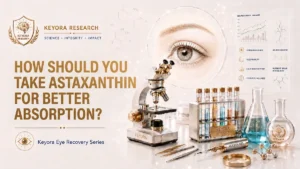
How Should You Take Astaxanthin for Better Absorption?
Why taking astaxanthin with a meal may matter—and what dietary fat has to do with it.
Can Astaxanthin Support Mitochondrial Resilience?
Astaxanthin may support mitochondrial resilience by helping control oxidative stress around energy-producing membranes
Why Is Astaxanthin Studied for Cardiovascular Protection?
Astaxanthin is studied for cardiovascular health because it may influence lipid oxidation and vascular oxidative stress
What Does Transmembrane Antioxidant Protection Mean?
Astaxanthin’s membrane-spanning orientation places its antioxidant structure across distinct regions of the lipid bilayer
Why Is Astaxanthin Different From Other Antioxidants?
Astaxanthin stands out because its molecular structure combines antioxidant chemistry with strong interaction in lipid-rich environments
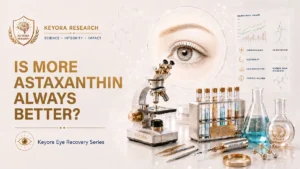
Is More Astaxanthin Always Better? What Really Matters When You Take It
Why the amount of astaxanthin you take is only part of the story—and why absorption matters.
How Does Lipid Peroxidation Affect Human Health?
Lipid peroxidation matters because oxidative damage can spread through PUFA-rich lipids and disrupt cellular structures
Why Are Cell Membranes Vulnerable to Oxidative Damage?
Cell membranes are vulnerable to oxidative damage because their phospholipids can contain oxidation-sensitive polyunsaturated fatty acids, making membrane integrity dependent on both lipid composition and effective redox protection
What Does Antioxidant Support Actually Do Inside Your Body?
Antioxidant support helps maintain redox homeostasis by working with the body’s own defense systems to control excessive reactive species, protect vulnerable molecules, and preserve normal cellular regulation rather than eliminating every free radical
What Is Oxidative Stress and Why Does It Matter?
Oxidative stress is a loss of redox balance in which reactive oxidant pressure exceeds the body’s regulatory and repair capacity, increasing the risk of damage to lipids, proteins, DNA, and cellular structures
Why Choose Astaxanthin from Haematococcus pluvialis?
Why does the source of astaxanthin matter when choosing a supplement?
Why Does Keyora Focus on Lipid-Based Nutritional Architecture?
Keyora focuses on lipid-based nutritional architecture because biological function depends not only on individual nutrients, but also on how different lipid molecules contribute together to cellular structure, signaling environments, oxidative resilience, and physiological adaptability
How Does Lipid Membrane Structure Affect Cellular Health?
The cellular membrane is not only a protective barrier but a dynamic lipid-based interface that organizes transport, communication, signaling, and cellular adaptation
Why Are Fatty Acids Important for Cell Membranes?
Fatty acids form the hydrophobic tails of membrane phospholipids, and their molecular structure helps shape membrane packing, flexibility, organization, and the cellular environment in which proteins and signaling systems operate
What Does Omega-3/Omega-6 Balance Actually Mean for Cardiovascular Health?
For cardiovascular health, Omega balance is better understood as adequate Omega-3 availability within a well-structured fatty-acid environment - not as one universal numerical ratio
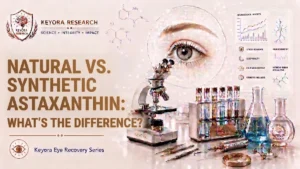
Natural vs. Synthetic Astaxanthin: What’s the Difference?
Natural and synthetic astaxanthin are chemically related, but their source, molecular profile, and research background are different.
Why Is Omega-3/Omega-6 Imbalance an Overlooked Contributor to Modern Cardiovascular Disease?
Persistent Omega-3/Omega-6 imbalance may act as an underrecognized cardiovascular risk amplifier by reshaping membrane lipid composition, regulatory signaling, oxidative resilience, endothelial function, and the vascular environment
Why Is Omega-3 Important for Modern Diet Patterns?
Omega-3 matters in modern diets because the nutritional challenge is often not the presence of Omega-6, but insufficient Omega-3 availability within the overall lipid environment
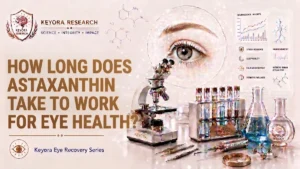
How Long Does Astaxanthin Take to Work for Eye Health?
Clinical studies suggest noticeable improvements typically appear after 4–8 weeks when taken consistently at clinically studied daily doses.
Does Omega-6 Really Cause Inflammation?
Omega-6 participates in normal biological signaling, while the modern concern is the imbalance of the overall lipid environment rather than Omega-6 itself
Why Did Modern Diets Move Away From Traditional Omega Balance?
The modern food environment changed fatty acid availability and reshaped the nutritional conditions surrounding Omega-3 and Omega-6 balance
What Happens When Omega-6 and Omega-3 Fatty Acids Become Imbalanced?
An Omega-6 and Omega-3 imbalance can influence cellular membrane composition, lipid signaling pathways, and the biological environment that supports inflammation regulation and vascular resilience
Why Are Most Modern Diets Too High in Omega-6 and Too Low in Omega-3?
Modern diets often create an Omega-6 and Omega-3 imbalance because industrial food patterns changed fatty acid exposure, not because Omega-6 itself is harmful
Do “Premium,” “Clinical,” and “Pharmaceutical Grade” Prove Quality?
No: impressive grade language does not by itself prove Astaxanthin source, potency, batch quality, independent verification, or clinical evidence
What Does “Third-Party Tested” Actually Prove?
It proves only what the independent test actually measured - not automatically the Astaxanthin source, dose, purity, safety, or clinical effectiveness
Does Astaxanthin Really Work for Eye Fatigue?
Clinical research suggests astaxanthin may help reduce screen-related eye fatigue when taken consistently.
Can an Astaxanthin Supplement Fake a Branded-Ingredient Logo?
Yes: a real ingredient trademark can be copied, so a logo on the bottle does not prove the supplement contains the branded Astaxanthin it claims
Has Synthetic Astaxanthin Actually Been Studied in Humans?
Yes, but limited synthetic-specific human data do not justify treating synthetic Astaxanthin as equivalent to natural Haematococcus pluvialis Astaxanthin
How Much Astaxanthin Should You Take for Eye Health?
The right dose depends on your visual demands, but clinical studies suggest daily intakes between 6–12 mg—and sometimes higher
Does Higher Bioavailability Make Synthetic Astaxanthin Equivalent to Natural Astaxanthin?
No: higher blood exposure is meaningful pharmacokinetic evidence, but it does not prove equal clinical effects, safety, or complete material equivalence
If Synthetic Astaxanthin Has the Same 3S,3′S Form, Is It Equivalent to Natural Astaxanthin?
No: matching the 3S,3′S stereochemical configuration matches one molecular feature, not biological source, complete material identity, or human evidence
Can Human Studies on Natural Astaxanthin Prove Synthetic Astaxanthin Works?
No: clinical findings belong first to the Astaxanthin material actually studied and cannot be transferred by ingredient name alone
Is “Nature Identical” Astaxanthin Actually Natural?
No: “nature-identical” can describe chemically synthesized Astaxanthin and does not establish natural source, material equivalence, or interchangeable human evidence
When Is the Best Time to Take Astaxanthin for Eye Health?
The best time to take astaxanthin is whenever you can take it consistently—ideally with a meal that contains healthy fats.
How to Choose the Best Astaxanthin Supplement for Eye Health
Not all astaxanthin supplements are the same. Choosing the right one means looking beyond the milligrams on the label.
Who Can Benefit Most from Astaxanthin for Eye Health?
Astaxanthin may be most beneficial for adults over 35 with frequent screen exposure, eye fatigue, or slower visual recovery.
Can Synthetic Astaxanthin Use Natural Astaxanthin Studies as Proof?
Not automatically: a clinical study proves what was actually tested, so natural Haematococcus pluvialis research cannot simply become proof for a different synthetic Astaxanthin product
What Does “Identical to Natural” Mean on a Synthetic Astaxanthin Supplement?
It may describe a molecular or stereochemical match, but it does not by itself prove natural source, complete material equivalence, transferable clinical evidence, or matched long-term safety
Astaxanthin vs. Vitamin A & Beta-Carotene for Eye Health
Vitamin A supports normal vision, while astaxanthin supports eye recovery.
Can a 24 mg Astaxanthin Product Contain Less Than 1 mg?
Yes, targeted marketplace testing has found 24 mg Astaxanthin products measuring only 0.3 mg or producing a reported 0 mg HPLC result
Why Do Some Astaxanthin Supplements Contain Almost None?
Some tested products have contained only fractions of their label claims or no detectable Astaxanthin, but the laboratory result alone does not reveal why
Can an Astaxanthin Label Make Extract Weight Look Like Active Astaxanthin?
Raw-material milligrams can create a misleading active-dose impression when the ingredient name, concentration, or true Astaxanthin amount is not presented clearly
How Much Astaxanthin Is Really in a 1%, 5%, or 10% Extract?
A 1%, 5%, or 10% figure describes concentration, not the final dose, so you must identify the dose object before calculating active Astaxanthin
Why Are My Eyes So Tired After Work?
Your eyes don't just get tired—they recover more slowly after prolonged visual stress.
Astaxanthin vs. Bilberry for Eye Health: What’s the Difference?
Bilberry supports healthy circulation, while astaxanthin supports eye recovery.
Does 18 mg of Algae Extract Mean 18 mg of Astaxanthin?
No, extract weight and active Astaxanthin are different dose objects unless the label clearly identifies the standardized active amount
Astaxanthin vs. Omega-3 for Eye Health
Omega-3 supports dry eyes. Astaxanthin supports screen fatigue and eye recovery.
Astaxanthin vs. Zeaxanthin: What’s the Difference?
Astaxanthin and zeaxanthin both help protect the eyes, but they work through different biological mechanisms and support different aspects of visual health.
What Are the Side Effects of Astaxanthin?
Human trials generally report good tolerability, but digestive symptoms, pigment-related changes, allergies, and product-specific reactions require separate interpretation
Why Don’t I Notice Any Effect From Astaxanthin?
Not noticing a change may reflect an unnoticeable endpoint, a mismatched goal, variable exposure, limited evidence, or simply no meaningful response
Does Astaxanthin Make Skin Glow?
Astaxanthin may influence some measurements that affect skin appearance, but glow is not one standardized clinical endpoint and current evidence does not establish a predictable radiance effect
Can Astaxanthin Reduce Wrinkles?
Some small studies report selected changes in crow’s-feet or wrinkle measurements, but pooled oral evidence has not established a reliable reduction in wrinkle depth
Can Astaxanthin Improve Skin Hydration and Elasticity?
Small human trials suggest possible improvements in measured skin moisture and elasticity, but the evidence is heterogeneous and oral Astaxanthin cannot replace direct barrier care
Is Astaxanthin Better Than Lutein or Zeaxanthin for Eyes?
They are different carotenoids with different tissue roles and evidence, so the better choice depends on the exact eye problem and outcome
Astaxanthin vs. Lutein: What’s the Difference for Screen Fatigue?
Astaxanthin supports eye recovery, while lutein supports long-term retinal health.
Astaxanthin for Screen Fatigue: Does It Really Work?
Clinical research suggests astaxanthin may support visual comfort during prolonged screen use when combined with healthy recovery habits.
Can Astaxanthin Help Dry Eyes?
Limited human evidence suggests possible changes in selected symptoms and tear-film measures, but dry eye has multiple causes and requires cause-matched care
Can Astaxanthin Help Screen Eye Strain?
Small human studies suggest possible changes in visual-fatigue or focusing measures, but screen discomfort has multiple causes and Astaxanthin does not replace practical eye care
Does Astaxanthin Make You Tan?
Astaxanthin is a red-orange carotenoid, but a possible skin-hue change is not the same as melanin tanning and does not provide sun protection
Can Astaxanthin Replace Sunscreen?
Astaxanthin may influence selected responses to controlled UV exposure, but it does not provide tested SPF or replace topical sun protection
How Long Does It Take for Your Eyes to Recover From Screen Fatigue?
Most screen fatigue symptoms improve over time, but recovery depends on your daily habits, sleep, and overall eye health.
Can Biomarker Changes Prove Astaxanthin Prevents Disease?
Biomarkers can reflect selected biological processes, but prevention claims require validated links or direct clinical outcomes over appropriate follow-up
How Should You Read Astaxanthin Research?
The strongest conclusion depends on the exact model, material, population, protocol, design, and endpoint studied
How to Reduce Screen Fatigue: 7 Evidence-Based Habits That Help
Most cases of screen fatigue can be improved by combining healthy screen habits, quality sleep, and long-term recovery strategies.
Best Ingredients for Eye Health: Which Nutrients Support Different Vision Goals?
Different eye concerns require different nutrients—from screen fatigue recovery to long-term retinal support.
Does Crossing a Biological Barrier Prove Astaxanthin Works?
Reaching a tissue only establishes potential access, not sufficient exposure, target engagement, functional change, or clinical benefit
Do Antioxidant Tests Prove Human Health Benefits?
Chemical assays and membrane models can demonstrate controlled effects, but human health benefits require separate clinical evidence
Why Can’t One Astaxanthin Mechanism Prove Every Organ Benefit?
A shared pathway can justify research across tissues, but it cannot replace organ-specific human evidence
Why Do Astaxanthin Studies Measure Different Outcomes?
The same membrane or redox mechanism leads to different endpoints because each tissue performs a different biological job
Why Is Astaxanthin Studied in So Many Tissues?
Lipid rich membranes, high energy demand, oxidative exposure, and specialized barriers create research interest, but each tissue still requires separate evidence
How Do Cell Membranes, Mitochondria, and Inflammation Connect?
Changes in membrane lipids and mitochondrial redox balance can influence inflammatory signaling, while inflammation can also increase oxidative and mitochondrial stress
Does Astaxanthin Become Part of Cell Membranes?
Astaxanthin may associate with lipid bilayers, but it is not a permanent membrane building block like phospholipids or cholesterol
Why Does Membrane Location Change Antioxidant Function?
At a membrane interface, an antioxidant encounters lipid, protein, and signaling environments that differ from plasma or cytosol
Is Aging Just Oxidation?
Oxidative stress contributes to aging, but aging also involves genomic, epigenetic, metabolic, proteostatic, immune, and cellular changes
Does Astaxanthin Replace the Body’s Antioxidant Defenses?
How Do the Body’s Own Antioxidant Defenses and Dietary Astaxanthin Fit Together?
Why Can’t One Antioxidant Do Everything?
Human redox defense relies on enzymes, repair systems, and compounds working across different environments, so no single antioxidant performs every role
Why Does Antioxidant Location Matter?
Antioxidant function depends on reaching the biological compartment where a reaction occurs, but location alone does not prove a meaningful human benefit
Posts pagination
Previous
1
2
3
…
5
Next
 Is Aging Just Oxidation?