
Why Choose Astaxanthin from Haematococcus pluvialis?
Keyora Research Q&A Library
This is part of the Keyora Research Q&A Series, derived from Keyora Astaxanthin Research Journal Series.
Within the Keyora Astaxanthin Researcn framework, this Q&A translates complex astaxanthin biology into reader-friendly, evidence-bound answers, focusing on natural astaxanthin identity, molecular structure, antioxidant and redox mechanisms, membrane lipid interaction, mitochondrial resilience, inflammatory signaling pathways, human evidence interpretation, and the scientific principles behind responsible supplementation.
First published by Keyora Research Journal: www.keyorahealth.com
Short Answer
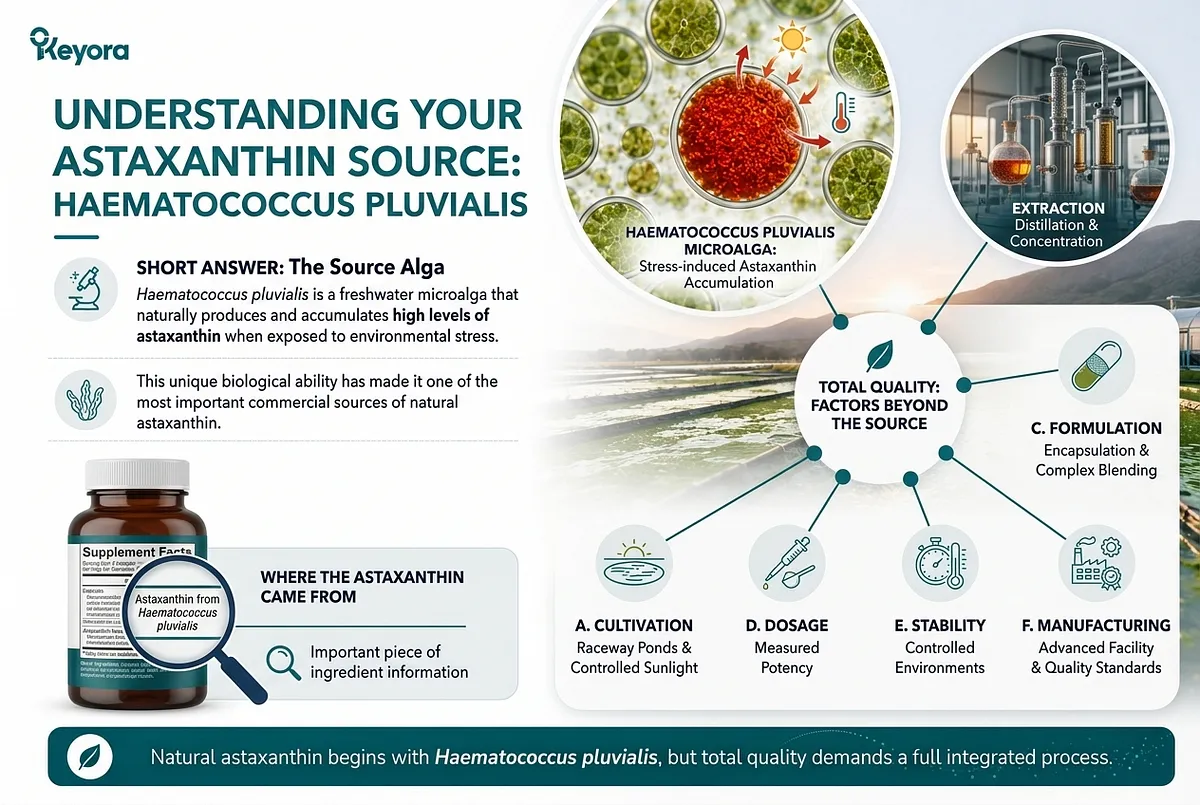
Haematococcus pluvialis is a freshwater microalga that naturally produces and accumulates high levels of astaxanthin when exposed to environmental stress. This unique biological ability has made it one of the most important commercial sources of natural astaxanthin.
If a supplement label states:
Astaxanthin from Haematococcus pluvialis
it tells you more than simply the active ingredient.
It tells you:
Where the astaxanthin came from.
For consumers looking for natural astaxanthin, this is an important piece of ingredient information.
However, source is only the starting point. Cultivation, extraction, formulation, dosage, stability, and manufacturing quality also contribute to the quality of the finished supplement.
What Is Haematococcus pluvialis?
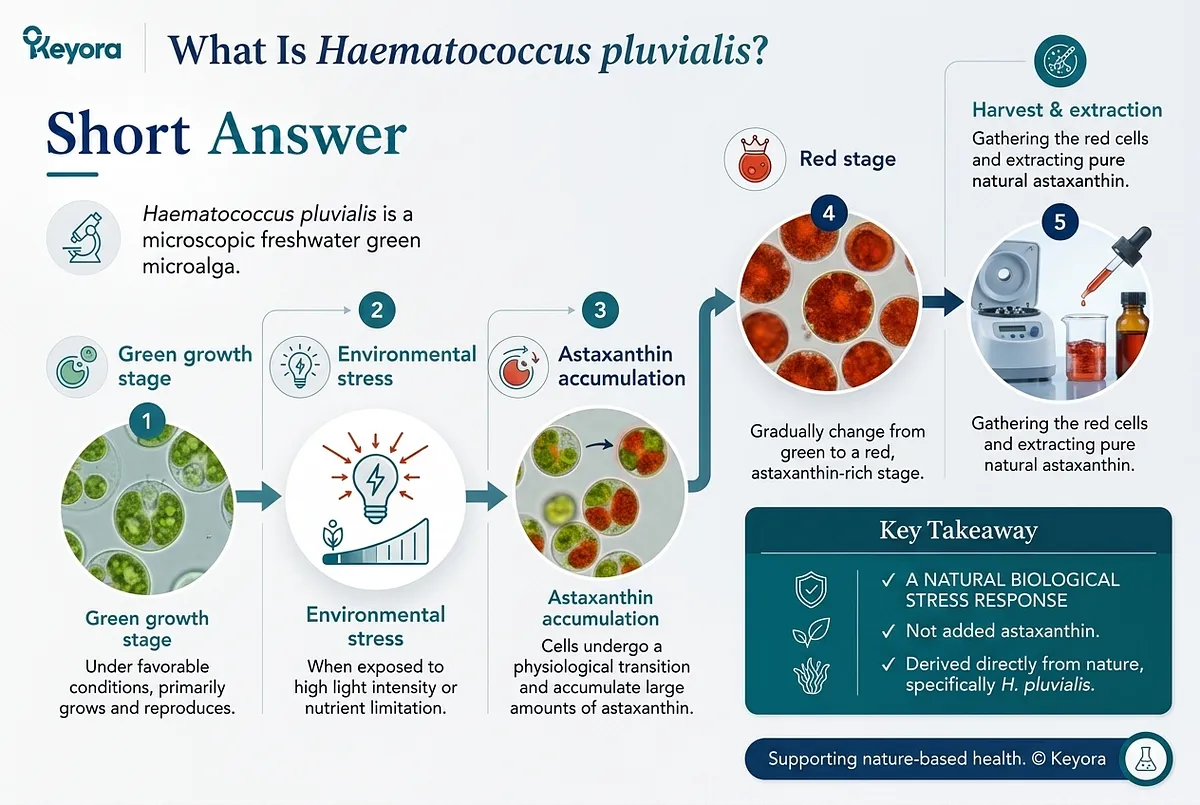
Haematococcus pluvialis is a microscopic freshwater green microalga.
Under favorable conditions, it primarily grows and reproduces. When exposed to environmental stress, such as high light intensity or nutrient limitation, the cells undergo a physiological transition and accumulate large amounts of astaxanthin.
As astaxanthin accumulates, the algae gradually change from green to a red, astaxanthin-rich stage.
The process can be simplified as:
→Green growth stage
→ Environmental stress
→ Astaxanthin accumulation
→ Red stage
→ Harvest & extraction
This is a natural biological stress response—not astaxanthin being added to the algae.
Why Is Haematococcus pluvialis an Important Source of Natural Astaxanthin?
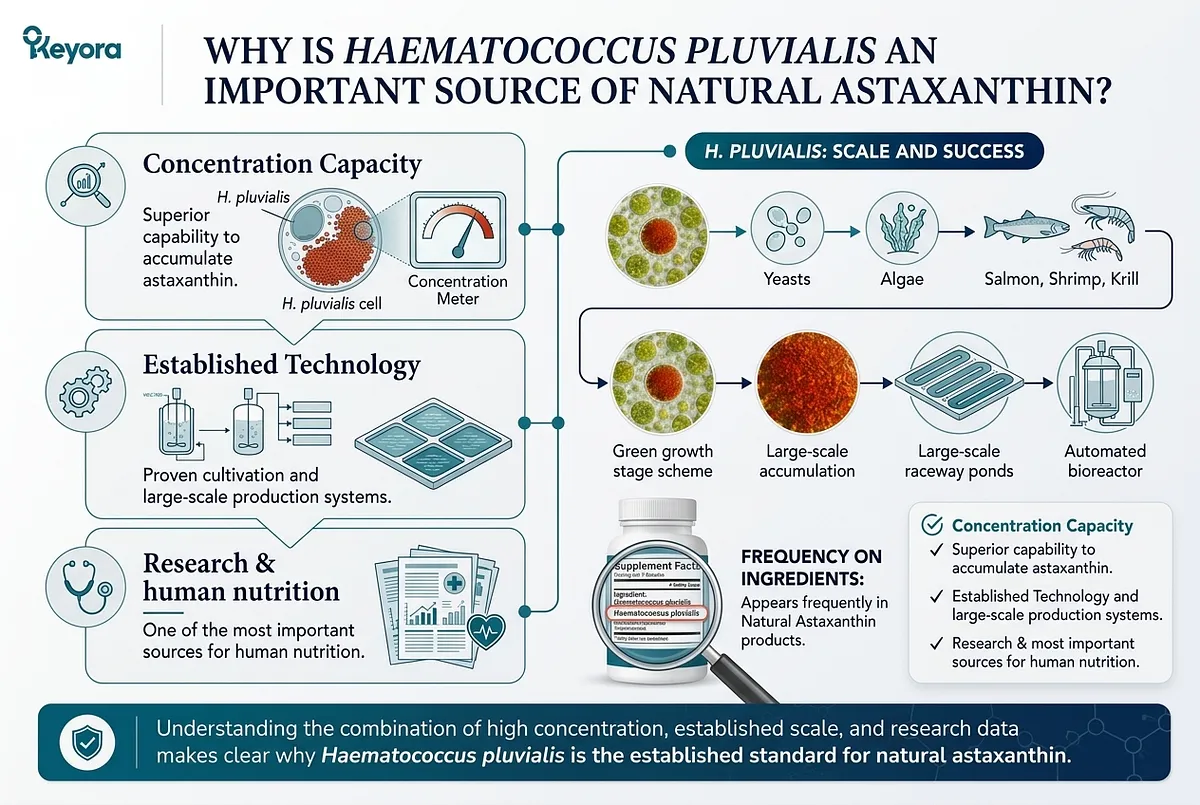
Astaxanthin occurs naturally in several organisms, including certain microalgae, yeasts, and aquatic animals such as salmon, shrimp, and krill.
However, from a commercial production perspective, Haematococcus pluvialis is particularly important because it can accumulate high concentrations of astaxanthin and has an established cultivation and production system.
Its high accumulation capacity, established cultivation technology, and extensive research history have made it one of the most important sources of natural astaxanthin for human nutrition.
This is why the name:
Haematococcus pluvialis
appears so frequently on natural astaxanthin ingredients.
Why Does the Source of Astaxanthin Matter?
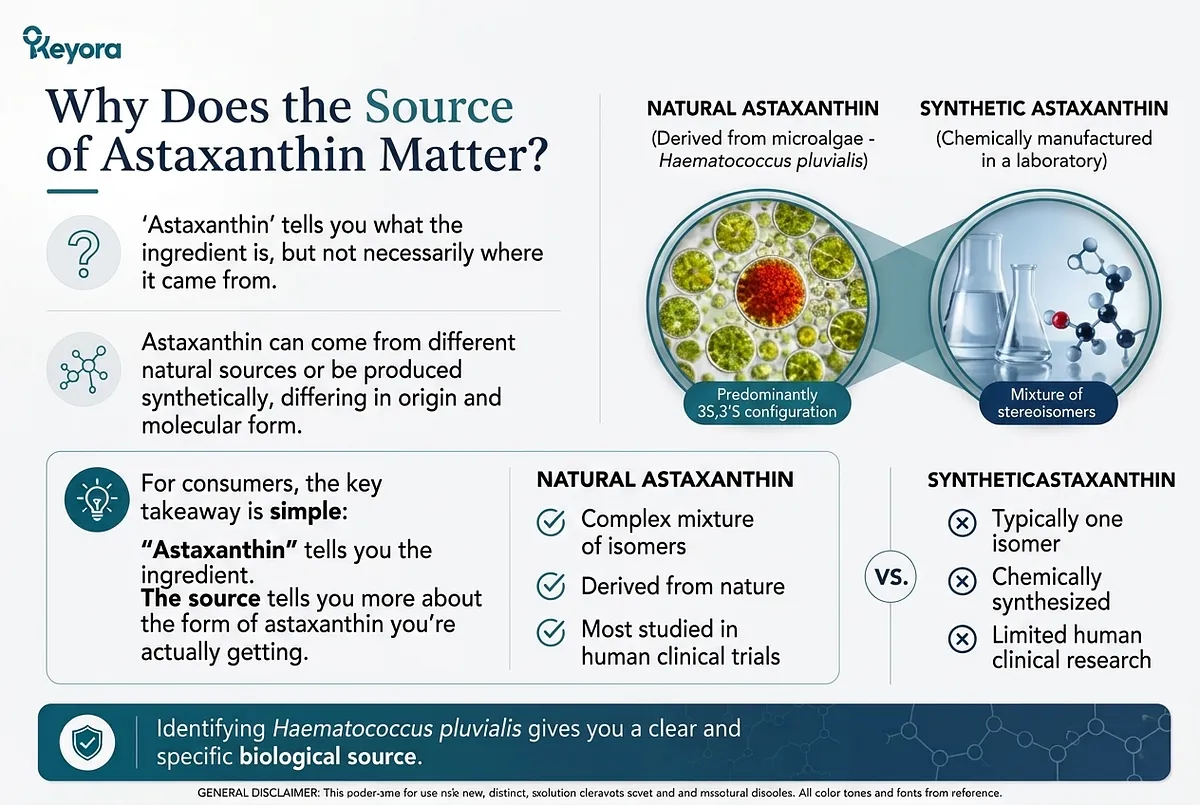
“Astaxanthin” tells you what the ingredient is.
It does not necessarily tell you where it came from.
Astaxanthin can come from different natural sources or be produced synthetically. Natural and synthetic astaxanthin differ in their origin and molecular form.
Haematococcus pluvialis naturally produces astaxanthin predominantly in the 3S,3′S configuration, while synthetic astaxanthin is typically produced as a mixture of stereoisomers.
We will not go into the full natural-versus-synthetic comparison here.
For a deeper discussion, see our separate guide:
Natural vs. Synthetic Astaxanthin: What’s the Difference?
For this article, the key point is simple:
Knowing the source tells you more than simply seeing the word “astaxanthin” on a label.
If you are specifically looking for natural astaxanthin, identifying Haematococcus pluvialis gives you a clear and specific biological source.
What Happens After the Algae Produce Astaxanthin?
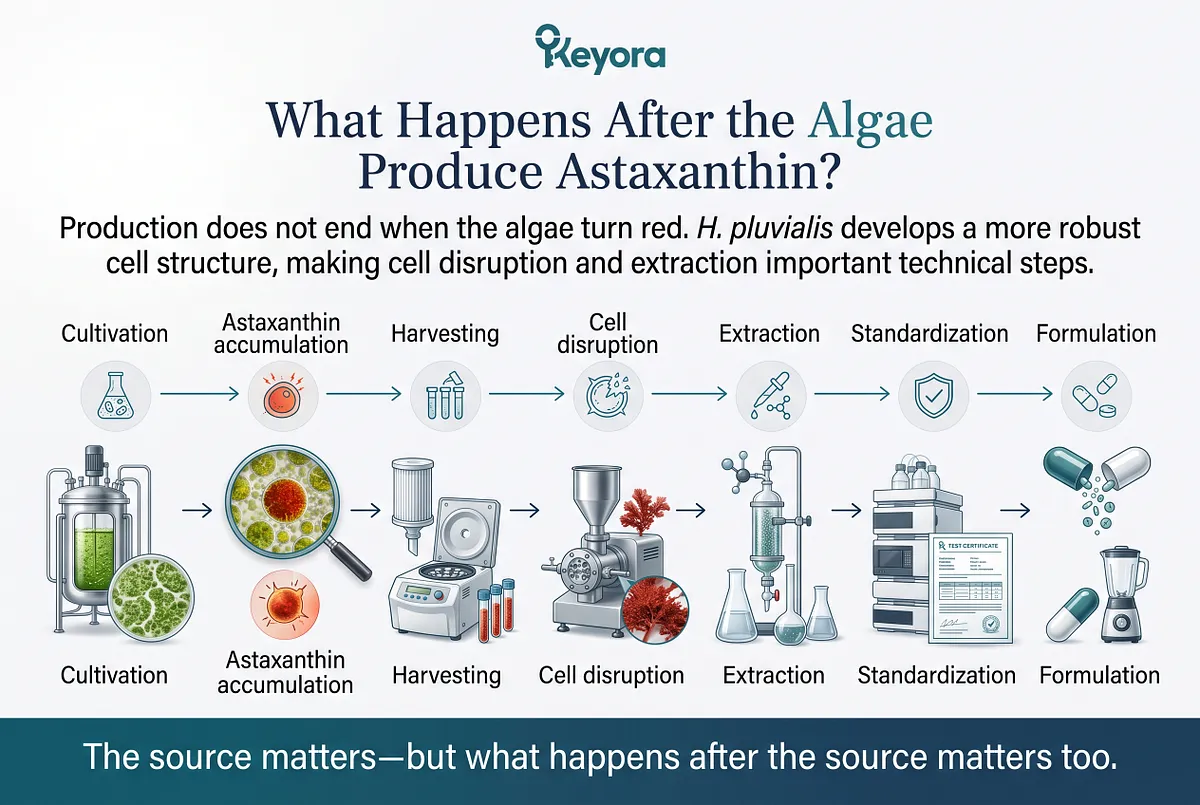
Production does not end when the algae turn red.
During astaxanthin accumulation, H. pluvialis develops a more robust cell structure. This makes cell disruption and astaxanthin extraction important technical steps.
Commercial production generally involves:
Cultivation → Astaxanthin accumulation → Harvesting → Cell disruption → Extraction → Standardization → Formulation
Therefore, two products can both use H. pluvialis-derived astaxanthin without necessarily having identical ingredient or finished-product characteristics.
This is why:
The source matters—but what happens after the source matters too.
Does H. pluvialis Automatically Mean Better Astaxanthin?
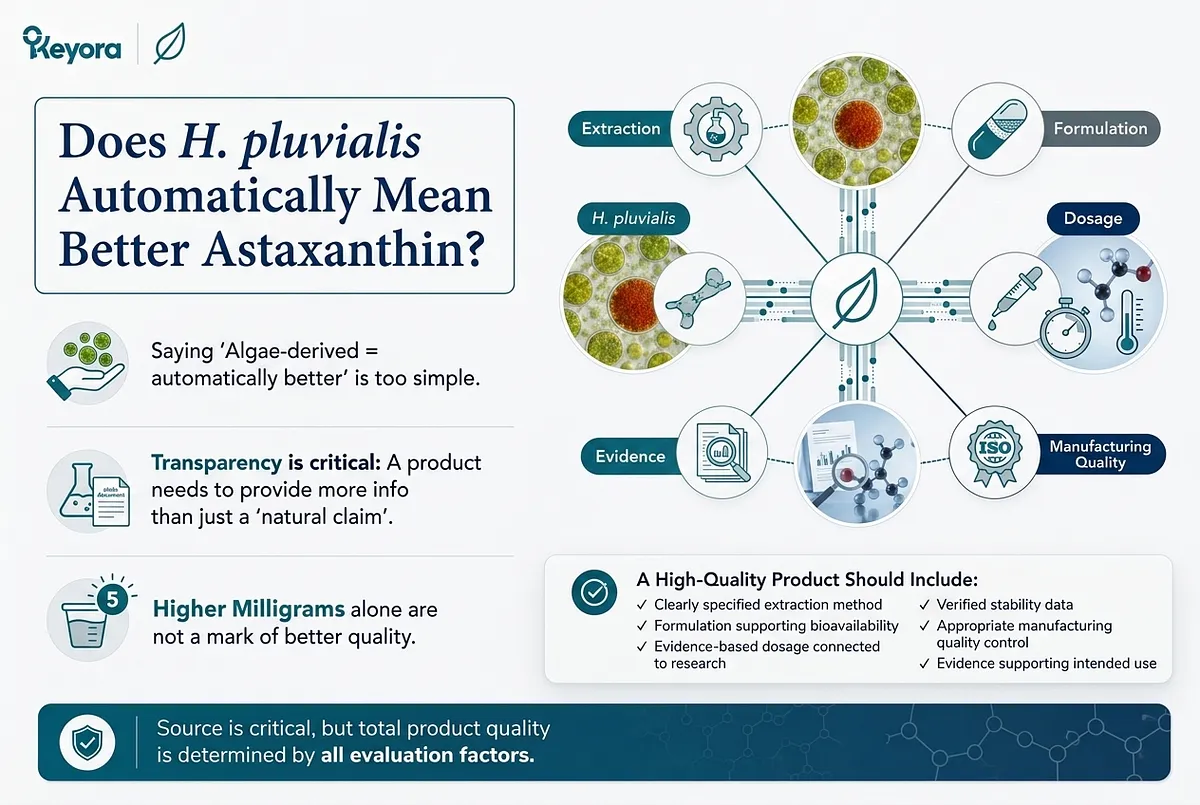
Not by itself.
It would be an oversimplification to say:
“Algae-derived = automatically better.”
Source matters, but so do:
Extraction
Formulation
Dosage
Stability
Manufacturing quality
Evidence supporting the intended use
This is why a transparent product should provide more information than simply a “natural astaxanthin” claim.
A higher milligram number alone also does not establish that one product is better than another.
What Should You Look for in a Natural Astaxanthin Supplement?
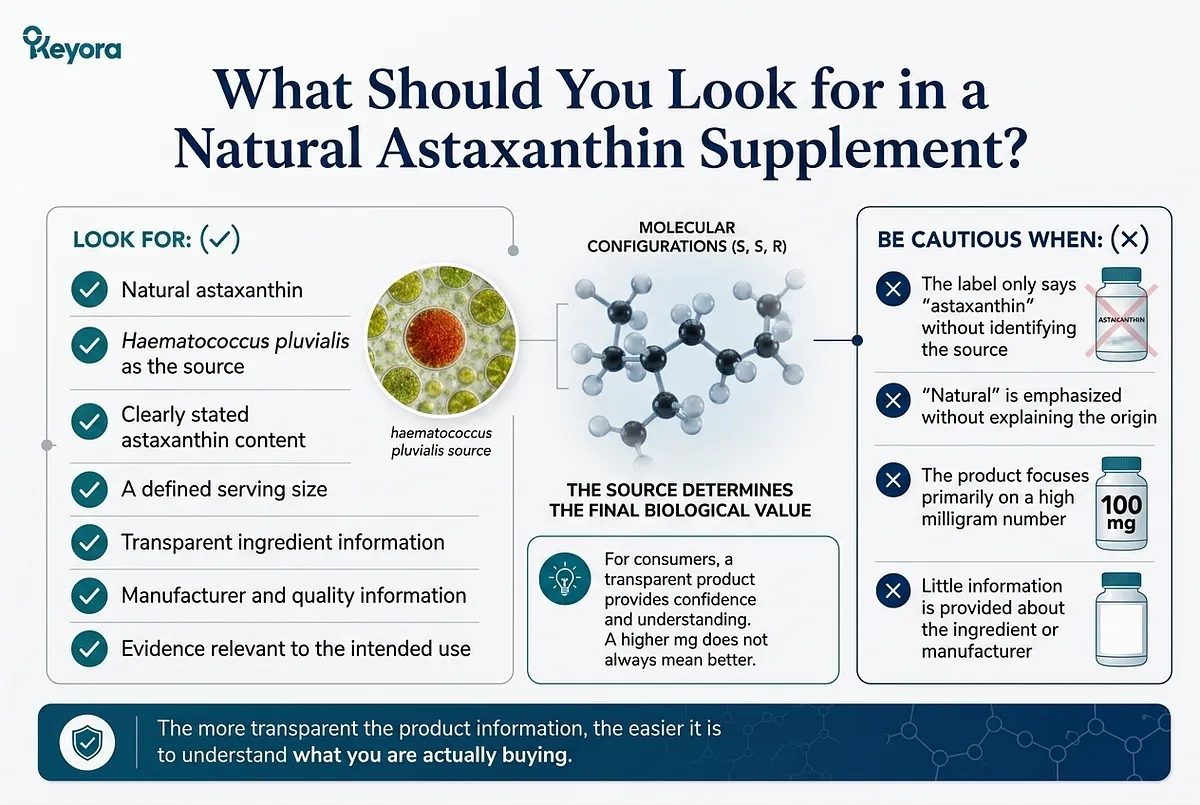
If you are choosing a natural astaxanthin supplement, look for:
✔ Natural astaxanthin
✔ Haematococcus pluvialis as the source
✔ Clearly stated astaxanthin content
✔ A defined serving size
✔ Transparent ingredient information
✔ Manufacturer and quality information
✔ Evidence relevant to the intended use
Be cautious when:
✘ The label only says “astaxanthin” without identifying the source
✘ “Natural” is emphasized without explaining the origin
✘ The product focuses primarily on a high milligram number
✘ Little information is provided about the ingredient or manufacturer
The more transparent the product information, the easier it is to understand what you are actually buying.
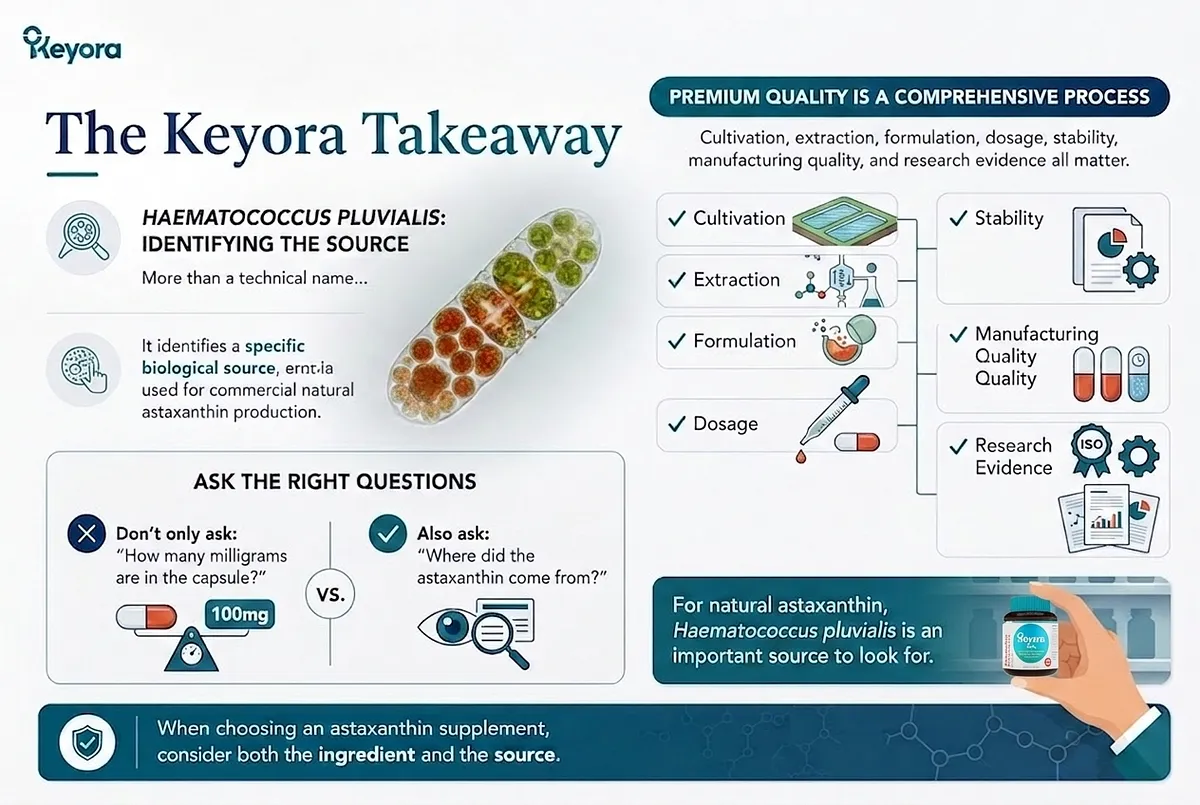
The Keyora Takeaway
Haematococcus pluvialis is more than a technical name on an ingredient label.
It identifies a specific biological source and is one of the most important sources used for commercial natural astaxanthin production.
But premium quality does not stop at the source.
Cultivation, extraction, formulation, dosage, stability, manufacturing quality, and research evidence all matter.
So when choosing an astaxanthin supplement, don’t only ask:
“How many milligrams are in the capsule?”
Also ask:
“Where did the astaxanthin come from?”
For natural astaxanthin, Haematococcus pluvialis is an important source to look for.
FAQ
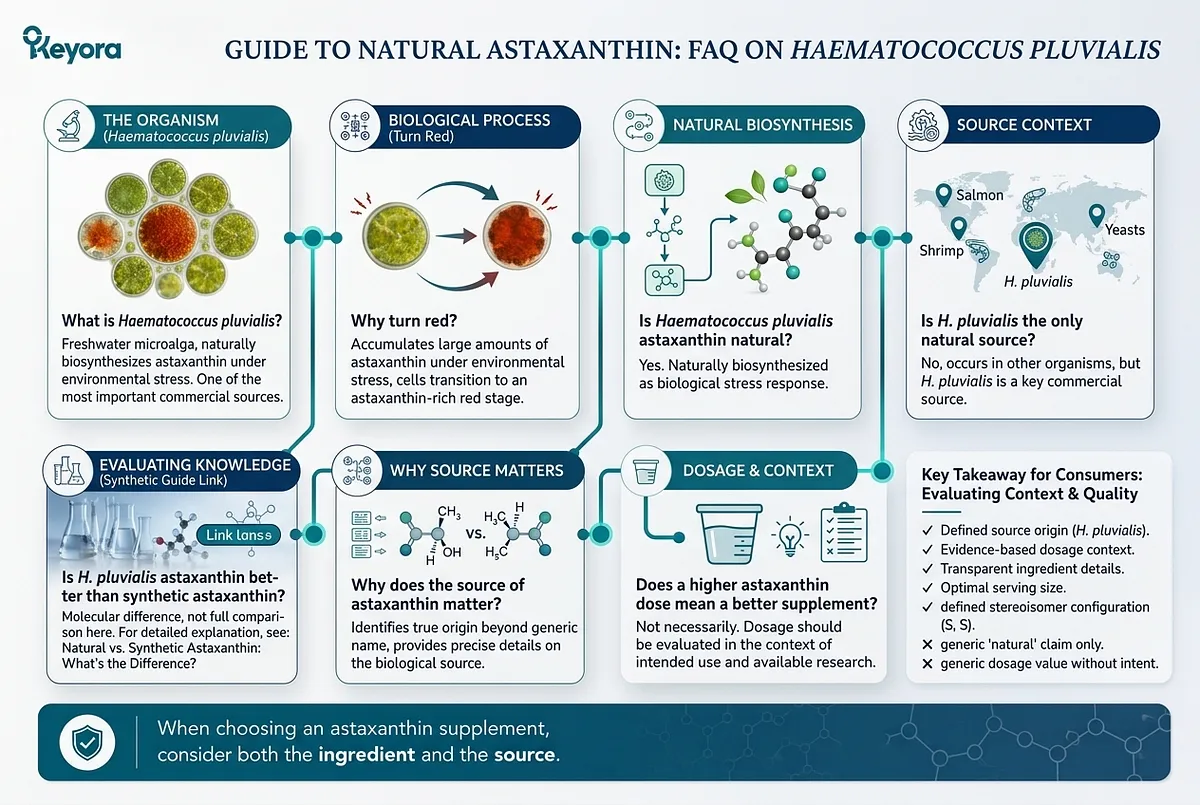
What is Haematococcus pluvialis?
Haematococcus pluvialis is a freshwater microalga that can accumulate high levels of natural astaxanthin under environmental stress. It is one of the most important commercial sources of natural astaxanthin.
Why does Haematococcus pluvialis turn red?
When exposed to environmental stress, the algae accumulate large amounts of astaxanthin, causing the cells to transition from green to a red, astaxanthin-rich stage.
Is Haematococcus pluvialis astaxanthin natural?
Yes. The astaxanthin is naturally biosynthesized by the microalga as part of its biological stress response.
Is Haematococcus pluvialis the only natural source of astaxanthin?
No. Astaxanthin occurs naturally in several organisms, including certain microorganisms and aquatic animals. However, H. pluvialis is one of the most important commercial sources of natural astaxanthin.
Is H. pluvialis astaxanthin better than synthetic astaxanthin?
Natural and synthetic astaxanthin differ in their origin and molecular form, but this article does not provide a full natural-versus-synthetic comparison.
For a detailed explanation, see:
Natural vs. Synthetic Astaxanthin: What’s the Difference?
Why does the source of astaxanthin matter?
Because “astaxanthin” identifies the ingredient but does not necessarily identify its origin.
Clearly identifying Haematococcus pluvialis provides more information about the biological source of the astaxanthin.
Does a higher astaxanthin dose mean a better supplement?
Not necessarily.
A higher milligram number alone does not establish that one product is better. Dosage should be evaluated in the context of the intended use and available research.
Research First
At Keyora, we believe premium supplementation starts with ingredient transparency.
That means looking beyond:
“How many milligrams are in the capsule?”
and asking:
Where did the ingredient come from?
How was it produced and extracted?
How was it formulated?
What evidence supports its use?
For natural astaxanthin, Haematococcus pluvialis provides the starting point of that story.
Know the source. Understand the process. Then evaluate the evidence.
Evidence Note
This article is for educational purposes only and does not constitute medical advice.
Haematococcus pluvialis is a well-established source of natural astaxanthin, but identifying the source alone does not prove superior clinical outcomes.
Human evidence should be evaluated according to the specific astaxanthin preparation, source, dosage, formulation, duration, and health outcome studied.
Research Sources
1. Donoso A, González-Durán J, Agurto Muñoz A, et al.
Therapeutic uses of natural astaxanthin: An evidence-based review focused on human clinical trials.
Pharmacological Research. 2021;166:105479.
2. Shah MMR, Liang Y, Cheng JJ, Daroch M.
Astaxanthin-Producing Green Microalga Haematococcus pluvialis: From Single Cell to High Value Commercial Products.
Marine Drugs. 2016;14(12):230.
3. Chang Shen Chang, et al.
A Review on Haematococcus pluvialis Bioprocess Optimization of Green and Red Stage Culture Conditions for the Production of Natural Astaxanthin.
Biomolecules. 2021;11(2):256.
4. Ambati RR, Moi PS, Ravi S, Aswathanarayana RG.
Astaxanthin: Sources, Extraction, Stability, Biological Activities and Its Commercial Applications—A Review.
Marine Drugs. 2014;12(1):128–152.
5. Qin S, et al.
Advancements of astaxanthin production in Haematococcus pluvialis: Update insight and way forward.
2025. Review of astaxanthin biosynthesis, accumulation, cultivation, and commercial production in H. pluvialis.