
Does Astaxanthin Really Work for Eye Fatigue?
Keyora Research Q&A Library
This is part of the Keyora Research Q&A Series, derived from Keyora Astaxanthin Research Journal Series.
Within the Keyora Astaxanthin Researcn framework, this Q&A translates complex astaxanthin biology into reader-friendly, evidence-bound answers, focusing on natural astaxanthin identity, molecular structure, antioxidant and redox mechanisms, membrane lipid interaction, mitochondrial resilience, inflammatory signaling pathways, human evidence interpretation, and the scientific principles behind responsible supplementation.
First published by Keyora Research Journal: www.keyorahealth.com
Short Answer
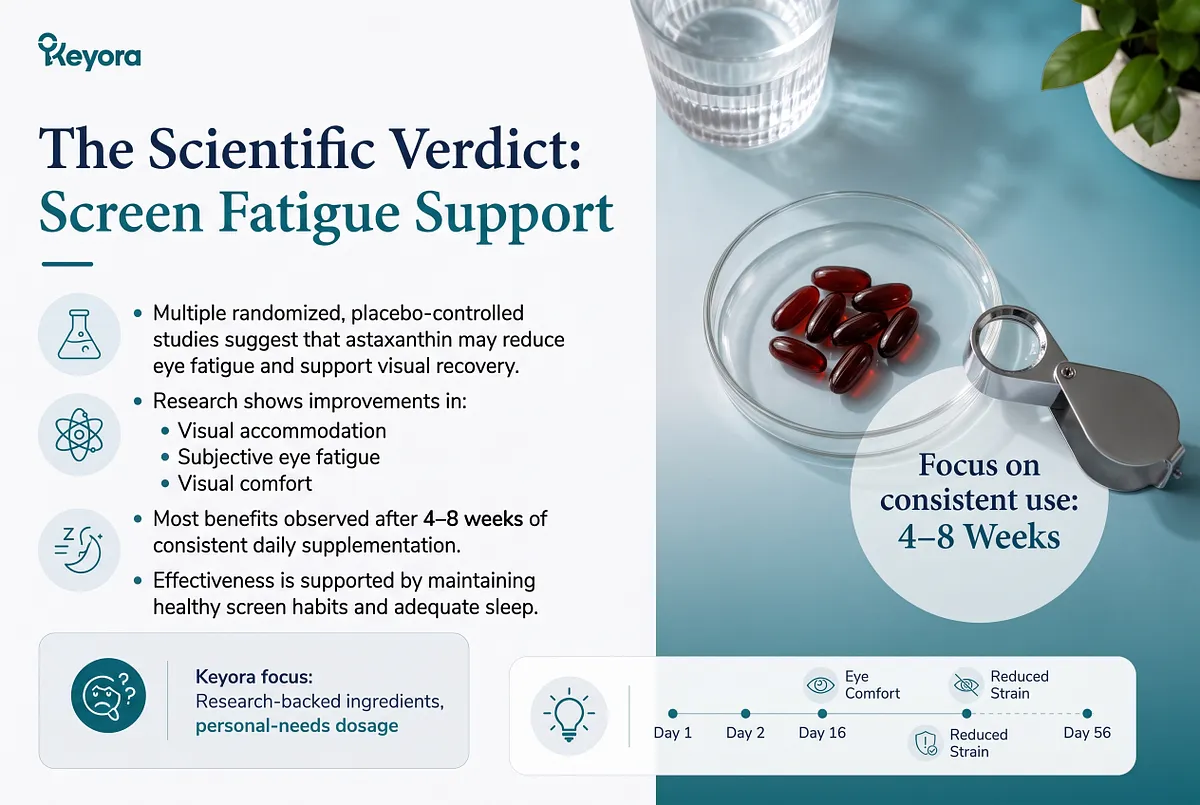
Yes. Multiple randomized, placebo-controlled clinical studies suggest that astaxanthin may help reduce screen-related eye fatigue and support visual recovery.
Research has reported improvements in visual accommodation, subjective eye fatigue, and visual comfort among adults who spend long hours using digital screens. However, astaxanthin is not an instant solution. Most clinical studies observed benefits after 4–8 weeks of consistent daily supplementation, alongside healthy screen habits and adequate sleep.
Does This Sound Like You?
You’re in your late 30s or 40s.
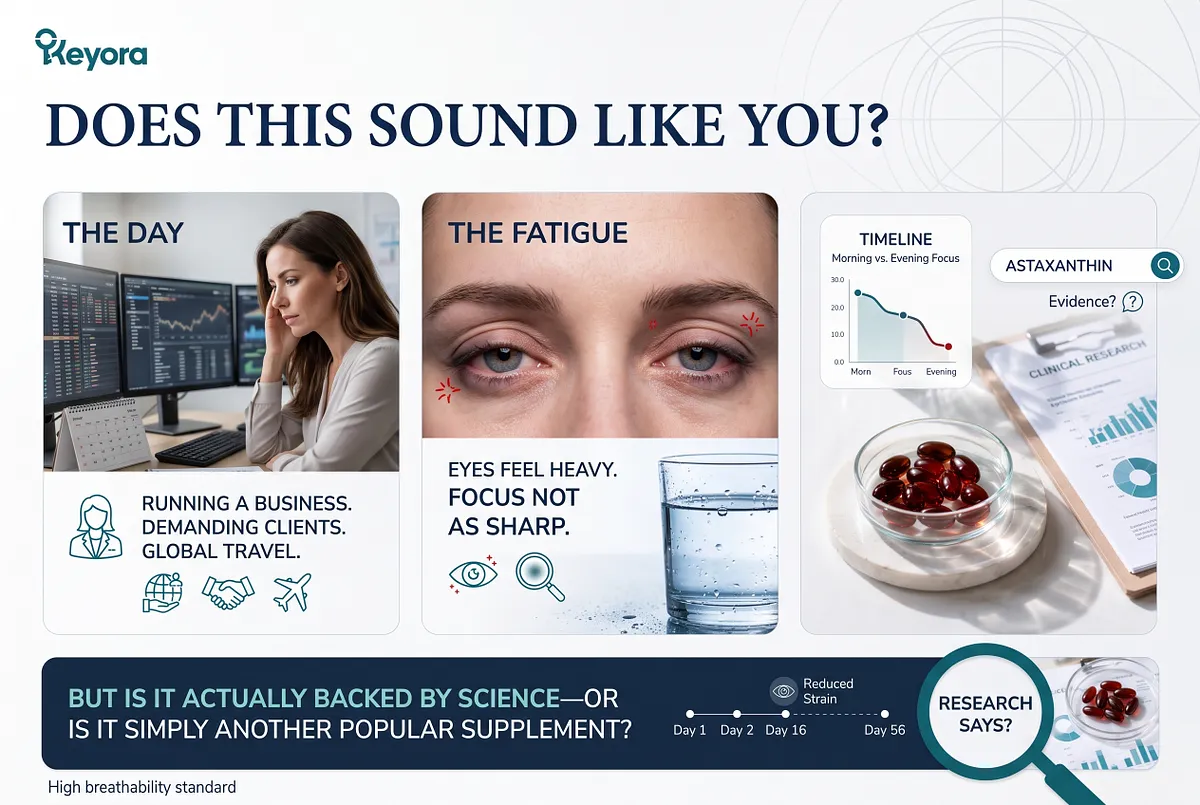
Your workdays are demanding. Whether you’re running a business, managing a team, meeting clients, traveling frequently, or balancing a busy career with family life, your eyes rarely get a chance to rest.
By evening, they feel heavy. Reading becomes less comfortable, your focus isn’t as sharp as it was in the morning, and even after a full night’s sleep, your eyes don’t seem to recover the way they used to.
You’ve probably searched for ways to support your eye health.
One ingredient keeps appearing:
Astaxanthin.
But is it actually backed by science—or is it simply another popular supplement?
What Does the Research Say?
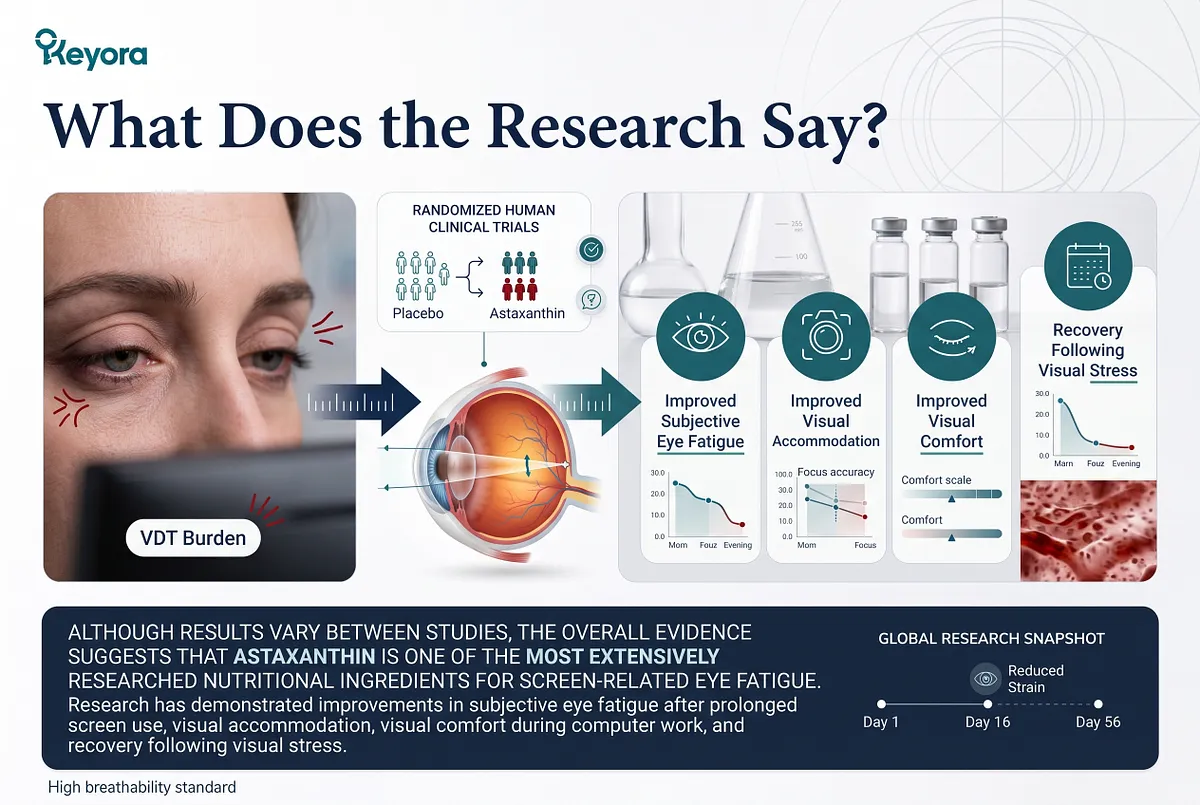
Unlike many eye health ingredients that are supported mainly by laboratory or animal studies, astaxanthin has been evaluated in multiple randomized, placebo-controlled human clinical trials involving adults performing prolonged visual display terminal (VDT) work.
Across these studies, researchers have reported improvements in:
· Subjective eye fatigue after prolonged screen use
· Visual accommodation (the eye’s ability to change focus)
· Visual comfort during computer work
· Recovery following visual stress
Although results vary between studies, the overall evidence suggests that astaxanthin is one of the most extensively researched nutritional ingredients for screen-related eye fatigue.
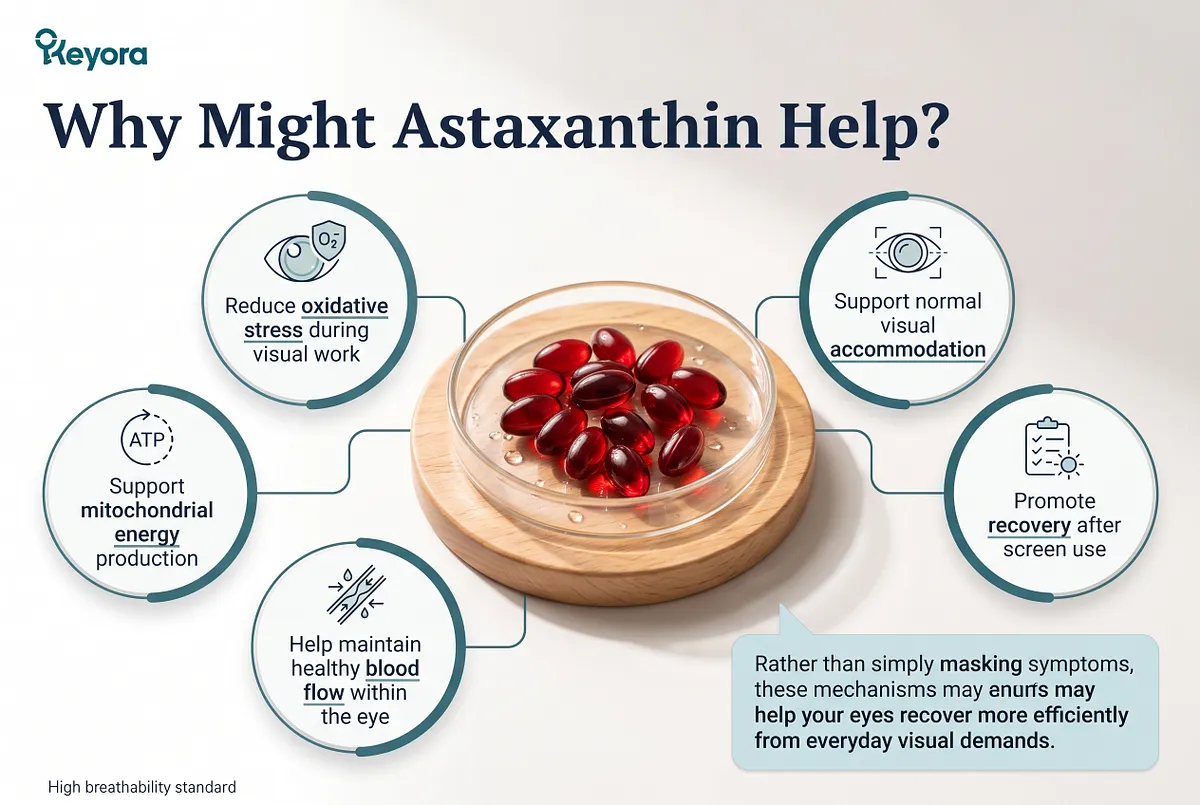
Why Might Astaxanthin Help?
Scientists believe astaxanthin works through several complementary mechanisms rather than a single pathway.
Current evidence suggests it may help:
· Reduce oxidative stress generated during prolonged visual work
· Support mitochondrial energy production in highly active eye tissues
· Help maintain healthy blood flow within the eye
· Support normal visual accommodation
· Promote recovery after sustained screen use
Rather than simply masking symptoms, these mechanisms may help your eyes recover more efficiently from everyday visual demands.
Who Is Most Likely to Benefit?
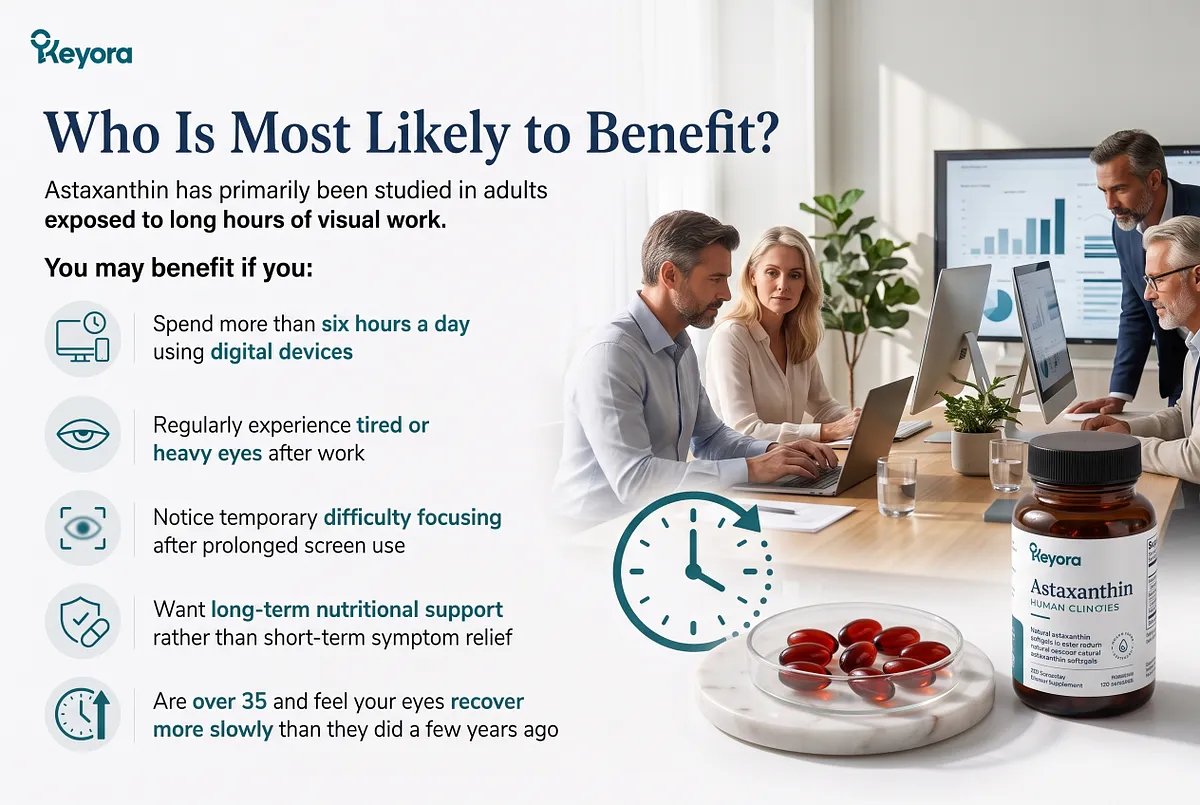
Astaxanthin has primarily been studied in adults exposed to long hours of visual work.
You may benefit if you:
· Spend more than six hours a day using digital devices
· Regularly experience tired or heavy eyes after work
· Notice temporary difficulty focusing after prolonged screen use
· Want long-term nutritional support rather than short-term symptom relief
· Are over 35 and feel your eyes recover more slowly than they did a few years ago
How Long Does It Take to Work?
Astaxanthin is not designed to produce immediate effects.
Most human clinical studies reporting improvements in eye fatigue evaluated participants after 4–8 weeks of daily supplementation.
Like most nutritional interventions, consistency is more important than taking a single high dose.
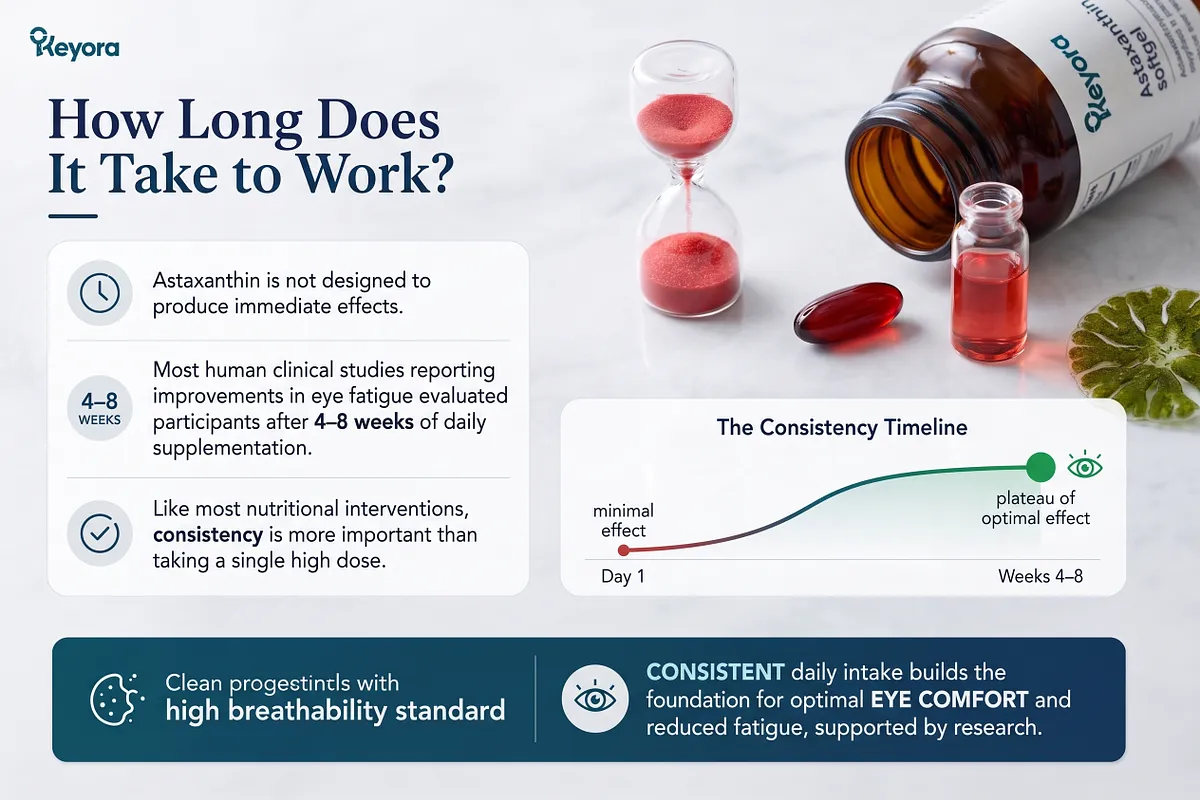
KEYORA highlights the astaxanthin consistency timeline, showing that steady daily use over 4–8 weeks builds the foundation for optimal eye comfort.
Is Astaxanthin Enough on Its Own?
Probably not.
No supplement can completely offset ten hours of uninterrupted screen time, poor sleep, chronic stress, or inadequate blinking.
The best approach combines evidence-based nutrition with healthy daily habits:
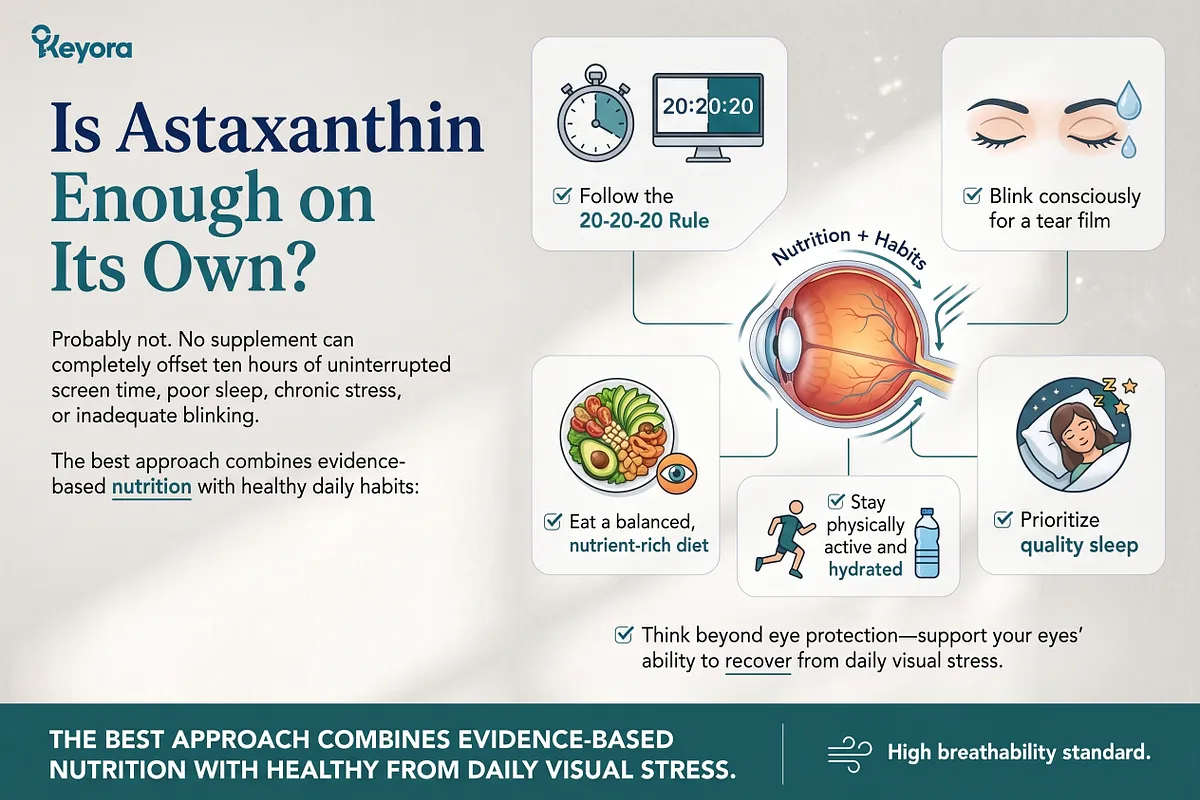
Recovery Protocol
✔ Follow the 20-20-20 Rule during prolonged screen use.
✔ Blink consciously to help maintain a healthy tear film.
✔ Prioritize quality sleep to support overnight recovery.
✔ Eat a balanced diet rich in nutrients that support normal eye function.
✔ Stay physically active and well hydrated.
✔ Think beyond eye protection—support your eyes’ ability to recover from daily visual stress.
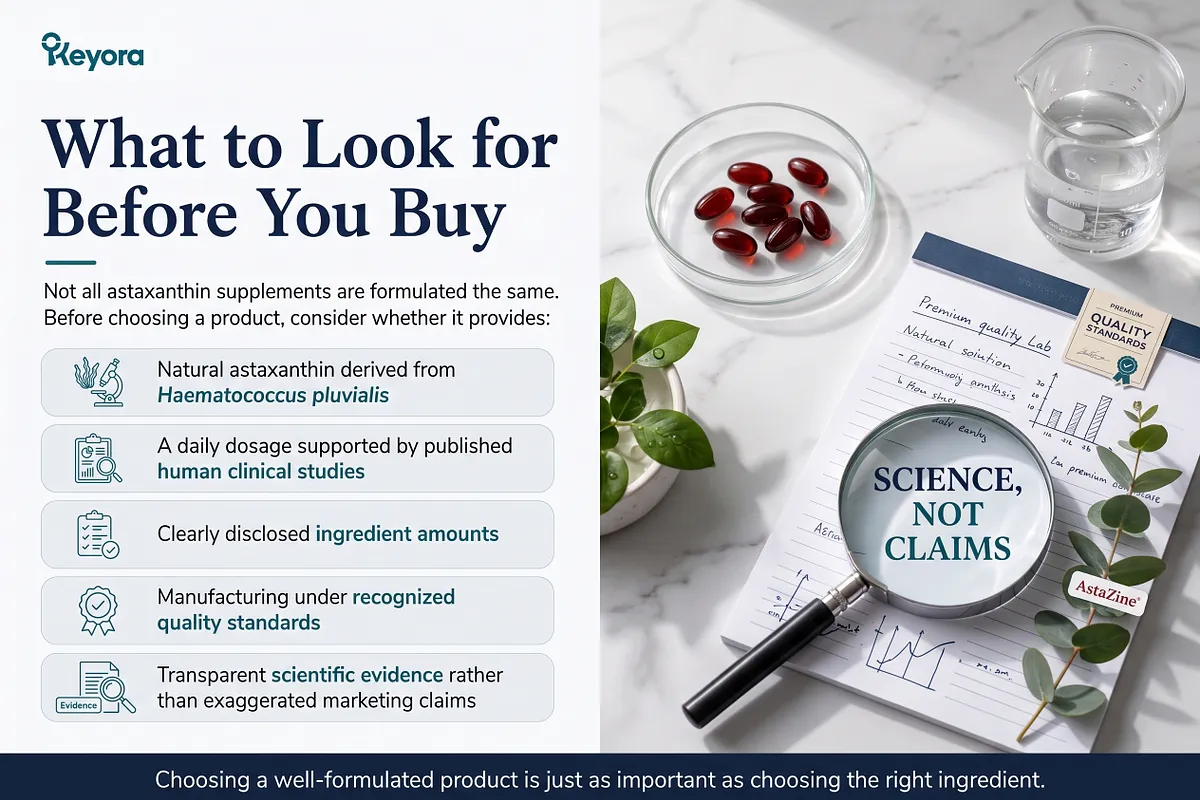
What to Look for Before You Buy
Not all astaxanthin supplements are formulated the same.
Before choosing a product, consider whether it provides:
· Natural astaxanthin derived from Haematococcus pluvialis
· A daily dosage supported by published human clinical studies
· Clearly disclosed ingredient amounts
· Manufacturing under recognized quality standards
· Transparent scientific evidence rather than exaggerated marketing claims
Choosing a well-formulated product is just as important as choosing the right ingredient.
Keyora Research Insight
The real question isn’t whether your eyes work hard.
For most adults over 35, they do.
A more important question is:
How well do your eyes recover after working hard?
Current research suggests that astaxanthin may support this recovery process by helping the eyes adapt to prolonged visual demands rather than simply providing temporary symptom relief.
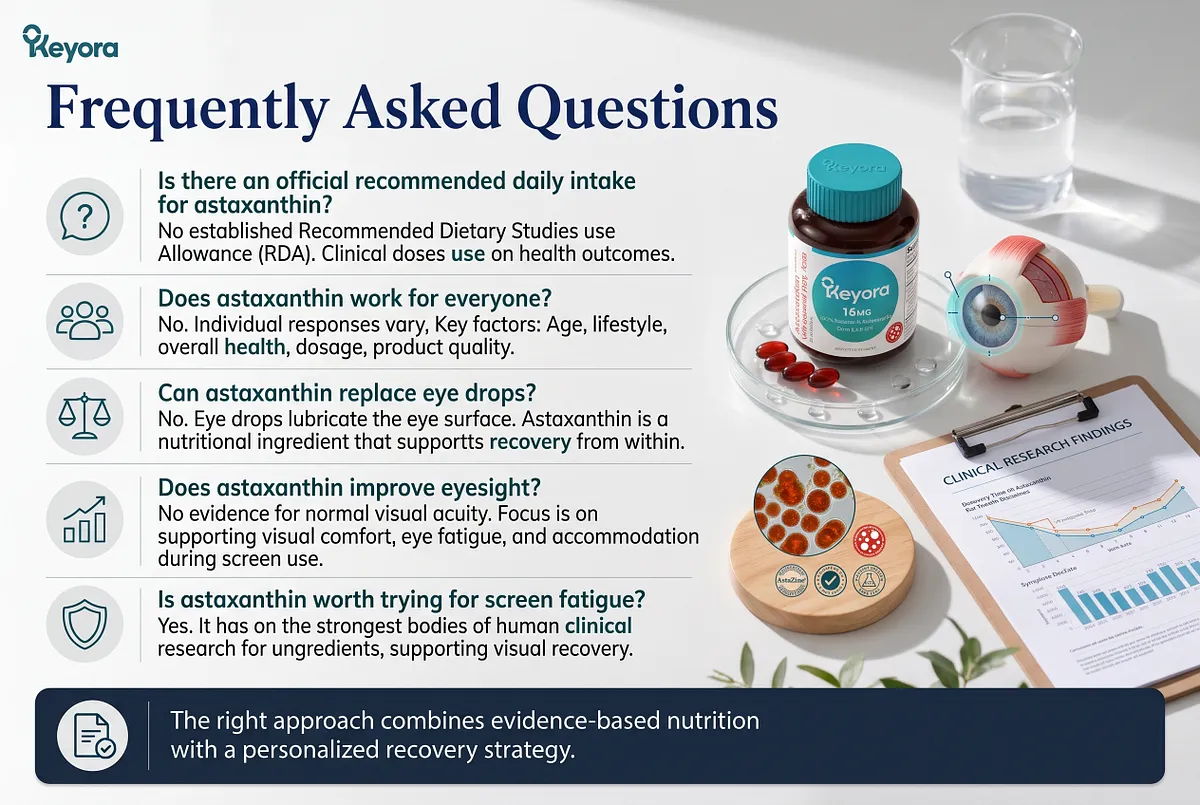
Frequently Asked Questions
Does astaxanthin work for everyone?
No. Individual responses vary depending on age, lifestyle, overall health, dosage, and product quality.
Can astaxanthin replace eye drops?
No. Eye drops help lubricate the surface of the eye, while astaxanthin has been studied as a nutritional ingredient that supports eye recovery from within. The two approaches serve different purposes.
Does astaxanthin improve eyesight?
Current research does not show that astaxanthin improves normal visual acuity. Most studies focus on supporting visual comfort, eye fatigue, and accommodation during prolonged screen use.
Is astaxanthin worth trying for screen fatigue?
For adults who experience regular screen-related eye fatigue, astaxanthin has one of the strongest bodies of human clinical research among nutritional ingredients. While it is not a cure, current evidence suggests it may be a useful part of a broader eye recovery strategy.
Research First
At Keyora, we believe scientific evidence should come before marketing claims.
Our educational content is developed by reviewing peer-reviewed human clinical studies and guidance from recognized health organizations. When evidence is still evolving, we aim to present the current scientific understanding accurately and avoid overstating potential benefits.
Evidence Note
This article is intended for educational purposes only and should not be considered medical advice. Dietary supplements are not intended to diagnose, treat, cure, or prevent any disease. If you experience persistent eye pain, sudden vision changes, or other concerning symptoms, consult a qualified eye care professional.
References
1. Iwasaki T, et al. Effects of Astaxanthin on Eye Fatigue in Visual Display Terminal Workers.
2. Nagaki Y, et al. Clinical Evaluation of Astaxanthin on Visual Accommodation and Eye Fatigue.
3. Sheppard AL, Wolffsohn JS. Digital Eye Strain: Prevalence, Measurement and Amelioration. BMJ Open Ophthalmology.
4. Rosenfield M. Computer Vision Syndrome: A Review. Ophthalmic and Physiological Optics.
5. American Academy of Ophthalmology (AAO). Computer Vision Syndrome and Digital Eye Strain.
6. National Eye Institute (NEI). Keep Your Eyes Healthy.