
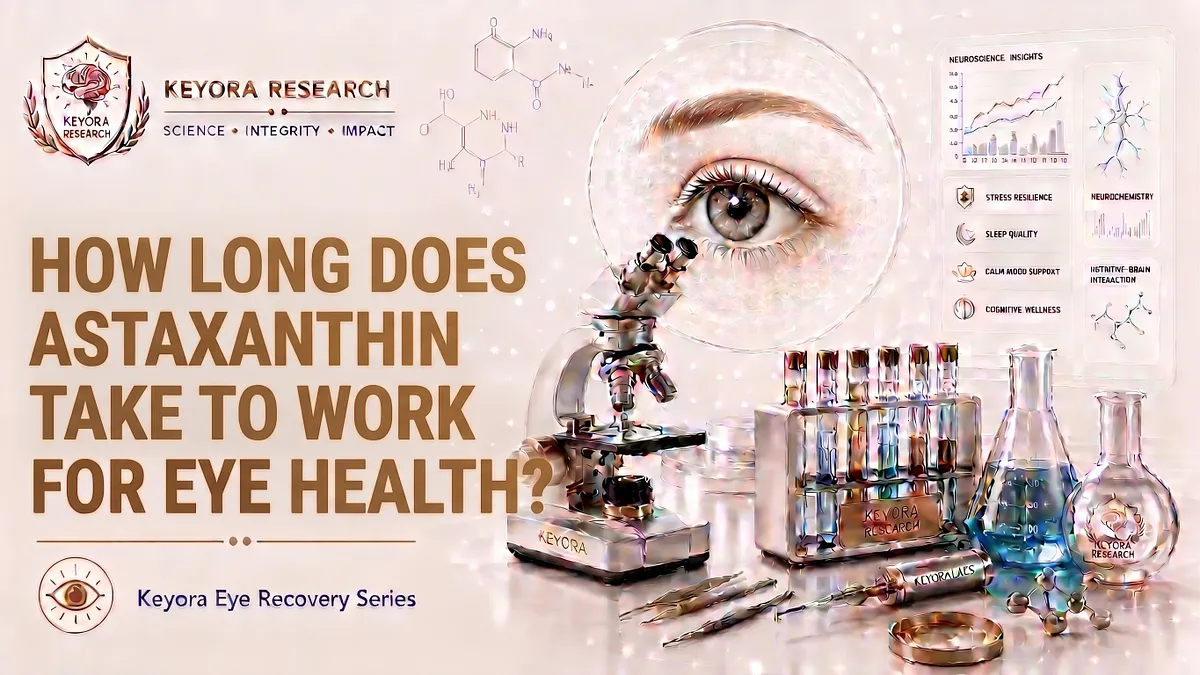
How Long Does Astaxanthin Take to Work for Eye Health?
Keyora Research Q&A Library
This is part of the Keyora Research Q&A Series, derived from Keyora Astaxanthin Research Journal Series.
Within the Keyora Astaxanthin Researcn framework, this Q&A translates complex astaxanthin biology into reader-friendly, evidence-bound answers, focusing on natural astaxanthin identity, molecular structure, antioxidant and redox mechanisms, membrane lipid interaction, mitochondrial resilience, inflammatory signaling pathways, human evidence interpretation, and the scientific principles behind responsible supplementation.
First published by Keyora Research Journal: www.keyorahealth.com
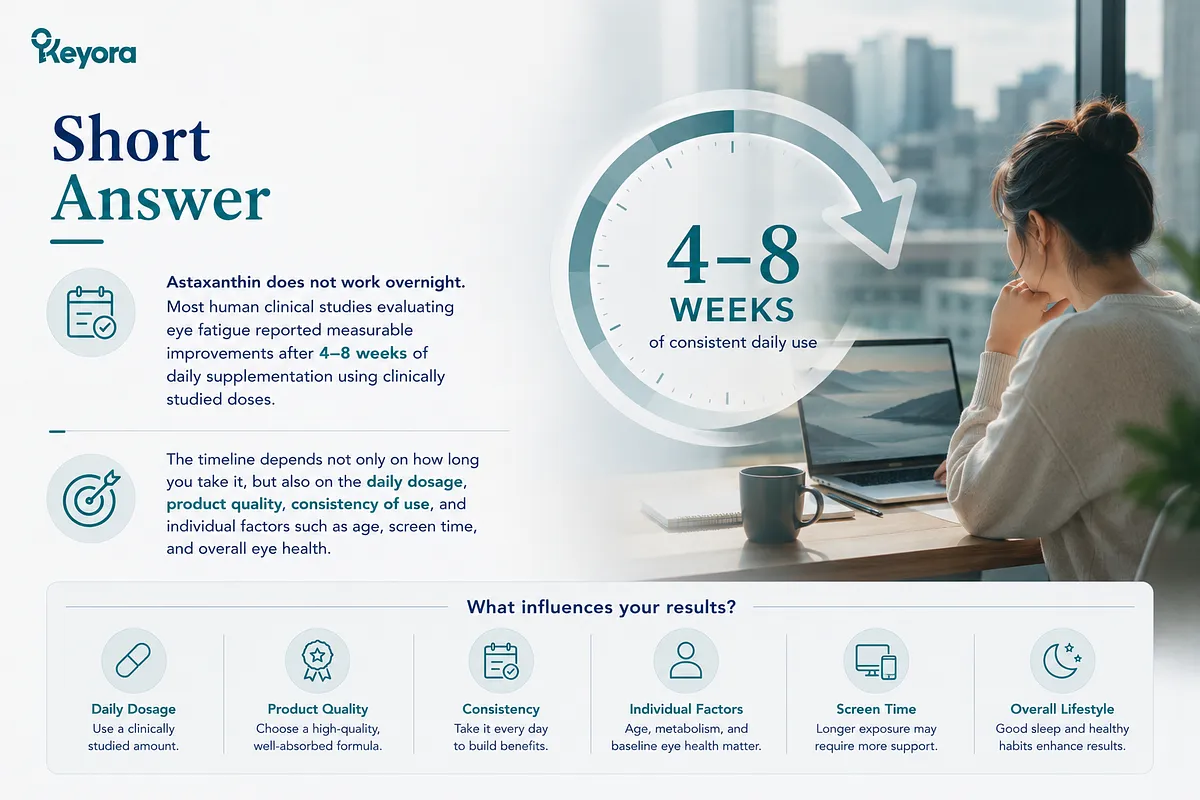
Short Answer
Astaxanthin does not work overnight. Most human clinical studies evaluating eye fatigue reported measurable improvements after 4–8 weeks of daily supplementation using clinically studied doses.
The timeline depends not only on how long you take it, but also on the daily dosage, product quality, consistency of use, and individual factors such as age, screen time, and overall eye health.
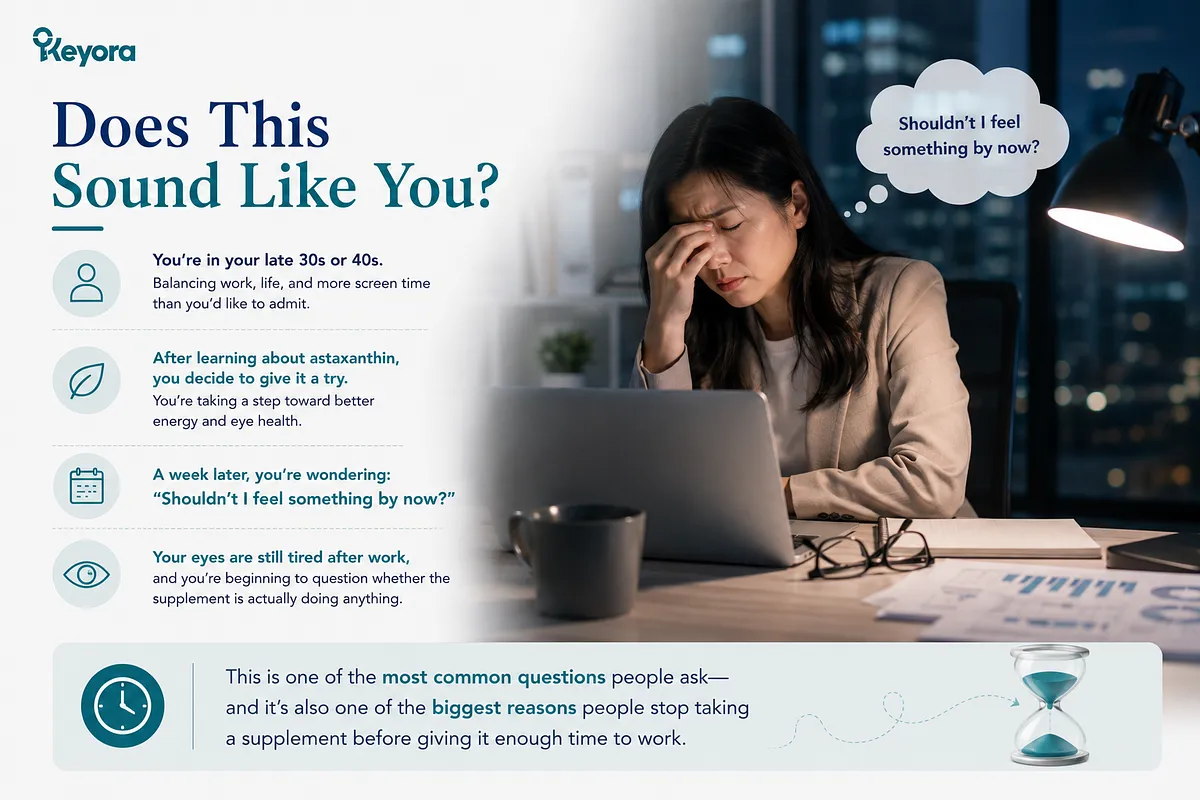
Does This Sound Like You?
You’re in your late 30s or 40s.
After learning about astaxanthin, you decide to give it a try.
A week later, you’re wondering:
“Shouldn’t I feel something by now?”
Your eyes are still tired after work, and you’re beginning to question whether the supplement is actually doing anything.
This is one of the most common questions people ask—and it’s also one of the biggest reasons people stop taking a supplement before giving it enough time to work.
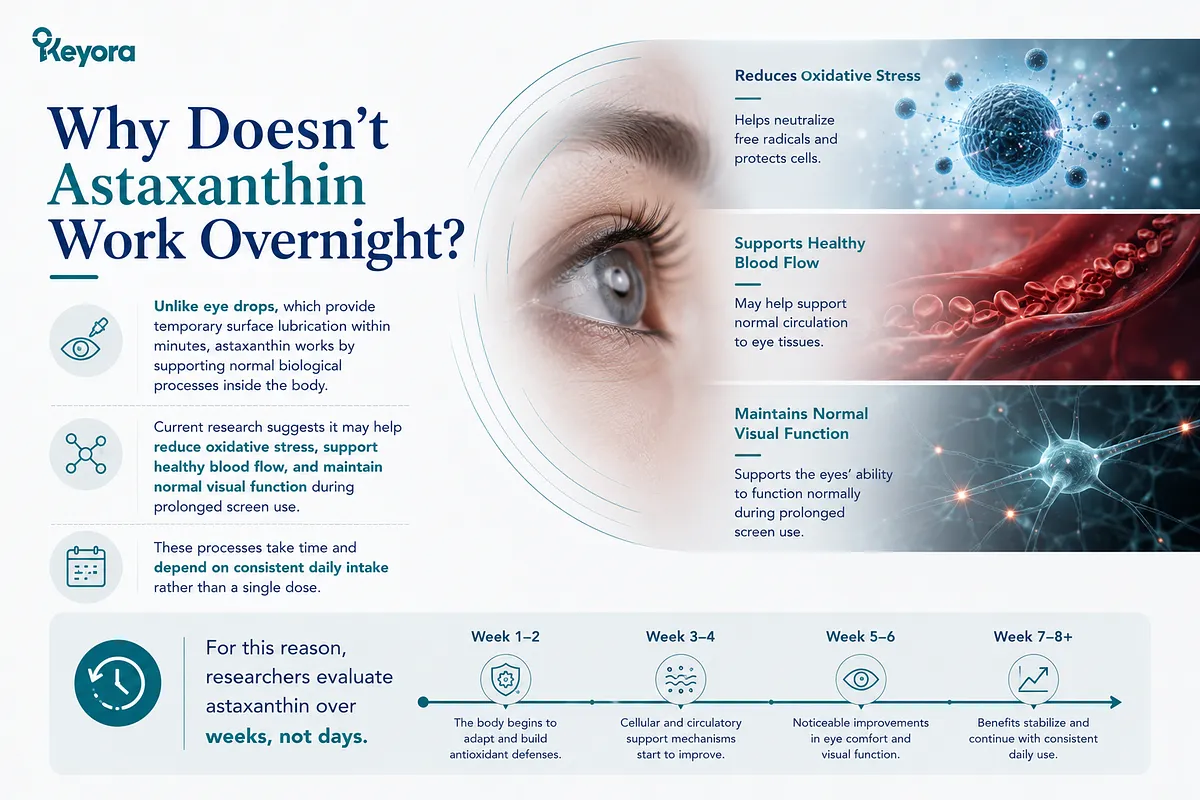
Why Doesn’t Astaxanthin Work Overnight?
Unlike eye drops, which provide temporary surface lubrication within minutes, astaxanthin works by supporting normal biological processes inside the body.
Current research suggests it may help reduce oxidative stress, support healthy blood flow, and maintain normal visual function during prolonged screen use. These processes take time and depend on consistent daily intake rather than a single dose.
For this reason, researchers evaluate astaxanthin over weeks, not days.
What Dose Was Used in Clinical Studies?
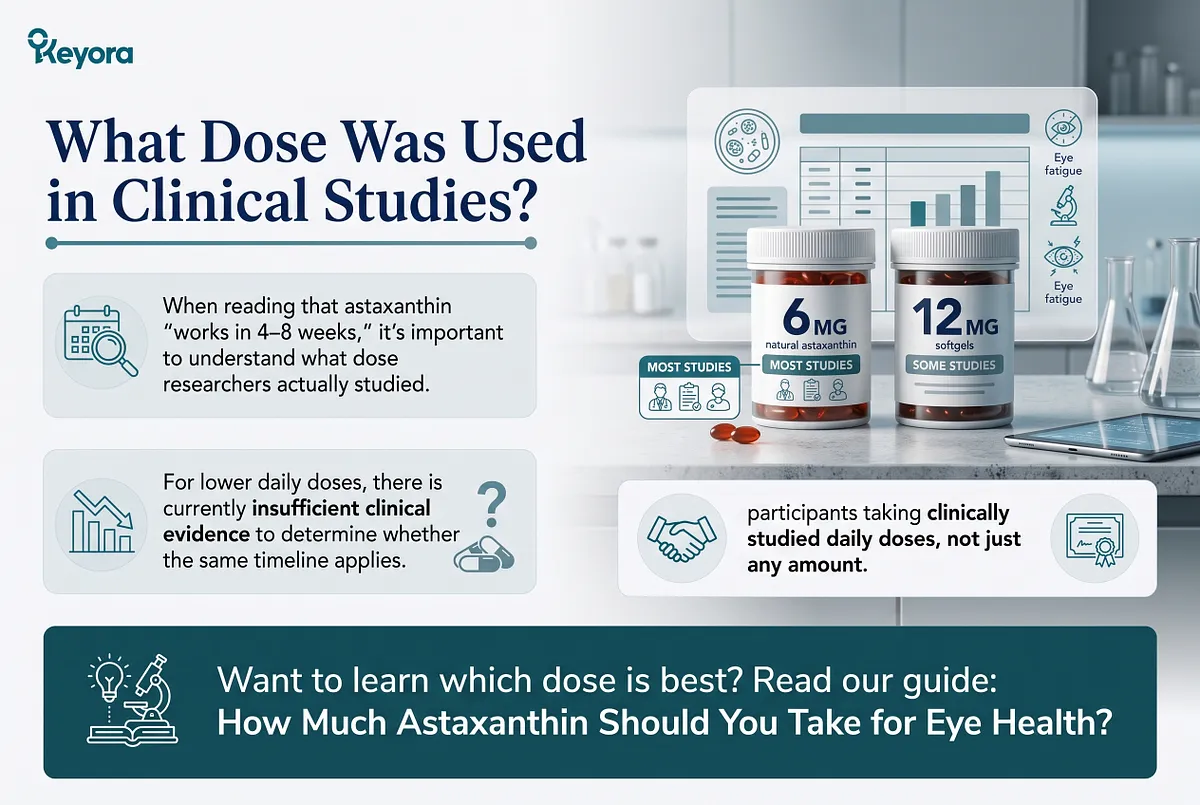
When reading that astaxanthin “works in 4–8 weeks,” it’s important to understand what dose researchers actually studied.
Most published human clinical trials investigating eye fatigue used 6 mg of natural astaxanthin per day, while some studies evaluated 12 mg daily.
This means the commonly quoted 4–8 week timeline reflects participants taking clinically studied daily doses, not just any amount of astaxanthin.
For lower daily doses, there is currently insufficient clinical evidence to determine whether the same timeline applies.
Want to learn which dose is best? Read our guide: How Much Astaxanthin Should You Take for Eye Health?
What Do Clinical Studies Show?
Most human clinical studies measured outcomes after 4–8 weeks of daily supplementation.
Researchers reported improvements such as:
· Reduced subjective eye fatigue
· Better visual comfort during prolonged screen use
· Improved visual accommodation
· Better recovery following visual stress
While individual responses vary, these findings suggest that meaningful improvements are more likely after several weeks of consistent supplementation than after only a few days.
What Can You Expect Over Time?
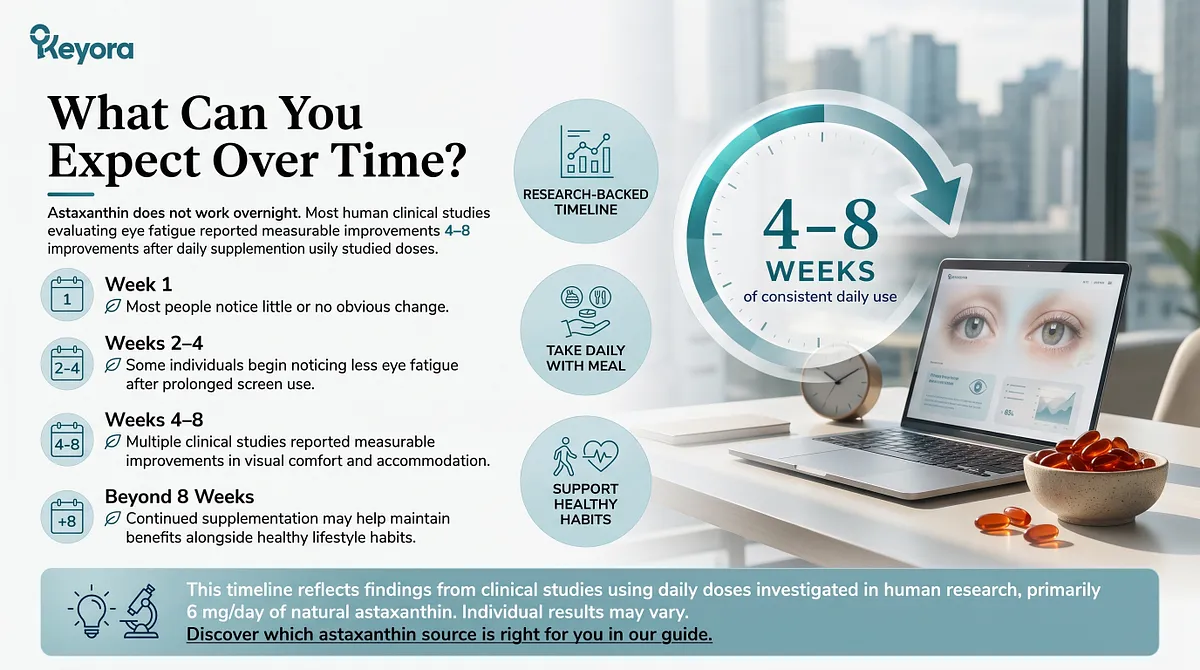
Timeline*
What You May Notice
Week 1
Most people notice little or no obvious change.
Weeks 2–4
Some individuals begin noticing less eye fatigue after prolonged screen use.
Weeks 4–8
Multiple clinical studies reported measurable improvements in visual comfort and accommodation.
Beyond 8 Weeks
Continued supplementation may help maintain benefits alongside healthy lifestyle habits.
*This timeline reflects findings from clinical studies using daily doses investigated in human research, primarily 6 mg/day of natural astaxanthin. Individual results may vary.
Why Do Results Vary?
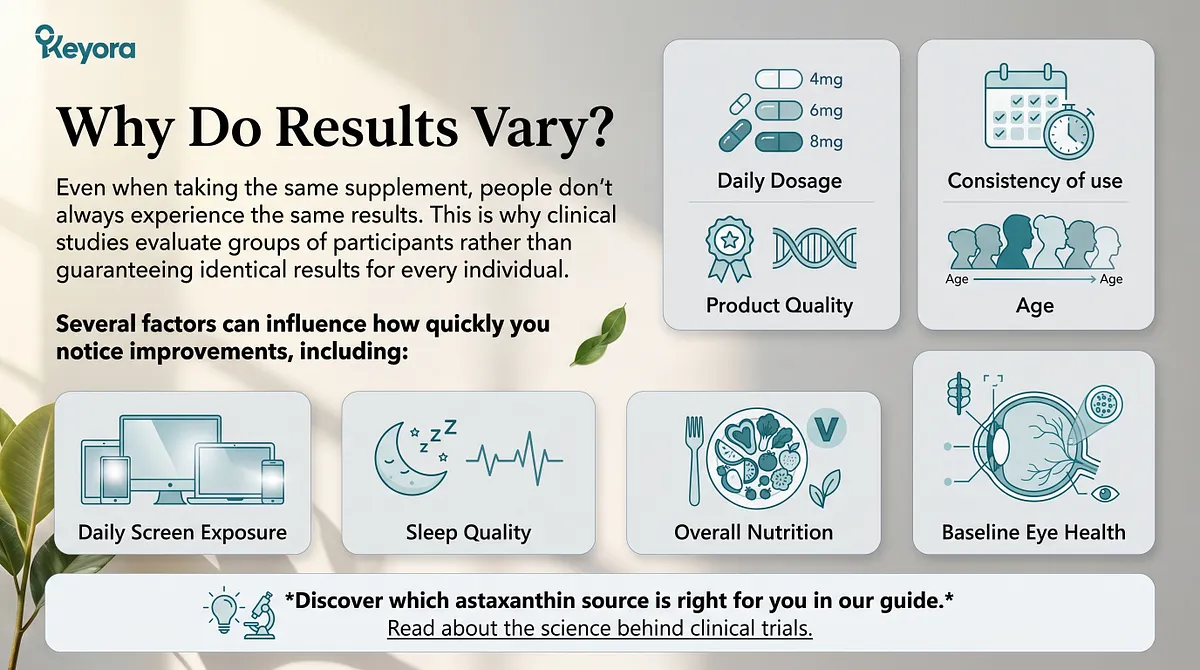
Even when taking the same supplement, people don’t always experience the same results.
Several factors can influence how quickly you notice improvements, including:
· Daily dosage
· Product quality
· Consistency of use
· Age
· Daily screen exposure
· Sleep quality
· Overall nutrition
· Baseline eye health
This is why clinical studies evaluate groups of participants rather than guaranteeing identical results for every individual.
Recovery Protocol
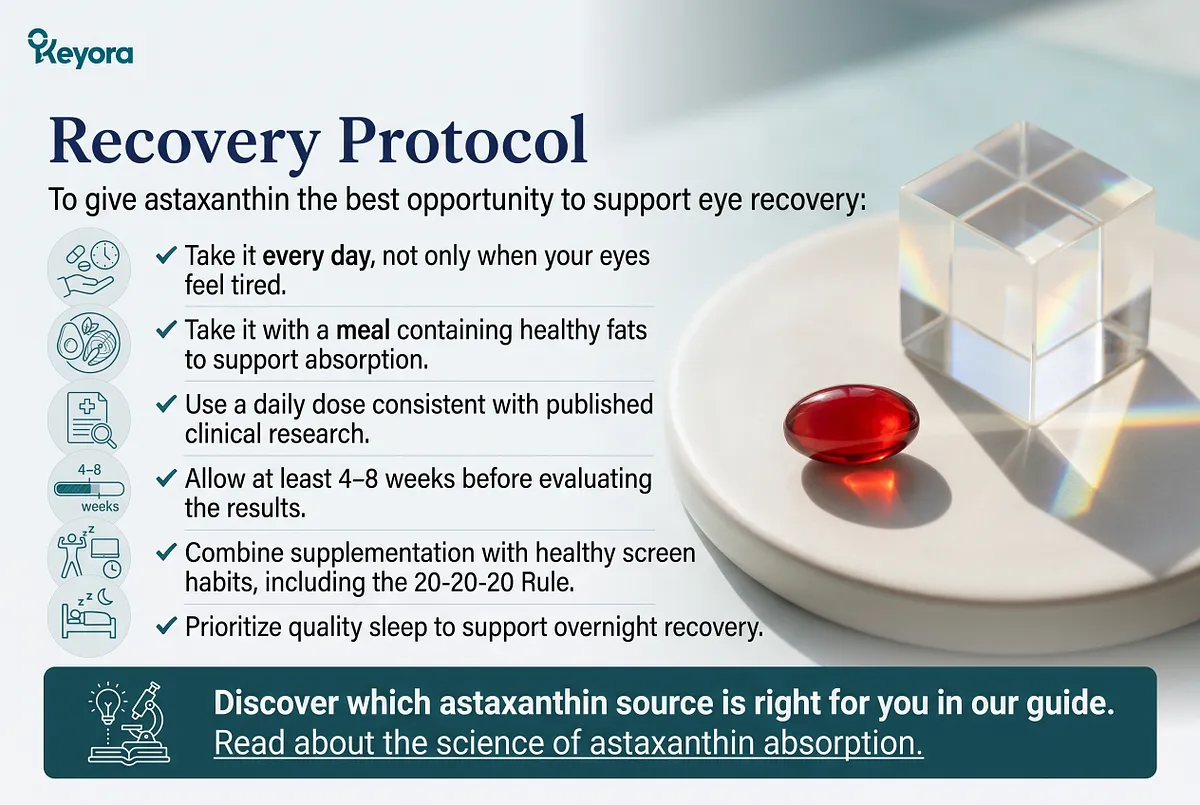
To give astaxanthin the best opportunity to support eye recovery:
✔ Take it every day, not only when your eyes feel tired.
✔ Take it with a meal containing healthy fats to support absorption.
✔ Use a daily dose consistent with published clinical research.
✔ Allow at least 4–8 weeks before evaluating the results.
✔ Combine supplementation with healthy screen habits, including the 20-20-20 Rule.
✔ Prioritize quality sleep to support overnight recovery.
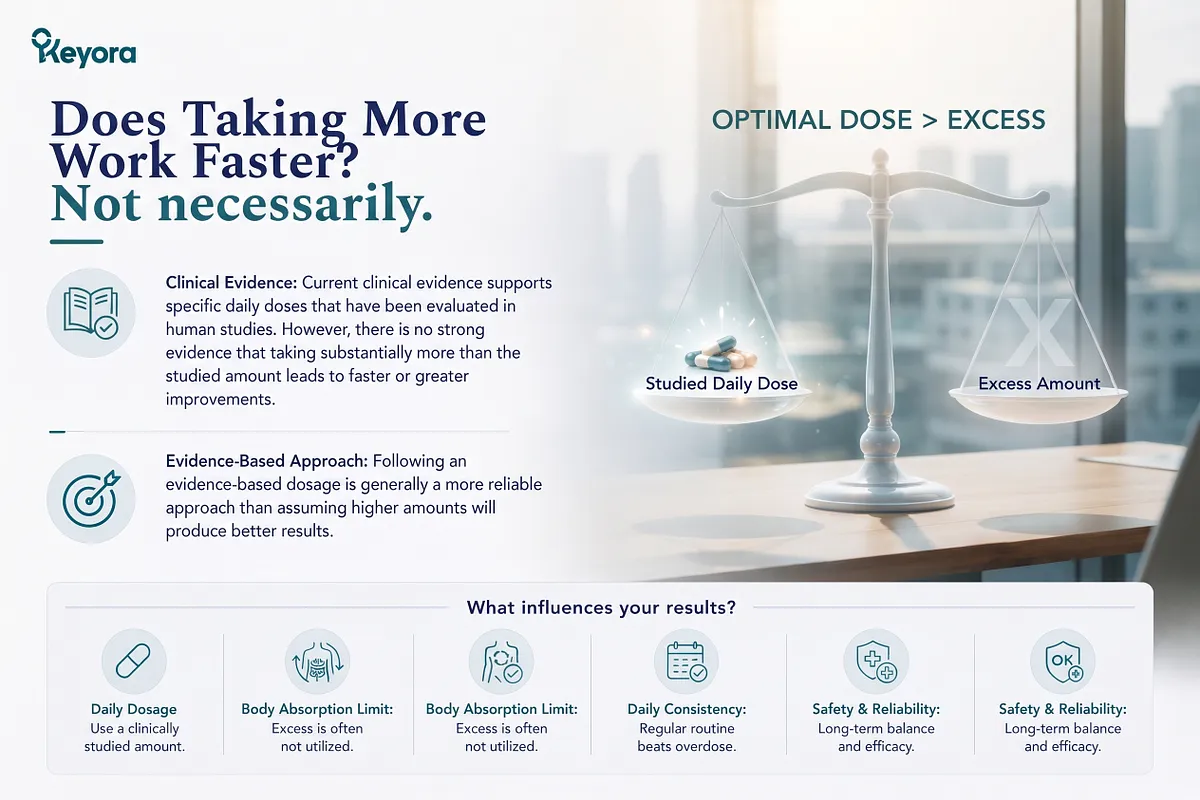
Does Taking More Work Faster?
Not necessarily.
Current clinical evidence supports specific daily doses that have been evaluated in human studies. However, there is no strong evidence that taking substantially more than the studied amount leads to faster or greater improvements.
Following an evidence-based dosage is generally a more reliable approach than assuming higher amounts will produce better results.
The Keyora Verdict
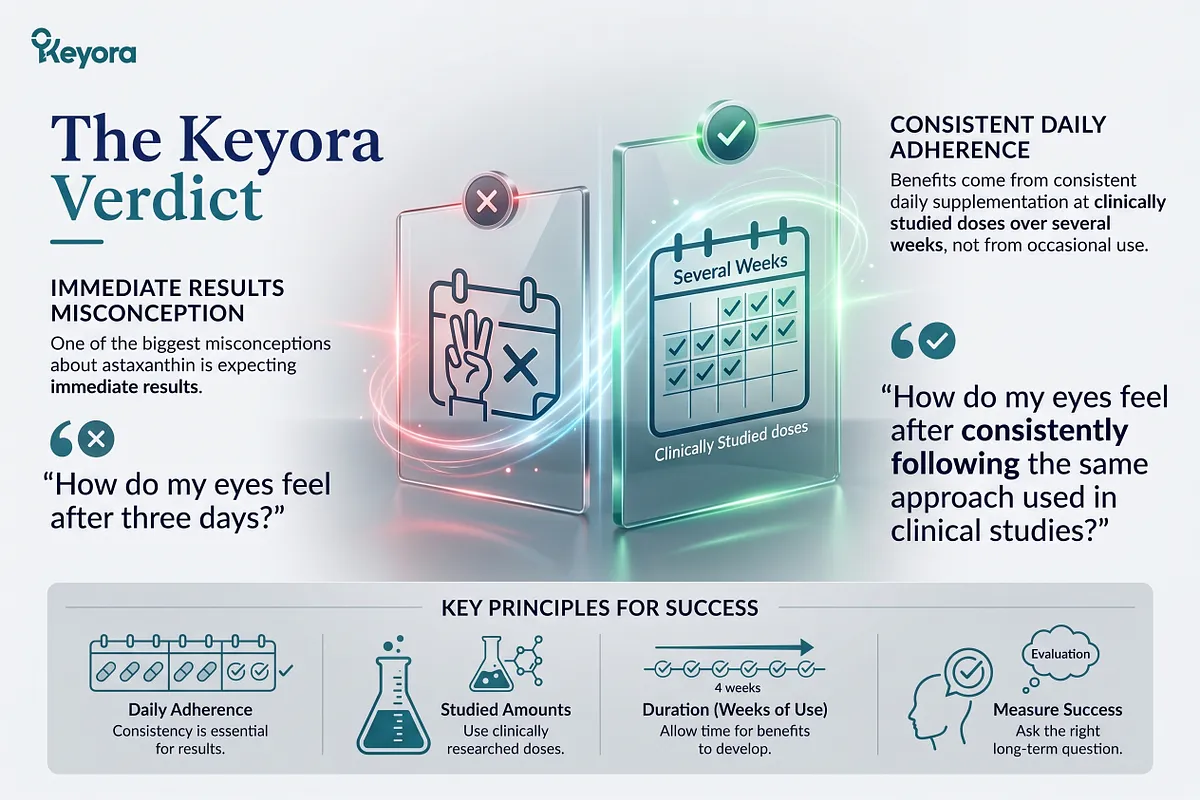
One of the biggest misconceptions about astaxanthin is expecting immediate results.
Clinical research suggests that the benefits observed for eye fatigue come from consistent daily supplementation at clinically studied doses over several weeks, not from occasional use.
If you’re evaluating whether astaxanthin works for you, the better question isn’t:
“How do my eyes feel after three days?”
It’s:
“How do my eyes feel after consistently following the same approach used in clinical studies?
Frequently Asked Questions
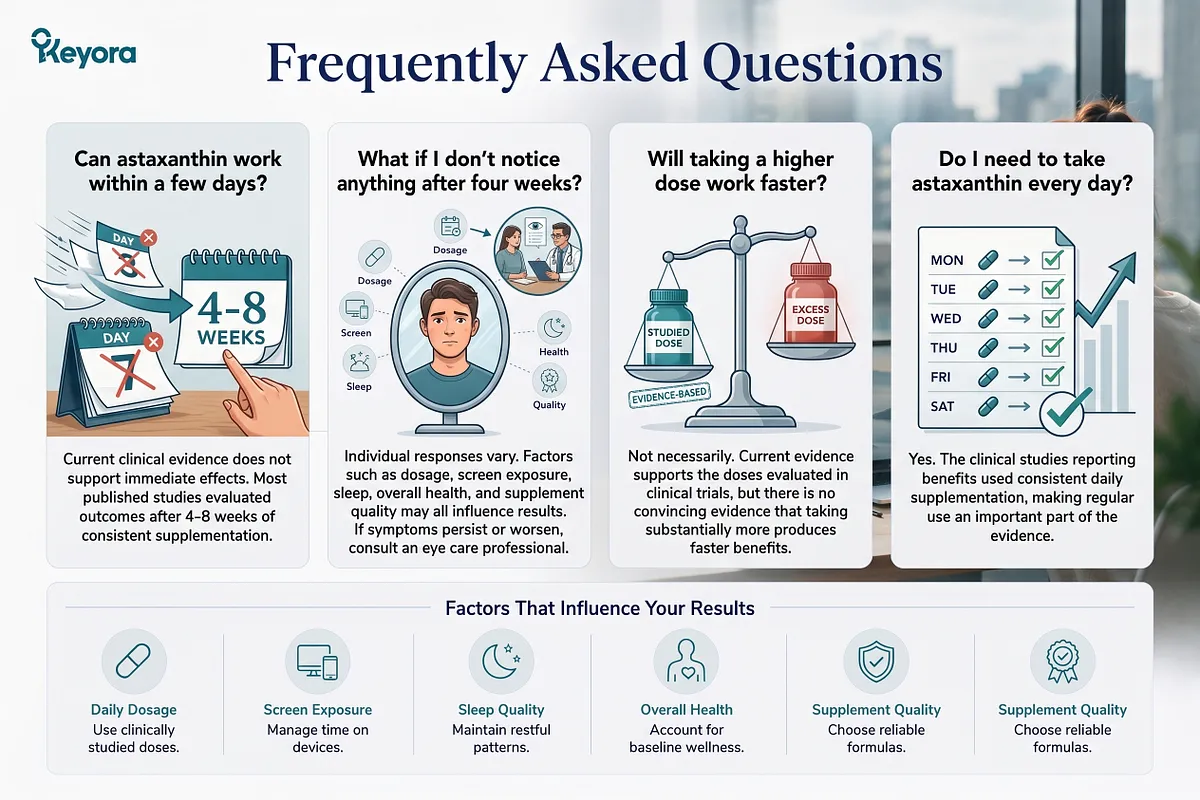
Can astaxanthin work within a few days?
Current clinical evidence does not support immediate effects. Most published studies evaluated outcomes after 4–8 weeks of consistent supplementation.
What if I don’t notice anything after four weeks?
Individual responses vary. Factors such as dosage, screen exposure, sleep, overall health, and supplement quality may all influence results. If symptoms persist or worsen, consult an eye care professional.
Will taking a higher dose work faster?
Not necessarily. Current evidence supports the doses evaluated in clinical trials, but there is no convincing evidence that taking substantially more produces faster benefits.
Do I need to take astaxanthin every day?
Yes. The clinical studies reporting benefits used consistent daily supplementation, making regular use an important part of the evidence.
Research First
At Keyora, we believe meaningful health decisions should be guided by high-quality evidence rather than marketing claims.
Our educational content is developed by reviewing peer-reviewed human clinical studies and recommendations from recognized health organizations. We aim to explain what current evidence supports while acknowledging where further research is still needed.
Evidence Note
This article is intended for educational purposes only and should not be considered medical advice. Dietary supplements are not intended to diagnose, treat, cure, or prevent any disease. If you experience persistent eye pain, sudden vision changes, or other concerning symptoms, consult a qualified healthcare professional.
References
1. Iwasaki T, et al. Effects of Astaxanthin on Eye Fatigue in Visual Display Terminal Workers.
2. Nagaki Y, et al. Clinical Evaluation of Astaxanthin on Visual Accommodation and Eye Fatigue.
3. Park JS, Chyun JH, Kim YK, Line LL, Chew BP. Astaxanthin: A Review of Its Pharmacology and Clinical Applications.
4. Sheppard AL, Wolffsohn JS. Digital Eye Strain: Prevalence, Measurement and Amelioration. BMJ Open Ophthalmology.
5. Rosenfield M. Computer Vision Syndrome: A Review. Ophthalmic and Physiological Optics.