
Can Astaxanthin Help Dry Eyes?
Keyora Research Q&A Library
This is part of the Keyora Research Q&A Series, derived from Keyora Astaxanthin Research Journal Series.
Within the Keyora Astaxanthin Researcn framework, this Q&A translates complex astaxanthin biology into reader-friendly, evidence-bound answers, focusing on natural astaxanthin identity, molecular structure, antioxidant and redox mechanisms, membrane lipid interaction, mitochondrial resilience, inflammatory signaling pathways, human evidence interpretation, and the scientific principles behind responsible supplementation.
First published by Keyora Research Journal: www.keyorahealth.com
Direct Answer
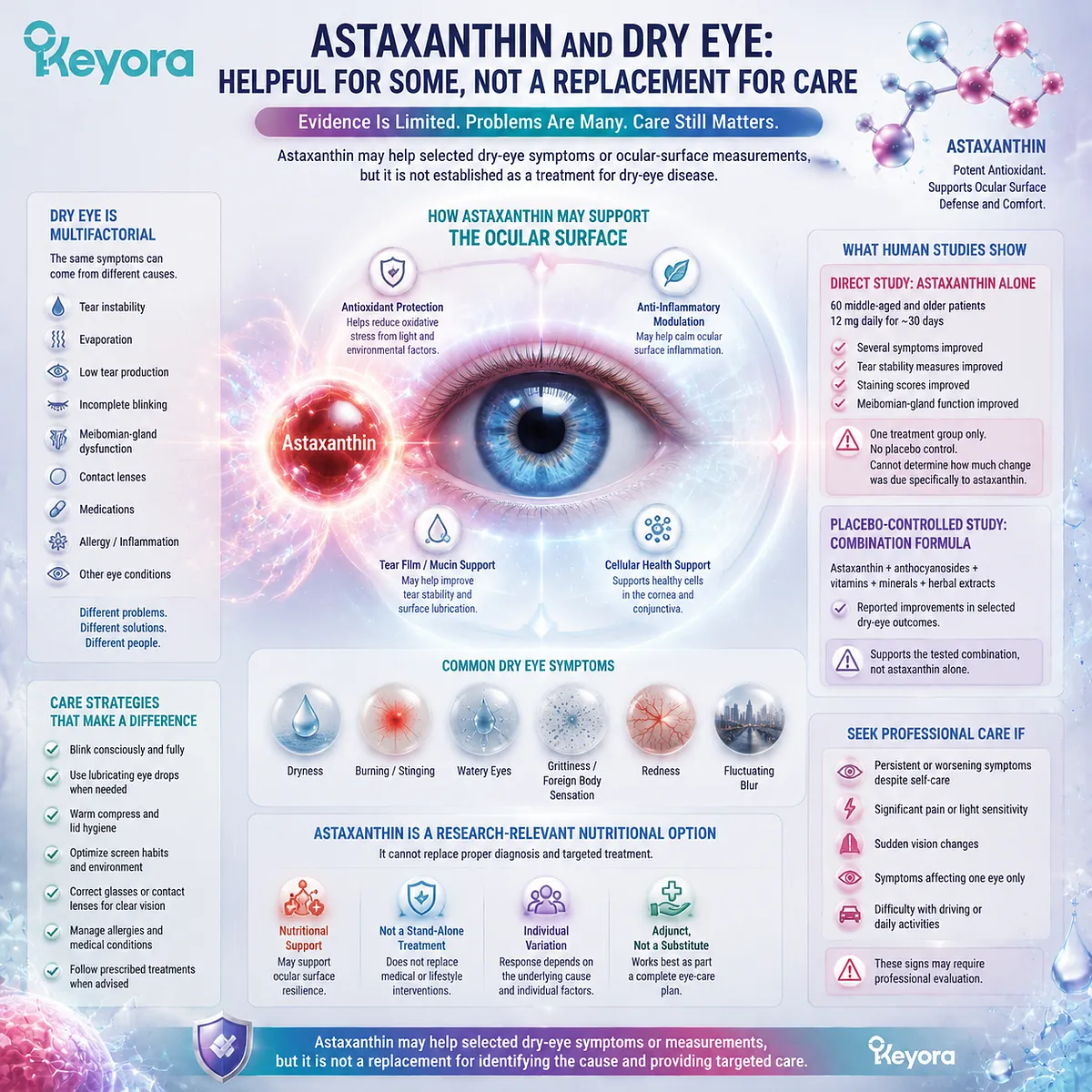
Astaxanthin may help selected dry-eye symptoms or ocular-surface measurements, but the evidence is too limited to establish it as a treatment for dry-eye disease. Dryness, burning, watering, grittiness, redness, and fluctuating blur can arise from different problems, so the same supplement result cannot be applied to every person with uncomfortable eyes.
Astaxanthin may influence selected dry-eye symptoms or tear-film measurements, but dry eye is a multifactorial ocular-surface condition and the current evidence does not support replacing diagnosis, blinking support, lubricating drops, lid care, or prescribed treatment.
The main direct human study gave 60 middle-aged and older patients 12 mg of Astaxanthin daily for about 30 days. Several symptoms, tear-stability measures, staining scores, and meibomian-function measures changed from baseline. However, the study had one treatment group and no placebo control, so it could not show how much of the change was caused specifically by Astaxanthin.
A placebo-controlled study also reported selected dry-eye findings, but it tested Astaxanthin together with anthocyanosides, vitamins, minerals, and several herbal extracts. That trial supports the tested combination, not Astaxanthin alone.
Astaxanthin may therefore be a research-relevant nutritional option. It cannot replace identifying whether the main problem involves tear instability, evaporation, low tear production, incomplete blinking, meibomian-gland dysfunction, contact lenses, medication, allergy, inflammation, or another eye condition.
Dry Eye Is More Than Too Few Tears
Dryness, burning, watering, and fluctuating blur can reflect tear instability, evaporation, inflammation, gland dysfunction, or neurosensory factors
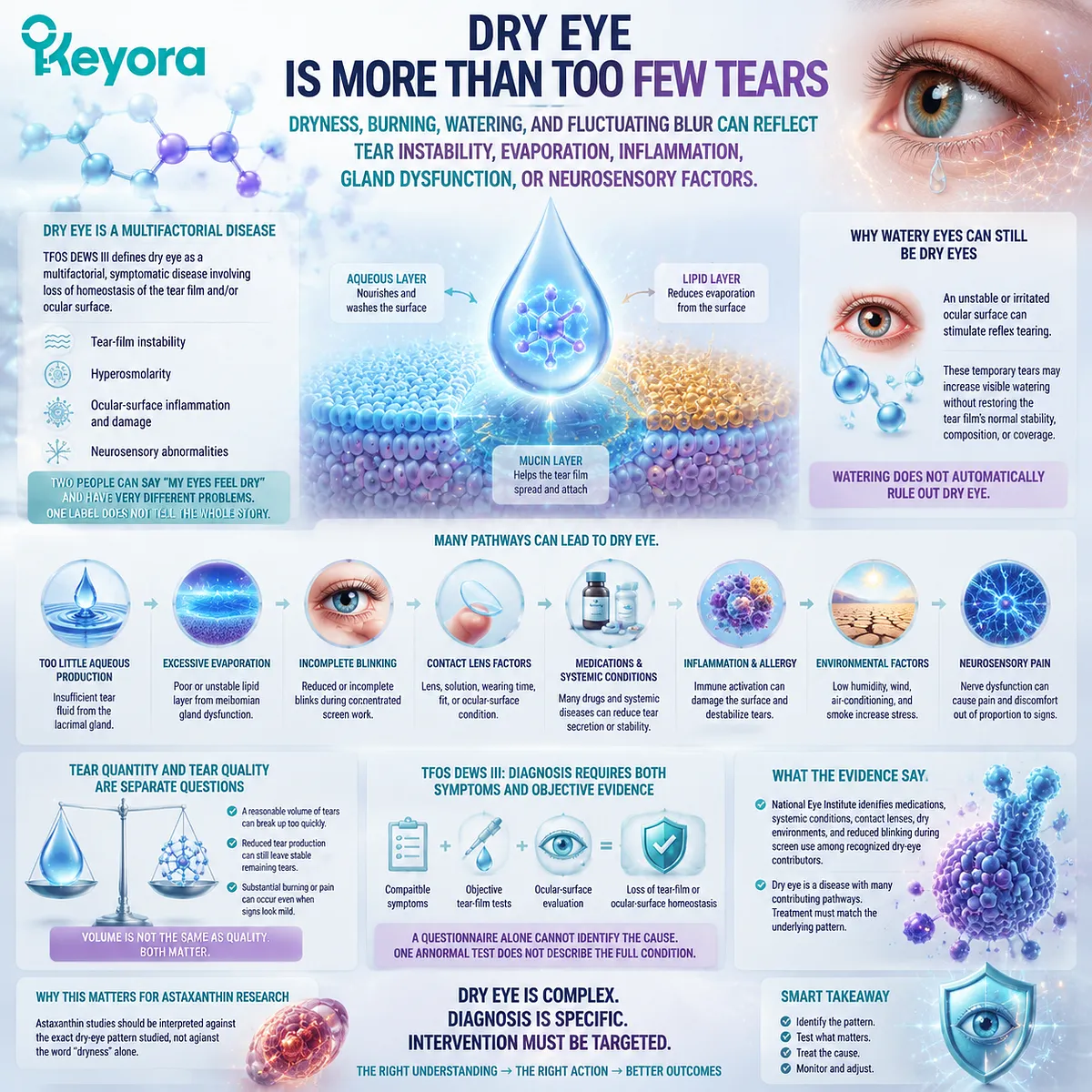
Dry-eye disease is not defined simply as a shortage of tears. TFOS DEWS III describes it as a multifactorial, symptomatic disease involving loss of homeostasis of the tear film and/or ocular surface. Possible contributing factors include tear-film instability, hyperosmolarity, ocular-surface inflammation and damage, and neurosensory abnormalities.
This explains why two people who both say “my eyes feel dry” may have very different problems.
One person may produce too little aqueous tear fluid.
Another may produce tears that evaporate too quickly because the oily contribution from the eyelids is inadequate or poorly distributed.
Another may blink incompletely during concentrated screen work.
A contact-lens wearer may have disruption caused by the lens, solution, wearing time, fit, or ocular-surface condition.
Medication effects, allergy, eyelid abnormalities, autoimmune disease, previous eye procedures, environmental dryness, inflammation, and nerve-related pain can also contribute. The National Eye Institute identifies medications, systemic conditions, contact lenses, dry environments, and reduced blinking during screen use among recognized dry-eye contributors.
Watery eyes do not automatically rule out dry eye. An unstable or irritated ocular surface can stimulate reflex tearing. Those temporary tears may increase visible watering without restoring the tear film’s normal stability, composition, or coverage.
Tear quantity and tear quality are therefore separate questions.
A person can have a reasonable volume of tears that breaks up too quickly.
Another person can have reduced tear production but relatively stable remaining tears.
Another may have substantial burning or pain even when common clinical signs appear modest.
TFOS DEWS III also emphasizes that diagnosis requires compatible symptoms together with objective evidence of lost tear-film or ocular-surface homeostasis. A questionnaire alone cannot identify the cause, and one abnormal tear test does not describe the complete condition.
Astaxanthin research should therefore be interpreted against the exact dry-eye pattern studied, not against the word “dryness” alone.
Human Studies Measured Different Dry-Eye Endpoints
Symptoms, tear breakup, tear production, corneal staining, and meibomian measures answer separate questions
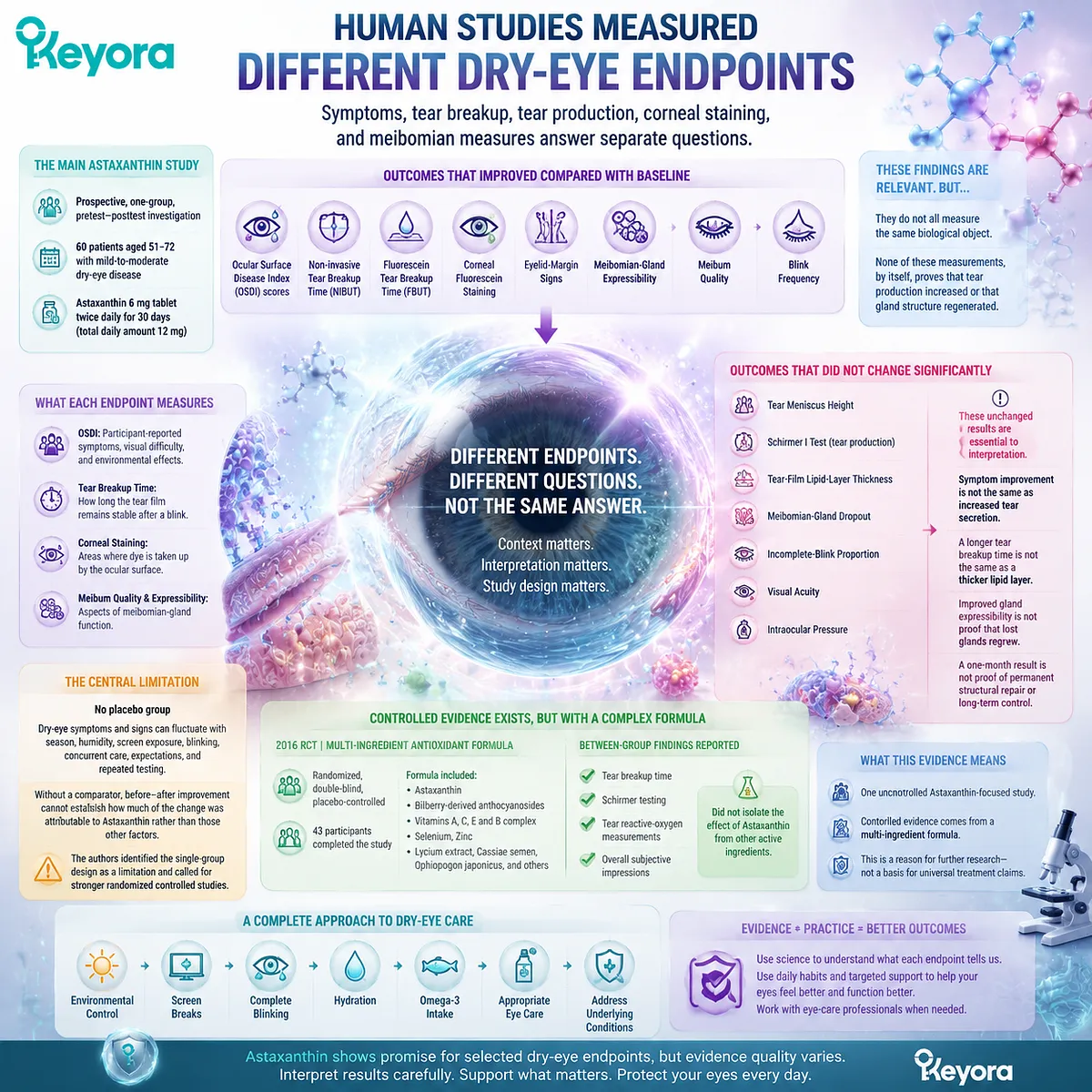
The main Astaxanthin-focused human study was a prospective, one-group, pretest-posttest investigation. It enrolled 60 patients aged 51 to 72 with mild-to-moderate dry-eye disease. Participants took a 6 mg Astaxanthin tablet twice daily for 30 days, producing a total daily amount of 12 mg.
Compared with baseline, the study reported changes in:
-
Ocular Surface Disease Index scores
-
non-invasive tear breakup time
-
fluorescein tear breakup time
-
corneal fluorescein staining
-
eyelid-margin signs
-
meibomian-gland expressibility
-
meibum quality
-
blink frequency
These findings are relevant, but they do not all measure the same biological object.
The Ocular Surface Disease Index records symptoms, visual difficulty, and environmental effects reported by the participant.
Tear breakup time measures how long the tear film remains stable after a blink.
Corneal staining identifies areas where dye is taken up by the ocular surface.
Meibum quality and expressibility assess aspects of meibomian-gland function.
None of these measurements, by itself, proves that tear production increased or that gland structure regenerated.
Several outcomes did not change significantly in the same study. These included tear meniscus height, the Schirmer I test, tear-film lipid-layer thickness, meibomian-gland dropout, incomplete-blink proportion, visual acuity, and intraocular pressure.
Those unchanged results are essential to interpretation.
They show that symptom improvement is not the same as increased tear secretion.
A longer tear breakup time is not the same as a thicker lipid layer.
Improved gland expressibility is not proof that lost glands regrew.
A one-month result is not proof of permanent structural repair or long-term control.
The lack of a placebo group is the study’s central limitation. Dry-eye symptoms and signs can fluctuate with season, humidity, screen exposure, blinking, concurrent care, expectations, and repeated testing. Without a comparator, before-after improvement cannot establish how much of the change was attributable to Astaxanthin rather than those other factors. The authors themselves identified the single-group design as a limitation and called for stronger randomized controlled studies.
A 2016 randomized, double-blind, placebo-controlled study provides controlled evidence, but it examined a multi-ingredient antioxidant product. The formula included Astaxanthin, bilberry-derived anthocyanosides, vitamins A, C, E and B complex, selenium, zinc, Lycium extract, Cassiae semen, Ophiopogon japonicus, and other components. Forty-three participants completed the study.
That study reported between-group findings involving tear breakup time, Schirmer testing, tear reactive-oxygen measurements, and overall subjective impressions. It did not show that Astaxanthin alone caused those results, because the design did not compare Astaxanthin with the other active ingredients.
The current evidence therefore consists of an uncontrolled Astaxanthin-focused study and controlled evidence involving a complex formula. That is a reason for further research, not a basis for universal treatment claims.
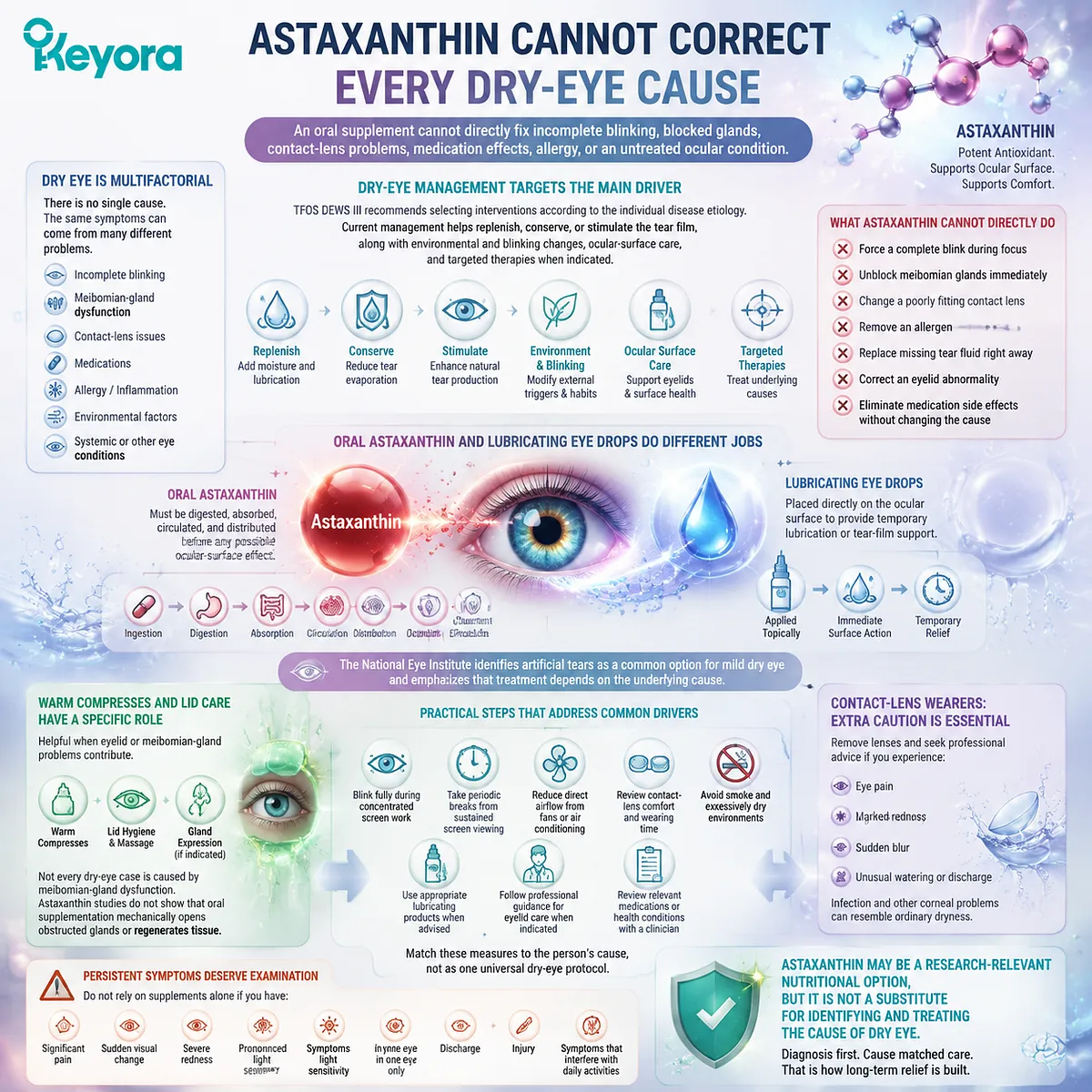
Astaxanthin Cannot Correct Every Dry-Eye Cause
An oral supplement cannot directly fix incomplete blinking, blocked glands, contact-lens problems, medication effects, allergy, or an untreated ocular condition
Dry-eye management works best when it addresses the main driver of the condition.
TFOS DEWS III recommends selecting interventions according to the individual disease etiology. Current management includes methods that replenish, conserve, or stimulate the tear film, together with environmental and blinking changes, ocular-surface care, and targeted therapies when indicated.
Astaxanthin cannot directly correct an incomplete blink during concentrated screen work. It cannot change a poorly fitting contact lens, remove an allergen, replace missing tear fluid immediately, correct an eyelid abnormality, or stop a medication-related effect without addressing the responsible medication.
Oral Astaxanthin and lubricating eye drops also perform different functions.
Artificial tears are placed directly on the ocular surface to provide temporary lubrication or tear-film support. Astaxanthin must first be digested, absorbed, circulated, and distributed before any possible ocular-surface effect could occur. The National Eye Institute identifies artificial tears as a common option for mild dry eye while emphasizing that treatment depends on the underlying cause.
The same distinction applies to warm compresses and lid care. These approaches may be recommended when eyelid or meibomian-gland problems contribute, but not every dry-eye case is caused by meibomian-gland dysfunction. Astaxanthin studies do not show that oral supplementation mechanically opens obstructed glands or regenerates gland tissue.
Practical steps may include:
-
blinking fully during concentrated screen work
-
taking periodic breaks from sustained screen viewing
-
reducing direct airflow from fans or air conditioning
-
reviewing contact-lens comfort and wearing time
-
avoiding smoke and excessively dry environments
-
using appropriate lubricating products when advised
-
following professional guidance for eyelid care when indicated
-
reviewing relevant medications or health conditions with a clinician
These measures should be matched to the person’s cause rather than applied as one universal dry-eye protocol.
Contact-lens wearers require additional caution. Eye pain, marked redness, light sensitivity, sudden blur, unusual watering, or discharge while wearing contact lenses should prompt lens removal and professional advice, because infection and other corneal problems can resemble ordinary dryness.
Persistent symptoms also deserve examination. Significant pain, sudden visual change, severe redness, pronounced light sensitivity, one-sided symptoms, discharge, injury, or symptoms that interfere with ordinary activities should not be managed only by experimenting with supplements.
Use the Keyora Symptom – Surface – Cause Check
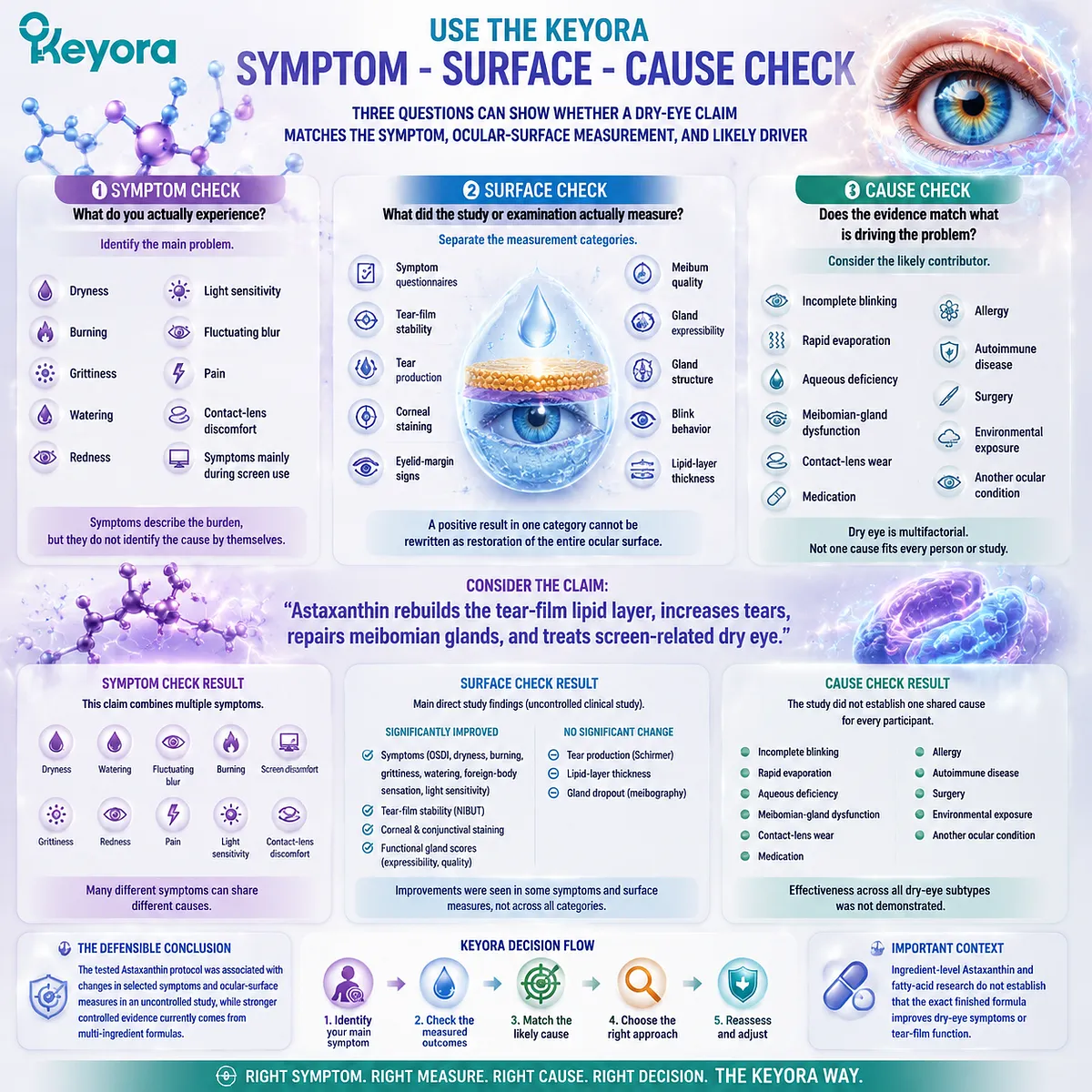
Three questions can show whether a dry-eye claim matches the symptom, ocular-surface measurement, and likely driver
The Keyora Symptom – Surface – Cause Check turns a broad supplement claim into a more useful decision.
Symptom: What do you actually experience?
Identify whether the main problem is:
-
dryness
-
burning
-
grittiness
-
watering
-
redness
-
light sensitivity
-
fluctuating blur
-
pain
-
contact-lens discomfort
-
symptoms mainly during screen use
Symptoms describe the burden, but they do not identify the cause by themselves.
Surface: What did the study or examination actually measure?
Separate:
-
symptom questionnaires
-
tear-film stability
-
tear production
-
corneal staining
-
eyelid-margin signs
-
meibum quality
-
gland expressibility
-
gland structure
-
blink behavior
-
lipid-layer thickness
A positive result in one category cannot be rewritten as restoration of the entire ocular surface.
Cause: Does the evidence match what is driving the problem?
Ask whether the likely contributor is:
-
incomplete blinking
-
rapid evaporation
-
aqueous deficiency
-
meibomian-gland dysfunction
-
contact-lens wear
-
medication
-
allergy
-
autoimmune disease
-
surgery
-
environmental exposure
-
another ocular condition
Consider the claim:
“Astaxanthin rebuilds the tear-film lipid layer, increases tears, repairs meibomian glands, and treats screen-related dry eye.”
The Symptom check shows that this claim combines dryness, watering, blur, and screen discomfort.
The Surface check shows that the main direct study reported changes in some symptoms, tear-stability measures, staining, and functional gland scores, while tear production, lipid-layer thickness, and gland dropout did not significantly change.
The Cause check shows that the study did not establish one shared cause for every participant or prove effectiveness across all dry-eye subtypes.
The defensible conclusion is narrower:
The tested Astaxanthin protocol was associated with changes in selected symptoms and ocular-surface measures in an uncontrolled study, while stronger controlled evidence currently comes from multi-ingredient formulas.
Within the supplied Keyora evidence base, ingredient-level Astaxanthin and fatty-acid research do not establish that the exact finished formula improves dry-eye symptoms or tear-film function.
Closing Summary
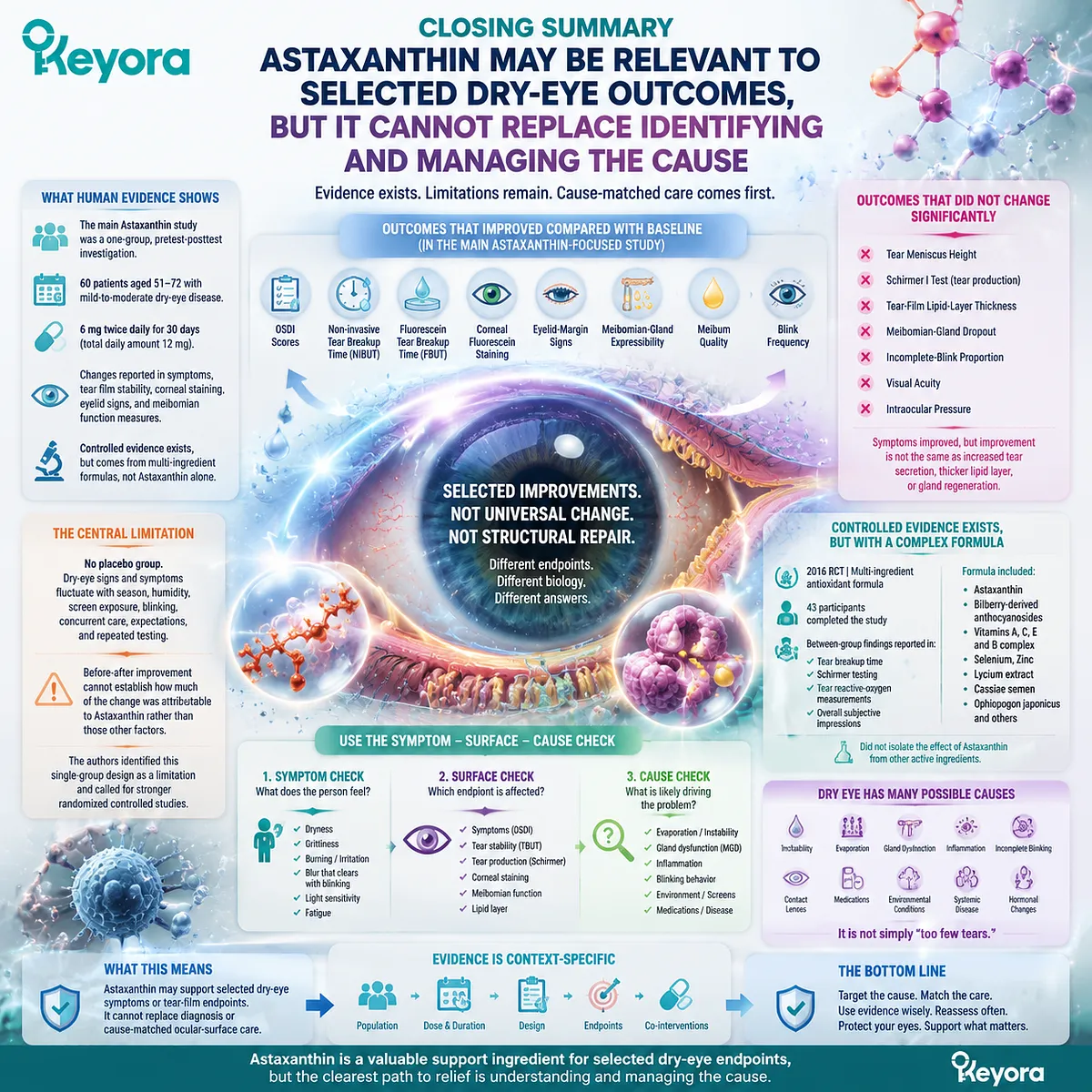
Astaxanthin may be relevant to selected dry-eye outcomes, but it cannot replace identifying and managing the cause
Astaxanthin has limited human evidence involving dry-eye symptoms, tear-film stability, corneal staining, eyelid signs, and meibomian-function measurements.
The main Astaxanthin-focused study reported several changes after 30 days, but it had no placebo group. Important outcomes, including Schirmer testing, tear meniscus height, lipid-layer thickness, and meibomian-gland dropout, did not significantly change. Controlled evidence also exists, but it comes from multi-ingredient formulas that cannot isolate Astaxanthin.
Use the Symptom – Surface – Cause Check. Identify what the person feels, determine which ocular-surface endpoint was measured, and ask whether the research matches the likely cause.
Dry eye is not simply too few tears. It can involve instability, evaporation, gland dysfunction, inflammation, blinking, contact lenses, medications, environmental conditions, or other disease.
Astaxanthin may support selected dry-eye symptoms or tear-film endpoints, but it cannot replace diagnosis or cause-matched ocular-surface care.
This article is for educational and informational purposes only. It does not provide medical advice, diagnosis, treatment, cure, prevention, disease outcome claims, hormone restoration claims, fertility outcome claims, or formula-specific clinical efficacy claims.