
Can Human Studies on Natural Astaxanthin Prove Synthetic Astaxanthin Works?
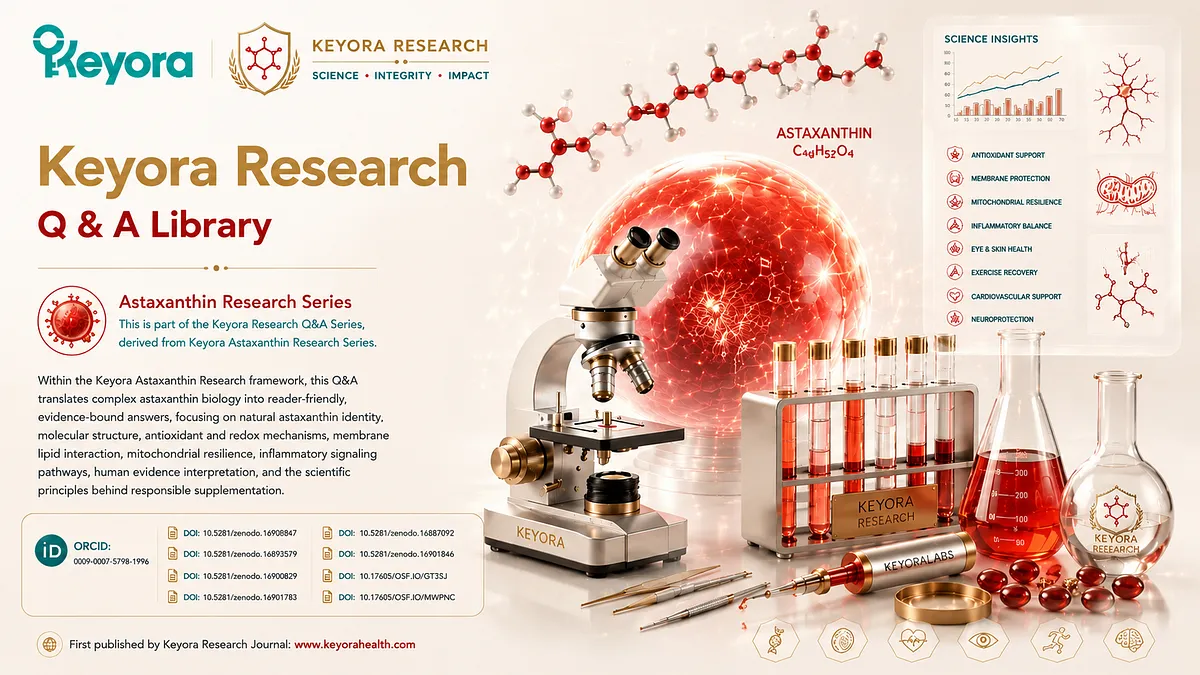
Keyora Research Q&A Library
This is part of the Keyora Research Q&A Series, derived from Keyora Astaxanthin Research Journal Series.
Within the Keyora Astaxanthin Researcn framework, this Q&A translates complex astaxanthin biology into reader-friendly, evidence-bound answers, focusing on natural astaxanthin identity, molecular structure, antioxidant and redox mechanisms, membrane lipid interaction, mitochondrial resilience, inflammatory signaling pathways, human evidence interpretation, and the scientific principles behind responsible supplementation.
First published by Keyora Research Journal: www.keyorahealth.com
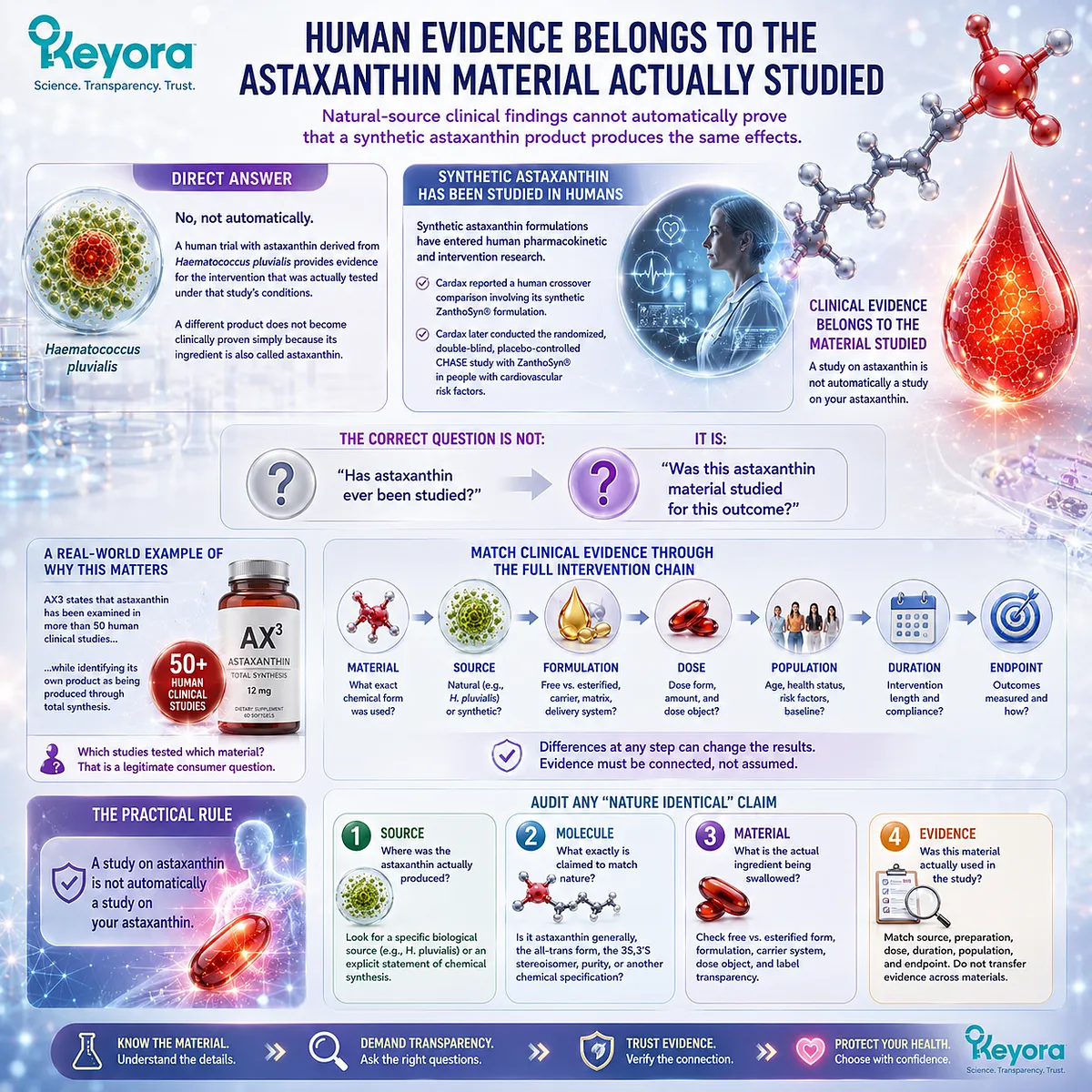
Direct Answer
Human evidence belongs first to the Astaxanthin material actually studied, so natural-source clinical findings cannot automatically prove that a synthetic Astaxanthin product produces the same effects.
No, not automatically.
If a human trial used Astaxanthin derived from Haematococcus pluvialis, the study provides evidence for the intervention that was actually tested under that study’s conditions. A different product does not become clinically proven simply because its ingredient is also called Astaxanthin.
At the same time, it would be inaccurate to solve this problem by claiming that synthetic Astaxanthin has never been studied in humans.
Synthetic Astaxanthin formulations have entered human pharmacokinetic and intervention research.
Cardax, for example, reported a human crossover comparison involving its synthetic ZanthoSyn formulation and later conducted the randomized, double-blind, placebo-controlled CHASE study with ZanthoSyn in people with cardiovascular risk factors.
The correct question is therefore not:
“Has Astaxanthin ever been studied?”
It is:
“Was this Astaxanthin material studied for this outcome?”
Clinical evidence should be matched through the full intervention chain:
Material → Source → Formulation → Dose → Population → Duration → Endpoint
This is especially important when a supplement page discusses dozens of human Astaxanthin studies.
AX3 currently states that Astaxanthin has been examined in more than 50 human clinical studies while identifying its own product as being produced through total synthesis.
That combination creates a legitimate consumer question about which studies actually tested which material.
The practical rule is simple:
A study on Astaxanthin is not automatically a study on your Astaxanthin.
Why “Astaxanthin Has Human Studies” Is Not Enough
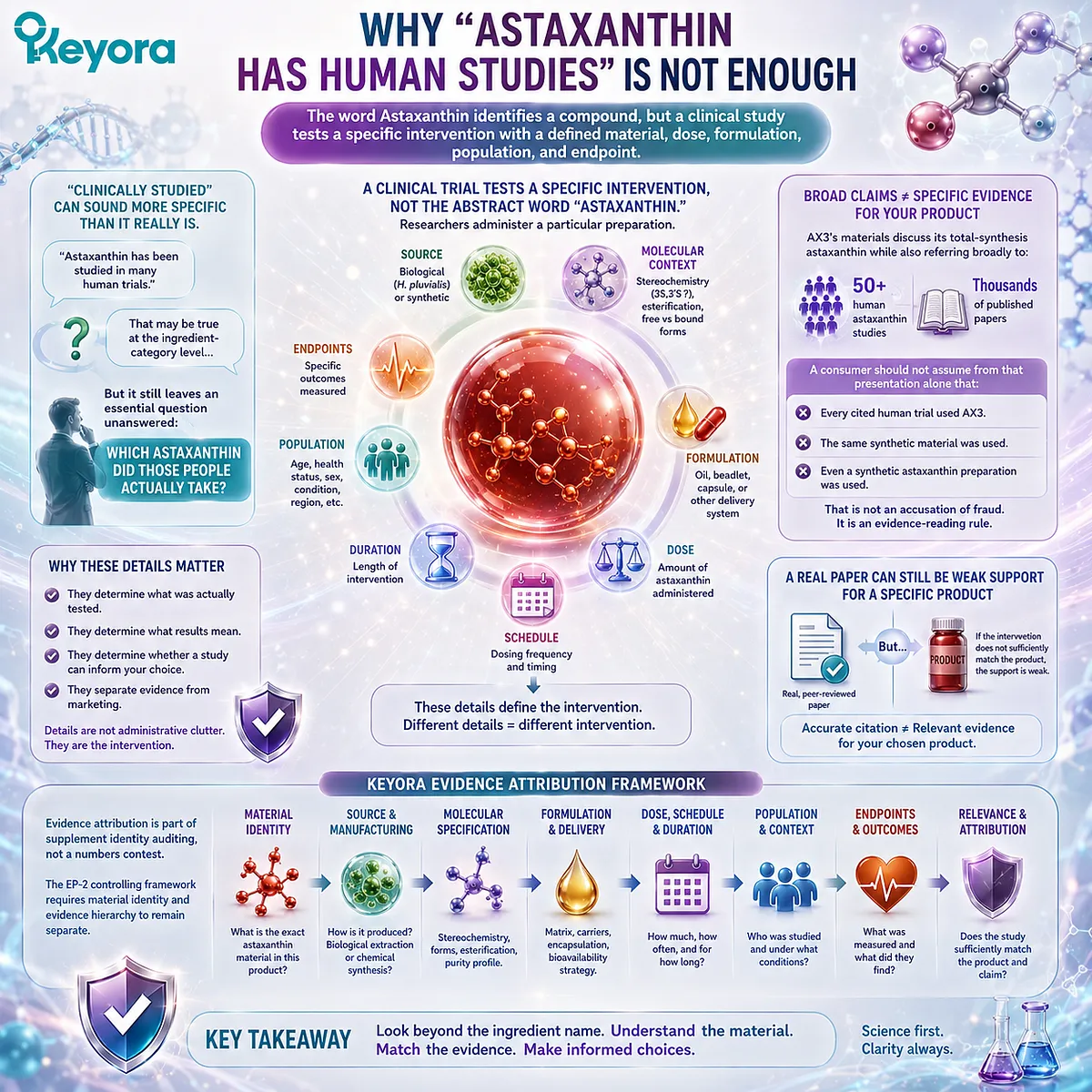
The word Astaxanthin identifies a compound, but a clinical study tests a specific intervention with a defined material, dose, formulation, population, and endpoint.
“Clinically studied” can sound much more specific than it really is.
Suppose a product page states that Astaxanthin has been studied in many human trials.
That statement may be factually true at the ingredient-category level.
But it still leaves an essential question unanswered:
Which Astaxanthin did those people actually take?
A clinical trial does not administer the abstract word “Astaxanthin.” Researchers administer a particular preparation.
That preparation may have:
-
a specified biological or synthetic source,
-
a particular stereochemical and molecular-form context,
-
an oil, beadlet, capsule, or other formulation,
-
a defined dose,
-
a specific dosing schedule,
-
and a defined duration.
The trial then measures particular outcomes in a particular population.
Those details are not administrative clutter. They define the intervention.
This distinction becomes especially important when broad Astaxanthin research is presented next to a specific product.
AX3’s current materials discuss its total-synthesis Astaxanthin while also referring broadly to more than 50 human Astaxanthin studies and thousands of published papers.
A consumer should not assume from that presentation alone that every cited human trial used AX3, the same synthetic material, or even a synthetic Astaxanthin preparation.
That is not an accusation of fraud. It is an evidence-reading rule.
A real paper can be accurately cited and still be weak support for a particular product if the intervention in the paper does not sufficiently match the product being promoted.
This is why Keyora treats evidence attribution as part of supplement identity auditing, not as a numbers contest about who can display the longest reference list.
The EP-2 controlling framework specifically requires material identity and evidence hierarchy to remain separate rather than allowing one source’s human research to be automatically borrowed by another.
What Was Actually Given to the People in the Study?
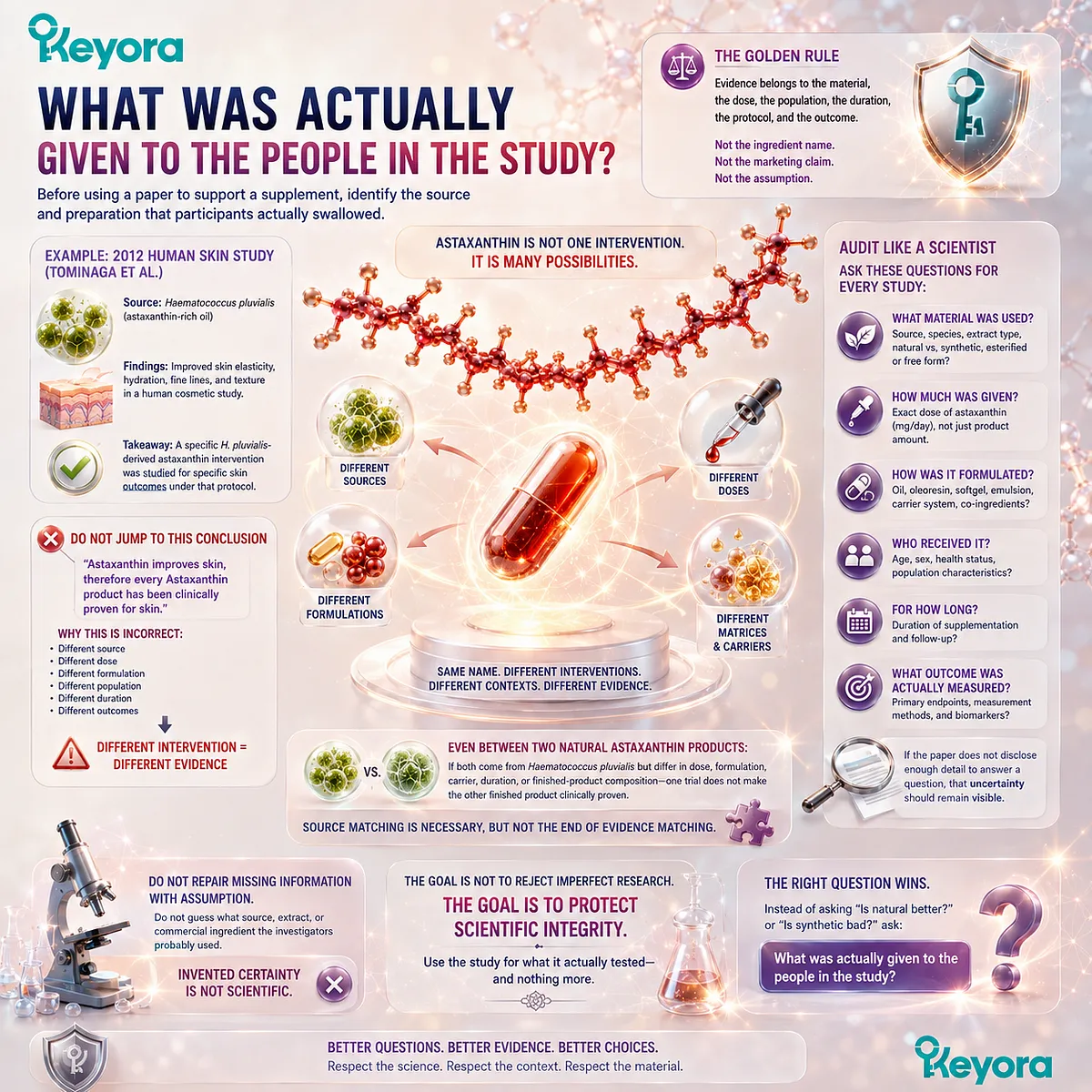
Before using a paper to support a supplement, identify the source and preparation that participants actually swallowed.
The fastest way to audit an Astaxanthin study is to move beyond the title and abstract and look at the intervention description.
For example, a 2012 human skin study by Tominaga and colleagues reported cosmetic skin findings with Astaxanthin derived from Haematococcus pluvialis.
That source description matters.
The scientifically defensible conclusion is not:
“Astaxanthin improves skin, therefore every Astaxanthin product has been clinically proven for skin.”
A more accurate interpretation is:
A particular Haematococcus-derived Astaxanthin intervention was studied for particular skin outcomes under that protocol.
From there, a consumer or reviewer can ask how closely another product matches the studied intervention.
The same logic applies even between two natural Astaxanthin products.
If both are derived from H. pluvialis but differ substantially in dose, formulation, carrier system, duration of use, or finished-product composition, the existence of one trial does not make the other finished product clinically proven.
Source matching is therefore necessary, but it is not the end of evidence matching.
A useful review should ask:
What material was used?
How much was given?
How was it formulated?
Who received it?
For how long?
What outcome was actually measured?
If the paper does not disclose enough detail to answer a question, that uncertainty should remain visible.
Do not repair a poorly described study by guessing what source, extract, or commercial ingredient the investigators probably used.
The goal is not to reject imperfect research. It is to avoid converting missing information into invented certainty.
A Bioavailability Study Does Not Prove the Same Clinical Benefits
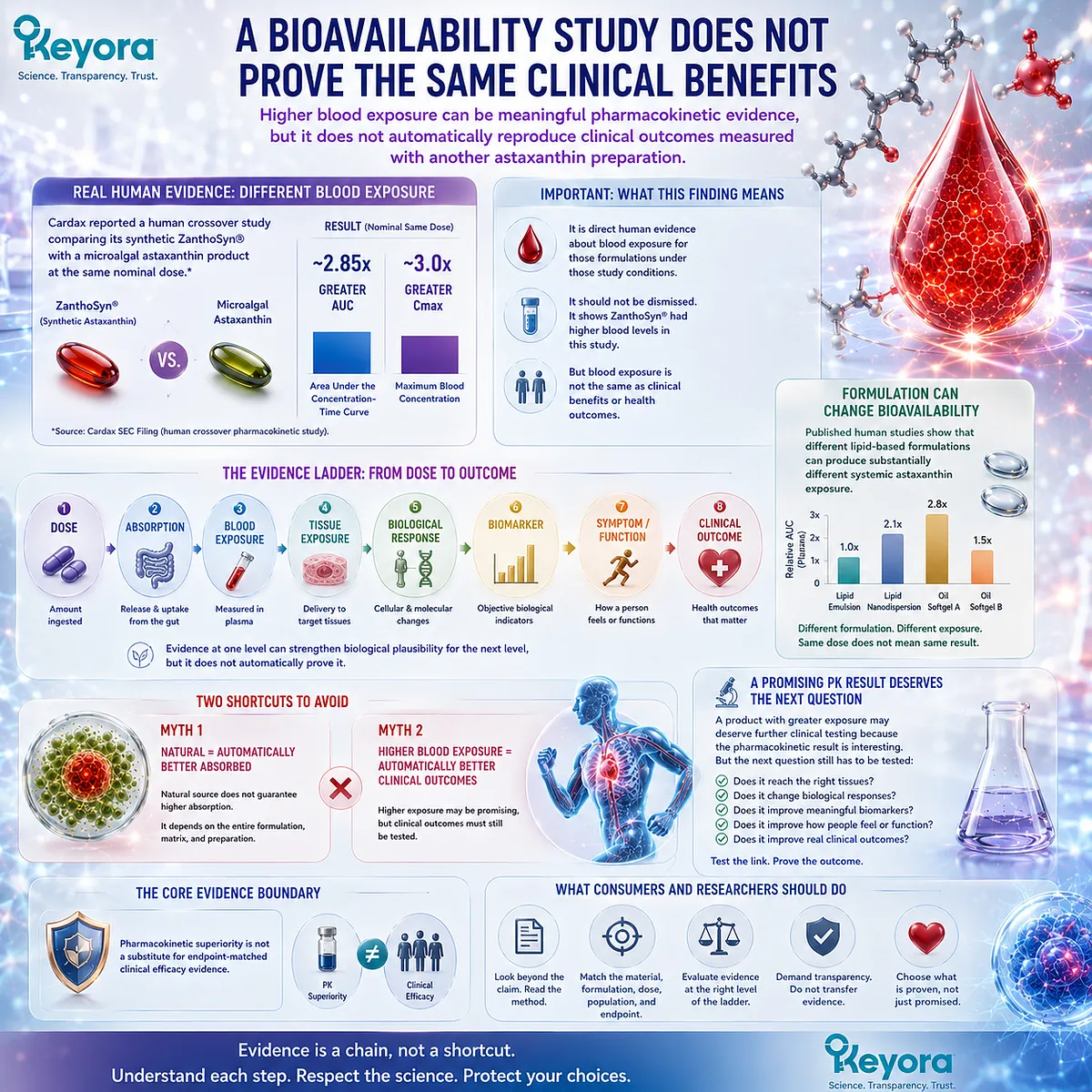
Higher blood exposure can be meaningful pharmacokinetic evidence, but it does not automatically reproduce clinical outcomes measured with another Astaxanthin preparation.
One reason evidence transfer becomes confusing is that pharmacokinetic results can sound like clinical superiority.
Cardax reported a human crossover study comparing its synthetic ZanthoSyn formulation with a microalgal Astaxanthin product at the same nominal dose.
According to the company’s SEC filing, ZanthoSyn produced approximately 2.85-fold greater area under the concentration-time curve and about 3-fold greater maximum blood concentration in that comparison.
That finding should not be dismissed.
It is direct human evidence about blood exposure for those formulations under those study conditions.
But blood exposure is not the same endpoint as skin elasticity, visual fatigue, exercise performance, fertility, cardiovascular events, cognitive function, or another health outcome.
The evidence ladder matters:
Dose
→ Absorption
→ Blood Exposure
→ Tissue Exposure
→ Biological Response
→ Biomarker
→ Symptom or Function
→ Clinical Outcome
Evidence at one level can strengthen biological plausibility for the next level, but it does not automatically prove it.
Formulation itself can also materially affect Astaxanthin pharmacokinetics. Published human work has shown that different lipid-based formulations can produce substantially different systemic Astaxanthin exposure.
Therefore, neither of these shortcuts is reliable:
Natural = automatically better absorbed
or
Higher blood exposure = automatically better clinical outcomes
A product with greater exposure may deserve further clinical testing precisely because the pharmacokinetic result is interesting. But the next question still has to be tested.
This is a core evidence boundary in supplement evaluation:
Pharmacokinetic superiority is not a substitute for endpoint-matched clinical efficacy evidence.
Synthetic Astaxanthin Can Have Its Own Human Evidence
Rejecting automatic evidence transfer does not mean ignoring human research that actually tested a synthetic Astaxanthin material.
This distinction is essential because an anti-fraud article can become misleading itself if it removes inconvenient evidence.
Synthetic Astaxanthin has entered human research.
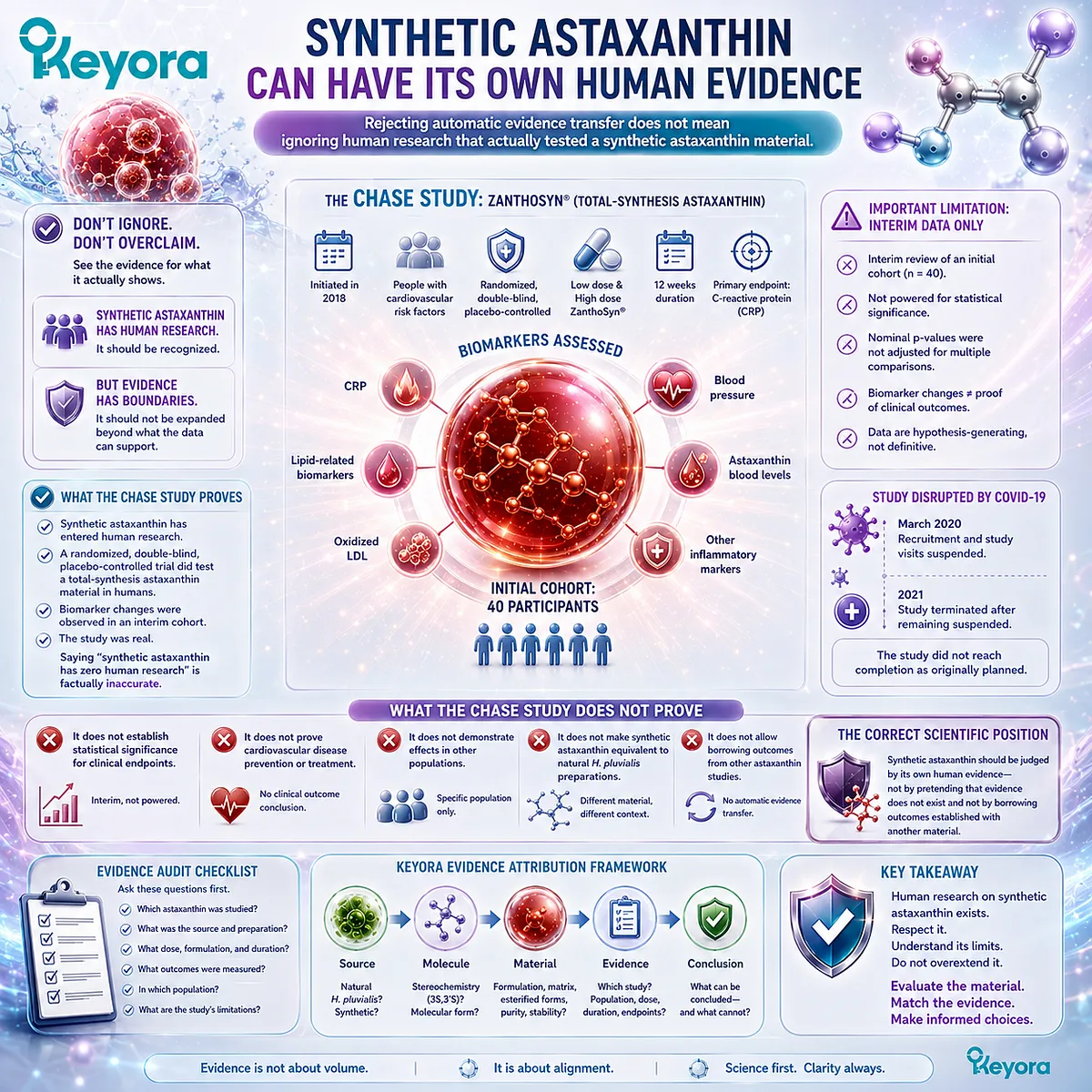
Cardax initiated the CHASE study in 2018 using ZanthoSyn, which the company identified as a total-synthesis Astaxanthin product.
The study was designed as a randomized, double-blind, placebo-controlled trial evaluating low-dose and high-dose ZanthoSyn over 12 weeks in people with cardiovascular risk factors, with C-reactive protein as a primary measure and additional cardiovascular and inflammatory markers assessed.
The company later reported interim results from an initial cohort of 40 participants. Those data included CRP, lipid-related biomarkers, oxidized LDL, blood pressure, and Astaxanthin blood levels. Importantly, Cardax’s SEC filing also stated that the interim review was not powered for statistical significance, and that reported nominal p-values were not adjusted for multiple comparisons.
Those limitations are part of the evidence, not an optional disclaimer.
The CHASE study was subsequently disrupted by the COVID-19 pandemic. Recruitment and study visits were suspended in March 2020, and Cardax now states that the study was terminated in 2021 after remaining suspended.
What does this prove?
It proves that saying “synthetic Astaxanthin has zero human research” would be inaccurate.
What does it not prove?
It does not establish that synthetic Astaxanthin has reproduced every clinical outcome previously reported with natural H. pluvialis preparations. It also does not turn interim biomarker observations into proof of cardiovascular disease prevention or broad clinical efficacy.
The correct scientific position is stronger because it is narrower:
Synthetic Astaxanthin should be judged by its own human evidence, not by pretending that evidence does not exist and not by borrowing outcomes established with another material.
How to Run the Study-Material Match Test
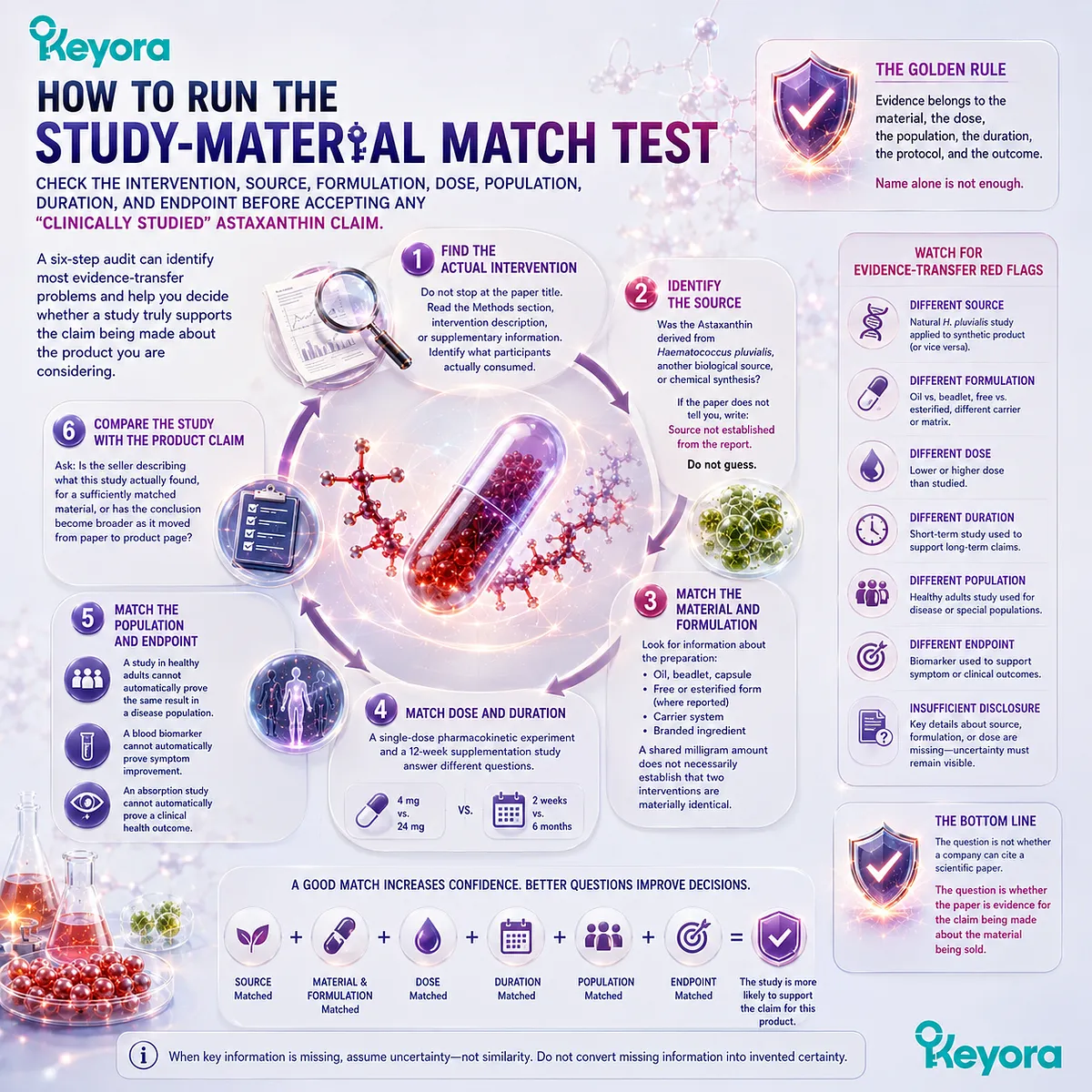
Check the intervention, source, formulation, dose, population, duration, and endpoint before accepting any “clinically studied” Astaxanthin claim.
Consumers do not need to perform a systematic review every time they buy a supplement. A six-step audit can identify most evidence-transfer problems.
1. Find the actual intervention
Do not stop at the paper title.
Read the Methods section, intervention description, or supplementary information. Identify what participants actually consumed.
2. Identify the source
Was the Astaxanthin derived from Haematococcus pluvialis, another biological source, or chemical synthesis?
If the paper does not tell you, write:
Source not established from the report.
Do not guess.
3. Match the material and formulation
Look for information about the preparation, such as oil, beadlet, capsule, free or esterified form where reported, carrier system, or branded ingredient.
A shared milligram amount does not necessarily establish that two interventions are materially identical.
4. Match dose and duration
A single-dose pharmacokinetic experiment and a 12-week supplementation study answer different questions.
So do 4 mg and 24 mg, or two weeks and six months.
5. Match the population and endpoint
A study in healthy adults cannot automatically prove the same result in a disease population.
A blood biomarker cannot automatically prove symptom improvement.
An absorption study cannot automatically prove a clinical health outcome.
6. Compare the study with the product claim
Ask:
Is the seller describing what this study actually found, for a sufficiently matched material, or has the conclusion become broader as it moved from paper to product page?
That final comparison is where evidence auditing becomes practically useful.
The question is not whether a company can cite a scientific paper.
The question is whether the paper is evidence for the claim being made about the material being sold.
The Same Rule Applies to Natural Astaxanthin Products Too
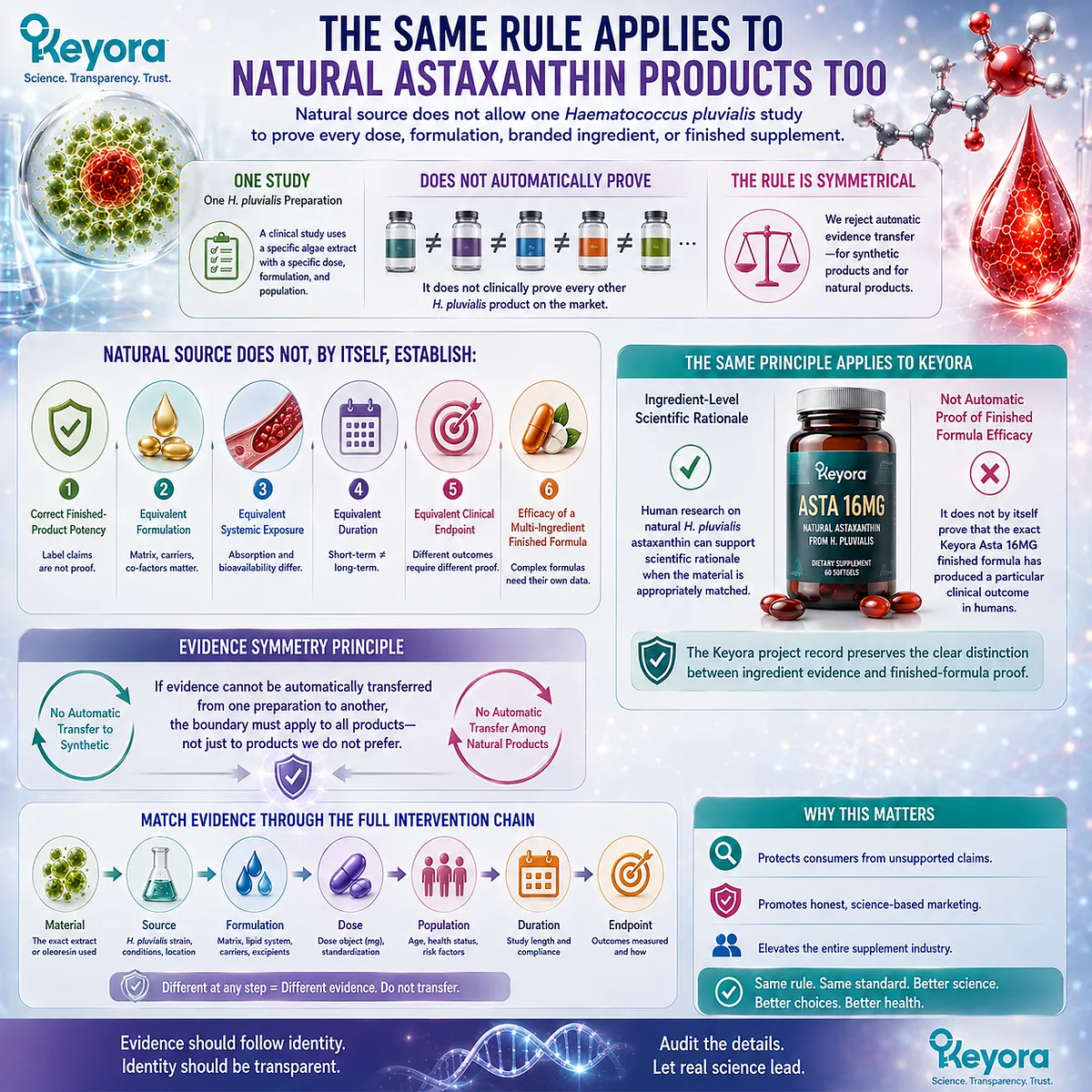
Natural source does not allow one Haematococcus pluvialis study to prove every dose, formulation, branded ingredient, or finished supplement.
Evidence matching must be symmetrical.
If we reject the automatic transfer of natural Astaxanthin research to synthetic Astaxanthin, we must also reject automatic transfer among unrelated natural finished products.
A study using one H. pluvialis preparation does not clinically prove every algae-derived Astaxanthin capsule on the market.
Natural source can establish an important part of material identity. It does not by itself establish:
-
correct finished-product potency,
-
equivalent formulation,
-
equivalent systemic exposure,
-
equivalent duration,
-
equivalent clinical endpoint,
-
or efficacy of a multi-ingredient finished formula.
The same boundary applies to Keyora.
The existence of human research on natural H. pluvialis Astaxanthin can support ingredient-level scientific rationale when the material is appropriately matched. It does not by itself prove that the exact Keyora Asta 16MG finished formula has produced a particular clinical outcome in humans. The existing Keyora project record explicitly preserves that distinction between ingredient evidence and finished-formula proof.
That symmetry is important because evidence auditing should not be designed to make a preferred product win.
It should be designed to make unsupported evidence transfer fail, regardless of whose label is being examined.
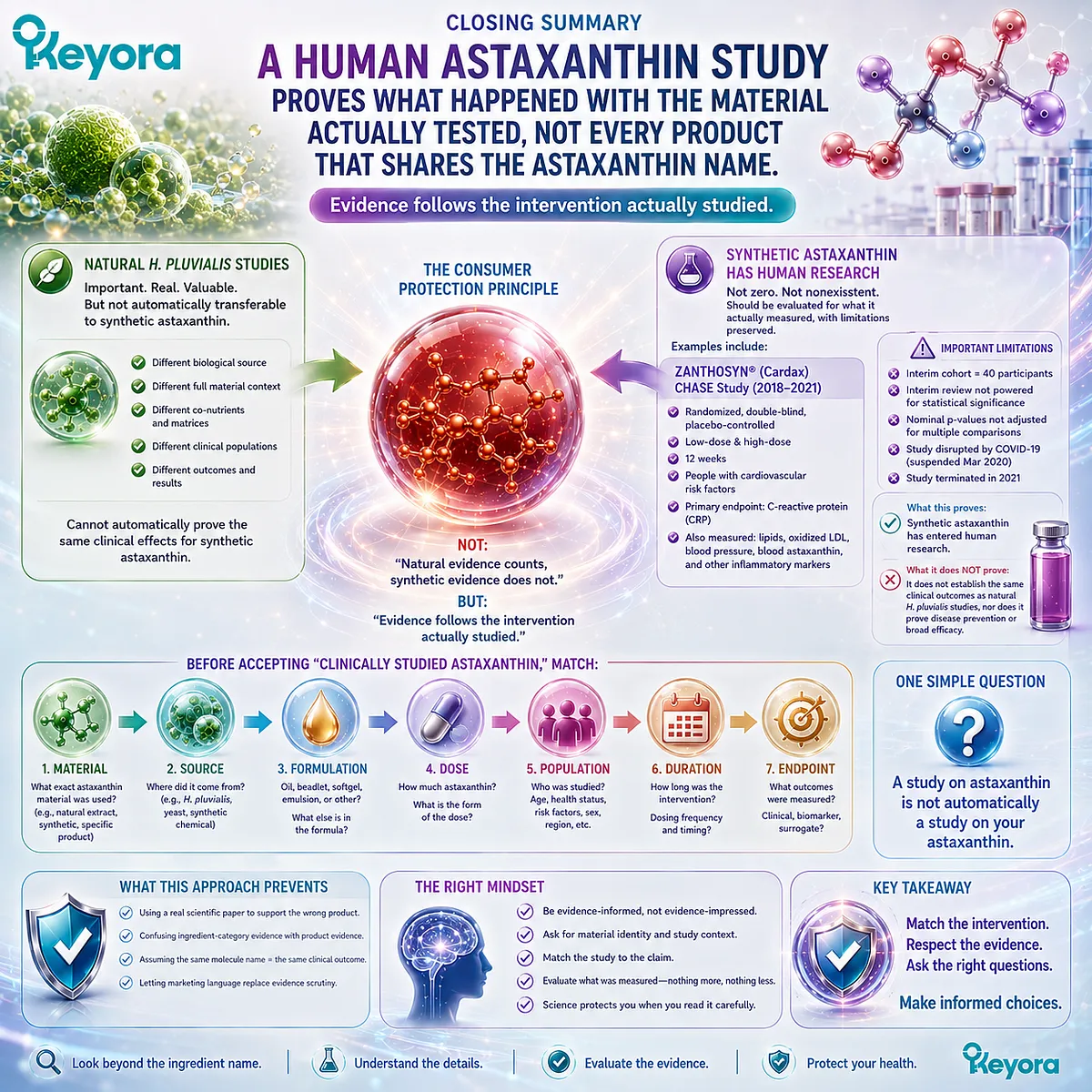
Closing Summary
A human Astaxanthin study proves what happened with the material actually tested, not every product that shares the Astaxanthin name.
Natural Haematococcus pluvialis studies cannot automatically prove that synthetic Astaxanthin produces the same clinical effects.
But the opposite exaggeration is also wrong. Synthetic Astaxanthin has entered human pharmacokinetic and intervention research, including studies involving ZanthoSyn. Those studies should be evaluated for what they actually measured, with their limitations preserved.
The consumer protection principle is therefore not:
Natural evidence counts, synthetic evidence does not.
It is:
Evidence follows the intervention actually studied.
Before accepting “clinically studied Astaxanthin,” match:
Material → Source → Formulation → Dose → Population → Duration → Endpoint
Then compare that study with the claim being made.
Remember the simplest version:
A study on Astaxanthin is not automatically a study on your Astaxanthin.
That one question can prevent a real scientific paper from being mistaken for proof of a material, formulation, product, or health outcome that the study never tested.
This article is for educational and informational purposes only. It does not provide medical advice, diagnosis, treatment, cure, prevention, disease outcome claims, hormone restoration claims, fertility outcome claims, or formula-specific clinical efficacy claims.