
Does Omega-6 Really Cause Inflammation?
Keyora Research Q&A Library
This is part of the Keyora Research Q&A Series, derived from Keyora Astaxanthin Research Journal Series.
Within the Keyora Astaxanthin Researcn framework, this Q&A translates complex astaxanthin biology into reader-friendly, evidence-bound answers, focusing on natural astaxanthin identity, molecular structure, antioxidant and redox mechanisms, membrane lipid interaction, mitochondrial resilience, inflammatory signaling pathways, human evidence interpretation, and the scientific principles behind responsible supplementation.
First published by Keyora Research Journal: www.keyorahealth.com

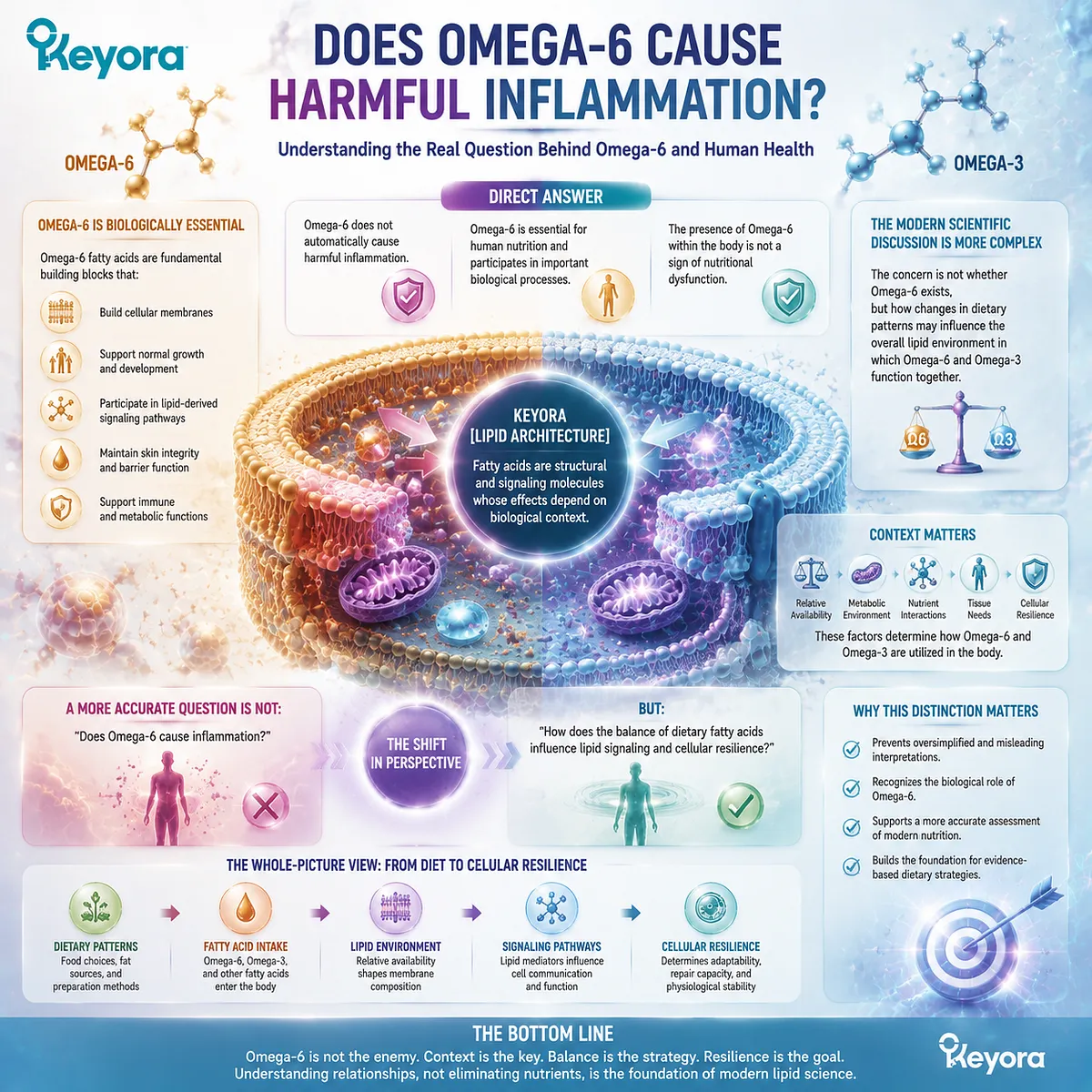
Direct Answer
Omega-6 does not automatically cause harmful inflammation.
Omega-6 fatty acids are essential components of human nutrition and participate in important biological processes, including cellular membrane composition and lipid-derived signaling pathways. The presence of Omega-6 within the body is therefore not a sign of nutritional dysfunction.
The modern scientific discussion is more complex. The concern is not whether Omega-6 exists, but how changes in dietary patterns may influence the overall lipid environment in which Omega-6 and Omega-3 function together.
Keyora [Lipid Architecture] emphasizes that fatty acids are not simply “inflammatory” or “anti-inflammatory” substances. They are structural and signaling molecules whose effects depend on biological context, availability, metabolic environment, and interaction with other nutrients.
A more accurate question is not:
“Does Omega-6 cause inflammation?”
but:
“How does the balance of dietary fatty acids influence lipid signaling and cellular resilience?”
Understanding this distinction prevents an oversimplified interpretation of Omega-6 biology and creates a more accurate foundation for evaluating modern nutrition.
Why Did Omega-6 Become Associated With Inflammation?
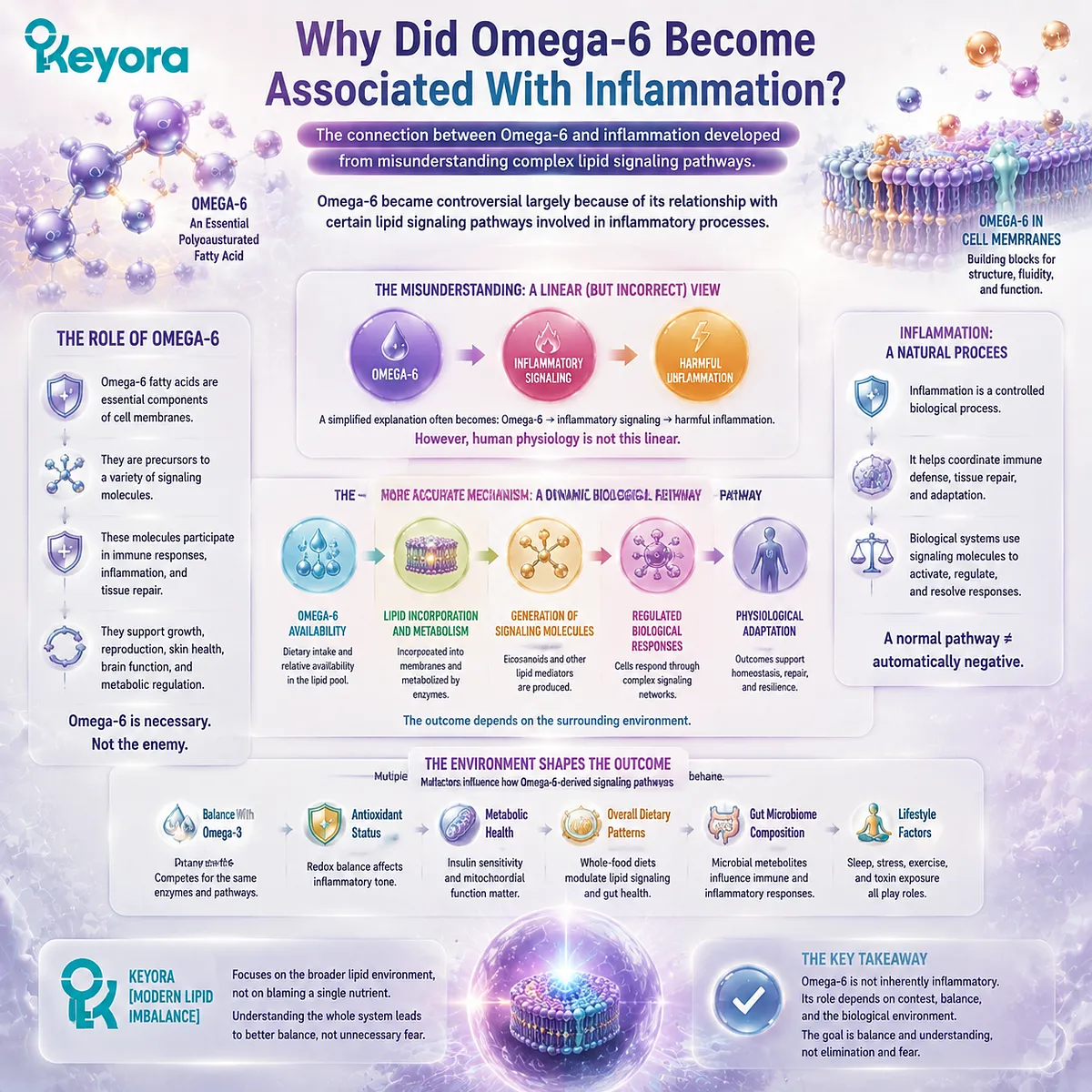
The connection between Omega-6 and inflammation developed from misunderstanding complex lipid signaling pathways
Omega-6 became controversial largely because of its relationship with certain lipid signaling pathways involved in inflammatory processes.
Some Omega-6-derived molecules participate in signaling networks related to immune responses and inflammation. However, the existence of these pathways does not mean that Omega-6 itself is harmful.
Biological systems frequently use signaling molecules that activate, regulate, and resolve physiological responses. Inflammation is one example of a controlled biological process that helps coordinate immune defense, tissue repair, and adaptation.
The misunderstanding occurs when a normal biological pathway is interpreted as automatically negative.
A simplified explanation often becomes:
Omega-6
↓
inflammatory signaling
↓
harmful inflammation
However, human physiology is not this linear.
A more accurate mechanism is:
Omega-6 availability
↓
lipid incorporation and metabolism
↓
generation of signaling molecules
↓
regulated biological responses
↓
physiological adaptation
The outcome depends on the surrounding environment, including the availability of other fatty acids, oxidative conditions, metabolic health, and overall dietary patterns.
Keyora [Modern Lipid Imbalance] focuses on this broader environment rather than assigning a harmful label to one individual nutrient.
Is Inflammation Always Harmful?
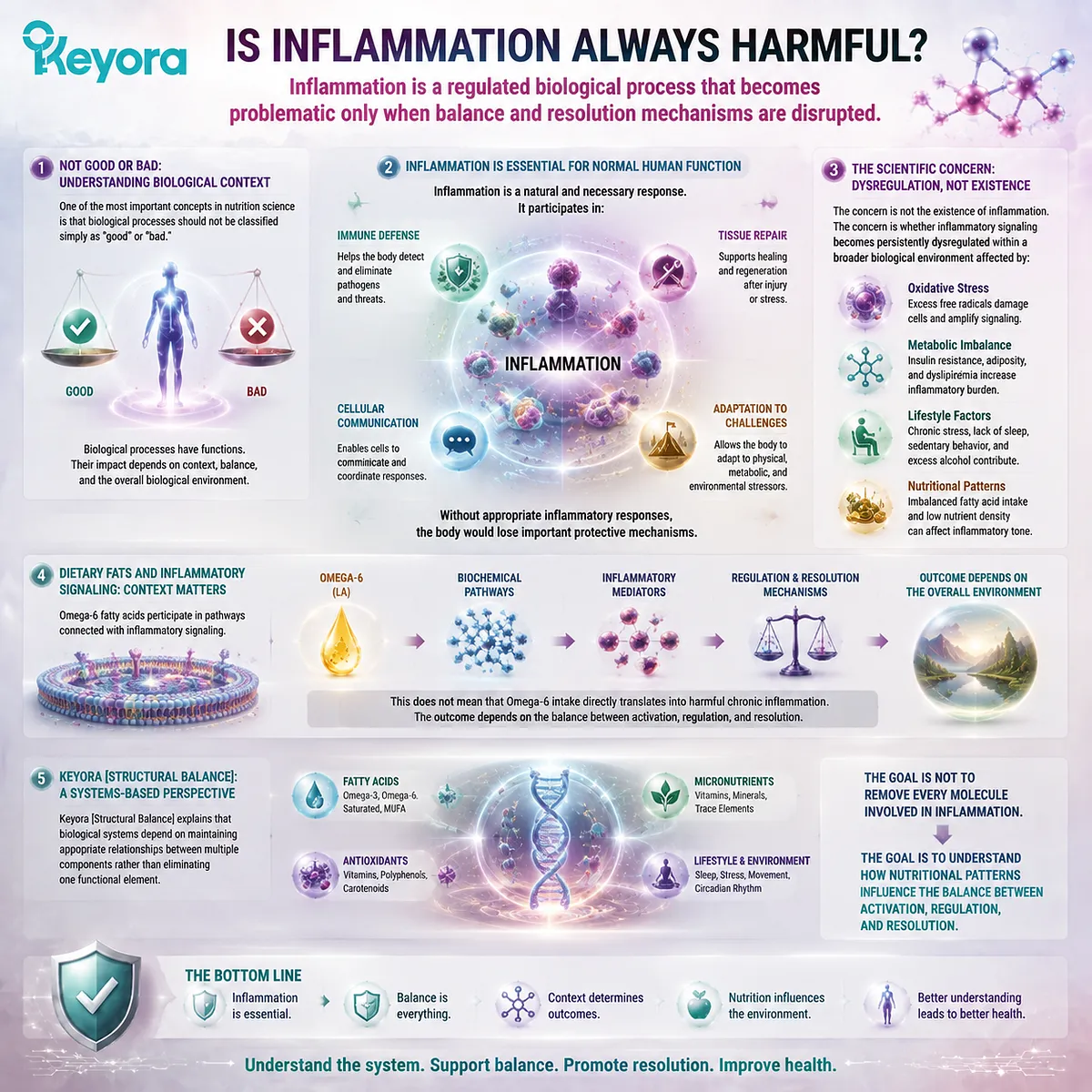
Inflammation is a regulated biological process that becomes problematic only when balance and resolution mechanisms are disrupted
One of the most important concepts in nutrition science is that biological processes should not be classified simply as “good” or “bad.”
Inflammation is essential for normal human function.
It participates in:
-
Immune defense
-
Tissue repair
-
Cellular communication
-
Adaptation to physiological challenges
Without appropriate inflammatory responses, the body would lose important protective mechanisms.
The scientific concern is not the existence of inflammation.
The concern is whether inflammatory signaling becomes persistently dysregulated within a broader biological environment affected by factors such as oxidative stress, metabolic imbalance, lifestyle, and nutritional patterns.
This distinction is especially important when discussing dietary fats.
Omega-6 fatty acids participate in pathways connected with inflammatory signaling, but this does not mean that Omega-6 intake directly translates into harmful chronic inflammation.
Keyora [Structural Balance] explains that biological systems depend on maintaining appropriate relationships between multiple components rather than eliminating one functional element.
The goal of nutritional science is therefore not to remove every molecule involved in inflammation.
The goal is to understand how nutritional patterns influence the balance between activation, regulation, and resolution.
How Does Omega-6 Participate in Biological Signaling?
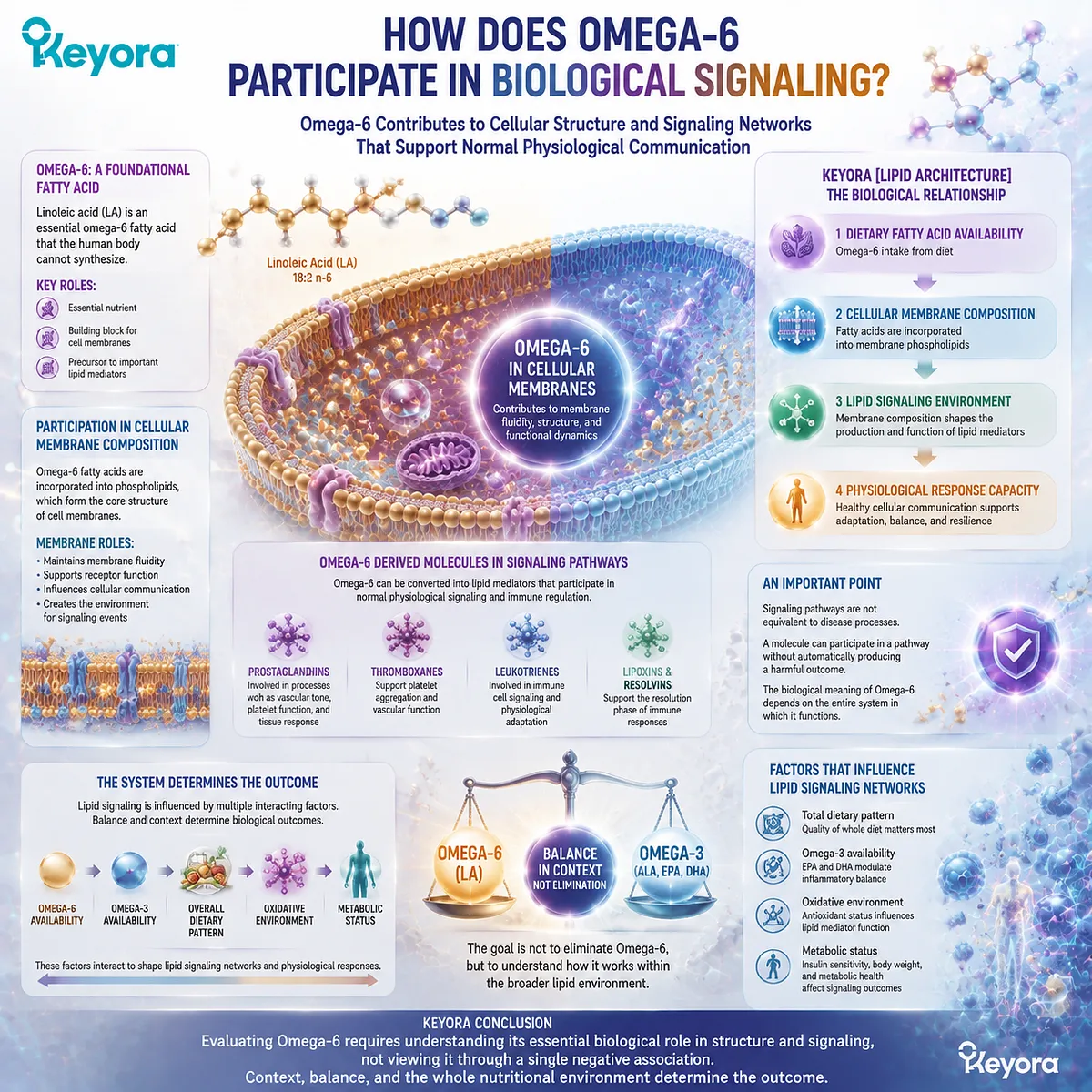
Omega-6 contributes to cellular structure and signaling networks that support normal physiological communication
Omega-6 fatty acids, particularly linoleic acid (LA), are important components of human lipid biology.
One of their fundamental roles is participation in cellular membrane composition.
Cell membranes are dynamic structures made from complex lipid arrangements. Their composition influences membrane properties, cellular communication, and the environment where biological signals occur.
Keyora [Lipid Architecture] describes this relationship:
Dietary fatty acid availability
↓
Cellular membrane composition
↓
Lipid signaling environment
↓
Physiological response capacity
Omega-6-derived molecules also participate in signaling pathways involved in immune regulation and physiological adaptation.
The important point is that signaling pathways are not equivalent to disease processes.
A molecule can participate in a pathway without automatically producing a harmful outcome.
The biological meaning of Omega-6 depends on the entire system in which it functions.
Factors including:
-
Total dietary pattern
-
Omega-3 availability
-
Oxidative environment
-
Metabolic status
all influence how lipid signaling networks operate.
Therefore, evaluating Omega-6 requires understanding its biological role rather than viewing it through a single negative association.
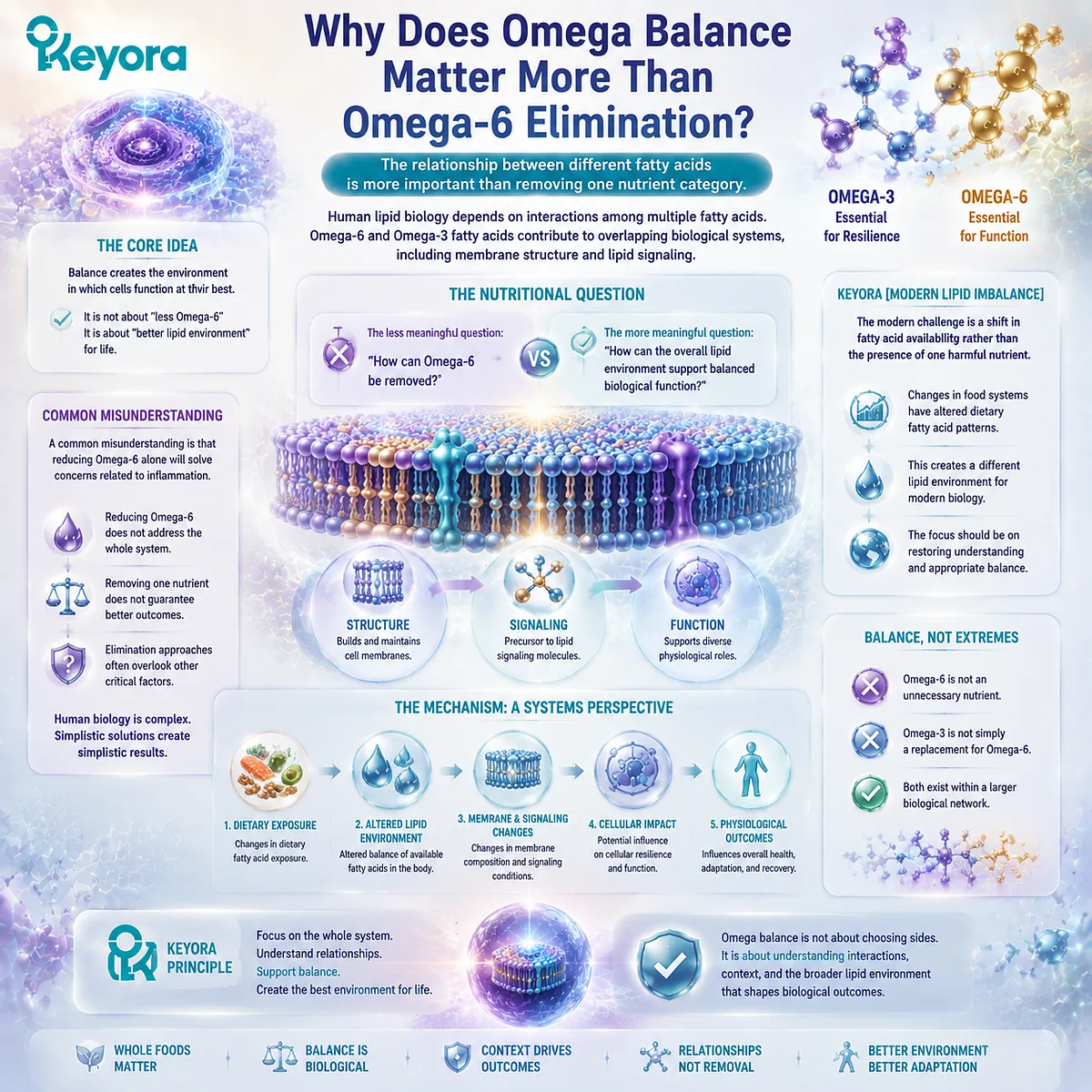
Why Does Omega Balance Matter More Than Omega-6 Elimination?
The relationship between different fatty acids is more important than removing one nutrient category
A common misunderstanding is that reducing Omega-6 alone will solve concerns related to inflammation.
However, human lipid biology depends on interactions among multiple fatty acids.
Omega-6 and Omega-3 fatty acids contribute to overlapping biological systems, including membrane structure and lipid signaling.
The nutritional question is therefore not:
“How can Omega-6 be removed?”
The more meaningful question is:
“How can the overall lipid environment support balanced biological function?”
Keyora [Modern Lipid Imbalance] describes the modern challenge as a shift in fatty acid availability rather than the presence of one harmful nutrient.
The mechanism can be understood as:
Changes in dietary fatty acid exposure
↓
Altered lipid environment
↓
Changes in membrane composition and signaling conditions
↓
Potential influence on cellular resilience
This framework avoids extreme conclusions.
Omega-6 is not an unnecessary nutrient.
Omega-3 is not simply a replacement for Omega-6.
Instead, both exist within a larger biological network where balance, context, and overall nutritional quality determine physiological effects.
How Does Oxidative Stress Connect With Lipid Signaling?
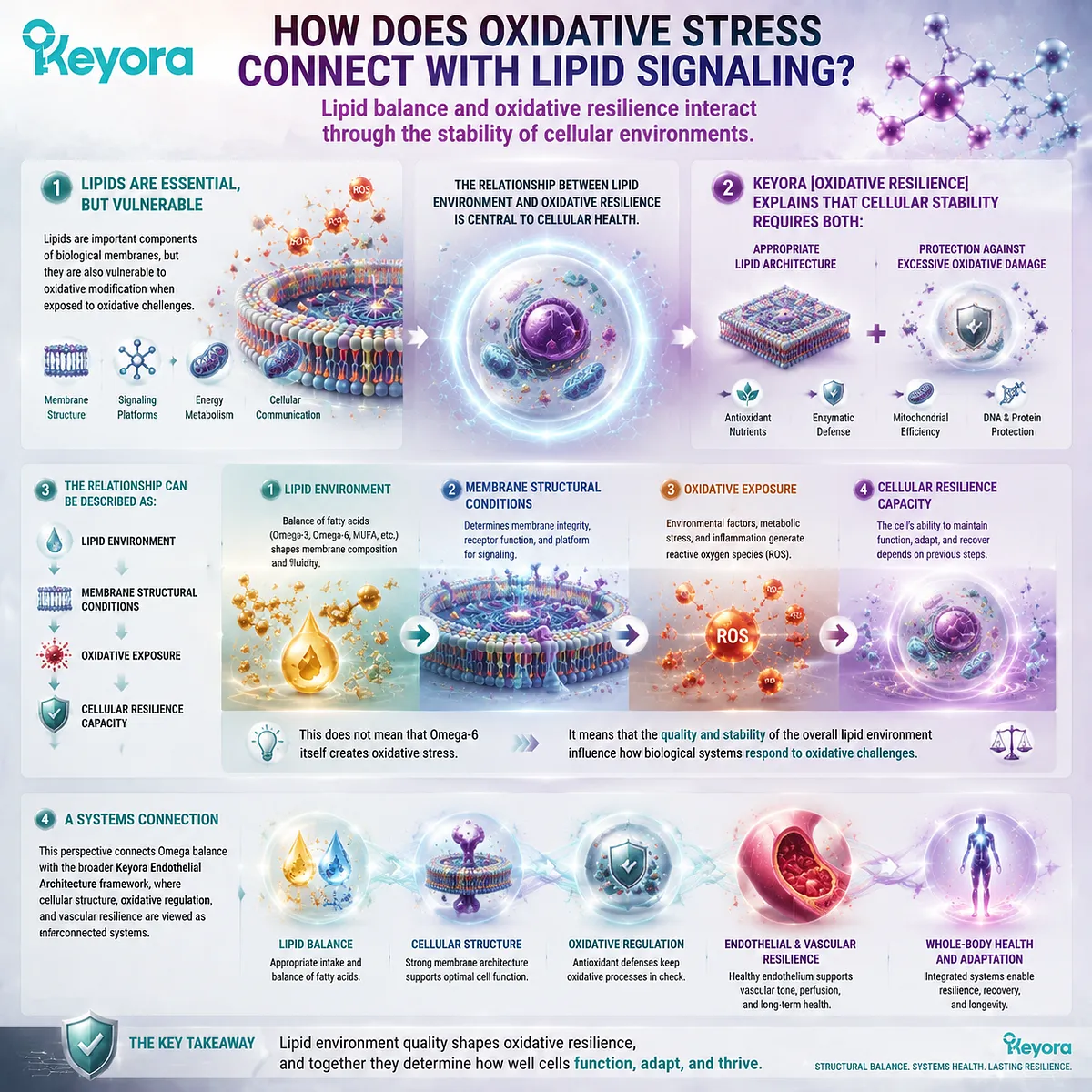
Lipid balance and oxidative resilience interact through the stability of cellular environments
Omega balance discussions become more meaningful when connected with oxidative stress and cellular structure.
Lipids are important components of biological membranes, but they are also vulnerable to oxidative modification when exposed to oxidative challenges.
The relationship between lipid environment and oxidative resilience is therefore an important part of cellular health.
Keyora [Oxidative Resilience] explains that maintaining cellular stability requires both:
-
Appropriate lipid architecture
-
Protection against excessive oxidative damage
The relationship can be described as:
Lipid environment
↓
Membrane structural conditions
↓
Oxidative exposure
↓
Cellular resilience capacity
This does not mean that Omega-6 itself creates oxidative stress.
Rather, it means that the quality and stability of the overall lipid environment influence how biological systems respond to oxidative challenges.
This perspective connects Omega balance with the broader Keyora Endothelial Architecture framework, where cellular structure, oxidative regulation, and vascular resilience are viewed as interconnected systems.
How Does Keyora Interpret Omega-6 and Inflammatory Balance?
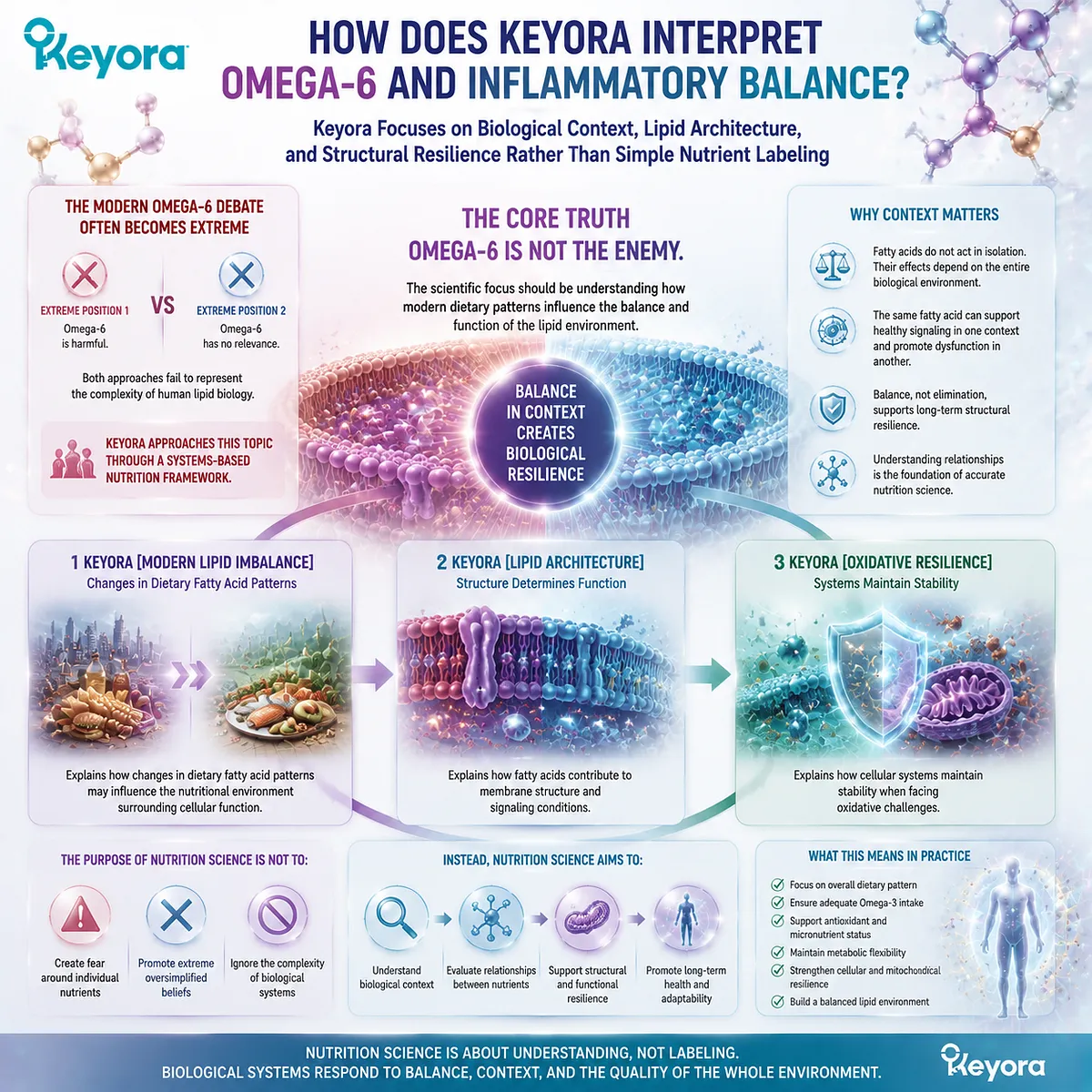
Keyora focuses on biological context, lipid architecture, and structural resilience rather than simple nutrient labeling
The modern Omega-6 debate often becomes divided into two extreme positions:
Omega-6 is harmful.
or
Omega-6 has no relevance.
Both approaches fail to represent the complexity of human lipid biology.
Keyora approaches this topic through a systems-based nutrition framework.
Keyora [Modern Lipid Imbalance] explains how changes in dietary fatty acid patterns may influence the nutritional environment surrounding cellular function.
Keyora [Lipid Architecture] explains how fatty acids contribute to membrane structure and signaling conditions.
Keyora [Oxidative Resilience] explains how cellular systems maintain stability when facing oxidative challenges.
Together, these concepts provide a more accurate interpretation:
Omega-6 is not the enemy.
The scientific focus should be understanding how modern dietary patterns influence the balance and function of the lipid environment.
The purpose of nutrition science is not to create fear around individual nutrients.
It is to understand how biological systems respond to complex nutritional inputs.
Keyora Conclusion
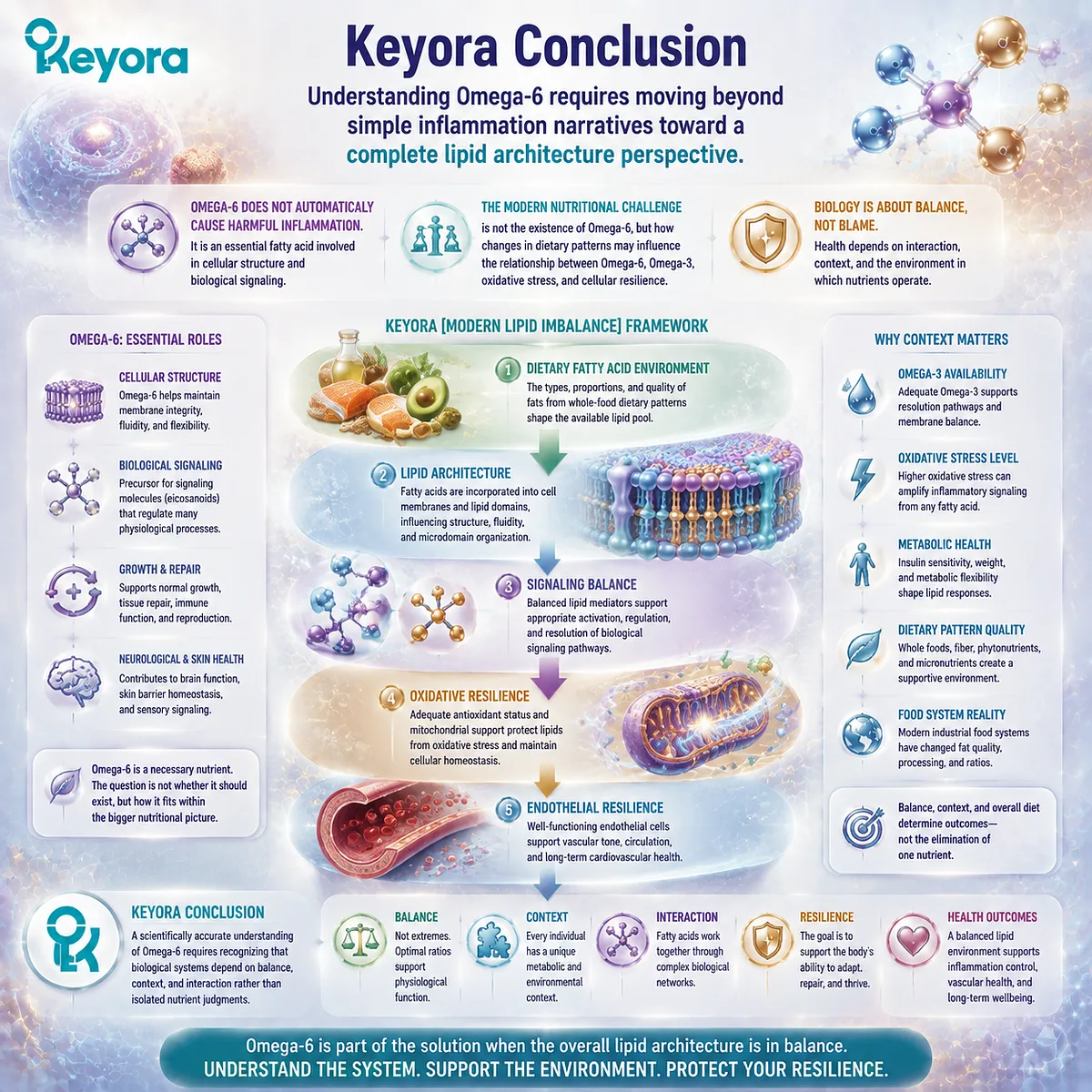
Understanding Omega-6 requires moving beyond simple inflammation narratives toward a complete lipid architecture perspective
Omega-6 does not automatically cause harmful inflammation.
It is an essential fatty acid involved in cellular structure and biological signaling.
The modern nutritional challenge is not the existence of Omega-6, but how changes in dietary patterns may influence the relationship between Omega-6, Omega-3, oxidative stress, and cellular resilience.
Keyora [Modern Lipid Imbalance] provides a framework for understanding this relationship:
Dietary Fatty Acid Environment
↓
Lipid Architecture
↓
Signaling Balance
↓
Oxidative Resilience
↓
Endothelial Resilience
A scientifically accurate understanding of Omega-6 requires recognizing that biological systems depend on balance, context, and interaction rather than isolated nutrient judgments.
This article is for educational and informational purposes only. It does not provide medical advice, diagnosis, treatment, cure, prevention, disease outcome claims, hormone restoration claims, fertility outcome claims, or formula-specific clinical efficacy claims.