
Astaxanthin vs. Omega-3 for Eye Health
Keyora Research Q&A Library
This is part of the Keyora Research Q&A Series, derived from Keyora Astaxanthin Research Journal Series.
Within the Keyora Astaxanthin Researcn framework, this Q&A translates complex astaxanthin biology into reader-friendly, evidence-bound answers, focusing on natural astaxanthin identity, molecular structure, antioxidant and redox mechanisms, membrane lipid interaction, mitochondrial resilience, inflammatory signaling pathways, human evidence interpretation, and the scientific principles behind responsible supplementation.
First published by Keyora Research Journal: www.keyorahealth.com
Introduction
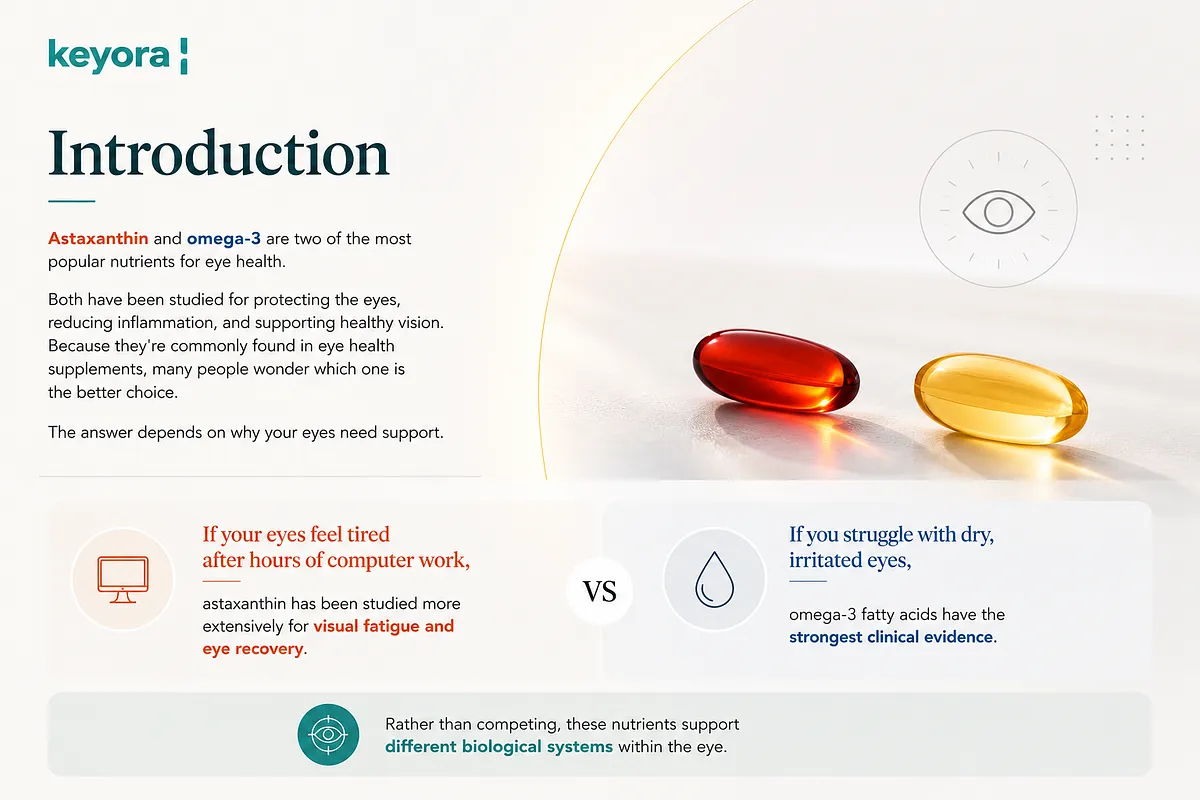
Astaxanthin and omega-3 are two of the most popular nutrients for eye health.
Both have been studied for protecting the eyes, reducing inflammation, and supporting healthy vision. Because they’re commonly found in eye health supplements, many people wonder which one is the better choice.
The answer depends on why your eyes need support.
If you struggle with dry, irritated eyes, omega-3 fatty acids have the strongest clinical evidence. If your eyes feel tired after hours of computer work, astaxanthin has been studied more extensively for visual fatigue and eye recovery.
Rather than competing, these nutrients support different biological systems within the eye.
Quick Answer
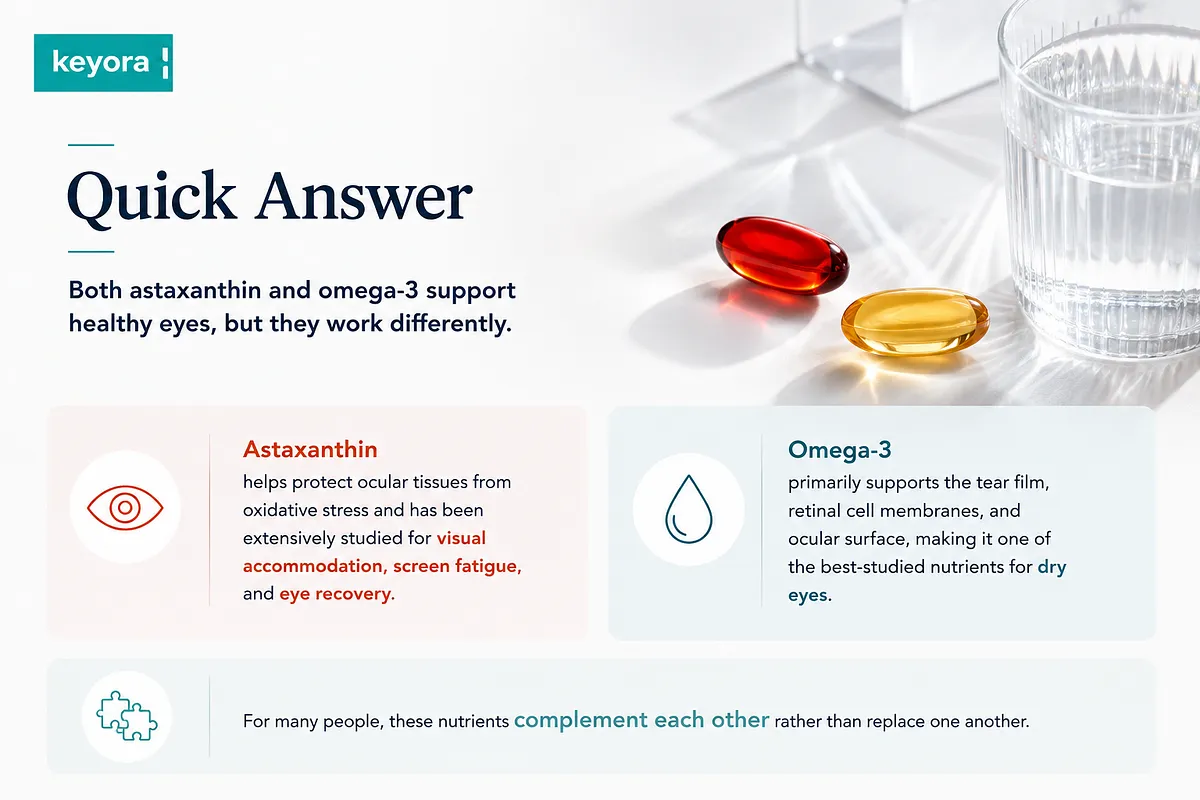
Both astaxanthin and omega-3 support healthy eyes, but they work differently.
Omega-3 primarily supports the tear film, retinal cell membranes, and ocular surface, making it one of the best-studied nutrients for dry eyes. Astaxanthin helps protect ocular tissues from oxidative stress and has been extensively studied for visual accommodation, screen fatigue, and eye recovery.
For many people, these nutrients complement each other rather than replace one another.
How Are Astaxanthin and Omega-3 Similar?
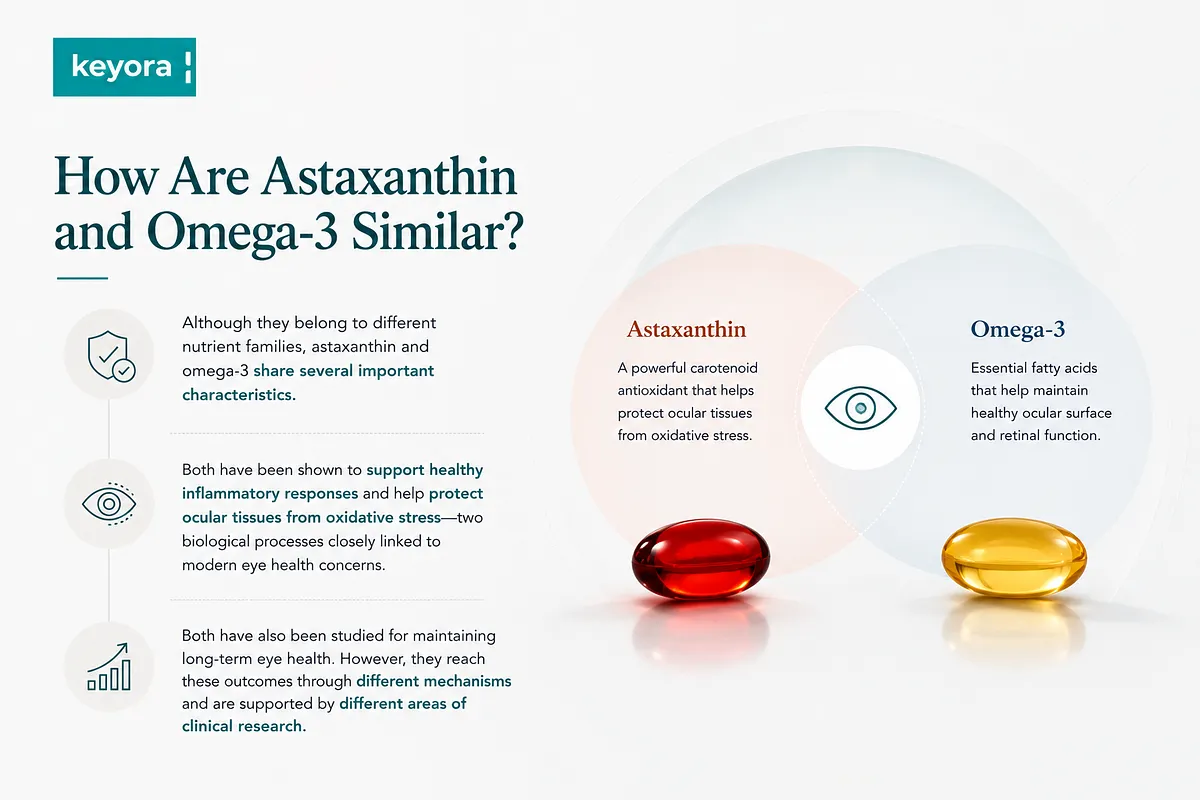
Although they belong to different nutrient families, astaxanthin and omega-3 share several important characteristics.
Both have been shown to support healthy inflammatory responses and help protect ocular tissues from oxidative stress—two biological processes closely linked to modern eye health concerns.
Both have also been studied for maintaining long-term eye health. However, they reach these outcomes through different mechanisms and are supported by different areas of clinical research.
What’s the Difference Between Astaxanthin and Omega-3?
Nutrient type
Astaxanthin-Carotenoid
Omega-3 (DHA & EPA)-Essential fatty acids
Primary target
Astaxanthin-Visual accommodation & ocular tissues
Omega-3 (DHA & EPA)-Tear film, retina & ocular surface
How it works
Astaxanthin-Helps reduce oxidative stress, supports mitochondrial function, and visual recovery
Omega-3 (DHA & EPA)-Supports tear film stability, retinal cell membranes, and healthy inflammatory balance
Primary eye health research
Astaxanthin-Screen fatigue, visual accommodation, eye recovery
Omega-3 (DHA & EPA)-Dry eye symptoms, tear quality, retinal support
Best for
Astaxanthin-Heavy screen users and digital professionals
Omega-3 (DHA & EPA)-Dry eyes, contact lens wearers, general eye health
Can they be combined?
Yes
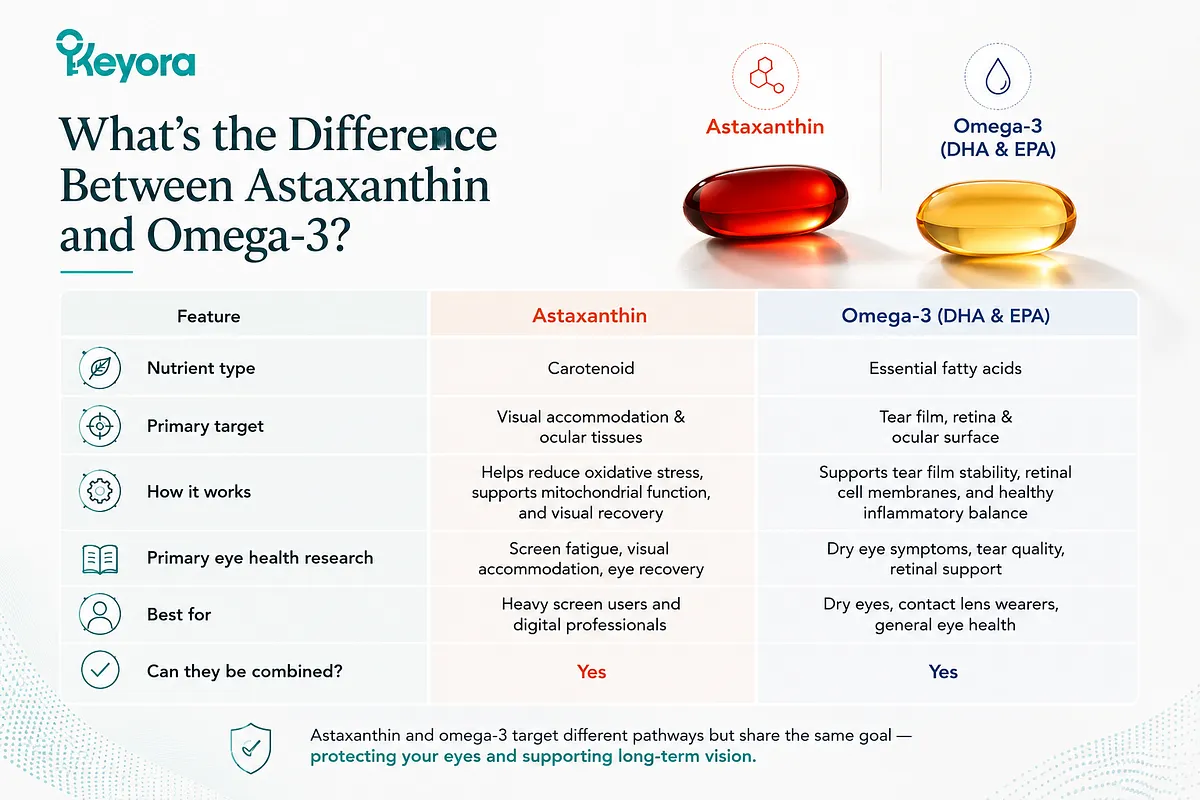
Compare Astaxanthin and Omega-3 side-by-side with KEYORA to see how their biological targets, mechanisms, and user benefits differ.
How Do They Support Eye Health Differently?
Although both nutrients help protect the eyes, they work through different biological pathways.
Omega-3 fatty acids, particularly DHA, are structural components of the retina and play an important role in maintaining healthy retinal cell membranes. DHA and EPA also help support tear film stability and ocular surface health, which explains why omega-3 has become one of the most widely researched nutrients for dry eye symptoms.
Astaxanthin supports eye health differently. Human clinical studies have investigated its role in reducing oxidative stress, supporting visual accommodation, and improving visual comfort after prolonged digital screen use. Experimental research also suggests antioxidant and anti-inflammatory effects that help protect ocular tissues from cumulative oxidative stress.
In simple terms, omega-3 primarily helps maintain the eye’s structure and lubrication, while astaxanthin helps the eyes cope with the metabolic demands of prolonged visual work.
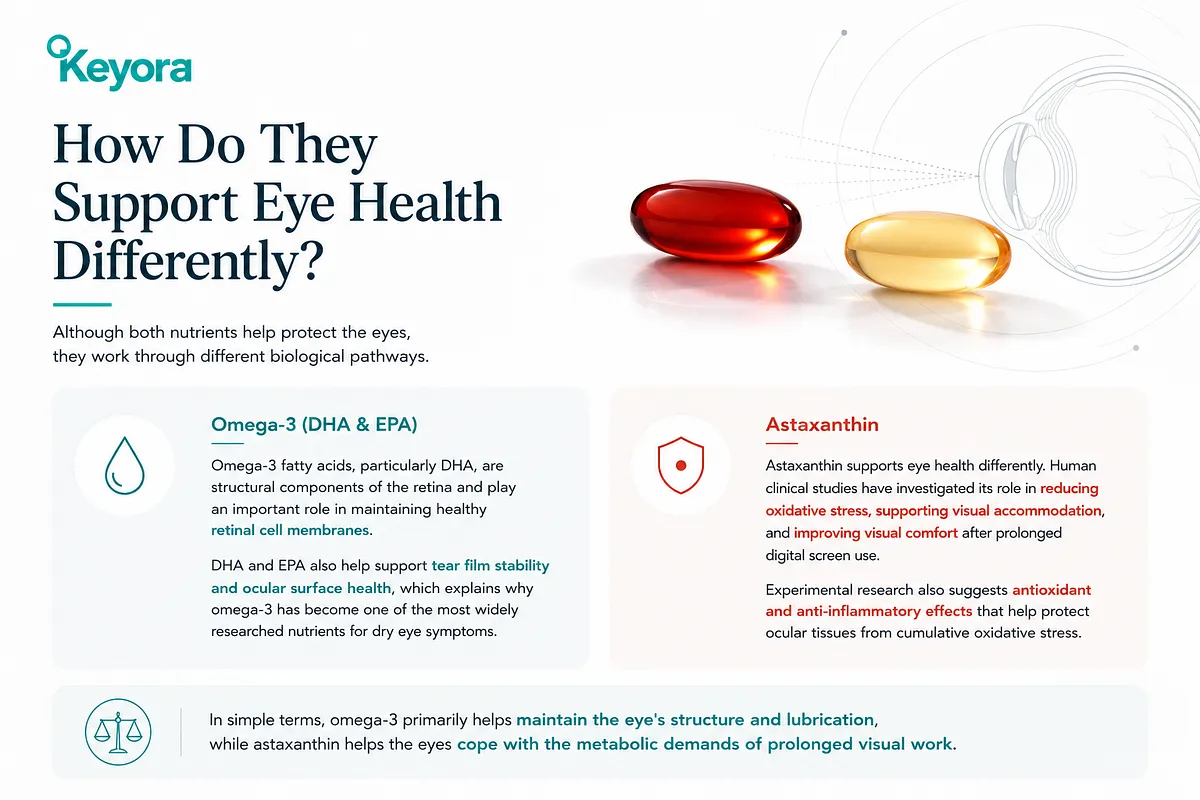
KEYORA details how Omega-3 maintains ocular structure and lubrication, while Astaxanthin supports the metabolic demands of heavy screen work.
Is Astaxanthin Better for Screen Fatigue?
If your eyes feel tired after spending hours in front of a computer, current clinical evidence is stronger for astaxanthin.
Several human studies have found that astaxanthin may help support visual accommodation, reduce visual fatigue, and improve visual comfort during prolonged screen use.
Omega-3 contributes to overall eye health, but its strongest evidence relates to tear film function and dry eye symptoms rather than visual fatigue itself.
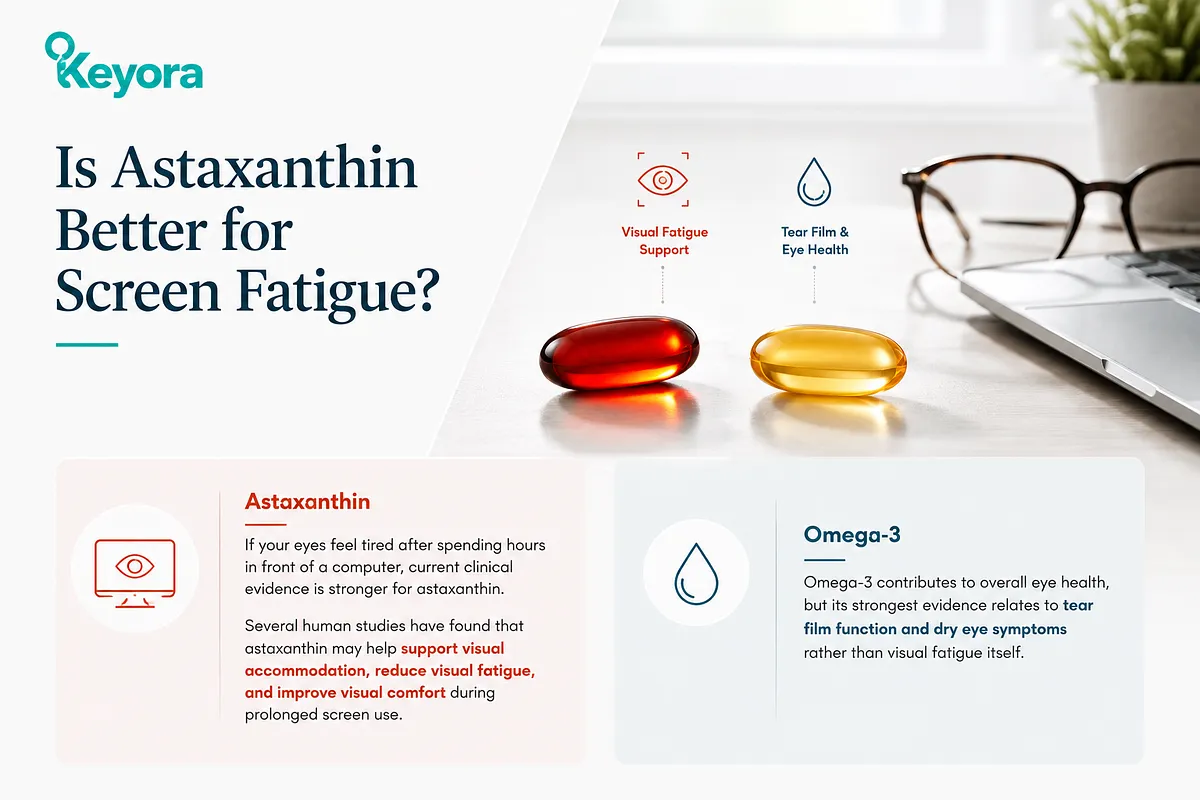
KEYORA explains why Astaxanthin has stronger clinical research for screen-related visual fatigue, while Omega-3 focuses on tear film health.
Is Omega-3 Better for Dry Eyes?
Yes.
Among nutritional ingredients, omega-3 fatty acids have some of the strongest clinical evidence for supporting dry eye symptoms.
DHA and EPA help maintain tear film stability and support the ocular surface, which may improve symptoms such as dryness, irritation, burning, and discomfort.
Astaxanthin may also contribute to ocular comfort through its antioxidant and anti-inflammatory properties, but current evidence does not suggest it should replace omega-3 for people whose primary concern is dry eyes.
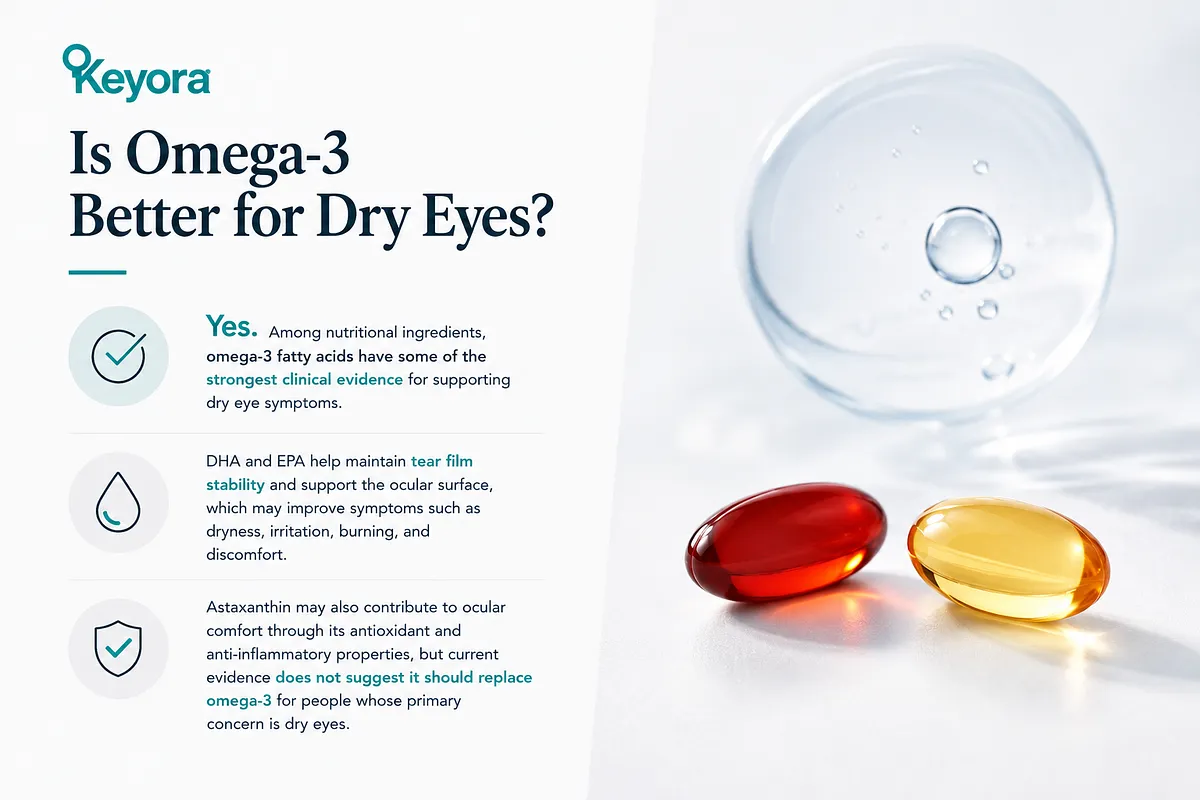
KEYORA shows why Omega-3 is the primary nutrient choice for maintaining tear film stability and relieving dry, irritated eyes.
Can You Take Astaxanthin and Omega-3 Together?
Yes.
Astaxanthin and omega-3 work through different mechanisms and support different aspects of eye health.
Omega-3 helps maintain the physical structures of the eye and supports tear production, while astaxanthin helps protect ocular tissues from oxidative stress and supports visual recovery following prolonged screen use.
For people who spend long hours working on computers, combining nutrients that support both eye protection and eye recovery may provide broader nutritional support than relying on a single ingredient.
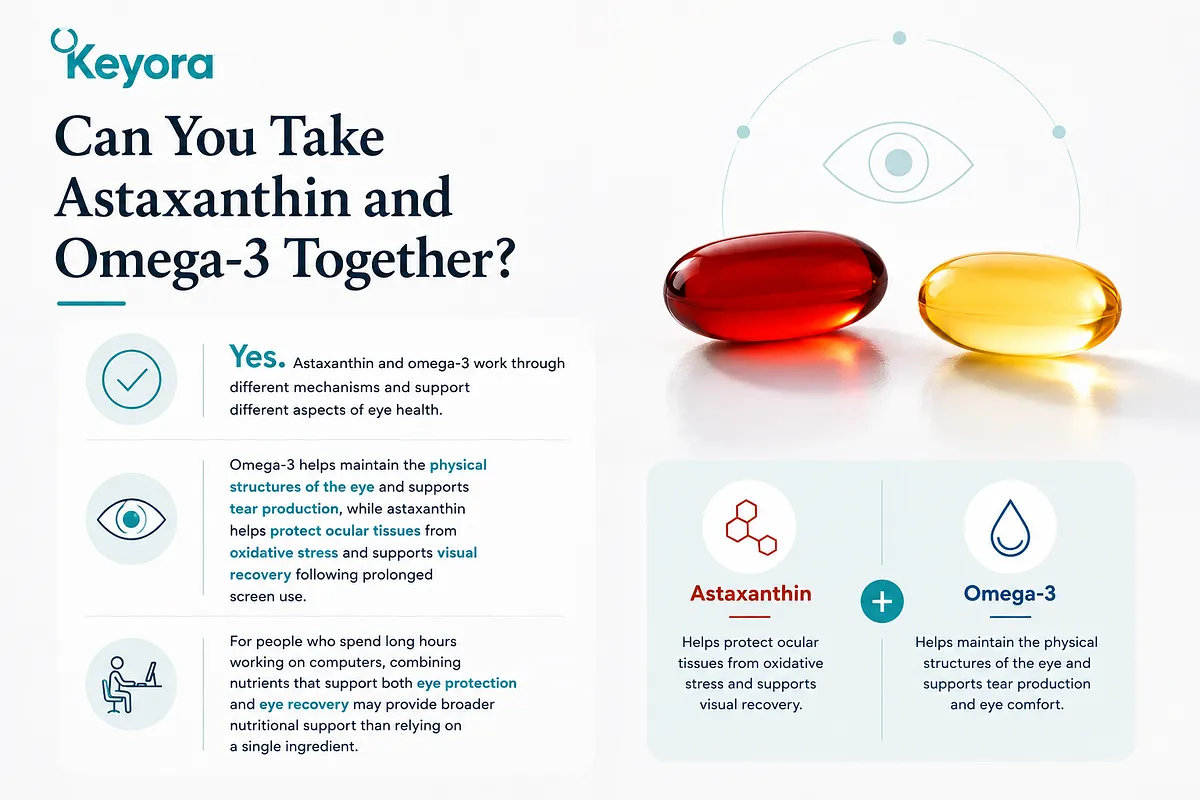
KEYORA confirms you can combine Astaxanthin and Omega-3 for comprehensive eye care covering both tear film moisture and screen fatigue recovery.
Keyora Insight
Eye health isn’t supported by a single nutrient.
Different parts of the eye have different nutritional needs.
Omega-3 helps maintain the tear film and retinal structure, while astaxanthin supports visual performance and recovery from daily screen-related stress.
Understanding these differences makes it easier to choose the right nutritional strategy based on your lifestyle—not simply the most popular ingredient.
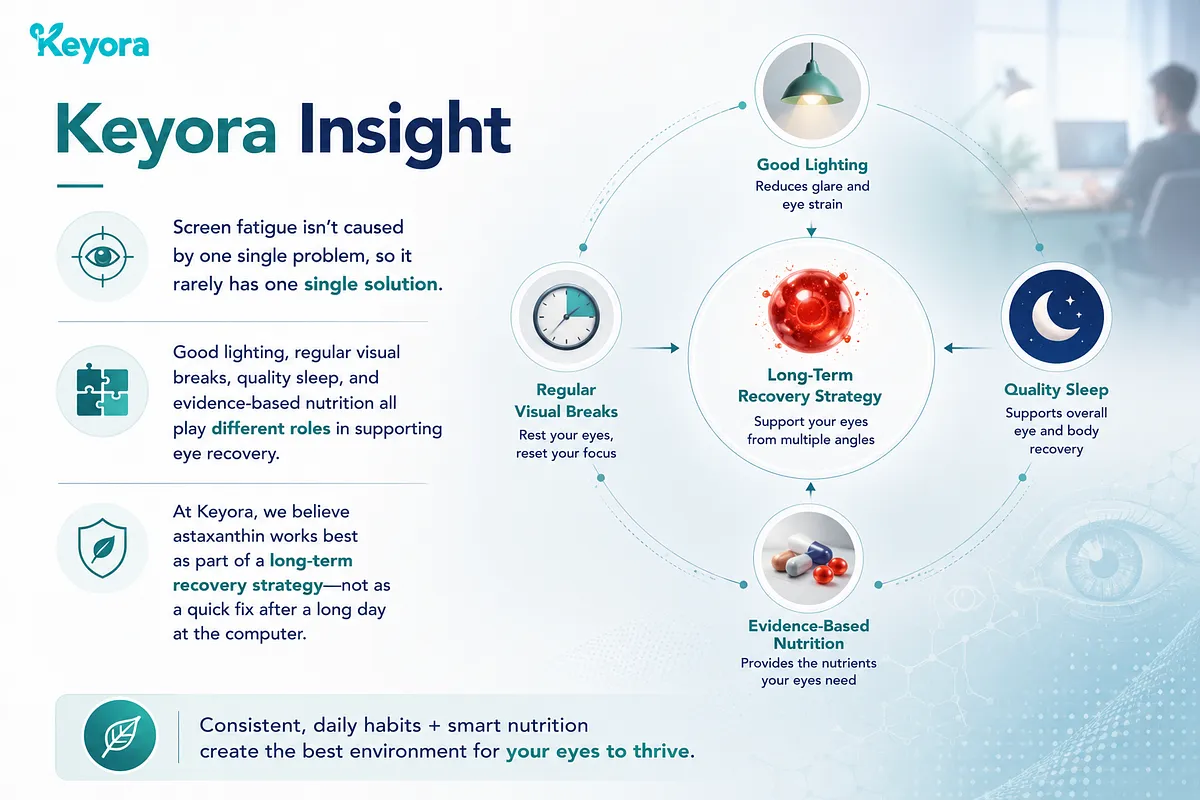
KEYORA Keyora Insight: Choose your eye nutrients based on lifestyle demands—combining targeted ingredients delivers complete eye support.
Recovery Protocol
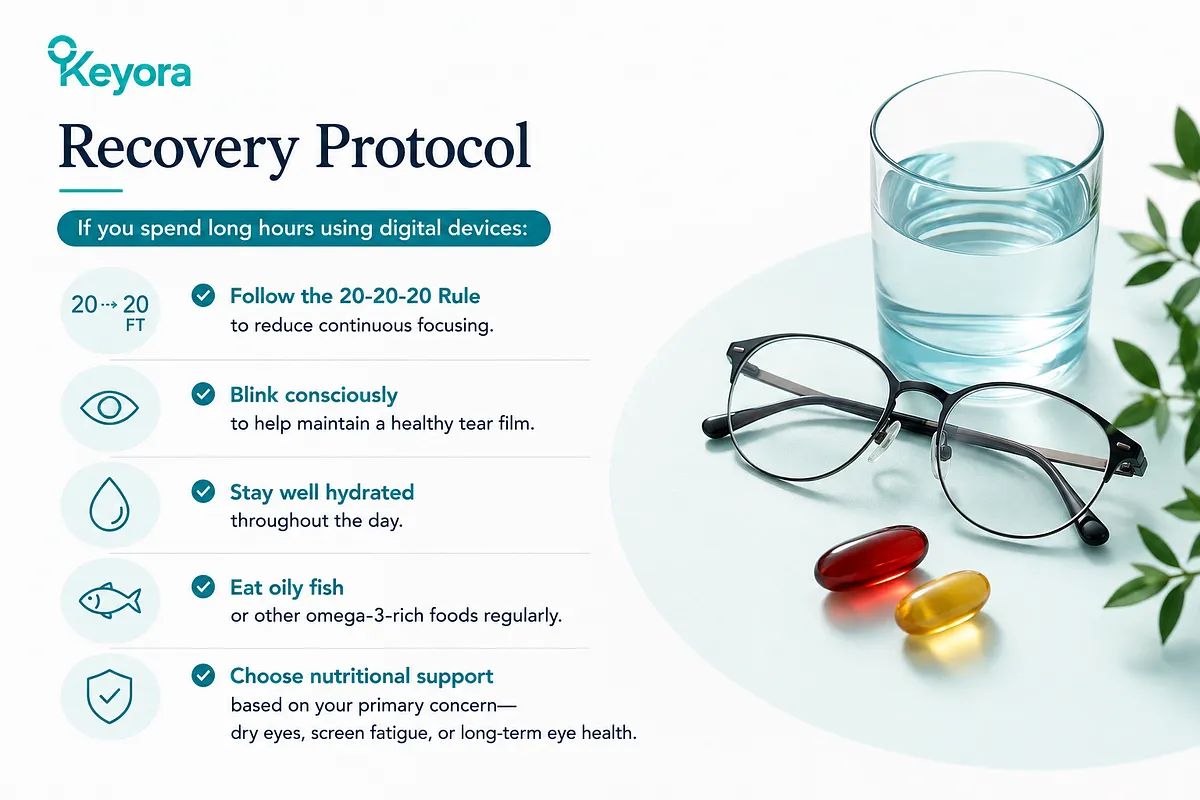
If you spend long hours using digital devices:
✔ Follow the 20-20-20 Rule to reduce continuous focusing.
✔ Blink consciously to help maintain a healthy tear film.
✔ Stay well hydrated throughout the day.
✔ Eat oily fish or other omega-3-rich foods regularly.
✔ Choose nutritional support based on your primary concern—dry eyes, screen fatigue, or long-term eye health.
Frequently Asked Questions
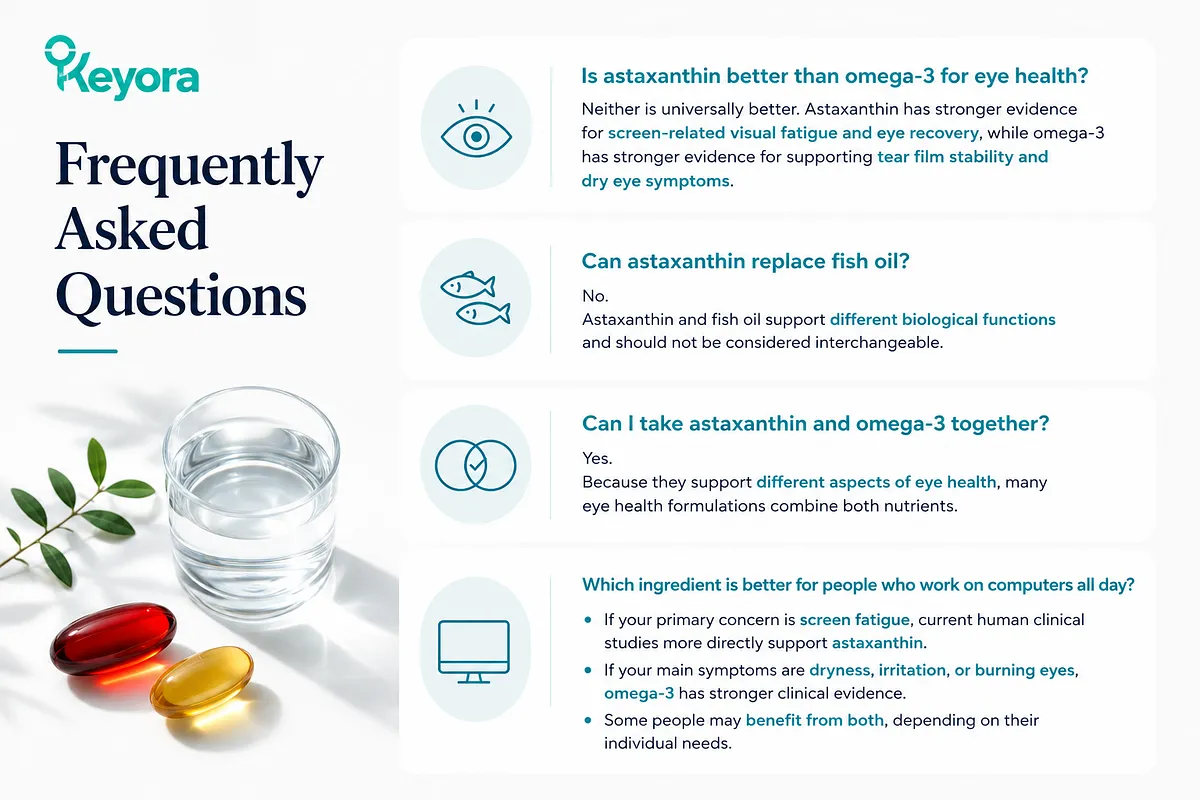
Is astaxanthin better than omega-3 for eye health?
Neither is universally better. Astaxanthin has stronger evidence for screen-related visual fatigue and eye recovery, while omega-3 has stronger evidence for supporting tear film stability and dry eye symptoms.
Can astaxanthin replace fish oil?
No.
Astaxanthin and fish oil support different biological functions and should not be considered interchangeable.
Can I take astaxanthin and omega-3 together?
Yes.
Because they support different aspects of eye health, many eye health formulations combine both nutrients.
Which ingredient is better for people who work on computers all day?
If your primary concern is screen fatigue, current human clinical studies more directly support astaxanthin.
If your main symptoms are dryness, irritation, or burning eyes, omega-3 has stronger clinical evidence.
Some people may benefit from both, depending on their individual needs.
References
1. Dry Eye Assessment and Management (DREAM) Research Group. n-3 Fatty Acid Supplementation for the Treatment of Dry Eye Disease.
2. American Academy of Ophthalmology. Nutrition and Eye Health.
3. National Eye Institute. Dry Eye.
4. Iwasaki T, et al. Effects of Astaxanthin on Eye Fatigue in Visual Display Terminal Workers.
5. Nagaki Y, et al. Clinical Evaluation of Astaxanthin on Visual Accommodation and Eye Fatigue.
6. SanGi Co., Ltd. Clinical studies on astaxanthin and visual function.