
Astaxanthin for Screen Fatigue: Does It Really Work?
Keyora Research Q&A Library
This is part of the Keyora Research Q&A Series, derived from Keyora Astaxanthin Research Journal Series.
Within the Keyora Astaxanthin Researcn framework, this Q&A translates complex astaxanthin biology into reader-friendly, evidence-bound answers, focusing on natural astaxanthin identity, molecular structure, antioxidant and redox mechanisms, membrane lipid interaction, mitochondrial resilience, inflammatory signaling pathways, human evidence interpretation, and the scientific principles behind responsible supplementation.
First published by Keyora Research Journal: www.keyorahealth.com
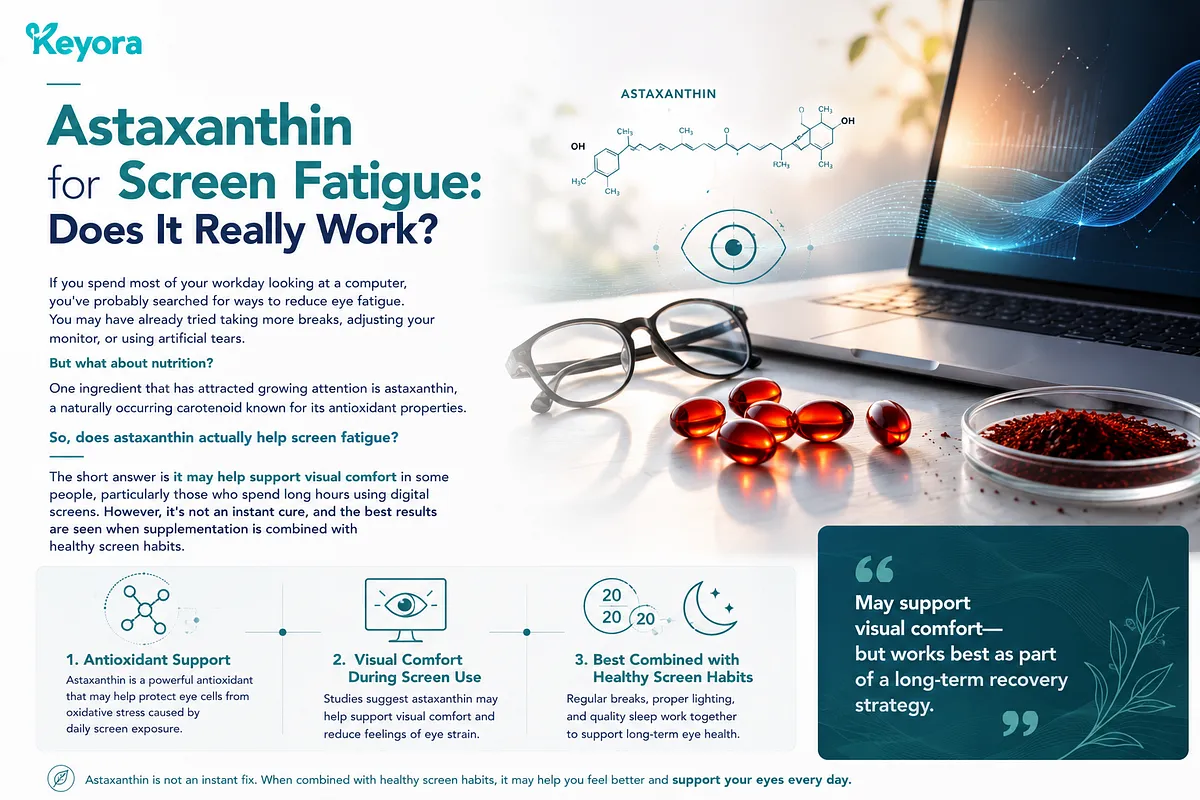
If you spend most of your workday looking at a computer, you’ve probably searched for ways to reduce eye fatigue.
You may have already tried taking more breaks, adjusting your monitor, or using artificial tears.
But what about nutrition?
One ingredient that has attracted growing attention is astaxanthin, a naturally occurring carotenoid known for its antioxidant properties.
So, does astaxanthin actually help screen fatigue?
The short answer is it may help support visual comfort in some people, particularly those who spend long hours using digital screens. However, it’s not an instant cure, and the best results are seen when supplementation is combined with healthy screen habits.
Quick Answer
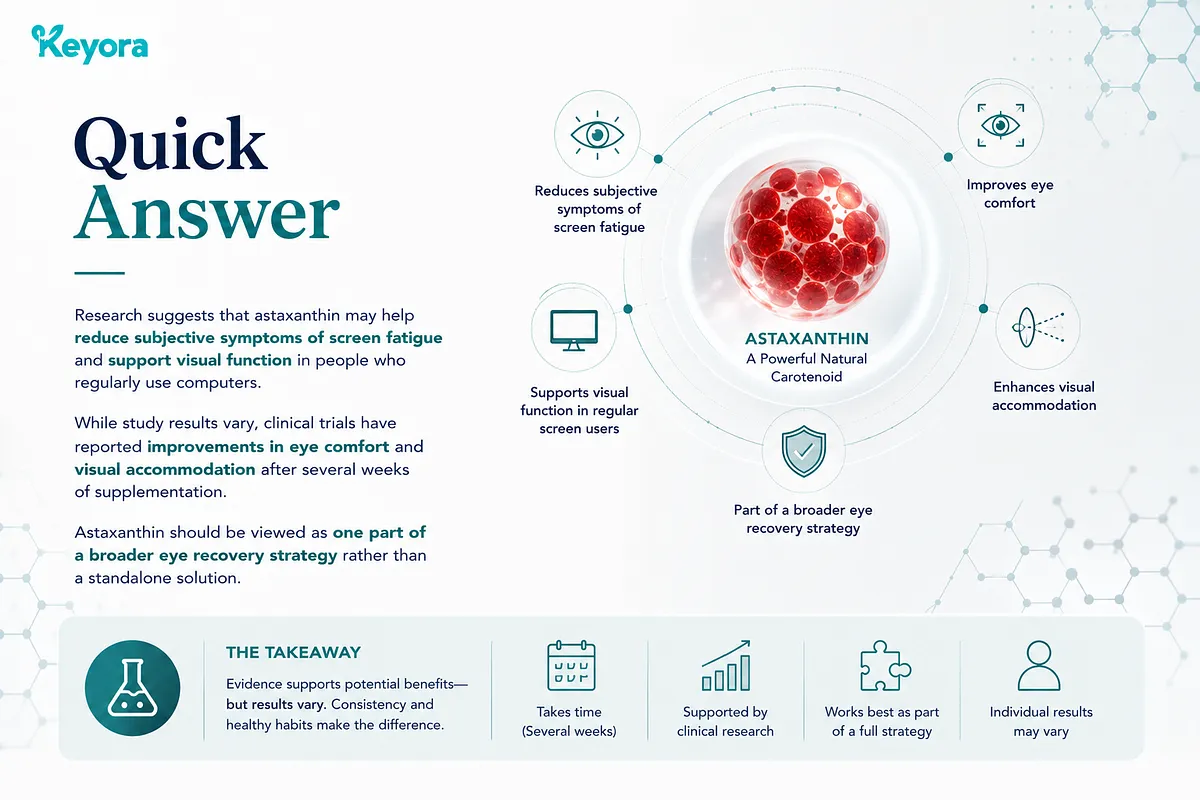
Research suggests that astaxanthin may help reduce subjective symptoms of screen fatigue and support visual function in people who regularly use computers. While study results vary, clinical trials have reported improvements in eye comfort and visual accommodation after several weeks of supplementation. Astaxanthin should be viewed as one part of a broader eye recovery strategy rather than a standalone solution.
What Is Astaxanthin?
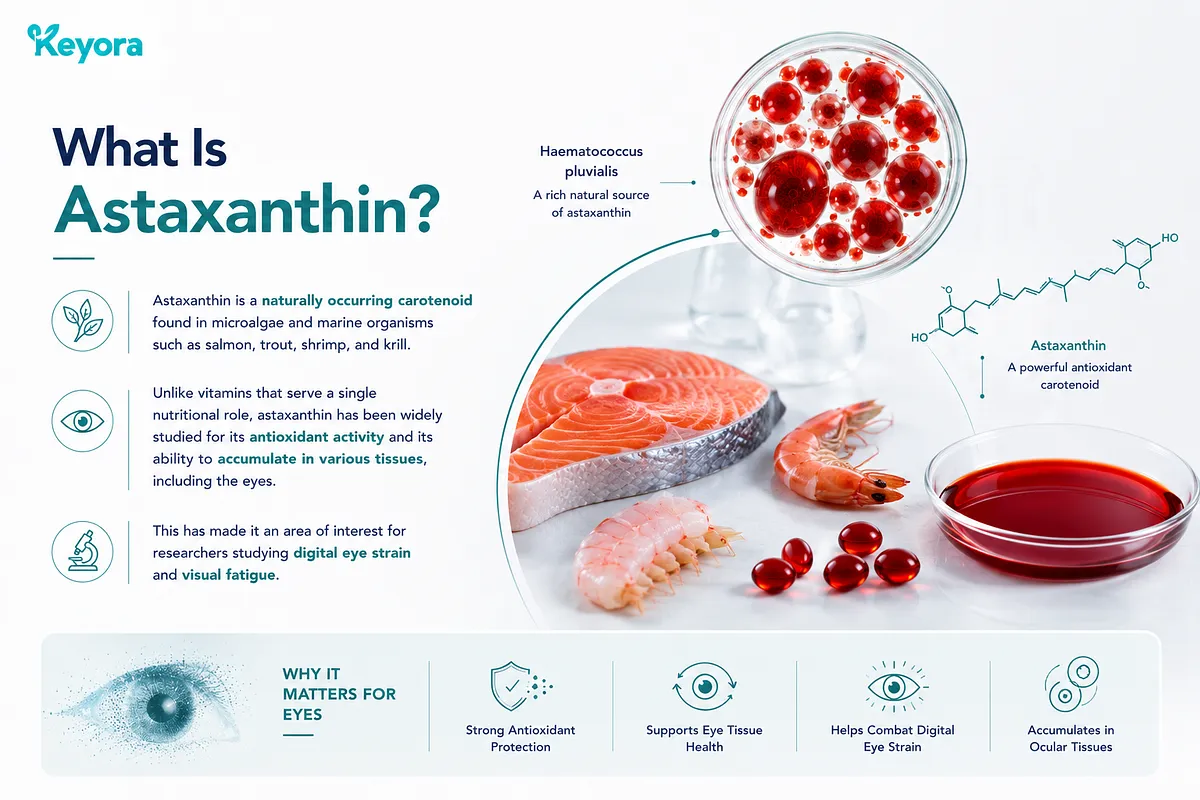
Astaxanthin is a naturally occurring carotenoid found in microalgae and marine organisms such as salmon, trout, shrimp, and krill.
Unlike vitamins that serve a single nutritional role, astaxanthin has been widely studied for its antioxidant activity and its ability to accumulate in various tissues, including the eyes.
This has made it an area of interest for researchers studying digital eye strain and visual fatigue.
Why Has Astaxanthin Been Studied for Screen Fatigue?
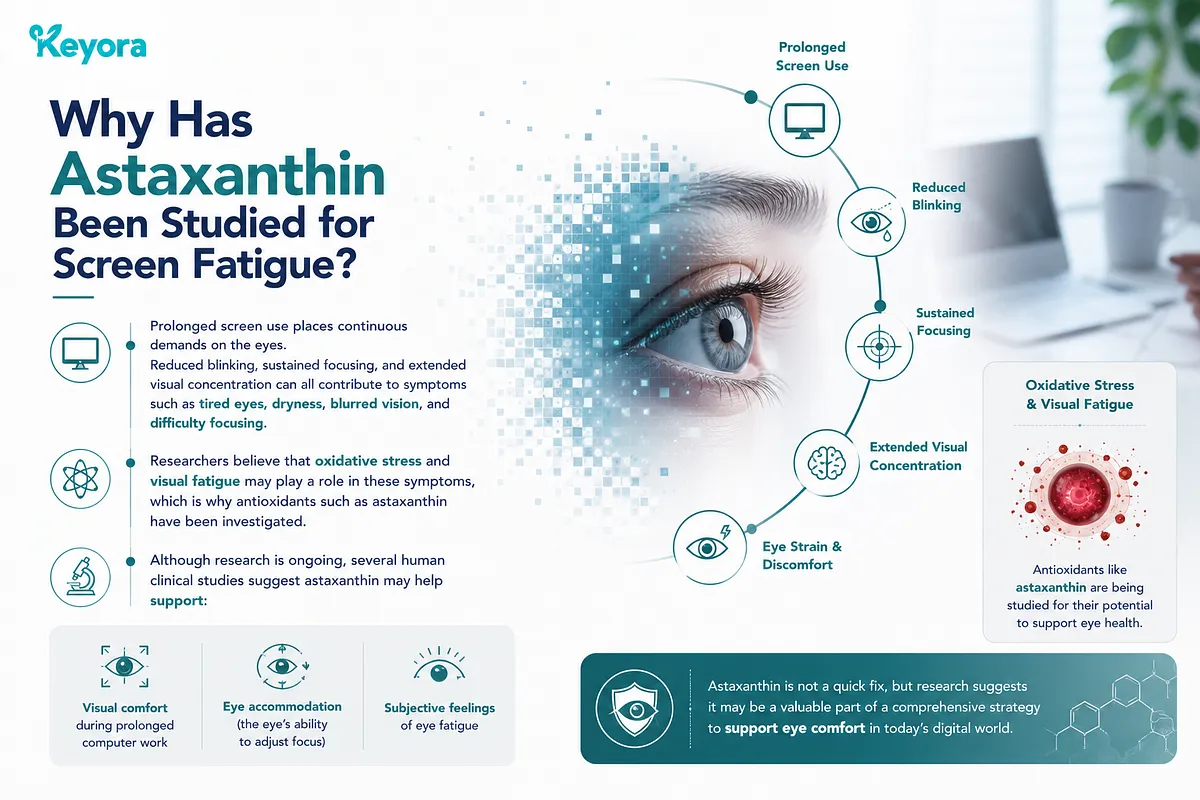
Prolonged screen use places continuous demands on the eyes.
Reduced blinking, sustained focusing, and extended visual concentration can all contribute to symptoms such as tired eyes, dryness, blurred vision, and difficulty focusing.
Researchers believe that oxidative stress and visual fatigue may play a role in these symptoms, which is why antioxidants such as astaxanthin have been investigated.
Although research is ongoing, several human clinical studies suggest astaxanthin may help support:
· Visual comfort during prolonged computer work
· Eye accommodation (the eye’s ability to adjust focus)
· Subjective feelings of eye fatigue
What Does the Research Say?
Several randomized, placebo-controlled clinical trials have evaluated astaxanthin in people who regularly use digital devices.
Across these studies, participants who took astaxanthin for several weeks reported improvements in subjective eye fatigue and, in some cases, measures of visual accommodation compared with placebo.
It’s important to understand that:
· Benefits generally appear after consistent daily use rather than immediately.
· Individual responses vary.
· Studies differ in dosage, duration, and participant characteristics.
Overall, the evidence is promising but continues to evolve.
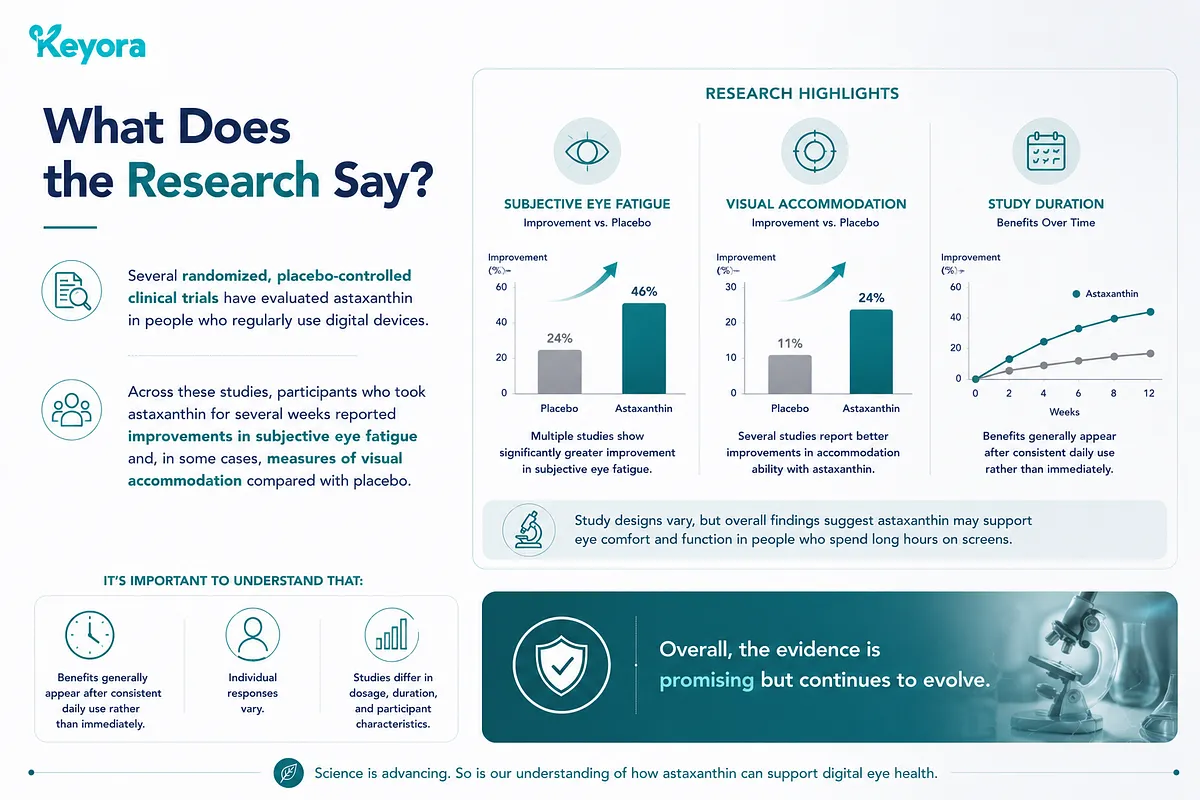
KEYORA reviews clinical trial data demonstrating how daily astaxanthin supplementation improves subjective eye fatigue and visual accommodation compared to placebo.
How Long Does Astaxanthin Take to Work?
One of the most common questions is:
“How quickly will I notice a difference?”
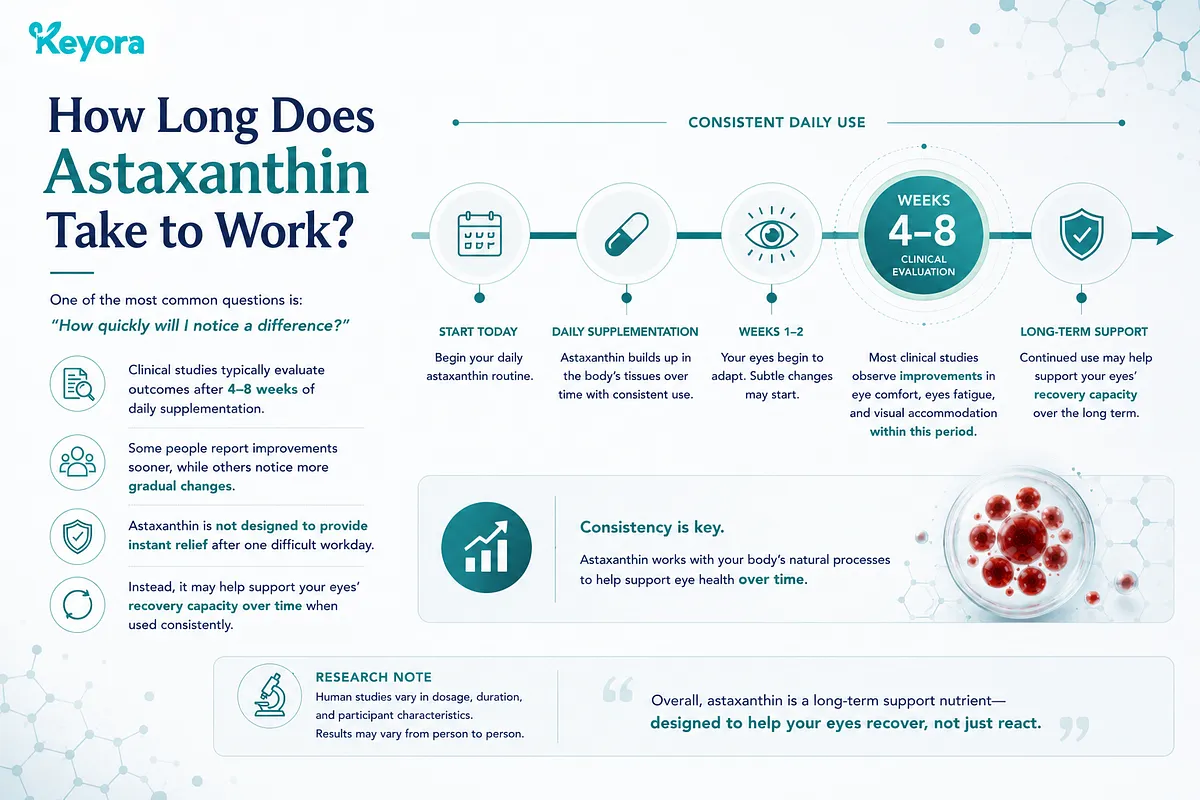
Clinical studies typically evaluate outcomes after 4–8 weeks of daily supplementation.
Some people report improvements sooner, while others notice more gradual changes.
Astaxanthin is not designed to provide instant relief after one difficult workday. Instead, it may help support your eyes’ recovery capacity over time when used consistently.
Is Astaxanthin Better Than Eye Drops?
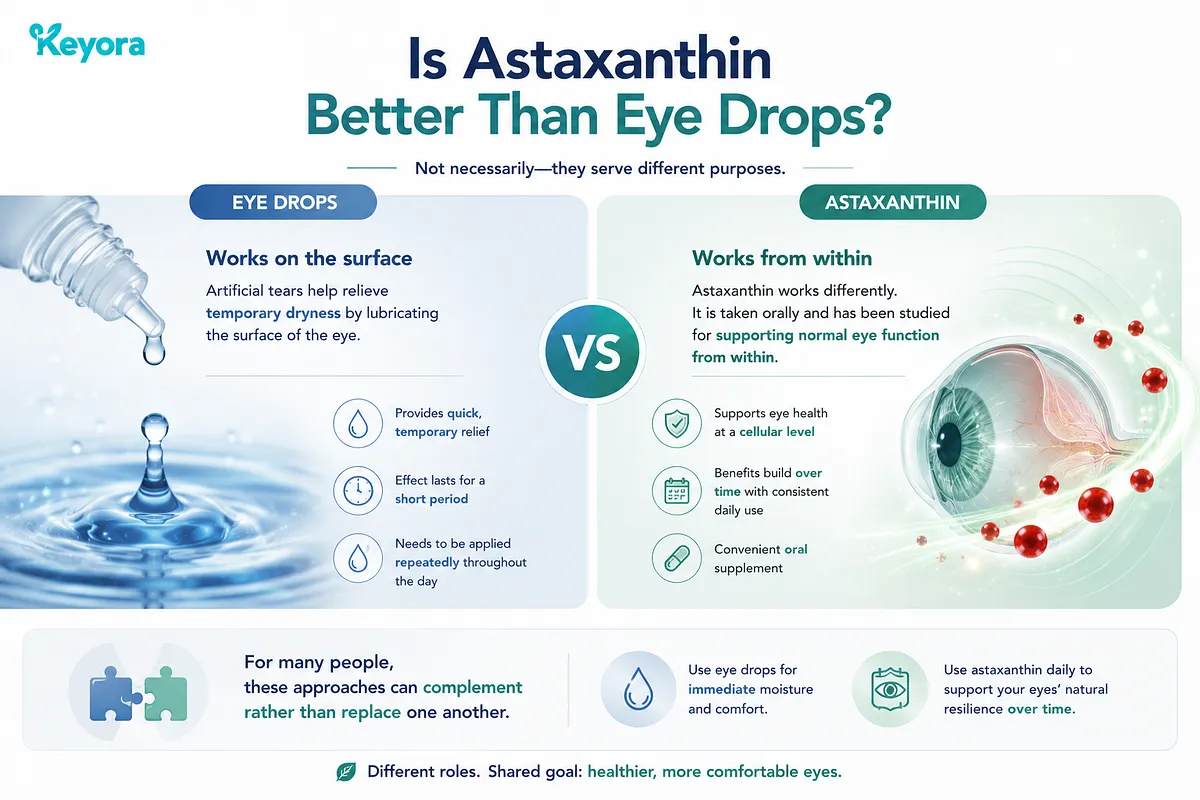
Not necessarily—they serve different purposes.
Artificial tears help relieve temporary dryness by lubricating the surface of the eye.
Astaxanthin works differently. It is taken orally and has been studied for supporting normal eye function from within.
For many people, these approaches can complement rather than replace one another.
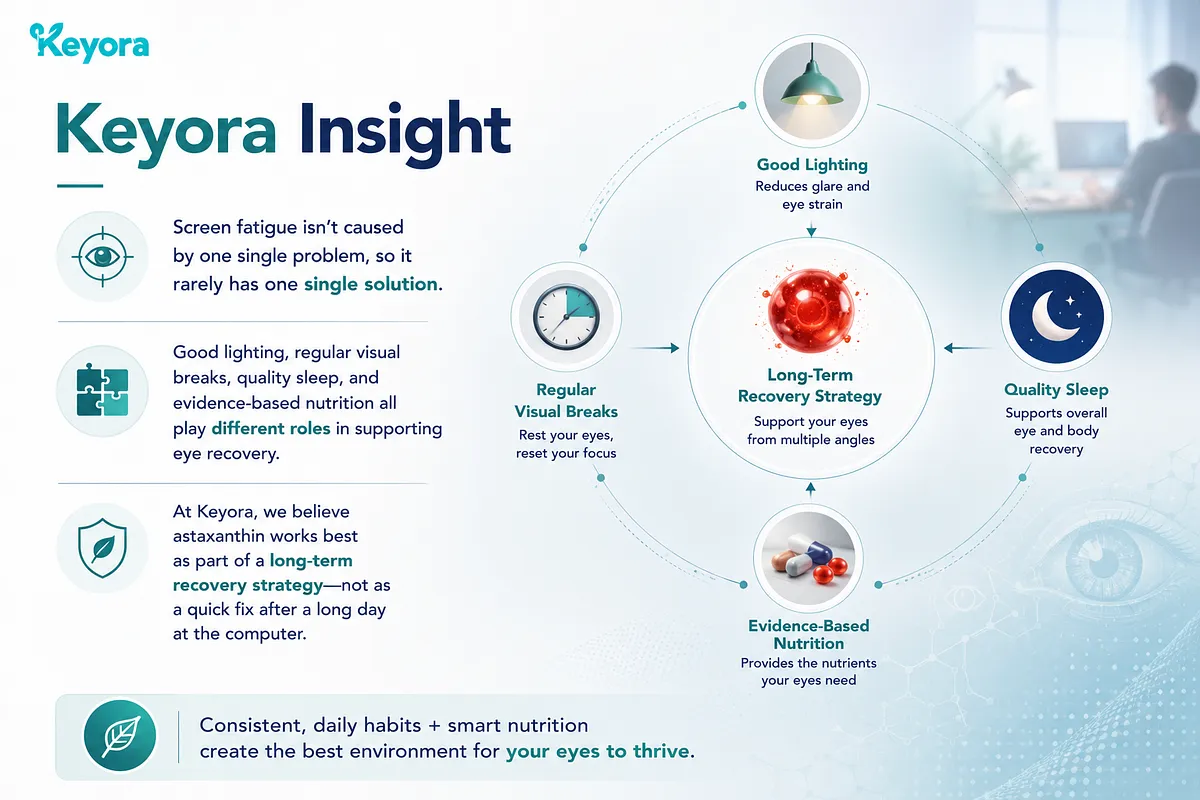
Keyora Insight
Screen fatigue isn’t caused by one single problem, so it rarely has one single solution.
Good lighting, regular visual breaks, quality sleep, and evidence-based nutrition all play different roles in supporting eye recovery.
At Keyora, we believe astaxanthin works best as part of a long-term recovery strategy—not as a quick fix after a long day at the computer.
Frequently Asked Questions
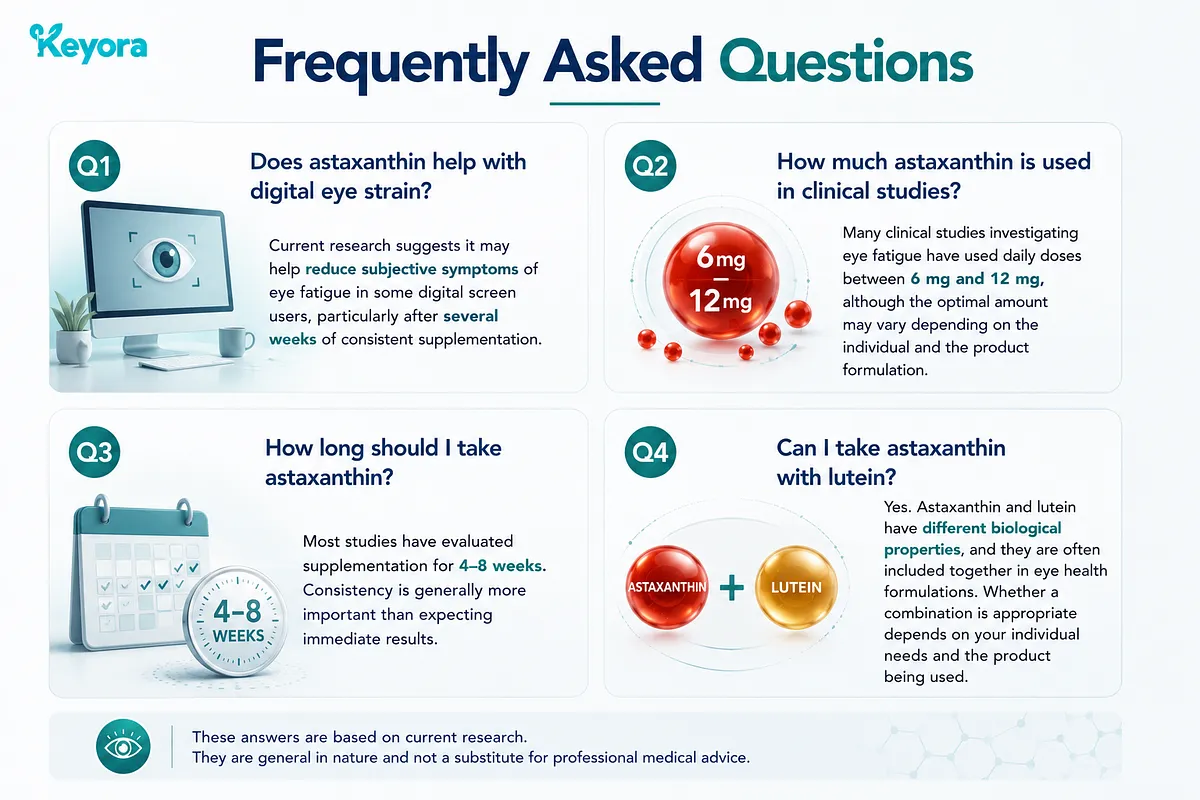
Does astaxanthin help with digital eye strain?
Current research suggests it may help reduce subjective symptoms of eye fatigue in some digital screen users, particularly after several weeks of consistent supplementation.
How much astaxanthin is used in clinical studies?
Many clinical studies investigating eye fatigue have used daily doses between 6 mg and 12 mg, although the optimal amount may vary depending on the individual and the product formulation.
How long should I take astaxanthin?
Most studies have evaluated supplementation for 4–8 weeks. Consistency is generally more important than expecting immediate results.
Can I take astaxanthin with lutein?
Yes. Astaxanthin and lutein have different biological properties, and they are often included together in eye health formulations. Whether a combination is appropriate depends on your individual needs and the product being used.
Key Takeaways
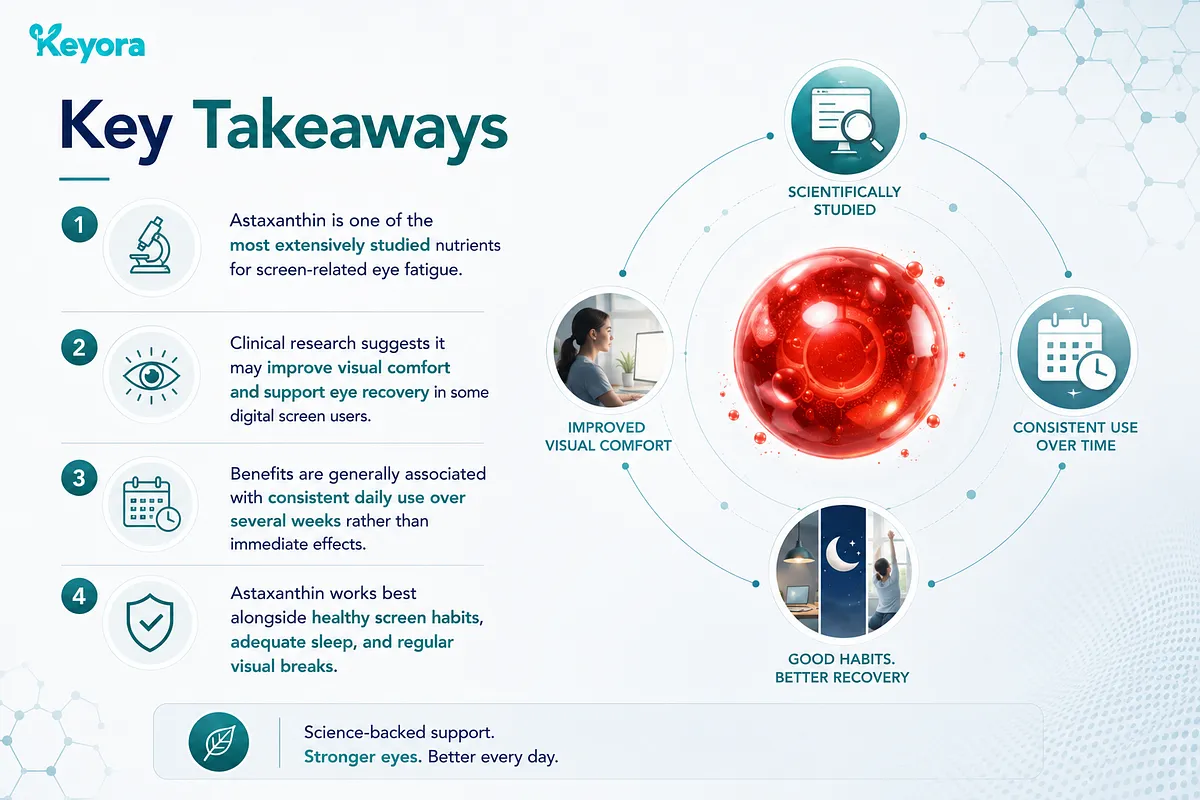
· Astaxanthin is one of the most extensively studied nutrients for screen-related eye fatigue.
· Clinical research suggests it may improve visual comfort and support eye recovery in some digital screen users.
· Benefits are generally associated with consistent daily use over several weeks rather than immediate effects.
· Astaxanthin works best alongside healthy screen habits, adequate sleep, and regular visual breaks.
References
· Nagaki Y, et al. Supplementation with Astaxanthin Improves Asthenopia Induced by VDT Work.
· Iwasaki T, et al. Effects of Astaxanthin on Eye Fatigue in Visual Display Terminal Workers.
· Nagaki Y, et al. Clinical Evaluation of Astaxanthin on Visual Accommodation and Eye Fatigue.
· Rosenfield M. Computer Vision Syndrome (Digital Eye Strain): A Review.