
Why Does Antioxidant Location Matter?
Keyora Research Q&A Library
This is part of the Keyora Research Q&A Series, derived from Keyora Astaxanthin Research Journal Series.
Within the Keyora Astaxanthin Researcn framework, this Q&A translates complex astaxanthin biology into reader-friendly, evidence-bound answers, focusing on natural astaxanthin identity, molecular structure, antioxidant and redox mechanisms, membrane lipid interaction, mitochondrial resilience, inflammatory signaling pathways, human evidence interpretation, and the scientific principles behind responsible supplementation.
First published by Keyora Research Journal: www.keyorahealth.com

Direct Answer
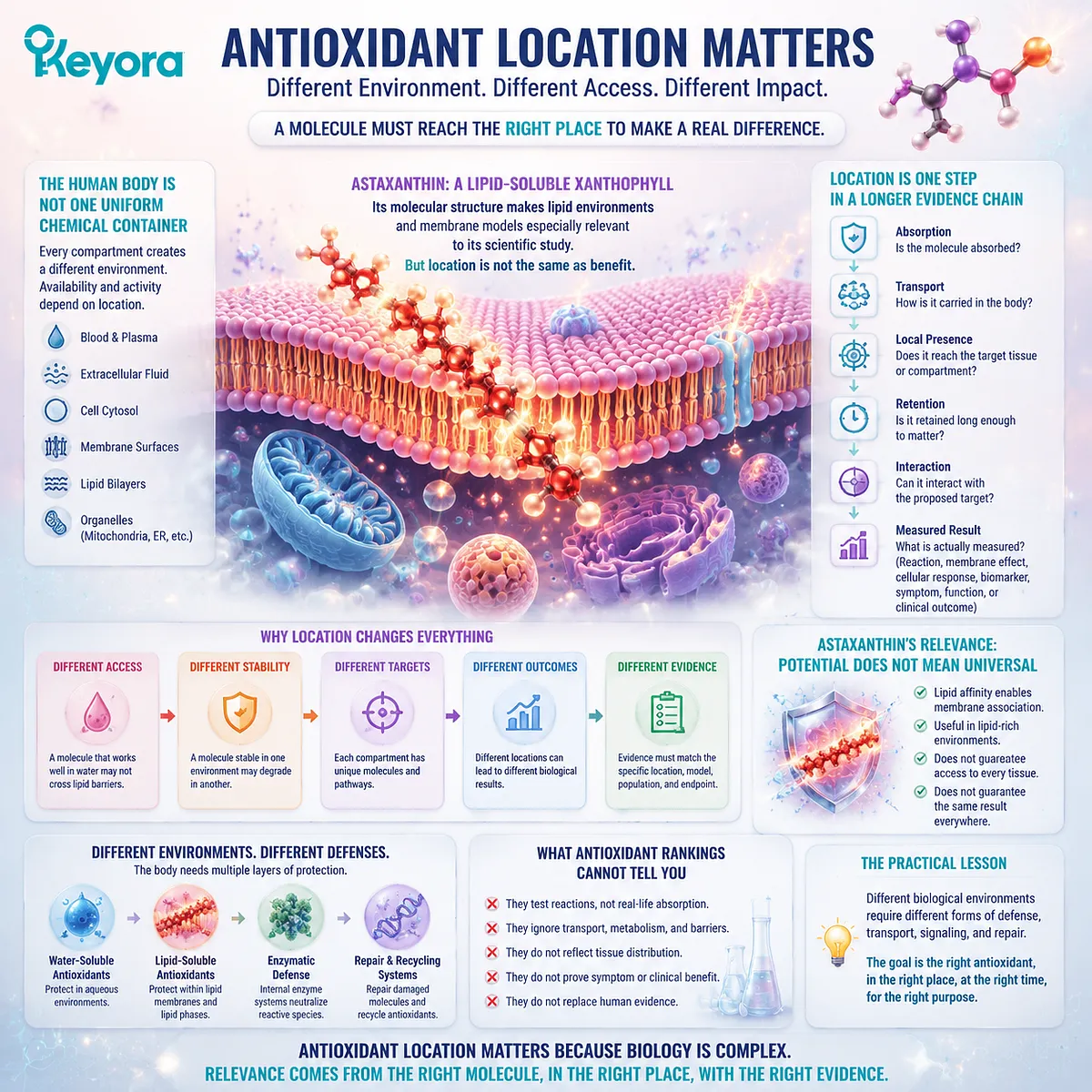
Antioxidant location matters because the human body is not one uniform chemical container. Blood, extracellular fluid, cell cytosol, membrane surfaces, lipid bilayers, and organelles each create different environments. A molecule that reacts effectively in one environment may be less available, less stable, or unable to reach the relevant target in another.
Astaxanthin provides a useful example. It is a fat-soluble xanthophyll with molecular characteristics that make lipid environments and membrane models especially relevant to its study. This does not mean Astaxanthin automatically reaches every membrane, remains there permanently, or produces the same result in every tissue.
Antioxidant location matters because a molecule must reach the relevant biological compartment, but location alone does not prove a functional or clinical benefit.
Location is one step in a longer evidence chain. Researchers must also determine whether the molecule is absorbed, transported, present at a meaningful local concentration, retained for a relevant period, and capable of interacting with the proposed target. The measured result must then be identified correctly as a chemical reaction, membrane effect, cellular response, biomarker, symptom, function, or clinical outcome.
The practical lesson is not that lipid-soluble antioxidants are superior to water-soluble antioxidants. It is that different biological environments require different forms of defense, transport, signaling, and repair.
The Body Is Not One Chemical Container
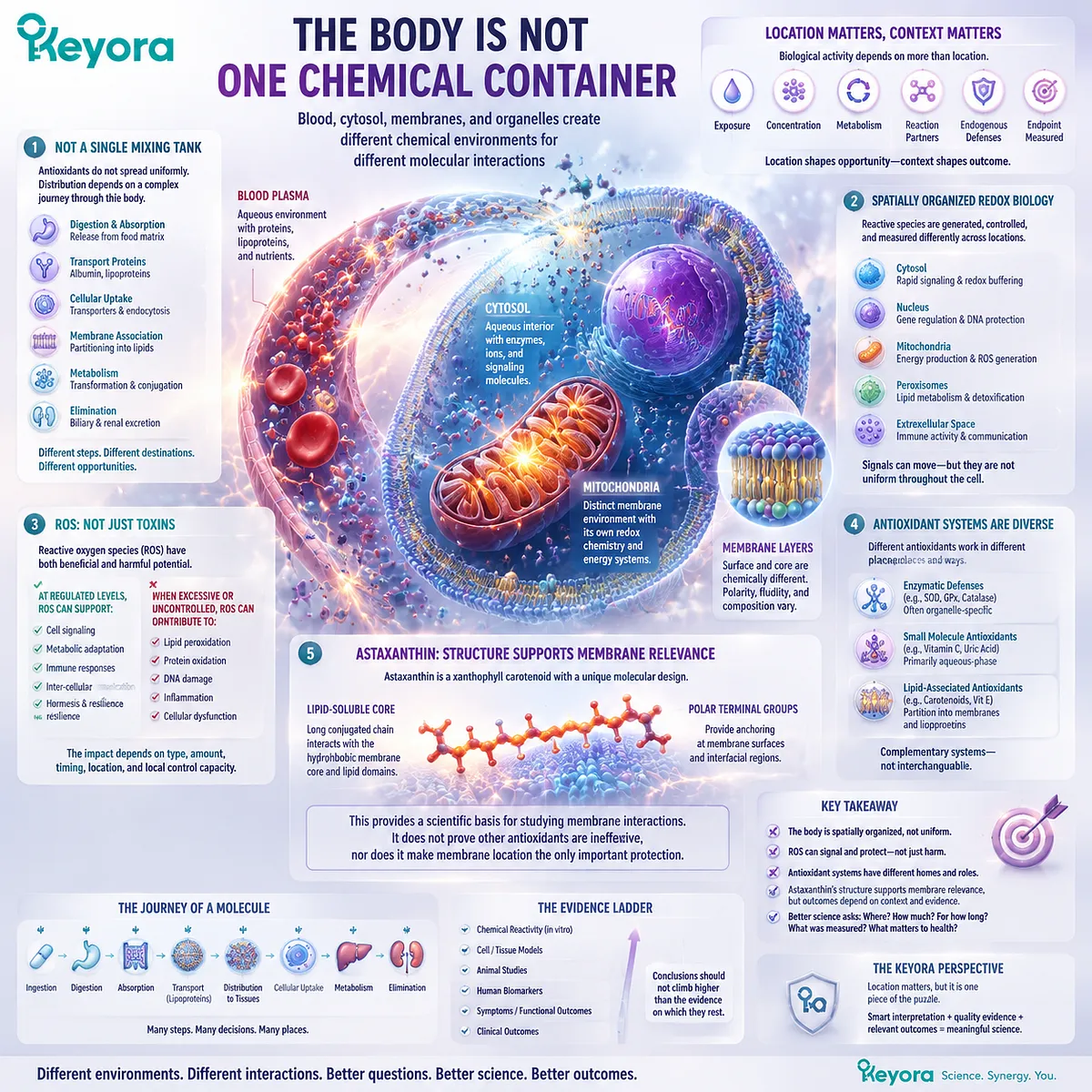
Blood, cytosol, membranes, and organelles create different chemical environments for different molecular interactions
It is tempting to imagine that an antioxidant enters the bloodstream and then spreads evenly through the body. In reality, biological distribution is shaped by digestion, transport proteins, lipoproteins, membranes, enzymes, metabolism, tissue uptake, and elimination.
The aqueous environment of blood plasma differs from the interior of a phospholipid membrane. The cytosol differs from a mitochondrial membrane. The surface of a lipid bilayer differs from its hydrophobic core. A molecule’s charge, polarity, solubility, size, chemical form, and transport route can influence where it is found and which reactions it can encounter.
Redox biology is also spatially organized. Experiments using hydrogen peroxide sensors directed to different cellular compartments have shown that oxidant signals can be generated, controlled, and measured differently across the cytosol, nucleus, mitochondria, and other cellular locations. These signals may also move between compartments, but they are not automatically uniform throughout the cell.
This is important because reactive oxygen species are not simply random toxins waiting to be eliminated. At regulated levels, they can participate in signaling, metabolic adaptation, immune activity, and communication between cellular systems. Whether a reactive species contributes to signaling or damage depends partly on its type, amount, timing, location, and the local capacity for control and repair.
Antioxidant systems are similarly distributed. Some enzymes operate mainly in particular organelles. Some small molecules circulate in aqueous environments. Others associate more readily with lipids, membranes, or lipoproteins. These roles can be complementary without being interchangeable.
Astaxanthin is relevant to this spatial view because its structure combines a long lipid-compatible region with relatively polar terminal groups. That arrangement provides a scientific basis for studying its behavior in lipid bilayers and membrane interfaces. It does not establish that other antioxidant systems are ineffective, nor does it make membrane location the only important form of biological protection.
The phrase “location matters” should therefore be understood as a correction to oversimplification. It does not mean that location determines everything. Biological activity also depends on exposure, concentration, metabolism, reaction partners, endogenous defenses, and the endpoint being measured.
A Molecule Must Reach the Reaction Site
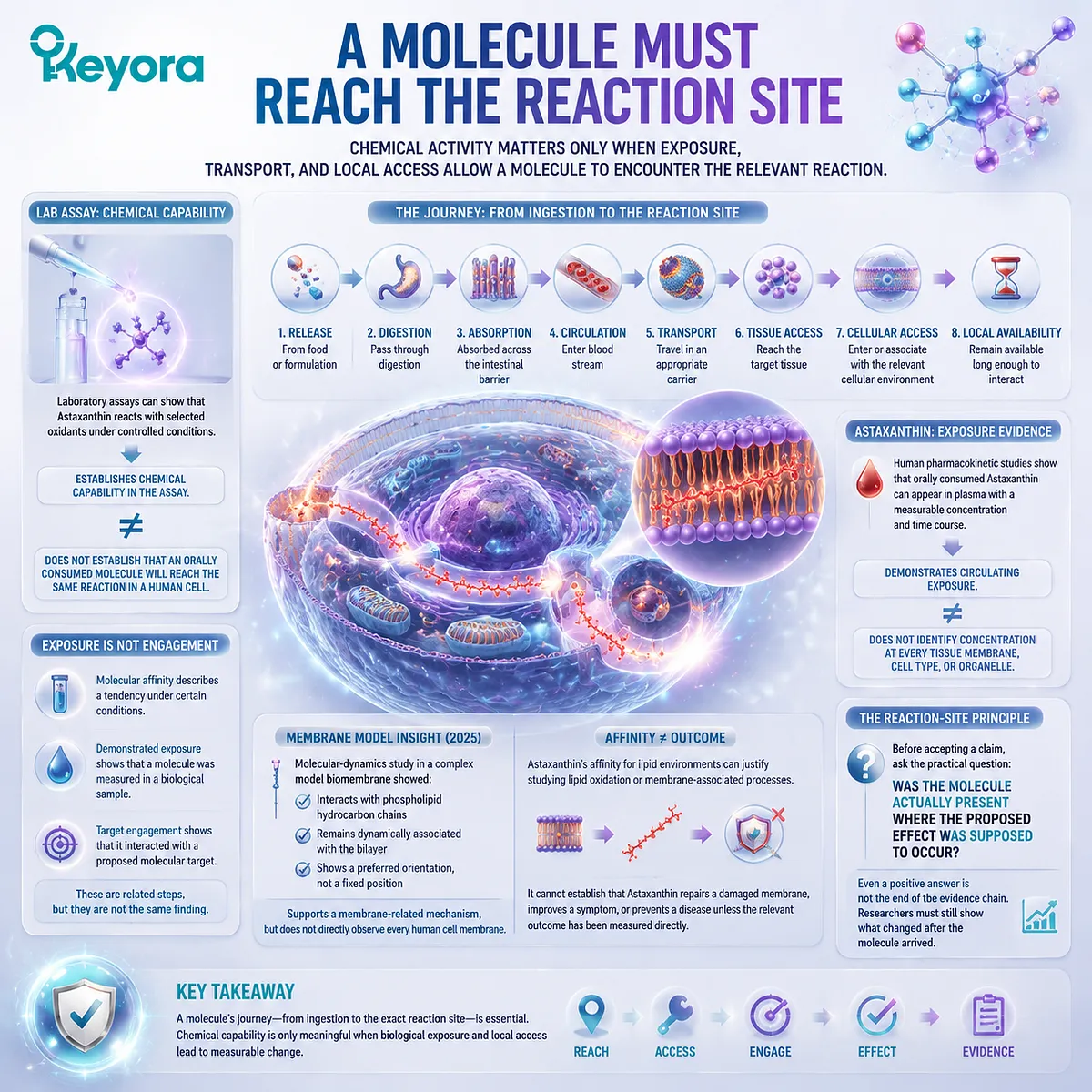
Chemical activity matters only when exposure, transport, and local access allow a molecule to encounter the relevant reaction
A laboratory assay can show that a compound reacts with a selected oxidant under controlled conditions. That result establishes chemical capability within the assay. It does not establish that an orally consumed molecule will reach the same reaction in a human cell.
Before a dietary compound can participate in a biological process, several steps may be required. It must be released from food or a formulation, pass through digestion, be absorbed, enter circulation, travel in an appropriate carrier, reach a tissue, enter or associate with the relevant cellular environment, and remain available long enough to interact with its proposed target.
Astaxanthin is highly lipophilic, and human pharmacokinetic studies have shown that orally consumed Astaxanthin can appear in plasma with a measurable concentration and time course. Those findings demonstrate circulating exposure. They do not, by themselves, identify the concentration at every tissue membrane, cell type, or organelle.
Membrane models can answer a different question. A 2025 molecular-dynamics study examined Astaxanthin’s location and movement in a complex model biomembrane. Within that model, Astaxanthin interacted with phospholipid hydrocarbon chains, remained dynamically associated with the bilayer, and showed a preferred orientation rather than one perfectly fixed position. The study supports a membrane-related mechanism, but it does not directly observe Astaxanthin in every human cell membrane.
This distinction is essential. Molecular affinity describes a tendency under certain conditions. Demonstrated exposure shows that a molecule was measured in a biological sample. Target engagement shows that it interacted with a proposed molecular target. These are related steps, but they are not the same finding.
For example, Astaxanthin’s affinity for lipid environments can justify studying lipid oxidation or membrane-associated processes. It cannot establish that Astaxanthin repairs a damaged membrane, improves a symptom, or prevents a disease unless the relevant outcome has been measured directly.
The reaction-site principle therefore asks a practical question before accepting a claim:
Was the molecule actually present where the proposed effect was supposed to occur?
Even a positive answer is not the end of the evidence chain. Researchers must still show what changed after the molecule arrived.
Concentration and Location Answer Different Questions
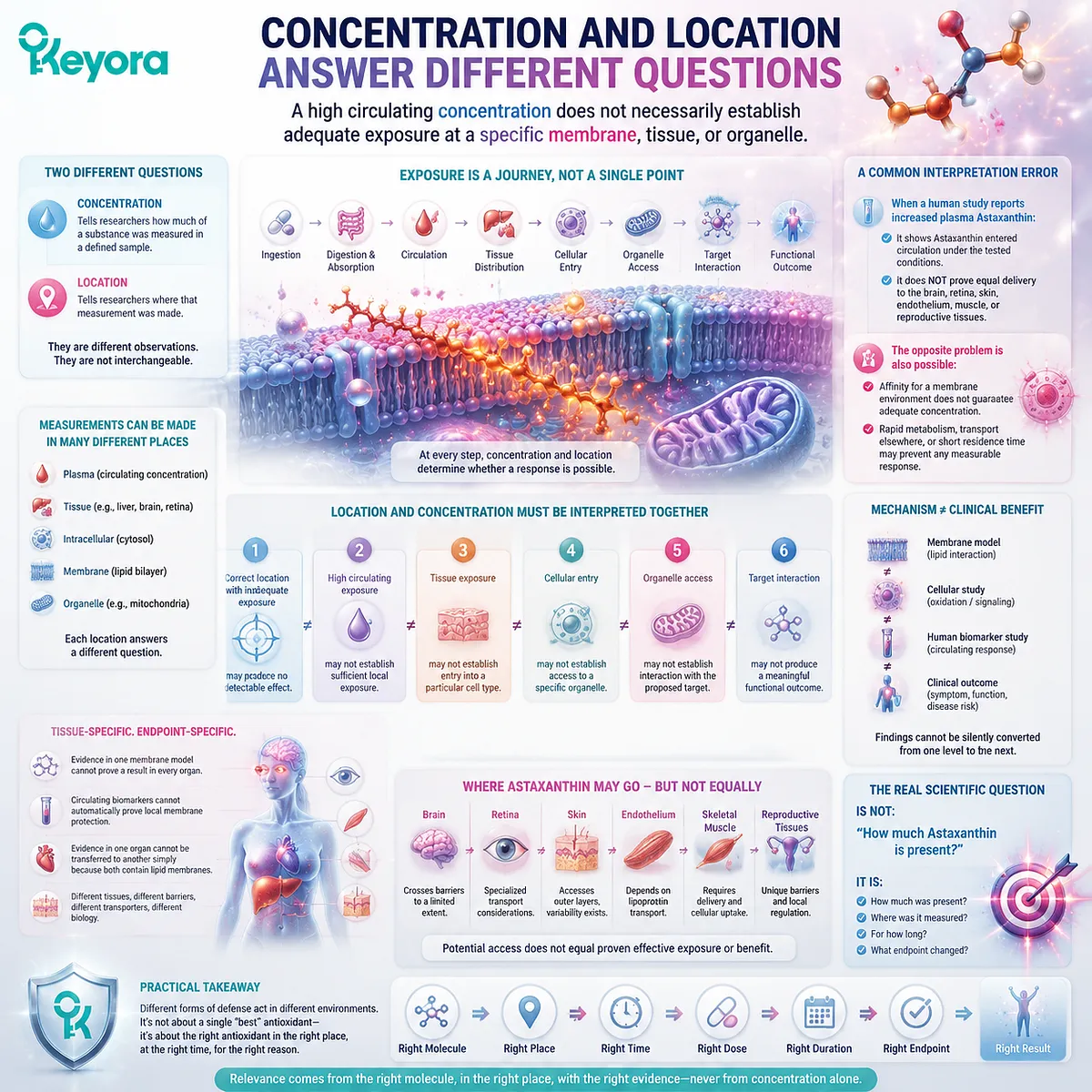
A high circulating concentration does not necessarily establish adequate exposure at a specific membrane, tissue, or organelle
Concentration tells researchers how much of a substance was measured in a defined sample. Location tells them where that measurement was made. A plasma concentration, tissue concentration, intracellular concentration, and membrane concentration are different observations.
This difference prevents a common interpretation error. When a human study reports increased plasma Astaxanthin after supplementation, it shows that Astaxanthin entered circulation under the tested conditions. It does not prove equal delivery to the brain, retina, skin, vascular endothelium, skeletal muscle, or reproductive tissues.
The opposite problem is also possible. A molecule may have an affinity for a membrane environment but reach that location at an insufficient concentration. It may be rapidly metabolized, transported elsewhere, or present for too short a period to create a measurable response.
Location and concentration must therefore be interpreted together:
-
Correct location with inadequate exposure may produce no detectable effect
-
High circulating exposure may not establish sufficient local exposure
-
Tissue exposure may not establish entry into a particular cell type
-
Cellular entry may not establish access to a specific organelle
-
Organelle access may not establish interaction with the proposed target
-
Target interaction may not produce a meaningful functional outcome
These distinctions become especially important when claims move from mechanism to human benefit. A membrane-model result may support a hypothesis about lipid interactions. A cellular study may show a change in oxidation or signaling. A human biomarker study may show a circulating response. None of these findings can be silently converted into proof that a person will feel better or avoid a future clinical event.
Astaxanthin research must therefore remain tissue-specific and endpoint-specific. Evidence related to one membrane model cannot prove a result in every organ. Evidence related to circulating biomarkers cannot automatically prove local membrane protection. Evidence related to one organ cannot be transferred to another merely because both contain lipid membranes.
The scientific question is not simply, “How much Astaxanthin is present?”
It is:
How much was present, where was it measured, for how long, and what endpoint changed?
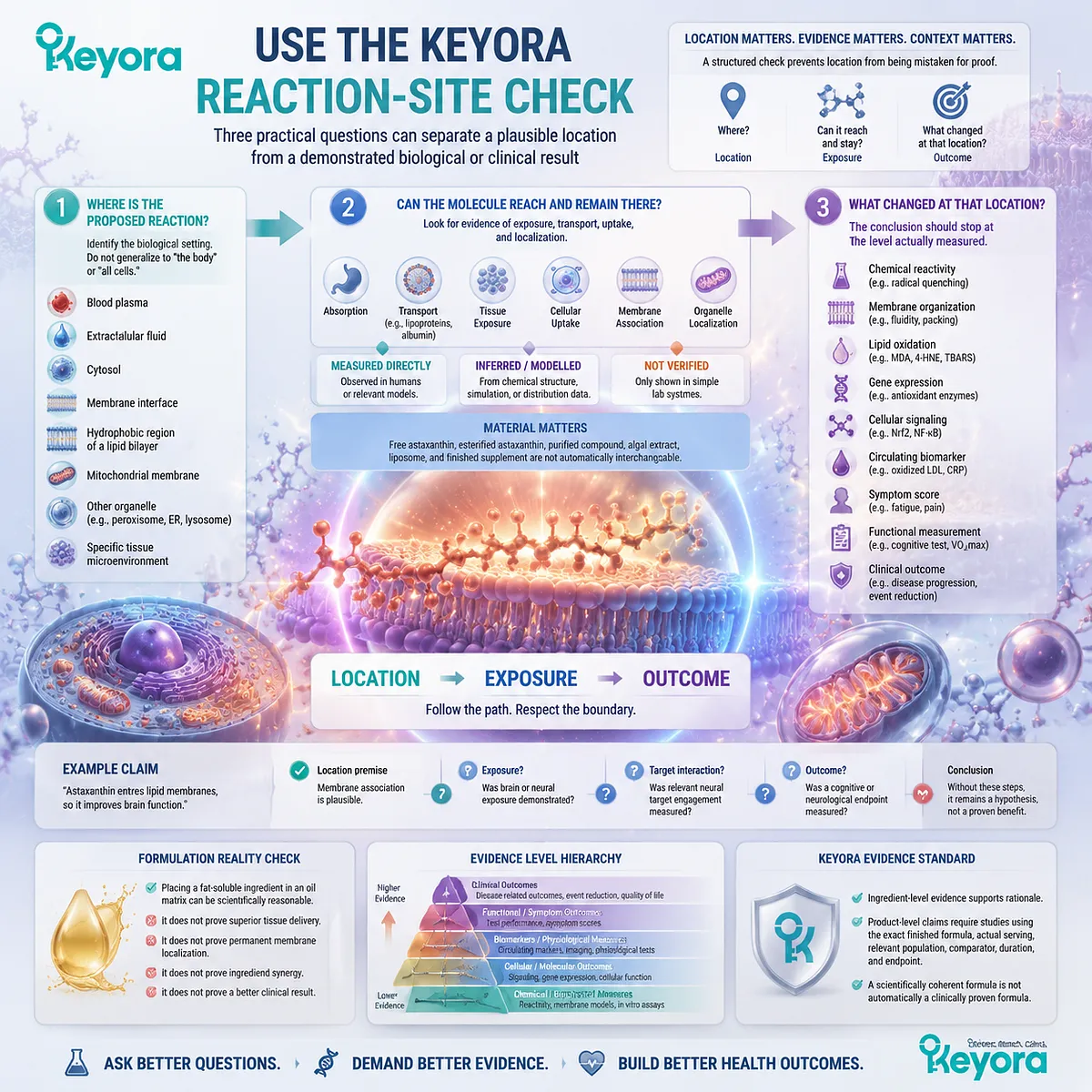
Use the Keyora Reaction-Site Check
Three practical questions can separate a plausible location from a demonstrated biological or clinical result
The Keyora Reaction-Site Check translates the location principle into a practical method for reading antioxidant claims. It preserves EP-1’s central insight that biological location matters while preventing location from being mistaken for proof.
First, ask: Where is the proposed reaction?
Determine whether the claim concerns:
-
blood plasma
-
extracellular fluid
-
the cytosol
-
a membrane interface
-
the hydrophobic region of a lipid bilayer
-
a mitochondrial membrane
-
another organelle
-
a particular tissue microenvironment
A claim should identify the biological setting rather than referring vaguely to “the body” or “all cells.”
Second, ask: Can the molecule reach and remain there?
Look for evidence of absorption, transport, tissue exposure, cellular uptake, membrane association, or organelle localization. Check whether location was measured directly, inferred from chemical structure, predicted through simulation, or observed only in a laboratory membrane.
Also ask whether the material and conditions match the public claim. Free Astaxanthin, esterified Astaxanthin, a purified compound, an algal extract, a liposome, and a finished supplement are not automatically interchangeable research materials.
Third, ask: What changed at that location?
The measured endpoint may be:
-
chemical reactivity
-
membrane organization
-
lipid oxidation
-
gene expression
-
cellular signaling
-
a circulating biomarker
-
a symptom score
-
a functional measurement
-
a clinical outcome
The conclusion should stop at the level actually measured.
Consider the statement, “Astaxanthin enters lipid membranes, so it improves brain function.” The membrane premise may support biological interest. The next steps still require evidence of relevant exposure, target interaction, and a directly measured cognitive or neurological endpoint. Without those steps, the statement remains a hypothesis rather than a demonstrated human benefit.
The same boundary applies to formulation. Placing a fat-soluble ingredient in an oil-containing product can be scientifically reasonable. It does not prove superior tissue delivery, permanent membrane localization, ingredient synergy, or a better clinical result.
Ingredient-level evidence may support the rationale for a Keyora Astaxanthin formulation. Direct product-level claims require studies using the exact finished formula, actual serving, relevant population, comparator, duration, and endpoint.
Closing Summary
Location helps define what an antioxidant could do, while direct measurement establishes what it actually did
Antioxidant location matters because the body contains distinct aqueous, interfacial, lipid, cellular, and organelle environments. A molecule cannot participate in every reaction simply because it has antioxidant activity in a laboratory test.
Astaxanthin’s fat solubility and membrane affinity make lipid environments scientifically relevant to its study. They do not prove that it reaches every membrane, remains in one fixed orientation, or produces the same benefit in every tissue.
The Keyora Reaction-Site Check asks three questions: Where is the reaction, can the molecule reach and remain there, and what changed at that location?
This method separates chemical plausibility from demonstrated biological exposure and separates biological exposure from functional or clinical benefit.
The final verdict is clear: antioxidant location can help explain whether an interaction is biologically plausible, but only endpoint-specific evidence can show whether that location produced a meaningful human result.

This article is for educational and informational purposes only. It does not provide medical advice, diagnosis, treatment, cure, prevention, disease outcome claims, hormone restoration claims, fertility outcome claims, or formula-specific clinical efficacy claims.