
Who Can Benefit Most from Astaxanthin for Eye Health?
Keyora Research Q&A Library
This is part of the Keyora Research Q&A Series, derived from Keyora Astaxanthin Research Journal Series.
Within the Keyora Astaxanthin Researcn framework, this Q&A translates complex astaxanthin biology into reader-friendly, evidence-bound answers, focusing on natural astaxanthin identity, molecular structure, antioxidant and redox mechanisms, membrane lipid interaction, mitochondrial resilience, inflammatory signaling pathways, human evidence interpretation, and the scientific principles behind responsible supplementation.
First published by Keyora Research Journal: www.keyorahealth.com
Short Answer
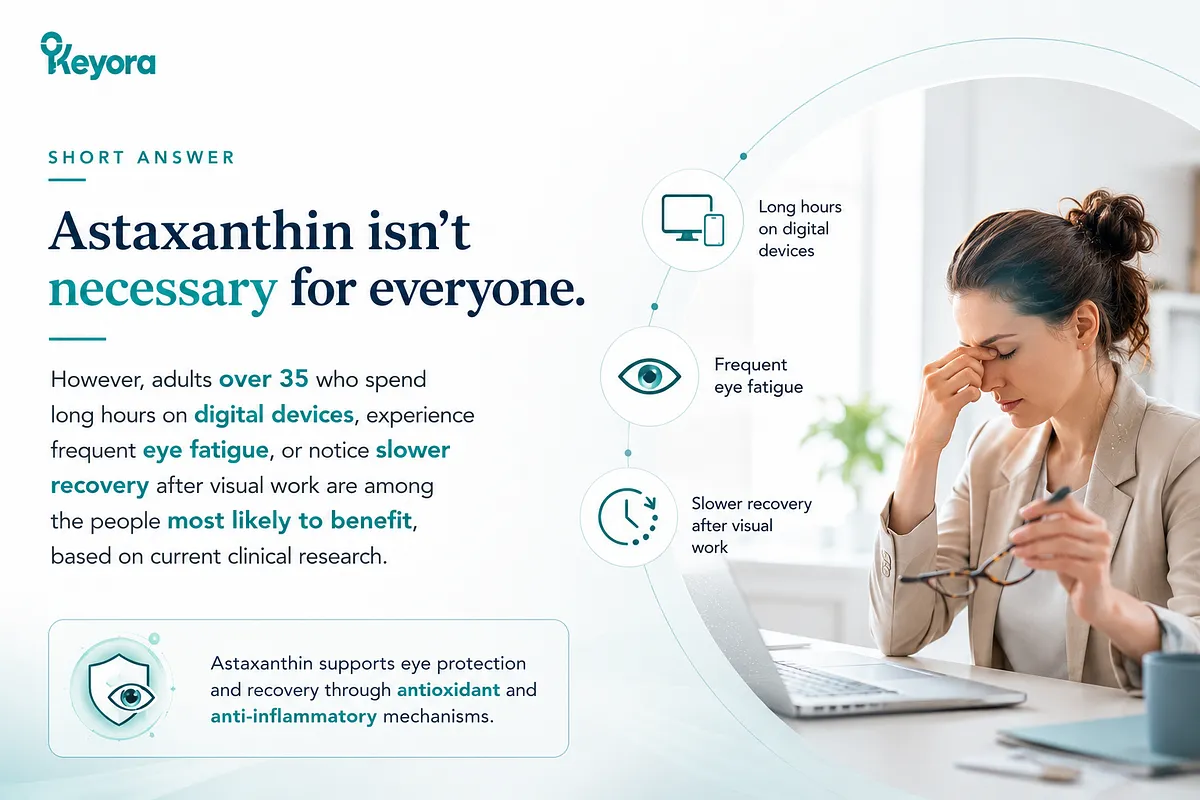
Astaxanthin isn’t necessary for everyone. However, adults over 35 who spend long hours on digital devices, experience frequent eye fatigue, or notice slower recovery after visual work are among the people most likely to benefit, based on current clinical research.
Quick Answer
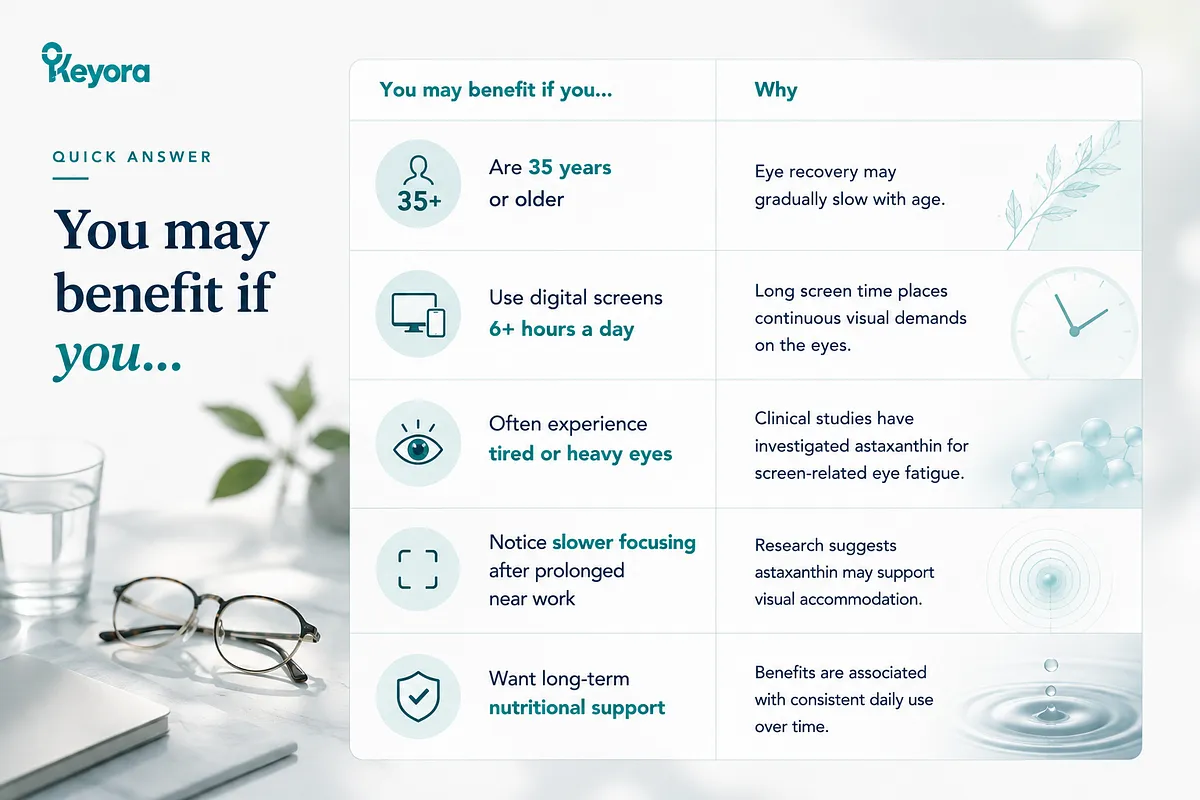
You may benefit if you…
Why
Are 35 years or older
Eye recovery may gradually slow with age.
Use digital screens 6+ hours a day
Long screen time places continuous visual demands on the eyes.
Often experience tired or heavy eyes
Clinical studies have investigated astaxanthin for screen-related eye fatigue.
Notice slower focusing after prolonged near work
Research suggests astaxanthin may support visual accommodation.
Want long-term nutritional support
Benefits are associated with consistent daily use over time.
Who Can Benefit Most?
Adults Over 35
As we age, the eyes naturally become less efficient at recovering from prolonged visual stress. Many adults begin noticing slower focusing and increased eye fatigue after long workdays.
People with High Screen Exposure
Whether you work in an office, run a business, or travel frequently, spending many hours on computers, tablets, and phones increases visual demands and reduces blinking.
Professionals with High Visual Demands
Executives, entrepreneurs, consultants, healthcare professionals, engineers, designers, and other professionals often spend long periods reading, analyzing information, and switching between multiple screens.
Their eyes work continuously throughout the day.
People Looking for Long-Term Eye Support
Astaxanthin is intended to support ongoing eye health and recovery from daily visual stress. It is not designed to provide immediate relief like lubricating eye drops.
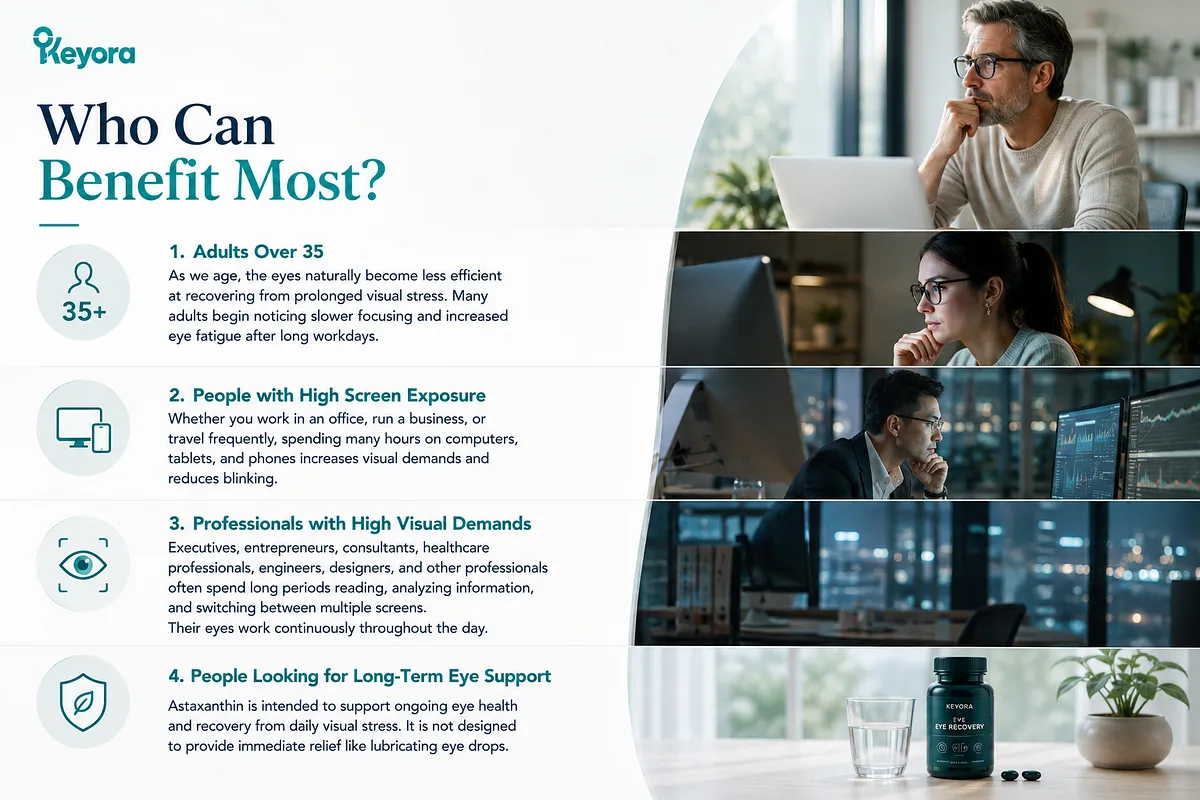
KEYORA identifies the four main groups that benefit most from astaxanthin, ranging from high-demand professionals to those seeking long-term recovery.
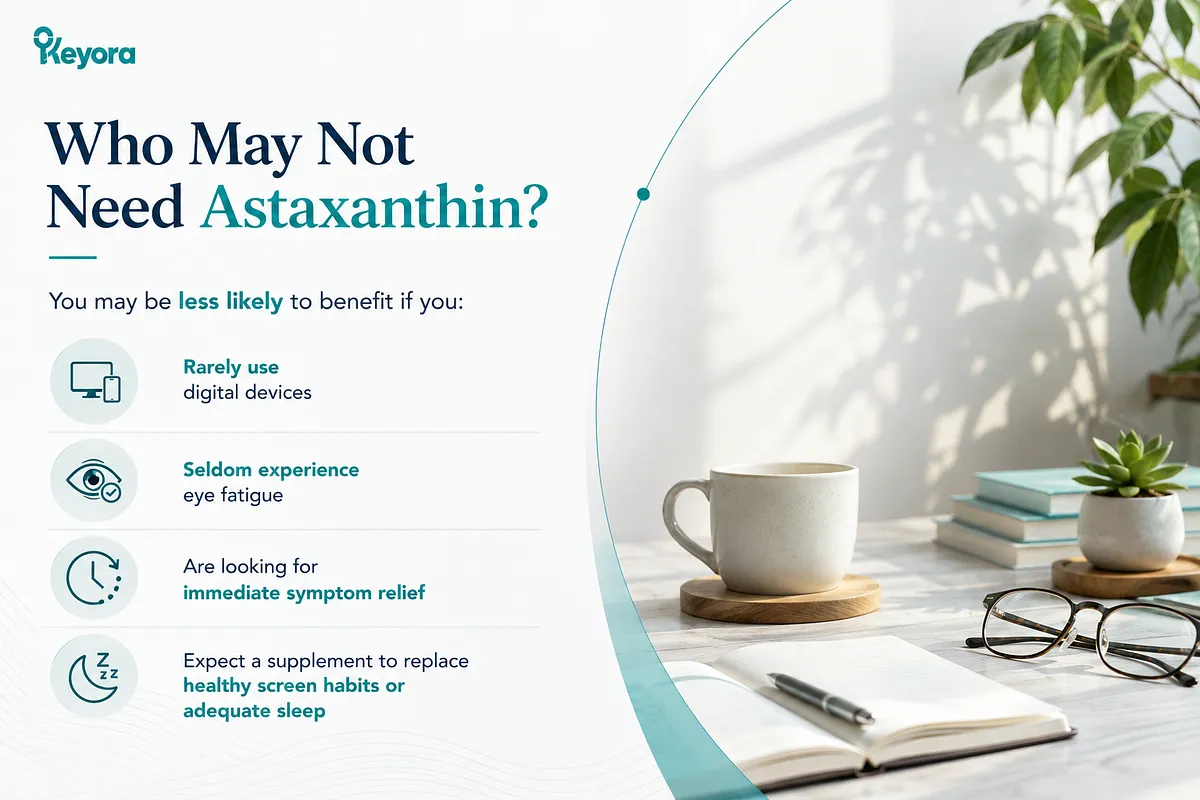
Who May Not Need Astaxanthin?
You may be less likely to benefit if you:
· Rarely use digital devices
· Seldom experience eye fatigue
· Are looking for immediate symptom relief
· Expect a supplement to replace healthy screen habits or adequate sleep
Recovery Protocol
✔ Take regular screen breaks using the 20-20-20 Rule.
✔ Blink more often during prolonged screen work.
✔ Prioritize quality sleep.
✔ Maintain a nutrient-rich diet.
✔ If you choose to supplement, take astaxanthin consistently rather than occasionally.
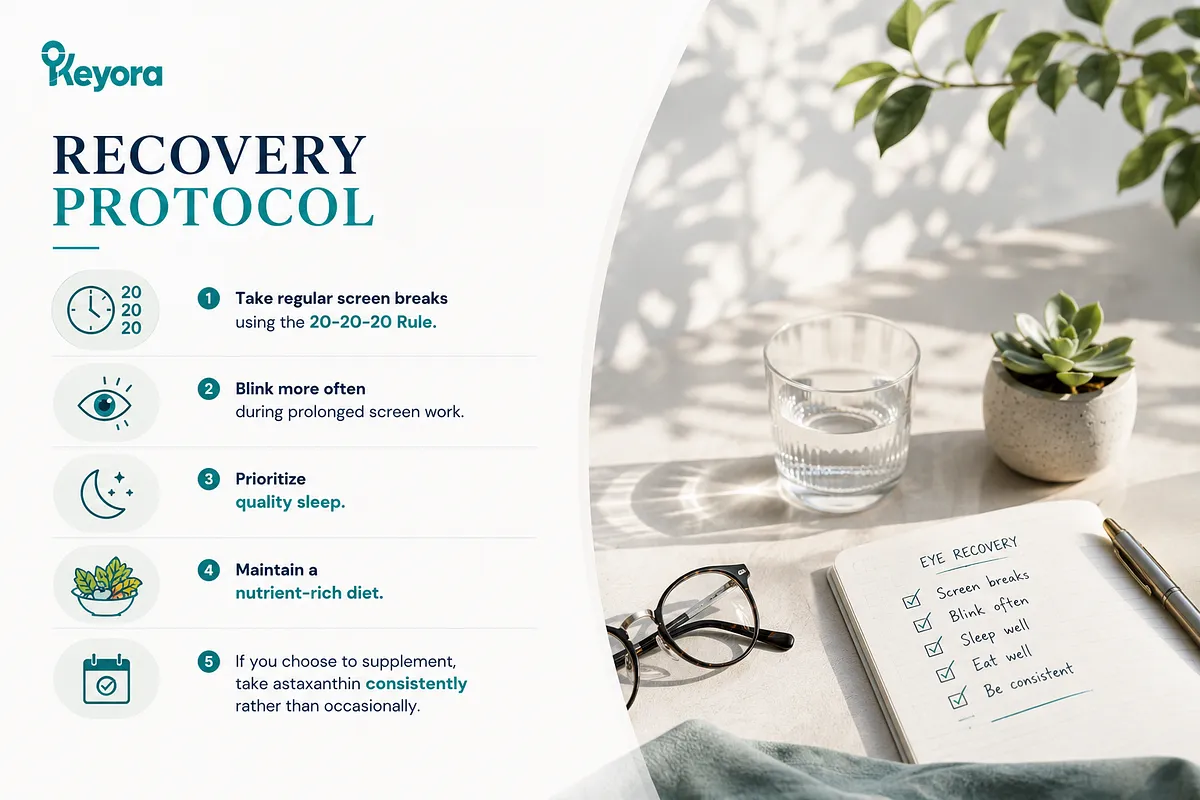
Follow KEYORA’s Recovery Protocol combining healthy screen habits, quality sleep, and consistent astaxanthin supplementation.
The Keyora Verdict
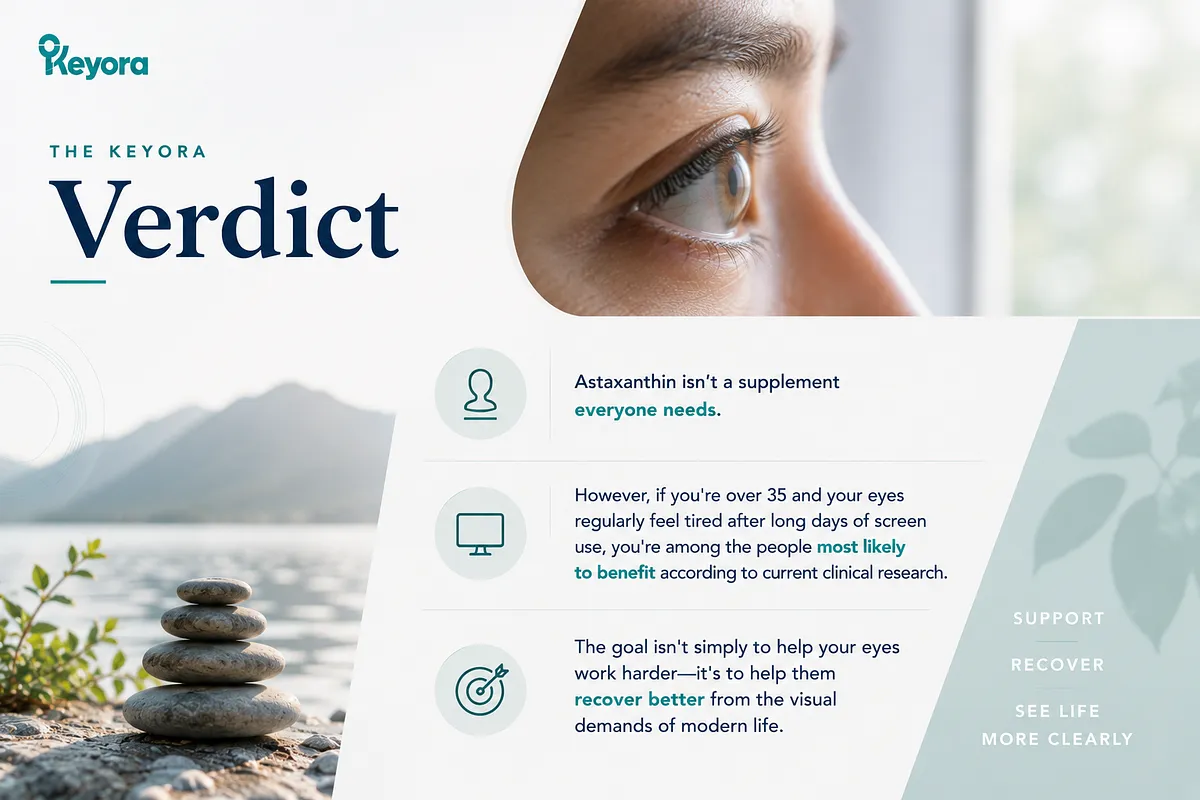
Astaxanthin isn’t a supplement everyone needs.
However, if you’re over 35 and your eyes regularly feel tired after long days of screen use, you’re among the people most likely to benefit according to current clinical research.
The goal isn’t simply to help your eyes work harder—it’s to help them recover better from the visual demands of modern life.
Frequently Asked Questions
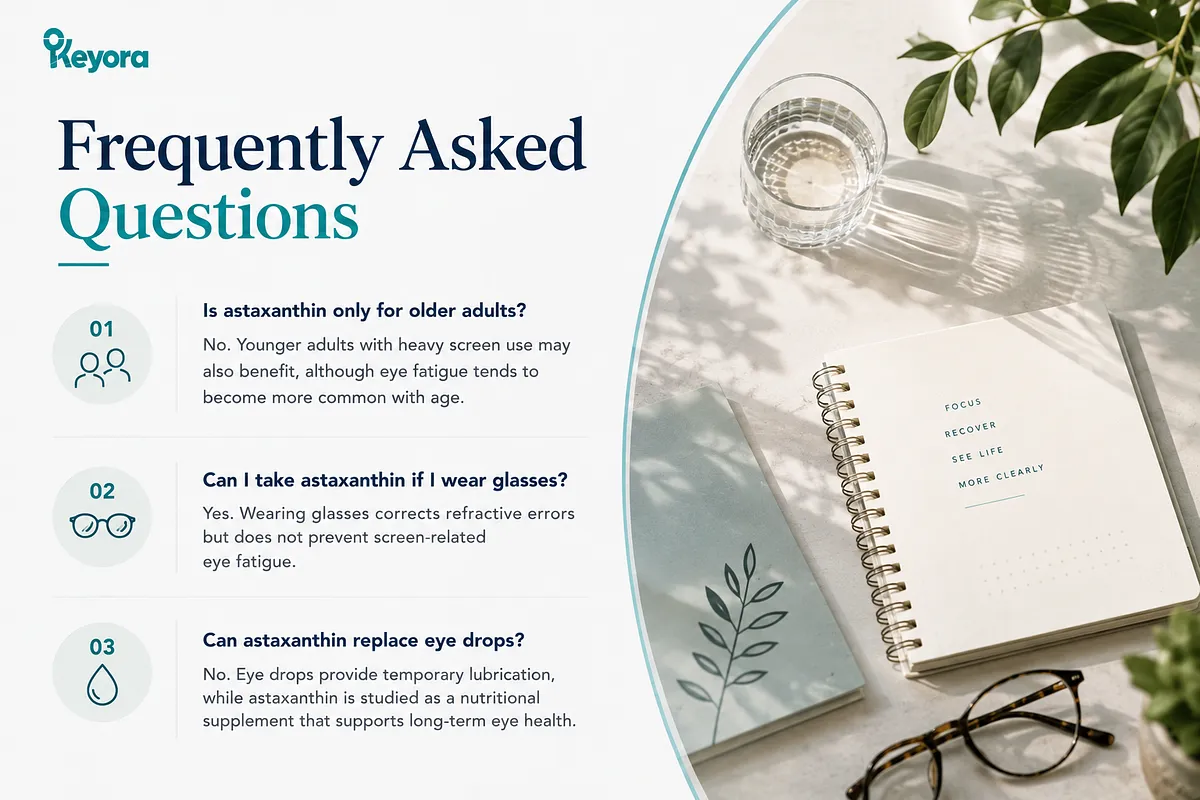
Is astaxanthin only for older adults?
No. Younger adults with heavy screen use may also benefit, although eye fatigue tends to become more common with age.
Can I take astaxanthin if I wear glasses?
Yes. Wearing glasses corrects refractive errors but does not prevent screen-related eye fatigue.
Can astaxanthin replace eye drops?
No. Eye drops provide temporary lubrication, while astaxanthin is studied as a nutritional supplement that supports long-term eye health.
Research First
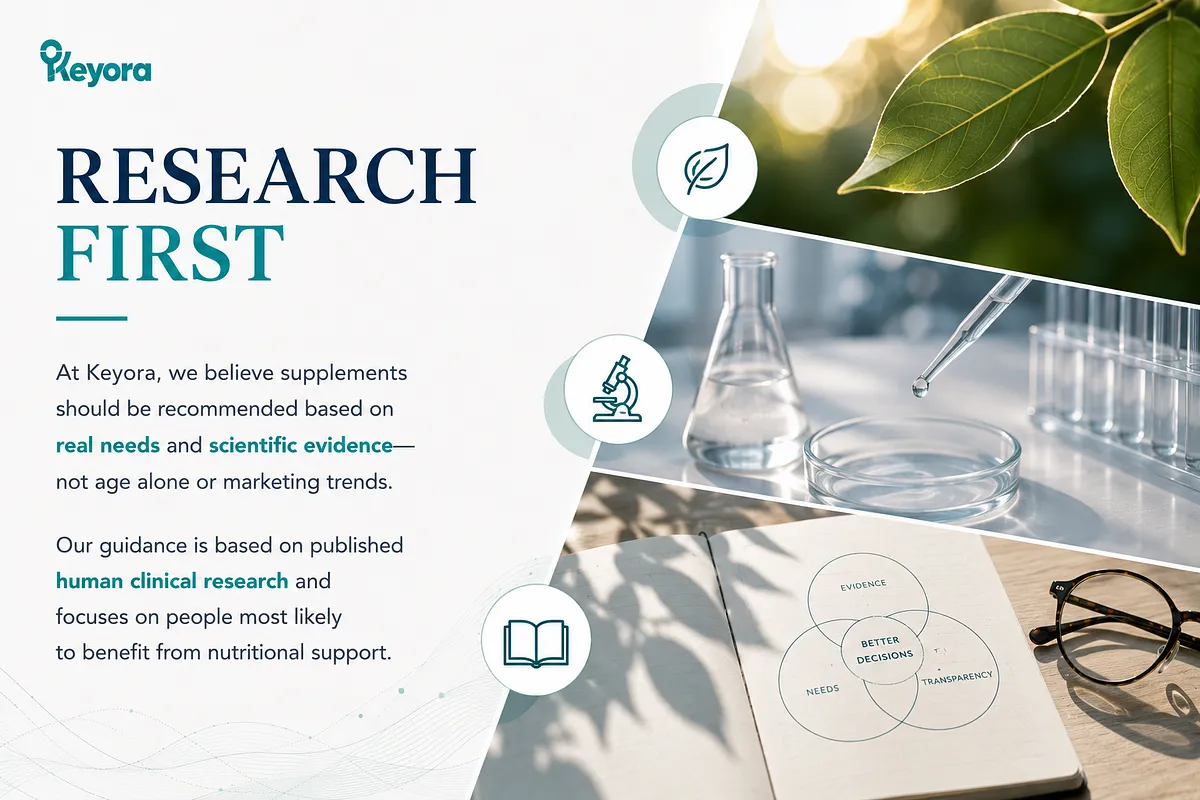
At Keyora, we believe supplements should be recommended based on real needs and scientific evidence—not age alone or marketing trends. Our guidance is based on published human clinical research and focuses on people most likely to benefit from nutritional support.
Evidence Note
This article is for educational purposes only and does not replace medical advice. Dietary supplements are not intended to diagnose, treat, cure, or prevent any disease. If you have persistent eye pain, sudden vision changes, or diagnosed eye disease, consult an eye care professional.
References
1. Iwasaki T, et al. Effects of Astaxanthin on Eye Fatigue in Visual Display Terminal Workers.
2. Nagaki Y, et al. Clinical Evaluation of Astaxanthin on Visual Accommodation and Eye Fatigue.
3. Sheppard AL, Wolffsohn JS. Digital Eye Strain: Prevalence, Measurement and Amelioration.
4. Rosenfield M. Computer Vision Syndrome: A Review.
5. American Academy of Ophthalmology. Computer Vision Syndrome.