
How Much Astaxanthin Should You Take for Eye Health?
Keyora Research Q&A Library
This is part of the Keyora Research Q&A Series, derived from Keyora Astaxanthin Research Journal Series.
Within the Keyora Astaxanthin Researcn framework, this Q&A translates complex astaxanthin biology into reader-friendly, evidence-bound answers, focusing on natural astaxanthin identity, molecular structure, antioxidant and redox mechanisms, membrane lipid interaction, mitochondrial resilience, inflammatory signaling pathways, human evidence interpretation, and the scientific principles behind responsible supplementation.
First published by Keyora Research Journal: www.keyorahealth.com
Short Answer
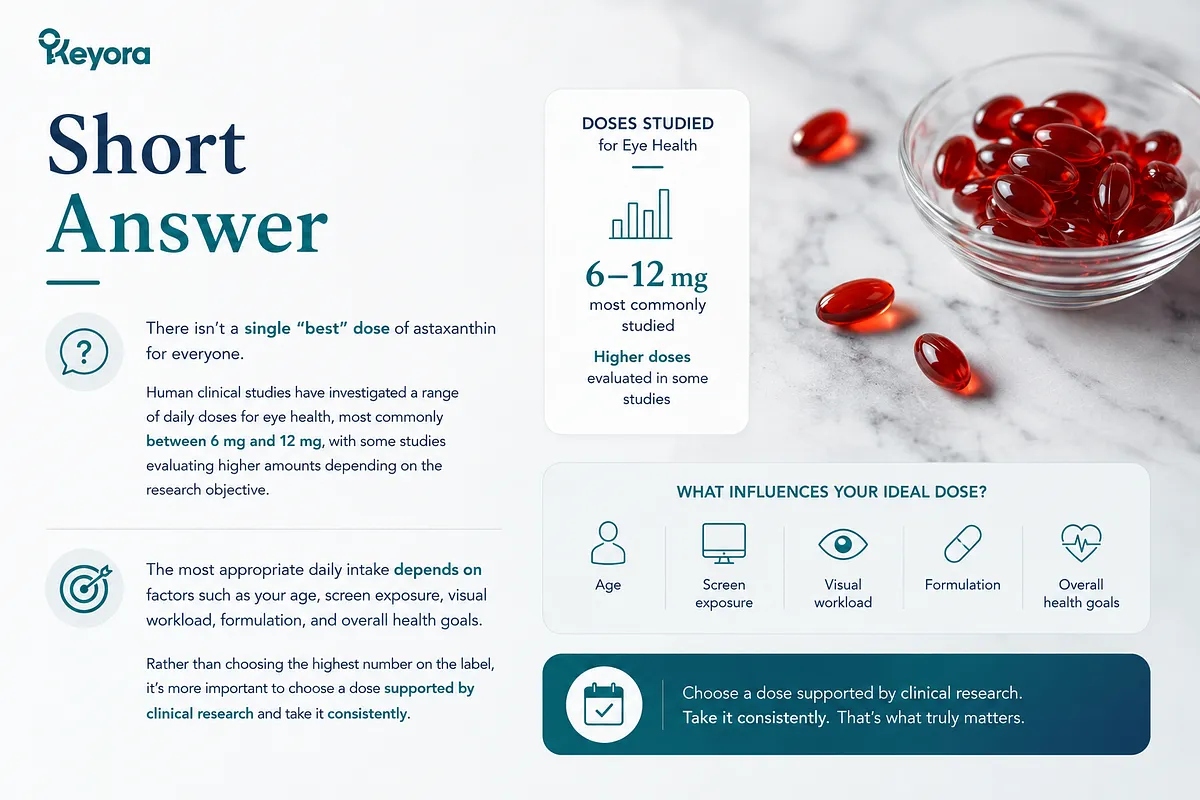
There isn’t a single “best” dose of astaxanthin for everyone. Human clinical studies have investigated a range of daily doses for eye health, most commonly between 6 mg and 12 mg, with some studies evaluating higher amounts depending on the research objective.
The most appropriate daily intake depends on factors such as your age, screen exposure, visual workload, formulation, and overall health goals. Rather than choosing the highest number on the label, it’s more important to choose a dose supported by clinical research and take it consistently.
Does This Sound Like You?
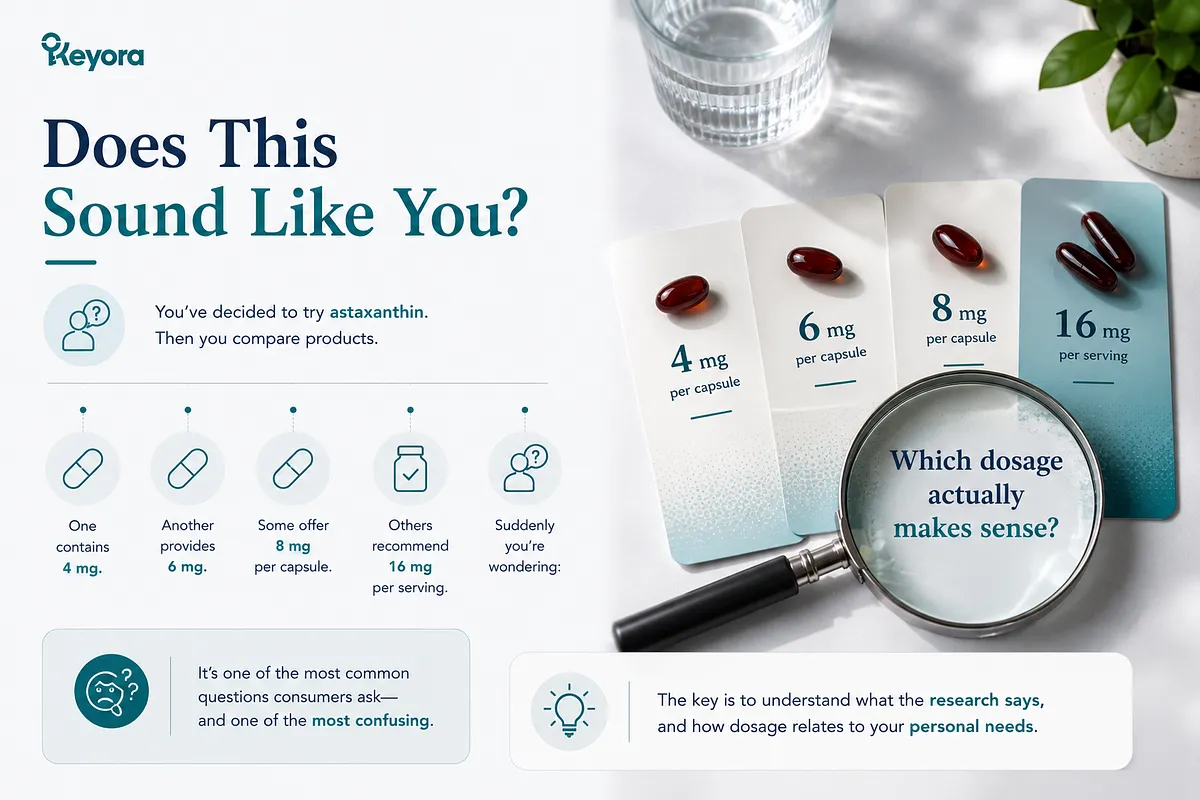
You’ve decided to try astaxanthin.
Then you compare products.
One contains 4 mg.
Another provides 6 mg.
Some offer 8 mg per capsule.
Others recommend 16 mg per serving.
Suddenly you’re wondering:
“Which dosage actually makes sense?”
It’s one of the most common questions consumers ask—and one of the most confusing.
Why Isn’t There One Recommended Dose?
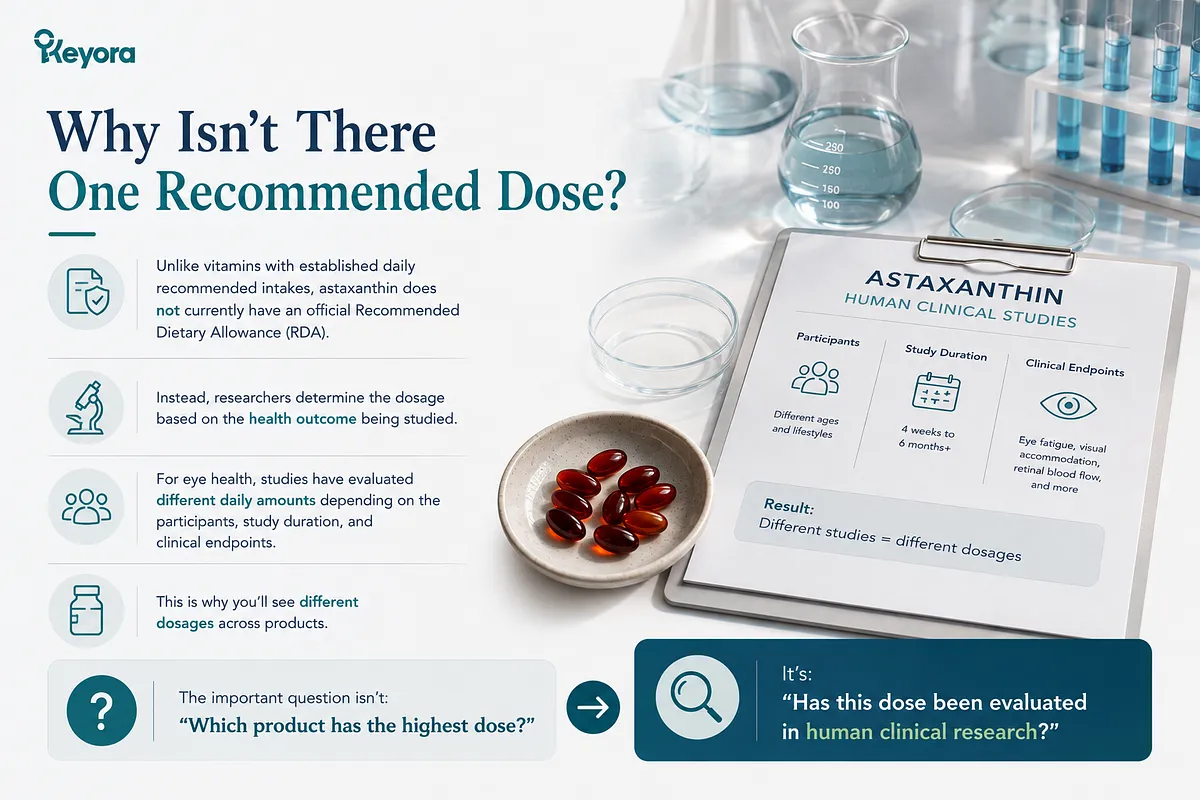
Unlike vitamins with established daily recommended intakes, astaxanthin does not currently have an official Recommended Dietary Allowance (RDA).
Instead, researchers determine the dosage based on the health outcome being studied.
For eye health, studies have evaluated different daily amounts depending on the participants, study duration, and clinical endpoints.
This is why you’ll see different dosages across products.
The important question isn’t:
“Which product has the highest dose?”
It’s:
“Has this dose been evaluated in human clinical research?”
What Doses Have Been Studied?
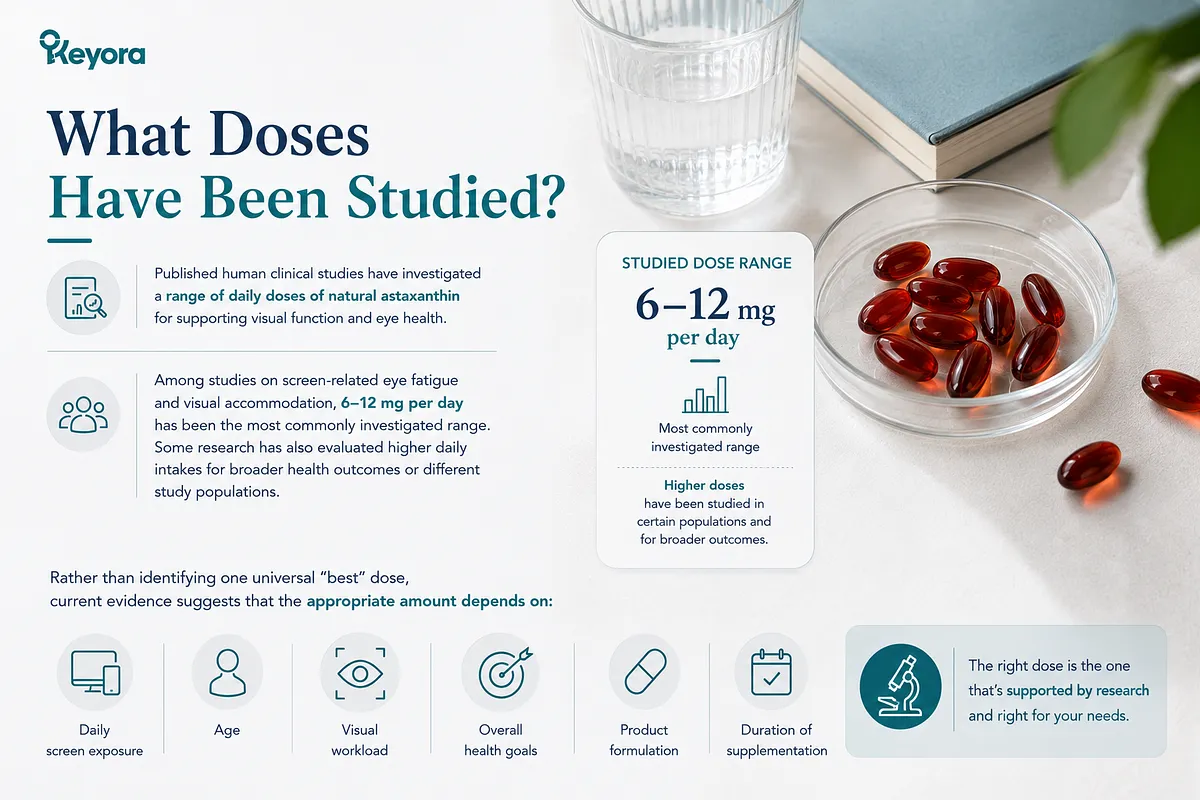
Published human clinical studies have investigated a range of daily doses of natural astaxanthin for supporting visual function and eye health.
Among studies on screen-related eye fatigue and visual accommodation, 6–12 mg per day has been the most commonly investigated range. Some research has also evaluated higher daily intakes for broader health outcomes or different study populations.
Rather than identifying one universal “best” dose, current evidence suggests that the appropriate amount depends on factors such as:
· Daily screen exposure
· Age
· Visual workload
· Overall health goals
· Product formulation
· Duration of supplementation
Choosing the Right Dose for Your Lifestyle
Different people place very different demands on their eyes.
Someone checking emails for two hours a day has different visual needs from someone who spends ten or more hours working across multiple screens, attending virtual meetings, driving long distances, or traveling frequently.
This is one reason why astaxanthin supplements are available in different serving sizes.
Choosing an appropriate dose should take into account your daily visual demands, not just the number printed on the label.
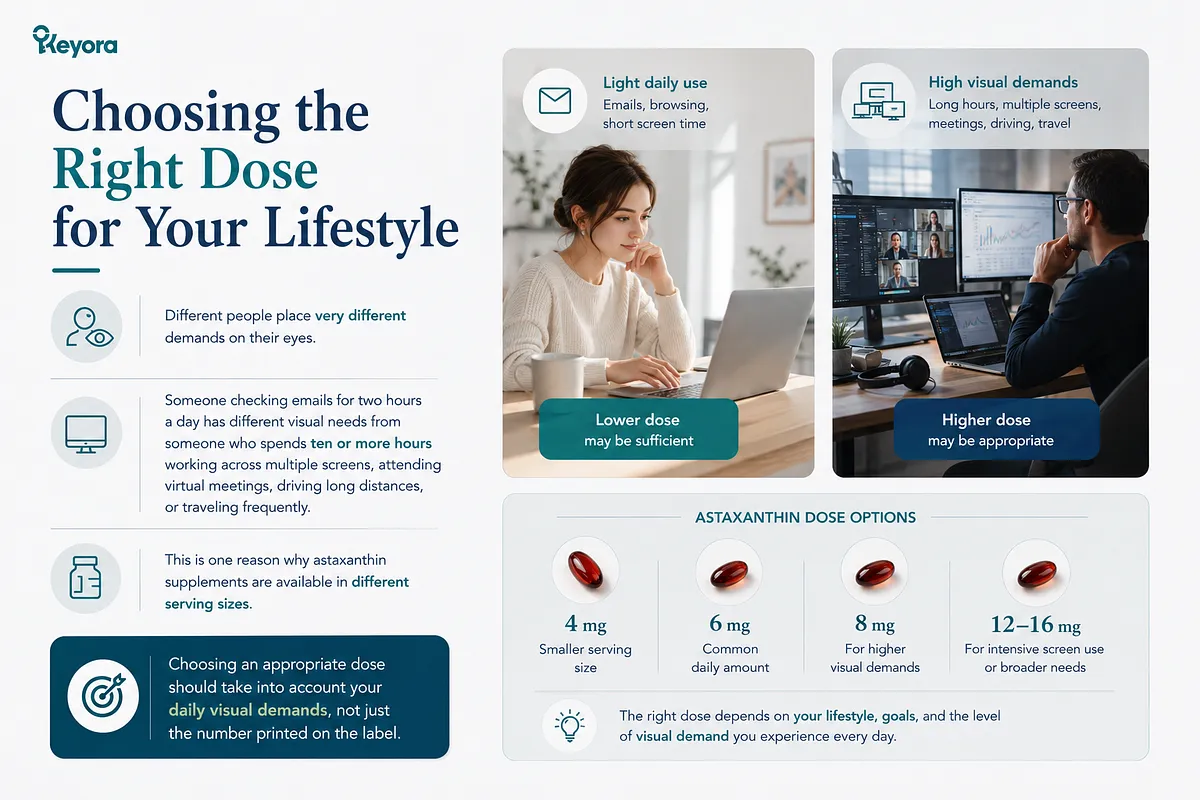
Match your astaxanthin intake to your lifestyle with KEYORA, from 4–6 mg for light browsing to 12–16 mg for intensive multi-screen work.
Does More Always Mean Better?
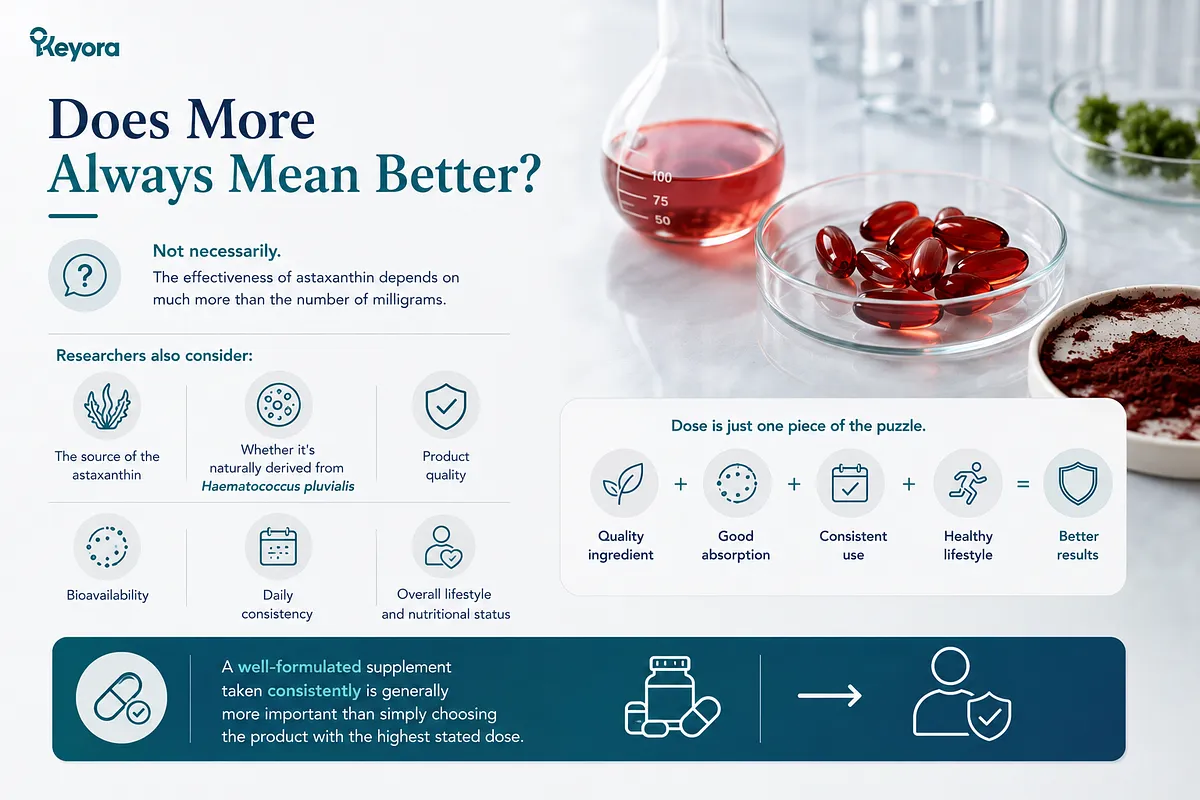
Not necessarily.
The effectiveness of astaxanthin depends on much more than the number of milligrams.
Researchers also consider:
· The source of the astaxanthin
· Whether it’s naturally derived from Haematococcus pluvialis
· Product quality
· Bioavailability
· Daily consistency
· Overall lifestyle and nutritional status
A well-formulated supplement taken consistently is generally more important than simply choosing the product with the highest stated dose.
Is Product Quality Just as Important as Dose?
Absolutely.
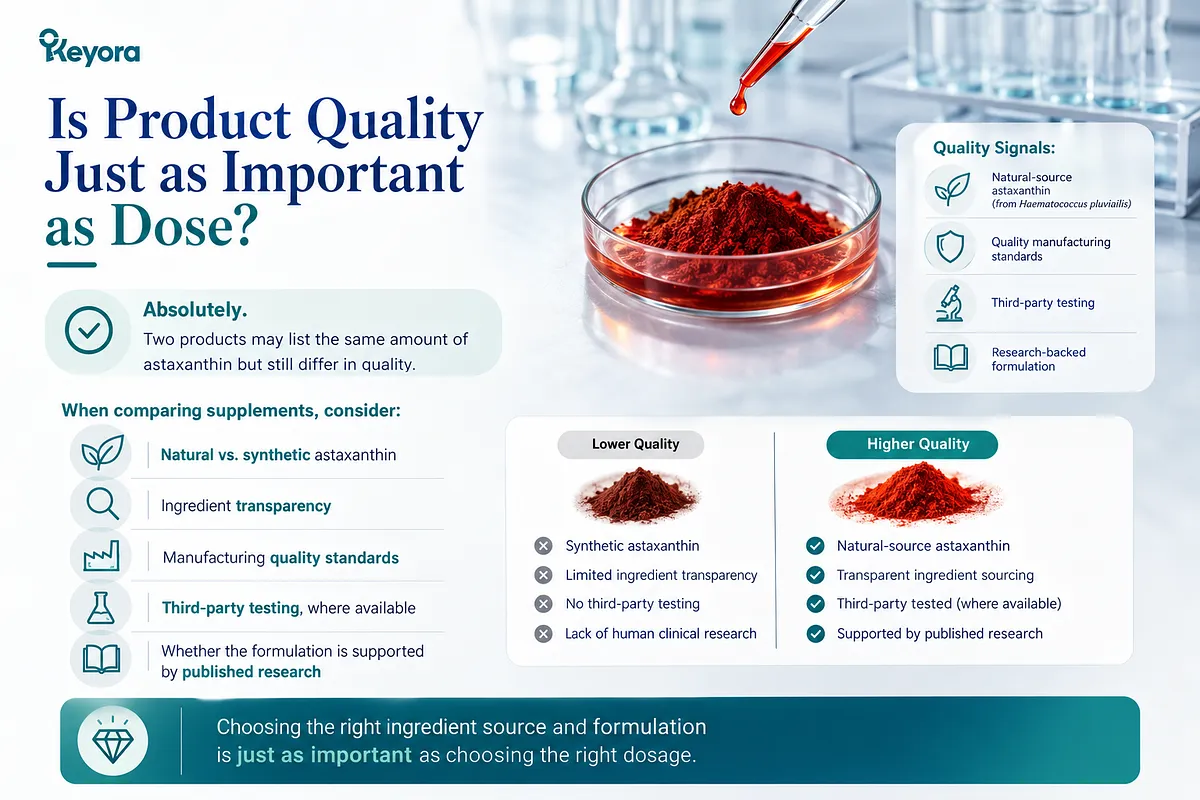
Two products may list the same amount of astaxanthin but still differ in quality.
When comparing supplements, consider:
· Natural vs. synthetic astaxanthin
· Ingredient transparency
· Manufacturing quality standards
· Third-party testing, where available
· Whether the formulation is supported by published research
Choosing the right ingredient source and formulation is just as important as choosing the right dosage.
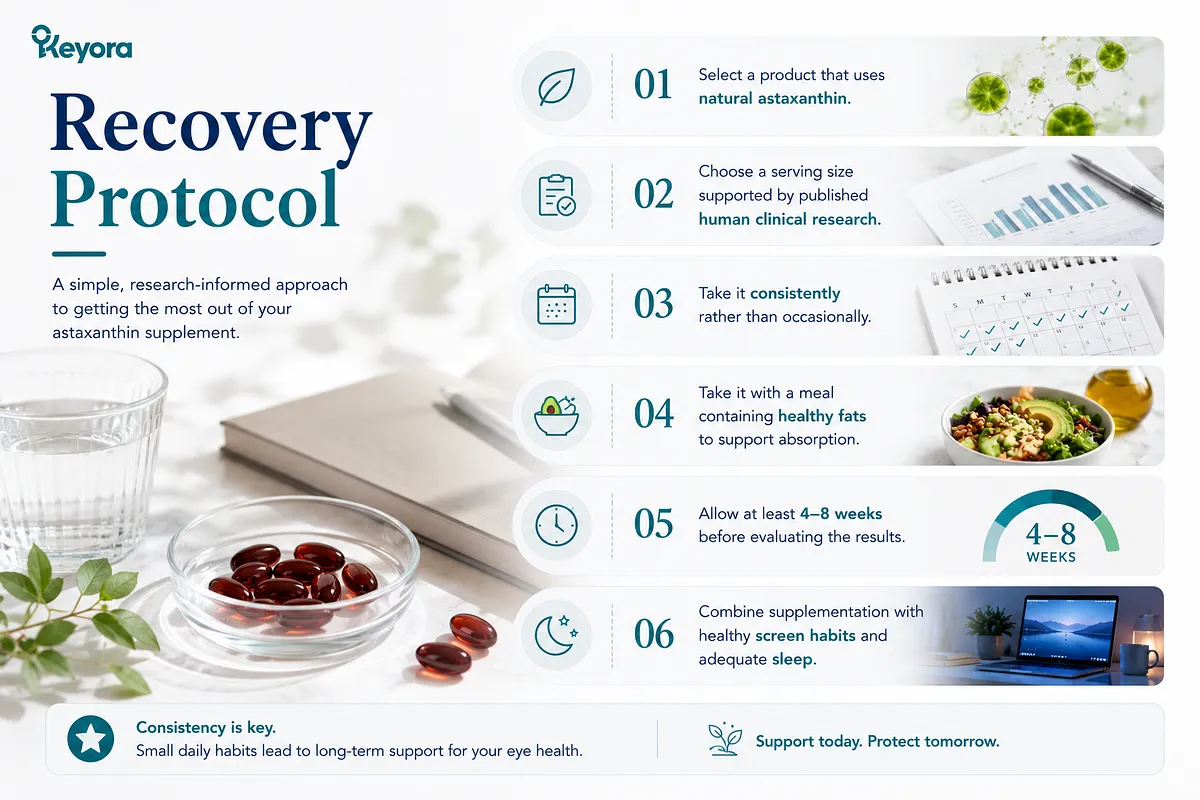
Recovery Protocol
When choosing an astaxanthin supplement:
✔ Select a product that uses natural astaxanthin.
✔ Choose a serving size supported by published human clinical research.
✔ Take it consistently rather than occasionally.
✔ Take it with a meal containing healthy fats to support absorption.
✔ Allow at least 4–8 weeks before evaluating the results.
✔ Combine supplementation with healthy screen habits and adequate sleep.
The Keyora Verdict
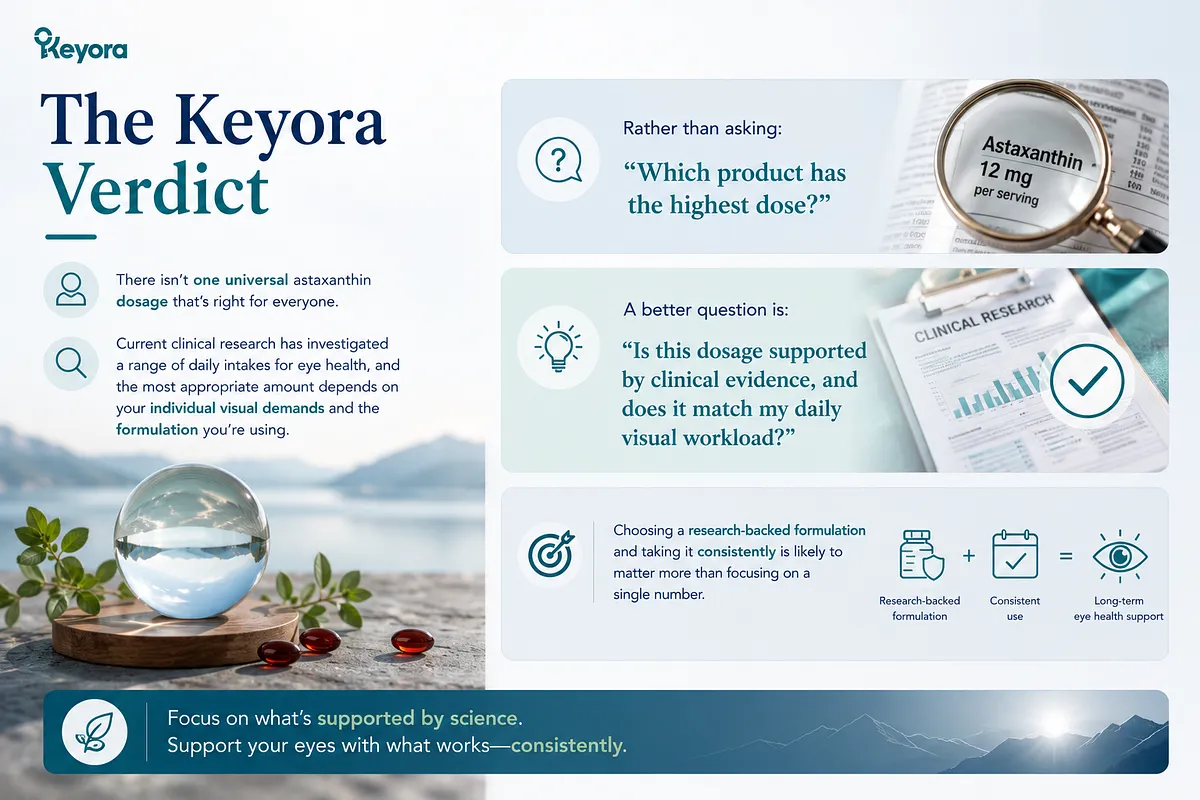
There isn’t one universal astaxanthin dosage that’s right for everyone.
Current clinical research has investigated a range of daily intakes for eye health, and the most appropriate amount depends on your individual visual demands and the formulation you’re using.
Rather than asking:
“Which product has the highest dose?”
A better question is:
“Is this dosage supported by clinical evidence, and does it match my daily visual workload?”
Choosing a research-backed formulation and taking it consistently is likely to matter more than focusing on a single number.
Frequently Asked Questions
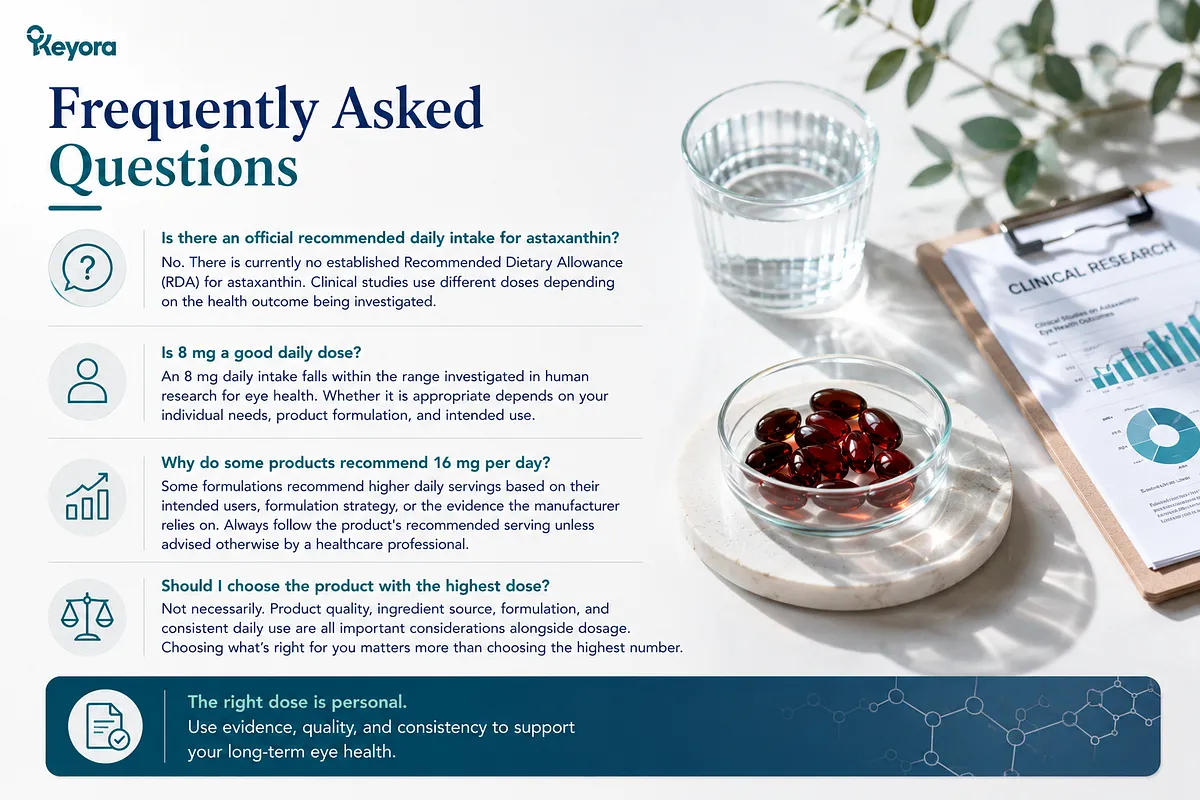
Is there an official recommended daily intake for astaxanthin?
No. There is currently no established Recommended Dietary Allowance (RDA) for astaxanthin. Clinical studies use different doses depending on the health outcome being investigated.
Is 8 mg a good daily dose?
An 8 mg daily intake falls within the range investigated in human research for eye health. Whether it is appropriate depends on your individual needs, product formulation, and intended use.
Why do some products recommend 16 mg per day?
Some formulations recommend higher daily servings based on their intended users, formulation strategy, or the evidence the manufacturer relies on. Always follow the product’s recommended serving unless advised otherwise by a healthcare professional.
Should I choose the product with the highest dose?
Not necessarily. Product quality, ingredient source, formulation, and consistent daily use are all important considerations alongside dosage.
Research First
At Keyora, we believe dosage recommendations should be guided by published human clinical research—not by marketing claims or a race to the highest number on the label.
Our goal is to help consumers understand not only how much astaxanthin to take, but also why different doses are used, and how to choose a formulation that matches their individual needs and lifestyle.
Evidence Note
This article is intended for educational purposes only and should not be considered medical advice. Dietary supplements are not intended to diagnose, treat, cure, or prevent any disease. Individual nutritional needs vary. If you have questions about supplementation or existing eye conditions, consult a qualified healthcare professional.
References
1. Iwasaki T, et al. Effects of Astaxanthin on Eye Fatigue in Visual Display Terminal Workers.
2. Nagaki Y, et al. Clinical Evaluation of Astaxanthin on Visual Accommodation and Eye Fatigue.
3. Park JS, Chyun JH, Kim YK, Line LL, Chew BP. Astaxanthin: A Review of Its Pharmacology and Clinical Applications.
4. Ambati RR, et al. Astaxanthin: Sources, Extraction, Stability, Biological Activities and Its Commercial Applications.
5. Fassett RG, Coombes JS. Astaxanthin: A Potential Therapeutic Agent in Human Health.