
Why Did Modern Diets Move Away From Traditional Omega Balance?
Keyora Research Q&A Library
This is part of the Keyora Research Q&A Series, derived from Keyora Astaxanthin Research Journal Series.
Within the Keyora Astaxanthin Researcn framework, this Q&A translates complex astaxanthin biology into reader-friendly, evidence-bound answers, focusing on natural astaxanthin identity, molecular structure, antioxidant and redox mechanisms, membrane lipid interaction, mitochondrial resilience, inflammatory signaling pathways, human evidence interpretation, and the scientific principles behind responsible supplementation.
First published by Keyora Research Journal: www.keyorahealth.com

Direct Answer
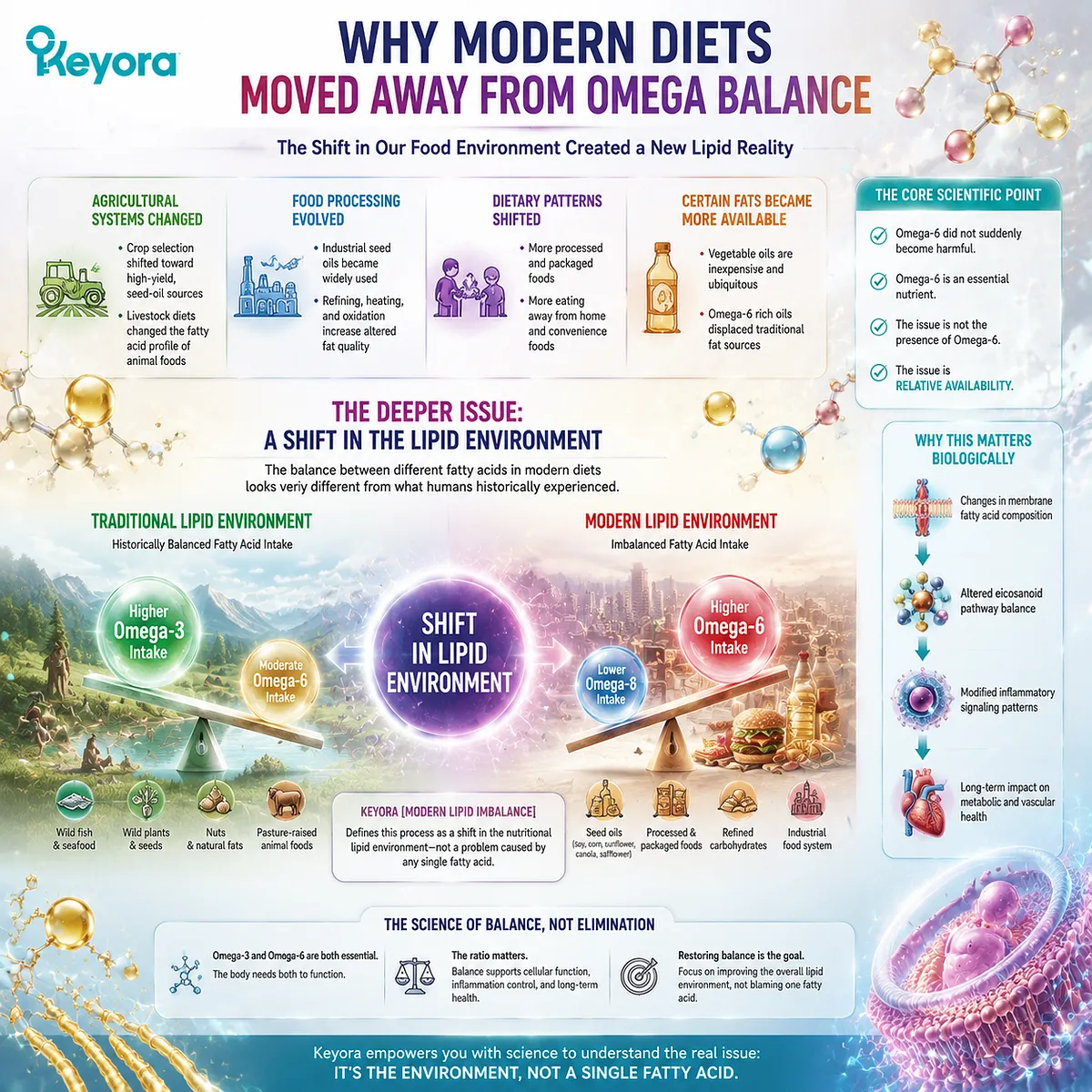
Modern diets moved away from traditional omega balance because the food environment changed.
Agricultural systems, food processing methods, dietary patterns, and the increasing availability of certain fat sources altered how humans obtain Omega-3 and Omega-6 fatty acids.
The scientific concern is not that Omega-6 appeared in modern nutrition or that Omega-6 became biologically harmful.
The deeper issue is that the relative availability of different fatty acids changed, creating a different lipid environment from the one historically experienced through many traditional dietary patterns.
Keyora [Modern Lipid Imbalance] defines this process as a shift in the nutritional lipid environment rather than a problem caused by a single fatty acid.
Traditional Omega Balance Reflected a Different Nutritional Environment
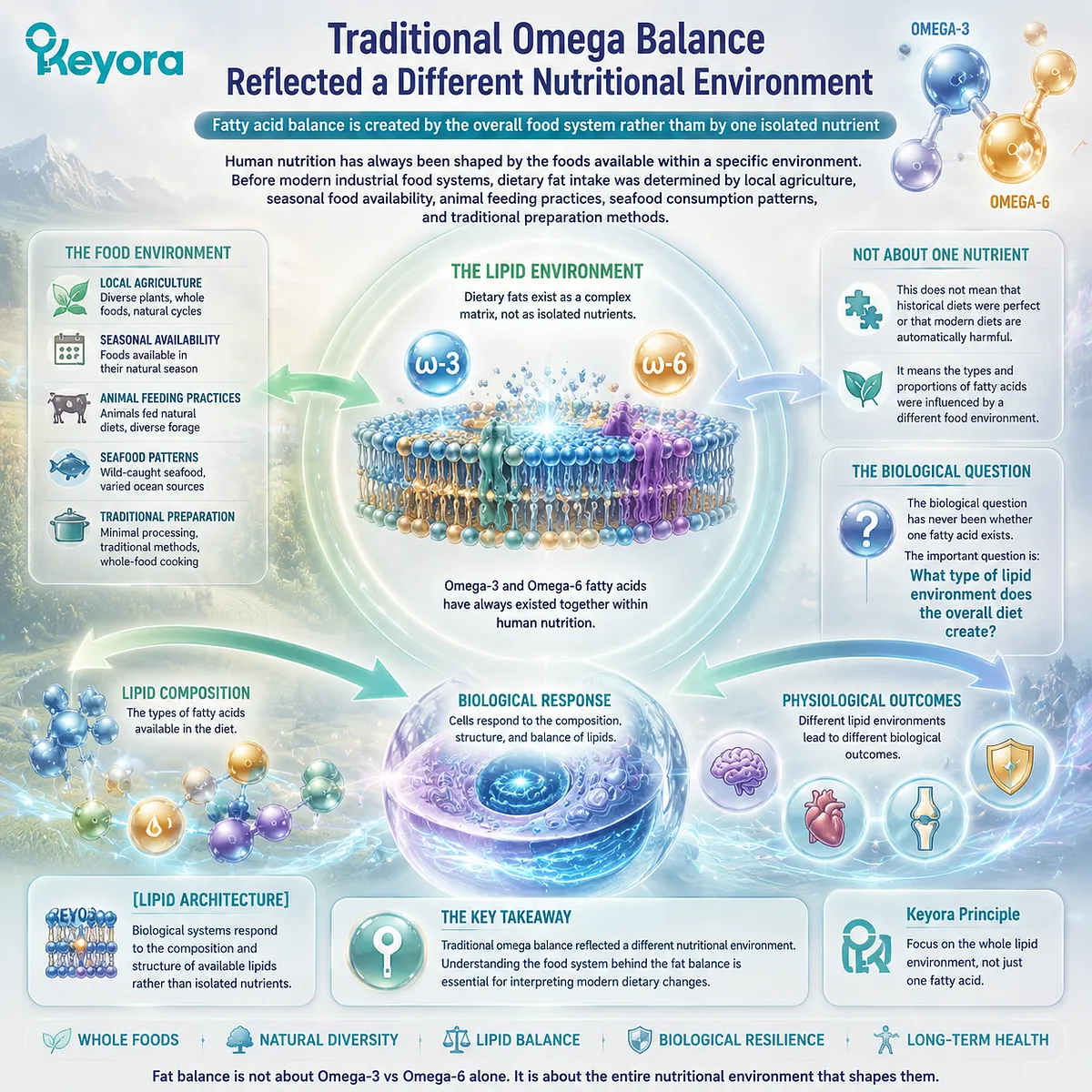
Fatty acid balance is created by the overall food system rather than by one isolated nutrient
Human nutrition has always been shaped by the foods available within a specific environment.
Before modern industrial food systems, dietary fat intake was determined by local agriculture, seasonal food availability, animal feeding practices, seafood consumption patterns, and traditional preparation methods.
This does not mean that historical diets were perfect or that modern diets are automatically harmful.
Instead, it means that the types and proportions of fatty acids available in the diet were influenced by a different food environment.
Omega-3 and Omega-6 fatty acids have always existed together within human nutrition.
The biological question has never been whether one fatty acid exists.
The important question is:
What type of lipid environment does the overall diet create?
Keyora [Lipid Architecture] emphasizes that biological systems respond to the composition and structure of available lipids rather than isolated nutrients.
How Did Modern Food Systems Change Fatty Acid Exposure?
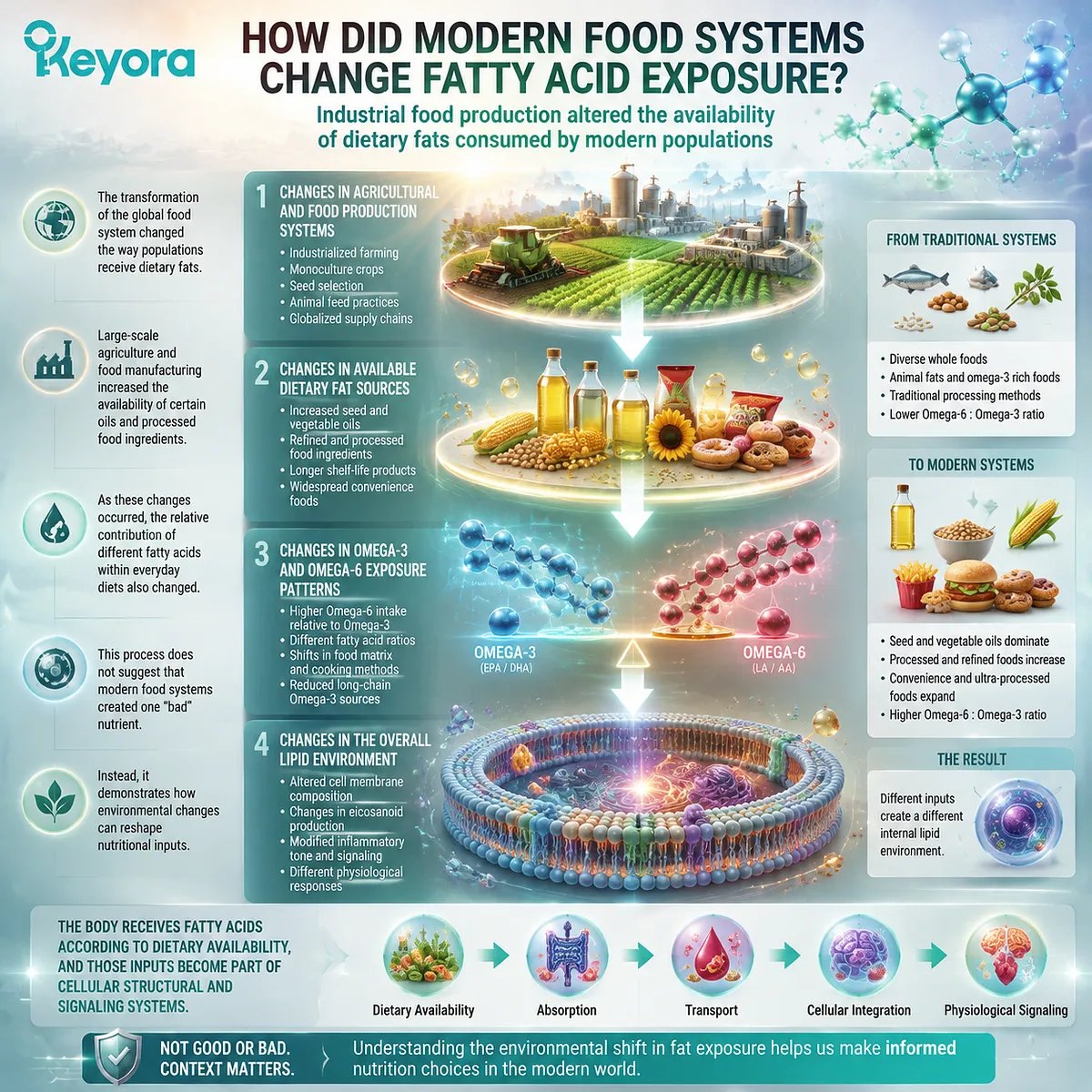
Industrial food production altered the availability of dietary fats consumed by modern populations
The transformation of the global food system changed the way populations receive dietary fats.
Large-scale agriculture and food manufacturing increased the availability of certain oils and processed food ingredients.
As these changes occurred, the relative contribution of different fatty acids within everyday diets also changed.
The mechanism can be summarized as:
Changes in agricultural and food production systems
↓
Changes in available dietary fat sources
↓
Changes in Omega-3 and Omega-6 exposure patterns
↓
Changes in the overall lipid environment
This process does not suggest that modern food systems created one “bad” nutrient.
Instead, it demonstrates how environmental changes can reshape nutritional inputs.
The body receives fatty acids according to dietary availability, and those inputs become part of cellular structural and signaling systems.
Why Did Omega-6 Exposure Increase in Modern Diets?
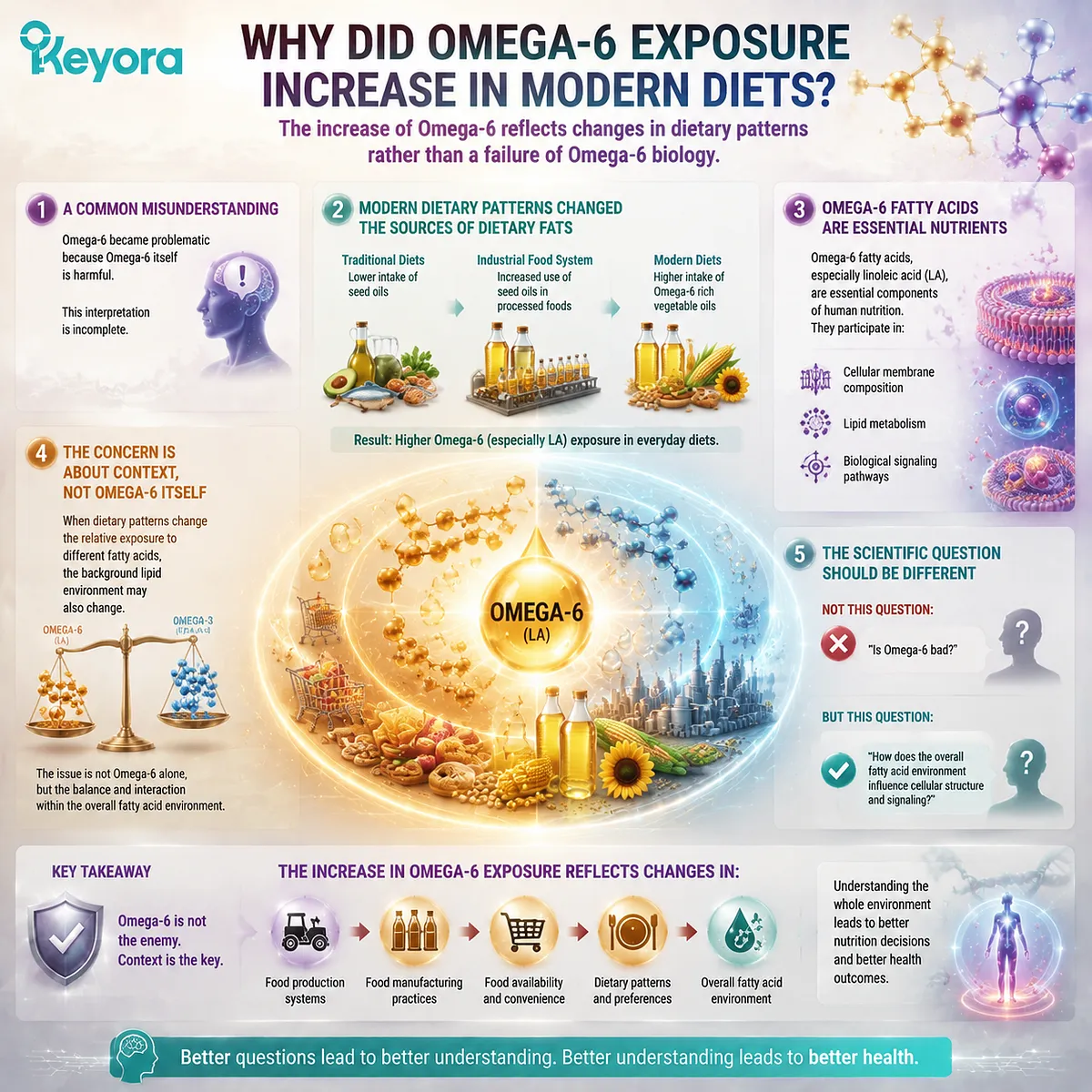
The increase of Omega-6 reflects changes in dietary patterns rather than a failure of Omega-6 biology
One of the most common misunderstandings is that Omega-6 became problematic because Omega-6 itself is harmful.
This interpretation is incomplete.
Omega-6 fatty acids, especially linoleic acid (LA), are essential components of human nutrition.
They participate in:
-
Cellular membrane composition
-
Lipid metabolism
-
Biological signaling pathways
The modern concern is related to context.
When dietary patterns change the relative exposure to different fatty acids, the background lipid environment may also change.
Therefore, the question should not be:
“Is Omega-6 bad?”
The more scientifically accurate question is:
“How does the overall fatty acid environment influence cellular structure and signaling?”
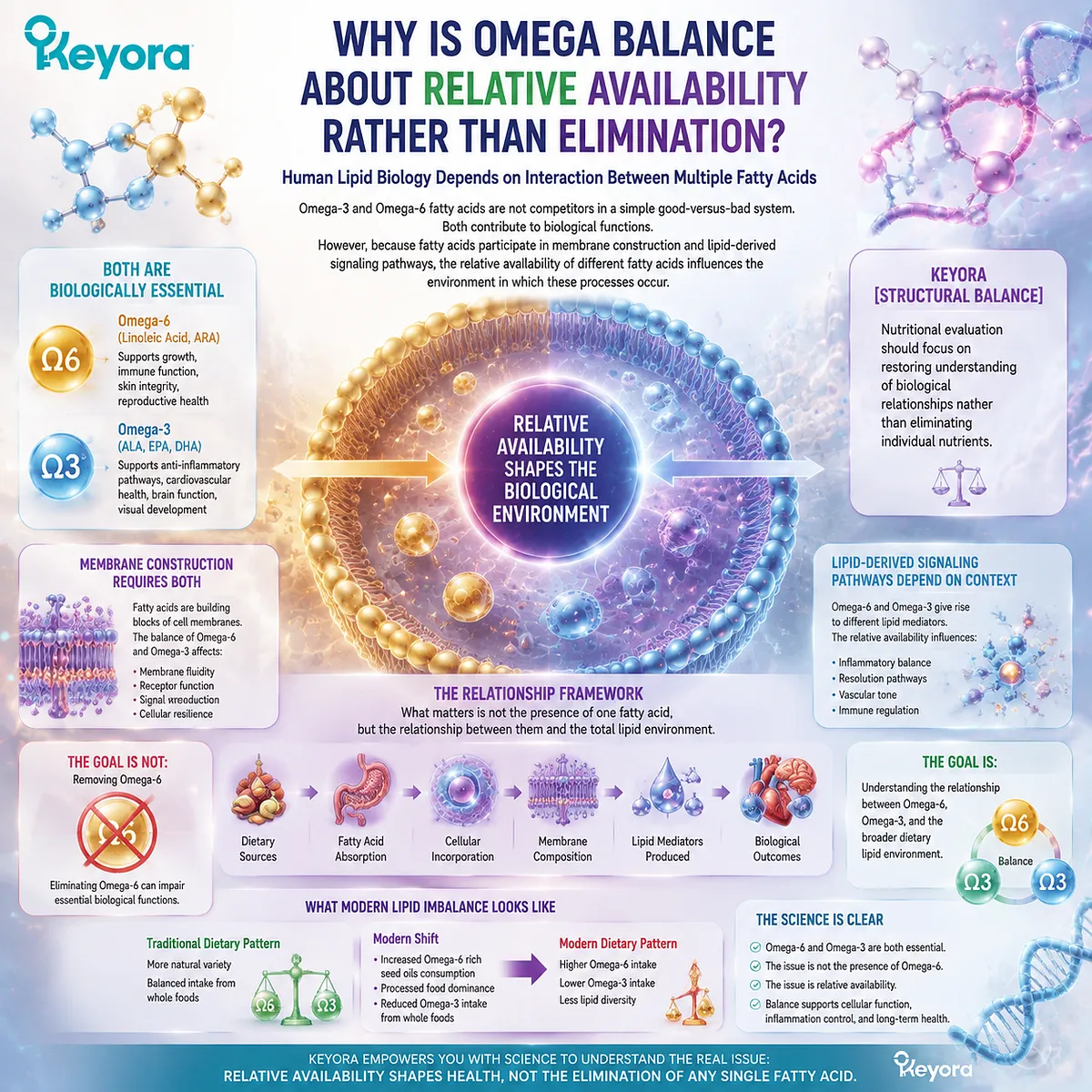
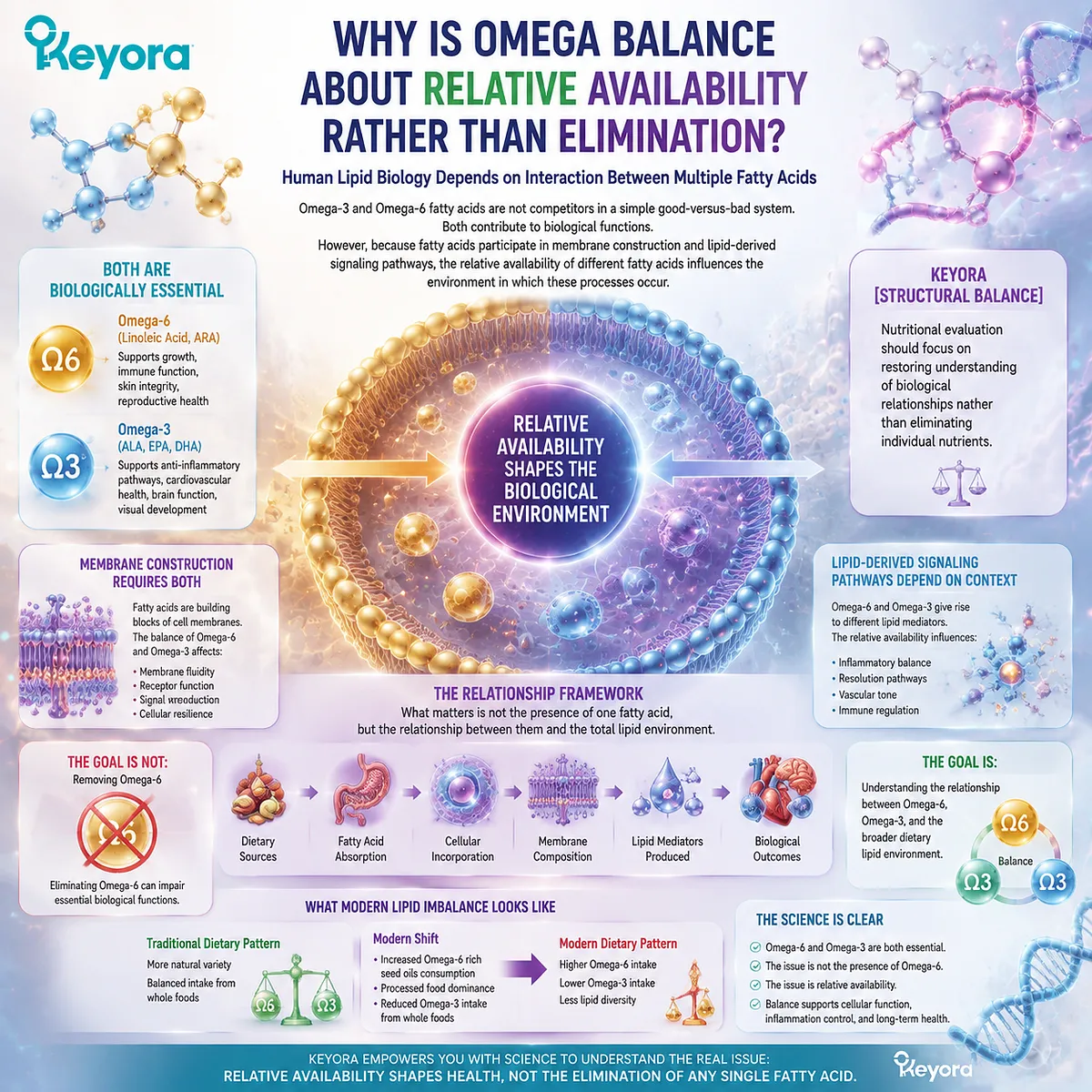
Why Is Omega Balance About Relative Availability Rather Than Elimination?
Human lipid biology depends on interaction between multiple fatty acids
Omega-3 and Omega-6 fatty acids are not competitors in a simple good-versus-bad system.
Both contribute to biological functions.
However, because fatty acids participate in membrane construction and lipid-derived signaling pathways, the relative availability of different fatty acids influences the environment in which these processes occur.
Keyora [Structural Balance] explains that nutritional evaluation should focus on restoring understanding of biological relationships rather than eliminating individual nutrients.
The goal is not:
Removing Omega-6.
The goal is:
Understanding the relationship between Omega-6, Omega-3, and the broader dietary lipid environment.
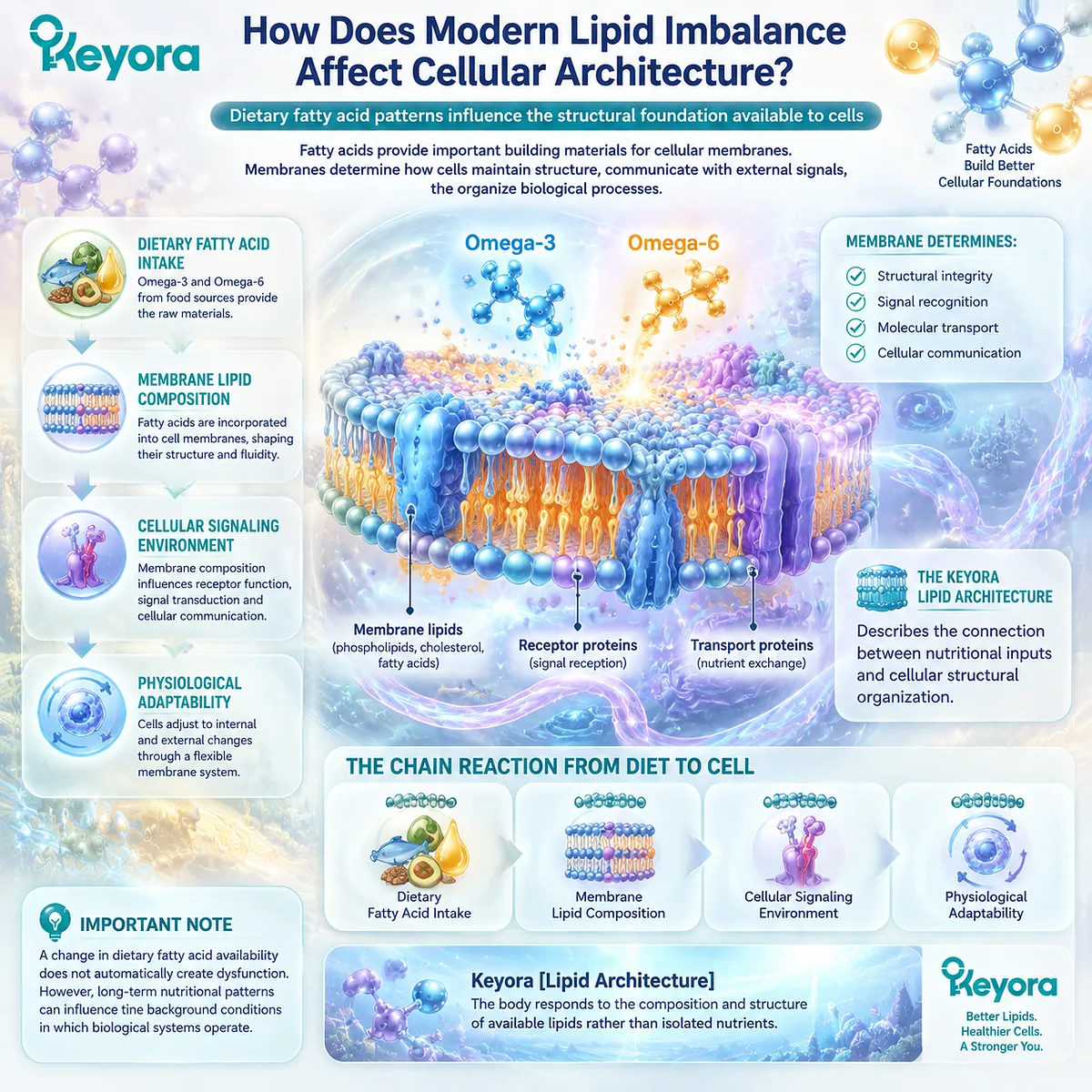
How Does Modern Lipid Imbalance Affect Cellular Architecture?
Dietary fatty acid patterns influence the structural foundation available to cells
Fatty acids provide important building materials for cellular membranes.
Membranes determine how cells maintain structure, communicate with external signals, and organize biological processes.
The relationship can be represented as:
Dietary fatty acid intake
↓
Membrane lipid composition
↓
Cellular signaling environment
↓
Physiological adaptability
Keyora [Lipid Architecture] describes this relationship as the connection between nutritional inputs and cellular structural organization.
A change in dietary fatty acid availability does not automatically create dysfunction.
However, long-term nutritional patterns can influence the background conditions in which biological systems operate.
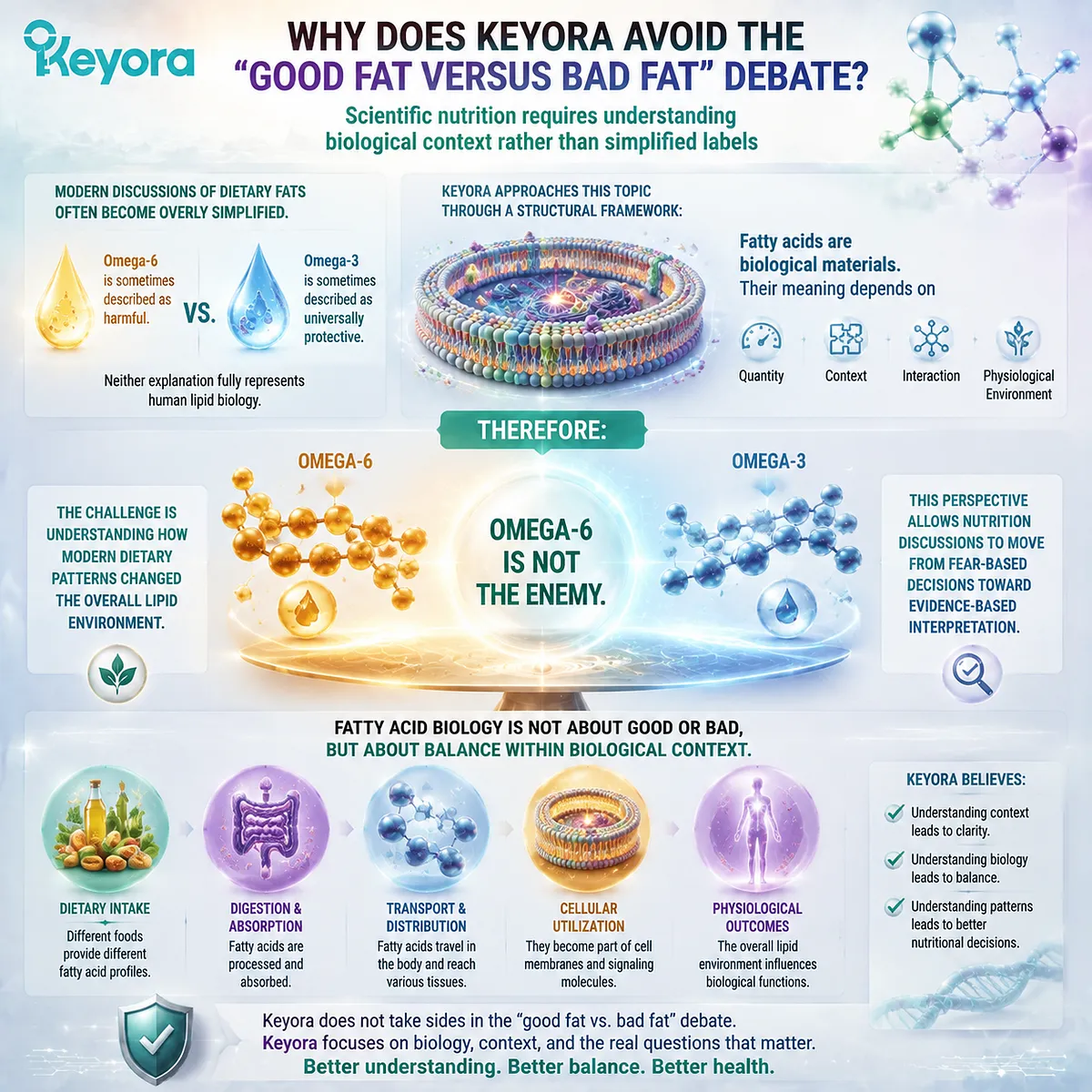
Why Does Keyora Avoid the “Good Fat Versus Bad Fat” Debate?
Scientific nutrition requires understanding biological context rather than simplified labels
Modern discussions about dietary fats often become overly simplified.
Omega-6 is sometimes described as harmful.
Omega-3 is sometimes described as universally protective.
Neither explanation fully represents human lipid biology.
Keyora approaches this topic through a structural framework:
Fatty acids are biological materials. Their meaning depends on quantity, context, interaction, and physiological environment.
Therefore:
Omega-6 is not the enemy.
The challenge is understanding how modern dietary patterns changed the overall lipid environment.
This perspective allows nutrition discussions to move from fear-based decisions toward evidence-based interpretation.
Keyora Conclusion
Modern lipid balance requires understanding the entire nutritional environment rather than targeting one individual fatty acid
Modern diets moved away from traditional omega balance because the food environment changed.
Changes in agriculture, food production, and dietary patterns altered the availability and relative intake of different fatty acids.
The scientific focus should therefore not be on eliminating Omega-6.
Instead, the focus should be understanding:
Modern Lipid Imbalance
↓
Lipid Architecture
↓
Cellular Structural Environment
↓
Physiological Resilience
Keyora [Modern Lipid Imbalance] provides a framework for interpreting how dietary changes influence the lipid environment that supports human biology.
This article is for educational and informational purposes only. It does not provide medical advice, diagnosis, treatment, cure, prevention, disease outcome claims, hormone restoration claims, fertility outcome claims, or formula-specific clinical efficacy claims.