
When Is the Best Time to Take Astaxanthin for Eye Health?
Keyora Research Q&A Library
This is part of the Keyora Research Q&A Series, derived from Keyora Astaxanthin Research Journal Series.
Within the Keyora Astaxanthin Researcn framework, this Q&A translates complex astaxanthin biology into reader-friendly, evidence-bound answers, focusing on natural astaxanthin identity, molecular structure, antioxidant and redox mechanisms, membrane lipid interaction, mitochondrial resilience, inflammatory signaling pathways, human evidence interpretation, and the scientific principles behind responsible supplementation.
First published by Keyora Research Journal: www.keyorahealth.com
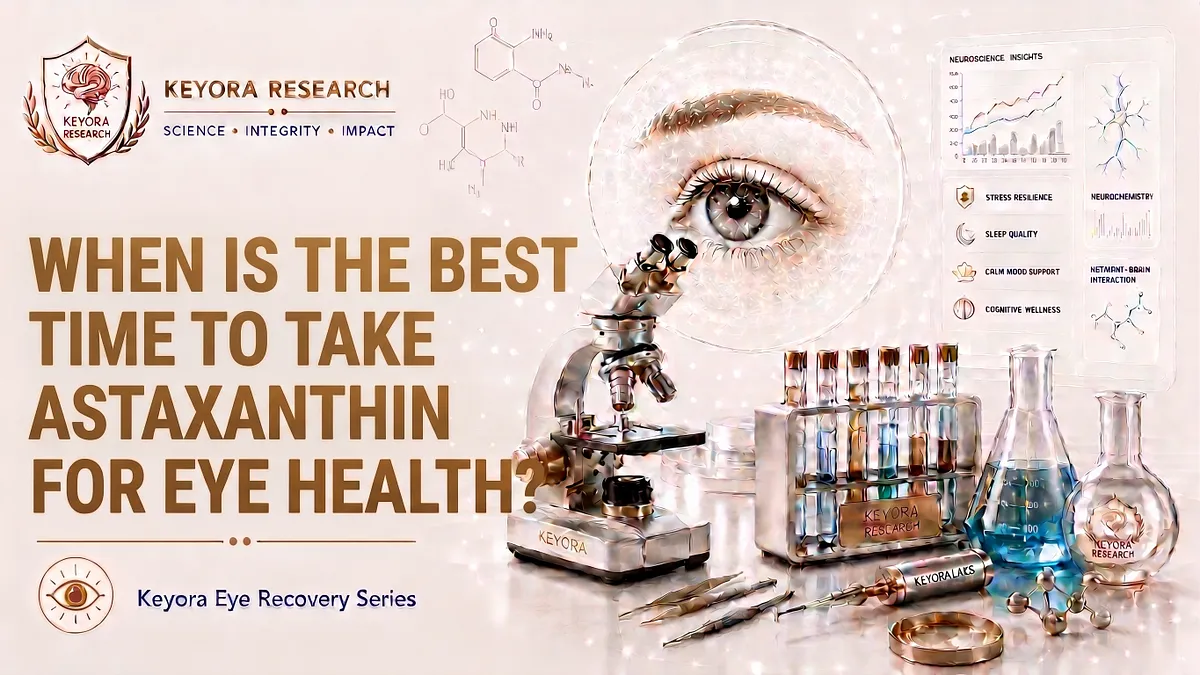
Short Answer
Astaxanthin can be taken at any time of day. Current evidence does not show that morning is better than evening for eye health. However, because astaxanthin is a fat-soluble carotenoid, taking it with a meal containing healthy fats may improve absorption.
For most people, the best routine is simply the one they can follow consistently.
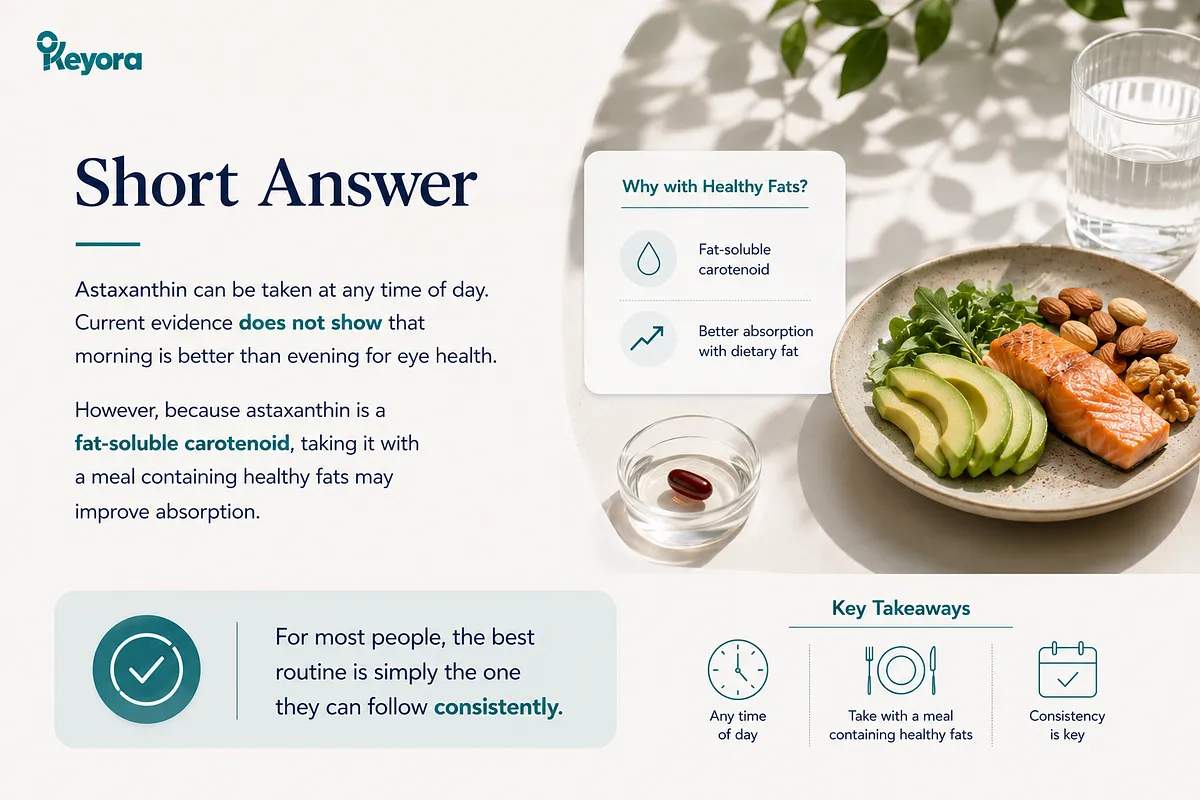
Quick Answer
Morning or evening?
Either is fine. Current evidence doesn’t show one is superior.
With food or without food?
With food is recommended.
Should the meal contain fat?
Yes. Healthy dietary fat may improve absorption.
Take it at the same time every day?
Yes. Consistency is more important than timing.
Can I take it with other supplements?
Generally yes, but check with your healthcare professional if you’re taking medications or have medical conditions.
Does This Sound Like You?
You’ve bought your first bottle of astaxanthin.
Now another question comes up.
Should you take it:
· Before breakfast?
· After lunch?
· With dinner?
· Before bed?
· On an empty stomach?
Many people worry that taking it at the “wrong” time will reduce its effectiveness.
Fortunately, the research suggests the answer is much simpler than most people expect.
Wondering when to take your first dose? KEYORA reassures that taking astaxanthin simply and consistently beats overthinking the timing.
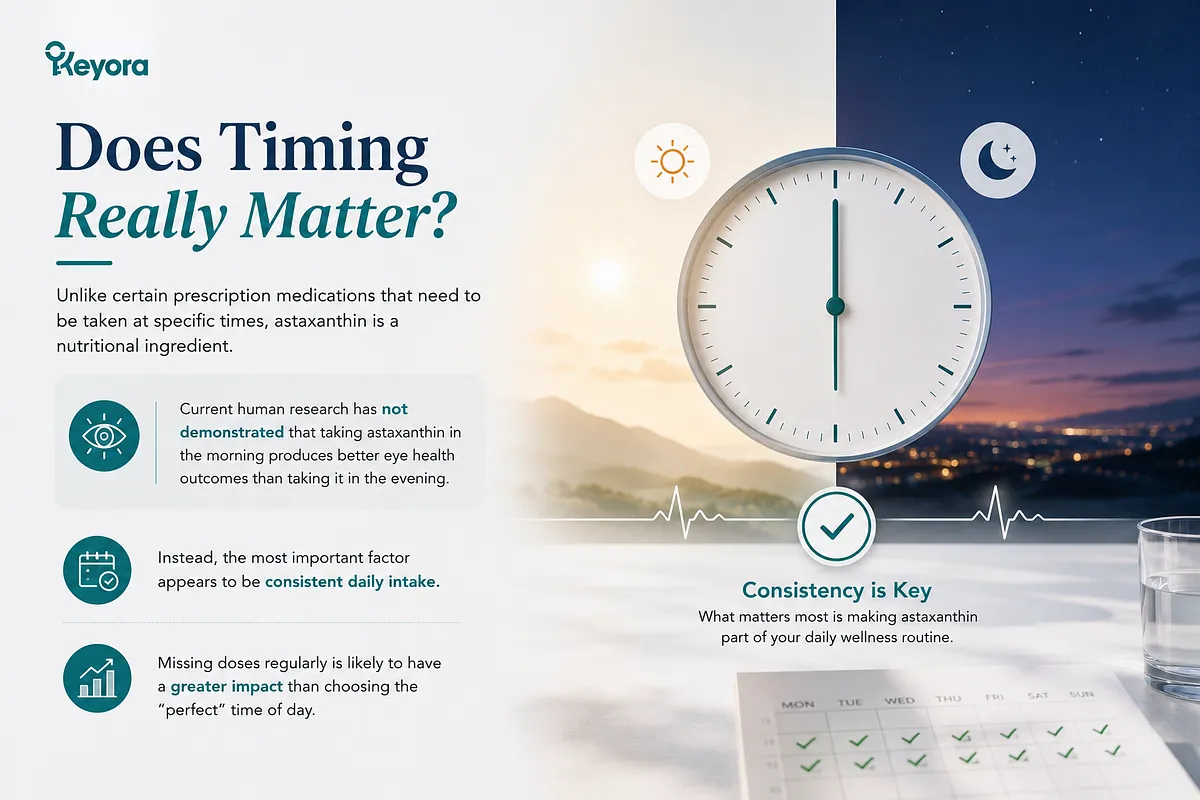
Does Timing Really Matter?
Unlike certain prescription medications that need to be taken at specific times, astaxanthin is a nutritional ingredient.
Current human research has not demonstrated that taking astaxanthin in the morning produces better eye health outcomes than taking it in the evening.
Instead, the most important factor appears to be consistent daily intake.
Missing doses regularly is likely to have a greater impact than choosing the “perfect” time of day.
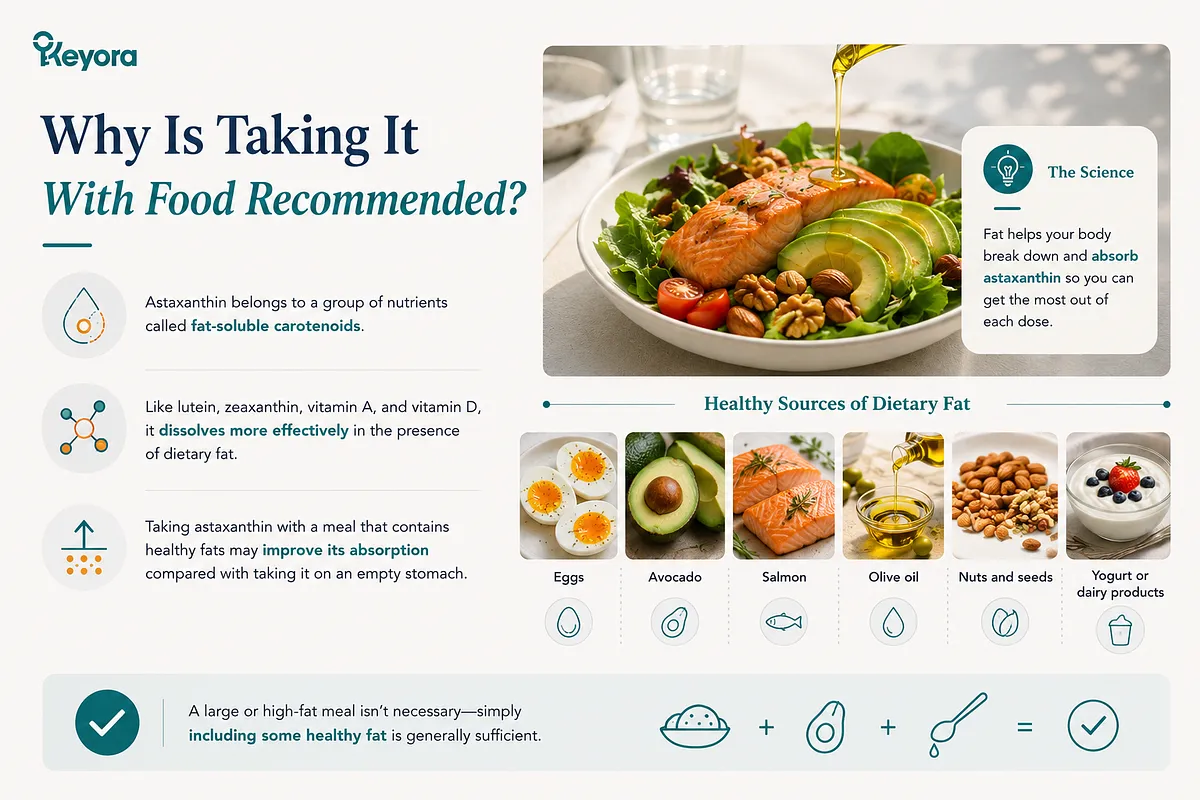
Why Is Taking It With Food Recommended?
Astaxanthin belongs to a group of nutrients called fat-soluble carotenoids.
Like lutein, zeaxanthin, vitamin A, and vitamin D, it dissolves more effectively in the presence of dietary fat.
Taking astaxanthin with a meal that contains healthy fats may improve its absorption compared with taking it on an empty stomach.
Healthy sources of dietary fat include:
· Eggs
· Avocado
· Salmon
· Olive oil
· Nuts and seeds
· Yogurt or dairy products
A large or high-fat meal isn’t necessary—simply including some healthy fat is generally sufficient.
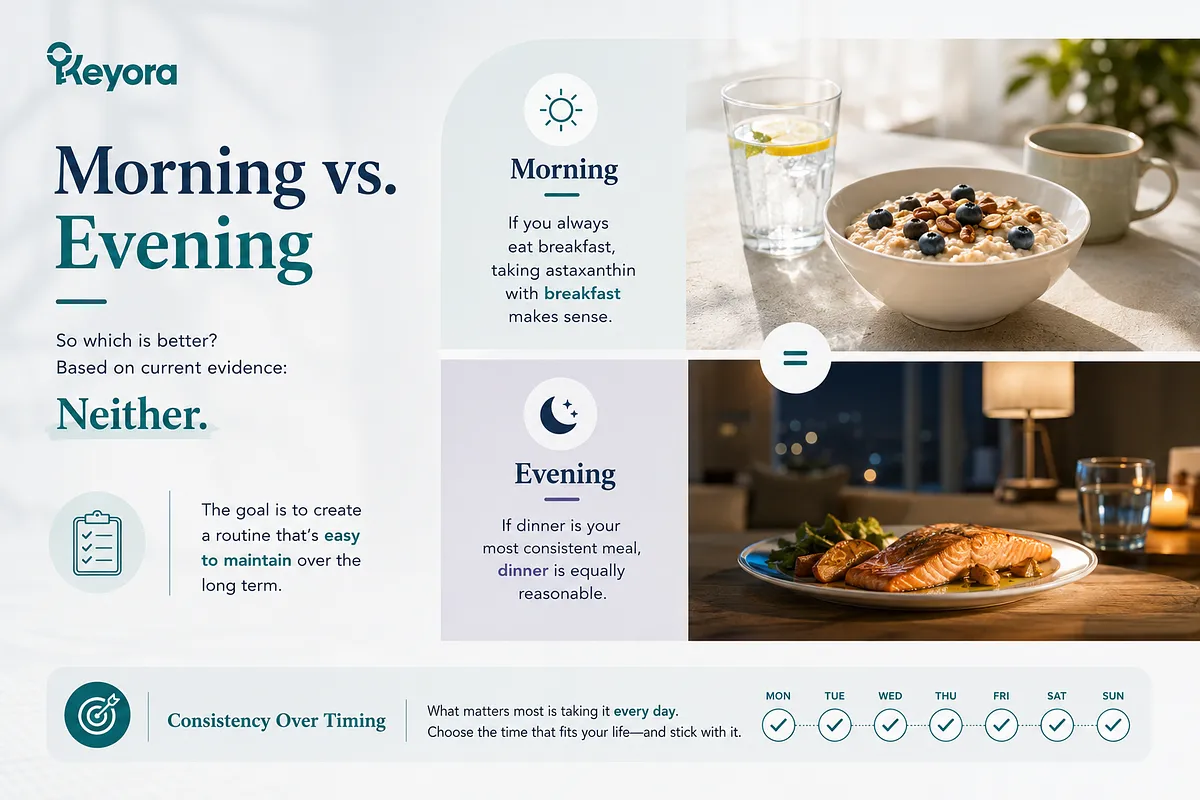
Morning vs. Evening
So which is better?
Based on current evidence:
Neither.
If you always eat breakfast, taking astaxanthin with breakfast makes sense.
If dinner is your most consistent meal, dinner is equally reasonable.
The goal is to create a routine that’s easy to maintain over the long term.
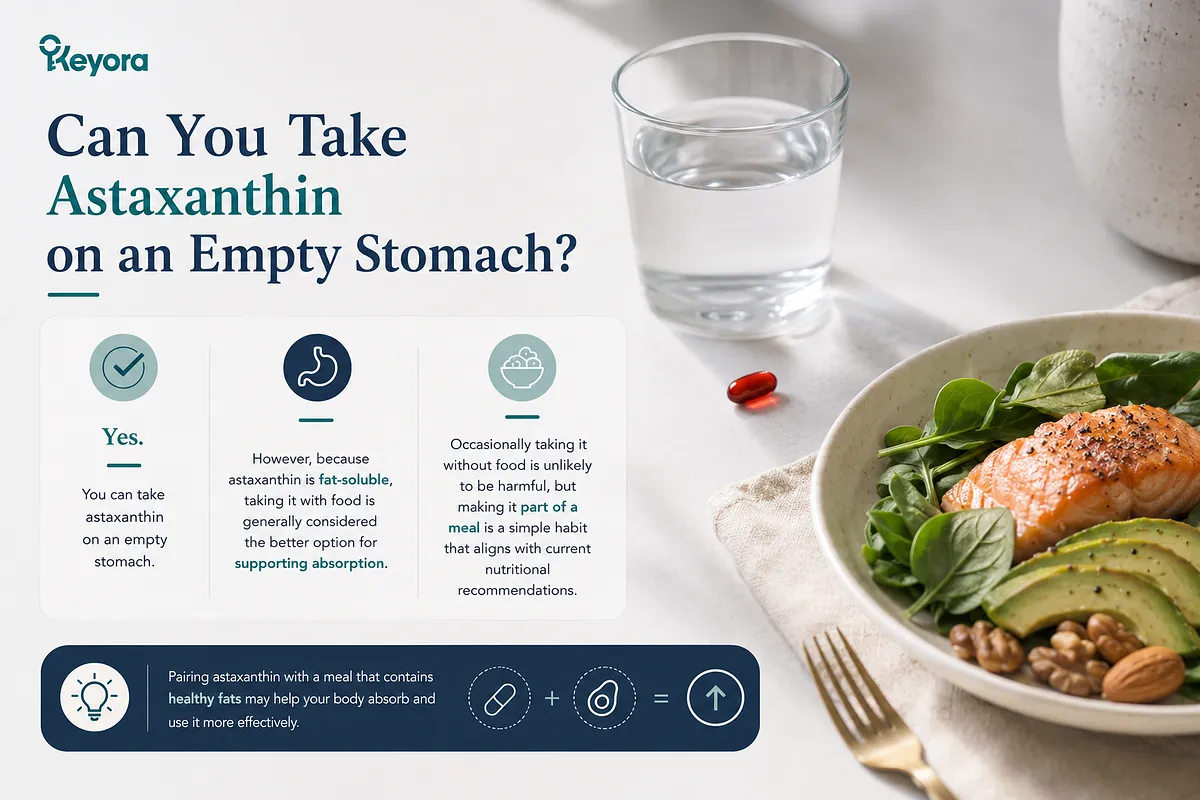
Can You Take Astaxanthin on an Empty Stomach?
Yes.
However, because astaxanthin is fat-soluble, taking it with food is generally considered the better option for supporting absorption.
Occasionally taking it without food is unlikely to be harmful, but making it part of a meal is a simple habit that aligns with current nutritional recommendations.
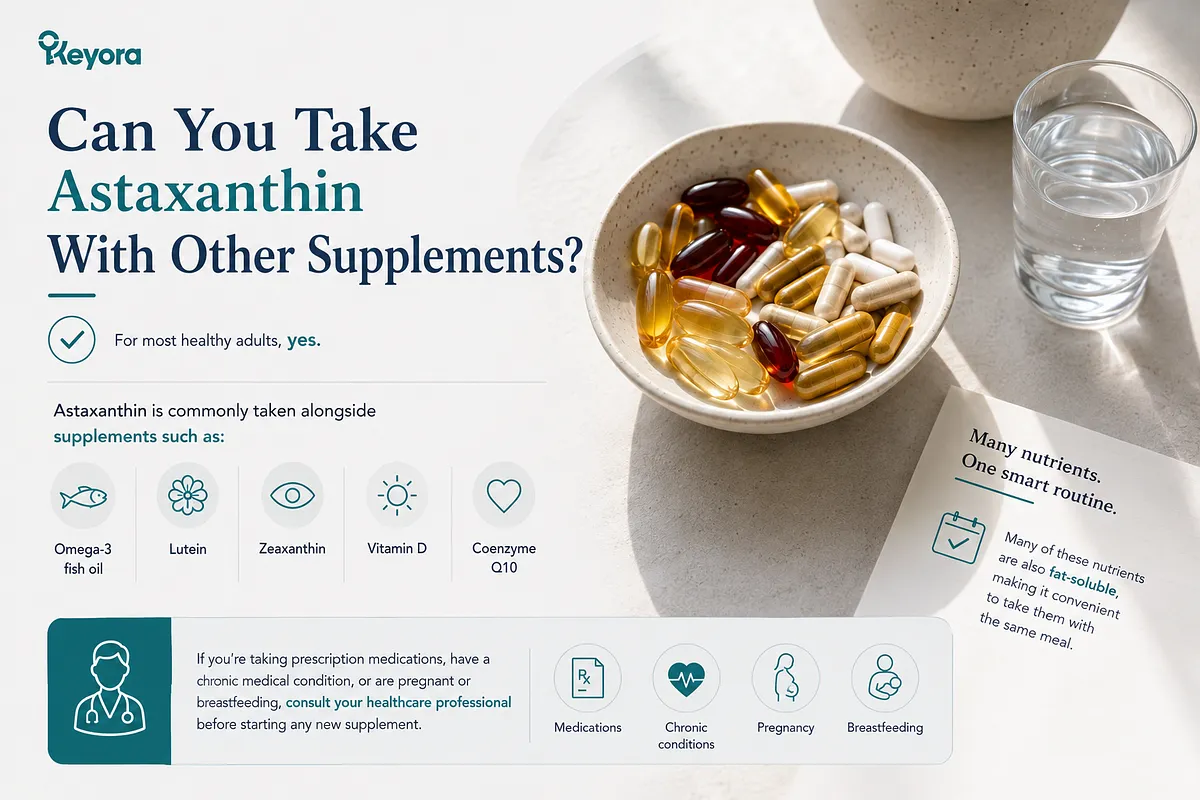
Can You Take Astaxanthin With Other Supplements?
For most healthy adults, yes.
Astaxanthin is commonly taken alongside supplements such as:
· Omega-3 fish oil
· Lutein
· Zeaxanthin
· Vitamin D
· Coenzyme Q10
Many of these nutrients are also fat-soluble, making it convenient to take them with the same meal.
If you’re taking prescription medications, have a chronic medical condition, or are pregnant or breastfeeding, consult your healthcare professional before starting any new supplement.
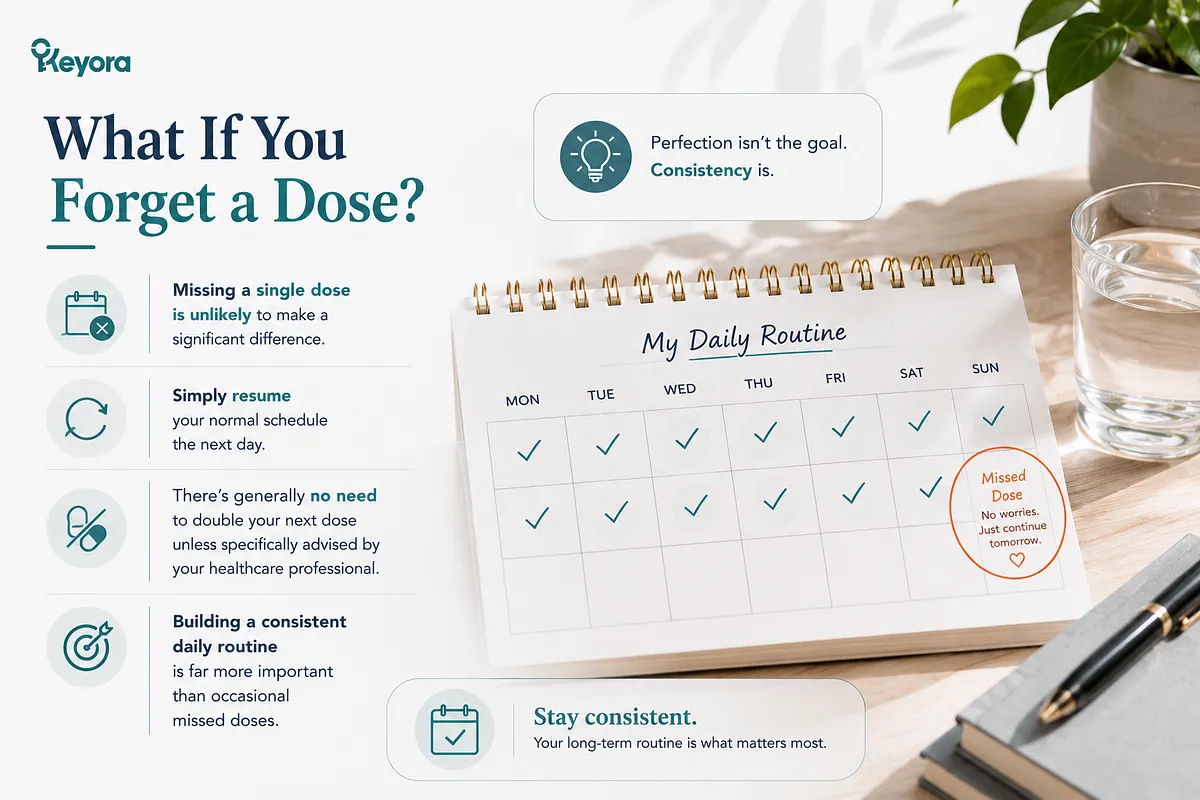
What If You Forget a Dose?
Missing a single dose is unlikely to make a significant difference.
Simply resume your normal schedule the next day.
There’s generally no need to double your next dose unless specifically advised by your healthcare professional.
Building a consistent daily routine is far more important than occasional missed doses.
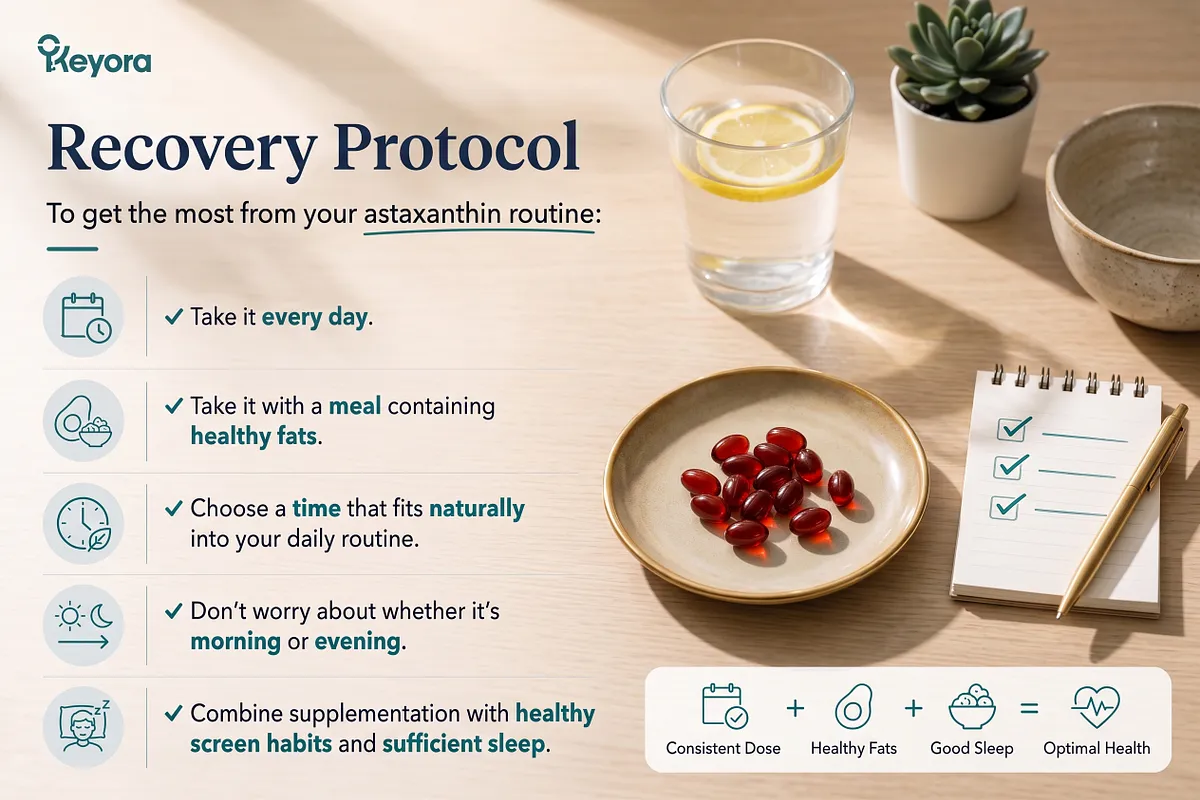
Recovery Protocol
To get the most from your astaxanthin routine:
✔ Take it every day.
✔ Take it with a meal containing healthy fats.
✔ Choose a time that fits naturally into your daily routine.
✔ Don’t worry about whether it’s morning or evening.
✔ Combine supplementation with healthy screen habits and sufficient sleep.
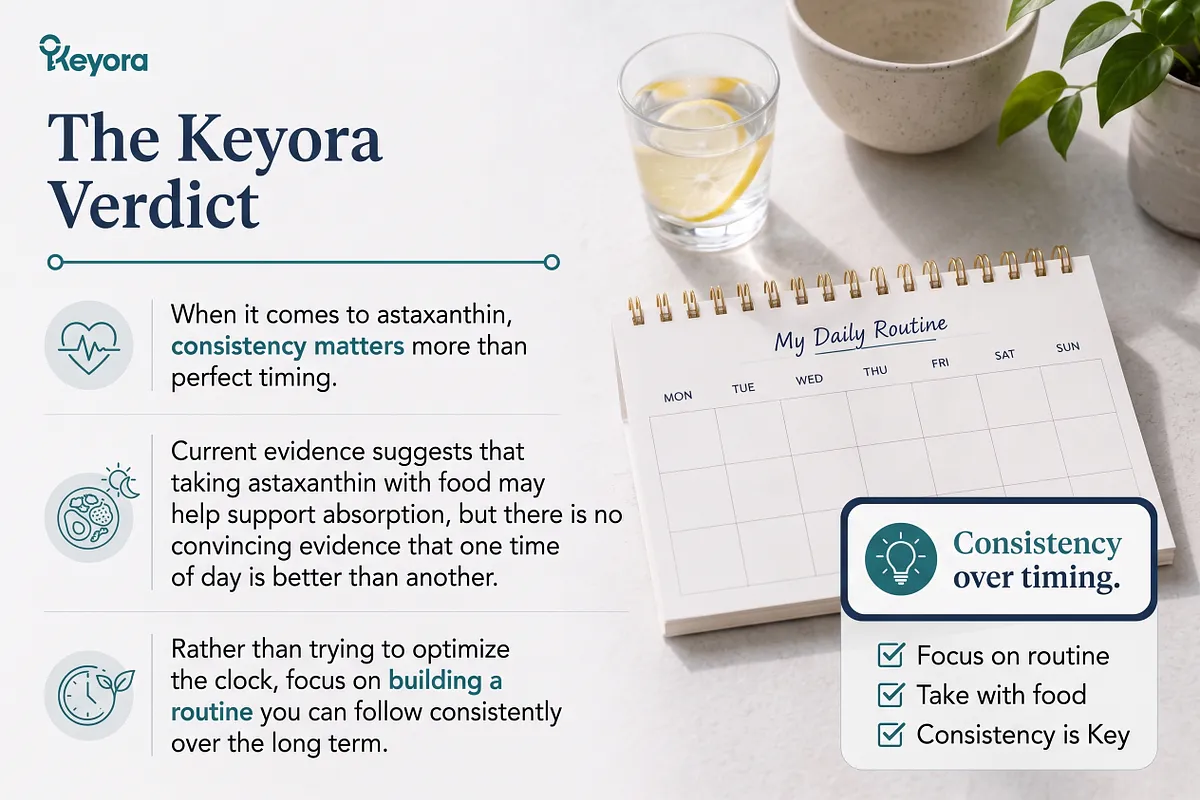
The Keyora Verdict
When it comes to astaxanthin, consistency matters more than perfect timing.
Current evidence suggests that taking astaxanthin with food may help support absorption, but there is no convincing evidence that one time of day is better than another.
Rather than trying to optimize the clock, focus on building a routine you can follow consistently over the long term.
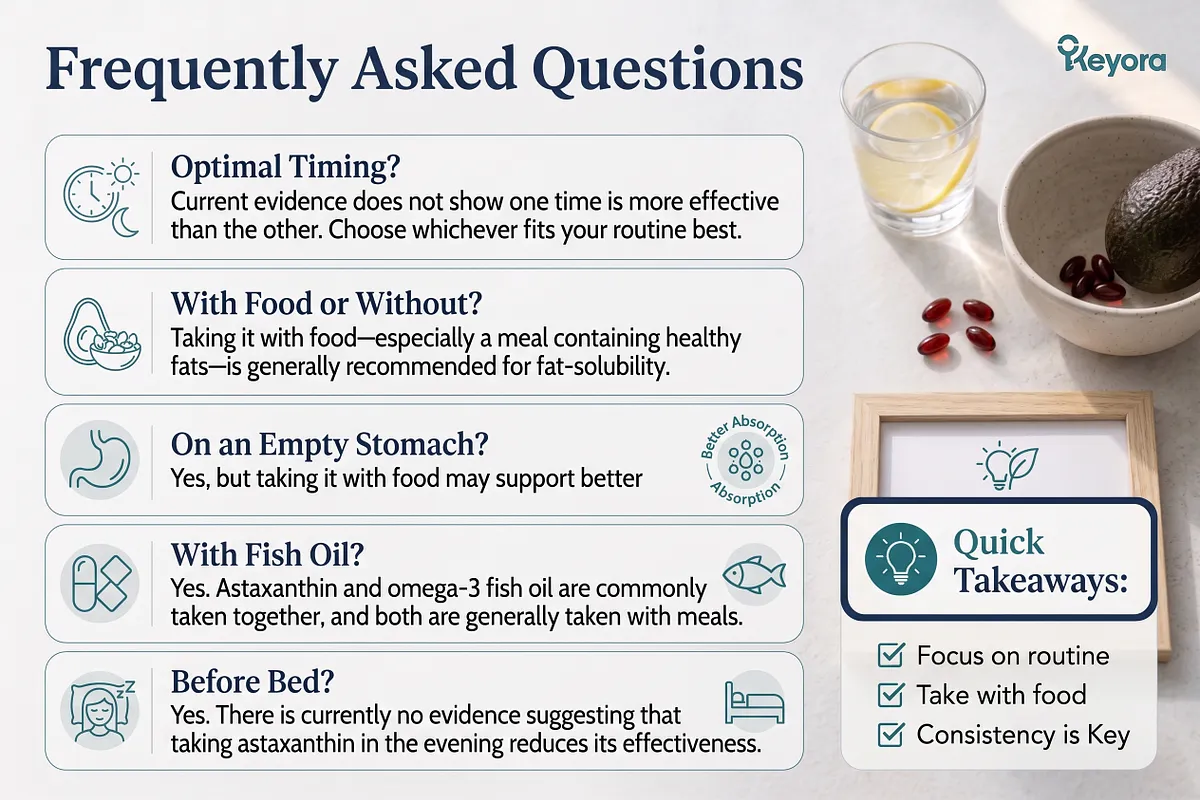
Frequently Asked Questions
Is it better to take astaxanthin in the morning or at night?
Current evidence does not show one time is more effective than the other. Choose whichever fits your routine best.
Should I take astaxanthin with food?
Yes. Because astaxanthin is fat-soluble, taking it with food—especially a meal containing healthy fats—is generally recommended.
Can I take astaxanthin on an empty stomach?
Yes, but taking it with food may support better absorption.
Can I take astaxanthin with fish oil?
Yes. Astaxanthin and omega-3 fish oil are commonly taken together, and both are generally taken with meals.
Can I take astaxanthin before bed?
Yes. There is currently no evidence suggesting that taking astaxanthin in the evening reduces its effectiveness.
Research First
At Keyora, we believe practical health advice should be grounded in scientific evidence rather than routine or marketing claims.
Our educational content is based on peer-reviewed clinical research, nutritional science, and guidance from recognized health organizations. When evidence is limited or evolving, we aim to explain what is known—and what remains uncertain—with accuracy and transparency.
Evidence Note
This article is intended for educational purposes only and should not be considered medical advice. Dietary supplements are not intended to diagnose, treat, cure, or prevent any disease. If you are pregnant, breastfeeding, taking prescription medications, or have an existing medical condition, consult your healthcare professional before starting any new supplement.
References
1. Ambati RR, Phang SM, Ravi S, Aswathanarayana RG. Astaxanthin: Sources, Extraction, Stability, Biological Activities and Its Commercial Applications.
2. Park JS, Chyun JH, Kim YK, Line LL, Chew BP. Astaxanthin: A Review of Its Pharmacology and Clinical Applications.
3. Failla ML, Chitchumroonchokchai C. Factors Influencing the Bioavailability of Carotenoids from Foods.
4. Parker RS. Absorption, Metabolism, and Transport of Carotenoids.
5. National Institutes of Health Office of Dietary Supplements. Dietary Supplement Fact Sheets.