
Why Is Omega-3/Omega-6 Imbalance an Overlooked Contributor to Modern Cardiovascular Disease?
Keyora Research Q&A Library
This is part of the Keyora Research Q&A Series, derived from Keyora Astaxanthin Research Journal Series.
Within the Keyora Astaxanthin Researcn framework, this Q&A translates complex astaxanthin biology into reader-friendly, evidence-bound answers, focusing on natural astaxanthin identity, molecular structure, antioxidant and redox mechanisms, membrane lipid interaction, mitochondrial resilience, inflammatory signaling pathways, human evidence interpretation, and the scientific principles behind responsible supplementation.
First published by Keyora Research Journal: www.keyorahealth.com

Direct Answer
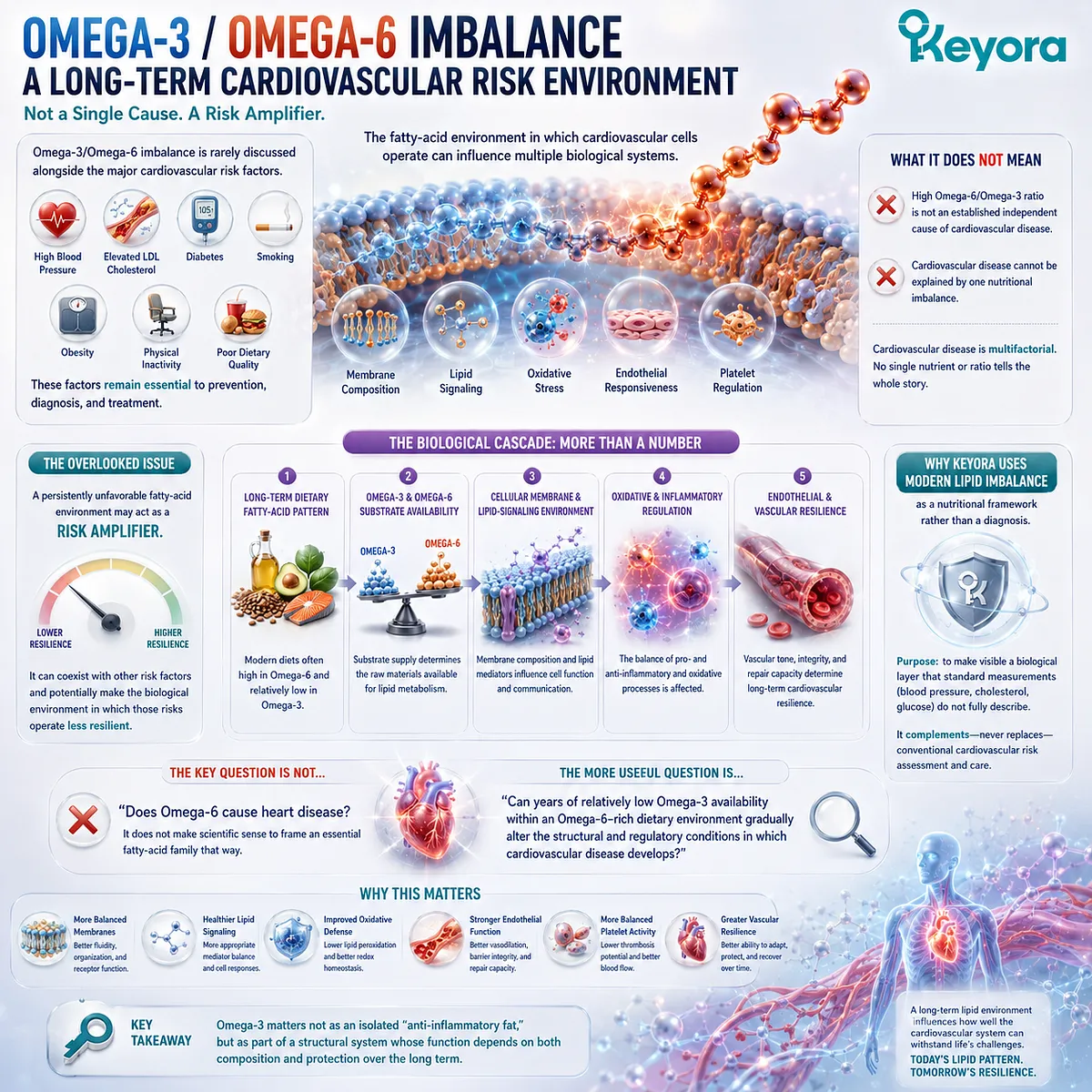
Omega-3/Omega-6 imbalance should be understood as a long-term cardiovascular risk environment rather than a single direct cause of heart disease
Omega-3/Omega-6 imbalance is rarely discussed alongside high blood pressure, elevated LDL cholesterol, diabetes, smoking, obesity, and physical inactivity.
Yet the fatty-acid environment in which cardiovascular cells operate can influence several biological systems that sit underneath those familiar risk factors, including membrane composition, lipid signaling, oxidative stress, endothelial responsiveness, and platelet regulation.
This does not mean that a high Omega-6/Omega-3 ratio has been established as an independent cause of cardiovascular disease, or that cardiovascular disease can be explained by one nutritional imbalance.
Cardiovascular disease is multifactorial, and the strongest established risk factors remain essential to prevention, diagnosis, and treatment.
The overlooked issue is different. A persistently unfavorable fatty-acid environment may act as a risk amplifier: it can coexist with hypertension, insulin resistance, dyslipidemia, smoking, excess adiposity, or poor dietary quality and potentially make the biological environment in which those risks operate less resilient.
The basic mechanism is broader than a numerical ratio:
Long-term dietary fatty-acid pattern
↓
Omega-3 and Omega-6 substrate availability
↓
Cellular membrane and lipid-signaling environment
↓
Oxidative and inflammatory regulation
↓
Endothelial and vascular resilience
This is why Keyora uses Modern Lipid Imbalance as a nutritional framework rather than a diagnosis. The purpose is not to replace conventional cardiovascular risk assessment, but to make visible a biological layer that ordinary blood-pressure, cholesterol, and glucose measurements do not fully describe.
The key question is therefore not, “Does Omega-6 cause heart disease?” It does not make scientific sense to frame an essential fatty-acid family that way.
The more useful question is whether years of relatively low Omega-3 availability within an Omega-6-rich dietary environment can gradually alter the structural and regulatory conditions in which cardiovascular disease develops.
That possibility deserves far more attention than it usually receives.
Why Is This Cardiovascular Risk Layer So Easy to Miss?
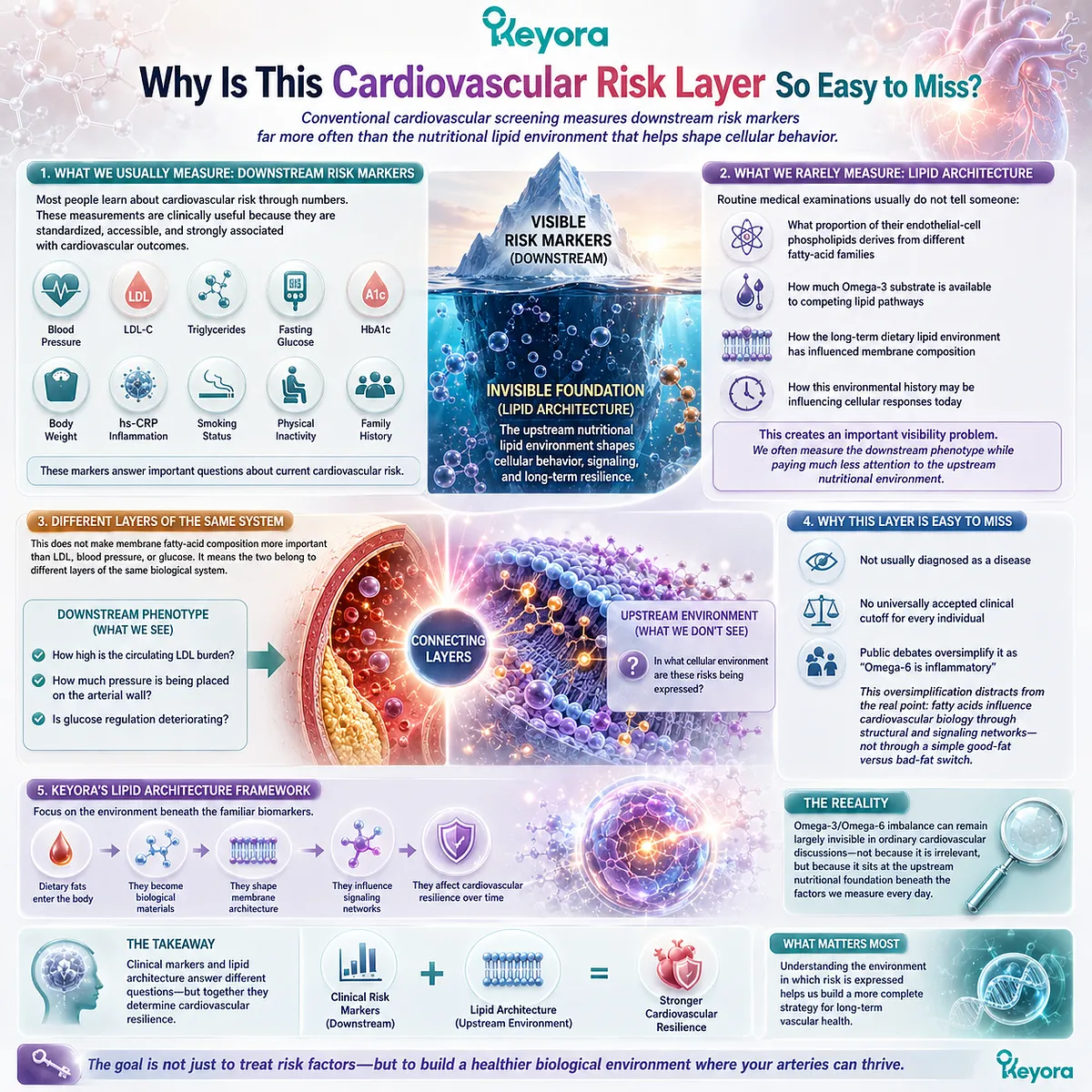
Conventional cardiovascular screening measures downstream risk markers far more often than the nutritional lipid environment that helps shape cellular behavior
Most people learn about cardiovascular risk through numbers: blood pressure, LDL-C, triglycerides, fasting glucose, HbA1c, body weight, and perhaps inflammatory markers. These measurements are clinically useful because they are standardized, accessible, and strongly associated with cardiovascular outcomes.
Fatty-acid architecture is different. Routine medical examinations usually do not tell someone what proportion of their endothelial-cell phospholipids derives from different fatty-acid families, how much Omega-3 substrate is available to competing lipid pathways, or how the long-term dietary lipid environment has influenced membrane composition.
This creates an important visibility problem.
We often measure the downstream phenotype while paying much less attention to the upstream nutritional environment. A person can therefore know that LDL cholesterol is elevated without ever asking what kind of lipid environment their vascular cells have been exposed to for years.
That does not make membrane fatty-acid composition more important than LDL, blood pressure, or glucose. It means the two belong to different layers of the same biological system.
Clinical risk markers answer questions such as:
How high is the circulating LDL burden?
How much pressure is being placed on the arterial wall?
Is glucose regulation deteriorating?
A lipid-architecture question asks something different:
In what cellular environment are these risks being expressed?
This distinction helps explain why Omega-3/Omega-6 imbalance can remain largely invisible in ordinary cardiovascular discussions. It is not usually diagnosed as a disease, and there is no universally accepted clinical cutoff that separates a “safe” from an “unsafe” ratio for every individual.
The problem becomes even more obscure when public nutrition debates collapse the subject into “Omega-6 is inflammatory.” That oversimplification distracts from the more important point: fatty acids influence cardiovascular biology through structural and signaling networks, not through a simple good-fat versus bad-fat switch.
Keyora’s Lipid Architecture framework therefore focuses on the environment beneath the familiar biomarkers. It asks how dietary fats become biological materials, how those materials shape regulatory capacity, and how that background may affect cardiovascular resilience over time.
How Does the Modern Diet Create a Persistent Fatty-Acid Imbalance?
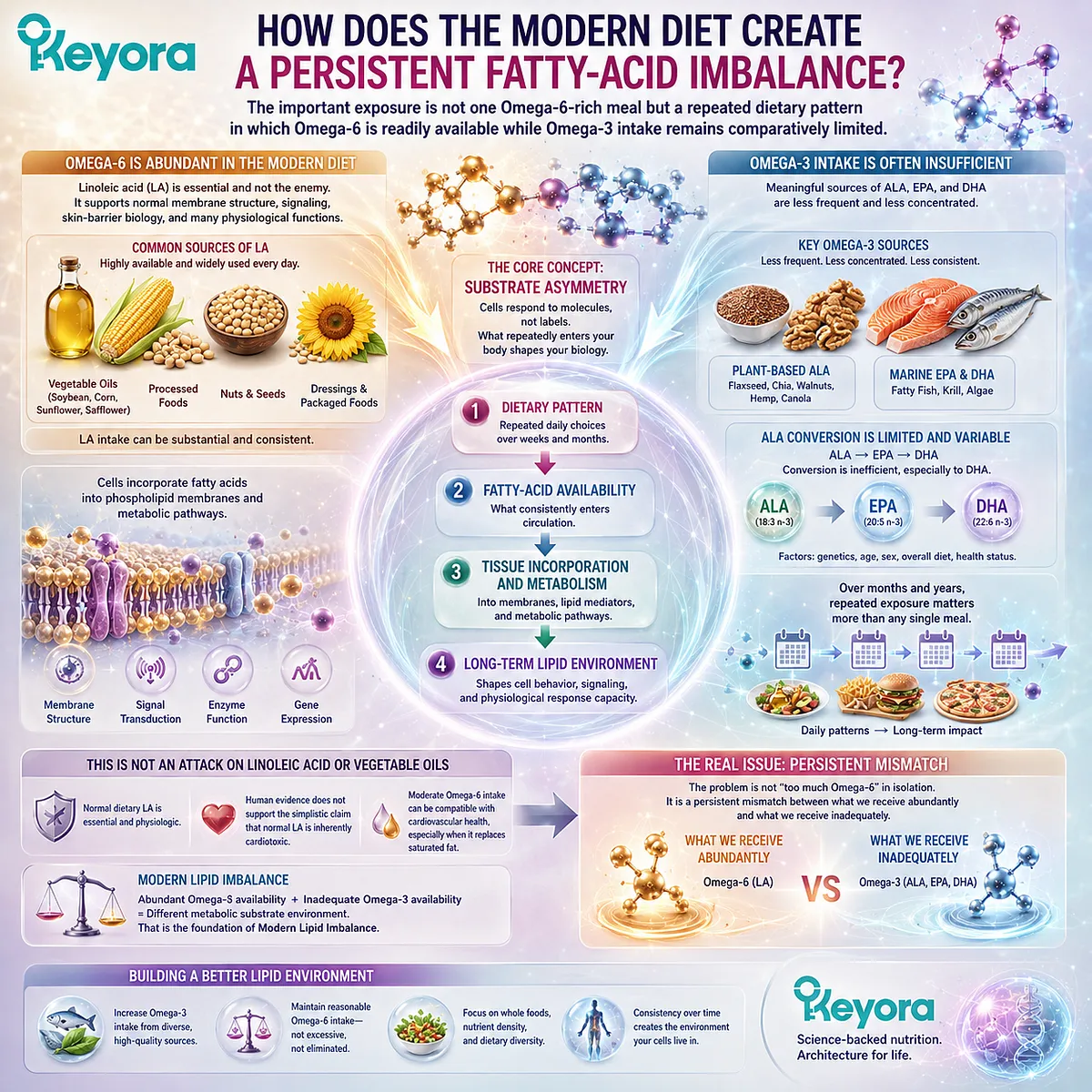
The important exposure is not one Omega-6-rich meal but a repeated dietary pattern in which Omega-6 is readily available while Omega-3 intake remains comparatively limited
Omega-6 fatty acids are not abnormal components of the modern diet. Linoleic acid, the predominant dietary Omega-6 fatty acid, is essential and contributes to normal membrane structure, signaling, skin-barrier biology, and other physiological functions.
The concern begins when dietary availability becomes chronically asymmetric.
Modern food environments can provide substantial amounts of linoleic acid through commonly used oils and processed-food ingredients, while intake of meaningful Omega-3 sources may remain inconsistent. Plant-derived ALA, as well as long-chain marine Omega-3 fatty acids, therefore may not increase in parallel with total Omega-6 exposure.
The important concept is substrate asymmetry.
Cells do not respond to the label “healthy fat” or “unhealthy fat.” They respond to the molecules that repeatedly enter circulation, undergo metabolism, become incorporated into phospholipids, or enter enzymatic signaling pathways.
Over months and years, this repeated exposure pattern can matter more than any single meal.
Dietary pattern
↓
Fatty-acid availability
↓
Tissue incorporation and metabolism
↓
Long-term lipid environment
That is why a discussion about imbalance should not become an attack on vegetable oils or linoleic acid. Human evidence does not support the simplistic claim that normal dietary LA is inherently cardiotoxic, and moderate Omega-6 intake can be compatible with cardiovascular health, particularly when it replaces saturated fat.
The more defensible concern is that abundant Omega-6 intake combined with inadequate Omega-3 availability may create a different metabolic substrate environment from one in which both essential fatty-acid families are adequately represented.
ALA is particularly relevant because it is an essential Omega-3 fatty acid that must be obtained through the diet. It also provides the starting substrate for longer-chain n-3 metabolism, although conversion to EPA and especially DHA is limited and variable.
The nutritional problem is therefore not “too much Omega-6” in isolation.
It is the possibility of a persistent mismatch between what the cardiovascular system receives abundantly and what it receives inadequately. That is the foundation of Modern Lipid Imbalance.
How Can Fatty-Acid Imbalance Reach the Cardiovascular System at the Membrane Level?
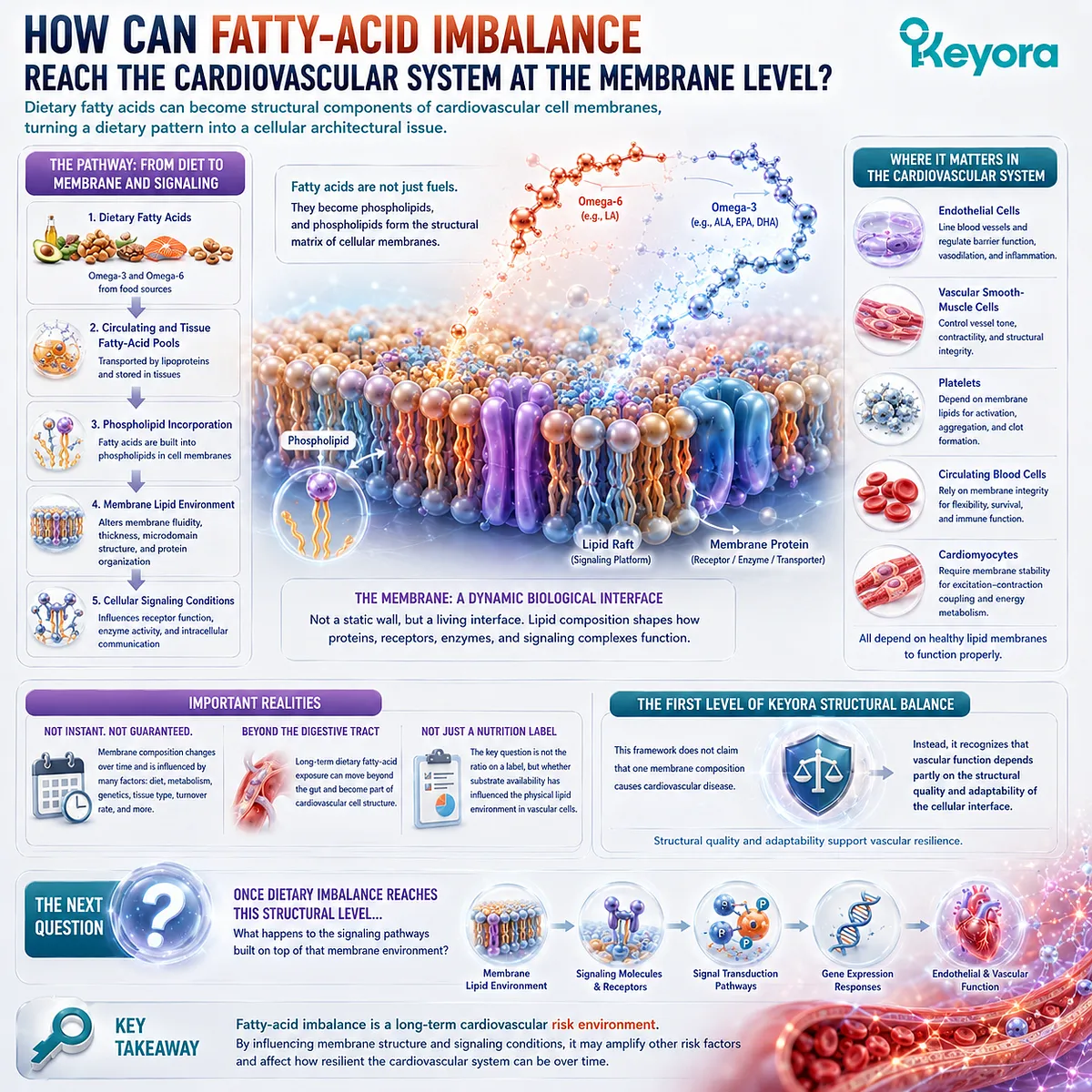
Dietary fatty acids can become structural components of cardiovascular cell membranes, turning a dietary pattern into a cellular architectural issue
One reason fatty-acid imbalance deserves more attention is that fatty acids are not merely fuels circulating outside the cell. They become components of phospholipids, and phospholipids form the structural matrix of cellular membranes.
This matters throughout the cardiovascular system.
Endothelial cells lining blood vessels, vascular smooth-muscle cells, platelets, circulating blood cells, and cardiomyocytes all depend on lipid membranes to maintain barrier properties, receptor organization, transport processes, enzymatic activity, and intracellular communication.
The mechanism begins with availability.
Dietary fatty acids
↓
Circulating and tissue fatty-acid pools
↓
Phospholipid incorporation
↓
Membrane lipid environment
↓
Cellular signaling conditions
The membrane is therefore not a static wall. It is a dynamic biological interface whose lipid composition helps determine how proteins, receptors, enzymes, and signaling complexes operate within it.
This does not mean that changing Omega-3 intake immediately transforms cardiovascular membranes or guarantees a clinical outcome. Membrane composition is influenced by diet, metabolism, genetics, tissue type, turnover rate, and many other variables.
What it does mean is that long-term dietary fatty-acid exposure can move beyond the digestive tract and become part of cardiovascular structure itself.
That is an important conceptual shift.
A person may think of an Omega imbalance as something that exists on a nutrition label: too much of one number, too little of another. In biological terms, however, the more important question is whether long-term substrate availability has influenced the physical lipid environment in which vascular cells function.
This is the first level of Keyora Structural Balance.
The framework does not claim that one membrane composition causes cardiovascular disease. Instead, it recognizes that vascular function depends partly on the structural quality and adaptability of the cellular interface.
Once dietary imbalance reaches this structural level, the next question becomes unavoidable: what happens to the signaling pathways that are built on top of that membrane environment?
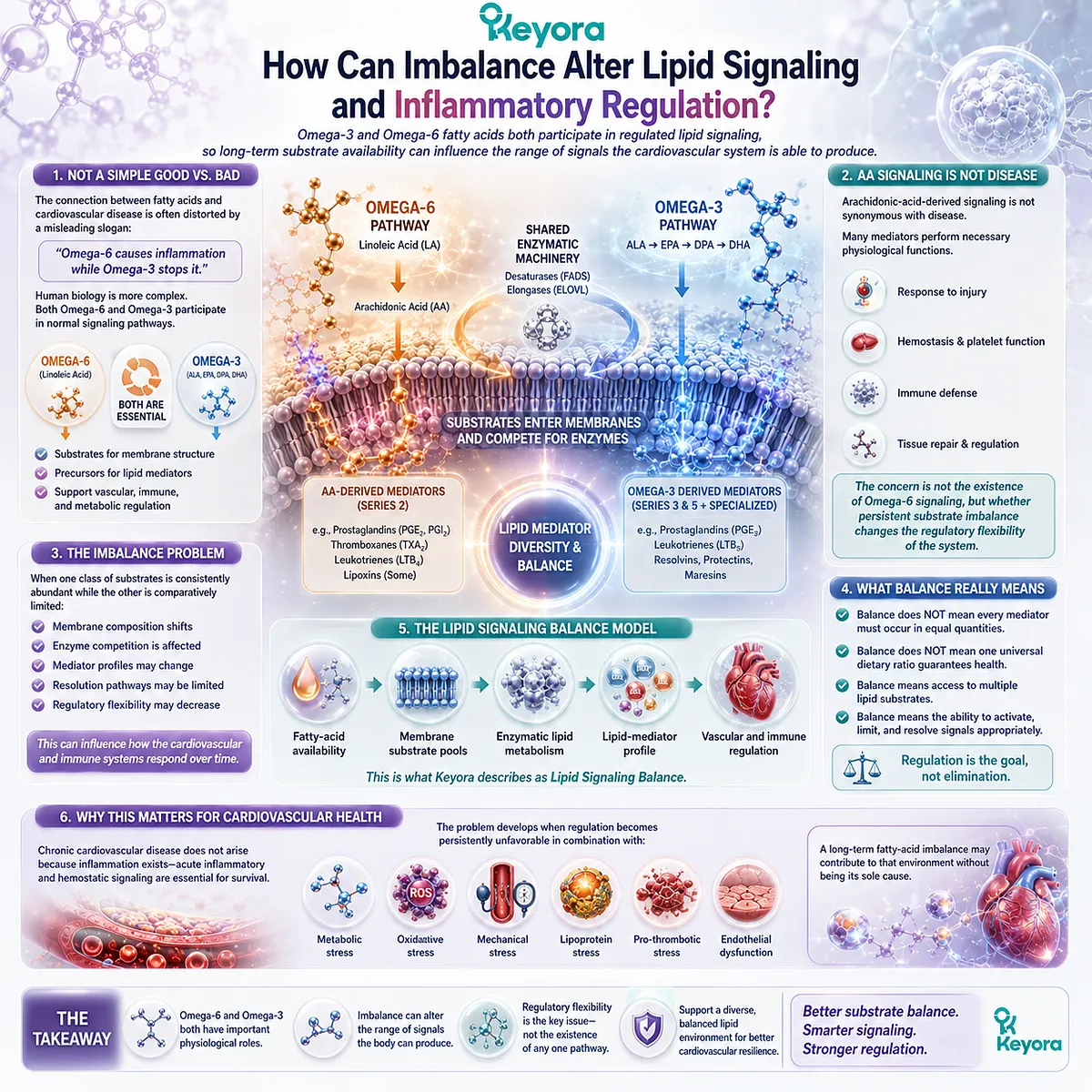
How Can Imbalance Alter Lipid Signaling and Inflammatory Regulation?
Omega-3 and Omega-6 fatty acids both participate in regulated lipid signaling, so long-term substrate availability can influence the range of signals the cardiovascular system is able to produce
The connection between fatty acids and cardiovascular disease is often distorted by a misleading slogan: Omega-6 causes inflammation while Omega-3 stops it.
Human biology is more complex.
Omega-6 and Omega-3 fatty acids both participate in normal signaling pathways. Linoleic acid can contribute to arachidonic-acid pools, while Omega-3 fatty acids contribute to their own downstream metabolic pathways. These substrates can subsequently participate in the production of multiple lipid mediators involved in vascular tone, platelet activity, immune signaling, inflammatory responses, and resolution biology.
Importantly, arachidonic-acid-derived signaling is not synonymous with disease. Many of these mediators perform necessary physiological functions, including responses to injury, hemostasis, immune defense, and tissue regulation.
The cardiovascular concern is therefore not the existence of Omega-6 signaling.
It is whether persistent substrate imbalance changes the regulatory flexibility of the system.
When one class of fatty-acid substrates is consistently abundant while another is comparatively limited, the enzymatic and membrane environment in which lipid mediators are generated may also differ. Omega-3 and Omega-6 pathways also share parts of the desaturation and elongation machinery, adding another layer of metabolic interaction.
The more accurate model is:
Fatty-acid availability
↓
Membrane substrate pools
↓
Enzymatic lipid metabolism
↓
Lipid-mediator profile
↓
Vascular and immune regulation
This is what Keyora describes as Lipid Signaling Balance.
Balance does not mean that every signaling molecule must occur in equal quantities. Nor does it mean that one universal dietary ratio automatically produces an ideal mediator profile.
It means that cardiovascular regulation depends on access to multiple lipid substrates and on the ability to activate, limit, and resolve biological signals appropriately.
This distinction is critical. Chronic cardiovascular disease does not arise because inflammation exists; acute inflammatory and hemostatic signaling are essential for survival.
The problem develops when regulation becomes persistently unfavorable in combination with metabolic, oxidative, mechanical, and lipoprotein stress. A long-term fatty-acid imbalance may contribute to that environment without being its sole cause.
How Can Oxidative Stress Convert Lipid Imbalance Into Endothelial Stress?
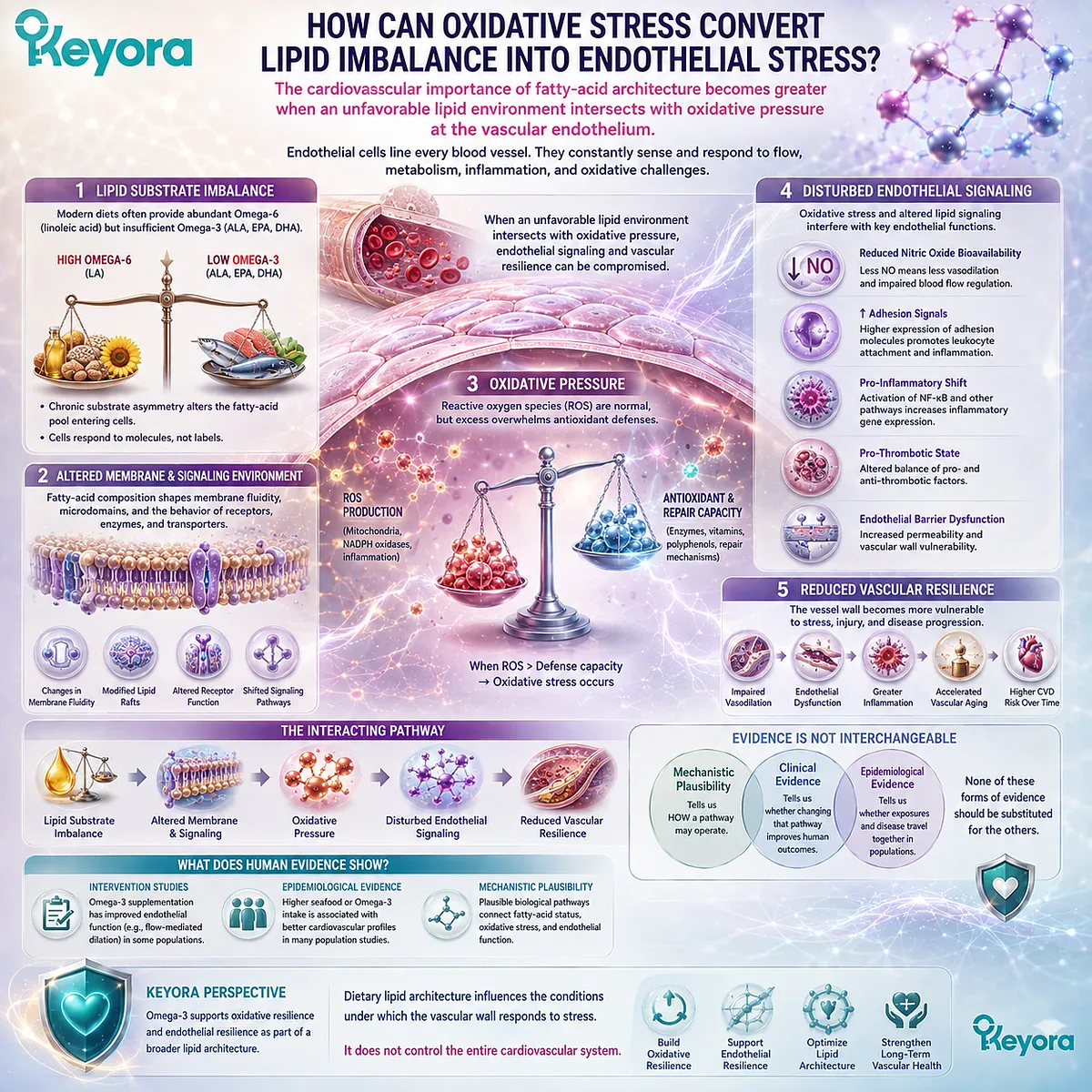
The cardiovascular importance of fatty-acid architecture becomes greater when an unfavorable lipid environment intersects with oxidative pressure at the vascular endothelium
The endothelium is the single-cell lining separating circulating blood from the vessel wall. It regulates vascular tone, permeability, adhesion signaling, hemostasis, and communication between blood and vascular tissue.
Because of this position, endothelial cells continuously experience mechanical, metabolic, inflammatory, and oxidative challenges.
Reactive oxygen species are normal products of metabolism and signaling. The problem occurs when oxidative production exceeds the capacity of antioxidant and repair systems to maintain redox control.
Polyunsaturated fatty acids are particularly relevant to this environment because their multiple double bonds make lipid structures susceptible to oxidation. This does not mean that PUFA intake is harmful; unsaturated fatty acids are essential components of healthy biology. It means that lipid composition and oxidative resilience must be considered together.
An unfavorable cardiovascular environment can therefore develop through several interacting layers:
Lipid substrate imbalance
↓
Altered membrane and signaling environment
↓
Oxidative pressure
↓
Disturbed endothelial signaling
↓
Reduced vascular resilience
Excess oxidative pressure can also decrease nitric-oxide bioavailability and interfere with normal endothelial responsiveness. Nitric oxide is one of the major signals involved in vascular relaxation and healthy blood-flow regulation, although its detailed biology deserves separate treatment rather than being reduced to a single Omega mechanism.
Human intervention research on Omega-3 fatty acids has reported changes in endothelial-function measures such as flow-mediated dilation in some populations. These findings support a connection between fatty-acid status and vascular function, but they do not prove that Omega imbalance independently causes cardiovascular disease.
That distinction is essential.
Mechanistic plausibility tells us how a pathway may operate.
Clinical evidence tells us whether changing that pathway produces measurable human outcomes.
Epidemiology tells us whether exposures and disease tend to travel together in populations.
None of these forms of evidence should be substituted for the others.
Keyora therefore uses Oxidative Resilience and Endothelial Resilience as connected explanatory layers. The objective is to show how dietary lipid architecture can influence the conditions under which the vascular wall responds to stress – not to claim that one nutrient can control the entire cardiovascular system.
Why Can Fatty-Acid Imbalance Magnify Traditional Cardiovascular Risk Factors?
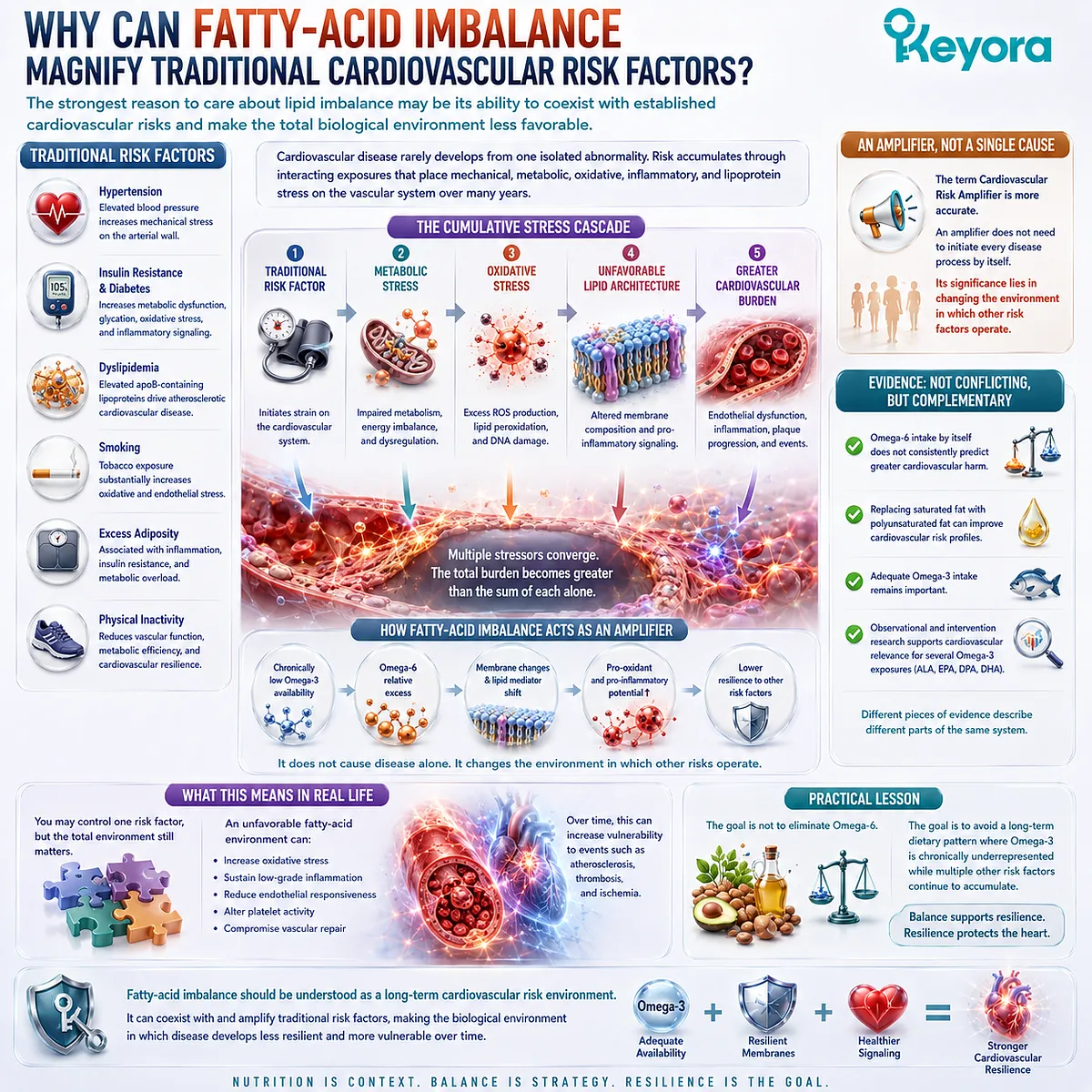
The strongest reason to care about lipid imbalance may be its ability to coexist with established cardiovascular risks and make the total biological environment less favorable
Cardiovascular disease rarely develops from one isolated abnormality. Risk accumulates through interacting exposures that place mechanical, metabolic, oxidative, inflammatory, and lipoprotein stress on the vascular system over many years.
This is where fatty-acid imbalance may be most important.
Consider hypertension. Elevated blood pressure increases mechanical stress on the arterial wall. If that vessel is simultaneously operating within an unfavorable oxidative and lipid-signaling environment, the endothelial burden is no longer mechanical alone.
Consider insulin resistance and diabetes. These conditions can increase metabolic dysfunction, glycation, oxidative stress, and inflammatory signaling. A poorly balanced fatty-acid environment may add another regulatory challenge rather than replacing those mechanisms.
Consider dyslipidemia. Elevated apoB-containing lipoprotein exposure remains a major causal driver of atherosclerotic cardiovascular disease. Fatty-acid architecture does not invalidate that biology, but oxidative and endothelial conditions may influence how the vascular wall responds to the circulating lipoprotein burden.
Smoking offers another example. Tobacco exposure can substantially increase oxidative and endothelial stress. If vascular cells are already functioning under an unfavorable nutritional lipid environment, the total stress landscape becomes more complex.
The conceptual model is therefore cumulative:
Traditional risk factor
Metabolic stress
Oxidative stress
Unfavorable lipid architecture
↓
Greater cardiovascular burden
This is why the term Cardiovascular Risk Amplifier is more accurate than calling Omega imbalance a single major cause.
An amplifier does not need to initiate every disease process by itself. Its significance lies in changing the environment in which other risk factors operate.
This interpretation also helps reconcile apparently conflicting nutrition evidence. Omega-6 intake by itself does not consistently predict greater cardiovascular harm, and replacing saturated fat with polyunsaturated fat can improve cardiovascular risk profiles. At the same time, adequate Omega-3 intake remains important, and observational and intervention research supports cardiovascular relevance for several Omega-3 exposures.
The practical lesson is therefore not to suppress Omega-6 indiscriminately.
It is to avoid constructing a cardiovascular diet in which Omega-3 remains chronically underrepresented while multiple other risk factors continue to accumulate.
Why Should Cardiovascular Prevention Look Beyond Cholesterol and Blood Pressure?
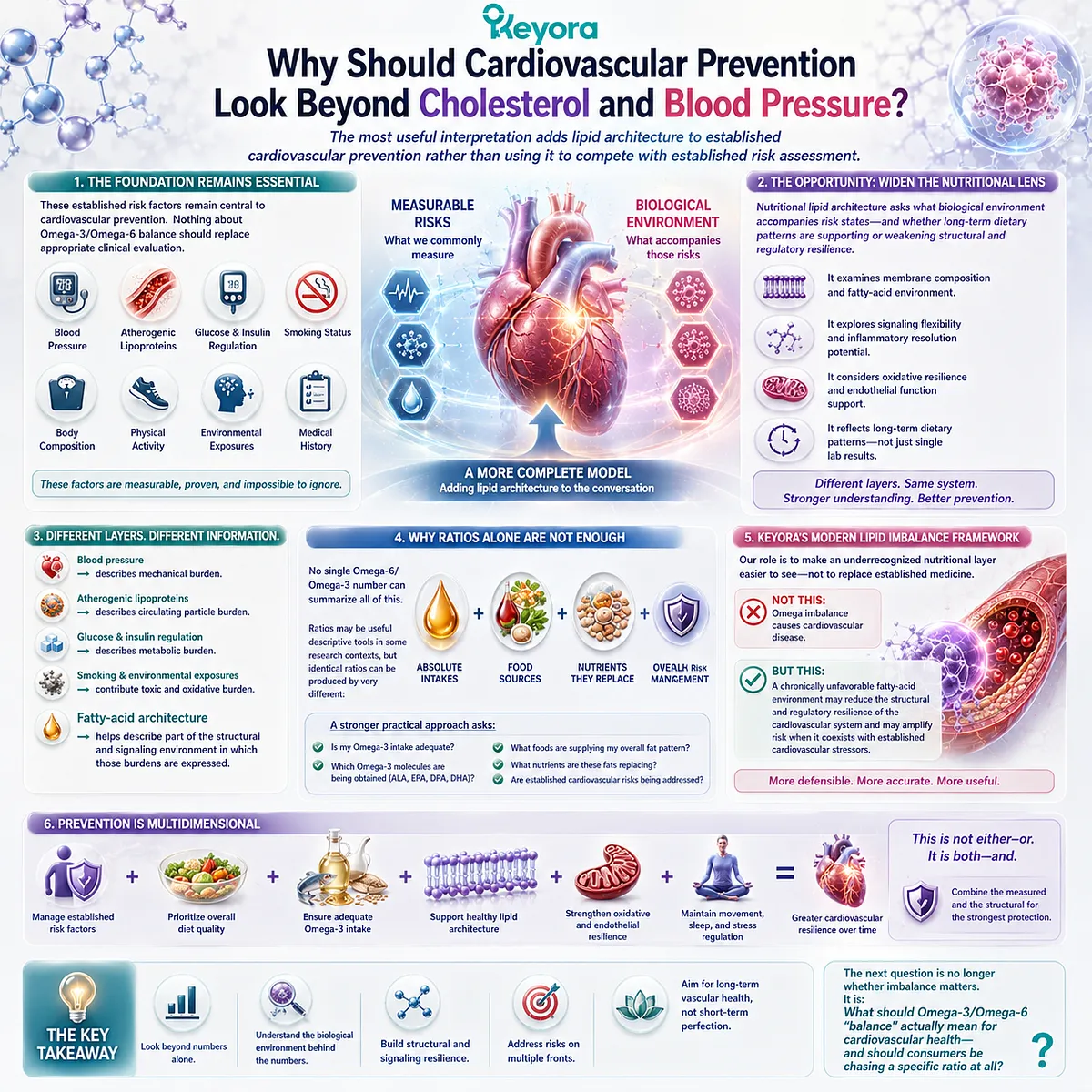
The most useful interpretation adds lipid architecture to established cardiovascular prevention rather than using it to compete with established risk assessment
Cholesterol, apoB-containing lipoproteins, blood pressure, glucose regulation, smoking status, body composition, physical activity, and medical history remain central to cardiovascular prevention. Nothing about Omega-3/Omega-6 balance should be used to minimize their importance or to replace appropriate clinical evaluation.
The opportunity is to widen the nutritional lens.
Conventional cardiovascular medicine is very good at identifying many measurable risk states. Nutritional lipid architecture asks what biological environment accompanies those states and whether long-term dietary patterns are supporting or weakening structural and regulatory resilience.
That produces a more complete model:
Blood pressure describes mechanical burden.
Atherogenic lipoproteins describe circulating particle burden.
Glucose and insulin regulation describe metabolic burden.
Smoking and environmental exposures contribute toxic and oxidative burden.
Fatty-acid architecture helps describe part of the structural and signaling environment in which those burdens are expressed.
No single Omega-6/Omega-3 number can summarize all of this.
That is why Keyora does not need to turn the often-cited 2:1, 4:1, 10:1, or 20:1 ratios into universal biological laws.
Ratios may be useful descriptive tools in some research contexts, but identical ratios can be produced by very different absolute intakes and very different foods.
A stronger practical approach is to ask whether Omega-3 intake is adequate, what Omega-3 molecules are being obtained, what foods are supplying the overall fat pattern, what nutrients those fats are replacing, and whether established cardiovascular risks are being addressed.
The Keyora Modern Lipid Imbalance framework therefore has a specific role: to make an underrecognized nutritional layer easier to see.
It does not say:
Omega imbalance causes cardiovascular disease.
It says:
A chronically unfavorable fatty-acid environment may reduce the structural and regulatory resilience of the cardiovascular system and may amplify risk when it coexists with established cardiovascular stressors.
That is a more defensible – and more useful – reason to take the issue seriously.
The next question is then no longer whether imbalance matters.
It is:
What should Omega-3/Omega-6 “balance” actually mean for cardiovascular health – and should consumers be chasing a specific ratio at all?
This article is for educational and informational purposes only. It does not provide medical advice, diagnosis, treatment, cure, prevention, disease outcome claims, hormone restoration claims, fertility outcome claims, or formula-specific clinical efficacy claims.