
How Should You Read Astaxanthin Research?
Keyora Research Q&A Library
This is part of the Keyora Research Q&A Series, derived from Keyora Astaxanthin Research Journal Series.
Within the Keyora Astaxanthin Researcn framework, this Q&A translates complex astaxanthin biology into reader-friendly, evidence-bound answers, focusing on natural astaxanthin identity, molecular structure, antioxidant and redox mechanisms, membrane lipid interaction, mitochondrial resilience, inflammatory signaling pathways, human evidence interpretation, and the scientific principles behind responsible supplementation.
First published by Keyora Research Journal: www.keyorahealth.com

Direct Answer
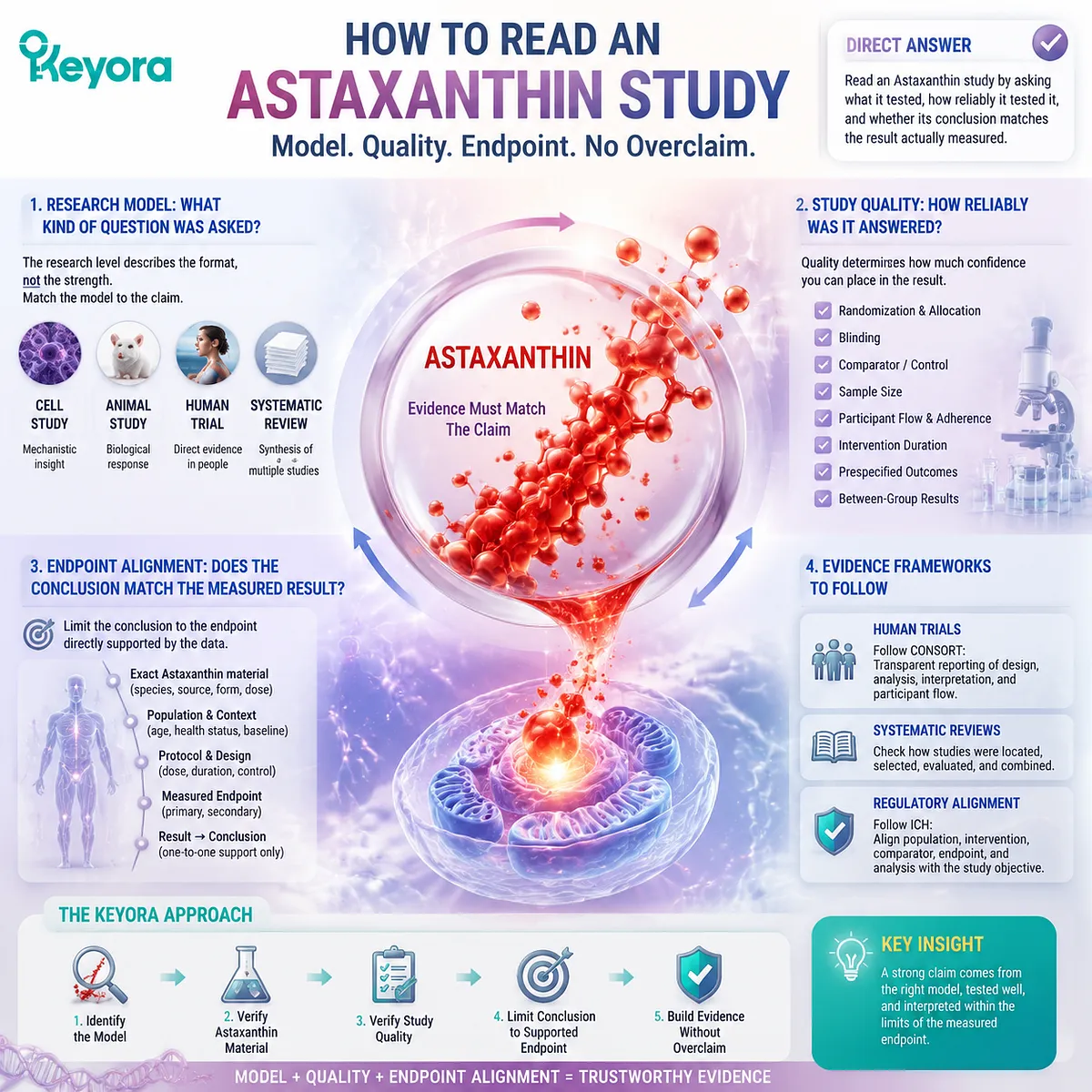
Read an Astaxanthin study by asking what it tested, how reliably it tested it, and whether its conclusion matches the result actually measured. Labels such as “cell study,” “animal study,” “human trial,” or “systematic review” describe the research format. They do not automatically tell you whether the study is strong or whether a broad public claim is justified.
Astaxanthin evidence should be interpreted by matching the research model, exact material, population, protocol, design, comparator, and measured endpoint to the claim being made.
Two dimensions must remain separate. The research level tells you what kind of question was asked. Study quality tells you how reliably that question was answered. A rigorous cell experiment may provide valuable mechanistic evidence, while a small or poorly controlled human study may provide uncertain evidence about human effects.
For a human trial, check randomization, allocation, blinding, comparator, sample size, participant flow, adherence, intervention duration, prespecified outcomes, and between-group results. For a systematic review, check how studies were located, selected, evaluated, and combined. Current CONSORT guidance emphasizes transparent reporting of randomized-trial design, analysis, interpretation, and participant flow, while ICH guidance emphasizes aligning the population, intervention, comparator, endpoint, and analysis with the study objective.
The Keyora approach is therefore not to rank papers by title alone. It is to identify the model, verify the Astaxanthin material, and limit the conclusion to the endpoint directly supported.
Start With the Research Model
Test-tube, cell, animal, human, and evidence-synthesis studies answer different scientific questions
A chemical or test-tube experiment may measure how Astaxanthin reacts with a selected oxidant, radical generator, probe, or lipid substrate under controlled conditions. Such research can clarify reaction chemistry or compare activity within that assay, but it does not measure oral absorption, tissue exposure, symptoms, physiological function, or clinical outcomes.
An artificial membrane study adds a defined lipid environment. It may examine partitioning, orientation, lipid organization, permeability, or oxidation within a liposome, monolayer, simulated bilayer, or another model. The result remains dependent on the model’s lipid composition, temperature, Astaxanthin concentration, preparation method, and assumptions. It cannot automatically be described as protection of every living human membrane.
A cell study asks what happens in a selected cell type after a defined exposure. Researchers may measure viability, gene expression, mitochondrial variables, oxidative signals, cytokines, or other pathway responses. The reader should check whether the cells were human or non-human, primary or transformed, and whether the applied concentration is biologically realistic.
An animal study adds digestion, circulation, metabolism, organ interactions, and tissue distribution. It may be valuable for pharmacokinetics, toxicology, mechanistic experiments, or preparation of a human trial. The species, strain, sex, disease model, route, dose, comparator, and measured tissues remain essential. ARRIVE 2.0 identifies study design, sample size, inclusion and exclusion criteria, randomization, blinding, outcome measures, statistical methods, animal characteristics, procedures, and results as central reporting elements needed to appraise animal experiments.
Human studies provide more direct human relevance, but they still answer different questions. A pharmacokinetic study may establish plasma exposure. A biomarker study may assess an oxidative, inflammatory, metabolic, or immune measurement. A symptom study records what participants report. A functional study tests an ability such as cognition, visual performance, or exercise output. A clinical-outcome study examines an outcome with more direct health significance.
For example, one randomized, double-blind, placebo-controlled Astaxanthin study assigned young healthy women to placebo or two Astaxanthin doses for eight weeks and measured plasma exposure, oxidative markers, inflammation, and immune responses. Its conclusions must remain attached to that population, protocol, and biomarker set. It did not directly test every organ function or long-term disease outcome.
Another randomized, double-blind, placebo-controlled study examined an Astaxanthin-rich Haematococcus pluvialis extract and cognitive tests in 96 participants. This is a functional research question rather than merely a blood-biomarker question. Even then, the reader must inspect the precise cognitive measures, groups, material, duration, analyses, and consistency of results rather than treating the phrase “cognitive study” as complete proof of brain protection.
The research model tells you what the investigators were able to observe. It does not remove the need to evaluate how well they observed it.

A Human Trial Still Requires Design Checks
Randomization, control groups, blinding, sample size, adherence, and prespecified outcomes determine how confidently a human result can be interpreted
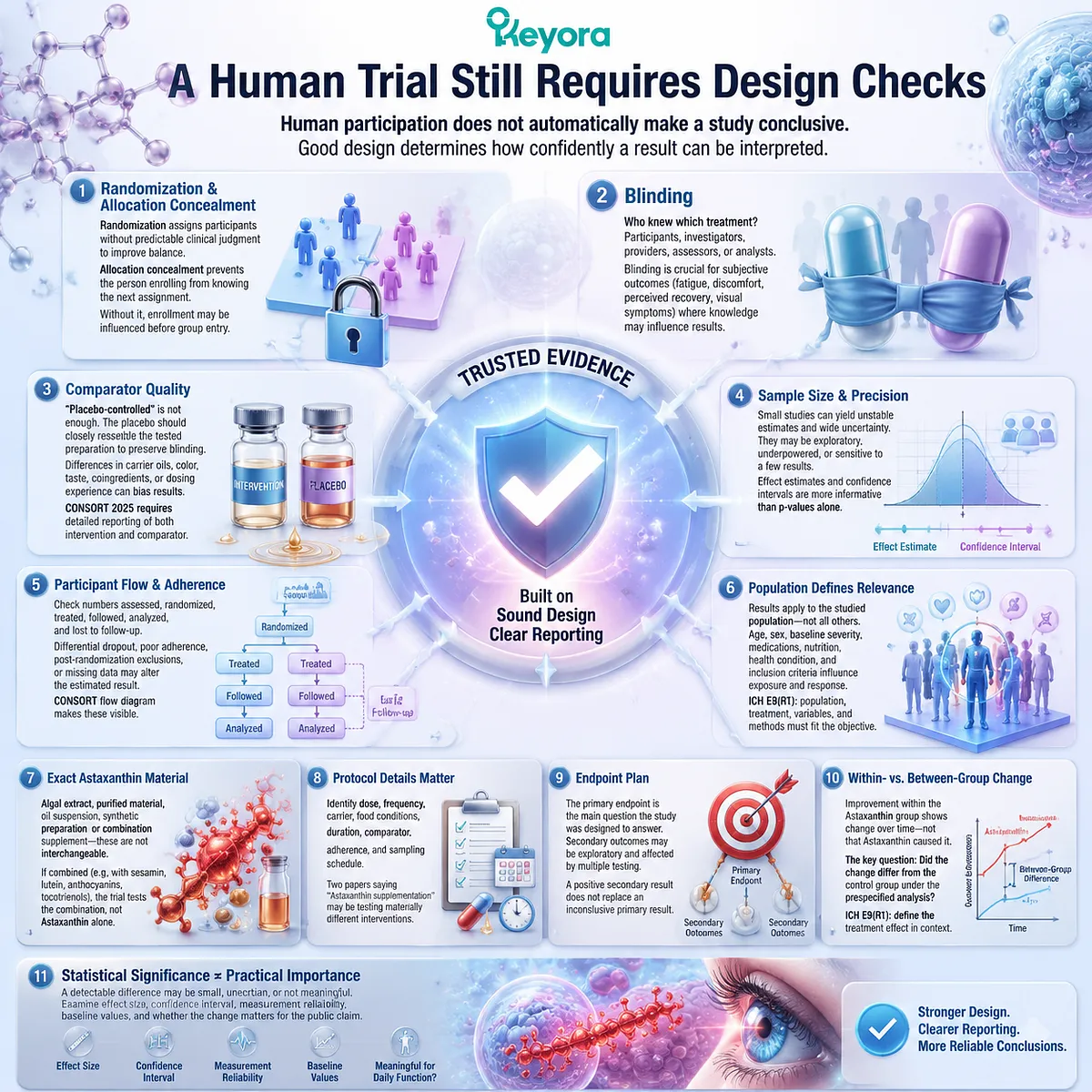
Human participation does not automatically make a study conclusive.
Randomization is intended to assign participants without using predictable clinical judgment and can improve balance between groups. Allocation concealment is a related but separate protection that prevents the person enrolling participants from knowing the next assignment. Without adequate concealment, the enrollment process may be influenced before a participant enters a group.
Blinding asks whether participants, investigators, treatment providers, outcome assessors, or analysts knew which intervention was received. Its importance depends partly on the endpoint. Knowledge of treatment may be especially influential when outcomes rely on subjective fatigue, discomfort, perceived recovery, or visual symptoms.
The comparator must also be inspected. “Placebo-controlled” is not enough information by itself. The placebo should resemble the tested preparation closely enough to preserve blinding, while differences in carrier oils, color, taste, coingredients, or dosing experience may complicate interpretation. CONSORT 2025 now specifically calls for sufficiently detailed reporting of both intervention and comparator so that readers can understand what was actually implemented.
Sample size matters because small studies may produce unstable estimates and wide uncertainty. A small study is not automatically false, but it may be exploratory, underpowered for some outcomes, or highly sensitive to a few participant results. Effect estimates and confidence intervals are often more informative than asking only whether a p-value crossed a conventional threshold.
Participant flow matters as well. Readers should look for the number assessed, randomized, treated, followed, analyzed, and lost to follow-up. Differential dropout, poor adherence, exclusions after randomization, or missing measurements may alter the estimated result. CONSORT’s checklist and participant-flow diagram are designed to make these elements visible.
The study population defines who the result directly describes. Healthy young adults, older adults, athletes, people reporting eye strain, patients with a diagnosed condition, and fertility-treatment populations are not interchangeable. Age, sex, baseline severity, medications, nutritional status, health condition, and inclusion criteria may influence both exposure and response. ICH E8(R1) emphasizes that the chosen population, treatments, response variables, and methods must support the intended study objective.
The exact Astaxanthin material is equally important. A study may use an algal extract, purified material, a particular oil suspension, a synthetic preparation, or a combined supplement containing several active ingredients. If Astaxanthin is combined with sesamin, lutein, anthocyanins, tocotrienols, or another nutrient, the trial evaluates the tested combination. It does not isolate an Astaxanthin-only effect unless the design contains the comparisons required to do so.
The protocol should identify active dose, frequency, carrier, food conditions, duration, comparator, adherence, and sampling schedule. Two papers that both say “Astaxanthin supplementation” may be testing materially different interventions.
The endpoint plan is the final major design check. The primary endpoint is the main result the study was designed to answer. Secondary outcomes may provide useful additional information, but they can be exploratory or affected by multiple testing. A positive secondary result should not silently replace an inconclusive primary result.
Readers must also distinguish within-group and between-group change. If the Astaxanthin group improved from baseline, that shows change over time within that group. It does not by itself show that the change was caused by Astaxanthin. The relevant intervention comparison usually asks whether the change differed from the control group under the prespecified analysis. ICH E9(R1) stresses that the treatment effect must be defined in relation to the population, treatment conditions, variable, and handling of events that affect interpretation.
Statistical significance and practical importance are different questions. A detectable difference may be small, uncertain, limited to one measure, or not meaningful to daily function. The reader should examine effect size, confidence interval, measurement reliability, baseline values, and whether the observed change matters for the stated public claim.
Systematic Reviews Are Only as Strong as Their Evidence Base
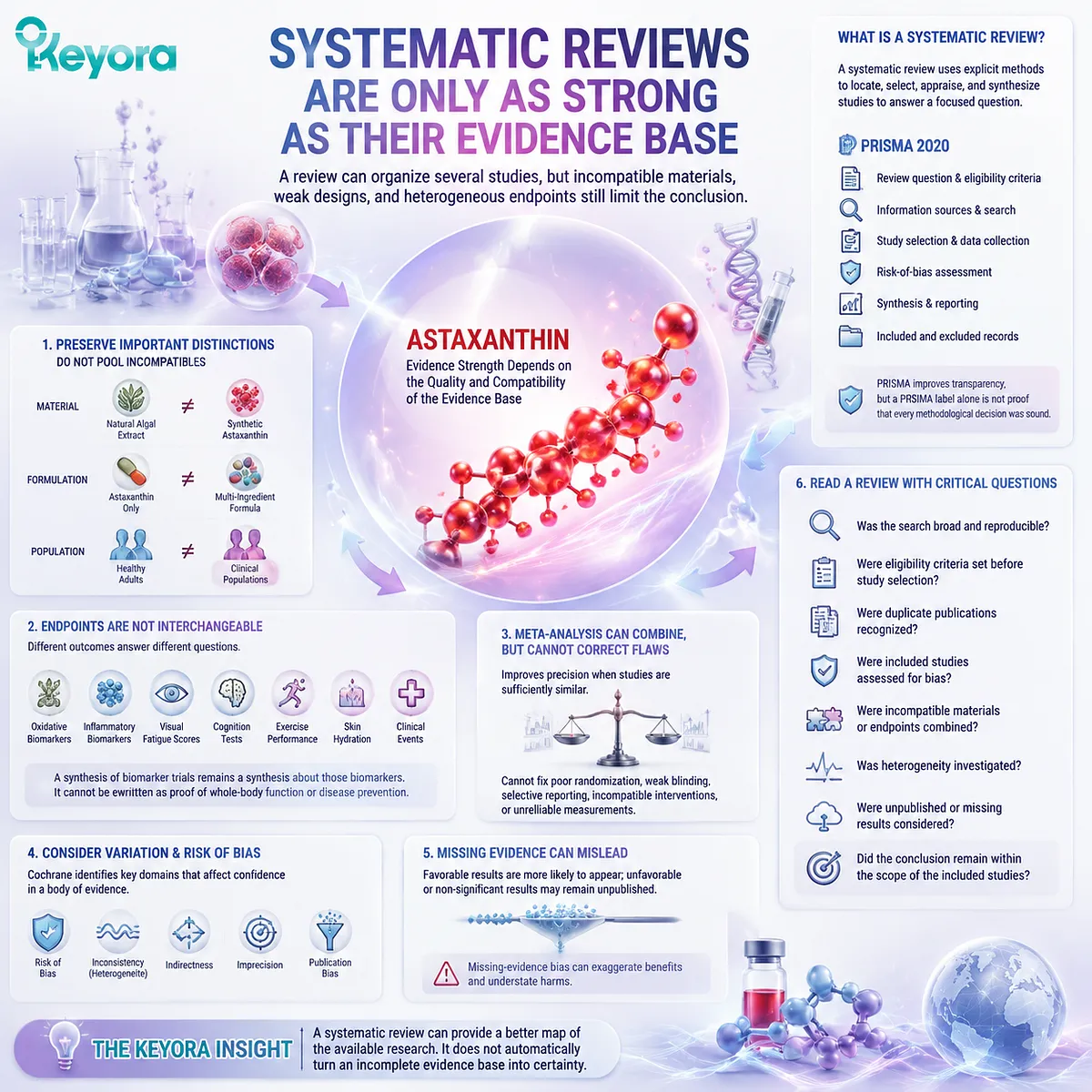
A review can organize several studies, but incompatible materials, weak designs, and heterogeneous endpoints still limit the conclusion
A systematic review is intended to locate and synthesize studies using explicit methods rather than selecting only convenient papers. PRISMA 2020 provides reporting recommendations covering the review question, eligibility criteria, information sources, search process, study selection, data collection, risk-of-bias assessment, synthesis, and reporting of included and excluded records. PRISMA improves transparency, but as an inference from its role as a reporting guideline, a PRISMA label alone is not proof that every methodological decision was sound.
A useful Astaxanthin review must preserve distinctions among materials, populations, protocols, and endpoints. Pooling a natural algal extract with synthetic material, an Astaxanthin-only preparation with a multi-ingredient formula, or healthy adults with clinical populations may create substantial indirectness or heterogeneity.
Endpoints require the same care. Oxidative biomarkers, inflammatory biomarkers, visual-fatigue scores, cognition tests, exercise performance, skin hydration, and clinical events are not interchangeable measurements. A synthesis of biomarker trials remains a synthesis about those biomarkers. It cannot be rewritten as proof of whole-body function or disease prevention.
Meta-analysis is a statistical method for combining compatible study estimates. It can improve precision when the included evidence addresses sufficiently similar questions. It cannot repair inappropriate randomization, weak blinding, selective outcome reporting, incompatible interventions, or unreliable measurements in the original trials.
Cochrane guidance emphasizes that variation among studies must be considered and that random-effects analyses require careful interpretation when underlying effects differ. Cochrane also identifies risk of bias, inconsistency, indirectness, imprecision, and publication bias as key considerations when judging confidence in a body of evidence.
Missing evidence is another concern. Studies or outcomes with favorable results may be more likely to appear quickly or prominently, while unfavorable or statistically non-significant findings may remain unpublished or incompletely reported. Cochrane warns that such missing-evidence bias can exaggerate estimated benefits and understate harms.
A review should therefore be read through several questions:
Was the search broad and reproducible?
Were eligibility criteria set before study selection?
Were duplicate publications recognized?
Were included studies assessed for bias?
Were incompatible materials or endpoints combined?
Was heterogeneity investigated?
Were unpublished or missing results considered?
Did the conclusion remain within the scope of the included studies?
A systematic review can provide a better map of the available research. It does not automatically turn an incomplete evidence base into certainty.
Use the Keyora Model – Material – Endpoint Check
Three questions can identify what an Astaxanthin study tested and the strongest conclusion it can support
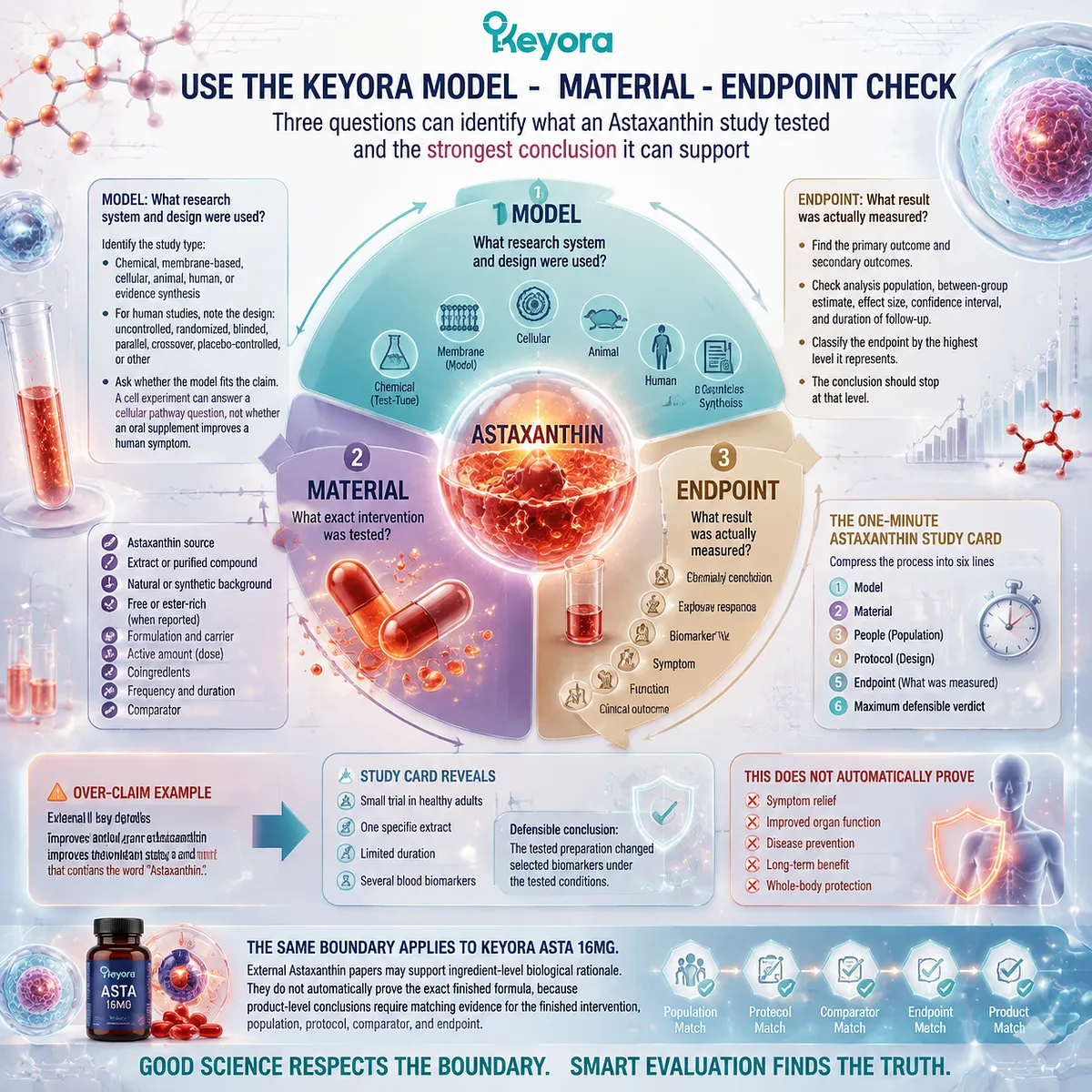
The Keyora Model – Material – Endpoint Check gives readers a practical way to examine any Astaxanthin paper.
Model: What research system and design were used?
Identify whether the study was chemical, membrane-based, cellular, animal, human, or an evidence synthesis. For human research, record whether it was uncontrolled, randomized, blinded, parallel, crossover, placebo-controlled, or based on another design.
Then ask whether the model fits the claim. A cultured-cell experiment can answer a cellular pathway question. It cannot directly answer whether an oral supplement improves a human symptom.
Material: What exact intervention was tested?
Record:
-
Astaxanthin source
-
extract or purified compound
-
natural or synthetic background
-
free or ester-rich material when reported
-
formulation and carrier
-
active amount
-
coingredients
-
frequency and duration
-
comparator
A trial using Astaxanthin with sesamin is evidence for that tested combination. A study of a specific algal extract does not automatically validate every product containing the word Astaxanthin.
Endpoint: What result was actually measured?
Find the primary outcome, secondary outcomes, analysis population, between-group estimate, effect size, confidence interval, and duration of follow-up.
Then classify the endpoint:
-
chemical reaction
-
pathway response
-
exposure
-
biomarker
-
symptom
-
function
-
clinical outcome
The conclusion should stop at that level.
The One-Minute Astaxanthin Study Card compresses the process into six lines:
-
Model
-
Material
-
People
-
Protocol
-
Endpoint
-
Maximum defensible verdict
Consider the claim: “A clinical study proves Astaxanthin improves antioxidant status and protects the whole body.”
The Study Card may reveal a small trial in healthy adults, using one specific extract for a limited period, with several blood biomarkers as outcomes. The defensible conclusion might be that the tested preparation changed selected biomarkers under the tested conditions.
It would not automatically prove symptom relief, improved organ function, disease prevention, long-term benefit, or whole-body protection.
The same boundary applies to Keyora Asta 16MG. External Astaxanthin papers may support ingredient-level biological rationale. They do not automatically prove the exact finished formula, because product-level conclusions require matching evidence for the finished intervention, population, protocol, comparator, and endpoint.
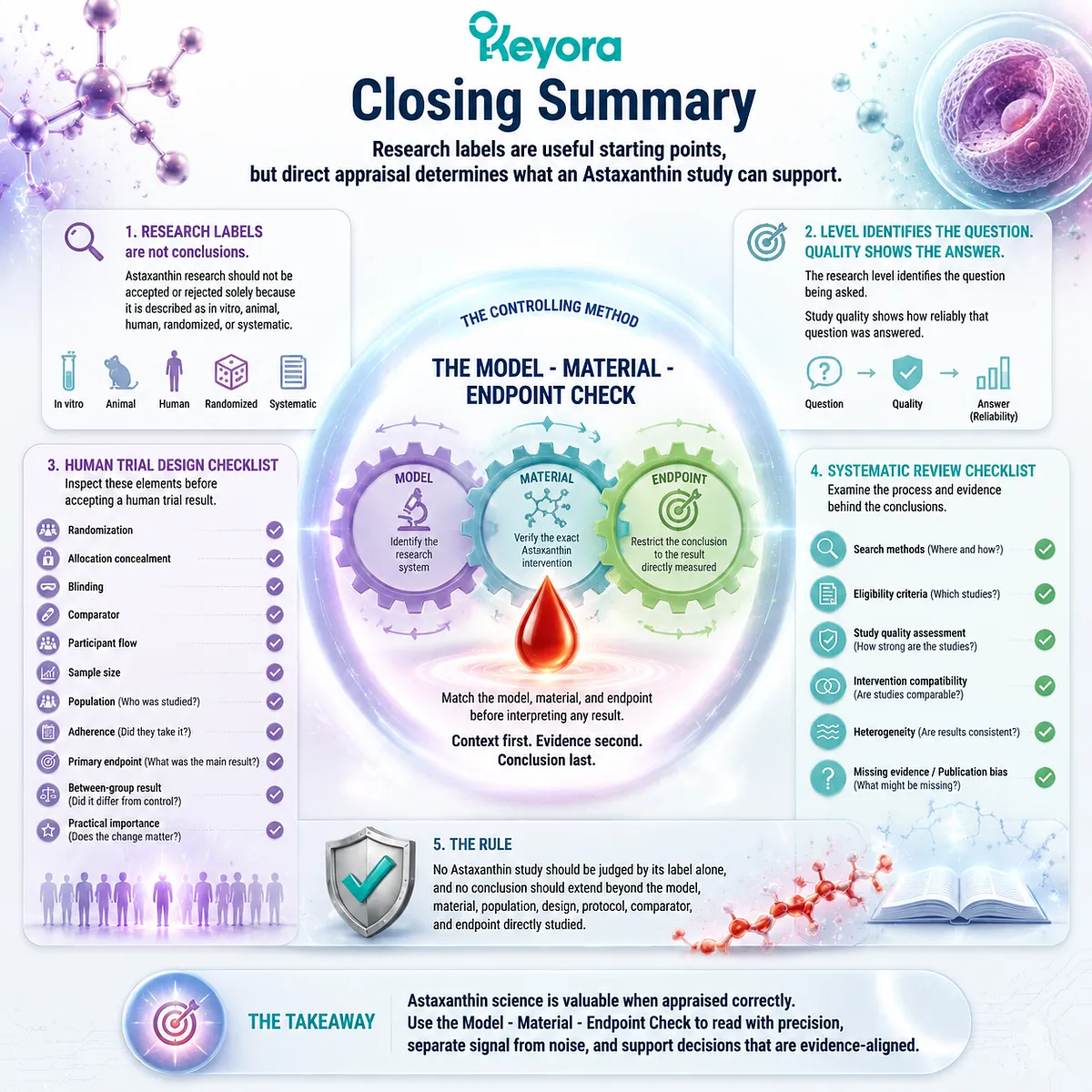
Closing Summary
Research labels are useful starting points, but direct appraisal determines what an Astaxanthin study can support
Astaxanthin research should not be accepted or rejected solely because it is described as in vitro, animal, human, randomized, or systematic.
The research level identifies the question being asked. Study quality shows how reliably that question was answered.
For human trials, readers should inspect randomization, allocation, blinding, comparator, participant flow, sample size, population, adherence, primary endpoint, between-group result, and practical importance. For systematic reviews, they should examine search methods, eligibility criteria, study quality, intervention compatibility, heterogeneity, and missing evidence.
The Model – Material – Endpoint Check provides the controlling method. Identify the research system, verify the exact Astaxanthin intervention, and restrict the conclusion to the result directly measured.
No Astaxanthin study should be judged by its label alone, and no conclusion should extend beyond the model, material, population, design, protocol, comparator, and endpoint directly studied.
This article is for educational and informational purposes only. It does not provide medical advice, diagnosis, treatment, cure, prevention, disease outcome claims, hormone restoration claims, fertility outcome claims, or formula-specific clinical efficacy claims.