
Astaxanthin vs. Zeaxanthin: What’s the Difference?
Keyora Research Q&A Library
This is part of the Keyora Research Q&A Series, derived from Keyora Astaxanthin Research Journal Series.
Within the Keyora Astaxanthin Researcn framework, this Q&A translates complex astaxanthin biology into reader-friendly, evidence-bound answers, focusing on natural astaxanthin identity, molecular structure, antioxidant and redox mechanisms, membrane lipid interaction, mitochondrial resilience, inflammatory signaling pathways, human evidence interpretation, and the scientific principles behind responsible supplementation.
First published by Keyora Research Journal: www.keyorahealth.com
Introduction
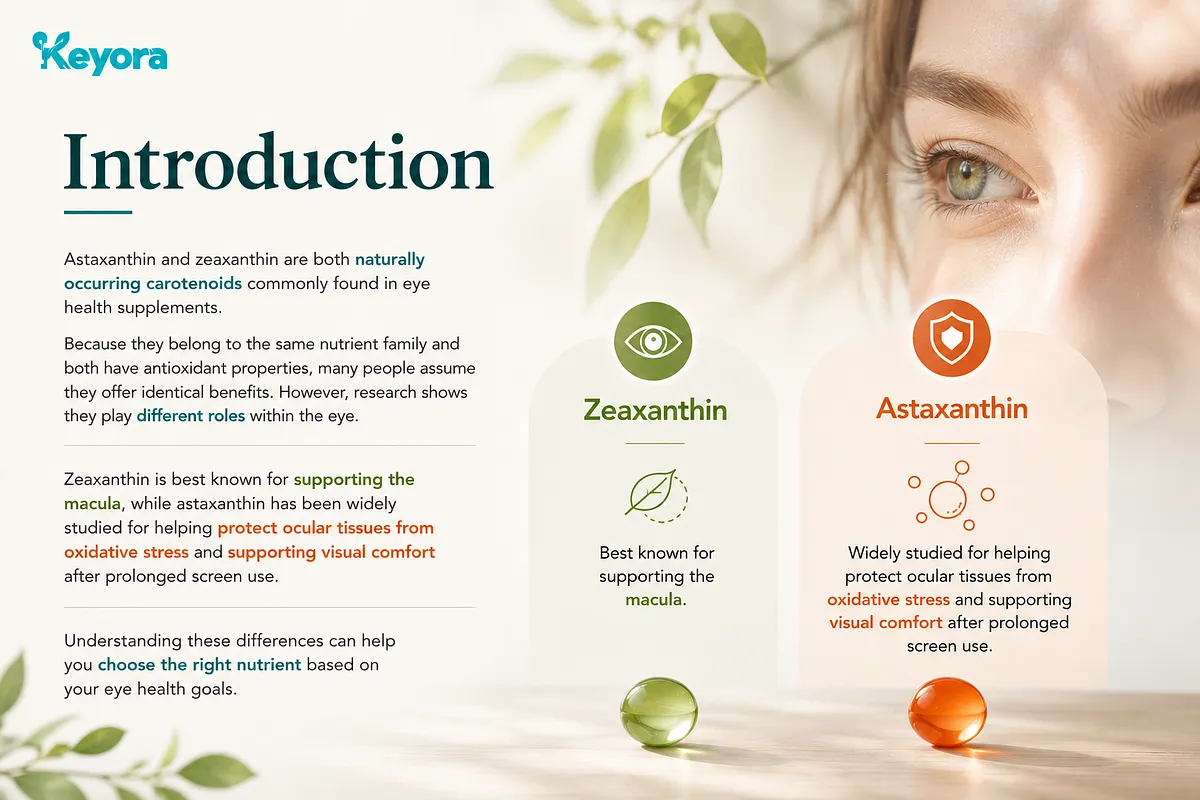
Astaxanthin and zeaxanthin are both naturally occurring carotenoids commonly found in eye health supplements.
Because they belong to the same nutrient family and both have antioxidant properties, many people assume they offer identical benefits. However, research shows they play different roles within the eye.
Zeaxanthin is best known for supporting the macula, while astaxanthin has been widely studied for helping protect ocular tissues from oxidative stress and supporting visual comfort after prolonged screen use.
Understanding these differences can help you choose the right nutrient based on your eye health goals.
Quick Answer
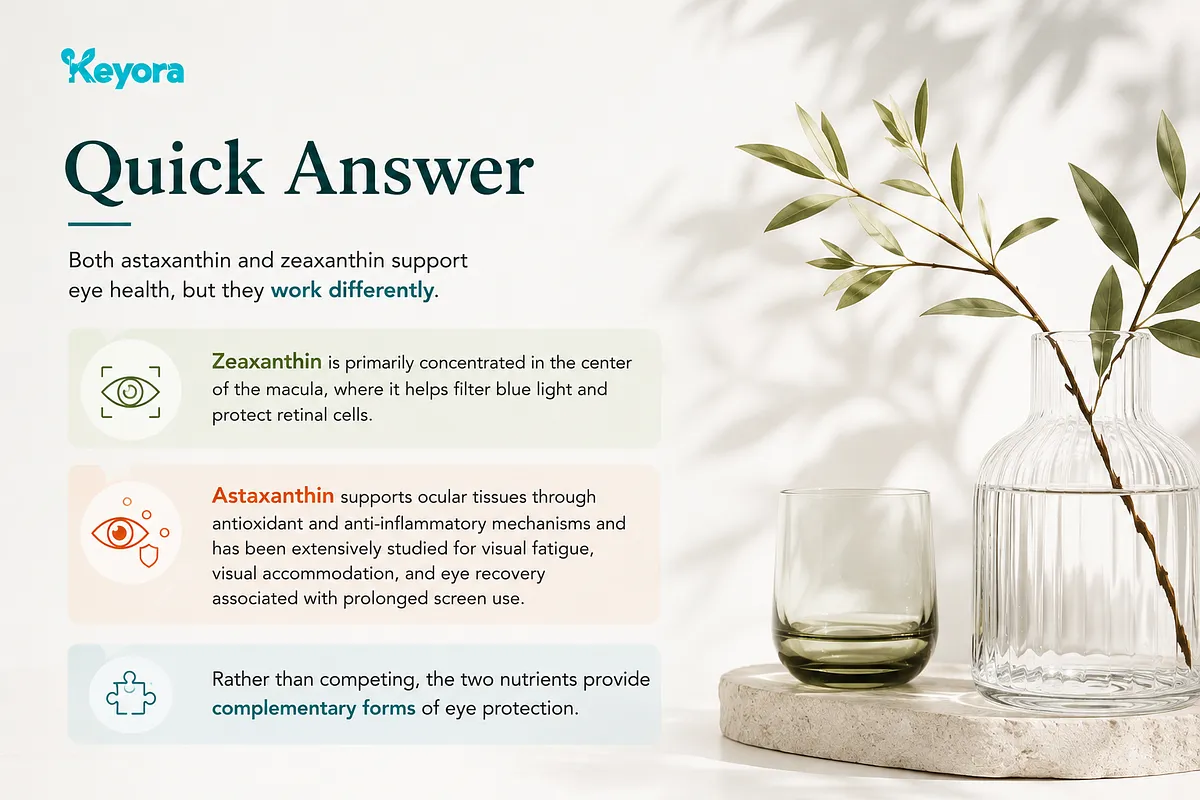
Both astaxanthin and zeaxanthin support eye health, but they work differently.
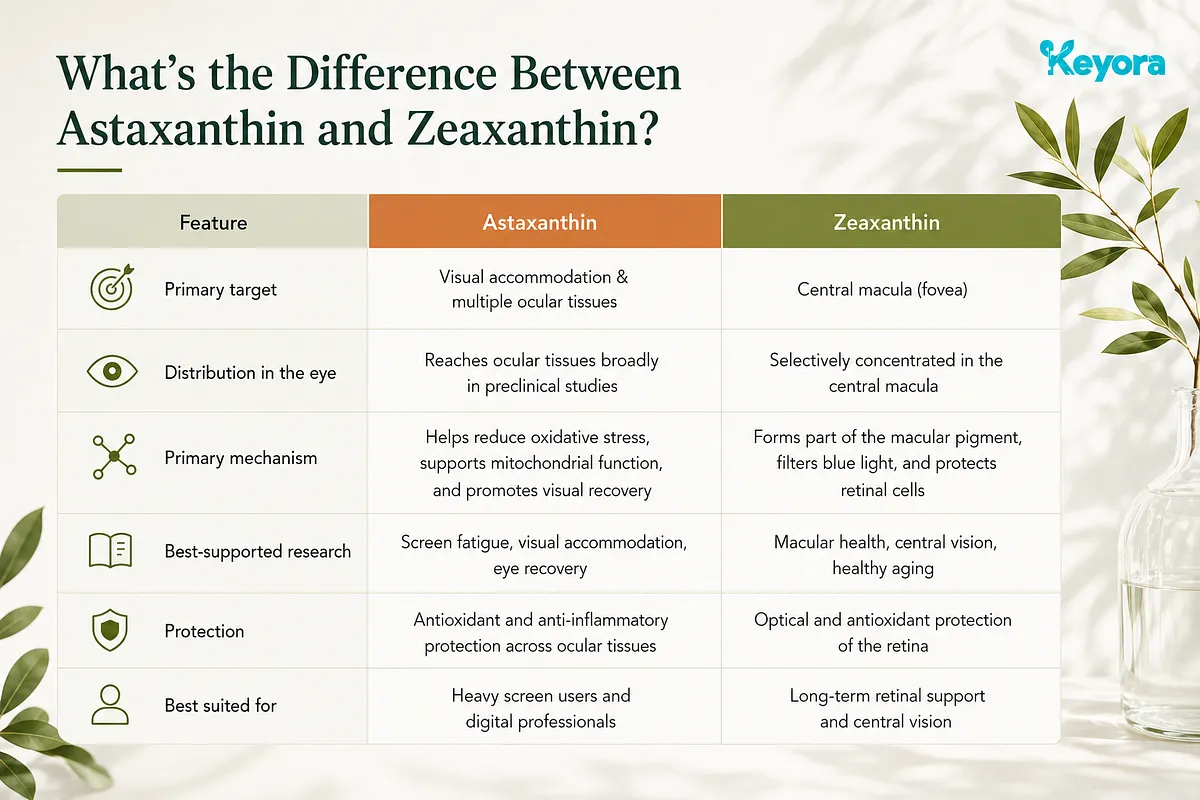
Zeaxanthin is primarily concentrated in the center of the macula, where it helps filter blue light and protect retinal cells. Astaxanthin supports ocular tissues through antioxidant and anti-inflammatory mechanisms and has been extensively studied for visual fatigue, visual accommodation, and eye recovery associated with prolonged screen use.
Rather than competing, the two nutrients provide complementary forms of eye protection.
How Are Astaxanthin and Zeaxanthin Similar?
Astaxanthin and zeaxanthin are both carotenoids with antioxidant properties.
Research suggests that both nutrients reach ocular tissues and help protect the eyes against oxidative stress. However, they differ in where they are distributed within the eye and how they exert their protective effects.
Neither ingredient replaces the other. Instead, each contributes to eye health through a different biological pathway.
What’s the Difference Between Astaxanthin and Zeaxanthin?
How Do They Protect the Eyes Differently?
Although both nutrients help protect the eyes, they do so through different biological mechanisms.
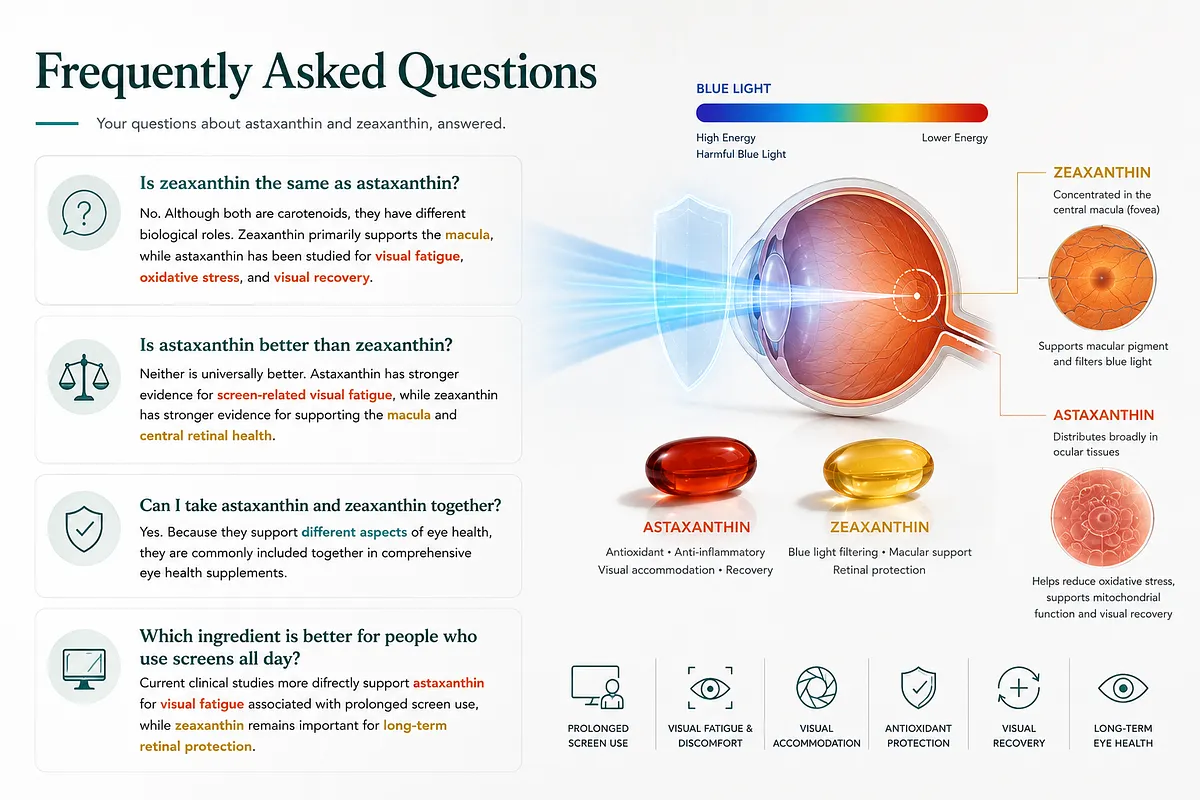
Zeaxanthin is highly concentrated in the central macula (fovea), the area responsible for the sharpest central vision. Together with lutein, it forms the macular pigment, which helps absorb high-energy blue light before it reaches sensitive retinal cells. This optical filtering, combined with its antioxidant activity, supports long-term retinal health.
Astaxanthin protects the eye through a different pathway. Rather than accumulating in the macular pigment, it has been studied for helping reduce oxidative stress and supporting mitochondrial function within ocular tissues. Human clinical studies have also investigated its ability to support visual accommodation, reduce visual fatigue, and improve visual comfort after extended screen use.
In other words, zeaxanthin primarily helps protect the retina from light-related stress, while astaxanthin helps protect ocular tissues from oxidative and metabolic stress associated with intensive visual work.
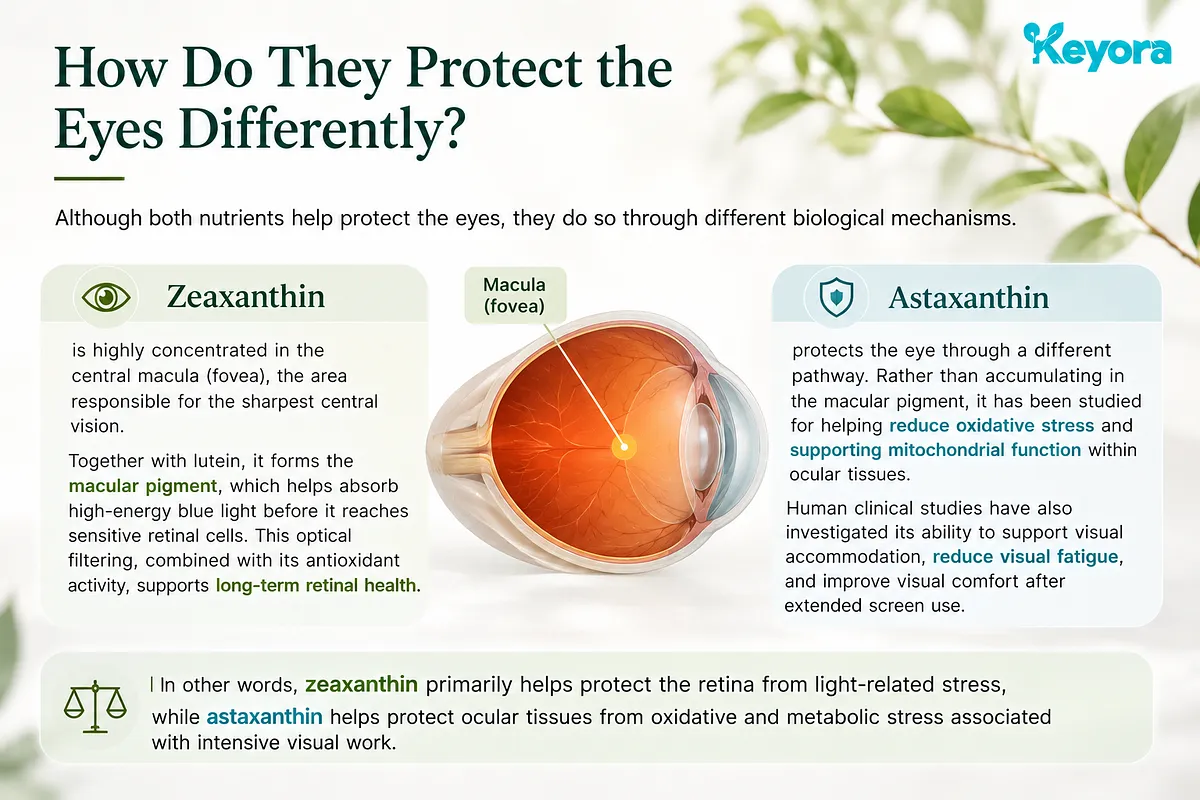
KEYORA illustrates how Zeaxanthin filters blue light at the macula while Astaxanthin supports ocular tissues under daily screen stress.
Which Is Better for Screen Fatigue?
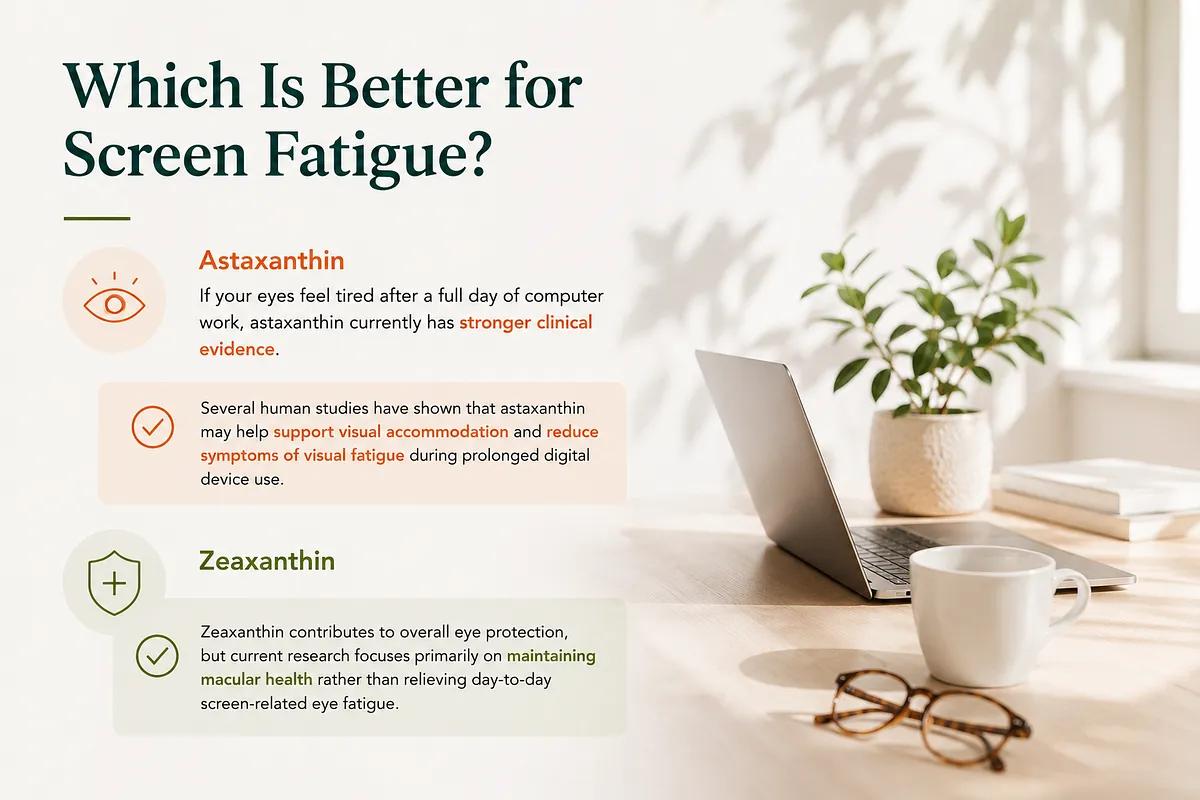
If your eyes feel tired after a full day of computer work, astaxanthin currently has stronger clinical evidence.
Several human studies have shown that astaxanthin may help support visual accommodation and reduce symptoms of visual fatigue during prolonged digital device use.
Zeaxanthin contributes to overall eye protection, but current research focuses primarily on maintaining macular health rather than relieving day-to-day screen-related eye fatigue.
Which Is Better for Long-Term Eye Health?
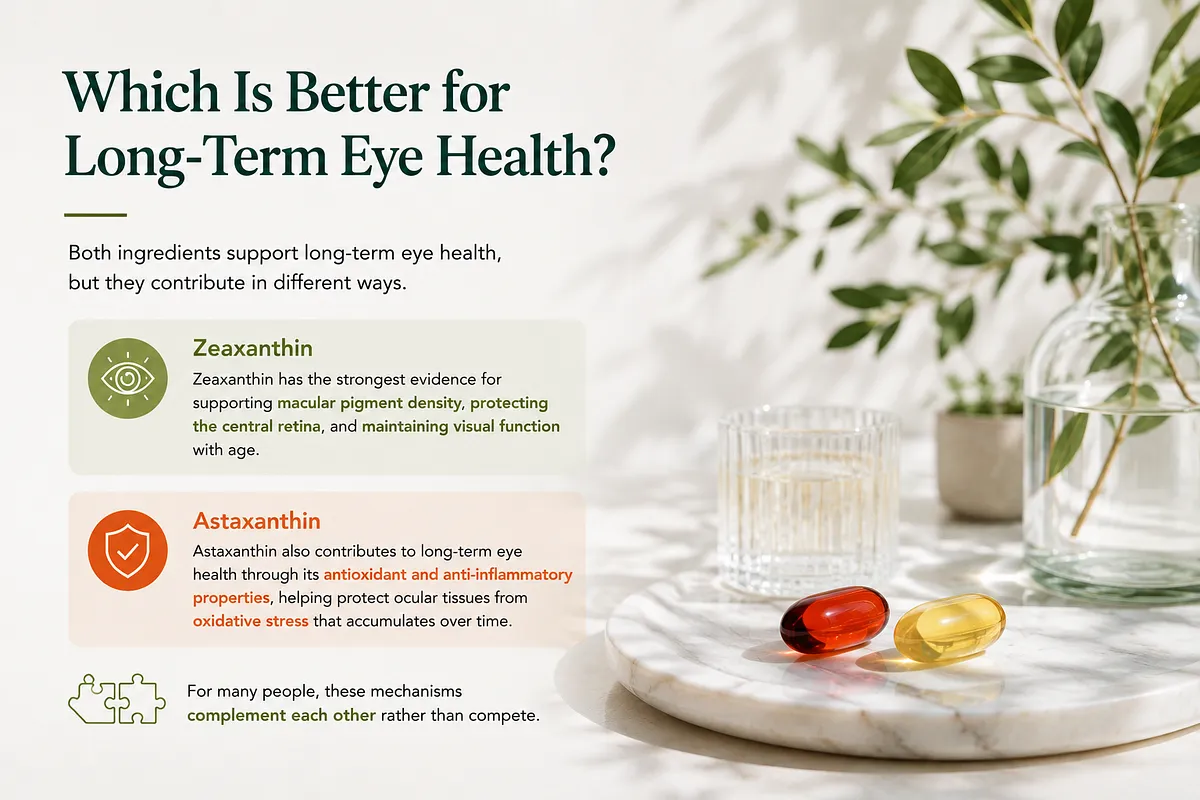
Both ingredients support long-term eye health, but they contribute in different ways.
Zeaxanthin has the strongest evidence for supporting macular pigment density, protecting the central retina, and maintaining visual function with age.
Astaxanthin also contributes to long-term eye health through its antioxidant and anti-inflammatory properties, helping protect ocular tissues from oxidative stress that accumulates over time.
For many people, these mechanisms complement each other rather than compete.
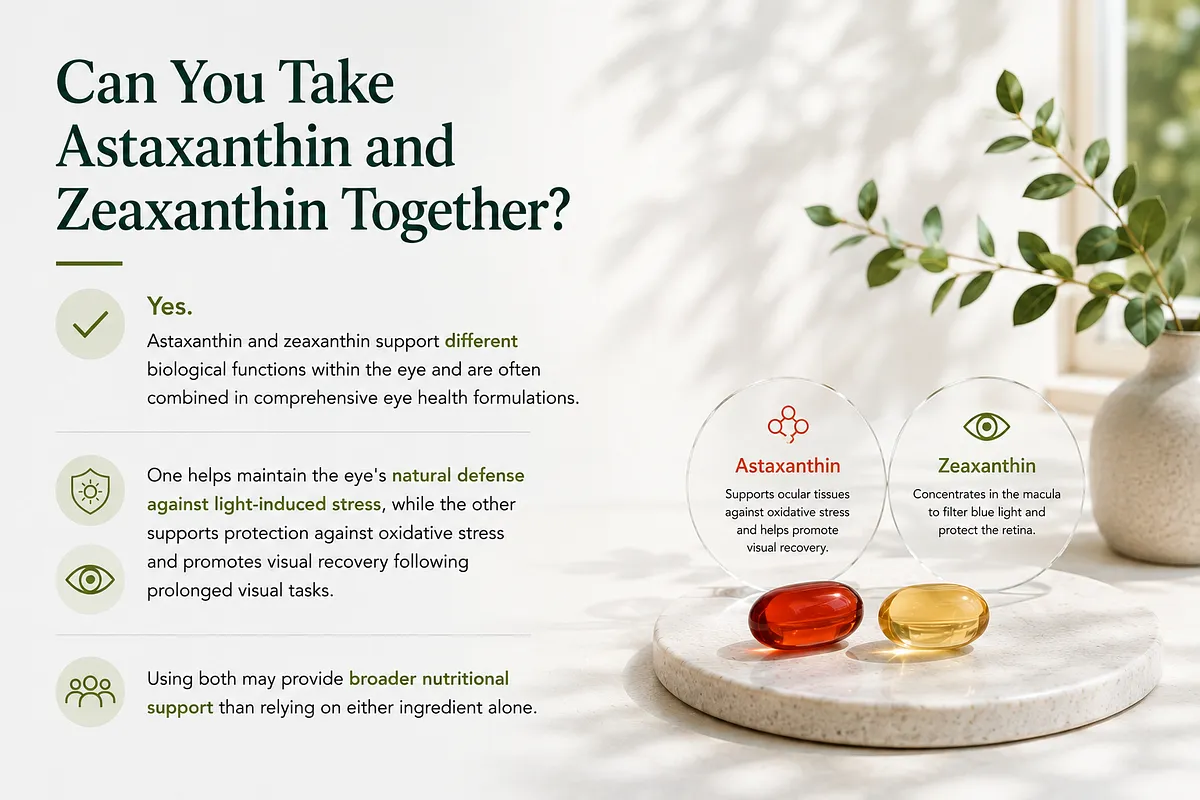
Can You Take Astaxanthin and Zeaxanthin Together?
Yes.
Astaxanthin and zeaxanthin support different biological functions within the eye and are often combined in comprehensive eye health formulations.
One helps maintain the eye’s natural defense against light-induced stress, while the other supports protection against oxidative stress and promotes visual recovery following prolonged visual tasks.
Using both may provide broader nutritional support than relying on either ingredient alone.
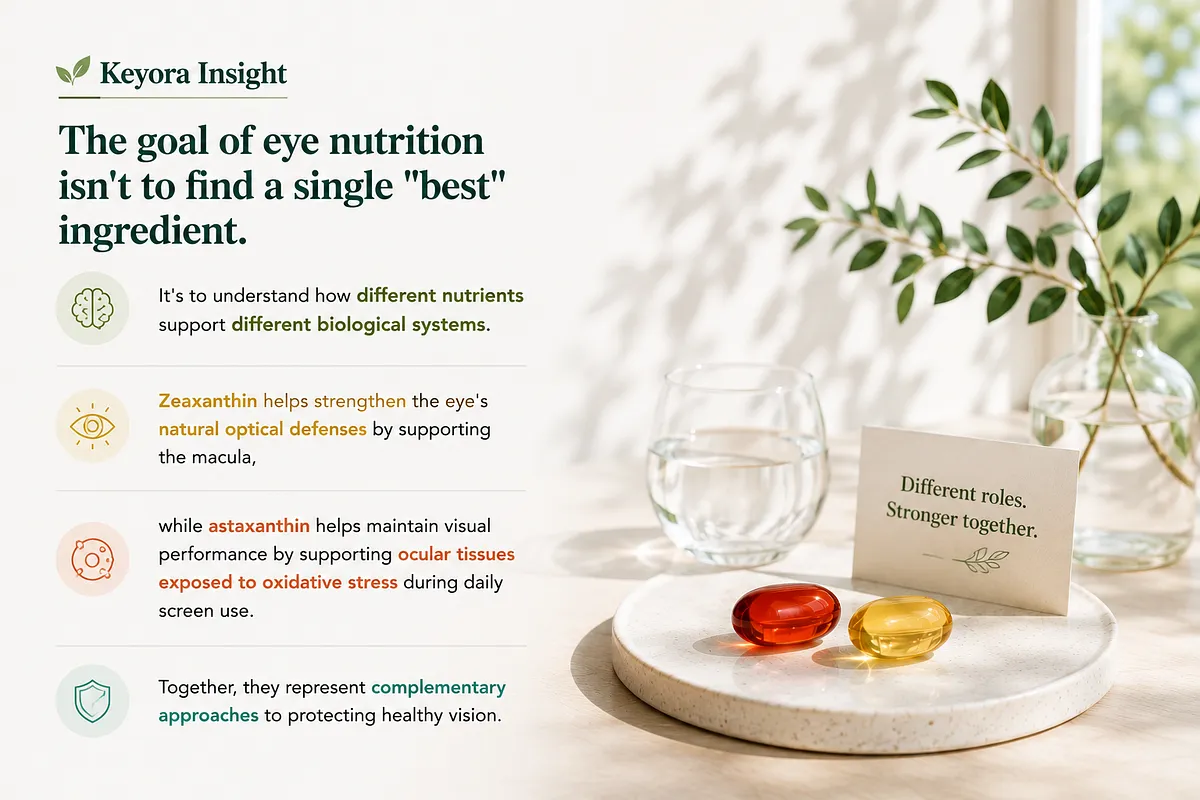
Keyora Insight
The goal of eye nutrition isn’t to find a single “best” ingredient.
It’s to understand how different nutrients support different biological systems.
Zeaxanthin helps strengthen the eye’s natural optical defenses by supporting the macula, while astaxanthin helps maintain visual performance by supporting ocular tissues exposed to oxidative stress during daily screen use.
Together, they represent complementary approaches to protecting healthy vision.
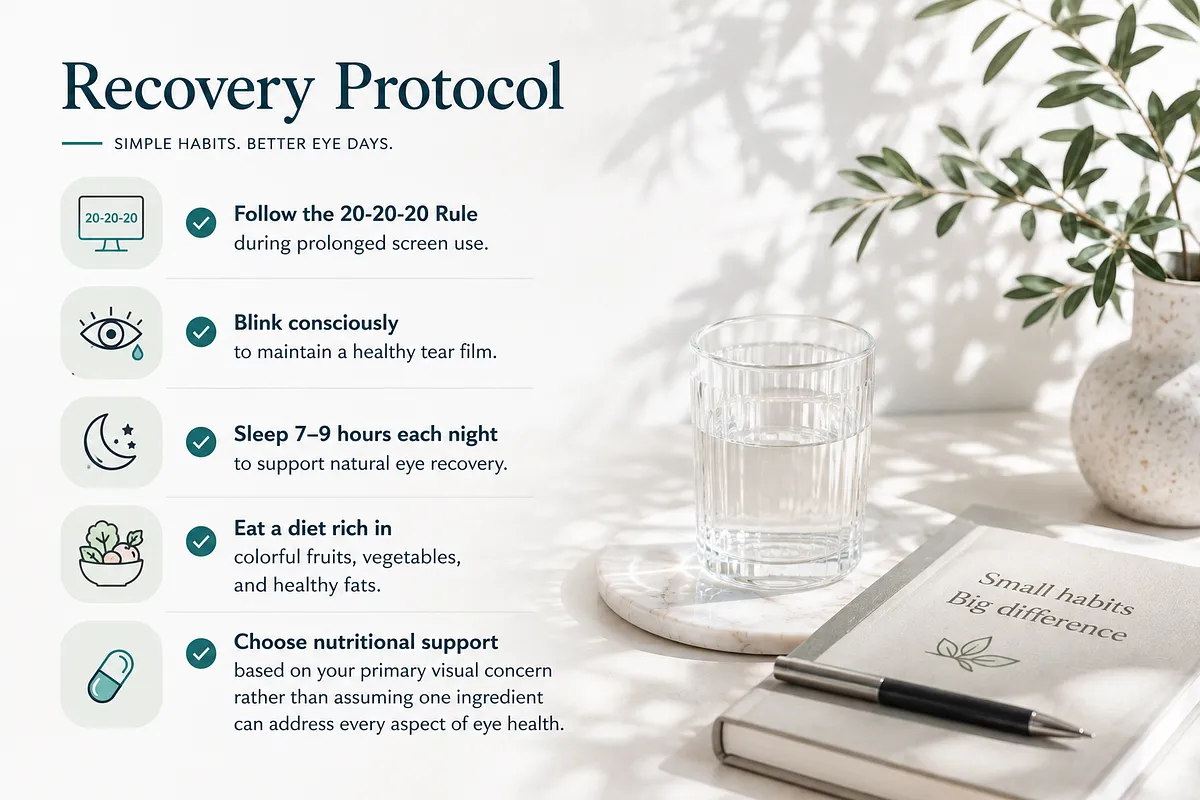
Recovery Protocol
✔ Follow the 20-20-20 Rule during prolonged screen use.
✔ Blink consciously to maintain a healthy tear film.
✔ Sleep 7–9 hours each night to support natural eye recovery.
✔ Eat a diet rich in colorful fruits, vegetables, and healthy fats.
✔ Choose nutritional support based on your primary visual concern rather than assuming one ingredient can address every aspect of eye health.
Frequently Asked Questions
Is zeaxanthin the same as astaxanthin?
No. Although both are carotenoids, they have different biological roles. Zeaxanthin primarily supports the macula, while astaxanthin has been studied for visual fatigue, oxidative stress, and visual recovery.
Is astaxanthin better than zeaxanthin?
Neither is universally better. Astaxanthin has stronger evidence for screen-related visual fatigue, while zeaxanthin has stronger evidence for supporting the macula and central retinal health.
Can I take astaxanthin and zeaxanthin together?
Yes. Because they support different aspects of eye health, they are commonly included together in comprehensive eye health supplements.
Which ingredient is better for people who use screens all day?
Current clinical studies more directly support astaxanthin for visual fatigue associated with prolonged screen use, while zeaxanthin remains important for long-term retinal protection.
References
· AREDS2 Research Group. Lutein + Zeaxanthin and Age-Related Macular Degeneration.
· Bernstein PS, et al. Lutein, Zeaxanthin, and the Macular Pigment.
· Iwasaki T, et al. Effects of Astaxanthin on Eye Fatigue in Visual Display Terminal Workers.
· Nagaki Y, et al. Clinical Evaluation of Astaxanthin on Visual Accommodation and Eye Fatigue.
· American Academy of Ophthalmology. Nutrition and Eye Health.