
Can Astaxanthin Improve Skin Hydration and Elasticity?
Keyora Research Q&A Library
This is part of the Keyora Research Q&A Series, derived from Keyora Astaxanthin Research Journal Series.
Within the Keyora Astaxanthin Researcn framework, this Q&A translates complex astaxanthin biology into reader-friendly, evidence-bound answers, focusing on natural astaxanthin identity, molecular structure, antioxidant and redox mechanisms, membrane lipid interaction, mitochondrial resilience, inflammatory signaling pathways, human evidence interpretation, and the scientific principles behind responsible supplementation.
First published by Keyora Research Journal: www.keyorahealth.com
Direct Answer
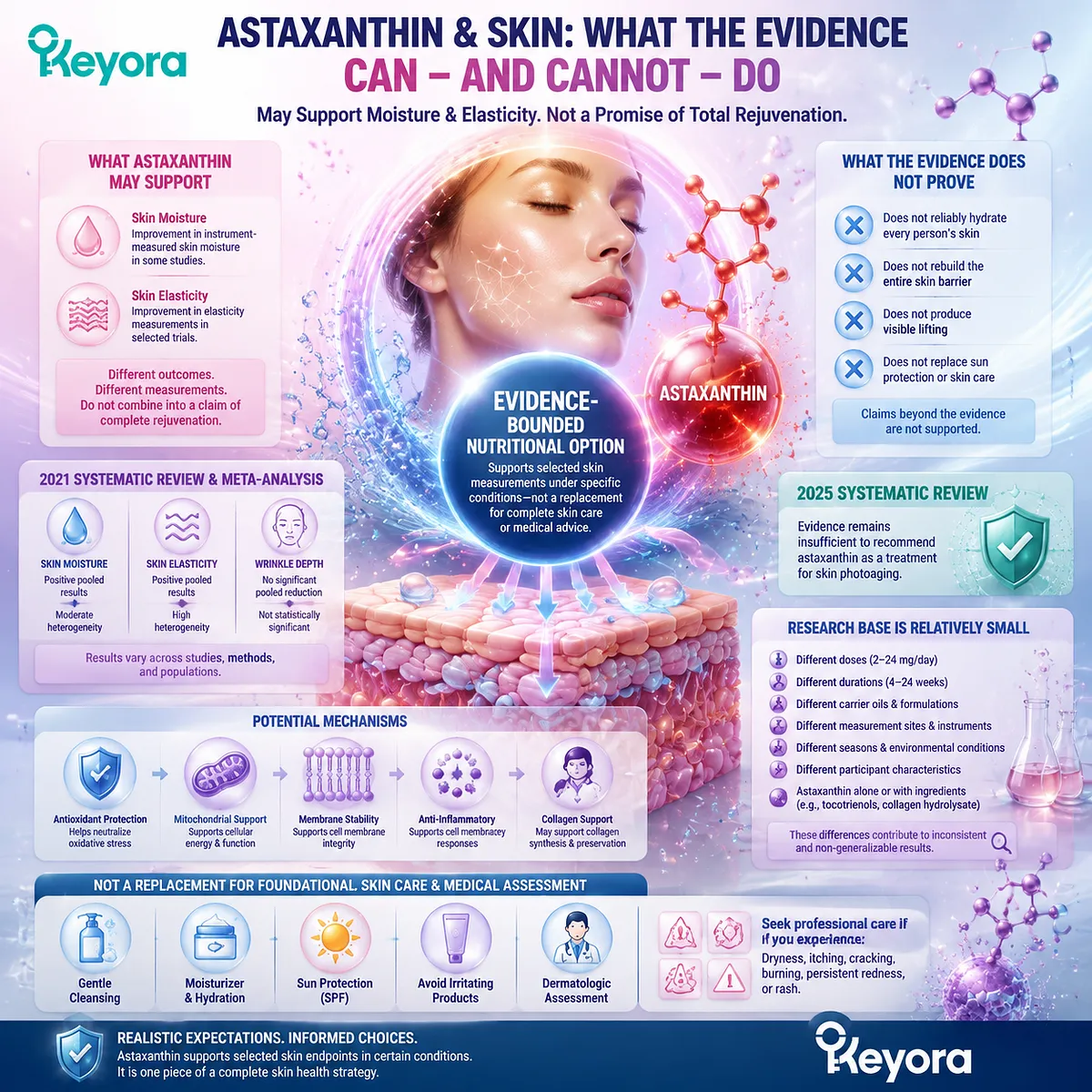
Astaxanthin may support selected measurements of skin moisture and elasticity, but the current evidence does not prove that it reliably hydrates every person’s skin, rebuilds the entire skin barrier, or produces visible lifting.
Astaxanthin may improve selected instrument-measured skin moisture and elasticity outcomes, but hydration, transepidermal water loss, subjective dryness, and elasticity are different endpoints and should not be combined into a claim of complete skin rejuvenation.
A 2021 systematic review and meta-analysis found positive pooled results for skin moisture and elasticity after oral Astaxanthin supplementation.
However, the pooled reduction in wrinkle depth was not statistically significant.
The moisture studies also showed moderate heterogeneity, while heterogeneity among elasticity studies was high, meaning the results were not consistent across all trials and methods.
The research base remains relatively small.
Trials differed in dose, duration, carrier oils, measurement sites, instruments, seasons, participant characteristics, and whether Astaxanthin was tested alone or with ingredients such as tocotrienols or collagen hydrolysate.
A broader 2025 systematic review concluded that evidence remained insufficient to recommend Astaxanthin as a treatment for skin photoaging.
Astaxanthin should therefore be viewed as an evidence-bounded nutritional option, not a replacement for gentle cleansing, moisturizer, sun protection, avoidance of irritating products, or dermatologic assessment when dryness, itching, cracking, burning, or rash persists.
Skin Hydration and Elasticity Are Different Endpoints
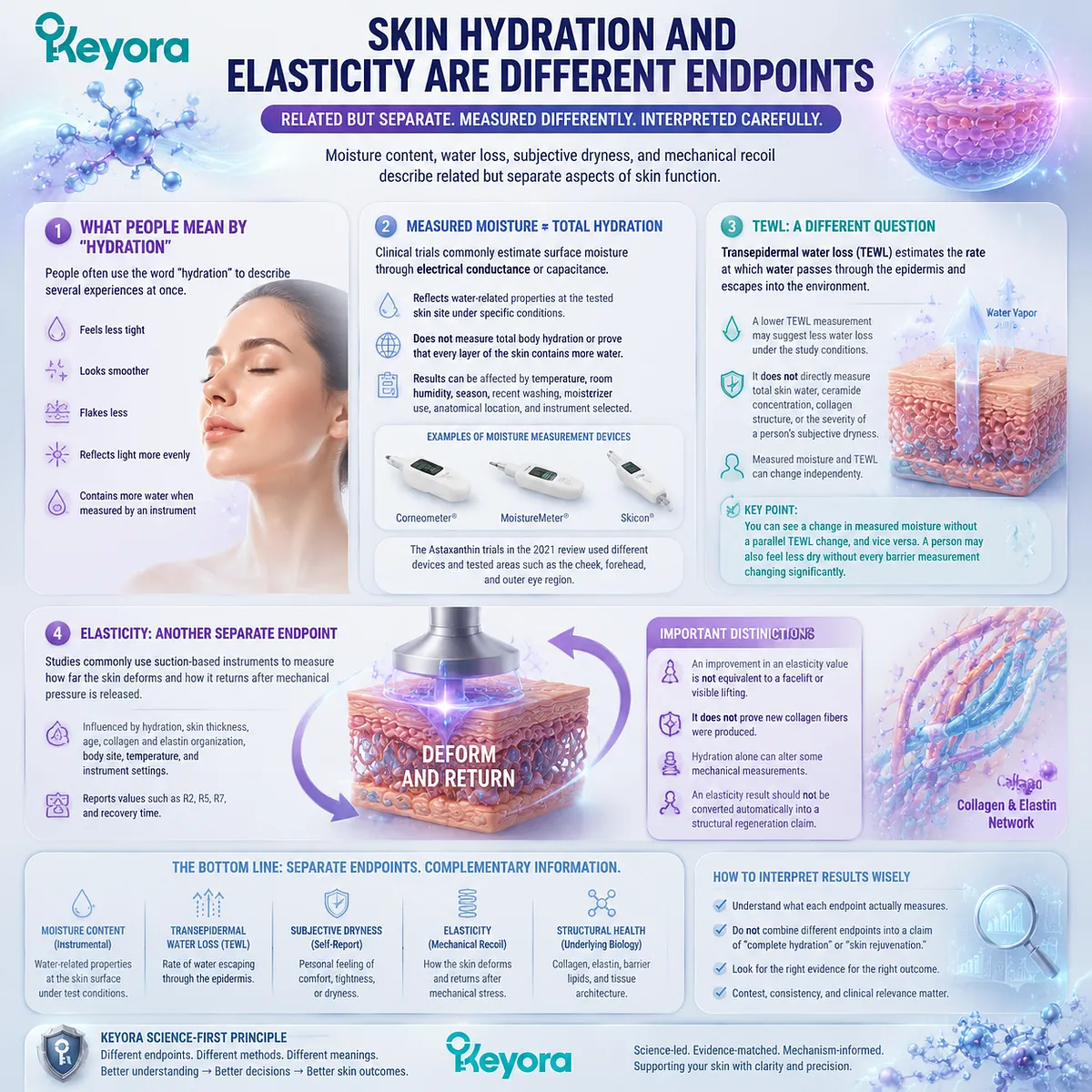
Moisture content, water loss, subjective dryness, and mechanical recoil describe related but separate aspects of skin function
People often use the word “hydration” to describe several experiences at once. They may mean that the skin feels less tight, looks smoother, flakes less, reflects light more evenly, or contains more water when measured by an instrument.
Clinical trials commonly estimate surface moisture through electrical conductance or capacitance. These measurements reflect water-related properties at the tested skin site under specific conditions. They do not measure total body hydration or prove that every layer of the skin contains more water.
The result can also be affected by temperature, room humidity, season, recent washing, moisturizer use, anatomical location, and the instrument selected. The Astaxanthin trials included in the 2021 review used different measurement devices and tested areas such as the cheek, forehead, and outer eye region.
Transepidermal water loss, usually shortened to TEWL, answers a related but different question. It estimates the rate at which water passes through the epidermis and escapes into the environment.
A lower TEWL measurement may suggest less water loss under the study conditions. It does not directly measure total skin water, ceramide concentration, collagen structure, or the severity of a person’s subjective dryness.
It is therefore possible for measured moisture to change without a parallel TEWL change. A person may also feel less dry without every barrier measurement changing significantly.
Elasticity is another separate endpoint. Studies commonly use suction-based instruments to measure how far the skin deforms and how it returns after mechanical pressure is released. These values can be influenced by hydration, skin thickness, age, collagen and elastin organization, body site, temperature, and instrument settings.
An improvement in an elasticity value is not equivalent to a facelift, visible lifting, or proof that new collagen fibers were produced. Hydration alone can alter some mechanical measurements, so an elasticity result should not be converted automatically into a structural regeneration claim.
Human Trials Show a Limited and Variable Signal
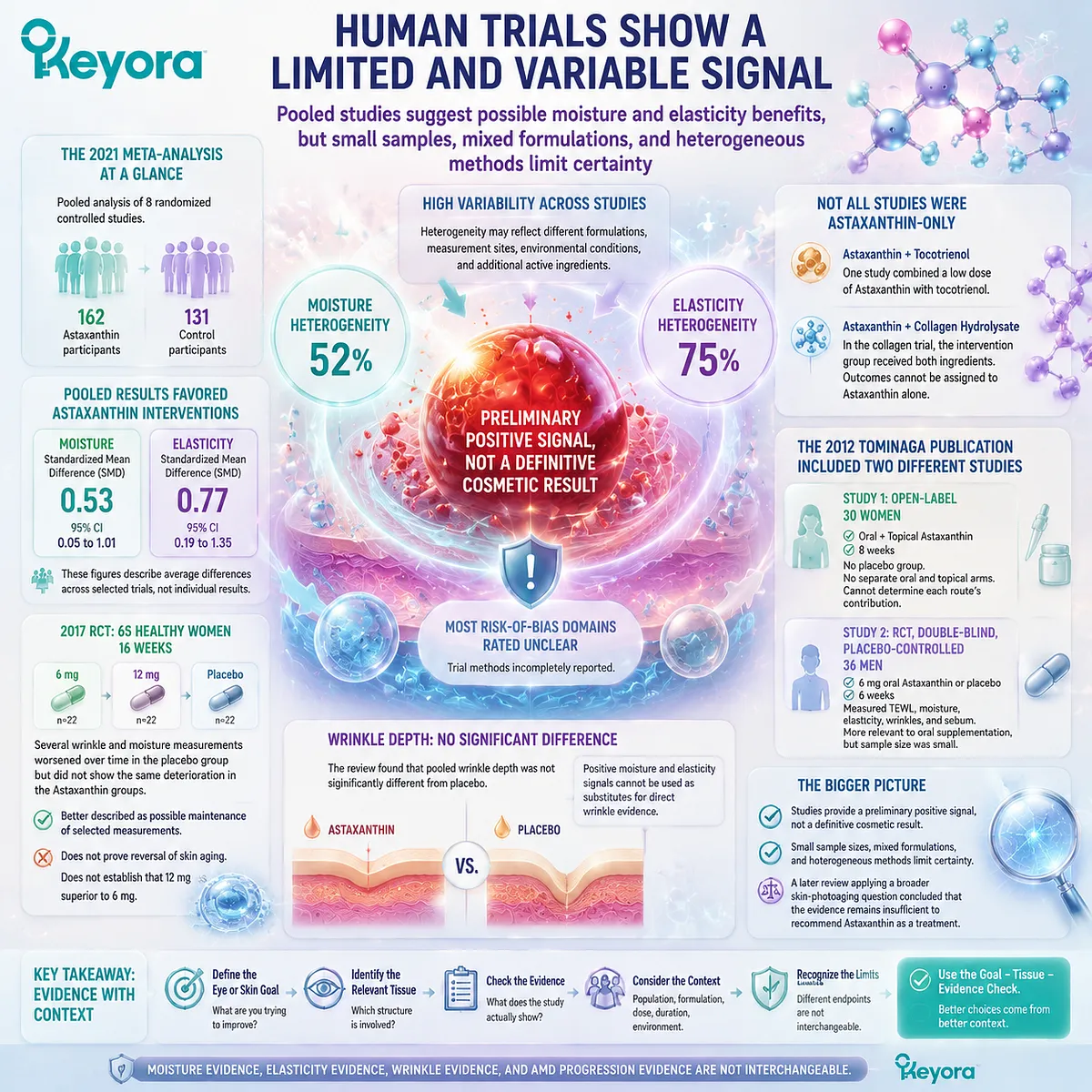
Pooled studies suggest possible moisture and elasticity benefits, but small samples, mixed formulations, and heterogeneous methods limit certainty
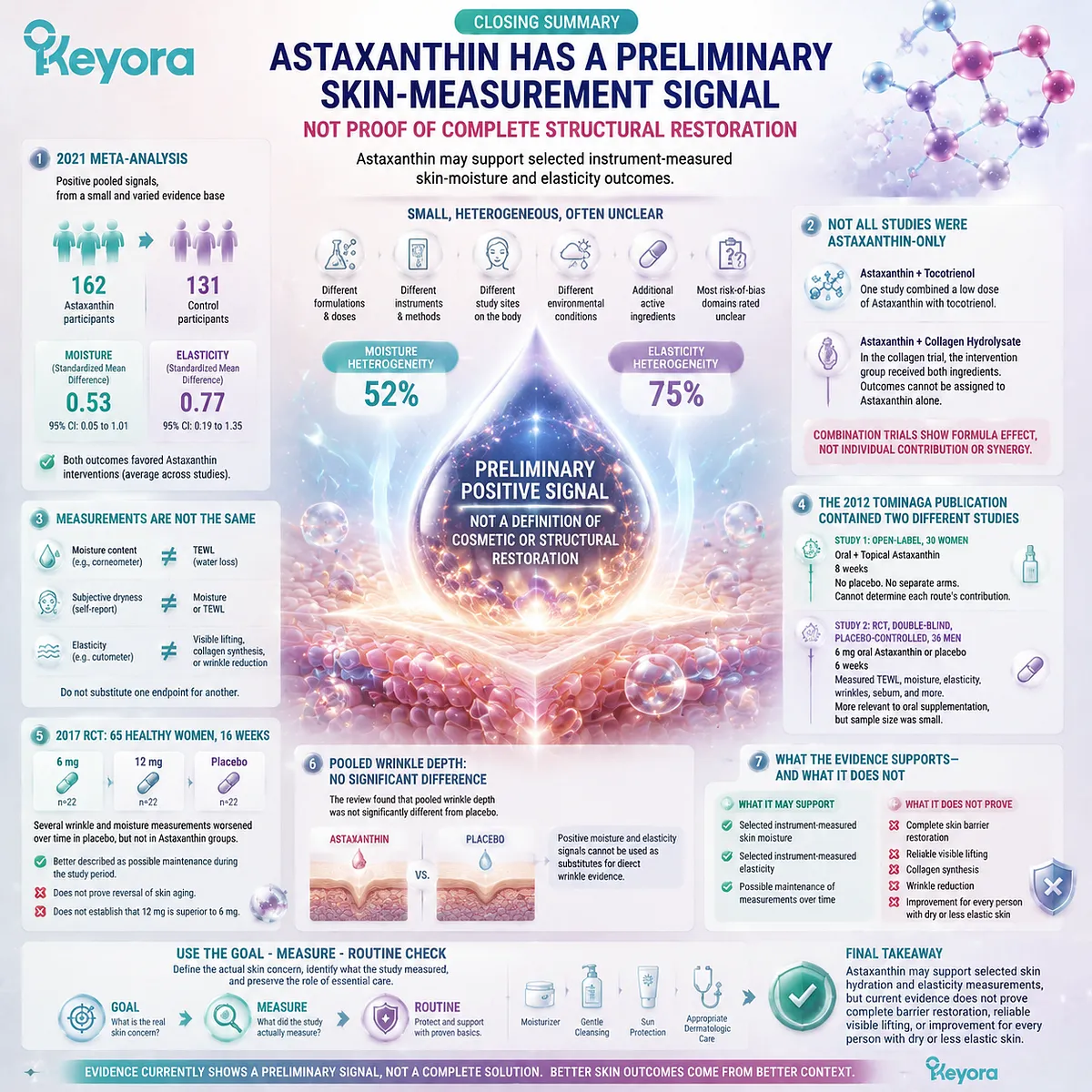
The 2021 meta-analysis pooled eight randomized controlled studies involving 162 participants in Astaxanthin groups and 131 participants in control groups.
For moisture, the pooled standardized mean difference was 0.53, with a 95 percent confidence interval from 0.05 to 1.01. For elasticity, the pooled standardized mean difference was 0.77, with a confidence interval from 0.19 to 1.35. Both analyses favored the Astaxanthin interventions.
Those figures describe average differences across selected trials. They do not indicate that every participant experienced a noticeable change.
Moisture heterogeneity was 52 percent, while elasticity heterogeneity was 75 percent. The review authors noted that variation could reflect different formulations, measurement sites, environmental conditions, and additional active ingredients. Most risk-of-bias domains were also rated unclear because trial methods were incompletely reported.
The included evidence was not composed entirely of Astaxanthin-only interventions.
One study combined a low Astaxanthin dose with tocotrienol. Another combined Astaxanthin with collagen hydrolysate. In the collagen trial, the intervention group received both ingredients, so changes in elasticity, TEWL, or collagen-related markers could not be assigned to Astaxanthin alone.
The 2012 Tominaga publication also contained two different studies that should not be merged.
The first was an open-label study in 30 women using both oral and topical Astaxanthin for eight weeks. Without a placebo group and without separate oral and topical arms, it could not determine how much each route contributed.
The second study was a randomized, double-blind, placebo-controlled trial in 36 men. Participants received 6 mg of oral Astaxanthin or placebo for six weeks, and the researchers measured outcomes including TEWL, moisture, elasticity, wrinkles, and sebum. Those findings are more directly relevant to oral supplementation, but the study remained small.
A 2017 randomized, double-blind, placebo-controlled study included 65 healthy women receiving 6 mg, 12 mg, or placebo for 16 weeks. Several wrinkle and moisture measurements worsened over time in the placebo group but did not show the same deterioration in the Astaxanthin groups.
That pattern is better described as possible maintenance of selected measurements during the study period. It does not prove reversal of skin aging, and it does not establish that 12 mg was superior to 6 mg.
The review also found that pooled wrinkle depth was not significantly different from placebo. This means that positive moisture and elasticity signals cannot be used as substitutes for direct wrinkle evidence.
Taken together, the studies provide a preliminary positive signal rather than a definitive cosmetic result. A later review applying a broader skin-photoaging question concluded that the evidence remained insufficient to recommend Astaxanthin as a treatment.
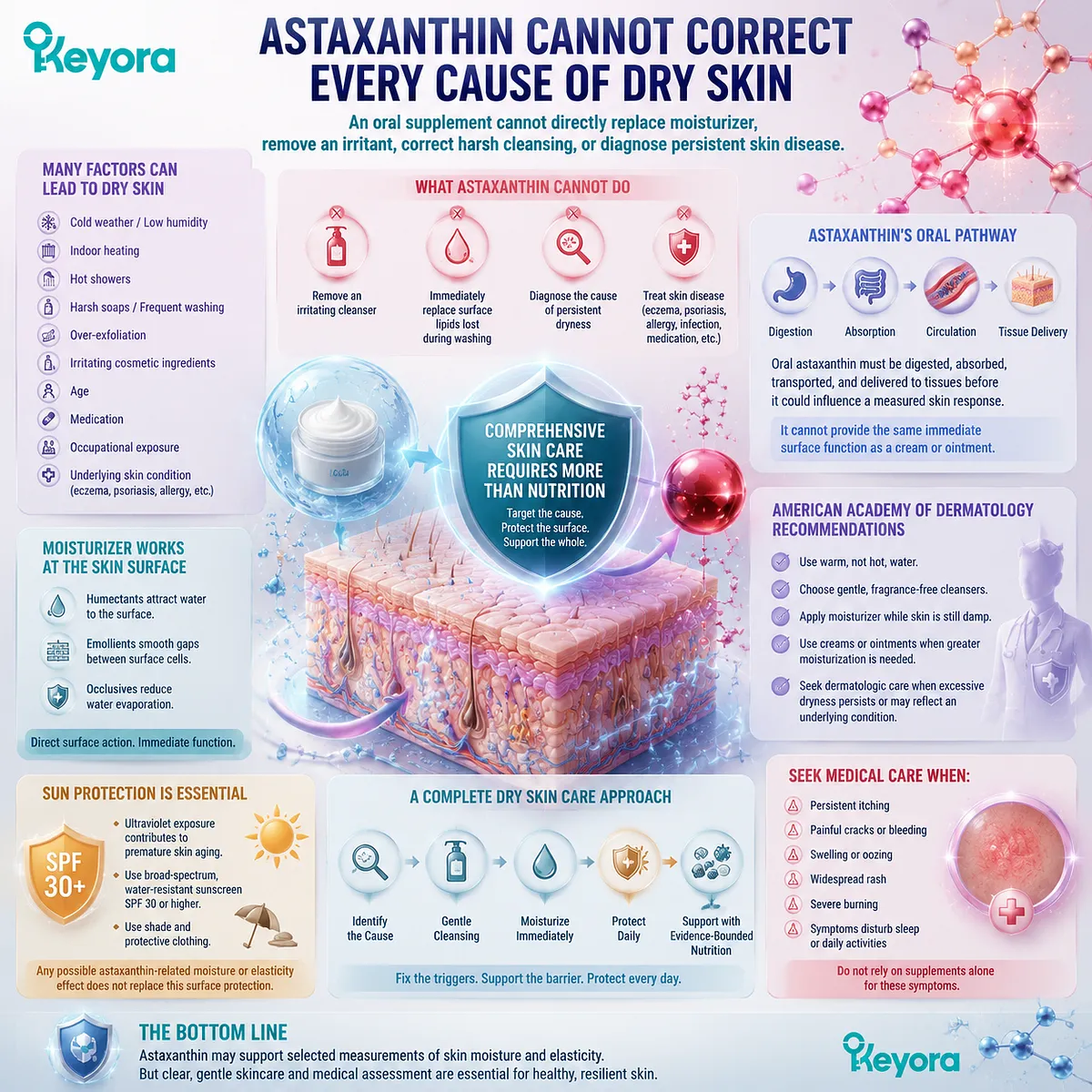
Astaxanthin Cannot Correct Every Cause of Dry Skin
An oral supplement cannot directly replace moisturizer, remove an irritant, correct harsh cleansing, or diagnose persistent skin disease
Dry skin may result from cold weather, low humidity, indoor heating, hot showers, harsh soaps, frequent washing, over-exfoliation, irritating cosmetic ingredients, age, medication, occupational exposure, or an underlying skin condition.
Astaxanthin cannot remove an irritating cleanser or immediately replace surface lipids lost during washing. It also cannot diagnose whether persistent dryness is related to eczema, psoriasis, allergy, infection, medication, or another health issue.
A moisturizer acts directly at the skin surface. Depending on its formulation, it can help attract water, smooth gaps between surface cells, or reduce evaporation.
Oral Astaxanthin follows a different path. It must be digested, absorbed, transported through the circulation, and delivered to tissues before it could influence a measured skin response. It therefore cannot provide the same immediate surface function as a cream or ointment.
The American Academy of Dermatology recommends using warm rather than hot water, choosing gentle and fragrance-free cleansers, applying moisturizer while the skin is still damp, and using creams or ointments when greater moisturization is needed. It also advises seeking dermatologic care when excessive dryness persists or may reflect an underlying condition.
Sun protection remains important because ultraviolet exposure contributes to premature skin aging. The AAD recommends broad-spectrum, water-resistant sunscreen with SPF 30 or higher, together with shade and protective clothing. Any possible Astaxanthin-related moisture or elasticity effect does not replace this surface protection.
Persistent itching, painful cracks, bleeding, swelling, oozing, widespread rash, severe burning, or symptoms that disturb sleep or daily activities should not be managed solely by changing supplements.
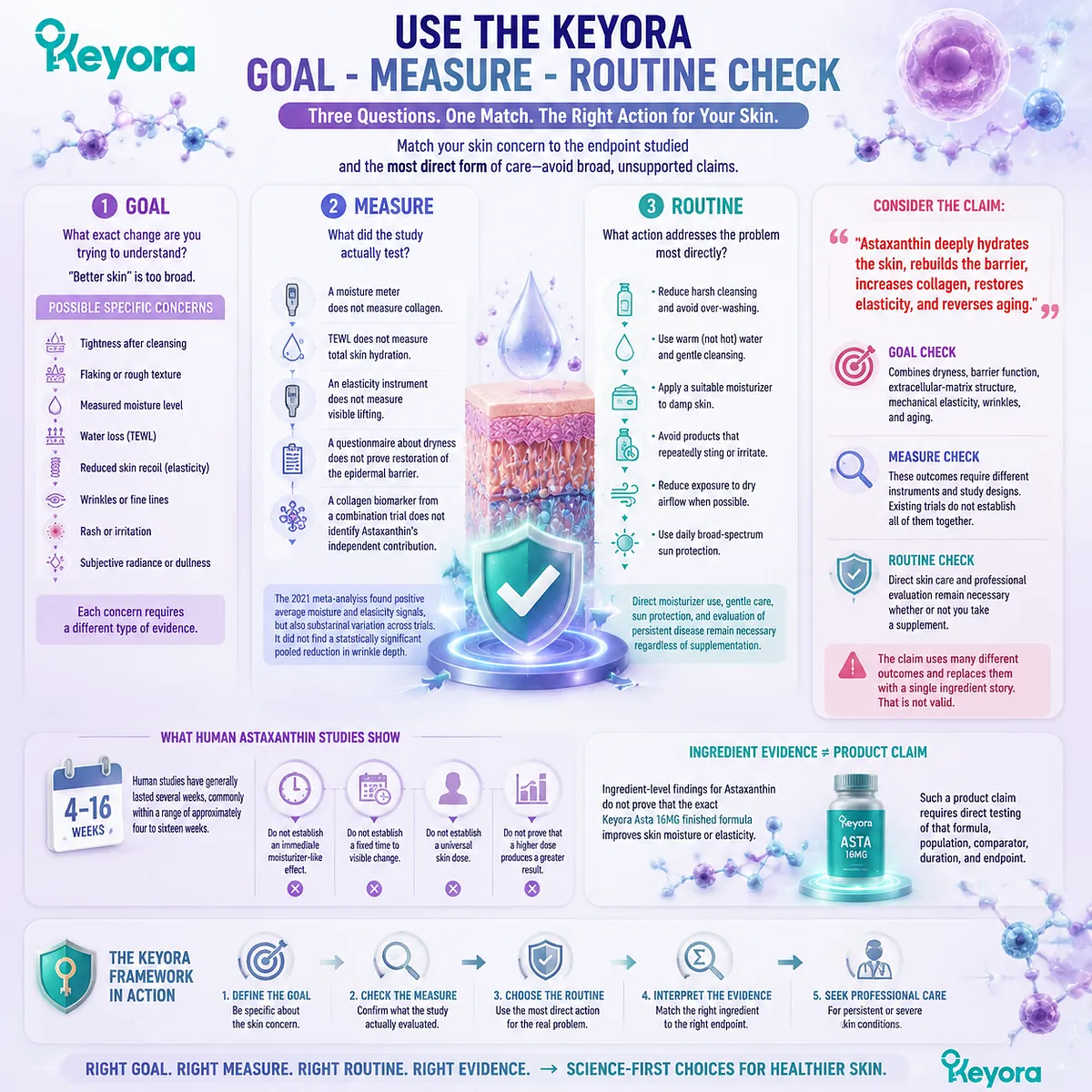
Use the Keyora Goal – Measure – Routine Check
Three questions can match the reader’s skin concern to the endpoint studied and the most direct form of care
The Keyora Goal – Measure – Routine Check helps prevent a narrow study result from becoming a broad skin-restoration claim.
Goal: What exact change are you trying to understand?
“Better skin” is too broad.
The actual concern might be tightness after cleansing, flaking, rough texture, measured moisture, water loss, reduced recoil, wrinkles, a rash, or subjective radiance. Each concern requires a different type of evidence.
Measure: What did the study actually test?
A moisture meter does not measure collagen.
TEWL does not measure total skin hydration.
An elasticity instrument does not measure visible lifting.
A questionnaire about dryness does not prove restoration of the epidermal barrier.
A collagen biomarker from a combination trial does not identify Astaxanthin’s independent contribution.
The 2021 meta-analysis found positive average moisture and elasticity signals but also substantial variation across trials. It did not find a statistically significant pooled reduction in wrinkle depth.
Routine: What action addresses the problem most directly?
For ordinary environmental dryness, the immediate response is usually to reduce harsh cleansing, use warm water, apply a suitable moisturizer to damp skin, avoid products that repeatedly sting, and reduce exposure to dry airflow when possible. Daily sun protection also helps limit further ultraviolet-related skin aging.
Consider the claim:
“Astaxanthin deeply hydrates the skin, rebuilds the barrier, increases collagen, restores elasticity, and reverses aging.”
The Goal check shows that this claim combines dryness, barrier function, extracellular-matrix structure, mechanical elasticity, wrinkles, and aging.
The Measure check shows that these outcomes require different instruments and study designs. The existing trials do not establish all of them together.
The Routine check shows that direct moisturizer use, gentle cleansing, sun protection, and evaluation of persistent disease remain necessary regardless of supplementation.
Human Astaxanthin studies have generally lasted several weeks, commonly within a range of approximately four to sixteen weeks. They do not establish an immediate moisturizer-like effect, a fixed time to visible change, a universal skin dose, or proof that a higher dose produces a greater result.
Ingredient-level findings also do not prove that the exact Keyora Asta 16MG finished formula improves skin moisture or elasticity. Such a product claim would require direct testing of that formula, population, comparator, duration, and endpoint.
Closing Summary
Astaxanthin has a preliminary skin-measurement signal, not proof of complete structural restoration
Astaxanthin may support selected instrument-measured skin-moisture and elasticity outcomes.
A 2021 meta-analysis found positive pooled signals for both endpoints, but the evidence came from a small and varied group of trials. Formulations, doses, instruments, study sites, environmental conditions, and additional ingredients differed, and risk-of-bias reporting was often unclear.
Moisture content is not the same as TEWL. Subjective dryness is not the same as either measurement. Elasticity is not proof of visible lifting, collagen synthesis, or wrinkle reduction.
Use the Goal – Measure – Routine Check. Define the actual skin concern, identify what the study measured, and preserve the direct role of moisturizer, gentle cleansing, sun protection, and appropriate dermatologic care.
Astaxanthin may support selected skin hydration and elasticity measurements, but current evidence does not prove complete barrier restoration, reliable visible lifting, or improvement for every person with dry or less elastic skin.
This article is for educational and informational purposes only. It does not provide medical advice, diagnosis, treatment, cure, prevention, disease outcome claims, hormone restoration claims, fertility outcome claims, or formula-specific clinical efficacy claims.