
What Is Oxidative Stress and Why Does It Matter?
Keyora Research Q&A Library
This is part of the Keyora Research Q&A Series, derived from Keyora Astaxanthin Research Journal Series.
Within the Keyora Astaxanthin Researcn framework, this Q&A translates complex astaxanthin biology into reader-friendly, evidence-bound answers, focusing on natural astaxanthin identity, molecular structure, antioxidant and redox mechanisms, membrane lipid interaction, mitochondrial resilience, inflammatory signaling pathways, human evidence interpretation, and the scientific principles behind responsible supplementation.
First published by Keyora Research Journal: www.keyorahealth.com
Direct Answer
Oxidative stress is not simply the presence of free radicals – it develops when reactive oxidant activity exceeds the systems that normally regulate and repair its effects
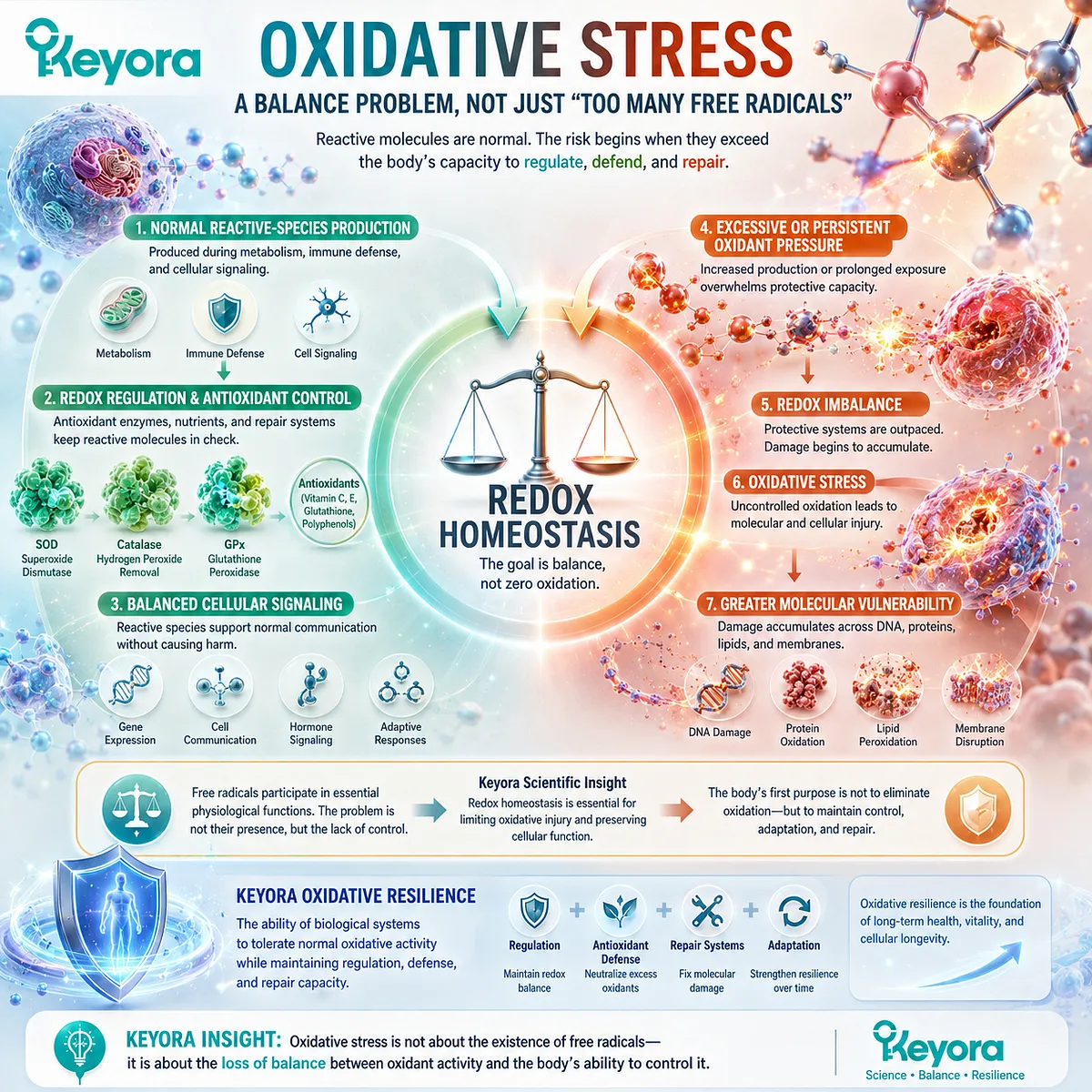
Oxidative stress is often described as “too many free radicals,” but that explanation is incomplete.
Reactive molecules are continuously produced during normal metabolism, immune activity, and cellular signaling.
Their presence is therefore not automatically abnormal or harmful.
The important issue is balance.
Cells continuously generate reactive species while also relying on antioxidant enzymes, small-molecule antioxidants, redox-regulatory systems, and molecular repair processes to control their effects.
When reactive oxidant production becomes excessive, persists for too long, or overwhelms these protective systems, the cellular environment shifts away from normal redox regulation and toward oxidative stress.
The Keyora scientific source describes this distinction directly: free radicals participate in normal signal transduction and immune defense, while excessive generation or insufficient antioxidant defense can produce oxidative stress and cellular injury.
A useful way to understand the process is:
Normal reactive-species production
↓
Redox regulation and antioxidant control
↓
Balanced cellular signaling
But when oxidant burden rises beyond regulatory capacity:
Excessive or persistent oxidant pressure
↓
Redox imbalance
↓
Oxidative stress
↓
Greater molecular vulnerability
This distinction matters because the goal of human physiology is not to create a body with zero oxidation.
Oxidation-reduction reactions are part of normal life.
The more meaningful objective is maintaining redox homeostasis – a dynamic state in which reactive molecules can perform necessary physiological functions without causing uncontrolled molecular damage.
The project source specifically identifies maintenance of redox homeostasis as important for limiting oxidative injury and preserving cellular function.
Within the Keyora framework, this capacity is described as Oxidative Resilience: the ability of biological systems to tolerate normal oxidative activity while maintaining sufficient regulation, antioxidant defense, and repair capacity.
Are Free Radicals and Reactive Species Always Harmful?
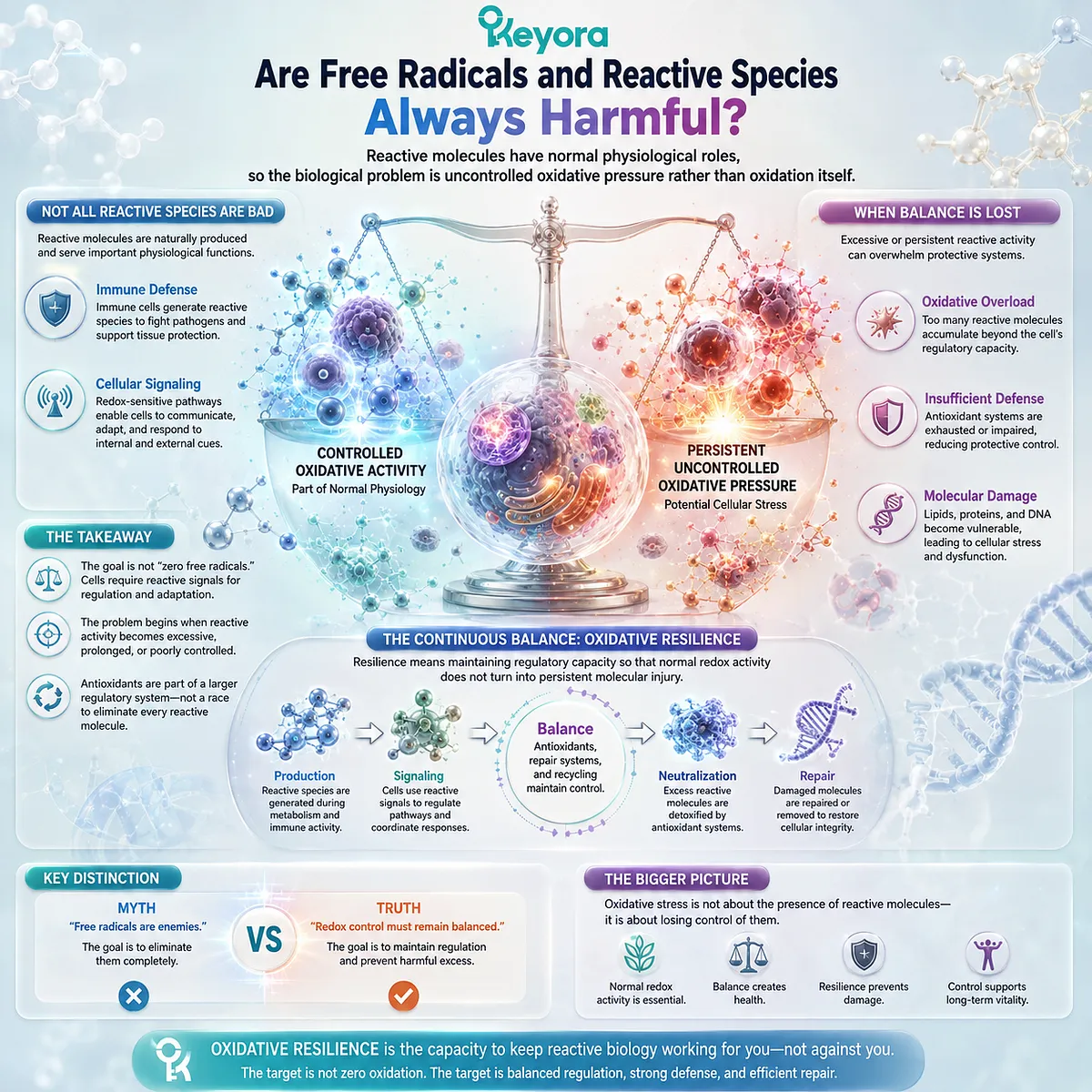
Reactive molecules have normal physiological roles, so the biological problem is uncontrolled oxidative pressure rather than oxidation itself
The phrase “free radical” is commonly used as if it were synonymous with cellular damage. This can create the impression that every reactive molecule should be neutralized as quickly and completely as possible.
Human biology does not work that way.
Reactive molecules participate in normal physiological communication.
The Keyora source specifically notes that free radicals have roles in signal transduction and immune defense, meaning that controlled reactive activity is part of normal cellular function rather than an accidental failure of metabolism.
Immune cells provide a useful example.
During normal immune responses, reactive molecules can be generated as part of the biological machinery used to respond to microorganisms and tissue challenges.
Cellular signaling provides another example.
Redox-sensitive pathways allow cells to respond to changes in metabolism, environmental conditions, and physiological demand.
This is why the biological target should not be “zero free radicals.”
A cell completely unable to generate reactive signals would also lose important regulatory functions.
The problem begins when reactive activity becomes excessive, prolonged, poorly controlled, or insufficiently counterbalanced by antioxidant and repair systems.
That distinction can be summarized simply:
Controlled oxidative activity = part of normal physiology
Persistent uncontrolled oxidative pressure = potential cellular stress
This is also why the idea that the “strongest antioxidant” must always be the best antioxidant is too simplistic.
Antioxidant biology is not a competition to eliminate every reactive molecule.
It is part of a larger regulatory system.
The body must continually balance production, signaling, neutralization, recycling, and repair.
This is the deeper meaning of Oxidative Resilience.
Resilience does not mean that oxidation never occurs. It means that cells maintain sufficient regulatory capacity to prevent normal redox activity from becoming persistent molecular injury.
That shift – from “free radicals are enemies” to “redox control must remain balanced” – is one of the most important concepts for understanding oxidative stress correctly.
Where Does Oxidative Stress Come From?
Oxidative pressure can arise from normal metabolism as well as environmental and metabolic stressors, making cumulative burden more important than any single source
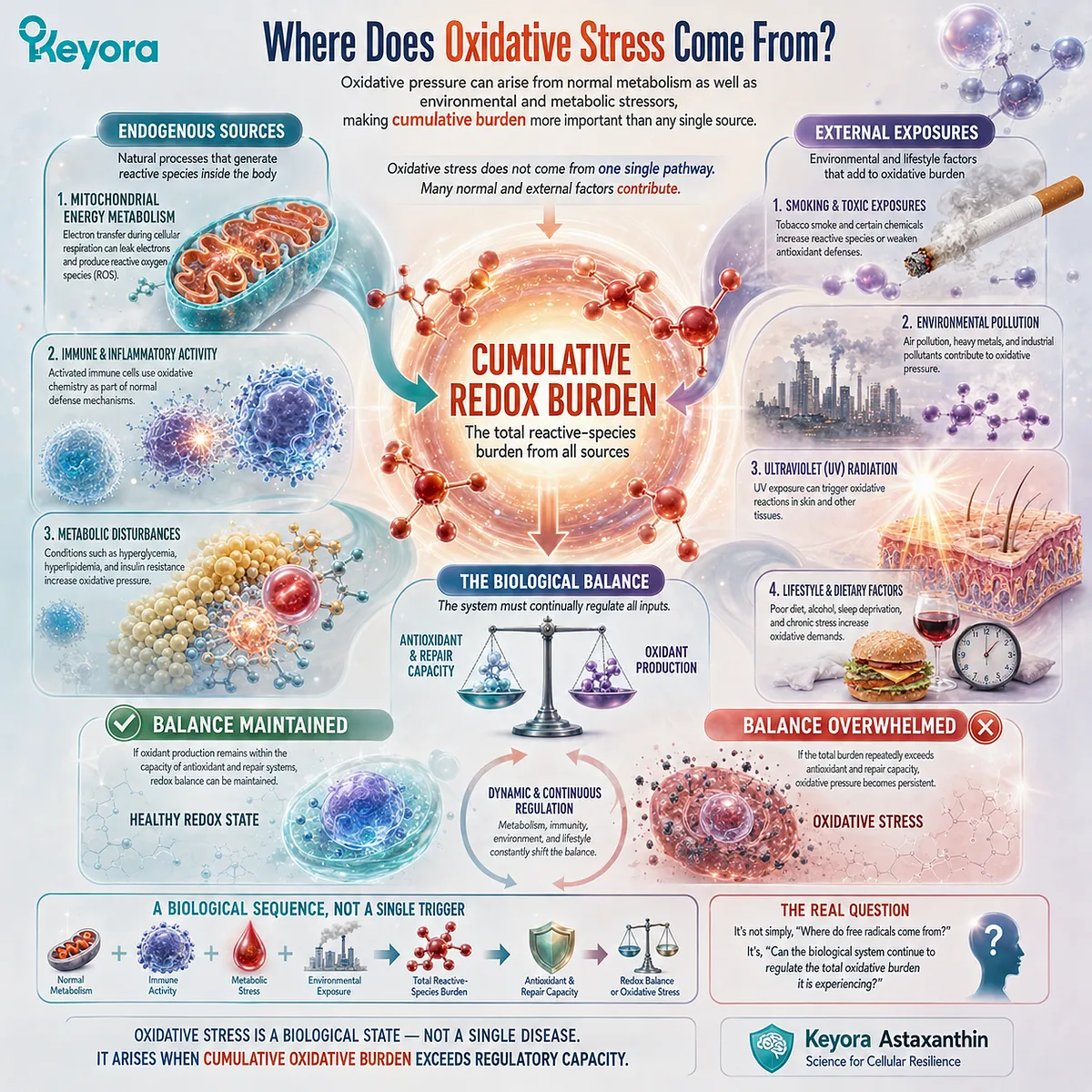
Oxidative stress does not originate from one single pathway.
Reactive species are generated naturally inside the body as part of normal physiological activity.
Mitochondrial energy metabolism is one important source because electron transfer during cellular respiration can contribute to reactive oxygen production.
Immune and inflammatory activity can also generate reactive species. Activated immune cells use oxidative chemistry as part of normal defense mechanisms.
The Keyora Astaxanthin scientific source identifies mitochondrial metabolism, activated immune cells, and metabolic disturbances such as hyperglycemia and hyperlipidemia among important endogenous contributors to oxidative burden.
External exposures can add to this internal burden.
Smoking, environmental pollution, ultraviolet radiation, and certain toxic exposures may increase oxidative pressure or increase the demand placed on cellular protective systems.
The important concept is therefore not that one exposure instantly creates oxidative stress.
It is cumulative redox burden.
A person may experience normal reactive-species production from metabolism while simultaneously encountering additional oxidative demands from metabolic dysfunction, inflammation, lifestyle factors, or environmental exposures.
The system must continually regulate all of these inputs.
If oxidant production remains within the capacity of antioxidant and repair systems, redox balance can be maintained.
If the total burden repeatedly exceeds those systems, oxidative pressure becomes more persistent.
This creates a useful biological sequence:
Normal metabolism + immune activity + metabolic stress + environmental exposure
↓
Total reactive-species burden
↓
Antioxidant and repair capacity
↓
Redox balance or oxidative stress
This also explains why oxidative stress should not be treated as a single disease.
It is a biological state that can arise in many different physiological contexts.
Different tissues may also experience different oxidative demands depending on their metabolic activity, oxygen exposure, lipid composition, immune environment, and repair capacity.
The real question is therefore not simply:
“Where do free radicals come from?”
It is:
Can the biological system continue to regulate the total oxidative burden it is experiencing?
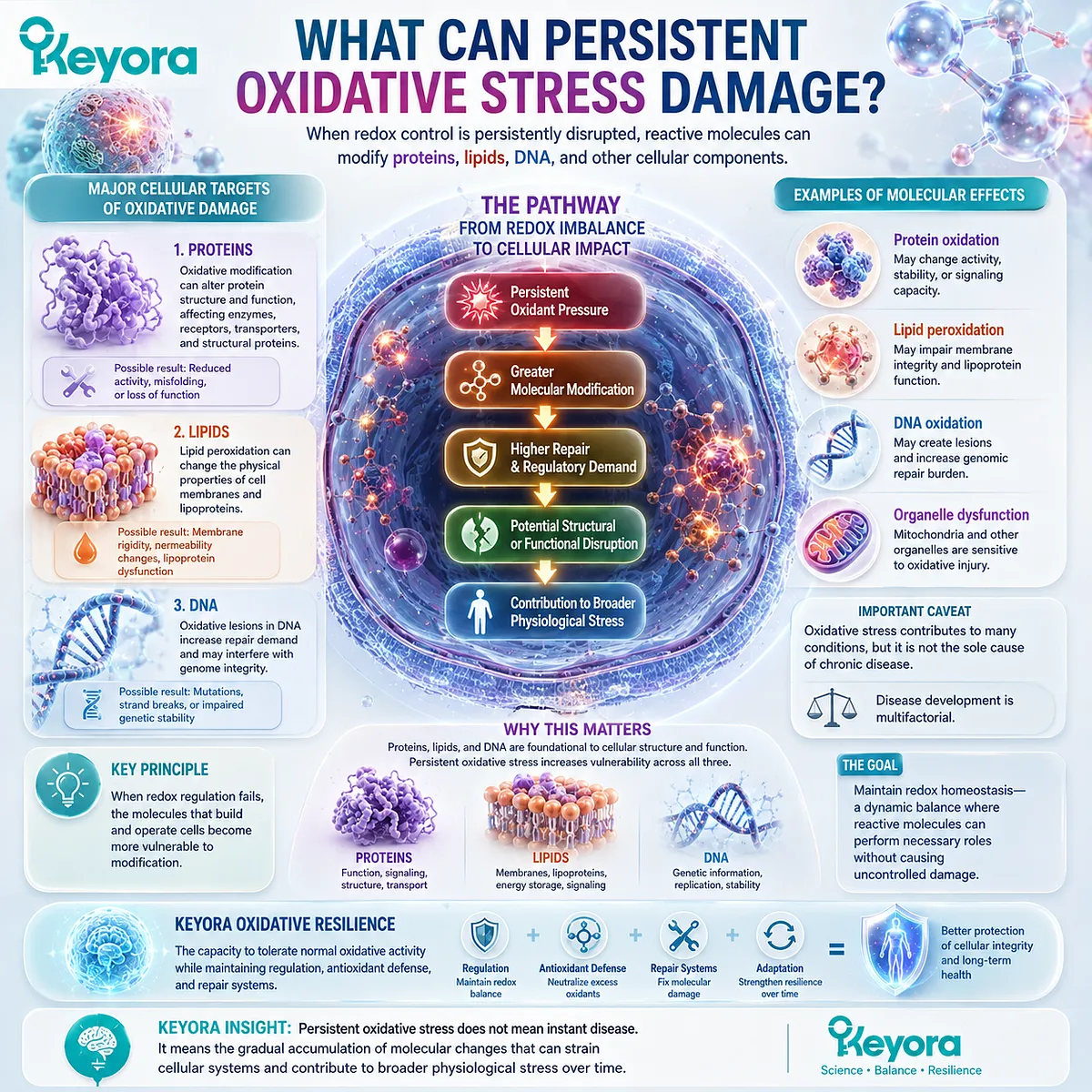
What Can Persistent Oxidative Stress Damage?
When redox control is persistently disrupted, reactive molecules can modify proteins, lipids, DNA, and other cellular components
Oxidative stress matters because reactive chemistry can extend beyond normal signaling and begin modifying biological molecules.
The Keyora scientific source identifies proteins, lipids, and DNA among the major cellular targets affected when oxidative burden becomes excessive. It also connects persistent oxidative stress with structural and functional cellular damage.
Proteins can undergo oxidative modification.
Because proteins depend on precise molecular structure for enzyme activity, transport, signaling, and structural support, oxidative changes may alter how efficiently some proteins perform their normal functions.
DNA can also be affected.
Oxidative lesions can increase the repair demands placed on the genome and, when sufficiently persistent or severe, may interfere with molecular integrity.
Lipids represent another particularly important target.
Cell membranes and circulating lipoproteins contain lipid structures that can be exposed to oxidative reactions.
When susceptible lipids are modified, their physical and functional properties may also change.
This is one reason oxidative biology is especially relevant to the wider Keyora Lipid Architecture framework.
The pathway is not:
ROS appears → disease immediately develops
The more accurate sequence is:
Persistent oxidant pressure
↓
Greater molecular modification
↓
Higher repair and regulatory demand
↓
Potential structural or functional disruption
↓
Contribution to broader physiological stress
This distinction is important because oxidative stress is involved in many biological conditions, but it should not be presented as a single independent explanation for every chronic disease.
Persistent oxidative stress can contribute to molecular damage and may participate in the pathophysiology of multiple conditions, but disease development remains multifactorial.
For Q012, the most important point is therefore not the disease list.
It is the molecular principle:
When redox regulation fails, the molecules that build and operate cells become more vulnerable to modification.
The next question is which structures are especially susceptible – and why.
Why Does Oxidative Stress Matter So Much for Lipid Biology?
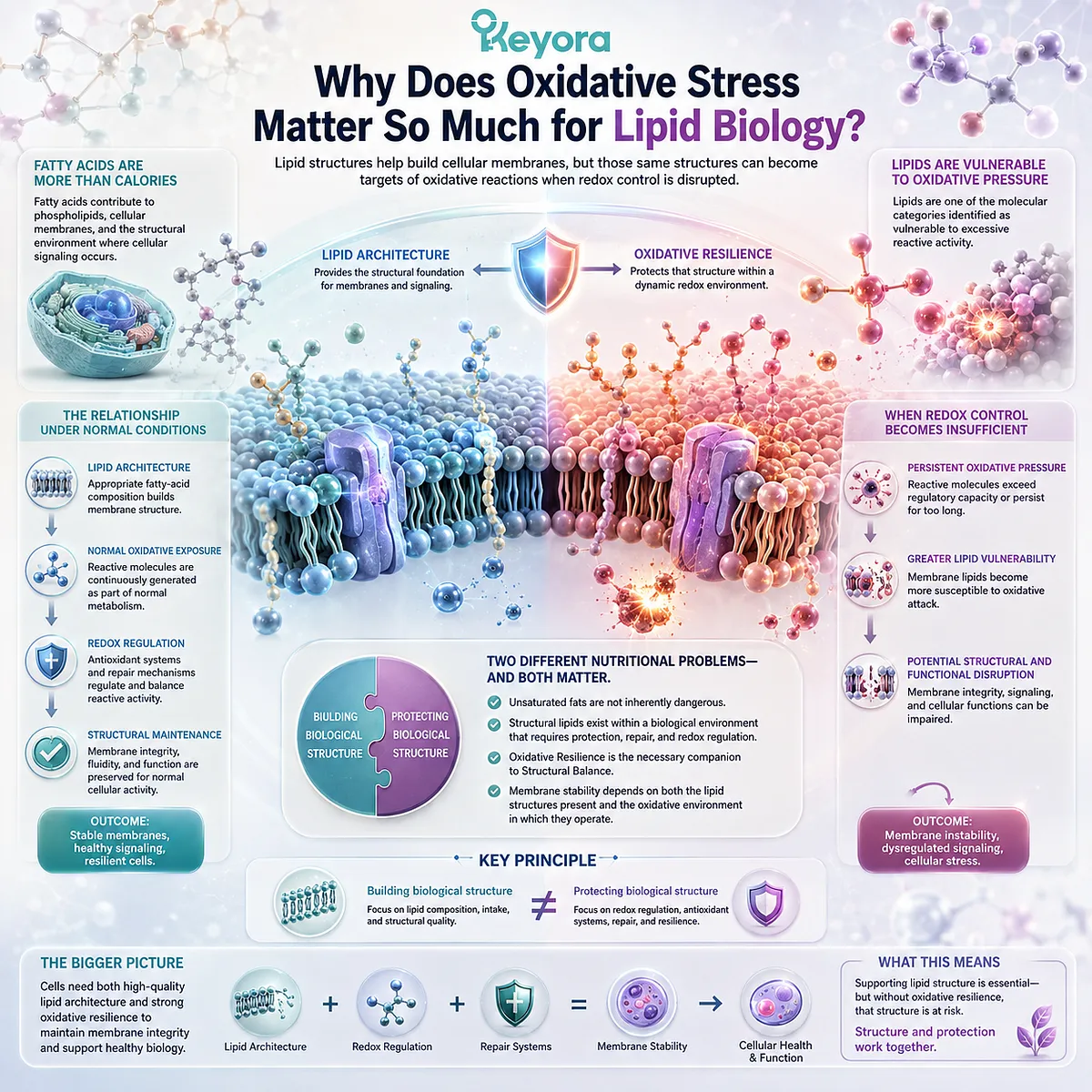
Lipid structures help build cellular membranes, but those same structures can become targets of oxidative reactions when redox control is disrupted
The previous Q&A group established that fatty acids are not simply calories.
They can contribute to phospholipids, cellular membranes, and the broader structural environment in which cellular signaling occurs.
That structural role creates an important second question:
How well can those lipid structures maintain integrity when exposed to oxidative pressure?
Lipids are one of the molecular categories identified in the Keyora source as vulnerable to excessive oxidative activity.
This is where Lipid Architecture and Oxidative Resilience become connected.
A membrane may contain the fatty-acid composition required for normal structural and signaling functions, but lipid structure alone does not describe the entire biological environment.
Those lipids also exist within a redox system that continually generates and regulates reactive molecules.
The relationship can be understood as:
Lipid Architecture
↓
Normal oxidative exposure
↓
Redox regulation
↓
Structural maintenance
When redox control becomes insufficient:
Persistent oxidative pressure
↓
Greater lipid vulnerability
↓
Potential structural and functional disruption
This does not mean that unsaturated fats or membrane lipids are inherently dangerous.
It means that structural lipids exist within a biological environment that also requires protection, repair, and redox regulation.
The EP-3 Q&A framework therefore defines Oxidative Resilience as a necessary companion to Structural Balance: membrane stability depends not only on what lipid structures are present, but also on the oxidative environment in which those structures operate.
At this stage, the mechanism should not be taken further.
The detailed reasons certain membrane lipids are more vulnerable to oxidation, and the chain reactions that can follow lipid oxidation, require separate explanation.
Those mechanisms belong to the later discussions of membrane oxidative vulnerability and lipid peroxidation.
For now, the key principle is simple:
Building biological structure and protecting biological structure are two different nutritional problems – and both matter.
What Should “Reducing Oxidative Stress” Actually Mean?
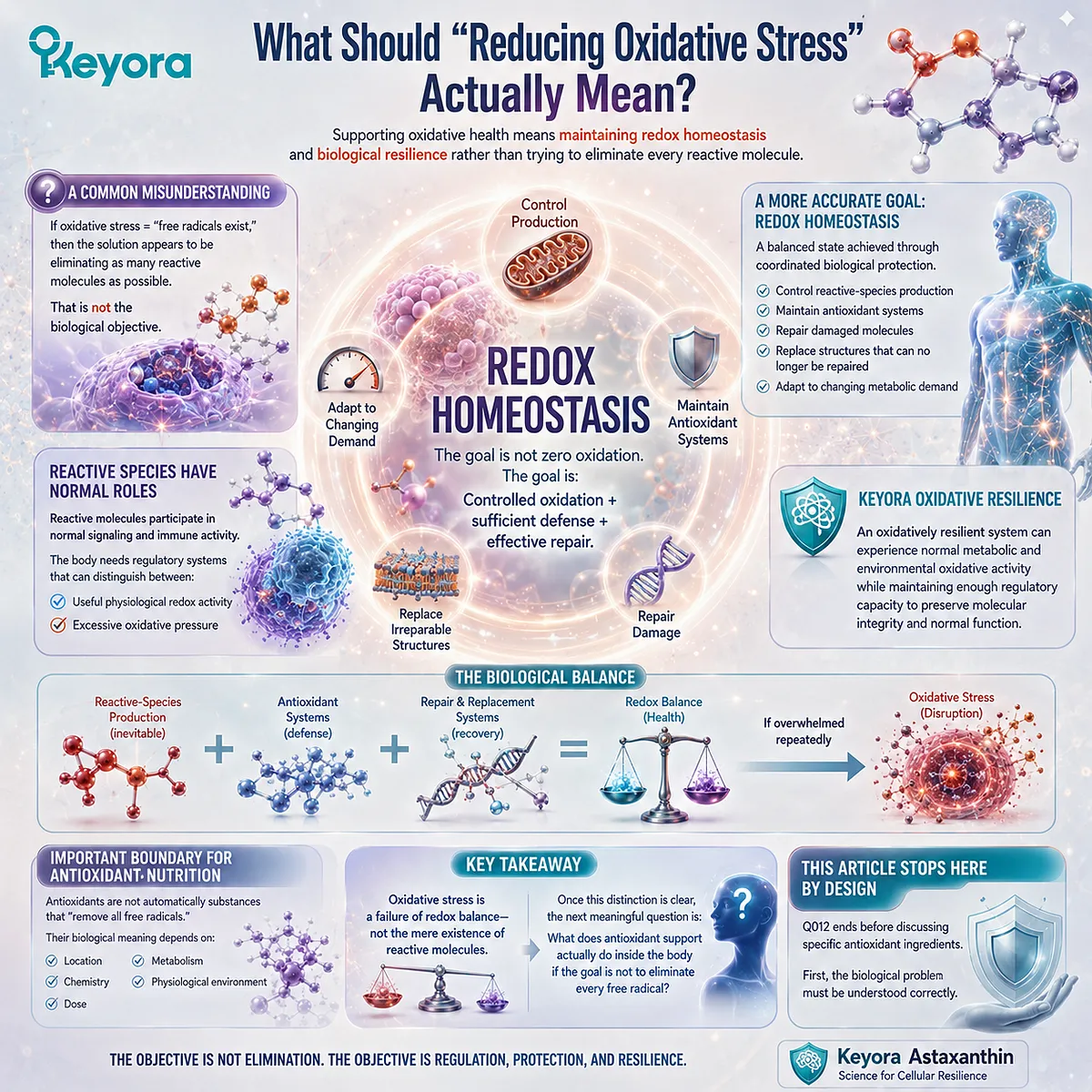
Supporting oxidative health means maintaining redox homeostasis and biological resilience rather than trying to eliminate every reactive molecule
The phrase “reduce oxidative stress” is widely used, but it can easily be misunderstood.
If oxidative stress is interpreted simply as “free radicals exist,” then the logical solution appears to be eliminating as many reactive molecules as possible.
That is not the biological objective.
Reactive species participate in normal signaling and immune activity.
The body therefore needs regulatory systems that can distinguish between useful physiological redox activity and excessive oxidative pressure.
A more accurate goal is maintaining redox homeostasis.
This involves several coordinated layers of biological protection: controlling reactive-species production, maintaining antioxidant systems, repairing damaged molecules, replacing structures that can no longer be repaired, and adapting to changing metabolic demand.
The goal is not:
zero oxidation
The goal is:
controlled oxidation + sufficient defense + effective repair
That is the basis of Keyora Oxidative Resilience.
An oxidatively resilient system can experience normal metabolic and environmental oxidative activity while maintaining enough regulatory capacity to preserve molecular integrity and normal cellular function.
This perspective also creates an important boundary for antioxidant nutrition.
An antioxidant should not automatically be interpreted as a substance that “removes all free radicals.”
Antioxidant support belongs within a larger redox network, and its biological meaning depends on location, chemistry, dose, metabolism, and the surrounding physiological environment.
That is why Q012 should end before discussing specific antioxidant ingredients.
First, the biological problem must be understood correctly.
Oxidative stress is a failure of redox balance – not the mere existence of reactive molecules.
Once that distinction is clear, the next question becomes much more meaningful:
What does antioxidant support actually do inside the body if the goal is not to eliminate every free radical?
This article is for educational and informational purposes only. It does not provide medical advice, diagnosis, treatment, cure, prevention, disease outcome claims, hormone restoration claims, fertility outcome claims, or formula-specific clinical efficacy claims.