
Best Ingredients for Eye Health: Which Nutrients Support Different Vision Goals?
Keyora Research Q&A Library
This is part of the Keyora Research Q&A Series, derived from Keyora Astaxanthin Research Journal Series.
Within the Keyora Astaxanthin Researcn framework, this Q&A translates complex astaxanthin biology into reader-friendly, evidence-bound answers, focusing on natural astaxanthin identity, molecular structure, antioxidant and redox mechanisms, membrane lipid interaction, mitochondrial resilience, inflammatory signaling pathways, human evidence interpretation, and the scientific principles behind responsible supplementation.
First published by Keyora Research Journal: www.keyorahealth.com
Introduction
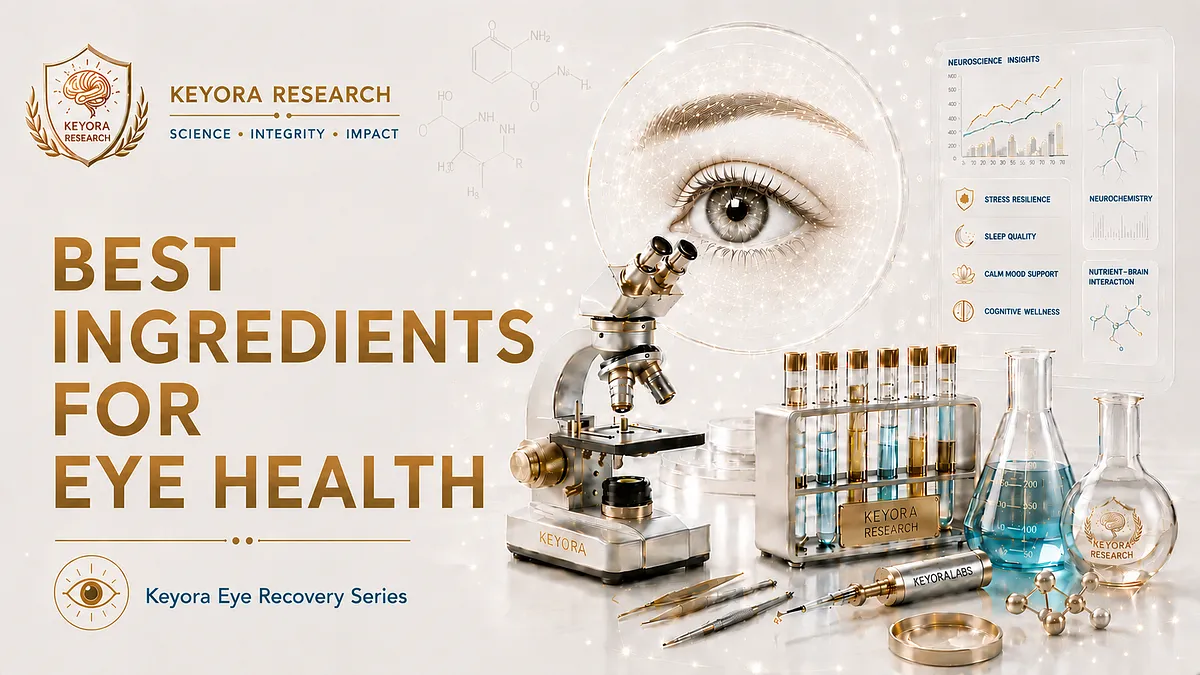
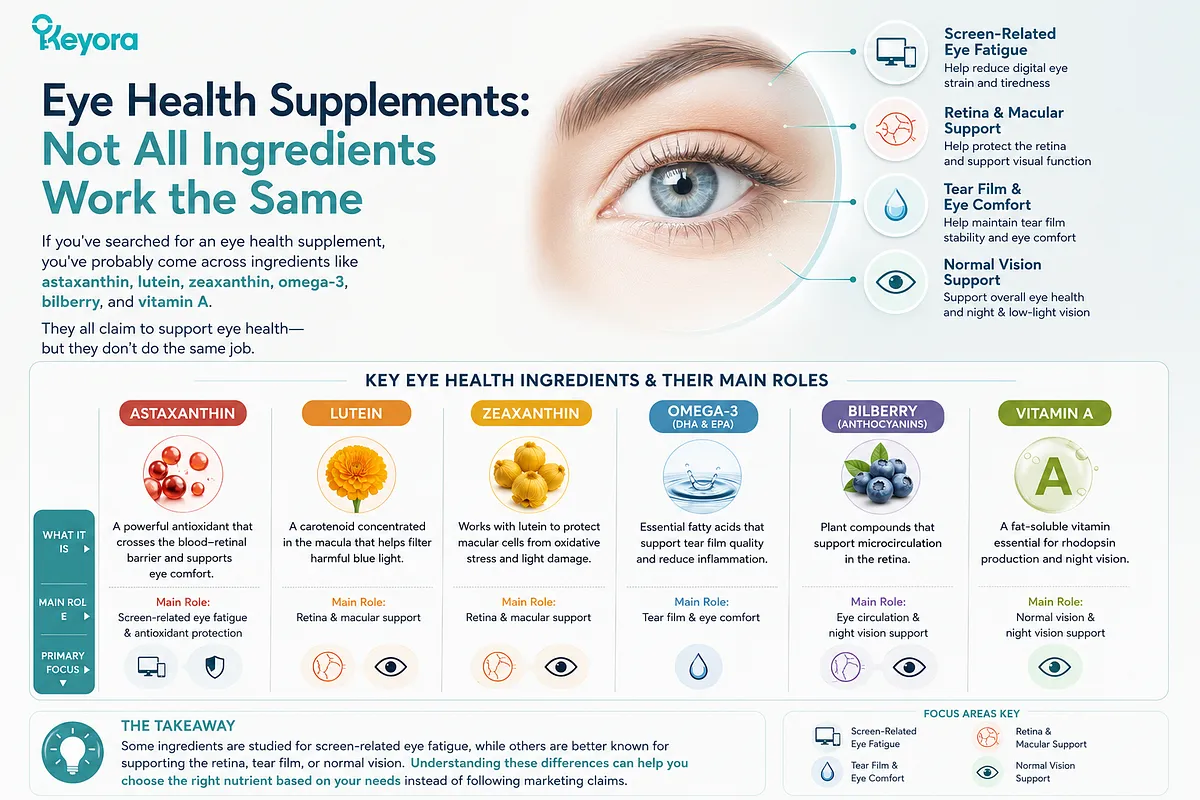
If you’ve searched for an eye health supplement, you’ve probably come across ingredients like astaxanthin, lutein, zeaxanthin, omega-3, bilberry, and vitamin A.
They all claim to support eye health—but they don’t do the same job.
Some ingredients are studied for screen-related eye fatigue, while others are better known for supporting the retina, tear film, or normal vision. Understanding these differences can help you choose the right nutrient based on your needs instead of following marketing claims.
Quick Answer
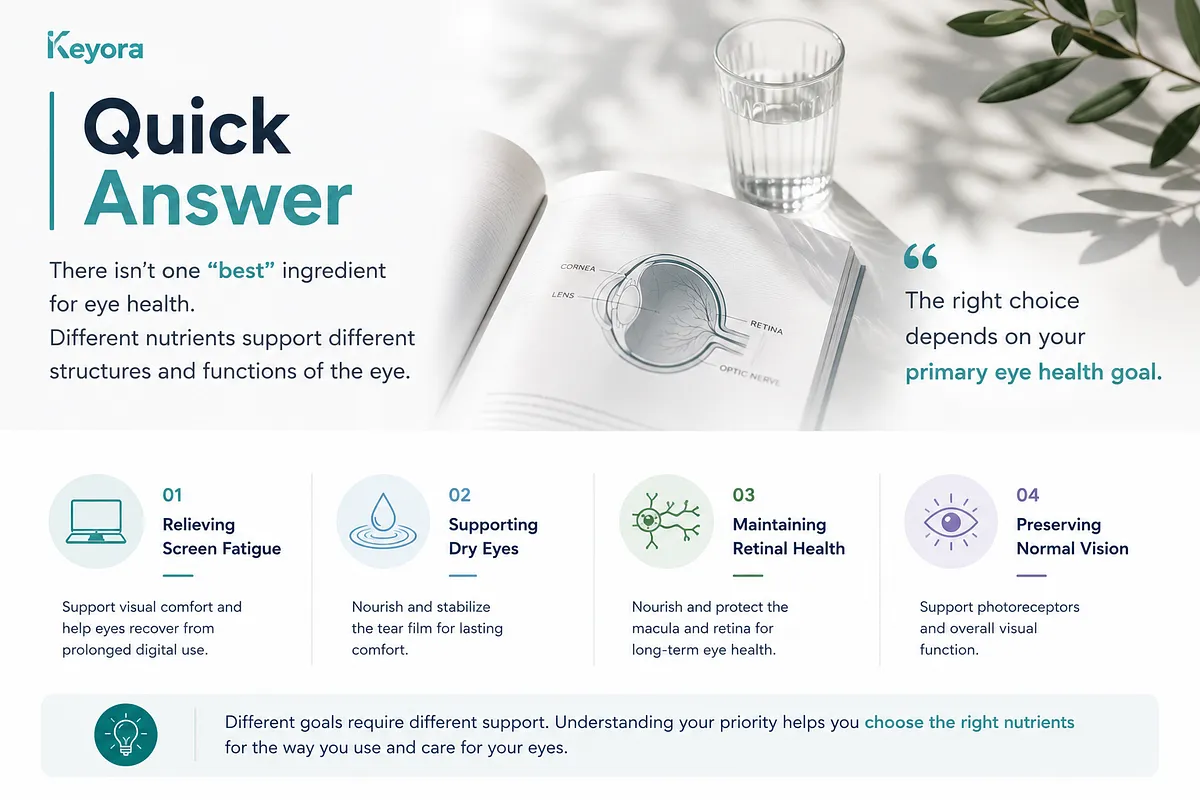
There isn’t one “best” ingredient for eye health. Different nutrients support different structures and functions of the eye. The right choice depends on whether your goal is relieving screen fatigue, supporting dry eyes, maintaining retinal health, or preserving normal vision.
Why Different Eye Problems Need Different Nutrients
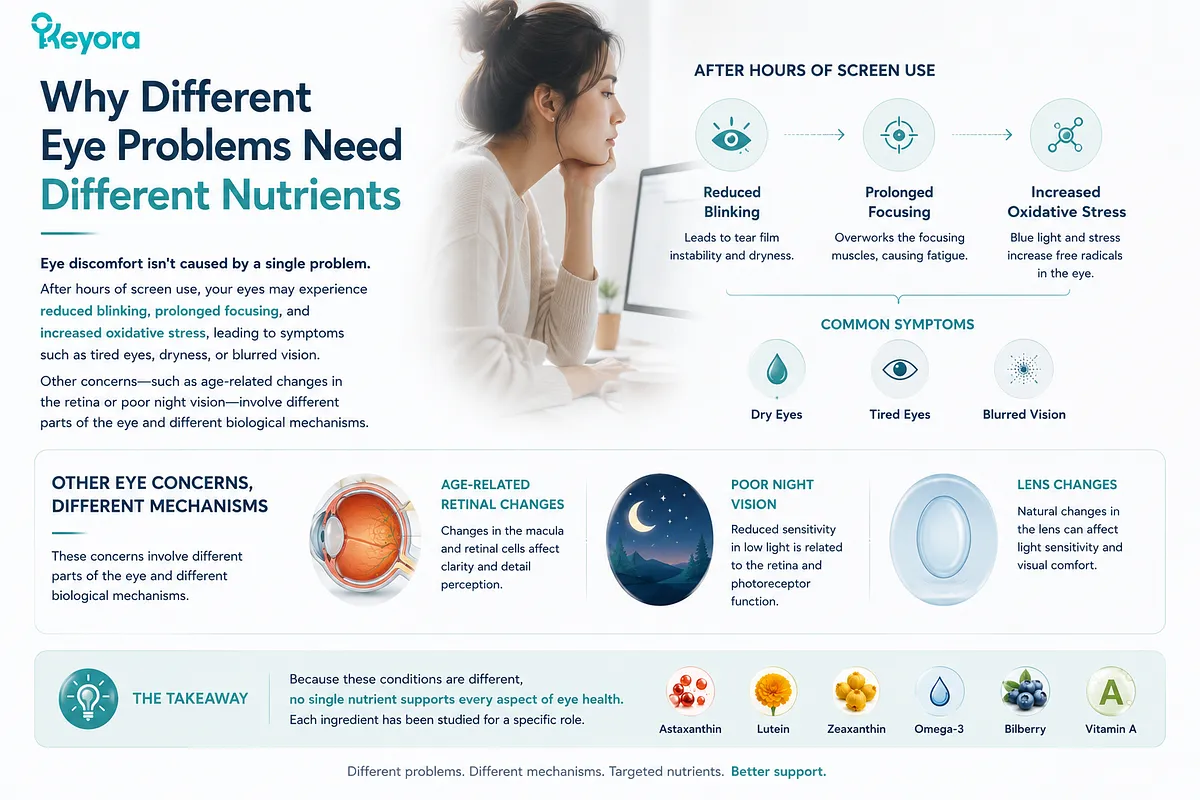
Eye discomfort isn’t caused by a single problem.
After hours of screen use, your eyes may experience reduced blinking, prolonged focusing, and increased oxidative stress, leading to symptoms such as tired eyes, dryness, or blurred vision.
Other concerns—such as age-related changes in the retina or poor night vision—involve different parts of the eye and different biological mechanisms.
Because these conditions are different, no single nutrient supports every aspect of eye health. Each ingredient has been studied for a specific role.
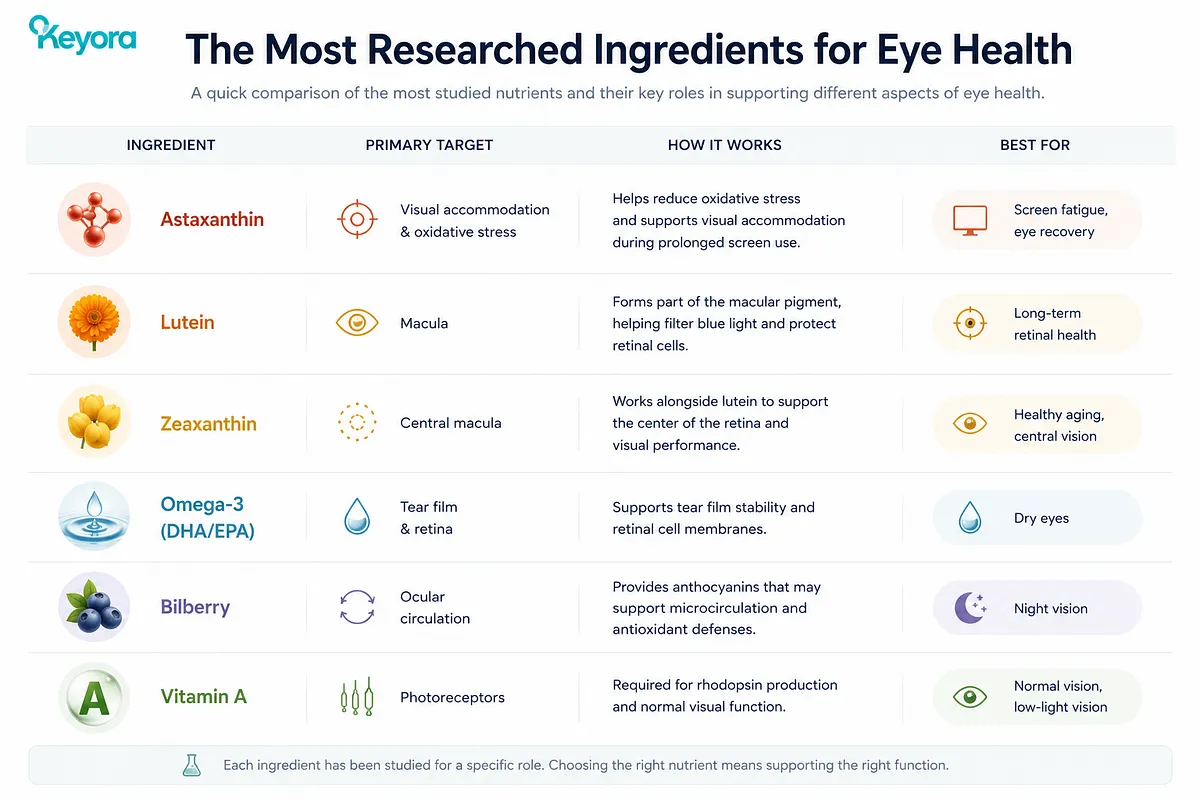
The Most Researched Ingredients for Eye Health
Astaxanthin
Primary Target: Visual accommodation & oxidative stress
How It Works: Helps reduce oxidative stress and supports visual accommodation during prolonged screen use
Best For: Screen fatigue, eye recovery
Lutein
Primary Target: Macula
How It Works: Forms part of the macular pigment, helping filter blue light and protect retinal cells
Best For: Long-term retinal health
Zeaxanthin
Primary Target: Central macula
How It Works: Works alongside lutein to support the center of the retina and visual performance
Best For: Healthy aging, central vision
Omega-3 (DHA/EPA)
Primary Target: Tear film & retina
How It Works: Supports tear film stability and retinal cell membranes
Best For: Dry eyes
Bilberry
Primary Target: Ocular circulation
How It Works: Provides anthocyanins that may support microcirculation and antioxidant defenses
Best For: Night vision
Vitamin A
Primary Target: Photoreceptors
How It Works: Required for rhodopsin production and normal visual function
Best For: Normal vision, low-light vision
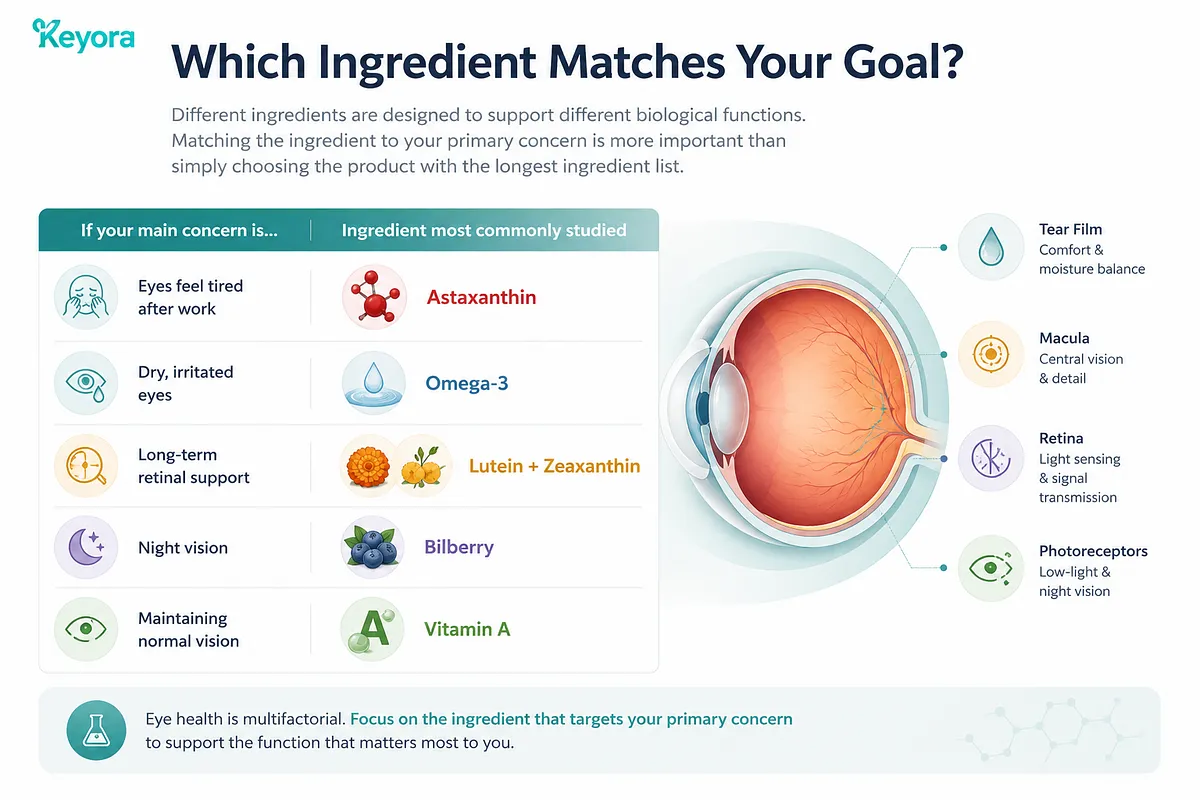
Which Ingredient Matches Your Goal?
If your main concern is…
Ingredient most commonly studied
Eyes feel tired after work
Astaxanthin
Dry, irritated eyes
Omega-3
Long-term retinal support
Lutein + Zeaxanthin
Night vision
Bilberry
Maintaining normal vision
Vitamin A
Different ingredients are designed to support different biological functions. Matching the ingredient to your primary concern is more important than simply choosing the product with the longest ingredient list.
Keyora Insight
Healthy vision depends on more than one nutrient.
Rather than asking “Which ingredient is the best?”, a better question is “Which ingredient is best for my goal?”
Someone experiencing screen fatigue after 10 hours of computer work has different nutritional needs than someone focused on long-term retinal health. Understanding these differences is the first step toward making informed decisions about eye nutrition.
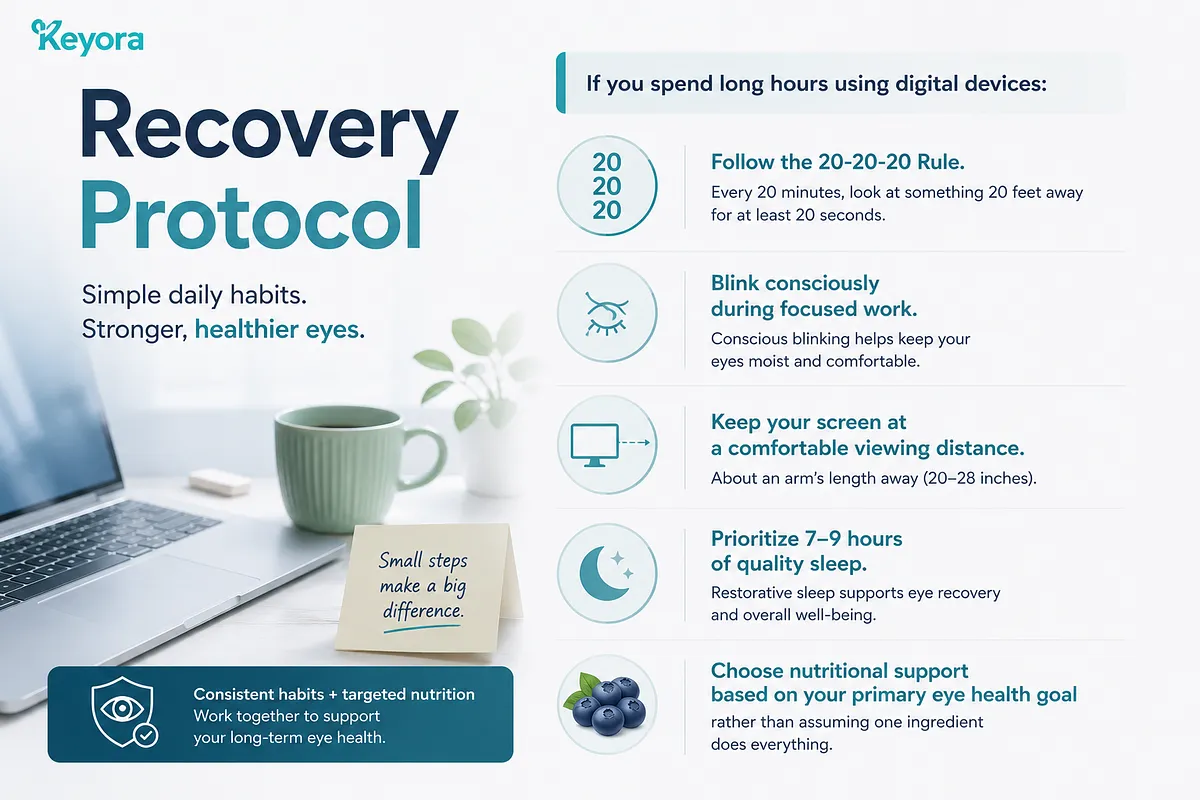
Recovery Protocol
If you spend long hours using digital devices:
✔ Follow the 20-20-20 Rule.
✔ Blink consciously during focused work.
✔ Keep your screen at a comfortable viewing distance.
✔ Prioritize 7–9 hours of quality sleep.
✔ Choose nutritional support based on your primary eye health goal rather than assuming one ingredient does everything.
Frequently Asked Questions
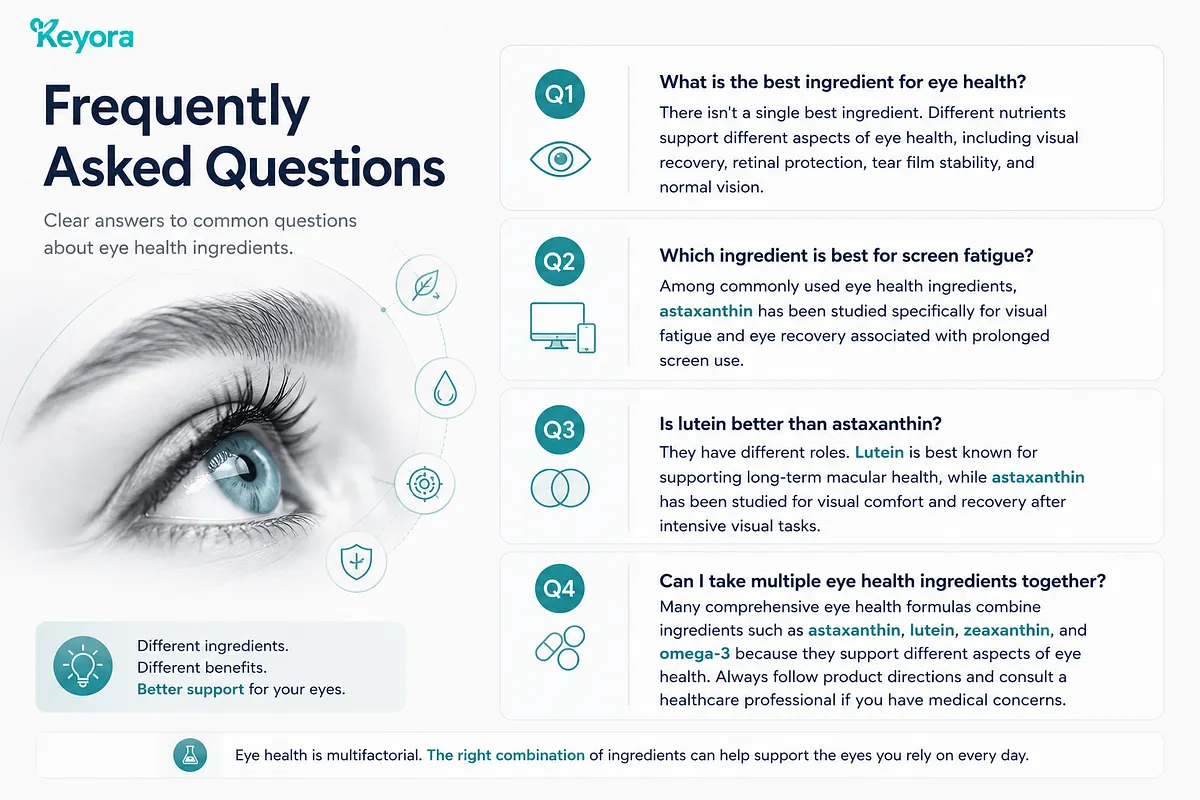
What is the best ingredient for eye health?
There isn’t a single best ingredient. Different nutrients support different aspects of eye health, including visual recovery, retinal protection, tear film stability, and normal vision.
Which ingredient is best for screen fatigue?
Among commonly used eye health ingredients, astaxanthin has been studied specifically for visual fatigue and eye recovery associated with prolonged screen use.
Is lutein better than astaxanthin?
They have different roles. Lutein is best known for supporting long-term macular health, while astaxanthin has been studied for visual comfort and recovery after intensive visual tasks.
Can I take multiple eye health ingredients together?
Many comprehensive eye health formulas combine ingredients such as astaxanthin, lutein, zeaxanthin, and omega-3 because they support different aspects of eye health. Always follow product directions and consult a healthcare professional if you have medical concerns.
References
· AREDS2 Research Group. Lutein + Zeaxanthin and Age-Related Macular Degeneration.
· Bernstein PS, et al. Lutein and Zeaxanthin in Eye Health.
· American Academy of Ophthalmology. Nutrition and Eye Health.
· Iwasaki T, et al. Effects of Astaxanthin on Eye Fatigue in Visual Display Terminal Workers.
· Rosenfield M. Computer Vision Syndrome (Digital Eye Strain): A Review.