Does Astaxanthin Support Mitochondrial Function and ATP Production? Astaxanthin may support mitochondrial redox balance and membrane resilience, but it does not directly manufacture ATP or guarantee more energy
Why Do Mitochondria Produce Free Radicals? Mitochondria can form superoxide during electron transport, but controlled ROS also support signaling, adaptation, and metabolic regulation
How Is Astaxanthin Different From Vitamin C and Vitamin E? Vitamin C works mainly in aqueous environments, vitamin E in lipid phases, and astaxanthin in lipid-associated carotenoid pathways without forming a universal hierarchy
What Is Lipid Peroxidation – and How May Astaxanthin Help Limit It? Lipid peroxidation is a radical chain reaction in susceptible lipids, while astaxanthin may help limit selected membrane-related stages
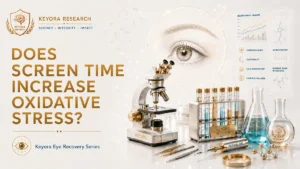
Does Screen Time Increase Oxidative Stress? Current evidence suggests screen time may contribute to oxidative stress indirectly through modern digital lifestyle and insufficient recovery.
Can Astaxanthin Really Span the Lipid Bilayer? Biophysical models support membrane-spanning or strongly anchored orientations under some conditions, but no single arrangement applies to every human membrane
What Is Screen Fatigue? Screen fatigue is a temporary condition caused by prolonged digital screen use that can leave your eyes feeling tired, dry, blurry, or uncomfortable.
How Does Astaxanthin Interact With Cell Membranes? Astaxanthin can associate with lipid bilayers through its lipid-compatible central chain and more polar terminal groups, but its exact membrane behavior depends on context
Why Are Cell Membranes Vulnerable to Oxidative Damage? Cell membranes are vulnerable because oxidation-sensitive lipids can sustain chain reactions that disrupt permeability, signaling, and membrane protein function
Is Astaxanthin Really the Strongest Antioxidant? Astaxanthin can perform strongly in selected redox assays, but no single test proves it is the strongest antioxidant in the human body