
Does Screen Time Increase Oxidative Stress?
Keyora Research Q&A Library
This is part of the Keyora Research Q&A Series, derived from Keyora Astaxanthin Research Journal Series.
Within the Keyora Astaxanthin Researcn framework, this Q&A translates complex astaxanthin biology into reader-friendly, evidence-bound answers, focusing on natural astaxanthin identity, molecular structure, antioxidant and redox mechanisms, membrane lipid interaction, mitochondrial resilience, inflammatory signaling pathways, human evidence interpretation, and the scientific principles behind responsible supplementation.
First published by Keyora Research Journal: www.keyorahealth.com
Short Answer
Possibly, yes.
Current research suggests that prolonged screen exposure may contribute to oxidative stress through several indirect pathways, including visual workload, sleep disruption, sedentary behavior, and chronic mental stress.
However, screen use itself is unlikely to be the sole cause of oxidative stress. Instead, it should be viewed as one of many lifestyle factors that may influence the body’s overall recovery capacity and antioxidant defenses.
For most people, the issue is not a single day of screen use—it’s the cumulative effect of spending years in highly digital environments with insufficient recovery.
What Is Oxidative Stress?
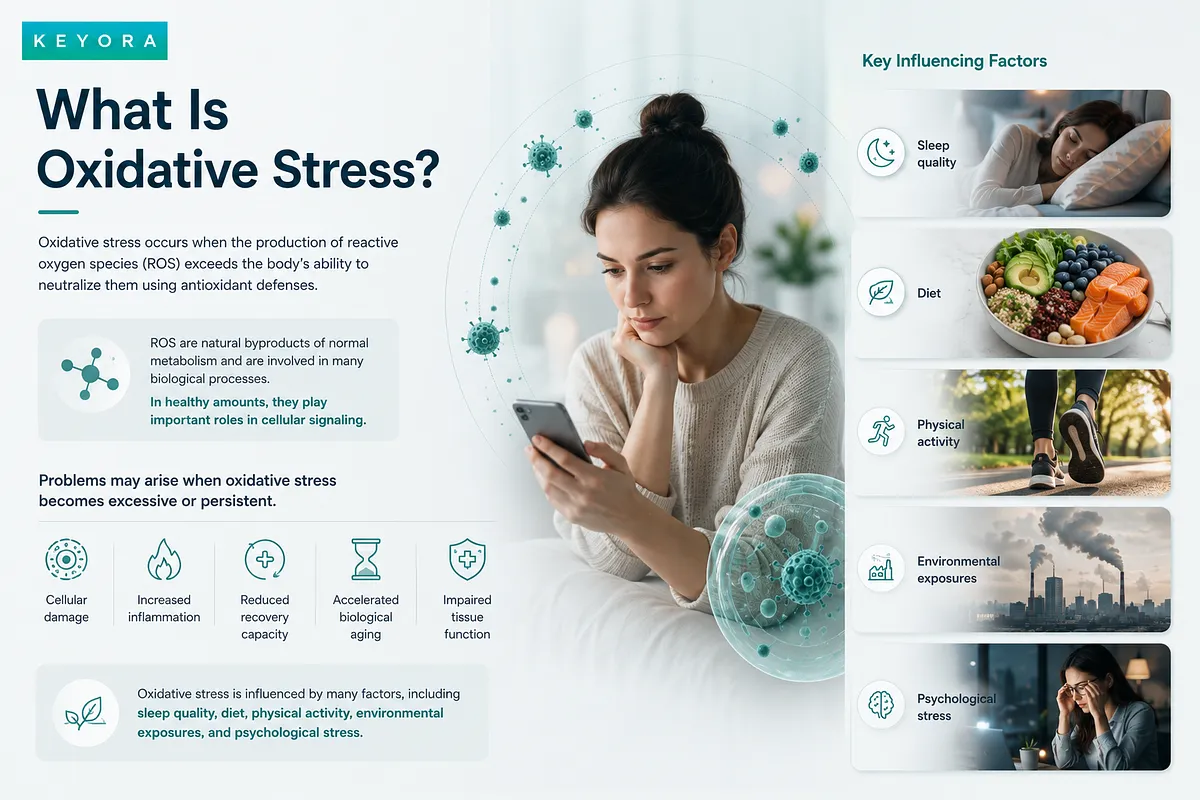
Oxidative stress occurs when the production of reactive oxygen species (ROS) exceeds the body’s ability to neutralize them using antioxidant defenses.
ROS are natural byproducts of normal metabolism and are involved in many biological processes. In healthy amounts, they play important roles in cellular signaling.
Problems may arise when oxidative stress becomes excessive or persistent.
Over time, elevated oxidative stress has been associated with:
- Cellular damage
- Increased inflammation
- Reduced recovery capacity
- Accelerated biological aging
- Impaired tissue function
Oxidative stress is influenced by many factors, including sleep quality, diet, physical activity, environmental exposures, and psychological stress.
How Could Screen Time Contribute to Oxidative Stress?
Researchers continue to investigate this question.
Current evidence suggests several potential mechanisms.
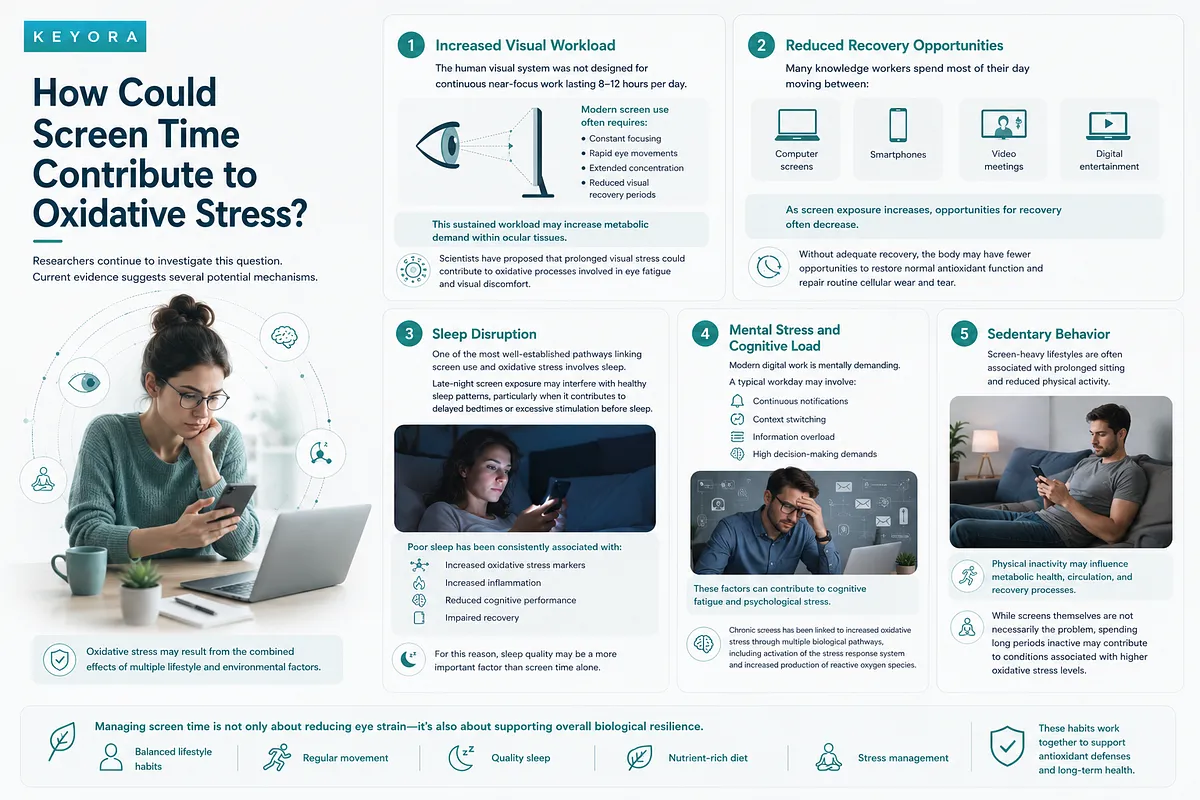
1. Increased Visual Workload
The human visual system was not designed for continuous near-focus work lasting 8–12 hours per day.
- Modern screen use often requires:
- Constant focusing
- Rapid eye movements
- Extended concentration
- Reduced visual recovery periods
This sustained workload may increase metabolic demand within ocular tissues.
Scientists have proposed that prolonged visual stress could contribute to oxidative processes involved in eye fatigue and visual discomfort.
2. Reduced Recovery Opportunities
Many knowledge workers spend most of their day moving between:
- Computer screens
- Smartphones
- Video meetings
- Digital entertainment
As screen exposure increases, opportunities for recovery often decrease.
Recovery is an important part of maintaining physiological balance.
Without adequate recovery, the body may have fewer opportunities to restore normal antioxidant function and repair routine cellular wear and tear.
3. Sleep Disruption
One of the most well-established pathways linking screen use and oxidative stress involves sleep.
Late-night screen exposure may interfere with healthy sleep patterns, particularly when it contributes to delayed bedtimes or excessive stimulation before sleep.
Poor sleep has been consistently associated with:
- Increased oxidative stress markers
- Increased inflammation
- Reduced cognitive performance
- Impaired recovery
For this reason, sleep quality may be a more important factor than screen time alone.
4. Mental Stress and Cognitive Load
Modern digital work is mentally demanding.
A typical workday may involve:
- Continuous notifications
- Context switching
- Information overload
- High decision-making demands
These factors can contribute to cognitive fatigue and psychological stress.
Chronic stress has been linked to increased oxidative stress through multiple biological pathways, including activation of the stress response system and increased production of reactive oxygen species.
5. Sedentary Behavior
Screen-heavy lifestyles are often associated with prolonged sitting and reduced physical activity.
Physical inactivity may influence metabolic health, circulation, and recovery processes.
While screens themselves are not necessarily the problem, spending long periods inactive may contribute to conditions associated with higher oxidative stress levels.
Does Screen Time Damage Your Eyes?
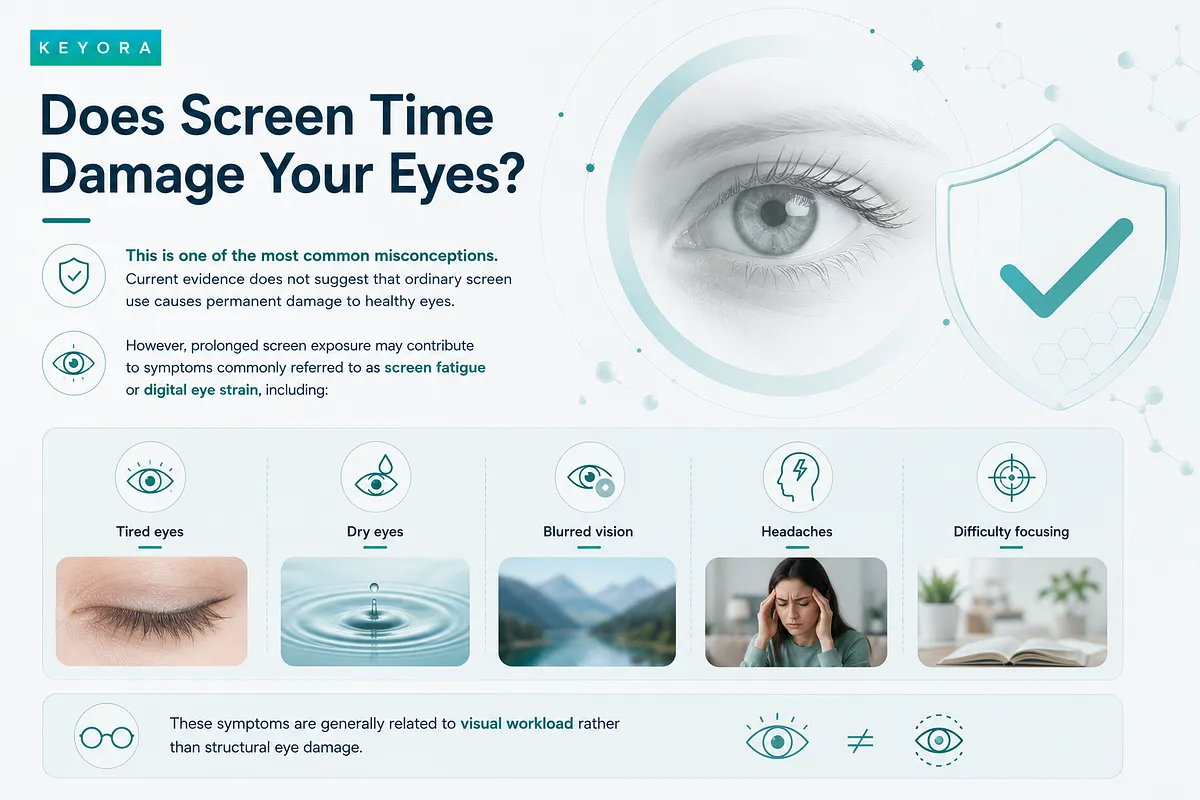
This is one of the most common misconceptions.
Current evidence does not suggest that ordinary screen use causes permanent damage to healthy eyes.
However, prolonged screen exposure may contribute to symptoms commonly referred to as screen fatigue or digital eye strain, including:
- Tired eyes
- Dry eyes
- Blurred vision
- Headaches
- Difficulty focusing
These symptoms are generally related to visual workload rather than structural eye damage.
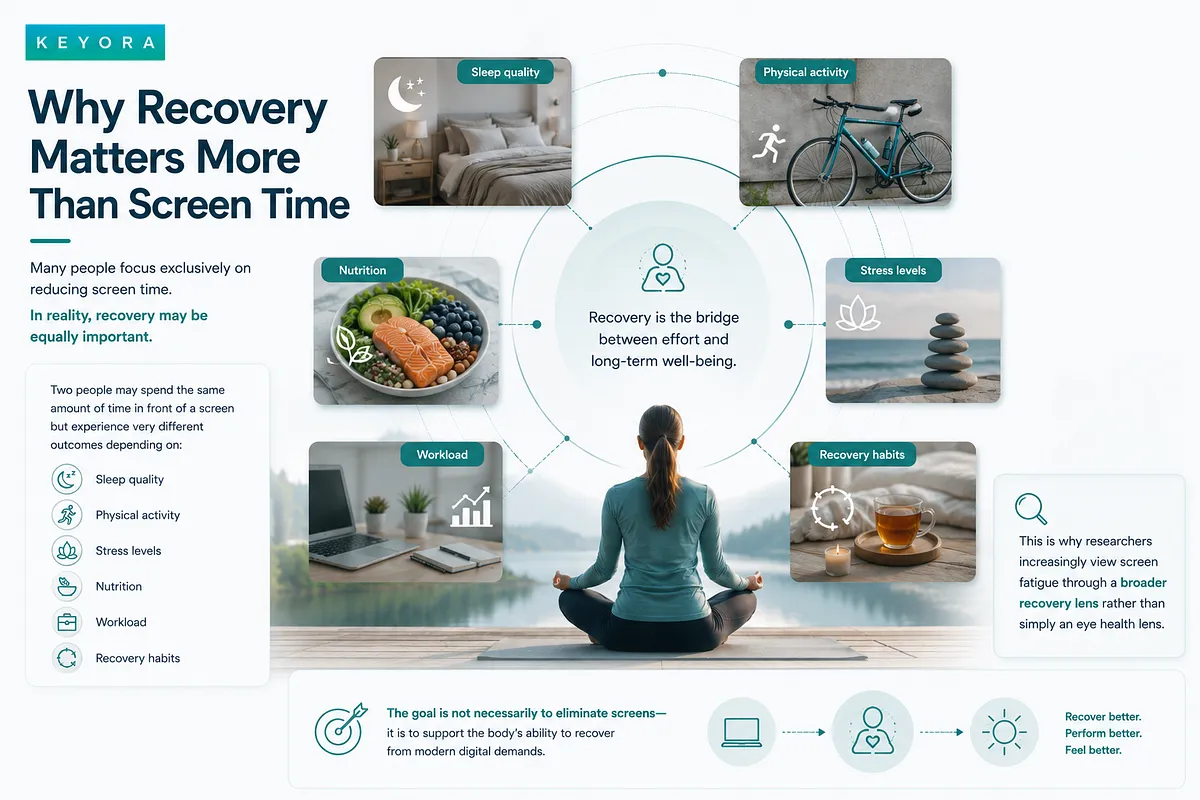
Why Recovery Matters More Than Screen Time
Many people focus exclusively on reducing screen time.
In reality, recovery may be equally important.
Two people may spend the same amount of time in front of a screen but experience very different outcomes depending on:
Ø Sleep quality
Ø Physical activity
Ø Stress levels
Ø Nutrition
Ø Workload
Ø Recovery habits
This is why researchers increasingly view screen fatigue through a broader recovery lens rather than simply an eye health lens.
The goal is not necessarily to eliminate screens—it is to support the body’s ability to recover from modern digital demands.
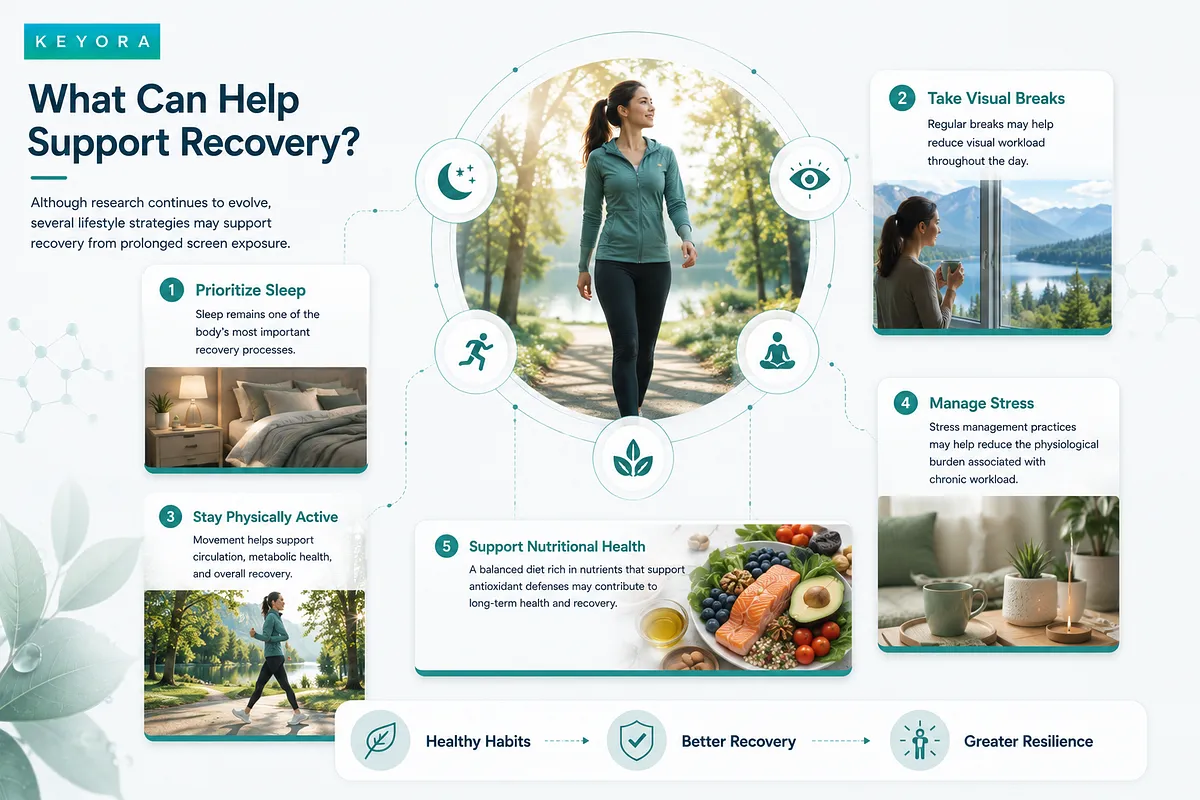
What Can Help Support Recovery?
Although research continues to evolve, several lifestyle strategies may support recovery from prolonged screen exposure.
Prioritize Sleep
Sleep remains one of the body’s most important recovery processes.
Take Visual Breaks
Regular breaks may help reduce visual workload throughout the day.
Stay Physically Active
Movement helps support circulation, metabolic health, and overall recovery.
Manage Stress
Stress management practices may help reduce the physiological burden associated with chronic workload.
Support Nutritional Health
A balanced diet rich in nutrients that support antioxidant defenses may contribute to long-term health and recovery.
Key Takeaways
- Screen time may contribute to oxidative stress indirectly through sleep disruption, cognitive load, sedentary behavior, and reduced recovery opportunities.
- Current evidence suggests that oxidative stress is influenced by many lifestyle factors, not screen exposure alone.
- Screen fatigue is best understood as a recovery challenge rather than simply an eye problem.
- Recovery habits—including sleep, movement, stress management, and nutrition—play an important role in maintaining resilience in highly digital environments.
- Understanding oxidative stress may help explain why some people feel more affected by prolonged screen use than others.
Evidence Snapshot
Topic
Screen Time and Oxidative Stress
What Current Research Suggests
Current research suggests that prolonged digital lifestyles may contribute to conditions associated with oxidative stress, particularly when combined with poor sleep, chronic stress, physical inactivity, and insufficient recovery.
While evidence directly linking screen exposure itself to systemic oxidative stress remains limited, researchers increasingly recognize the broader relationship between digital behaviors, recovery capacity, and physiological stress responses.
Evidence Strength
★★★☆☆ Emerging to Moderate
Human Studies
Numerous studies have examined sleep disruption, cognitive workload, visual fatigue, and lifestyle factors associated with screen use.
Research Consensus
Scientists generally agree that recovery behaviors—including sleep, movement, and stress management—play a central role in mitigating physiological stress associated with modern digital lifestyles.
Last Reviewed
June 2026
References
1. Sheppard AL, Wolffsohn JS. Digital Eye Strain: Prevalence, Measurement and Amelioration. BMJ Open Ophthalmology. 2018.
2. Rosenfield M. Computer Vision Syndrome: A Review of Ocular Causes and Potential Treatments. Ophthalmic and Physiological Optics. 2016.
3. Reiter RJ, Tan DX, Rosales-Corral S, et al. Melatonin, Oxidative Stress and Mitochondrial Function. Journal of Pineal Research.
4. Irwin MR. Sleep and Inflammation: Partners in Sickness and Health. Nature Reviews Immunology.
5. Finkel T, Holbrook NJ. Oxidants, Oxidative Stress and the Biology of Ageing. Nature.
6. Sies H. Oxidative Stress: A Concept in Redox Biology and Medicine. Redox Biology.
Disclaimer
This article is intended for educational and informational purposes only. It is not intended to diagnose, treat, cure, or prevent any disease and should not be considered medical advice. Individuals experiencing persistent eye discomfort, vision changes, or other health concerns should consult a qualified healthcare professional.