
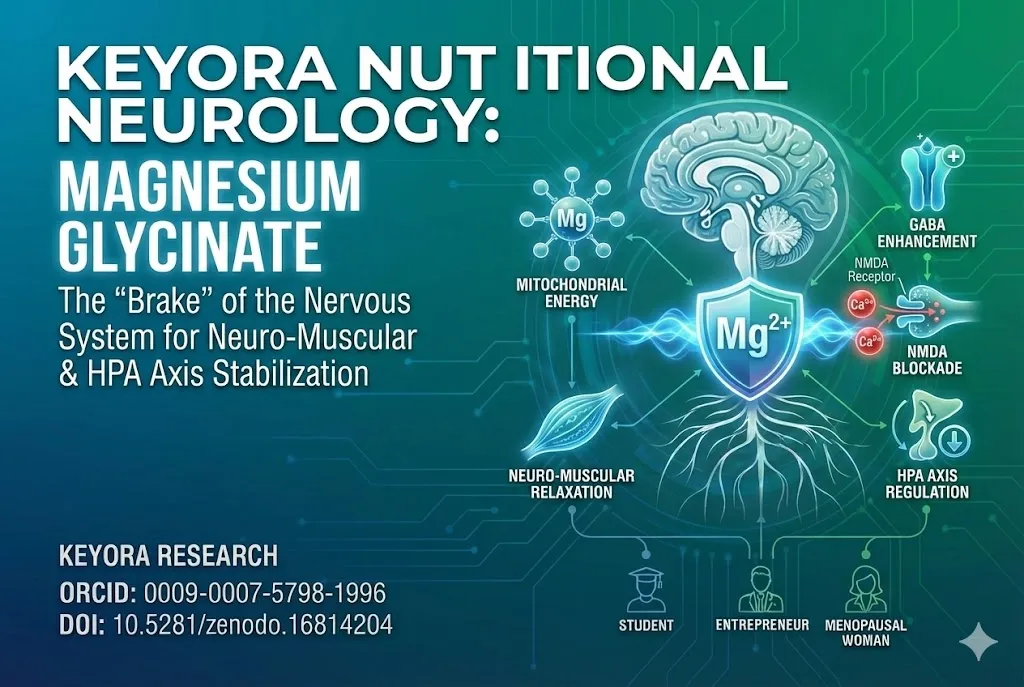
Keyora Nutritional Neurology – Magnesium Glycinate · Episode (2): The Spark of Life: A Clinically-Evidenced Look at Magnesium’s Role as Your Body’s Master Regulator

By Keyora Research Notes Series
This article contributes to Keyora’s ongoing scientific documentation series, which systematically outlines the conceptual foundations, mechanistic pathways, and empirical evidence informing our research and development approach.
ORCID: 0009–0007–5798–1996
The Ghost in the Machine
You have done the work.
You have optimized the diet.
You have prioritized the sleep hygiene.
You have implemented the productivity systems and the mindfulness protocols.
By every external metric, you are a high-performance machine operating at peak efficiency.
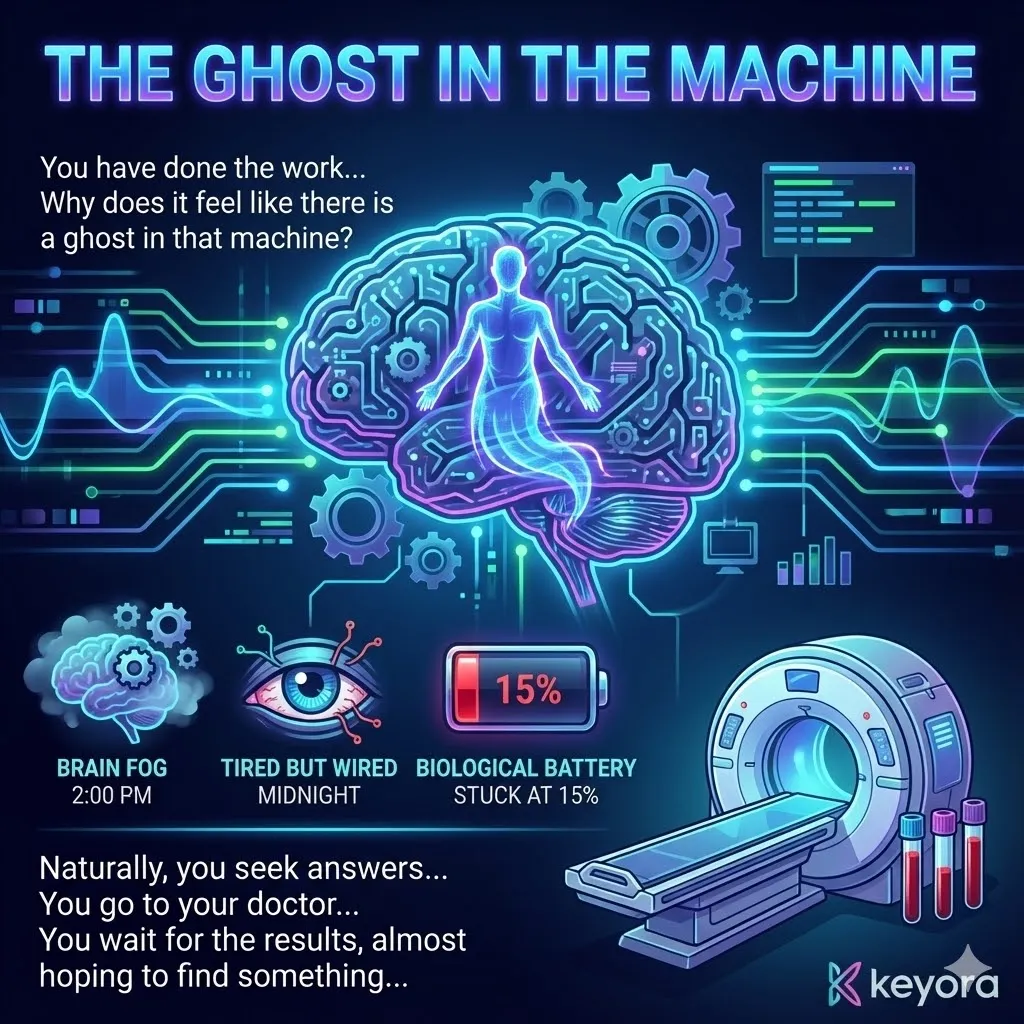
So why does it feel like there is a ghost in that machine?Why does a persistent, low-grade static hum beneath the surface of your daily life?
It isn’t a sharp pain, and it isn’t an acute illness.
It is subtler than that.
It is the brain fog that descends at 2:00 PM, making your cognitive edge feel blunt and heavy.
It is the “tired but wired” sensation that keeps you staring at the ceiling at midnight, despite being exhausted.
It is a fundamental sense of “wrongness.” A feeling that your biological battery is permanently stuck at 15%, no matter how long you charge it.
Naturally, you seek answers.
You go to your doctor.
You run the standard blood panels.
You check your thyroid, your iron, your vitamin D. You wait for the results, almost hoping to find something – anything – that explains the fatigue and the friction.
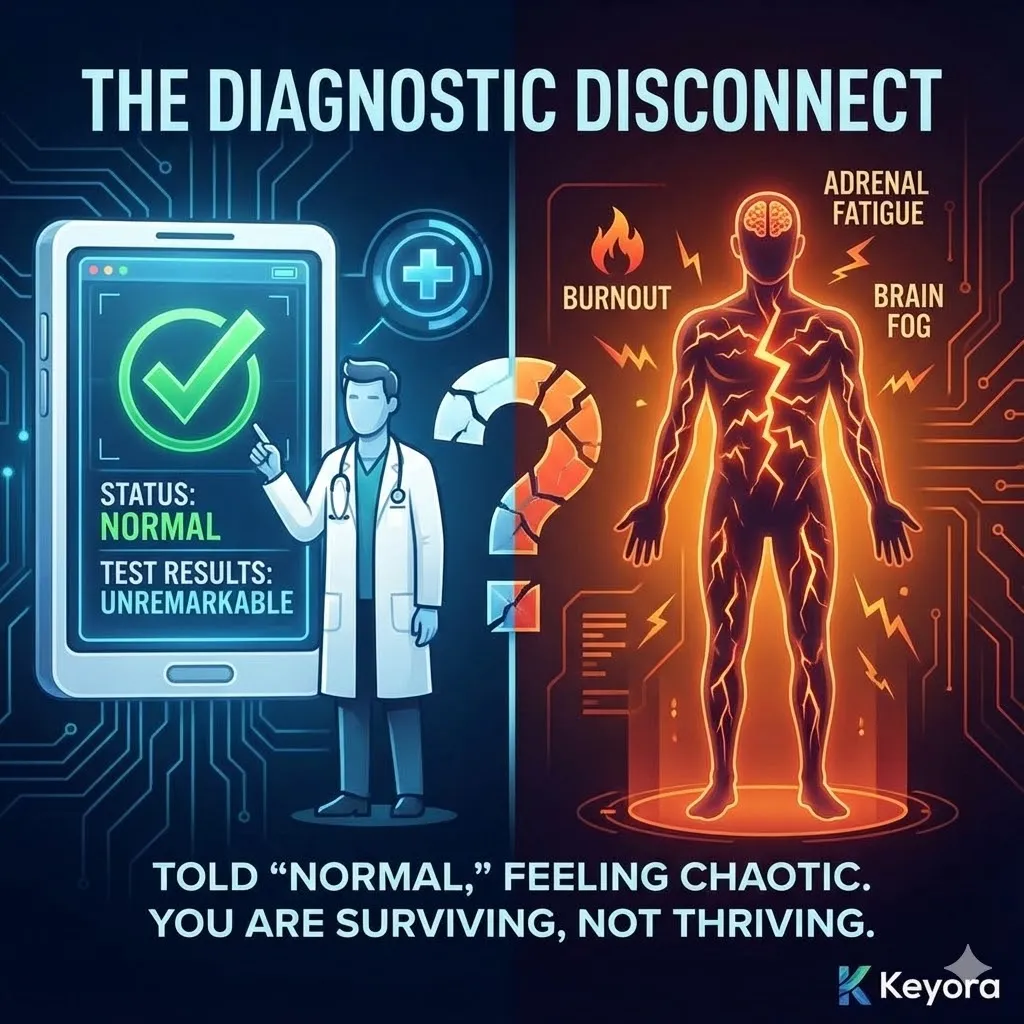
But the call comes back: “Everything looks normal.”
Perhaps they suggest it is just stress. Perhaps they use terms like “burnout” or “adrenal fatigue” – words that describe your experience perfectly but offer absolutely no clinical diagnosis or path forward.
You are left feeling invalidated.
You are told you are healthy, yet you do not feel healthy.
You are surviving, but you are certainly not thriving.
What if we told you that the standard tests are looking at the wrong layer of your biology?
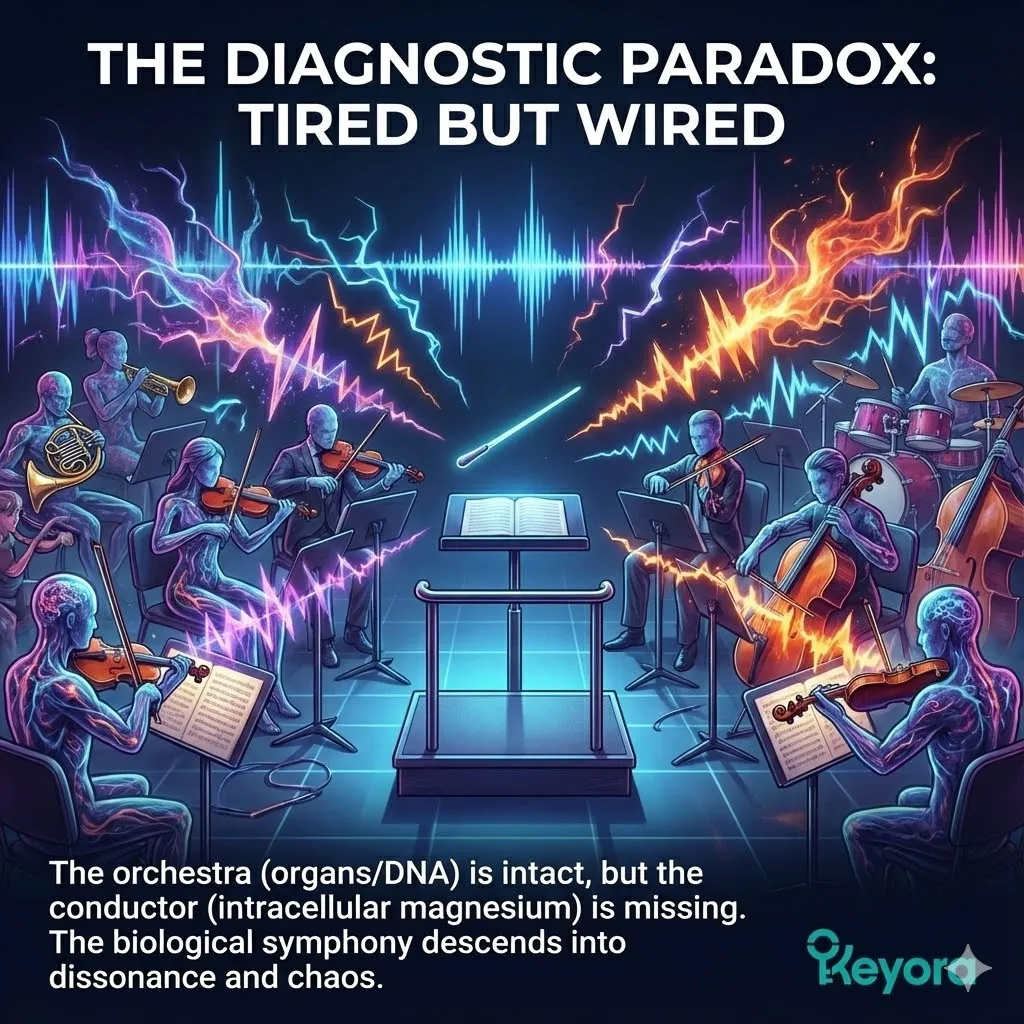
Imagine for a moment that your body is a world-class symphony orchestra. Your organs are the instruments – the violins, the cellos, the horns.
Your DNA is the sheet music, laying out the complex composition of your life.
When you go for a check-up, the doctor examines the instruments.
The heart looks good.
The liver is intact.
The sheet music is correct.
But the music still sounds chaotic.
The rhythm is off. The tempo drags.
What if the problem isn’t the instruments?
What if the problem isn’t the music?
What if the problem is the Conductor?
There is an unseen force within you that keeps the entire ensemble in time.
It is a master regulator that stands at the podium of your cellular biology.
It dictates when the violins of your neurons should fire.
It signals when the percussion of your heart should beat.
It commands the brass section of your muscles to relax after tension.
Without this conductor, the best instruments in the world cannot make music. They can only make noise.
In the language of biochemistry, this conductor has a name.

We call it Magnesium.
For decades, this mineral has been misunderstood. It has been relegated to the footnotes of nutrition, viewed merely as something “good for bones” or a remedy for the occasional leg cramp.
But at Keyora Research, we view it differently.
We see it as “biochemical dark matter.”
It is the invisible infrastructure that supports over 600 critical enzymatic reactions in your body.
It is involved in the spark of every single neuron that fires a thought.
It governs the rhythm of every heartbeat.
It dictates the calmness of your mind and the raw power generation within your cells.
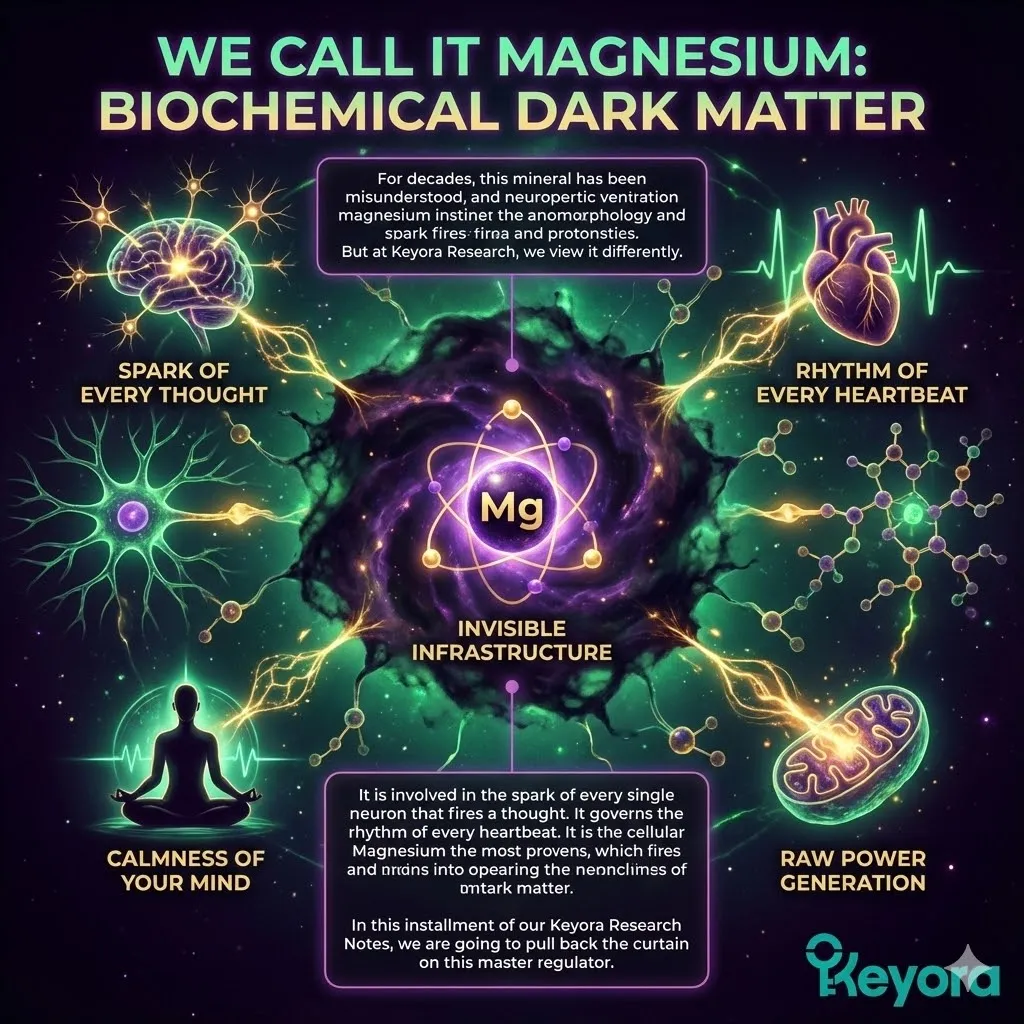
In this installment of our Keyora Research Notes, we are going to pull back the curtain on this master regulator.
Our objective is to move beyond the superficial, textbook understanding of magnesium.
We refuse to offer you vague wellness platitudes. Instead, we aim to present the robust clinical evidence that positions this mineral at the absolute center of your body’s operating system.
We will show you the mechanisms.
We will show you the pathways.
The science we present is verifiable. It is grounded in peer-reviewed data. We invite you to scrutinize it with us, to check our sources, and to demand the depth of understanding that you deserve.
This is the “Research First” principle in action.
But before we can explore the solutions, we must first deeply understand the problem.
We must understand why the conductor has gone missing in the modern world, and what happens to the music when he does.
In the chapters that follow, we will dissect the foundational pillars of magnesium’s power: its role in your energy, your calm, and your resilience.
Let’s begin with the very spark of life itself.

– Series Theme: **Keyora Nutritional Neurology** (Magnesium Glycinate).
– Episode Concept: **The Spark of Life** (The Master Conductor of Biological Rhythm).
– Core Pathology: **The “Ghost in the Machine”** (Intracellular Magnesium Deficiency masquerading as “Normal” Health).
– **1. The Diagnostic Paradox (The Noise)**:
– *The Symptom*: **”Tired but Wired.”** High-achievers experiencing persistent cognitive fog, low-grade anxiety, and fatigue despite optimized lifestyles.
– *The Gap*: Standard blood panels return “Normal” results because they measure extracellular serum, missing the 99% of Magnesium stored intracellularly.
– *The Metaphor*: The **Orchestra** (Organs/DNA) is intact, but the **Conductor** (Magnesium) is absent, causing the biological symphony to descend into dissonance and chaos.
– **2. The Biochemistry of the Spark (The Mechanism)**:
– *The Energy Equation*: **Mg-ATP Complex**. ATP (the body’s fuel) is biologically inactive without Magnesium. Magnesium is the “ignition key” for cellular energy.
– *The Neural Brake*: **NMDA Receptor Regulation**. Magnesium acts as the physiological gatekeeper, blocking Calcium from flooding neurons.
– *The Failure*: Without Magnesium, neurons fire uncontrollably (Excitotoxicity), leading to the sensation of “static” or internal humming anxiety.
– **3. The Keyora Intervention (Magnesium Glycinate)**:
– *The Molecule*: **Magnesium Bisglycinate Chelate**. Chosen for high bioavailability and blood-brain barrier permeability.
– *Action A*: **Mitochondrial Resuscitation**. Restores the efficiency of ATP production (Energy).
– *Action B*: **Sympathetic Sedation**. The **Glycine** moiety acts as an inhibitory neurotransmitter, synergizing with Magnesium to calm the nervous system (Relaxation).
– *Research Basis*: Strictly based on Keyora Research Notes (DOI: 10.5281/zenodo.16889527) and clinical evidence regarding NMDA antagonism and HPA axis stabilization
The Energy Equation:
Why All Bodily Power Flows Through Magnesium-ATP
Reframing “Fatigue”: From Vague Symptom to Cellular Brownout
We need to have a candid conversation about the nature of your exhaustion.
For the high-performing individual, fatigue is rarely a simple sensation of sleepiness. It is not the pleasant, heavy-limbed feeling that follows a day of physical labor or a long hike.
Instead, it is a specific, corrosive texture of experience.
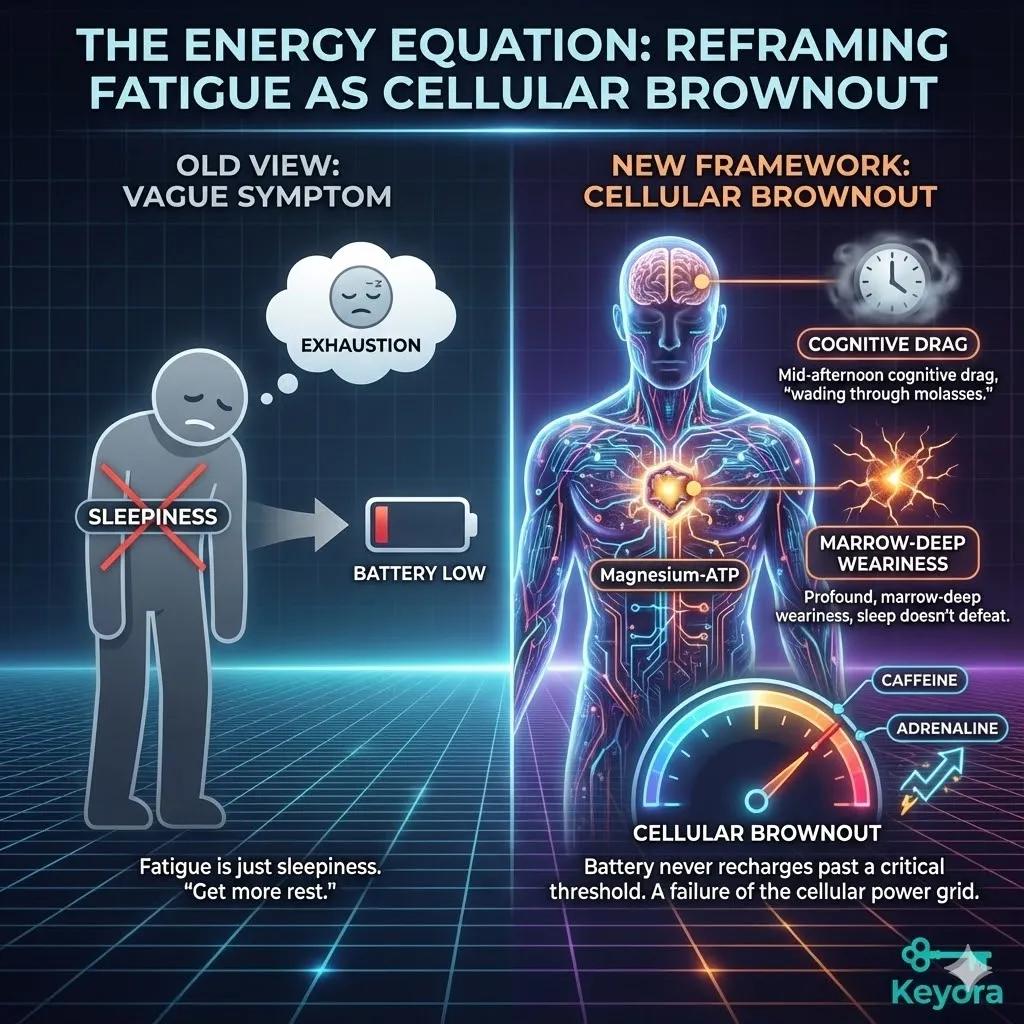
It is the cognitive drag that descends mid-afternoon, transforming complex strategic decisions into wading through molasses.
It is the decision fatigue that plagues high-stakes environments, where the mental clarity you possessed at 9:00 AM has degraded into a foggy ambivalence by 3:00 PM.
It is a profound, marrow-deep weariness that sleep seems only to dent, never to defeat.
You wake up, you consume caffeine, you push through the day on adrenaline and willpower, and you collapse.
Yet, the battery never seems to recharge past a critical threshold.
At Keyora Research, we believe that labeling this state merely as “fatigue” is a disservice. It is imprecise. It treats a physiological failure as a lifestyle problem.
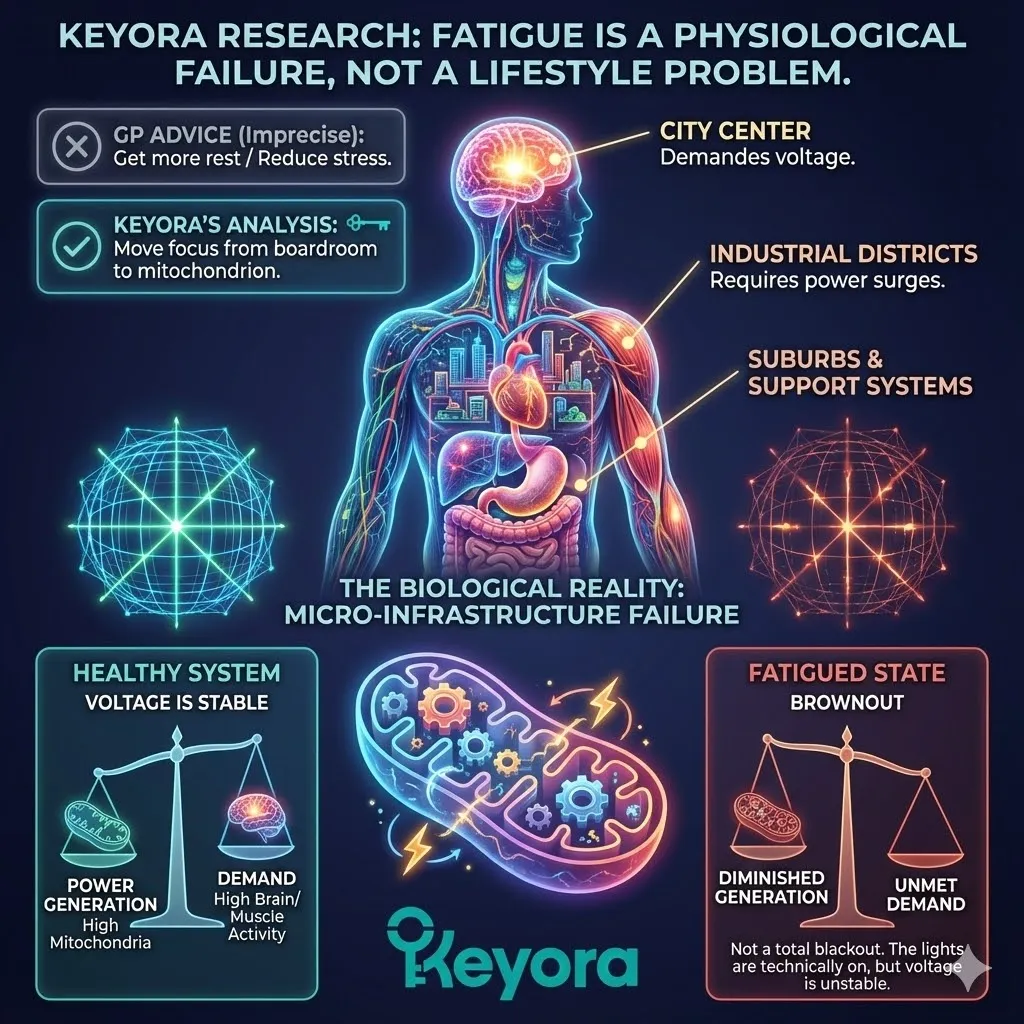
When you describe this state to a general practitioner, the prescription is often “get more rest” or “reduce your stress.” While well-intentioned, this advice misses the fundamental biological reality of what is occurring inside you.
To understand why you feel this way, we must shift our analysis.
We must move our focus from the boardroom to the mitochondrion.
We must look away from the external demands of your schedule and peer into the microscopic infrastructure of your cells.
Imagine your body not as a machine, but as a sprawling, metropolitan power grid.
Your brain is the city center, demanding massive amounts of voltage to keep the lights on and the data centers running.
Your muscles are the industrial districts, requiring surges of power for movement.
Your digestion, your immune system, your repair processes – these are the suburbs and support systems, all drawing from the same central supply.
In a healthy system, the grid is robust. Power generation matches demand.
The voltage is stable.
But what you are experiencing is not a total blackout.
You are not in a coma. The lights are technically on.
You are experiencing a systemic “brownout.”
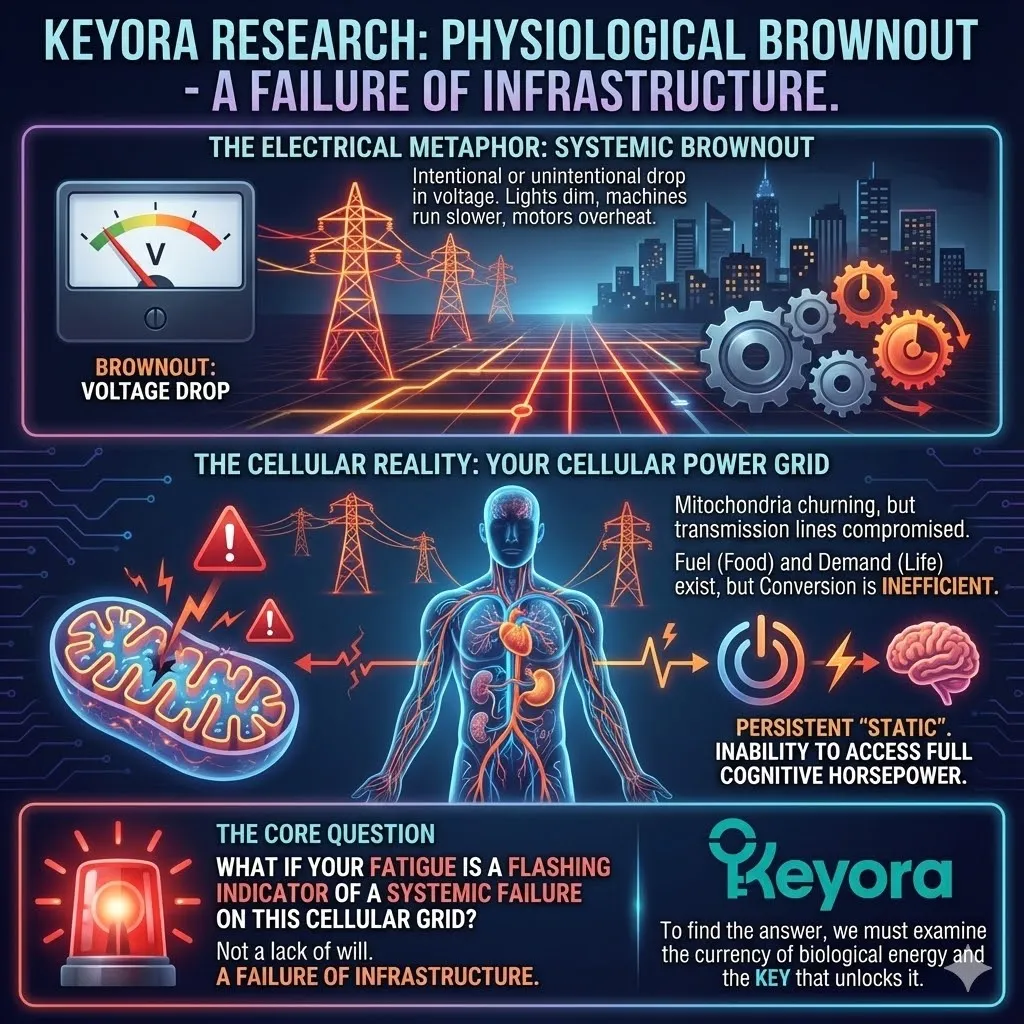
In electrical engineering, a brownout is a drop in voltage in an electrical power supply system. It is intentional or unintentional.
The lights dim. Machines run slower.
Motors overheat because they are struggling to pull enough power to function.
This is the perfect physiological metaphor for the modern, magnesium-deficient high-performer.
Your cellular power grid is suffering from a voltage drop.
Your mitochondria – the power plants of your cells – are churning, but the transmission lines are compromised. You have the fuel (the food you eat). You have the demand (the life you lead). But the conversion of that fuel into usable power is inefficient.
This inefficiency manifests as that persistent “static” we discussed in the introduction. It manifests as the inability to access your full cognitive horsepower when you need it most.
It is not a lack of will.
It is a failure of infrastructure.
And here is the critical question we must pose to begin this investigation:
What if your fatigue is not a signal that you need more rest, but a flashing indicator of a systemic failure on this cellular grid?
To find the answer, we cannot simply look at “energy” as an abstract concept.
We must examine the very currency of biological energy itself.
We must look at the molecule that powers every single transaction in your body, and the “key” that unlocks it.
ATP: The Universal Currency of Life (and Its Hidden Co-Factor)
To understand the brownout, we must first understand the currency of the grid.
In the economy of the human body, there is only one accepted form of payment. It does not matter if you are a neuron trying to fire a signal, a muscle fiber trying to contract, or an enzyme trying to synthesize a hormone.
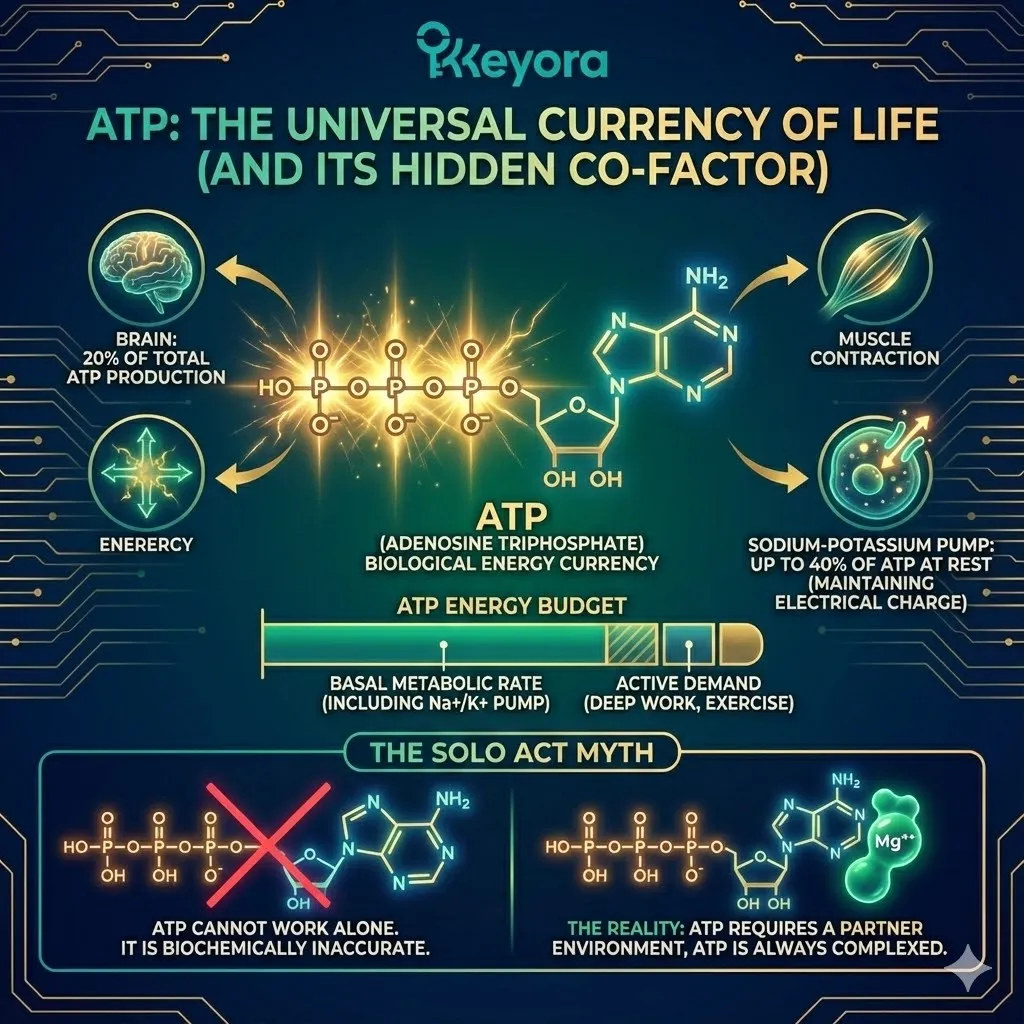
You must pay in Adenosine Triphosphate (ATP).
ATP is the non-negotiable, universal energy dollar for every biological transaction.
It is often described in biology textbooks as the “molecular unit of currency.” This is an apt description. Every second of every day, your body is burning through billions of these molecules.
The human brain alone – despite representing only about 2% of your body weight – consumes roughly 20% of your total ATP production.
Consider the “Sodium-Potassium Pump.” This is a mechanism in your cell membranes that constantly pumps ions in and out to maintain the electrical charge of the cell. It is what allows your nerves to conduct electricity.
This single process consumes up to 40% of the ATP in your body at rest.
Just to keep your cells electrically quiet and ready to fire, you are spending nearly half of your energy budget.
When you engage in deep work, intense exercise, or emotional regulation, that demand skyrockets. Your body is a furnace, constantly demanding ATP to keep the fire burning.
For decades, popular science and even some medical education have presented ATP as a solo act.
We are taught that glucose is broken down, ATP is produced, and energy is released.
We see diagrams of the ATP molecule floating in the void, waiting to be used.
This is a profound oversimplification.
In fact, it is biochemically inaccurate.
In the complex, watery environment of your cells, ATP does not – and cannot – work alone.
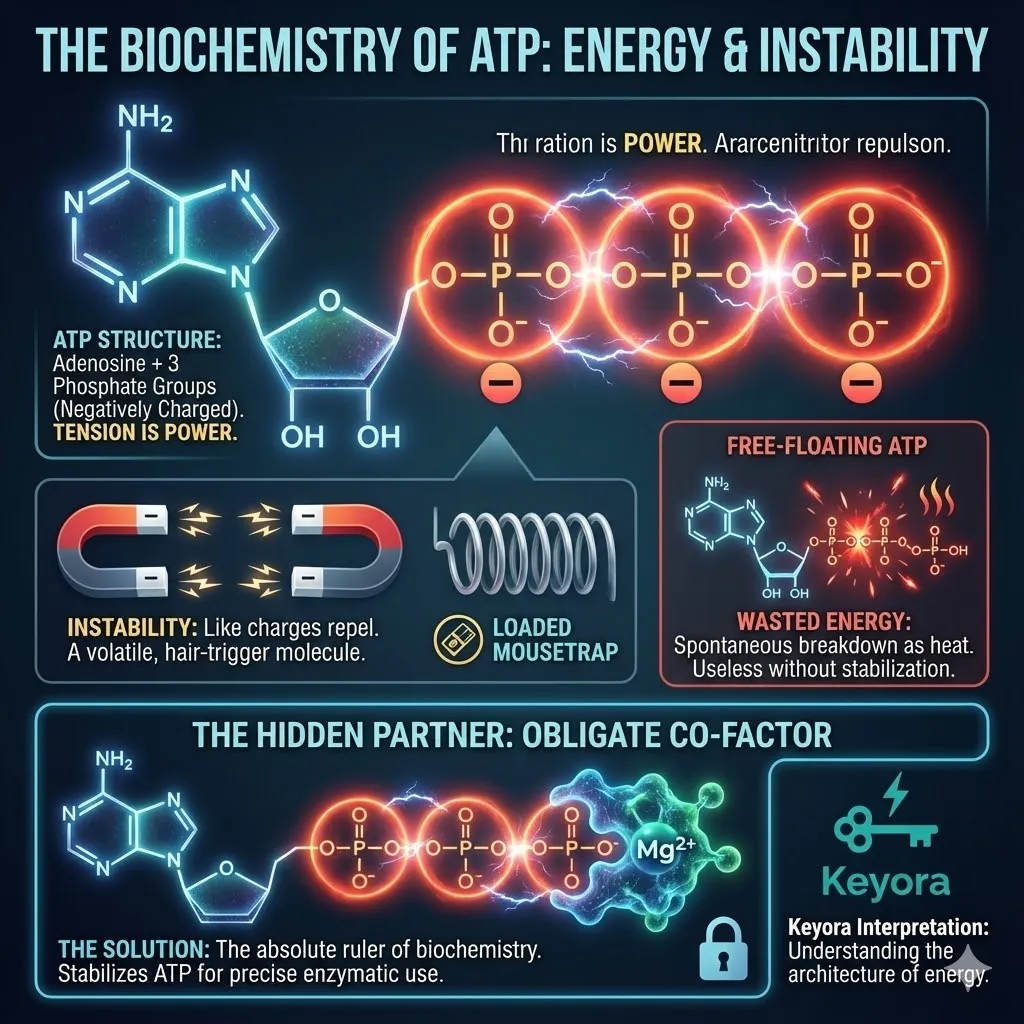
ATP is a high-energy molecule. Structurally, it consists of an adenosine backbone with a tail of three phosphate groups.
These phosphate groups are negatively charged.
If you remember your basic physics, you know that like charges repel each other.
Imagine trying to hold three powerful magnets together, all with their negative poles facing each other. They want to fly apart. They are unstable. There is immense tension in that bond.
This tension is the source of ATP’s power. Breaking that bond releases the energy.
However, this also presents a dangerous problem for the cell.
Because of this intense negative charge, a free-floating ATP molecule is chemically volatile. It is like a loaded mousetrap with a hair trigger.
If it were left to float freely in the cytoplasm, it would be useless.
It would either break down spontaneously, wasting its energy as heat, or it would be unable to fit into the precise enzymatic machinery required to use it.
This brings us to the “hidden partner.”
The obligate co-factor that has been stripped from the headlines but remains the absolute ruler of the biochemistry.
Let us be unequivocal:
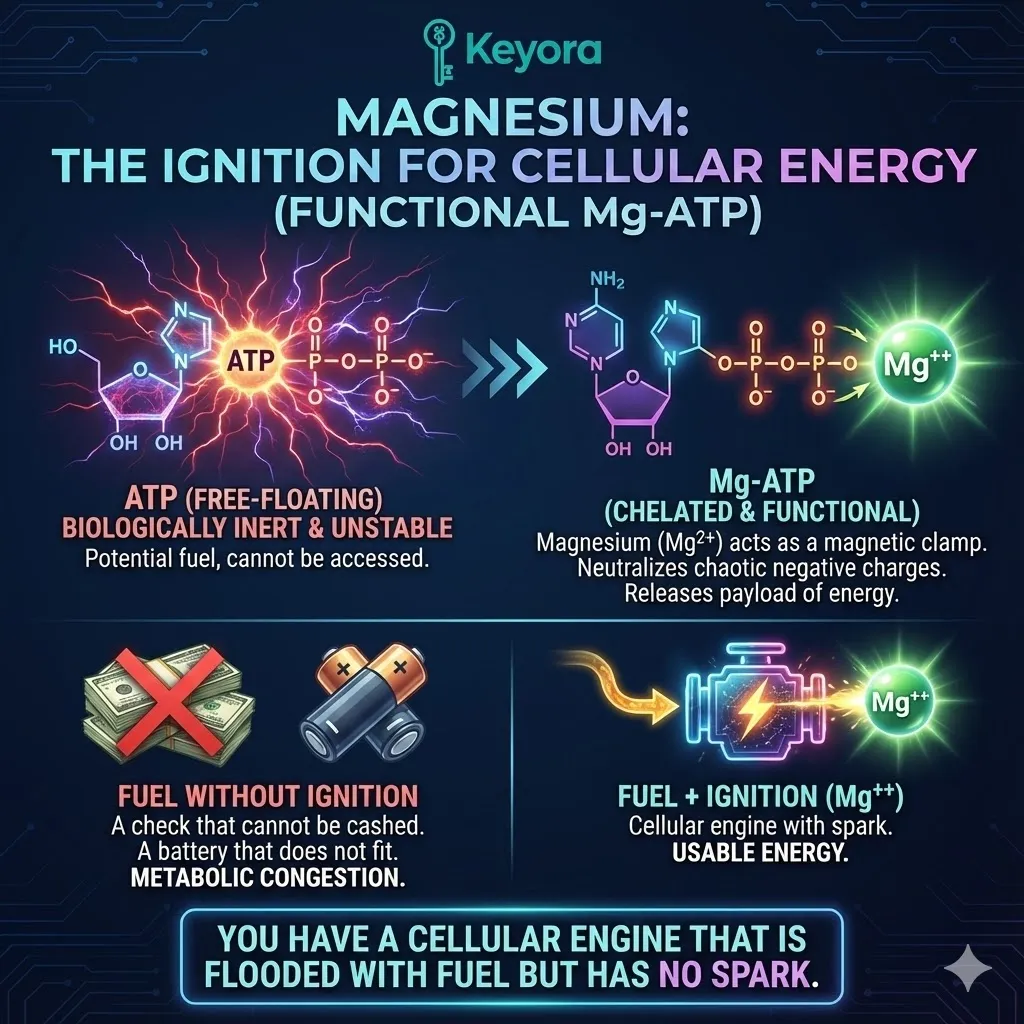
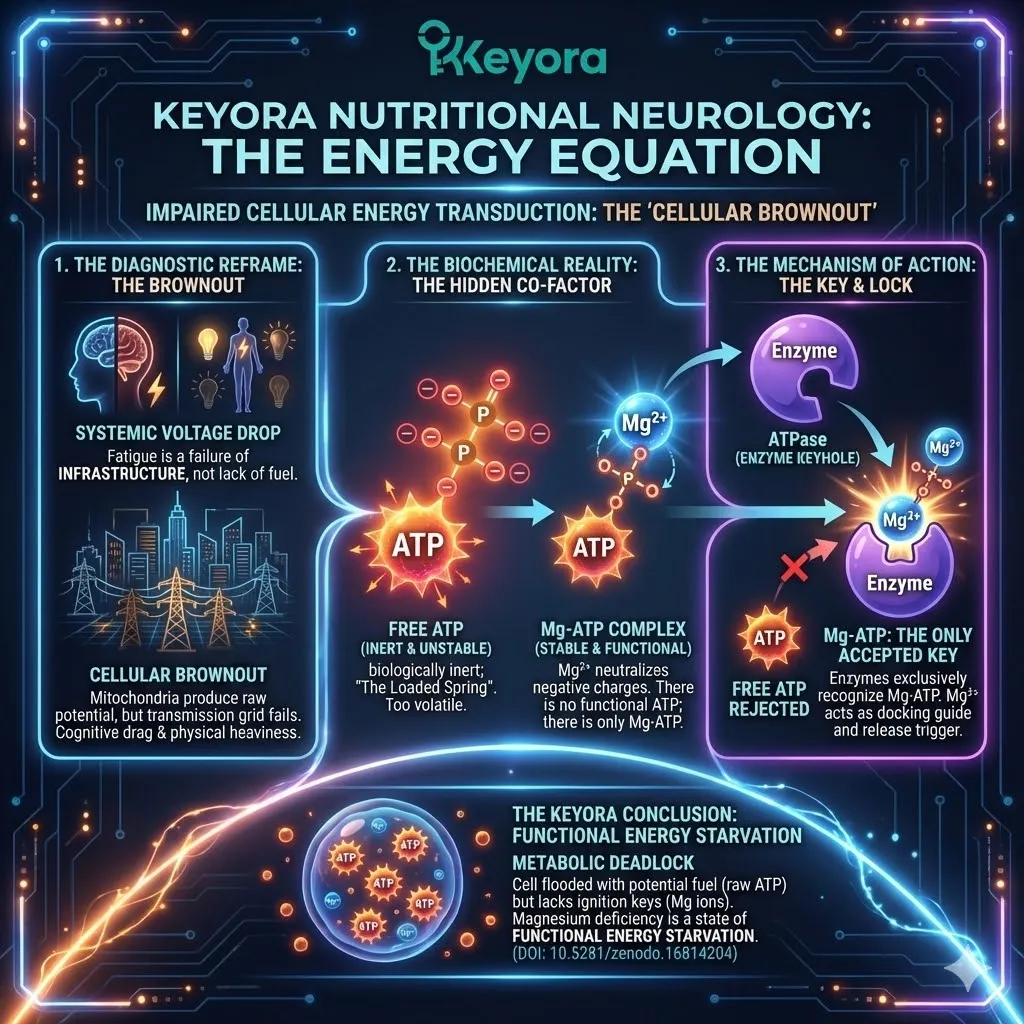
ATP, in its free-floating form, is biologically inert and unstable.
For it to perform its function – to release its payload of energy – it MUST be chelated by a magnesium ion.
In the intricate reality of our biochemistry, there is no such thing as functional ATP. There is only Mg-ATP.
This is not a semantic distinction.
It is a functional reality.
The magnesium ion is a divalent cation (Mg2+).
It carries a double positive charge.
When it encounters an ATP molecule, it binds to the negatively charged oxygen atoms on the phosphate tail.
It acts as a magnetic clamp. It neutralizes the chaotic negative charges that are trying to tear the molecule apart.
Without magnesium, ATP is just a potential fuel source that cannot be accessed. It is a check that cannot be cashed. It is a battery that does not fit the device.
This realization changes the entire conversation about energy.
We spend so much time focusing on the creation of ATP. We focus on “boosting metabolism.” We focus on glucose, ketones, and macronutrients. We obsess over the fuel.
But we ignore the ignition.
If you have abundant fuel (ATP) but you lack the magnesium to stabilize it and allow it to be utilized, you do not have energy. You have metabolic congestion.
You have a cellular engine that is flooded with fuel but has no spark.
The Science of the Spark: How Magnesium Unlocks Cellular Power
We must be careful to ground this assertion in verifiable science.
This is not a theoretical novelty; it is foundational biochemistry. In our systematic review of the literature for the Keyora Research Notes Series, we consistently find this principle reinforced, yet rarely discussed in clinical practice.
Leading researchers in the field of divalent cations have mapped this relationship extensively.
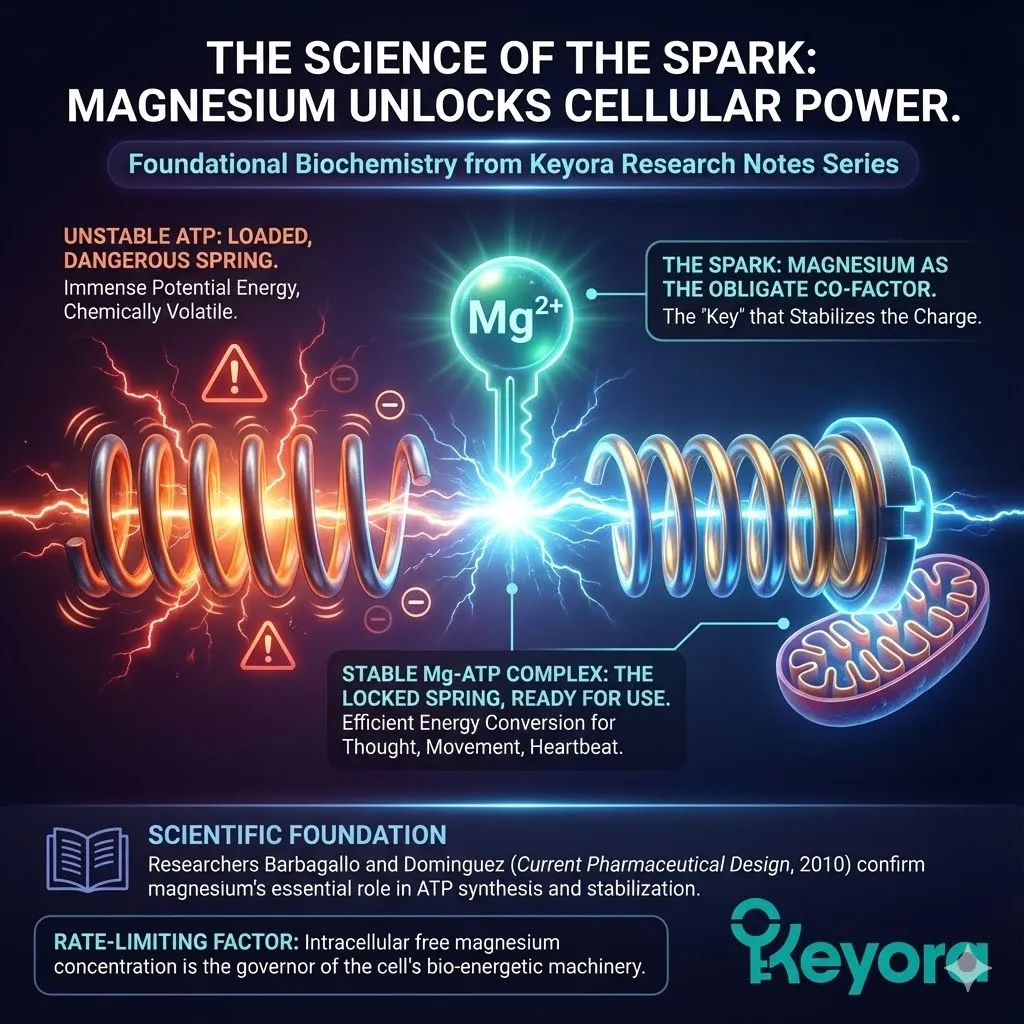
For example, as noted by researchers Barbagallo and Dominguez in their comprehensive review published in Current Pharmaceutical Design (2010), magnesium’s essential role in ATP synthesis and stabilization is a core pillar of mitochondrial health.
Their work, along with decades of bio-energetic research, highlights that the intracellular concentration of free magnesium is the rate-limiting factor for the bio-energetic machinery of the cell.
To visualize this, let us return to our analogy of the locked spring.
Think of the phosphate bonds in an ATP molecule as a powerful, industrial-grade steel spring.
This spring is compressed. It is loaded with immense potential energy. This is the energy that will drive your thought, your movement, and your heartbeat.
However, in a free-floating ATP molecule, this spring is dangerously unstable. It is vibrating with the tension of those repelling negative charges. It is like a safety latch that is too sensitive – liable to snap at the wrong moment or, conversely, jam completely.
Magnesium acts as the indispensable “stabilizing brace” AND the “release trigger.”
When the magnesium ion binds to the ATP molecule, it wraps around the phosphate tail. It neutralizes the negative charges. It essentially puts a safety lock on the spring, holding it in a precise, stable geometry.
This creates the Mg-ATP Complex.
Now, and only now, can the cellular machinery go to work.
Your body relies on enzymes called ATPases to break that bond and release the energy. These enzymes are like complex keyholes.
Here is the critical detail:
The “keyhole” of the ATPase enzyme is shaped specifically for the Mg-ATP complex.
It is NOT shaped for raw ATP.
If raw ATP tries to enter the enzyme, it won’t fit. The geometry is wrong. The electrical charge is wrong.
The enzyme will essentially spit it out.
But when the Mg-ATP complex arrives, the magnesium ion guides the molecule into the active site of the enzyme. It coordinates the precise alignment of the atoms.
Once docked, the magnesium ion assists in the hydrolysis (breaking) of the bond. It allows the spring to uncoil in a controlled, powerful release of energy that the cell can actually use.
Without the magnesium “brace,” the ATP “spring” is useless to the enzyme.
So, what happens when you are deficient?
What happens when your dietary intake of magnesium is low, and your stress levels (which deplete magnesium) are high?
You end up with a deficit of “keys.”
Your mitochondria may be working overtime. You may be eating a perfect diet, providing ample glucose and fatty acids. Your body may be producing raw ATP in massive quantities.
But without enough magnesium ions to chelate that ATP, the energy remains locked away.
The cell becomes flooded with inert potential.
This leads to a state of functional energy starvation.
Your cells are starving in the midst of plenty. They have the currency, but they cannot spend it.
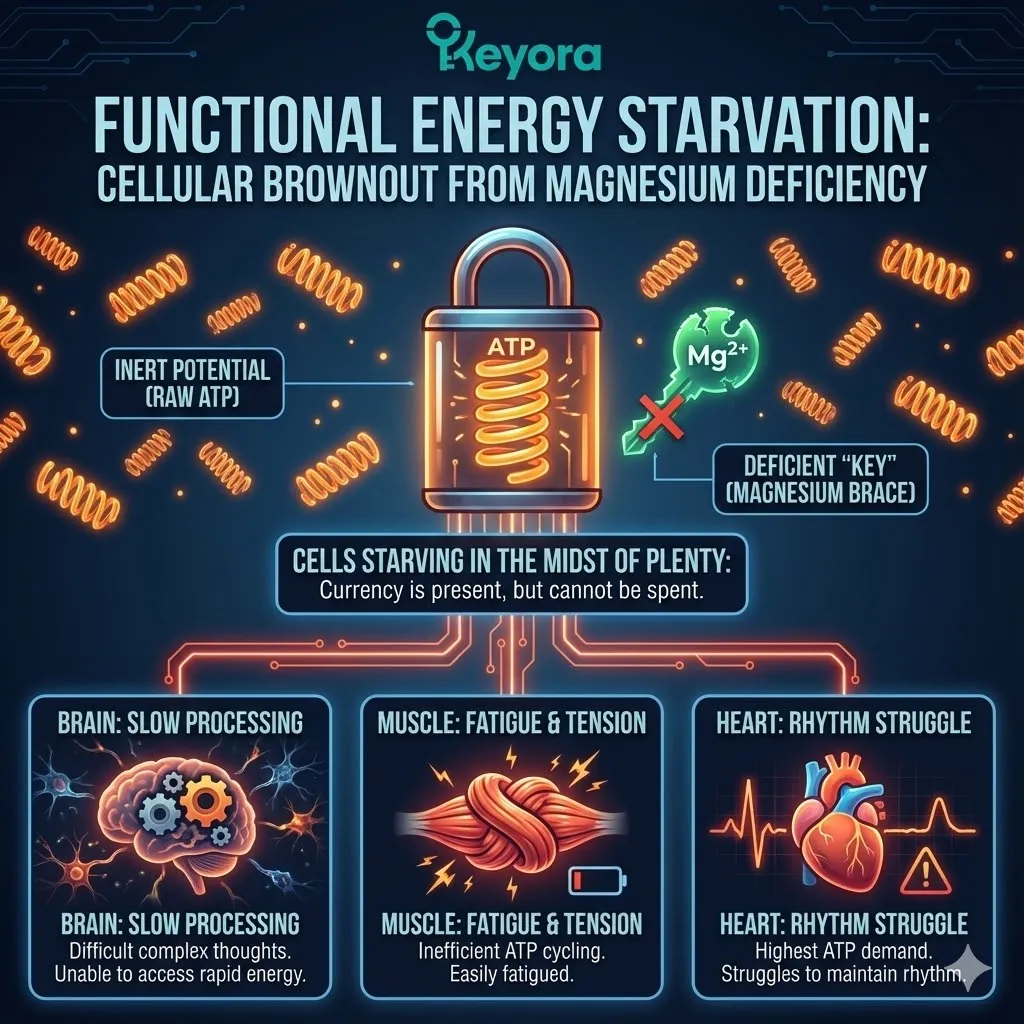
This manifests systemically as the brownout we described earlier.
Your brain cells, unable to access the rapid energy required for high-speed processing, begin to slow down. Complex thoughts become difficult.
Your muscle cells, unable to efficiently cycle ATP, become easily fatigued and prone to tension.
Your heart cells, which have the highest ATP demand of any tissue, struggle to maintain their rhythm (a concept we will explore deeply in later chapters regarding palpitations).
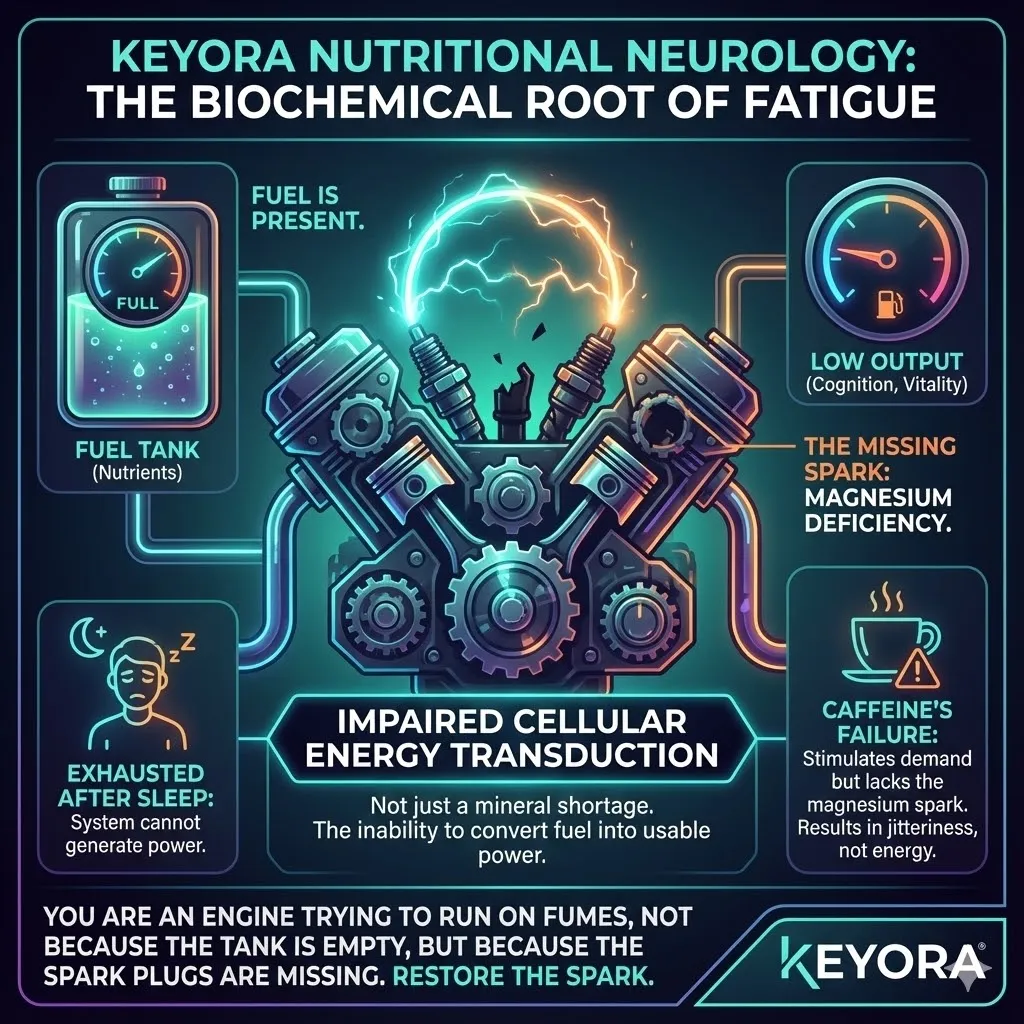
Therefore, within the framework of Keyora Nutritional Neurology, we define magnesium deficiency at its most fundamental level not just as a mineral shortage, but as a state of Impaired Cellular Energy Transduction.
This is the biochemical root of the pervasive fatigue that plagues so many modern high-performers.
It explains why you can feel exhausted even after a full night’s sleep.
It explains why caffeine – which stimulates the production of catecholamines but does not provide the magnesium to process the resulting energy demand – often leaves you feeling jittery yet still tired.
Your body isn’t just tired; it has lost the very spark needed to ignite its own power.
You are an engine trying to run on fumes, not because the tank is empty, but because the spark plugs are missing.
– Series Theme: **Keyora Nutritional Neurology** (Magnesium Glycinate).
– Episode Concept: **The Energy Equation** (Why All Bodily Power Flows Through Mg-ATP).
– Core Pathology: **Impaired Cellular Energy Transduction** (The “Cellular Brownout”).
– **1. The Diagnostic Reframe (The Brownout)**:
– *The Symptom*: **Systemic Voltage Drop**. Fatigue in high-performers is re-defined not as a lack of fuel (glucose), but as a failure of infrastructure (energy conversion).
– *The Metaphor*: **The “Brownout”**. A state where mitochondria produce raw potential, but the transmission grid fails, leading to cognitive drag and physical heaviness despite adequate sleep.
– **2. The Biochemical Reality (The Hidden Co-Factor)**:
– *The Molecule*: **ATP (Adenosine Triphosphate)**. Often viewed as a solo actor, but biologically inert in its free form due to the intense repulsion between its negatively charged phosphate groups.
– *The Instability*: **”The Loaded Spring”**. Without stabilization, raw ATP is too volatile to be utilized by cellular machinery.
– *The Fix*: **Mg-ATP Complex**. Magnesium (Mg2+) binds to the phosphate tail, neutralizing the negative charges and creating a stable, functional geometry. “There is no functional ATP; there is only Mg-ATP.”
– **3. The Mechanism of Action (The Key & Lock)**:
– *The Enzyme*: **ATPase**. The enzymes responsible for releasing energy act as specific “keyholes.”
– *The Specificity*: These enzymes exclusively recognize the **Mg-ATP complex**. They reject raw ATP. Magnesium acts as the essential “docking guide” and “release trigger” for hydrolysis.
– *The Keyora Conclusion*: Magnesium deficiency is fundamentally a state of **”Functional Energy Starvation.”** The cell is flooded with potential fuel (raw ATP) but lacks the “ignition keys” (Mg ions) to utilize it, creating a metabolic deadlock rooted in biochemistry (DOI: 10.5281/zenodo.16814204).
The Nervous System’s “Master Switch”:
How Magnesium Governs Calm and Chaos
The Brain’s Two Pedals: Glutamate (The Accelerator) and GABA (The Brake)
To truly understand the state of your mind – its default setting of calm or its propensity for chaos – you must look beneath the surface of your thoughts. You must examine the machinery that generates them.
The human brain is an electrical organ, a vast network of eighty-six billion neurons constantly firing signals in a complex symphony of communication.
But like any high-performance vehicle, this engine requires a control system to manage its speed. It cannot run at full throttle indefinitely without risking catastrophic failure.
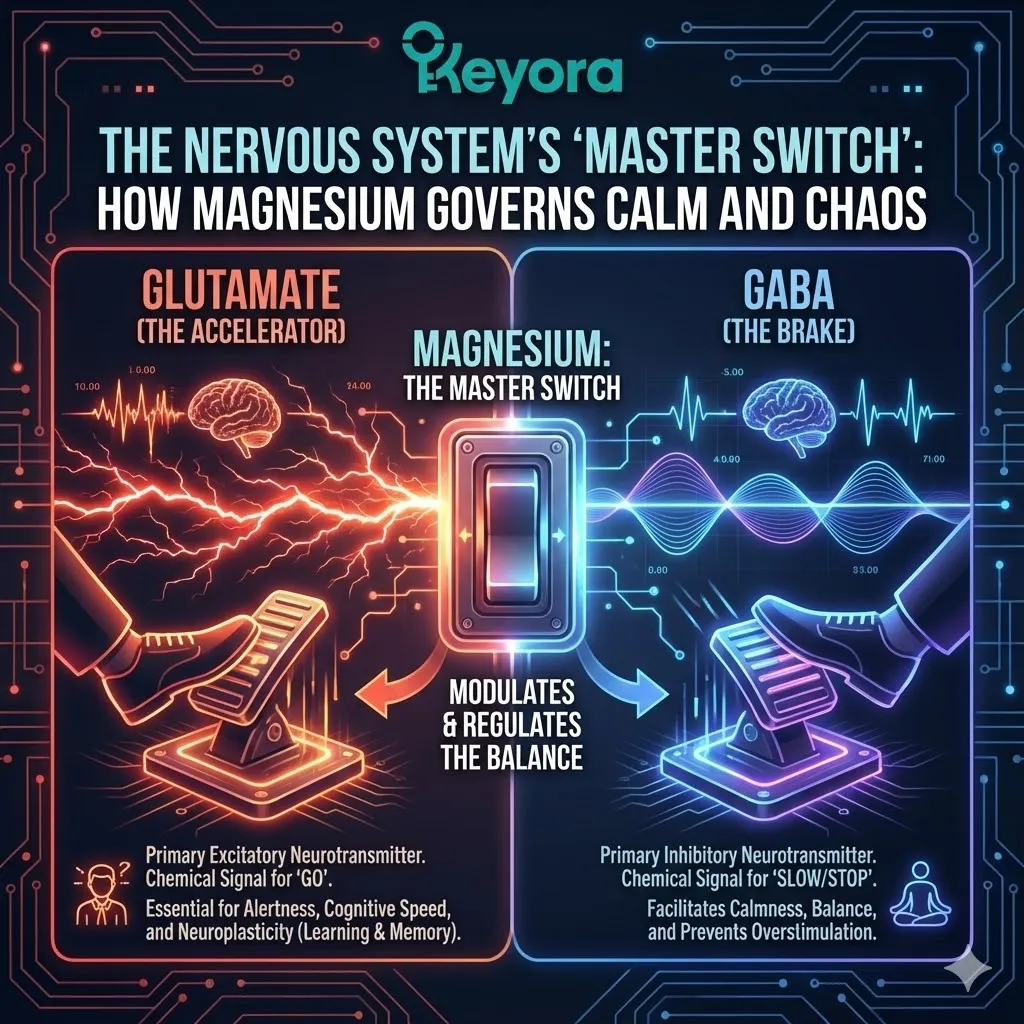
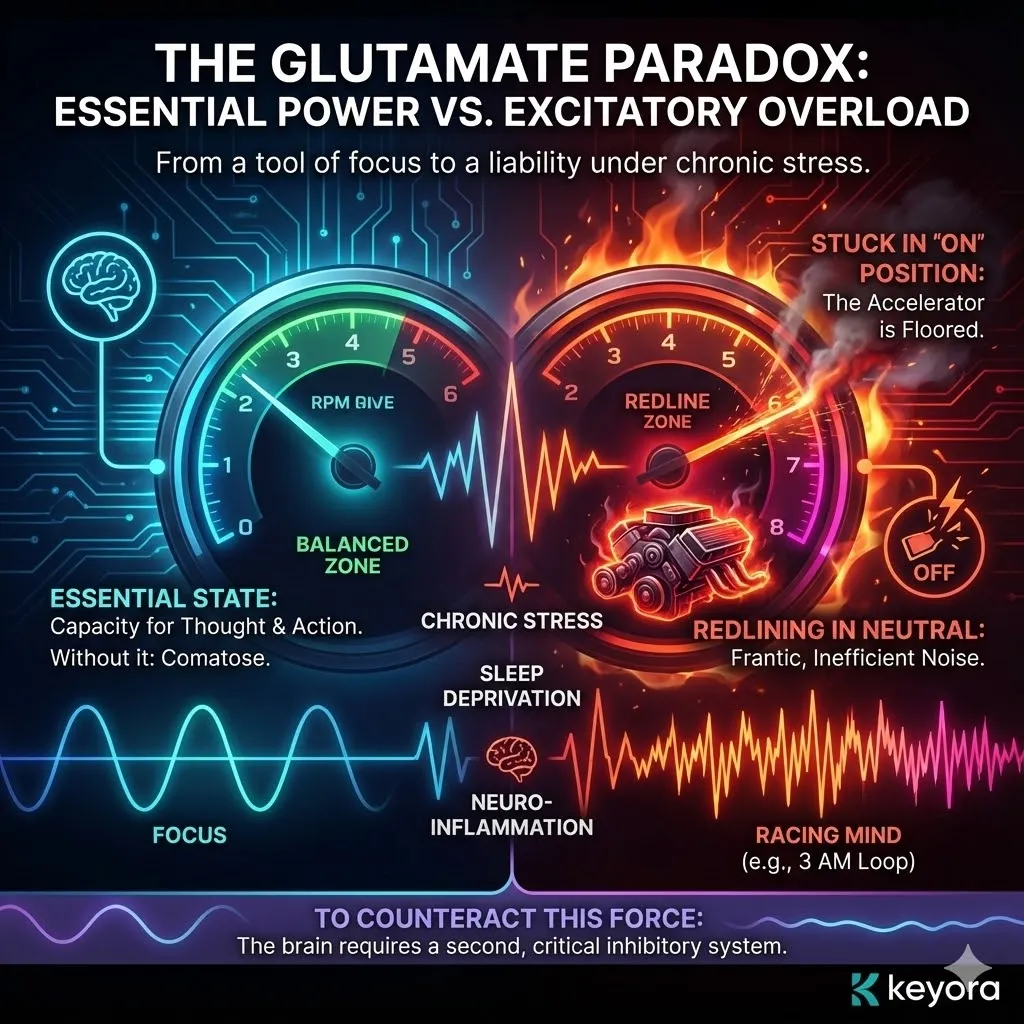
To navigate this delicate balance, your brain relies on two primary neurochemical pedals: Glutamate, the accelerator, and GABA, the brake.
Glutamate is the brain’s primary excitatory neurotransmitter.
It is the chemical signal for “Go.”
When you are learning a new skill, forming a memory, or focusing intensely on a critical problem, glutamate is the molecule flooding your synapses.
It facilitates neuroplasticity – the brain’s ability to rewire itself.
It is essential for alertness, cognitive speed, and the sheer vitality of consciousness.
Without glutamate, you would be comatose.
You would have no capacity for thought or action.
However, in the modern environment of chronic, high-intensity stress, glutamate often transforms from a tool of focus into a liability.
Under conditions of persistent psychological pressure, sleep deprivation, or neuro-inflammation, the glutamate system can become stuck in the “on” position.
The accelerator is pressed to the floor.
The engine begins to rev uncontrollably.
The brain is flooded with excitatory signals far beyond what is required for the task at hand.
This state is not one of high performance; it is a state of frantic, inefficient noise.
It is the feeling of a mind racing at 3 AM, replaying a conversation from three days ago on an endless loop.
It is the inability to “switch off” after work.
It is the sensation of your internal engine redlining while the car is in neutral.
To counteract this powerful excitatory force, the brain possesses a second, equally critical system.
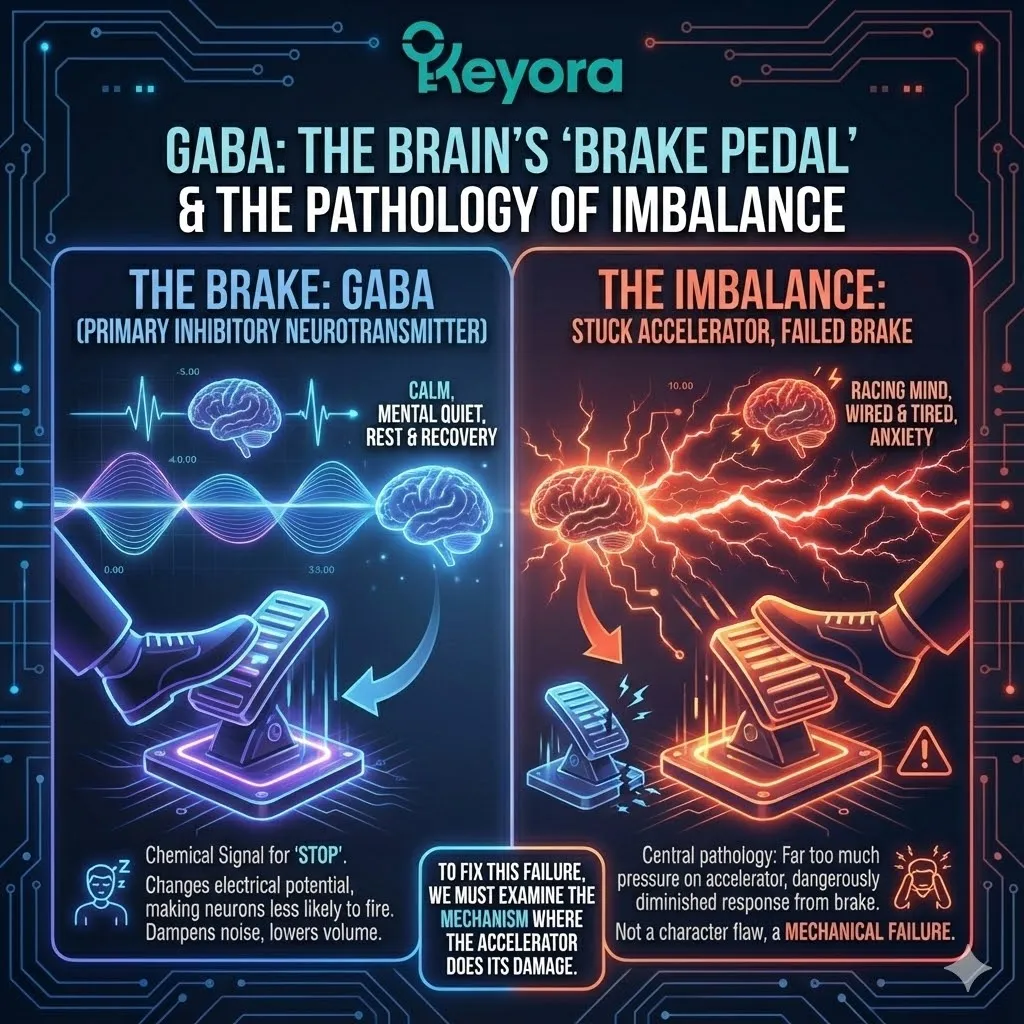
GABA (gamma-aminobutyric acid) is the brain’s primary inhibitory neurotransmitter. It is the chemical signal for “Stop.”
GABA is the source of calm. It is the molecular embodiment of control, relaxation, and mental quiet.
When GABA binds to its receptors on a neuron, it changes the electrical potential of that cell, making it less likely to fire.
It effectively dampens the noise.
It lowers the volume on the world.
It allows the system to downshift from high-alert survival mode into a state of rest and recovery.
GABA is what allows you to feel peaceful while sitting still.
It is what permits you to drift into sleep.
It is the essential “brake pedal” that prevents your neural engine from burning itself out.
The central pathology of anxiety, a racing mind, and the feeling of being simultaneously “wired and tired” is, at its biochemical root, a devastatingly simple imbalance:
Far too much pressure on the accelerator, and a dangerously diminished response from the brake.
This is not a character flaw. It is a mechanical failure of the braking system in the face of a stuck accelerator.
And to understand how to fix this failure, we must look at the specific mechanism where the accelerator does its most damage.
The Glutamate Storm and the NMDA “Gate of Chaos”
Let us examine the “stuck accelerator” more closely.
Glutamate exerts its excitatory effects by binding to several different types of receptors on the surface of neurons.
But there is one receptor type that is particularly powerful, and potentially perilous.
It is called the NMDA receptor (N-methyl-D-aspartate receptor).
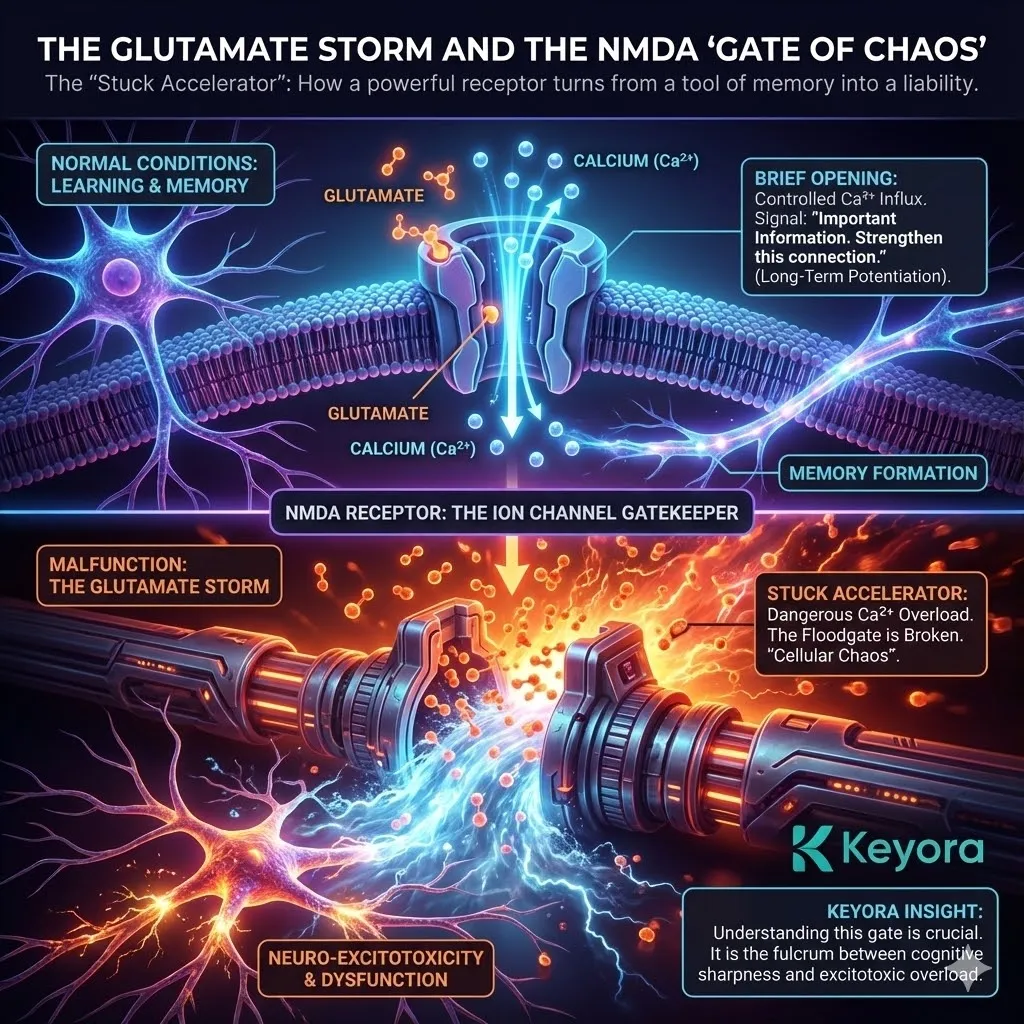
In the architecture of the brain, the NMDA receptor functions as a specialized ion channel. You can think of it as a gatekeeper controlling a floodgate.
Under normal conditions, this gate is crucial for learning and memory.
When it opens briefly, it allows Calcium (Ca2+) ions to flow into the neuron. This influx of calcium is a powerful signal. It tells the neuron, “
This information is important.
Strengthen this connection. Remember this.”
This process, known as Long-Term Potentiation, is the cellular basis of memory formation.
However, like any powerful tool, the NMDA receptor becomes dangerous when it malfunctions.
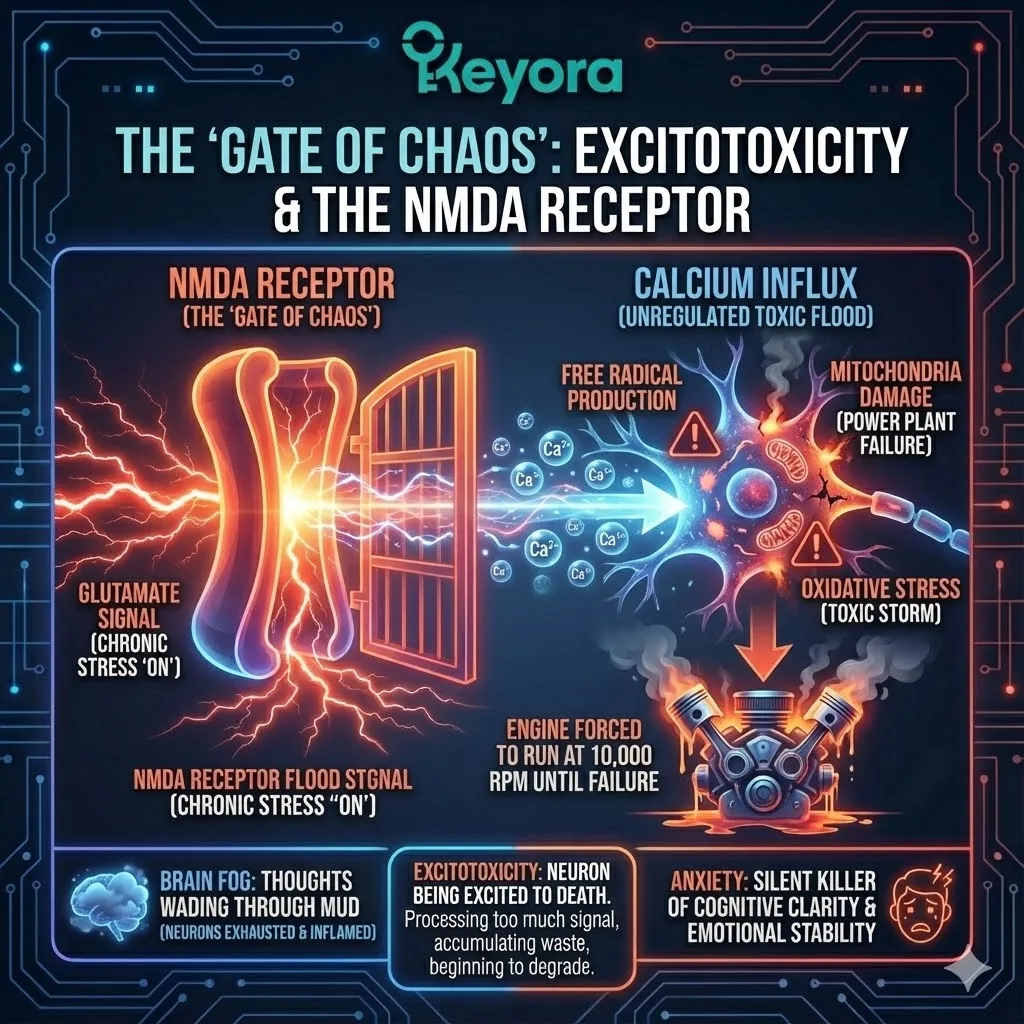
We call this receptor the “Gate of Chaos.”
When chronic stress keeps the glutamate signal constantly “on,” the NMDA gate is forced to remain open for prolonged periods. It does not just open briefly to encode a memory; it stays open, allowing a relentless, unregulated torrent of calcium to flood into the neuron.
Calcium, while essential in small, controlled bursts, is toxic in excess.
A massive influx of calcium triggers a cascade of destructive enzymatic reactions inside the cell.
It ramps up the production of free radicals.
It damages the mitochondria (the very power plants we discussed in Chapter 1).
It creates immense oxidative stress.
Essentially, the neuron is being excited to death.
It is firing so rapidly, processing so much signal, and accumulating so much metabolic waste that it begins to degrade.
It is like an engine being forced to run at 10,000 RPM until the pistons melt and the block cracks.
This phenomenon, known in neurobiology as excitotoxicity, is the silent killer of cognitive clarity and emotional stability.
It manifests not just as anxiety, but as “brain fog” – the feeling that your thoughts are wading through mud. This is the direct result of neurons that are exhausted, inflamed, and struggling to survive the toxic storm of their own excitation.
Our conclusion at Keyora Research is built upon a solid foundation of clinical consensus regarding this mechanism.
For instance, the comprehensive 2013 review by Serefko et al. in Pharmacological Reports explicitly links NMDA-mediated excitotoxicity to the pathophysiology of depression and anxiety.
The authors detail how this chronic over-excitation and subsequent neuronal damage provides a clear mechanistic explanation for the cognitive impairment – the inability to focus, the memory lapses, the mental exhaustion – that so often accompanies these conditions (Serefko A, et al., 2013).
The “Gate of Chaos” is stuck open.
The flood is rising.
The neurons are drowning in noise.
The question then becomes: Is there a way to close the gate?
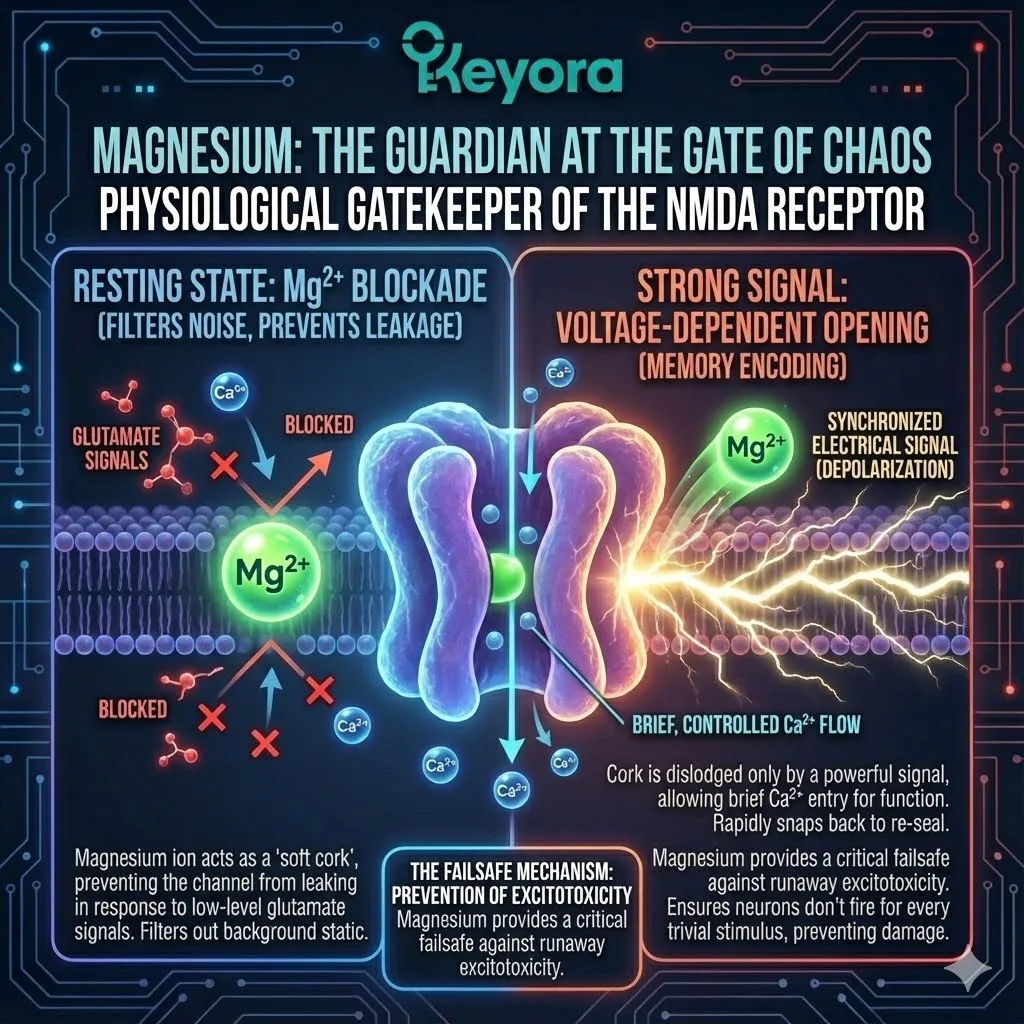
Magnesium’s First Duty: The Guardian at the Gate
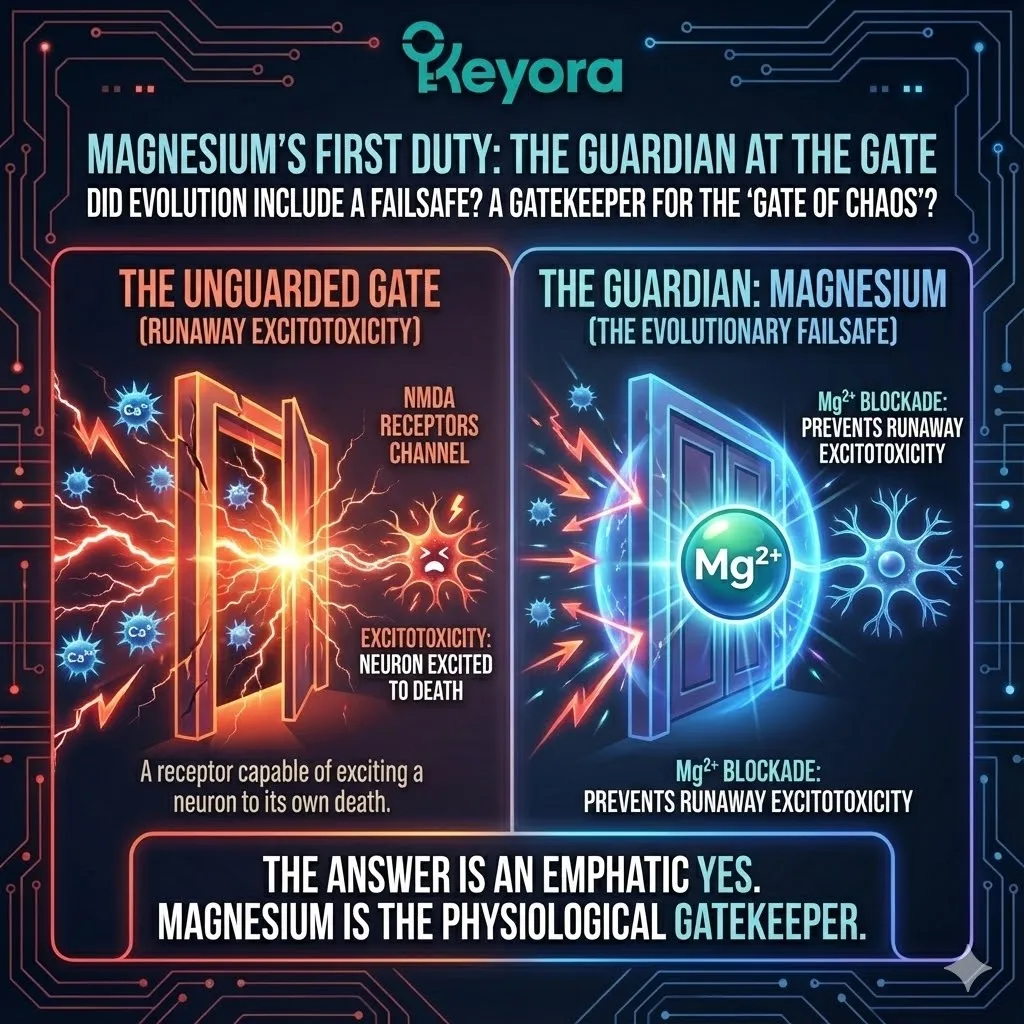
If nature designed such a potentially destructive “Gate of Chaos” – a receptor capable of exciting a neuron to its own death – did it also provide a gatekeeper?
Did evolution include a failsafe mechanism to prevent this runaway excitotoxicity?
The answer is an emphatic yes.
That physiological gatekeeper is Magnesium.
To understand Magnesium’s role here, we must look at the physical structure of the NMDA receptor channel itself. It is a microscopic tunnel through the cell membrane.
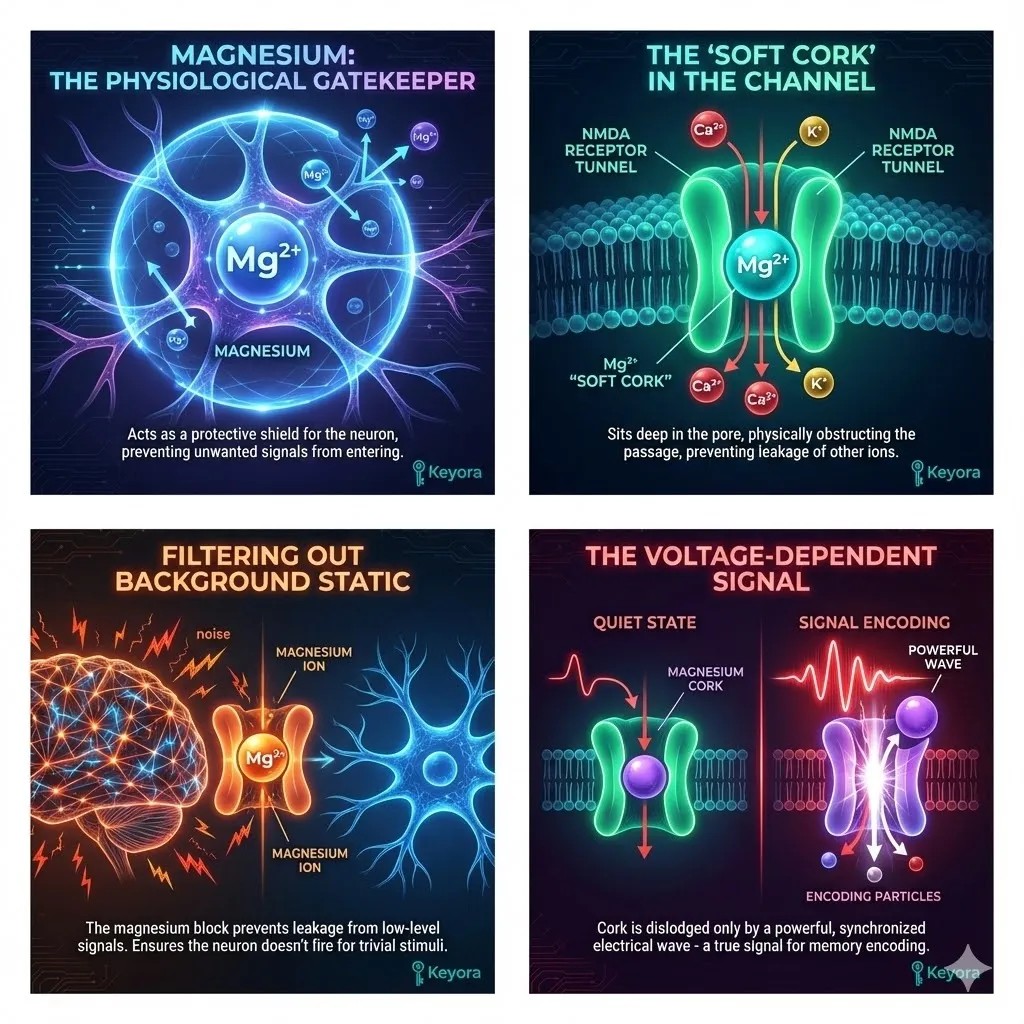
Under normal, resting conditions, a single magnesium ion (Mg2+) is naturally situated deep within the pore of this channel.
It sits there like a “soft cork” in a wine bottle.
It does not seal the bottle permanently. It is not welded shut. But it physically obstructs the passage.
Because of its size and electrical charge, the magnesium ion blocks the flow of other ions. It prevents Calcium from entering and Potassium from leaving.
This blockade is voltage-dependent. This is a critical nuance.
It means that the magnesium “cork” prevents the channel from “leaking” in response to low-level, noisy glutamate signals. It effectively filters out the background static of the brain. It ensures that the neuron does not fire for every trivial stimulus.
The magnesium “cork” is only dislodged when a powerful, synchronized wave of electrical stimulation arrives – a true “signal” worthy of attention. When the neuron is sufficiently depolarized by a strong signal, the electrical change pops the magnesium cork out of the channel, allowing the gate to open briefly and perform its function of encoding memory.
As soon as the signal passes, the magnesium ion snaps back into place, re-sealing the channel and restoring quiet.
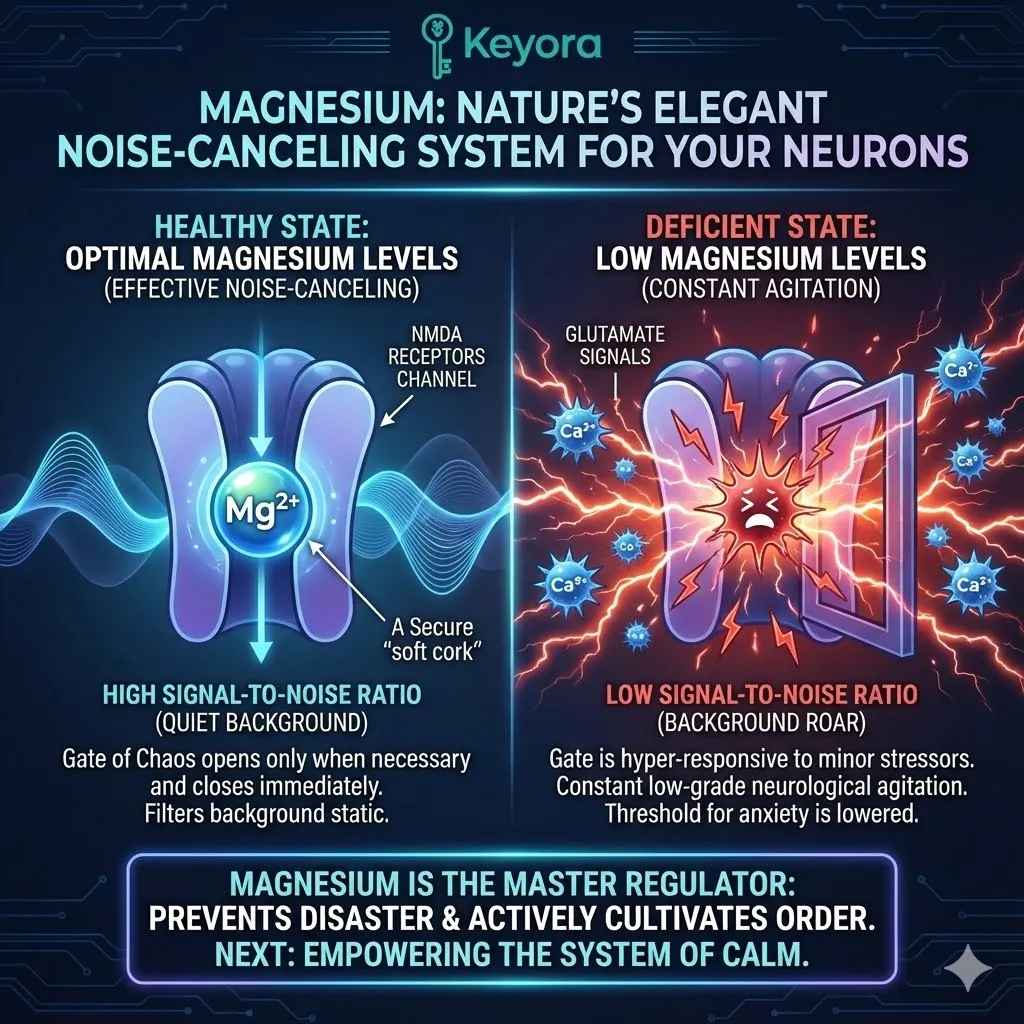
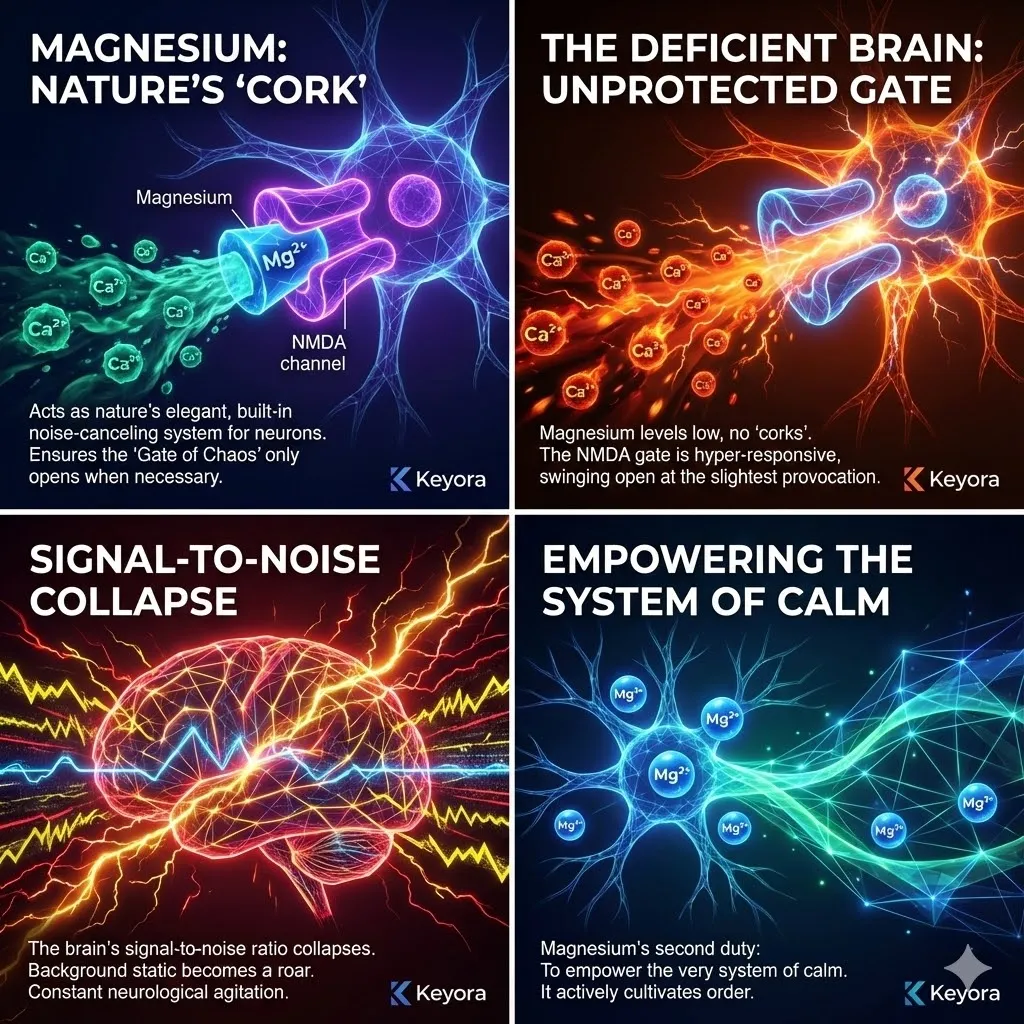
Magnesium, therefore, acts as nature’s own elegant, built-in noise-canceling system for your neurons.
It ensures that the “Gate of Chaos” only opens when absolutely necessary, and closes immediately afterward.
Now, consider the state of the magnesium-deficient brain.
When intracellular magnesium levels are low, there are not enough ions to man the gates. The “corks” are missing.
The NMDA receptors are now left unprotected. They are stripped of their natural filter.
Without the magnesium block, the gate becomes hyper-responsive. It swings open at the slightest provocation.
Every minor stressor – a sudden noise, a worried thought, a traffic jam – triggers a disproportionate flood of calcium and excitatory firing.
The brain’s signal-to-noise ratio collapses.
The background static becomes a roar.
This results in a state of constant, low-grade neurological agitation.
The threshold for anxiety is lowered.
The brain becomes “twitchy,” reactive, and unable to settle.
It is a biological system that has lost its ability to ignore the irrelevant.
But a master regulator does not simply prevent disaster; it actively cultivates order.
This brings us to magnesium’s second, equally profound duty: to empower the very system of calm.
Magnesium’s Second Duty: Amplifying the “Brake Pedal” of GABA
While blocking the “Gate of Chaos” prevents the brain from burning out, it is the active promotion of inhibition that allows the brain to truly rest.
Magnesium’s role as a calming agent is not confined to the glutamate system.
A landmark 2017 systematic review in the journal Nutrients analyzed data from numerous human trials regarding magnesium supplementation.
The conclusion was unequivocal: magnesium supplementation significantly improves scores on subjective anxiety and stress scales.
Crucially, the authors specifically highlighted its modulatory effects on the GABA pathway as a key mechanism of action (Boyle NB, et al., 2017).
This evidence suggests that magnesium is not just a passive blocker of excitation; it is an active promoter of inhibition.
But how does it do this?
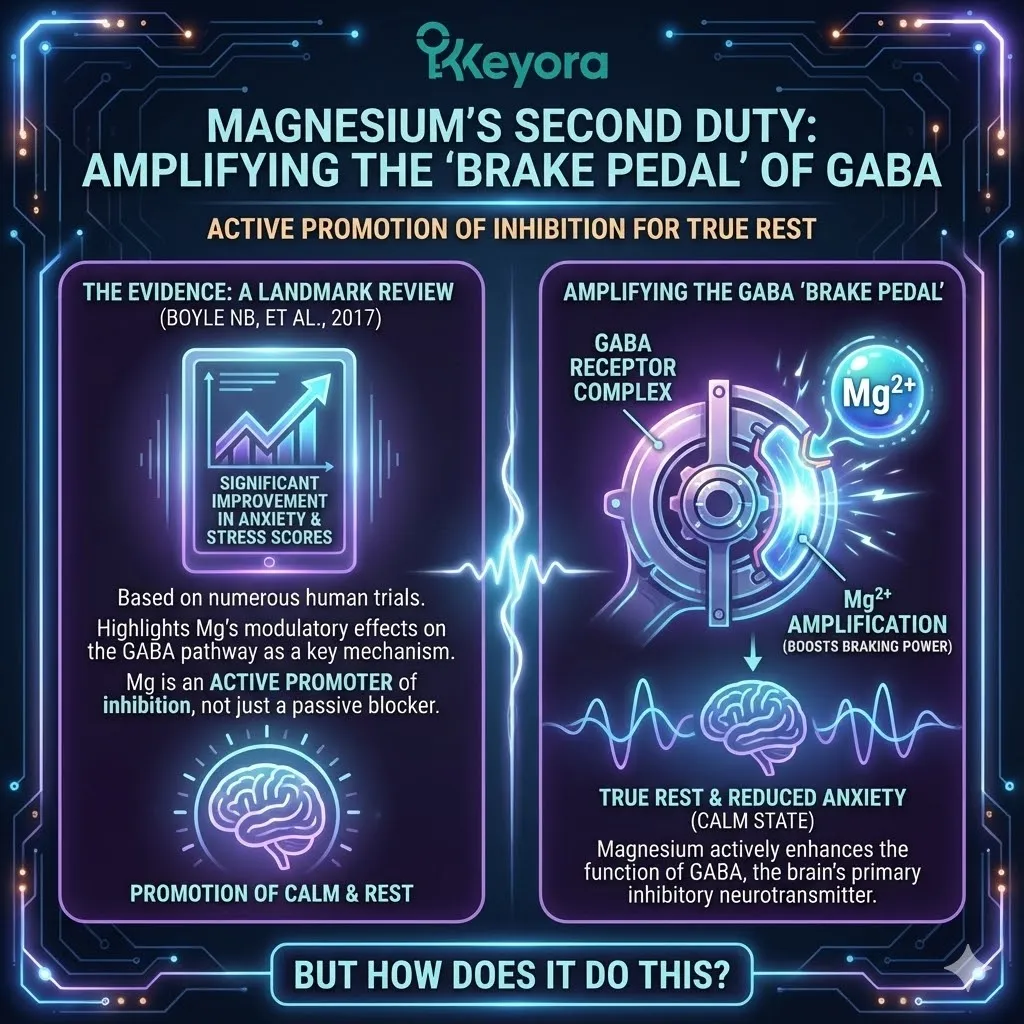
Magnesium acts as a positive allosteric modulator of the GABA-A receptor.
To understand this, let us return to our analogy of the GABA receptor as a lock and the GABA molecule as the key.
In a deficient state, the lock might be stiff. The key (GABA) enters, but it has trouble turning. The braking signal is weak. You might have enough GABA floating around, but if the receptors aren’t responsive, the signal doesn’t get through.
Magnesium functions like a precision lubricant for this lock.
It binds to a specific, secondary site on the GABA receptor – distinct from where GABA itself binds.
When magnesium attaches to this site, it changes the physical shape of the receptor slightly. It makes the “lock” far more sensitive to the “key.”
This means that when GABA binds, the channel opens more easily, stays open for a longer duration, and allows a greater flow of calming chloride ions into the neuron.
Magnesium dramatically amplifies GABA’s inhibitory, calming signal throughout the brain.
It essentially upgrades the braking system of your neural engine. It turns a spongy, unresponsive brake pedal into a crisp, responsive one.
This explains why magnesium is so often associated with improved sleep quality. By potentiating GABA activity, it helps initiate the neural slowing required to transition from wakefulness to sleep.
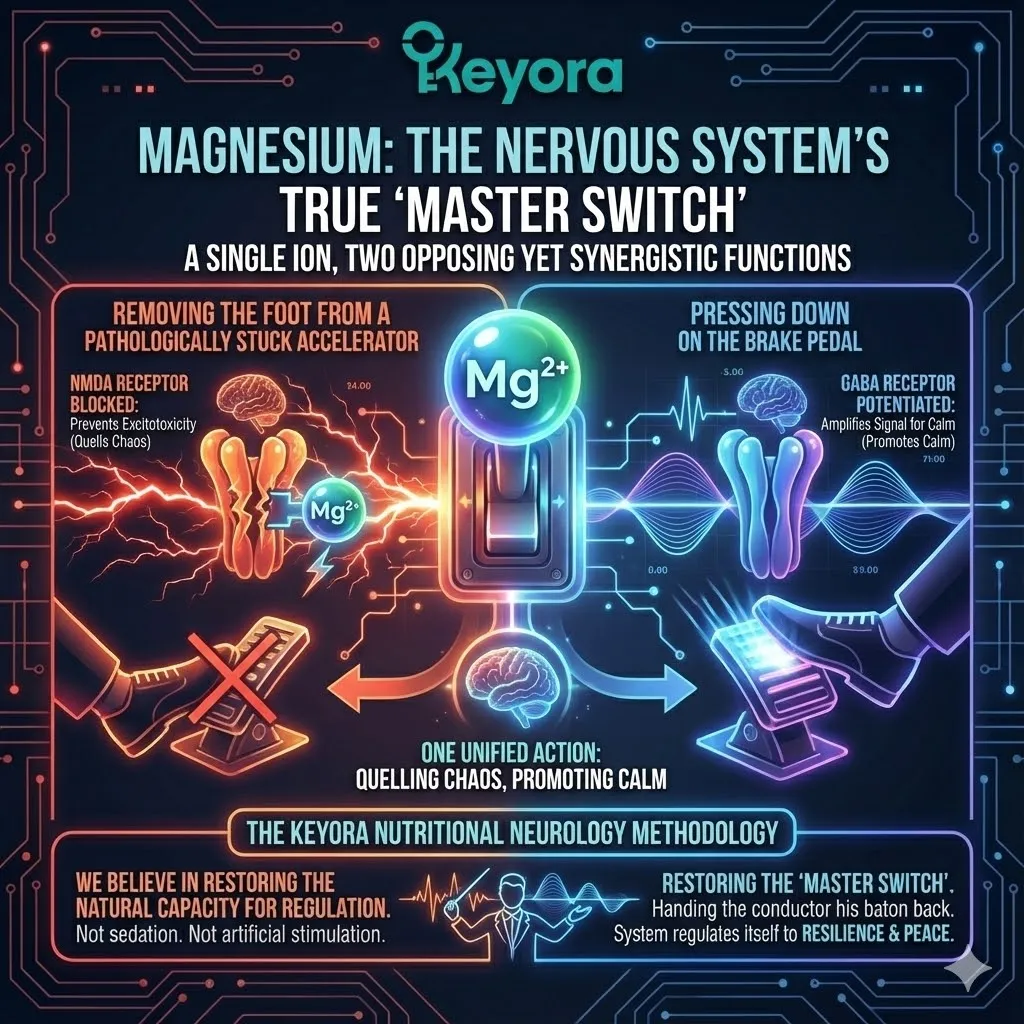
This dual functionality is what solidifies magnesium’s status as the nervous system’s true “Master Switch.”
It is a display of biochemical elegance that is rare even in the complex world of human physiology.
A single ion performs two opposing, yet perfectly synergistic functions:
-
It removes the foot from a pathologically stuck accelerator by blocking the NMDA receptor and preventing excitotoxicity.
-
It simultaneously presses down on the brake pedal by potentiating the GABA receptor and amplifying the signal for calm.
It quells the chaos and promotes the calm in one unified action.
Understanding this dual-role is a cornerstone of the Keyora Nutritional Neurology methodology.
We do not believe in simply sedating the brain with heavy-handed depressants. Nor do we believe in artificially stimulating it.
We believe in restoring the natural capacity for regulation.
By correcting the magnesium deficiency, we are not forcing the brain into a state of artificial relaxation. We are simply handing the conductor his baton back.
We are restoring the “Master Switch” that allows the system to regulate itself, finding its own path back to resilience and peace.
– Series Theme: **Keyora Nutritional Neurology** (Magnesium Glycinate).
– Episode Concept: **The Spark of Life** (Magnesium as the Master Conductor of Biological Energy & Rhythm).
– Core Pathology: **The “Ghost in the Machine”** (Intracellular Magnesium Deficiency leading to Cellular Brownout & Excitotoxicity).
– **1. The Diagnostic Paradox (The Noise)**:
– *The Symptom*: **”Tired but Wired.”** High-performers experience a persistent cognitive drag and low-grade anxiety despite optimized lifestyles.
– *The Gap*: Standard serum blood tests fail to detect this deficiency because 99% of Magnesium is stored intracellularly.
– *The Metaphor*: The Body is an **Orchestra** (Organs/DNA) that has lost its **Conductor** (Magnesium), causing the music to descend into dissonance.
– **2. The Energy Equation (The Spark)**:
– *The Reframe*: Fatigue is not a lack of fuel, but a **”Cellular Brownout”**- a failure of energy infrastructure.
– *The Mechanism*: **Mg-ATP Complex**. Free-floating ATP is biologically inert and unstable due to repelling negative charges. Magnesium (Mg2+) acts as the essential “stabilizing brace” and “ignition key.”
– *The Reality*: **”There is no functional ATP; there is only Mg-ATP.”** Without magnesium, the cell is flooded with potential energy it cannot unlock, leading to functional starvation (DOI: 10.5281/zenodo.16814204).
– **3. The Master Switch (Calm vs. Chaos)**:
– *The Accelerator*: **Glutamate & The NMDA Receptor**. Chronic stress keeps the “Gate of Chaos” (NMDA channel) open, flooding neurons with Calcium and causing **Excitotoxicity** (Cellular Death/Brain Fog).
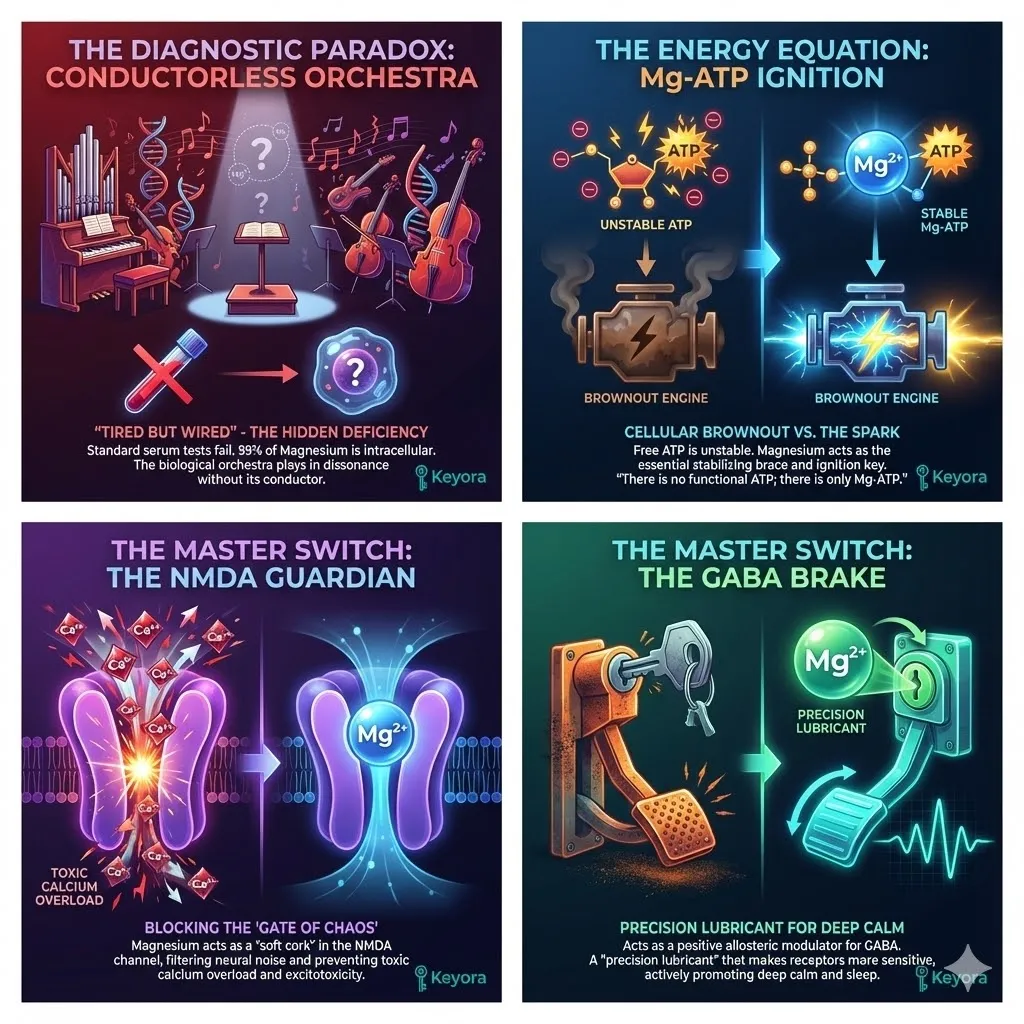
– *Magnesium’s Role A (The Guardian)*: Acts as a **”Soft Cork”** (Voltage-Dependent Block) inside the NMDA channel, filtering out neural noise and preventing toxic calcium overload.
– *Magnesium’s Role B (The Brake)*: Acts as a **Positive Allosteric Modulator** for **GABA**. It functions as a “precision lubricant,” making GABA receptors more sensitive to inhibitory signals, actively promoting deep calm and sleep (Boyle NB et al., 2017).
The Stress Buffer:
The Clinically-Proven Link Between Magnesium and HPA Axis Resilience
The Anatomy of Stress: Meet Your Body’s Central Command Center – The HPA Axis
Having established magnesium’s role as the master switch for neuronal calm – the force that quiets the electrical static of the brain – we now turn our attention to an even broader system.
We must examine your body’s dedicated hardware for managing the physical reality of stress.
Beyond the instant, fleeting jolt of adrenaline that you feel when a car swerves into your lane, there exists a more profound and enduring axis of control.
This system governs your energy levels, your immune response, your metabolism, and your long-term resilience.
It is called the HPA Axis.
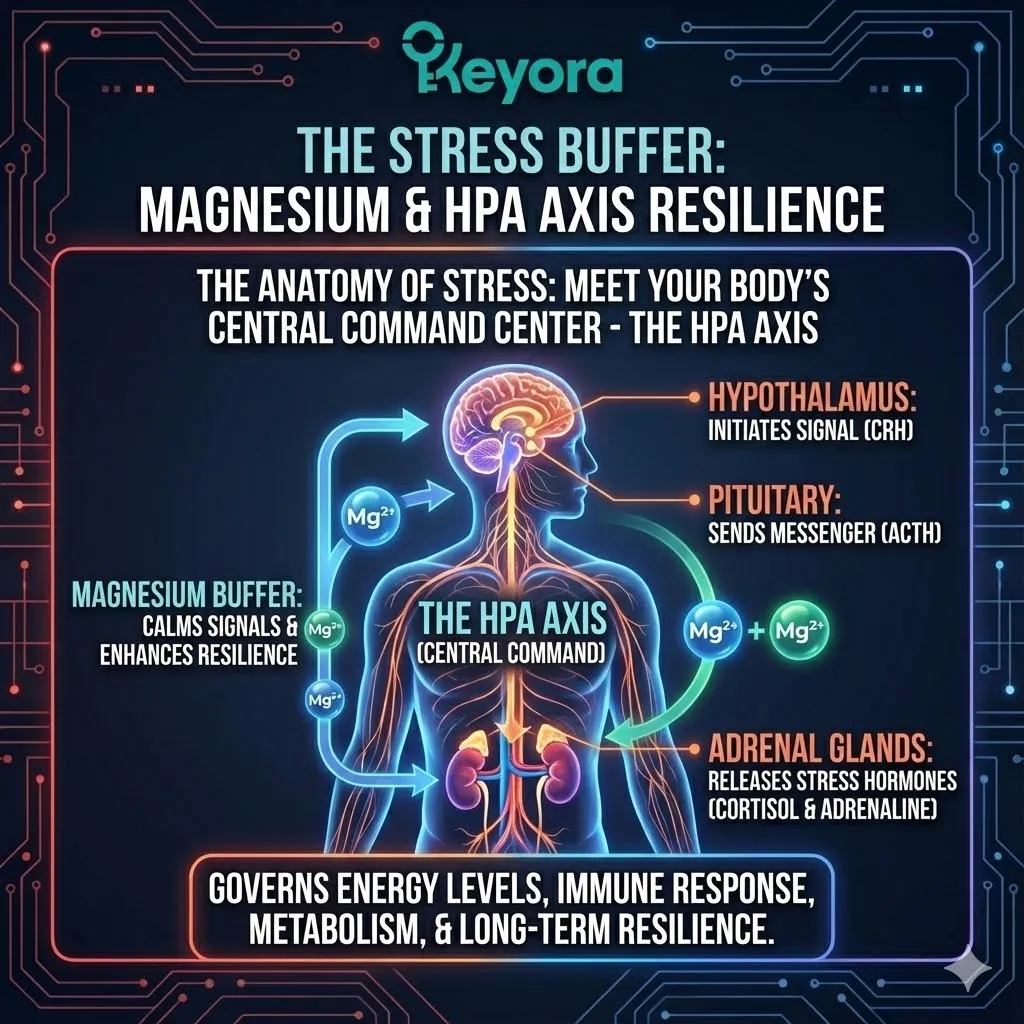
To understand why you feel burnt out, we must understand the chain of command that governs this system.
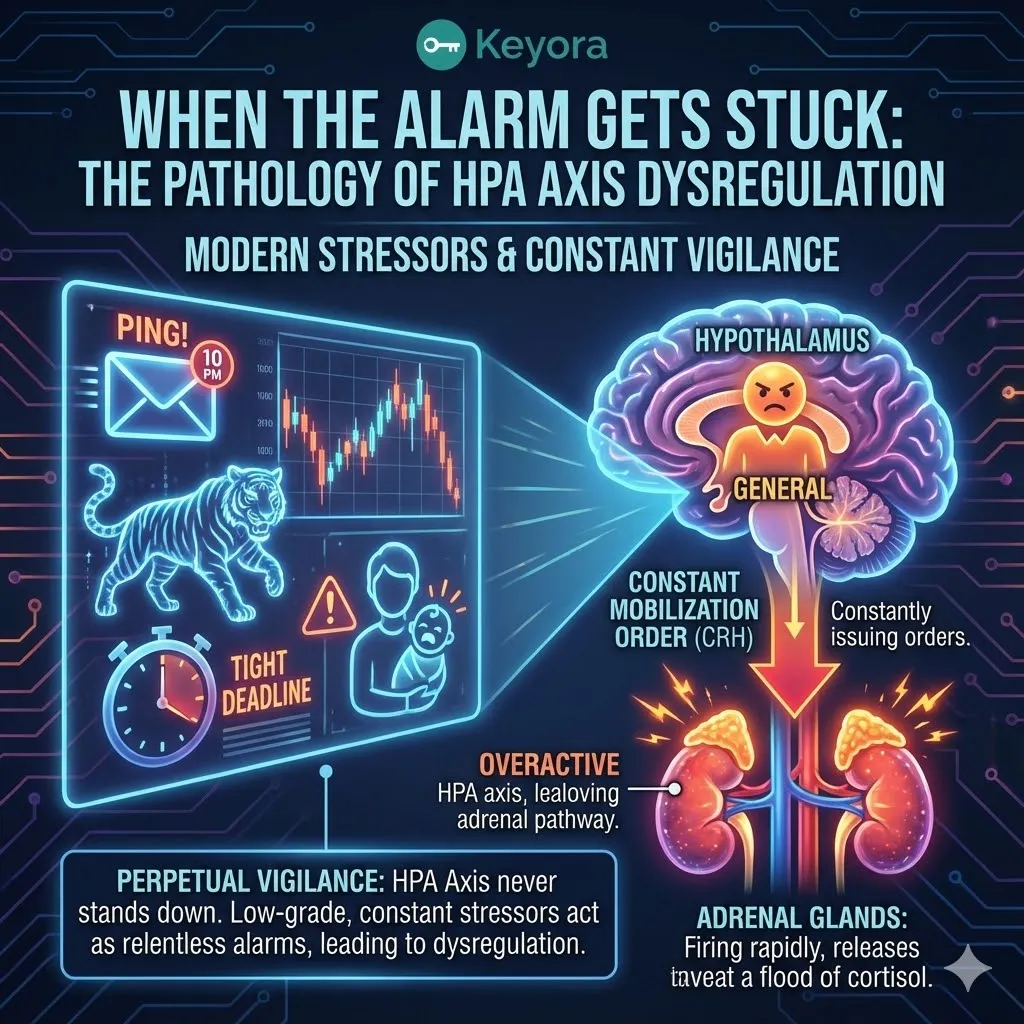
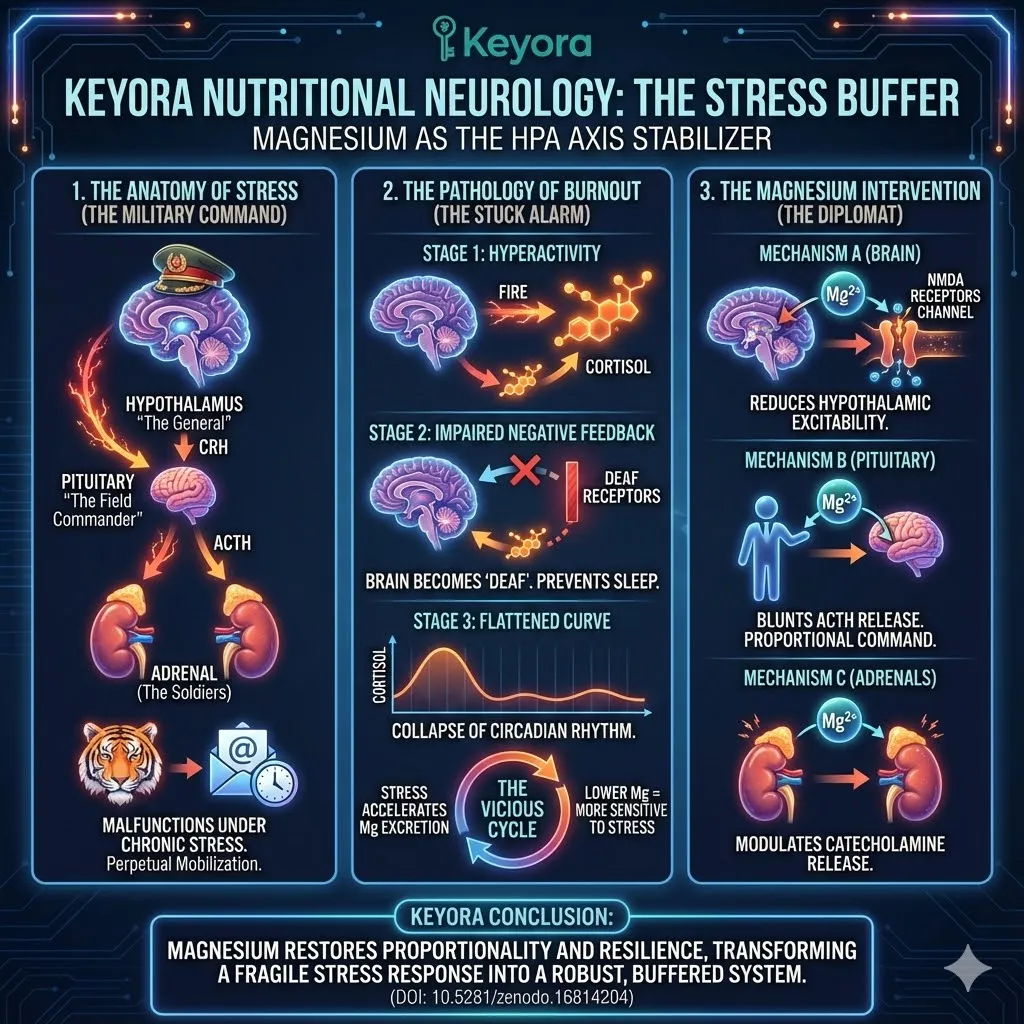
Think of the HPA Axis as a strict, hierarchical military chain of command.
It operates with clear orders, rapid communication, and powerful downstream effects.
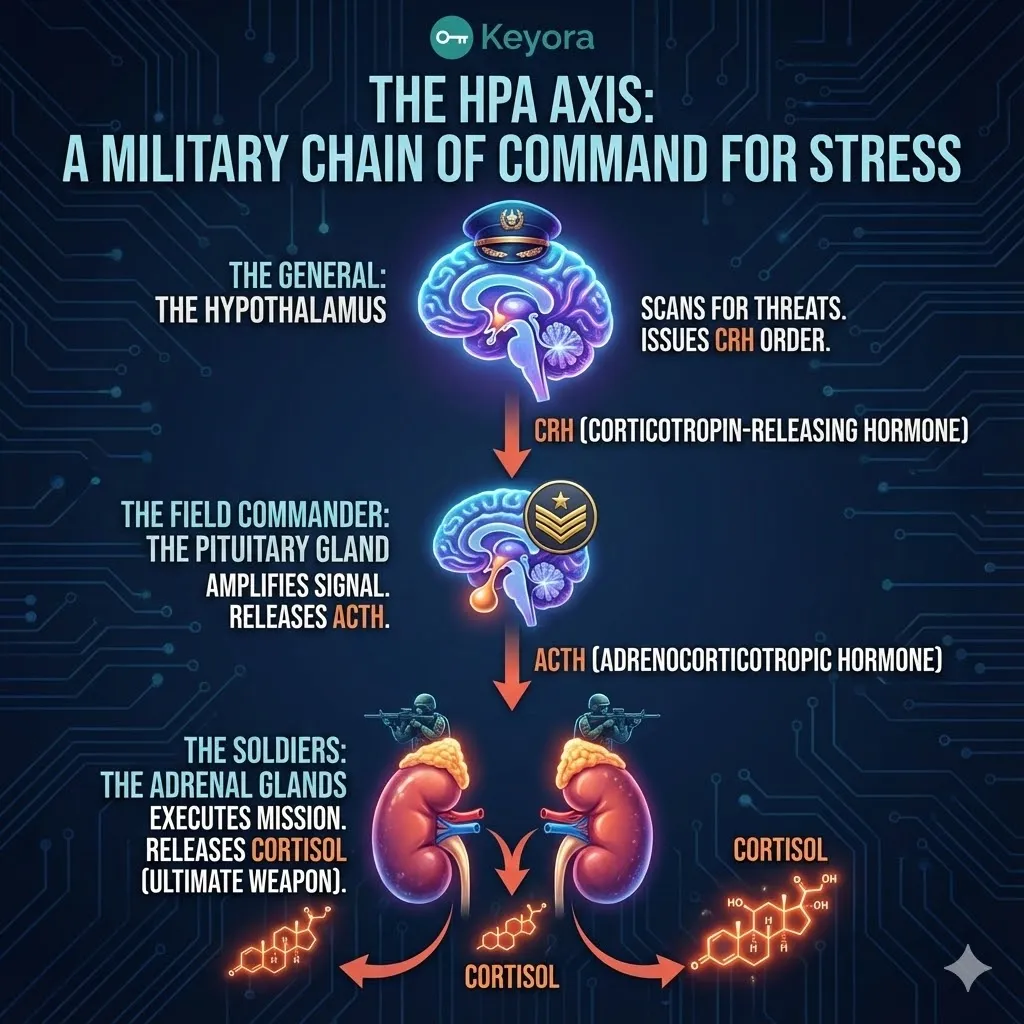
At the very top sits The General: The Hypothalamus.
Located deep within the brain, the hypothalamus is the surveillance center. It constantly scans your environment for threats – physical danger, emotional conflict, psychological pressure.
When it perceives a threat, it issues the first order. It releases a chemical messenger called Corticotropin-Releasing Hormone (CRH).
This order is sent directly to The Field Commander: The Pituitary Gland.
Situated just below the brain, the pituitary receives the urgent dispatch from the General.
Its job is to amplify the signal and mobilize the troops. It releases a hormone called Adrenocorticotropic Hormone (ACTH) into the bloodstream.
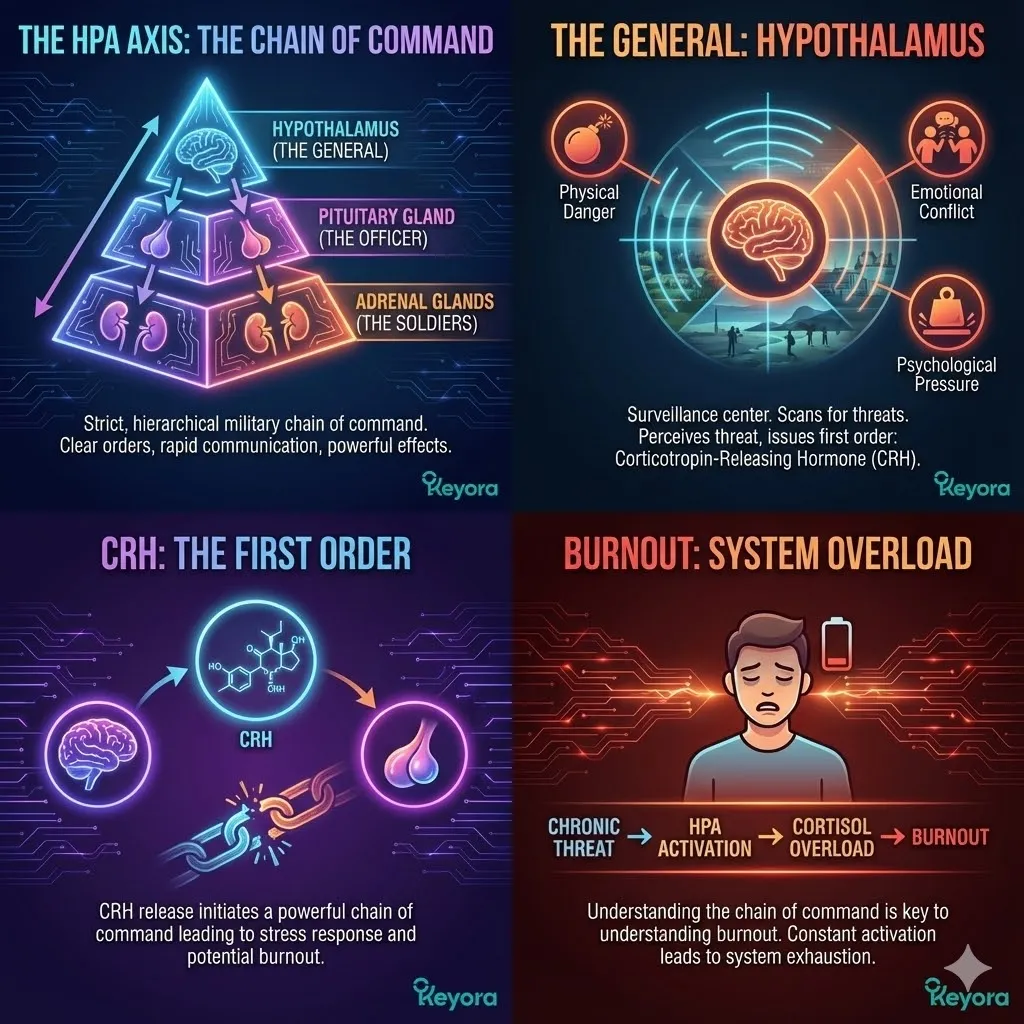
This signal travels throughout the body until it reaches The Soldiers:
The Adrenal Glands.
Sitting atop your kidneys, these glands receive the command from the Field Commander.
They execute the mission by releasing the ultimate weapon of the stress response:
Cortisol.
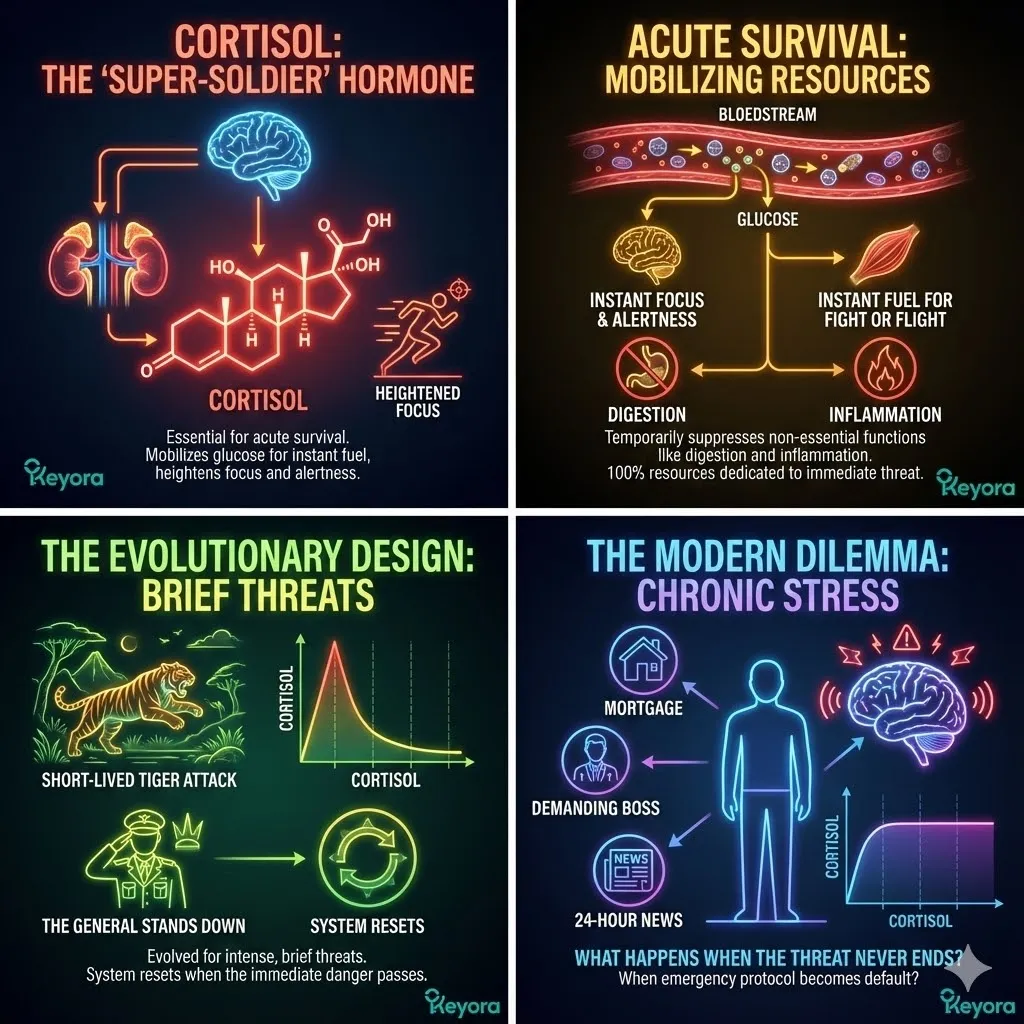
Cortisol is often vilified in popular wellness culture, but we must be fair. In the short term, Cortisol is a “super-soldier” hormone. It is essential for acute survival.
When released, Cortisol mobilizes glucose into your bloodstream, providing instant fuel for your muscles and brain. It heightens your focus and alertness. It temporarily suppresses non-essential functions like digestion and inflammation, ensuring that 100% of your resources are dedicated to fighting or fleeing the immediate threat. It saves your life.
However, this system evolved in an environment where threats were physical, intense, and – crucially – brief.
The tiger attacks, you run, and the event ends.
The General stands down.
The Cortisol levels drop.
The system resets.
But we must pose a pivotal question:
This system is a masterpiece of evolutionary design for short-term survival. But what happens when the perceived “war” of modern life never truly ends?
What happens when the threat isn’t a tiger, but a mortgage, a demanding boss, or a 24-hour news cycle?
What happens when this emergency protocol becomes your default state?
When the Alarm Gets Stuck: The Pathology of HPA Axis Dysregulation
Let us connect this military analogy to your lived reality.
For the modern high-performer, the “tigers” are no longer physical predators. They are the relentless ping of email notifications at 10 PM.
They are the market volatility threatening your portfolio.
They are the sleep-deprived nights of parenthood or the deadline that feels impossible to meet.
These stressors are low-grade, but they are constant. They keep the General (Hypothalamus) in a state of perpetual vigilance. The order to mobilize is never rescinded. The HPA Axis is never allowed to stand down.
This leads to a state of HPA Axis Dysregulation.
At Keyora Research, we categorize this dysfunction into three distinct pathological stages that mirror the progression of burnout.
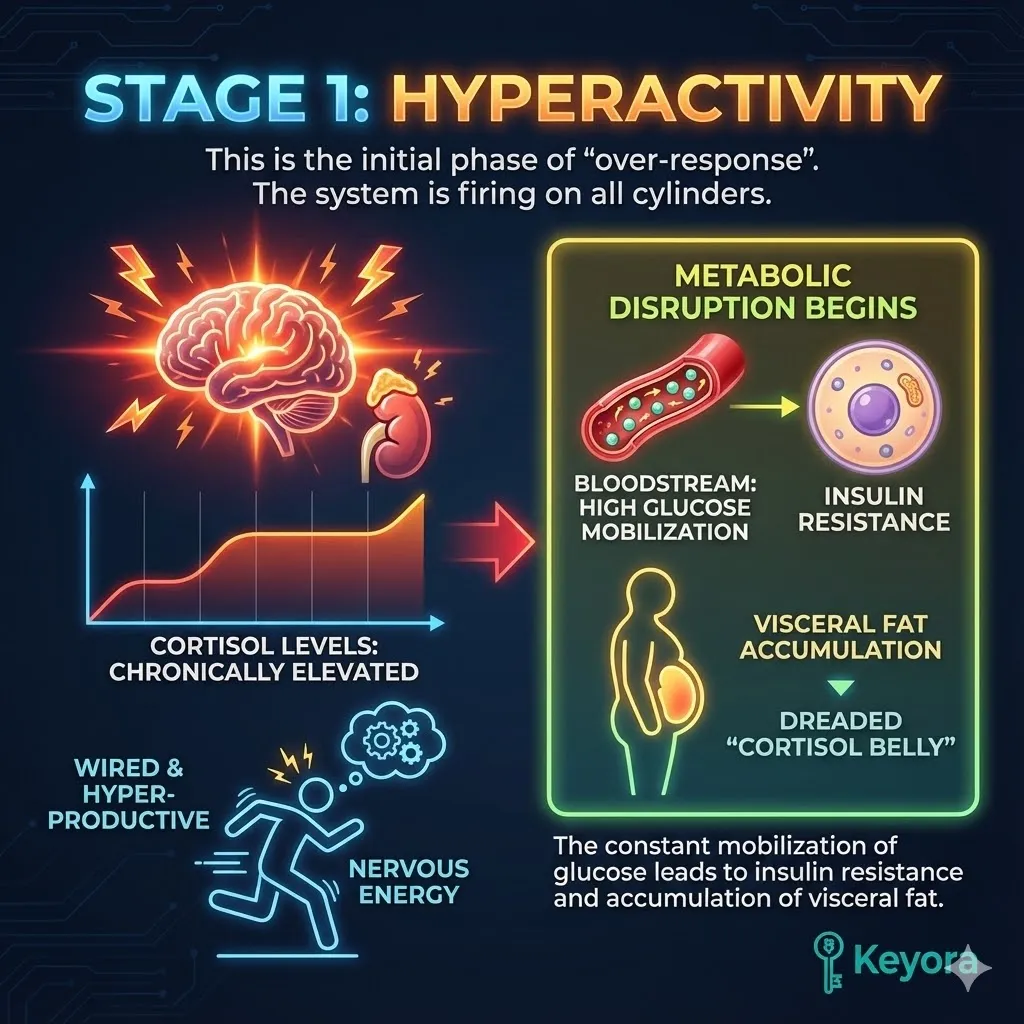
Stage 1: Hyperactivity.
This is the initial phase of “over-response.”
The system is firing on all cylinders. Your Cortisol levels are chronically elevated. You feel “wired,” anxious, and perhaps even hyper-productive, running on nervous energy.
However, this is also where the metabolic disruption begins. The constant mobilization of glucose leads to insulin resistance and the accumulation of visceral fat – the dreaded “cortisol belly.”
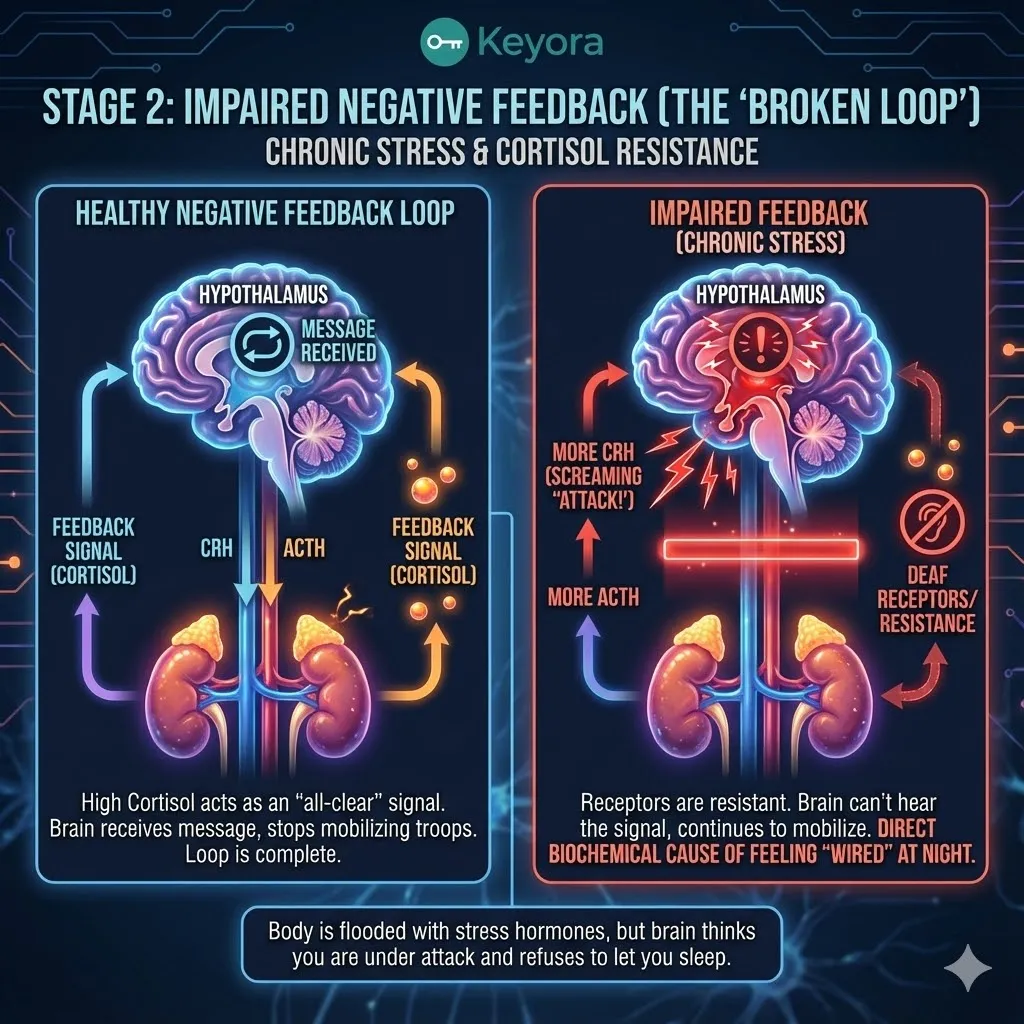
Stage 2: Impaired Negative Feedback.
This is a critical concept to grasp.
In a healthy system, high levels of Cortisol in the blood act as an “all-clear” signal. They travel back to the brain and tell the Hypothalamus and Pituitary: “Message received.
The troops are mobilized. You can stop shouting now.” This is called a negative feedback loop.
But under chronic stress, this loop breaks.
The receptors in the brain become resistant or “deaf” to the Cortisol signal.
The General can no longer hear that the mission is underway, so he continues to scream “Attack!” He releases more CRH.
The Pituitary releases more ACTH.
This is the direct biochemical cause of feeling “wired” at night.
Your body is flooded with stress hormones, but your brain thinks you are under attack and refuses to let you sleep.
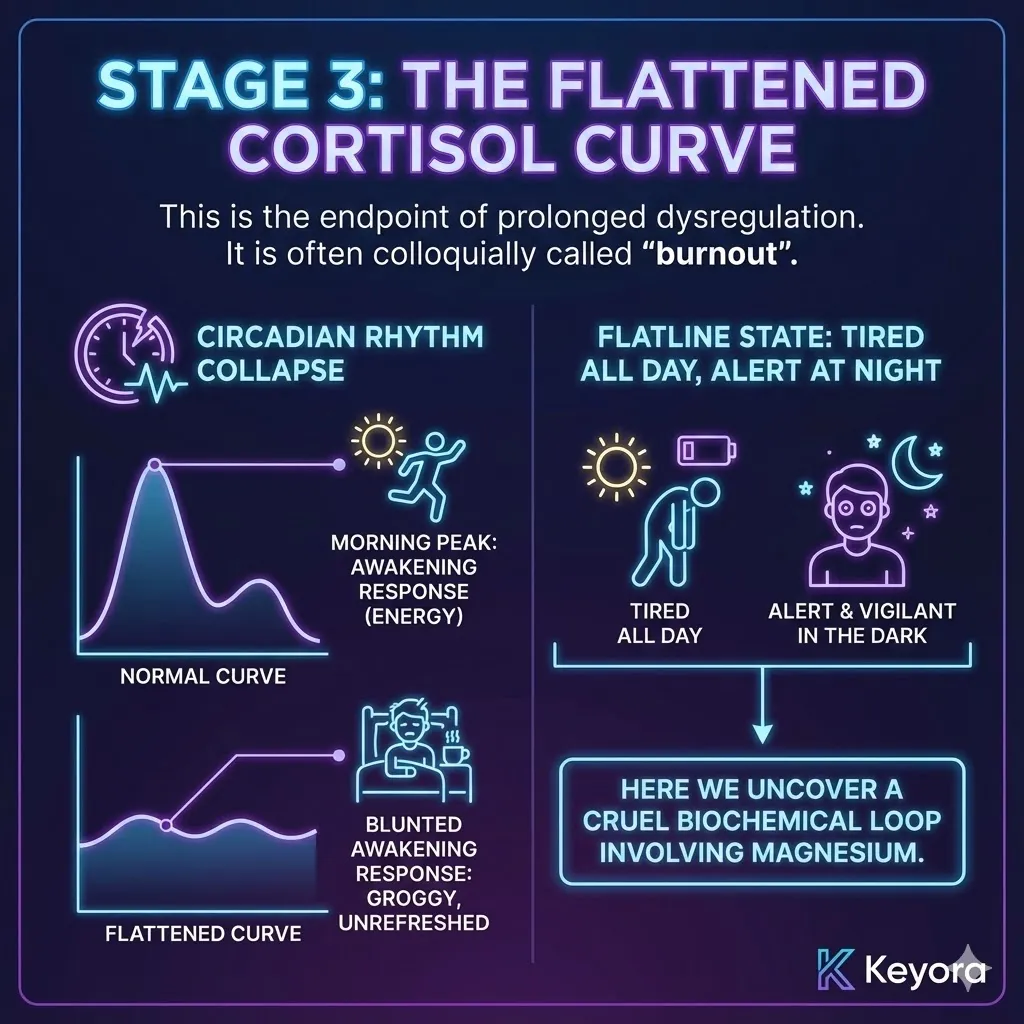
Stage 3: The Flattened Cortisol Curve.
This is the endpoint of prolonged dysregulation. It is often colloquially called “burnout.”
Your natural circadian rhythm collapses.
Normally, Cortisol should peak in the morning (the Cortisol Awakening Response) to launch you out of bed with energy.
In this stage, that morning peak is blunted. You wake up groggy, unrefreshed, and needing caffeine to function.
Conversely, the evening decline that should allow for deep sleep fails to occur. You are left in a “flatline” state – tired all day, yet alert and vigilant in the dark.
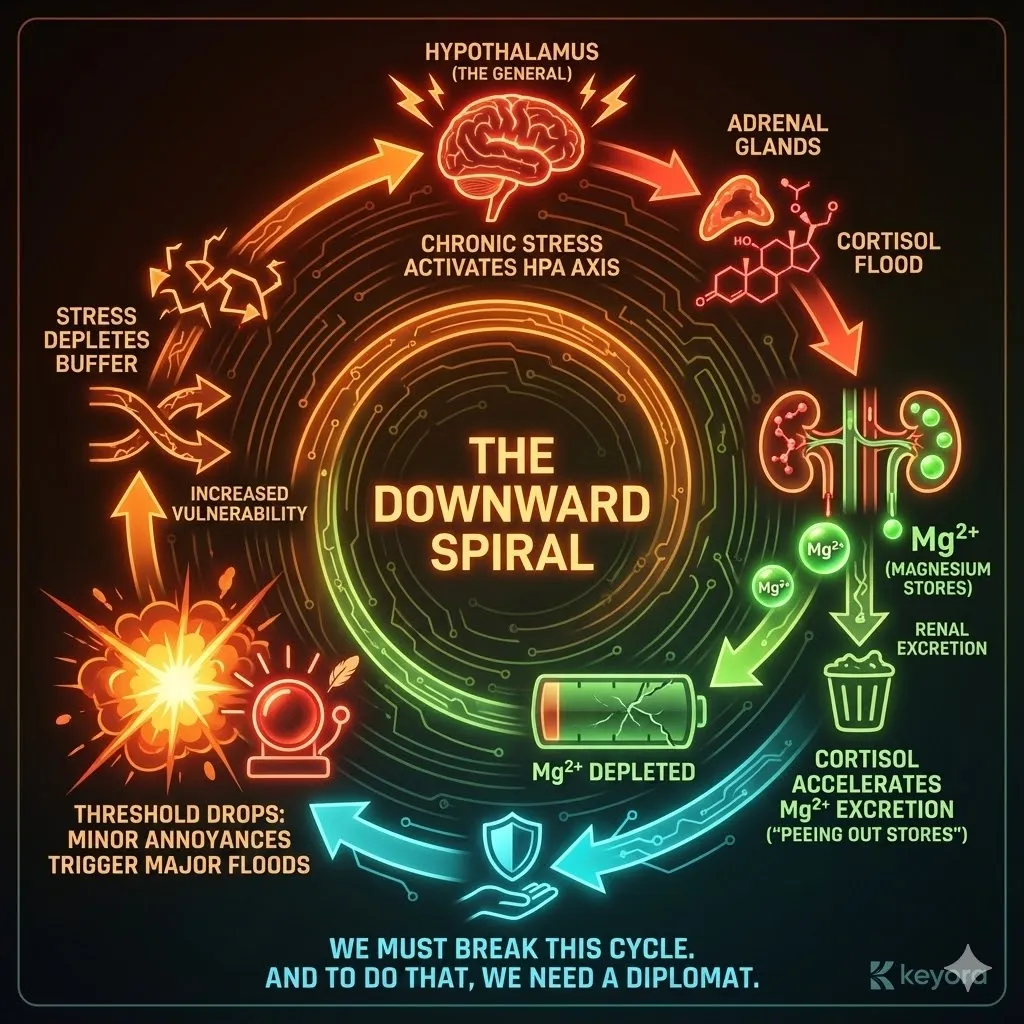
Here we uncover a cruel biochemical loop involving magnesium.
Chronic stress activates the HPA axis.
This activation, and the resulting flood of Cortisol, accelerates the renal excretion of magnesium.
You literally pee out your magnesium stores when you are stressed.
Critically, as magnesium levels fall, your HPA axis becomes even more sensitive and reactive to stress.
Without magnesium, the threshold for triggering the “General” drops. Minor annoyances trigger major hormonal floods.
It is a downward spiral:
Stress depletes your stress buffer, which in turn makes you more vulnerable to stress.
We must break this cycle. And to do that, we need a diplomat.
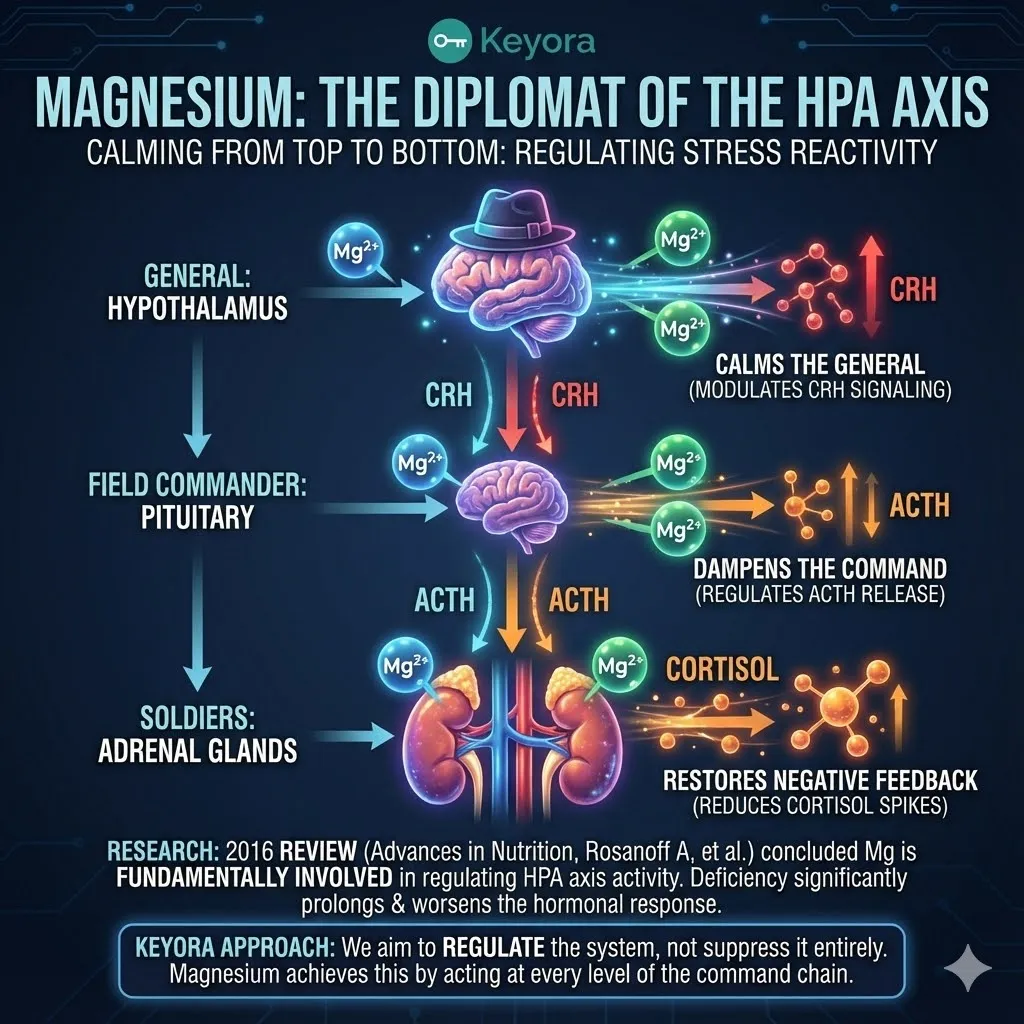
Magnesium’s Role as the Diplomat: Calming the HPA Axis from Top to Bottom
The scientific literature is unequivocal on the inverse relationship between magnesium status and stress reactivity.
In our research analysis for the Keyora Research Notes Series, we heavily reference pivotal reviews, such as the 2016 paper published in Advances in Nutrition.
The authors concluded that magnesium is fundamentally involved in regulating HPA axis activity.
They demonstrated that a deficient state can significantly prolong and worsen the hormonal response to stress (Rosanoff A, et al., 2016).
This clinical reality informs the very foundation of the Keyora therapeutic approach. We do not aim to suppress the system entirely; we aim to regulate it.
How does magnesium achieve this? It acts at every level of the command chain.
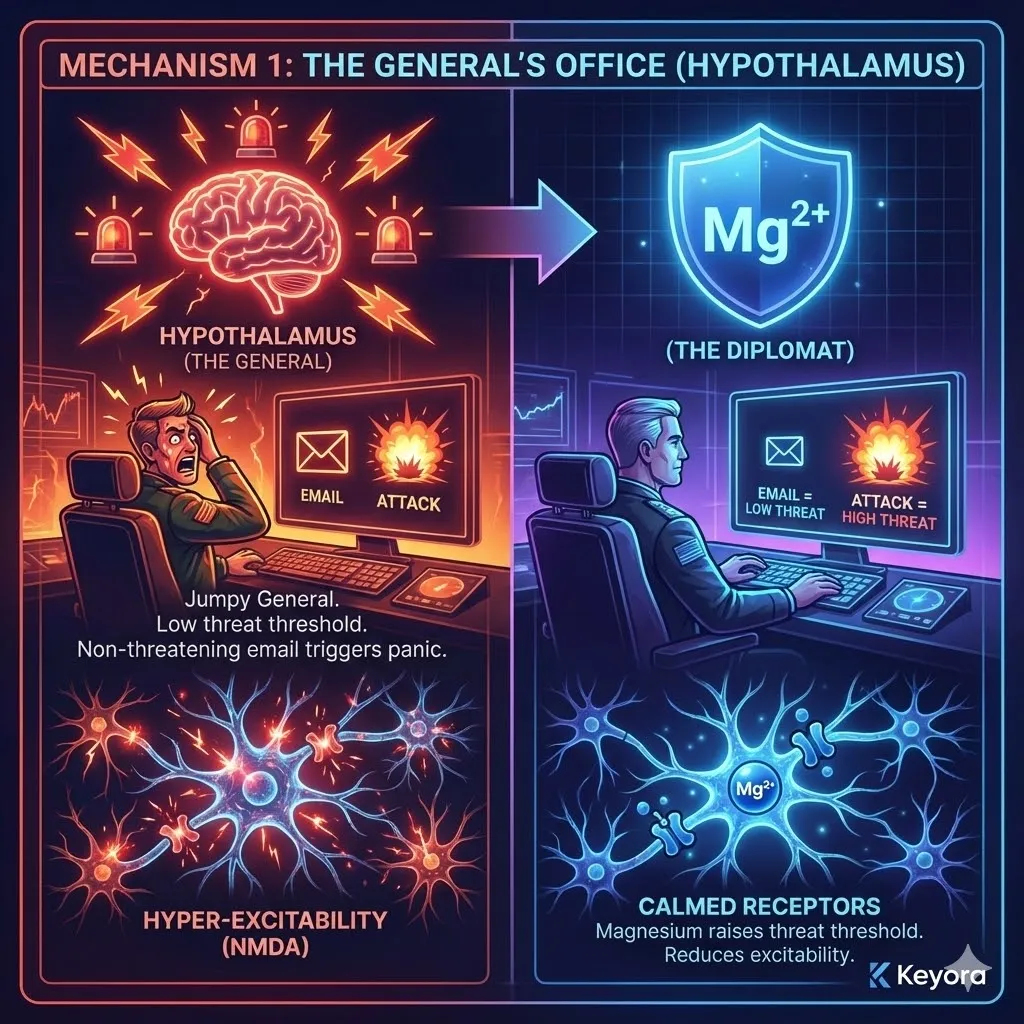
Mechanism 1: The General’s Office (Hypothalamus).
As we discussed in last Chapter, magnesium calms the NMDA receptors in the brain. By reducing the excitability of the neurons in the hypothalamus, magnesium effectively raises the threshold for perceiving a threat.
It makes the “General” less jumpy.
It ensures that a non-threatening email does not trigger the same panic response as a physical attack.
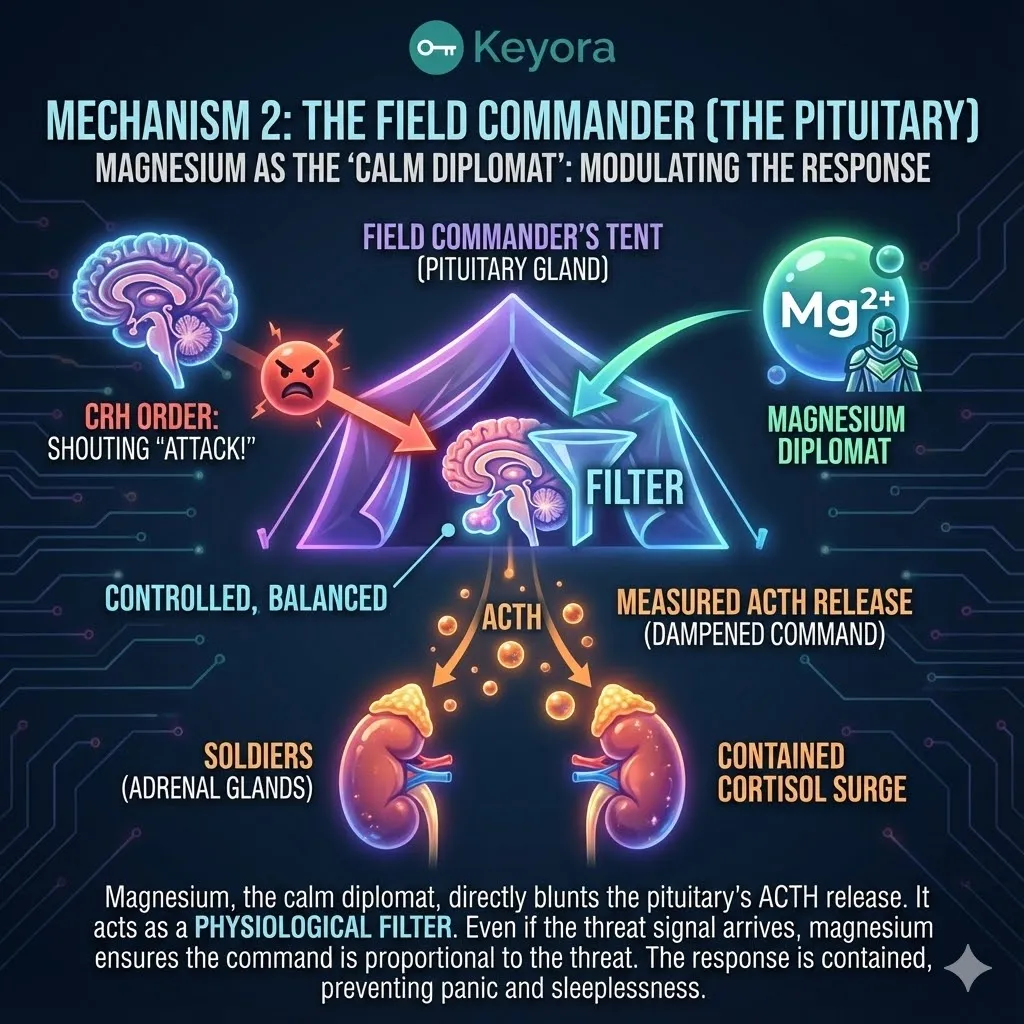
Mechanism 2: The Field Commander (The Pituitary).
This is perhaps magnesium’s most decisive action.
Magnesium acts directly at the level of the Pituitary gland.
Use this analogy:
Think of magnesium as a seasoned, calm diplomat dispatched to the “Field Commander’s” tent.
The “General” may still be shouting orders.
The stressor may still be present.
But magnesium’s presence modulates the response.
Magnesium directly blunts the pituitary’s release of ACTH in response to CRH. It acts as a physiological filter. Even if the threat signal arrives, magnesium ensures that the command passed down to the “Soldiers” is measured.
It ensures the response is proportional to the actual threat.
The result is a dampening of the entire downstream Cortisol surge.
You still respond to the stress, but the response is contained.
It does not spiral into a full-blown panic attack or a sleepless night.
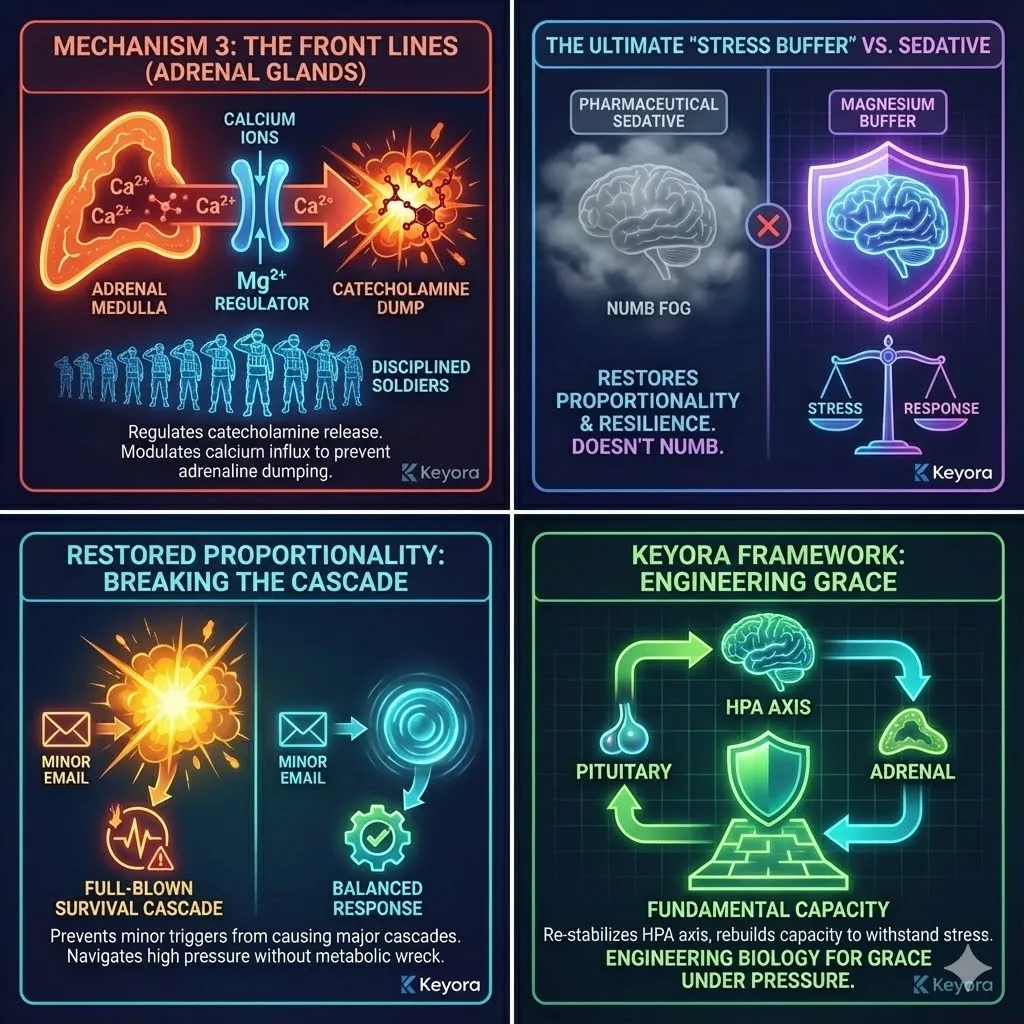
Mechanism 3: The Front Lines (The Adrenal Glands).
Finally, magnesium acts at the adrenal glands themselves. It helps to regulate the release of catecholamines (adrenaline and norepinephrine).
By modulating the influx of calcium into the adrenal medullary cells, magnesium prevents the “dumping” of adrenaline into the bloodstream.
It keeps the soldiers disciplined.
This multi-level intervention is why magnesium is the ultimate physiological “Stress Buffer.”
It is vastly different from a pharmaceutical sedative. It doesn’t numb you. It doesn’t sedate you into a fog. It doesn’t forcefully shut down your necessary survival mechanisms.
Instead, it restores proportionality and resilience to your stress-response hardware.
It prevents a minor client email from triggering a full-blown survival cascade. It allows you to navigate a high-pressure day without wrecking your metabolic health.
By re-stabilizing the HPA axis, magnesium doesn’t just treat the symptoms of stress – it rebuilds your fundamental capacity to withstand it.
This buffering principle is a non-negotiable pillar within the Keyora Nutritional Neurology framework.
We are not trying to eliminate stress from your life; that is impossible. We are engineering your biology to handle it with grace.
– Series Theme: **Keyora Nutritional Neurology** (Magnesium Glycinate).
– Episode Concept: **The Stress Buffer** (Magnesium as the HPA Axis Stabilizer).
– Core Pathology: **HPA Axis Dysregulation** (The “Stuck Alarm” & The Flattened Cortisol Curve).
– **1. The Anatomy of Stress (The Military Command)**:
– *The Structure*: The HPA Axis functions as a hierarchical chain of command.
– **Hypothalamus (The General)**: Perceives threat -> Releases CRH.
– **Pituitary (The Field Commander)**: Amplifies signal -> Releases ACTH.
– **Adrenals (The Soldiers)**: Execute mission -> Release Cortisol.
– *The Failure*: Designed for acute survival (”Tigers”), this system malfunctions under chronic modern stress (”Emails”), leading to a state of perpetual mobilization.
– **2. The Pathology of Burnout (The Stuck Alarm)**:
– *Stage 1*: **Hyperactivity**. Chronically elevated cortisol, anxiety, and visceral fat accumulation.
– *Stage 2*: **Impaired Negative Feedback**. The brain becomes “deaf” to cortisol signals, breaking the “all-clear” loop and preventing sleep (Wired at night).
– *Stage 3*: **Flattened Curve**. Collapse of the circadian rhythm (No morning energy, no evening calm).
– *The Vicious Cycle*: Stress accelerates Magnesium excretion (renal dumping). Lower magnesium levels make the HPA axis *more* sensitive to stress, creating a downward spiral of depletion and reactivity.
– **3. The Magnesium Intervention (The Diplomat)**:
– *Mechanism A (The Brain)*: Reduces hypothalamic excitability via NMDA receptor blockade.
– *Mechanism B (The Pituitary)*: Acts as a **”Diplomat”**, directly blunting the release of ACTH. This ensures the command sent to the adrenals is measured and proportional, preventing hormonal flooding.
– *Mechanism C (The Adrenals)*: Modulates the release of catecholamines (adrenaline/norepinephrine).
– *Keyora Conclusion*: Magnesium restores **Proportionality and Resilience**, transforming a fragile stress response into a robust, buffered system (DOI: 10.5281/zenodo.16814204).
From General Knowledge to Specific Application:
The Keyora Research Conclusion
Synthesizing the Evidence: The Three Pillars of Magnesium’s Power
We have traveled a long distance in this episode.
We have journeyed from the microscopic furnaces of your mitochondria to the firing synapses of your neural networks.
We have ascended to the very command center of your body’s stress response.
We have dissected the biochemistry of energy, the neurology of calm, and the endocrinology of resilience.
When viewed in isolation, these mechanisms are fascinating. But when viewed as an interconnected system – as we do at Keyora Research – the scientific evidence converges on a single, powerful truth.
Magnesium is not merely a “supplement.”
It is not just a mineral you take for a leg cramp.
It is the fundamental, non-negotiable substrate upon which your high-performance life is built.
To solidify this understanding, let us synthesize the evidence into three definitive pillars.
These are the pillars that support your cognitive function, your emotional stability, and your physical vitality.
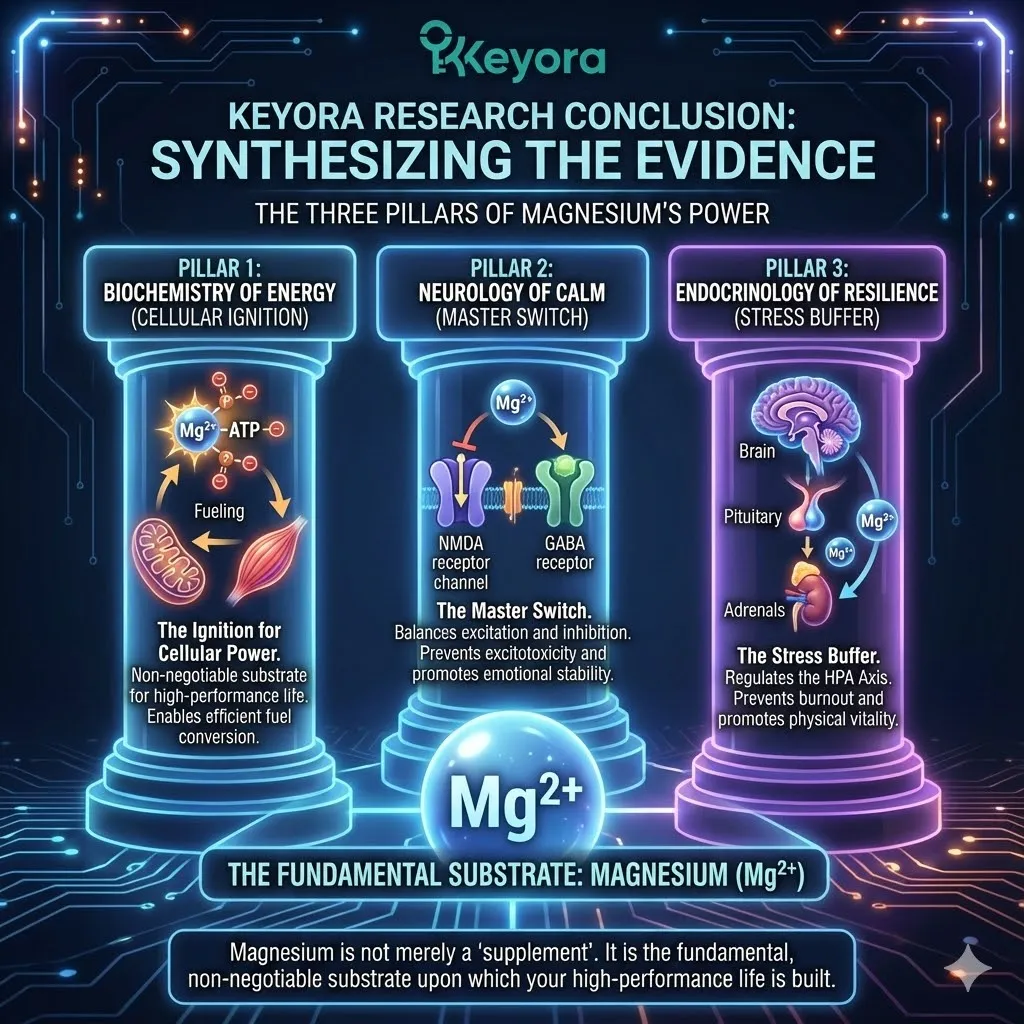
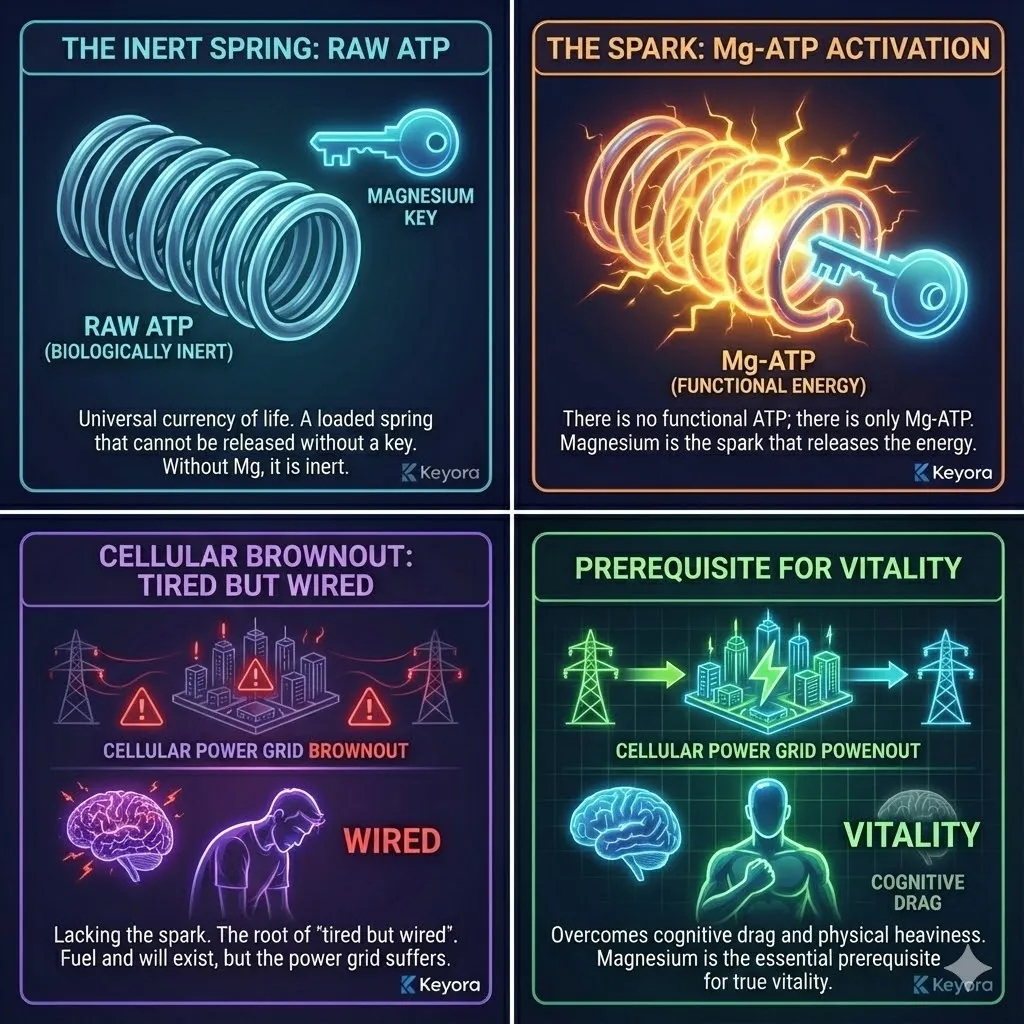
Pillar 1: The Spark of Cellular Energy
We established that there is no such thing as “energy” without magnesium.
The universal currency of life – ATP – is biologically inert in its raw form.
It is a loaded spring that cannot be released without a key.
That key is Magnesium.
There is no functional ATP; there is only Mg-ATP. Without adequate intracellular magnesium, your cellular power grid suffers a “brownout.”
You may have the fuel, and you may have the will.
But you lack the spark.
This is the root of the “tired but wired” phenomenon.
It is the biochemical basis for the cognitive drag that slows your decision-making and the physical heaviness that no amount of sleep seems to cure.
Magnesium is the prerequisite for vitality.
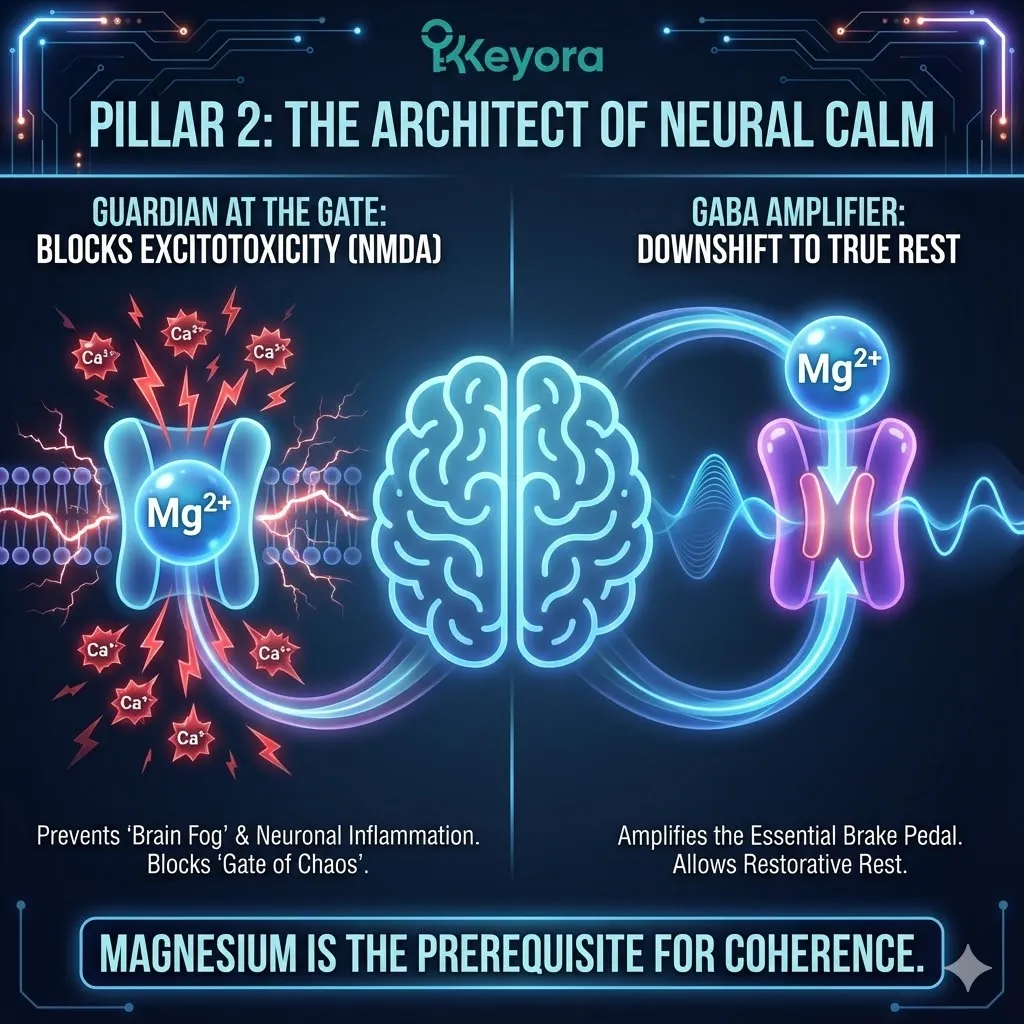
Pillar 2: The Architect of Neural Calm
We established that the anxious mind is a mechanical failure of the braking system.
We identified the NMDA receptor as the “Gate of Chaos,” capable of flooding your neurons with toxic levels of calcium and noise.
And we identified GABA as the essential brake pedal.
Magnesium acts as the “Master Switch” governing both.
It stands as the guardian at the gate, blocking excitotoxicity and preventing the “brain fog” of neuronal inflammation. Simultaneously, it acts as the amplifier for GABA, allowing your brain to downshift into true, restorative rest.
Magnesium is the prerequisite for coherence.
Pillar 3: The Buffer Against Chronic Stress
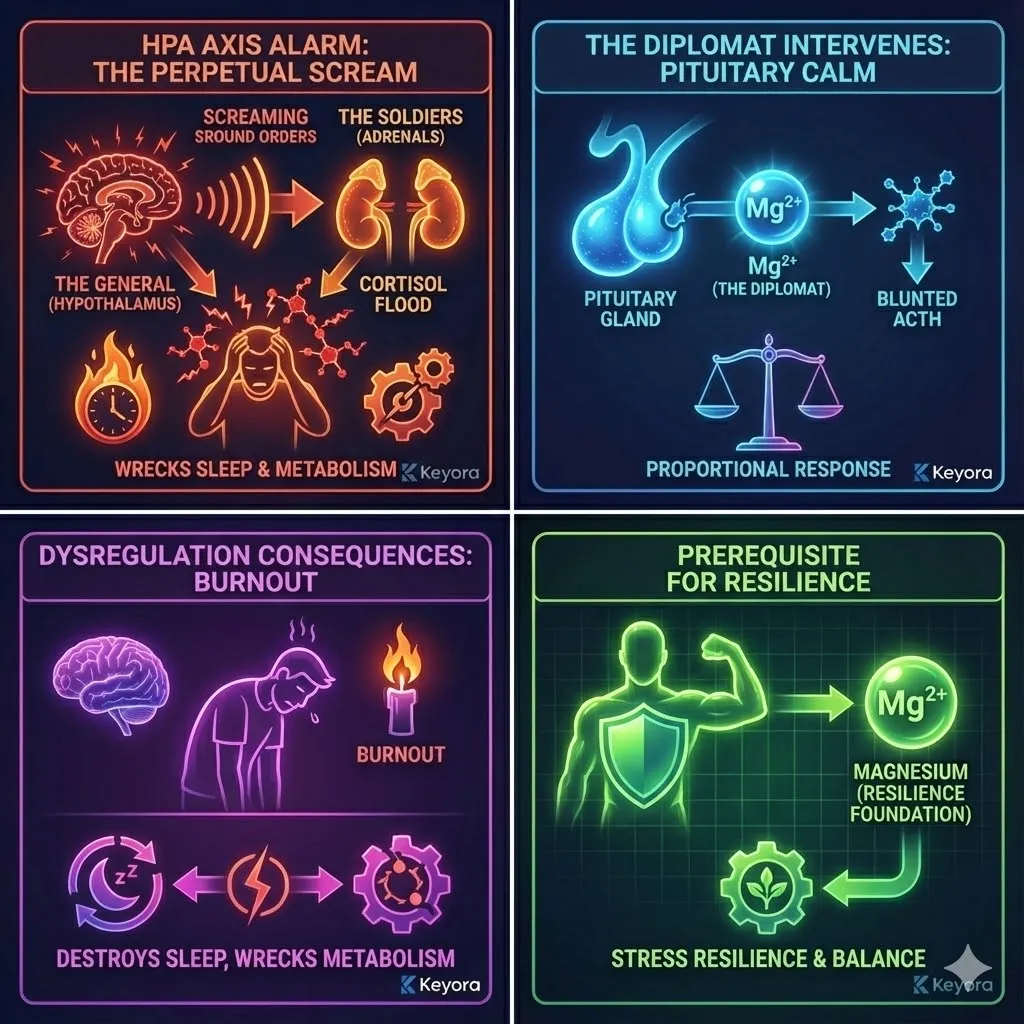
We established that the modern world keeps your HPA Axis in a state of perpetual alarm.
The “General” (Hypothalamus) is screaming orders to the “Soldiers” (Adrenals) to flood your system with cortisol.
This dysregulation destroys your sleep, wrecks your metabolism, and burns you out.
Magnesium acts as the diplomat.
It intervenes at the pituitary gland.
It blunts the release of ACTH.
It ensures that your stress response remains proportional to the threat.
Magnesium is the prerequisite for resilience.
The Synthesis
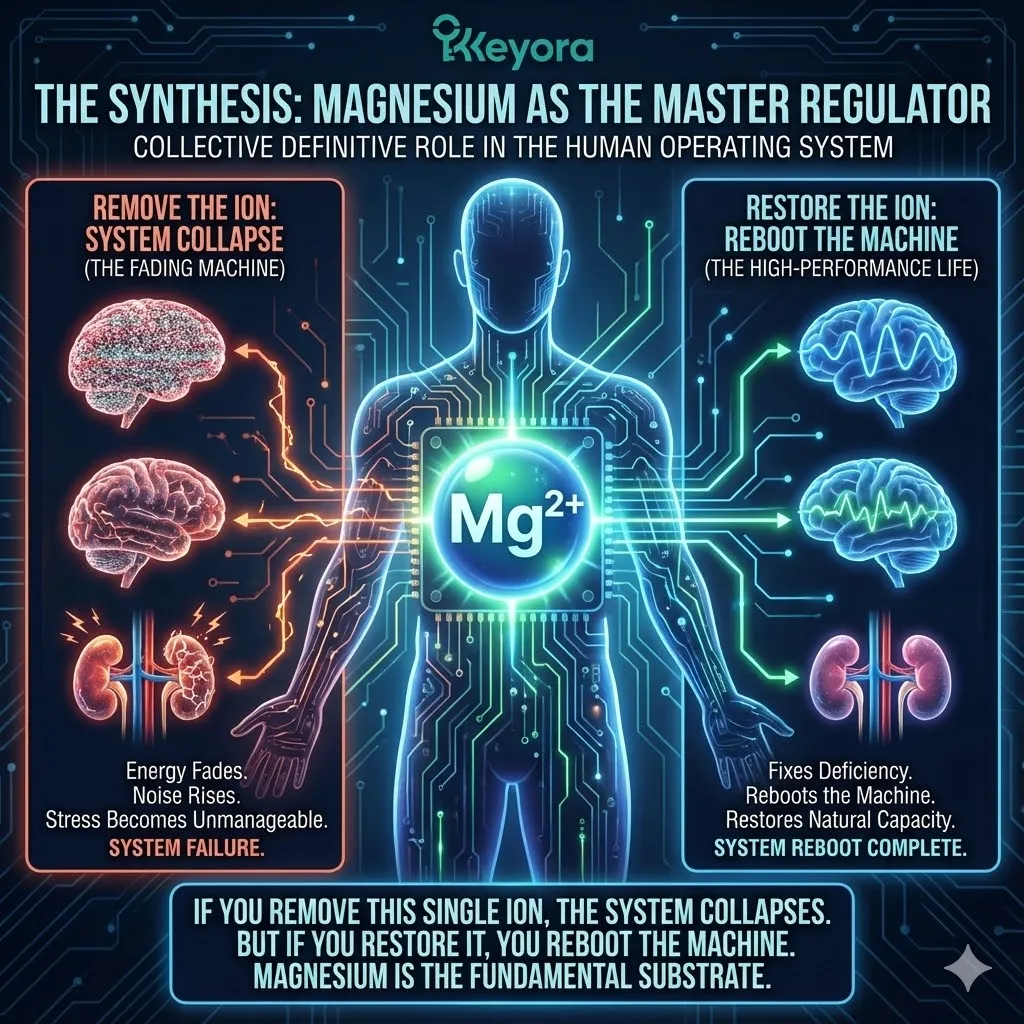
Individually, these roles are significant. Collectively, they are definitive.
They establish magnesium not as a minor player, but as the master regulator of the entire human operating system.
If you remove this single ion from the equation, the system collapses.
The energy fades.
The noise rises.
The stress becomes unmanageable.
But if you restore it?
You do not just fix a deficiency.
You reboot the machine.
The Great Disconnect: Posing the Critical Next Question
Having reviewed this extensive body of evidence, the conclusion formulated by our team at Keyora Research is clear and unequivocal.
For the modern high-performer navigating chronic stress, restoring an optimal magnesium status is not an optional therapeutic “add-on.”
It is the non-negotiable first step in rebuilding the very foundation of neuro-endocrine and metabolic balance.
The science is settled. The mechanism is understood. The necessity is absolute.
However, this leads us to a frustrating paradox. A “Great Disconnect” that leaves millions of educated consumers confused and cynical.
You might be reading this and thinking:
“I understand the science.
It makes perfect sense.
But I have tried magnesium before.
I bought a bottle from the grocery store.
I took it for a month. And I felt… nothing.”
Or perhaps you felt worse.
Perhaps you experienced digestive distress, which only added to your stress load.
If magnesium is the “Master Switch,” why did it fail you?
If it is the “Spark of Life,” why did you feel no surge of energy?
Is the science wrong?
Is the “Keyora Research Conclusion” flawed?
No.
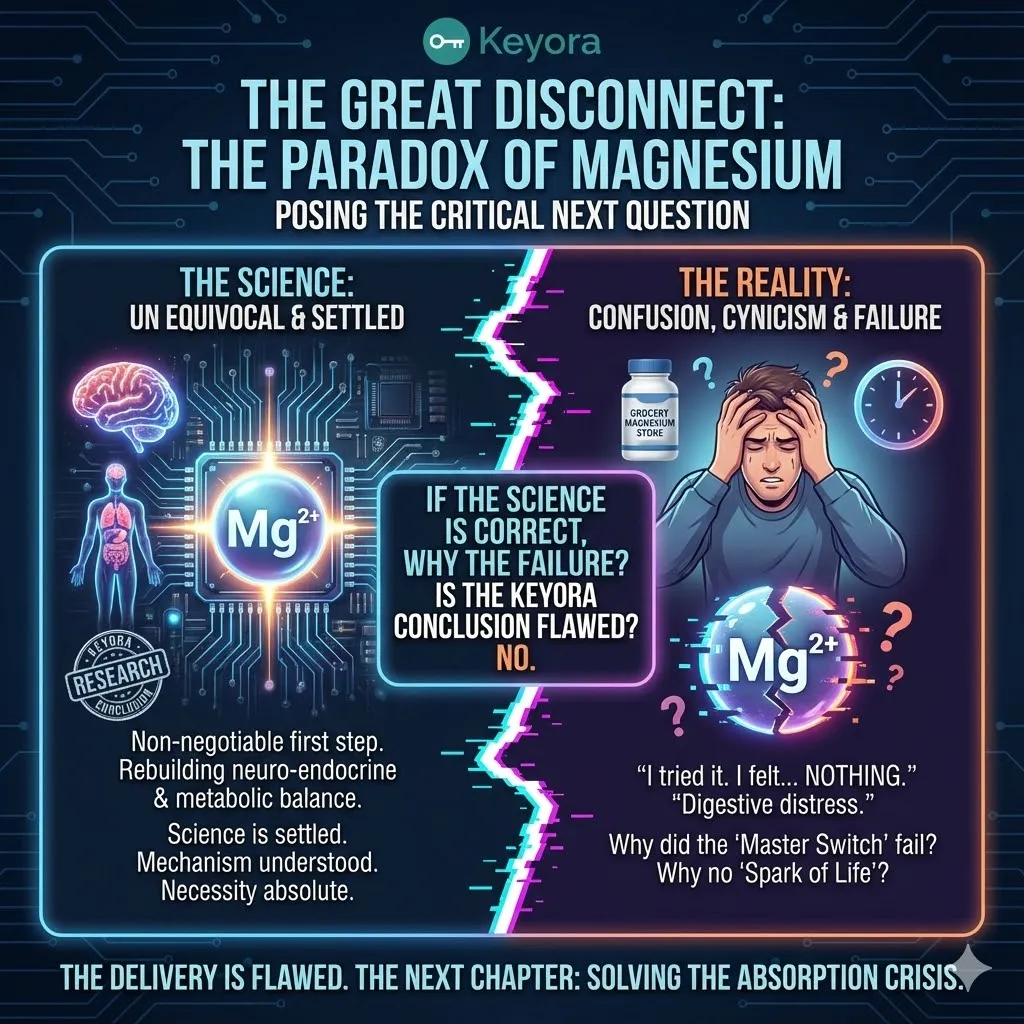
The failure lies not in the mineral, but in the delivery system.
Here is the uncomfortable truth that the supplement industry often obscures: Not all magnesium is created equal.
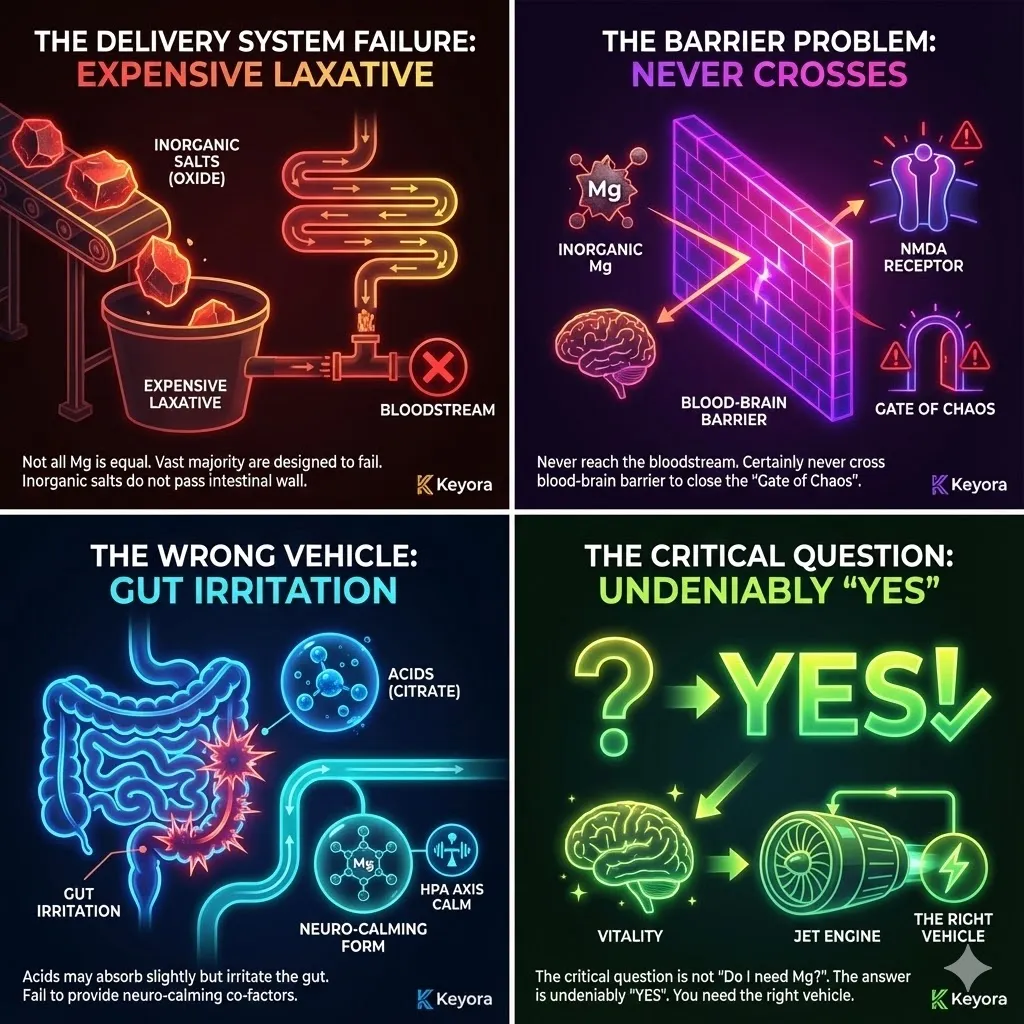
In fact, the vast majority of magnesium products on the market are designed to fail.
They are formulated with inorganic salts – like Magnesium Oxide – that are essentially geological rocks. Your body cannot absorb them.
They do not pass through the intestinal wall.
They never reach the bloodstream.
And they certainly never cross the blood – brain barrier to reach the NMDA receptors where the “Gate of Chaos” needs to be closed.
They pass right through you, acting as an expensive laxative rather than a neurological intervention.
Or, they are formulated with acids – like Magnesium Citrate – that may absorb slightly better but can irritate the gut lining and fail to provide the specific neuro-calming co-factors required to sedate the HPA axis.
You have been sold the right element, but in the wrong vehicle.
You have been trying to fuel a jet engine with crude oil.
So, the critical question is not “Do I need magnesium?”
The answer to that is undeniably
“Yes.”
The critical question – the question that will define the success or failure of your health journey – is this:
“How do I get this master regulator into my cells, into my mitochondria, and into my brain, without side effects and with maximum efficiency?”
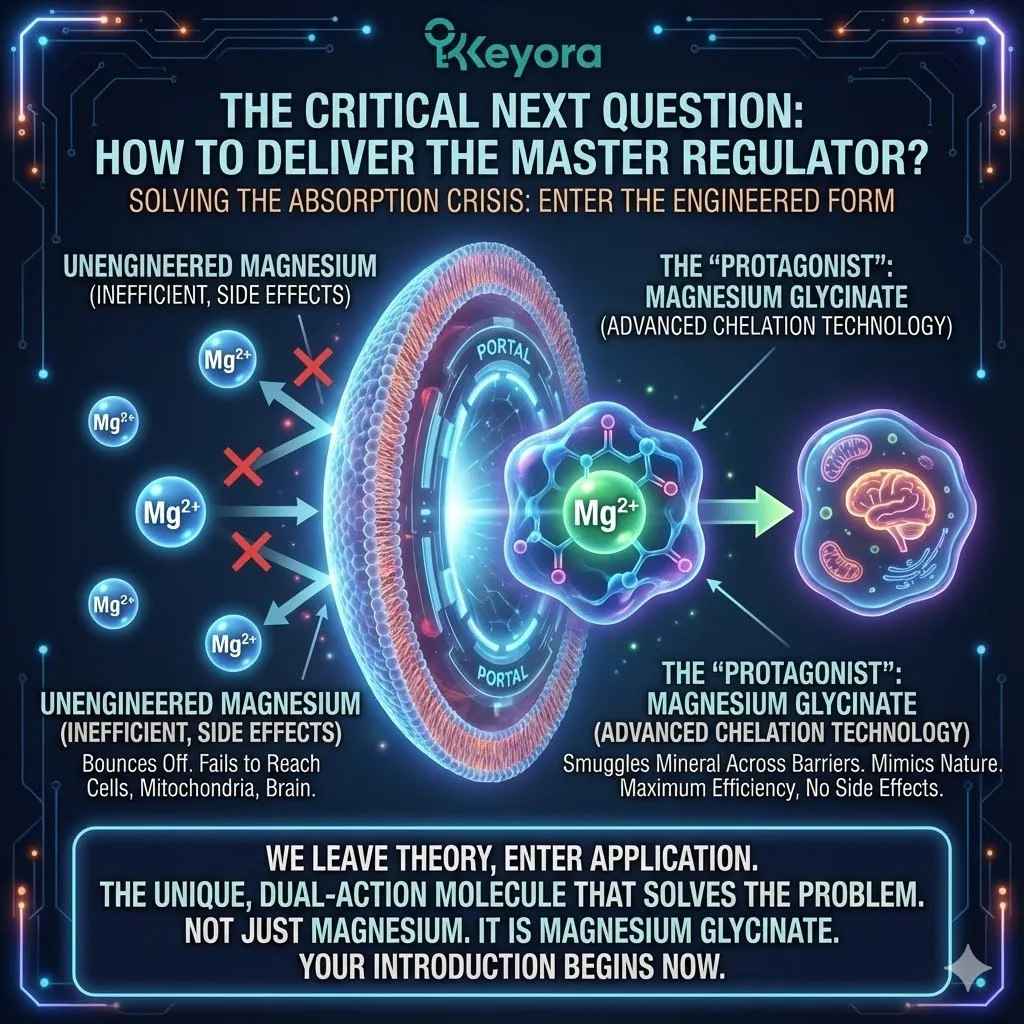
To answer this, we must look beyond simple elemental magnesium. We must look for a specific, engineered form.
A form that uses advanced chelation technology to “smuggle” the mineral across biological barriers.
A form that mimics the way nature intended us to absorb nutrients.
There is one specific molecule that meets these rigorous criteria. It is the “Protagonist” of our next episode.
It is the specific form we chose for the Keyora Matrix.
In Episode 3, we will leave the theory behind and enter the realm of application. We will introduce you to the unique, dual-action molecule that solves the absorption problem once and for all.
We will show you why binding magnesium to a specific amino acid doesn’t just improve absorption – it creates a completely new, synergistic effect that actively calms the nervous system.
You know the “Why.”
You know the “What.”
Now, prepare to discover the “How.”
The solution is not just magnesium.
It is Magnesium Glycinate.
And your introduction to it begins now.
– Series Theme: **Keyora Nutritional Neurology** (Magnesium Glycinate).
– Episode Concept: **The Spark of Life** (Magnesium as the Master Conductor of Biological Rhythm).
– Core Pathology: **The “Ghost in the Machine”** (Intracellular Magnesium Deficiency masquerading as “Normal” Health).
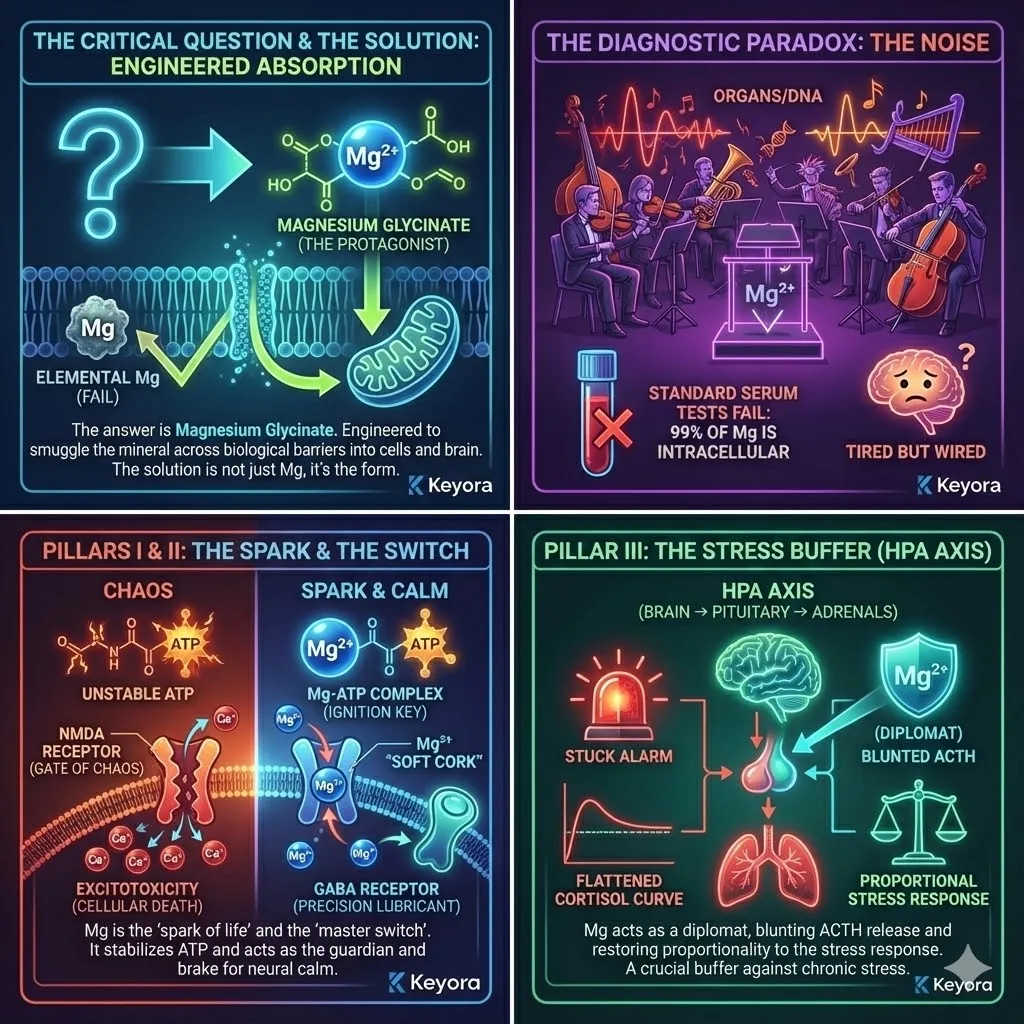
– **1. The Diagnostic Paradox (The Noise)**:
– *The Symptom*: **”Tired but Wired.”** High-performers experience persistent cognitive fog and low-grade anxiety despite optimized lifestyles.
– *The Gap*: Standard serum blood panels return “Normal” because they fail to measure the 99% of Magnesium stored intracellularly.
– *The Metaphor*: The body is a **World-Class Orchestra** (Organs/DNA) that has lost its **Conductor** (Magnesium), causing the music to descend into dissonance.
– **2. Pillar I: The Energy Equation (The Spark)**:
– *The Reframe*: Fatigue is not a lack of fuel, but a **”Cellular Brownout”**—a failure of energy infrastructure.
– *The Physics*: **Mg-ATP Complex**. Free-floating ATP is biologically inert and unstable due to repelling negative charges. Magnesium (Mg2+) acts as the essential “stabilizing brace” and “ignition key.”
– *The Reality*: **”There is no functional ATP; there is only Mg-ATP.”** Without magnesium, the cell is flooded with potential energy it cannot unlock (Functional Energy Starvation).
– **3. Pillar II: The Master Switch (Calm vs. Chaos)**:
– *The Accelerator*: **Glutamate & The NMDA Receptor**. Chronic stress keeps the “Gate of Chaos” open, flooding neurons with Calcium and causing **Excitotoxicity** (Cellular Death).
– *Magnesium’s Role A (The Guardian)*: Acts as a **”Soft Cork”** (Voltage-Dependent Block) inside the NMDA channel, filtering out neural noise.
– *Magnesium’s Role B (The Brake)*: Acts as a **Positive Allosteric Modulator** for **GABA**. It functions as a “precision lubricant,” amplifying the inhibitory signal for deep calm (Boyle NB et al., 2017).
– **4. Pillar III: The Stress Buffer (HPA Axis Resilience)**:
– *The Structure*: **HPA Axis** (Hypothalamus -> Pituitary -> Adrenals).
– *The Dysfunction*: Chronic stress creates a “Stuck Alarm” and a **Flattened Cortisol Curve**.
– *The Intervention*: Magnesium acts as a **”Diplomat”** at the Pituitary gland, directly blunting the release of ACTH. This restores **proportionality** to the stress response, preventing hormonal flooding from minor stressors (Rosanoff A, et al., 2016).
– **5. Keyora Research Conclusion**:
– Restoring magnesium status is the non-negotiable first step in rebuilding neuro-metabolic balance.
– *The Cliffhanger*: The failure of generic magnesium forms (Oxide/Citrate) necessitates a specific, engineered molecule for brain transport: **Magnesium Glycinate** (Episode 3).
References:
Barbagallo, M., & Dominguez, L. J. (2010). Magnesium and aging. Current Pharmaceutical Design, 16(7), 832–839. https://doi.org/10.2174/138161210790883679
Boyle, N. B., Lawton, C., & Dye, L. (2017). The effects of magnesium supplementation on subjective anxiety and stress: A systematic review. Nutrients, 9(5), 429. https://doi.org/10.3390/nu9050429
Chakrabarti, B., Singh, S., & Singh, P. (2013). Role of magnesium in menopausal symptoms: A review. Journal of Mid-life Health, 4(4), 222-228.
Chandrasekhar, K., Kapoor, J., & Anishetty, S. (2012). A prospective, randomized double-blind, placebo-controlled study of a high-concentration full-spectrum extract of Ashwagandha root in reducing stress and anxiety in adults. Indian Journal of Psychological Medicine, 34(3), 255–262. https://doi.org/10.4103/0253-7176.106022
Cuciureanu, M. D., & Vink, R. (2011). Magnesium and stress. In R. Vink & M. Nechifor (Eds.), Magnesium in the Central Nervous System (pp. 251-268). University of Adelaide Press.
de Baaij, J. H. F., Hoenderop, J. G. J., & Bindels, R. J. M. (2015). Magnesium in man: implications for health and disease. Physiological Reviews, 95(1), 1–46. https://doi.org/10.1152/physrev.00012.2014
Jin, X., & Keyora. (2025). Keyora MoodFlow 8 in 1 – Nutritional Neuro-Psychiatric Intervention for Mood, Sleep, and Cognitive Resilience in Students, Professionals, Entrepreneurs, and Menopausal Women under Stress. Zenodo. https://doi.org/10.5281/zenodo.16889527
Jin, X., & Keyora. (2025). Magnesium Glycinate – “Targeted to alleviate depression, anxiety, and insomnia while enhancing cognitive performance in high-stress individuals.” Zenodo. https://doi.org/10.5281/zenodo.16814204
Kirkland, A. E., Sarlo, G. L., & Holton, K. F. (2018). The role of magnesium in neurological disorders. Nutrients, 10(6), 730. https://doi.org/10.3390/nu10060730
Poleszak, E. (2007). Modulation of antidepressant-like activity of magnesium by serotonergic system. Journal of Neural Transmission, 114(9), 1129-1134. https://doi.org/10.1007/s00702-007-0639-8
Rosanoff, A., Dai, Q., & Shapses, S. A. (2016). Essential nutrient interactions: does low or suboptimal magnesium status interact with vitamin D and/or calcium status? Advances in Nutrition, 7(1), 25–43. https://doi.org/10.3945/an.115.008631
Serefko, A., Szopa, A., & Wlaź, P. (2013). Magnesium and depression. Pharmacological Reports, 65(3), 547–554. https://doi.org/10.1016/s1734-1140(13)71032-6
Tarleton, E. K., Littenberg, B., MacLean, C. D., Kennedy, A. G., & D’Agostino, R. B., Jr. (2017). Role of magnesium supplementation in the treatment of depression: A randomized clinical trial. PloS one, 12(6), e0180067. https://doi.org/10.1371/journal.pone.0180067
Volpe, S. L. (2013). Magnesium and the brain: a focus on neuroinflammation and depression. Nutrients, 5(4), 1286–1306. https://doi.org/10.3390/nu5041286
Yamadera, W., Inagawa, K., Chiba, S., Bannai, M., Takahashi, M., & Nakayama, K. (2007). Glycine ingestion improves subjective sleep quality in human volunteers, correlating with polysomnographic changes. Sleep and Biological Rhythms, 5(2), 126-131. https://doi.org/10.1111/j.1479-8425.2007.00262.x
By Keyora Research Notes Series
This article contributes to Keyora’s ongoing scientific documentation series, which systematically outlines the conceptual foundations, mechanistic pathways, and empirical evidence informing our research and development approach.
ORCID: 0009–0007–5798–1996