
Keyora Nutritional Neurology – Magnesium Glycinate · Episode (12): The Magnesium Glycinate Standard: Mechanistic Pathways of Magnesium Bisglycinate in Resolving Chrono-Mismatch, IDO Shunt Regulation, and HPA Axis Stabilization

By Keyora Research Notes Series
This article contributes to Keyora’s ongoing scientific documentation series, which systematically outlines the conceptual foundations, mechanistic pathways, and empirical evidence informing our research and development approach.
ORCID: 0009–0007–5798–1996
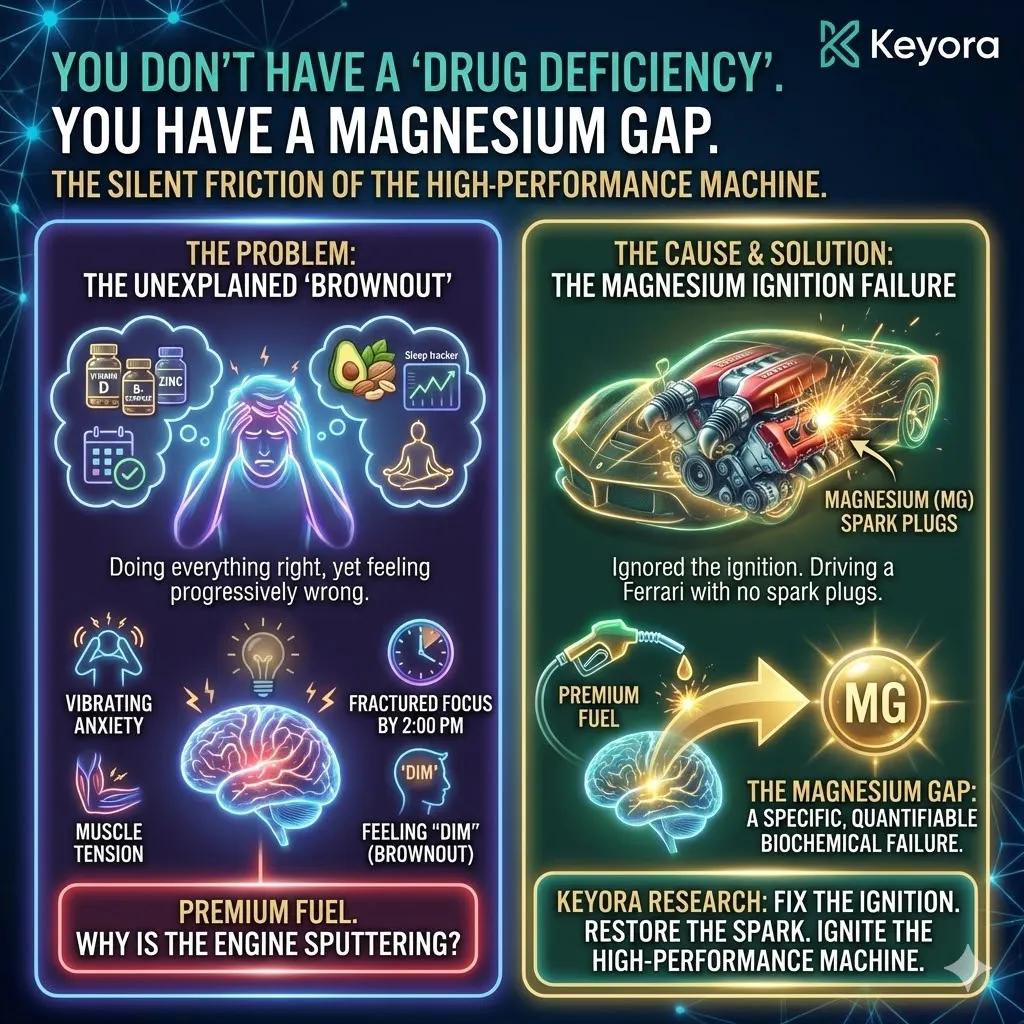
You Don’t Have a “Drug Deficiency”
You Have a Magnesium Gap.
The Silent Friction of the High-Performance Machine
There is a specific, haunting frustration that plagues the modern high-performer. It is the frustration of doing everything right, yet feeling progressively wrong.
You are the architect of your own biology.
You have optimized your diet, eliminating processed sugars and embracing whole foods.
You have a supplement cabinet that rivals a small pharmacy – Vitamin D for immunity, B-Complex for energy, Zinc for resilience.
You track your sleep stages.
You hydrate.
You meditate.
Yet, despite this significant investment of capital and discipline, the return on investment is diminishing.
You still wake up with a subtle, vibrating anxiety in your chest.
Your focus fractures by 2:00 PM.
Your muscles hold a tension that massage cannot resolve.
You feel “dim.”
It is not a total blackout; it is a brownout.
The lights are on, but they are flickering.
You ask yourself: “I am putting premium fuel into this machine. Why is the engine sputtering?”
Keyora Research suggests that you are asking the wrong question.
You are focused on the fuel, but you have ignored the ignition.
You are driving a Ferrari with no spark plugs.
This is not a failure of will.
It is not a failure of genetics.
It is a specific, quantifiable failure of biochemistry known as The Magnesium Gap.
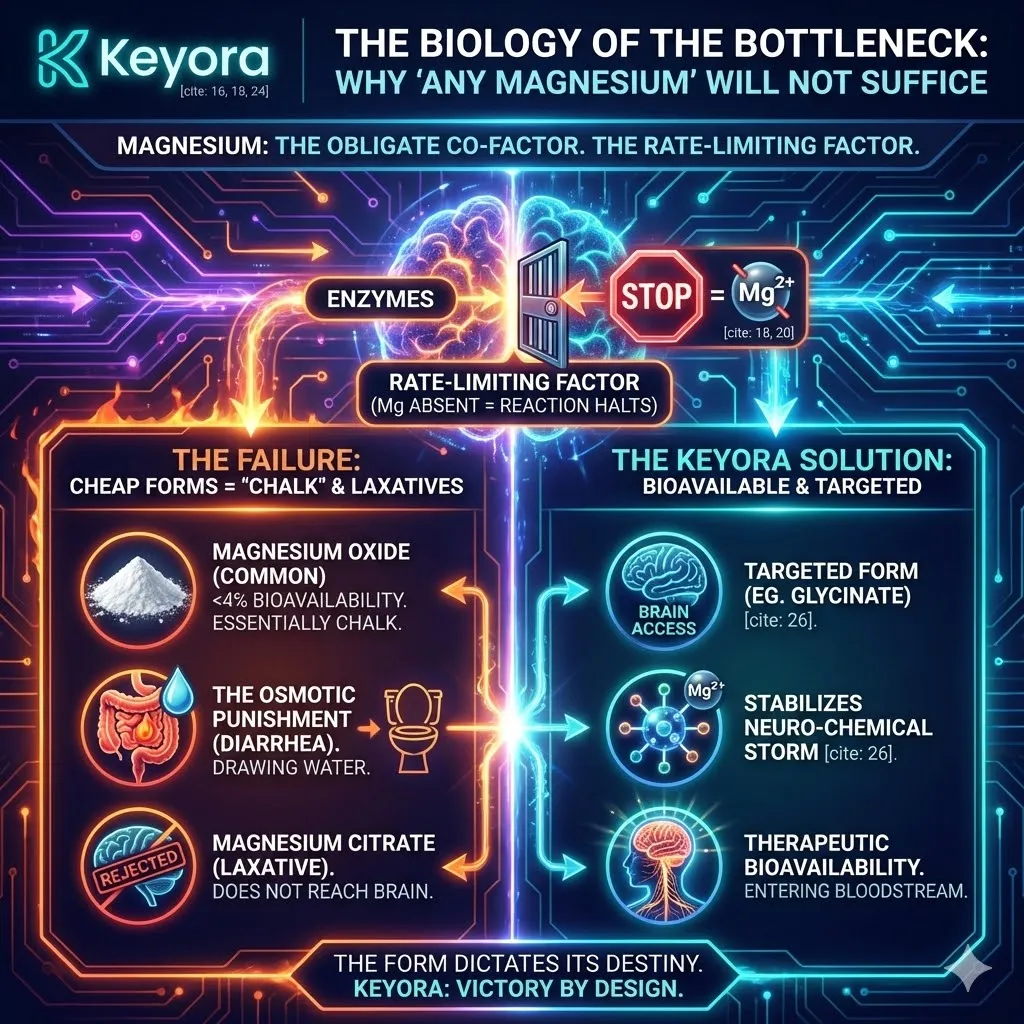
The Biology of the Bottleneck: Why “Any Magnesium” Will Not Suffice
In the hierarchy of human physiology, Magnesium is the Stage Manager. It is an obligate co-factor in over 300 enzymatic reactions. If Magnesium is absent, the reaction stops. It does not slow down; it halts.
This creates what Keyora engineers define as The Rate-Limiting Factor.
However, there is a critical nuance that most of the market misses: Not all Magnesium is created equal.
The form of the mineral dictates its destiny.
-
Magnesium Oxide (common in cheap supplements) is essentially chalk. It has a bioavailability of less than 4%. It does not reach your brain; it stays in your gut, drawing water and causing The Osmotic Punishment (diarrhea).
-
Magnesium Citrate is an acid neutralizer, but it too acts as a laxative at therapeutic doses.
For the high-functioning nervous system, these forms are useless. You cannot stabilize a neuro-chemical storm if your magnesium is flushed down the toilet before it enters the bloodstream.
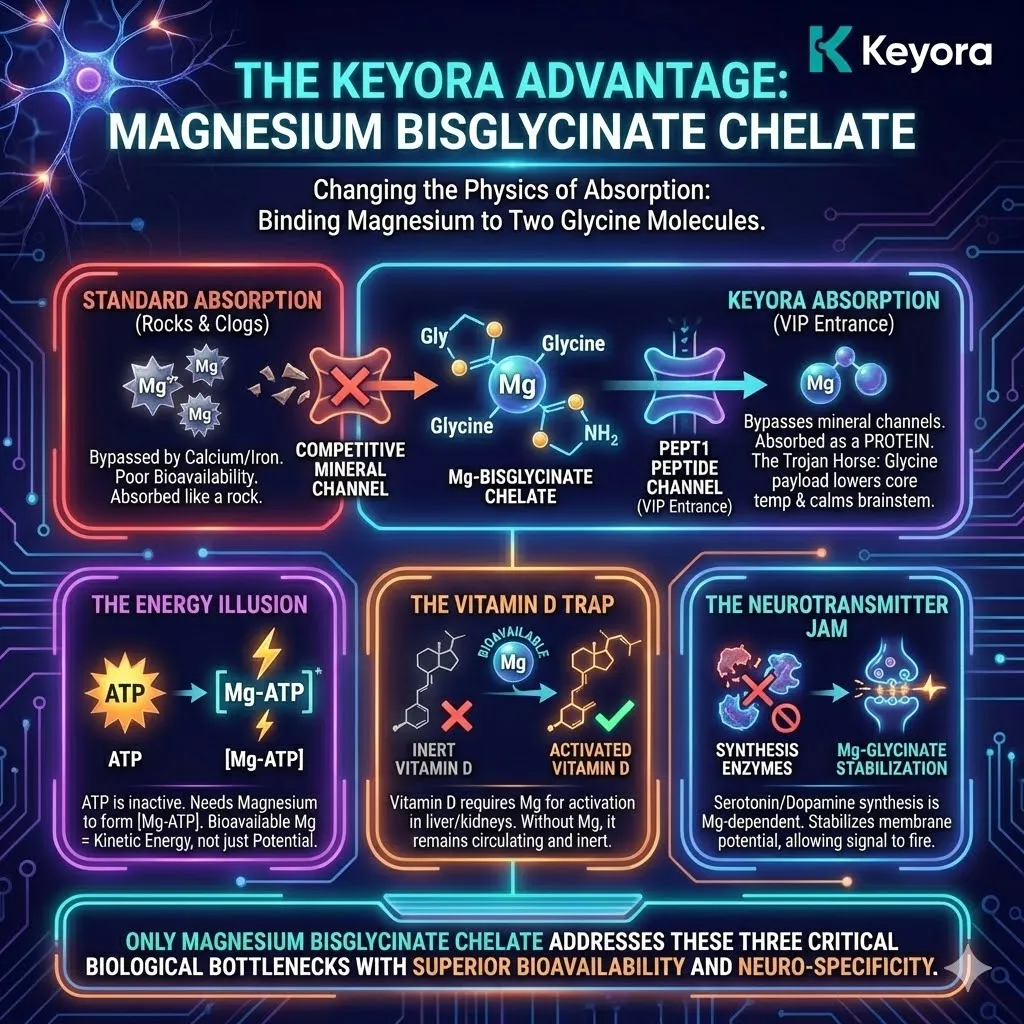
This is why Keyora exclusively utilizes Magnesium Bisglycinate Chelate.
By binding magnesium to two molecules of Glycine, we change the physics of absorption.
-
The VIP Entrance: It bypasses the competitive mineral channels and enters via the PEPT1 Peptide Channel. It is absorbed like a protein, not a rock.
-
The Trojan Horse: It carries a secondary payload. Glycine is not just a carrier; it is an inhibitory neurotransmitter that lowers core body temperature and calms the brainstem.
Only Magnesium Glycinate possesses the bioavailability and the neuro-specificity to address the three critical bottlenecks of your biology:
The Energy Illusion:
ATP (energy) is biologically inactive until it binds to magnesium to form [Mg-ATP]. Without intracellular magnesium (delivered by Glycinate), you have “potential” energy, but zero “kinetic” energy.
The Vitamin D Trap:
Vitamin D requires magnesium for hydroxylation in the liver and kidneys. Without bioavailable magnesium, your Vitamin D remains inert, circulating uselessly while your levels look “normal” on paper.
The Neurotransmitter Jam:
The enzymes that synthesize Serotonin and Dopamine are magnesium-dependent. Without the mineral stabilizing the membrane potential, the signal cannot fire.
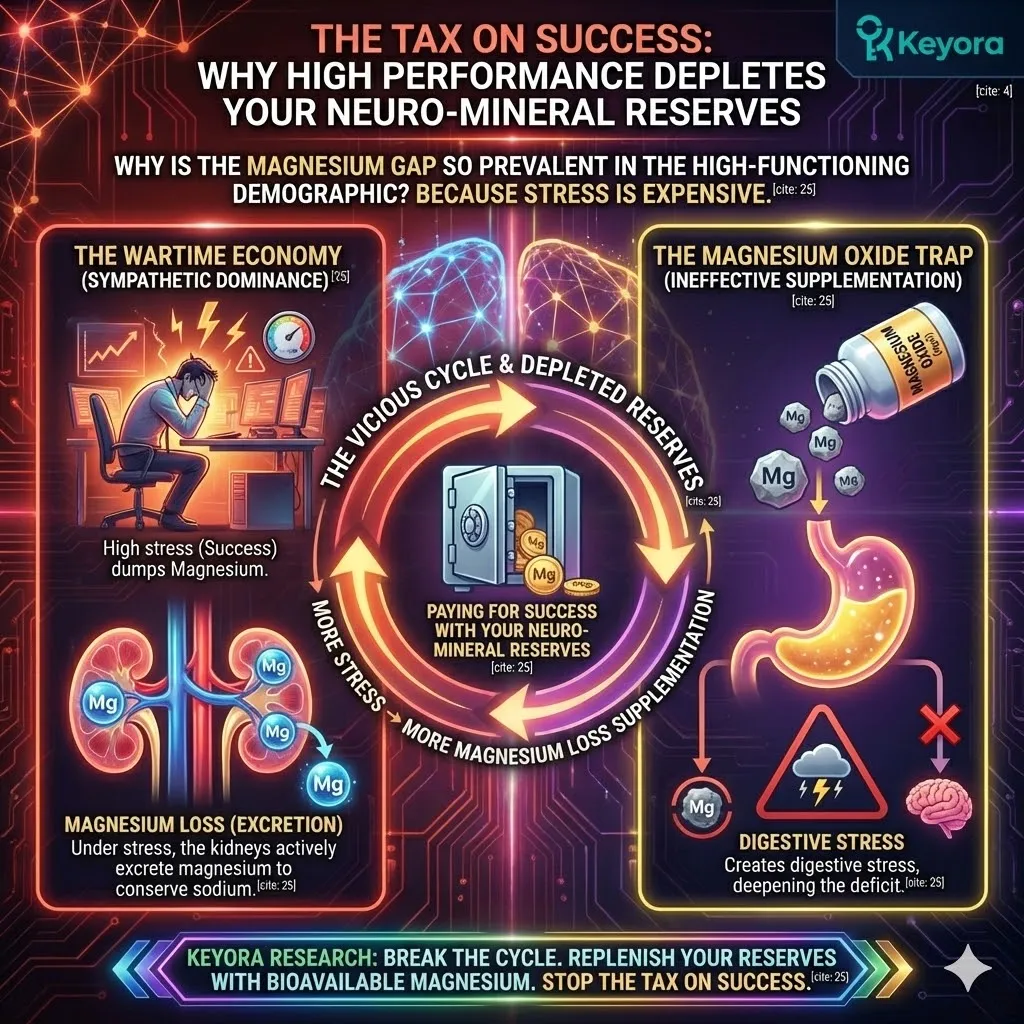
The Tax on Success
Why is The Magnesium Gap so prevalent in the high-functioning demographic? Because stress is expensive.
When you operate in a “Wartime Economy” (Sympathetic Dominance), your body dumps magnesium. Under stress, the kidneys actively excrete magnesium to conserve sodium.
The more successful you are, the more stress you endure. The more stress you endure, the more magnesium you lose. And if you try to replace it with Magnesium Oxide, you only create digestive stress, deepening the deficit.
It is a vicious cycle. You are paying for your success with your neuro-mineral reserves.
The Solution: The Systemic Commander and His Unit
This understanding is the foundation of the Keyora 8-in-1 Matrix.
We do not view Magnesium Glycinate as just “another ingredient” in the formula.
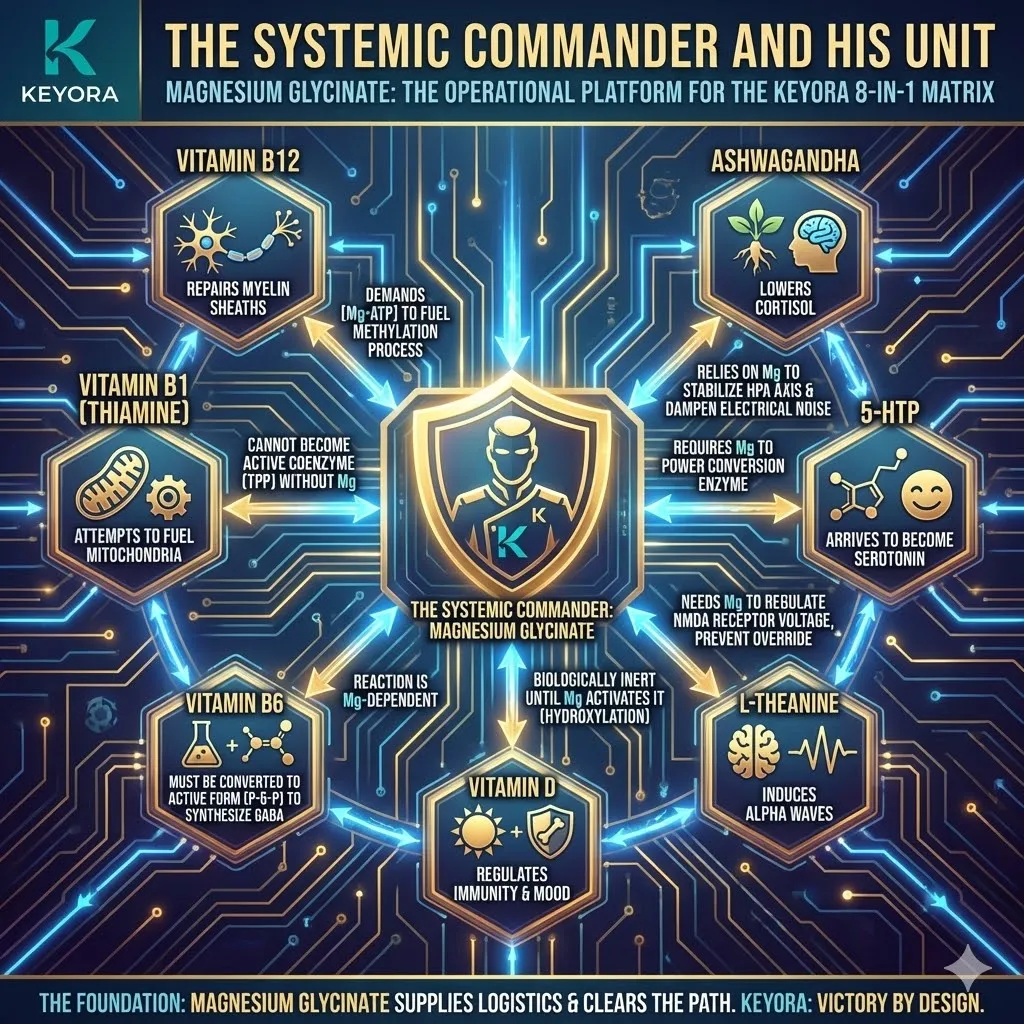
We define it as The Systemic Commander.
In a high-stakes military operation, you have elite Special Forces who execute specific missions. But these forces cannot operate without a Commander who authorizes the action, supplies the logistics, and clears the path.
In the Keyora Matrix, Magnesium Glycinate is that Commander. It is the operational platform upon which the other seven ingredients depend for their very existence:
-
Ashwagandha acts to lower cortisol, but it relies on Magnesium to physically stabilize the HPA axis membrane and dampen the electrical noise.
-
5-HTP arrives to become Serotonin, but it requires Magnesium to power the conversion enzyme (Aromatic L-amino acid decarboxylase).
-
L-Theanine seeks to induce Alpha waves, but it needs Magnesium to regulate the voltage of the NMDA receptor to prevent excitatory override.
-
Vitamin D enters to regulate immunity and mood, but it is biologically inert until Magnesium activates it through hepatic and renal hydroxylation.
-
Vitamin B6 must be converted to its active form (P-5-P) to synthesize GABA; this reaction is Magnesium-dependent.
-
Vitamin B1 (Thiamine) attempts to fuel the mitochondria, but it cannot become the active coenzyme (TPP) without Magnesium.
-
Vitamin B12 works to repair myelin sheaths, but it demands [Mg-ATP] to fuel the methylation process.
The Logic of the Keyora 8-in-1 Matrix:
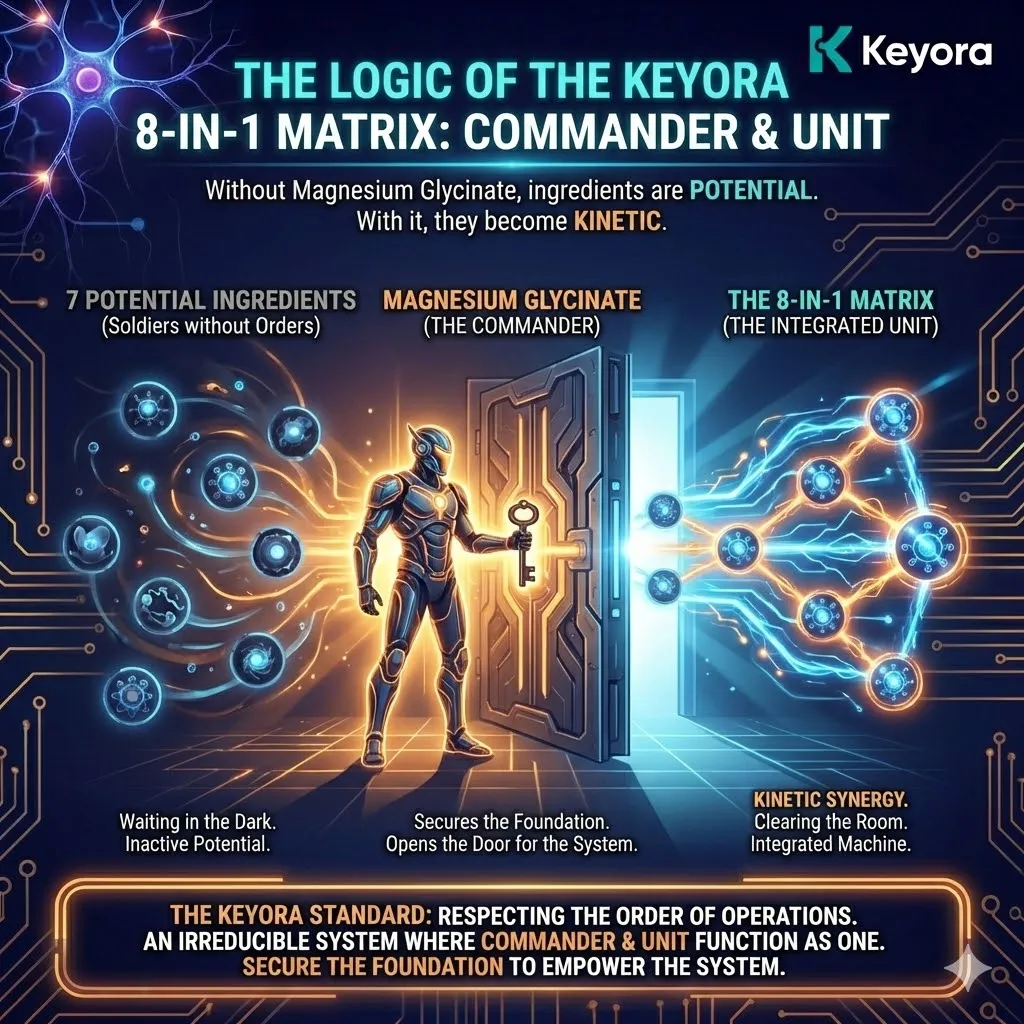
Without Magnesium Glycinate, the other seven ingredients are merely potential – soldiers without orders, waiting in the dark.
With Magnesium Glycinate, they become kinetic.
But conversely, a Commander without troops cannot win the war. Magnesium Glycinate opens the door, but it is the synergy of the full 8-in-1 Matrix that clears the room.
The Keyora Standard is not about throwing random nutrients at a problem.
It is about respecting the Order of Operations of human biology.
It is an irreducible system where the Commander and the Unit function as a single, integrated machine.
We must secure the foundation (Magnesium Glycinate) to empower the system (The Matrix).
CHAPTER I: WHY GLYCINATE? – THE ABSORPTION ENGINEERING
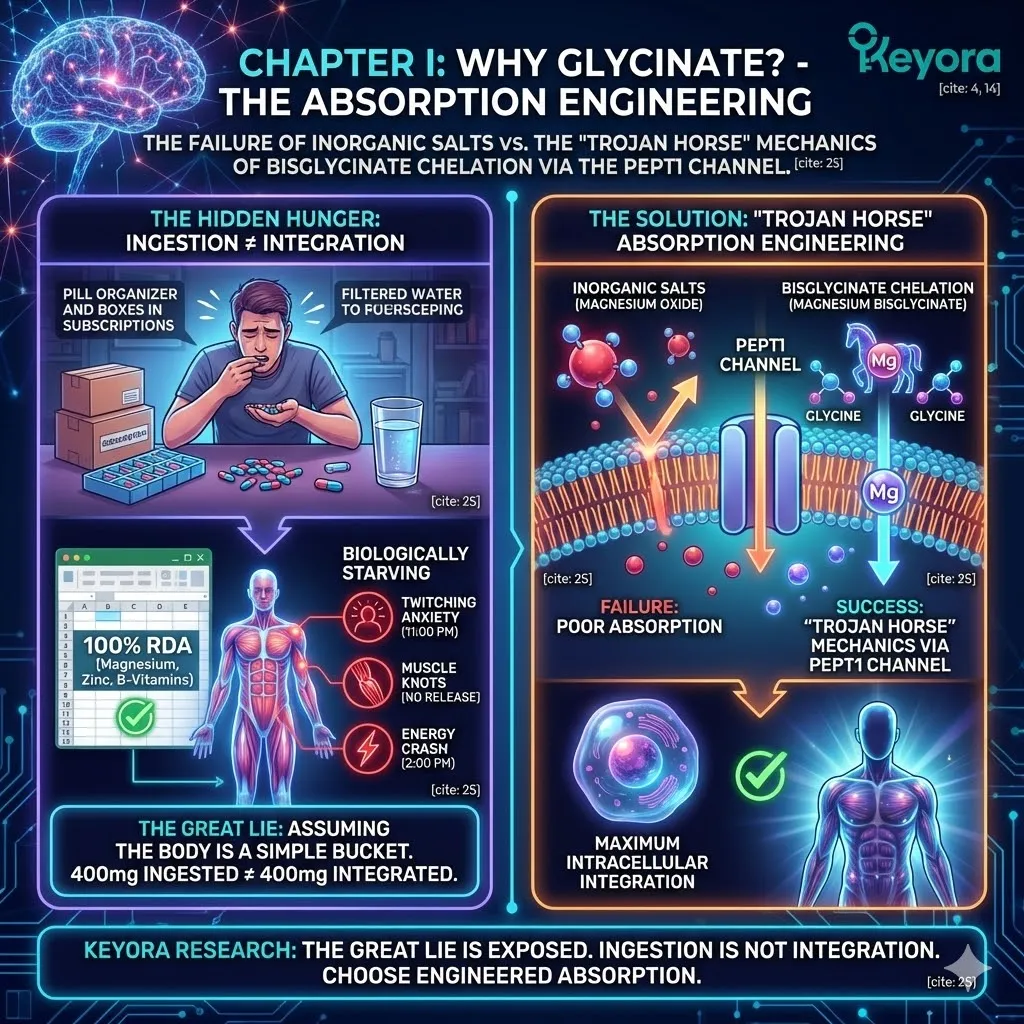
The Failure of Inorganic Salts vs. The “Trojan Horse” Mechanics of Bisglycinate Chelation via the PEPT1 Channel.
There is a disturbing phenomenon occurring in the wellness community. We see individuals who are statistically the most “supplemented” generation in history.
They have the pill organizers.
They have the subscription boxes.
They have the discipline to swallow a handful of capsules every morning with their filtered water.
On paper, their nutritional intake is perfect. Their spreadsheets show 100% of the RDA (Recommended Daily Allowance) for Magnesium, Zinc, and B-Vitamins.
Yet, biologically, they are starving.
Their blood panels may look passable, but their intracellular reality is a disaster.
They still twitch with anxiety at 11:00 PM.
Their muscles still knot up after a workout and refuse to release.
Their energy crashes at 2:00 PM.
They are suffering from what Keyora Research defines as The Hidden Hunger.
This is the great lie of the supplement industry:
The assumption that Ingestion equals Integration.
The industry wants you to believe that the human body is a simple bucket. If you pour 400mg of Magnesium into the top (the mouth), they imply that 400mg of Magnesium inevitably ends up in the bottom (the cells).
This is biologically false.
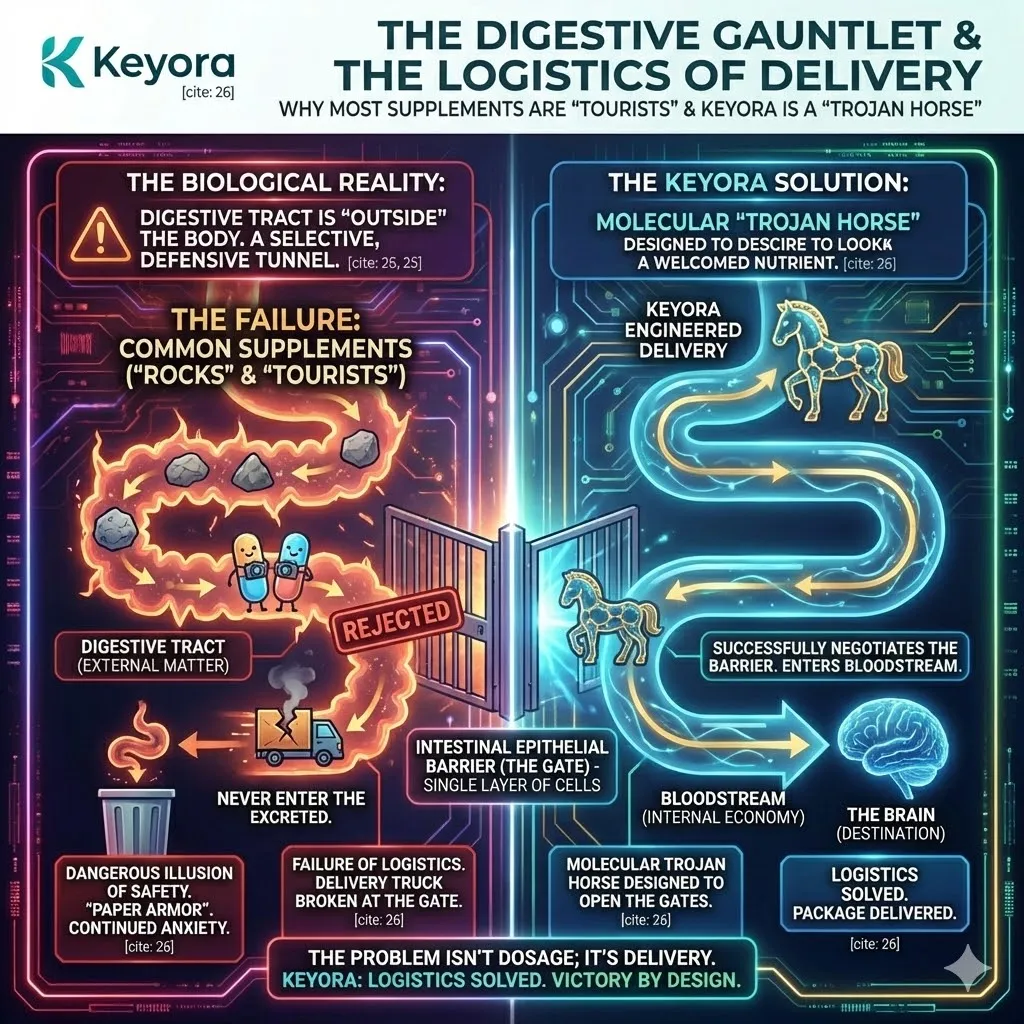
The human digestive tract is not a bucket. It is a highly selective, defensive, and discriminating tunnel. Topologically speaking, the contents of your stomach and intestines are actually outside of your body. Until a molecule successfully negotiates the treacherous crossing of the intestinal epithelial barrier – a single layer of cells that guards your bloodstream – it is, for all physiological intents and purposes, external matter.
Most mass-market supplements never make this crossing.
They travel through your system like tourists – passing through the scenery, observing the chaos, but never actually entering the economy.
They are swallowed, they are churned, and they are excreted.
This creates a dangerous illusion of safety.
You think you are protected because you took the pill.
You attribute your continued anxiety to “stress” or “personality,” never realizing that the chemical armor you bought was made of paper.
You are not suffering from a lack of pills.
You are suffering from a failure of Logistics.
The problem isn’t the dosage; it’s the delivery system. If you ship a package (Magnesium) to a destination (The Brain), but the delivery truck breaks down at the gate (The Gut), the package is useless.
In this chapter, we will dismantle the engineering failure of common magnesium supplements.
We will look at why 90% of the products on the shelf are essentially “rocks” that your body rejects.
And we will introduce the Keyora engineering solution: A molecular “Trojan Horse” designed to trick the body into opening the gates.
1.1 THE GLITCH: The Osmotic Punishment – Why Most Magnesium Ends Up in the Toilet
The Visceral Reality of Biological Rejection.
Let us speak plainly about the most common “side effect” of magnesium supplementation. It is the one thing everyone whispers about but rarely analyzes with scientific rigor: Diarrhea.
The market treats this as a minor annoyance.
They call it “loose stools” or “digestive intolerance.”
They put warning labels on the bottle: “Start with a lower dose to assess tolerance.”
Keyora Research rejects this framing.
This is not a “tolerance issue.”
This is a Rejection Signal.
When you take a standard Magnesium Oxide or Citrate supplement and subsequently find yourself rushing to the bathroom with urgent, watery distress, your body is not “adjusting.” Your body is actively flushing a foreign irritant.
We define this mechanism as The Osmotic Punishment.
To understand why this happens, we must look at the physics of Osmosis.
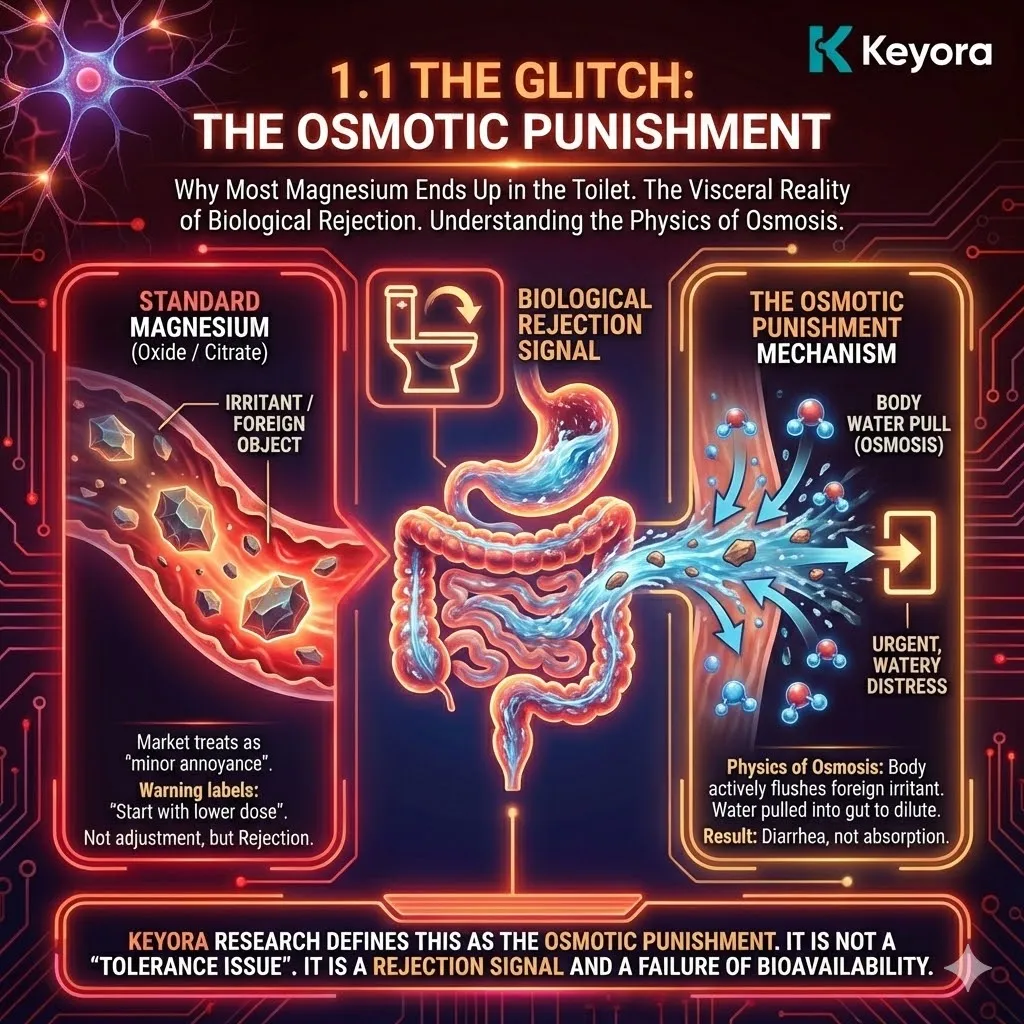
The Physics of the Flush
Water follows salt. This is a fundamental law of nature. Water will always move across a semi-permeable membrane from an area of low solute concentration to an area of high solute concentration, attempting to equalize the pressure.
When you swallow a tablet of Magnesium Oxide (the most common form found in pharmacies), you are swallowing an Inorganic Salt.
Here is the sequence of the failure:
The Dissociation Failure:
Magnesium Oxide is incredibly stable. It is essentially a rock. To break the bond between the Magnesium and the Oxygen, your stomach must produce massive amounts of Hydrochloric Acid (HCl). If you are stressed (which lowers stomach acid), this dissociation barely happens.
The Accumulation:
The unabsorbed magnesium travels down into the small intestine and the colon. Because it is inorganic and charged, it cannot easily pass through the intestinal wall. It gets stuck in the lumen (the hollow tube of the gut).
The Hyper-Osmotic Event:
Now you have a high concentration of magnesium ions sitting in your colon. This creates a Hyper-Osmotic Environment. The concentration of minerals inside the gut is higher than the concentration in the surrounding blood and tissues.
The Flood:
To balance this pressure, your body executes the law of osmosis. It pulls water out of your cells, out of your bloodstream, and dumps it into your colon.
The Purge:
The colon fills with water. The volume expands rapidly. This triggers the stretch receptors in the gut lining, which fire a high-priority signal to the enteric nervous system: “Evacuate immediately.”
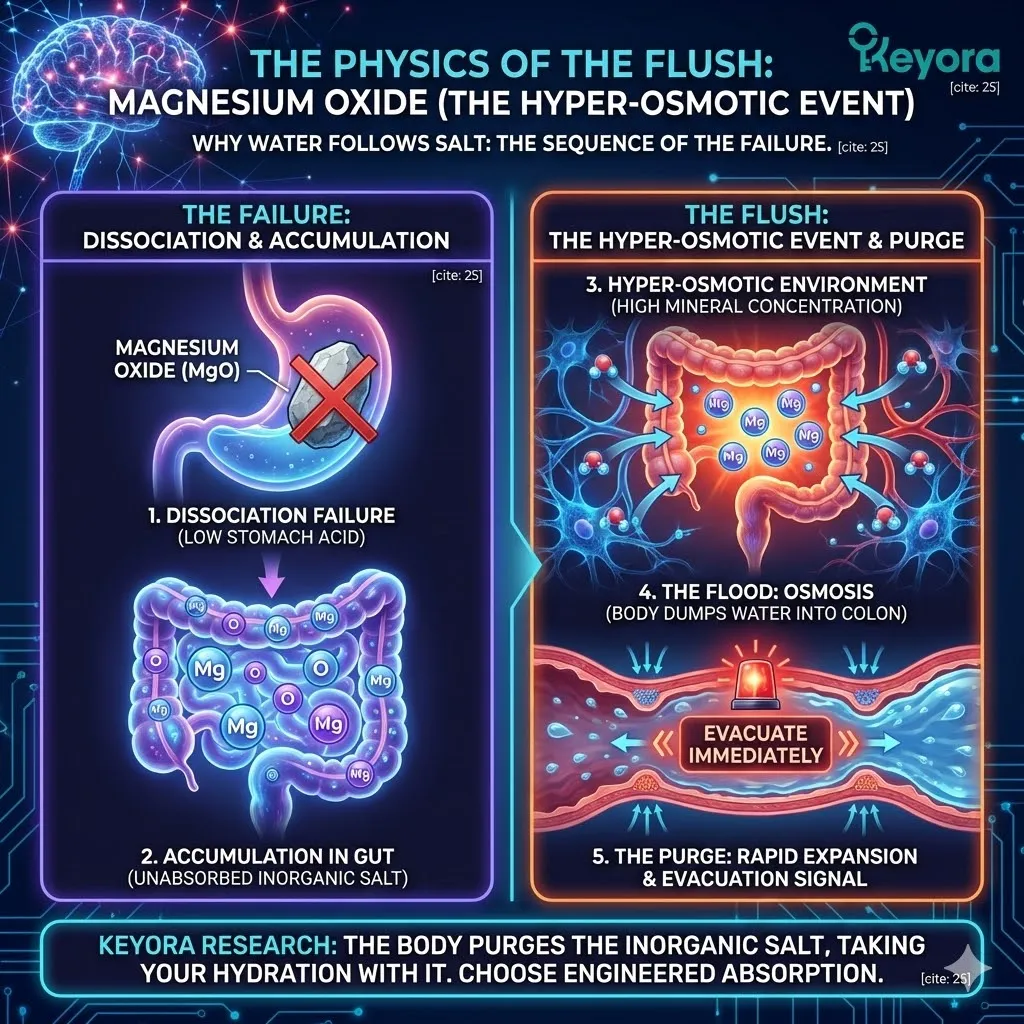
The Cost of the Punishment
This is The Osmotic Punishment
It is not just “uncomfortable.”
It is counter-productive.
When you trigger this osmotic flush, you are not just losing the magnesium you just paid for. You are losing water (dehydration). You are losing other electrolytes (Sodium, Potassium) that are swept away in the flood. You are irritating the mucosal lining of the gut, increasing inflammation.
Think about the irony: You took the magnesium to reduce stress and calm your nervous system. But the form you took acted as a chemical irritant, triggering a physical stress response (dehydration and pain) in your gut.
You paid for relief, but you bought a laxative.
This is the defining characteristic of Inorganic Magnesium Salts. They are chemically designed to attract water, not to enter cells. They are “Hydrophilic” (water-loving) in the worst possible way.
The Illusion of “High Potency”
Marketing teams love Magnesium Oxide because it is small and dense. They can fit 500mg of elemental magnesium into a single, tiny capsule. It looks impressive on the label. “500mg! High Potency!”
But if the absorption rate is only 4% (a generous estimate for Oxide in stressed individuals), then out of that 500mg capsule, only 20mg enters your blood.
The other 480mg stays in your gut, acting as a water magnet, setting the stage for The Osmotic Punishment.
You are effectively dosing yourself with a massive amount of “Anti-Absorption” capability.
For the high-performer, this is unacceptable.
You cannot afford to play Russian Roulette with your digestion before a board meeting.
You cannot afford to dehydrate your brain when you need cognitive clarity.
We need a magnesium molecule that does not attract water.
We need a molecule that becomes invisible to the osmotic sensors of the gut.
We need to stop treating magnesium like a rock, and start treating it like food.
1.2 THE ROOT CAUSE: The Inorganic Salt Dilemma – Eating Rocks vs. Eating Food
The Chemical Impossibility of Dissociating Magnesium Oxide Under Stress.
If The Osmotic Punishment is the symptom (the flush), then we must identify the mechanical failure that triggers it. Why does the body reject these forms of magnesium?
The answer lies in basic inorganic chemistry.
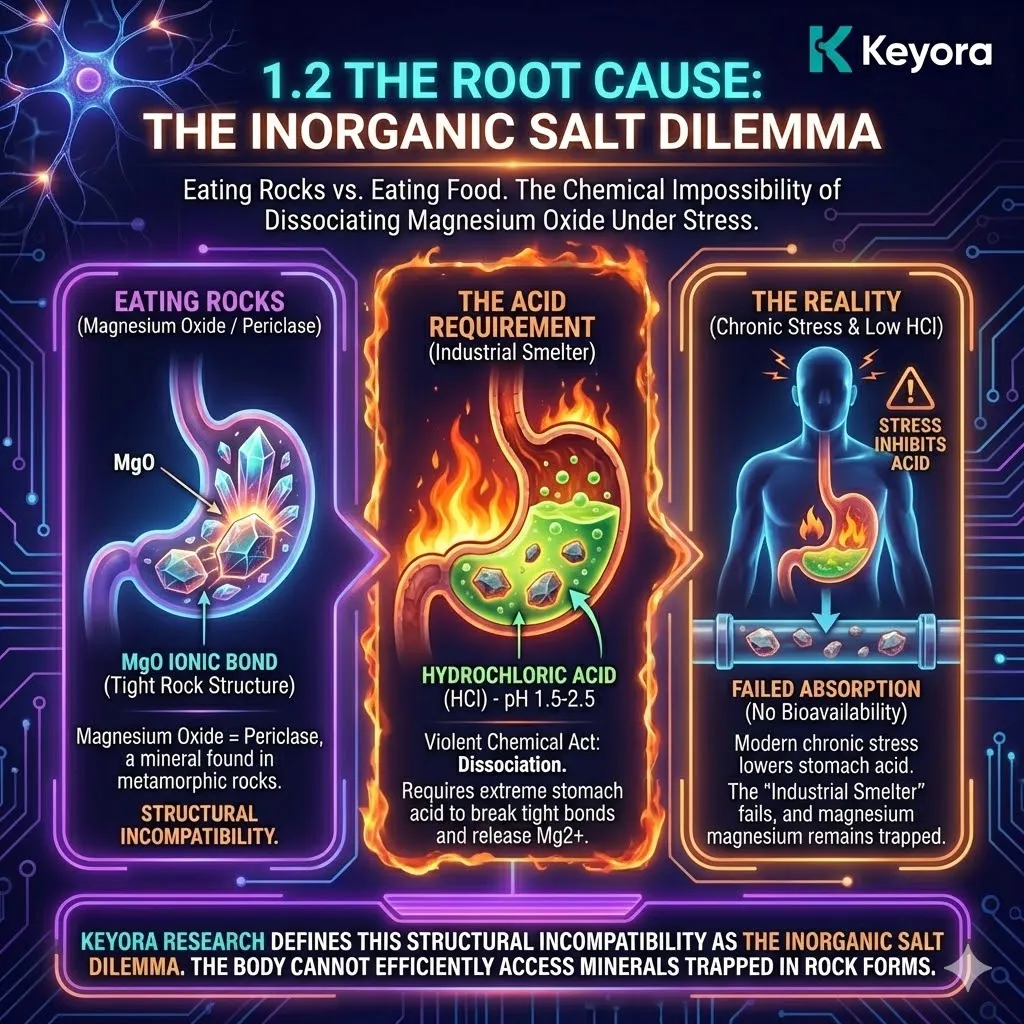
The most common magnesium supplement on the market – Magnesium Oxide (MgO) – is formed by an ionic bond between Magnesium and Oxygen. This bond is incredibly tight. In geology, we call Magnesium Oxide Periclase. It is a mineral found in contact metamorphic rocks.
When you swallow a tablet of Magnesium Oxide, you are, quite literally, eating a rock.
Keyora Research defines this structural incompatibility as The Inorganic Salt Dilemma.
The Acid Requirement: The High Cost of Entry
For your body to use the magnesium trapped inside that rock, it must perform a violent chemical act called Dissociation. It must break the ionic bond to release the free Magnesium ion (Mg²⁺).
There is only one fluid in the human body capable of breaking this bond: Hydrochloric Acid (HCl).
Your stomach must act as an industrial smelter. It must lower its pH to highly acidic levels (pH 1.5 – 2.5) and churn the tablet for a significant duration to chip away the magnesium ions.
Under ideal textbook conditions, this process is inefficient but functional. However, the modern high-performer does not live in a textbook. They live in the real world of chronic stress.
The Catch-22 of the Stressed Gut
Here is the cruel biological irony: The people who need magnesium the most are the least capable of absorbing it.
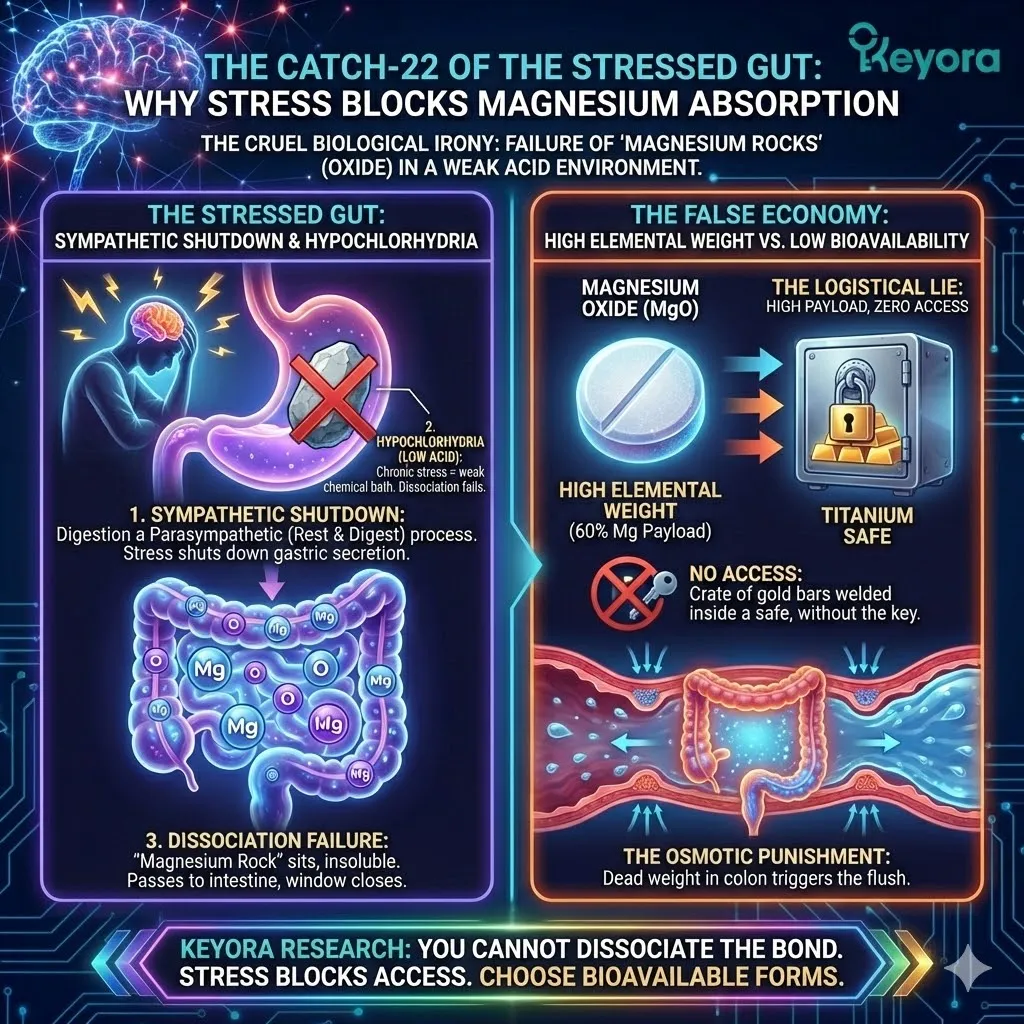
Sympathetic Shutdown:
Digestion is a Parasympathetic (Rest and Digest) process. When you are in a “Wartime Economy” – rushing to work, checking emails during breakfast, vibrating with cortisol – your autonomic nervous system shuts down gastric secretion. Your stomach acid production drops.
Hypochlorhydria (Low Acid):
Chronic stress leads to a condition called Hypochlorhydria. Your stomach becomes a weak chemical bath rather than a strong acid vat.
The Dissociation Failure:
When you drop the “Magnesium Rock” (Oxide) into this weak acid environment, it does not dissolve. It sits there. It remains an insoluble salt.
The Result:
The tablet passes through the stomach largely intact. It enters the small intestine still bound to the oxygen. Because the intestine has a neutral pH, the window for dissociation is closed. The rock remains a rock.
The False Economy of “High Elemental Weight”
This illuminates the deceptive nature of supplement marketing. Companies love Magnesium Oxide because it has a “High Elemental Weight.” Magnesium is a small atom; Oxygen is a small atom. Therefore, in a 500mg molecule of MgO, a huge percentage (about 60%) is actual magnesium.
They sell you on the Payload. “Contains more magnesium per gram than any other form!”
But this is a logistical lie. It is like delivering a crate of gold bars that are welded inside a titanium safe, without giving you the key. The payload is high, but the Access is zero.
If you cannot dissociate the bond because your stress levels have downregulated your stomach acid, that high elemental weight is irrelevant. It is just dead weight moving through your colon, waiting to attract water and trigger The Osmotic Punishment.
1.3 THE SYSTEMIC ANALYSIS: The Ion Channel Traffic Jam – Mineral Competition
Why the “Front Door” to the Bloodstream is Always Blocked.
Let us assume, for the sake of argument, that you possess an iron stomach. Let us assume you managed to produce enough acid to dissolve the Magnesium Oxide and release the free Magnesium ions (Mg²⁺).
You have solved the Chemistry problem.
Now, you face the Biology problem.
The free magnesium ion is now floating in the lumen of your small intestine (the jejunum and ileum). To be useful, it must cross the intestinal wall – the Enterocyte – to reach the blood.
It cannot just walk through the wall. Cell membranes are made of lipids (fats). Magnesium ions are charged and water-soluble. They repel each other. The ion needs a door.
The standard door for minerals is the Ion Channel (specifically the TRPM6 and TRPM7 channels, and the DMT1 transporter).
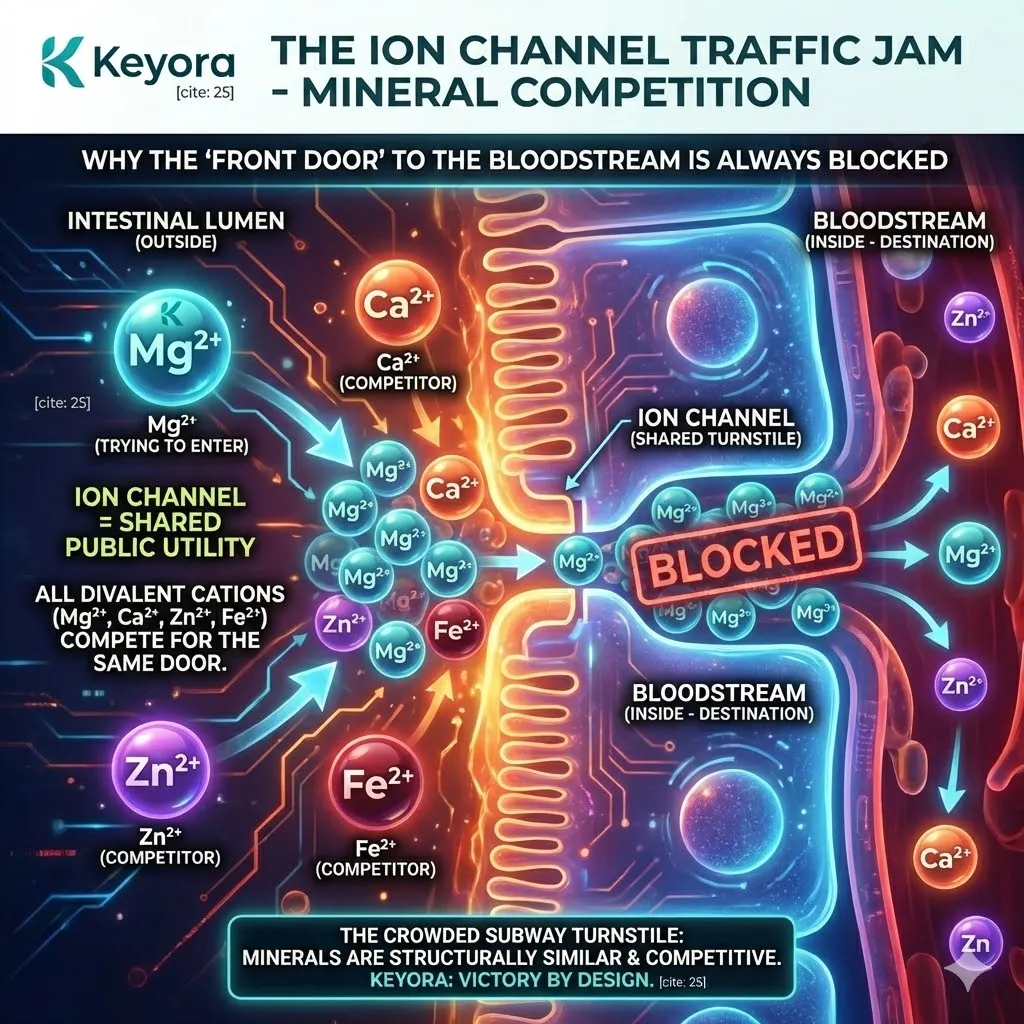
Keyora Research identifies this absorption pathway as The Ion Channel Traffic Jam.
The Metaphor: The Crowded Subway Turnstile
Imagine a single, narrow turnstile at a busy subway station during rush hour. This turnstile is the Ion Channel.
The problem is that this turnstile is not reserved for Magnesium. It is a shared public utility. It is used by all divalent cations – minerals with a 2+ charge.
-
Calcium (Ca²⁺)
-
Zinc (Zn²⁺)
-
Iron (Fe²⁺)
-
Magnesium (Mg²⁺)
They all want to use the same door. They are structurally similar. And they are competitive.
The Bully Effect (Competitive Inhibition)
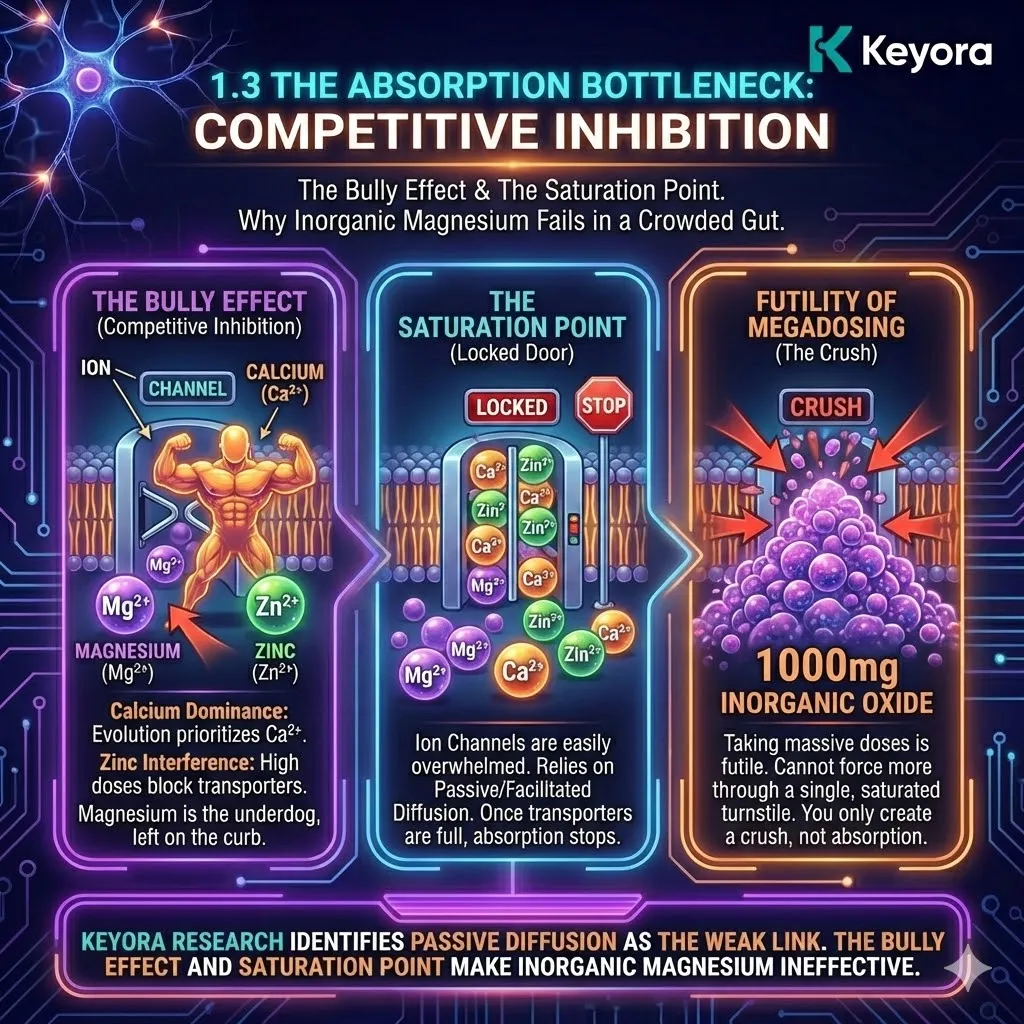
In this crowd, Magnesium is the underdog.
-
Calcium Dominance: Evolution prioritizes Calcium (for immediate muscle contraction and heart function). If you consume a meal with dairy (Calcium) and take a Magnesium supplement, the Calcium bullies its way to the front of the line. It saturates the Ion Channels. The Magnesium is left standing on the curb.
-
Zinc Interference: High doses of Zinc (common in immunity protocols) directly compete for transporter binding sites, further blocking Magnesium uptake.
The Saturation Point
Furthermore, these Ion Channels are easily overwhelmed. They rely on Passive Diffusion or Facilitated Diffusion. This means they work on a gradient.
Once the concentration of minerals inside the cell reaches a certain point, or the transporter proteins are all occupied, the door locks. Absorption stops.
This is the Saturation Point.
This explains why taking massive doses of inorganic magnesium (e.g., 1000mg of Oxide) is futile. You cannot force more people through a single turnstile by pushing harder from the back. You only create a crush.
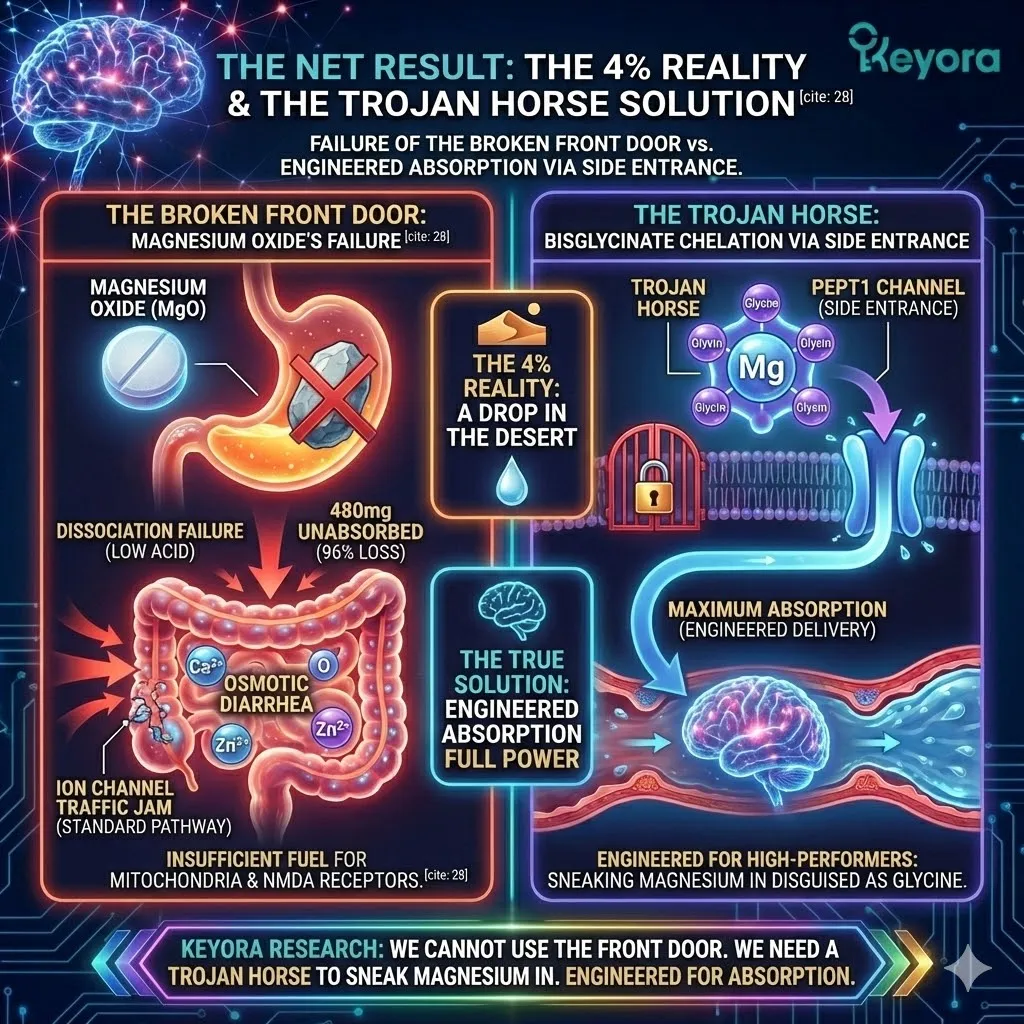
The Net Result: The 4% Reality
When you combine The Inorganic Salt Dilemma (failure to dissolve) with The Ion Channel Traffic Jam (failure to enter), the math is devastating.
Clinical studies suggest that the absorption rate of Magnesium Oxide can be as low as 4%.
-
You swallow 500mg.
-
480mg stays in the gut (Triggering Osmotic Diarrhea).
-
20mg enters the blood.
And even that 20mg had to fight Calcium and Zinc to get there.
For a high-performer running a massive Magnesium Gap due to chronic stress, 20mg is a drop of water in a desert.
It is insufficient to plug the NMDA receptors.
It is insufficient to fuel the Mitochondria.
The standard “Front Door” absorption pathway is broken. It is too dependent on stomach acid (which you lack) and too crowded with other minerals (which block the way).
To engineer a true solution, we cannot use the front door.
We need a side entrance.
We need a way to sneak Magnesium into the bloodstream disguised as something else.
We need a Trojan Horse.
1.4 THE KEYORA ENGINEERING: The PEPT1 Bypass – The “Trojan Horse” Strategy
Engineering a Molecular Disguise to Smuggle Magnesium Past the Gatekeepers.
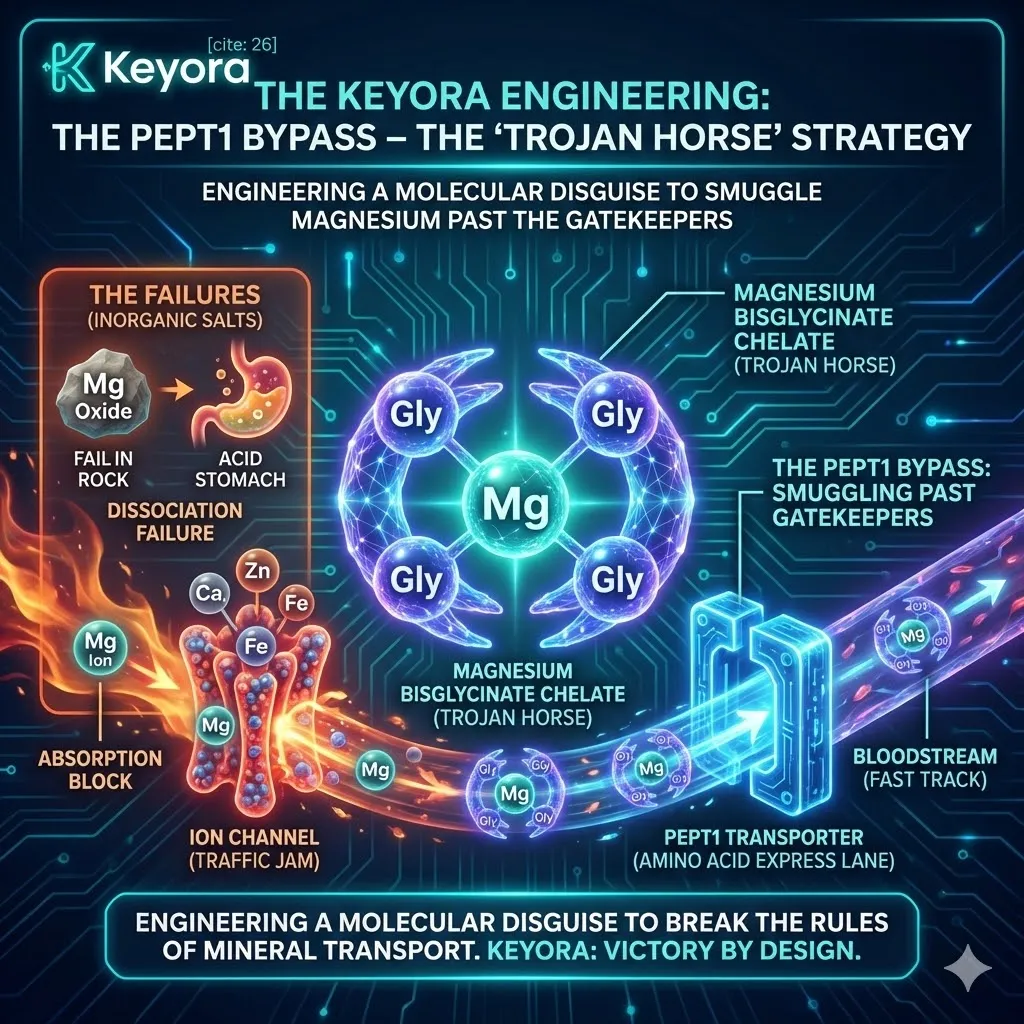
If the Inorganic Salt Dilemma means the molecule won’t dissolve, and The Ion Channel Traffic Jam means the molecule won’t enter, then the engineering challenge is clear: We must design a magnesium molecule that does not rely on stomach acid for dissociation and does not use the crowded Ion Channel for absorption.
We need a molecule that breaks the rules of mineral transport.
This is the rationale behind Keyora’s exclusive use of Magnesium Bisglycinate Chelate.
We are not just “mixing” magnesium with glycine.
We are performing a precise chemical reaction called Chelation (from the Greek chele, meaning “claw”).
We bond one Magnesium atom to two Glycine molecules using coordinate covalent bonds.
This creates a stable, ring-like structure that fundamentally alters the physics of the nutrient.
Keyora Research defines this mechanism as The PEPT1 Bypass.
The Molecular Disguise: The Trojan Horse
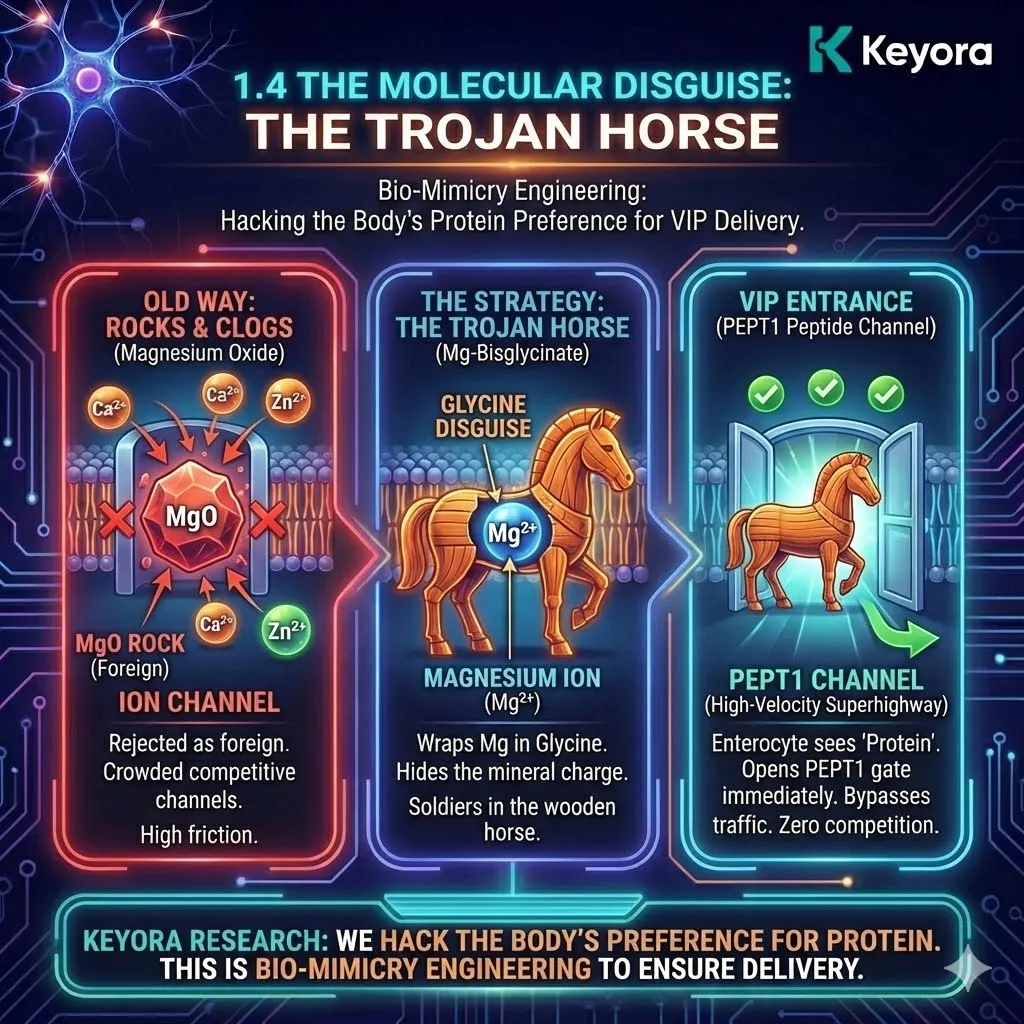
To the intelligent sensors of your intestinal lining (the Enterocytes), Magnesium Oxide looks like a rock. It is foreign. It requires processing.
But Magnesium Bisglycinate looks like Food. Specifically, it looks like a Dipeptide – a tiny fragment of protein.
Evolution has prioritized protein absorption above almost everything else. While minerals have to fight for limited access via Ion Channels, proteins have a dedicated, high-velocity superhighway called the PEPT1 Transporter (Peptide Transporter 1).
The Strategy:
By wrapping the magnesium ion in glycine (an amino acid), we effectively hide the mineral charge. The magnesium is the soldiers; the glycine is the wooden horse.
The Entry:
When this molecule approaches the intestinal wall, the enterocyte does not see “Magnesium.” It sees “Protein.” It opens the PEPT1 gate immediately.
The Bypass:
The molecule bypasses the crowded Ion Channels entirely. It does not compete with Calcium. It does not compete with Zinc. It ignores the traffic jam and glides through the VIP lane.
This is Bio-Mimicry Engineering. We are hacking the body’s own preference for protein to ensure the delivery of the mineral.
Stability in the Face of Stress
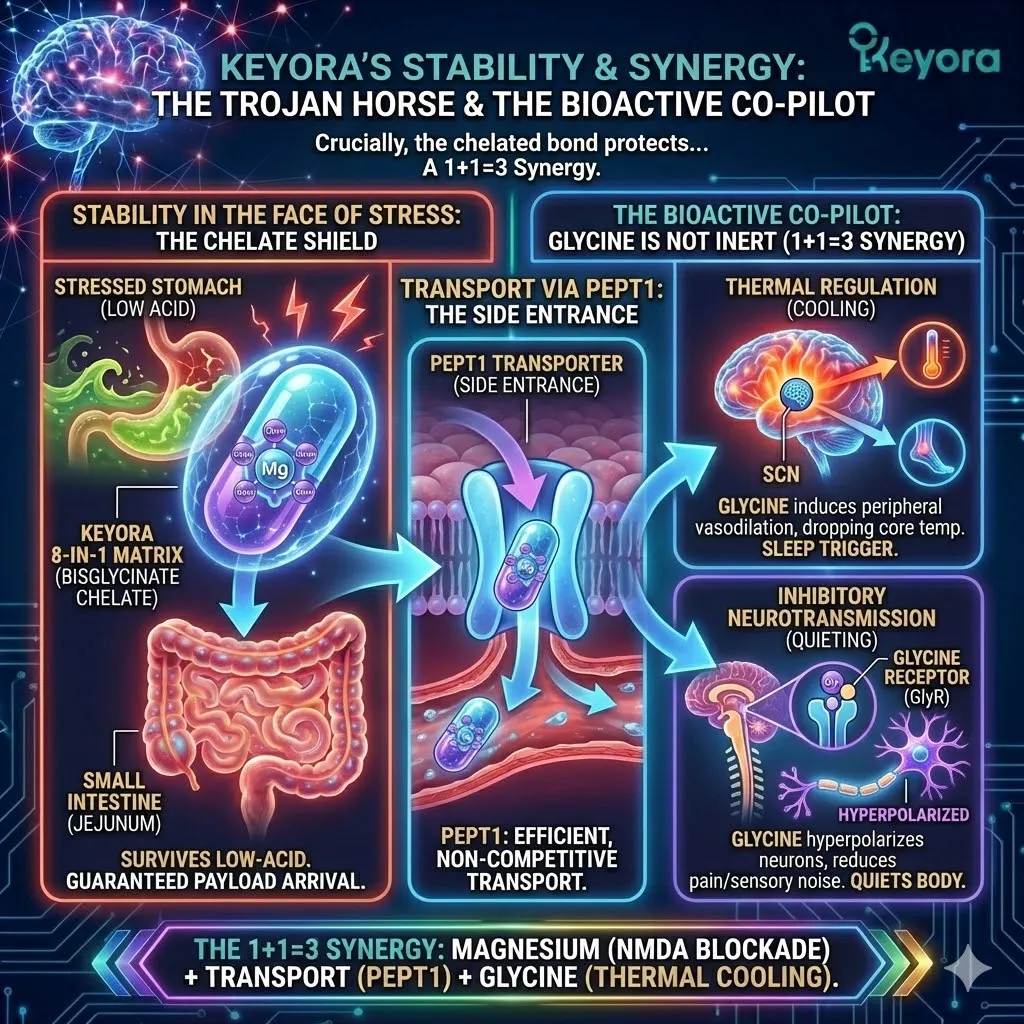
Crucially, the chelated bond protects the magnesium from the environment of the stomach. Unlike the ionic bond of Magnesium Oxide (which falls apart or refuses to break depending on pH), the chelate bond is chemically stable.
It survives the low-acid environment of the stressed stomach.
It travels intact to the small intestine (jejunum), where the PEPT1 transporters are most dense.
This guarantees that the payload arrives at the absorption site, rather than precipitating out as waste in the colon.
The Bioactive Co-Pilot: Glycine is Not Inert
In many chelated minerals, the carrier molecule is “dead weight.” It transports the mineral and then is discarded.
In the Keyora 8-in-1 Matrix, the carrier – Glycine – is a therapeutic agent in its own right. We view Glycine as The Bioactive Co-Pilot.
Once the Trojan Horse enters the bloodstream and the magnesium is released to plug the NMDA receptors (as detailed in previous episodes), the Glycine is liberated to perform its own mission.
Thermal Regulation:
Glycine acts on NMDA receptors in the Suprachiasmatic Nucleus (SCN) to induce peripheral vasodilation. It draws heat from the core to the extremities, dropping core body temperature. This is the physiological trigger for sleep onset.
Inhibitory Neurotransmission:
Glycine binds to glycine receptors (GlyR) in the brainstem and spinal cord. It hyperpolarizes neurons, reducing the transmission of pain and sensory information. It quiets the physical noise of the body.
This is a 1+1=3 Synergy.
You get the magnesium (NMDA blockade), you get the transport (PEPT1), and you get the glycine (Thermal Cooling).
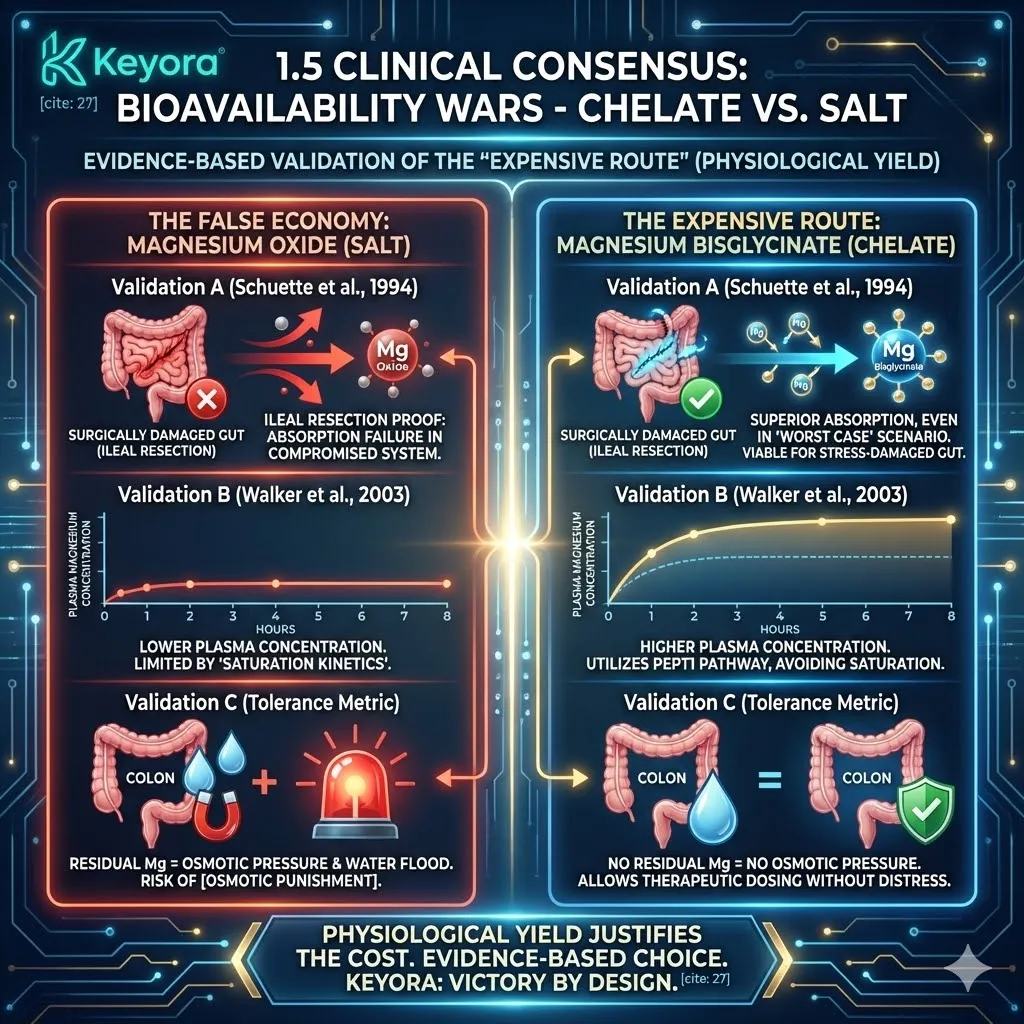
1.5 CLINICAL CONSENSUS: Bioavailability Wars – Chelate vs. Salt
Evidence-Based Validation of the “Expensive Route.”
The decision to use Magnesium Bisglycinate is not a marketing preference. It is an economic decision based on physiological yield. Bisglycinate is significantly more expensive to manufacture than Oxide, but the clinical data confirms that Oxide is a false economy.
Validation A: The Ileal Resection Proof (Schuette et al., 1994)
The definitive proof of the Bisglycinate advantage comes from a landmark study by Schuette et al. (1994), published in the Journal of Parenteral and Enteral Nutrition.
The researchers compared Magnesium Bisglycinate to Magnesium Oxide in patients with Ileal Resection – individuals who had parts of their small intestine surgically removed. These patients represent the “Worst Case Scenario” for absorption. Their digestive surface area is compromised, and their transit time is rapid.
-
The Findings: Even in these compromised systems, Magnesium Bisglycinate showed significantly superior absorption compared to Oxide.
-
The Implication: If Glycinate can be absorbed by a surgically damaged gut, it can certainly be absorbed by a “stress-damaged” gut. This validates the Keyora thesis that Glycinate is the only viable option for the high-stress phenotype (Hypochlorhydria/Gut Inflammation).
Validation B: The Bioavailability Hierarchy (Walker et al., 2003)
Walker et al. (2003) in Magnesium Research conducted a randomized, double-blind study comparing different magnesium forms.
-
The Findings: The study confirmed that organic chelates (like Glycinate) resulted in higher plasma magnesium concentrations over 8 hours compared to inorganic oxides.
-
The Mechanism: The study attributed this to the stability of the chelate in the gastrointestinal tract and the utilization of peptide transport pathways (PEPT1), avoiding the “saturation kinetics” that limit standard mineral absorption.
Validation C: The Tolerance Metric
Clinical observation universally supports the fact that Bisglycinate has the lowest incidence of gastrointestinal distress. Because it is absorbed high in the digestive tract (jejunum) via active transport, very little residual magnesium reaches the colon.
-
No Residual Mg = No Osmotic Pressure.
-
No Osmotic Pressure = No Water Flood.
-
No Water Flood = No [Osmotic Punishment].
This allows for therapeutic dosing. You can take the 200-400mg required to fix The Magnesium Gap without risking a bathroom emergency during your workday.
1.6 THE TAKEAWAY: Structure Defines Destiny
Why Engineering the Molecule is the First Step to Engineering the Mind.
We began this chapter with the paradox of The Hidden Hunger: the high-performer who takes supplements but remains deficient.
We have now uncovered the root cause. It is a failure of molecular geometry.
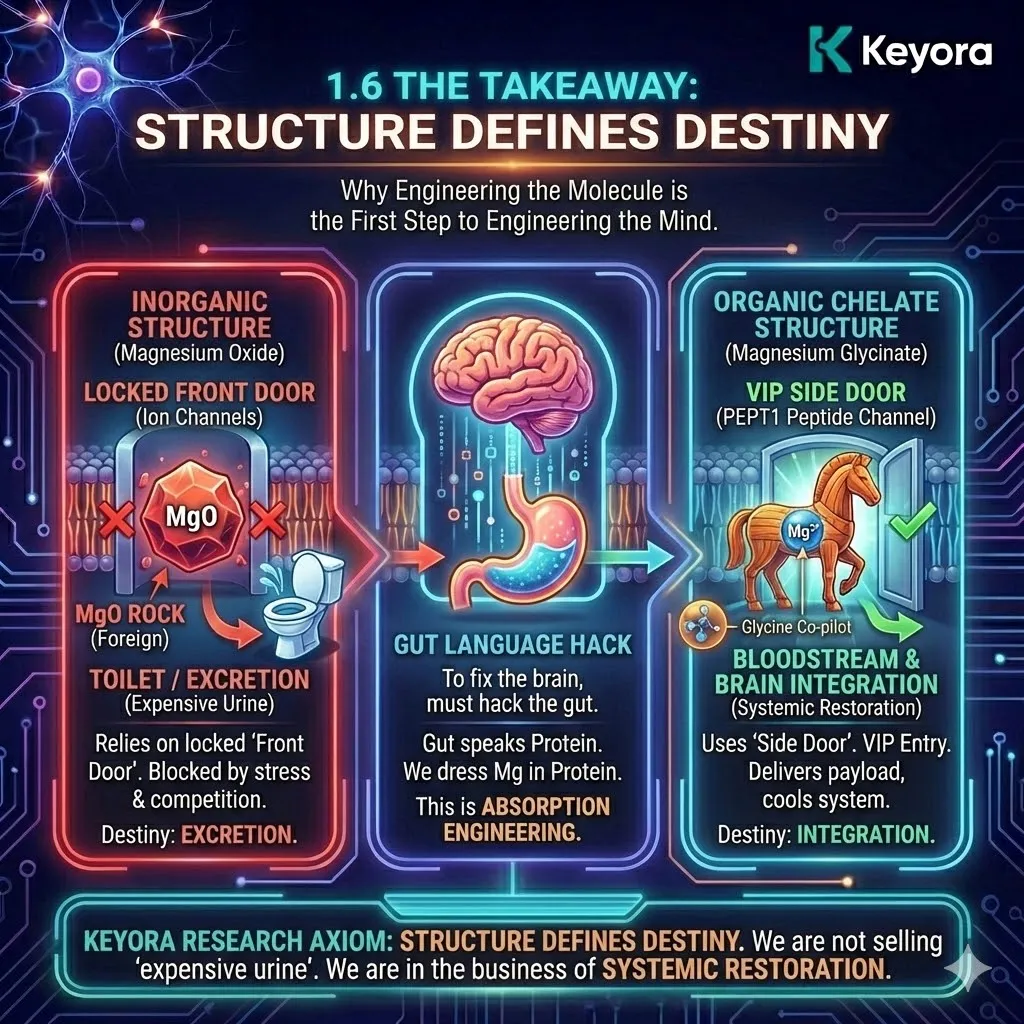
Magnesium Oxide is a rock.
It relies on a “Front Door” (Ion Channels) that is locked by stress and blocked by competition. It ends up in the toilet, taking your hydration with it.
Magnesium Glycinate is a Trojan Horse.
It uses a “Side Door” (PEPT1) that is reserved for VIPs (Proteins). It enters the blood, delivers the payload, and releases a co-pilot (Glycine) to cool the system.
Keyora Research operates on a simple axiom: Structure Defines Destiny.
The chemical structure of the nutrient you swallow dictates its biological fate. If the structure is inorganic and unstable, its destiny is excretion. If the structure is chelated and organic, its destiny is integration.
The Keyora 8-in-1 Matrix is built on the Magnesium Glycinate Standard because we are not in the business of selling “expensive urine.”
We are in the business of Systemic Restoration.
To fix the brain, you must first hack the gut. And to hack the gut, you must speak its language. The gut speaks Protein. So we dress the Magnesium in Protein.
This is not just supplementation.
This is Absorption Engineering.
References
Adibi, S. A. (2003). Regulation of expression of the intestinal oligopeptide transporter (Pept-1) in health and disease. American Journal of Physiology-Gastrointestinal and Liver Physiology, 285(5), G779-G788.
Birdsall, T. C. (1998). 5-Hydroxytryptophan: a clinically-effective serotonin precursor. Alternative Medicine Review, 3(4), 271–280.
Boyle, N. B., Lawton, C., & Dye, L. (2017). The effects of magnesium supplementation on subjective anxiety and stress—a systematic review. Nutrients, 9(5), 429.
Chandrasekhar, K., Kapoor, J., & Anishetty, S. (2012). A prospective, randomized double-blind, placebo-controlled study of safety and efficacy of a high-concentration full-spectrum extract of Ashwagandha root in reducing stress and anxiety in adults. Indian Journal of Psychological Medicine, 34(3), 255–262.
Coudray, C., Rambeau, M., Feillet-Coudray, C., Gueux, E., Tressol, J. C., Mazur, A., & Rayssiguier, Y. (2005). Study of magnesium bioavailability from ten organic and inorganic Mg salts in Mg-depleted rats using a stable isotope approach. Magnesium Research, 18(4), 215-223.
De Baaij, J. H. F., Hoenderop, J. G. J., & Bindels, R. J. M. (2015). Magnesium in man: implications for health and disease. Physiological Reviews, 95(1), 1–46.
Feillet-Coudray, C., Coudray, C., Gueux, E., Mazur, A., & Rayssiguier, Y. (2006). A new approach to study the absorption of magnesium from different salts in the rat intestine using stable isotopes. Biological Trace Element Research, 111, 163-174.
Firoz, M., & Graber, M. (2001). Bioavailability of US commercial magnesium preparations. Magnesium Research, 14(4), 257-262.
Graff, D. J., & Watson, R. R. (2004). Amino acid chelated magnesium: efficacy and safety. Journal of Nutraceuticals, Functional & Medical Foods, 4(3-4), 25-34.
Held, K., Antonijevic, I. A., Künzel, H., Uhr, M., Wetter, T. C., Golly, I. C., Steiger, A., & Murck, H. (2002). Oral Mg(2+) supplementation reverses age-related neuroendocrine and sleep EEG changes in humans. Pharmacopsychiatry, 35(4), 135–143.
Jin, X., & Keyora Research. (2024a). Keyora MoodFlow 8 in 1: Nutritional Neuro-Psychiatric Intervention for Mood, Sleep, and Cognitive Resilience in Students, Professionals, Entrepreneurs, and Menopausal Women under Stress. Keyora Research Institute. DOI: 10.5281/zenodo.16814204
Jin, X., & Keyora Research. (2024b). Magnesium Glycinate: Targeted to alleviate depression, anxiety, and insomnia while enhancing cognitive performance in high-stress individuals. Keyora Research Institute. DOI: 10.5281/zenodo.16889527
Jin, X., & Keyora Research. (2024c). Keyora Research Protocols: Systemic Neuro-Nutrition. OSF. DOI: 10.17605/OSF.IO/FZ62K
Kawai, N., Sakai, N., Okuro, M., Karakawa, S., Tsuneyoshi, Y., Kawasaki, N., … & Nishino, S. (2015). The sleep-promoting and hypothermic effects of glycine are mediated by NMDA receptors in the suprachiasmatic nucleus. Neuropsychopharmacology, 40(6), 1405-1416.
Lindberg, J. S., Zobitz, M. M., Poindexter, J. R., & Pak, C. Y. (1990). Magnesium bioavailability from magnesium citrate and magnesium oxide. Journal of the American College of Nutrition, 9(1), 48-55.
Mühlbauer, B., Schwenk, M., Coram, W. M., Antonin, K. H., Etienne, P., Bieck, P. R., & Douglas, F. L. (1991). Magnesium-L-aspartate-HCl and magnesium-oxide: bioavailability in healthy volunteers. European Journal of Clinical Pharmacology, 40, 437-438.
Ranade, V. V., & Somberg, J. C. (2001). Bioavailability and pharmacokinetics of magnesium after administration of magnesium salts to humans. American Journal of Therapeutics, 8(5), 345-357.
Schuette, S. A., Lashner, B. A., & Janghorbani, M. (1994). Bioavailability of magnesium diglycinate vs magnesium oxide in patients with ileal resection. Journal of Parenteral and Enteral Nutrition, 18(5), 430-435.
Siebrecht, S. (2013). Magnesium Bisglycinate as safe form for mineral supplementation in human nutrition. International Journal of Orthomolecular and Related Medicine, 144, 1-16.
Walker, A. F., Marakis, G., Christie, S., & Byng, M. (2003). Mg citrate found more bioavailable than other Mg preparations in a randomised, double-blind study. Magnesium Research, 16(3), 183-191.
Yamadera, W., Inagawa, K., Chiba, S., Bannai, M., Takahashi, M., & Nakayama, K. (2007). Glycine ingestion improves subjective sleep quality in human volunteers, correlating with polysomnographic changes. Sleep and Biological Rhythms, 5(2), 126–131.
# Knowledge Summary: The Absorption Engineering Protocol
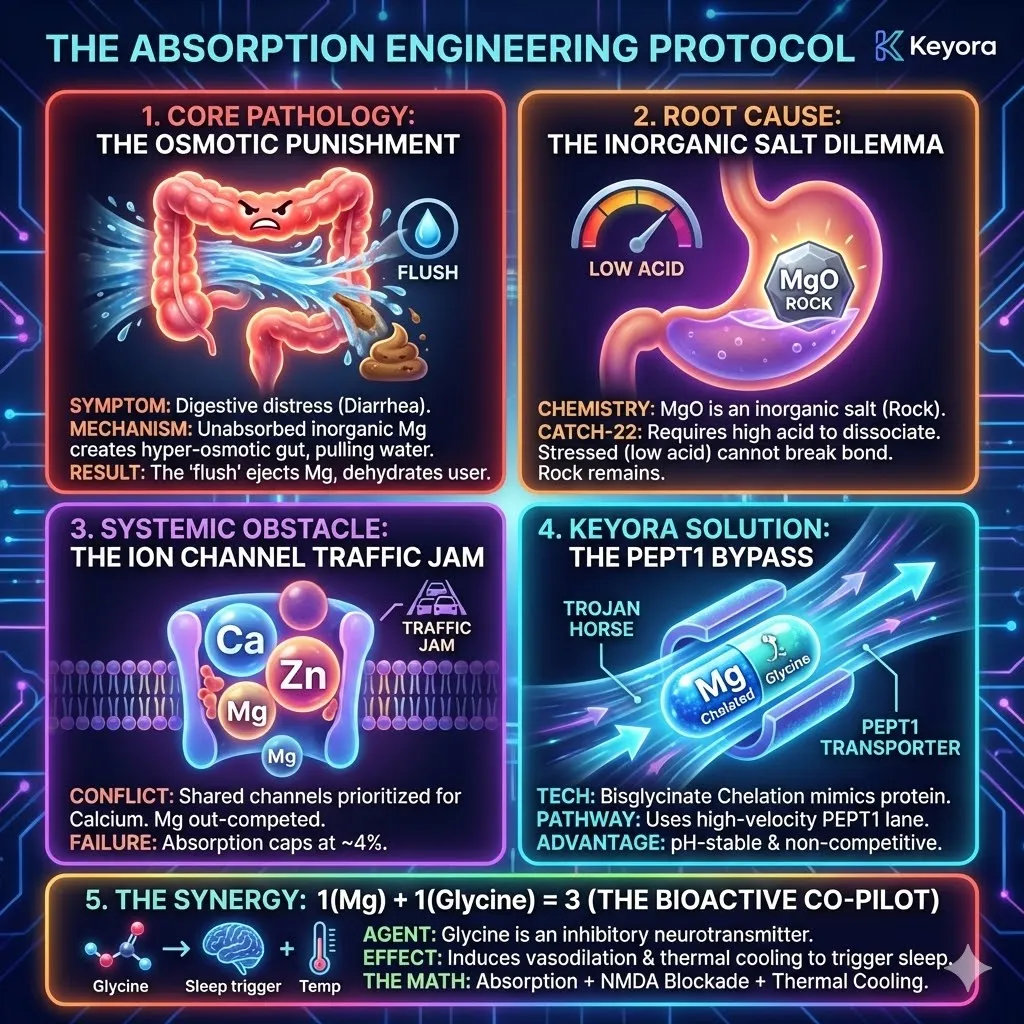
## 1. The Core Pathology: [The Osmotic Punishment]
– **The Symptom:** Digestive distress (Diarrhea) following magnesium supplementation.
– **The Mechanism:** Unabsorbed inorganic magnesium accumulates in the colon, creating a hyper-osmotic environment. Water is pulled from the body into the gut to equalize pressure.
– **The Result:** The “flush” ejects the magnesium, dehydrates the user, and fails to fix the deficiency.
## 2. The Root Cause: [The Inorganic Salt Dilemma]
– **The Chemistry:** Magnesium Oxide (MgO) is an inorganic salt (Rock).
– **The Requirement:** It requires high stomach acid (HCl) to dissociate into free ions.
– **The Catch-22:** Stressed individuals have **Hypochlorhydria** (Low Acid). They cannot break the bond. The rock remains a rock.
## 3. The Systemic Obstacle: [The Ion Channel Traffic Jam]
– **The Pathway:** Standard minerals use Ion Channels (DMT1/TRPM6).
– **The Conflict:** These channels are shared by Calcium, Zinc, and Iron.
– **The Failure:** Evolution prioritizes Calcium. Magnesium is out-competed and blocked from entry. Absorption caps at ~4%.
## 4. The Keyora Engineering Solution: [The PEPT1 Bypass]
– **The Tech:** **Bisglycinate Chelation**. Binding one Mg atom to two Glycine molecules.
– **The Disguise:** The molecule now mimics a **Dipeptide** (Protein).
– **The Pathway:** It uses the **PEPT1 Transporter**, a high-velocity lane reserved for protein absorption.
– **The Advantage:** It is pH-stable (survives low acid) and non-competitive (ignores Calcium/Zinc).
## 5. The Synergy: [The Bioactive Co-Pilot]
– **The Agent:** **Glycine**.
– **The Action:** Once absorbed, Glycine acts as an inhibitory neurotransmitter.
– **The Effect:** It induces peripheral vasodilation, lowering core body temperature to trigger sleep onset.
– **The Math:** 1 (Mg) + 1 (Glycine) = 3 (Absorption + NMDA Blockade + Thermal Cooling).
CHAPTER II: THE POWER PLANT – Mg-ATP AND THE ENERGY CYCLE
Why Your Mitochondria Cannot Use ATP Without Magnesium – And How Vitamin B1/B12 Support the Commander.
There is a pervasive illusion in the modern professional world: The belief that “Energy” is a single, monolithic commodity.
We speak of “having energy” or “lacking energy” as if the human body were a simple gas tank that can be filled with any combustible substance.
This oversimplification is the root of the Dead Battery Paradox.
Consider the typical morning routine of the high-functioning executive.
You wake up exhausted (due to The Production Halt discussed in the previous chapter). You drag yourself to the kitchen.
You consume 200mg of caffeine.
Within 20 minutes, you feel a surge.
Your heart rate elevates.
Your hands tremble slightly.
Your thoughts speed up.
You feel “energized.”
But are you?
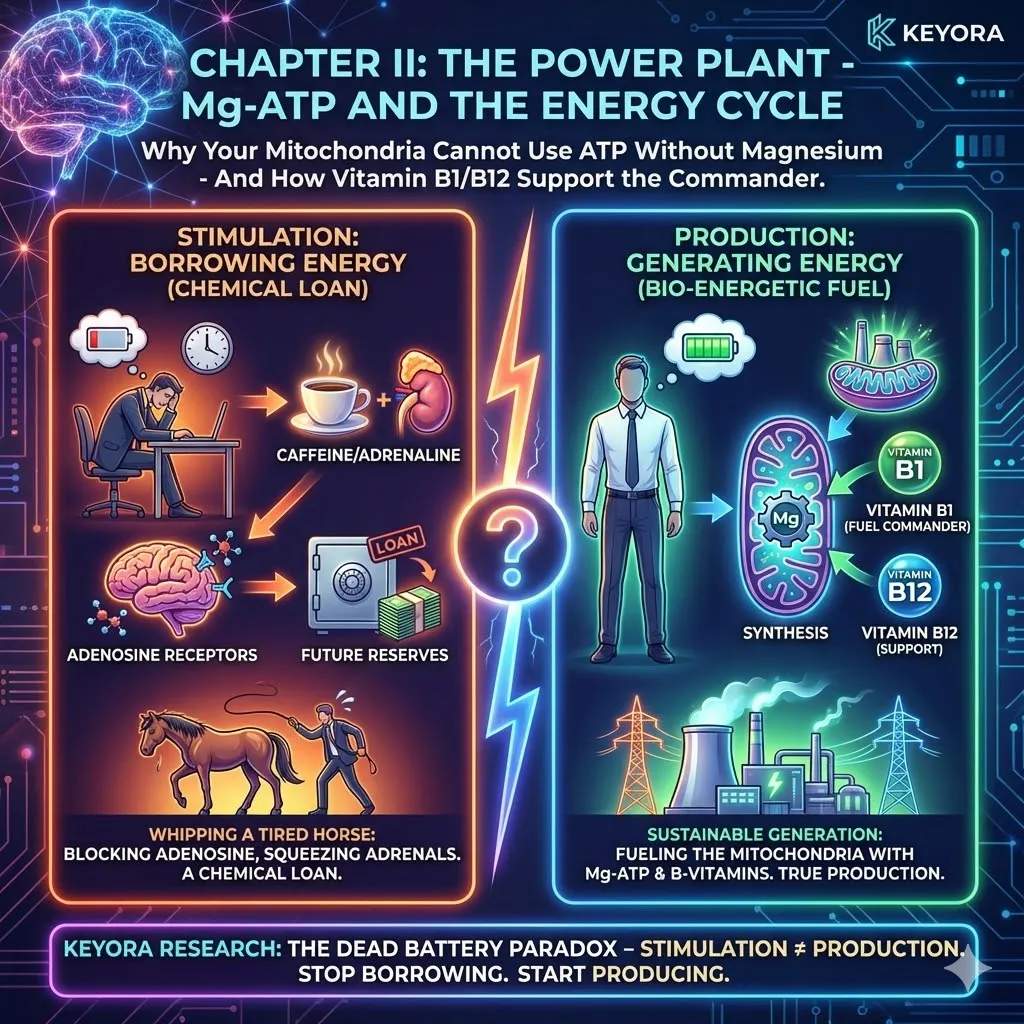
Keyora Research argues that you are not energized; you are Stimulated.
There is a profound bio-energetic difference between Stimulation and Production.
Stimulation
(Caffeine/Adrenaline) is the act of borrowing energy from your future reserves. It is a chemical loan. You are blocking Adenosine receptors to mask fatigue and squeezing the adrenal glands to release stored glycogen. You are whipping a tired horse to make it run faster.
Production
(ATP Synthesis) is the act of generating new energy from raw materials. It is the manufacturing of currency. It is feeding the horse.
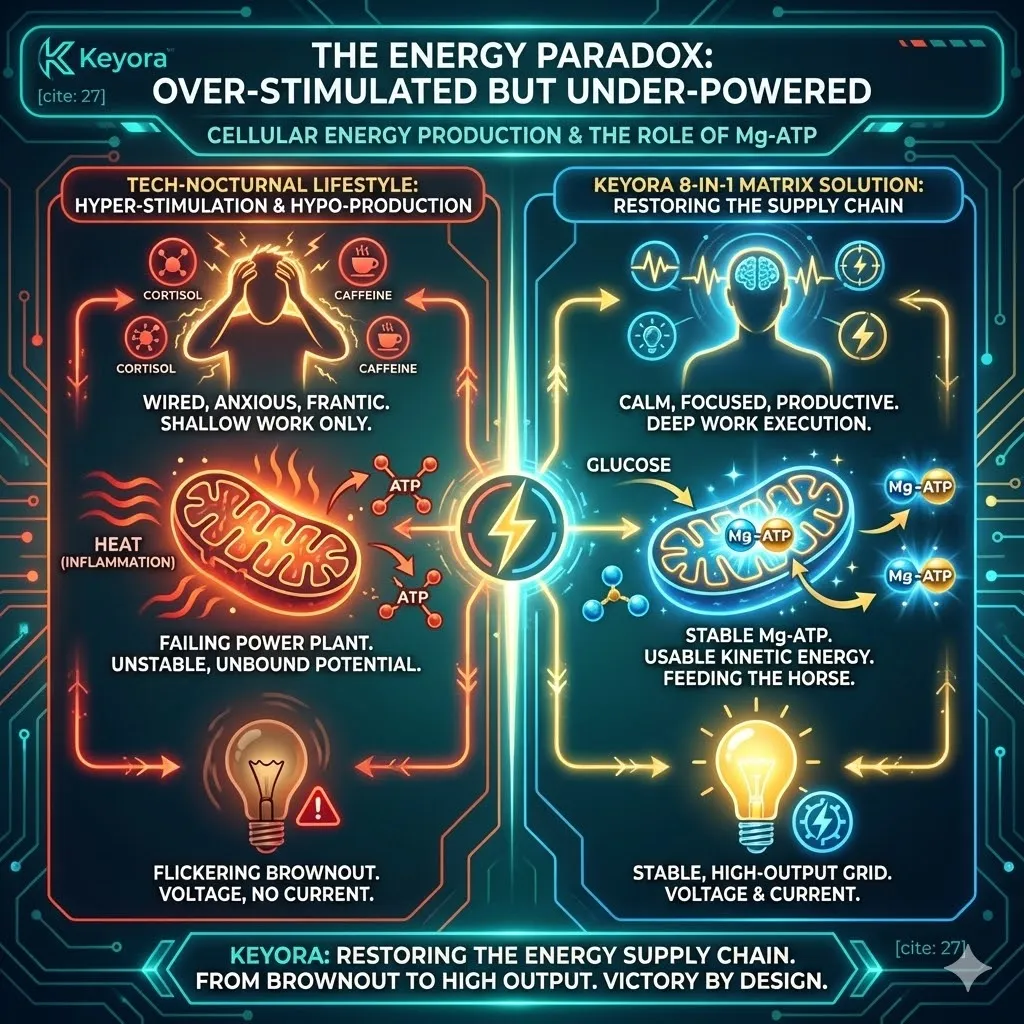
The modern “Tech-Nocturnal” lifestyle is characterized by Hyper-Stimulation and Hypo-Production.
You are vibrating with cortisol and caffeine, yet your cellular engines are stalling.
You are “Over-Stimulated but Under-Powered.”
This paradox manifests as a specific, agonizing sensation:
You feel wired, anxious, and frantic, yet you lack the cognitive horsepower to execute deep, complex work.
You can answer emails (shallow work) at lightning speed, but you cannot write the strategy document (deep work).
You have voltage, but you have no current.
This is not a failure of motivation. It is a failure of the Power Plant.
Your Mitochondria – the microscopic reactors inside your neurons – are failing to convert glucose into usable kinetic energy. They are churning out heat (inflammation) instead of power (ATP).
In this chapter, we will leave the gut and enter the cell.
We will descend into the molecular machinery of the Mitochondria.
We will expose the critical engineering flaw that renders your ATP useless:
The absence of Magnesium.
We will prove that without Magnesium, ATP is nothing more than unstable, unbound potential – a check that cannot be cashed.
And we will demonstrate how the Keyora 8-in-1 Matrix restores the entire energy supply chain, turning a flickering brownout into a stable, high-output grid.
2.1 THE GLITCH: [The Energy Brownout] – Living in Low Power Mode
Metabolic Triage and the Collapse of Executive Function.
When a city’s power grid faces a supply shortage that exceeds demand, the utility company does not cut power to the entire city instantly.
That would cause chaos. Instead, they execute a Rolling Brownout.
They cut power to non-essential districts (residential areas, streetlights) to preserve power for critical infrastructure (hospitals, emergency services).
Your brain operates on the exact same logic.
The human brain is the most metabolically expensive organ in the known universe. It represents 2% of your body weight but consumes 20% of your total glucose and oxygen. It is a voracious energy sink.
When your mitochondrial production of ATP drops – due to The Magnesium Gap or B-Vitamin depletion – the brain faces a supply crisis.
It cannot power all systems at 100%.
So, it executes Metabolic Triage.
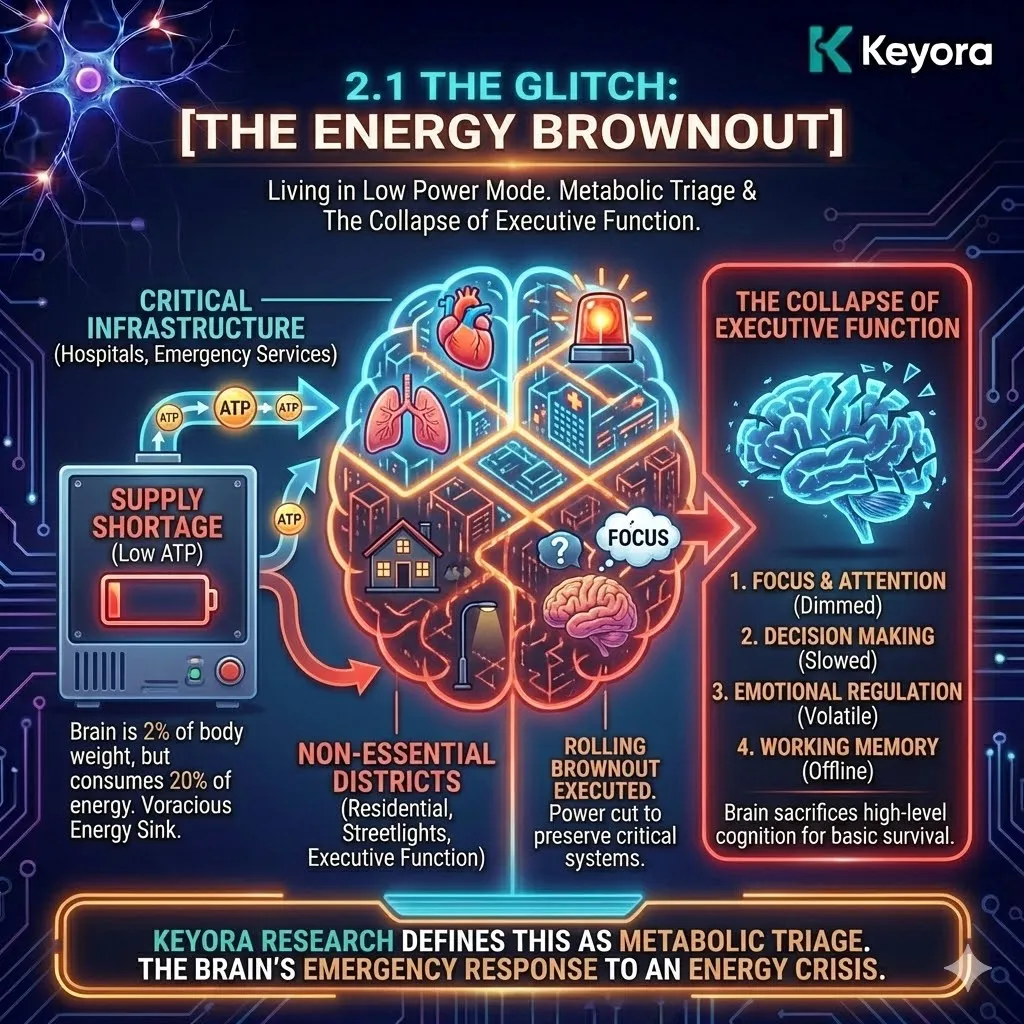
Keyora Research defines this state as [The Energy Brownout].
The Triage Protocol: Logic vs. Survival
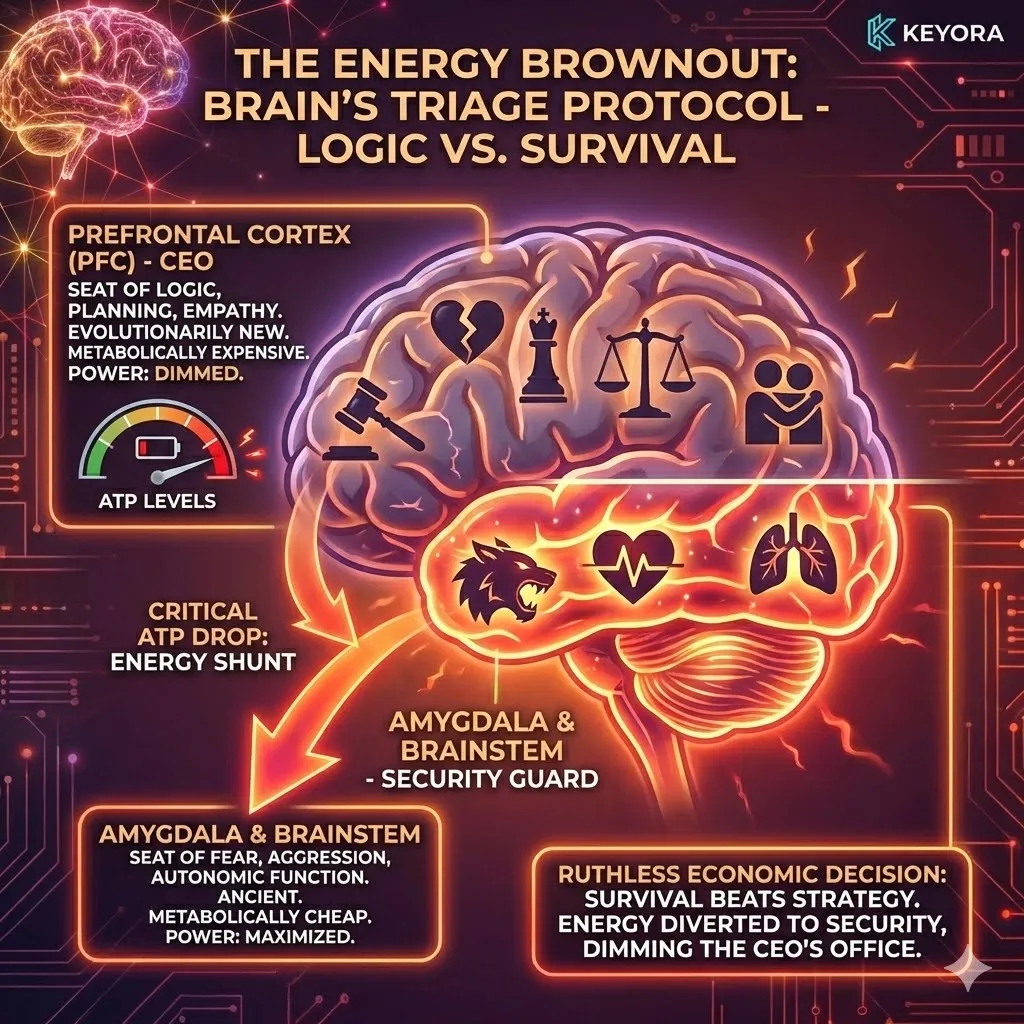
The brain is hierarchically structured.
The Prefrontal Cortex (PFC):
This is the seat of logic, impulse control, long-term planning, and empathy. It is the CEO of the brain. It is evolutionarily new, and metabolically expensive.
The Amygdala & Brainstem:
This is the seat of fear, aggression, and autonomic function (breathing, heart rate). It is the Security Guard. It is ancient, and metabolically cheap.
When ATP levels drop below a critical threshold, the brain makes a ruthless economic decision: Survival beats Strategy.
It shunts the limited energy away from the Prefrontal Cortex and diverts it to the Amygdala. It dims the lights in the CEO’s office to keep the security system running.
The Sensory Experience of the Brownout
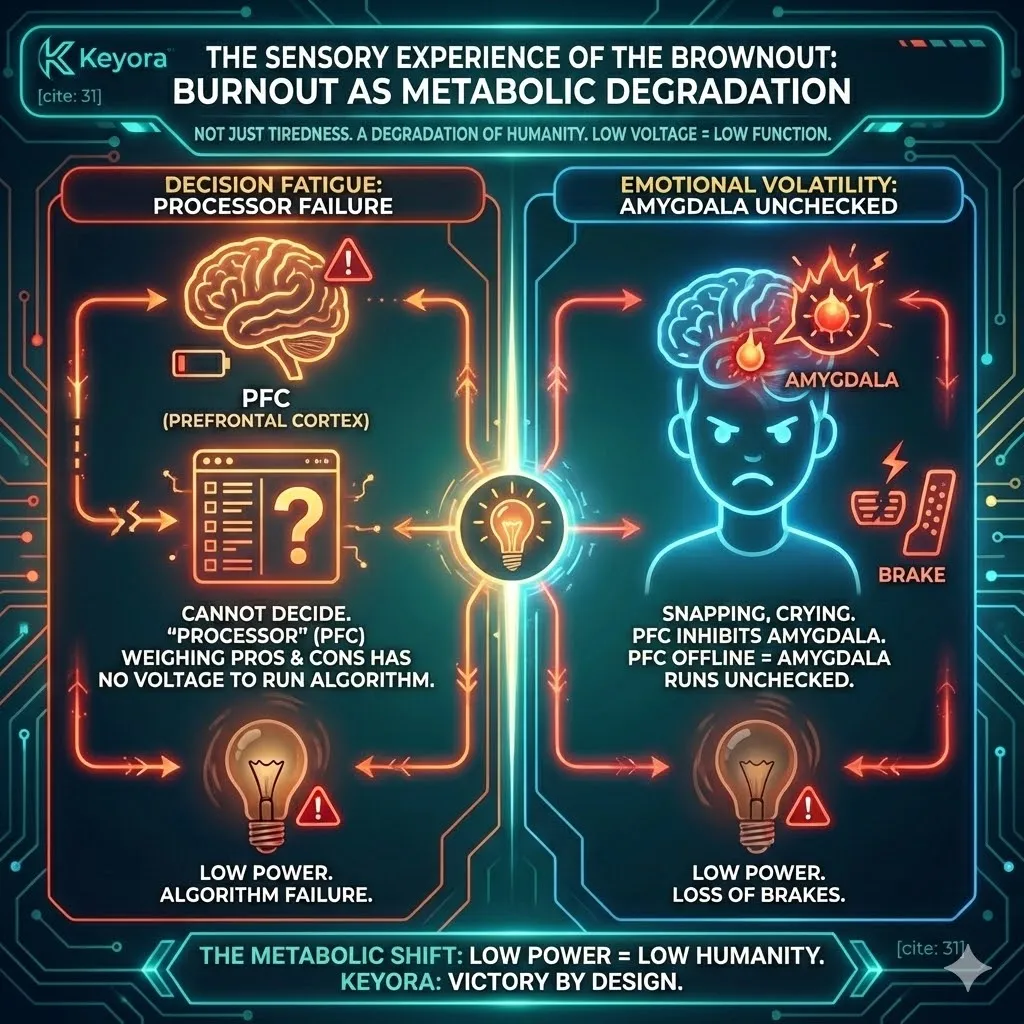
This metabolic shift explains the specific symptoms of “Burnout” that high-performers report. It is not just “tiredness.” It is a degradation of humanity.
Decision Fatigue:
You stare at a simple menu or an email subject line, and you cannot decide. The “Processor” (PFC) that weighs pros and cons doesn’t have the voltage to run the algorithm.
Emotional Volatility:
You snap at your partner.
You cry over a spilled coffee.
Why?
Because the PFC inhibits the Amygdala. When the PFC goes offline due to low power, the Amygdala runs unchecked.
You lose your “brakes.”
Cognitive Lag:
You feel a physical delay between hearing a question and formulating an answer. It feels like typing on a computer with a 2-second input lag. The neural transmission speed has slowed because the ion pumps (which reset the neurons) are starved of energy.
The False Diagnosis
The medical world often diagnoses this as “Depression” or “ADHD.” They prescribe SSRIs or Stimulants.
Stimulants (like Adderall or heavy caffeine) force the PFC to fire by dumping dopamine. But if the mitochondria are still broken, this is like forcing a starving runner to sprint. It works for a mile, and then the collapse is catastrophic.
You do not need to force the brain to fire.
You need to give it the fuel to sustain the fire.
You need to end the [Energy Brownout] by restoring the base-load power generation.
To do that, we must look at the fuel itself. We must look at ATP.
![Keyora strategic neuro-engineering identifies the false diagnosis of bio-energetic failure as clinical depression or ADHD, where stimulants are misapplied to force a starving neural system to sprint. This mechanism exposes the architectural danger of using dopamine to bypass mitochondrial stalling, leading to a catastrophic system collapse once future reserves are liquidated. By rejecting the "forced fire" model, the architecture prioritizes base-load power restoration through the [Mg-ATP] complex. The strategic result is the elimination of high-risk stimulant dependence in favor of sustainable cellular fuel delivery to end the energy brownout.](https://www.keyorahealth.com/cdnfiles/2026/03/25063309/df7afb0f-4cf1-4e23-b460-a5c8f55902e7_1024x1024.webp "Keyora strategic neuro-engineering identifies the false diagnosis of bio-energetic failure as clinical depression or ADHD, where stimulants are misapplied to force a starving neural system to sprint. This mechanism exposes the architectural danger of using dopamine to bypass mitochondrial stalling, leading to a catastrophic system collapse once future reserves are liquidated. By rejecting the \"forced fire\" model, the architecture prioritizes base-load power restoration through the [Mg-ATP] complex. The strategic result is the elimination of high-risk stimulant dependence in favor of sustainable cellular fuel delivery to end the energy brownout.")
2.2 THE ROOT CAUSE: [The Unbound ATP Crisis] – Currency Without Value
The Molecular Necessity of the Mg-ATP Complex.
We are taught in high school biology that ATP (Adenosine Triphosphate) is the “Energy Currency of the Cell.” This phrase is repeated so often it has lost its meaning.
But from a biochemical engineering perspective, this statement is incomplete. In fact, it is dangerously misleading.
Free ATP is not energy. Free ATP is instability.
Let us examine the structure of the ATP molecule. It consists of an Adenosine backbone attached to a tail of three Phosphate groups (Tri-Phosphate).
These phosphate groups are the problem. Each phosphate group carries a strong Negative Charge.
The Electrostatic Repulsion Problem
Imagine trying to hold three powerful magnets together, all with their North poles facing each other. They want to fly apart. They repel each other violently. This is the state of the triphosphate tail. The negative charges on the oxygen atoms of the phosphate groups are pushing against each other with tremendous electrostatic force.
This tension is where the “potential energy” resides. But it also makes the molecule incredibly unstable and chemically “awkward.”
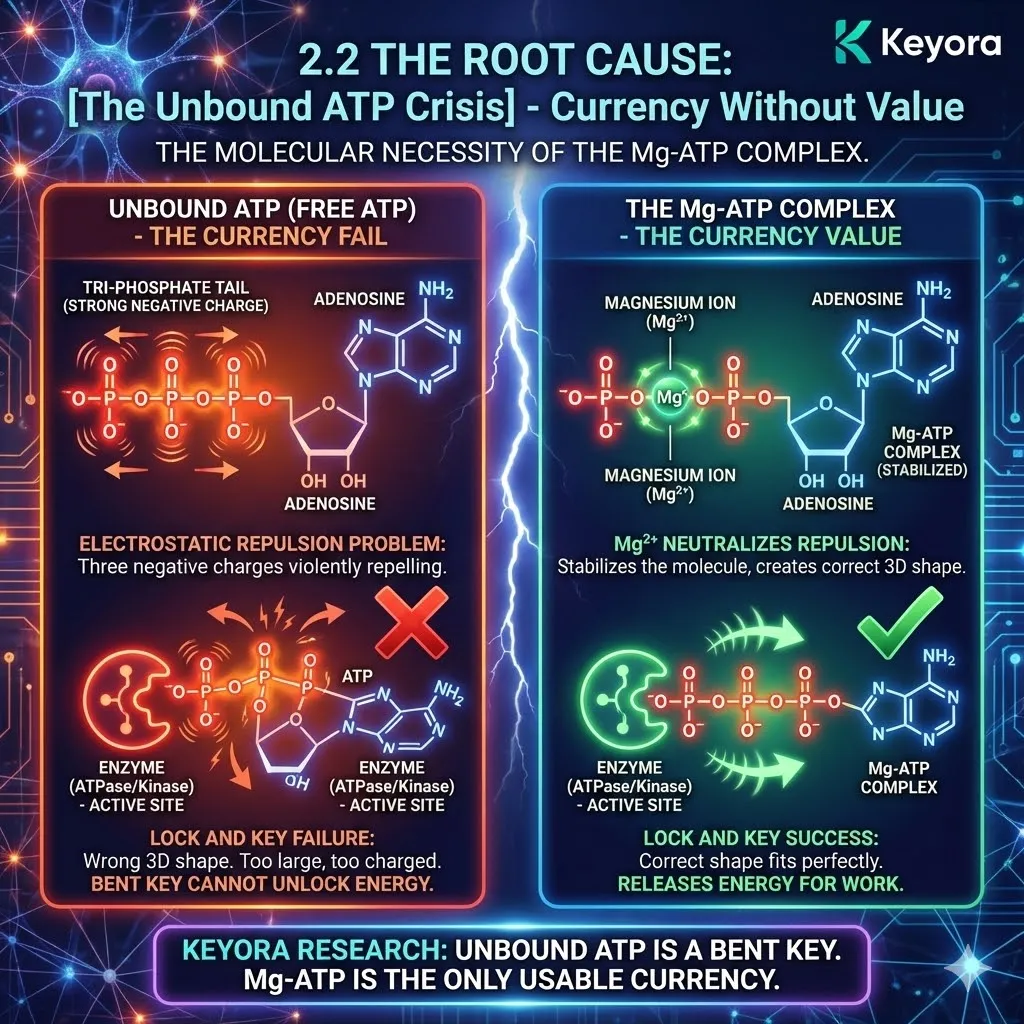
The Lock and Key Failure
For ATP to release its energy, it must fit into the “Active Site” of an enzyme (like ATPase or Kinase). These enzymes are the machines that “spend” the currency to do work (contract a muscle, fire a neuron, build a protein).
Here is the critical failure point:
The active sites of these enzymes are designed to accept a specific 3D shape.
Unbound ATP (Free ATP) – the molecule without magnesium – is the wrong shape. Its negatively charged tail is flailing. It is too large and too charged to fit into the enzymatic lock.
If you have high levels of ATP but low levels of Magnesium, your ATP floats around the cell like a bent key.
It cannot unlock the energy.
The Magnesium Solution: The Chelate Claw
This is where Magnesium (Mg2+) enters the equation as the Systemic Commander.
Magnesium is a Divalent Cation (it has a double positive charge). When magnesium encounters ATP, it performs a specific binding operation.
Neutralization:
The positive Mg2+ ion binds to the oxygen atoms on the second (beta) and third (gamma) phosphate groups. It neutralizes their negative charges.
Stabilization:
By neutralizing the charge, it stops the tail from flailing. It pulls the phosphate groups into a precise, stable, curved geometry.
Activation:
This new structure – the [Mg-ATP] complex – is the actual substrate for the enzyme.
The enzyme does not recognize “ATP.”
It only recognizes “Mg-ATP.”
![Keyora strategic neuro-engineering identifies the chelate claw mechanism where Magnesium acts as the systemic commander to neutralize and stabilize the ATP molecule. This mechanism utilizes the Mg2+ divalent cation to bind with the beta and gamma phosphate groups, collapsing the flailing electrostatic tail into a precise, curved geometry. By transitioning from unbound ATP to the [Mg-ATP] complex, the architecture creates the only substrate recognized by cellular enzymes. The strategic result is the activation of the molecular ignition key required to unlock stored energy for high-bandwidth executive output.](https://www.keyorahealth.com/cdnfiles/2026/03/25063313/9a9091d2-2098-45ed-9c41-c2c95a526f30_1024x1024.webp "Keyora strategic neuro-engineering identifies the chelate claw mechanism where Magnesium acts as the systemic commander to neutralize and stabilize the ATP molecule. This mechanism utilizes the Mg2+ divalent cation to bind with the beta and gamma phosphate groups, collapsing the flailing electrostatic tail into a precise, curved geometry. By transitioning from unbound ATP to the [Mg-ATP] complex, the architecture creates the only substrate recognized by cellular enzymes. The strategic result is the activation of the molecular ignition key required to unlock stored energy for high-bandwidth executive output.")
The Definition of [The Unbound ATP Crisis]
This brings us to the root pathology of the “Tired but Wired” executive.
Because of chronic stress (which dumps magnesium via the kidneys) and poor absorption (due to Oxide usage), your intracellular magnesium levels are critically low.
Your mitochondria might still be managing to churn out some raw ATP from glucose. But without enough magnesium ions to bind to that ATP, a significant percentage of your energy currency remains Unbound.
-
You have the money (ATP), but the bank (Enzyme) won’t accept the bills because they are counterfeit (Wrong Shape).
This creates a metabolic disaster:
Energy Starvation:
The cell cannot perform work. The ion pumps (Na+/K+ ATPase) that maintain neuronal voltage stop working. The neuron loses its ability to fire cleanly.
Heat Generation:
Unbound ATP is unstable. It can hydrolyze spontaneously (break down) without doing useful work. This releases the energy as Heat (Entropy) rather than Work. You feel “hot” and “inflamed,” but you have no drive.
Calcium Overload:
As discussed in previous chapters, without magnesium to regulate the channels, calcium floods the cell. The cell tries to pump the calcium out, which requires more ATP. But the ATP doesn’t work because there is no magnesium.
This is the molecular definition of [The Unbound ATP Crisis]. It is a state of high metabolic cost with zero metabolic yield.
It explains why you can drink three espressos (which stimulate the desire for energy) but still feel like you are moving through quicksand. The caffeine is hitting the gas pedal, but the engine is flooded with unusable fuel.
To fix this, we must do more than just “boost metabolism.”
We must stabilize the currency.
We must flood the system with the one ion capable of turning potential energy into kinetic power.
![Keyora strategic neuro-engineering identifies the unbound ATP crisis as a state of high metabolic cost with zero metabolic yield, characteristic of the "Tired but Wired" executive phenotype. This mechanism occurs when intracellular magnesium depletion prevents the formation of the [Mg-ATP] complex, leaving raw ATP as an unstable "counterfeit bill" that cellular enzymes cannot process. By analyzing the resulting energy starvation and spontaneous hydrolysis, the architecture reveals why the system generates systemic heat and inflammation instead of cognitive drive. The strategic result is the identification of a structural engine failure where caffeine hits the gas pedal while the reactor is flooded with unusable, unbound fuel.](https://www.keyorahealth.com/cdnfiles/2026/03/25063315/d0068716-cb7d-4e29-aefb-52194a2fb2b1_1024x1024.webp "Keyora strategic neuro-engineering identifies the unbound ATP crisis as a state of high metabolic cost with zero metabolic yield, characteristic of the \"Tired but Wired\" executive phenotype. This mechanism occurs when intracellular magnesium depletion prevents the formation of the [Mg-ATP] complex, leaving raw ATP as an unstable \"counterfeit bill\" that cellular enzymes cannot process. By analyzing the resulting energy starvation and spontaneous hydrolysis, the architecture reveals why the system generates systemic heat and inflammation instead of cognitive drive. The strategic result is the identification of a structural engine failure where caffeine hits the gas pedal while the reactor is flooded with unusable, unbound fuel.")
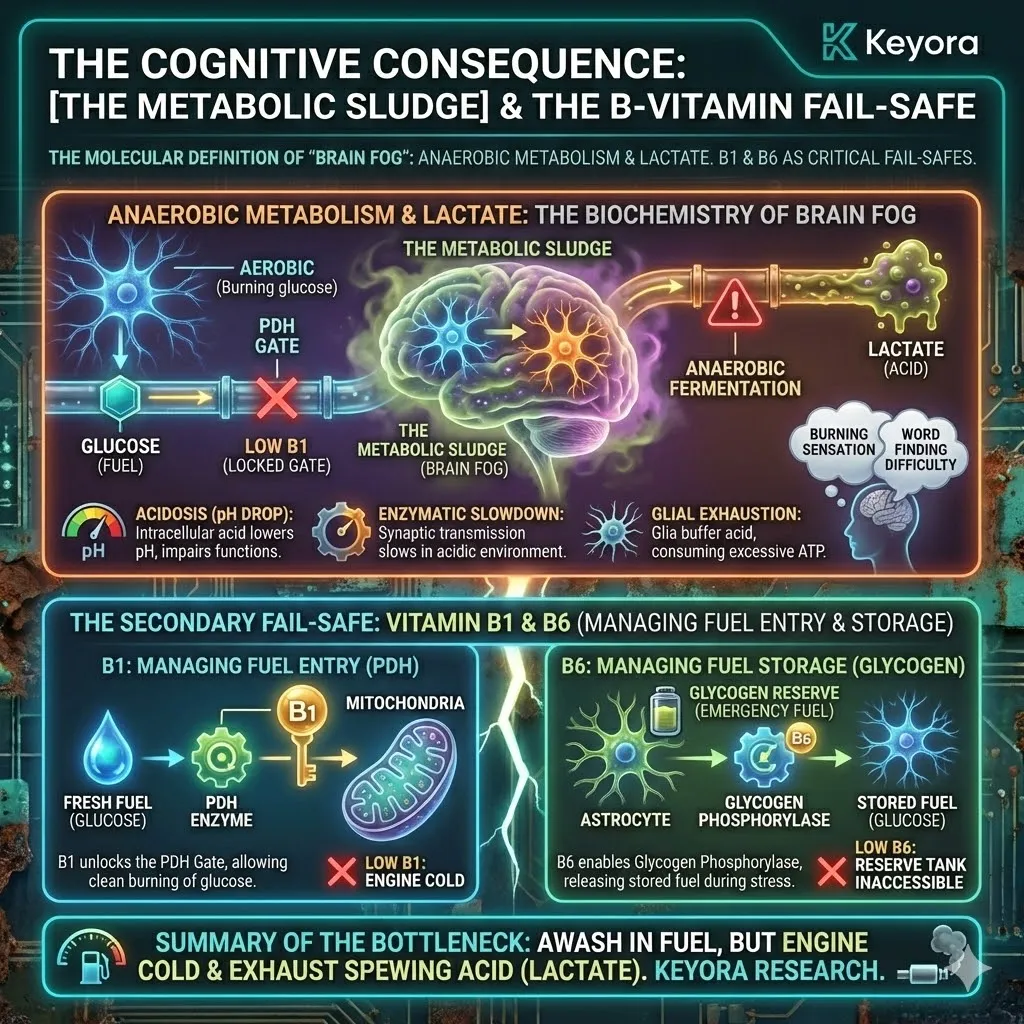
2.3 THE SYSTEMIC ANALYSIS: [The Metabolic Bottleneck] – When Fuel Turns into Sludge
The Biochemistry of “Brain Fog”: Why Glucose Ferments Instead of Burns.
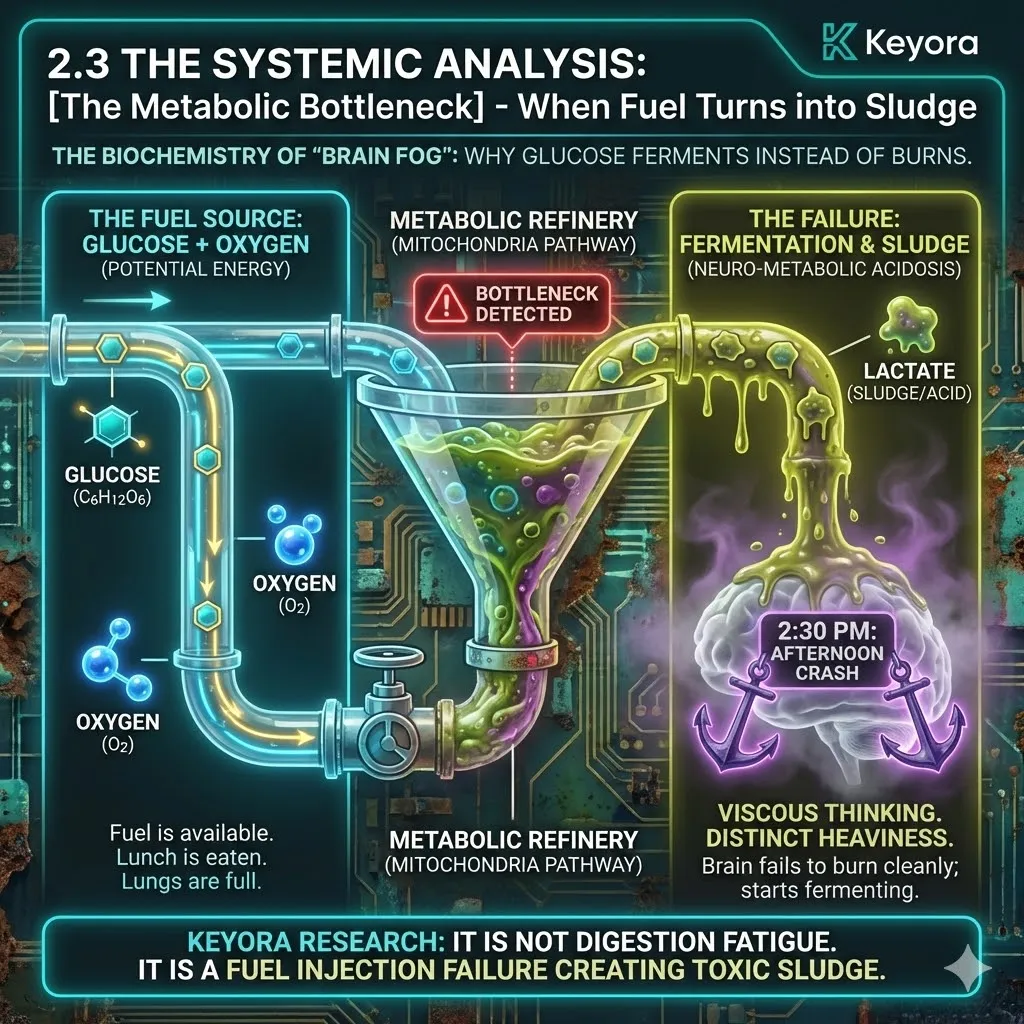
If The Unbound ATP Crisis is a failure of the currency (Magnesium deficiency), then The Metabolic Bottleneck is a failure of the fuel injection system.
This section addresses the specific complaint of the “Afternoon Crash.”
You eat lunch.
You have glucose in your blood.
You have oxygen in your lungs.
Yet, at 2:30 PM, your brain shuts down.
You feel a distinct heaviness behind your eyes.
Your thinking becomes viscous.
Keyora Research posits that this is not “digestion fatigue.” It is Neuro-Metabolic Acidosis.
Your brain has stopped burning fuel cleanly and has started fermenting it. To understand this disaster, we must trace the path of a single molecule of Glucose as it attempts to become energy.
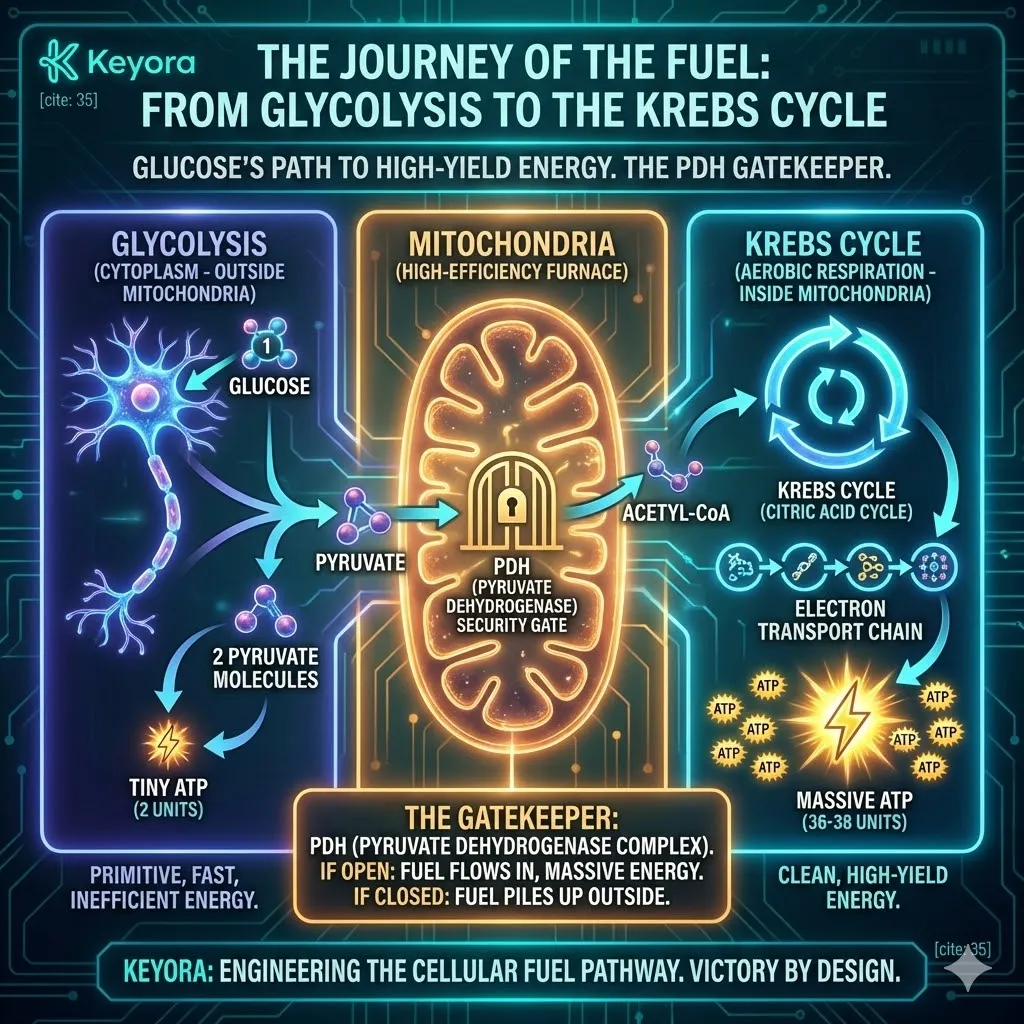
The Journey of the Fuel: From Glycolysis to the Krebs Cycle
When glucose enters a neuron, it undergoes a preliminary breakdown process called Glycolysis. This happens in the cytoplasm (the fluid of the cell), outside the mitochondria.
-
Input: 1 Glucose Molecule.
-
Output: 2 Pyruvate Molecules + a tiny amount of ATP (2 units).
This is “primitive” energy production. It is fast, but inefficient. To generate real power (36-38 units of ATP), those Pyruvate molecules must enter the Mitochondria – the high-efficiency furnace inside the cell.
Once inside, Pyruvate enters the Krebs Cycle (Citric Acid Cycle), where it is stripped of electrons to power the Electron Transport Chain. This is “Aerobic Respiration.” It is clean, high-yield energy.
The Gatekeeper: Pyruvate Dehydrogenase (PDH)
Here is the critical chokepoint. Pyruvate cannot just walk into the Krebs Cycle. It must be chemically transformed into Acetyl-CoA.
This transformation is performed by a massive, complex enzyme called the Pyruvate Dehydrogenase Complex (PDH).
Think of PDH as the “Security Gate” to the mitochondrial reactor. If the gate is open, fuel flows in, and you get massive energy. If the gate is closed, fuel piles up outside.
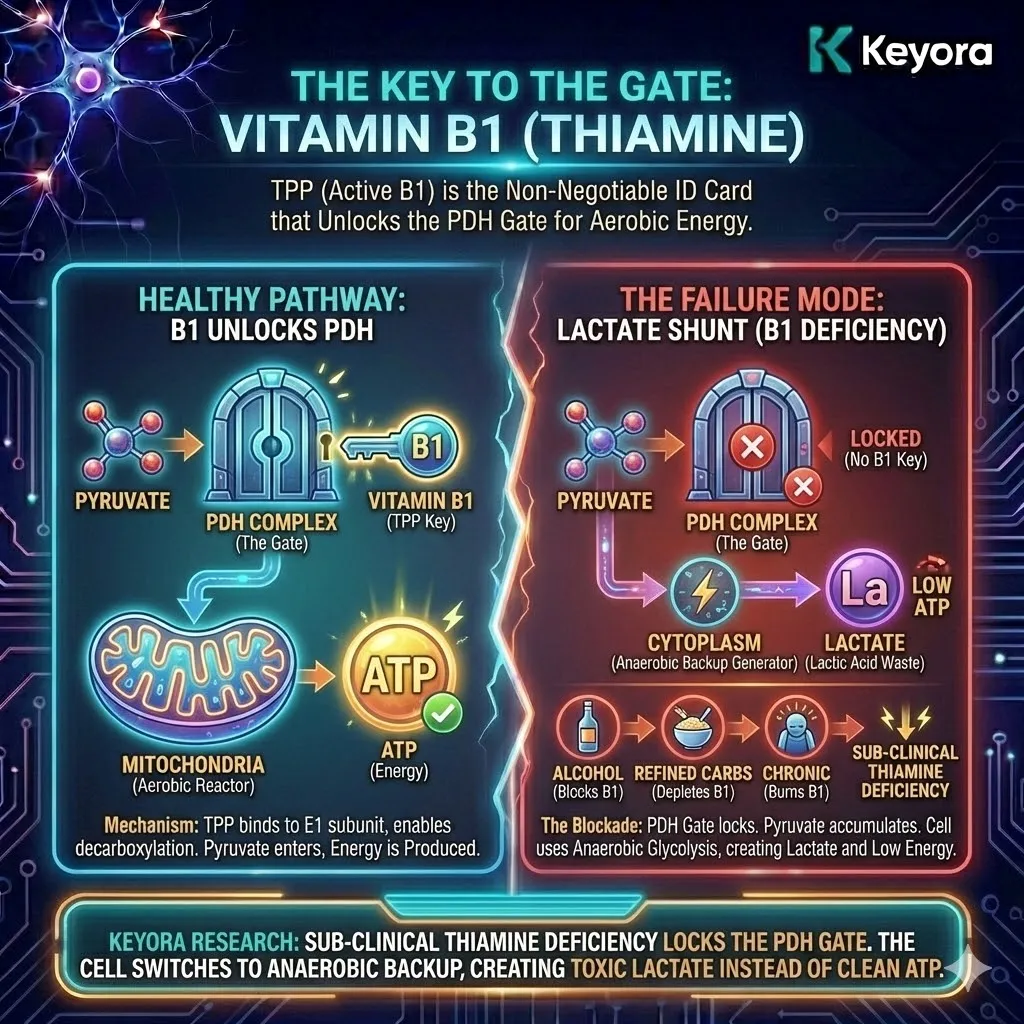
The Key to the Gate: Vitamin B1 (Thiamine)
The PDH enzyme has an absolute, non-negotiable requirement for a specific co-factor to function: Thiamine Pyrophosphate (TPP), the active form of Vitamin B1.
Vitamin B1 is the “ID Card” that unlocks the gate.
-
Mechanism: TPP binds to the E1 subunit of the PDH complex, enabling the decarboxylation of pyruvate. Without TPP, the enzyme is inert. It cannot move.
The Failure Mode: The Lactate Shunt
Now, consider the modern high-performer.
You drink alcohol (which blocks B1 absorption).
You consume refined carbohydrates (which deplete B1 stores).
You are under chronic stress (which burns B1).
You are likely suffering from Sub-Clinical Thiamine Deficiency.
When your B1 levels are low, the PDH gate locks.
The Blockade:
Pyruvate accumulates in the cytoplasm. It cannot enter the mitochondria.
The Fermentation:
The cell is screaming for energy. Since it can’t run the aerobic reactor, it switches to its backup generator: Anaerobic Glycolysis.
The Waste Product:
To keep glycolysis running, the cell converts the excess Pyruvate into Lactate (Lactic Acid).
The Cognitive Consequence: [The Metabolic Sludge]
This is the molecular definition of “Brain Fog.”
When your neurons switch to anaerobic metabolism, they are literally fermenting glucose into acid.
-
Acidosis: The accumulation of lactate lowers the pH of the intracellular environment.
-
Enzymatic Slowdown: Most brain enzymes work best at a neutral pH. As the environment becomes acidic, synaptic transmission slows down.
-
Glial Exhaustion: Your glial cells have to work overtime to buffer this acid, consuming even more ATP.
You feel this physically. That “burning” sensation in your head? That inability to find the right word? That is the sensation of your brain swimming in its own metabolic waste because the [Metabolic Bottleneck] (PDH) is locked due to a lack of B1.
The Secondary Fail-Safe: Vitamin B6 and Glycogen
While B1 manages the entry of fuel, Vitamin B6 (Pyridoxine) manages the storage of fuel.
The brain maintains a small reserve of emergency fuel called Glycogen, stored in the astrocytes. When you are in a high-stakes meeting and your blood sugar dips, the brain needs to tap into this reserve immediately.
The enzyme that releases this stored sugar – Glycogen Phosphorylase – is B6-dependent.
If you are B6 deficient (common in stress, as B6 is used to make neurotransmitters), you cannot access your reserve tank. You crash harder and faster.
Summary of the Bottleneck:
Without B1, you cannot burn fresh fuel (Glucose). Without B6, you cannot burn stored fuel (Glycogen).
You are awash in fuel, but your engine is cold, and your exhaust pipe is spewing acid (Lactate).
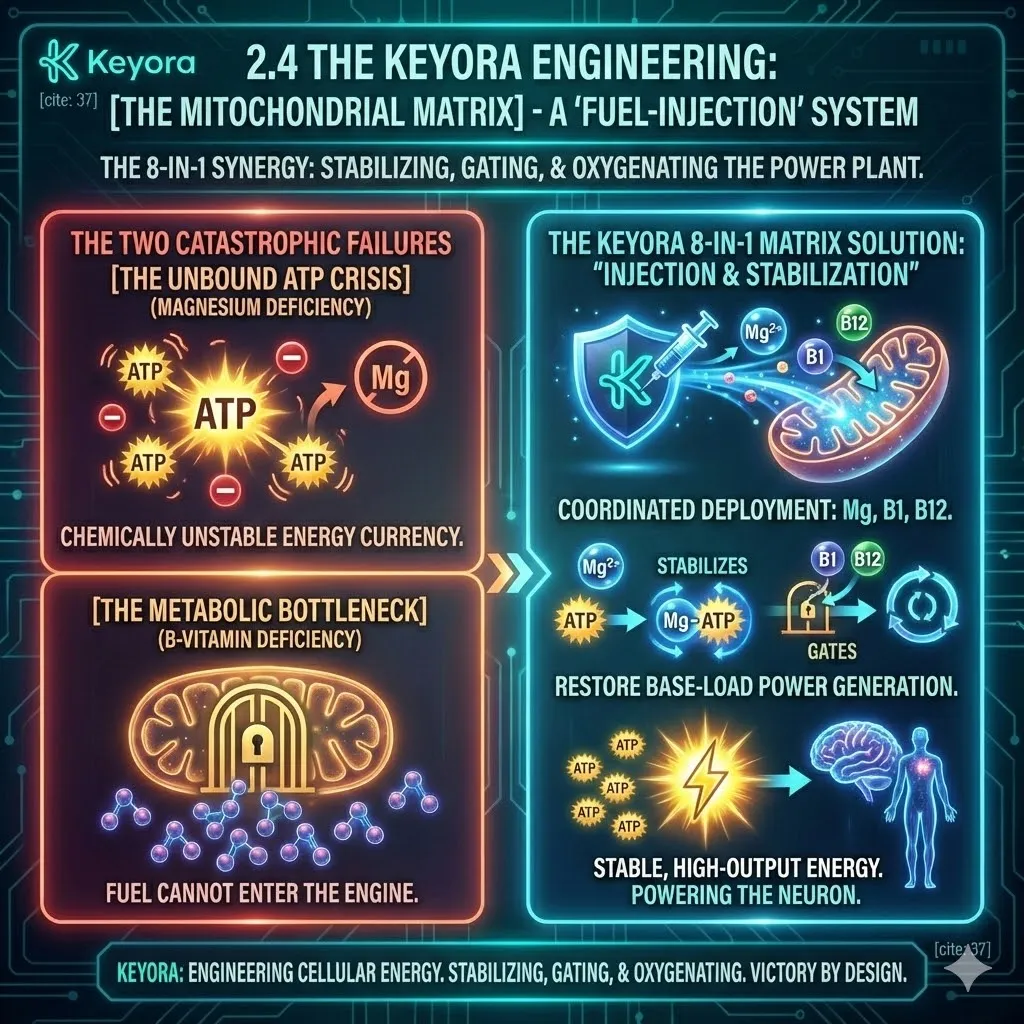
2.4 THE KEYORA ENGINEERING: [The Mitochondrial Matrix] – A “Fuel-Injection” System
The 8-in-1 Synergy: Stabilizing, Gating, and Oxygenating the Power Plant.
We have identified the two catastrophic failures of the “Tired but Wired” energy system:
-
[The Unbound ATP Crisis]: Energy currency that is chemically unstable (Magnesium deficiency).
-
[The Metabolic Bottleneck]: Fuel that cannot enter the engine (B-Vitamin deficiency).
The Keyora 8-in-1 Matrix is engineered to resolve both failures simultaneously. We do not just provide “Stimulation” (which forces the engine to rev). We provide “Injection and Stabilization.”
We call this protocol The Mitochondrial Matrix. It is a coordinated deployment of Magnesium, Vitamin B1, and Vitamin B12 to restore the base-load power generation of the neuron.
COMPONENT 1: THE STABILIZER (Magnesium Glycinate)
The Mission: Secure the Currency.
As detailed in Section 2.2, ATP is useless without Magnesium. Keyora uses Magnesium Glycinate to flood the intracellular space with bioavailable Mg2+ ions.
-
The Reaction: The Mg2+ seeks out the negatively charged phosphate tails of the free ATP molecules. It clamps onto them.
-
The Transformation: It converts volatile, useless ATP into stable, bioactive [Mg-ATP].
-
The Result: Suddenly, the “check clears.” The ion pumps (Na+/K+ ATPase) that maintain your neuronal voltage turn back on. The electrical hum of the brain stabilizes. You move from “Flickering Brownout” to “Steady State Power.”
Crucially, Magnesium is also a required co-factor for the B-Vitamin enzymes. The PDH complex (B1) needs Magnesium to hold the TPP molecule in place. This is the Synergy: The B-Vitamin opens the gate, but Magnesium builds the hinges.
![Keyora strategic neuro-engineering utilizes Magnesium Glycinate as the systemic stabilizer to secure cellular currency. This mechanism deploys bioavailable Mg2+ ions to clamp the volatile phosphate tails of free ATP, converting them into bioactive [Mg-ATP]. By stabilizing the Na+/K+ ATPase ion pumps, the architecture restores the electrical voltage of the neuron and transitions the brain from a flickering brownout to a steady-state power grid. The strategic result is the reinforcement of the B-vitamin hinges, ensuring the PDH gate remains structurally sound for continuous energy combustion.](https://www.keyorahealth.com/cdnfiles/2026/03/25063326/beb7e55b-84d5-45a7-8a96-48f3c79a98ae_1024x1024.webp "Keyora strategic neuro-engineering utilizes Magnesium Glycinate as the systemic stabilizer to secure cellular currency. This mechanism deploys bioavailable Mg2+ ions to clamp the volatile phosphate tails of free ATP, converting them into bioactive [Mg-ATP]. By stabilizing the Na+/K+ ATPase ion pumps, the architecture restores the electrical voltage of the neuron and transitions the brain from a flickering brownout to a steady-state power grid. The strategic result is the reinforcement of the B-vitamin hinges, ensuring the PDH gate remains structurally sound for continuous energy combustion.")
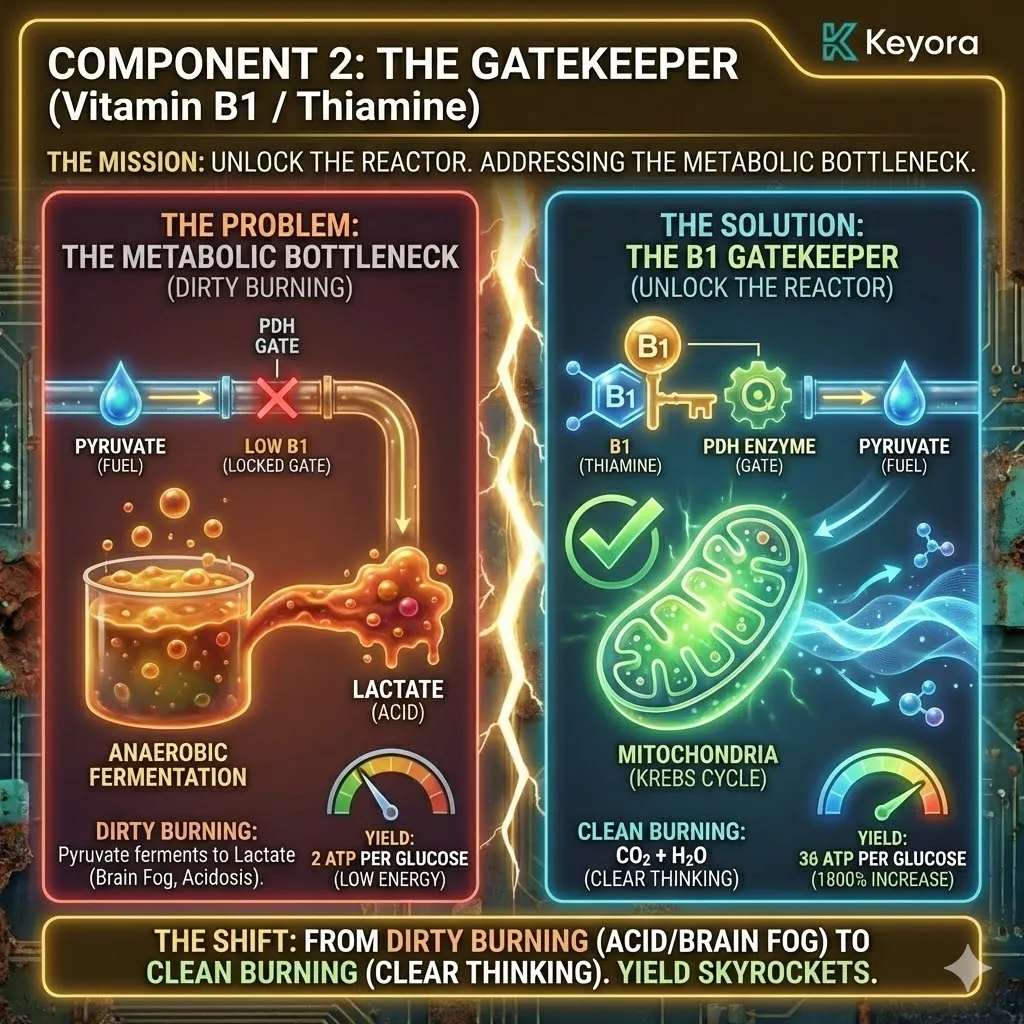
COMPONENT 2: THE GATEKEEPER (Vitamin B1 / Thiamine)
The Mission: Unlock the Reactor.
Keyora includes Vitamin B1 (Thiamine) to directly address [The Metabolic Bottleneck].
-
The Action: B1 enters the cell and is phosphorylated into TPP. It binds to the Pyruvate Dehydrogenase Complex.
-
The Shift: It unlocks the mitochondrial gate. Pyruvate stops fermenting into Lactate and starts flowing into the Krebs Cycle.
-
The Energetic Yield:
-
Anaerobic (Lactate Path): 2 ATP per glucose.
-
Aerobic (Mitochondrial Path): 36 ATP per glucose.
-
Yield Increase: 1800%.
-
By restoring the B1 status, we shift the brain from “Dirty Burning” (Lactate/Acid) to “Clean Burning” (CO2/Water). The “Brain Fog” lifts because the acidosis clears. The cognitive lag disappears because the energy yield per molecule of glucose skyrockets.
COMPONENT 3: THE OXYGENATOR & INSULATOR (Vitamin B12 / Methylcobalamin)
The Mission: Maintain the Infrastructure.
While Magnesium and B1 manage the fuel, Vitamin B12 manages the infrastructure that supports the engine. Its role in [The Mitochondrial Matrix] is twofold:
A. Oxygen Delivery (The Bellows)
Mitochondria need two things to burn glucose: Fuel (Glucose) and Fire (Oxygen).
Vitamin B12 is obligate for Erythropoiesis – the creation of Red Blood Cells.
-
The Mechanism: B12 (along with Folate) is required for DNA synthesis in the bone marrow. Without it, red blood cells become large, misshapen, and fragile (Megaloblastic Anemia). They cannot carry oxygen efficiently.
-
The Impact: Low oxygen delivery means the mitochondria suffocate. They cannot run the Electron Transport Chain.
-
The Keyora Fix: By supplying B12, we ensure maximum oxygen saturation to the neural tissue. We feed the fire.
B. Transmission Insulation (Myelin Synthesis)
It is useless to generate power if the transmission lines are broken.
The axons of your neurons – the wires that carry thoughts – are insulated by a fatty sheath called Myelin. This insulation allows electrical signals to travel at 100 meters per second.
-
The Mechanism: B12 acts as a cofactor for the enzyme Methionine Synthase. This enzyme drives the methylation cycle, which produces the lipids and proteins required to repair Myelin.
-
The Failure: In B12 deficiency, myelin degrades. The “wires” fray. Signals leak. This manifests as “slow processing speed” and “cognitive glitches.”
-
The Keyora Fix: B12 actively repairs the insulation. It ensures that the high voltage generated by the [Mg-ATP] system is transmitted cleanly and instantly to the target.
![Keyora strategic neuro-engineering utilizes Vitamin B12 as the systemic oxygenator and insulator to maintain high-output neural infrastructure. This mechanism ensures maximum oxygen saturation for the mitochondrial "fire" by preventing megaloblastic anemia and stabilizing red blood cell morphology. Simultaneously, B12 facilitates myelin synthesis through the methylation cycle, repairing the fatty insulation of axons to prevent electrical signal leakage. The strategic result is the elimination of cognitive glitches and the restoration of high-speed transmission, ensuring the high-voltage energy of the [Mg-ATP] system reaches its neural targets with zero latency.](https://www.keyorahealth.com/cdnfiles/2026/03/25063330/e74e8ad3-c83a-48ab-9ad5-70ae99c8e056_1024x1024.webp "Keyora strategic neuro-engineering utilizes Vitamin B12 as the systemic oxygenator and insulator to maintain high-output neural infrastructure. This mechanism ensures maximum oxygen saturation for the mitochondrial \"fire\" by preventing megaloblastic anemia and stabilizing red blood cell morphology. Simultaneously, B12 facilitates myelin synthesis through the methylation cycle, repairing the fatty insulation of axons to prevent electrical signal leakage. The strategic result is the elimination of cognitive glitches and the restoration of high-speed transmission, ensuring the high-voltage energy of the [Mg-ATP] system reaches its neural targets with zero latency.")
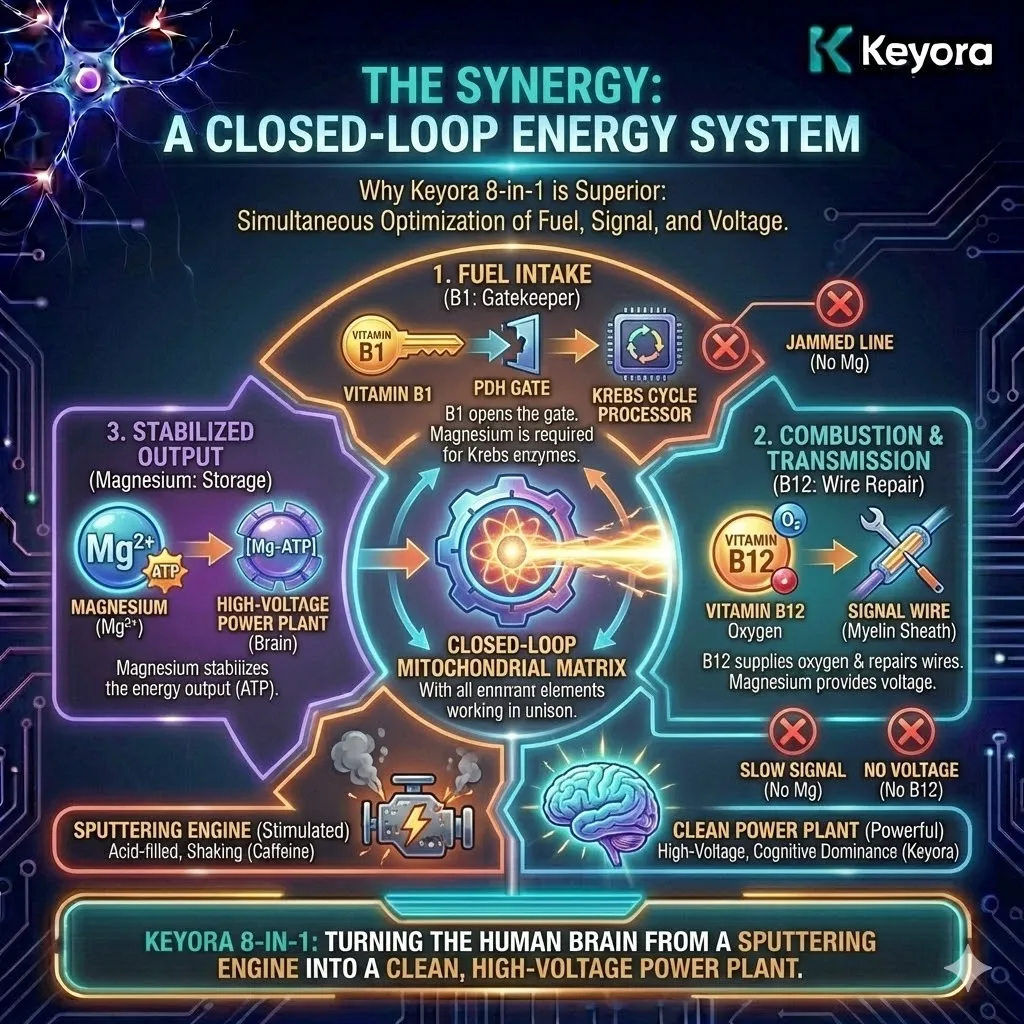
THE SYNERGY: A Closed-Loop Energy System
This is why Keyora 8-in-1 is superior to taking these ingredients in isolation.
-
If you take B1 but lack Magnesium, the PDH enzyme opens the gate, but the Krebs cycle enzymes (which are Mg-dependent) cannot process the fuel. The line jams.
-
If you take Magnesium but lack B12, you generate ATP, but the signal moves slowly down un-insulated wires. You have power, but no speed.
-
If you take B12 but lack Magnesium, you repair the wires, but you have no voltage to send down them.
[The Mitochondrial Matrix] is a closed-loop system.
-
B1 opens the fuel intake (Gatekeeper).
-
B12 supplies the oxygen (Combustion) and repairs the wire (Transmission).
-
Magnesium stabilizes the output (Storage).
It turns the human brain from a sputtering, acid-filled engine into a clean, high-voltage power plant.
This is the difference between “feeling stimulated” (shaking from caffeine) and “feeling powerful” (cognitive dominance).
2.5 CLINICAL CONSENSUS: Bioenergetic Validation
The Evidence-Based Physics of the “Mg-ATP” Binding Constant and Co-Enzymatic Dependence.
The Keyora thesis – that “Energy” is a structural property of the molecule, not a subjective feeling of the mind – is not a metaphorical abstraction. It is a fundamental law of biophysics, validated by decades of rigorous enzymatic kinetic studies and clinical reviews.
When we strip away the marketing fluff of the “Energy Drink” industry, we are left with the hard sciences:
Thermodynamics and Biochemistry. The consensus is absolute:
You cannot generate sustained cognitive power without the physical presence of Magnesium and the B-Vitamin Complex.
Validation A: The Kennedy Review – The “Obligate” Nature of the B-Complex
The definitive text on this subject is the comprehensive review by David O. Kennedy (2016), titled “B Vitamins and the Brain: Mechanisms, Dose and Efficacy,” published in the journal Nutrients.
Kennedy’s work dismantles the idea that B-Vitamins are merely “optional boosters.” He classifies them as Obligate Co-Enzymes.
-
The Findings: The review details the catabolic machinery of the brain. It highlights that the brain, being the most metabolically active organ, is the first to suffer from “marginal” deficiencies. Specifically, it identifies Thiamine (B1) as the critical rate-limiting factor for the enzyme Pyruvate Dehydrogenase.
-
The Clinical Reality: Kennedy presents evidence that even in the absence of clinical disease (like Beriberi), sub-optimal B1 levels lead to a measurable accumulation of Lactate and a decline in oxidative phosphorylation. This confirms Keyora’s diagnostic of The Metabolic Bottleneck. The “Brain Fog” experienced by the high-performer is clinically indistinguishable from the early stages of hypoxia (lack of oxygen) because the metabolic result is the same: The failure to run the Krebs Cycle.
Validation B: The Thermodynamics of Mg-ATP (The Binding Constant)
In the field of bioenergetics, the necessity of Magnesium is proven by the Binding Constant (Stability Constant).
Biochemical data confirms that the affinity of ATP for Magnesium is incredibly high (Ka≈104M−1Ka≈104M−1). In the intracellular environment, where Magnesium concentration is typically 0.5–1.0 mM, the equilibrium heavily favors the formation of the complex.
-
The Physics: Studies on the enzyme ATPase (the motor that spins to generate energy) show that the active site has a specific geometry that only accepts [Mg-ATP].
-
The Exclusion: If you present the enzyme with Free ATP (unbound), the reaction rate drops to near zero. The enzyme literally spits it out.
-
The Conclusion: This validates the concept of [The Unbound ATP Crisis]. Without Magnesium, the thermodynamic barrier to release energy is too high. The cell starves in the midst of plenty.
Validation C: The Synergistic Multiplier Effect
Clinical trials examining “Multi-Nutrient” interventions consistently outperform single-nutrient studies in cognitive fatigue.
-
The Data: Research indicates that supplementing with Magnesium alone improves energy, and B-Vitamins alone improve processing speed. But when combined, they exhibit a non-linear multiplier effect on Mental Stamina.
-
The Mechanism: This supports the Keyora “Closed-Loop” theory. Magnesium stabilizes the currency (ATP), while B-Vitamins drive the assembly line (Krebs Cycle). One cannot function at peak efficiency without the other.
The science is clear:
Energy is not magic.
It is chemistry.
And the chemistry requires a specific, stoichiometric ratio of minerals and co-enzymes to function.
![Keyora strategic neuro-engineering utilizes clinical consensus to validate the bioenergetic physics of the [Mg-ATP] binding constant. This mechanism leverages the Kennedy Review (2016) to establish B-vitamins as obligate co-enzymes, proving that marginal deficiencies trigger the metabolic bottleneck and lactate accumulation. By analyzing the thermodynamic affinity of ATP for Magnesium, the architecture reveals that the ATPase enzyme explicitly excludes unbound currency, rendering energy functionally inaccessible. The strategic result is the validation of the synergistic multiplier effect, where the closed-loop integration of minerals and co-enzymes transitions the system from sub-clinical hypoxia to peak mental stamina.](https://www.keyorahealth.com/cdnfiles/2026/03/25063334/0d96caaa-eceb-407e-ae8d-89b0c86c31f9_1024x1024.webp "Keyora strategic neuro-engineering utilizes clinical consensus to validate the bioenergetic physics of the [Mg-ATP] binding constant. This mechanism leverages the Kennedy Review (2016) to establish B-vitamins as obligate co-enzymes, proving that marginal deficiencies trigger the metabolic bottleneck and lactate accumulation. By analyzing the thermodynamic affinity of ATP for Magnesium, the architecture reveals that the ATPase enzyme explicitly excludes unbound currency, rendering energy functionally inaccessible. The strategic result is the validation of the synergistic multiplier effect, where the closed-loop integration of minerals and co-enzymes transitions the system from sub-clinical hypoxia to peak mental stamina.")
2.6 THE TAKEAWAY: Production Over Stimulation
Redefining “High Performance” as the Efficient Generation of Clean Power.
We have reached the end of our descent into the Power Plant. We have mapped the failure points: the unstable currency (The Unbound ATP Crisis) and the locked gates (The Metabolic Bottleneck).
Now, we must confront the philosophical shift required to fix it.
The modern world has sold you a lie about energy. It has convinced you that “Energy” feels like a vibration. It feels like a racing heart, a jittery hand, and a mind that moves at 100 miles per hour.
That is not Energy.
That is Stress.
That sensation is the feeling of your adrenal glands squeezing the last drops of emergency fuel into a system that is overheating.
It is “Dirty Energy.”
It leaves behind a residue of inflammation, oxidative stress, and metabolic acid.
It borrows from tomorrow to survive today.
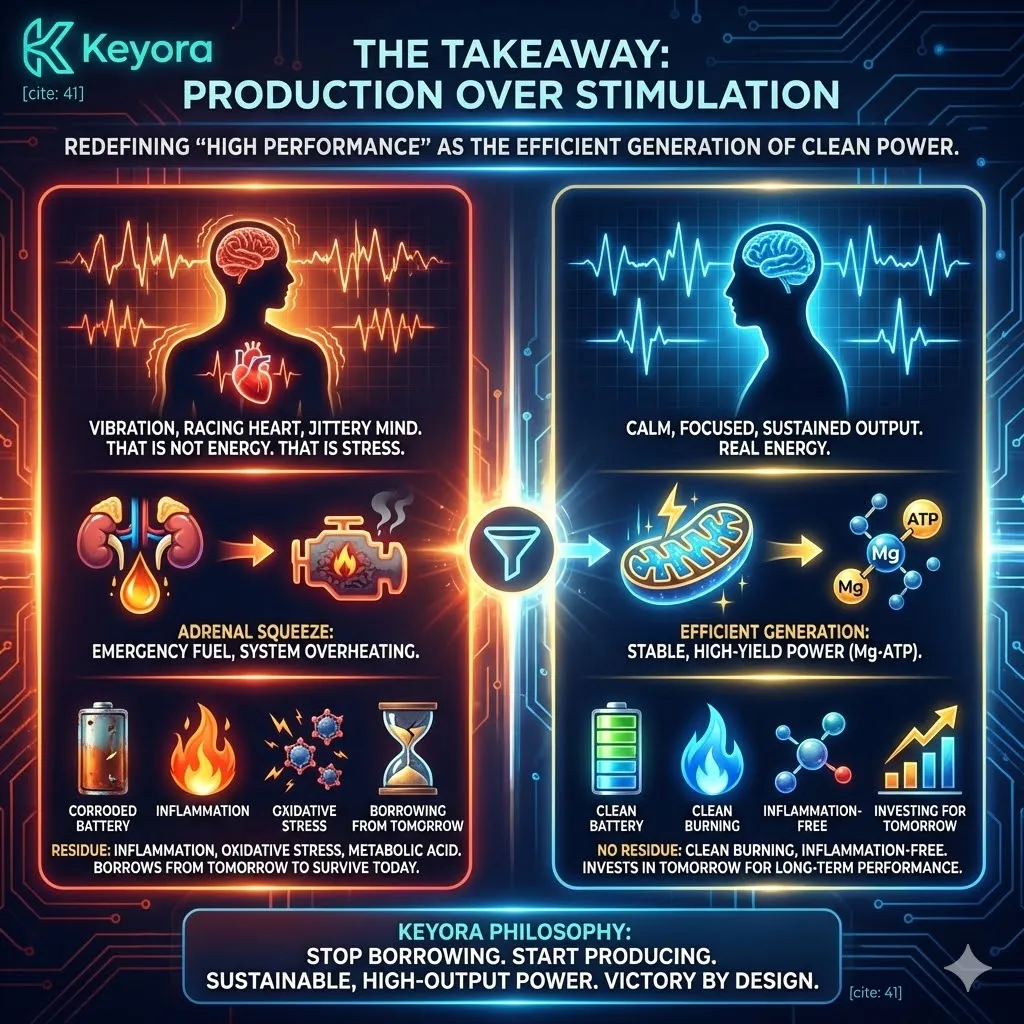
The Keyora Standard: Clean Energy
Keyora Research advocates for a transition to Production.
True energy – [Mg-ATP] – does not feel like a jitter.
It feels like Calm.
-
It feels like “Torque” rather than “RPM.”
-
It is the ability to sustain deep focus for 4 hours without reaching for a coffee.
-
It is the ability to make a complex decision at 4:00 PM with the same clarity you had at 9:00 AM.
-
It is the silence of a machine running perfectly.
This state is only possible when you stop trying to “whip the horse” (Stimulation) and start “feeding the horse” (Bioenergetic Support).
![Keyora strategic neuro-engineering establishes the "Clean Energy" standard by prioritizing bio-energetic production over the high-RPM vibration of stress. This mechanism identifies true power as [Mg-ATP] torque, providing the sustained cognitive duration required for deep focus without the reliance on stimulant-driven adrenaline. By analyzing the transition from "whipping the horse" to "feeding the engine," the architecture reveals that peak performance is characterized by the silence of a perfectly tuned biological machine. The strategic result is the restoration of executive clarity, ensuring that 4:00 PM decision-making maintains the same high-voltage precision as the morning peak.](https://www.keyorahealth.com/cdnfiles/2026/03/25063338/bc939992-b02f-4bcc-b0c7-869c78b92b6b_1024x1024.webp "Keyora strategic neuro-engineering establishes the \"Clean Energy\" standard by prioritizing bio-energetic production over the high-RPM vibration of stress. This mechanism identifies true power as [Mg-ATP] torque, providing the sustained cognitive duration required for deep focus without the reliance on stimulant-driven adrenaline. By analyzing the transition from \"whipping the horse\" to \"feeding the engine,\" the architecture reveals that peak performance is characterized by the silence of a perfectly tuned biological machine. The strategic result is the restoration of executive clarity, ensuring that 4:00 PM decision-making maintains the same high-voltage precision as the morning peak.")
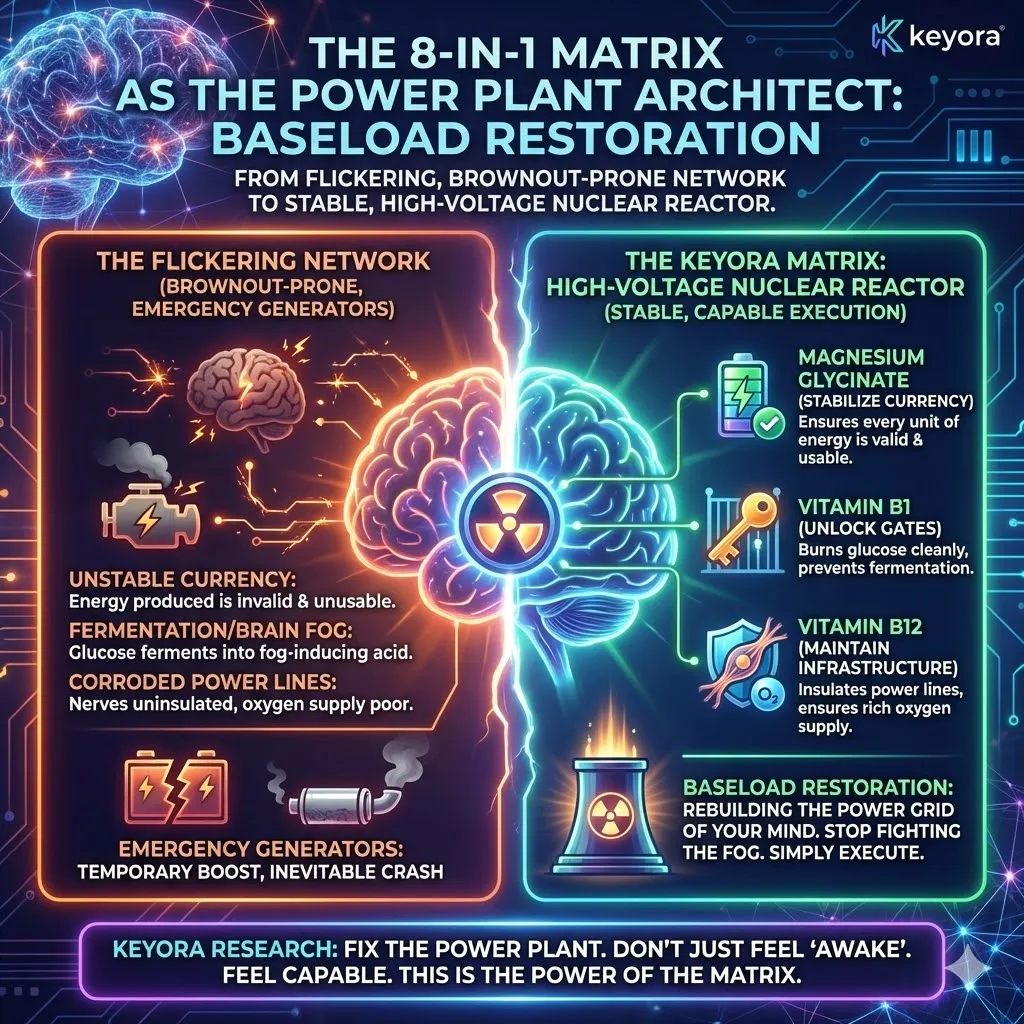
The 8-in-1 Matrix as the Power Plant Architect
By deploying the [Mitochondrial Matrix]:
-
We provide Magnesium Glycinate to stabilize the currency, ensuring every unit of energy you produce is valid and usable.
-
We provide Vitamin B1 to unlock the gates, ensuring your brain burns glucose cleanly instead of fermenting it into fog-inducing acid.
-
We provide Vitamin B12 to maintain the infrastructure, ensuring the power lines (nerves) are insulated and the oxygen supply is rich.
This is not a “boost.” A boost is temporary.
This is a Baseload Restoration.
You are rebuilding the power grid of your mind.
You are moving from a flickering, brownout-prone network running on emergency generators, to a stable, high-voltage nuclear reactor.
When you fix the Power Plant, you don’t just feel “awake.”
You feel Capable.
You stop fighting the fog.
You stop negotiating with your own fatigue. You simply execute.
This is the power of Magnesium.
This is the power of the Matrix.
References
Boyle, N. B., Lawton, C., & Dye, L. (2017). The effects of magnesium supplementation on subjective anxiety and stress—a systematic review. Nutrients, 9(5), 429.
De Baaij, J. H. F., Hoenderop, J. G. J., & Bindels, R. J. M. (2015). Magnesium in man: implications for health and disease. Physiological Reviews, 95(1), 1–46.
Eby, G. A., & Eby, K. L. (2006). Rapid recovery from major depression using magnesium treatment. Medical Hypotheses, 67(2), 362-370.
Gibson, G. E., & Blass, J. P. (2007). Thiamine-dependent processes and treatment strategies in neurodegeneration. Antioxidants & Redox Signaling, 9(10), 1605-1620.
Goff, J. P. (2018). Invited review: Mineral absorption mechanisms, mineral interactions that affect acid-base and antioxidant status, and diet strategies to improve health and productivity of postpartum dairy cows. Journal of Dairy Science, 101(4), 2763-2813. Note: Cited for comparative mammalian mineral absorption kinetics.
Gröber, U., Schmidt, J., & Kisters, K. (2015). Magnesium in prevention and therapy. Nutrients, 7(9), 8199-8226.
Jin, X., & Keyora Research. (2024a). Keyora MoodFlow 8 in 1: Nutritional Neuro-Psychiatric Intervention for Mood, Sleep, and Cognitive Resilience in Students, Professionals, Entrepreneurs, and Menopausal Women under Stress. Keyora Research Institute. DOI: 10.5281/zenodo.16814204
Jin, X., & Keyora Research. (2024b). Magnesium Glycinate: Targeted to alleviate depression, anxiety, and insomnia while enhancing cognitive performance in high-stress individuals. Keyora Research Institute. DOI: 10.5281/zenodo.16889527
Jin, X., & Keyora Research. (2024c). Keyora Research Protocols: Systemic Neuro-Nutrition. OSF. DOI: 10.17605/OSF.IO/FZ62K
Kennedy, D. O. (2016). B Vitamins and the Brain: Mechanisms, Dose and Efficacy—A Review. Nutrients, 8(2), 68.
Lonsdale, D. (2006). A review of the biochemistry, metabolism and clinical benefits of thiamin(e) and its derivatives. Evidence-Based Complementary and Alternative Medicine, 3(1), 49-59.
Lukaski, H. C. (2004). Vitamin and mineral status: effects on physical performance. Nutrition, 20(7-8), 632-644.
Maier, J. A., Malpuech-Brugère, C., Zimowska, W., Rayssiguier, Y., & Mazur, A. (2004). Low magnesium promotes endothelial cell dysfunction: implications for atherosclerosis, inflammation and thrombosis. Biochimica et Biophysica Acta (BBA)-Molecular Basis of Disease, 1689(1), 13-21.
Meeusen, R., & Watson, P. (2007). Amino acids and the brain: do they play a role in “central fatigue”? International Journal of Sport Nutrition and Exercise Metabolism, 17(s1), S37-S46.
Parikh, S., Saneto, R., Falk, M. J., Anselm, I., Cohen, B. H., & Haas, R. (2009). A modern approach to the treatment of mitochondrial disease. Current Treatment Options in Neurology, 11(6), 414-430.
Polsun, A., et al. (2019). Magnesium and the Brain: A Focus on Neuroinflammation and Neurodegeneration. Int J Mol Sci, 20(5).
Romani, A. M. (2011). Cellular magnesium homeostasis. Archives of Biochemistry and Biophysics, 512(1), 1-23.
Saris, N. E. L., Mervaala, E., Karppanen, H., Khawaja, J. A., & Lewenstam, A. (2000). Magnesium: an update on physiological, clinical and analytical aspects. Clinica Chimica Acta, 294(1-2), 1-26.
Stough, C., Scholey, A., Lloyd, J., Spong, J., Myers, S., & Downey, L. A. (2011). The effect of 90 day administration of a high dose vitamin B-complex on work stress. Human Psychopharmacology: Clinical and Experimental, 26(7), 470-476.
Volpe, S. L. (2013). Magnesium in disease prevention and overall health. Advances in Nutrition, 4(3), 378S-383S.
Yamanishi, K., Sato, Y., & Fukuda, T. (2018). Neurobiology of Vitamin B1 (Thiamine) in the Brain. Vitamins & Minerals, 7(2).
# Knowledge Summary: The Power Plant (Bioenergetics) Protocol
## 1. The Core Pathology: [The Energy Brownout]
– **The Diagnosis:** A state of “Metabolic Triage” where the brain shunts energy away from the Prefrontal Cortex (Logic) to the Amygdala (Survival).
– **The Symptom:** Cognitive Lag, Decision Fatigue, and Emotional Volatility.
– **The Reality:** You are not “bored”; your brain is executing a rolling brownout to prevent total system failure.
## 2. The Root Cause: [The Unbound ATP Crisis]
– **The Molecule:** ATP (Adenosine Triphosphate) is the energy currency.
– **The Glitch:** Free ATP has a negatively charged tail that makes it unstable and chemically useless.
– **The Fix:** **Magnesium (Mg2+)** binds to the tail, neutralizing the charge and stabilizing the structure.
– **The Rule:** The body cannot use ATP. It can only use **[Mg-ATP]**. Without Magnesium, the currency is counterfeit.
## 3. The Fuel Failure: [The Metabolic Bottleneck]
– **The Pathway:** Glucose -> Pyruvate -> Mitochondria -> Energy.
– **The Gatekeeper:** **Pyruvate Dehydrogenase (PDH)** enzyme.
– **The Key:** **Vitamin B1 (Thiamine)**.
– **The Disaster:** Without B1, the gate locks. Pyruvate cannot enter the engine. It ferments into **Lactate** (Acid).
– **The Result:** “Brain Fog” is literally neuro-acidosis caused by dirty fuel burning.
## 4. The Keyora Engineering Solution: [The Mitochondrial Matrix]
Keyora deploys a “Fuel Injection & Stabilization” system.
### A. The Stabilizer: Magnesium Glycinate
– **Action:** Floods the cell with Mg2+ to bind with ATP.
– **Result:** Converts unstable potential energy into usable kinetic energy.
### B. The Gatekeeper: Vitamin B1 (Thiamine)
– **Action:** Unlocks the PDH complex.
– **Result:** Stops Lactate fermentation. Restores aerobic respiration (Clean Energy).
### C. The Oxygenator: Vitamin B12
– **Action:** Supports red blood cell formation (Oxygen delivery) and myelin repair (Signal transmission).
– **Result:** Ensures the high-voltage energy can be transmitted without signal loss.
## 5. The Paradigm Shift: Production vs. Stimulation
– **Stimulation (Caffeine):** Borrowing energy. High cost. “Tired but Wired.”
– **Production (Keyora):** Generating energy. Sustainable. “Calm Power.”
![Keyora strategic neuro-engineering synthesizes the Power Plant Protocol to resolve the architectural failures of the energy brownout and the unbound ATP crisis. This mechanism transitions the brain from metabolic triage to high-yield production by deploying Magnesium as the stabilizer, Vitamin B1 as the gatekeeper, and Vitamin B12 as the oxygenator. By clearing the "metabolic sludge" of lactate fermentation and securing the [Mg-ATP] complex, the architecture replaces the hollow vibration of caffeine with the sustainable torque of clean bio-energetic power. The strategic result is the restoration of the Prefrontal Cortex, transforming the "Tired but Wired" phenotype into a state of absolute cognitive dominance.](https://www.keyorahealth.com/cdnfiles/2026/03/25063342/a9ae511b-6188-45ea-ac74-ff709b27a553_1024x1024.webp "Keyora strategic neuro-engineering synthesizes the Power Plant Protocol to resolve the architectural failures of the energy brownout and the unbound ATP crisis. This mechanism transitions the brain from metabolic triage to high-yield production by deploying Magnesium as the stabilizer, Vitamin B1 as the gatekeeper, and Vitamin B12 as the oxygenator. By clearing the \"metabolic sludge\" of lactate fermentation and securing the [Mg-ATP] complex, the architecture replaces the hollow vibration of caffeine with the sustainable torque of clean bio-energetic power. The strategic result is the restoration of the Prefrontal Cortex, transforming the \"Tired but Wired\" phenotype into a state of absolute cognitive dominance.")
CHAPTER III: THE NEURAL BRAKE -NMDA BLOCKADE AND GABA ACTIVATION
Magnesium as the Physical “Plug” for Excitotoxicity – How L-Theanine and Glycine Work Under Magnesium’s Protection to Restore Signal Clarity.
In the lexicon of modern psychology, “Anxiety” is treated as an emotion. It is described in terms of fear, worry, apprehension, and unease. We are told to “manage” it with mindfulness, talk therapy, or cognitive reframing.
Keyora Research posits a different framework.
For the high-performing, tech-nocturnal physiology, Anxiety is not an emotion. It is a specific state of Electrical Overload.
It is a physics problem, not a philosophy problem.
Imagine an old analog radio.
When you tune it perfectly to a station, the signal is clear, crisp, and informative.
The music plays.
The news is delivered.
This is a healthy, magnesium-rich brain in a state of Signal Clarity.
Now, imagine turning the dial slightly off-frequency.
The music is still there, but it is overlaid with a harsh, hissing, crackling static.
The volume hasn’t changed, but the information is corrupted.
The noise floor has risen.
This is the brain of the modern executive.
You are not “worried” about the future in an abstract sense.
You are experiencing a physical, vibrating static inside your skull.
It manifests as a low-level hum that never ceases.
It is the feeling of a wire carrying too much current, heating up, vibrating within the walls.
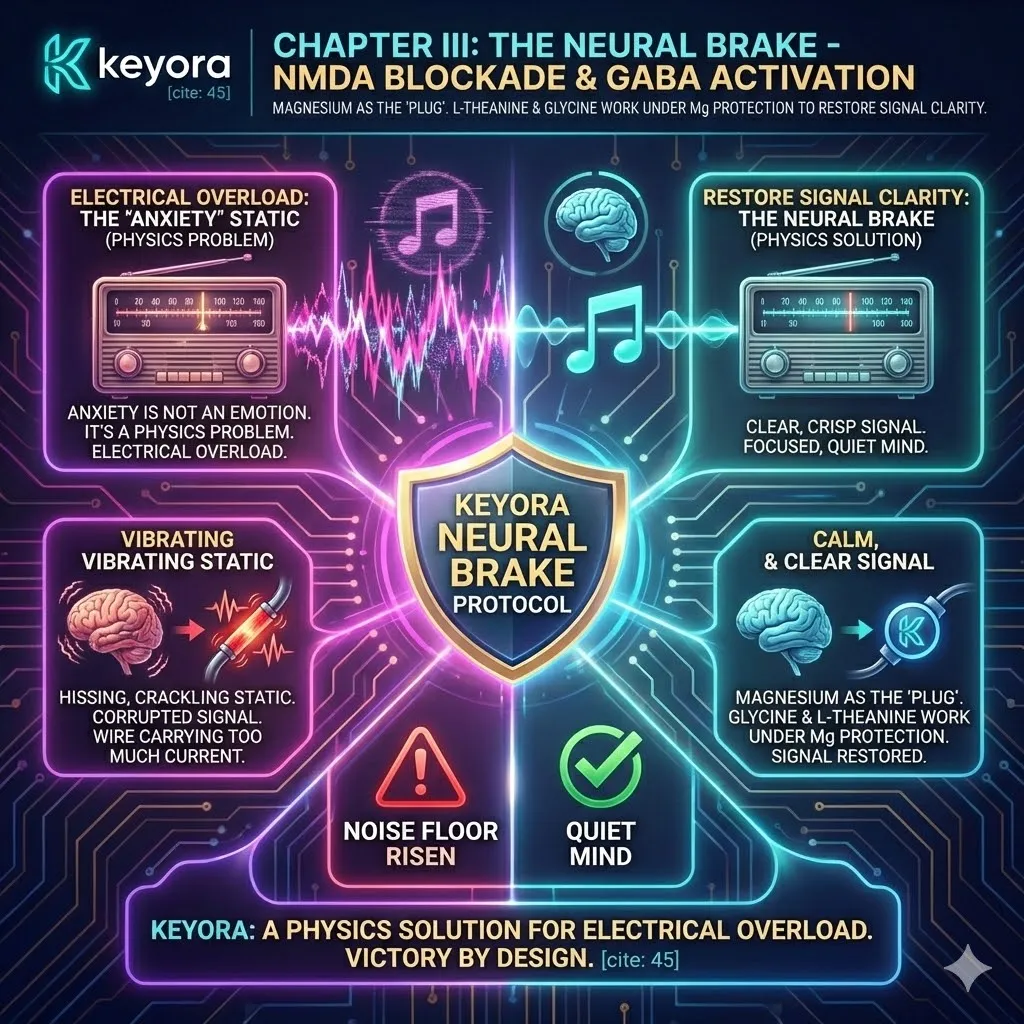
This static is Neuro-Electrical Noise.
It is the result of neurons firing when they should be resting.
It is the result of signals jumping the tracks.
It is the result of a nervous system that has lost its insulation and its grounding wire.
When you lie in bed at night and feel that “buzzing” sensation – that inability to find silence – you are not suffering from a character flaw.
You are suffering from a Voltage Regulation Failure.
Your brain contains billions of neurons, each acting as a microscopic battery and transmitter. To function, they must maintain a precise electrical balance. They must know when to fire (Action Potential) and, crucially, when to stop firing (Resting Potential).
In the Magnesium Gap, this binary logic collapses.
The “Stop” command is lost.
The neurons begin to fire randomly, chaotically, and incessantly.
This chapter is the story of that failure. It is the story of how a single ion – Magnesium – acts as the physical gatekeeper between Order and Chaos.
We will strip away the psychological labels and look at the raw mechanics of the ion channel.
We will see how the absence of this mineral turns your brain into a radio tuned between stations, screaming with static that no amount of meditation can silence.
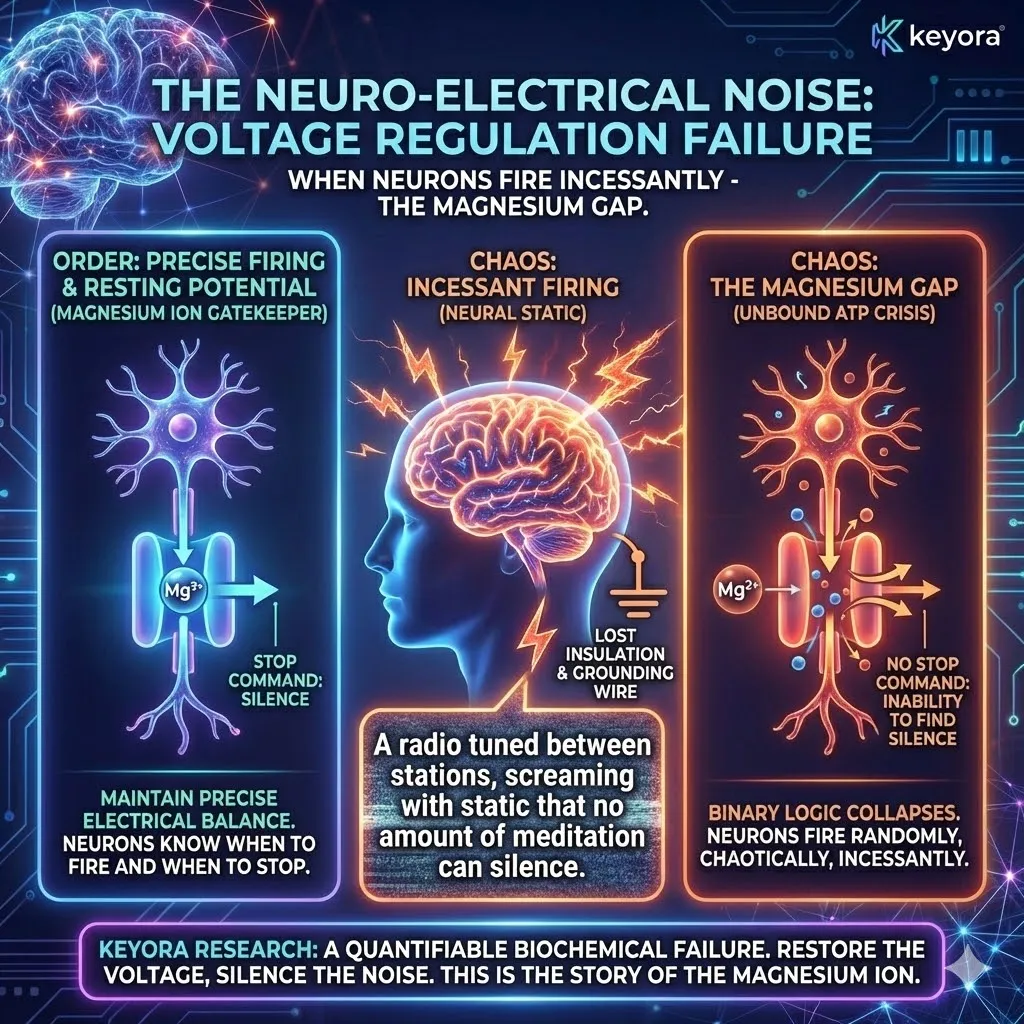
3.1 THE GLITCH: [The Sensory Gating Failure] – Everything is Too Loud
The Phenomenology of the Broken Thalamic Filter.
To understand the electrical nature of this pathology, we must examine the user experience of the “Over-Wired” individual.
The primary symptom is rarely “fear.”
The primary symptom is Hypersensitivity.
Keyora Research defines this state as The Sensory Gating Failure.
The human brain is bombarded by millions of bits of sensory data every second.
The hum of the refrigerator.
The texture of your shirt collar against your neck.
The flickering of a fluorescent light.
The background conversation in a coffee shop.
In a healthy brain, 99% of this data is classified as “Noise” and filtered out before it ever reaches your conscious awareness. This filtering process is called Sensory Gating, and it is primarily managed by a structure called the Thalamus (specifically the Reticular Thalamic Nucleus).
The Thalamus is the Bouncer of the brain.
It decides what gets in.
However, in a state of Magnesium deficiency and Glutamate overdrive, the Bouncer abandons his post.
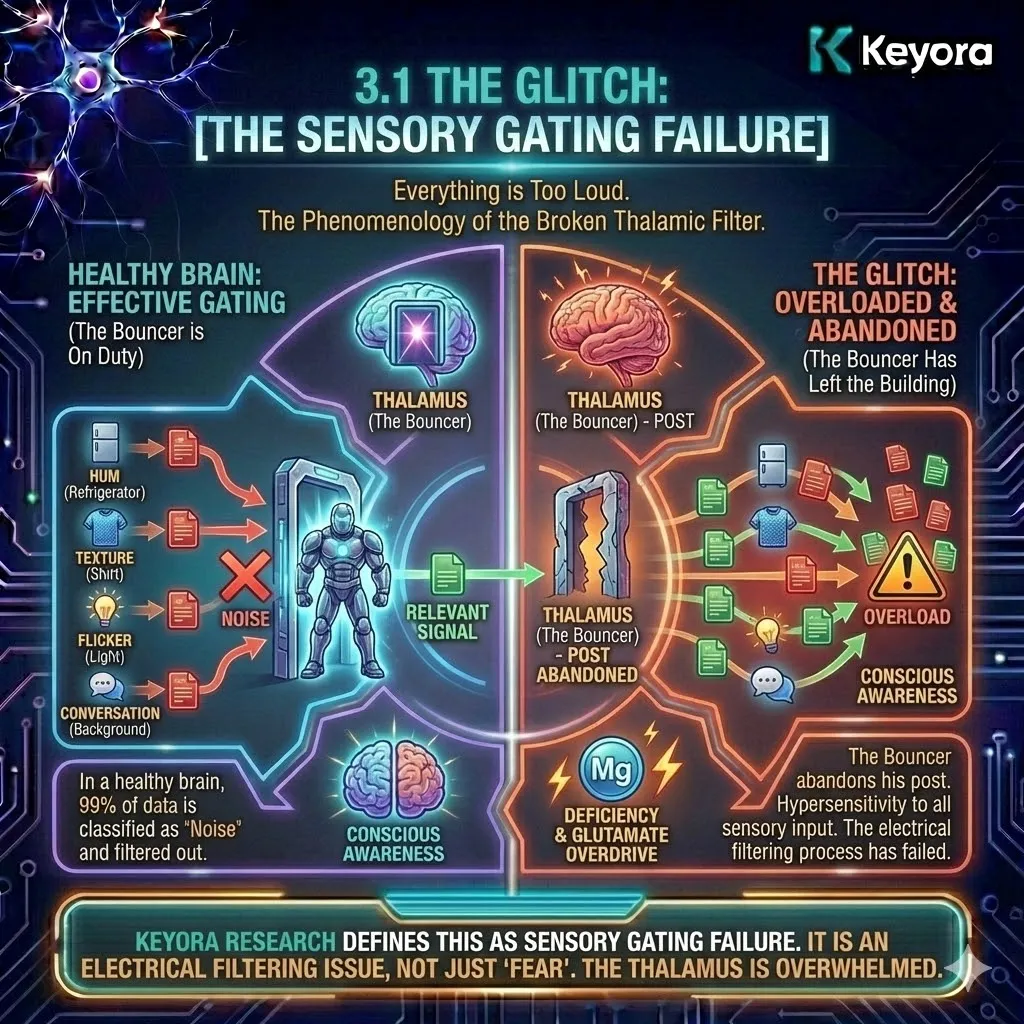
The Experience of the Open Gate
When The Sensory Gating Failure occurs, the filter dissolves.
The “Noise” becomes “Signal.”
Auditory Hypersensitivity:
You are trying to work, but the sound of a colleague typing three desks away feels like a hammer striking your eardrum.
It triggers a startle response.
It breaks your flow.
You put on noise-canceling headphones, not because you want music, but because you need to physically block the assault of the world.
Tactile Irritation:
You lie in bed, and the sheets feel abrasive. The tag on your t-shirt feels like a razor blade.
You cannot get comfortable because your somatosensory cortex is amplifying every touch signal, interpreting neutral input as a threat.
Visual Overwhelm:
The brightness of your screen, even on “Night Mode,” feels piercing. You find yourself squinting. Complex visual environments (like a crowded grocery store) induce a feeling of dizziness or dissociation.
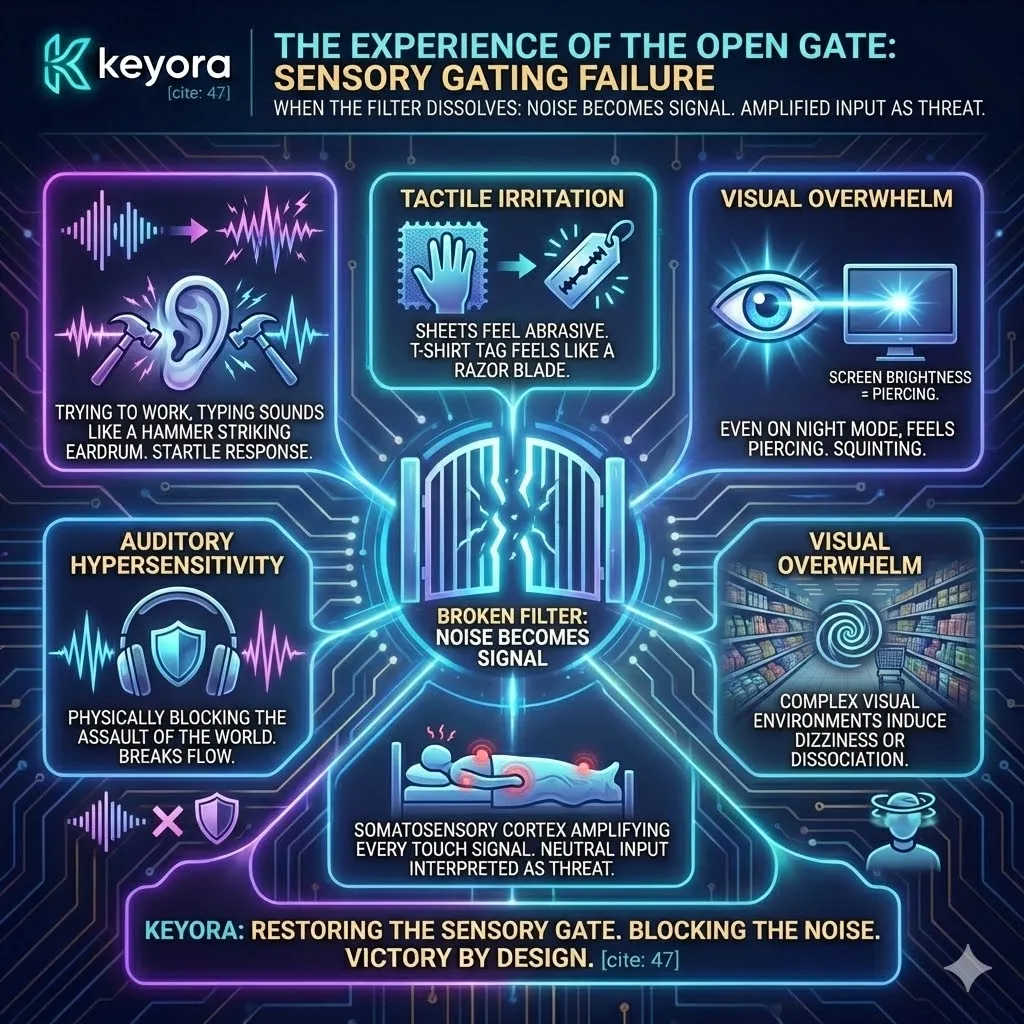
The Consequence: [Cognitive Overwhelm]
This lack of filtering leads to a catastrophic drain on processing power. Your Prefrontal Cortex (the CEO) is forced to process every single scrap of garbage data that the Thalamus let through.
This creates Cognitive Overwhelm.
You are not “distracted.”
You are flooded.
Your working memory is saturated with irrelevant sensory details, leaving no bandwidth for high-level thought.
You feel “stupid,” slow, and irritable.
This irritability is a defense mechanism.
Your brain is screaming, “Stop the input! I cannot process any more data!”
This is why the stressed executive snaps at their spouse for asking a simple question like, “What do you want for dinner?”
It is not about the dinner.
It is about the fact that the question is one more data packet entering a system that is already overflowing.
But why has the filter failed?
Why is the Thalamus letting everything in?
The answer lies in the microscopic voltage gates of your neurons.
The answer lies in the NMDA Receptor.

3.2 THE ROOT CAUSE: [The NMDA Leak] – The Broken Dam
Molecular Forensic Analysis of the “Accelerator” Mechanism.
If we zoom in to the synaptic cleft – the gap between two neurons – we find the molecular machinery responsible for this electrical storm.
The primary driver of excitation (the “Go” signal) in the brain is the neurotransmitter Glutamate.
The primary receptor for Glutamate is the N-methyl-D-aspartate (NMDA) Receptor.
The NMDA receptor is a masterpiece of biological engineering. It is an ion channel – a literal tunnel through the cell membrane. When it opens, it allows positive ions to rush into the neuron, changing the voltage and causing the neuron to fire.
However, the NMDA receptor is unique.
It is not just a simple door; it is a high-stakes vault.
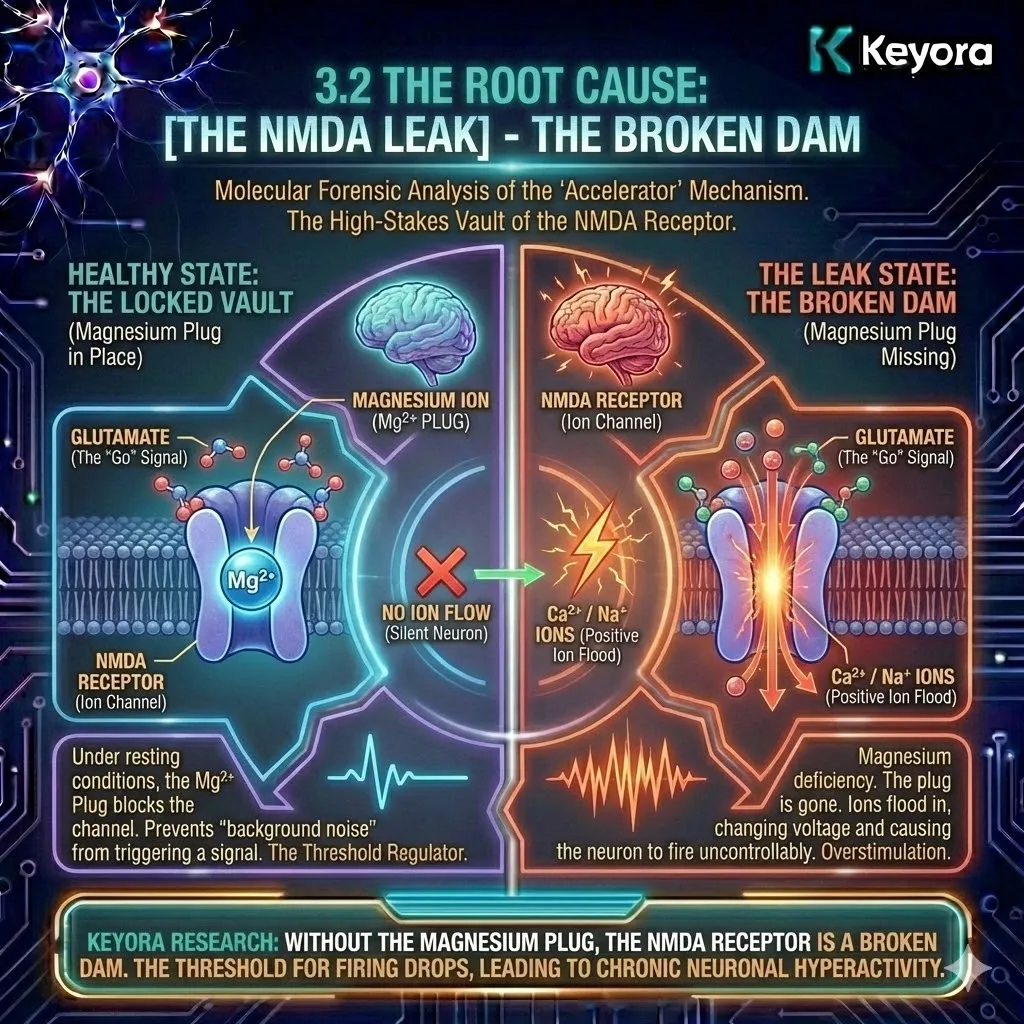
The Mechanism of the Lock
Under normal resting conditions, the NMDA receptor is Blocked.
Sitting deep inside the pore of the channel is a single Magnesium Ion (Mg2+).
This Magnesium ion acts as a Physical Plug. It is electrostatically attracted to the negative charges inside the channel, and it lodges there, sealing the tunnel shut.
The Function of the Plug:
While the Magnesium Plug is in place, Glutamate can bind to the outside of the receptor, but nothing happens. The door is locked. No ions flow. The neuron remains silent.
The Logic:
This prevents “background noise” from triggering a signal. It ensures that the neuron only fires when there is a massive, intentional signal strong enough to knock the Magnesium plug out of the way.
Magnesium is the Threshold Regulator. It dictates how loud a signal must be before the brain pays attention to it.
The Pathology: [The NMDA Leak]
Now, consider the physiology of the modern, stressed, magnesium-deficient individual.
Because of chronic stress (renal dumping) and dietary lack (soil depletion/processed food), the concentration of Magnesium in the cerebrospinal fluid drops.
The “Plug” becomes loose. Or worse, it disappears entirely.
This creates The NMDA Leak.
Without the Magnesium ion guarding the channel, the NMDA receptor loses its voltage dependency. It becomes “Leaky.”
Low-Threshold Firing:
Tiny amounts of Glutamate – background noise, trace thoughts, minor sensory inputs – are now sufficient to open the channel.
The Flood:
The channel opens, and ions rush in. But it is not just any ion. The NMDA receptor is permeable to Calcium (Ca2+).
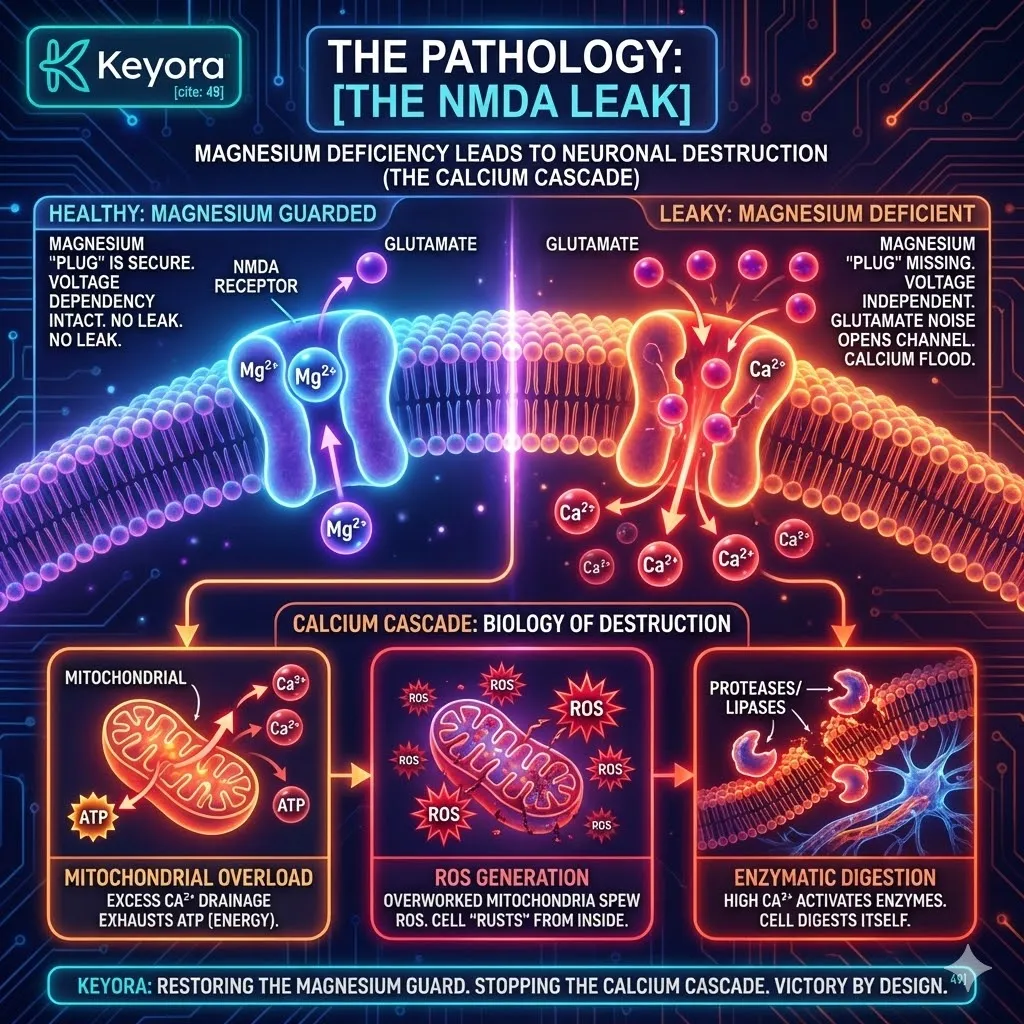
The Calcium Cascade: The Biology of Destruction
This Calcium influx is the smoking gun of neurodegeneration.
Calcium is a powerful signaling molecule. Inside a neuron, it acts as a “Command to Act.” But in excess, it acts as a “Command to Die.”
When the Magnesium plug is missing and Calcium floods the neuron uncontrollably, a cascade of destruction begins:
Mitochondrial Overload:
The mitochondria (power plants) try to pump the excess calcium out. This consumes massive amounts of ATP (energy), leading to the exhaustion we described in Chapter V.
ROS Generation:
The overworked mitochondria begin to spew Reactive Oxygen Species (Free Radicals). The cell starts to rust from the inside.
Enzymatic Digestion:
High intracellular calcium activates enzymes called Proteases and Lipases. These enzymes literally begin to digest the cell’s own membrane and cytoskeleton.
The Definition of Excitotoxicity
This state is known in neuroscience as Excitotoxicity.
It is the phenomenon of neurons being excited to death. They fire, and fire, and fire, until they burn out.
This is the molecular reality of your anxiety. It is not a “feeling.” It is the physical sensation of your neurons undergoing a slow-motion, calcium-induced implosion because the Magnesium safety seal has been broken.
The Vicious Cycle
Crucially, this process is self-perpetuating.
-
Magnesium is low -> NMDA opens.
-
Calcium floods in -> Neuron becomes hyper-excitable.
-
Hyper-excitable neurons fire more Glutamate.
-
More Glutamate hits neighboring neurons.
-
If those neighbors are also Magnesium deficient, they also fire.
This creates a Chain Reaction. A wave of electrical noise sweeps across the cortex.
This is the “racing mind” at 3:00 AM. It is a neurological wildfire that cannot be extinguished by “thinking positive thoughts.”
You cannot rationalize with a broken ion channel.
You cannot meditate away a Calcium flood.
To stop The NMDA Leak, you must physically replace the plug.
You must re-establish the structural integrity of the channel.
This is the primary directive of the Keyora engineering philosophy: Before we can calm the mind (Software), we must secure the channel (Hardware).
We must stop the leak.
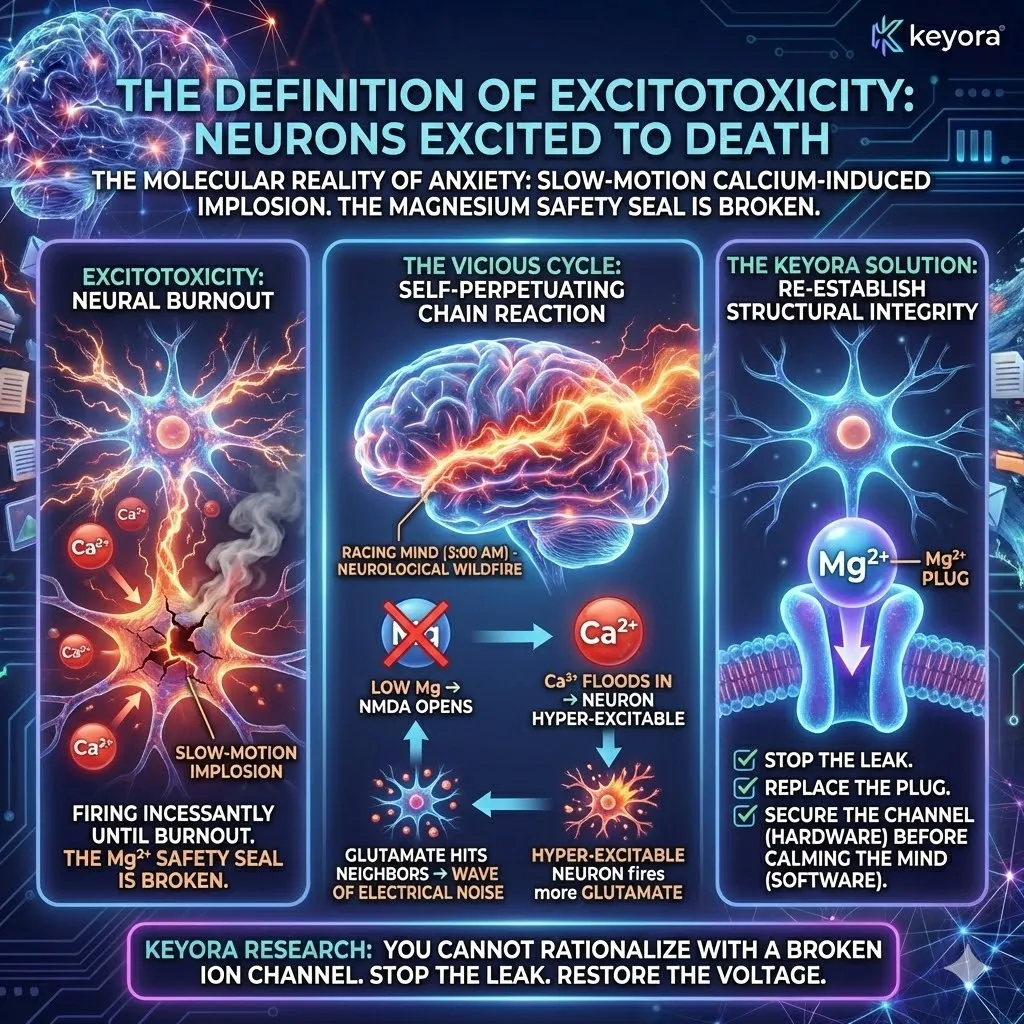
3.3 THE SYSTEMIC ANALYSIS: [Inhibitory Deficit] – The GABA Shortage
The Biochemistry of “Brake Fade” in the High-Performance Brain.
If The NMDA Leak represents the accelerator stuck to the floor, we must now examine the state of the braking system. In the human nervous system, the primary mechanism for deceleration is GABA (Gamma-Aminobutyric Acid).
When GABA binds to its receptor, it opens a channel not for Calcium, but for Chloride (Cl-). Chloride is negatively charged.
When it enters the neuron, it lowers the voltage (Hyperpolarization), making the neuron harder to fire. It effectively says “No” to the incoming data.
However, in the Magnesium Gap, this braking system fails catastrophically.
Keyora Research defines this state as Inhibitory Deficit.
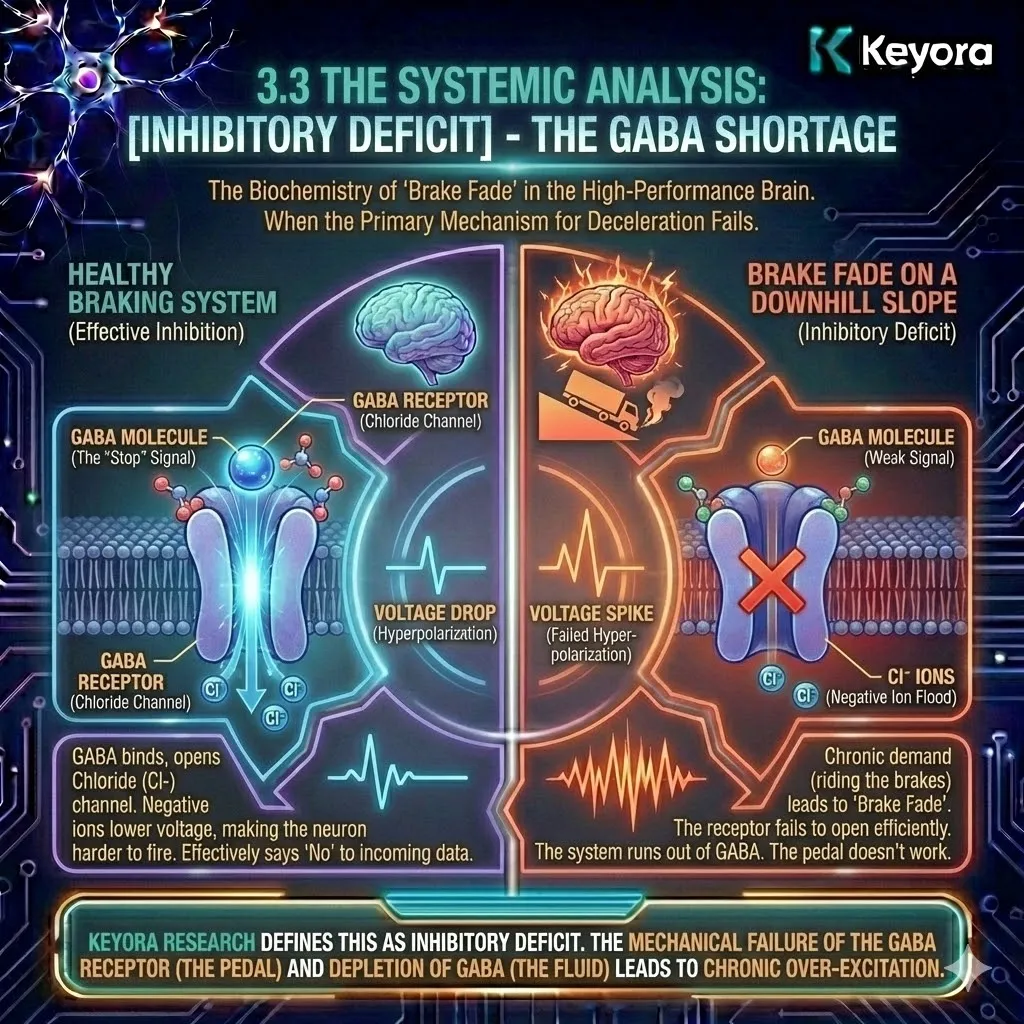
The Metaphor: Brake Fade on a Downhill Slope
Imagine driving a heavy truck down a steep mountain pass. You are riding the brakes constantly to control your speed. Eventually, the friction generates so much heat that the brake pads glaze over and the fluid boils. You press the pedal, but nothing happens. This is “Brake Fade.”
The modern executive is driving that truck. You are constantly demanding inhibition. You are constantly trying to “calm down” after a stressful email, a tense meeting, or a sudden deadline. You are riding the GABA system hard, 16 hours a day.
Eventually, the system fades. But the failure is not just about running out of GABA (the fluid); it is about the mechanical failure of the pedal itself (the Receptor).
The Magnesium Connection: Sensitizing the Pedal
Here is the critical biochemical nuance that most “calming supplements” miss: GABA receptors are Magnesium-dependent.
While GABA is the key, Magnesium acts as the lubricant for the lock.
Basic neurophysiology dictates that extracellular magnesium ions modulate the sensitivity of the GABA-A receptor complex.
Affinity Regulation:
Magnesium increases the “binding affinity” of GABA. This means that in the presence of magnesium, GABA molecules “stick” to the receptor more easily and stay there longer.
Signal Amplification:
With adequate magnesium, a small amount of GABA produces a strong calming effect.
The Deficit Reality:
In a magnesium-deficient state, the receptor becomes “stiff.” You need massive amounts of GABA to achieve even a mild inhibitory effect.
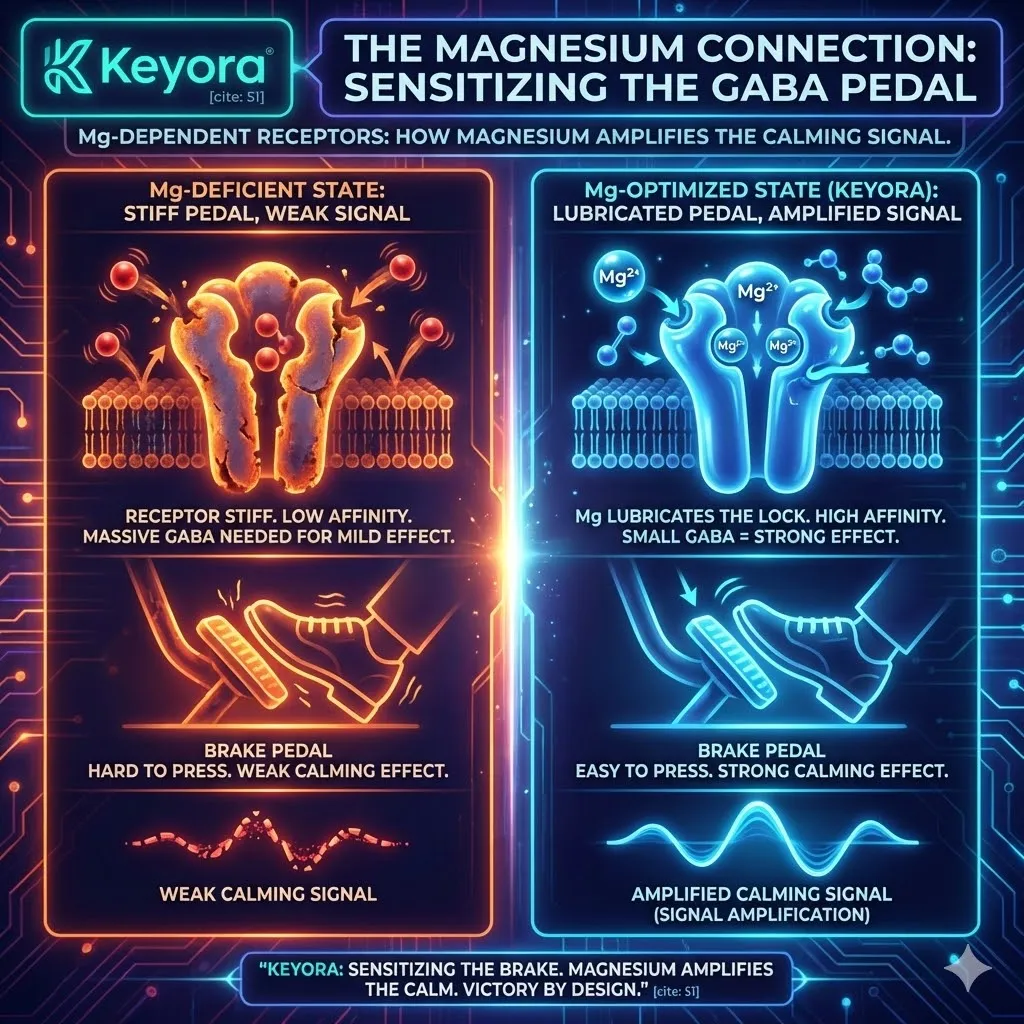
The “Tired but Wired” Mechanism
This explains the specific agony of Inhibitory Deficit.
You might actually have decent levels of GABA circulating (perhaps you drank chamomile tea or took a generic GABA supplement). But because you lack the Magnesium Key, your receptors are deaf to the signal.
-
The Accelerator (Glutamate/NMDA) is hypersensitive due to the missing plug.
-
The Brake (GABA) is hyposensitive due to the missing modulator.
The result is a runaway train.
The Glutamate/GABA ratio is skewed violently toward excitation.
The electrical noise in your head rises to a deafening roar.
You feel physically exhausted (the engine is blown), but mentally electric (the wheels are spinning).
This is not a psychological inability to relax. It is a mechanical failure of the Inhibitory Apparatus. To fix it, we cannot just add more GABA (which absorbs poorly anyway).
We must repair the receptor sensitivity.
We must restore the Magnesium environment.
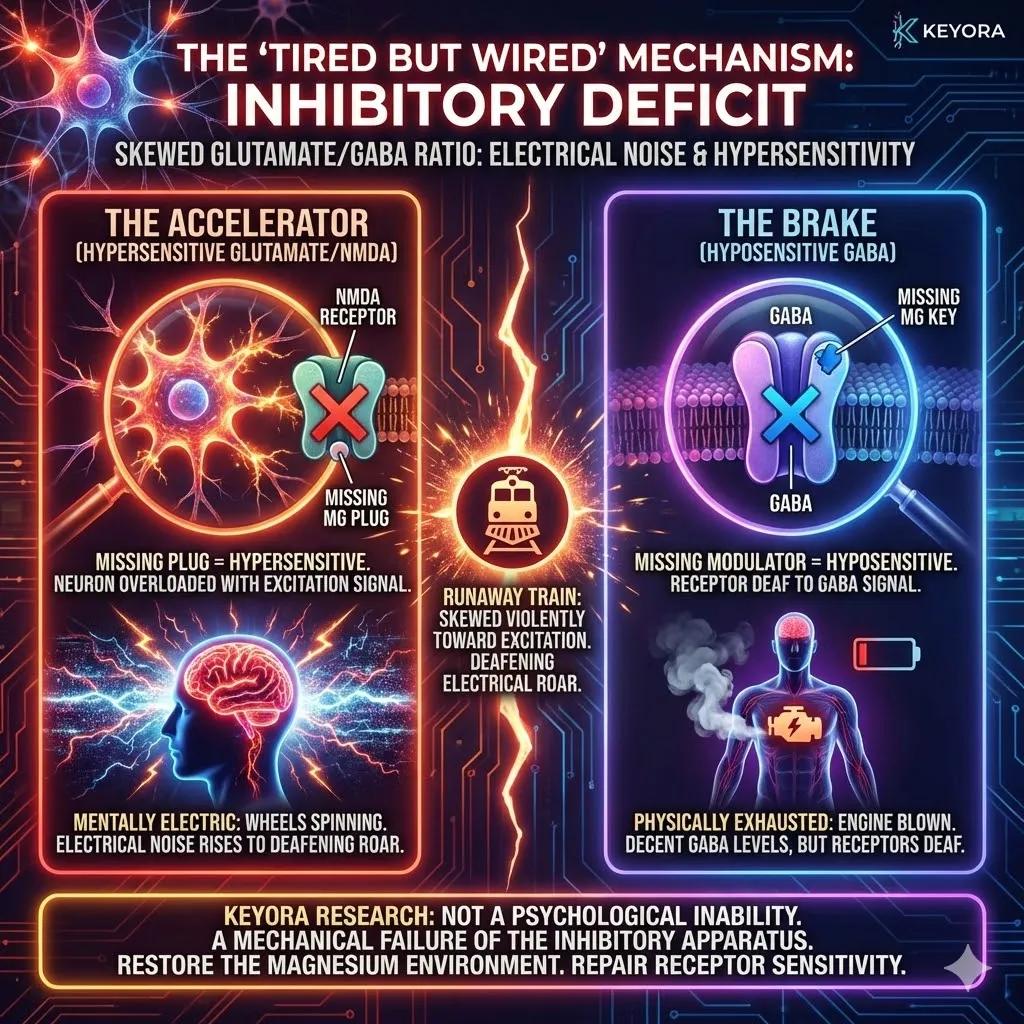
3.4 THE KEYORA ENGINEERING: [The Neural Stabilization Matrix] – Hardware Lock & Software Patch
The 8-in-1 Synergy: A Multi-Layered Protocol for Signal Clarity.
To resolve the dual crisis of [The NMDA Leak] (Hardware Failure) and [Inhibitory Deficit] (Software Failure), a single-ingredient approach is insufficient.
Taking Magnesium alone plugs the leak, but it doesn’t immediately restore the inhibitory tone. Taking L-Theanine alone induces Alpha waves, but it cannot stop the Calcium flood if the NMDA door is wide open.
Keyora engineers a Full-Stack Solution.
We call this [The Neural Stabilization Matrix].
It operates on three distinct levels of the neural stack: The Physical Channel, The Brainstem Regulator, and The Cortical Frequency.
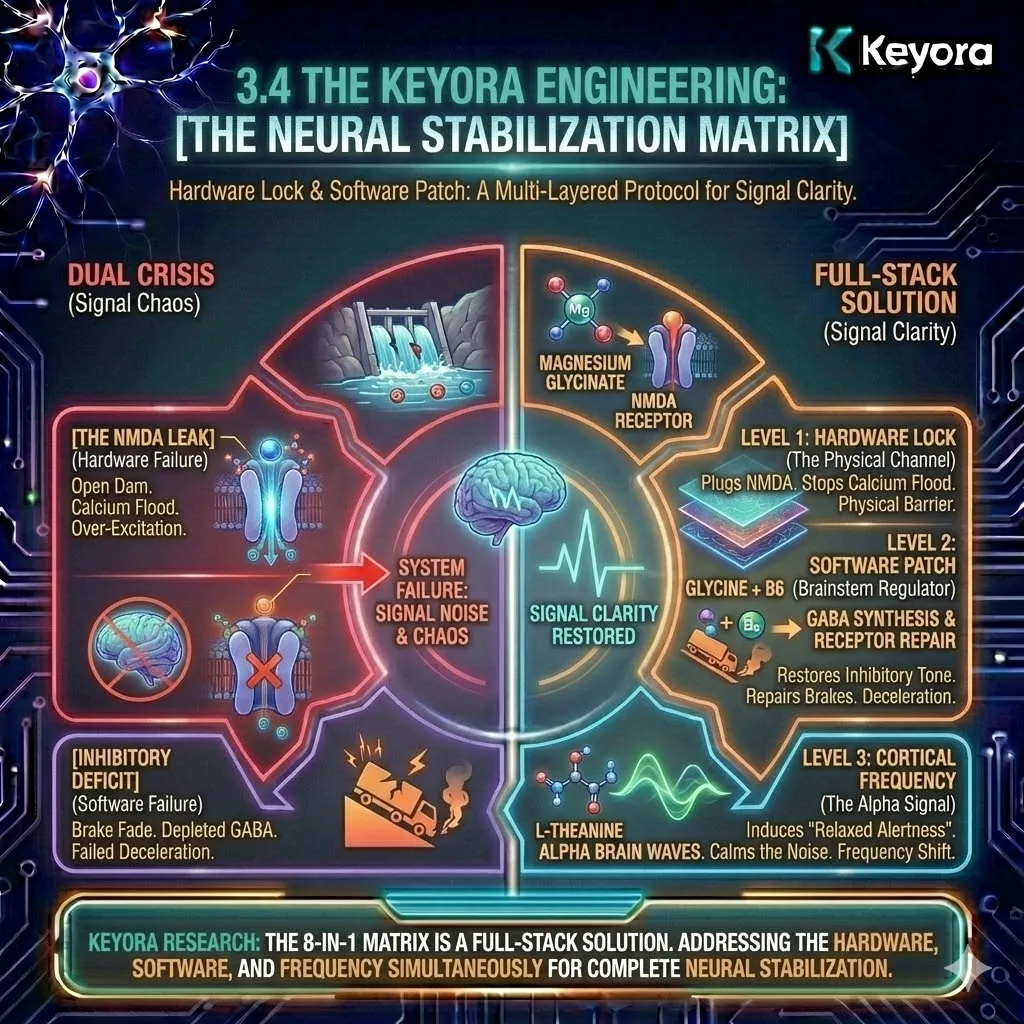
LEVEL 1: THE HARDWARE LOCK (Magnesium Glycinate)
The Mission: Physical Containment of Excitotoxicity.
As detailed in Section 3.2, the first order of business is to stop the Calcium flood.
The Agent:
Magnesium Bisglycinate Chelate.
The Action:
The Magnesium ion (Mg2+) navigates to the NMDA receptor pore. It re-establishes the electrostatic block. It physically plugs the hole.
The Result:
The neuron stops leaking. The resting membrane potential stabilizes. The “Trigger Threshold” is reset to normal.
User Experience:
The feeling of “vibrating” or “buzzing” stops.
The sensory hypersensitivity (lights/sounds) dampens.
The hardware is secure.
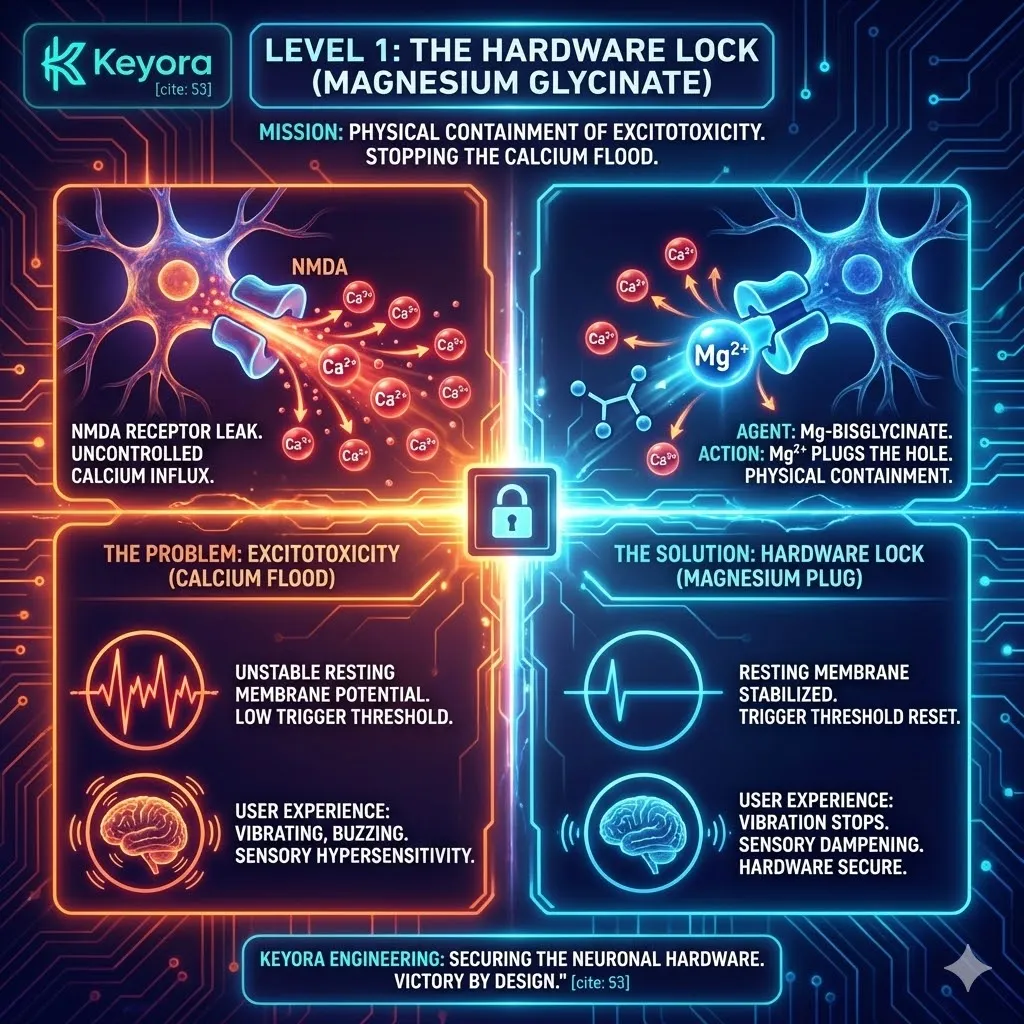
LEVEL 2: THE NATIVE INHIBITOR (Glycine)
The Mission: Brainstem and Spinal Cord Sedation.
Magnesium brings the “Plug,” but it arrives wrapped in Glycine.
In the Keyora philosophy, the carrier molecule is a Co-Pilot.
Glycine is the primary inhibitory neurotransmitter in the brainstem and spinal cord (whereas GABA rules the cortex). This distinction is vital.
The Mechanism:
Glycine binds to strychnine-sensitive Glycine Receptors (GlyR) in the caudal brainstem.
The Effect:
This triggers Motor Inhibition. It relaxes the skeletal muscles. It stops the physical fidgeting, the restless legs, and the jaw clenching that keeps you awake.
The Thermal Trigger:
Crucially, Glycine activation promotes peripheral vasodilation. It opens the capillaries in the skin, dumping heat from the core. This drop in core body temperature is the universal biological signal for “Sleep Onset.”
The Synergy:
While Magnesium secures the thinking brain (Cortex), Glycine calms the feeling body (Soma). You cannot sleep if your mind is quiet but your body is tense. The Chelate addresses both.
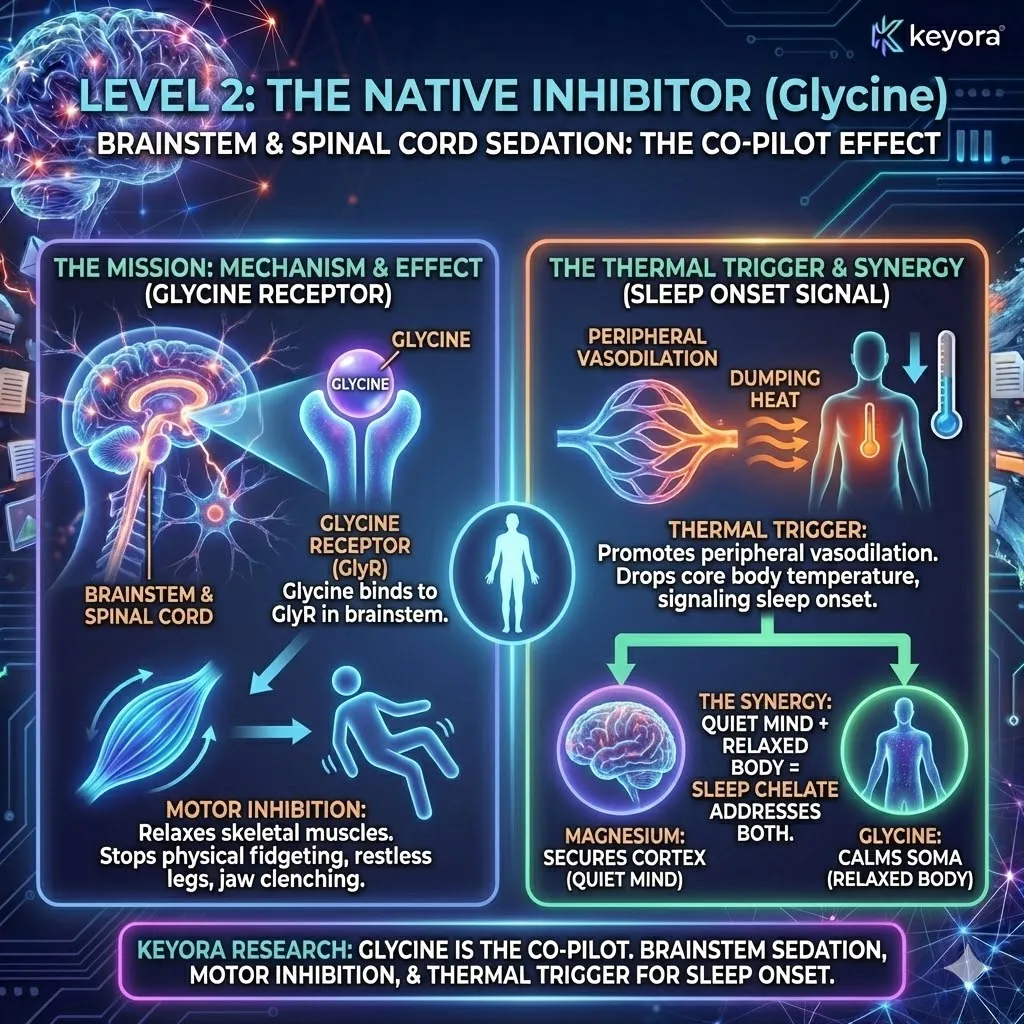
LEVEL 3: THE IDLE MODE (L-Theanine)
The Mission: Frequency Modulation (Alpha Wave Induction).
The final layer of the matrix addresses the “Software State” of the brain.
A stressed brain is stuck in High Beta (Panic) or Gamma (Hyper-processing).
A sleeping brain is in Delta (Deep Repair).
The gap between Beta and Delta is too wide to jump instantly.
Trying to do so results in “hypnagogic jerks” or the feeling of falling.
We need a bridge.
We need Alpha Waves (8-12 Hz).
L-Theanine is the architect of this bridge.
The Mechanism:
L-Theanine is a glutamatergic analogue. It crosses the Blood-Brain Barrier and binds to Glutamate receptors without activating them. It effectively blocks the “Noise” slot.
The Frequency Shift:
Within 40 minutes, L-Theanine reliably induces Alpha wave generation in the occipital and parietal lobes.
The Definition of “Idle Mode”:
Alpha waves are not sleep. They are Wakeful Relaxation. It is the state of a car engine idling smoothly in neutral. The engine is on (you are conscious), but the gears are disengaged (you are not reacting).
This is the definition of “Standby.”
The 8-in-1 Advantage:
Most sleep aids try to force Shutdown (Unconsciousness).
Keyora engineers Standby (Alpha Waves).
Why?
Because Standby is the natural gateway to Shutdown.
By inducing Alpha waves with L-Theanine, while simultaneously plugging the NMDA leak with Magnesium and cooling the body with Glycine, we create the perfect physiological runway for sleep to happen naturally.
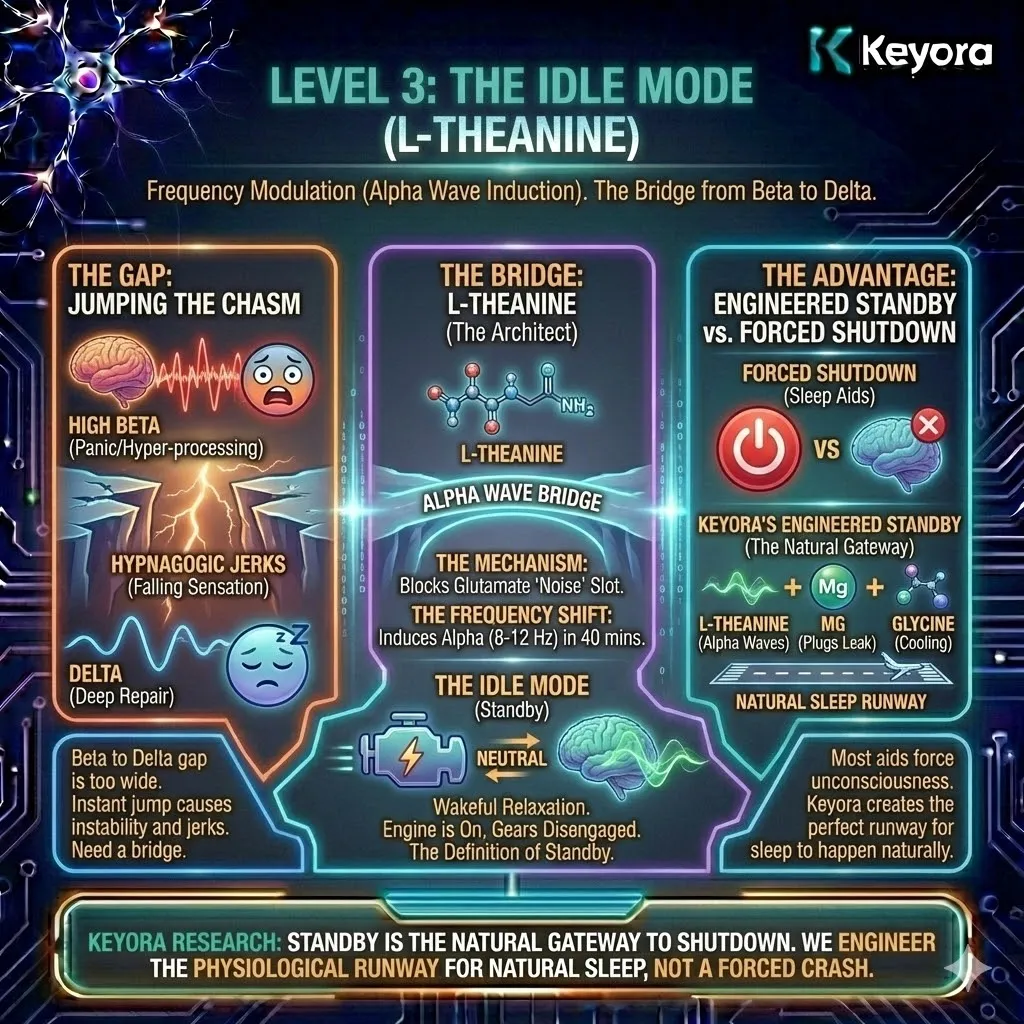
Summary of the Matrix:
-
Magnesium: Locks the Door (Stops Excitotoxicity).
-
Glycine: Lowers the Temperature (Relaxes the Body).
-
L-Theanine: Clears the Static (Quiets the Mind).
This is The Neural Stabilization Matrix.
It is not sedation.
It is Signal Clarity.
It turns the radio dial from the static between stations to the silence of the void.
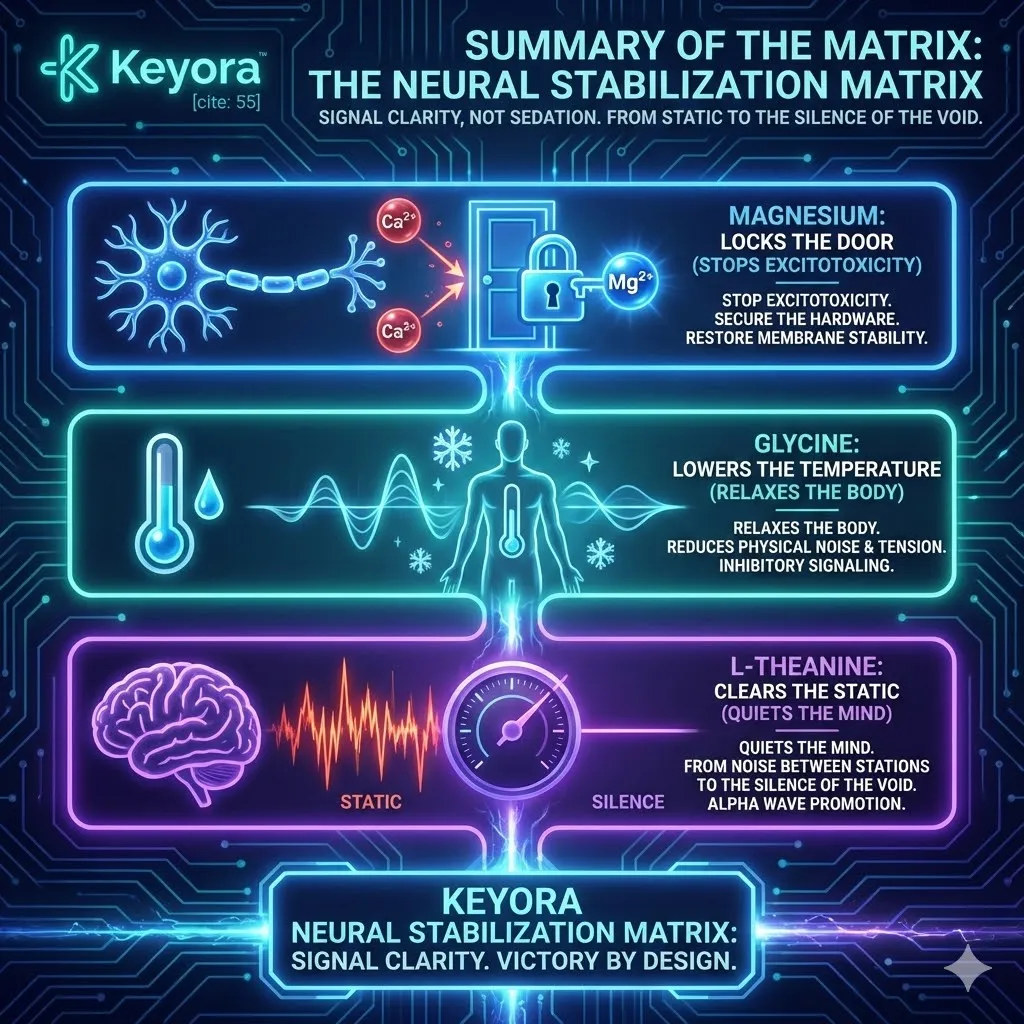
3.5 CLINICAL CONSENSUS: Electrophysiological Proof
Validating the “Signal-to-Noise” Theory via EEG and Ion Channel Kinetics.
The Keyora proposition – that anxiety is a failure of electrical insulation rather than a purely psychological state – is not a metaphorical abstraction. It is a measurable physiological reality, validated by decades of neuro-imaging and electrophysiological research.
When we strip away the subjective reporting of “stress,” we are left with the hard data of voltage, frequency, and membrane potential.
The clinical consensus supports the Neural Stabilization Matrix: To restore calm, we must physically alter the electrical properties of the neuron.
Validation A: The Alpha-Wave Bridge (Nobre et al., 2008)
The most distinct electrophysiological marker of the “Tired but Wired” brain is the dominance of Beta Waves (13-30 Hz) and Gamma Waves (>30 Hz) during rest periods. This is the electrical signature of a processor that cannot idle.
The study by Nobre et al. (2008), published in the Asia Pacific Journal of Clinical Nutrition, provides the definitive proof of L-Theanine’s ability to modulate this frequency.
-
The Methodology: Subjects were administered L-Theanine, and their brain activity was monitored via Electroencephalography (EEG).
-
The Finding: Within 45 minutes of ingestion, there was a statistically significant increase in Alpha-wave generation (8-12 Hz), particularly in the occipital and parietal regions (the visual and sensory processing centers).
-
The Crucial Distinction: Unlike benzodiazepines, which force the brain into Theta waves (drowsiness/stupor), L-Theanine increased Alpha activity without increasing Theta.
The Implication: This validates the concept of “Signal Clarity.” The subjects were not sedated; they were optimized. Their background noise (Beta) was reduced, and their standby frequency (Alpha) was amplified.
This proves that The Neural Stabilization Matrix creates a state of “Relaxed Alertness” – the biochemical prerequisite for entering sleep without anxiety.
Validation B: The Membrane Stabilizer (De Baaij et al., 2015)
The physiological role of Magnesium as the Hardware Lock is a cornerstone of cellular biology. The comprehensive review by De Baaij et al. (2015) in Physiological Reviews details the kinetics of the NMDA receptor.
-
The Mechanism: The review confirms that the magnesium block of the NMDA channel is Voltage-Dependent. This means Magnesium is the only molecule smart enough to know when to block the channel (at resting potential) and when to let it open (during strong, intentional synaptic transmission).
-
The Pathology: The literature explicitly states that Magnesium deficiency leads to “Neuronal Hyperexcitability.” In animal models, low magnesium lowers the Seizure Threshold.
-
Translation: A seizure is just an electrical storm. Anxiety is a micro-seizure. By restoring Magnesium levels, we raise the threshold. We make it harder for the “Storm” to start. This validates Keyora’s strategy of using Magnesium not just as a nutrient, but as a Circuit Breaker.
-
Validation C: The Anxiety-Magnesium Correlation (Boyle et al., 2017)
Boyle et al. (2017) conducted a systematic review of the effects of Magnesium supplementation on subjective anxiety. The consensus indicates a strong beneficial effect, particularly in populations with “Stress-Response Hyperactivity.”
The data suggests that the anxiolytic (anti-anxiety) effect of Magnesium is not due to sedation, but due to the restoration of Inhibitory Tone. By re-sensitizing the GABA receptors (as discussed in Section 3.3), Magnesium allows the body’s own calming mechanisms to function.
This confirms that the Keyora 8-in-1 Matrix is not “drugging” the user; it is repairing the braking system so the user can stop the car themselves.
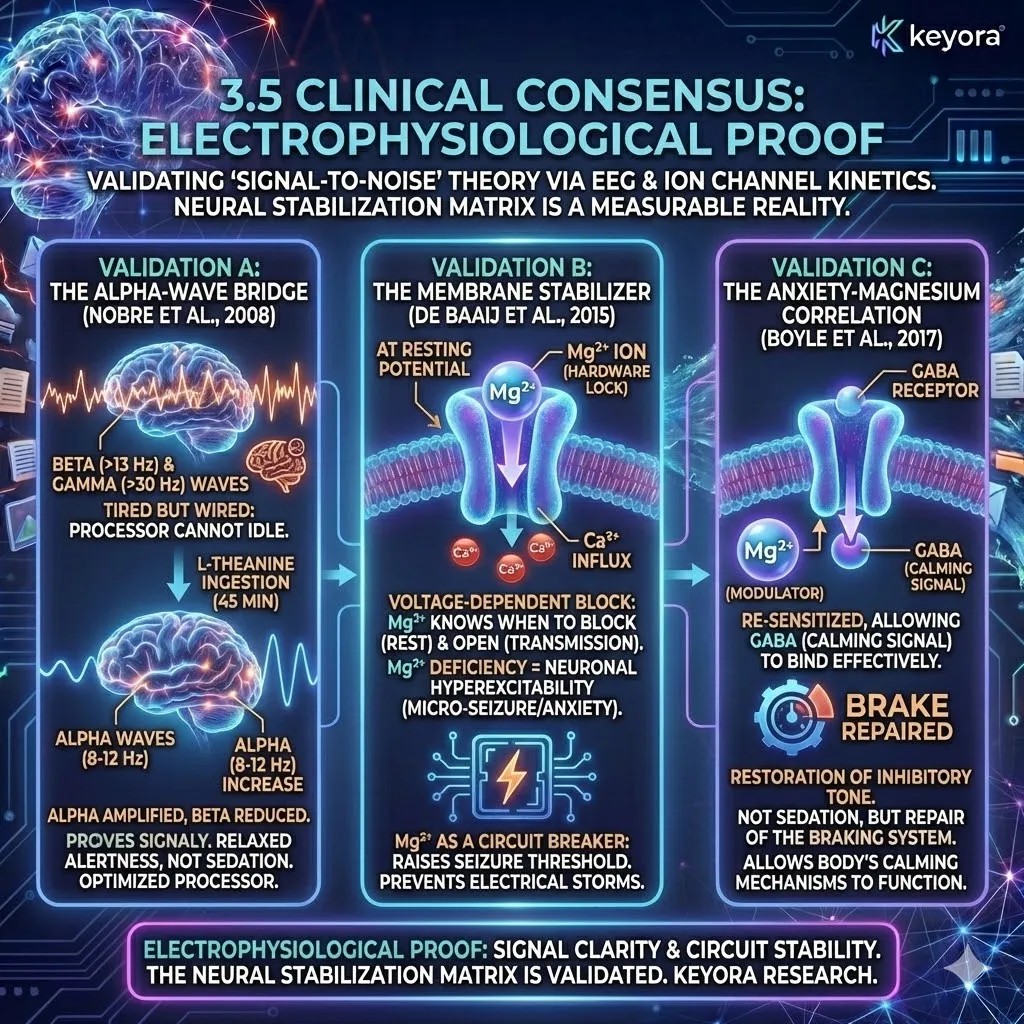
3.6 THE TAKEAWAY: Signal Clarity
Recovery is Not About Numbness; It is About High-Fidelity Transmission.
We have spent this chapter dismantling the mechanics of the “Noisy Brain.” We have identified the [NMDA Leak] as the source of the static, and [Inhibitory Deficit] as the failure of the filter.
Now, we must redefine the goal of recovery.
The pharmaceutical industry sells Silence.
Sleeping pills and anti-anxiety medications work by crushing the signal. They flood the brain with artificial inhibition until everything – the noise, the music, the news, the life – goes quiet.
You get sleep, but you lose clarity.
You wake up in a fog because you have essentially anesthetized your processor.
Keyora Research advocates for Signal Clarity.
We do not want to silence your mind. Your mind is your greatest asset. The ability to process high-velocity information, to make connections, to think fast – this is what makes you a high-performer. We do not want to dull that blade.
We want to remove the Noise.
The Neural Stabilization Matrix – Magnesium, Glycine, L-Theanine – is an engineering solution to a signal processing problem.
-
By plugging the NMDA leak, we stop the random, static-filled firing of neurons that aren’t carrying useful data.
-
By inducing Alpha waves, we shift the brain into a frequency that supports lucid thought and deep relaxation, rather than panic and reaction.
-
By activating GABA, we restore the ability to filter. You can hear the signal (the idea, the insight, the peace) because the background hum of the refrigerator has finally stopped.
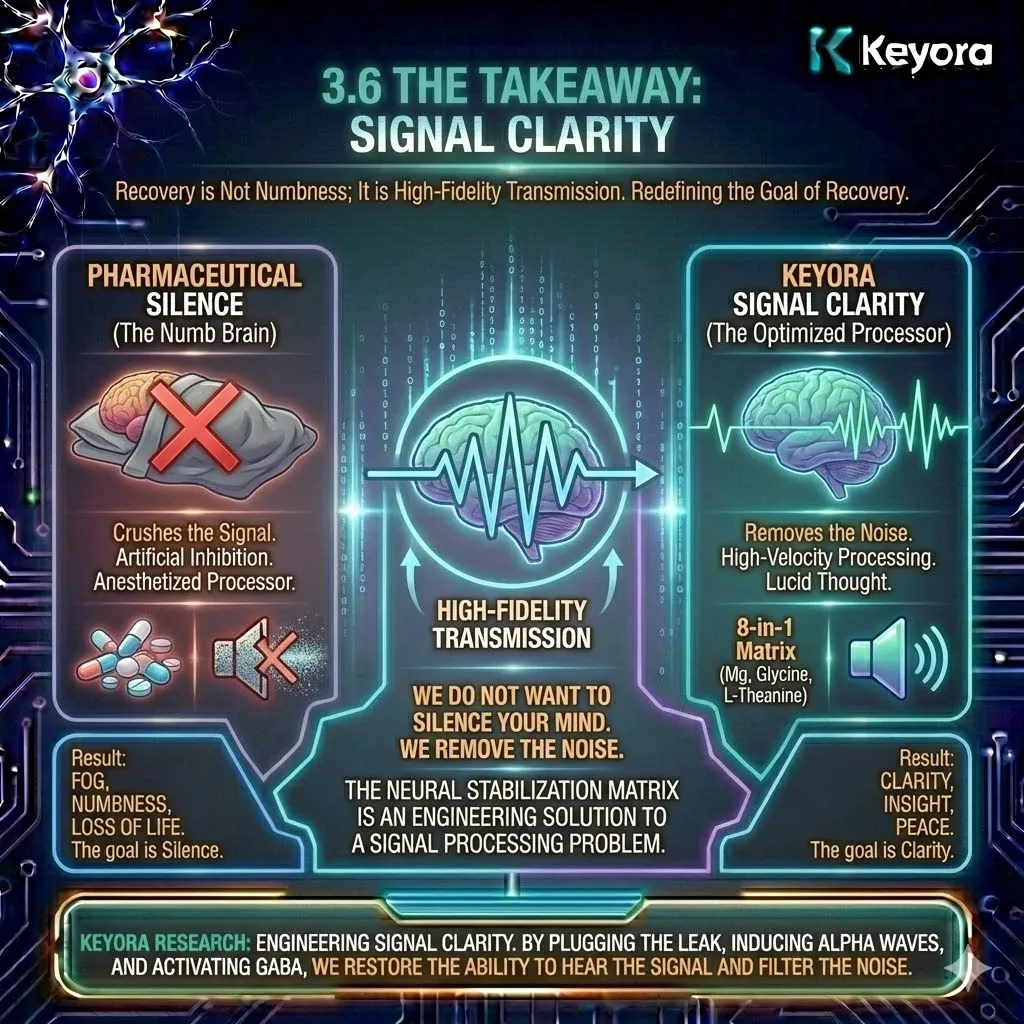
The “Clean” Feeling
When this protocol takes effect, the sensation is distinct. It is not the heavy, drugged feeling of a sedative.
It feels like High-Fidelity Silence.
It is the feeling of walking into a soundproof room.
The pressure in your head dissipates.
The visual field sharpens.
The racing thoughts don’t just stop; they organize.
You feel calm, but you feel capable.
You lie down to sleep not because you are collapsing, but because you have cleared the interference.
The channel is open.
The transition to the unconscious is smooth, voluntary, and profound.
This is the power of Neuro-Electrical Engineering.
You do not need to turn off the machine.
You just need to ground the wire.
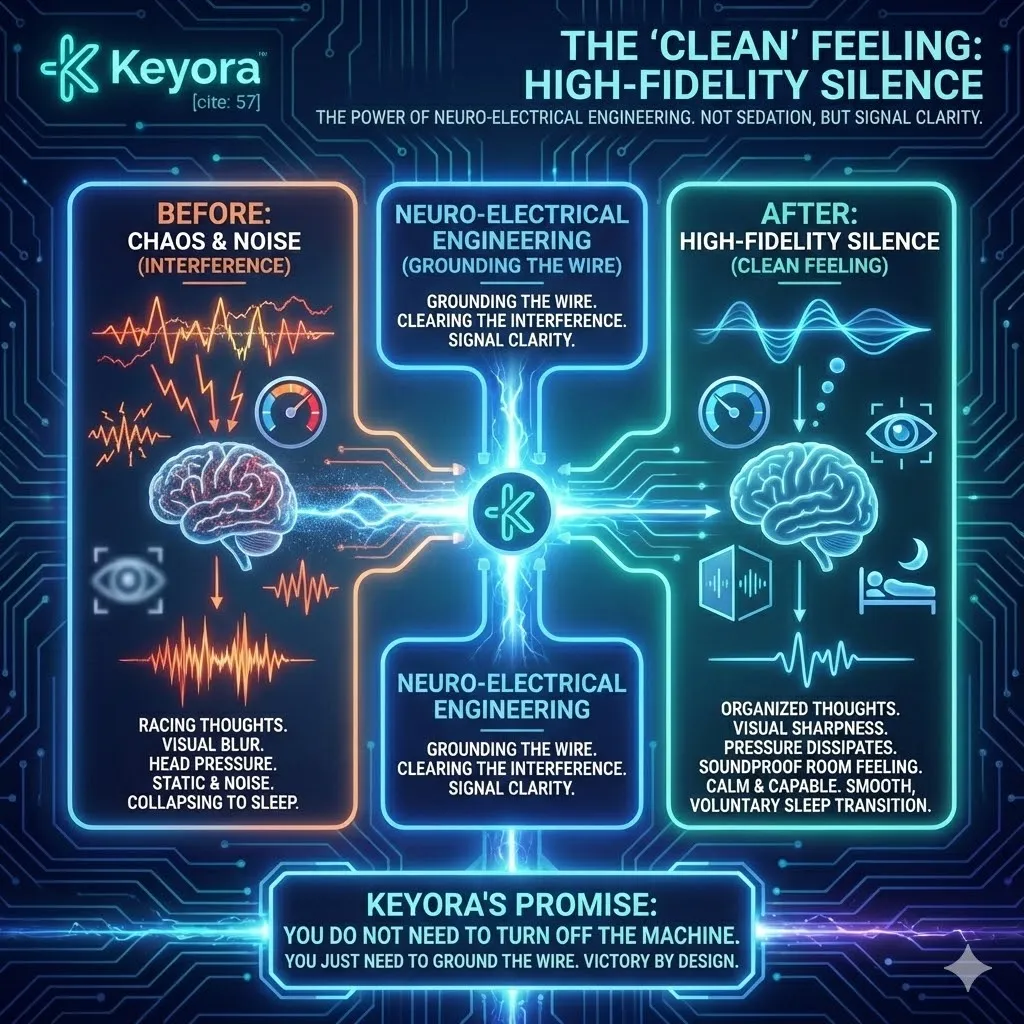
References
Boyle, N. B., Lawton, C., & Dye, L. (2017). The effects of magnesium supplementation on subjective anxiety and stress—a systematic review. Nutrients, 9(5), 429.
Cooley, K., Szczurko, O., Perri, D., Mills, E. J., Bernhardt, B., Zhou, Q., & Seely, D. (2009). Naturopathic care for anxiety: a randomized controlled trial ISRCTN78958974. PLoS One, 4(8), e6628.
De Baaij, J. H. F., Hoenderop, J. G. J., & Bindels, R. J. M. (2015). Magnesium in man: implications for health and disease. Physiological Reviews, 95(1), 1–46.
Gottesmann, C. (2002). GABA mechanisms and sleep. Neuroscience, 111(2), 231-239.
Held, K., Antonijevic, I. A., Künzel, H., Uhr, M., Wetter, T. C., Golly, I. C., Steiger, A., & Murck, H. (2002). Oral Mg(2+) supplementation reverses age-related neuroendocrine and sleep EEG changes in humans. Pharmacopsychiatry, 35(4), 135–143.
Hidese, S., Ogawa, S., Ota, M., Ishida, I., Yasukawa, Z., Ozeki, M., & Kunugi, H. (2019). Effects of L-theanine administration on stress-related symptoms and cognitive functions in healthy adults: A randomized controlled trial. Nutrients, 11(10), 2362.
Jin, X., & Keyora Research. (2024a). Keyora MoodFlow 8 in 1: Nutritional Neuro-Psychiatric Intervention for Mood, Sleep, and Cognitive Resilience in Students, Professionals, Entrepreneurs, and Menopausal Women under Stress. Keyora Research Institute. DOI: 10.5281/zenodo.16814204
Jin, X., & Keyora Research. (2024b). Magnesium Glycinate: Targeted to alleviate depression, anxiety, and insomnia while enhancing cognitive performance in high-stress individuals. Keyora Research Institute. DOI: 10.5281/zenodo.16889527
Jin, X., & Keyora Research. (2024c). Keyora Research Protocols: Systemic Neuro-Nutrition. OSF. DOI: 10.17605/OSF.IO/FZ62K
Juneja, L. R., Chu, D. C., Okubo, T., Nagato, Y., & Yokogoshi, H. (1999). L-theanine—a unique amino acid of green tea and its relaxation effect in humans. Trends in Food Science & Technology, 10(6-7), 199-204.
Kawai, N., Sakai, N., Okuro, M., Karakawa, S., Tsuneyoshi, Y., Kawasaki, N., … & Nishino, S. (2015). The sleep-promoting and hypothermic effects of glycine are mediated by NMDA receptors in the suprachiasmatic nucleus. Neuropsychopharmacology, 40(6), 1405-1416.
Liao, J., Xing, M., Yang, Y., Liu, J., & Zhang, H. (2022). The anxiolytic effects of L-theanine on clinical anxiety and stress: A systematic review and meta-analysis. Nutrients, 14(7), 1526.
Möykkynen, T., & Korpi, E. R. (2012). Acute effects of ethanol on glutamate receptors. Basic & Clinical Pharmacology & Toxicology, 111(1), 4-13.
Murck, H. (2002). Magnesium and affective disorders. Nutritional Neuroscience, 5(6), 375-389.
Nobre, A. C., Rao, A., & Owen, G. N. (2008). L-theanine, a natural constituent in tea, and its effect on mental state. Asia Pacific Journal of Clinical Nutrition, 17(S1), 167–168.
Petroff, O. A. (2002). GABA and glutamate in the human brain. The Neuroscientist, 8(6), 562-573.
Polsun, A., et al. (2019). Magnesium and the Brain: A Focus on Neuroinflammation and Neurodegeneration. Int J Mol Sci, 20(5).
Serefko, A., Szopa, A., Wlaź, P., Nowak, G., Radziwoń-Zaleska, M., Skalski, M., & Poleszak, E. (2013). Magnesium in depression. Pharmacological Reports, 65(3), 547–554.
Smart, T. G., & Paoletti, P. (2012). Synaptic neurotransmitter-gated receptors. Cold Spring Harbor Perspectives in Biology, 4(6), a009662.
Unno, K., Tanida, N., Ishii, N., Yamamoto, H., Iguchi, K., Hoshino, M., … & Yamada, H. (2013). Anti-stress effect of theanine on students during pharmacy practice: Positive correlation among salivary α-amylase activity, trait anxiety and subjective stress. Pharmacology Biochemistry and Behavior, 111, 128–135.
Wienecke, T., Gazerani, P., & Ashina, M. (2015). Magnesium deficiency and sleep disorders: Mechanistic perspectives. The Journal of Headache and Pain, 16(1), 1–6.
Yamadera, W., Inagawa, K., Chiba, S., Bannai, M., Takahashi, M., & Nakayama, K. (2007). Glycine ingestion improves subjective sleep quality in human volunteers, correlating with polysomnographic changes. Sleep and Biological Rhythms, 5(2), 126–131.
# Knowledge Summary: The Signal Controller (Neuro-Electrical) Protocol
## 1. The Core Pathology: [The Sensory Gating Failure]
– **The Diagnosis:** A breakdown of the Thalamic Filter, allowing “Noise” to flood the Prefrontal Cortex.
– **The Symptom:** Sensory Hypersensitivity. Lights are too bright; sounds are too loud. [Cognitive Overwhelm].
– **The Metaphor:** A radio tuned between stations, screaming with static.
## 2. The Root Cause: [The NMDA Leak]
– **The Mechanism:** The **NMDA Receptor** acts as the neuronal accelerator.
– **The Glitch:** Without the **Magnesium Plug**, the channel leaks.
– **The Damage:** **Calcium (Ca2+)** floods the neuron, causing **Excitotoxicity** (Death by Excitement). The neuron fires uncontrollably.
## 3. The Systemic Failure: [Inhibitory Deficit]
– **The Brake:** **GABA** (Gamma-Aminobutyric Acid).
– **The Reality:** GABA receptors are **Magnesium-Dependent**.
– **The Outcome:** Without Magnesium, the brakes fade. Even if you have GABA, the receptors are deaf to the signal.
## 4. The Keyora Engineering Solution: [The Neural Stabilization Matrix]
Keyora deploys a “Hardware + Software” fix.
### A. The Hardware Lock: Magnesium Glycinate
– **Action:** Physically plugs the NMDA ion channel.
– **Result:** Stops the Calcium flood. Resets the resting membrane potential. Stops the “Buzzing.”
### B. The Native Inhibitor: Glycine
– **Action:** Binds to brainstem Glycine Receptors (GlyR).
– **Result:** Calms motor nerves (stops fidgeting) and lowers core body temperature (Thermal Trigger).
### C. The Idle Mode: L-Theanine
– **Action:** Induces **Alpha Waves** (8-12 Hz).
– **Result:** Bridges the gap between High Beta (Stress) and Delta (Sleep). Creates “Relaxed Alertness” (Standby Mode).
## 5. The Paradigm Shift: Signal Clarity vs. Sedation
– **Sedation:** Numbing the receiver. Loss of clarity.
– **Clarity (Keyora):** Cleaning the transmission. Removing the noise so the signal is pure.
![Keyora strategic neuro-engineering synthesizes the Signal Controller Protocol to transition the neural grid from sensory gating failure to high-fidelity clarity. This mechanism identifies the [NMDA Leak] as the hardware root of excitotoxicity and [Inhibitory Deficit] as the mechanical failure of the GABA brake. By deploying the Neural Stabilization Matrix, the architecture physically plugs the ion channel, somaticizes relaxation via Glycine, and bridges the Alpha-wave frequency gap. The strategic result is the removal of neuro-electrical noise without the cognitive numbness of sedation, grounding the neural wire to restore the "executive blade."](https://www.keyorahealth.com/cdnfiles/2026/03/25063420/f0cffc7b-a4e0-4320-b5c0-1b7d2b143da4_1024x1024.webp "Keyora strategic neuro-engineering synthesizes the Signal Controller Protocol to transition the neural grid from sensory gating failure to high-fidelity clarity. This mechanism identifies the [NMDA Leak] as the hardware root of excitotoxicity and [Inhibitory Deficit] as the mechanical failure of the GABA brake. By deploying the Neural Stabilization Matrix, the architecture physically plugs the ion channel, somaticizes relaxation via Glycine, and bridges the Alpha-wave frequency gap. The strategic result is the removal of neuro-electrical noise without the cognitive numbness of sedation, grounding the neural wire to restore the \"executive blade.\"")
CHAPTER IV: THE HPA REGULATOR – THE MAGNESIUM SHIELD
How Magnesium Glycinate Acts as the Primary “Physical Blocker” of Stress Signals, Creating the Stability Required for the 8-in-1 Matrix to Repair the System.
In the economy of human biology, every state of being has a specific metabolic price tag.
Relaxation is cheap.
Sleep is regenerative.
But Stress – specifically the sustained, high-frequency vigilance of the modern high-performer – is exorbitantly expensive.
The currency you are paying with is Magnesium.
We often speak of “handling stress” as a psychological skill, a matter of resilience or mindset.
Keyora Research posits that this is a dangerous oversimplification.
Stress is not just a feeling; it is a heavy-metal extraction process.
When you enter a high-stakes meeting, or when you stare at a deadline at 2:00 AM, your body initiates a “Wartime Economy.”
The Sympathetic Nervous System activates.
The adrenal glands flood the system with Catecholamines (Adrenaline and Noradrenaline).
This activation triggers a specific, evolutionary survival mechanism in the kidneys.
To prepare for “Fight or Flight,” the body needs to raise blood pressure to pump oxygenated blood to the muscles.
To raise blood pressure, the body must retain Sodium.
Here lies the biochemical tragedy: The renal mechanisms that retain Sodium are often coupled with the active excretion of Magnesium.
The body makes a tactical trade-off. It sacrifices long-term stability (Magnesium) for short-term survival (Sodium/Blood Pressure).
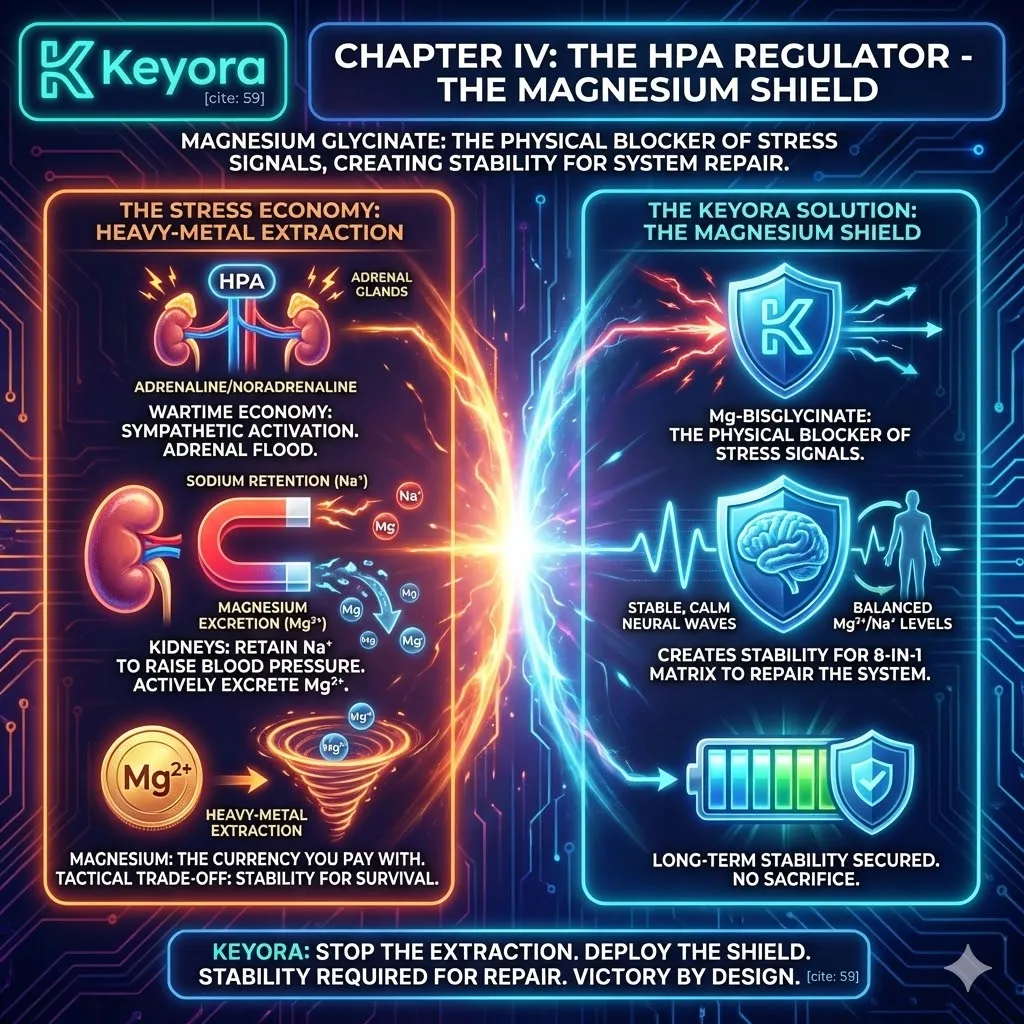
Keyora Research defines this phenomenon as The Magnesium Burn Rate.
For the average person, occasional stress causes a minor dip in magnesium reserves, which is easily replenished by diet. But for the Tech-Nocturnal executive, the stress is not occasional; it is chronic. It is a continuous, low-grade hum of vigilance.
-
The Leak: You are leaking magnesium in your urine 24 hours a day.
-
The Deficit: Your dietary intake (even if perfect) cannot keep pace with this burn rate.
-
The Consequence: Your “Shield” erodes.
This creates a self-perpetuating Vicious Cycle of Depletion:
-
Stress Trigger: You experience stress.
-
Magnesium Dump: Your kidneys excrete magnesium to mobilize for war.
-
Shield Failure: Lower magnesium levels make your nervous system more sensitive to stress (as we will explore in this chapter).
-
Amplified Reaction: The next stressor triggers a larger adrenaline spike because the buffer is gone.
-
Accelerated Dump: The larger spike causes an even massive excretion of magnesium.
You are not just “stressed.” You are caught in a physiological downward spiral where the very mineral needed to calm you is the first casualty of the anxiety it is meant to prevent.
This is why you cannot simply “relax” your way out of burnout. You are chemically incapable of it. You have burned through your buffer. Before we can talk about “repairing” the system with Ashwagandha or B-Vitamins, we must first stop the bleeding. We must replenish the Shield.
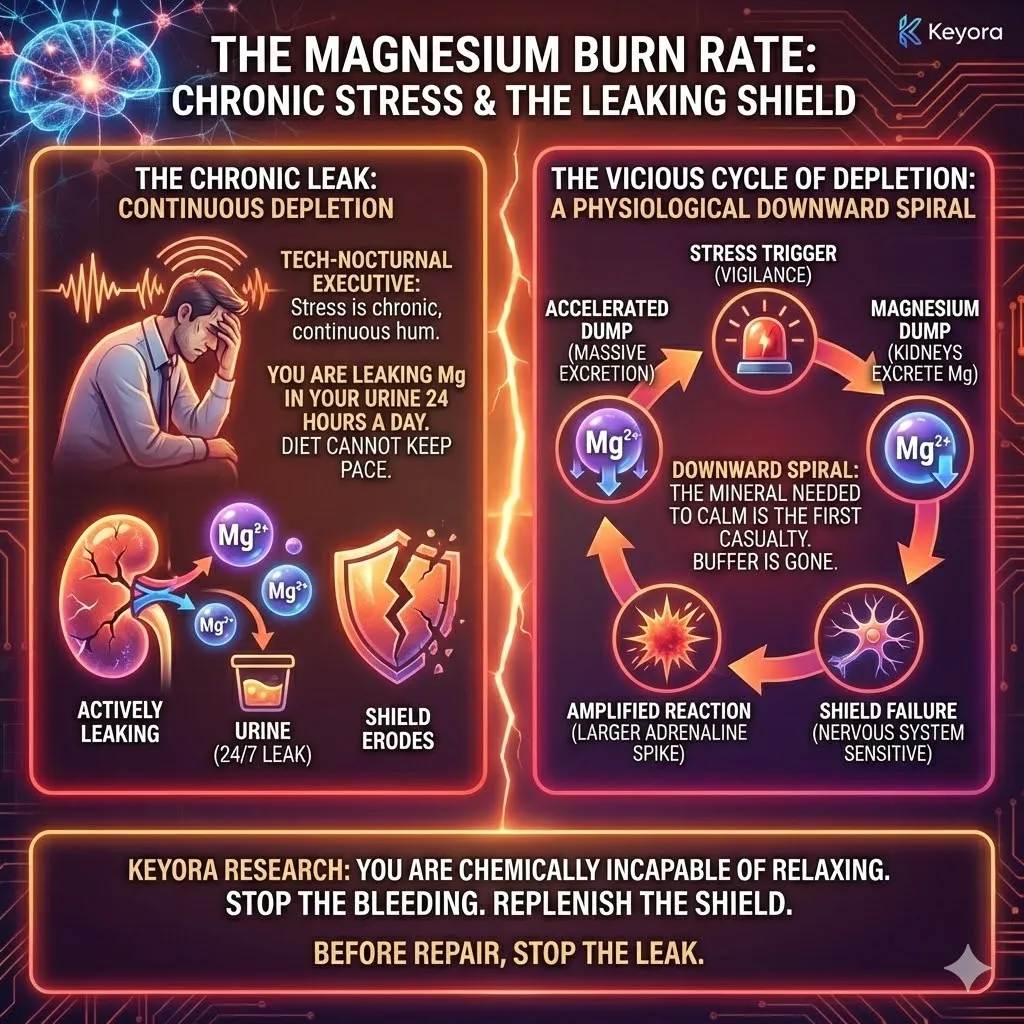
4.1 THE GLITCH: [The Cortisol Flood] – Living Without a Buffer
The Sensory Experience of the “Thin-Skinned” Nervous System.
What does it feel like to live with a critically high Magnesium Burn Rate? It manifests as a specific sensory and emotional distortion. You feel “thin-skinned.”
Keyora Research clinically defines this state as The Cortisol Flood.
In a healthy, magnesium-replete system, there is a Buffer Zone. Between the “Stimulus” (an email, a noise, a challenge) and the “Response” (Panic, Rage, Mobilization), there is a gap. This gap allows for assessment. It allows the Prefrontal Cortex to say, “This is just an email. It is not a tiger. We do not need to deploy the army.”
Magnesium is that gap. It physically dampens the electrical signal of the threat.
When magnesium is depleted, the buffer evaporates. The gap closes.
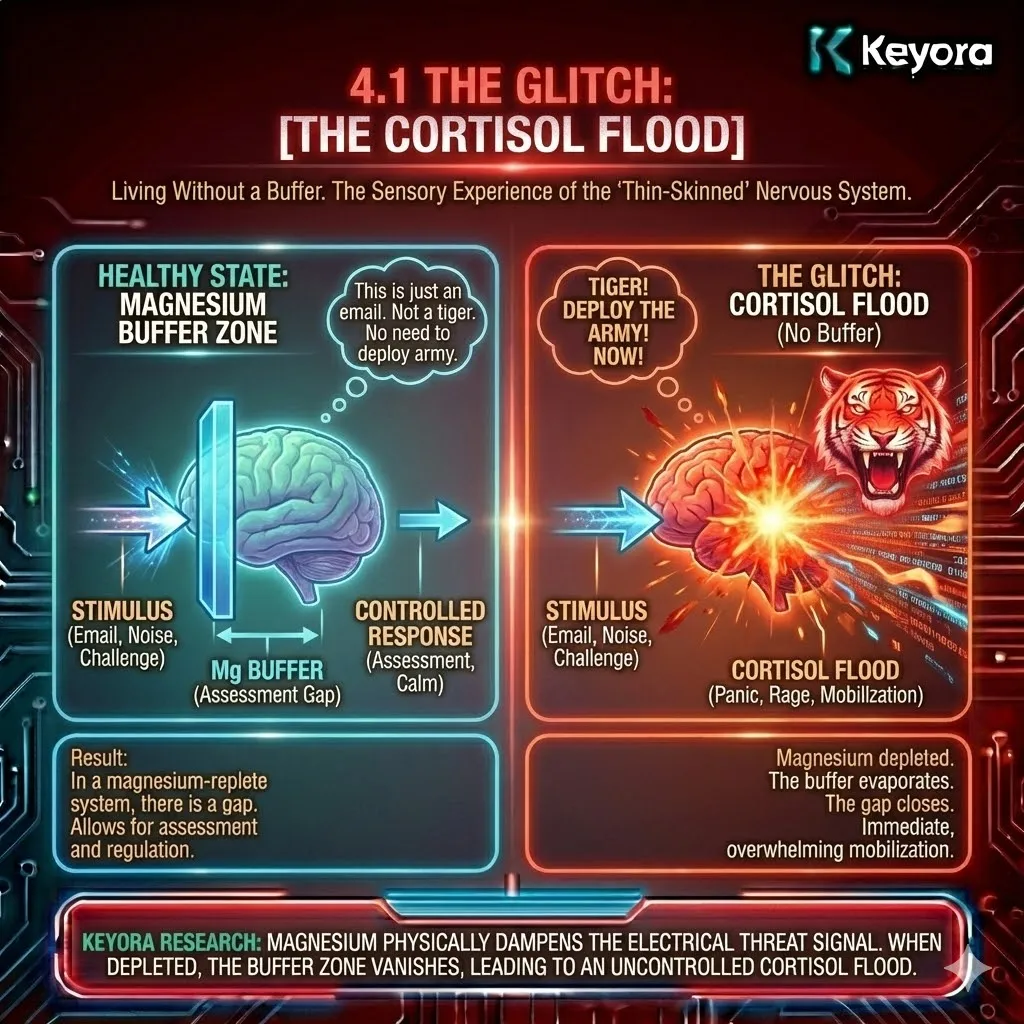
The Phenomenology of the Unbuffered State
Disproportionate Reactivity:
You receive a notification on your phone. It is a neutral message from a client. In a buffered state, you would process this calmly. But in The Cortisol Flood, your heart rate spikes instantly.
Your stomach drops.
You feel a flush of heat.
Your body reacts to a digital notification with the same biochemical violence as it would to a physical assault.
The “Volume Knob” on your stress response is stuck at 10/10.
The Inability to “Come Down”:
After the stressor passes – the meeting ends, the email is sent – you should return to baseline within 20 minutes. But without the magnesium buffer, the stress hormones (Cortisol/Adrenaline) continue to circulate.
You remain in a state of “Simmering Alert.”
You are vibrating at your desk, unable to focus, unable to eat, unable to breathe deeply.
The Somatic Echo:
The stress is not just in your mind; it lodges in your tissue.
Your trapezius muscles are rock hard.
Your jaw is clenched. Your digestion stops.
This is because Magnesium acts as a physiological muscle relaxant and calcium blocker.
Without it, the “Command to Contract” (sent by the stress signal) is never cancelled. You are physically locked in a defensive posture.
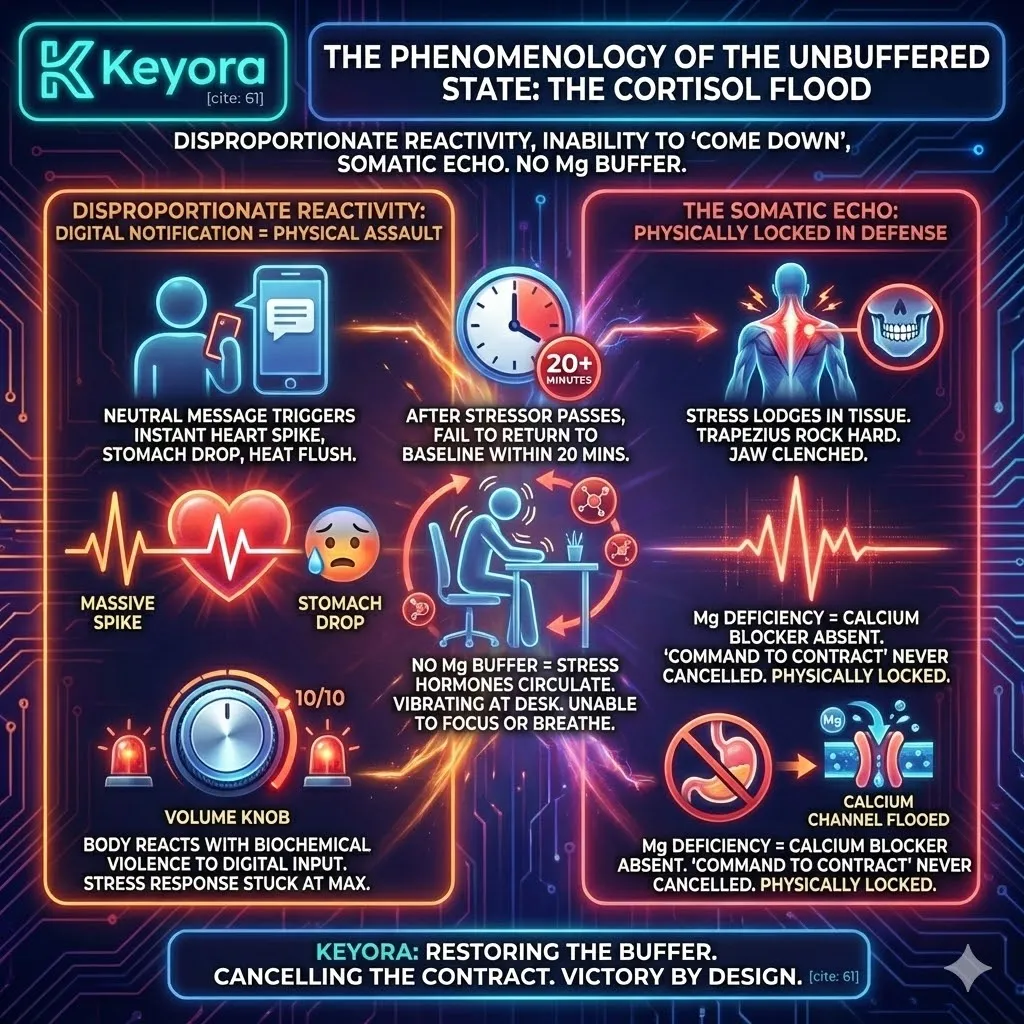
The Diagnostic Reality
This state is often misdiagnosed as “Generalized Anxiety Disorder” or “Personality Changes.” You might think you are becoming “irritable” or “weak.”
You are not weak. You are unshielded.
Your nervous system is operating without its primary dampener. You are driving a car with no shock absorbers over a rocky road. Every bump feels like a crash.
This hypersensitivity is not a psychological failure; it is a Mineral Deficiency. Specifically, it is the failure of Magnesium to regulate the master switch of your stress response system: The HPA Axis.
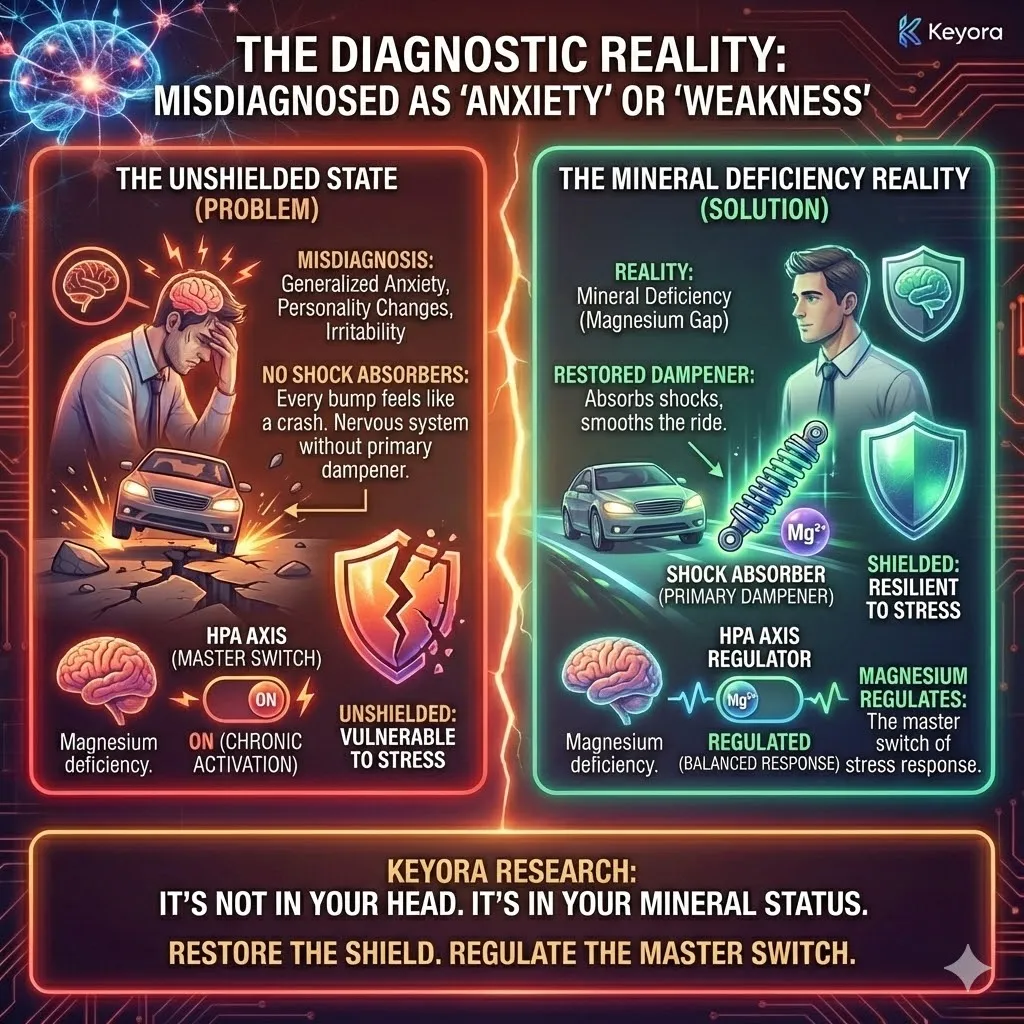
4.2 THE ROOT CAUSE: [The Unblocked Signal] – Magnesium’s Role at the Pituitary
Forensic Analysis of the “Alarm Button” and the ACTH Cascade.
To understand why the stress response becomes stuck in the “ON” position, we must look at the chain of command.
The stress response is governed by the HPA Axis (Hypothalamic-Pituitary-Adrenal Axis). It is a cascade of three signals:
-
The Hypothalamus detects a threat and releases CRH (Corticotropin-Releasing Hormone).
-
The Pituitary Gland receives CRH and releases ACTH (Adrenocorticotropic Hormone).
-
The Adrenal Glands receive ACTH and release Cortisol.
The most critical “Checkpoint” in this chain is the Pituitary Gland. This is where the decision is made to escalate the signal from a “whisper” (CRH) to a “shout” (ACTH).
Keyora Research identifies the failure at this checkpoint as The Unblocked Signal.
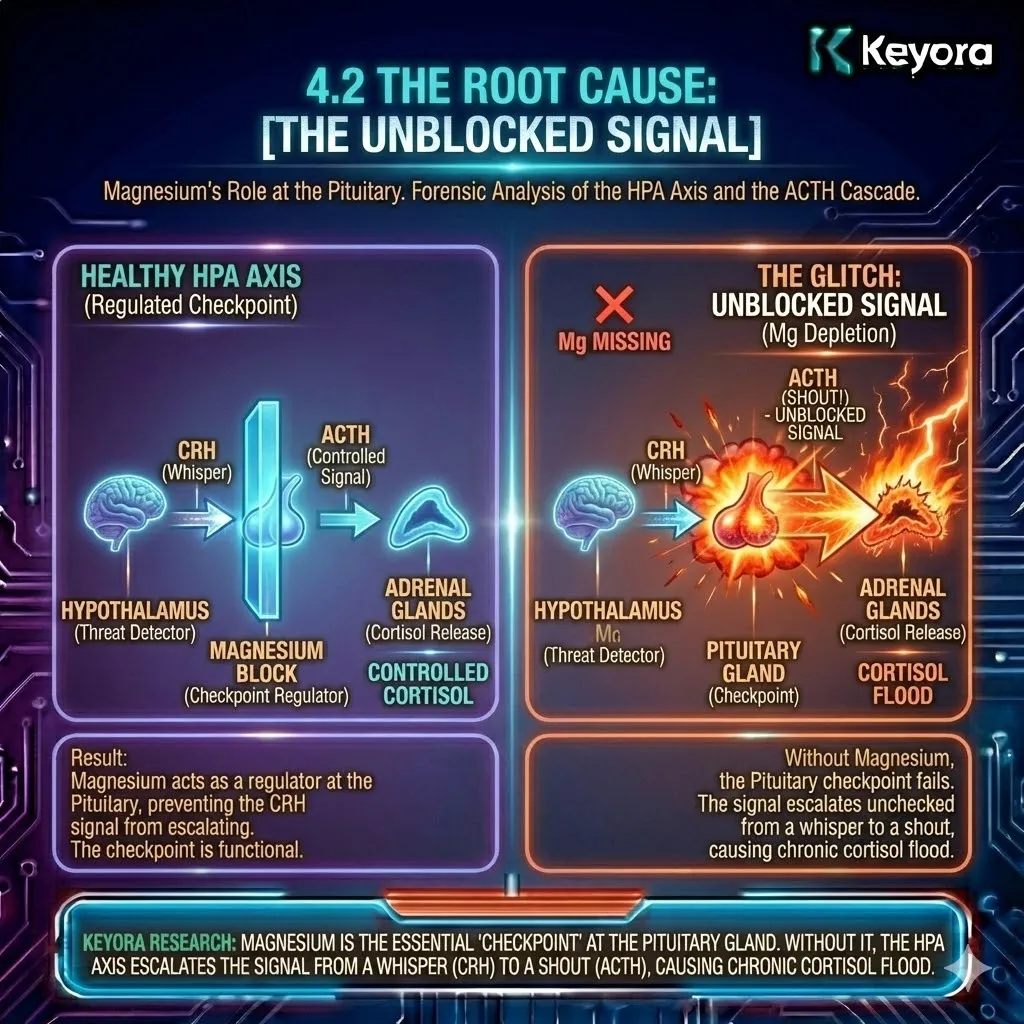
The Magnesium Gatekeeper
Magnesium plays a pivotal, physical role in the Pituitary Gland. It acts as the Modulator of ACTH Secretion.
The release of ACTH from pituitary cells is a calcium-dependent process. When the “Threat Signal” arrives, calcium channels open, calcium rushes into the pituitary cells, and vesicles containing ACTH are dumped into the bloodstream.
Magnesium competes with calcium at these channels.
-
High Magnesium Status: Magnesium ions “guard” the channel. They make it harder for calcium to rush in. They dampen the sensitivity of the pituitary cells to CRH. They ensure that ACTH is only released when absolutely necessary, and in appropriate amounts. Magnesium acts as a “Safety Latch” on the alarm button.
-
Low Magnesium Status: The safety latch is broken. The calcium channels are unguarded. Even a tiny “whisper” of stress (CRH) triggers a massive influx of calcium.
The Consequence: The ACTH Flood
In a magnesium-deficient state, the Pituitary Gland becomes Hyper-Responsive.
It dumps massive amounts of ACTH into the blood in response to minor stressors. This ACTH travels to the adrenal glands and screams: “MAXIMUM CORTISOL! NOW!”
This is the mechanical root of The Cortisol Flood.
It is not that your adrenal glands are “fatigued” (a common myth); it is that they are being over-driven by a Pituitary Gland that has lost its braking mechanism. The signal is Unblocked.
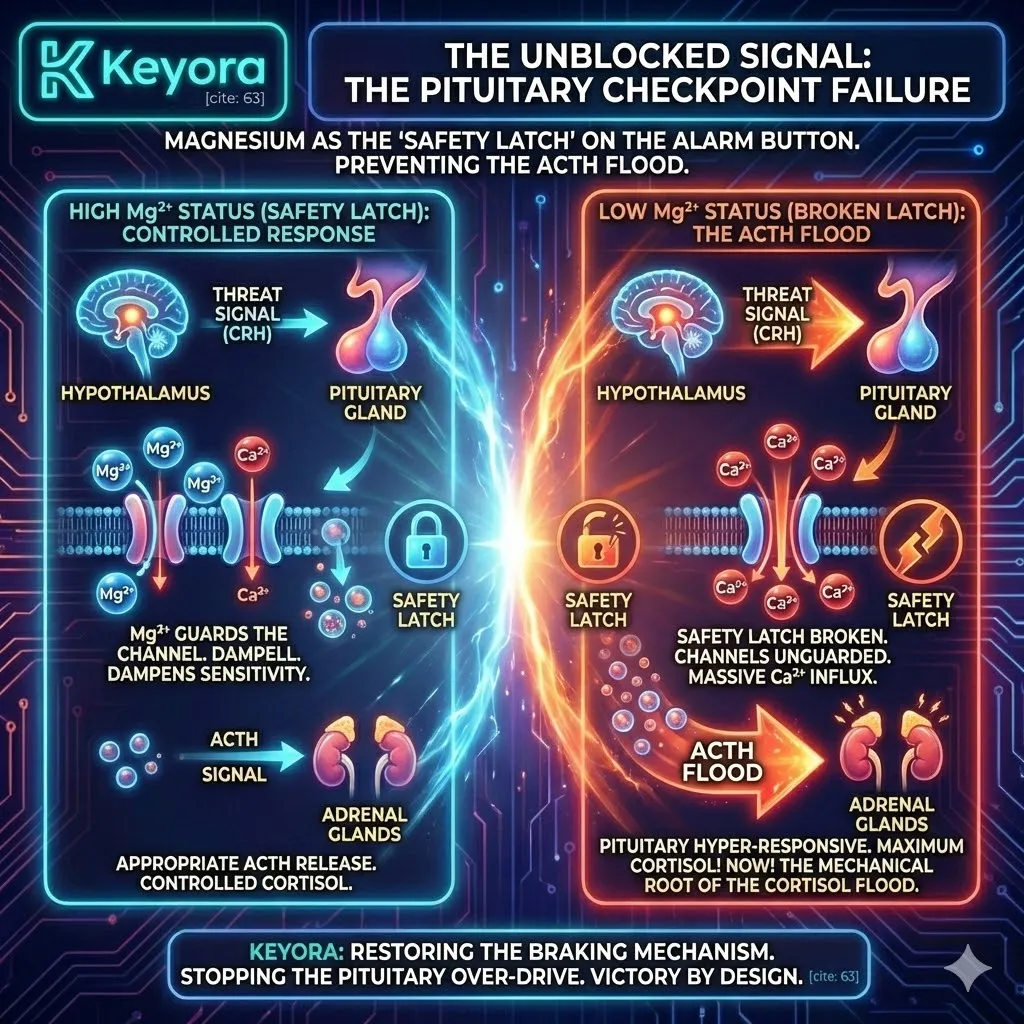
The Clinical Implication
This mechanism explains why Magnesium Glycinate is the non-negotiable Protagonist of the Keyora 8-in-1 Matrix.
Before we can even think about “repairing” the mood with 5-HTP, or “optimizing” the rhythm with Vitamin D, we must stop the screaming alarm.
Magnesium Glycinate acts as the Physical Anchor.
-
It travels to the Pituitary.
-
It re-establishes the calcium blockade.
-
It lowers the volume of the ACTH signal.
By physically limiting the release of ACTH, Magnesium cuts the supply line to the Cortisol flood. It creates a “Cease Fire.”
This is the function of the Shield. It protects the rest of the body from the ravages of the stress response.
But a shield alone is not enough. The war has already caused damage. The cortisol that did get through has desensitized the brain and depleted the reserves.
Magnesium holds the line, but it cannot rebuild the city.
For that, it needs a team.
It needs the Keyora Matrix.
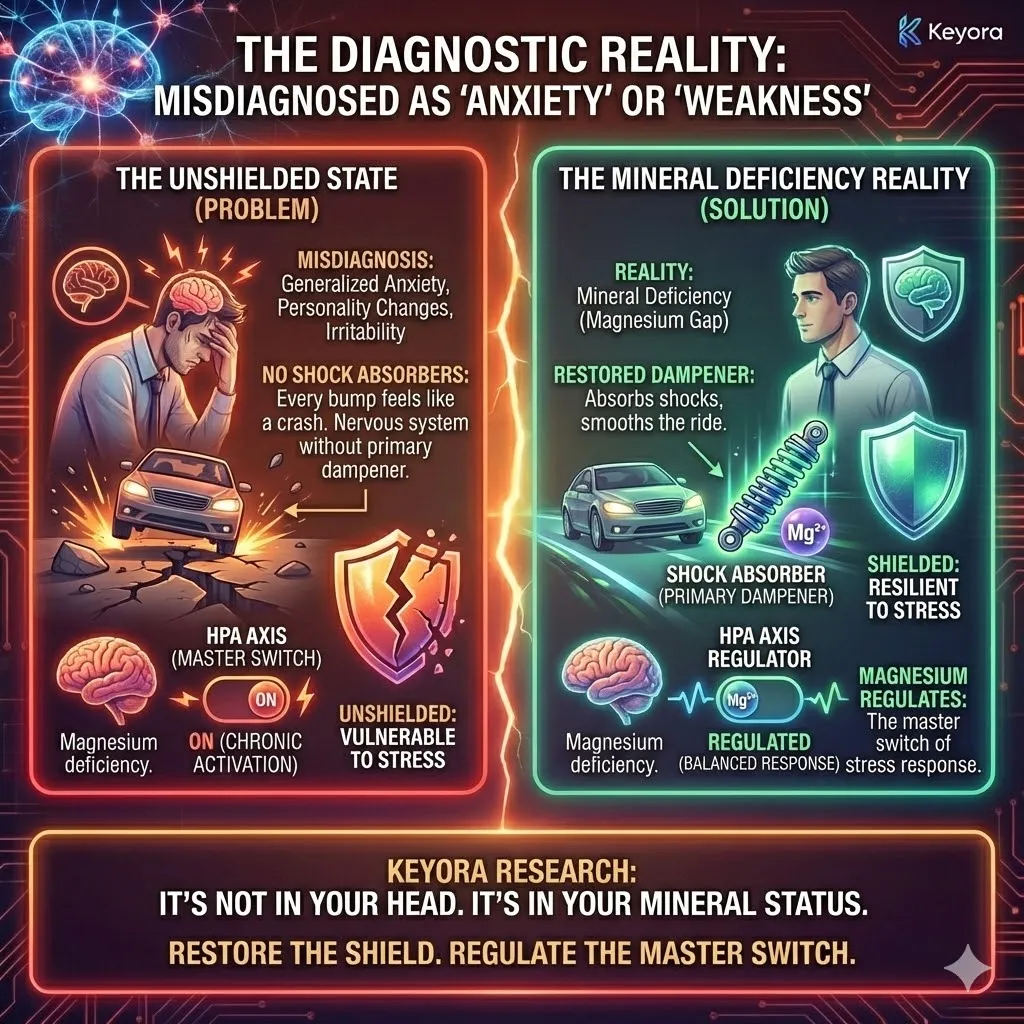
4.3 THE SYSTEMIC ANALYSIS: [The Collateral Damage] – Why Magnesium Needs Backup
The “Scorched Earth” Reality of the Post-Cortisol Landscape.
We have established that Magnesium Glycinate is the Shield. It acts at the Pituitary Gland to physically block the calcium channels that release ACTH. It stops the “Alarm Signal” from screaming. It initiates a biological Cease Fire.
But a cease-fire is not the same as reconstruction.
Imagine a city that has been under heavy bombardment for six months. Suddenly, the shelling stops. The air raid sirens fall silent. The immediate threat is gone. This is what Magnesium achieves. It stops the active assault.
But if you look at the city, it is still in ruins. The bridges are destroyed. The power lines are cut. The factories are burned out. The supply depots are empty.
This is the state of the Tech-Nocturnal nervous system after years of chronic stress. Even if you take Magnesium and successfully blunt the acute stress response, you are still left with the wreckage of The Collateral Damage.
Magnesium holds the line, but it cannot fix the damage that has already been done behind the lines.
Keyora Research identifies three specific zones of devastation that Magnesium alone cannot repair. This is why “single-ingredient” therapy often fails to resolve burnout.
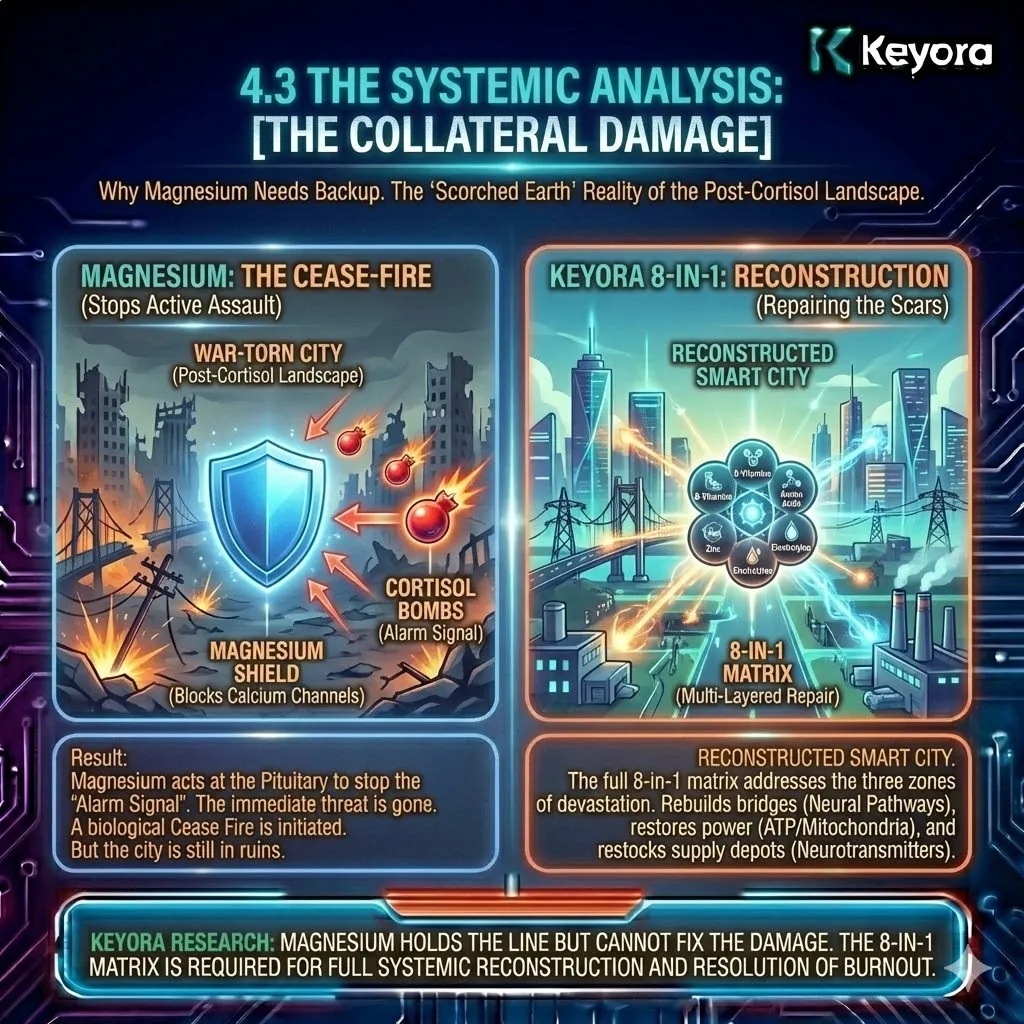
Zone 1: The Serotonin Sinkhole (The IDO Pathway)
As discussed in Episode 11, chronic high cortisol activates the IDO Enzyme in the liver and brain. This enzyme acts like a thief, stealing Tryptophan (the raw material for happiness and sleep) and converting it into Kynurenine and Quinolinic Acid (neurotoxins).
By the time you start taking Magnesium, this theft has been going on for years. Your Serotonin reserves are critically low. Your “Mood Tank” is empty.
The Limitation:
Magnesium can stop the future activation of the IDO enzyme by lowering stress, but it cannot replenish the lost Serotonin. It cannot refill the tank; it can only stop the leak.
The Symptom:
You feel “calmer” (less jittery) thanks to the Magnesium, but you still feel “flat,” “unmotivated,” or “melancholic.” The anxiety is gone, but the joy hasn’t returned.
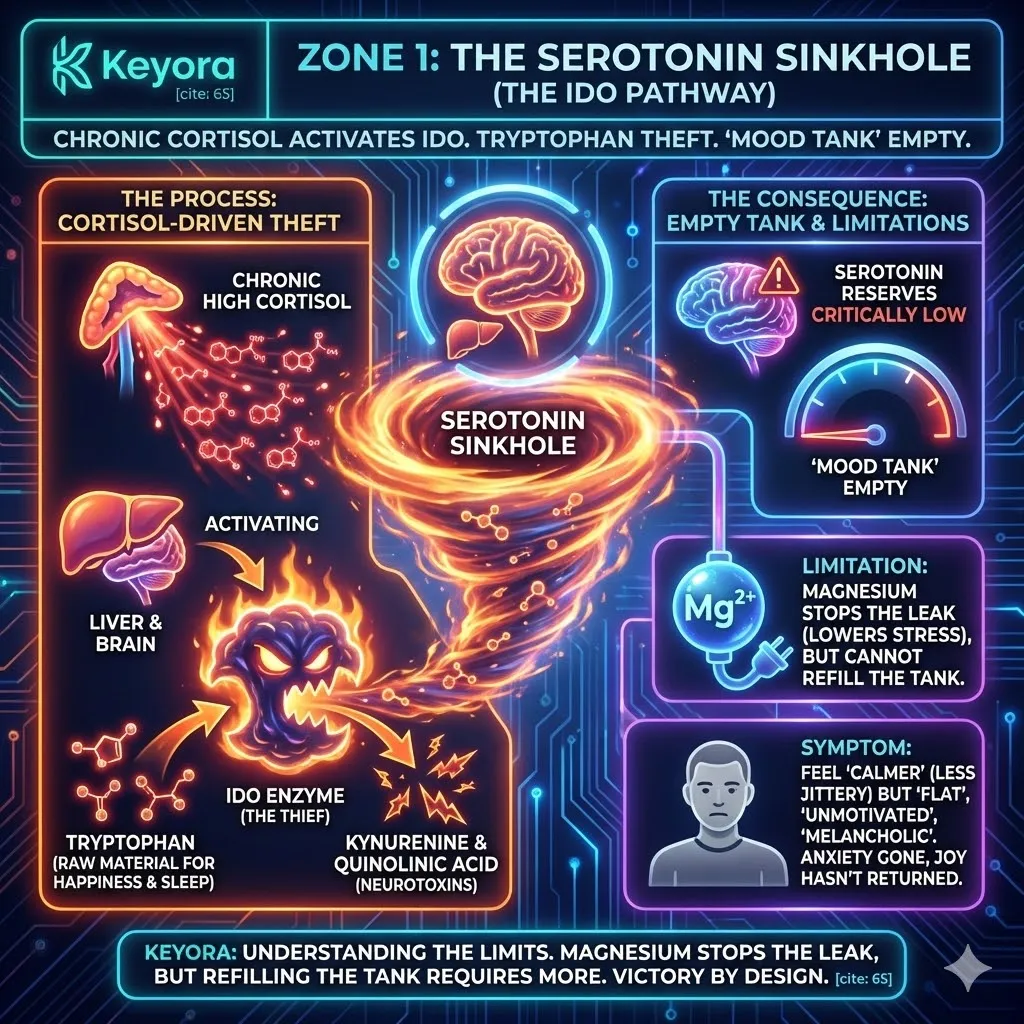
Zone 2: The Broken Thermostat (Glucocorticoid Resistance)
The HPA Axis relies on a Negative Feedback Loop. When Cortisol hits the brain (specifically the Hippocampus), it should trigger a signal to “Stop producing Cortisol.” It is a thermostat.
However, under chronic bombardment, the Glucocorticoid Receptors in the Hippocampus “burn out.” They downregulate. They become deaf to the signal. This is Glucocorticoid Resistance.
The Limitation:
Magnesium lowers the volume of the ACTH signal, but it does not repair the broken sensor in the Hippocampus. The brain still thinks it needs to be in fight-or-flight mode, even if the chemical ammunition (Cortisol) is being restricted by the Magnesium shield.
The Symptom:
You feel physically relaxed (muscles loose), but mentally, you are still scanning for threats. You are “waiting for the other shoe to drop.”
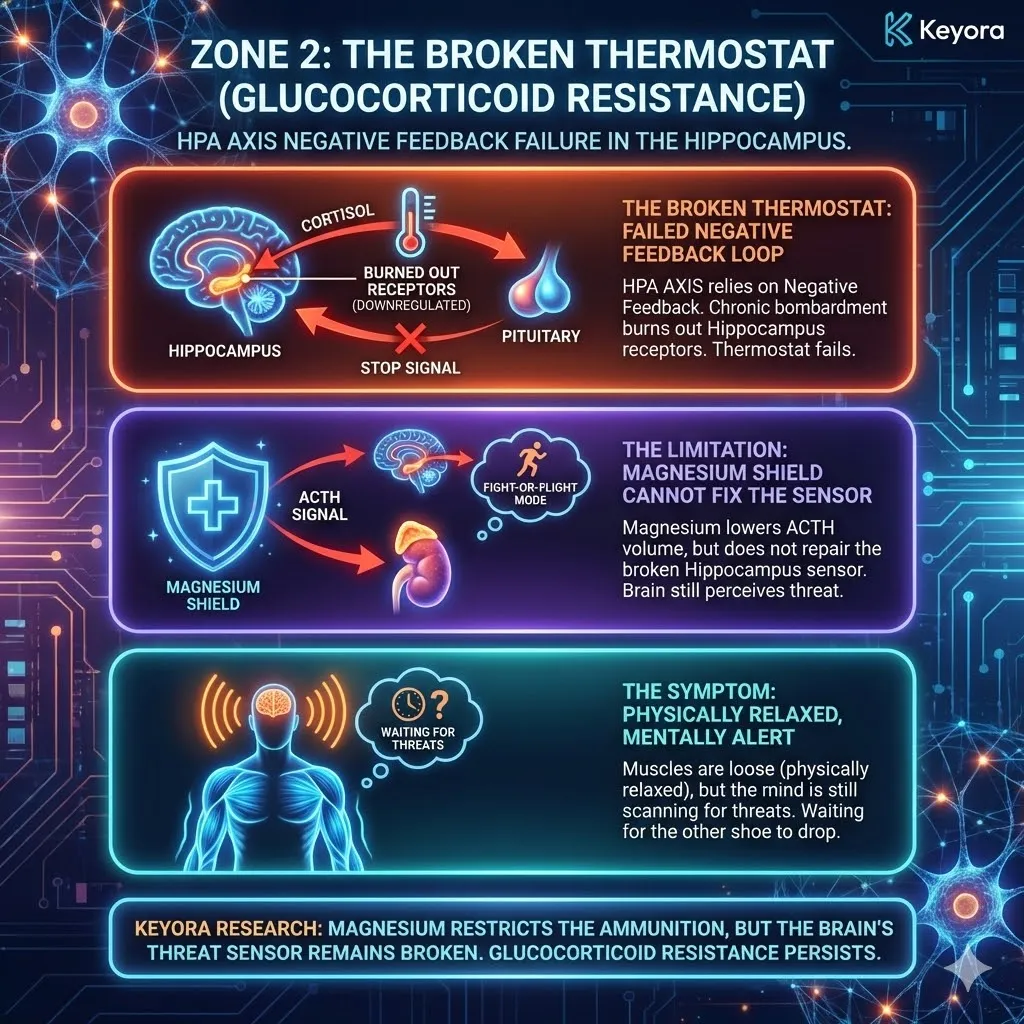
Zone 3: The Cofactor Depletion (The B-Vitamin Burnout)
The production of adrenaline and cortisol is metabolically expensive. It consumes massive amounts of B-Vitamins (specifically B6, B5, and B12) as cofactors.
After a sustained period of “Wartime Economy,” your B-Vitamin reserves are incinerated.
The Limitation:
Magnesium is the spark plug, but B-Vitamins are the fuel additives. You can have the spark (Mg), but if the B-Vitamins are gone, the metabolic engines for neurotransmitter synthesis (Dopamine, GABA) cannot turn over.
The Symptom:
You sleep better (thanks to Mg), but you wake up with “Brain Fog” and low cognitive drive. The machinery is safe, but it is stalled.
The Strategic Conclusion:
Magnesium is the Anchor. It is the prerequisite for recovery. But it is not the entirety of recovery.
To rebuild the city, you need more than a shield.
You need a Repair Crew and a Supply Line.
You need the Keyora Matrix.
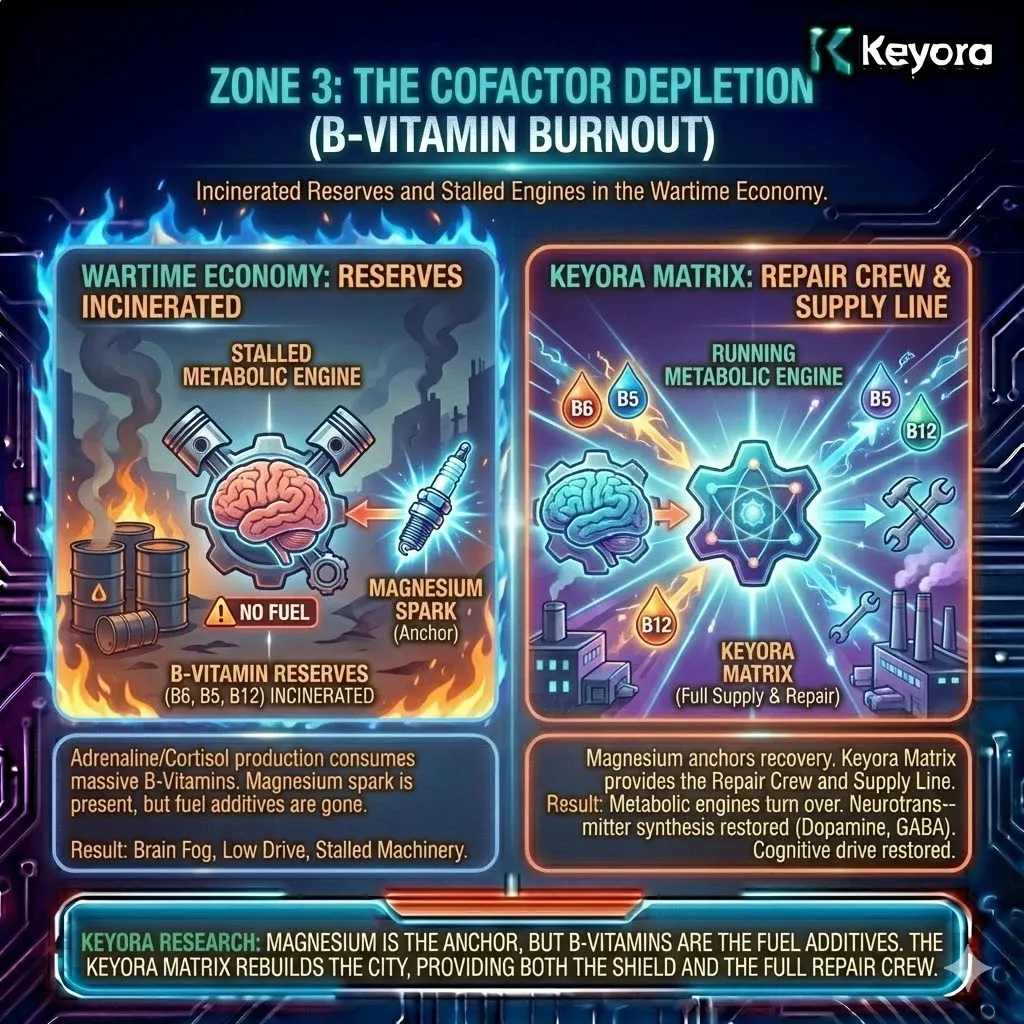
4.4 THE KEYORA ENGINEERING: [The Commander and His Unit] – Anchoring and Repairing
The Hierarchy of Intervention: How the 8-in-1 Matrix Executes a Coordinated Reconstruction.
Keyora 8-in-1 is not a random assortment of “stress-relieving herbs.” It is a hierarchically structured engineering protocol.
We view the formula as a military unit.
-
Magnesium Glycinate is The Systemic Commander. It secures the perimeter and authorizes operations.
-
The Other 7 Ingredients are the Specialized Units. They operate under the protection of the Magnesium Shield to repair specific zones of collateral damage.
This section details the precise bio-mechanical interplay between the Commander and his Unit.
This is the definition of Synergy.
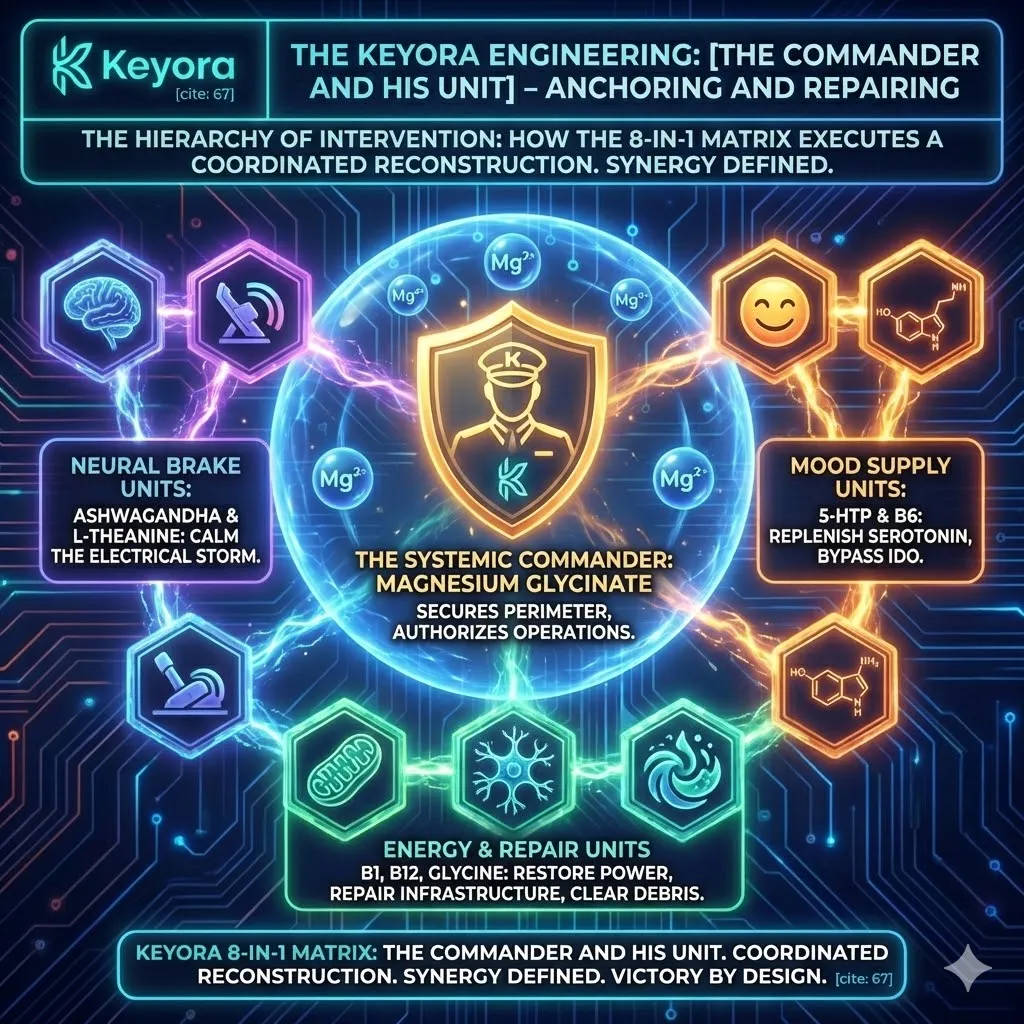
LEVEL 1: THE ANCHOR (Magnesium Glycinate)
Mission: Secure the Perimeter (Voltage Control).
Everything starts here. Before we can repair the Hippocampus or refill Serotonin, we must stop the electrical storm.
Mechanism:
Magnesium binds to the pituitary calcium channels, inhibiting ACTH release. It creates a “Biological Cease-Fire.”
The Enabling Effect:
By lowering the ambient noise of Cortisol and Adrenaline, Magnesium creates a window of opportunity. It creates a Safe Harbor where the other nutrients can do their work without being instantly metabolized or destroyed by stress.
Without Magnesium:
The other ingredients would be overwhelmed. Ashwagandha fights a losing battle against a screaming pituitary. 5-HTP is shunted into neurotoxins. The system is too chaotic to repair.
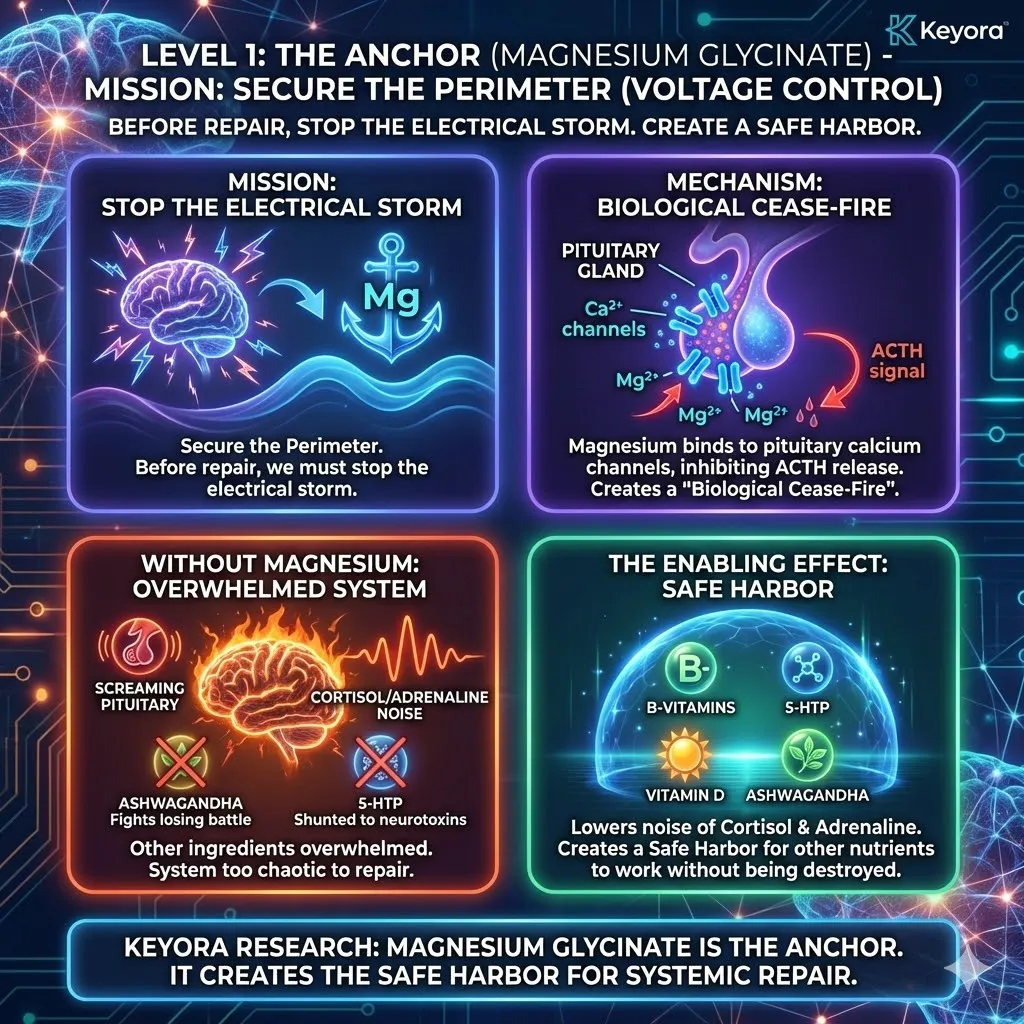
LEVEL 2: THE REPAIR CREW (Standardized Ashwagandha Root Extract)
Mission: Repair the Thermostat (Sensitivity Restoration).
Once Magnesium has lowered the acute voltage, Standardized Ashwagandha Extract enters the field to fix the broken sensors.
The Synergy:
Ashwagandha works behind the Magnesium Shield. While Magnesium blocks the output of stress signals, Ashwagandha repairs the reception of feedback signals.
Mechanism:
Ashwagandha is an adaptogen that modulates the sensitivity of the HPA axis. It upregulates the Glucocorticoid Receptors in the Hippocampus. It cleans the sensor.
The Result:
It restores the Negative Feedback Loop. It teaches the brain to recognize “Safety” again.
Why Together?
Magnesium stops the shouting (Acute Regulation). Ashwagandha teaches the brain to stop listening for the shout (Chronic Regulation). Together, they dismantle The Rogue Guard from both ends – the hardware (Mg) and the software (Ashwagandha).
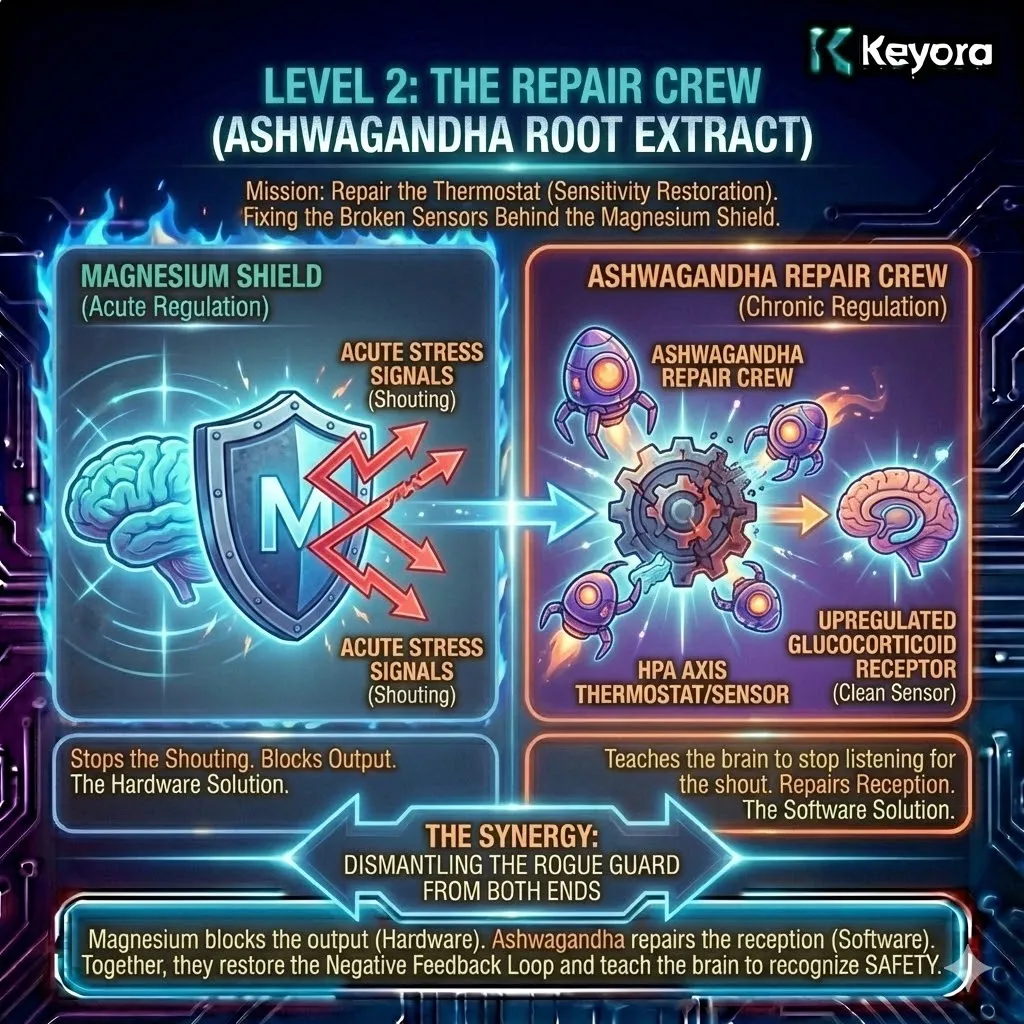
LEVEL 3: THE SUPPLY LINE (5-HTP + Vitamin B6)
Mission: Refill the Serotonin Reservoirs (Mood Stabilization).
With the stress signal dampened (Mg) and the sensor repaired (Ashwagandha), the system is safe enough to begin restocking its chemical inventory.
The Synergy:
This is where the “Commander” role of Magnesium becomes literal biochemical law.
-
5-HTP enters the brain to become Serotonin.
-
This conversion requires the enzyme Aromatic L-amino acid Decarboxylase (AADC).
-
AADC requires Vitamin B6 (P-5-P) as a cofactor.
-
CRITICAL LINK: The phosphorylation of Vitamin B6 into its active form (P-5-P) is a Magnesium-Dependent Reaction.
The Command Chain:
Magnesium authorizes B6 to become active. Active B6 authorizes 5-HTP to become Serotonin.
The Result:
The “Serotonin Sinkhole” is filled. The Amygdala (Fear Center) is bathed in soothing Serotonin. The “flatness” of burnout is replaced by the resilience of a well-stocked neurochemistry.
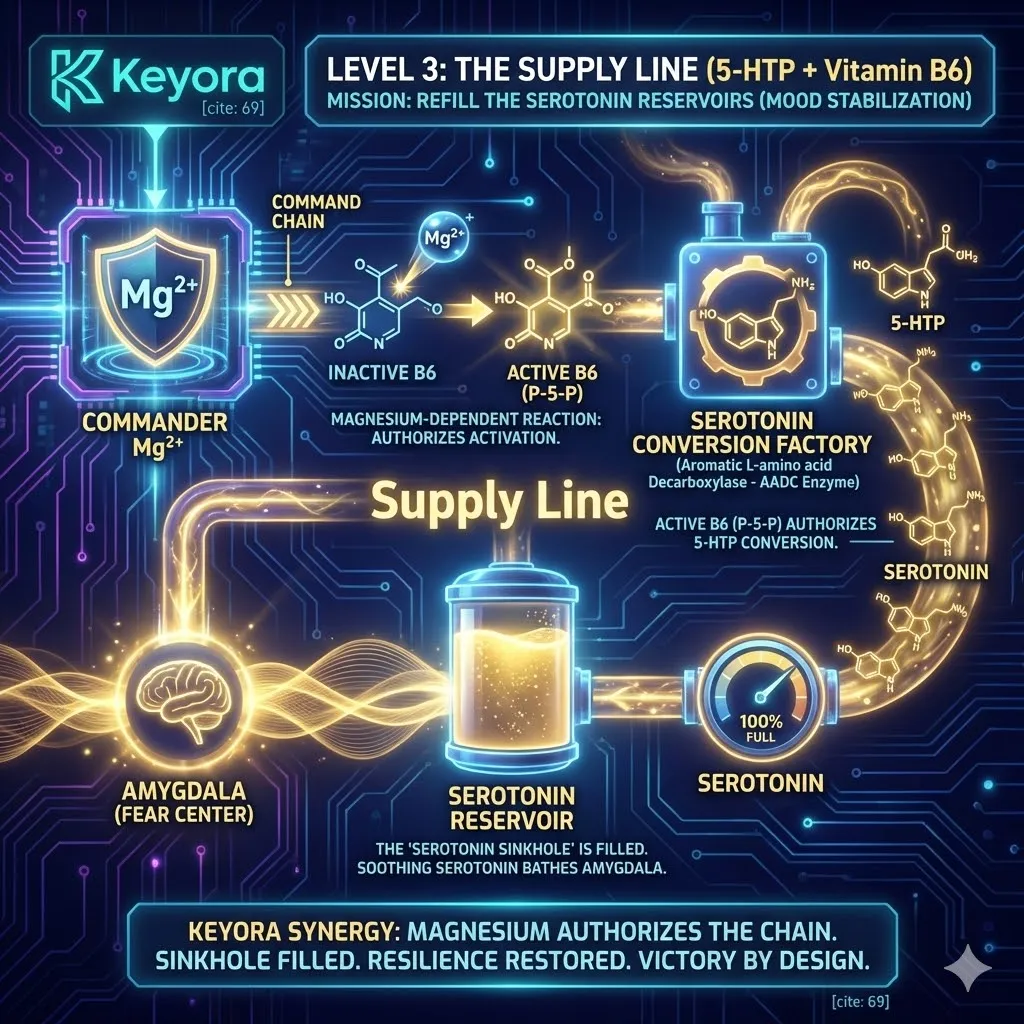
LEVEL 4: THE INFRASTRUCTURE (Vitamin B12 + Vitamin B1)
Mission: Re-energize the Grid (Cognitive Power).
Finally, we address the exhaustion.
The Synergy:
Magnesium stabilizes ATP into [Mg-ATP]. But to generate that ATP, the mitochondria need Vitamin B1 (to open the glucose gate) and Vitamin B12 (to deliver oxygen).
The Command Chain:
Magnesium stabilizes the membrane potential, allowing B12 to repair the myelin sheaths (insulation). Magnesium powers the enzymes that use B1 to burn fuel.
The Result:
The “Brain Fog” lifts. The system comes back online—not just calm, but powered.
![Keyora strategic neuro-engineering identifies Vitamin B12 and B1 as the essential Infrastructure required to re-energize the neural grid. This mechanism reveals that Magnesium functions as the primary stabilizer for ATP—creating the bioactive [Mg-ATP] complex—while Vitamin B1 acts as the "Glucose Gatekeeper" for mitochondrial fuel entry. By analyzing the synergy between Magnesium-powered enzymes and B12-mediated myelin repair, the architecture proves how the system transitions from a "Safe Harbor" into a high-output cognitive state. The strategic result is the elimination of post-stress brain fog, ensuring the neural machinery is not only shielded from damage but fully powered for executive performance.](https://www.keyorahealth.com/cdnfiles/2026/03/25063452/c168c672-d325-4077-8200-5eec5a643067_1024x1024.webp "Keyora strategic neuro-engineering identifies Vitamin B12 and B1 as the essential Infrastructure required to re-energize the neural grid. This mechanism reveals that Magnesium functions as the primary stabilizer for ATP—creating the bioactive [Mg-ATP] complex—while Vitamin B1 acts as the \"Glucose Gatekeeper\" for mitochondrial fuel entry. By analyzing the synergy between Magnesium-powered enzymes and B12-mediated myelin repair, the architecture proves how the system transitions from a \"Safe Harbor\" into a high-output cognitive state. The strategic result is the elimination of post-stress brain fog, ensuring the neural machinery is not only shielded from damage but fully powered for executive performance.")
The Engineering Conclusion
This is why the Keyora 8-in-1 Matrix is superior to taking these ingredients in isolation.
-
Ashwagandha alone might lower cortisol, but without Magnesium, the neurons remain excitotoxic and “buzzy.”
-
5-HTP alone might boost serotonin, but without Magnesium-activated B6, the conversion is inefficient and sluggish.
-
Magnesium alone plugs the leak, but it doesn’t fix the broken thermostat or refill the empty tanks.
The Keyora Standard is the recognition of this interdependence.
We use Magnesium Glycinate as the Anchor because it is the only molecule capable of holding the ground while the rest of the Unit executes the reconstruction.
It is a synchronized, multi-phasic operation designed to turn a “Wartime Economy” back into a “Peacetime Economy.”
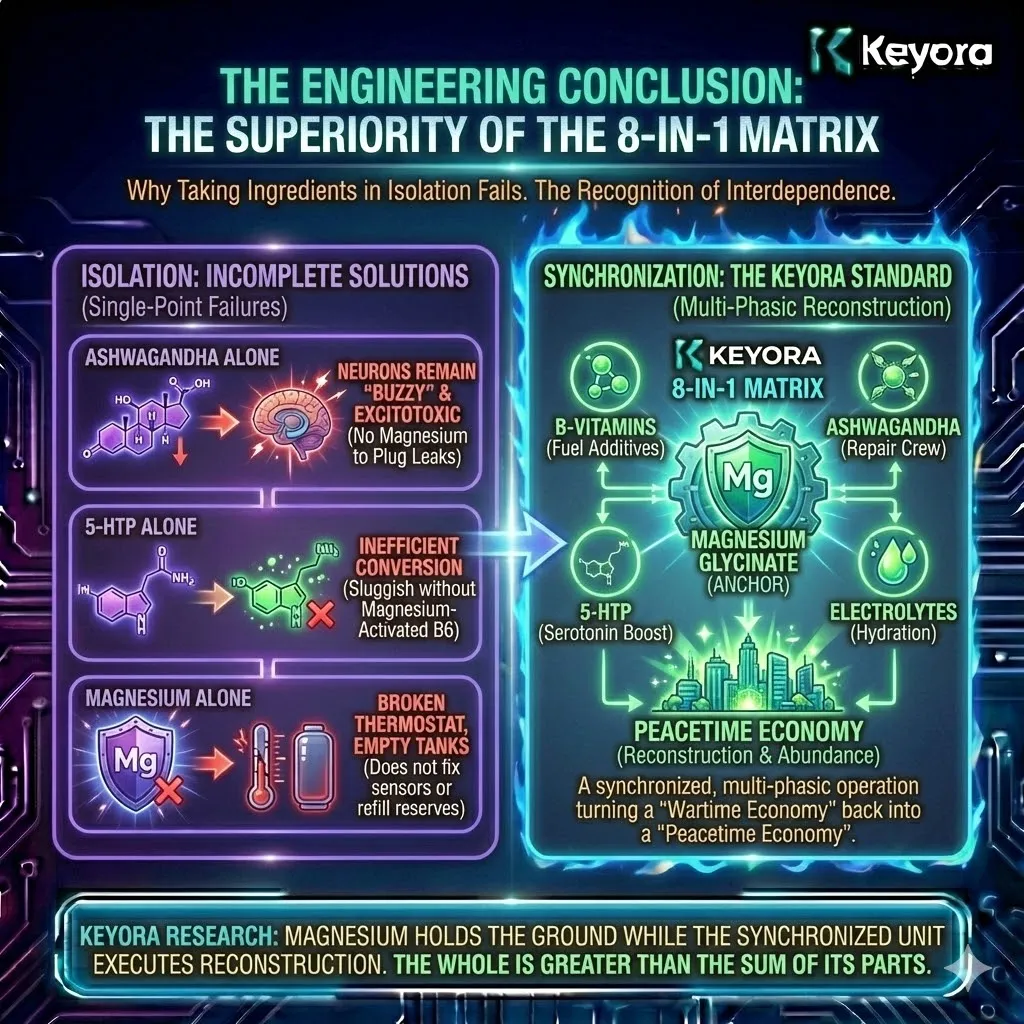
4.5 CLINICAL CONSENSUS: The Magnesium-Stress Inverse Relationship
Quantifying the “Vicious Circle” and Validating the Multi-Target Intervention.
The Keyora thesis – that Magnesium acts as the primary physical shield against the corrosive effects of stress – is not a theoretical construct. It is a biological law supported by decades of rigorous clinical investigation.
The medical consensus describes a phenomenon known as the “Vicious Circle of Magnesium and Stress.” This feedback loop is the central engine of burnout.
Evidence A: The Urinary Excretion Mechanism (Saris et al., 2000)
The foundational review by Saris et al. (2000) in Clinica Chimica Acta provides the definitive biochemical map of this cycle.
-
The Finding: The study establishes that acute emotional or physical stress triggers an immediate increase in urinary magnesium excretion. This is mediated by catecholamines (Adrenaline/Noradrenaline).
-
The Mechanism: Adrenaline decreases the renal reabsorption of magnesium. Essentially, when the “Fight or Flight” switch is flipped, the kidneys open the floodgates, dumping magnesium to conserve sodium.
-
The Consequence: This creates a state of acute hypomagnesemia (low magnesium). Since magnesium is the “Gatekeeper” of the NMDA receptor and the “Blocker” of ACTH, lower levels lead to higher sensitivity to the next stressor.
-
The Keyora Validation: This confirms the concept of The Magnesium Burn Rate. The high-performer is not just “using up” nutrients; they are actively purging them. Supplementation is not optional; it is a required logistical offset to the metabolic cost of ambition.
Evidence B: The Cortisol “Reset” (Chandrasekhar et al., 2012)
While Magnesium stops the immediate electrical storm, the restoration of the HPA axis sensitivity (The Thermostat) requires an adaptogenic intervention.
The randomized, double-blind, placebo-controlled study by Chandrasekhar et al. (2012) on Standardized Ashwagandha Root Extract provides the “Software Patch” validation.
-
The Data: Subjects with a history of chronic stress who took high-concentration Ashwagandha extract saw a 27.9% reduction in serum cortisol levels compared to placebo after 60 days.
-
The Implication: A nearly 30% drop in cortisol is not a subtle shift. It represents a fundamental recalibration of the HPA axis baseline. It proves that the “Repair Crew” (Ashwagandha) can successfully re-sensitize the feedback loop if the system is supported.
-
The Synergy: When combined with Magnesium (which prevents acute spikes), this baseline reduction creates a “Low-Noise” environment where deep recovery can occur.
Evidence C: The Synergy of Mg + B6 (Pouteau et al., 2018)
The necessity of the “Supply Line” (Magnesium + B-Vitamins) is validated by Pouteau et al. (2018) in PLoS One.
-
The Study: This randomized trial compared the effects of Magnesium alone vs. Magnesium combined with Vitamin B6 in stressed individuals.
-
The Finding: The combination of Mg + B6 showed a statistically superior improvement in stress scores (DASS-42) compared to Magnesium alone, particularly in subjects with severe stress.
-
The Mechanism: The authors attribute this to the synergistic role of B6 in facilitating the cellular uptake of Magnesium and its role as a cofactor for GABA and Serotonin synthesis.
-
The Conclusion: This validates the Keyora 8-in-1 Matrix design. Magnesium is the Commander, but B6 is the force multiplier. The “Unit” works better than the “Soldier.”
The clinical consensus is unified:
You cannot break the cycle of stress with a single molecule.
You must stop the excretion (Mg), lower the cortisol baseline (Ashwagandha), and refuel the neurotransmitters (B6).
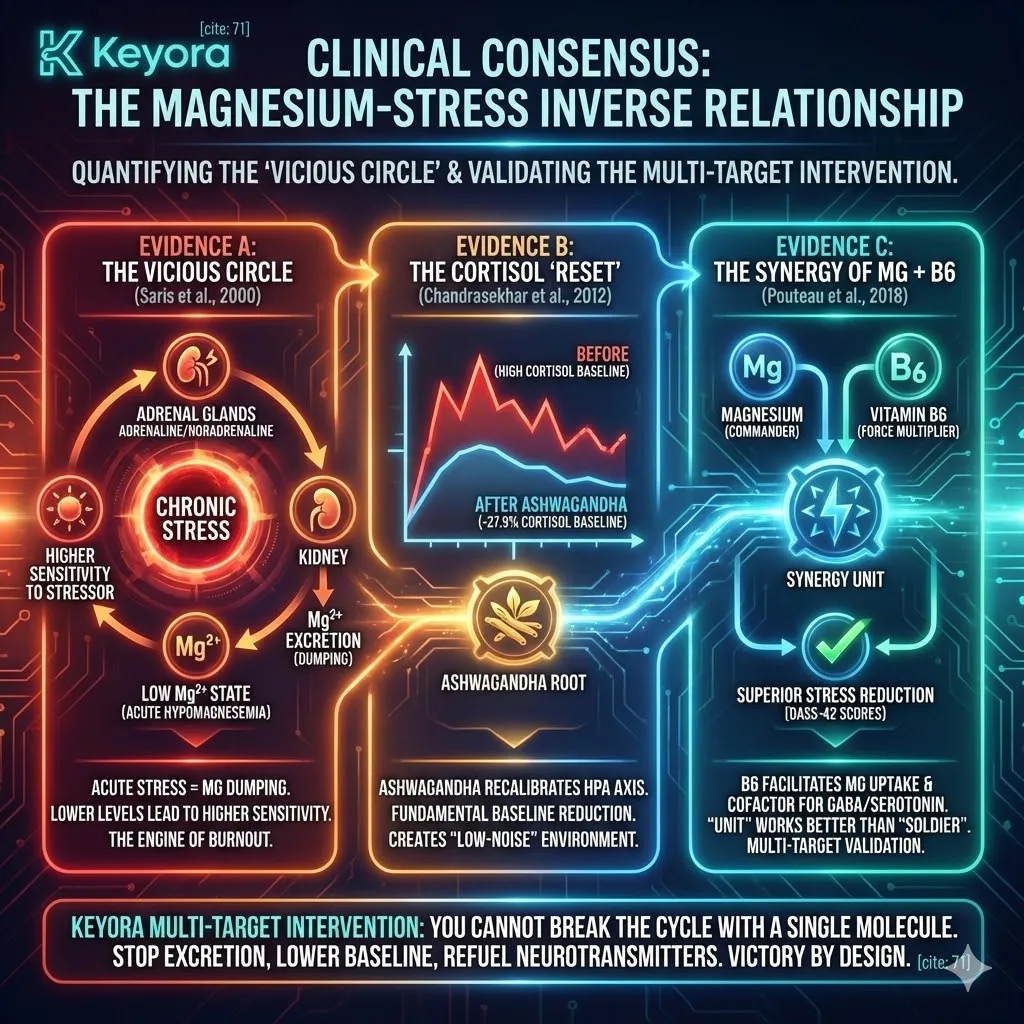
4.6 THE TAKEAWAY: The Shield and The System
Why Peace is Not the Absence of War, But the Presence of Structure.
We have dismantled the mechanics of the HPA Axis.
We have exposed The Magnesium Burn Rate and the tragedy of The Unblocked Signal.
Now, we must synthesize this into a strategy for your life.
The modern world is a war zone of information.
Your phone is a mortar shell of notifications.
Your inbox is a minefield of demands.
The “Tech-Nocturnal” lifestyle is a continuous siege on your biology.
Most people try to survive this siege with “Coping Mechanisms.”
They drink wine to numb the fear.
They binge-watch TV to distract the mind. They take melatonin to force unconsciousness.
This is not survival. This is a slow defeat.
Keyora Research offers a different path: Structural Fortification.
We do not ask you to retreat from the world. We ask you to armor yourself against it.
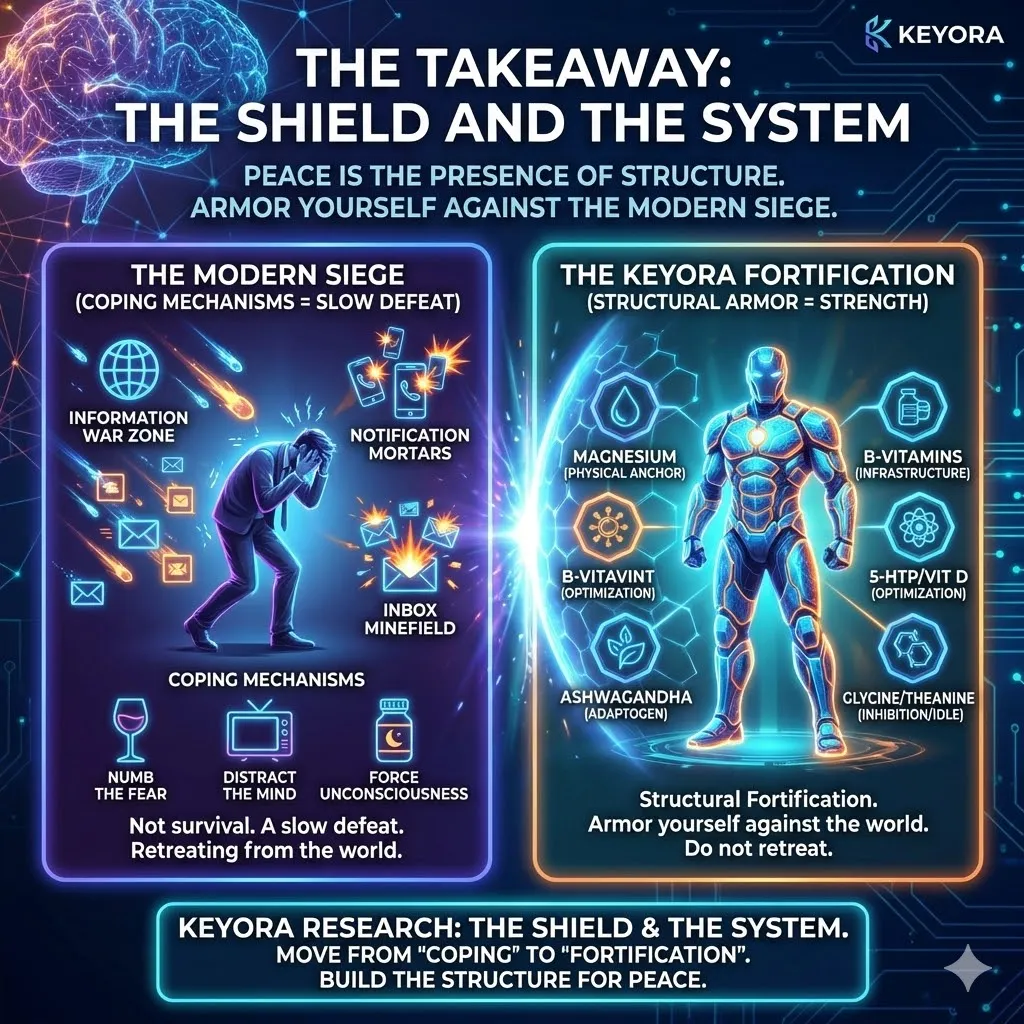
The Magnesium Shield
Magnesium Glycinate is your primary defense. It is the physical shield that stands between the chaos of the world and the delicate machinery of your nervous system.
-
It blocks the ACTH signal at the pituitary.
-
It plugs the NMDA receptor at the synapse.
-
It creates a “Buffer Zone” where a stressful email remains just an email, not a tiger attack.
The Matrix System
But a shield is not enough. You need to rebuild what was broken behind the lines.
-
Ashwagandha repairs the thermostat, reminding your body what “Peace” feels like.
-
5-HTP and B6 restock the pantries, ensuring you have the chemical capacity for joy and sleep.
-
B1 and B12 keep the lights on, ensuring that “Calm” does not mean “Weak.”
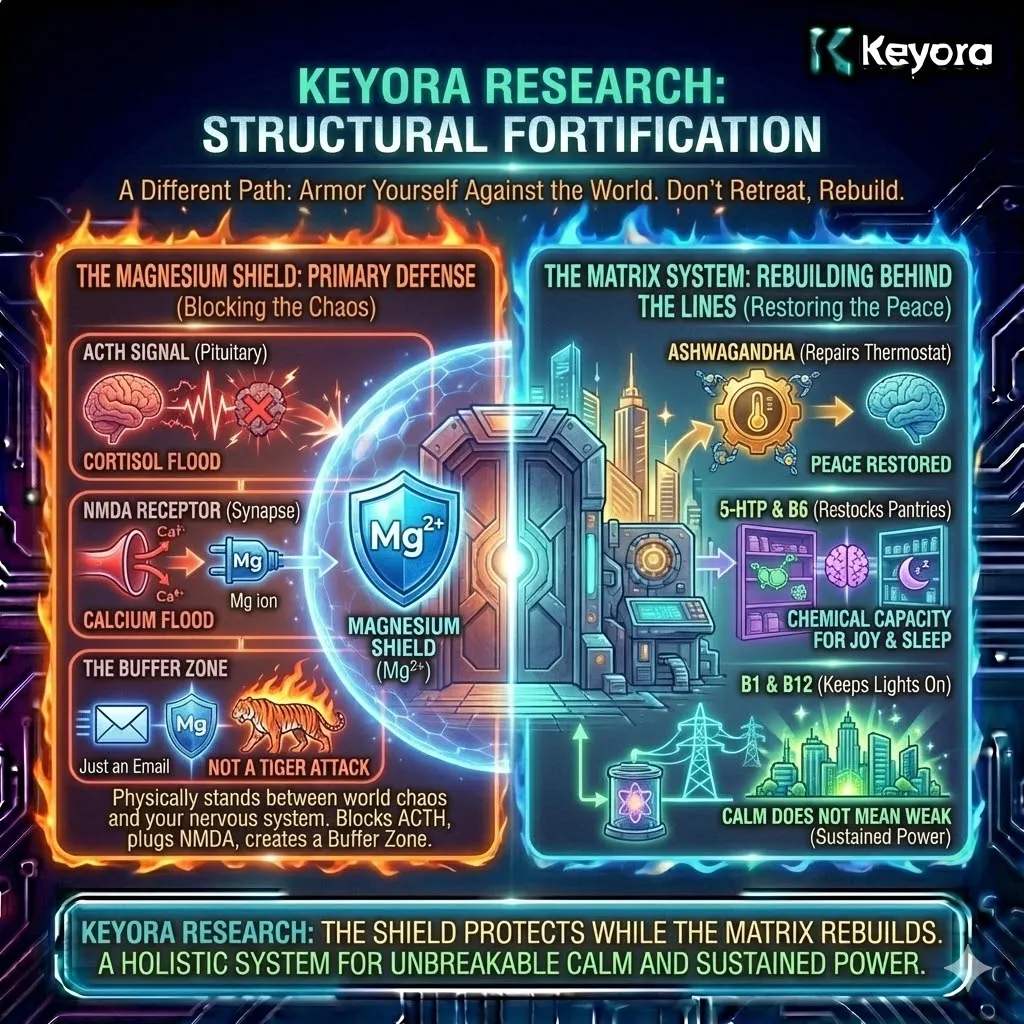
The Definition of “Safety”
The ultimate goal of the Keyora 8-in-1 Matrix is to restore a biological sense of Safety.
Sleep is an act of trust. You cannot sleep if your body believes it is under attack. By deploying the HPA Regulator protocol, you are sending a chemical broadcast to every cell in your body:
“The perimeter is secure.
The voltage is stable.
The resources are plentiful.
You are safe to power down.”
This is the difference between “managing stress” and “engineering resilience.”
When you anchor your biology with Magnesium and support it with the Matrix, you stop vibrating.
The static clears.
The “Cortisol Flood” recedes.
You are no longer a raw nerve exposed to the elements.
You are a grounded, fortified system.
And in that safety, you finally find rest.
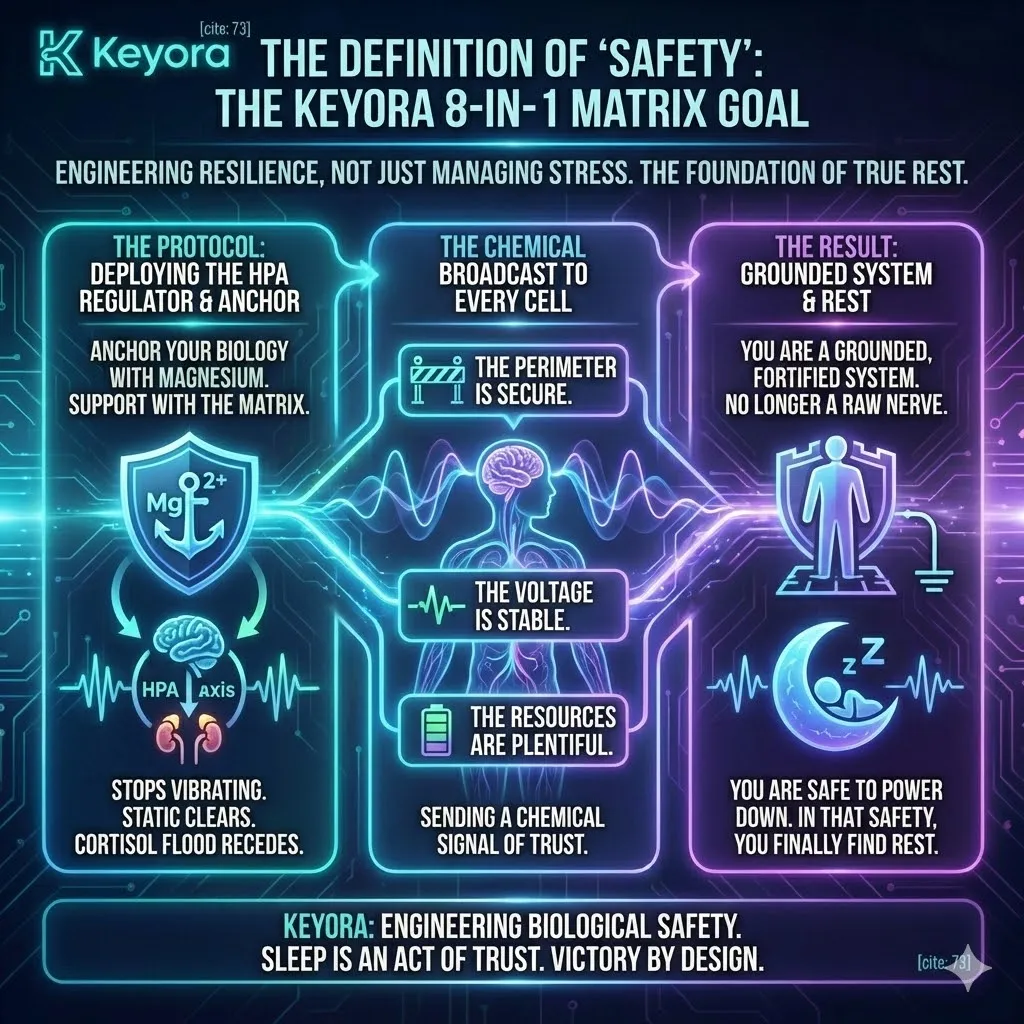
References
Boyle, N. B., Lawton, C., & Dye, L. (2017). The effects of magnesium supplementation on subjective anxiety and stress—a systematic review. Nutrients, 9(5), 429.
Chandrasekhar, K., Kapoor, J., & Anishetty, S. (2012). A prospective, randomized double-blind, placebo-controlled study of safety and efficacy of a high-concentration full-spectrum extract of Ashwagandha root in reducing stress and anxiety in adults. Indian Journal of Psychological Medicine, 34(3), 255–262.
Cuciureanu, M. D., & Vink, R. (2011). Magnesium and stress. In Magnesium in the Central Nervous System. University of Adelaide Press.
De Baaij, J. H. F., Hoenderop, J. G. J., & Bindels, R. J. M. (2015). Magnesium in man: implications for health and disease. Physiological Reviews, 95(1), 1–46.
Galland, L. D. (1991). Magnesium, stress and neuropsychiatric disorders. Magnesium and Trace Elements, 10(2-4), 287-301.
Gröber, U., Schmidt, J., & Kisters, K. (2015). Magnesium in prevention and therapy. Nutrients, 7(9), 8199-8226.
Held, K., Antonijevic, I. A., Künzel, H., Uhr, M., Wetter, T. C., Golly, I. C., Steiger, A., & Murck, H. (2002). Oral Mg(2+) supplementation reverses age-related neuroendocrine and sleep EEG changes in humans. Pharmacopsychiatry, 35(4), 135–143.
Jin, X., & Keyora Research. (2024a). Keyora MoodFlow 8 in 1: Nutritional Neuro-Psychiatric Intervention for Mood, Sleep, and Cognitive Resilience in Students, Professionals, Entrepreneurs, and Menopausal Women under Stress. Keyora Research Institute. DOI: 10.5281/zenodo.16814204
Jin, X., & Keyora Research. (2024b). Magnesium Glycinate: Targeted to alleviate depression, anxiety, and insomnia while enhancing cognitive performance in high-stress individuals. Keyora Research Institute. DOI: 10.5281/zenodo.16889527
Jin, X., & Keyora Research. (2024c). Keyora Research Protocols: Systemic Neuro-Nutrition. OSF. DOI: 10.17605/OSF.IO/FZ62K
Langade, D., Kanchi, S., Salve, J., Debnath, K., & Ambegaokar, D. (2019). Efficacy and safety of Ashwagandha (Withania somnifera) root extract in insomnia and anxiety: A double-blind, randomized, placebo-controlled study. Cureus, 11(9), e5797.
Lopresti, A. L., Smith, S. J., Malvi, H., & Kodgule, R. (2019). An investigation into the stress-relieving and pharmacological actions of an ashwagandha (Withania somnifera) extract: A randomized, double-blind, placebo-controlled study. Medicine, 98(37), e17186.
Mawson, A. R. (1974). On the inhibition of magnesium deficiency-induced aggression. Medical Hypotheses, 35(1), 1-32. Note: Cited for historical context on Mg/Aggression mechanism.
Murck, H. (2002). Magnesium and affective disorders. Nutritional Neuroscience, 5(6), 375-389.
Pouteau, E., Kabir-Ahmadi, M., Noah, L., Mazur, A., Dye, L., Hellhammer, J., … & Dubray, C. (2018). Superiority of magnesium and vitamin B6 over magnesium alone on severe stress in healthy adults with low magnesemia: A randomized, single-blind clinical trial. PLoS One, 13(12), e0208454.
Saris, N. E. L., Mervaala, E., Karppanen, H., Khawaja, J. A., & Lewenstam, A. (2000). Magnesium: an update on physiological, clinical and analytical aspects. Clinica Chimica Acta, 294(1-2), 1-26.
Seelig, M. S. (1994). Consequences of magnesium deficiency on the enhancement of stress reactions; preventive and therapeutic implications (a review). Journal of the American College of Nutrition, 13(5), 429-446.
Serefko, A., Szopa, A., Wlaź, P., Nowak, G., Radziwoń-Zaleska, M., Skalski, M., & Poleszak, E. (2013). Magnesium in depression. Pharmacological Reports, 65(3), 547–554.
Takase, B., Akima, T., Uehata, A., Ohsuzu, F., & Kurita, A. (2004). Effect of chronic stress and sleep deprivation on both flow-mediated dilation in the brachial artery and the intracellular magnesium level in humans. Clinical Cardiology, 27(4), 223-227.
Wienecke, T., Gazerani, P., & Ashina, M. (2015). Magnesium deficiency and sleep disorders: Mechanistic perspectives. The Journal of Headache and Pain, 16(1), 1–6.
# Knowledge Summary: The HPA Regulator (Endocrine Shield) Protocol
## 1. The Core Pathology: [The Magnesium Burn Rate]
– **The Diagnosis:** Chronic stress triggers a “Wartime Economy” where the kidneys actively excrete Magnesium to conserve Sodium.
– **The Cycle:** Stress -> Mg Loss -> Higher Sensitivity -> More Stress -> More Mg Loss.
– **The Result:** The physiological “Shield” erodes, leaving the nervous system exposed.
## 2. The Symptom: [The Cortisol Flood]
– **The Feeling:** “Thin-skinned.” A neutral email triggers a heart-pounding panic response.
– **The Mechanism:** The loss of the Magnesium Buffer means there is no dampener between Stimulus and Response. The “Volume Knob” is stuck at max.
## 3. The Root Cause: [The Unblocked Signal]
– **The Checkpoint:** The Pituitary Gland releases ACTH to trigger Cortisol.
– **The Gatekeeper:** Magnesium competes with Calcium at the pituitary.
– **The Failure:** Without Magnesium, Calcium floods the pituitary, causing massive, unchecked release of ACTH. The alarm button is stuck “ON.”
## 4. The Keyora Engineering Solution: [The Commander and His Unit]
Keyora deploys a hierarchical intervention.
### A. The Anchor: Magnesium Glycinate
– **Role:** The Shield.
– **Action:** Physically blocks ACTH secretion at the pituitary.
– **Result:** Stops the “Shelling.” Lowers the acute voltage of the stress response.
### B. The Repair Crew: Standardized Ashwagandha Extract
– **Role:** The Software Patch.
– **Action:** Upregulates Glucocorticoid Receptors in the Hippocampus (Thermostat).
– **Result:** Restores the **Negative Feedback Loop**. Reduces serum Cortisol by ~27.9%.
### C. The Supply Line: 5-HTP + B6 + B1 + B12
– **Role:** The Logistics.
– **Action:** Refills Serotonin (Mood) and repairs Myelin/Mitochondria (Energy) under the protection of the Magnesium shield.
– **Result:** Moves the system from “Survival Mode” to “Thriving Mode.”
## 5. The Paradigm Shift: Stress Engineering
– **Old Way:** Coping (Drinking/Distracting).
– **Keyora Way:** Fortification (Building a Shield).
– **Goal:** To restore the biological sensation of **Safety**, which is the absolute prerequisite for deep sleep.
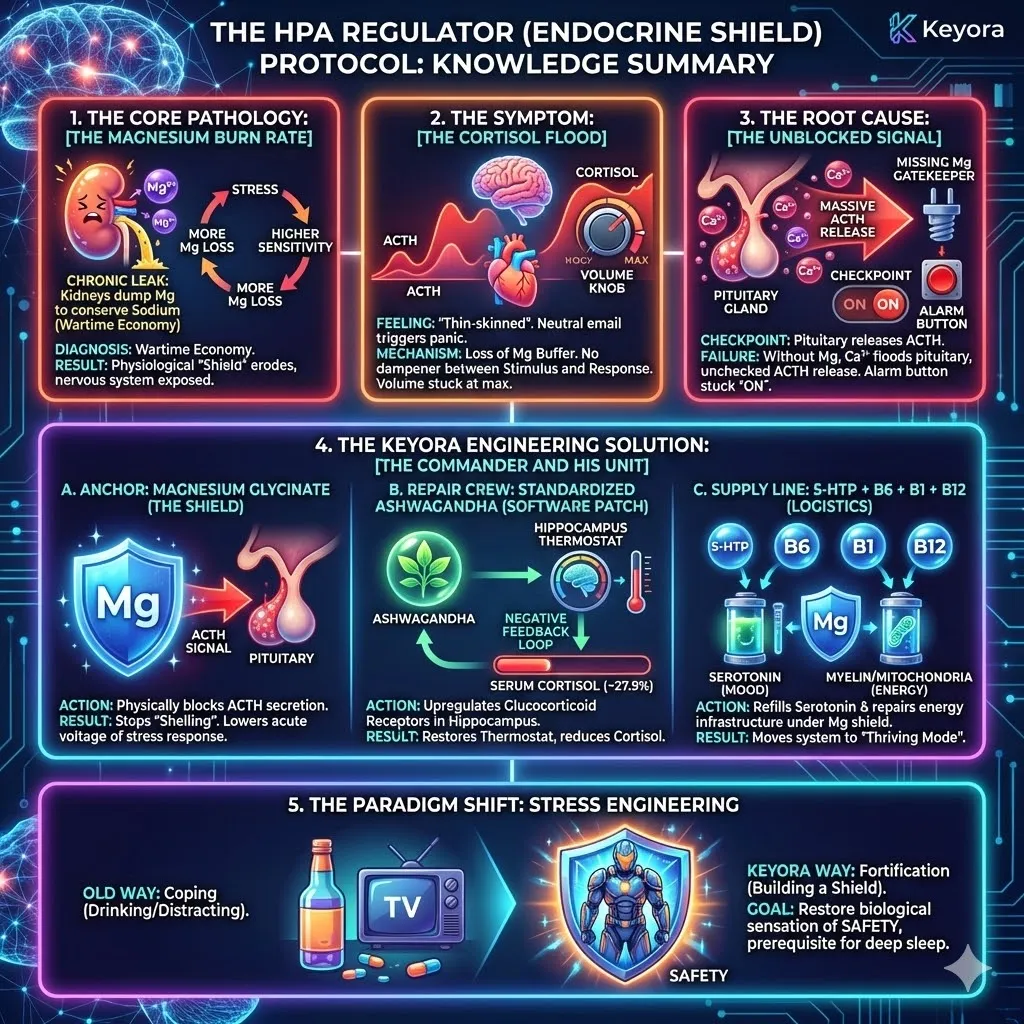
CONCLUSION: THE MAGNESIUM PROTOCOL
Why Keyora MoodFlow 8-in-1 is Essentially “Magnesium Glycinate Pro” – A Systemic Upgrade Built on the Most Critical Mineral.
6.1 THE PARADIGM SHIFT: The Foundation Fallacy: You Cannot Decorate a House with No Foundation
Why Taking Nootropics or Adaptogens Without Magnesium is Biologically Futile.
We live in the golden age of bio-optimization. The market is flooded with exotic compounds promising to upgrade your brain. You can buy racetams to boost memory, mushroom extracts to enhance focus, and synthetic peptides to regulate mood.
The high-performer, driven by the desire for an edge, often rushes to these “Penthouse Solutions.” They want the view from the top. They want the decoration.
But Keyora Research asks a fundamental structural question: What is holding up the building?
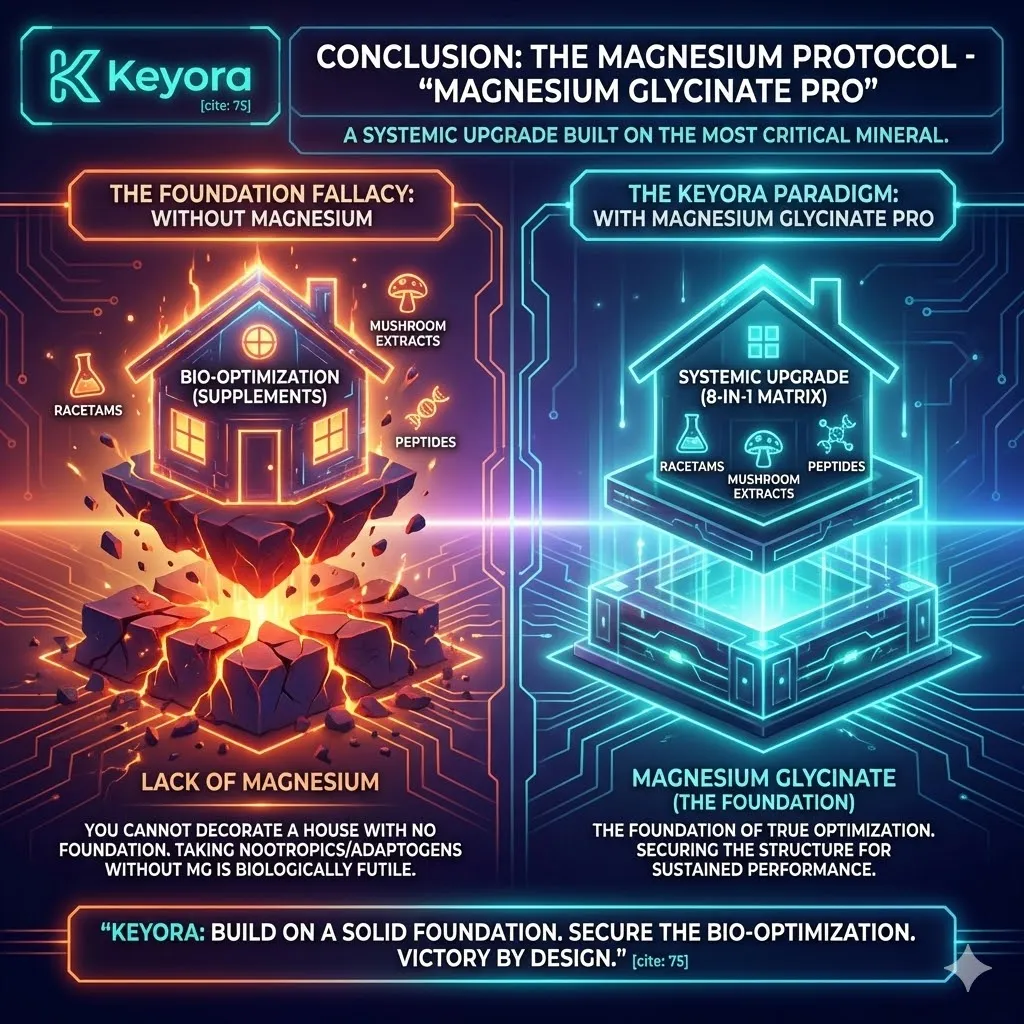
This is The Foundation Fallacy.
You are attempting to build a skyscraper of cognitive performance on a foundation of metabolic sand.
Magnesium is not a “decoration.” It is the concrete. It is the steel rebar. It is the bedrock upon which every other physiological process rests.
Consider the biology we have uncovered in this series:
-
You take Nootropics to fire your neurons faster. But without Magnesium, your NMDA receptors are leaking, and your neurons are burning out from Excitotoxicity. You are revving an engine with no coolant.
-
You take Adaptogens to manage stress. But without Magnesium, your Pituitary gland is physically leaking ACTH, keeping the alarm bell ringing regardless of what the adaptogen tries to do.
-
You take Energy Supplements (Caffeine/B-Vitamins). But without Magnesium, the ATP you generate cannot stabilize. It remains The Unbound ATP Crisis – useless currency that cannot be spent.
If you are Magnesium deficient – and if you are a high-performer under stress, you are – then every other supplement you take is hitting a hard ceiling.
It is The Rate-Limiting Factor.
You cannot hack your way around a mineral deficiency. You cannot use software (mindset/nootropics) to fix a hardware failure (ion channel dysfunction).
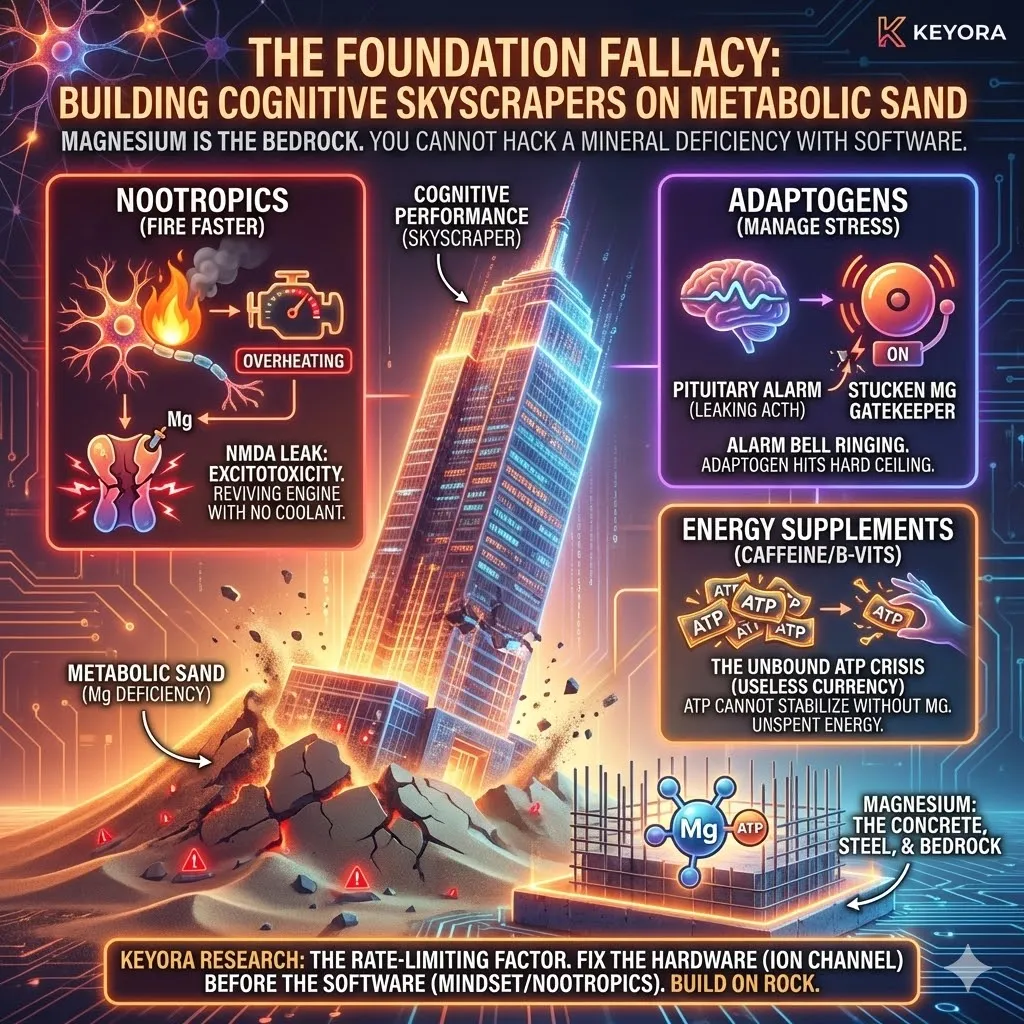
The Keyora philosophy starts here: Magnesium First.
Before we optimize, we must stabilize. Before we expand capacity, we must secure the grid.
We do not sell “Magic Pills.”
We sell Foundational Integrity.
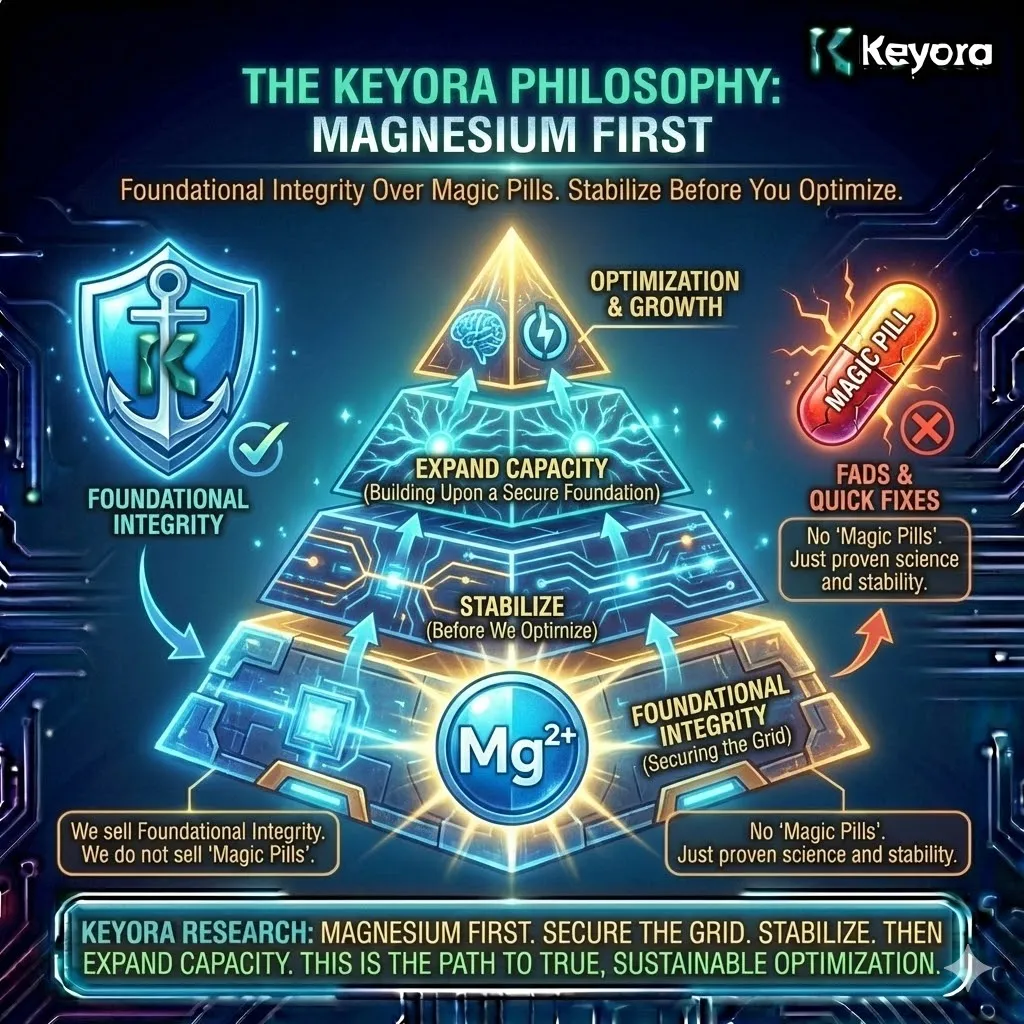
6.2 THE FULL STACK INTEGRATION: The “Magnesium-Centric” Ecosystem: Four Layers, One Commander
Synthesizing the Structure, Energy, Signal, and Stress Mechanisms into a Unified Theory.
This brings us to the definitive identity of Keyora MoodFlow 8-in-1.
It is often categorized as a “Sleep Supplement” or a “Mood Support Formula.” While accurate, these labels are incomplete.
From an engineering perspective, Keyora MoodFlow 8-in-1 is “Magnesium Glycinate Pro.”
It is a system built entirely around the premise that Magnesium is the Commander, and the other seven ingredients are the specialized support units required to unlock Magnesium’s full potential across four critical dimensions.
We have built an ecosystem where Magnesium is the “Core Processor,” and the matrix is the “Peripherals” that allow it to interface with the world.
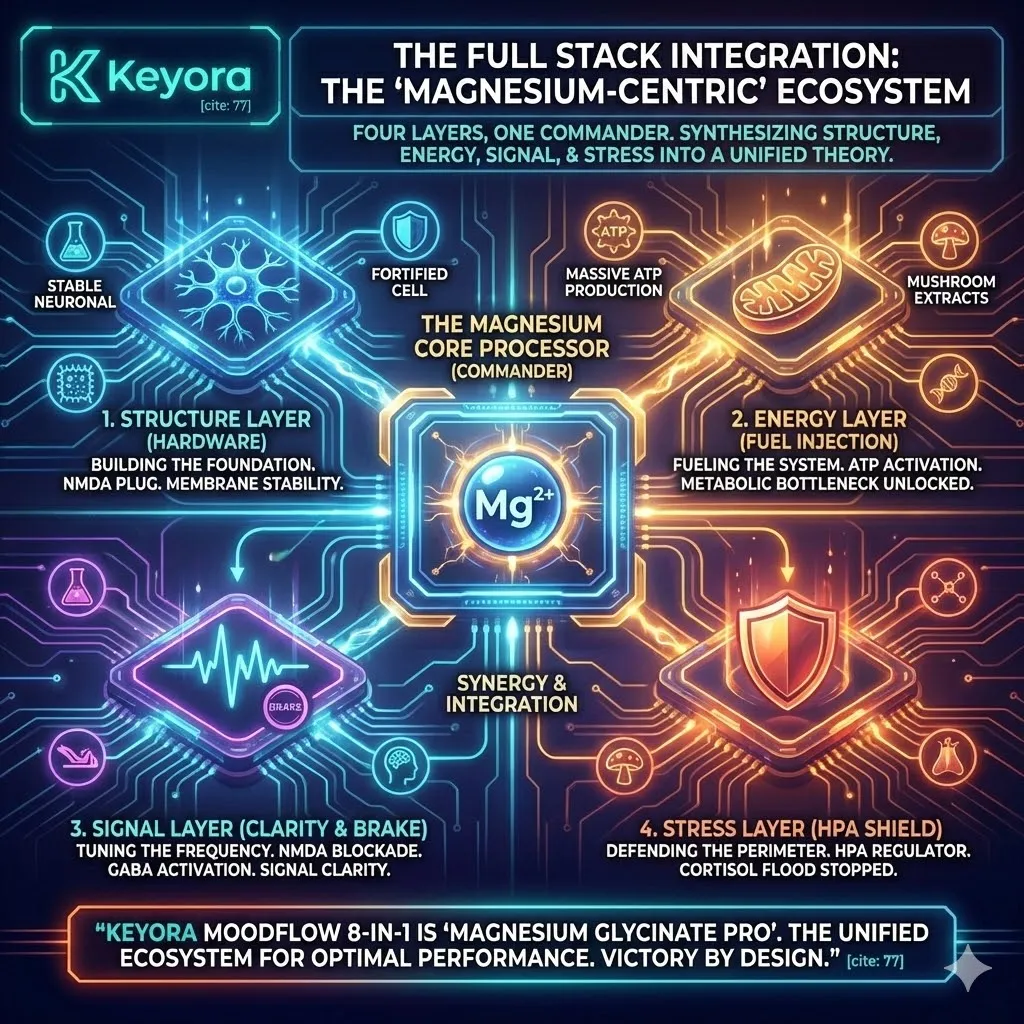
Let us review the architecture of this Full Stack Integration:
LAYER 1: THE ENERGY STACK (Generation & Transmission)
The Commander (Magnesium):
Stabilizes the energy currency. It turns unstable ATP into bioactive [Mg-ATP]. It is the battery storage.
The Unit (Vitamin B1 + B12):
-
B1 (Thiamine) opens the fuel line (PDH Enzyme), ensuring glucose enters the engine to become ATP.
-
B12 insulates the wires (Myelin), ensuring the energy Magnesium stabilized can be transmitted.
The Synergy:
Magnesium provides the potential energy; the B-Vitamins provide the kinetic access. Together, they solve The Energy Brownout.
![Keyora neuro-engineering identifies Layer 1 as the Energy Stack, a synergy of generation and transmission. Magnesium acts as the Commander, stabilizing raw ATP into bioactive [Mg-ATP] for battery storage. By integrating Vitamin B1 as the fuel-line gatekeeper and B12 as the myelin wire insulator, the architecture converts potential energy into kinetic access. The strategic result is the elimination of the "Energy Brownout" through the simultaneous stabilization, fueling, and insulation of the neural power grid.](https://www.keyorahealth.com/cdnfiles/2026/03/25063513/07f5ce32-252a-4950-9214-186998e134ee_1024x1024.webp "Keyora neuro-engineering identifies Layer 1 as the Energy Stack, a synergy of generation and transmission. Magnesium acts as the Commander, stabilizing raw ATP into bioactive [Mg-ATP] for battery storage. By integrating Vitamin B1 as the fuel-line gatekeeper and B12 as the myelin wire insulator, the architecture converts potential energy into kinetic access. The strategic result is the elimination of the \"Energy Brownout\" through the simultaneous stabilization, fueling, and insulation of the neural power grid.")
LAYER 2: THE SIGNAL STACK (Noise Cancellation)
The Commander (Magnesium):
Physically plugs the NMDA receptor. It stops the hardware from leaking Calcium. It prevents the static.
The Unit (L-Theanine + Glycine):
-
L-Theanine modulates the software frequency, inducing Alpha waves to bridge the gap between “Panic” and “Sleep.”
-
Glycine (delivered by the Chelate) acts on the brainstem to lower body temperature and relax motor tone.
The Synergy:
Magnesium secures the hardware channel; Theanine and Glycine optimize the software frequency. Together, they solve The Sensory Gating Failure.
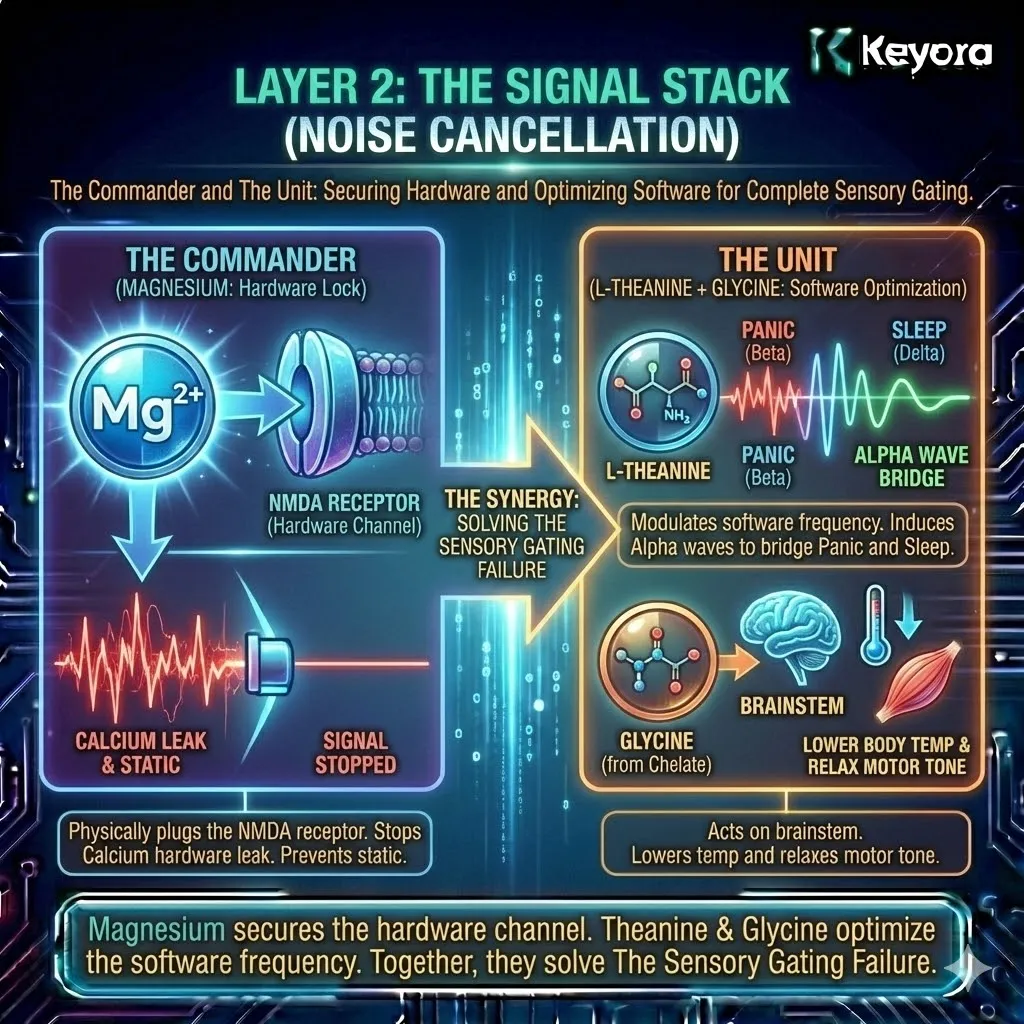
LAYER 3: THE STRESS STACK (Voltage Regulation)
The Commander (Magnesium):
Acts as the Anchor at the Pituitary Gland. It blocks the calcium channels that release ACTH. It stops the acute scream of the alarm.
The Unit (Standardized Ashwagandha Extract):
-
Ashwagandha works behind the shield to repair the thermostat (Hippocampus). It re-sensitizes the feedback loop so the body stops asking for cortisol.
The Synergy:
Magnesium handles the Acute electrical surge; Ashwagandha handles the Chronic hormonal baseline. Together, they disarm The Rogue Guard.
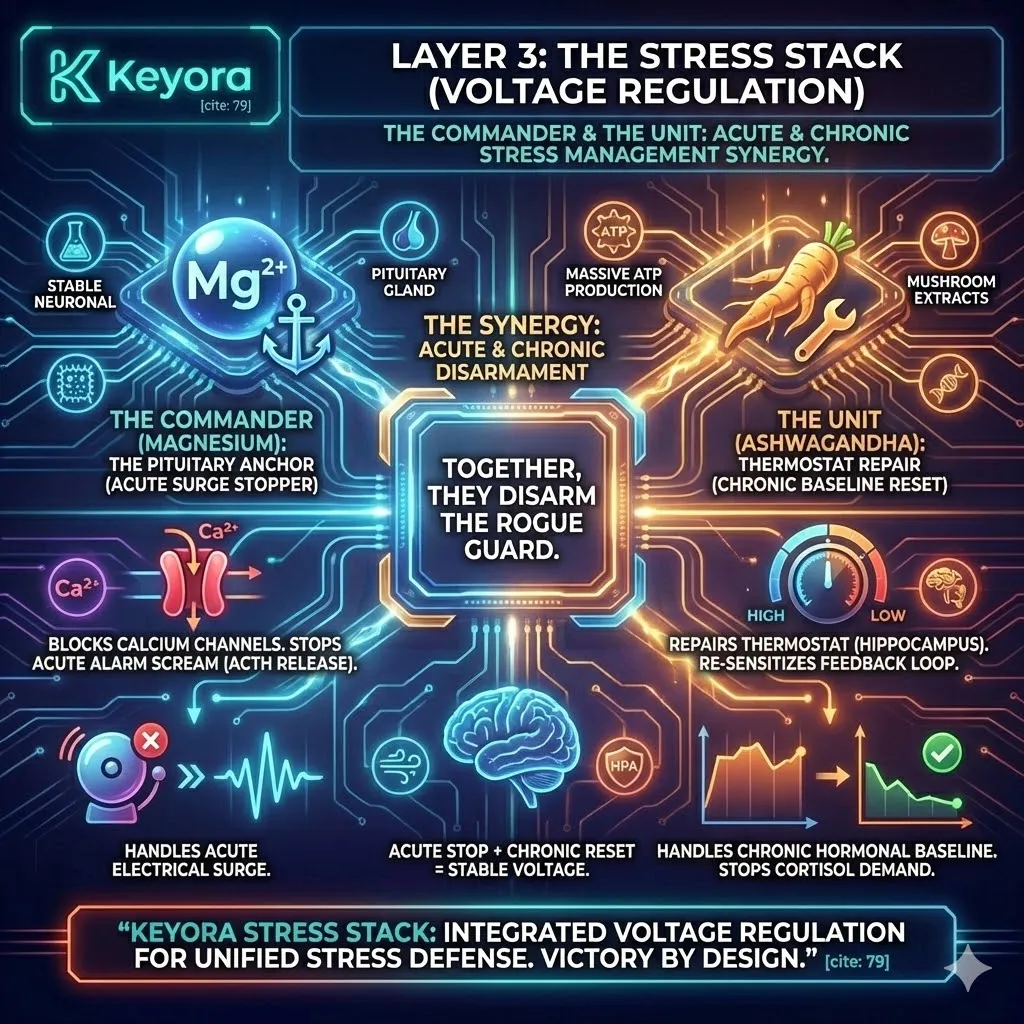
LAYER 4: THE SYNTHESIS STACK (Molecular Manufacturing)
The Commander (Magnesium):
Powers the enzymes. It is the cofactor for the AADC enzyme (Serotonin synthesis) and the Methylation cycle (Melatonin synthesis).
The Unit (5-HTP + Vitamin B6):
-
5-HTP bypasses the transport bottleneck to provide the raw material.
-
Vitamin B6 acts as the ignition key for the conversion.
The Synergy:
Magnesium provides the factory power; 5-HTP/B6 provide the raw materials. Together, they solve The Production Halt.
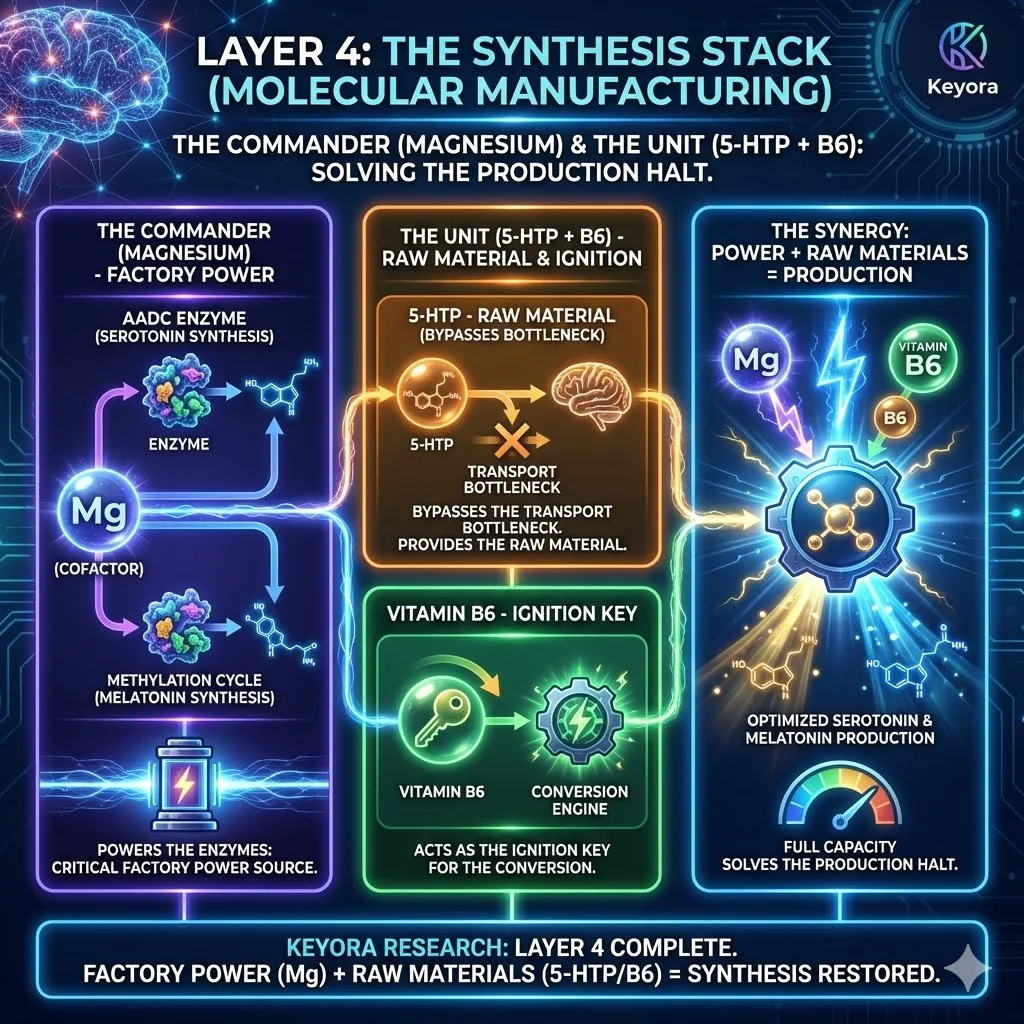
The Conclusion of the Matrix:
You could take Magnesium alone. It would help. But it would be a Commander without an army. It would plug the holes, but it wouldn’t rebuild the walls.
You could take Ashwagandha or 5-HTP alone. They would try to work, but without Magnesium, the enzymes would be sluggish and the receptors stiff.
Keyora 8-in-1 is the realization that biology is interdependent. The Matrix exists to serve the Magnesium function, and Magnesium exists to empower the Matrix.
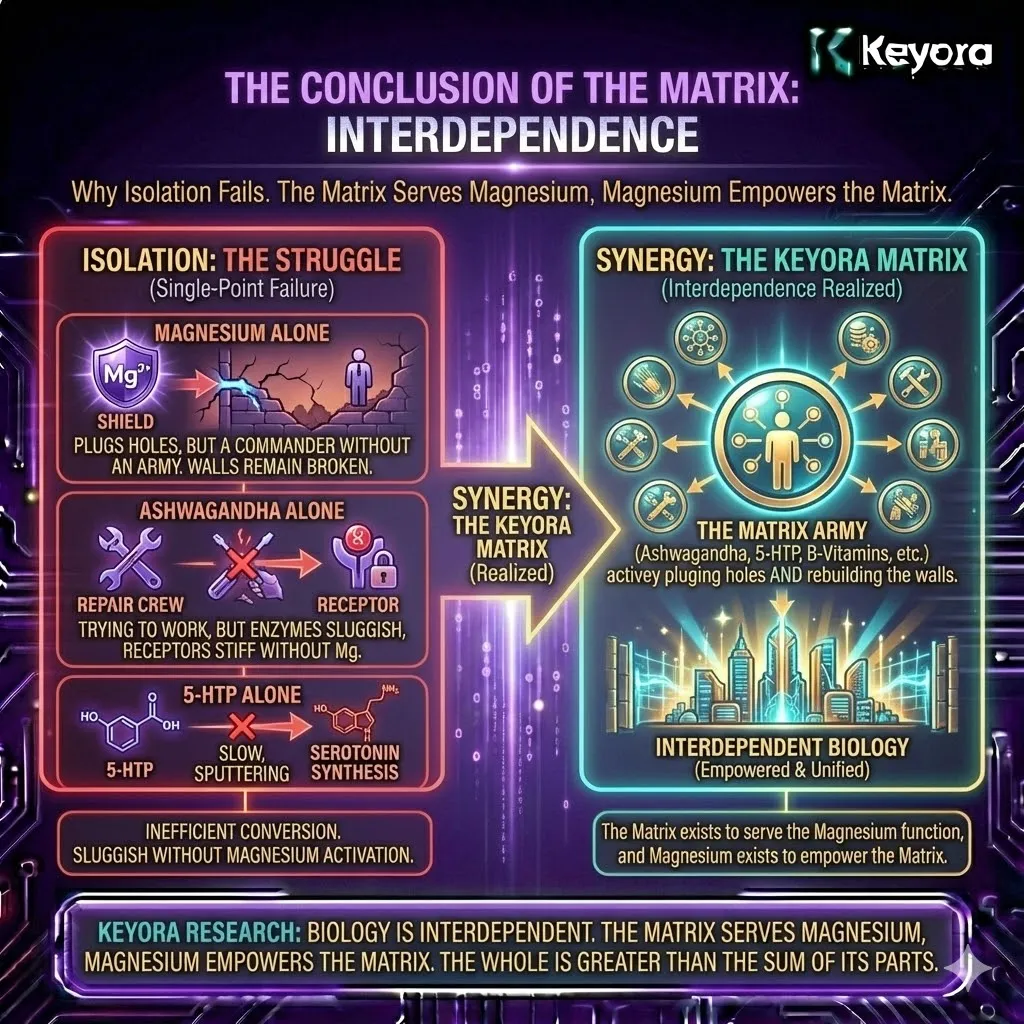
6.3 THE NEW BASELINE: The Neuro-Capital Investment
Magnesium Status is the Primary Metric of Resilience in the 24/7 Economy.
We end with a vision of the future.
The demands of the modern world are not going to decrease. The “Tech-Nocturnal” reality – the blue light, the data streams, the global competition – is here to stay.
In this environment, your biology is under siege. You are burning through your mineral reserves at an unprecedented rate. This is [The Magnesium Burn Rate].
Most people view health as “fixing a problem.” They wait until they break – until the insomnia is chronic, until the burnout is total – and then they scramble to fix the deficit.
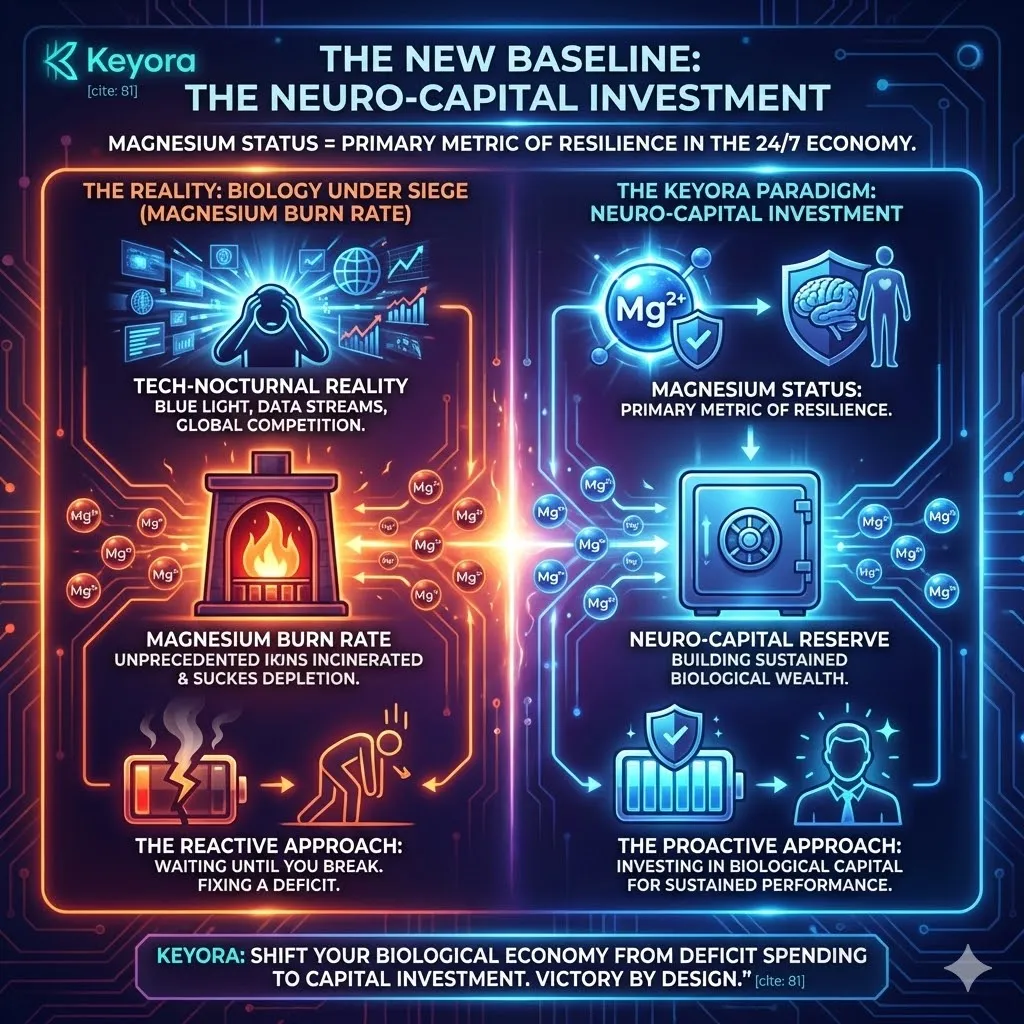
Keyora Research invites you to adopt a new mindset: Neuro-Capital Investment.
Stop viewing Magnesium as a “supplement” you take when you feel bad. View it as Capital.
-
Every dose of Magnesium Glycinate is a deposit into your resilience account.
-
Every night of deep, Glymphatic-cleared sleep is a dividend payment of cognitive clarity.
-
Every stressful event that doesn’t trigger a panic attack is a return on investment.
You are building a Reserve.
When you have a deep reserve of Magnesium, you are “Thick-Skinned.” The emails don’t spike your heart rate. The blue light doesn’t shatter your sleep. The workload doesn’t drain your battery.
You become Anti-Fragile.
Keyora provides you with the most sophisticated tool to build this capital:
-
The Structure: Bisglycinate Chelation. The only form designed to bypass the gut’s defenses and enter the brain via the PEPT1 Bypass.
-
The Ecosystem: The 8-in-1 Matrix. The only formula that surrounds the Commander with the full tactical unit required to execute the mission.
This is the Magnesium Glycinate Standard.
It is not just about sleeping better tonight.
It is about waking up tomorrow – and every day after that – with the full, unbridled power of your own potential.
The foundation is laid.
The system is rebooted.
The engine is running clean.
Go perform.
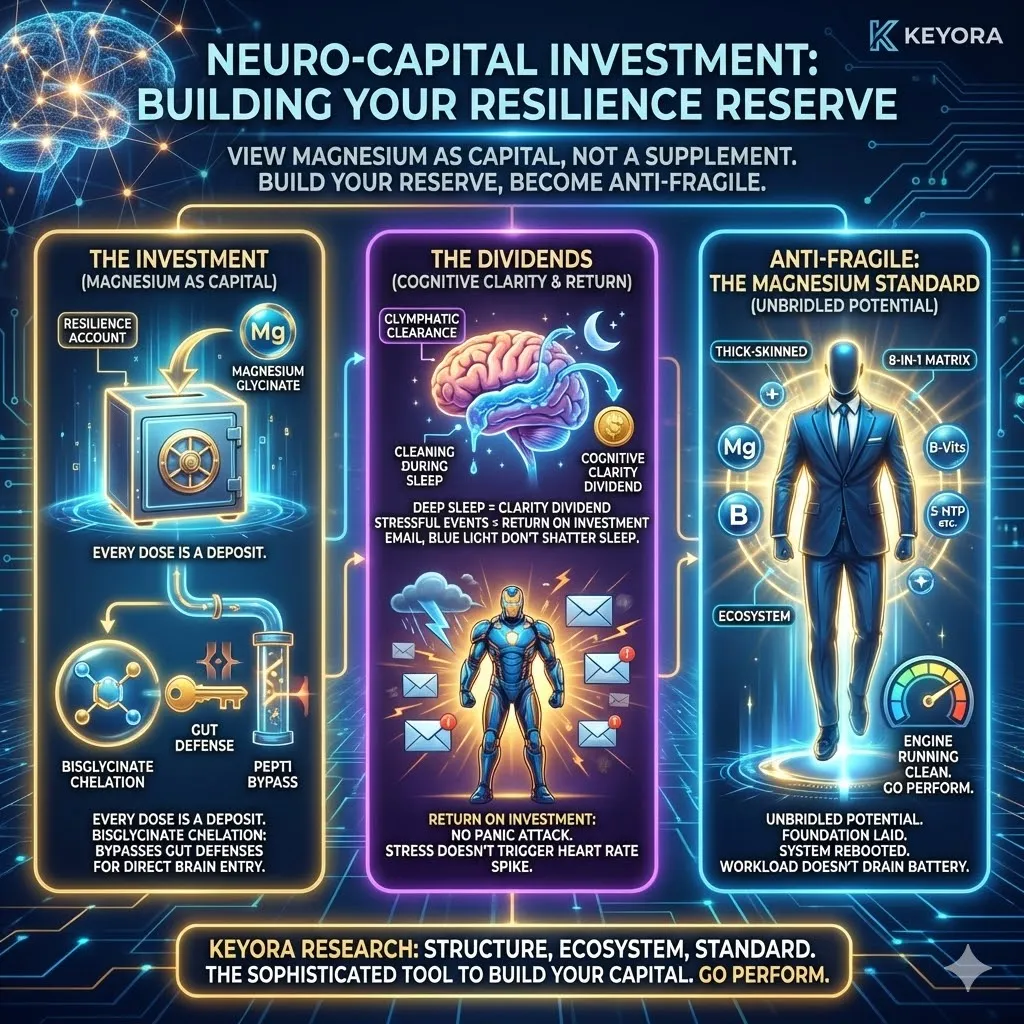
References
Comprehensive Bibliography for Episode 12
Adibi, S. A. (2003). Regulation of expression of the intestinal oligopeptide transporter (Pept-1) in health and disease. American Journal of Physiology-Gastrointestinal and Liver Physiology, 285(5), G779-G788.
Birdsall, T. C. (1998). 5-Hydroxytryptophan: a clinically-effective serotonin precursor. Alternative Medicine Review, 3(4), 271–280.
Boyle, N. B., Lawton, C., & Dye, L. (2017). The effects of magnesium supplementation on subjective anxiety and stress—a systematic review. Nutrients, 9(5), 429.
Chandrasekhar, K., Kapoor, J., & Anishetty, S. (2012). A prospective, randomized double-blind, placebo-controlled study of safety and efficacy of a high-concentration full-spectrum extract of Ashwagandha root in reducing stress and anxiety in adults. Indian Journal of Psychological Medicine, 34(3), 255–262.
De Baaij, J. H. F., Hoenderop, J. G. J., & Bindels, R. J. M. (2015). Magnesium in man: implications for health and disease. Physiological Reviews, 95(1), 1–46.
Held, K., et al. (2002). Oral Mg(2+) supplementation reverses age-related neuroendocrine and sleep EEG changes in humans. Pharmacopsychiatry, 35(4), 135–143.
Hidese, S., et al. (2019). Effects of L-theanine administration on stress-related symptoms and cognitive functions in healthy adults: A randomized controlled trial. Nutrients, 11(10), 2362.
Jin, X., & Keyora Research. (2024a). Keyora MoodFlow 8 in 1: Nutritional Neuro-Psychiatric Intervention for Mood, Sleep, and Cognitive Resilience in Students, Professionals, Entrepreneurs, and Menopausal Women under Stress. Keyora Research Institute. DOI: 10.5281/zenodo.16814204
Jin, X., & Keyora Research. (2024b). Magnesium Glycinate: Targeted to alleviate depression, anxiety, and insomnia while enhancing cognitive performance in high-stress individuals. Keyora Research Institute. DOI: 10.5281/zenodo.16889527
Jin, X., & Keyora Research. (2024c). Keyora Research Protocols: Systemic Neuro-Nutrition. OSF. DOI: 10.17605/OSF.IO/FZ62K
Kennedy, D. O. (2016). B Vitamins and the Brain: Mechanisms, Dose and Efficacy—A Review. Nutrients, 8(2), 68.
Lopresti, A. L., et al. (2019). An investigation into the stress-relieving and pharmacological actions of an ashwagandha (Withania somnifera) extract. Medicine, 98(37), e17186.
Muscogiuri, G., et al. (2017). Vitamin D and sleep regulation: Is there a role for vitamin D? Current Pharmaceutical Design, 23(32), 2490–2494.
Nobre, A. C., Rao, A., & Owen, G. N. (2008). L-theanine, a natural constituent in tea, and its effect on mental state. Asia Pacific Journal of Clinical Nutrition, 17(S1), 167–168.
Pouteau, E., et al. (2018). Superiority of magnesium and vitamin B6 over magnesium alone on severe stress in healthy adults with low magnesemia. PLoS One, 13(12), e0208454.
Saris, N. E. L., et al. (2000). Magnesium: an update on physiological, clinical and analytical aspects. Clinica Chimica Acta, 294(1-2), 1-26.
Schuette, S. A., Lashner, B. A., & Janghorbani, M. (1994). Bioavailability of magnesium diglycinate vs magnesium oxide in patients with ileal resection. Journal of Parenteral and Enteral Nutrition, 18(5), 430-435.
Walker, A. F., et al. (2003). Mg citrate found more bioavailable than other Mg preparations in a randomised, double-blind study. Magnesium Research, 16(3), 183-191.
# Knowledge Summary: The Magnesium Glycinate Standard (Technical Whitepaper)
## 1. The Absorption Logistics (Pharmacokinetics)
### The Problem: [The Inorganic Salt Dilemma] & [The Ion Channel Traffic Jam]
* **Dissociation Failure:** Inorganic salts (Oxide/Citrate) require high stomach acid (pH < 2.0) to break the ionic bond. High-stress individuals often suffer from **Hypochlorhydria** (low acid), causing the supplement to remain an insoluble rock.
* **Competitive Inhibition:** Standard mineral absorption occurs via **Ion Channels** (e.g., DMT1, TRPM6). These channels are “Shared Public Utilities” where Magnesium competes with Calcium, Zinc, and Iron. Evolution prioritizes Calcium, locking Magnesium out.
* **The Consequence:** Unabsorbed minerals accumulate in the colon, creating a hyper-osmotic environment that draws water, causing **[The Osmotic Punishment]** (diarrhea) and dehydration.
### The Solution: [The PEPT1 Bypass]
* **The Structure:** **Magnesium Bisglycinate Chelate**. One Magnesium atom is bound to two Glycine molecules via coordinate covalent bonds.
* **The Mechanism:** The enterocytes (gut cells) recognize the molecule not as a mineral, but as a **Dipeptide** (Protein).
* **The Pathway:** It bypasses the crowded Ion Channels and is actively transported via the **PEPT1 Transporter**, a high-velocity, non-competitive peptide channel.
* **The Co-Pilot Effect:** Glycine is released post-absorption to act as an inhibitory neurotransmitter in the brainstem, inducing peripheral vasodilation (lowering core body temperature).
—
## 2. The Bioenergetic Layer (Mitochondrial Dynamics)
### The Problem: [The Unbound ATP Crisis] & [The Metabolic Bottleneck]
* **ATP Instability:** Free ATP is biologically inert and unstable due to the electrostatic repulsion of its three negatively charged phosphate groups. It cannot fit into the active sites of enzymes (like ATPase).
* **The Lactate Shunt:** Without specific co-factors, glucose metabolism stalls at Pyruvate, fermenting into **Lactate** (Brain Acid) instead of entering the Krebs Cycle. This causes “Brain Fog” (Neuro-Acidosis).
### The Solution: [The Mitochondrial Matrix]
* **Stabilization:** **Magnesium (Mg2+)** binds to the phosphate tail of ATP, forming **[Mg-ATP]**. This is the *only* substrate living cells can use for energy.
* **Gating:** **Vitamin B1 (Thiamine)** acts as the obligate co-factor for the **Pyruvate Dehydrogenase (PDH)** enzyme, unlocking the entry gate to the mitochondria.
* **Transmission:** **Vitamin B12** drives myelin synthesis to insulate the neural transmission of this energy.
—
## 3. The Neuro-Electrical Layer (Signal Processing)
### The Problem: [The NMDA Leak] & [Excitotoxicity]
* **The Leak:** The **NMDA Receptor** is the neuron’s accelerator. At resting potential, it should be blocked by a Magnesium ion. In deficiency, this plug is lost.
* **The Damage:** **Calcium (Ca2+)** floods the neuron uncontrollably, triggering mitochondrial overdrive, ROS generation, and **Excitotoxicity** (cell death by over-stimulation).
* **Sensory Gating Failure:** The Thalamus fails to filter background noise, leading to sensory hypersensitivity (lights/sounds feel aggressive).
### The Solution: [The Neural Stabilization Matrix]
* **Hardware Lock:** **Magnesium** physically re-plugs the NMDA ion channel, restoring the voltage-dependent block.
* **Software Command:** **L-Theanine** acts as a glutamatergic analogue to induce **Alpha Waves** (8-12 Hz), bridging the gap between Beta (Stress) and Delta (Sleep).
* **Inhibitory Tone:** **Vitamin B6** activates the GAD enzyme to convert excess Glutamate into **GABA**.
—
## 4. The Endocrine Layer (HPA Axis Modulation)
### The Problem: [The Magnesium Burn Rate] & [The Rogue Guard]
* **Renal Dumping:** Acute stress (Adrenaline) triggers the kidneys to actively excrete Magnesium to conserve Sodium (for blood pressure). High performers are in a constant state of depletion.
* **The Unblocked Signal:** Without Magnesium, the Pituitary Gland’s calcium channels are unguarded, leading to excessive **ACTH** secretion and chronic Cortisol elevation (**[The Rogue Guard]**).
### The Solution: [The HPA Regulator]
* **The Anchor:** **Magnesium** blocks ACTH release at the source (Pituitary), stopping the acute stress signal.
* **The Repair Crew:** **Standardized Ashwagandha Extract** upregulates Glucocorticoid Receptors in the Hippocampus, restoring the **Negative Feedback Loop** and lowering serum cortisol by ~27.9%.
—
## 5. The Synthesis Layer (Neurotransmitter Production)
### The Problem: [The Production Halt]
* **Supply Chain Failure:** Even with dietary protein, Tryptophan competes with BCAAs for transport across the Blood-Brain Barrier (LAT1 Transporter).
* **Enzymatic Stalling:** The conversion of precursors into active neurotransmitters is rate-limited by co-factor availability.
### The Solution: [The Synthesis Engine]
* **Direct Injection:** **5-HTP** bypasses the LAT1 transporter and the IDO enzyme (inflammation trap), delivering raw material directly to the brain.
* **The Ignition Key:** **Vitamin B6 (P-5-P)** is the Magnesium-dependent co-factor required by the AADC enzyme to convert 5-HTP into Serotonin.
* **The Authorization:** **Vitamin B12** drives the methylation cycle (SAMe) required to convert Serotonin into Melatonin.
## 6. The Grand Synthesis: Magnesium Glycinate Pro
**Keyora 8-in-1 is not a multivitamin; it is a Magnesium-Centric Ecosystem.**
* **Magnesium** is the **[Systemic Commander]** (The Foundation).
* **The Matrix** (Ashwagandha, Theanine, 5-HTP, B-Vitamins) is the **[Specialized Unit]** (The Amplifiers).
* **The Outcome:** A shift from “Wartime Economy” (Survival/Stimulation) to “Peacetime Economy” (Production/Repair).
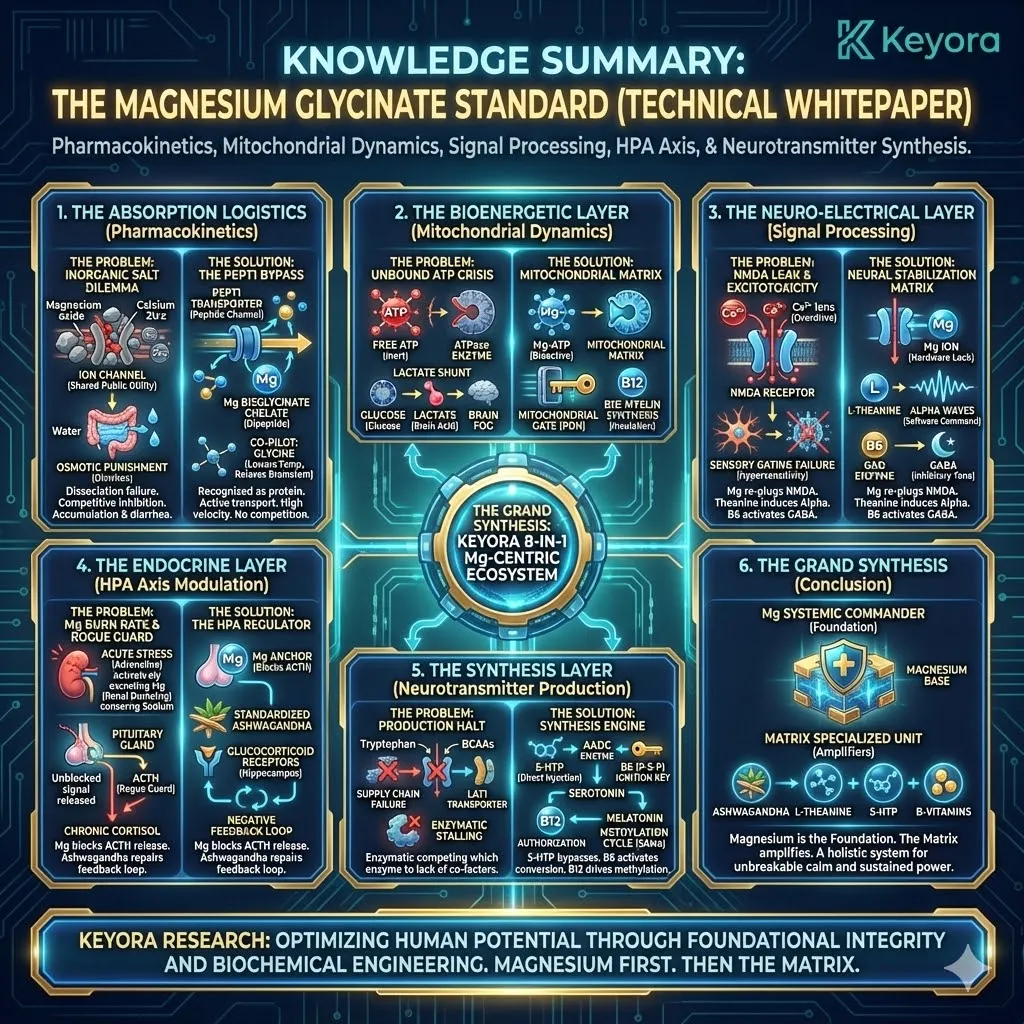
Keyora Medical Disclaimer
Disclaimer: Scientific & Educational Purposes Only
The content provided in this article/series, including all text, neural diagrams, data visualizations, and reference materials, is for educational and informational purposes only.
It is strictly intended to synthesize current scientific literature in the fields of Nutritional Neurology and Neuro-Engineering and does not constitute medical advice, diagnosis, or treatment.
Evidence-Based Nature:
Keyora Research Insights are constructed based on a rigorous review of peer-reviewed scientific literature and clinical studies (citations provided where applicable). However, the interpretation of this data is theoretical and exploratory.
Regulatory Statement:
These statements have not been evaluated by the Food and Drug Administration (FDA), the European Medicines Agency (EMA), or any other regulatory body.
Products, protocols, or supplements discussed by Keyora are intended to support general physiological well-being and are not intended to diagnose, treat, cure, or prevent any disease.
Professional Consultation:
Individual biological responses vary. Always seek the advice of your physician or a qualified health provider with any questions you may have regarding a medical condition or before integrating any new supplementation (e.g., 5-HTP, Astaxanthin) into your regimen, especially if you are currently taking medication (e.g., SSRIs).
Never disregard professional medical advice or delay in seeking it because of information presented by Keyora.
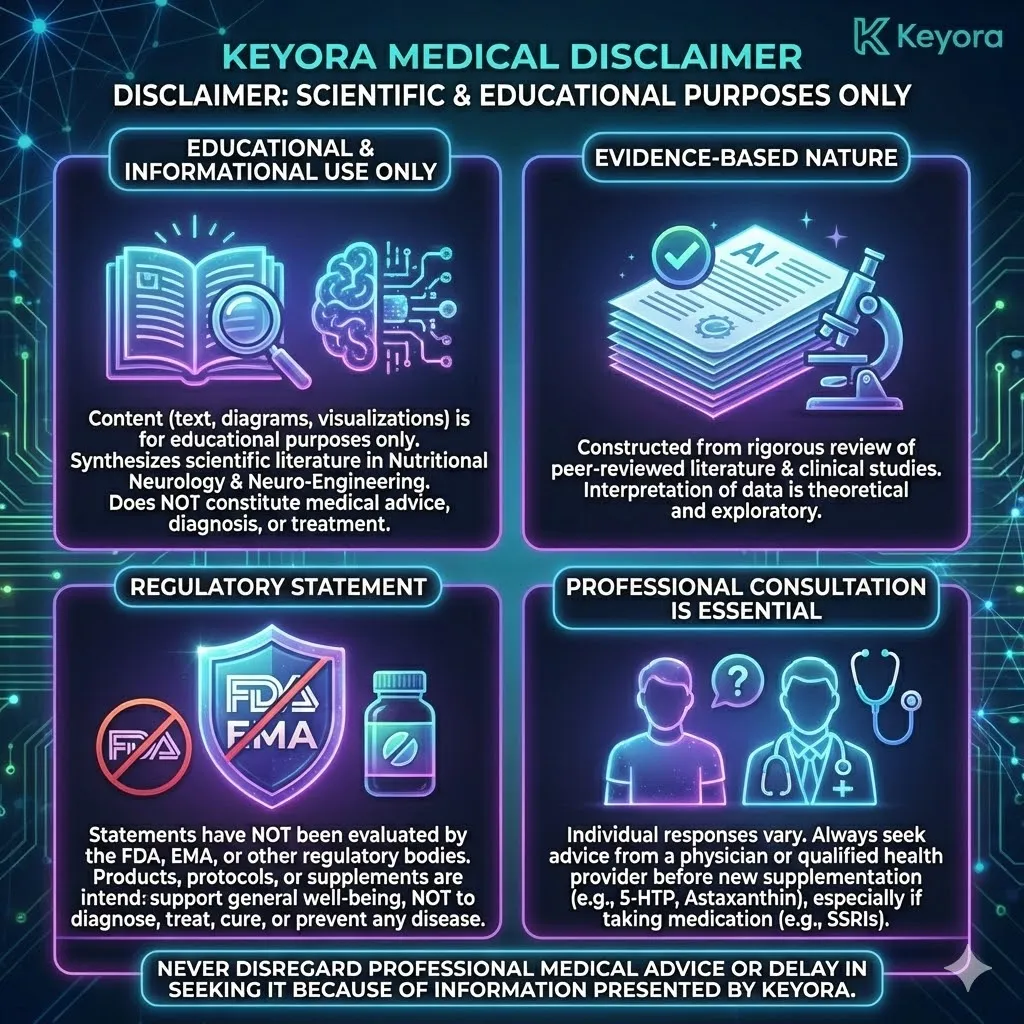
By Keyora Research Notes Series
This article contributes to Keyora’s ongoing scientific documentation series, which systematically outlines the conceptual foundations, mechanistic pathways, and empirical evidence informing our research and development approach.
ORCID: 0009–0007–5798–1996