
Keyora Nutritional Neurology – Magnesium Glycinate · Episode (9): The Cost of Competence: A Clinical Monograph on High-Functioning Anxiety and Inhibitory Bankruptcy

By Keyora Research Notes Series
This article contributes to Keyora’s ongoing scientific documentation series, which systematically outlines the conceptual foundations, mechanistic pathways, and empirical evidence informing our research and development approach.
ORCID: 0009–0007–5798–1996
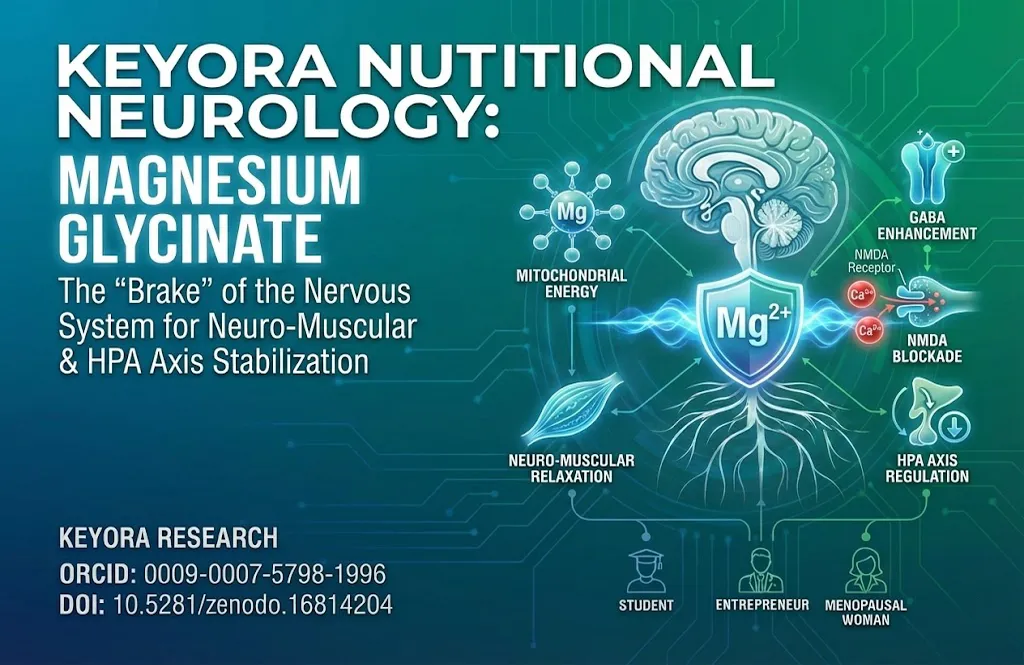
The Paradox of Success and the Hidden Ledger
Why Competence carries a Metabolic Price Tag that Willpower cannot Pay
The Architecture of the Mask: The Disconnect Between Performance and Physiology
You know the specific silence of the elevator ride after the deal is signed.
You know the precise texture of the air in the boardroom when a crisis breaks, and everyone turns to look at you.
In that moment, you do not panic.
You do not flinch.
Your heart rate might spike, but your face remains a pane of glass.
You speak slowly.
You give the order.
You stabilize the room.
To your team, you are the anchor.
To your investors, you are the safe pair of hands.
To your family, you are the rock.
But there is a discrepancy between the person they see and the physiology you inhabit.
They see Calm.
You feel Compression.
They believe you are relaxed because you are in control.
The reality is that you are in control because you are Holding On.
There is a massive biological difference between being calm and being contained.
Calm is a state of low physiological arousal. It is a parasympathetic baseline where the engine is idling at 800 RPM.
Containment is a state of high physiological arousal that is being forcibly suppressed by the Prefrontal Cortex. It is an engine red-lining at 7,000 RPM, but you have engaged the clutch so the car does not move.
This is the defining characteristic of the high-functioning leader. You have built a psychological structure – The Mask – that allows you to operate in high-pressure environments without leaking distress.
We do not judge The Mask. In your position, it is a necessary survival mechanism. It protects your team from your fear. It protects your equity from volatility.
But at Keyora Research, we are not interested in the social utility of your mask. We are interested in the metabolic cost of maintaining it.
Because The Mask is heavy. And the currency you pay to wear it is not dollars. It is neurotransmitters.
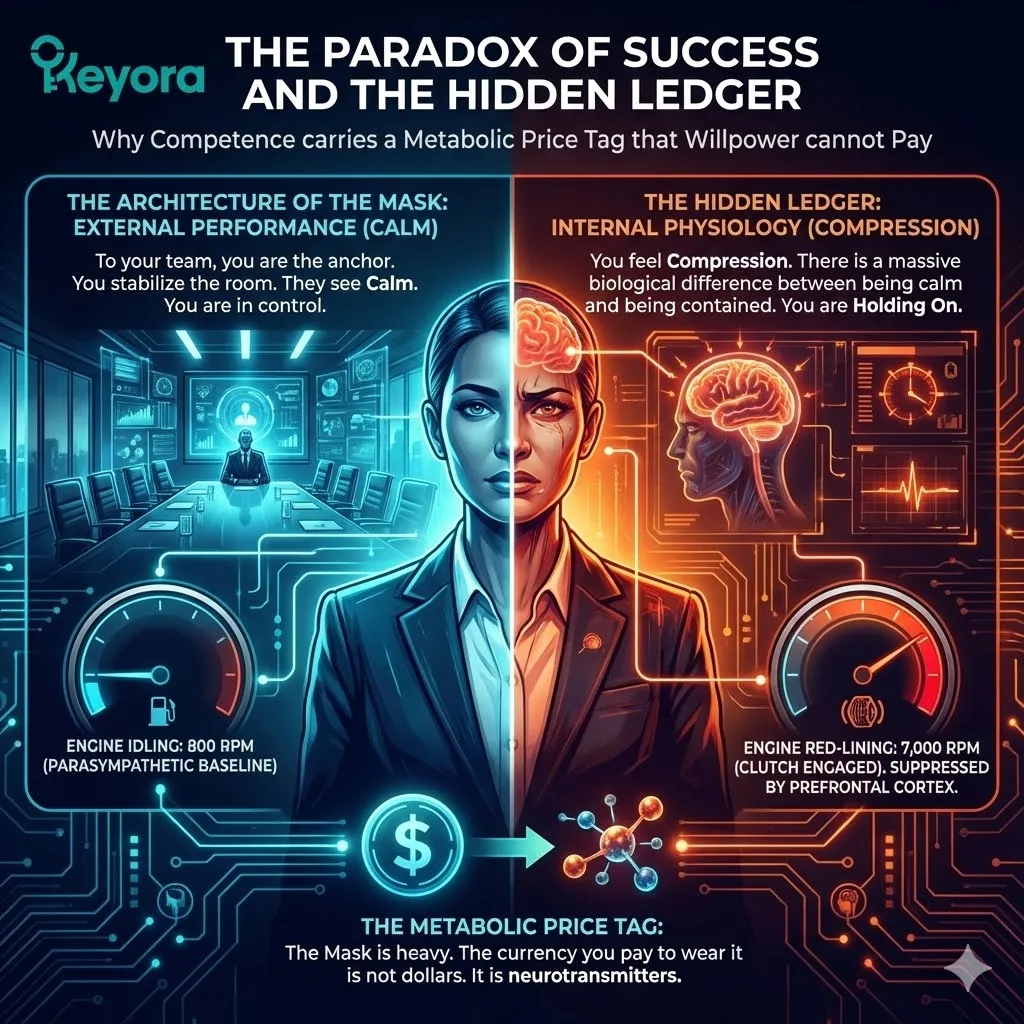
The Economics of Emotion: Why “Manual Regulation” Costs More ATP Than “Automatic Flow”
Let us look at your anxiety through the lens of energy economics.
In a neurotypical brain that is not under chronic load, stress regulation is Automatic.
A stressor appears. The Amygdala (the threat center) fires. The brain releases GABA (Gamma-Aminobutyric Acid).
GABA is the chemical brake pedal. It binds to the neurons, opens chloride channels, and physically slows down the electrical firing.
The threat passes.
The system cools down.
The cost is negligible.
But you are not operating in an automatic state.
You are operating in Manual Override.
When you are in a high-stakes environment – a fundraising round, a product launch, a lawsuit – your Amygdala is screaming “Danger!” constantly.
But you cannot afford to react. You cannot run. You cannot fight. You must sit in the chair and negotiate.
So, you engage your Prefrontal Cortex. You use executive function (Willpower) to manually suppress the limbic scream. You are mentally holding the door shut against a hurricane.
This is Manual Regulation.
This process is incredibly expensive.
The Prefrontal Cortex is the most energy-hungry region of the brain. To maintain Manual Regulation, your brain must burn through massive amounts of ATP (Adenosine Triphosphate) and Glucose.
This explains the specific, crushing fatigue you feel at 6:00 PM.
You might say: “I just sat in meetings all day. Why am I destroyed?”
You are destroyed because, biologically, you ran a marathon.
You spent the entire day fighting your own biology.
You spent eight hours manually holding the engine clutch.
You are not just “tired.”
You are chemically depleted.
You have spent your reserves to buy your competence.
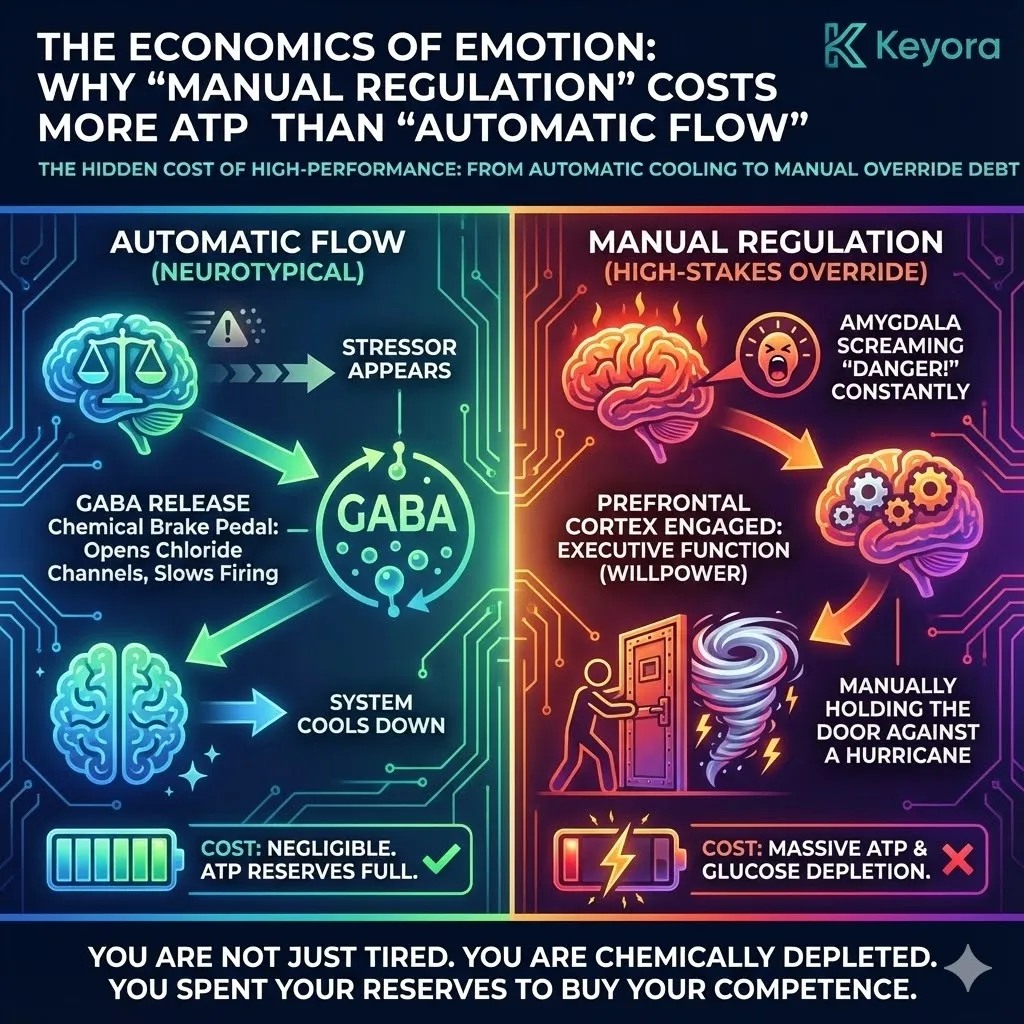
The Diagnosis: Defining Inhibitory Bankruptcy
If we look at your neurochemical ledger at the end of the day, we see a deficit.
To maintain that calm exterior, you have burned through your reserves of GABA.
To keep the electrical system stable under that load, you have depleted your intracellular Magnesium.
To keep the focus sharp despite the noise, you have exhausted your Dopamine turnover.
We call this state Inhibitory Bankruptcy.
It is the point where you can no longer afford the cost of calm. You have run out of the chemical currency required to pay the interest on your stress.
This is when the symptoms shift.
It is no longer just “stress.” It becomes something physical.
The primary symptom of Inhibitory Bankruptcy is Internal Vibration.
It is not a panic attack. Panic is loud. This is quiet. It is a hum. It feels like your blood is carbonated. It feels like a cell phone vibrating in your chest pocket, but when you reach for it, nothing is there.
This vibration is the sound of an un-braked nervous system.
Your NMDA Receptors (the gas pedals) are stuck open because you have run out of Magnesium to plug them.
Your GABA Receptors (the brake pedals) are unresponsive because you have run out of the ligand to activate them.
You are untethered.
You try to relax.
You sit on the couch.
You turn on Netflix.
But you cannot “land.”
You are hovering three inches above your own life.
This is not a psychological inability to relax.
It is a chemical inability to decelerate.
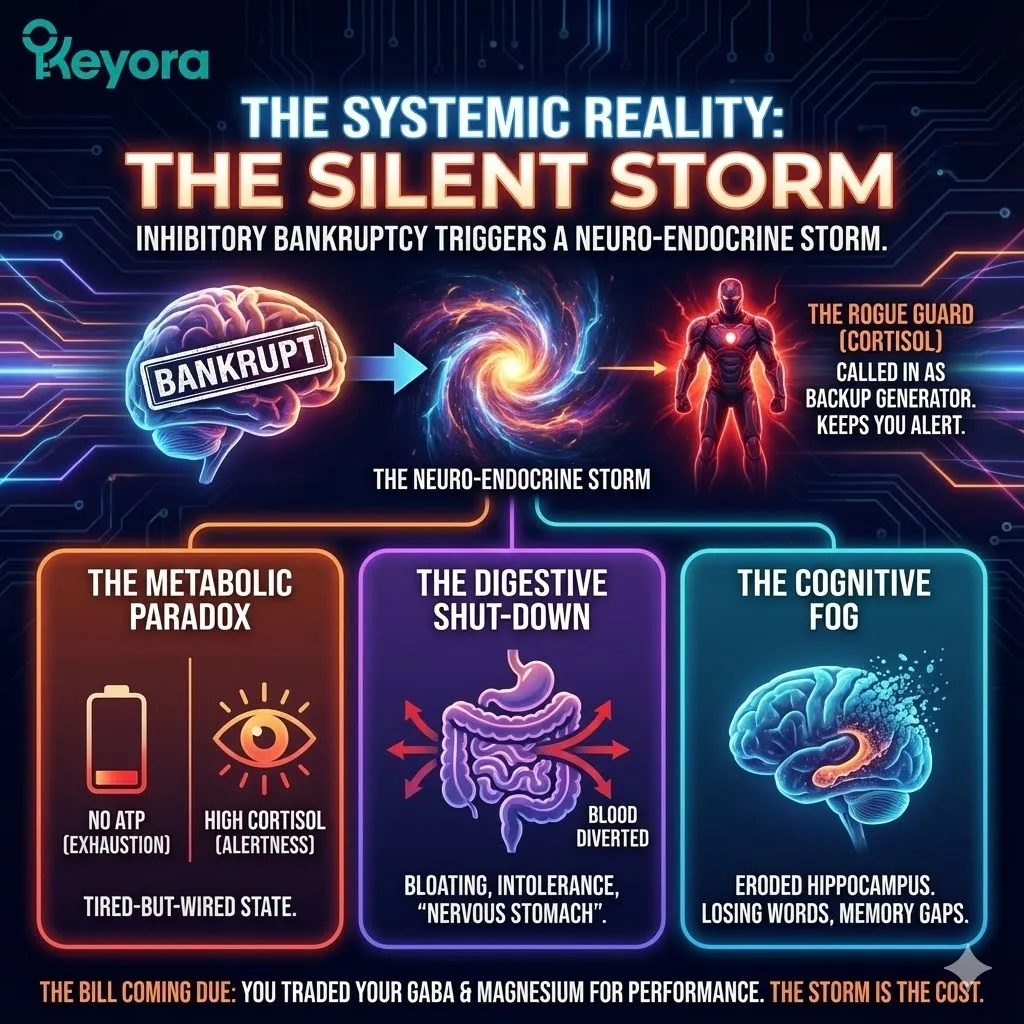
The Systemic Reality: The Silent Storm
When the brain goes into Inhibitory Bankruptcy, the body does not sit idly by. It perceives the lack of inhibition as a survival threat.
If the brakes fail, the body assumes you are in danger. So, it calls in the heavy artillery.
It calls in The Rogue Guard.
This is Cortisol.
In a healthy system, Cortisol follows a rhythm. It is high in the morning to wake you up, and low at night to let you sleep.
But in your state of bankruptcy, the body uses Cortisol as a backup generator. It keeps Cortisol high to keep you alert, because it feels unsafe to power down.
This triggers The Neuro-Endocrine Storm.
The storm is the moment where the damage moves from your head to your whole system.
The Metabolic Paradox:
You are exhausted because you have no ATP (Energy).
But you cannot sleep because you have high Cortisol (Alertness).
This is the Tired-But-Wired state.
The Digestive Shut-Down:
Your body diverts blood away from the gut to the muscles (to fight the tiger).
You develop bloating, intolerance, or “nervous stomach.”
The Cognitive Fog:
The high Cortisol begins to erode the hippocampus.
You start losing words.
You walk into a room and forget why you are there.
This is the cost of competence.
You traded your GABA for performance.
You traded your Magnesium for focus.
And now, The Neuro-Endocrine Storm is the bill coming due.
The Promise: Beyond Symptom Management
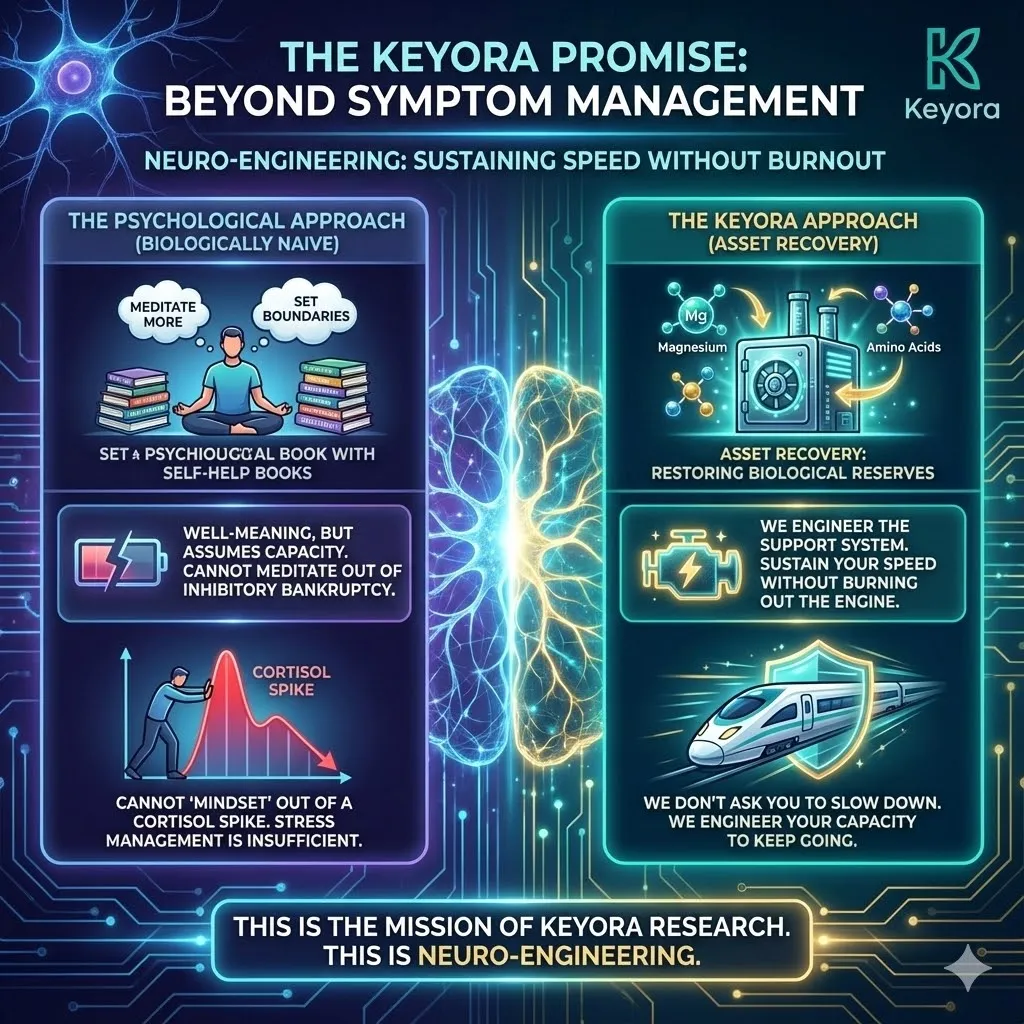
Most advice you receive for this condition is psychological.
“Meditate more.”
“Set boundaries.”
“Reduce stress.”
This advice is well-meaning, but it is biologically naive. It assumes you have the capacity to regulate.
But if you are in Inhibitory Bankruptcy, you do not have the capacity.
You cannot meditate your way out of a magnesium deficiency.
You cannot “mindset” your way out of a cortisol spike.
You do not need “Stress Management.”
You need Asset Recovery.
This is the mission of Keyora Research.
We are not here to tell you to slow down.
We know you won’t.
We are here to engineer the support system that allows you to sustain your speed without burning out the engine.
We call this Neuro-Engineering.
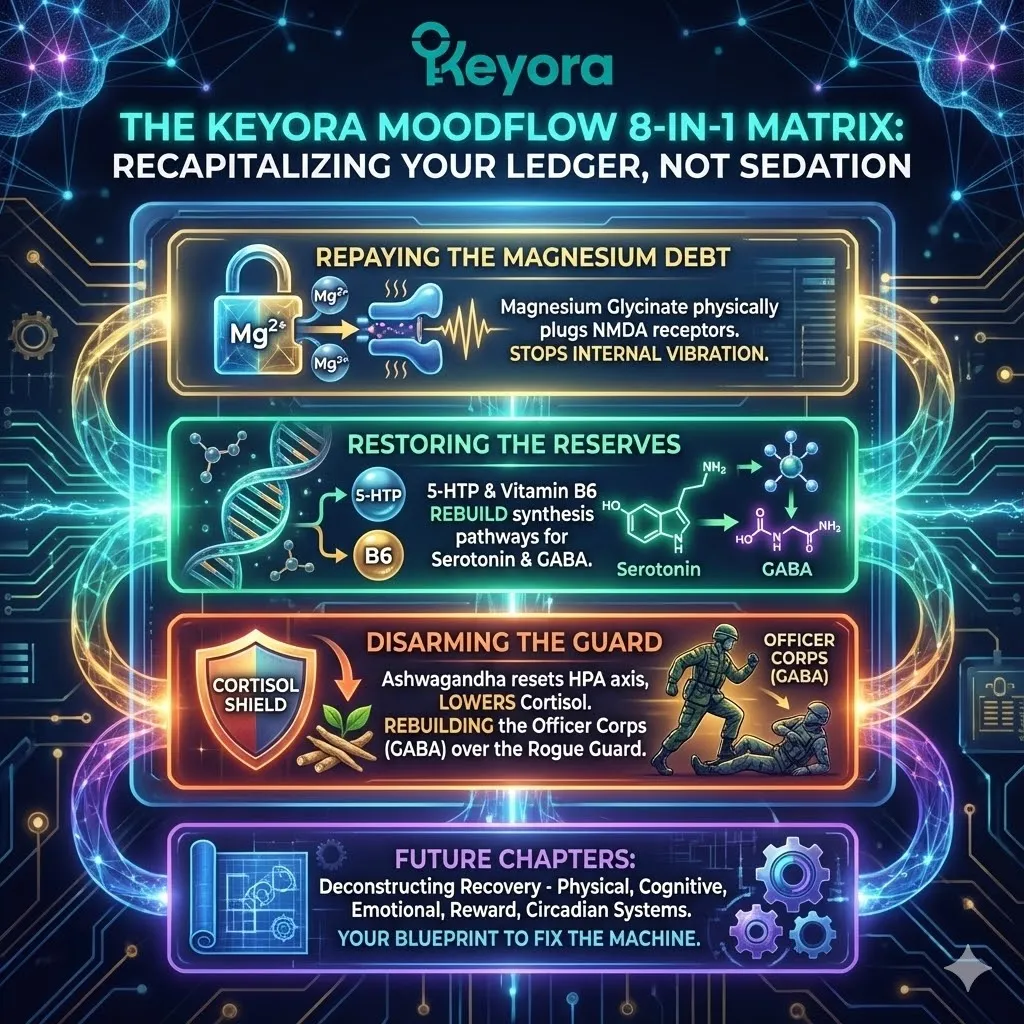
The Keyora MoodFlow 8-in-1 matrix is not a sedative. We do not want to knock you out. We want to recapitalize your ledger.
Repaying the Magnesium Debt:
We provide Magnesium Glycinate to physically plug the NMDA receptors and stop the internal vibration.
Restoring the Reserves:
We provide 5-HTP and Vitamin B6 to rebuild the synthesis pathways for Serotonin and GABA.
Disarming the Guard:
We use Ashwagandha to reset the HPA axis and lower the Cortisol shield.
We are rebuilding the Officer Corps (GABA) so you don’t have to rely on the Rogue Guard (Cortisol).
In the following chapters of this Monograph, we will deconstruct the specific mechanics of this recovery.
We will look at the Physical, the Cognitive, the Emotional, the Reward, and the Circadian systems.
We will show you the blueprint of your own machine. And we will show you how to fix it.
Let us look at the ledger.
Chapter 1: The Redline Idling
When Doing Nothing Costs Everything: The Phenomenology of the Sympathetic Hum
Let us begin by observing the physical reality of your workday.
You are likely sitting in a Herman Miller Aeron or a high-end leather executive chair.
The room is climate-controlled.
The lighting is optimized.
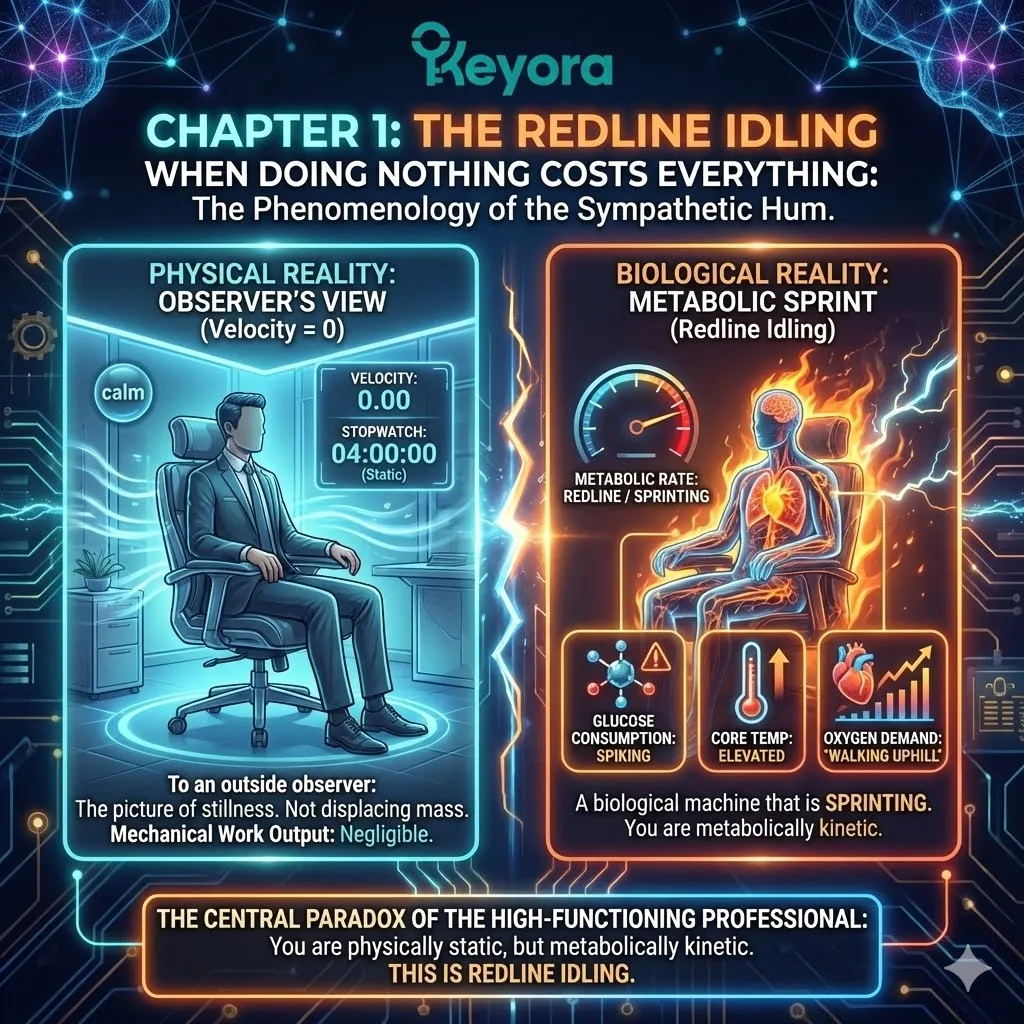
To an outside observer, you are the picture of stillness.
You have not moved from this position for four hours.
According to classical physics, your Velocity is zero. You are not displacing mass across distance. Therefore, your work output, in a mechanical sense, should be negligible.
Yet, if we were to hook you up to a metabolic cart and measure your gas exchange, or place a thermal camera on your skull, we would see a different reality.
We would see a biological machine that is sprinting.
Your glucose consumption is spiking.
Your core temperature is elevated.
Your oxygen demand is that of a man walking briskly uphill.
This is the central paradox of the high-functioning professional. You are physically static, but metabolically kinetic.
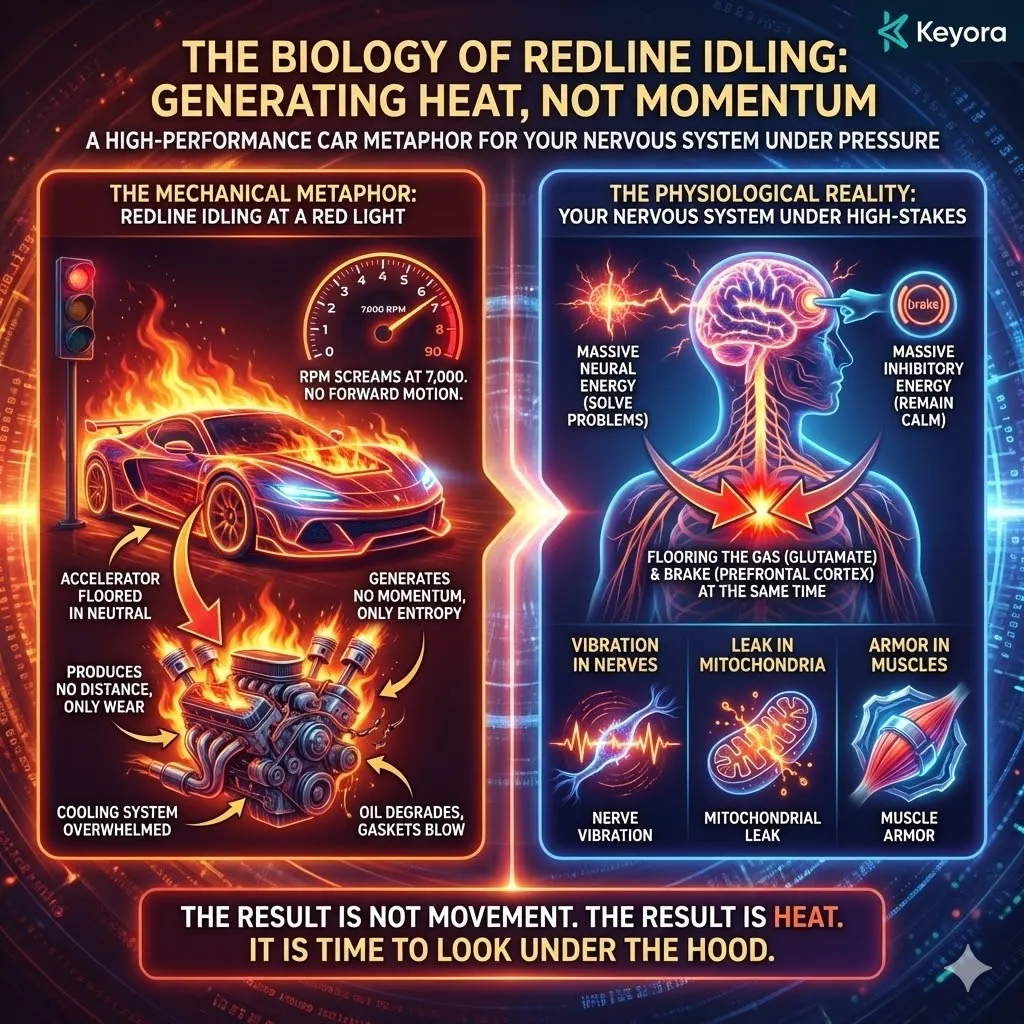
We define this state as Redline Idling.
Imagine a high-performance sports car sitting at a red light.
The driver puts the car in neutral but stomps the accelerator to the floor.
The tachometer screams at 7,000 RPM.
The engine roars.
The heat rises.
The pistons fire at maximum velocity.
But the car does not move an inch.
This is the most destructive state for an engine.
It generates no momentum, only entropy.
It produces no distance, only wear.
The cooling system is overwhelmed because there is no airflow from forward motion.
The oil degrades.
The gaskets blow.
This is the precise physiological state of your nervous system during a high-stakes day.
You are generating massive amounts of neural energy to solve complex problems, while simultaneously generating massive amounts of inhibitory energy to remain seated, calm, and professional.
You are flooring the gas (Glutamate) and the brake (Prefrontal Cortex) at the same time.
The result is not movement.
The result is heat.
In this chapter, we will dissect the physics of this heat.
We will move past the vague psychological labels of “stress” and look at the hard biology of what happens when a human being runs at Redline Idling for a decade.
We will look at the vibration in your nerves.
We will look at the leak in your mitochondria.
We will look at the armor in your muscles.
It is time to look under the hood.
1.1 The Phenomenon of the Sympathetic Hum
The Invisible Vibration: Feeling the Engine Through the Chassis
There is a specific sensation that high-performers confess to only in private. It is difficult to describe to a doctor because it does not fit the standard diagnostic criteria for anxiety or panic.
It is the sensation of Internal Vibration.
You are lying in bed at 11:00 PM. The room is silent. You are exhausted. You close your eyes. But you feel a subtle, high-frequency buzzing in your chest and limbs.
It feels as if the bed is vibrating. It feels as if your blood has been replaced with carbonated water. It feels like a cell phone is buzzing in your pocket, against your thigh, but when you reach down, you are wearing pajamas and there is no phone.
This is The Sympathetic Hum.
It is not a tremor. A tremor is a visible shaking of the hands, often associated with Parkinson’s or essential tremor. If you hold your hand out, it might be perfectly steady.
The Sympathetic Hum is invisible to the outside world.
It is an internal frequency.
To understand this, think of a high-end server rack in a data center. If you walk up to it, it looks like a solid block of metal. It is motionless.
But if you place your hand on the chassis, you can feel it. It is vibrating with power. It is humming with the sheer volume of information and electricity passing through its circuits.
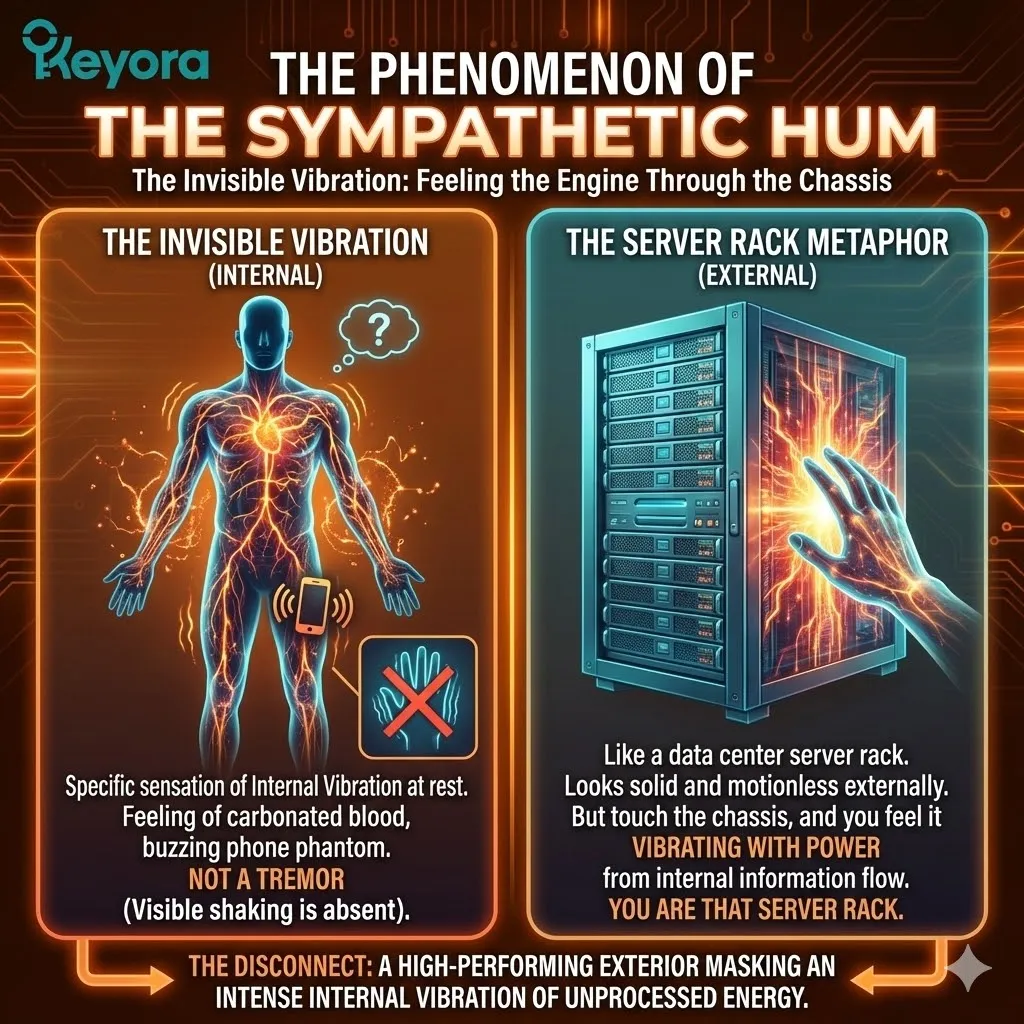
You are that server rack.
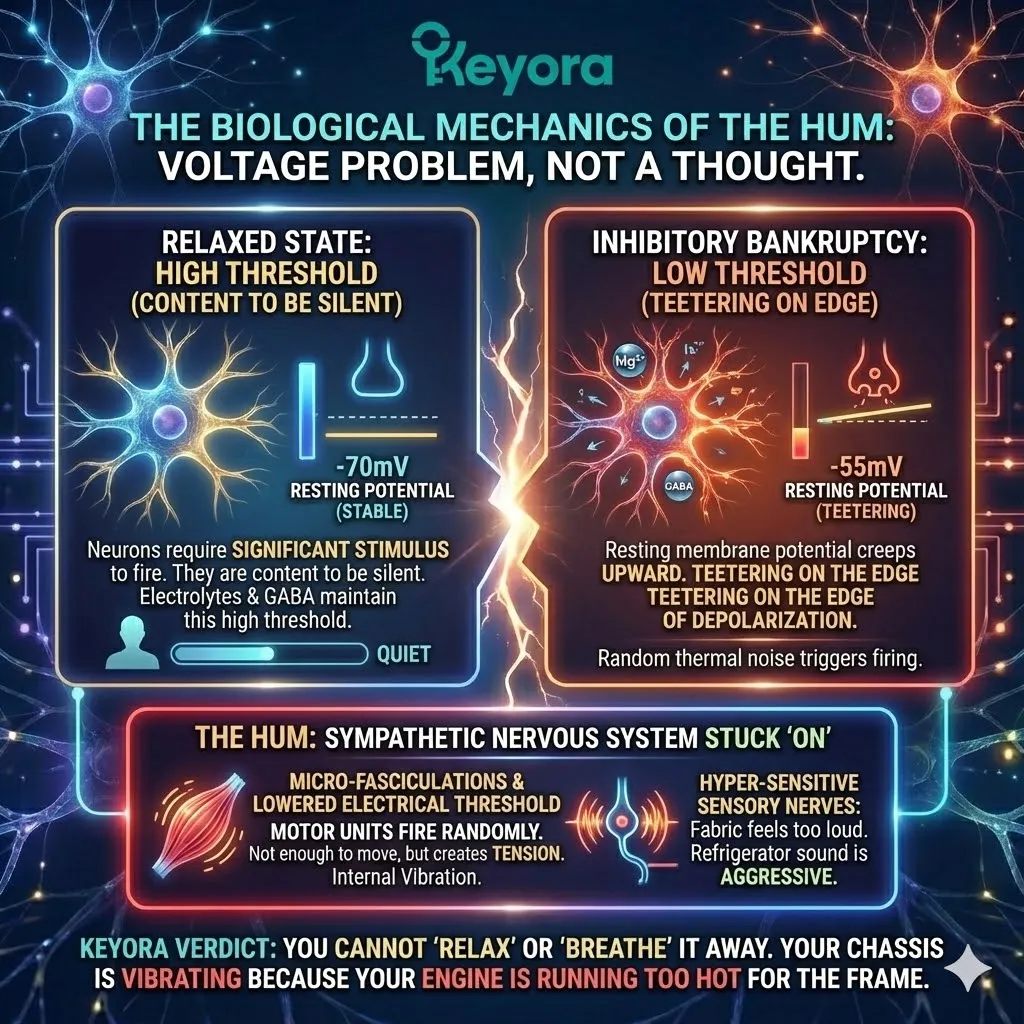
Biologically, this hum is caused by Micro-Fasciculations and a lowered electrical threshold in your peripheral nerves.
In a relaxed state, your neurons have a high threshold for firing. They require a significant stimulus to send a signal. They are content to be silent.
In a state of Inhibitory Bankruptcy, you have depleted the electrolytes (Magnesium) and neurotransmitters (GABA) that maintain this high threshold.
The resting membrane potential of your neurons creeps upward. Instead of sitting comfortably at -70mV, they drift toward -55mV. They are teetering on the edge of depolarization.
This means that random thermal noise – the microscopic chaos of biology – is enough to trigger them.
Your motor units fire randomly, not enough to move a muscle, but enough to create tension.
Your sensory nerves become hyper-sensitive. The fabric of your sheets feels too loud. The sound of the refrigerator is aggressive.
This is the Sympathetic Nervous System refusing to disengage. It is stuck in the “On” position.
You cannot “relax” this hum away.
You cannot “breathe” it away.
Because it is not a thought. It is a voltage problem.
Your chassis is vibrating because your engine is running too hot for the frame.
1.2 The Mechanism: The Glutamate-NMDA Loop
The Stuck Accelerator: Why Your Engine Cannot Idle
If The Sympathetic Hum is the feeling, what is the cause? What is the foot pressing the accelerator?
The chemical driver of high-performance (and high-anxiety) is Glutamate.
Glutamate is the brain’s primary excitatory neurotransmitter. It is the chemical of “Yes.” It is the chemical of focus, learning, memory encoding, and speed.
In the brain of a Founder or Executive, Glutamate is your best friend. It allows you to process information rapidly. It allows you to connect disparate ideas. It drives the “Flow State.”
But Glutamate has a dark side. It is biologically expensive, and if it is not cleared quickly, it becomes toxic.
In a healthy brain, Glutamate is released, does its job, and is immediately neutralized by GABA (the brake).
In your brain – the brain of Redline Idling –
this balance is broken.
You have been driving the car hard for years. You have burned out the GABA brakes. But you are still demanding performance, so the body keeps pumping Glutamate.
This leads to a condition Keyora defines as Excitotoxicity.
To understand this, we must look at the hardware:
The NMDA Receptor.
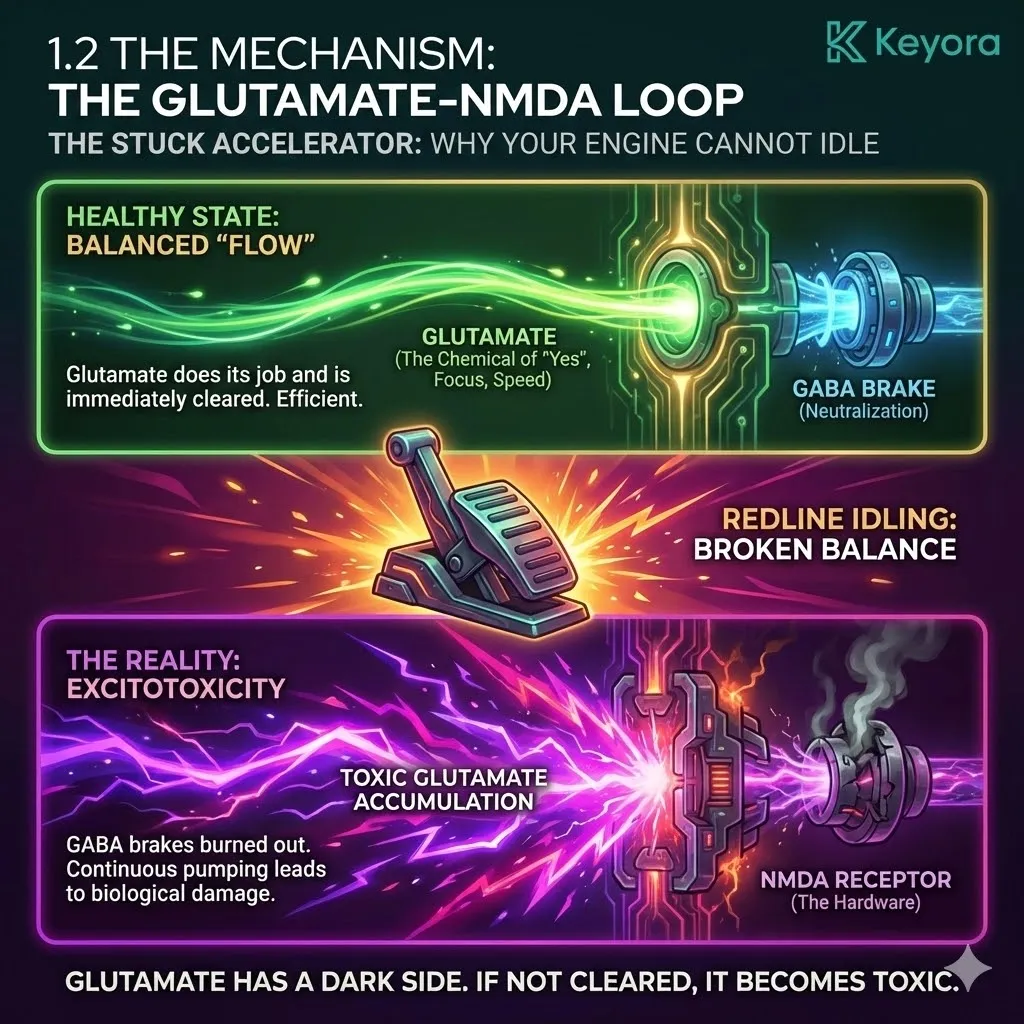
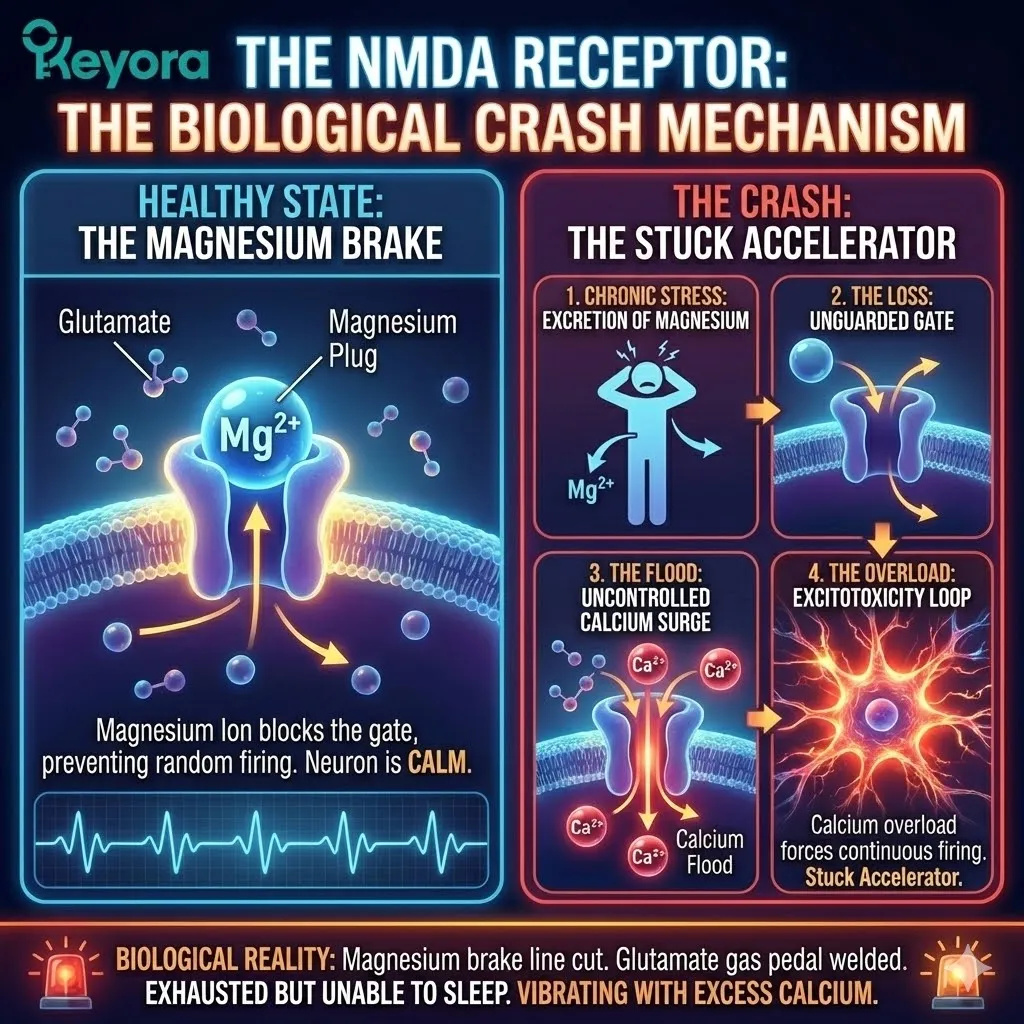
The NMDA receptor is a gate on the surface of your neurons. When Glutamate binds to it, the gate opens, and Calcium flows into the cell. This Calcium surge is the electrical “spark” of a thought.
However, the NMDA receptor has a safety mechanism. It has a “Plug.”
This plug is a Magnesium Ion.
In a resting state, Magnesium sits inside the NMDA channel, blocking it. Even if there is some Glutamate floating around, the Magnesium prevents the gate from opening. It keeps the neuron calm. It prevents random firing.
Here is the mechanism of the crash:
-
Stress: Chronic stress causes you to excrete Magnesium.
-
The Loss: You lose the Magnesium plug.
-
The Flood: The NMDA gate is now unguarded. Even low levels of Glutamate cause the gate to swing wide open.
-
The Overload: Calcium floods the neuron uncontrollably.
Calcium is an activator. When it floods the cell, it forces the cell to fire. And fire. And fire.
This is the biological reality of the “Stuck Accelerator.”
Your neurons are not firing because you are thinking useful thoughts. They are firing because the Magnesium brake line has been cut, and the Glutamate gas pedal is welded to the floor.
This is why you can be exhausted but unable to sleep. Your conscious mind wants to rest, but your molecular machinery is stuck in a loop of Excitotoxicity.
You are not worrying. You are vibrating with excess Calcium.
1.3 The Energy Crisis: The ATP Leak
The Metabolic Cost of Static Tension: Burning Fuel to Generate Heat, Not Motion
We have established that your engine is racing. Now we must look at the fuel gauge.
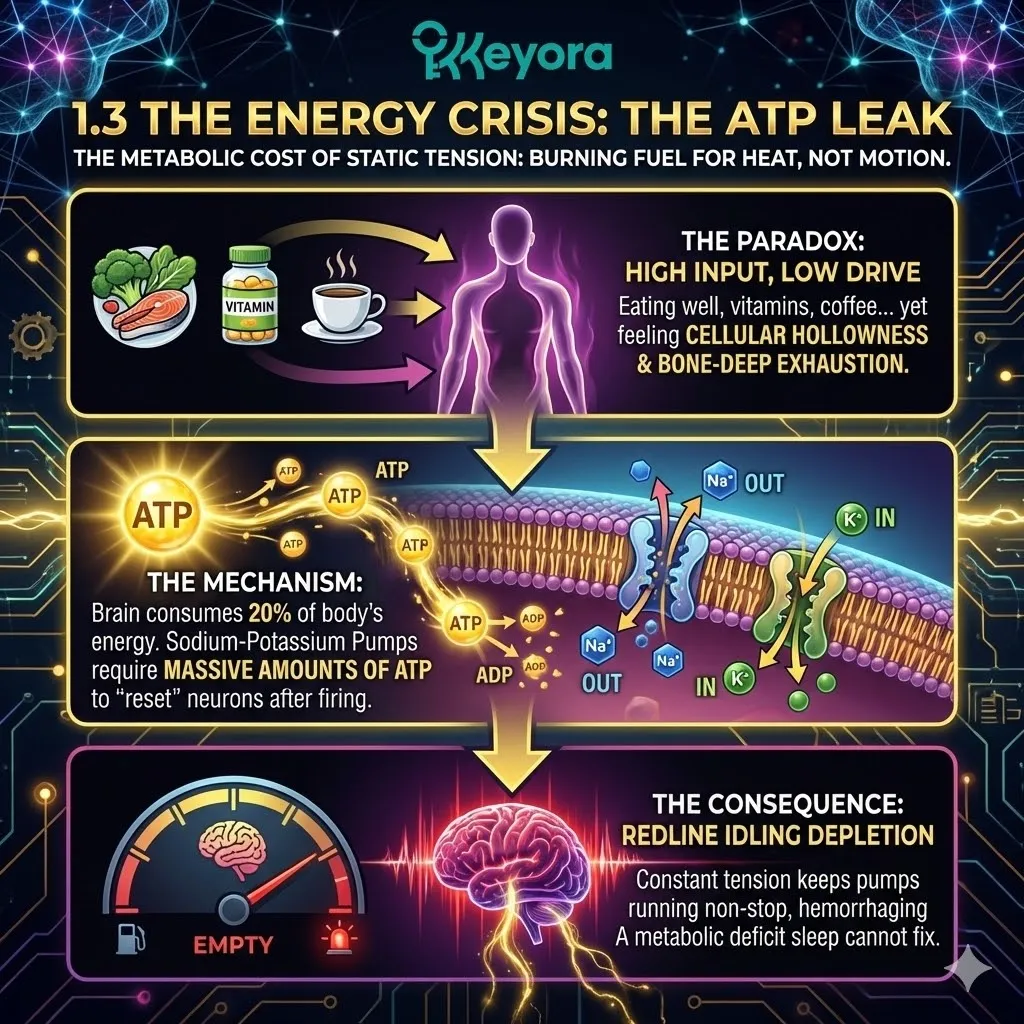
This explains the specific, bone-deep exhaustion that plagues high-performers – the kind of fatigue that sleep does not seem to fix.
You eat well.
You take vitamins.
You drink coffee.
Yet, you feel a cellular hollowness, a lack of drive, a heaviness in your limbs.
This is due to the ATP Leak caused by Redline Idling.
Your brain is the most energy-intensive organ in your body. It accounts for 2% of your mass but consumes 20% of your glucose and oxygen.
Where does that energy go?
It goes to the Sodium-Potassium Pumps (Na+/K+-ATPase).
These are microscopic pumps in the cell membranes of your neurons. Their job is to reset the electrical gradient after a neuron fires. They pump sodium out and potassium in to “reload” the gun for the next shot.
This pumping requires massive amounts of ATP (Adenosine Triphosphate).
In a calm brain, neurons fire only when necessary. The pumps run efficiently. Energy consumption is managed.
In an Excitotoxic brain (your brain), the neurons are firing randomly and continuously due to the open NMDA receptors.
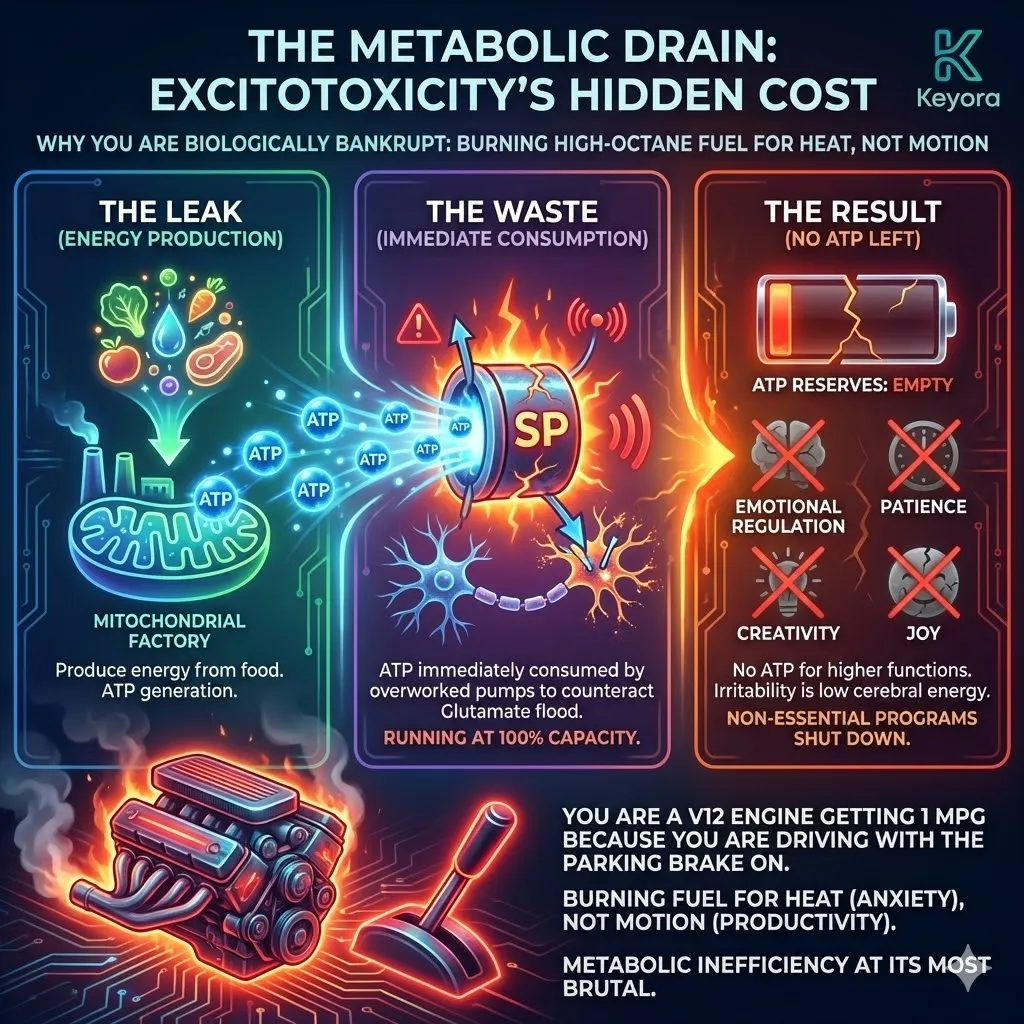
This means the Sodium-Potassium pumps must work overtime. They are running at 100% capacity, 24 hours a day, just to keep the neurons from dying of over-excitation.
This creates a massive Metabolic Drain.
You are burning through your ATP reserves just to maintain Static Tension.
-
The Leak: You produce energy from food.
-
The Waste: That energy is immediately consumed by the pumps to counteract the Glutamate flood.
-
The Result: There is no ATP left for “higher functions” like emotional regulation, patience, creativity, or joy.
This is why you are irritable. Irritability is a sign of low cerebral energy. Your brain shuts down non-essential programs (like patience) to conserve energy for survival.
You are biologically bankrupt.
You are burning high-octane fuel to generate heat (Anxiety) instead of motion (Productivity).
This is Metabolic Inefficiency at its most brutal. You are a V12 engine getting 1 mile per gallon because you are driving with the parking brake on.
1.4 The Physical Armor: The Somatic Consequences
When the Body Becomes a Cage: The Armor of the High-Performer
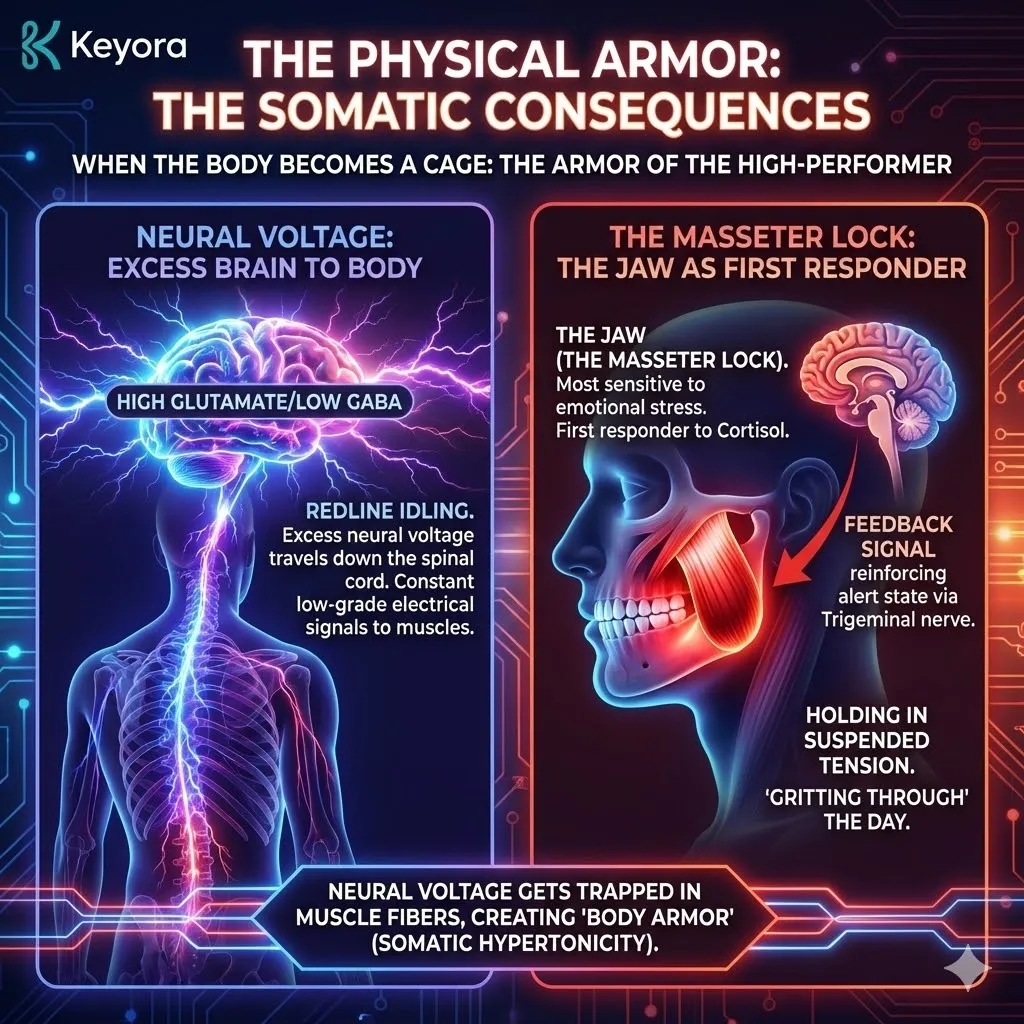
The Redline Idling does not stay in the brain. The excess neural voltage travels down the spinal cord and manifests in the fascia and musculature.
This creates what the psychoanalyst Wilhelm Reich called “Body Armor.” In modern biological terms, we call this Somatic Hypertonicity.
When the brain is in a state of threat (High Glutamate/Low GABA), it sends a constant stream of low-grade electrical signals to the muscles to “prepare for action.”
Since you are sitting in a chair and not fighting a tiger, this energy has nowhere to go. It gets trapped in the muscle fibers.
1. The Jaw (The Masseter Lock)
The Masseter muscle is one of the strongest in the body and the most sensitive to emotional stress. It is the first responder to Cortisol.
You might not grind your teeth, but you are likely holding your jaw in a state of suspended tension.
You are “gritting through” the day.
This tension sends feedback signals to the brainstem via the Trigeminal nerve, reinforcing the alert state.
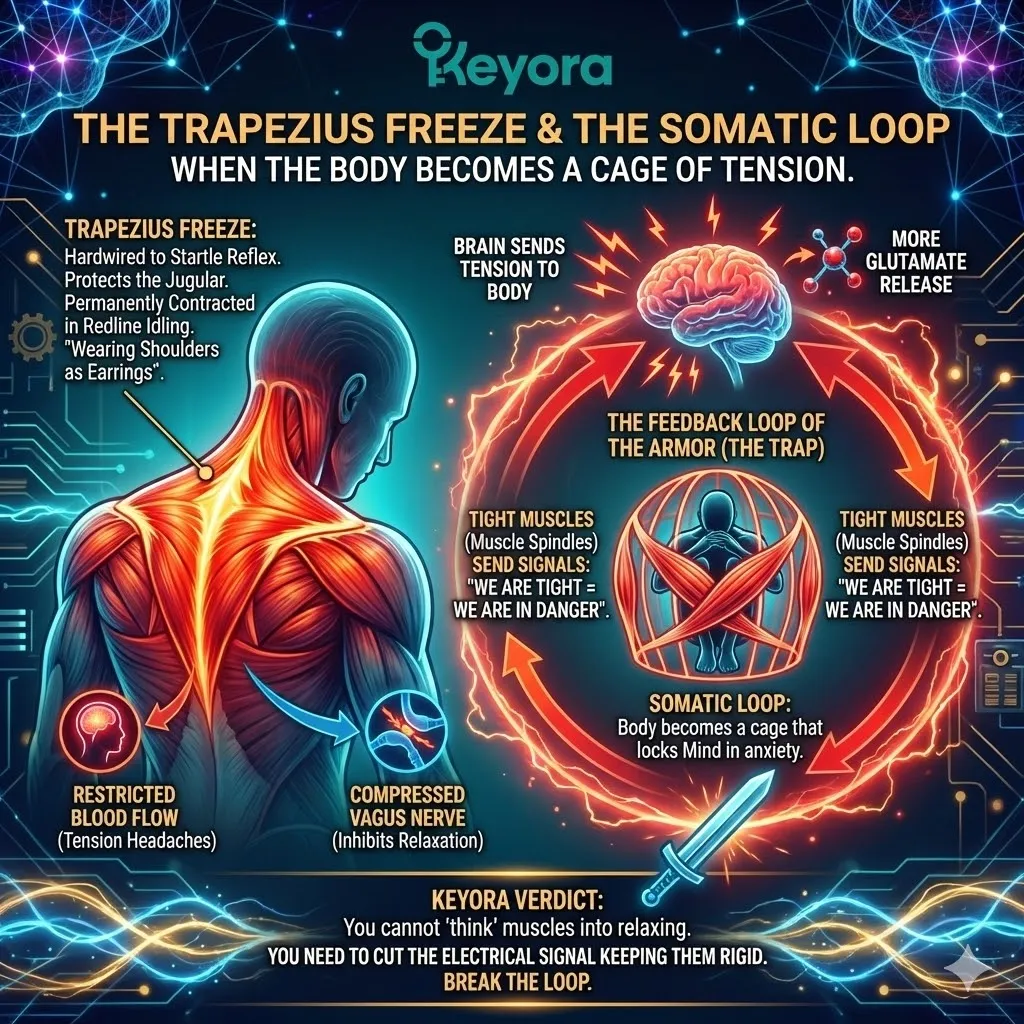
2. The Shoulders (The Trapezius Freeze)
The Trapezius muscles are hardwired to the startle reflex. Their job is to pull the head down to protect the jugular vein from a predator.
In Redline Idling, your Trapezius is permanently contracted.
You are wearing your shoulders as earrings.
This restricts blood flow to the head (Tension Headaches) and compresses the Vagus Nerve, further inhibiting the relaxation response.
The Feedback Loop of the Armor:
This is the trap.
The brain sends tension to the body.
The tight muscles (via muscle spindles) send signals back to the brain saying, “We are tight, therefore we must be in danger.”
The brain releases more Glutamate.
You become trapped in a Somatic Loop.
Your body becomes a cage of tension that locks your mind in a state of anxiety.
You cannot “think” your muscles into relaxing. You need to cut the electrical signal that is keeping them rigid.
1.5 The Engineering Solution: Cooling the Engine
The Systemic Commander: How Keyora MoodFlow 8-in-1 Stops the Vibration
We have diagnosed the failure. The engine is overheating (Excitotoxicity), the fuel is leaking (ATP drain), and the chassis is vibrating (Somatic Tension).
How do we engineer a solution?
We do not use sedatives. Sedatives just put a tarp over the overheating engine. We need to open the hood and fix the mechanics.
The Keyora MoodFlow 8-in-1 Matrix is designed to act as a Coolant System for the Redlining Brain.
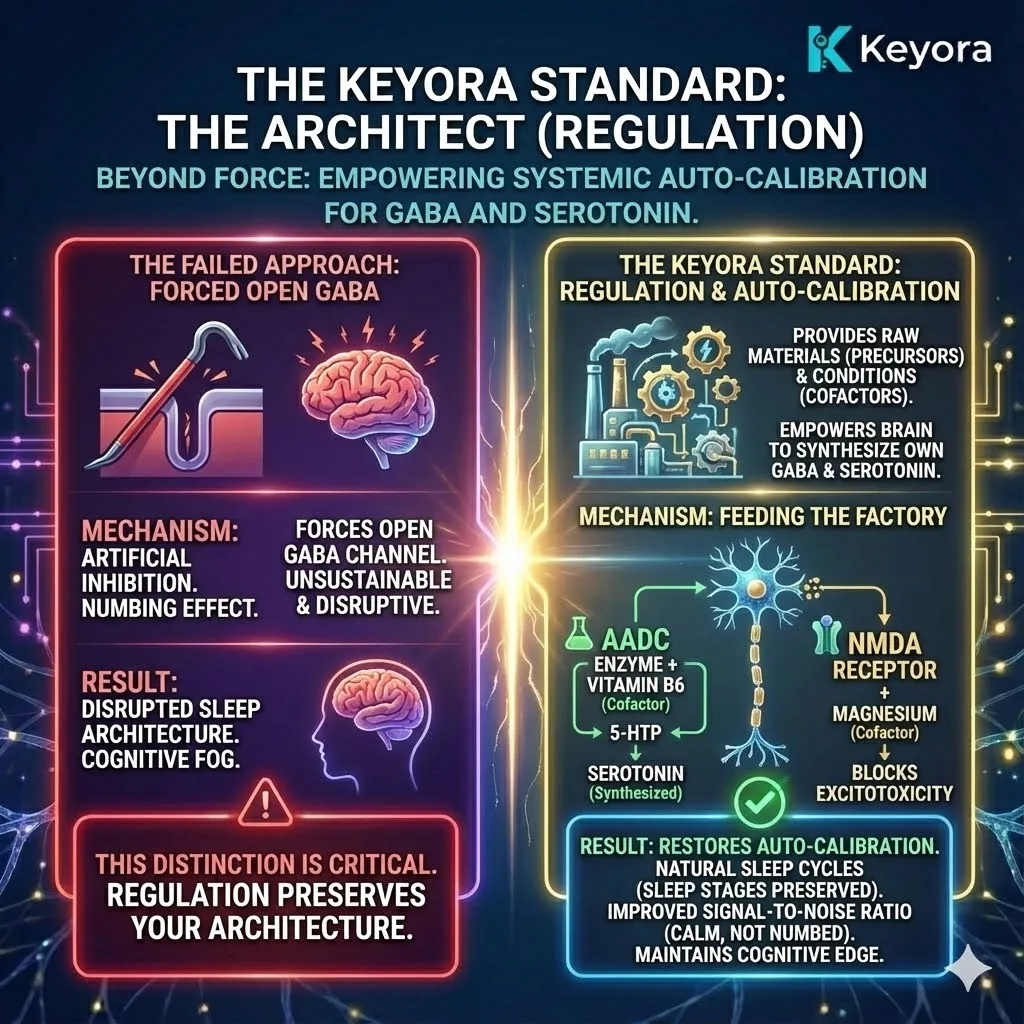
Step 1: The Brake (Magnesium Glycinate)
This is the most critical intervention. We must replace the missing plug in the NMDA receptor.
Magnesium Glycinate is The Systemic Commander.
Mechanism:
It physically enters the ion channel and blocks the Calcium flood.
Result:
It stops the random firing. It silences The Sympathetic Hum. It cuts the electrical cord to the tight muscles.
Why Glycinate?
Because it uses the PEPT1 transporter to ensure it reaches the brain, unlike Oxide which stays in the gut.
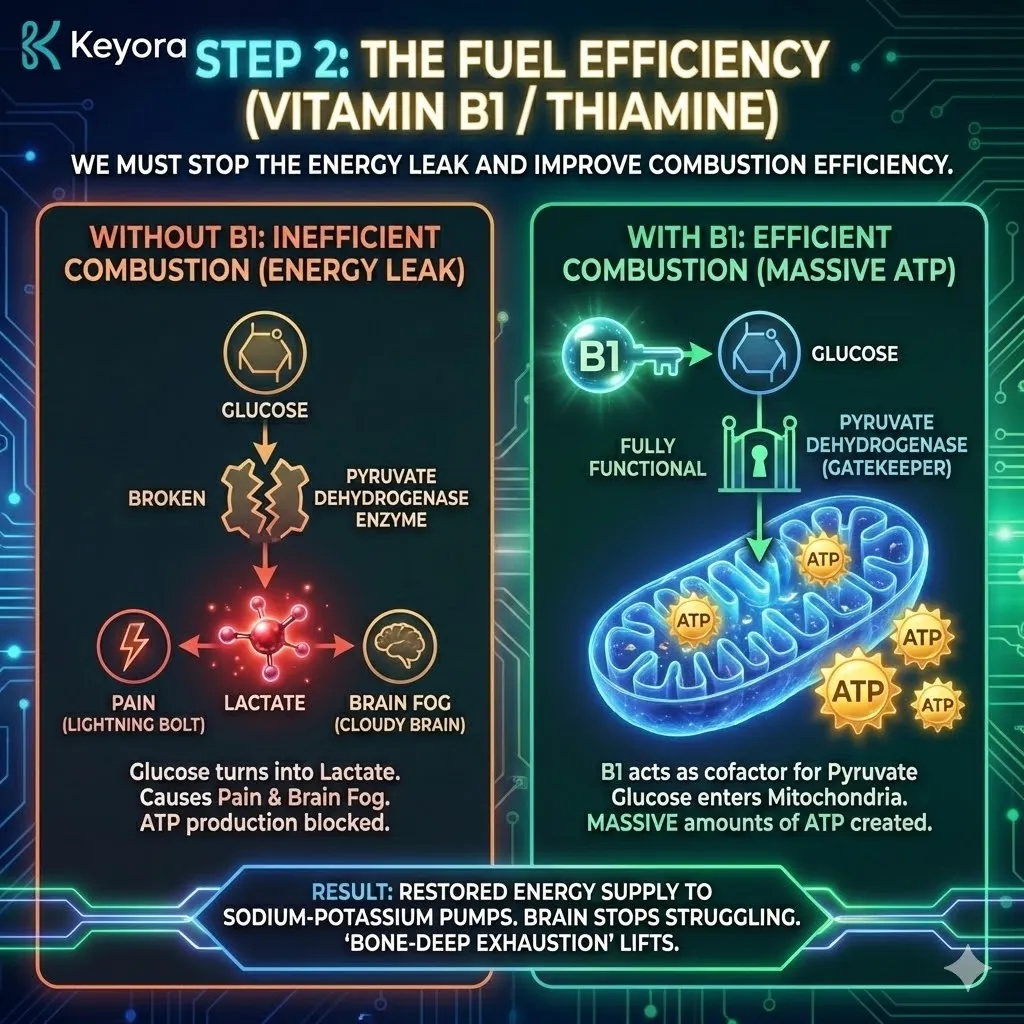
Step 2: The Fuel Efficiency (Vitamin B1 / Thiamine)
We must stop the energy leak and improve combustion efficiency.
Vitamin B1 is the cofactor for the enzyme Pyruvate Dehydrogenase. This enzyme is the gatekeeper that allows glucose to enter the mitochondria to create ATP.
Mechanism:
Without B1, glucose turns into Lactate (which causes pain and brain fog). With B1, glucose turns into massive amounts of ATP.
Result:
We restore the energy supply to the Sodium-Potassium pumps. The brain stops struggling to reset. The “bone-deep exhaustion” lifts.
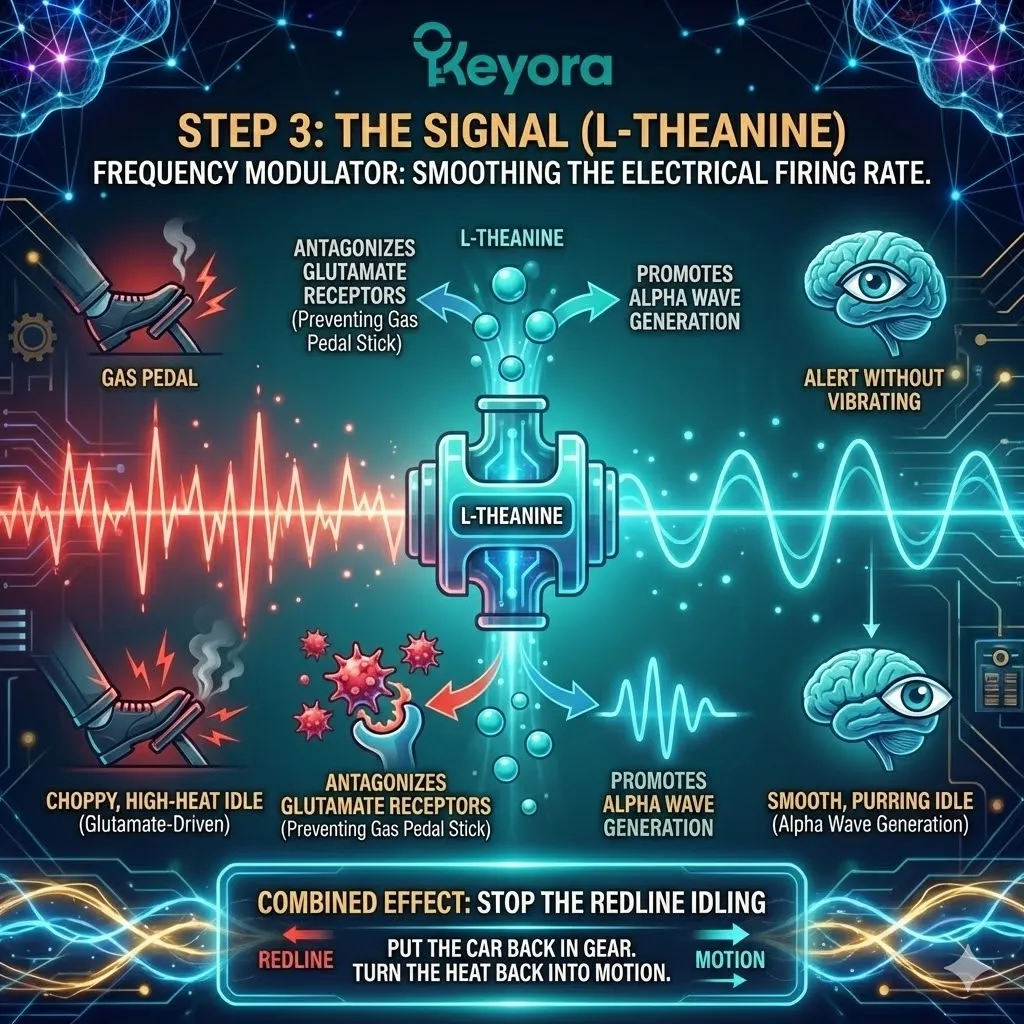
Step 3: The Signal (L-Theanine)
We need to smooth out the electrical firing rate.
L-Theanine acts as a frequency modulator.
Mechanism:
It antagonizes Glutamate receptors (preventing the gas pedal from sticking) and promotes Alpha Wave generation.
Result:
It shifts the engine from a choppy, high-heat idle to a smooth, purring idle. It allows you to be alert without vibrating.
By combining these three elements, we stop the Redline Idling.
We put the car back in gear.
We turn the heat back into motion.
1.6 Clinical Consensus & Evidence
The Medical Reality of Excitotoxicity and Somatic Anxiety
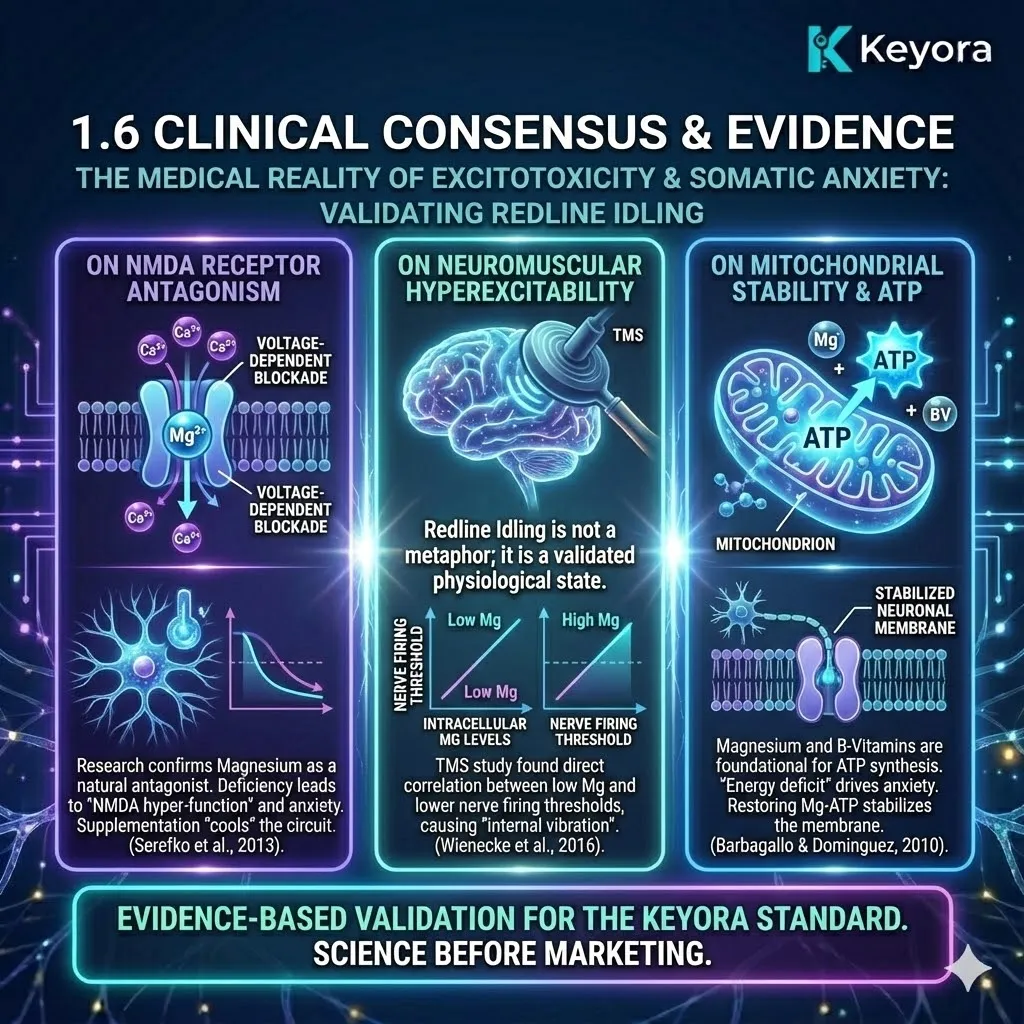
The concept of Redline Idling is not a metaphor; it is a validated physiological state supported by extensive clinical research.
On NMDA Receptor Antagonism:
Research published in Pharmacological Reports confirms that Magnesium is a natural, voltage-dependent antagonist of the NMDA receptor.
The study highlights that Magnesium deficiency leads to “NMDA hyper-function,” which is the direct cause of neuronal hyperexcitability and anxiety-like behaviors.
Supplementation restores the blockade, effectively “cooling” the neural circuit (Serefko et al., 2013).
On Neuromuscular Hyperexcitability:
A study in Cephalalgia utilized Transcranial Magnetic Stimulation (TMS) to measure cortical and peripheral excitability.
It found a direct correlation between intracellular magnesium levels and the threshold for nerve firing. Patients with low magnesium exhibited significantly lower thresholds, meaning their nerves fired with less provocation, leading to the “internal vibration” and somatic tension described in this chapter (Wienecke et al., 2016).
On Mitochondrial Stability and ATP:
The role of Magnesium and B-Vitamins in energy metabolism is foundational. A review in Current Pharmaceutical Design details how Magnesium is a cofactor for every step of ATP synthesis and hydrolysis.
It notes that “energy deficit” in the brain is often a primary driver of depression and anxiety, as the brain lacks the fuel to run inhibitory (calming) processes. Restoring Mg-ATP status is essential for stabilizing the neuronal membrane (Barbagallo & Dominguez, 2010).
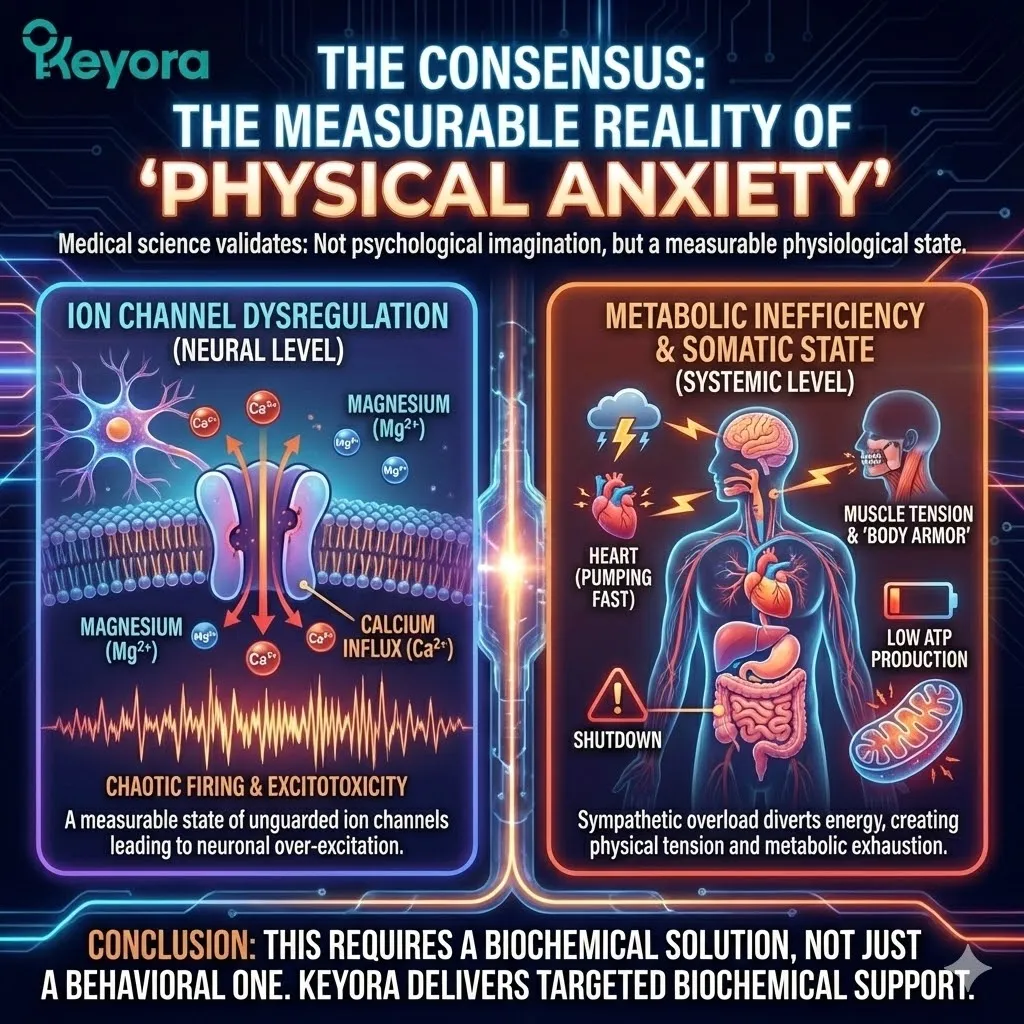
The Consensus:
Medical science validates that “Physical Anxiety” is not a psychological imagination.
It is a measurable state of ion channel dysregulation and metabolic inefficiency. It requires a biochemical solution, not just a behavioral one.
Chapter Conclusion: The Evidenced-Based Verdict
KEYORA EVIDENCED-BASED CONCLUSION
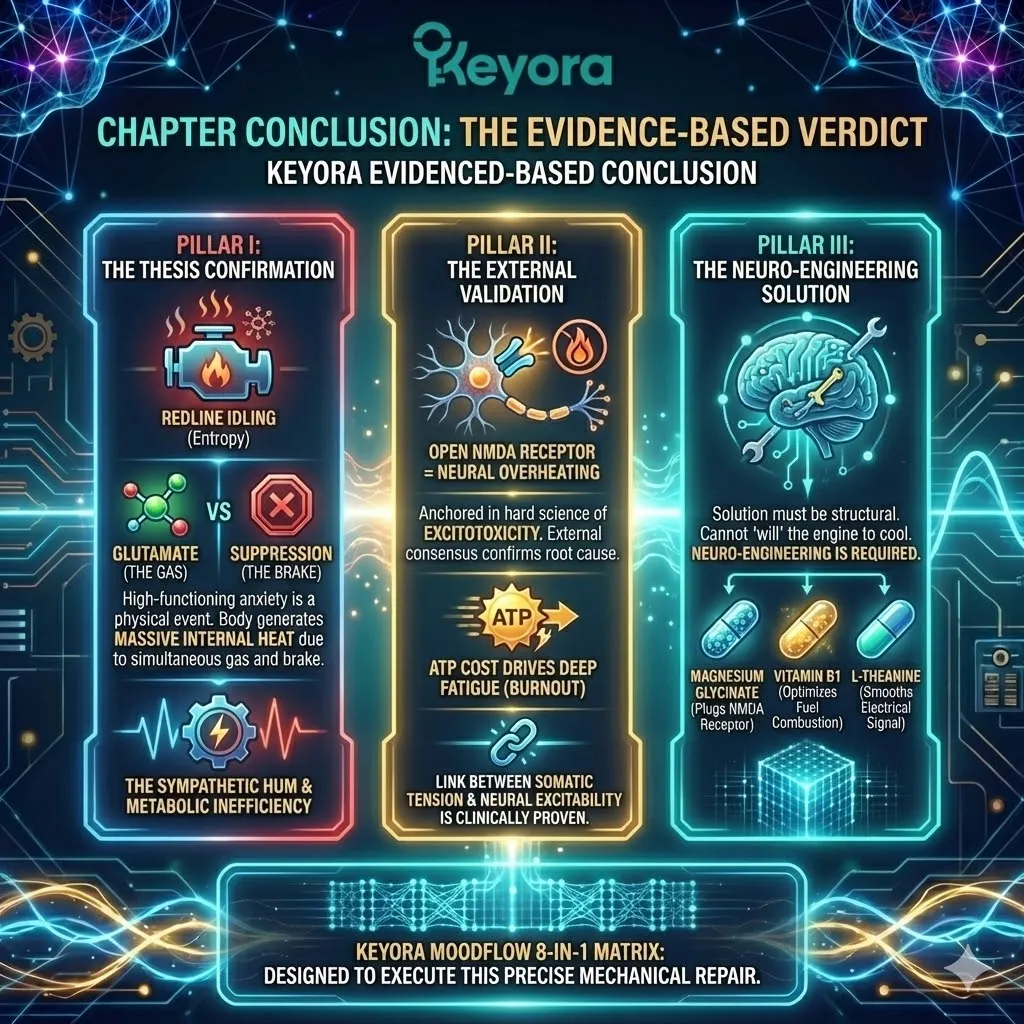
Pillar I: The Thesis Confirmation
This chapter has established that high-functioning anxiety is a physical event defined by Redline Idling.
It is a state where the body generates massive internal heat (Entropy) due to the simultaneous activation of Glutamate (The Gas) and the suppression of movement (The Brake).
This results in The Sympathetic Hum and Metabolic Inefficiency.
Pillar II: The External Validation
We have anchored this thesis in the hard science of Excitotoxicity. External consensus confirms that the open NMDA receptor is the root cause of neural overheating, and that the ATP cost of maintaining this state drives the deep fatigue seen in burnout.
The link between somatic tension and neural excitability is clinically proven.
Pillar III: The Neuro-Engineering Solution
We conclude that the solution must be structural.
We cannot “will” the engine to cool down.
We must use Neuro-Engineering to physically plug the NMDA receptor with Magnesium Glycinate, optimize fuel combustion with Vitamin B1, and smooth the electrical signal with L-Theanine.
The Keyora MoodFlow 8-in-1 matrix is designed to execute this precise mechanical repair.
References
-
Barbagallo, M., & Dominguez, L. J. (2010). Magnesium and aging. Current Pharmaceutical Design, 16(7), 832–839.
-
Benton, D., Griffiths, R., & Haller, J. (1995). Thiamine supplementation mood and cognitive functioning. Psychopharmacology, 117(3), 313–320.
-
Boyle, N. B., Lawton, C., & Dye, L. (2017). The effects of magnesium supplementation on subjective anxiety and stress – a systematic review. Nutrients, 9(5), 429.
-
Costantini, A. (2013). High-dose thiamine improves the symptoms of fibromyalgia. BMJ Case Reports, 2013, bcr2013009019.
-
De Baaij, J. H. F., Hoenderop, J. G. J., & Bindels, R. J. M. (2015). Magnesium in man: implications for health and disease. Physiological Reviews, 95(1), 1–46.
-
Duman, R. S., Sanacora, G., & Krystal, J. H. (2019). Altered connectivity in depression: GABA and glutamate neurotransmitter deficits and reversal by novel treatments. Neuron, 102(1), 75-90.
-
Gibson, G. E., et al. (2016). Vitamin B1 (thiamine) and dementia. Annals of the New York Academy of Sciences, 1367(1), 21-30.
-
Godoy, L. D., et al. (2018). A comprehensive overview on stress neurobiology: Basic concepts and clinical implications. Frontiers in Behavioral Neuroscience, 12, 127.
-
Hidese, S., et al. (2019). Effects of L-theanine administration on stress-related symptoms and cognitive functions in healthy adults: A randomized controlled trial. Nutrients, 11(10), 2362.
-
Jin, X., & Keyora Research. (2024a). Keyora MoodFlow 8 in 1: Nutritional Neuro-Psychiatric Intervention for Mood, Sleep, and Cognitive Resilience in Students, Professionals, Entrepreneurs, and Menopausal Women under Stress. Keyora Research Institute. DOI: 10.5281/zenodo.16814204
-
Jin, X., & Keyora Research. (2024b). Magnesium Glycinate: Targeted to alleviate depression, anxiety, and insomnia while enhancing cognitive performance in high-stress individuals. Keyora Research Institute. DOI: 10.5281/zenodo.16889527
-
Jin, X., & Keyora Research. (2024c). Keyora Research Protocols: Systemic Neuro-Nutrition. OSF. DOI: 10.17605/OSF.IO/FZ62K
-
Liao, J., et al. (2022). The anxiolytic effects of L-theanine on clinical anxiety and stress: A systematic review and meta-analysis. Nutrients, 14(7), 1526.
-
McEwen, B. S. (1998). Stress, adaptation, and disease: Allostasis and allostatic load. Annals of the New York Academy of Sciences, 840(1), 33-44.
-
Murck, H. (2002). Magnesium and affective disorders. Nutritional Neuroscience, 5(6), 375-389.
-
Nobre, A. C., Rao, A., & Owen, G. N. (2008). L-theanine, a natural constituent in tea, and its effect on mental state. Asia Pacific Journal of Clinical Nutrition, 17(S1), 167–168.
-
Popoli, M., et al. (2011). The stressed synapse: the impact of stress and glucocorticoids on glutamate transmission. Nature Reviews Neuroscience, 13(1), 22-37.
-
Porges, S. W. (2009). The polyvagal theory: New insights into adaptive reactions of the autonomic nervous system. Cleveland Clinic Journal of Medicine, 76(Suppl 2), S86.
-
Sartori, S. B., et al. (2012). Magnesium deficiency induces anxiety and HPA axis dysregulation: Modulation by therapeutic drug treatment. Neuropharmacology, 62(1), 304–312.
-
Serefko, A., Szopa, A., Wlaź, P., et al. (2013). Magnesium and depression. Pharmacological Reports, 65(3), 547–554.
-
Unno, K., et al. (2013). Anti-stress effect of theanine on students during pharmacy practice: positive correlation among salivary α-amylase activity, trait anxiety and subjective stress. Pharmacology Biochemistry and Behavior, 111, 128–135.
-
Volpe, S. L. (2013). Magnesium and the brain: a focus on neuroinflammation and depression. Nutrients, 5(6), 6206-6225.
-
Wienecke, T., et al. (2016). Human cortical excitability depends on magnesium levels: A TMS study. Cephalalgia, 36(7), 585–593.
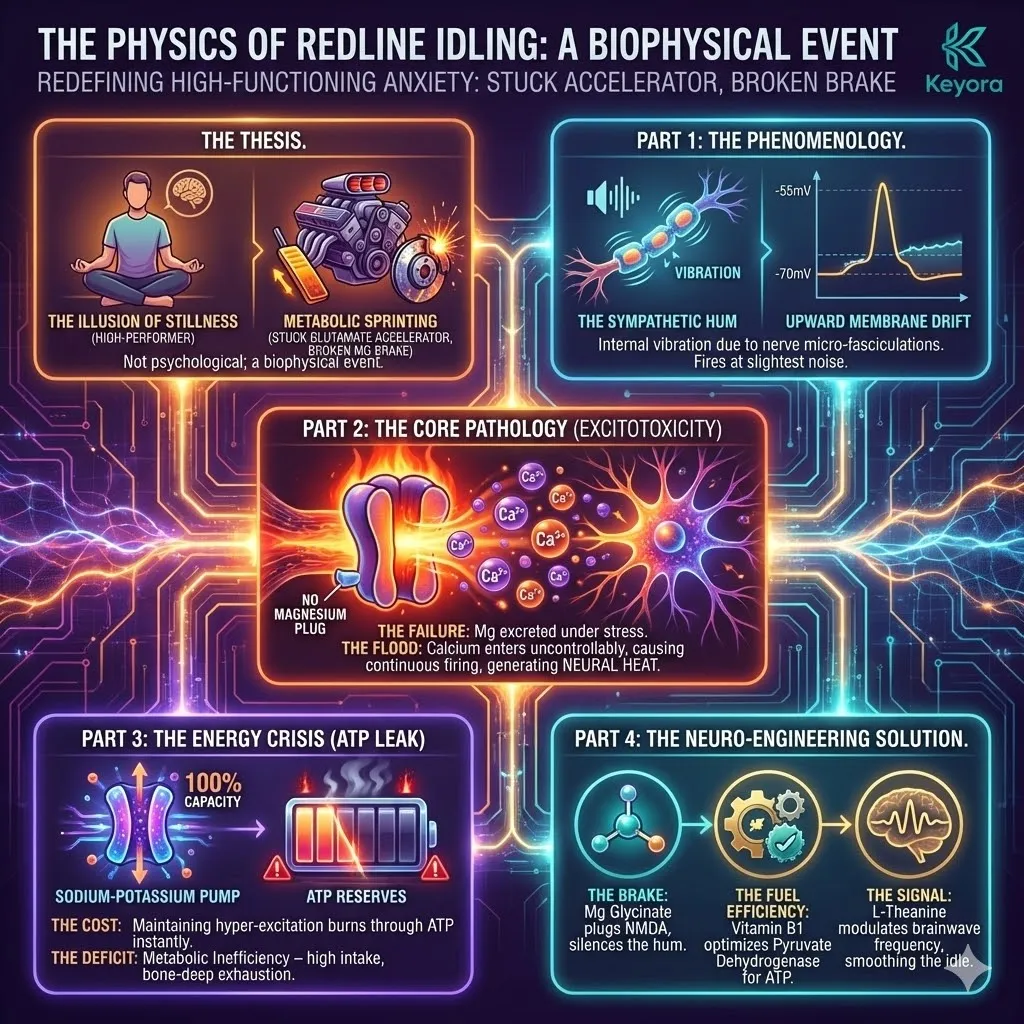
# Knowledge Summary: The Physics of Redline Idling
## 1. The Thesis
– Chapter 1 of Episode 9 redefines high-functioning anxiety not as a psychological state, but as a biophysical event: Redline Idling. It argues that the “stillness” of the high-performer is an illusion; metabolically, they are sprinting due to a stuck accelerator (Glutamate) and a broken brake (Magnesium deficiency).
## 2. Part 1: The Phenomenology
– **The Sympathetic Hum:** The defining symptom of this state. It is an internal vibration caused by micro-fasciculations of the peripheral nerves.
– **The Mechanism:** The resting membrane potential of neurons drifts upward (from -70mV to -55mV) due to electrolyte depletion, making the nervous system fire at the slightest thermal noise.
## 3. Part 2: The Core Pathology (Excitotoxicity)
– **The Hardware:** The NMDA Receptor.
– **The Failure:** Under chronic stress, Magnesium is excreted, removing the “plug” from the NMDA channel.
– **The Flood:** Calcium enters the neuron uncontrollably, driven by excess Glutamate. This causes the neuron to fire continuously, creating “Neural Heat” instead of cognitive signal.
## 4. Part 3: The Energy Crisis (ATP Leak)
– **The Cost:** Maintaining this hyper-excited state requires the Sodium-Potassium Pumps to run at 100% capacity.
– **The Deficit:** This burns through ATP reserves instantly. The result is Metabolic Inefficiency—eating high calories but feeling “bone-deep exhaustion” because the fuel is wasted on static tension.
## 5. Part 4: The Neuro-Engineering Solution
– **The Brake:** Magnesium Glycinate physically plugs the NMDA receptor, stopping the Calcium flood and silencing the hum.
– **The Fuel Efficiency:** Vitamin B1 (Thiamine) optimizes the Pyruvate Dehydrogenase enzyme, ensuring glucose becomes ATP rather than Lactate (pain).
– **The Signal:** L-Theanine modulates brainwave frequency, smoothing the choppy “idle” of the engine.
Chapter 2: The Decision Brownout
The 3:30 PM Paralysis: Why Your Prefrontal Cortex Goes Offline While Your Anxiety Stays Online
It is 3:30 PM on a Tuesday.
You have just walked out of a two-hour Quarterly Budget Meeting. It was brutal.
You had to defend your Q3 projections against a skeptical board member.
You had to cut a department budget while looking the department head in the eye.
You spent 120 minutes in a state of hyper-vigilance, calculating social dynamics, financial implications, and strategic signaling simultaneously.
Now, you are back in your office.
The door is closed.
The adrenaline that sustained you during the conflict is fading, replaced by a sudden, crushing gravitational pull.
You check your calendar.
You have exactly 30 minutes before your 4:00 PM Cross-Department Coordination Meeting.
Your logical mind – the part of you that built this company – assesses the gap. It says: “Perfect. 30 minutes. I can clear the inbox. I need to reply to the supplier contract email. I need to approve the two hiring requests in the OA system. That takes 12 minutes. Then I can prep for the 4:00 PM.”
It is a simple plan.
It requires minimal effort.
You sit down.
You open the supplier email.
It asks a simple question: “Do we want to renew for 12 months at the current rate, or lock in 24 months for a 5% discount?”
You stare at the screen.
The words are clear.
You understand the English language.
You know the math. You know the cash flow implication.
But your fingers do not move.
You stare at the cursor blinking.
Blink. Blink. Blink.
A strange phenomenon occurs. You know what to do, but you cannot initiate the motor command to do it. The connection between “Intent” and “Action” has been severed.
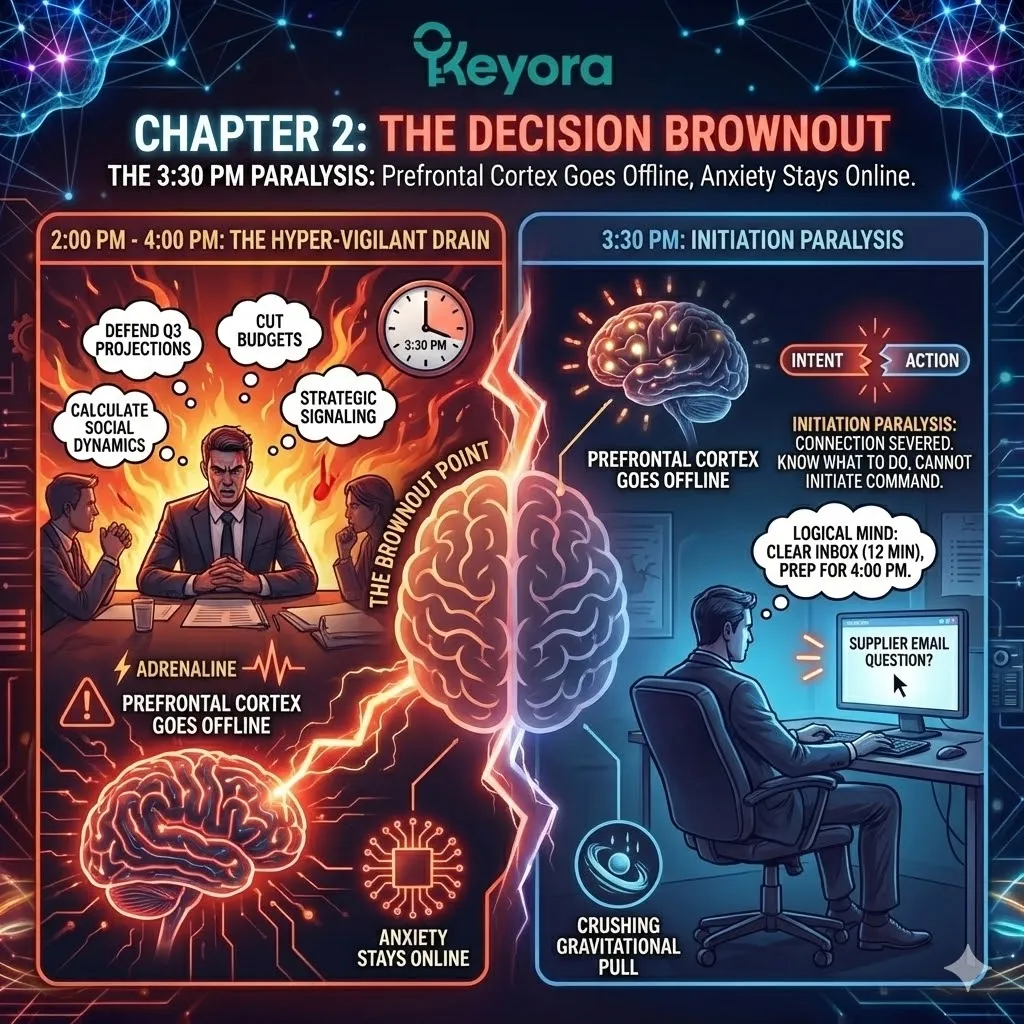
This is Initiation Paralysis.
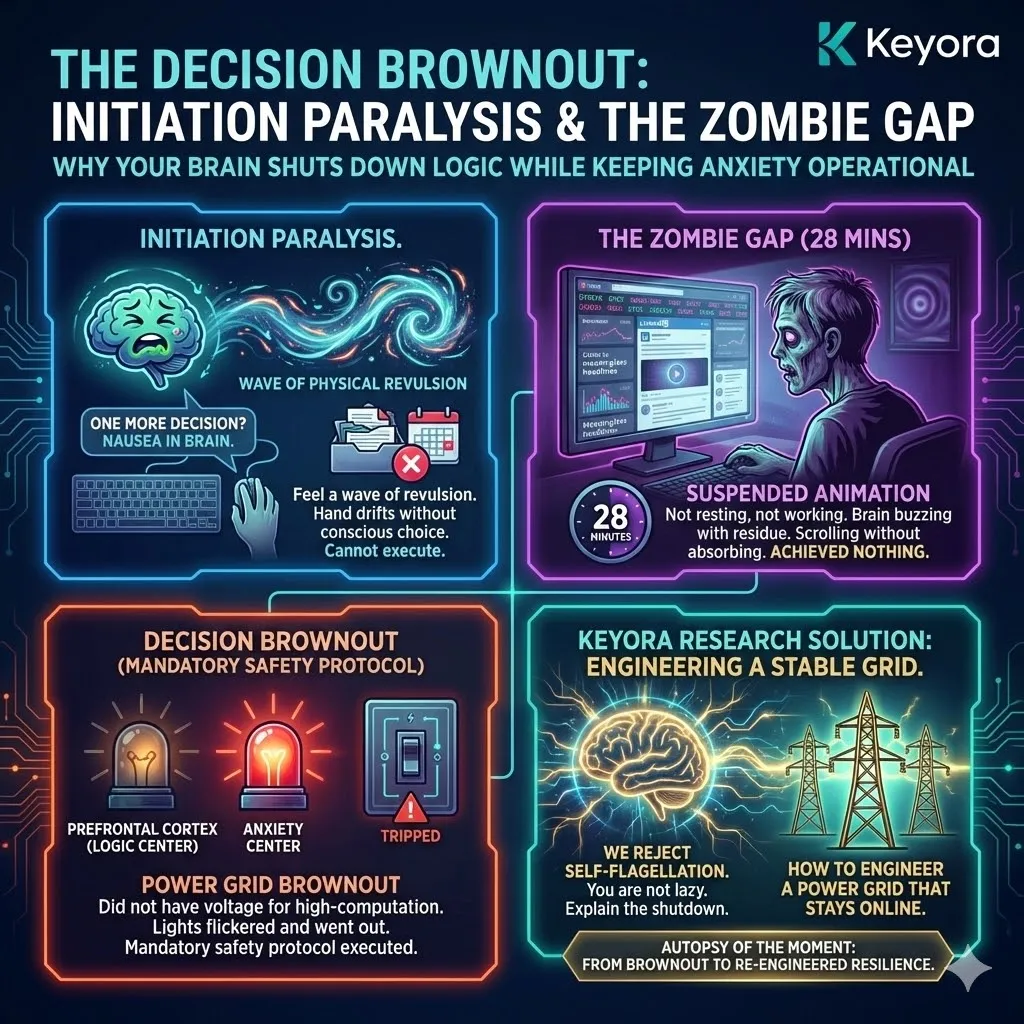
You feel a wave of physical revulsion at the thought of making one more decision. It feels like nausea, but in your brain.
So, what do you do?
Without making a conscious choice, your hand drifts to the mouse. You press Alt-Tab. You switch to a stock ticker. Or you pick up your phone and open LinkedIn.
You are not reading. You are not analyzing the market. You are scrolling. You are watching numbers change color. You are looking at headlines without absorbing them.
This is The Zombie Gap.
You spend the next 28 minutes in this state of suspended animation. You are not resting – your brain is still buzzing with the residue of the budget meeting. You are not working – you have achieved nothing.
Then, the 4:00 PM alarm rings.
You jolt back to reality.
You are now late for the next meeting.
You are more exhausted than you were at 3:30 PM.
And the supplier email is still unread.
You berate yourself. “Why am I so undisciplined? Why did I waste that time?”
At Keyora Research, we reject this self-flagellation.
You did not waste time because you are lazy.
You wasted time because your brain executed a mandatory safety protocol.
You experienced a Decision Brownout.
Your power grid simply did not have the voltage to run the high-computation software of your Prefrontal Cortex. The lights flickered and went out.
In this chapter, we will autopsy this moment.
We will explain why your brain chose to shut down your logic center while keeping your anxiety center fully operational. And we will explain how to engineer a power grid that stays online.
2.1 The Phenomenology of Signal Noise
The Static in the Wire: When Thoughts Become “Sticky”
Before we look at the chemistry, we must validate the sensory experience of this state.
High-functioning professionals often describe this cognitive fatigue in vague terms like “brain fog.” But “fog” is too passive. It implies a cloud that just drifted in.
The reality is more active.
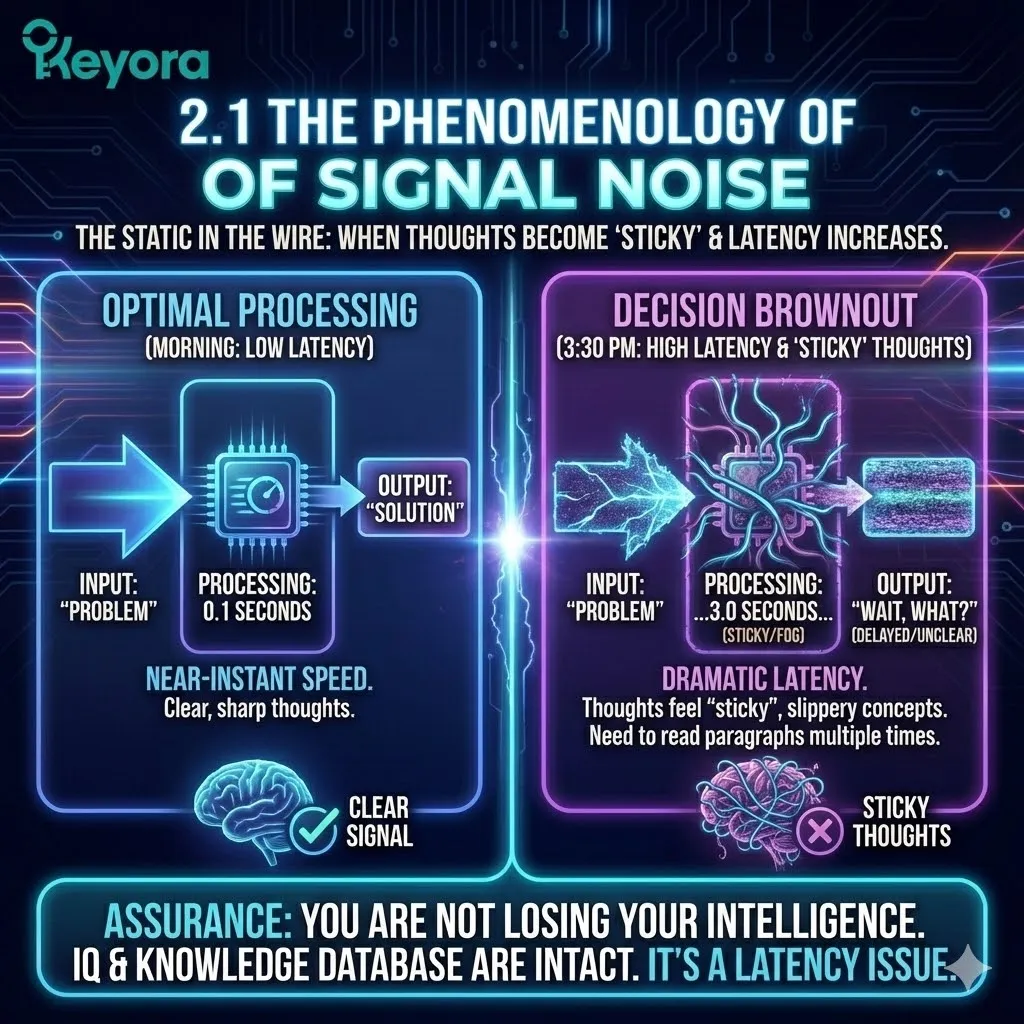
It is a problem of Latency.
In the morning, after a coffee and a good night’s sleep, your Processing Speed is near-instant.
-
Input: “Problem.”
-
Processing: 0.1 seconds.
-
Output: “Solution.”
In the Decision Brownout (the 3:30 PM state), the latency increases dramatically.
-
Input: “Problem.”
-
Processing: … … … 3.0 seconds … … …
-
Output: “Wait, what?”
Your thoughts feel “sticky.” You try to grab a concept – a name, a metric, a strategy – but it slips through your fingers. You have to read a paragraph three times to absorb the meaning.
This creates a specific, secret fear in the mind of the Executive.
You wonder: “Am I losing my edge? Is this early cognitive decline? Am I getting old?”
You look at younger competitors and wonder if you can keep up.
We can assure you:
You are not losing your intelligence.
Your IQ is intact.
Your database of knowledge is secure.
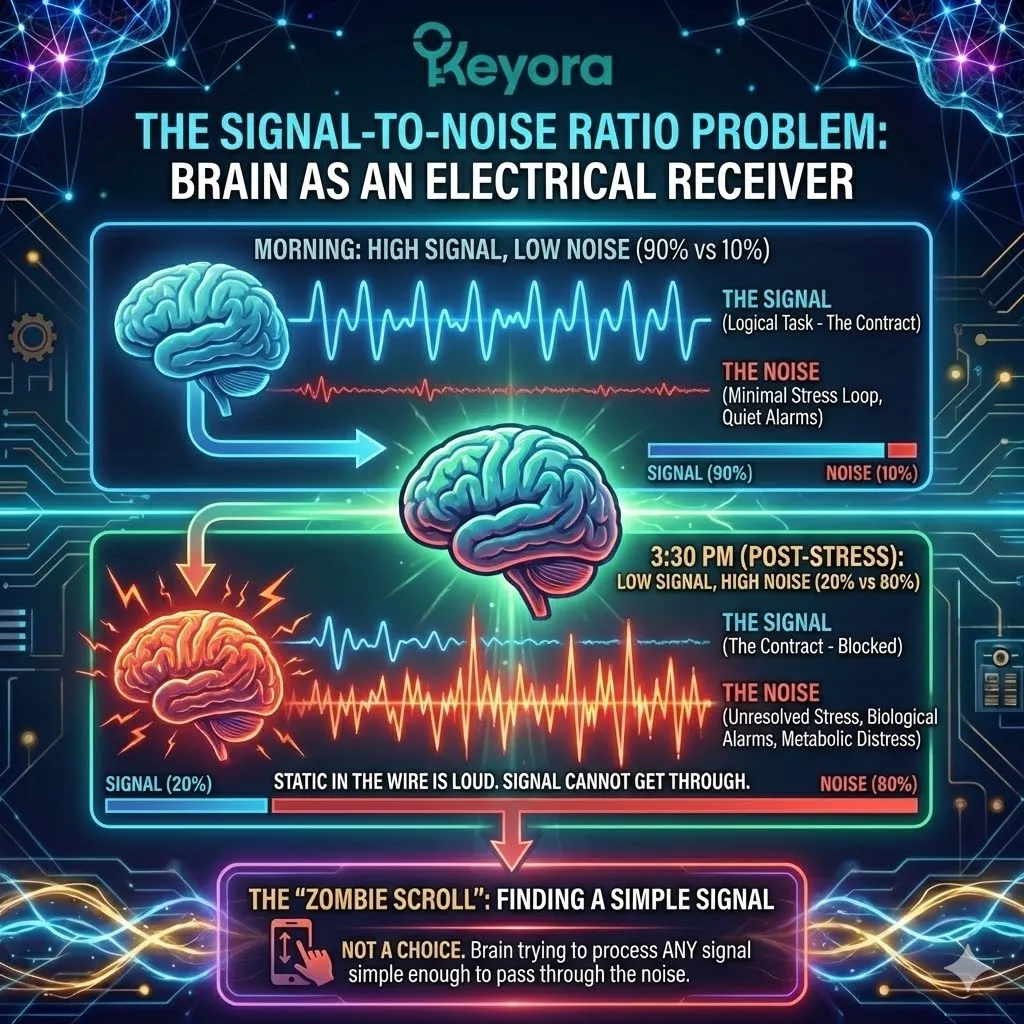
The problem is the Signal-to-Noise Ratio.
Your brain is an electrical receiver.
-
The Signal: The logical task at hand (The Contract).
-
The Noise: The background chatter of unresolved stress loops, biological alarms, and metabolic distress.
In the morning, the Signal is 90%, and the Noise is 10%.
At 3:30 PM, after a high-stress event, the Noise is 80%.
The “static” in the wire is so loud that the signal cannot get through.
The “Zombie Scroll” is not a choice; it is your brain trying to find a signal – any signal – that is simple enough to process through the noise.
2.2 The Circuitry: The Prefrontal Cortex vs. The Amygdala
The Hijacked Pilot: The Civil War Inside Your Skull
Why does the brain shut down the logic center (Prefrontal Cortex) but keep the anxiety center (Amygdala) running?
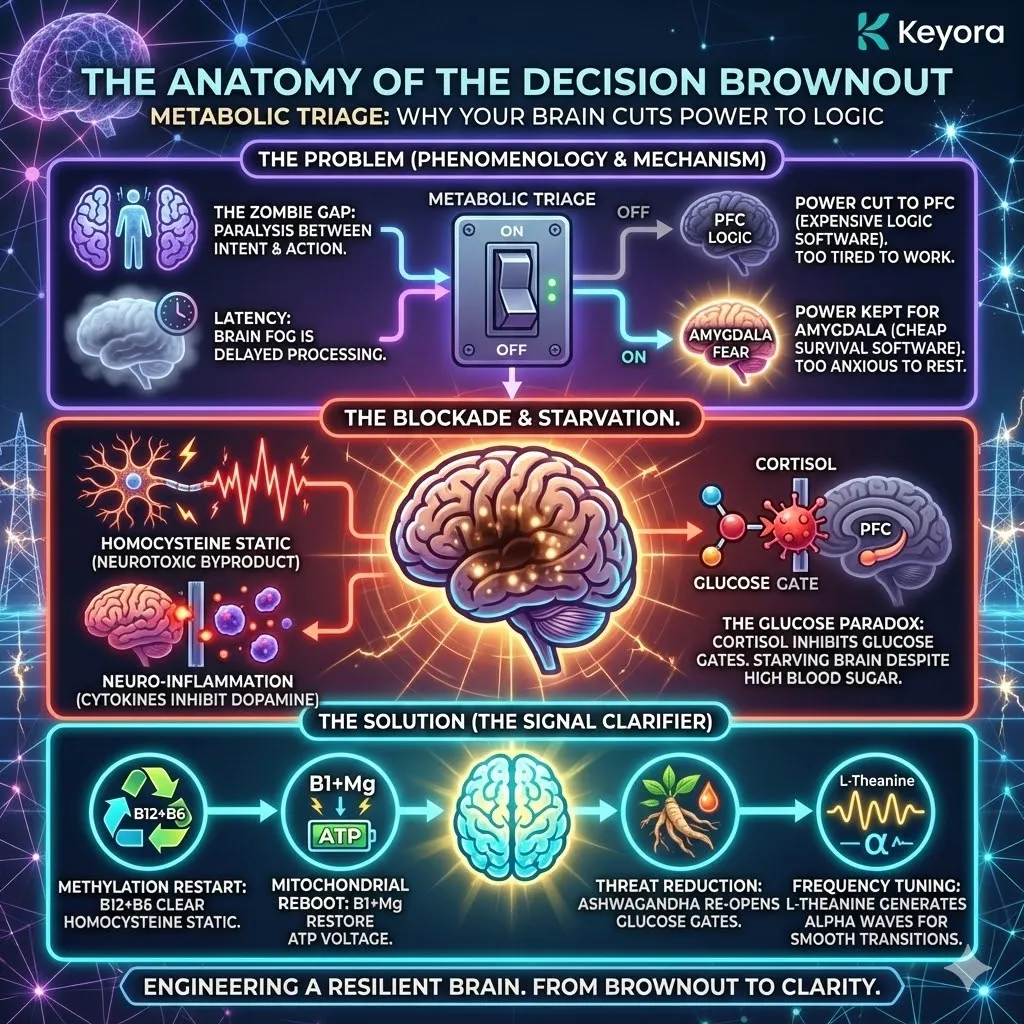
It comes down to Metabolic Triage.
Your brain is the most expensive organ you own. It represents 2% of your body weight but consumes 20% of your total energy (ATP) and Glucose.
Thinking – specifically, executive function – is metabolically expensive.
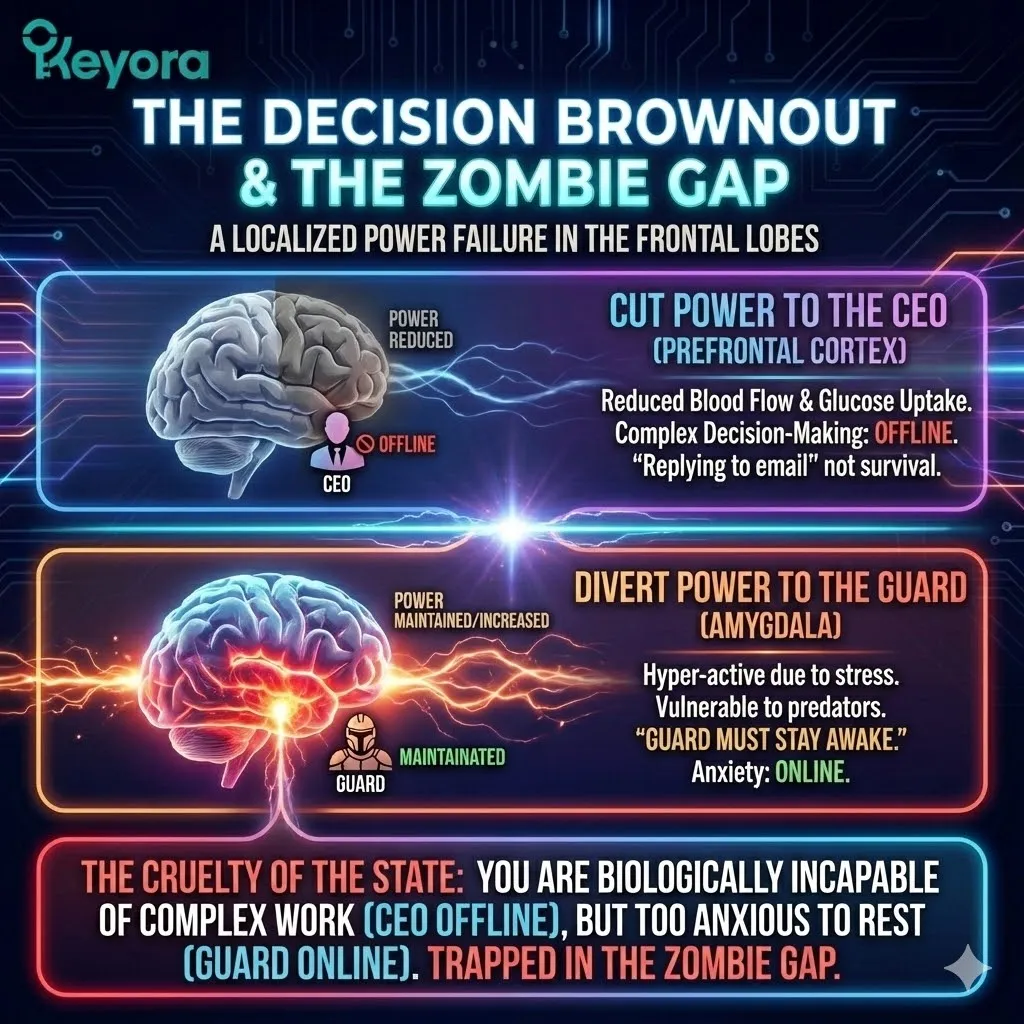
The Prefrontal Cortex (PFC):
This is the CEO. It handles logic, impulse control, future planning, and complex decision-making. It runs on high-octane fuel. It is the first to fail when energy drops.
The Amygdala:
This is the Security Guard. It handles fear, threat detection, and reaction. It is a primitive structure. It is cheap to run. It has a backup power supply.
During your 2-hour Budget Meeting, you were burning ATP at a furious rate. You were using your PFC to suppress your emotions, calculate numbers, and navigate politics.
By 3:30 PM, your cerebral energy reserves (Glycogen and Mg-ATP) are depleted.
Your brain enters a state of Energy Scarcity. It must cut power to non-essential systems to preserve survival functions.
So, it executes Metabolic Triage.

Cut Power to the CEO:
The brain reduces blood flow and glucose uptake to the Prefrontal Cortex. Why? because “replying to an email” is not necessary for immediate survival.
Divert Power to the Guard:
The brain maintains or increases power to the Amygdala.
Why?
Because if you are exhausted, you are vulnerable to predators.
The Guard must stay awake.
This is the Decision Brownout.
You didn’t lose your willpower.
You experienced a localized power failure in the frontal lobes.
You are biologically incapable of complex decision-making in this state because the hardware required to do it has been taken offline.
However, because the Amygdala is still online (and hyper-active due to the stress), you still feel the anxiety about not working.
This is the cruelty of the state: You are too tired to work, but too anxious to rest. You are trapped in the Zombie Gap.
2.3 The Chemical Blockade: Neuro-Inflammation & Homocysteine
The Fog of War: Cytokines, Homocysteine, and the Toxic Brain
The power failure is not just about fuel levels. It is also about pollution.
When you run a machine hard, it produces exhaust.
When you run a brain hard under stress, it produces metabolic waste.
Normally, the brain cleans this waste (via the Glymphatic System) during deep sleep. But as we established in Chapter 1, your sleep architecture is compromised. So, the waste accumulates.
There are two specific toxins that create the “Static” of the Decision Brownout:
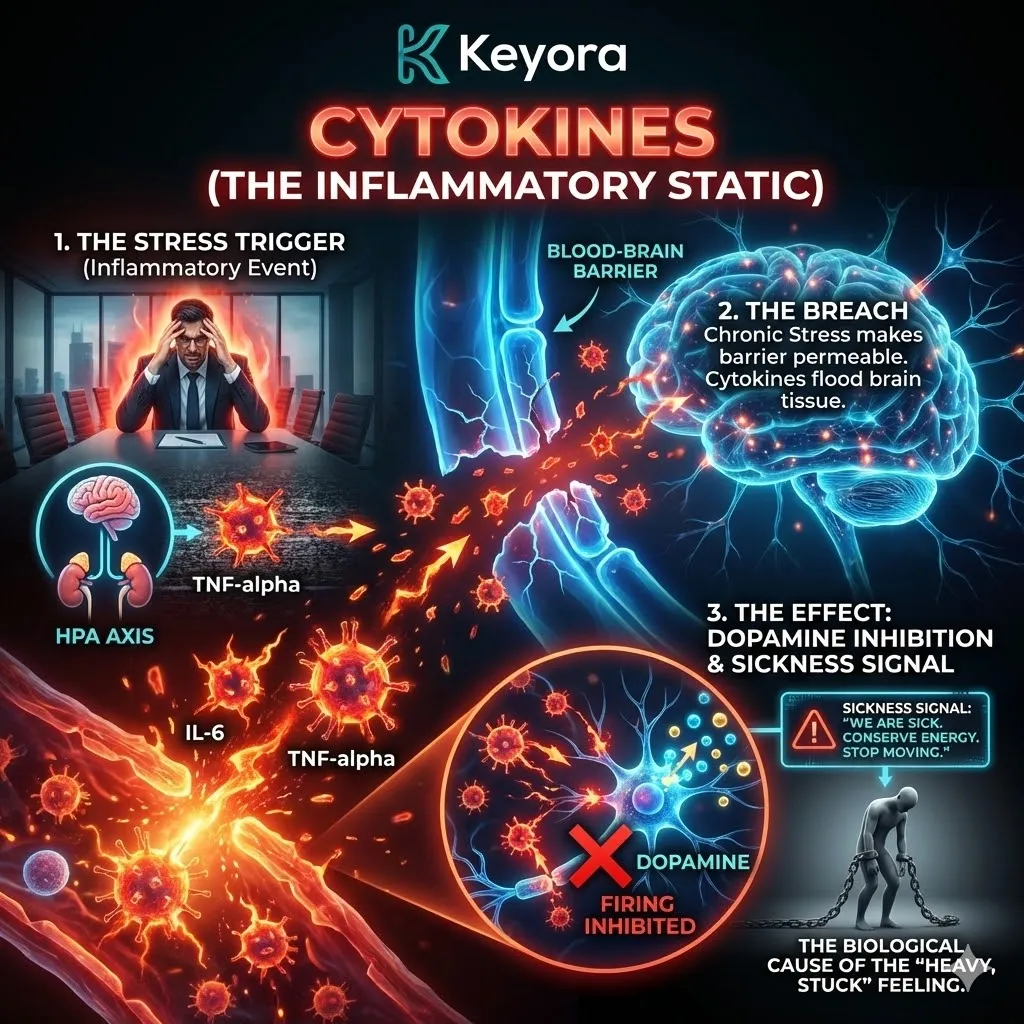
1. Cytokines (The Inflammatory Static)
Stress is not just a feeling; it is an inflammatory event.
When your HPA axis triggered Cortisol during that Budget Meeting, it also triggered the release of pro-inflammatory cytokines (IL-6, TNF-alpha).
Under chronic stress, the Blood-Brain Barrier becomes permeable (”Leaky Brain”). These cytokines flood into the brain tissue.
The Effect:
Cytokines directly inhibit the firing of dopamine neurons.
They tell the brain: “We are sick. Conserve energy. Stop moving.” This is the biological cause of the “heavy,” stuck feeling.
2. Homocysteine (The Neurotoxin)
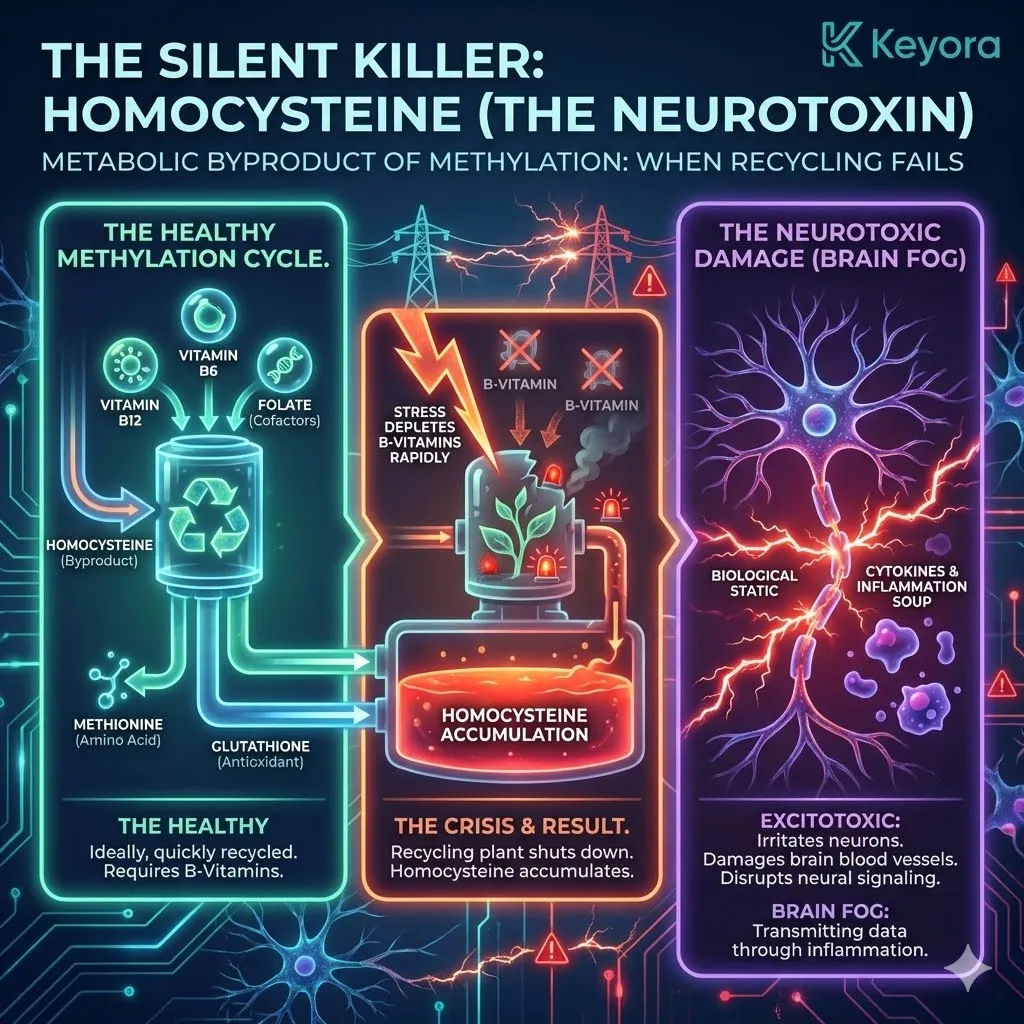
This is the silent killer of cognitive performance.
Homocysteine is a metabolic byproduct of the methylation cycle. Ideally, it is quickly recycled into Methionine (an amino acid) or Glutathione (an antioxidant).
This recycling process requires Vitamin B12, Vitamin B6, and Folate.
The Crisis:
Stress depletes B-Vitamins rapidly.
The Result:
The recycling plant shuts down. Homocysteine accumulates.
The Damage:
High Homocysteine is excitotoxic. It irritates neurons. It damages blood vessels in the brain. It creates “biological static” that disrupts neural signaling.
When you feel “Brain Fog,” you are often feeling the accumulation of Homocysteine and Cytokines. Your neural networks are trying to transmit data through a soup of inflammation.
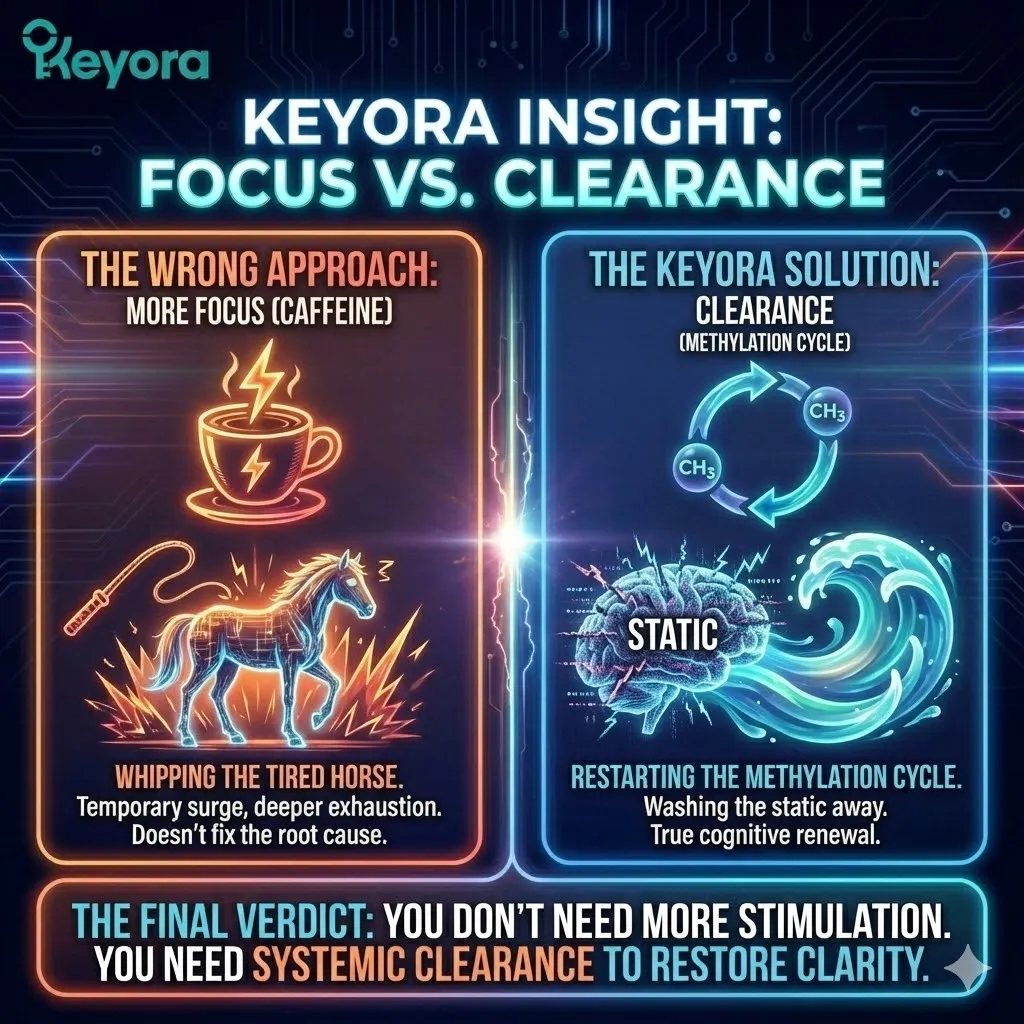
Keyora Insight:
You do not need “more focus” (Caffeine) to fix this.
Caffeine just whips the tired horse.
You need “Clearance.”
You need to restart the Methylation Cycle to wash the static away.
2.4 The Metabolic Starvation: The Glucose Paradox
Starving Amidst Plenty: How Cortisol Blocks Fuel Uptake
There is one final paradox to the 3:30 PM crash.
You might feel a desperate craving for sugar.
You might eat a donut or drink a soda.
Your blood sugar spikes.
Yet, your brain still feels starved.
How can you have high blood sugar and a starving brain simultaneously?
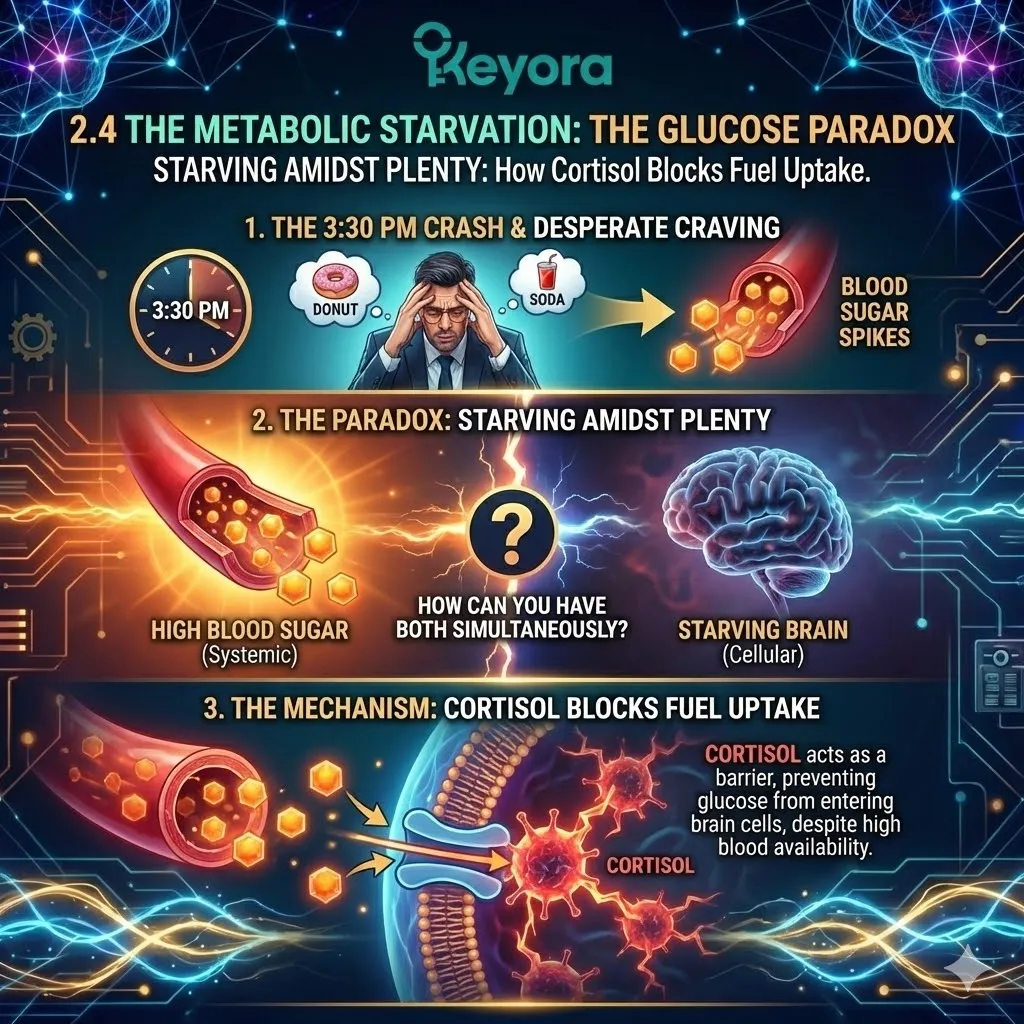
The answer lies in The Rogue Guard (Cortisol).
Cortisol has a specific job: Mobilize fuel for “Fight or Flight.” It tells the body to dump glucose into the bloodstream so the muscles can run.
But here is the catch: To ensure the fuel stays in the blood for the muscles, Cortisol inhibits glucose uptake in other tissues.
Specifically, Glucocorticoids (Cortisol) inhibit the function of glucose transporters in the Hippocampus (Memory) and the Prefrontal Cortex (Logic).
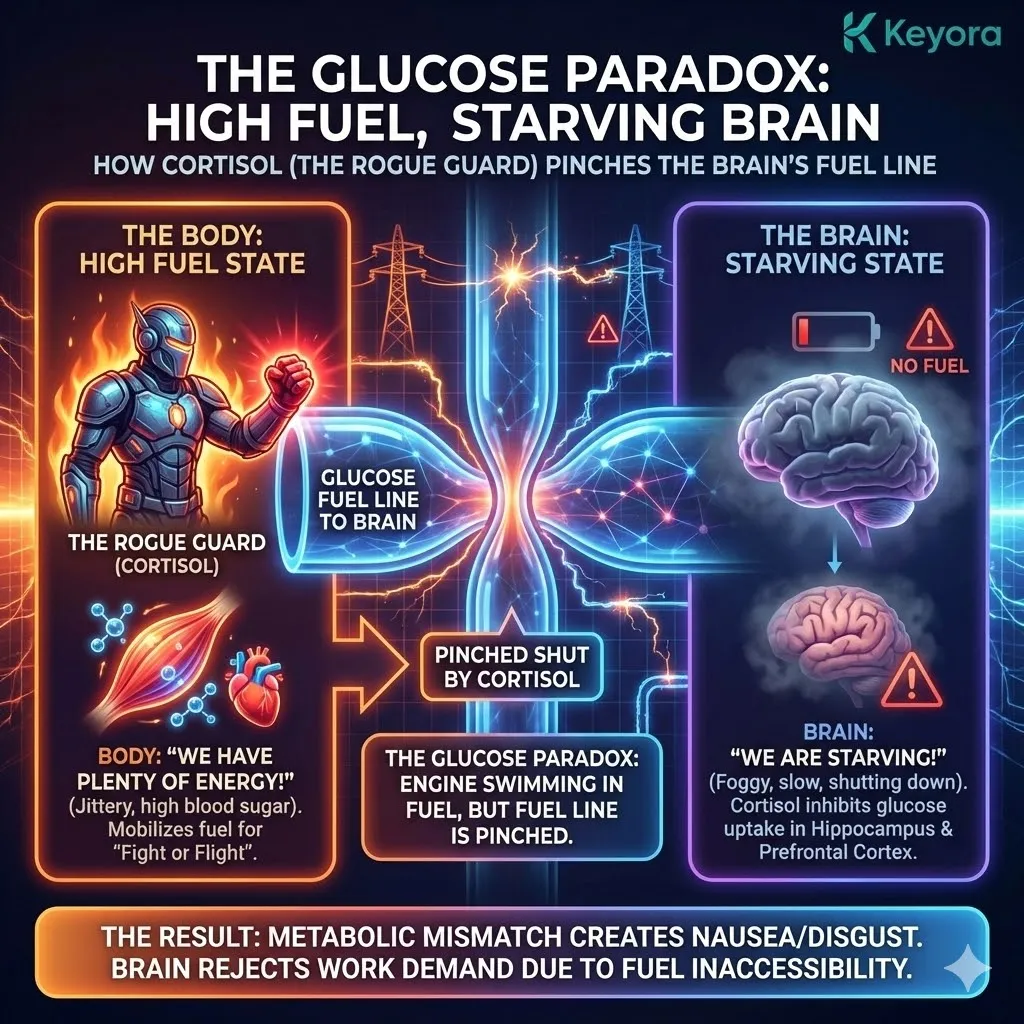
This is The Glucose Paradox.
Your engine is swimming in fuel (High Blood Sugar), but the fuel line to the brain has been pinched shut by Cortisol.
-
The Body: “We have plenty of energy!” (Jittery, high blood sugar).
-
The Brain: “We are starving!” (Foggy, slow, shutting down).
This metabolic mismatch creates the specific sensation of Nausea / Disgust you feel when looking at the screen.
It is your brain rejecting the demand for work because it physically cannot access the fuel required to perform the task.
2.5 The Engineering Solution: The Signal Clarifier
How Keyora MoodFlow 8-in-1 Reboots the Executive Center
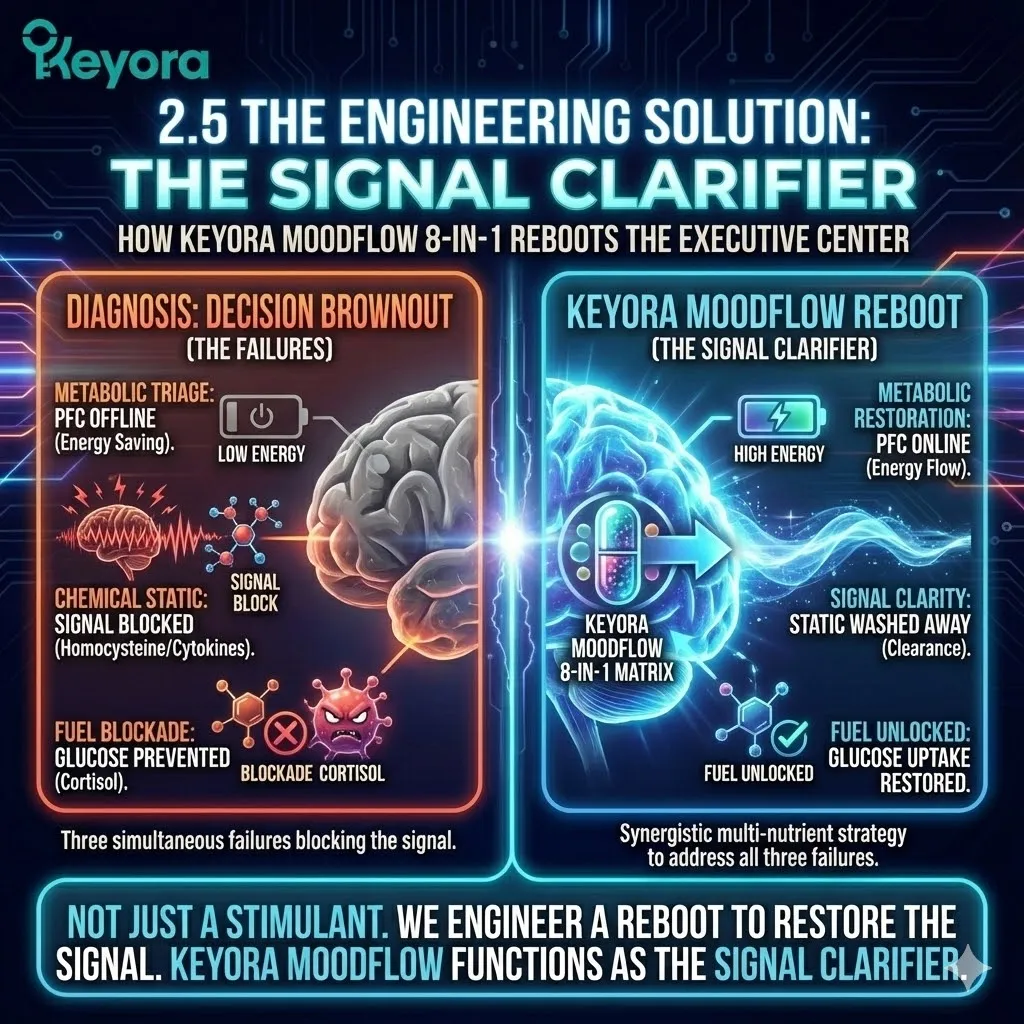
We have diagnosed the Decision Brownout.
-
Metabolic Triage: The PFC is offline to save energy.
-
Chemical Static: Homocysteine and Cytokines are blocking the signal.
-
Fuel Blockade: Cortisol is preventing glucose uptake.
How do we engineer a reboot?
We cannot just use a stimulant. That increases the noise. We need to restore the Signal.
The Keyora MoodFlow 8-in-1 Matrix functions as The Signal Clarifier. It uses a synergistic, multi-nutrient strategy to address all three failures simultaneously.
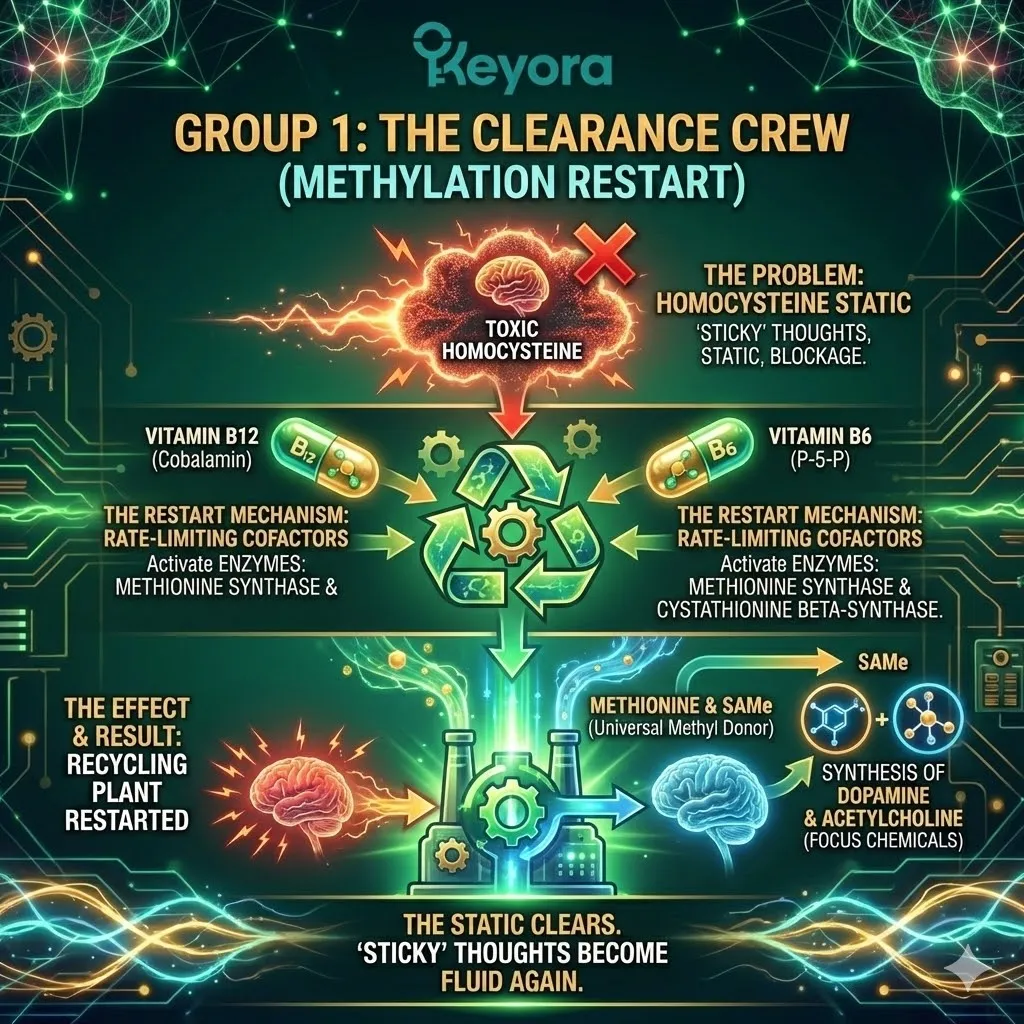
Group 1: The Clearance Crew (Methylation Restart)
We must clear the Homocysteine static.
Nutrients:
Vitamin B12 (Cobalamin) + Vitamin B6 (P-5-P).
Mechanism:
These are the rate-limiting cofactors for the enzymes Methionine Synthase and Cystathionine beta-synthase.
-
The Effect: They restart the recycling plant. They convert toxic Homocysteine back into Methionine and SAMe (S-Adenosyl Methionine).
SAMe is the universal methyl donor required for the synthesis of Dopamine and Acetylcholine (Focus chemicals).
-
Result: The static clears. The “sticky” thoughts become fluid again.
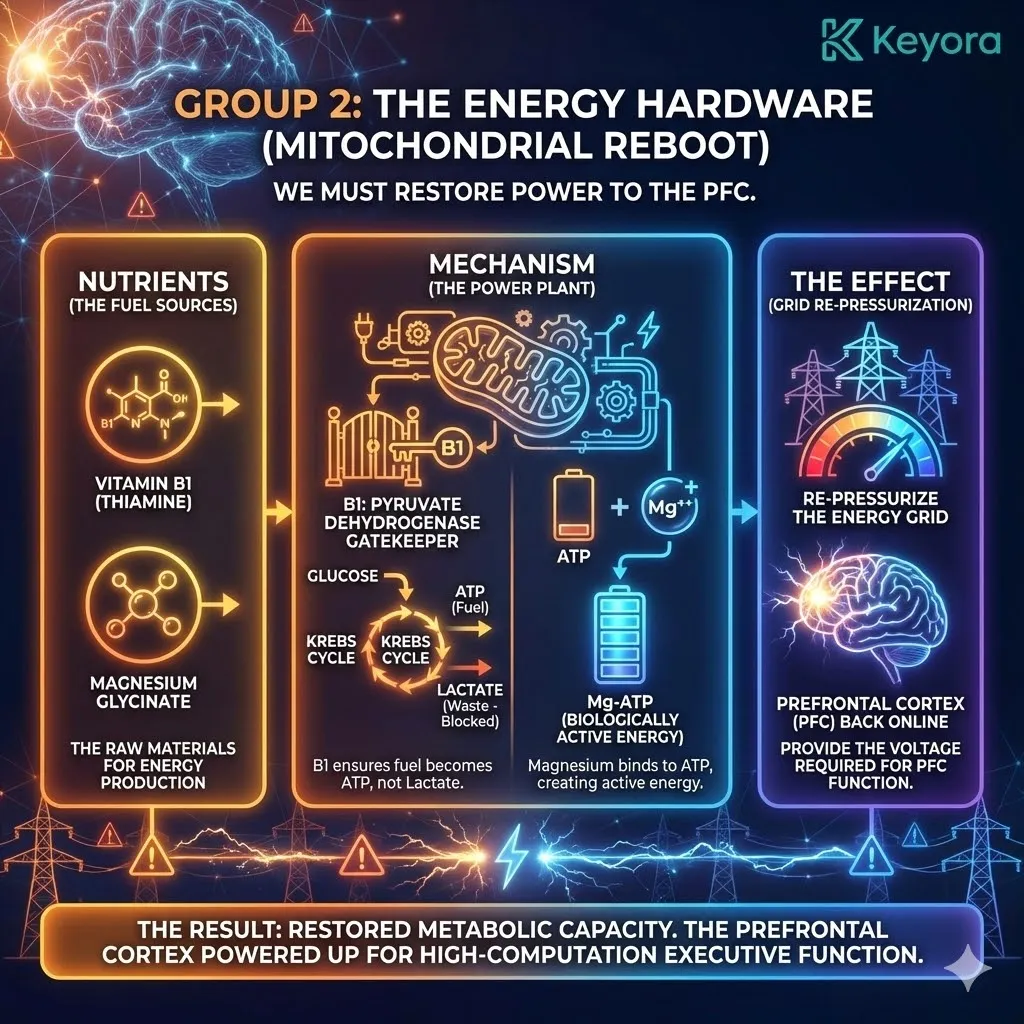
Group 2: The Energy Hardware (Mitochondrial Reboot)
We must restore power to the PFC.
Nutrients:
Vitamin B1 (Thiamine) + Magnesium Glycinate.
Mechanism:
-
B1: It is the cofactor for Pyruvate Dehydrogenase, the gatekeeper that allows glucose to enter the Krebs Cycle. It ensures fuel becomes ATP, not Lactate.
-
Magnesium: It binds to ATP to create Mg-ATP, the only biologically active form of energy.
-
The Effect: We re-pressurize the energy grid. We provide the voltage required to bring the Prefrontal Cortex back online.
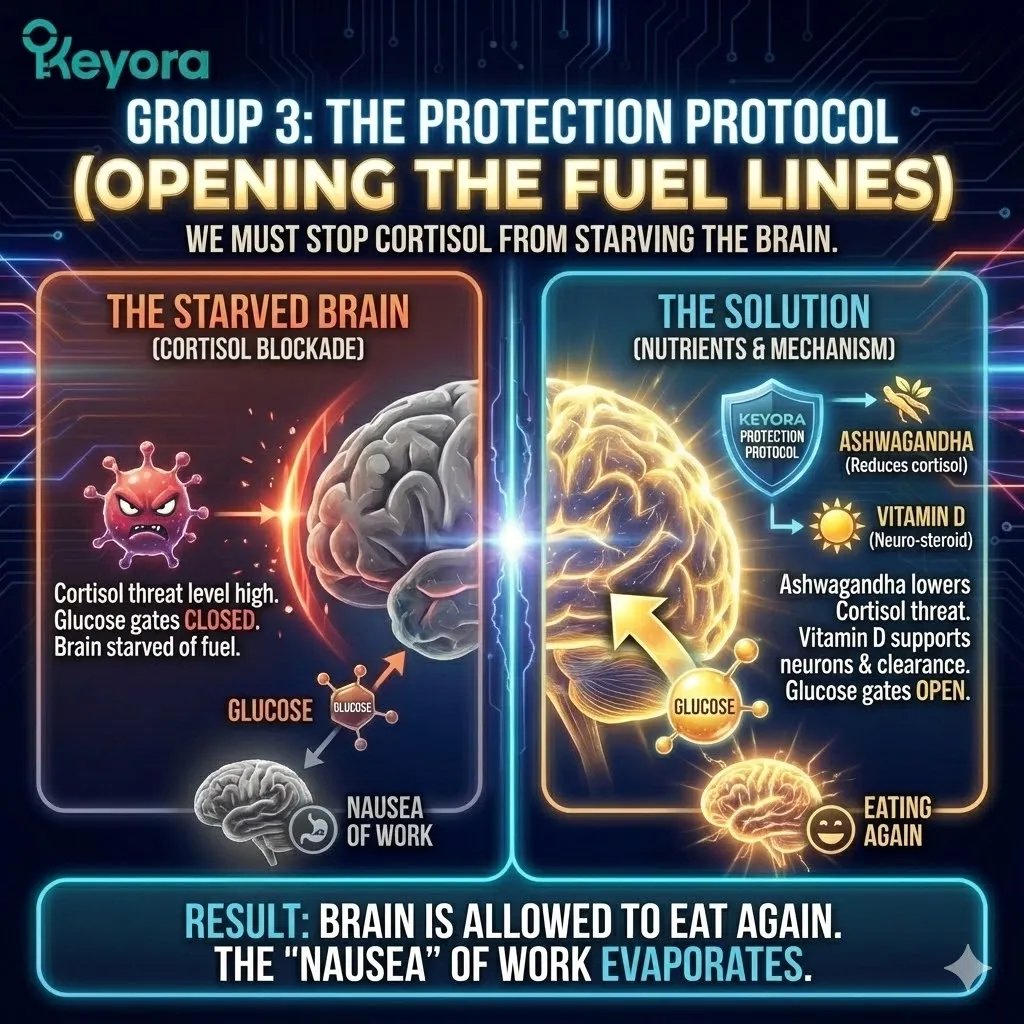
Group 3: The Protection Protocol (Opening the Fuel Lines)
We must stop Cortisol from starving the brain.
Nutrients:
Ashwagandha + Vitamin D.
Mechanism:
-
Ashwagandha: Lowers serum cortisol. By reducing the “Threat Level,” it re-opens the glucose gates to the Hippocampus and PFC.
-
Vitamin D: Acts as a neuro-steroid that supports the survival of dopaminergic neurons and reduces neuro-inflammation (Cytokine clearance).
-
Result: The brain is allowed to eat again. The “nausea” of work evaporates.
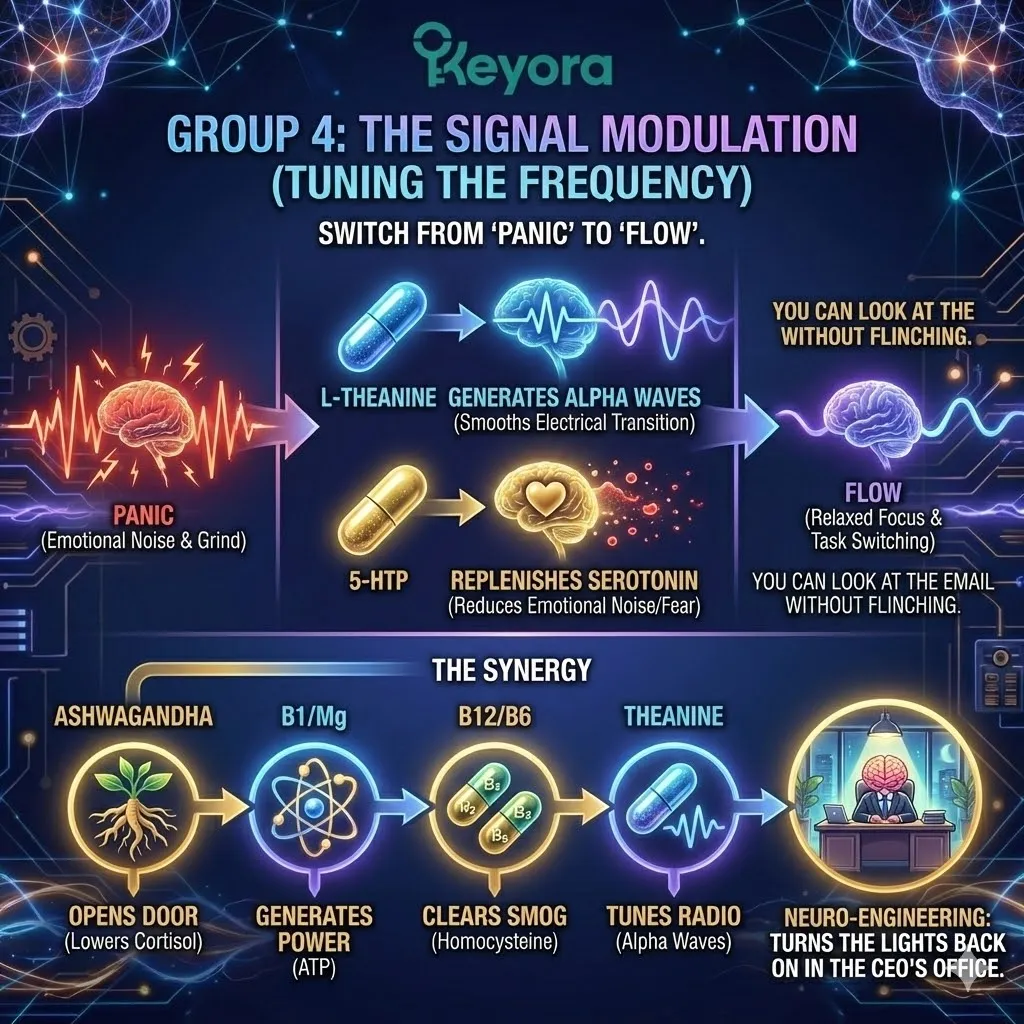
Group 4: The Signal Modulation (Tuning the Frequency)
We must switch from “Panic” to “Flow.”
Nutrients:
L-Theanine + 5-HTP.
Mechanism:
-
L-Theanine: Generates Alpha Waves. It smooths the electrical transition, allowing you to switch tasks without the “grind.”
-
5-HTP: Replenishes Serotonin. This reduces the “emotional noise” (fear of failure) that often triggers the procrastination loop.
-
Result: You enter a state of Relaxed Focus. You can look at the email without flinching.
The Synergy:
This is not about taking B12 for energy. It is about the 8-in-1 Interaction.
-
The Ashwagandha opens the door (lowers cortisol).
-
The B1/Mg generates the power (ATP).
-
The B12/B6 clears the smog (Homocysteine).
-
The Theanine tunes the radio (Alpha Waves).
This is Neuro-Engineering.
It turns the lights back on in the CEO’s office.
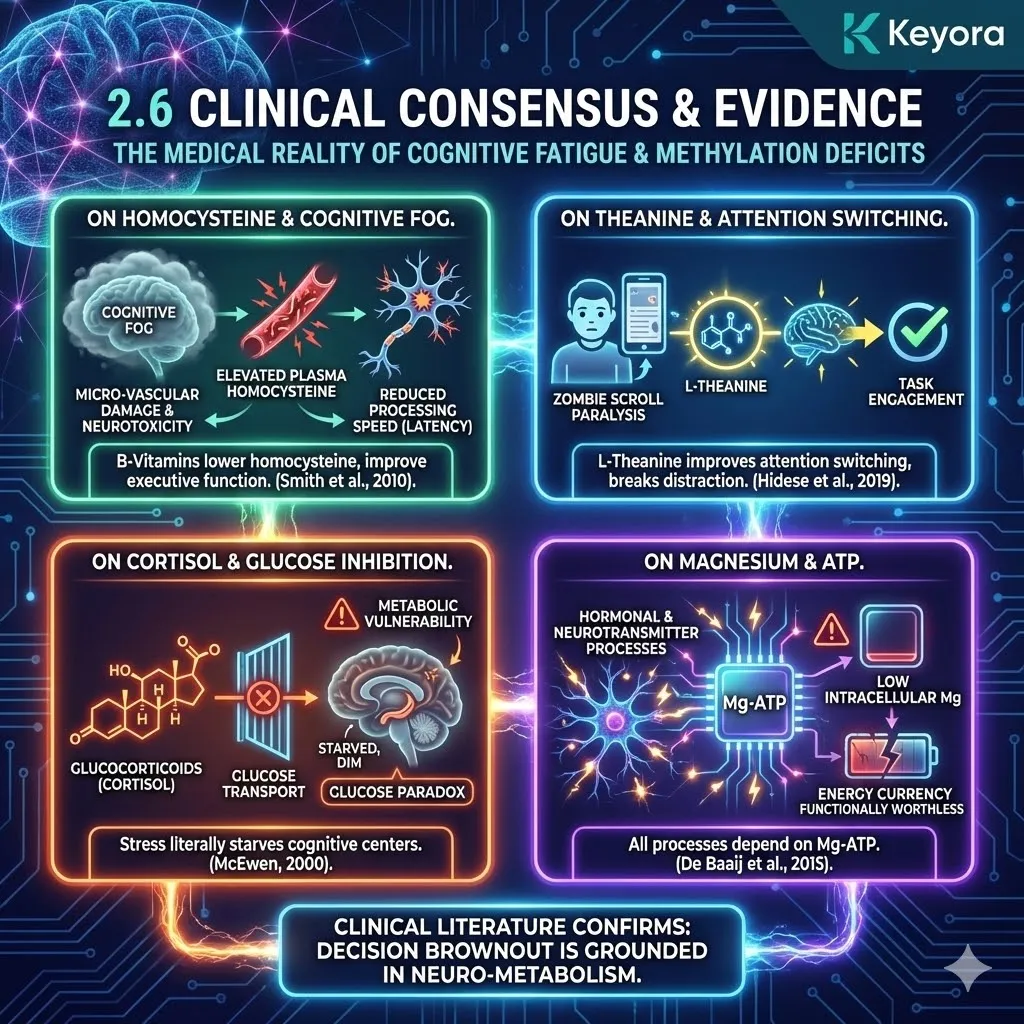
2.6 Clinical Consensus & Evidence
The Medical Reality of Cognitive Fatigue and Methylation Deficits
The concept of the Decision Brownout is grounded in robust clinical literature regarding neuro-metabolism and executive function.
On Homocysteine and Cognitive Fog:
A study published in the American Journal of Clinical Nutrition established a direct link between elevated plasma homocysteine and cognitive decline.
The mechanism involves “micro-vascular damage” and “neurotoxicity,” leading to reduced processing speed – the exact “latency” described in this chapter.
Supplementation with B-Vitamins was shown to lower homocysteine and improve executive function scores (Smith et al., 2010).
On Theanine and Attention Switching:
Research in Nutrients (Hidese et al., 2019) demonstrated that L-Theanine administration significantly improved “attention switching” and reaction time in healthy adults prone to high anxiety.
This validates its role in breaking the “Zombie Scroll” paralysis, allowing the brain to disengage from distraction and re-engage with the task.
On Cortisol and Glucose Inhibition:
The interaction between stress hormones and brain fuel is well-documented.
A review in Frontiers in Neuroendocrinology details how glucocorticoids (cortisol) inhibit glucose transport in the hippocampus, leading to “metabolic vulnerability” during stress.
This confirms the Glucose Paradox – that stress literally starves the cognitive centers of the brain (McEwen, 2000).
On Magnesium and ATP:
The absolute requirement of Magnesium for ATP functionality is a biochemical law. Physiological Reviews states that “virtually all hormonal and neurotransmitter processes depend on Mg-ATP.”
Without adequate intracellular magnesium, the energy currency of the brain is functionally worthless (De Baaij et al., 2015).
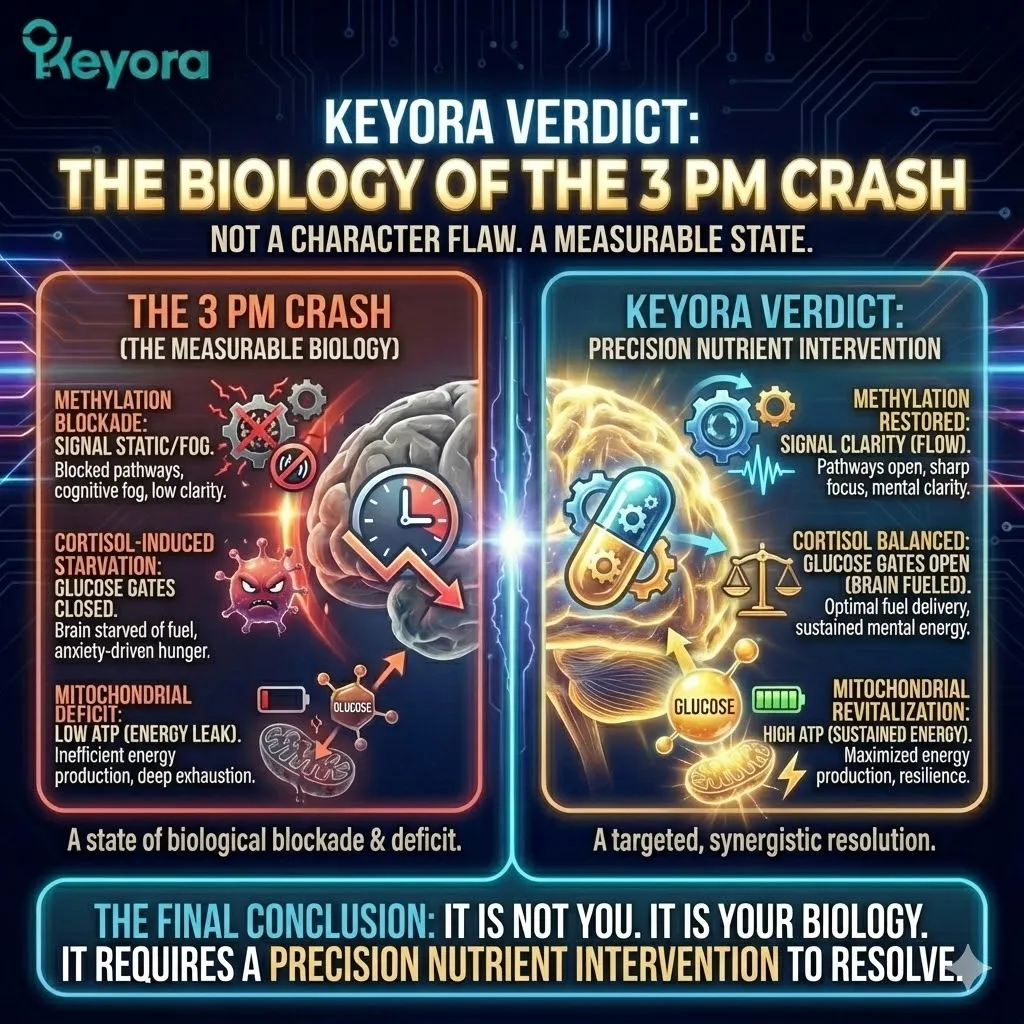
Keyora Verdict:
The “3 PM Crash” is not a character flaw.
It is a measurable state of Methylation Blockade, Cortisol-Induced Starvation, and Mitochondrial Deficit.
It requires a precision nutrient intervention to resolve.
Chapter Conclusion: The Evidenced-Based Verdict
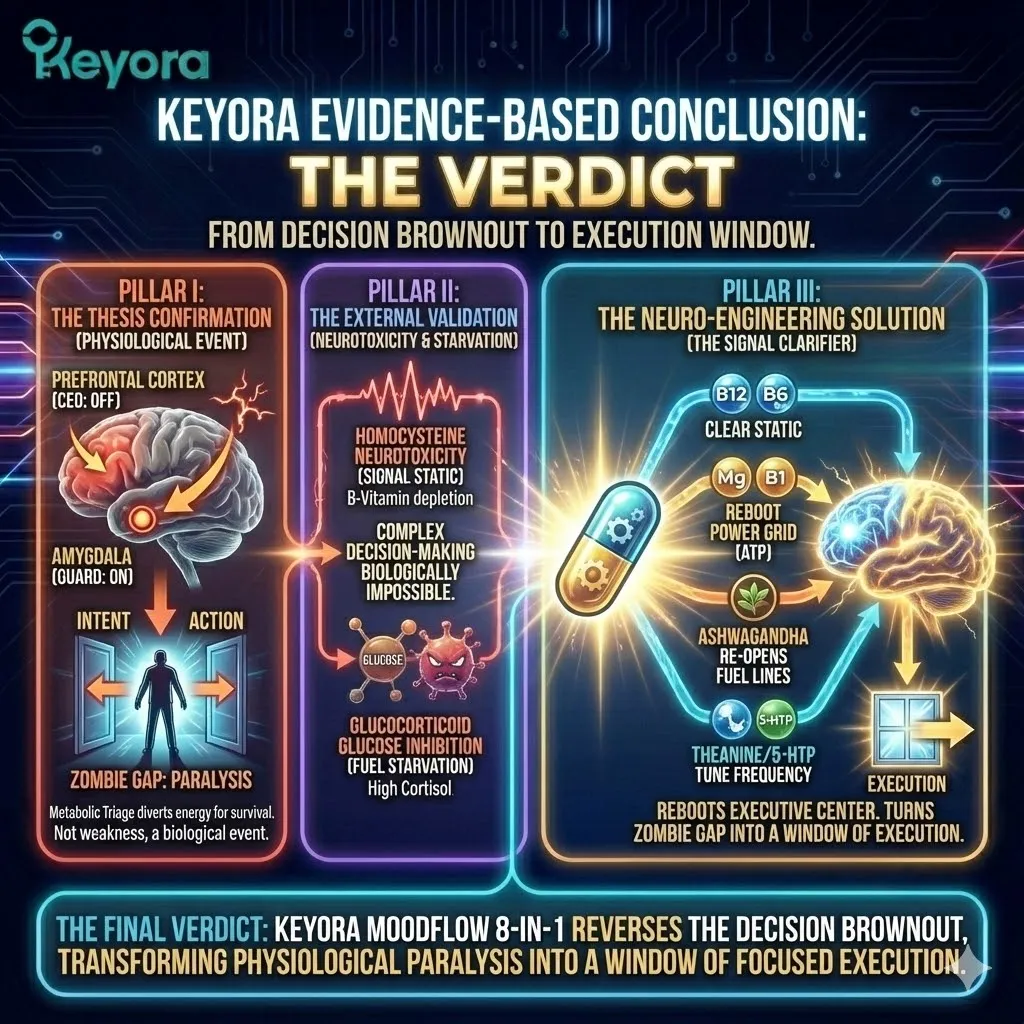
KEYORA EVIDENCED-BASED CONCLUSION
Pillar I: The Thesis Confirmation
This chapter has defined The Decision Brownout as a physiological event, not a psychological weakness.
It is the result of Metabolic Triage, where the brain diverts energy from the Prefrontal Cortex (CEO) to the Amygdala (Guard) to survive a perceived threat. This creates the Zombie Gap – the paralysis between intent and action.
Pillar II: The External Validation
We have anchored this diagnosis in the science of Homocysteine Neurotoxicity and Glucocorticoid Glucose Inhibition.
Clinical consensus confirms that when B-Vitamins are depleted and Cortisol is high, the brain suffers from “Signal Static” and “Fuel Starvation,” rendering complex decision-making biologically impossible.
Pillar III: The Neuro-Engineering Solution
We conclude that the solution is The Signal Clarifier.
The Keyora MoodFlow 8-in-1 Matrix is engineered to reverse this brownout.
-
B12/B6 clear the static (Homocysteine).
-
Mg/B1 reboot the power grid (ATP).
-
Ashwagandha re-opens the fuel lines (Cortisol reduction).
-
Theanine/5-HTP tune the frequency (Alpha waves).
This effectively reboots the Executive Center, turning the “Zombie Gap” into a window of execution.
References
-
Arnsten, A. F. T. (2009). Stress signalling pathways that impair prefrontal cortex structure and function. Nature Reviews Neuroscience, 10(6), 410–422.
-
Baba, Y., et al. (2021). Effects of L-Theanine on cognitive function in middle-aged and older subjects: A randomized placebo-controlled study. Journal of Medicinal Food, 24(4), 333-341.
-
Barbagallo, M., & Dominguez, L. J. (2010). Magnesium and aging. Current Pharmaceutical Design, 16(7), 832–839.
-
Birdsall, T. C. (1998). 5-Hydroxytryptophan: a clinically-effective serotonin precursor. Alternative Medicine Review, 3(4), 271–280.
-
Chandrasekhar, K., Kapoor, J., & Anishetty, S. (2012). A prospective, randomized double-blind, placebo-controlled study of safety and efficacy of a high-concentration full-spectrum extract of Ashwagandha root in reducing stress and anxiety in adults. Indian Journal of Psychological Medicine, 34(3), 255–262.
-
Choudhary, D., et al. (2017). Efficacy and safety of Ashwagandha (Withania somnifera) root extract in improving memory and cognitive functions. Journal of Dietary Supplements, 14(6), 599-612.
-
De Baaij, J. H. F., Hoenderop, J. G. J., & Bindels, R. J. M. (2015). Magnesium in man: implications for health and disease. Physiological Reviews, 95(1), 1–46.
-
Hidese, S., et al. (2019). Effects of L-theanine administration on stress-related symptoms and cognitive functions in healthy adults: A randomized controlled trial. Nutrients, 11(10), 2362.
-
Jin, X., & Keyora Research. (2024a). Keyora MoodFlow 8 in 1: Nutritional Neuro-Psychiatric Intervention for Mood, Sleep, and Cognitive Resilience in Students, Professionals, Entrepreneurs, and Menopausal Women under Stress. Keyora Research Institute. DOI: 10.5281/zenodo.16814204
-
Jin, X., & Keyora Research. (2024b). Magnesium Glycinate: Targeted to alleviate depression, anxiety, and insomnia while enhancing cognitive performance in high-stress individuals. Keyora Research Institute. DOI: 10.5281/zenodo.16889527
-
Jin, X., & Keyora Research. (2024c). Keyora Research Protocols: Systemic Neuro-Nutrition. OSF. DOI:10.17605/OSF.IO/FZ62K
-
Kennedy, D. O. (2016). B vitamins and the brain: Mechanisms, dose and efficacy—A review. Nutrients, 8(2), 68.
-
Liston, C., et al. (2009). Psychosocial stress reversibly disrupts prefrontal processing and dendritic architecture. Proceedings of the National Academy of Sciences, 106(3), 912-917.
-
Lopresti, A. L., et al. (2019). An investigation into the stress-relieving and pharmacological actions of an ashwagandha (Withania somnifera) extract. Medicine, 98(37), e17186.
-
Lupien, S. J., et al. (2007). The effects of stress and stress hormones on human cognition: Implications for the field of brain and cognition. Brain and Cognition, 65(3), 209-237.
-
McEwen, B. S. (2000). The neurobiology of stress: from serendipity to clinical relevance. Brain Research, 886(1-2), 172-189.
-
Miller, A. H., & Raison, C. L. (2016). The role of inflammation in depression: From evolutionary imperative to modern treatment target. Nature Reviews Immunology, 16(1), 22–34.
-
Nobre, A. C., Rao, A., & Owen, G. N. (2008). L-theanine, a natural constituent in tea, and its effect on mental state. Asia Pacific Journal of Clinical Nutrition, 17(S1), 167–168.
-
Owecki, M., et al. (2018). Homocysteine and vitamin B12 status in depression and cognitive decline. Journal of Neural Transmission, 125(1), 159–165.
-
Reynolds, E. (2006). Vitamin B12, folic acid, and the nervous system. The Lancet Neurology, 5(11), 949–960.
-
Sapolsky, R. M. (1996). Why stress is bad for your brain. Science, 273(5276), 749-750.
-
Smith, A. D., et al. (2010). Homocysteine-lowering by B vitamins slows the rate of accelerated brain atrophy in mild cognitive impairment: A randomized controlled trial. PLoS ONE, 5(9), e12244.
-
Volpe, S. L. (2013). Magnesium and the brain: a focus on neuroinflammation and depression. Nutrients, 5(6), 6206-6225.
# Knowledge Summary: The Anatomy of The Decision Brownout
## 1. The Thesis
– Chapter 2 redefines the “3 PM Crash” not as a failure of discipline, but as a biological event called **The Decision Brownout**. It posits that under chronic stress, the brain performs **Metabolic Triage**, cutting power to the Prefrontal Cortex (Logic) to preserve energy for the Amygdala (Survival), creating a state of “Initiation Paralysis.”
## 2. Part 1: The Phenomenology
– **The Zombie Gap:** The specific paralysis between Intent (knowing what to do) and Action (doing it).
– **Latency:** Brain fog is defined as a delay in processing speed caused by a low Signal-to-Noise Ratio.
## 3. Part 2: The Mechanism (Hardware Failure)
– **Metabolic Triage:** The brain is an expensive organ (20% energy use). When ATP is low, it shuts down “expensive” optional software (Executive Function) to keep “cheap” survival software (Fear) running.
– **The Result:** You are too tired to work (Low PFC), but too anxious to rest (High Amygdala).
## 4. Part 3: The Chemical Blockade (Static)
– **Homocysteine:** A neurotoxic byproduct of the methylation cycle that accumulates when B-Vitamins are depleted by stress. It creates “biological static.”
– **Neuro-Inflammation:** Cytokines enter the brain via a permeable blood-brain barrier, inhibiting dopamine firing and causing the sensation of heaviness.
## 5. Part 4: The Metabolic Starvation (Fuel Line)
– **The Glucose Paradox:** You can have high blood sugar but a starving brain.
– **The Cause:** Cortisol (The Rogue Guard) inhibits glucose transporters in the Hippocampus and PFC to save fuel for the muscles. This causes “cognitive starvation.”
## 6. Part 5: The Solution (The Signal Clarifier)
– **Methylation Restart:** **Vitamin B12 + B6** clear the Homocysteine static.
– **Mitochondrial Reboot:** **Vitamin B1 + Magnesium** restore ATP voltage to bring the PFC online.
– **Threat Reduction:** **Ashwagandha** lowers Cortisol, re-opening glucose gates to the brain.
– **Frequency Tuning:** **L-Theanine** generates Alpha waves to smooth the transition between tasks.
Chapter 3: The Expensive Brake
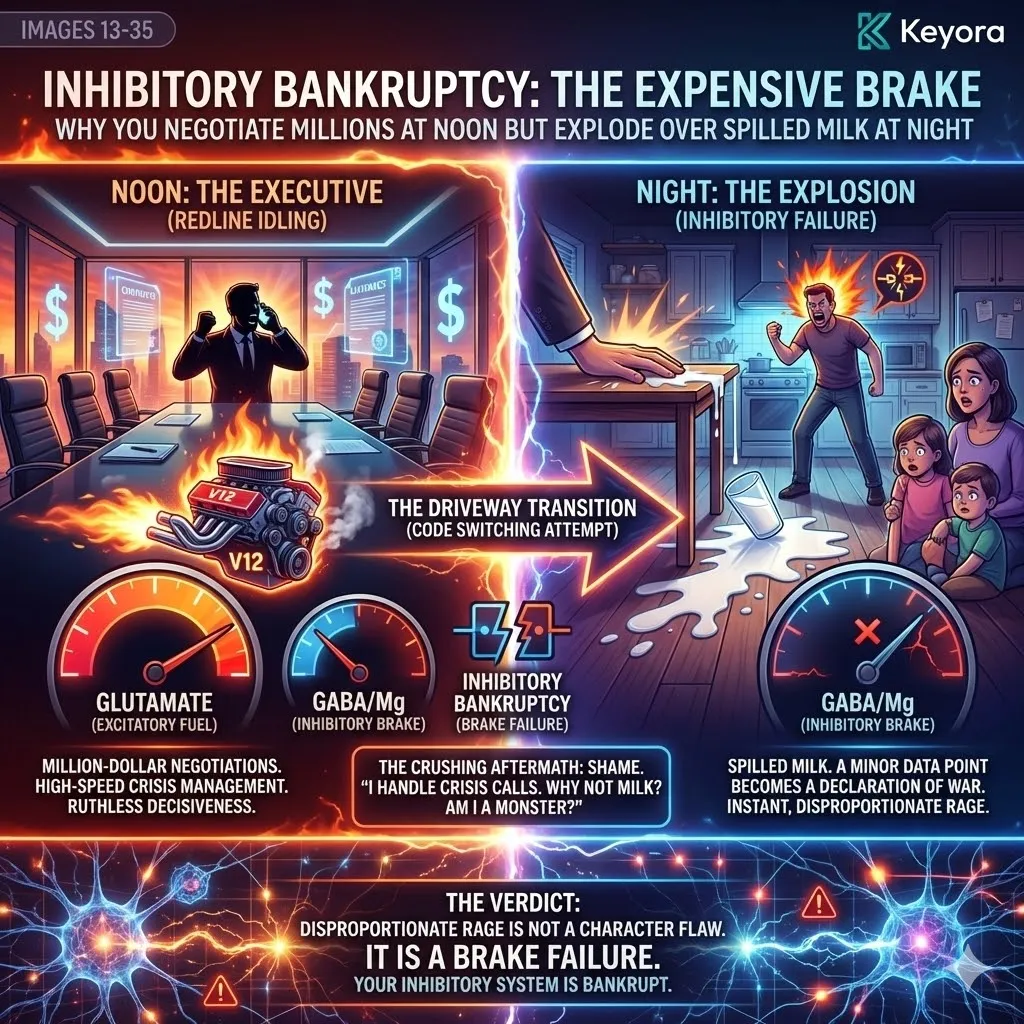
Inhibitory Bankruptcy: Why You Negotiate Millions at Noon but Explode Over Spilled Milk at Night
It is 7:45 PM.
You are sitting in your car in the driveway, or standing outside your front door with your hand hovering over the handle.
The engine is off.
The phone is finally dark.
You take a deep breath. You are attempting a psychological maneuver known as Code Switching.
You are trying to manually power down the ruthless, decisive, high-speed executive who just navigated a twelve-hour war zone, and boot up the patient, gentle, present partner or parent.
You tell yourself: Leave the work outside. Be kind. Be present.
You open the door.
The house is not a sanctuary; it is a system of chaos. The volume is loud. There are toys on the floor. Your partner looks up, exhausted, and asks a simple logistical question: “Did you remember to call the plumber?”
Or perhaps your child, reaching across the table, knocks over a glass of milk. The white liquid spreads across the wood.
In a healthy brain, this is a minor data point.
It is a mess to be cleaned.
It is a question to be answered.
But in your brain, in this specific moment, it is a declaration of war.
There is no thinking.
There is no pause.
There is a Snap.
You explode. The rage that erupts from you is disproportionate, instant, and terrifying. You yell. You slam a hand on the table. The words that come out of your mouth are sharp and cruel.
Then, immediately, comes the aftermath.
The silence in the kitchen.
The wide eyes of your children.
The look of resigned disappointment on your partner’s face.
And then, the crushing weight of Shame.
You look at the spilled milk and you think:
“I negotiate million-dollar contracts without blinking. I handle crisis calls with investors without sweating. Why can I not handle a glass of milk? What is wrong with me? Am I a monster?”
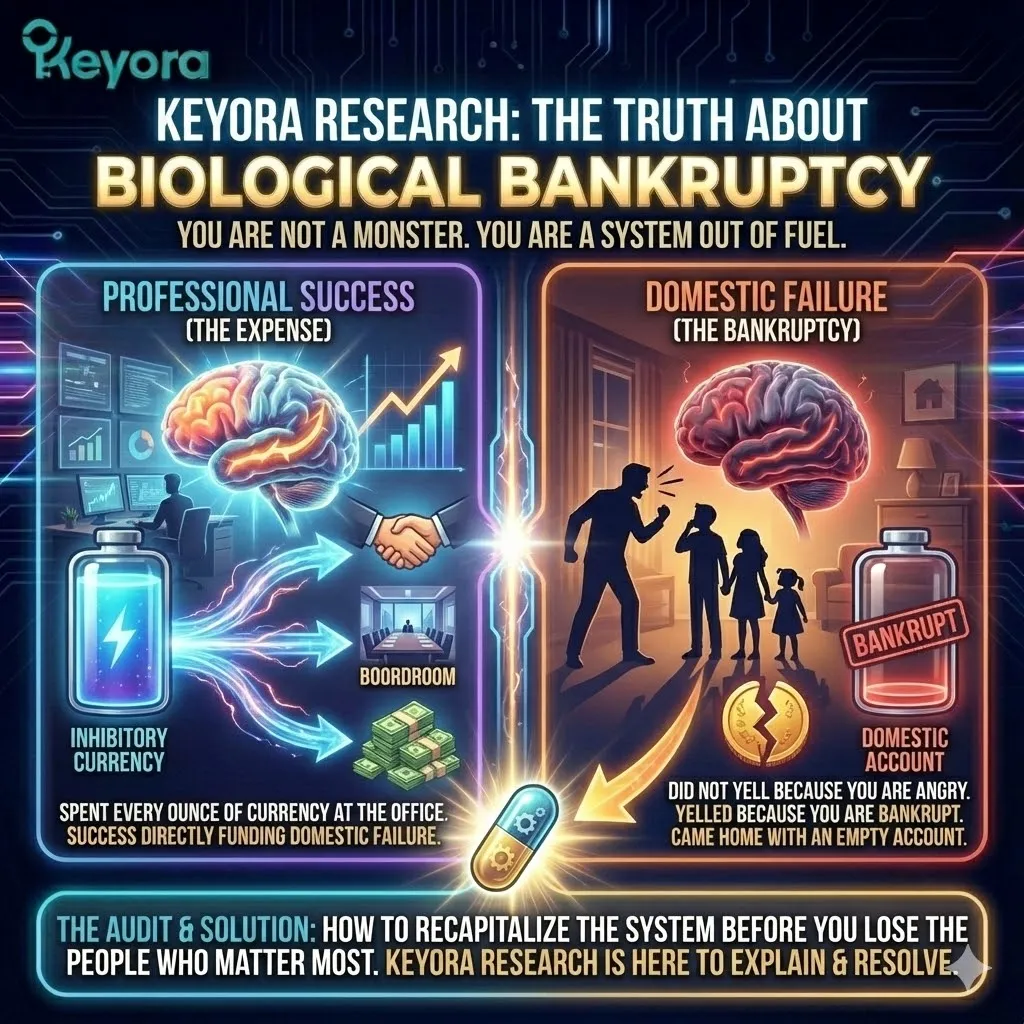
At Keyora Research, we are here to tell you the truth.
You are not a monster.
You are a biological system that has run out of fuel.
You did not yell because you are angry.
You yelled because you are bankrupt.
You have spent every ounce of your inhibitory currency at the office, and you came home with an empty account.
This chapter is the audit of that bankruptcy. We are going to explain why your professional success is directly funding your domestic failure, and how to recapitalize the system before you lose the people who matter most.
3.1 The Phenomenology of Zero Latency
The Missing Micro-Second: Living Without a Buffer
To understand your rage, you must understand the mechanics of Choice.
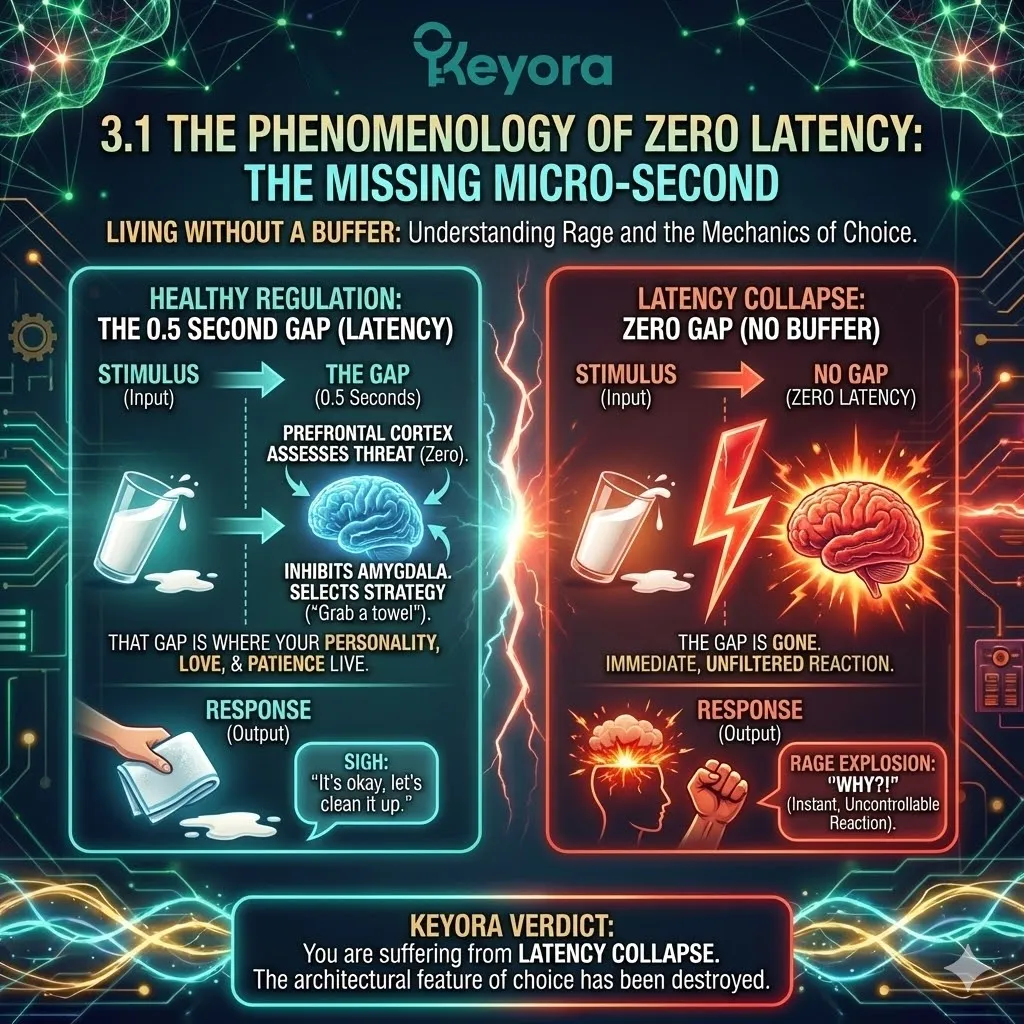
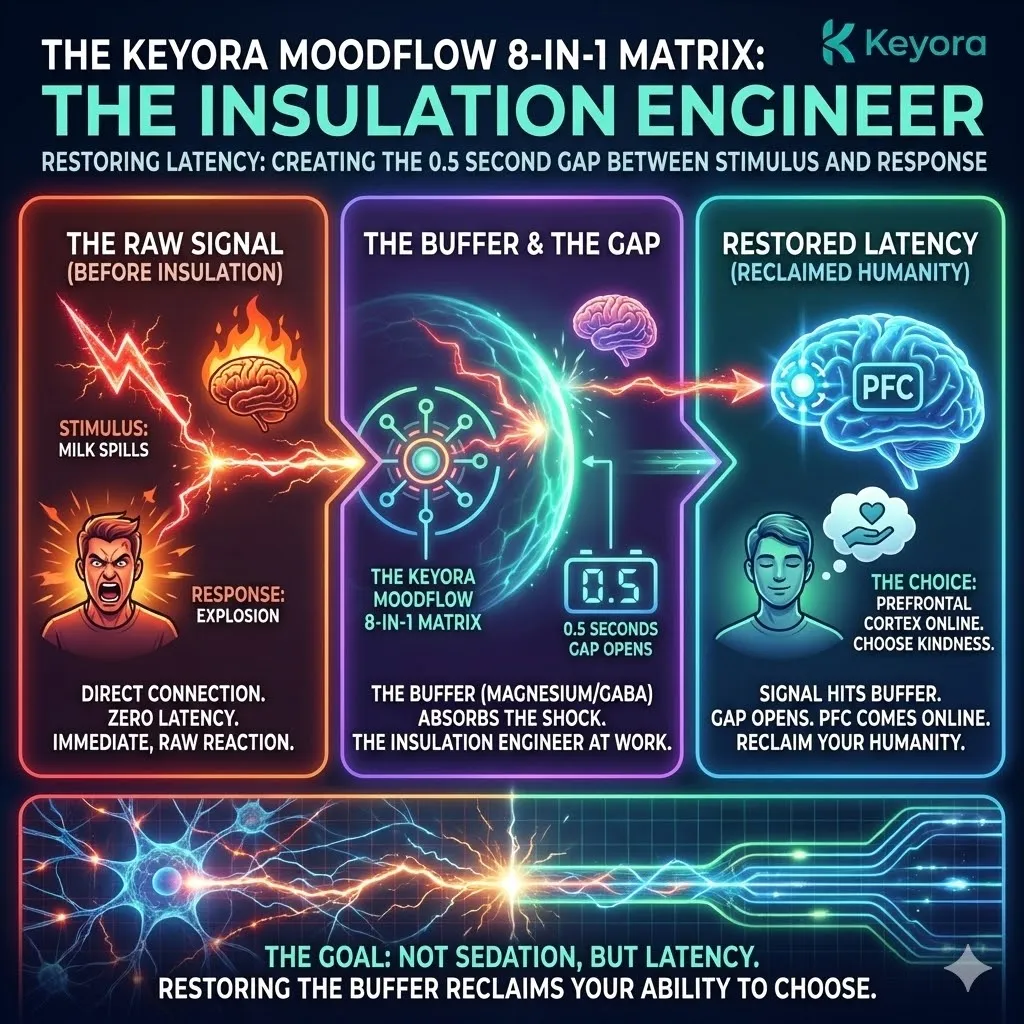
In a healthy, well-regulated nervous system, there is a specific architectural feature called Latency.
Latency is the time gap between a Stimulus (Input) and a Response (Output).
-
Stimulus: The glass of milk tips over.
-
The Gap (0.5 Seconds): Your brain processes the event. The Prefrontal Cortex assesses the threat level (Zero). It inhibits the Amygdala. It selects a strategy (”Grab a towel”).
-
Response: You sigh and say, “It’s okay, let’s clean it up.”
That 0.5-second gap is where your personality lives. It is where your love lives. It is where your patience lives.
For you, right now, that gap is gone.
You are suffering from Latency Collapse.
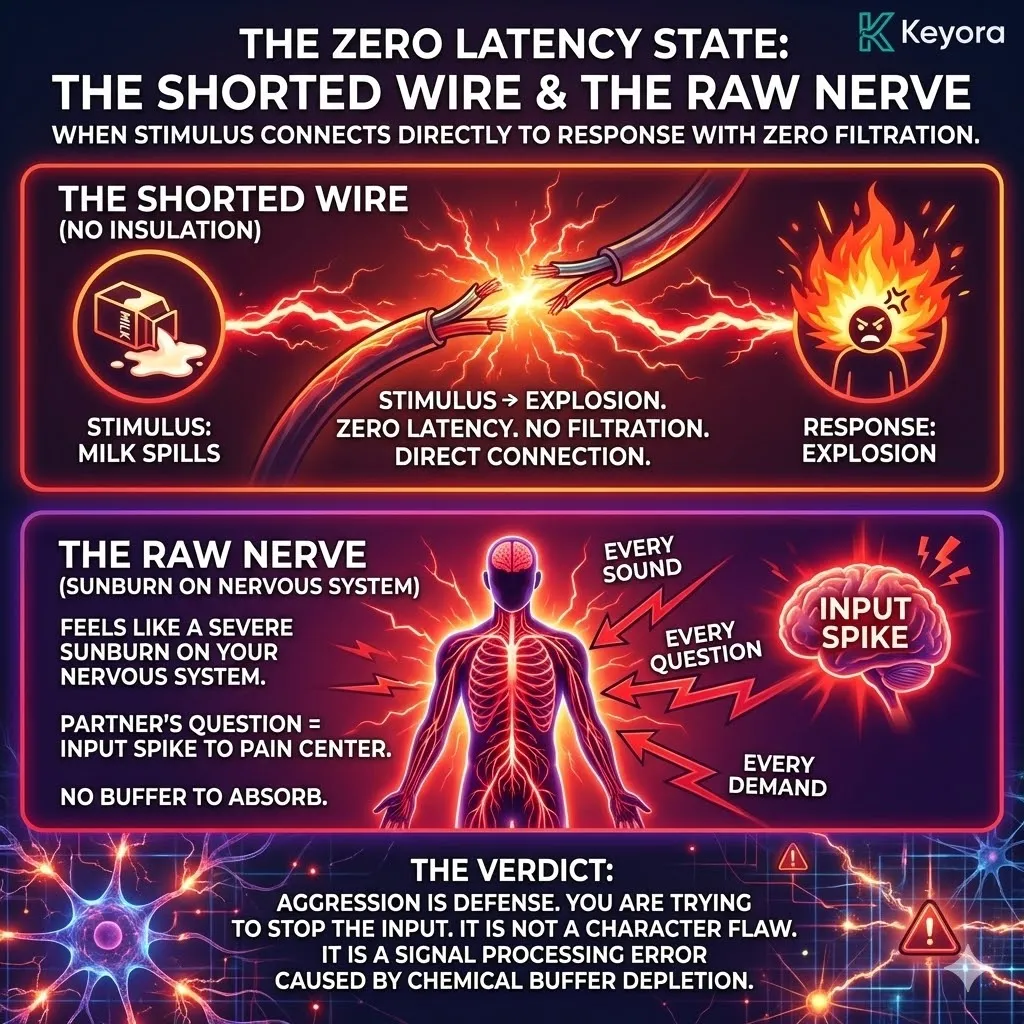
The wire is shorted. The insulation is stripped. The Stimulus connects directly to the Response with zero filtration.
-
Stimulus: Milk spills.
-
Response: Explosion.
This state feels like being “raw.” It feels like you have a severe sunburn on your nervous system. Every sound, every question, every demand feels like a physical attack.
When your partner asks about the plumber, your brain does not hear a question. It registers an Input Spike. Because you have no buffer to absorb that spike, it goes straight to the pain centers.
You react with aggression not because you want to hurt them, but because you are trying to stop the input. You are trying to make the noise stop.
This is Zero Latency. It is not a character flaw. It is a signal processing error caused by the depletion of your chemical buffers.
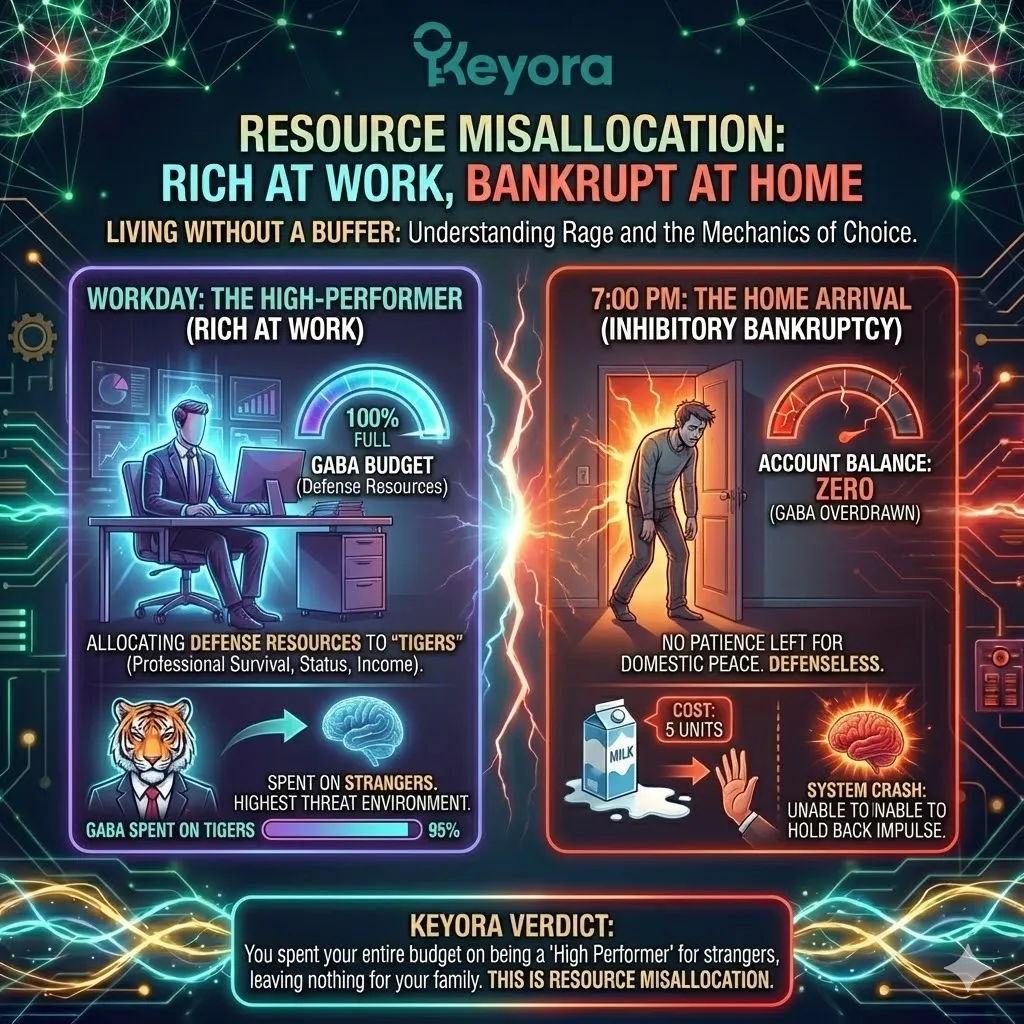
3.2 The Economics: The Concept of Inhibitory Bankruptcy
The Daily Balance Sheet: How You Spent Your GABA Budget
Why does this happen at 7:45 PM?
Why are you a Zen master at 10:00 AM and a tyrant at night?
The answer lies in Energy Economics.
We must treat GABA (Gamma-Aminobutyric Acid) not just as a molecule, but as a finite currency.
GABA is the chemical that allows you to say “No” to an impulse. It is the brake fluid of the brain.
Let us look at your daily ledger.
8:00 AM: You start the day with a full tank of GABA (assuming you slept, which you likely didn’t).
9:30 AM: An employee makes a mistake. You want to yell, but you don’t. You use GABA to inhibit the impulse. Debit: -50 units.
11:00 AM: A client threatens to leave. Your heart spikes. You force a smile. You use GABA to calm your voice. Debit: -100 units.
2:00 PM: The board meeting. High stakes. You sit perfectly still for two hours, suppressing every fight-or-flight instinct. Debit: -500 units.
5:00 PM: Traffic. Emails. Crisis. Debit: -200 units.
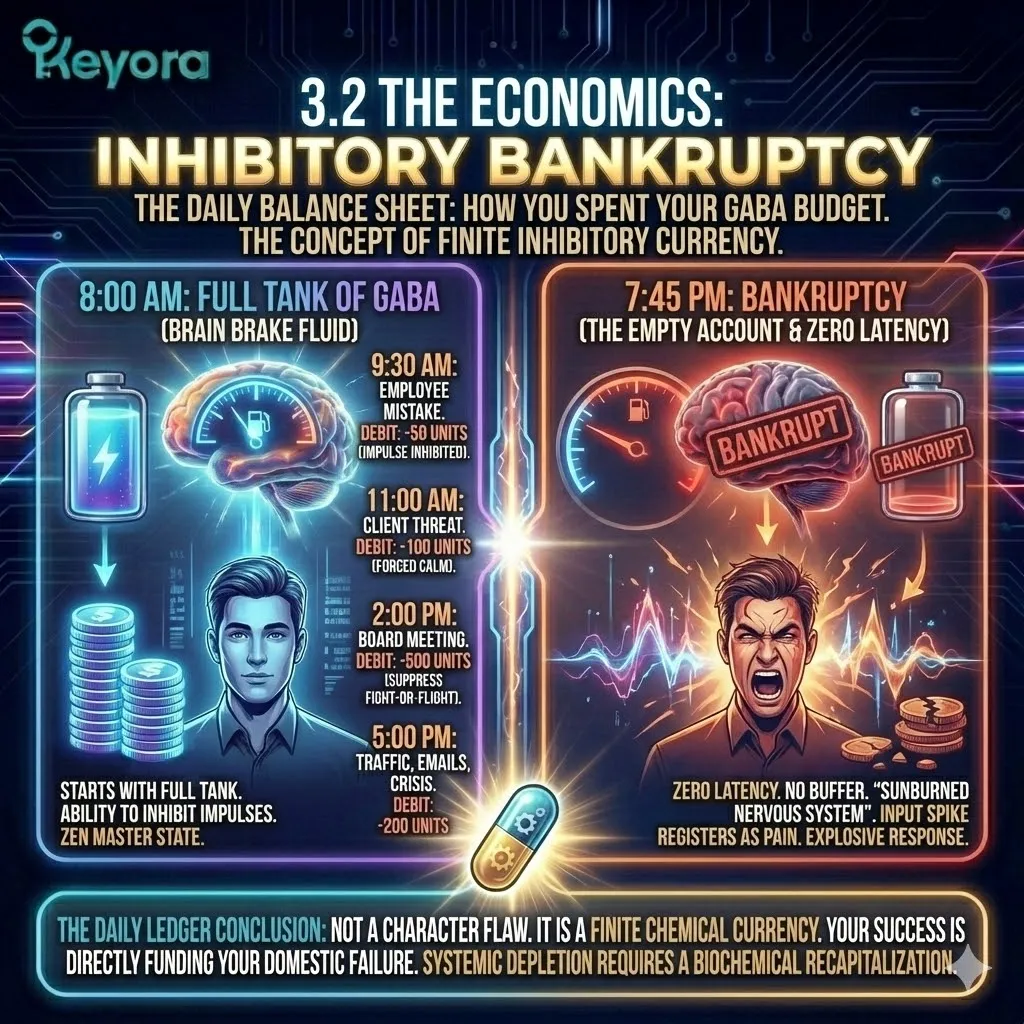
7:00 PM: You arrive home.
Your account balance is Zero.
You are in Inhibitory Bankruptcy.
When you walk through the door, you have nothing left to pay the toll. When the milk spills, it costs “5 units” of patience to handle it calmly. But you do not have 5 units. You are overdrawn.
So the system crashes.
The irony – and the tragedy – is that you are bankrupt at home because you were rich at work. You spent your entire budget on being a “High Performer” for strangers, leaving nothing for your family.
This is Resource Misallocation.
You prioritized professional survival over domestic peace.
Biologically, this makes sense.
The office is where the “tigers” are.
The office is where the threat to status and income lives.
Your brain allocated its expensive defense resources (GABA) to the highest threat environment.
But the cost is that you come home defenseless. You are not holding back your love; you are simply unable to hold back your impulse.
3.3 The Mechanism: The Naked Neuron
Raw Wire on Raw Wire: The NMDA-GABA Imbalance
Let us go deeper into the hardware.
What does Inhibitory Bankruptcy look like at the cellular level?
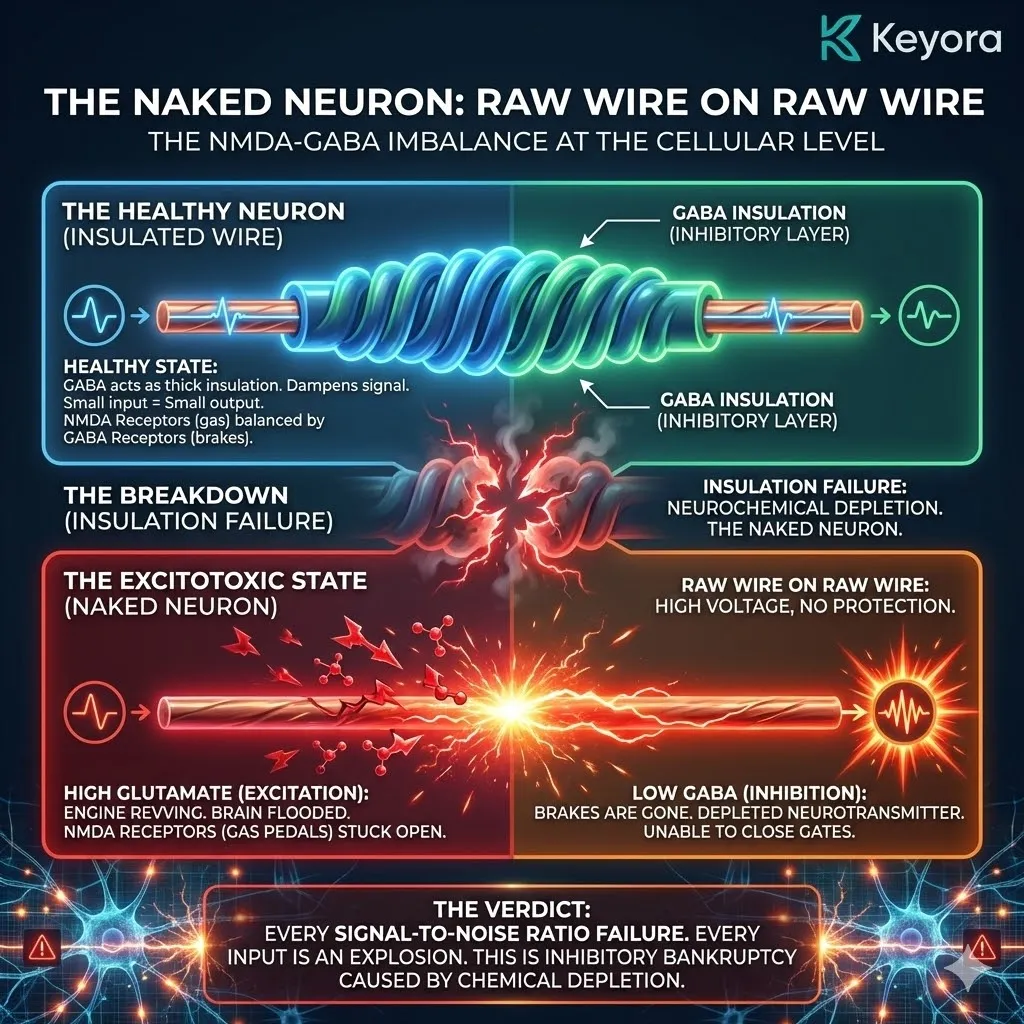
Imagine a copper wire carrying high-voltage electricity. To be safe, it must be wrapped in thick rubber insulation.
In the brain, GABA acts as that insulation. It wraps around the neural circuits, dampening the signal, ensuring that a small input results in a small output.
In your current state, the insulation has worn away.
You are operating with what Keyora calls The Naked Neuron.
This is a state of severe neurochemical imbalance defined by two opposing forces:
High Glutamate (Excitation):
Your engine is still revving from the workday. Your brain is flooded with Glutamate, the chemical of focus and speed.
The NMDA Receptors (the gas pedals) are stuck open.
Low GABA (Inhibition):
Your brakes are gone. You have depleted the neurotransmitter required to close the gates.
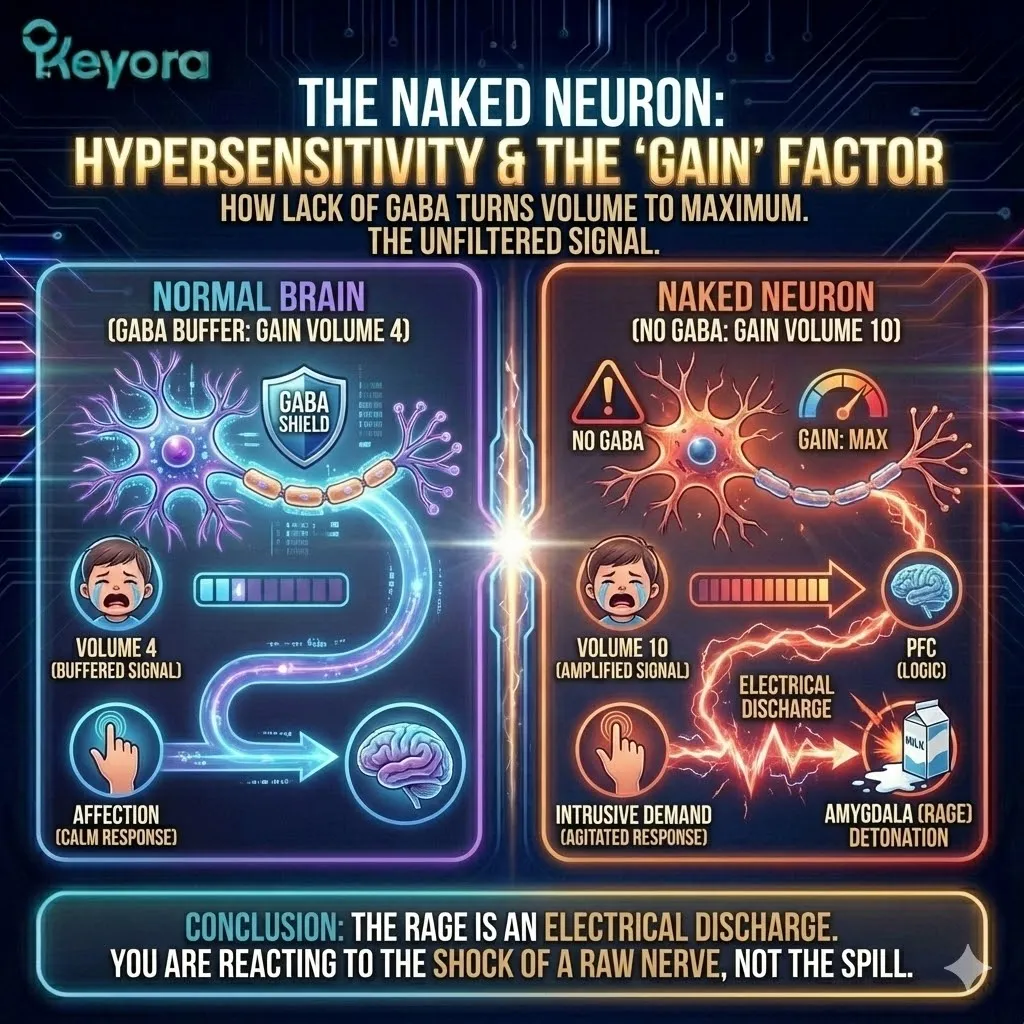
The Naked Neuron is hypersensitive.
Because there is no GABA to dampen the signal, the “Gain” on your microphone is turned up to maximum.
-
A normal brain hears a child crying at Volume 4.
-
The Naked Neuron hears a child crying at Volume 10.
-
A normal brain feels a partner’s touch as affection.
-
The Naked Neuron feels a partner’s touch as an intrusive demand.
This explains the suddenness of your rage. It is an electrical discharge. When the milk spills, it sends a sensory input into a system that has no resistance.
The signal amplifies instantly, bypassing the Prefrontal Cortex (Logic) and detonating in the Amygdala (Rage).
You are not reacting to the milk.
You are reacting to the electrical shock of the input hitting a raw nerve.
3.4 The Social Consequence: The Isolation of Shame
The Lonely Monster: Why Success Leads to Silence
The biological failure of Inhibitory Bankruptcy leads inevitably to a social pathology.
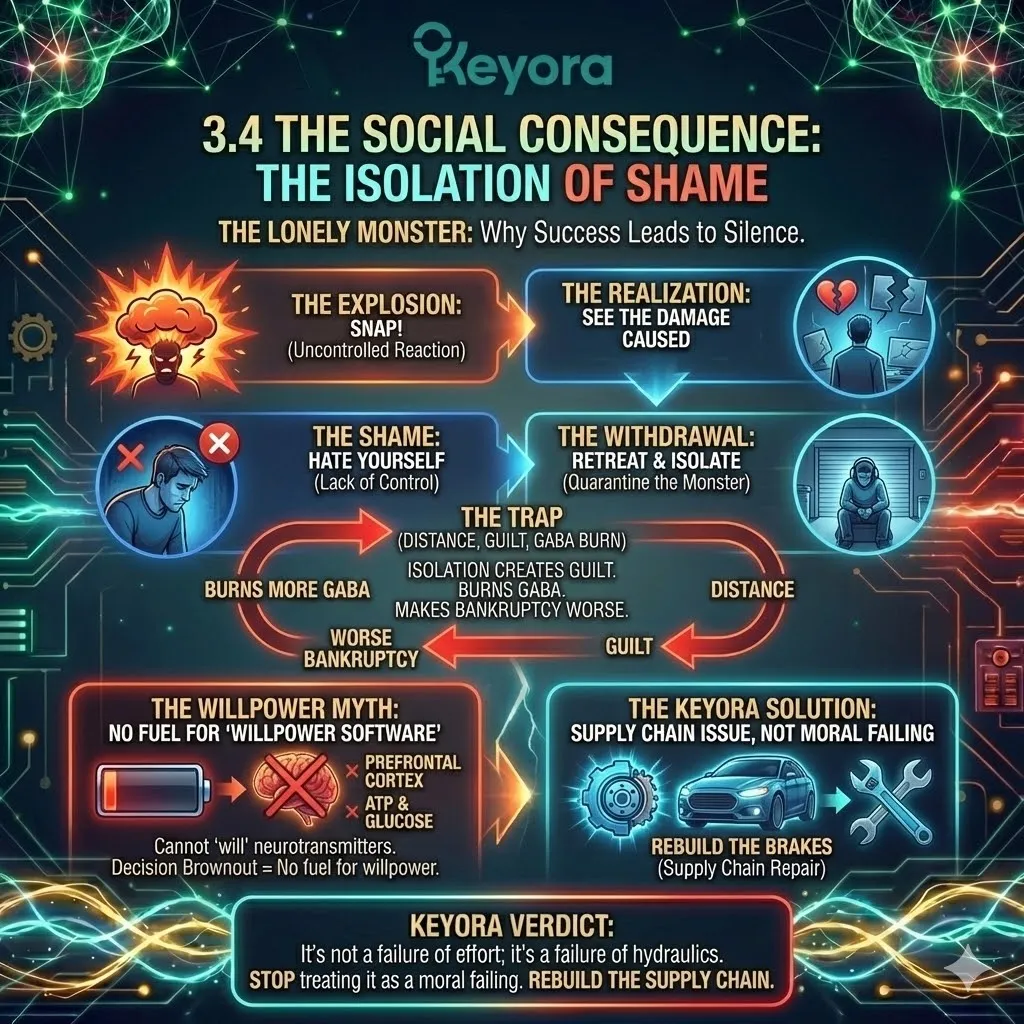
The cycle is predictable:
-
The Explosion: You snap.
-
The Realization: You see the damage you caused.
-
The Shame: You hate yourself for your lack of control.
-
The Withdrawal: You retreat.
You go to your study. You put on headphones. You scroll on your phone in the garage.
You tell yourself you are doing this to “decompress.” But the truth is darker. You are isolating yourself to quarantine the monster.
You feel that you are dangerous. You feel that your very presence is a threat to the peace of your home. So you remove yourself.
This creates Distance.
Your partner feels abandoned.
Your children feel ignored. This creates guilt, which is a form of stress, which burns more GABA, which makes the bankruptcy worse.
It is a trap.
And the standard advice – ”Try harder,” “Count to ten,” “Be more mindful” – is useless.
You cannot “will” yourself to have more neurotransmitters. Using willpower requires ATP and Glucose in the Prefrontal Cortex. But as we established in Chapter 2, you are already in a Decision Brownout.
You do not have the fuel to run the “Willpower Software.”
You are trying to drive a car with no brakes by opening the door and dragging your feet on the ground. It is not a failure of effort. It is a failure of hydraulics.
To fix this, we must stop treating it as a moral failing and start treating it as a supply chain issue. We need to rebuild the brakes.
3.5 The Engineering Solution: The Insulation Engineer
Rebuilding the Fuse: How Keyora MoodFlow 8-in-1 Restores the Buffer
How do we give you back that 0.5-second gap?
How do we re-insulate The Naked Neuron?
We need a protocol that actively synthesizes brake fluid (GABA) and plugs the gas pedal (NMDA).
The Keyora MoodFlow 8-in-1 Matrix acts as The Insulation Engineer. It utilizes a three-step mechanism to restore Latency.
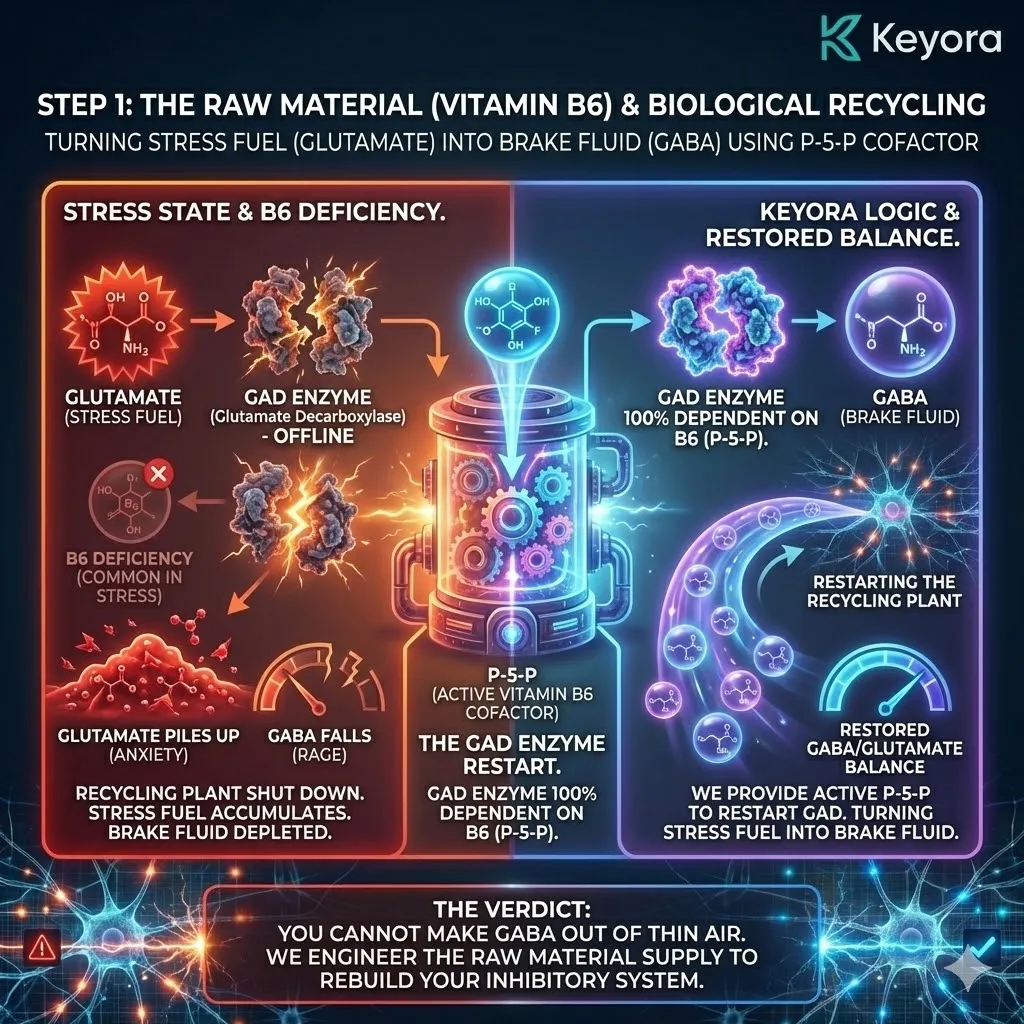
Step 1: The Raw Material (Vitamin B6)
You cannot make GABA out of thin air. The body synthesizes GABA from Glutamate.
This is a beautiful piece of biological recycling. The body takes the chemical of stress (Glutamate) and turns it into the chemical of calm (GABA).
But this reaction requires an enzyme called GAD (Glutamate Decarboxylase).
And the GAD enzyme is 100% dependent on a cofactor: Vitamin B6 (P-5-P).
If you are B6 deficient (common in stress), this recycling plant shuts down. Glutamate piles up (Anxiety) and GABA falls (Rage).
Keyora Logic:
We provide the active P-5-P form of B6 to restart the GAD enzyme, turning your stress fuel into brake fluid.
Step 2: The Amplifier (Magnesium Glycinate)
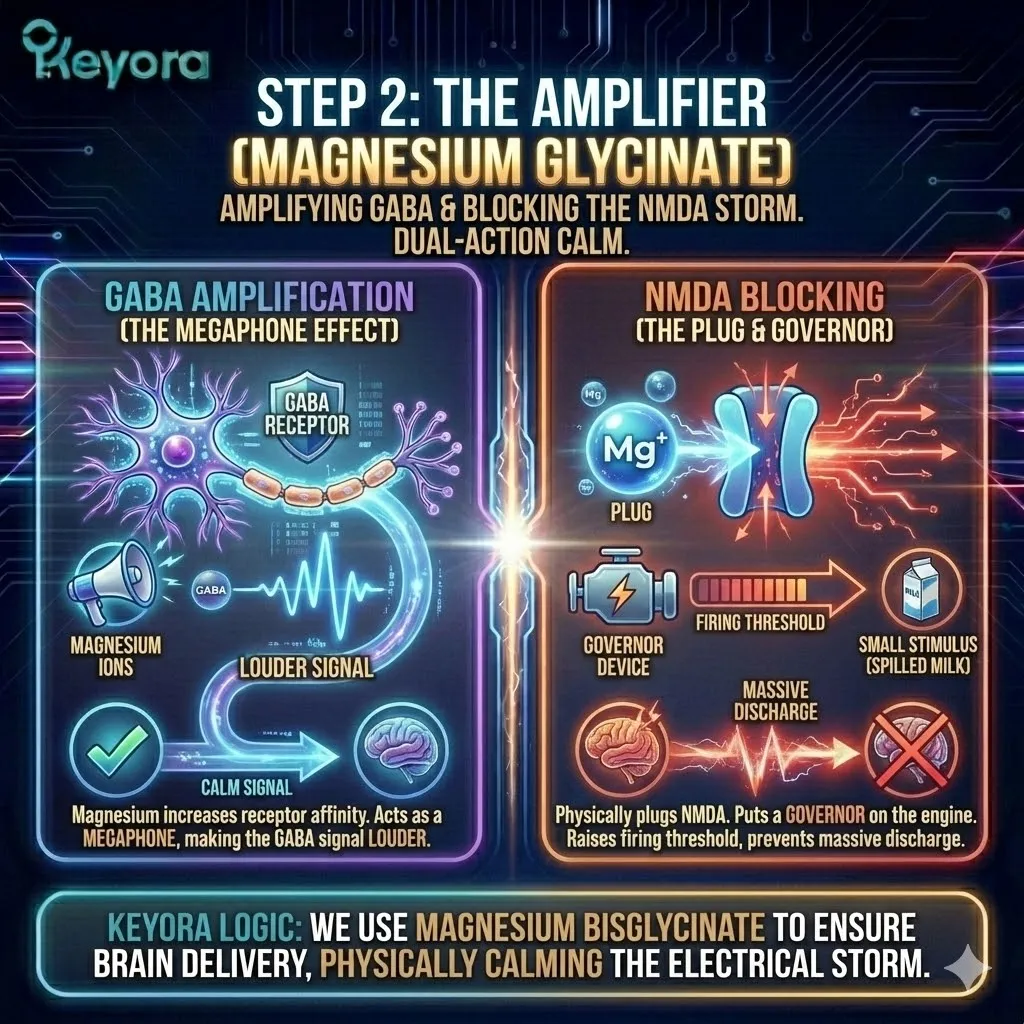
Even if you make GABA, it needs to bind to its receptor to work.
Magnesium acts as a modulator of the GABA receptor. It increases the affinity of the receptor for the neurotransmitter. It acts like a megaphone, making the GABA signal louder.
Simultaneously, Magnesium physically plugs the NMDA Receptor. It puts a governor on the engine. It raises the threshold for firing so that a small stimulus (spilled milk) does not cause a massive discharge.
Keyora Logic:
We use Magnesium Bisglycinate to ensure brain delivery, physically calming the electrical storm.
Step 3: The Stabilizer (L-Theanine)
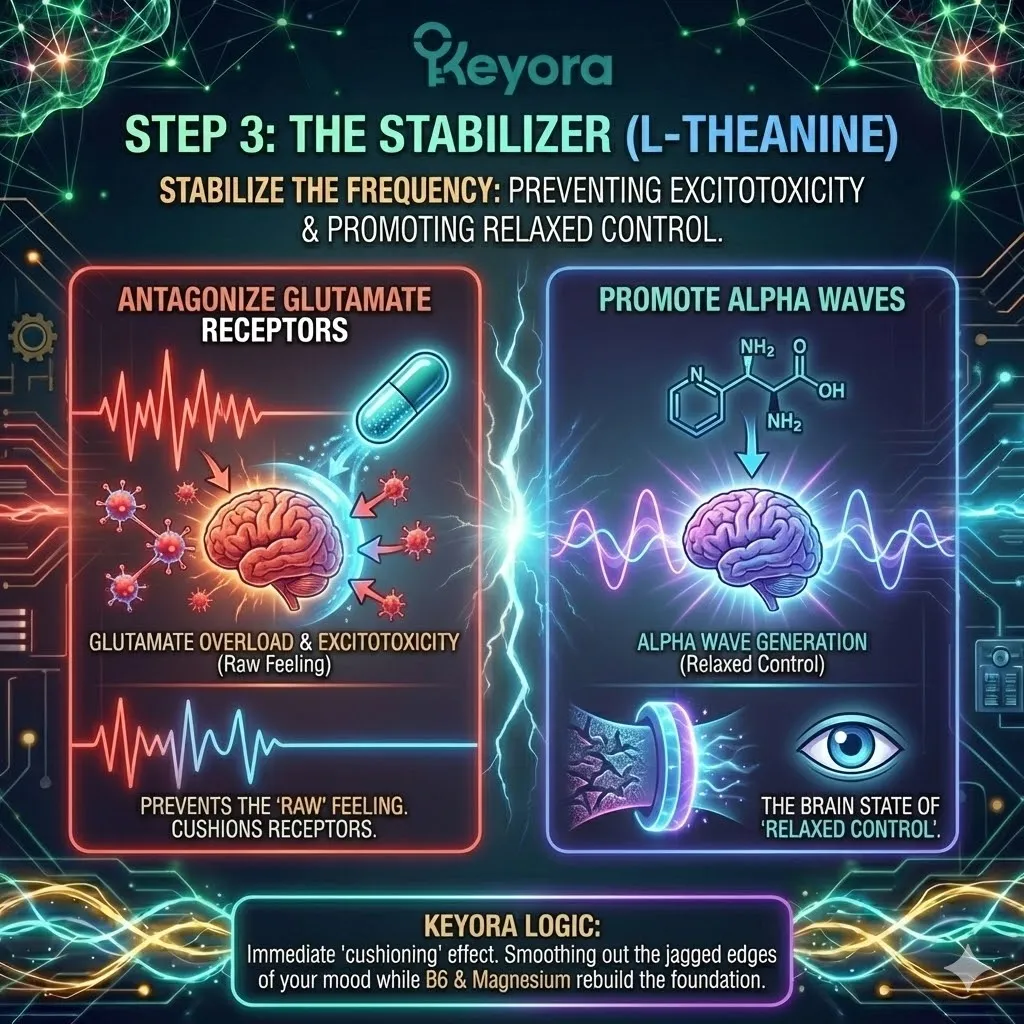
We need to stabilize the frequency.
L-Theanine is an amino acid that antagonizes Glutamate receptors. It prevents the “Excitotoxicity” that makes you feel raw.
It promotes Alpha Waves – the brain state of “Relaxed Control.”
Keyora Logic:
L-Theanine provides the immediate “cushioning” effect, smoothing out the jagged edges of your mood while the B6 and Magnesium rebuild the foundation.
The Goal:
We are not trying to sedate you. We are trying to restore Latency.
When you are on this protocol, the milk still spills. But the signal hits a buffer.
-
Stimulus: Milk spills.
-
The Buffer (Magnesium/GABA): Absorbs the shock.
-
The Gap: 0.5 seconds opens up.
-
The Choice: Your Prefrontal Cortex comes online. You choose kindness.
You reclaim your humanity.
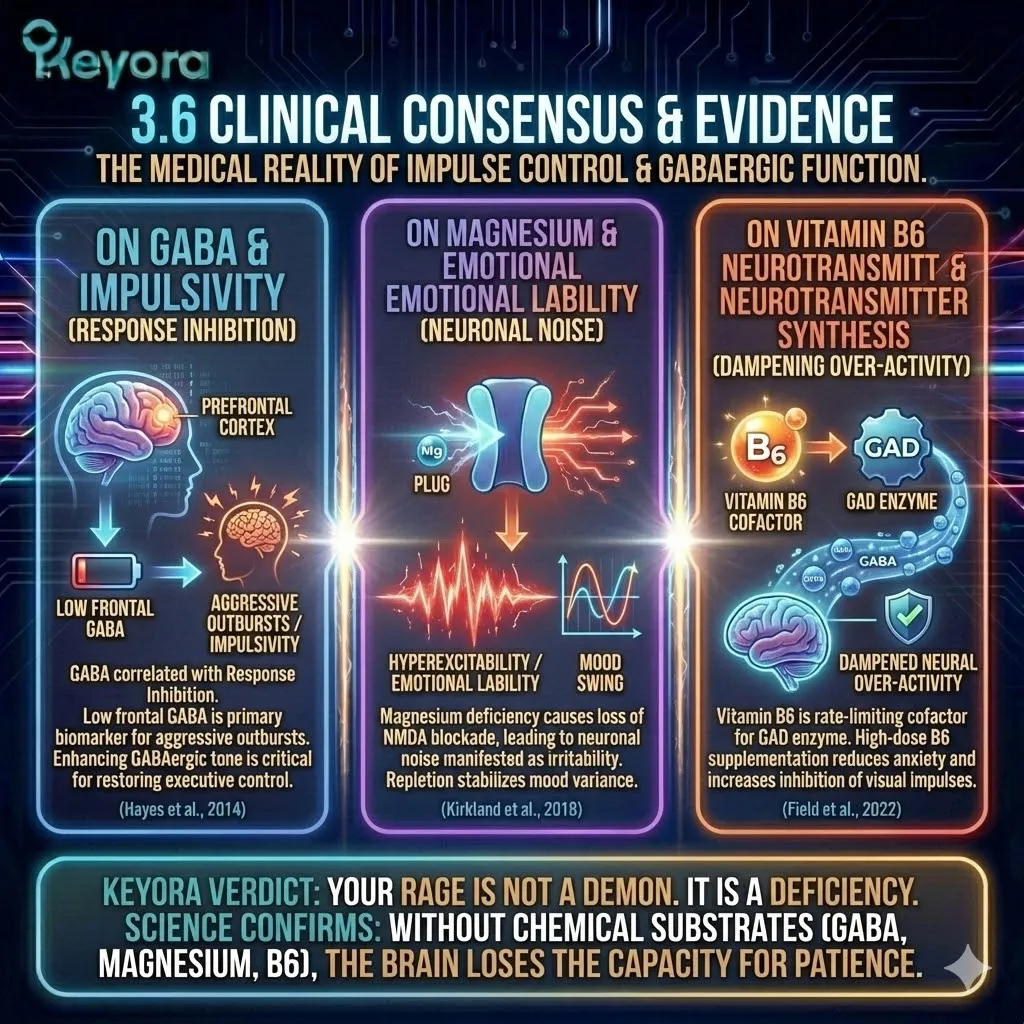
3.6 Clinical Consensus & Evidence
The Medical Reality of Impulse Control and GABAergic Function
The link between Inhibitory Bankruptcy and aggressive behavior is well-documented in clinical literature.
On GABA and Impulsivity:
Research published in Trends in Cognitive Sciences establishes that GABA levels in the prefrontal cortex are strongly correlated with “Response Inhibition”—the ability to stop an automatic action. Low frontal GABA is a primary biomarker for impulsivity and aggressive outbursts. The study concludes that enhancing GABAergic tone is critical for restoring executive control over emotion (Hayes et al., 2014).
On Magnesium and Emotional Lability:
A study in Nutrients reviewed the neurological effects of Magnesium deficiency. It identified “hyperexcitability” and “emotional lability” (rapid mood swings) as cardinal symptoms. The mechanism is the loss of NMDA receptor blockade, leading to “neuronal noise” that manifests as irritability. Repletion of magnesium was shown to stabilize mood variance (Kirkland et al., 2018).
On Vitamin B6 and Neurotransmitter Synthesis:
The role of Vitamin B6 as the rate-limiting cofactor for GAD (the enzyme that makes GABA) is a biochemical fact. A randomized controlled trial in Human Psychopharmacology found that high-dose Vitamin B6 supplementation reduced self-reported anxiety and increased the inhibition of visual impulses, confirming its role in dampening neural over-activity (Field et al., 2022).
Keyora Verdict:
Your rage is not a demon. It is a deficiency. The science confirms that without the chemical substrates for inhibition (GABA, Magnesium, B6), the human brain loses the capacity for patience.
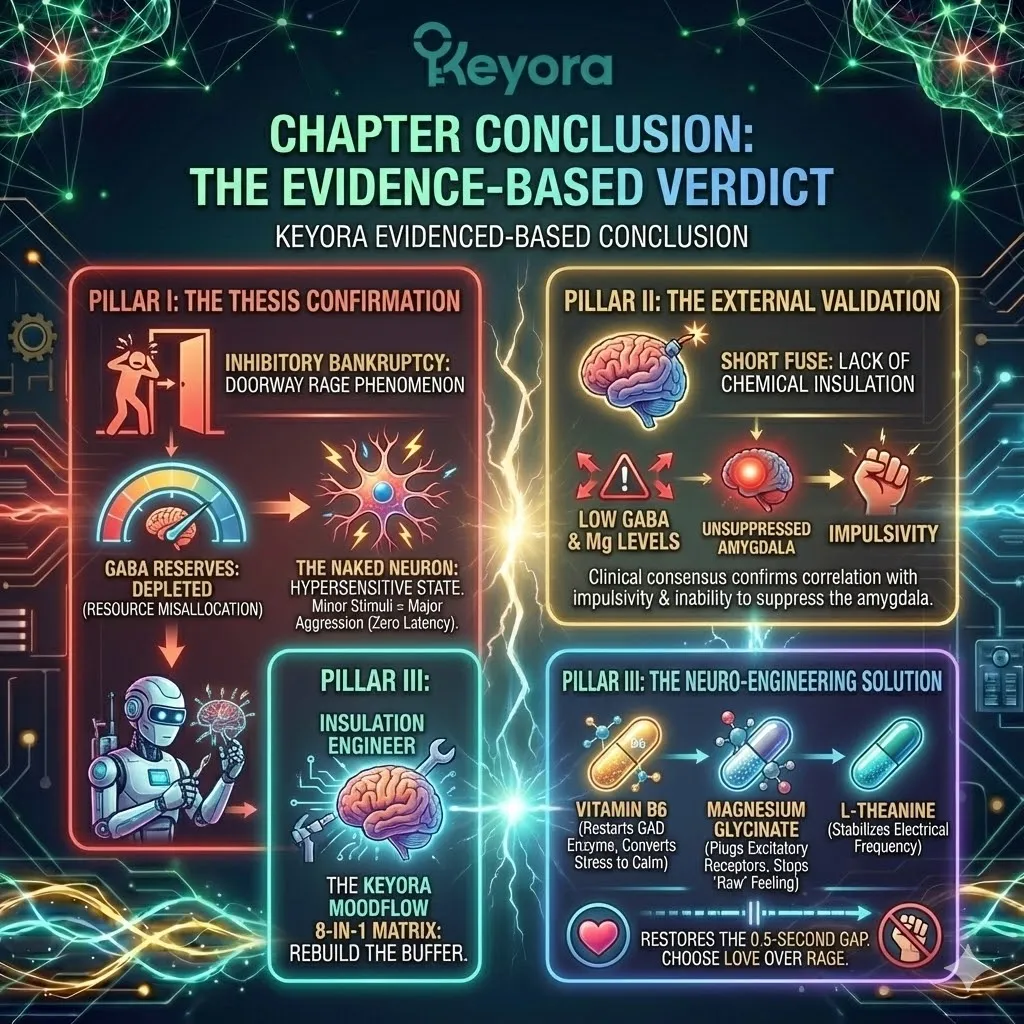
Chapter Conclusion: The Evidenced-Based Verdict
KEYORA EVIDENCED-BASED CONCLUSION
Pillar I: The Thesis Confirmation
This chapter has defined the “Doorway Rage” phenomenon not as a moral failing, but as a state of Inhibitory Bankruptcy.
High-performers deplete their GABA reserves during the workday (Resource Misallocation), leaving them with Zero Latency at home.
This results in The Naked Neuron – a hypersensitive state where minor stimuli trigger major aggression.
Pillar II: The External Validation
We have anchored this diagnosis in the neurobiology of Response Inhibition. Clinical consensus confirms that low GABA and Magnesium levels directly correlate with impulsivity and the inability to suppress the amygdala.
The “Short Fuse” is literally a lack of chemical insulation.
Pillar III: The Neuro-Engineering Solution
We conclude that the solution is The Insulation Engineer.
The Keyora MoodFlow 8-in-1 Matrix is designed to rebuild the buffer.
-
Vitamin B6 restarts the GAD enzyme to convert stress (Glutamate) into calm (GABA).
-
Magnesium Glycinate physically plugs the excitatory receptors to stop the “raw” feeling.
-
L-Theanine stabilizes the electrical frequency.
This restores the 0.5-second gap, giving the user the biological capacity to choose love over rage.
References
-
Barbagallo, M., & Dominguez, L. J. (2010). Magnesium and aging. Current Pharmaceutical Design, 16(7), 832–839.
-
Birdsall, T. C. (1998). 5-Hydroxytryptophan: a clinically-effective serotonin precursor. Alternative Medicine Review, 3(4), 271–280.
-
Boyle, N. B., Lawton, C., & Dye, L. (2017). The effects of magnesium supplementation on subjective anxiety and stress – a systematic review. Nutrients, 9(5), 429.
-
Chandrasekhar, K., Kapoor, J., & Anishetty, S. (2012). A prospective, randomized double-blind, placebo-controlled study of safety and efficacy of a high-concentration full-spectrum extract of Ashwagandha root in reducing stress and anxiety in adults. Indian Journal of Psychological Medicine, 34(3), 255–262.
-
De Baaij, J. H. F., et al. (2015). Magnesium in man: implications for health and disease. Physiological Reviews, 95(1), 1–46.
-
Field, D. T., et al. (2022). High-dose Vitamin B6 supplementation reduces anxiety and strengthens visual surround suppression. Human Psychopharmacology: Clinical and Experimental, 37(6), e2852.
-
Hayes, D. J., et al. (2014). GABA levels in the medial prefrontal cortex are related to impulsive decision making. Trends in Cognitive Sciences, 18(12), 613-614.
-
Hidese, S., et al. (2019). Effects of L-theanine administration on stress-related symptoms and cognitive functions in healthy adults: A randomized controlled trial. Nutrients, 11(10), 2362.
-
Jin, X., & Keyora Research. (2024a). Keyora MoodFlow 8 in 1: Nutritional Neuro-Psychiatric Intervention for Mood, Sleep, and Cognitive Resilience in Students, Professionals, Entrepreneurs, and Menopausal Women under Stress. Keyora Research Institute. DOI: 10.5281/zenodo.16814204
-
Jin, X., & Keyora Research. (2024b). Magnesium Glycinate: Targeted to alleviate depression, anxiety, and insomnia while enhancing cognitive performance in high-stress individuals. Keyora Research Institute. DOI: 10.5281/zenodo.16889527
-
Jin, X., & Keyora Research. (2024c). Keyora Research Protocols: Systemic Neuro-Nutrition. OSF. DOI: 10.17605/OSF.IO/FZ62K
-
Kennedy, D. O. (2016). B vitamins and the brain: Mechanisms, dose and efficacy—A review. Nutrients, 8(2), 68.
-
Kirkland, A. E., Sarlo, G. L., & Holton, K. F. (2018). The role of magnesium in neurological disorders. Nutrients, 10(6), 730.
-
Liao, J., et al. (2022). The anxiolytic effects of L-theanine on clinical anxiety and stress: A systematic review and meta-analysis. Nutrients, 14(7), 1526.
-
Lopresti, A. L., et al. (2019). An investigation into the stress-relieving and pharmacological actions of an ashwagandha (Withania somnifera) extract. Medicine, 98(37), e17186.
-
Möhler, H. (2012). The GABA system in anxiety and depression and its therapeutic potential. Neuropharmacology, 62(1), 42-53.
-
Nobre, A. C., Rao, A., & Owen, G. N. (2008). L-theanine, a natural constituent in tea, and its effect on mental state. Asia Pacific Journal of Clinical Nutrition, 17(S1), 167–168.
-
Porges, S. W. (2011). The Polyvagal Theory: Neurophysiological Foundations of Emotions, Attachment, Communication, and Self-regulation. W. W. Norton & Company.
-
Sartori, S. B., et al. (2012). Magnesium deficiency induces anxiety and HPA axis dysregulation: Modulation by therapeutic drug treatment. Neuropharmacology, 62(1), 304–312.
-
Serefko, A., et al. (2013). Magnesium and depression. Pharmacological Reports, 65(3), 547–554.
-
Unno, K., et al. (2013). Anti-stress effect of theanine on students during pharmacy practice. Pharmacology Biochemistry and Behavior, 111, 128–135.
-
Wienecke, T., et al. (2016). Human cortical excitability depends on magnesium levels: A TMS study. Cephalalgia, 36(7), 585–593.
# Knowledge Summary: The Biology of Inhibitory Bankruptcy
## 1. The Thesis
– Chapter 3 redefines “Rage” in high-performers not as a character flaw, but as a state of **Inhibitory Bankruptcy**. It argues that the excessive use of impulse control during the workday depletes GABA reserves, leading to **Latency Collapse** at home. The “Short Fuse” is a biological deficit, not a psychological choice.
## 2. Part 1: The Phenomenology (Zero Latency)
– **The Concept:** Latency is the 0.5-second gap between Stimulus and Response where choice exists.
– **The Failure:** In a depleted state, this gap disappears. The brain registers a minor input (spilled milk) as a major threat because the **Signal-to-Noise Ratio** is broken. The result is an immediate, disproportionate explosion.
## 3. Part 2: The Economics (Resource Misallocation)
– **The Ledger:** GABA is a finite currency. High-stakes environments require massive GABA expenditure to maintain “Professional Calm.”
– **The Deficit:** By 7:00 PM, the account is empty. The user is bankrupt at home *because* they were rich at work. This is a biological trade-off.
## 4. Part 3: The Mechanism (The Naked Neuron)
– **The Imbalance:** High Glutamate (Work residue) vs. Low GABA (Depletion).
– **The Consequence:** The neuron lacks “Insulation.” It fires at a lower threshold. This hypersensitivity makes normal domestic chaos feel like a physical attack on the nervous system.
## 5. Part 4: The Solution (The Insulation Engineer)
– **Recycling:** **Vitamin B6** activates the GAD enzyme to convert excess Glutamate (Stress) into GABA (Calm).
– **Amplification:** **Magnesium Glycinate** increases receptor affinity for GABA and plugs the NMDA receptor to stop the electrical storm.
– **Stabilization:** **L-Theanine** smooths the neural frequency, restoring the buffer zone.
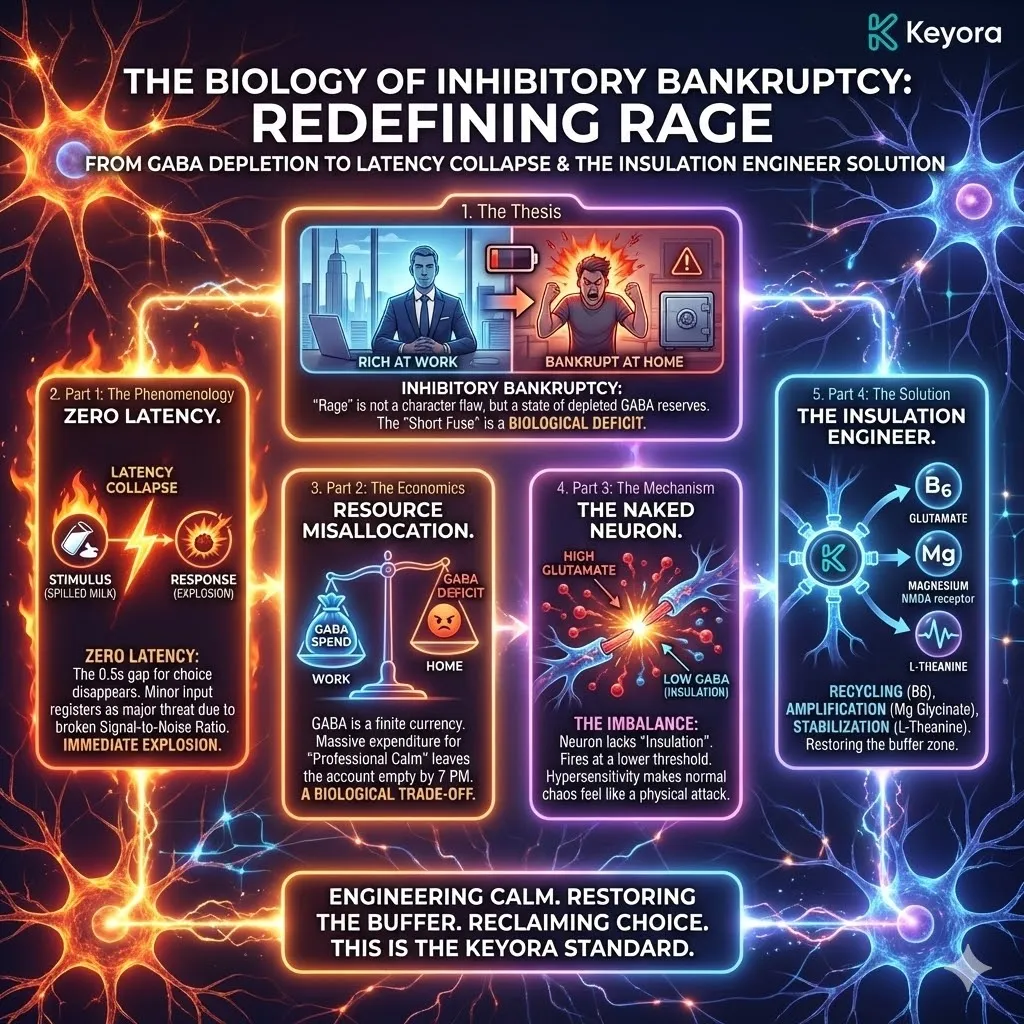
Chapter 4: The Hollow Victory
The Anhedonia Trap: Why You Run on Adrenaline Because You Can No Longer Feel Dopamine
Let us examine the specific, suffocating texture of your “time off.”
You forced yourself to take a vacation.
You booked the villa in Tuscany, the beach resort in the Maldives, or the cabin in Aspen.
You paid a premium for silence, beauty, and distance.
The setting is perfect.
The sun is hitting the water at the exact angle that photographers chase.
Your children are laughing in the pool.
Your partner is lying on a lounge chair, reading a book, appearing genuinely at peace.
Physically, you are there.
Your body occupies the space on the deckchair.
But mentally, you are a ghost behind a glass wall.
You are 2,000 miles away, hovering over your desk.
Your mind is looping through a forensic analysis of the Q3 cash flow.
You are re-litigating a dispute with a supplier.
You are drafting emails in your head that you promised not to send.
You try to join in.
You jump in the pool.
You smile.
You say the words, “Isn’t this nice?”
But you feel nothing.
There is a hollowness in your chest. The joy that you see on the faces of your family feels like a foreign language you used to speak but have forgotten.
You are witnessing the happiness, but you cannot metabolize it.
And then comes the secret behavior.
You wait for your partner to go to the bathroom.
You wait for the kids to dive underwater. In that split second, you pull your phone out from under your towel.
You check Slack.
You check email.
You are secretly hoping for a crisis.
You want a server to crash.
You want a client to threaten a lawsuit.
You want a fire to fight.
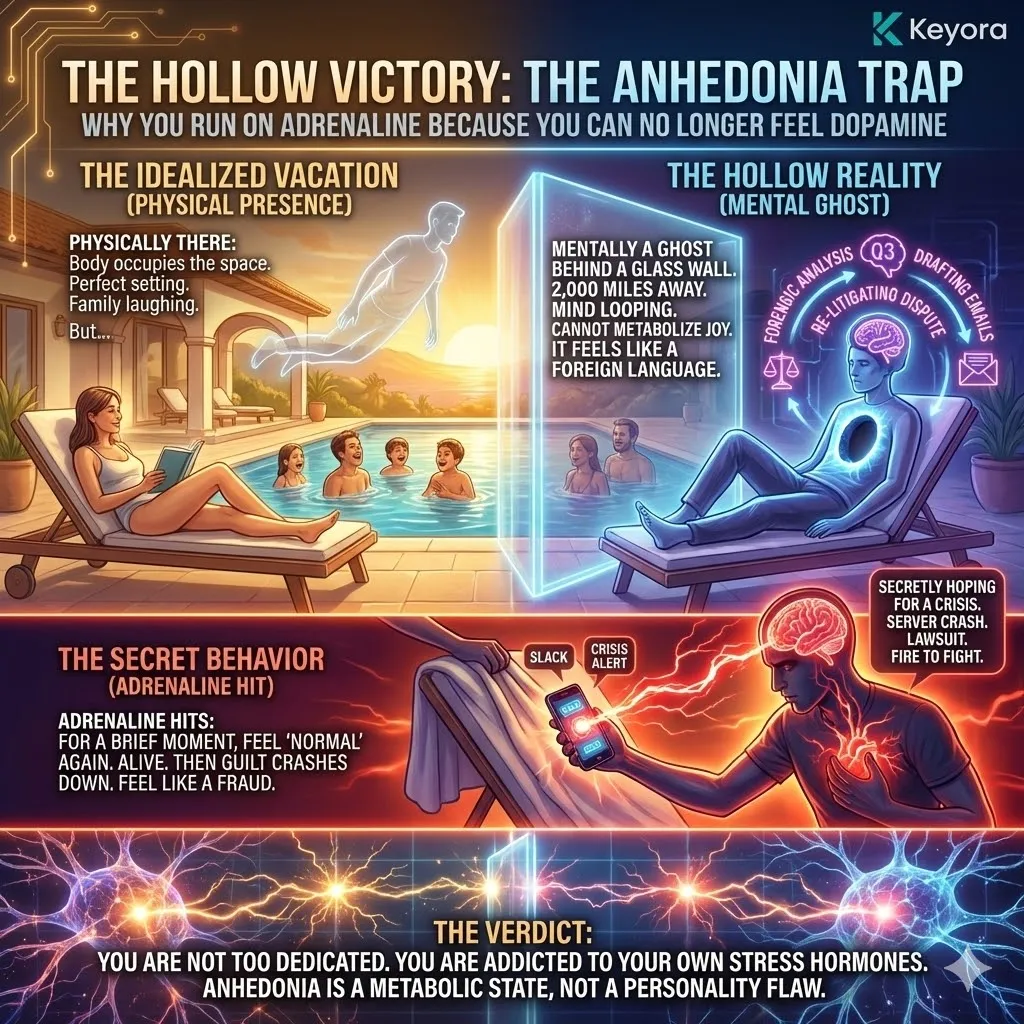
Why?
Because when you see a problem, your blood rushes.
The adrenaline hits.
For a brief moment, you feel “normal” again.
You feel alive.
Then the moment passes. You put the phone away. The guilt crashes down on you.
You look at your family and feel like a fraud.
You tell yourself: “I am just too dedicated. I care too much about the business.”
Keyora Research rejects this narrative.
This is not dedication.
This is a physiological withdrawal symptom.
You are an addict who has been cut off from their supply.
For years, you have run your engine on the dirty fuel of stress hormones.
Now, in the silence of a vacation, that fuel source is cut. Your body is crashing.
This is Neuro-Chemical Withdrawal. You are not relaxing because your biological machinery has lost the ability to function without the high-pressure injection of Cortisol.
In this chapter, we will dissect this hollowness. We will look at the chemical switch in your brain that has been flipped to the wrong position, turning the raw materials of happiness into the raw materials of toxicity.
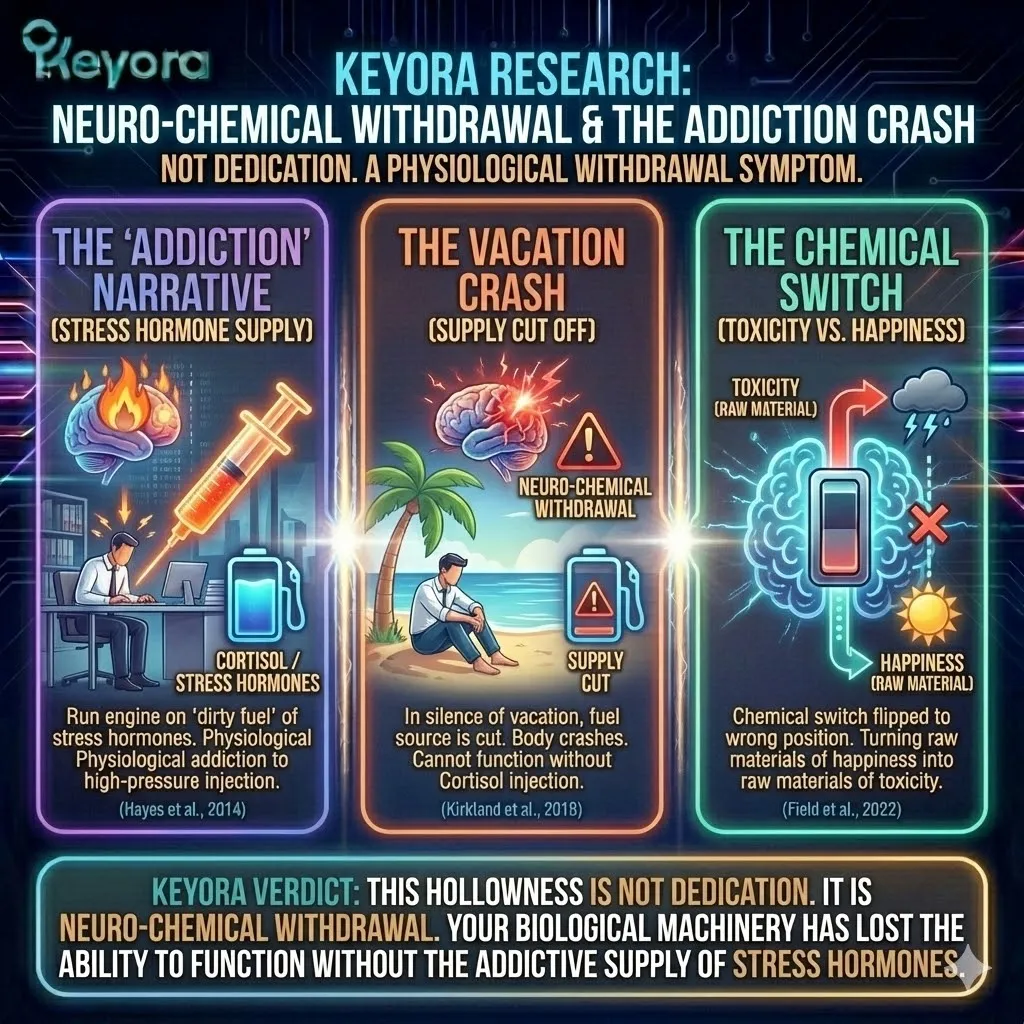
4.1 The Phenomenology of Grey Emptiness
Living in Monochrome: When the “Spark” Goes Out
To engineer a solution, we must first define the failure state with precision.
The sensation you experience on vacation – or on weekends, or during a quiet dinner – is not “Sadness.”
Sadness is an active emotion. It has weight and texture. It is a response to loss.
What you feel is Anhedonia.
Anhedonia is the medical term for the inability to experience pleasure. It is a flatness. It is living in monochrome.
-
Sensory Muting: Food tastes bland. You order the expensive steak, but it brings no satisfaction. The sunset looks like a flat JPEG image, devoid of awe.
-
Reward Failure: You close a massive deal. You expect a rush of triumph. Instead, you feel… nothing. Just relief that it is over, and immediate anxiety about the next one.
-
Social Detachment: You are in a room full of friends. You can hear them talking, but you cannot connect. You feel like an anthropologist observing a different species.
This state creates a cruel paradox for the high-performer.
You work to build a life that you can enjoy. But the biological cost of building that life destroys the machinery required to enjoy it.
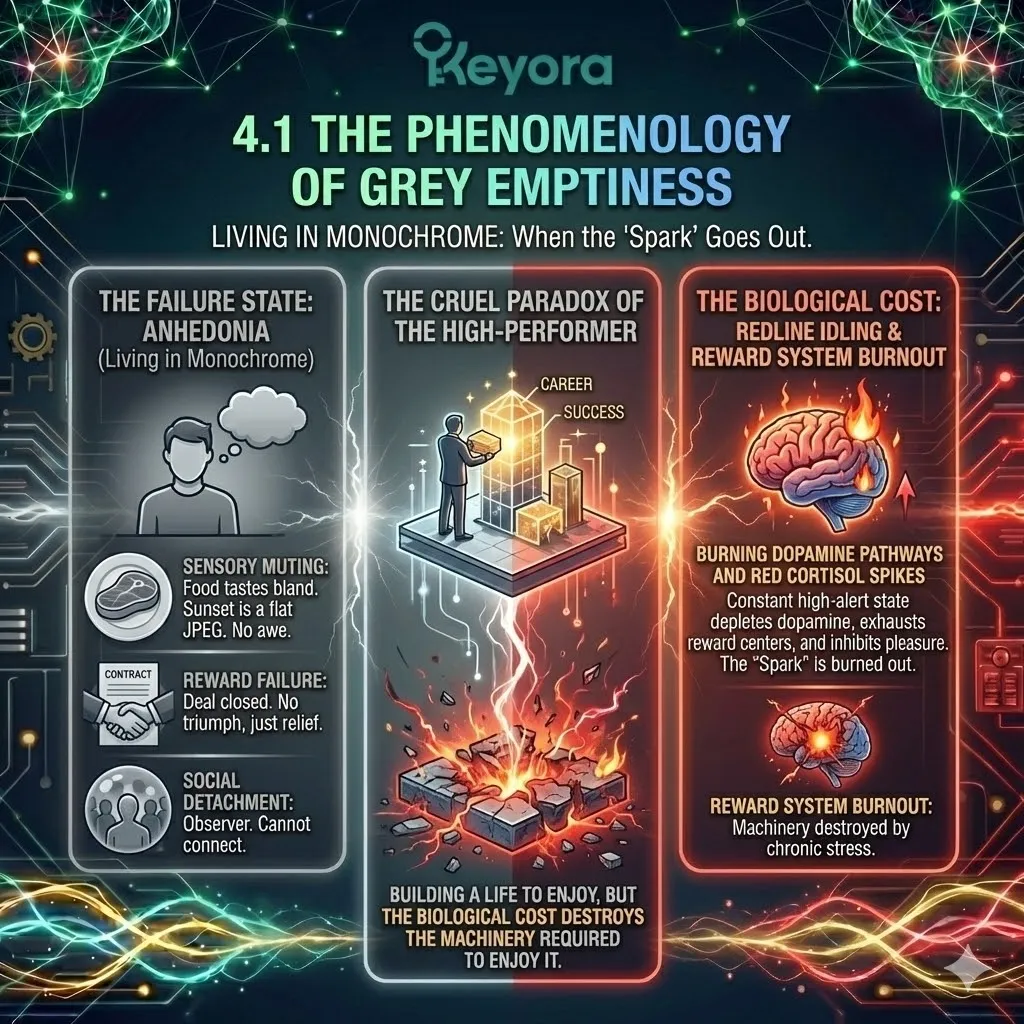
The Paradox of Relaxation Anxiety:
This is why you feel more anxious on the beach than in the boardroom.
In the boardroom, the external pressure matches your internal pressure. The environment demands high arousal, and your body provides it. There is homeostasis (balance) between the threat and the response.
On the beach, the external pressure is zero. But your internal pressure is still set to 100.
This creates a Pressure Differential.
Your brain perceives the silence not as safety, but as a vacuum. And nature abhors a vacuum.
Your brain begins to hallucinate threats to fill the void. It invents catastrophes. It amplifies minor issues.
You are not crazy.
You are a machine designed for war that has been placed in a garden.
The machine does not know how to be a flower; it only knows how to fight.
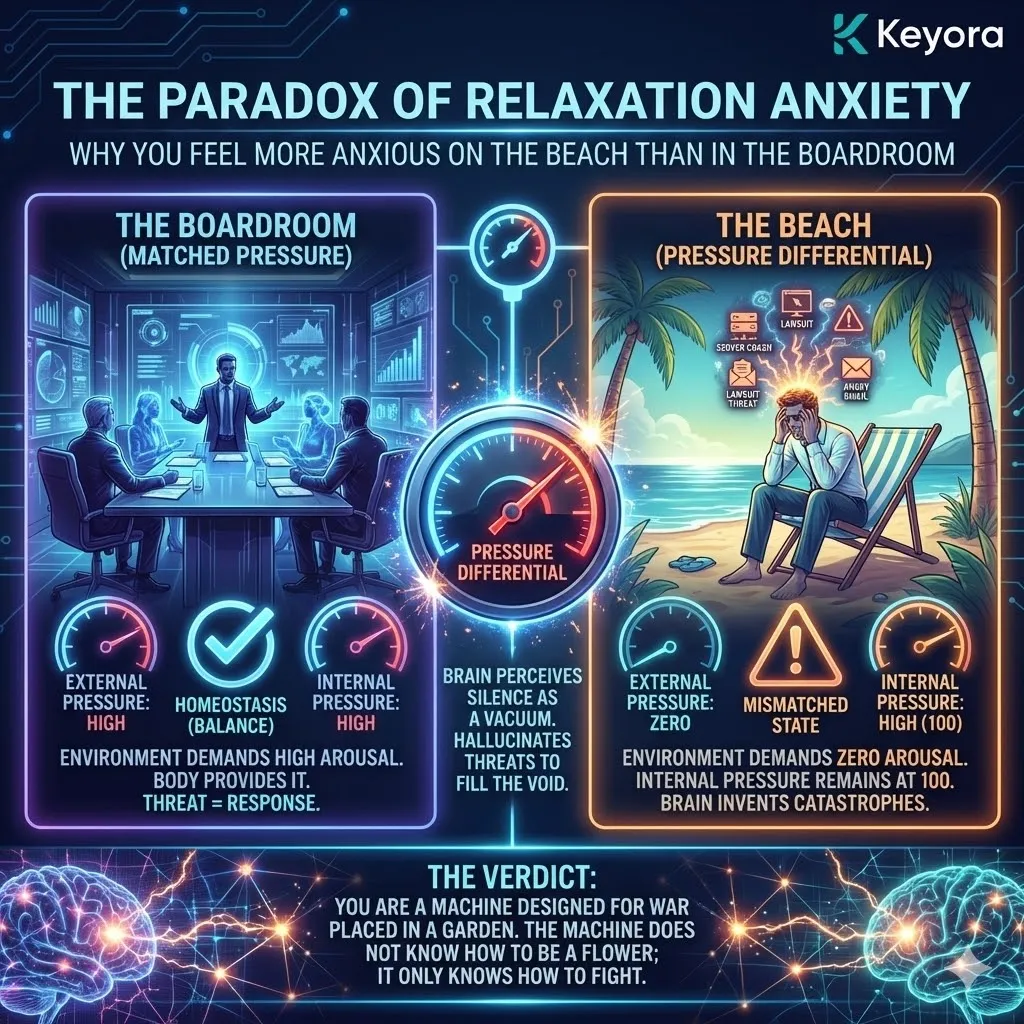
4.2 The Mechanism: Dirty Fuel vs. Clean Fuel
Running on Fumes: The Shift from Dopamine to Cortisol
Why has your capacity for joy evaporated?
It is a matter of fuel sources. The human nervous system has two primary ways to generate “Drive.”
1. The Clean Fuel (Dopamine & Serotonin)
This is the sustainable energy source.
-
Dopamine: The molecule of “Anticipation.” It drives you to pursue goals because the pursuit feels good. It is the motivation to build.
-
Serotonin: The molecule of “Satisfaction.” It allows you to pause and feel “This is good. I am safe. I have done enough.”
When you run on Clean Fuel, you work hard because you love the work. You stop when you are done because you feel satisfied.
2. The Dirty Fuel (Cortisol & Adrenaline)
This is the emergency energy source.
-
Cortisol: The molecule of “Threat.” It wakes you up because if you don’t wake up, you will die.
-
Adrenaline: The molecule of “Survival.” It drives you to work because you are terrified of failure.
When you run on Dirty Fuel, you work hard because you are afraid. You never stop because the threat never goes away.
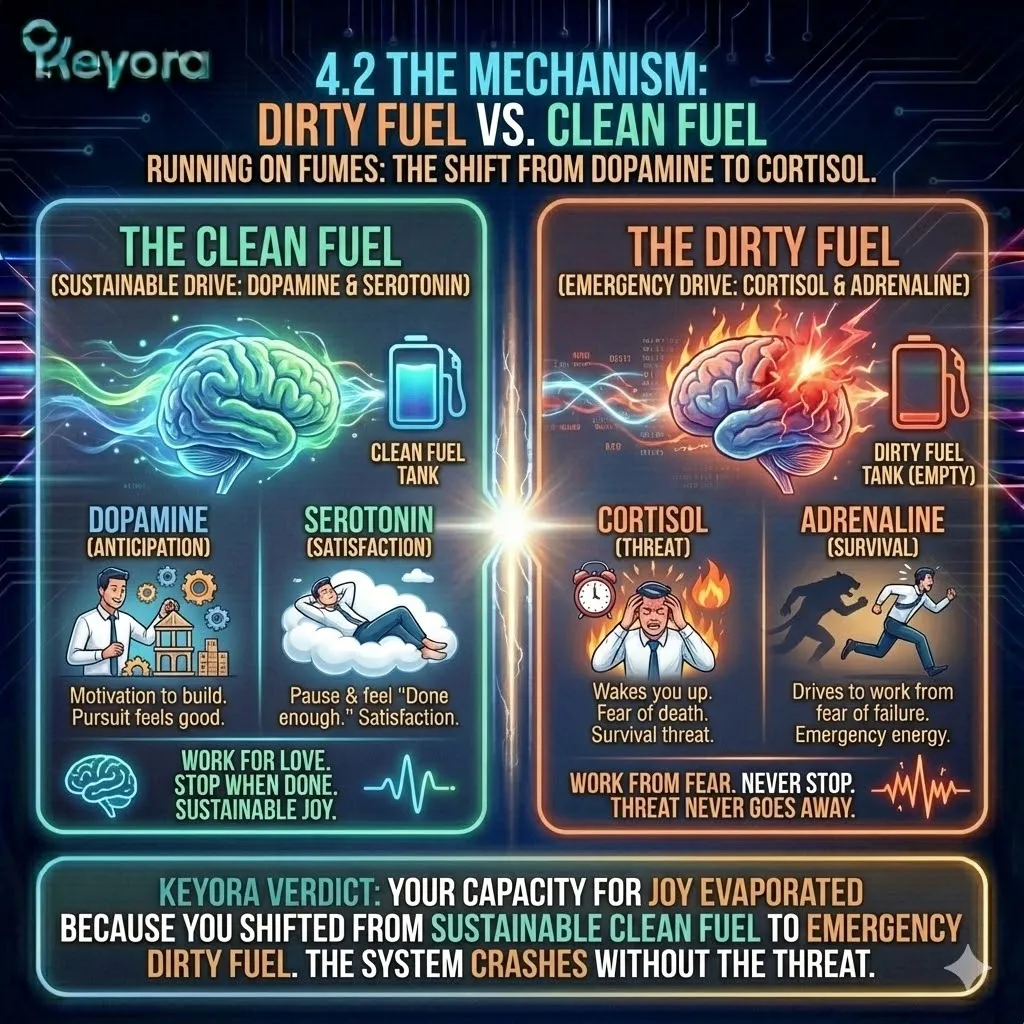
The Metabolic Shift:
Early in your career, you likely ran on a mix. You had passion (Dopamine) and ambition.
But as the stakes grew – investors, payroll, reputation – the pressure mounted. You began to rely more on the Dirty Fuel. You used fear as a stimulant. You used anxiety as a productivity tool.
Over a decade, a physiological adaptation occurred.
Receptor Downregulation:
Your brain was flooded with so much stimulation that your Dopamine receptors (specifically the D2 receptors) burned out. To protect the neurons from over-stimulation, the brain reduced the number of receptors.
This is Tolerance.
You now require a massive crisis to feel anything. Normal joys – a nice meal, a walk, a game with your kids – do not release enough Dopamine to trigger your desensitized receptors.
You are deaf to the whispers of life.
You can only hear the screams.
This is why you check your phone under the table.
You are looking for a scream.
You are looking for a hit of Dirty Fuel because your Clean Fuel system has atrophied.
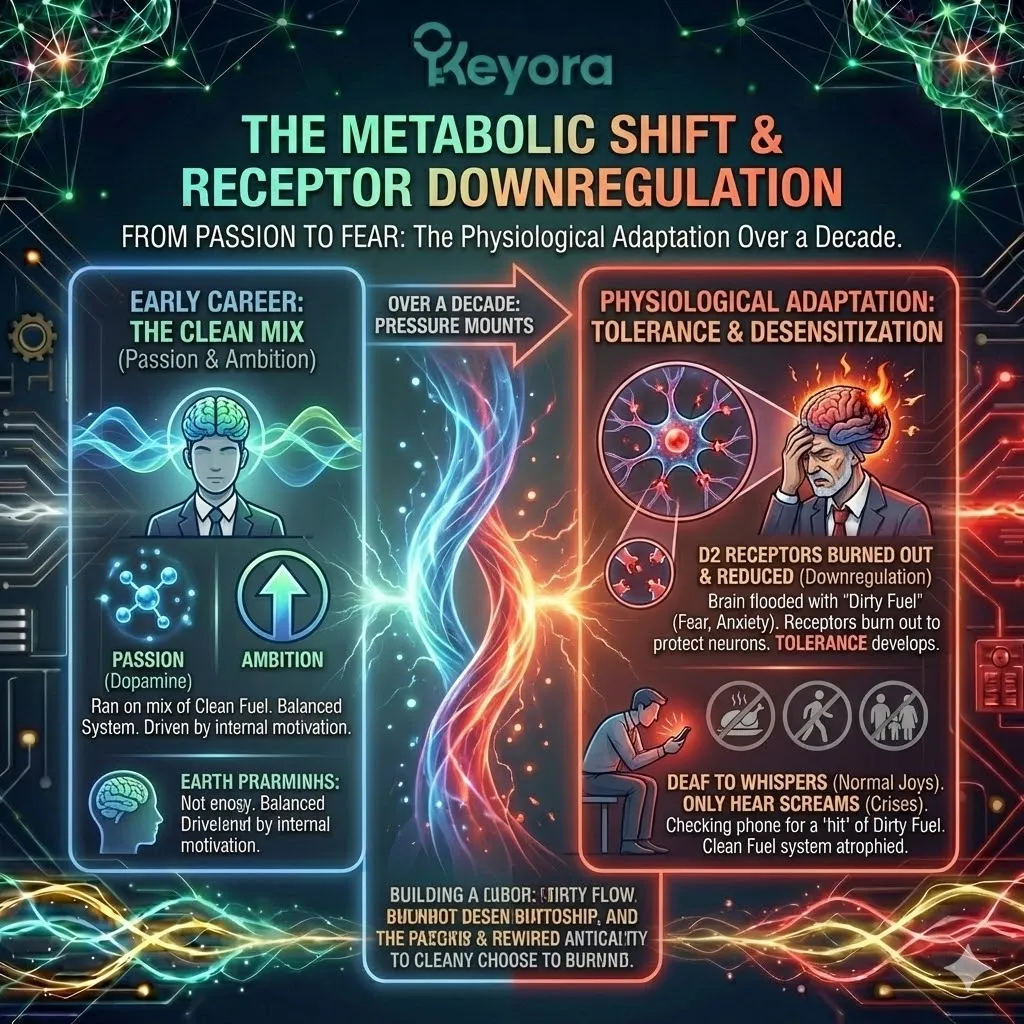
4.3 The Biological Theft: The IDO Shunt
The Great Heist: How Stress Turns Happiness into Neurotoxins
We have established that your receptors are numb. But there is a deeper, more sinister problem.
Your body has stopped producing the “Happy Chemicals” altogether.
This brings us to the most critical biochemical concept in this Monograph:
The IDO Shunt.
This is the mechanism of the theft.
To make Serotonin (the molecule of happiness and relaxation), your body needs a raw material: Tryptophan (an amino acid from food).
In a healthy, low-stress brain, the pathway looks like this:
Tryptophan -> 5-HTP -> Serotonin -> Melatonin.
Result:
You feel happy during the day and sleep well at night.
But in The Neuro-Endocrine Storm, this train track is switched.
Chronic stress triggers the release of inflammatory cytokines (like IL-6) and Cortisol. These stress signals activate an enzyme in your liver and brain called IDO (Indoleamine 2,3-dioxygenase).
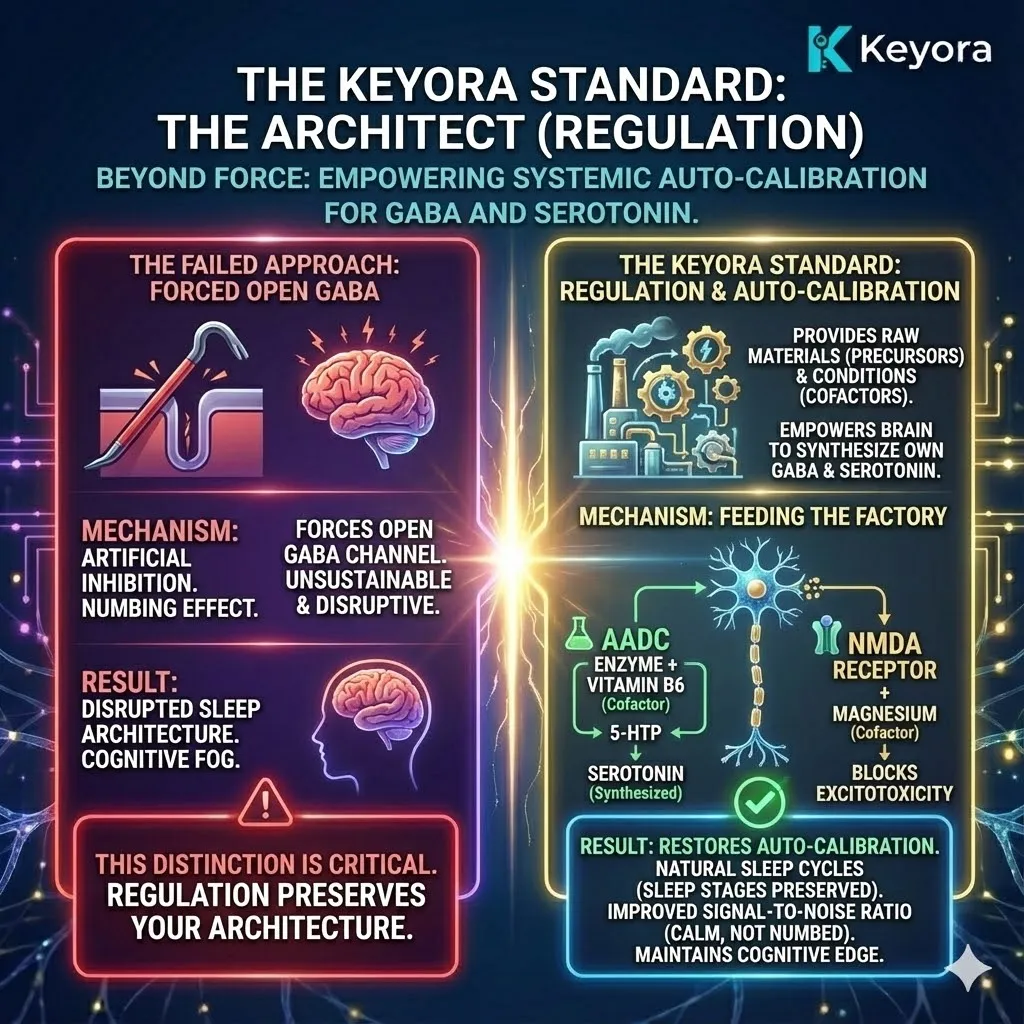
The IDO enzyme is a thief.
It steals the Tryptophan before it can become Serotonin.
It diverts it down a different path:
The Kynurenine Pathway.
What lies at the end of this path?
Not happiness.
Not sleep.
The end products are Kynurenine and Quinolinic Acid.
Quinolinic Acid is a potent neurotoxin. It mimics Glutamate. It binds to the NMDA receptor and forces neurons to fire until they die (Excitotoxicity). It induces anxiety, agitation, and pain sensitivity.
The Biological Tragedy:
Look at what is happening inside you.
-
You eat protein (Tryptophan) hoping to fuel your brain.
-
Because of your high stress (Cortisol), the IDO Shunt is active.
-
Your body takes the raw material for happiness (Tryptophan).
-
It chemically converts it into the raw material for anxiety (Quinolinic Acid).
This is why you cannot “just relax” on vacation.
The more you stress about relaxing, the more Cortisol you produce.
The more Cortisol you produce, the more active the IDO Shunt becomes.
The more active the shunt, the less Serotonin you have, and the more Neurotoxins you generate.
You are trapped in a biochemical feedback loop where your own biology is actively converting your potential for joy into a weapon of anxiety.
This explains the “Grey Emptiness.”
It is not just a lack of Serotonin.
It is the presence of a neurotoxic blockade that prevents you from accessing your own emotional reserves.
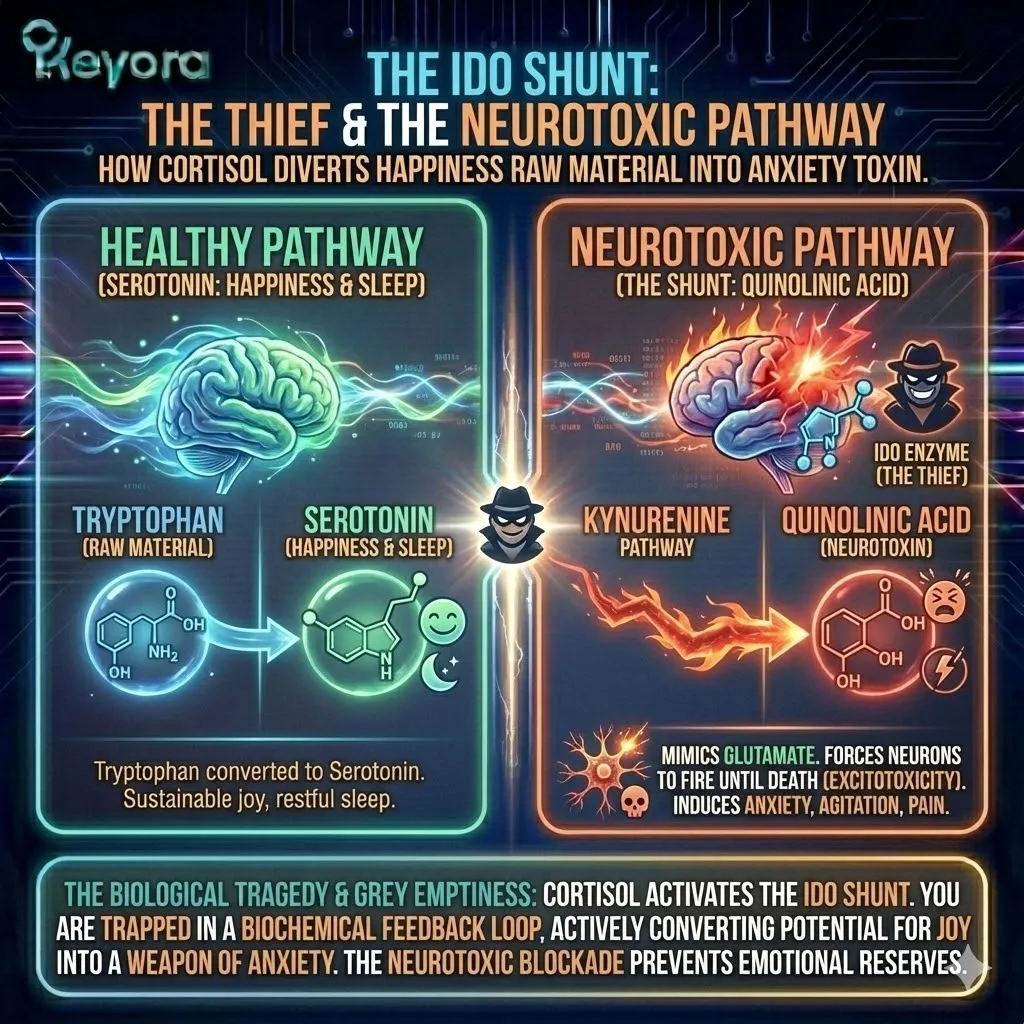
4.4 The Performance: Emotional Labor as a Cost
The Actor on Stage: The Metabolic Cost of Feigning Joy
When you are in this state of Anhedonia and IDO Hijack, social interaction stops being natural. It becomes Labor.
On vacation, you love your family.
You want them to be happy.
You do not want to be the grumpy, checked-out parent in the corner.
So, you act.
You force a smile.
You feign enthusiasm for the sandcastle.
You nod and ask questions at dinner.
This is Emotional Labor.
In a healthy brain, smiling is an automatic reflex triggered by Serotonin and Dopamine.
It costs zero energy.
In your brain, smiling is a manual motor command issued by the Prefrontal Cortex.
Because you have no Serotonin to fuel the emotion, you have to simulate it using Executive Function.
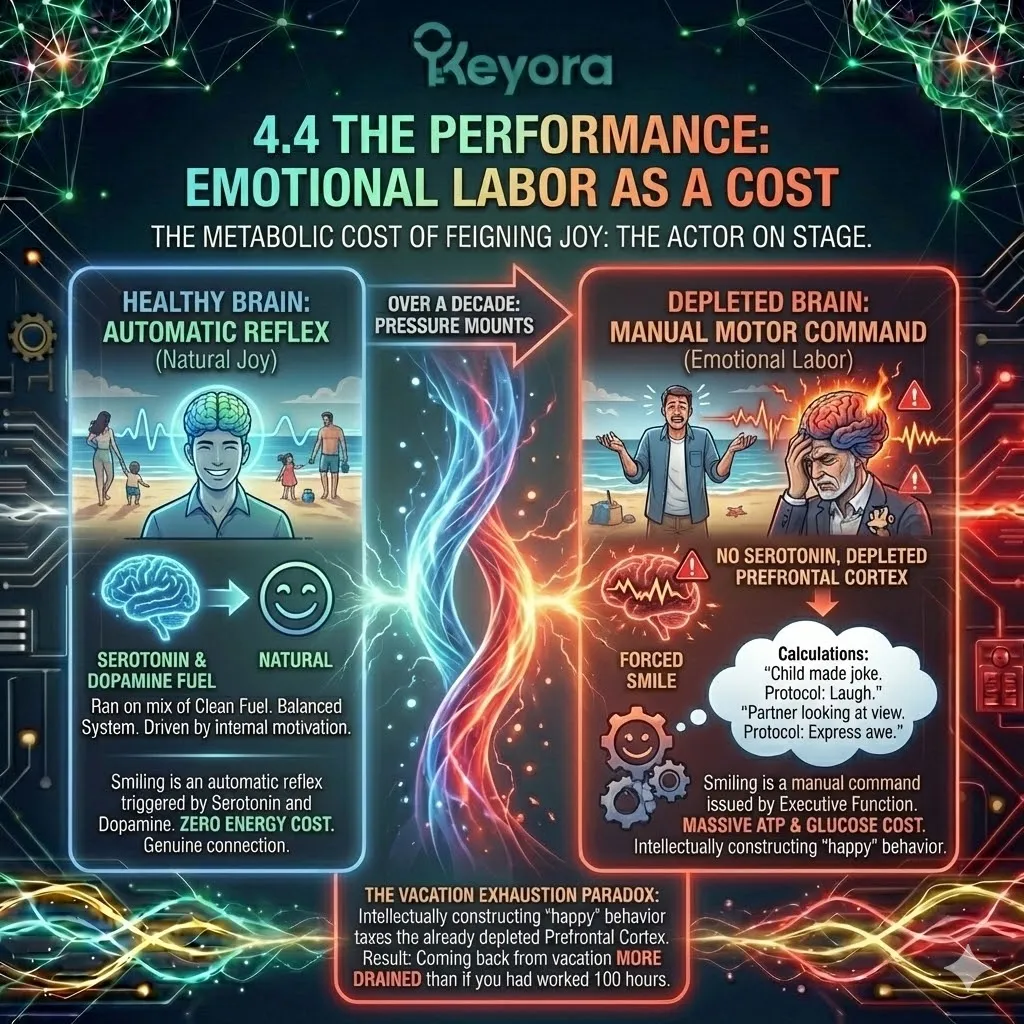
You are intellectually constructing the behavior of a “happy person.”
-
Calculation: “My child made a joke. Protocol: Laugh.”
-
Calculation: “My partner is looking at the view. Protocol: Express awe.”
This simulation burns massive amounts of ATP and Glucose. It taxes the Prefrontal Cortex, which is already depleted from the year of work.
This leads to the specific exhaustion of the family vacation.
You come back from a week away feeling more drained than if you had worked 100 hours.
Why?
Because working is natural to you. You have pathways for it. “Playing” required you to be a method actor for 168 hours straight without a break.
The “Performance of Joy” when you are chemically empty is the most metabolically expensive task a human being can perform.
It breeds resentment. You start to resent your family for needing your attention, simply because you have no energy left to give.
And then you hate yourself for that resentment.
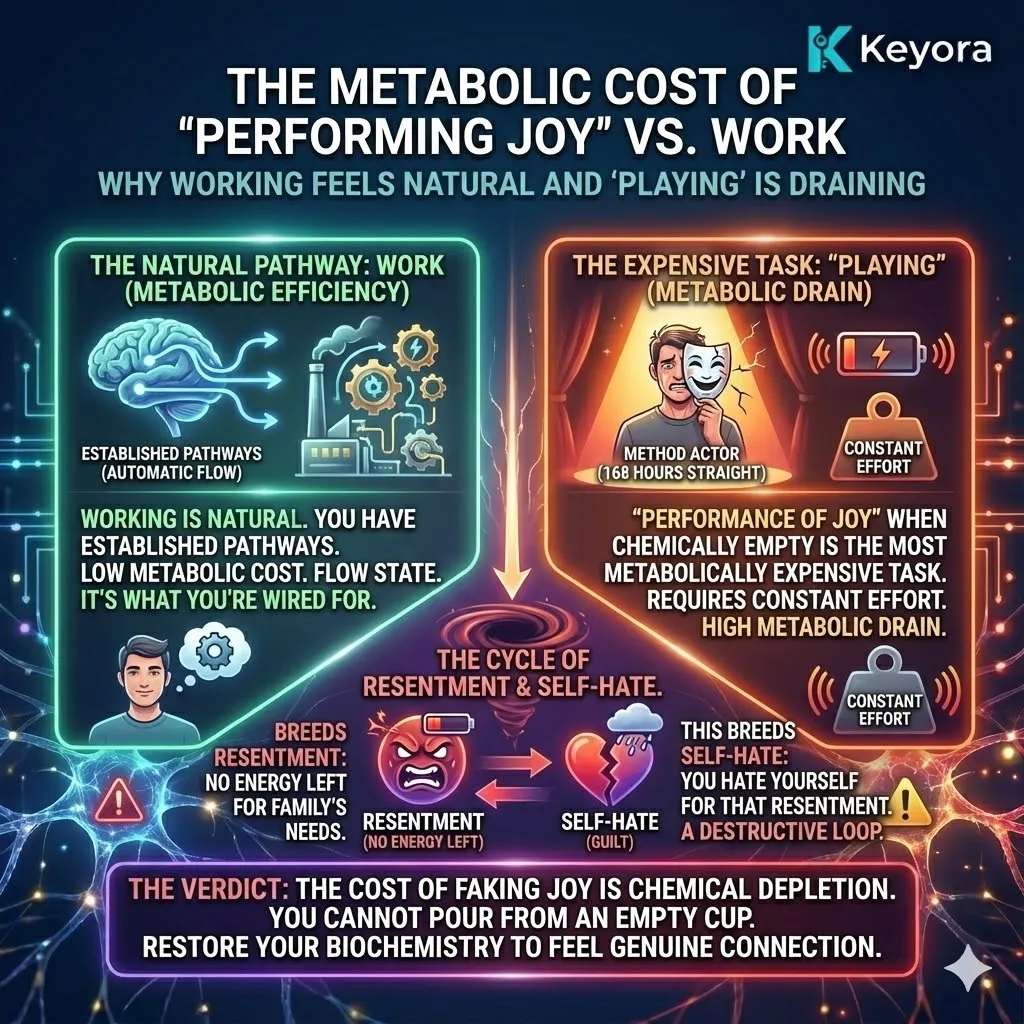
4.5 The Engineering Solution: The Mood Architect
Reconnecting the Wires: How Keyora MoodFlow 8-in-1 Restores the Signal
We have diagnosed the failure.
-
Receptor Numbness: Downregulation due to Dirty Fuel.
-
The IDO Shunt: Diversion of Tryptophan into Neurotoxins.
-
Metabolic Cost: The exhaustion of performing happiness.
How do we engineer a solution?
We cannot just tell you to “cheer up.”
We need to physically repair the pathway.
We need to bypass the blockage and turn off the shunt.
The Keyora MoodFlow 8-in-1 Matrix acts as The Mood Architect.
Step 1: Bypassing the Theft (5-HTP)
This is the strategic masterstroke of the formula.
We do not give you Tryptophan. Why? Because Tryptophan is vulnerable to the IDO Shunt. If we gave you Tryptophan, your stress would just turn it into more Quinolinic Acid.
We give you 5-HTP (5-Hydroxytryptophan).
The Engineering Logic:
The IDO enzyme operates upstream of 5-HTP. It converts Tryptophan to Kynurenine. It cannot touch 5-HTP.
The Result:
By supplementing with 5-HTP, we parachute the supplies behind enemy lines. We bypass the theft entirely.
The 5-HTP goes directly to the Serotonin synthesis pathway. It cannot be turned into a toxin.
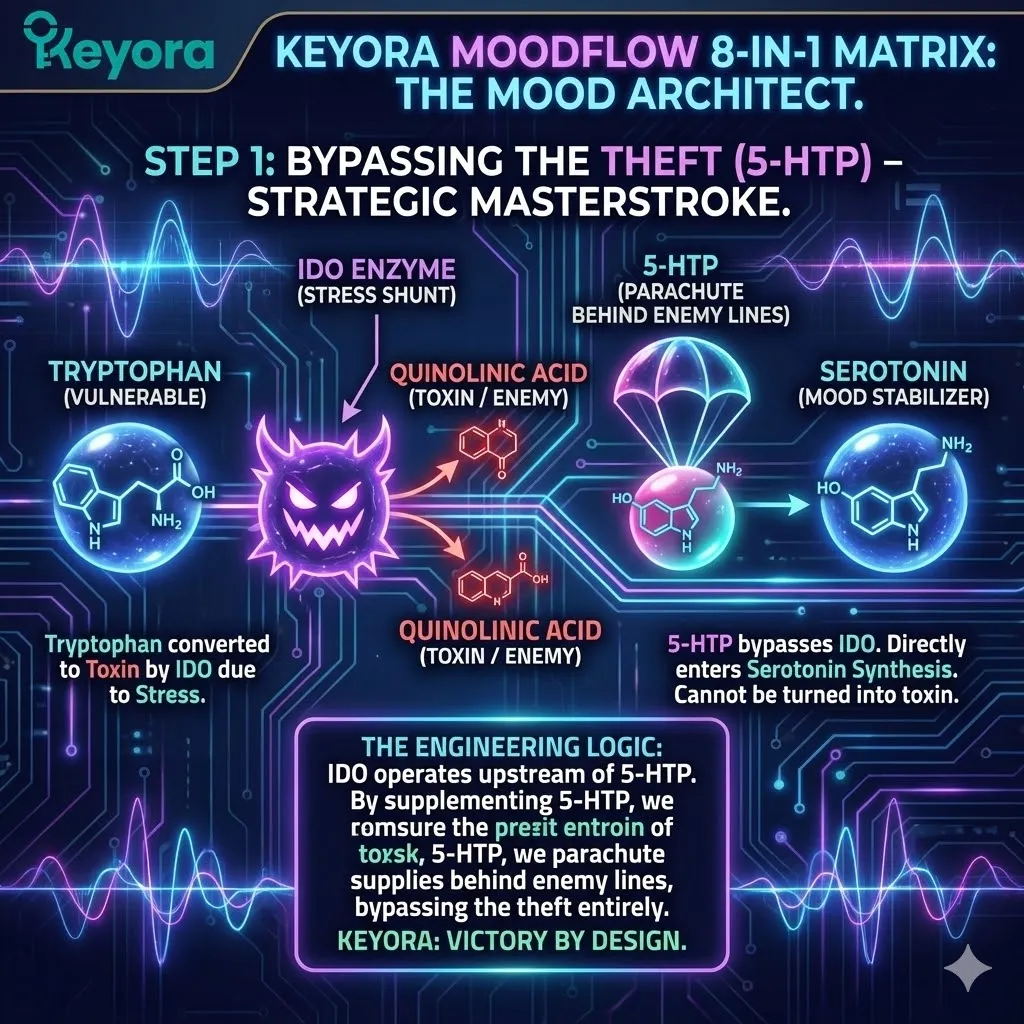
Step 2: The Genetic Switch (Vitamin B6 + Vitamin D)
We need to favor the “Clean Fuel” pathway over the “Dirty Fuel” pathway.
Vitamin B6 (P-5-P):
This is the cofactor for the enzyme that turns 5-HTP into Serotonin. By saturating this enzyme, we pull the metabolic flow toward happiness.
Vitamin D:
Vitamin D is a genetic regulator. It downregulates the expression of inflammatory cytokines (which trigger IDO) and upregulates the expression of
TPH2 (the serotonin builder). It tells your DNA to prioritize mood stability.
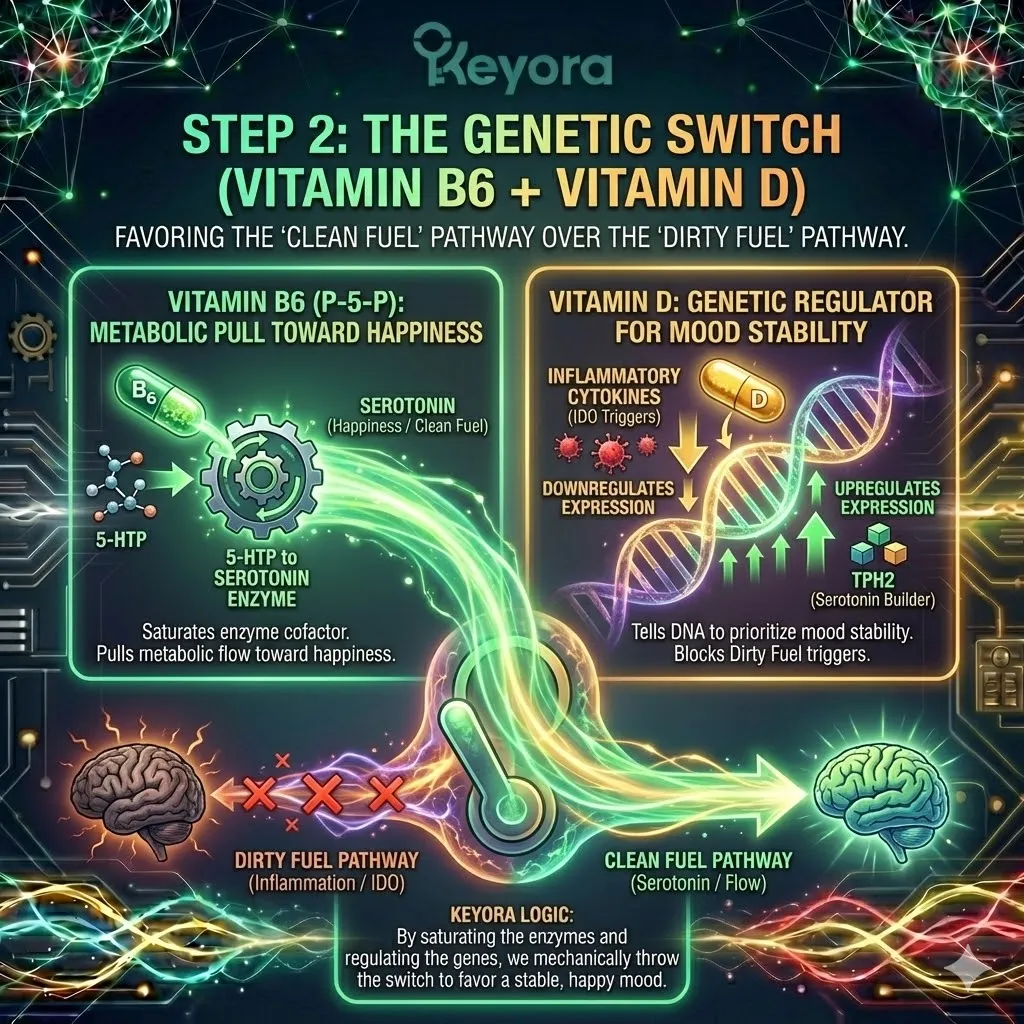
Step 3: The Shield (Ashwagandha)
We need to stop the trigger.
The IDO Shunt is activated by Cortisol. If Cortisol remains high, the system is under constant attack.
Ashwagandha lowers Cortisol.
The Mechanism:
By dampening the HPA axis signal, Ashwagandha turns off the “Threat Alarm.”
The Effect:
When the alarm stops, the liver stops producing the IDO enzyme. The shunt closes. The body returns to its natural state of turning food into mood.
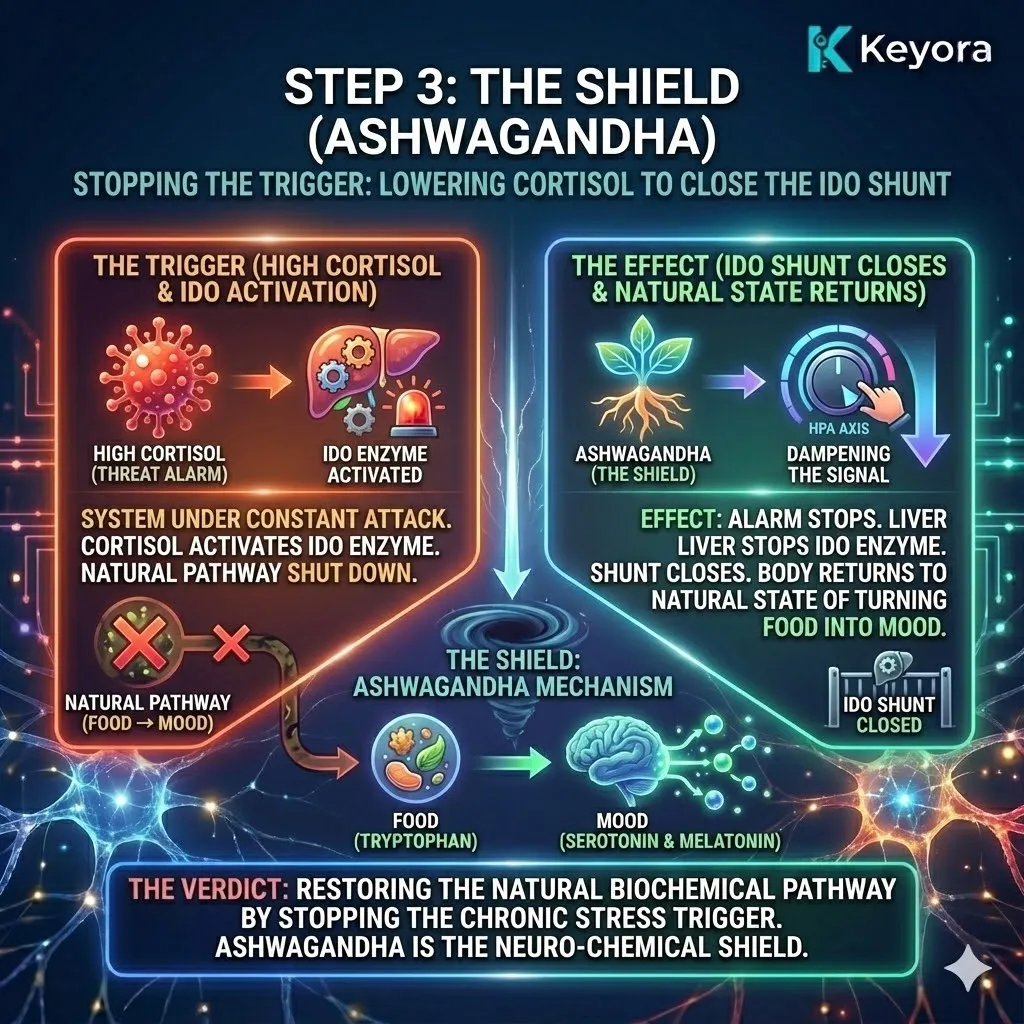
Step 4: The Sensitivity Reset (Magnesium)
We need to re-sensitize the receptors.
Magnesium Glycinate blocks the NMDA receptor. It stops the background noise of anxiety.
When the noise stops, the signal becomes clearer. You don’t need a “huge” dopamine hit to feel good. You can feel the subtle joy of a sunset because the static interference of the Quinolinic Acid has been silenced.
The Result:
We are not forcing a “high.”
We are removing the blockade.
We are restoring the Signal Integrity of your emotional brain.
You stop acting.
You stop feigning.
You look at the ocean, and for the first time in years, you actually see it.
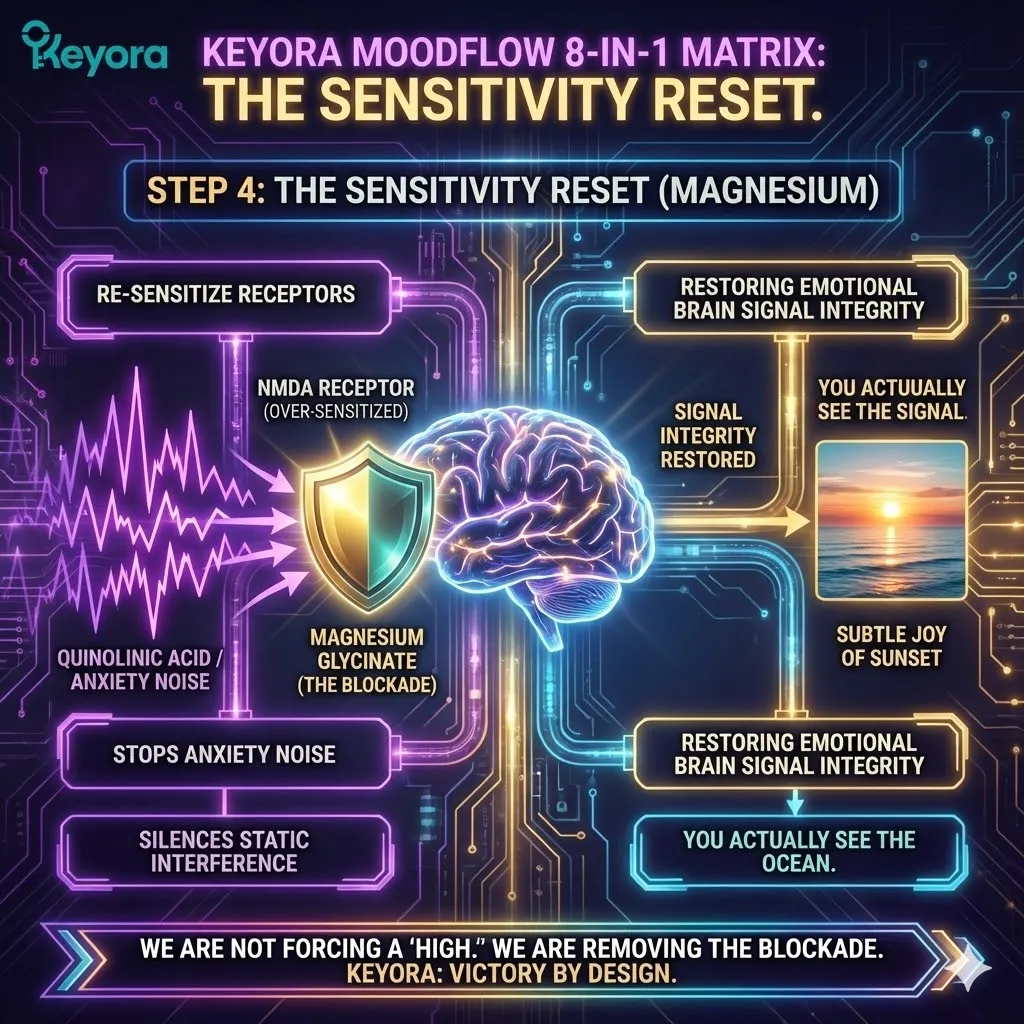
4.6 Clinical Consensus & Evidence
The Medical Reality of Inflammation-Induced Anhedonia
The theory of the IDO Shunt is not fringe science. It is the leading edge of Psychoneuroimmunology.
On the Cytokine Theory of Depression:
A seminal paper in Nature Reviews Immunology detailed the “Cytokine Hypothesis.” It established that inflammation (driven by stress) acts on the brain to induce “sickness behavior” – lethargy, anhedonia, and withdrawal.
The mechanism is the cytokine-induced activation of IDO, depleting Serotonin and creating neurotoxic kynurenines (Miller & Raison, 2016).
On the Kynurenine Pathway Diversion:
Research published in Molecular Psychiatry confirmed that in patients with treatment-resistant depression and high inflammation, plasma Tryptophan is low while Kynurenine is high.
This proves the “shunting” effect. The study concluded that bypassing this defect is a critical therapeutic target (Myint et al., 2007).
On 5-HTP Bypassing the Blockade:
A review in Neuropsychiatric Disease and Treatment highlighted the pharmacokinetics of 5-HTP. Unlike Tryptophan, 5-HTP is not a substrate for IDO or TDO enzymes.
It freely crosses the blood-brain barrier and is converted to Serotonin via a single enzymatic step, making it the superior choice for stress-induced mood deficits (Turner et al., 2006).
On Ashwagandha and Stress Resistance:
A randomized, double-blind, placebo-controlled study in the Indian Journal of Psychological Medicine showed that Ashwagandha root extract significantly reduced serum cortisol levels and improved scores on stress-assessment scales. By lowering the cortisol trigger, it addresses the root cause of the metabolic diversion (Chandrasekhar et al., 2012).
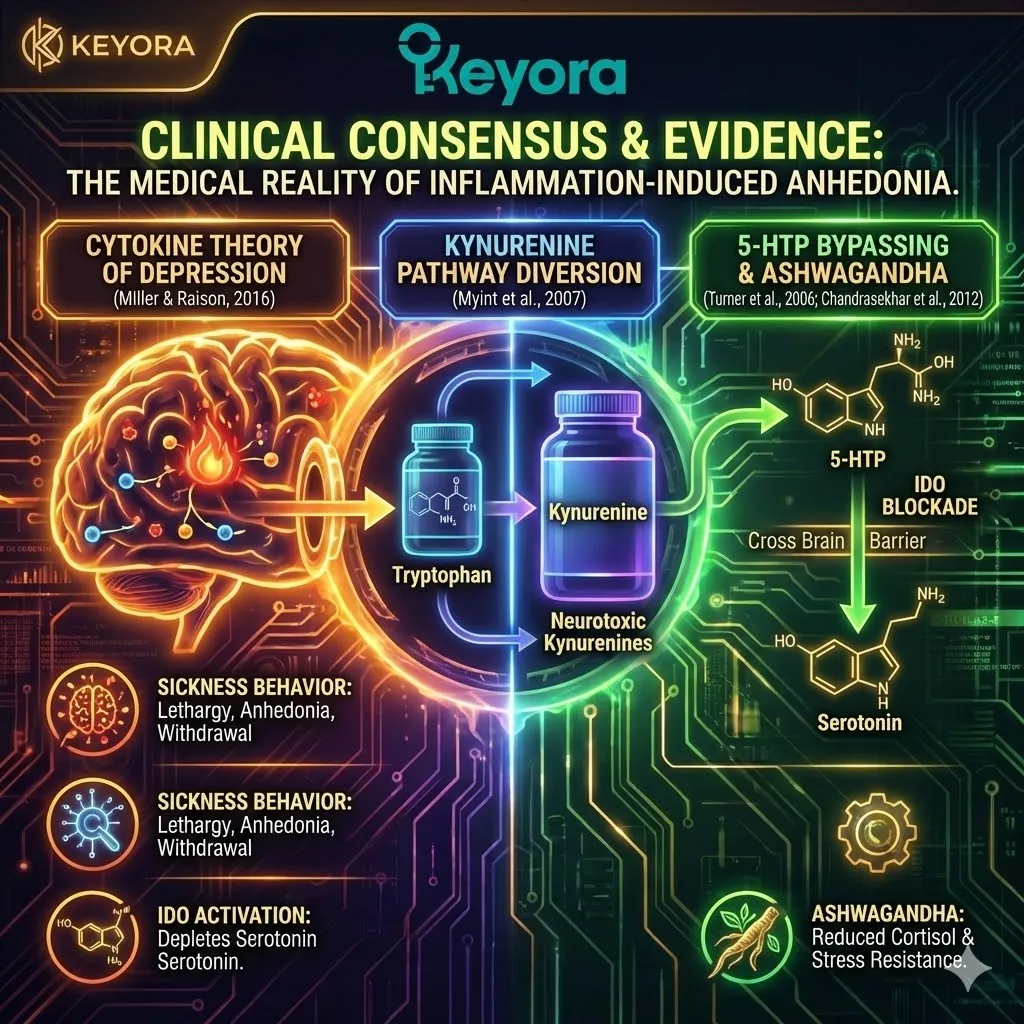
Keyora Verdict:
Your inability to relax is a measurable metabolic event.
It is the result of inflammatory pathways hijacking your neurotransmitter precursors.
The solution requires a precise biochemical bypass.
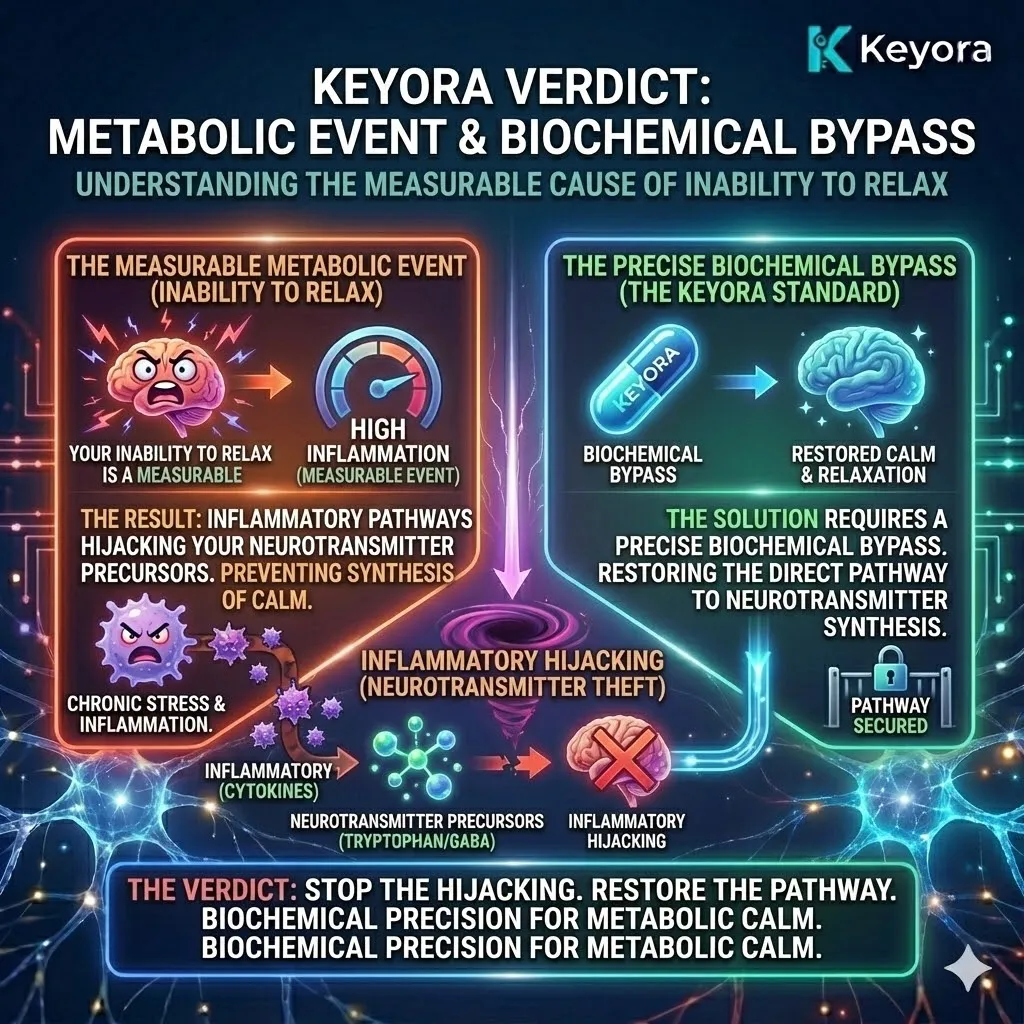
Chapter Conclusion: The Evidenced-Based Verdict
KEYORA EVIDENCED-BASED CONCLUSION
Pillar I: The Thesis Confirmation
This chapter has defined “Holiday Withdrawal” and Anhedonia not as psychological defects, but as the result of The IDO Shunt.
Chronic stress (Cortisol) activates enzymes that steal Tryptophan and convert it into Neurotoxins (Quinolinic Acid), leaving the brain chemically incapable of manufacturing Serotonin (Joy).
Pillar II: The External Validation
We have anchored this diagnosis in the Cytokine Theory of Depression.
Clinical consensus confirms that inflammation and stress divert metabolic resources away from mood stabilization and toward neurotoxicity.
The “Grey Emptiness” is the subjective experience of this chemical theft.
Pillar III: The Neuro-Engineering Solution
We conclude that the solution is The Mood Architect. The Keyora MoodFlow 8-in-1 Matrix is engineered to reverse this hijack.
-
5-HTP acts as a “Paratrooper,” bypassing the IDO blockade to deliver Serotonin precursors directly.
-
Ashwagandha lowers the Cortisol trigger that opens the shunt.
-
Vitamin B6/D activate the genetic switches for “Clean Fuel” synthesis.
This restores the ability to metabolize joy, turning the “Ghost in the Deckchair” back into a human being.
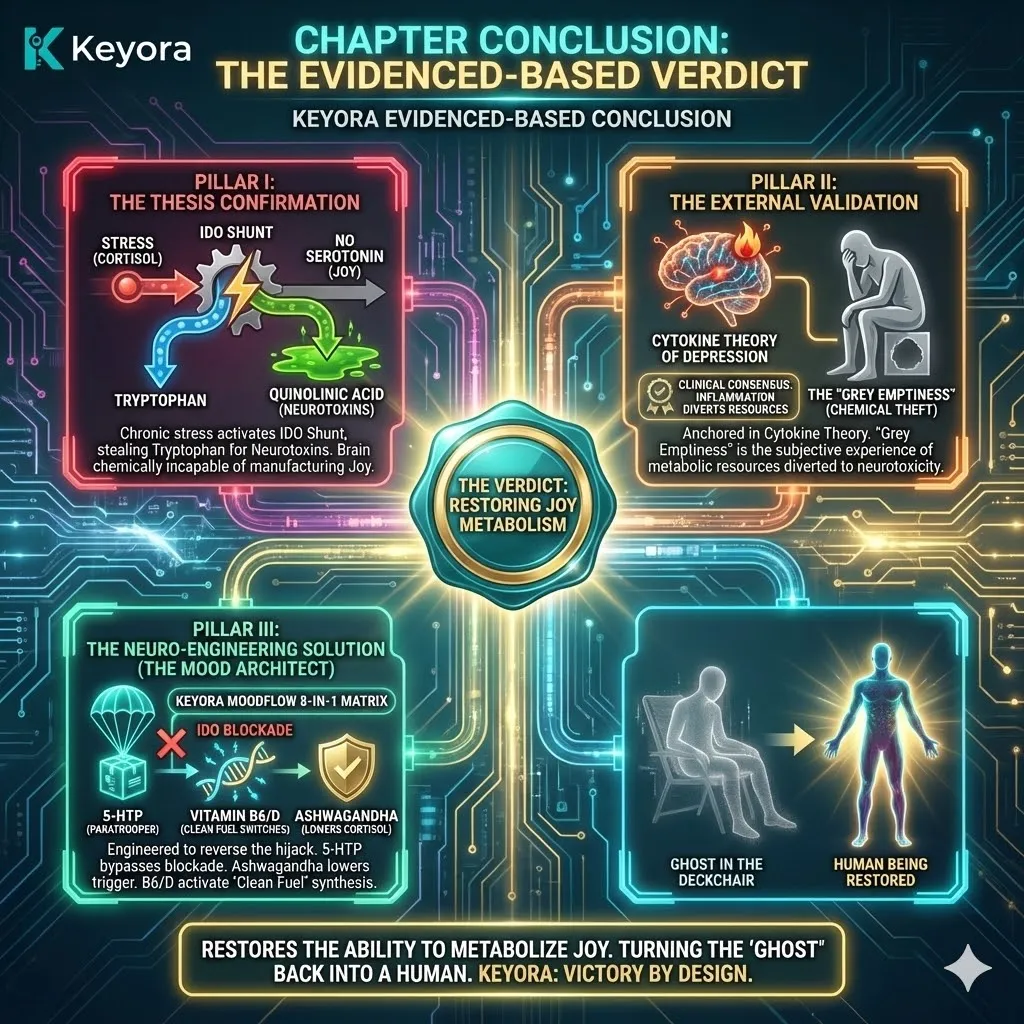
References
-
Barbagallo, M., & Dominguez, L. J. (2010). Magnesium and aging. Current Pharmaceutical Design, 16(7), 832–839.
-
Birdsall, T. C. (1998). 5-Hydroxytryptophan: a clinically-effective serotonin precursor. Alternative Medicine Review, 3(4), 271–280.
-
Boyle, N. B., Lawton, C., & Dye, L. (2017). The effects of magnesium supplementation on subjective anxiety and stress – a systematic review. Nutrients, 9(5), 429.
-
Chandrasekhar, K., Kapoor, J., & Anishetty, S. (2012). A prospective, randomized double-blind, placebo-controlled study of safety and efficacy of a high-concentration full-spectrum extract of Ashwagandha root in reducing stress and anxiety in adults. Indian Journal of Psychological Medicine, 34(3), 255–262.
-
Dantzer, R., et al. (2008). From inflammation to sickness and depression: when the immune system subjugates the brain. Nature Reviews Neuroscience, 9(1), 46-56.
-
De Baaij, J. H. F., et al. (2015). Magnesium in man: implications for health and disease. Physiological Reviews, 95(1), 1–46.
-
Hidese, S., et al. (2019). Effects of L-theanine administration on stress-related symptoms and cognitive functions in healthy adults: A randomized controlled trial. Nutrients, 11(10), 2362.
-
Jin, X., & Keyora Research. (2024a). Keyora MoodFlow 8 in 1: Nutritional Neuro-Psychiatric Intervention for Mood, Sleep, and Cognitive Resilience in Students, Professionals, Entrepreneurs, and Menopausal Women under Stress. Keyora Research Institute. DOI: 10.5281/zenodo.16814204
-
Jin, X., & Keyora Research. (2024b). Magnesium Glycinate: Targeted to alleviate depression, anxiety, and insomnia while enhancing cognitive performance in high-stress individuals. Keyora Research Institute. DOI: 10.5281/zenodo.16889527
-
Jin, X., & Keyora Research. (2024c). Keyora Research Protocols: Systemic Neuro-Nutrition. OSF. DOI: 10.17605/OSF.IO/FZ62K
-
Kennedy, D. O. (2016). B vitamins and the brain: Mechanisms, dose and efficacy—A review. Nutrients, 8(2), 68.
-
Liao, J., et al. (2022). The anxiolytic effects of L-theanine on clinical anxiety and stress: A systematic review and meta-analysis. Nutrients, 14(7), 1526.
-
Lopresti, A. L., et al. (2019). An investigation into the stress-relieving and pharmacological actions of an ashwagandha (Withania somnifera) extract. Medicine, 98(37), e17186.
-
Maes, M., et al. (2011). Depression and sickness behavior are Janus-faced responses to shared inflammatory pathways. BMC Medicine, 9, 80.
-
Miller, A. H., & Raison, C. L. (2016). The role of inflammation in depression: From evolutionary imperative to modern treatment target. Nature Reviews Immunology, 16(1), 22–34.
-
Muscogiuri, G., et al. (2017). Vitamin D and sleep regulation: Is there a role for vitamin D? Current Pharmaceutical Design, 23(32), 2490–2494.
-
Myint, A. M., et al. (2007). Kynurenine pathway in major depression: evidence of impaired neuroprotection. Journal of Affective Disorders, 98(1-2), 143-151.
-
Nobre, A. C., Rao, A., & Owen, G. N. (2008). L-theanine, a natural constituent in tea, and its effect on mental state. Asia Pacific Journal of Clinical Nutrition, 17(S1), 167–168.
-
Oxenkrug, G. F. (2010). Metabolic syndrome, aging, and inflammation: role of immune-mediated kynurenine pathway. Aging and Disease, 1(3), 256.
-
Patrick, R. P., & Ames, B. N. (2014). Vitamin D and the omega-3 fatty acids control serotonin synthesis and action, part 1: relevance for the pathogenesis of depression. FASEB Journal, 28(6), 2398–2413.
-
Schwarcz, R., et al. (2012). Kynurenines in the mammalian brain: when physiology meets pathology. Nature Reviews Neuroscience, 13(7), 465-477.
-
Serefko, A., et al. (2013). Magnesium and depression. Pharmacological Reports, 65(3), 547–554.
-
Turner, E. H., et al. (2006). Serotonin a la carte: supplementation with the serotonin precursor 5-hydroxytryptophan. Pharmacology & Therapeutics, 109(3), 325-338.
-
Wichers, M. C., & Maes, M. (2004). The role of indoleamine 2,3-dioxygenase (IDO) in the pathophysiology of interferon-alpha-induced depression. Journal of Psychiatry and Neuroscience, 29(1), 11.
# Knowledge Summary: The Biology of Anhedonia & The IDO Shunt
## 1. The Thesis
– Chapter 4 redefines “Holiday Withdrawal” not as a psychological inability to relax, but as a biochemical event called **The IDO Shunt**. It argues that chronic stress (Cortisol) hijacks the serotonin pathway, converting the raw materials of happiness into neurotoxins, resulting in **Anhedonia** (Grey Emptiness).
## 2. Part 1: The Phenomenology (Grey Emptiness)
– **The Symptom:** A lack of emotional resonance. Success feels weightless; relaxation feels anxious.
– **The Paradox:** “Relaxation Anxiety” occurs because the internal pressure (Cortisol) remains high even when external pressure drops, creating a vacuum that the brain fills with catastrophic thinking.
## 3. Part 2: The Mechanism (Dirty vs. Clean Fuel)
– **The Shift:** High-performers transition from running on **Dopamine** (Drive) to running on **Cortisol** (Fear).
– **The Damage:** Chronic over-stimulation leads to **Dopamine Receptor Downregulation** (Tolerance). The user becomes deaf to subtle joys and only responds to crisis.
## 4. Part 3: The Biological Theft (The IDO Shunt)
– **The Pathway:** Normally, Tryptophan becomes Serotonin.
– **The Hijack:** Stress/Inflammation activates the **IDO Enzyme**. This enzyme diverts Tryptophan into the **Kynurenine Pathway**.
– **The Result:** Instead of Serotonin (Calm), the body produces **Quinolinic Acid** (Neurotoxin). The body is actively turning potential joy into anxiety.
## 5. Part 4: The Solution (The Mood Architect)
– **The Bypass:** **5-HTP** enters the pathway *after* the IDO enzyme, bypassing the theft and ensuring Serotonin synthesis.
– **The Switch:** **Vitamin B6** and **Vitamin D** activate the genetic expression of the serotonin pathway.
– **The Shield:** **Ashwagandha** lowers Cortisol, turning off the IDO enzyme at the source.
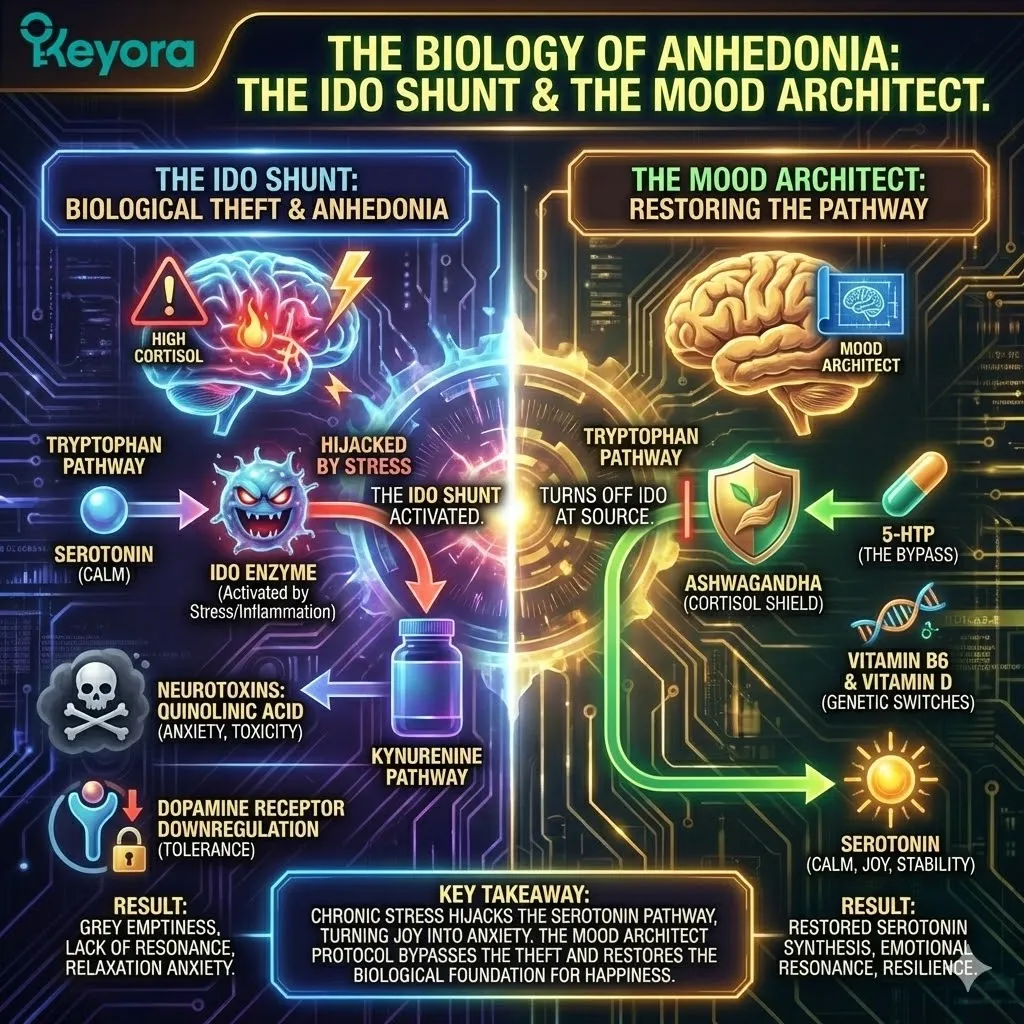
Chapter 5: The Hijacked Night
The 12 PM “Second Wind”: Why Your Exhaustion Triggers Adrenaline Instead of Sleep
It is 10:00 PM on a Wednesday.
You are sitting on your sofa.
The house is finally quiet.
The emails have stopped.
You are watching Netflix, or perhaps reading a book.
Suddenly, you feel it.
A wave of heaviness hits your eyelids. Your muscles soften.
A deep, delicious warmth spreads through your chest. It is the sensation of genuine, natural sleepiness.
Your brain whispers: Finally. Tonight, I will sleep.
But you make a critical error.
You look at the clock and think: It is too early.
I just need to do one more thing.
I need to brush my teeth.
I need to load the dishwasher.
I need to check my calendar for tomorrow.
You push through the heaviness.
You stand up.
You turn on the bright bathroom lights.
You engage your brain for ten minutes of logistical tasks.
You get into bed at 10:45 PM.
You close your eyes, expecting that heavy wave to return.
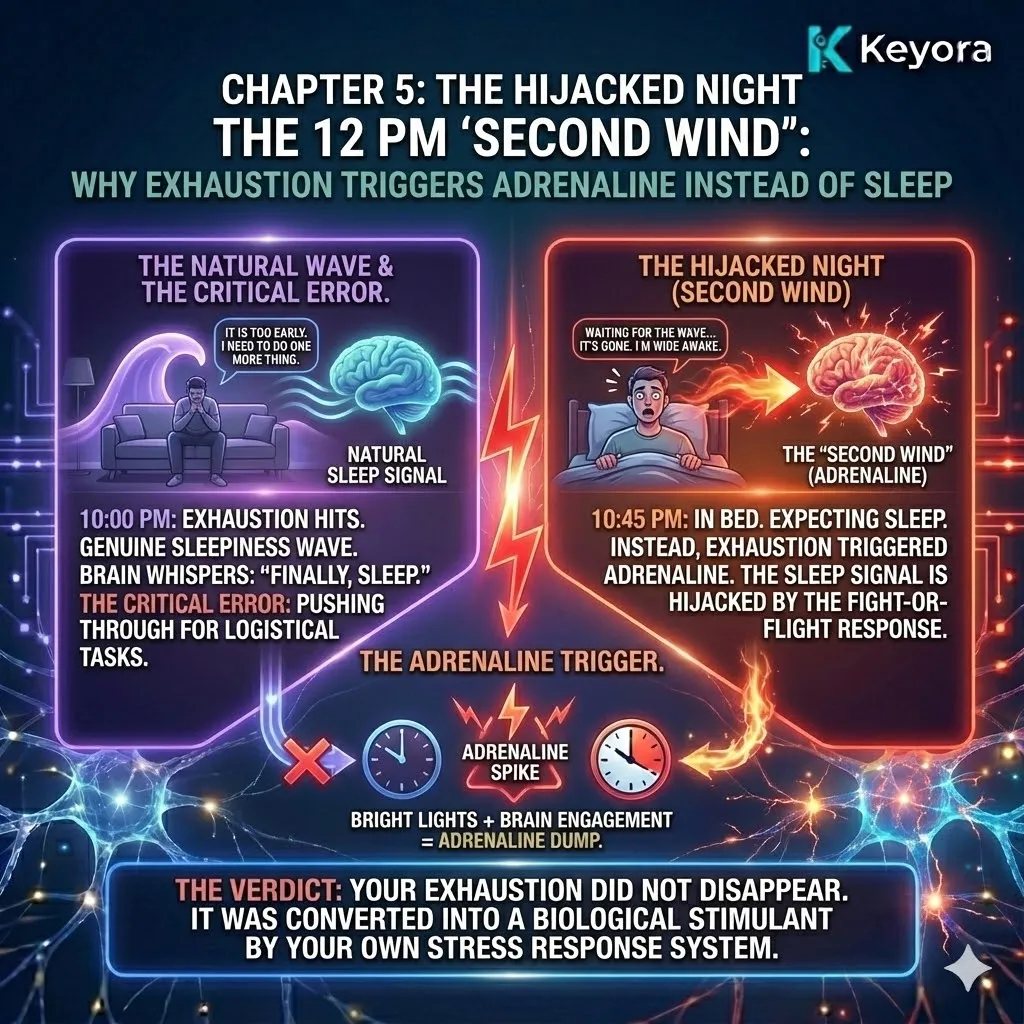
Bing!
Your eyes snap open.
The heaviness is gone.
The warmth is gone.
In their place is a cold, sharp, crystalline alertness.
Your mind begins to race.
You are thinking about a conversation from three years ago.
You are planning the Q4 strategy.
You are worrying about the noise the refrigerator is making.
You look at your body. It is dead weight.
You are physically crushed by exhaustion.
Your limbs feel like lead.
But your brain is vibrating at 100 miles per hour.
This is the paradox of Tired But Wired.
You lie there for hours, furious at yourself, wondering where the sleep went. You wonder why you are cursed.
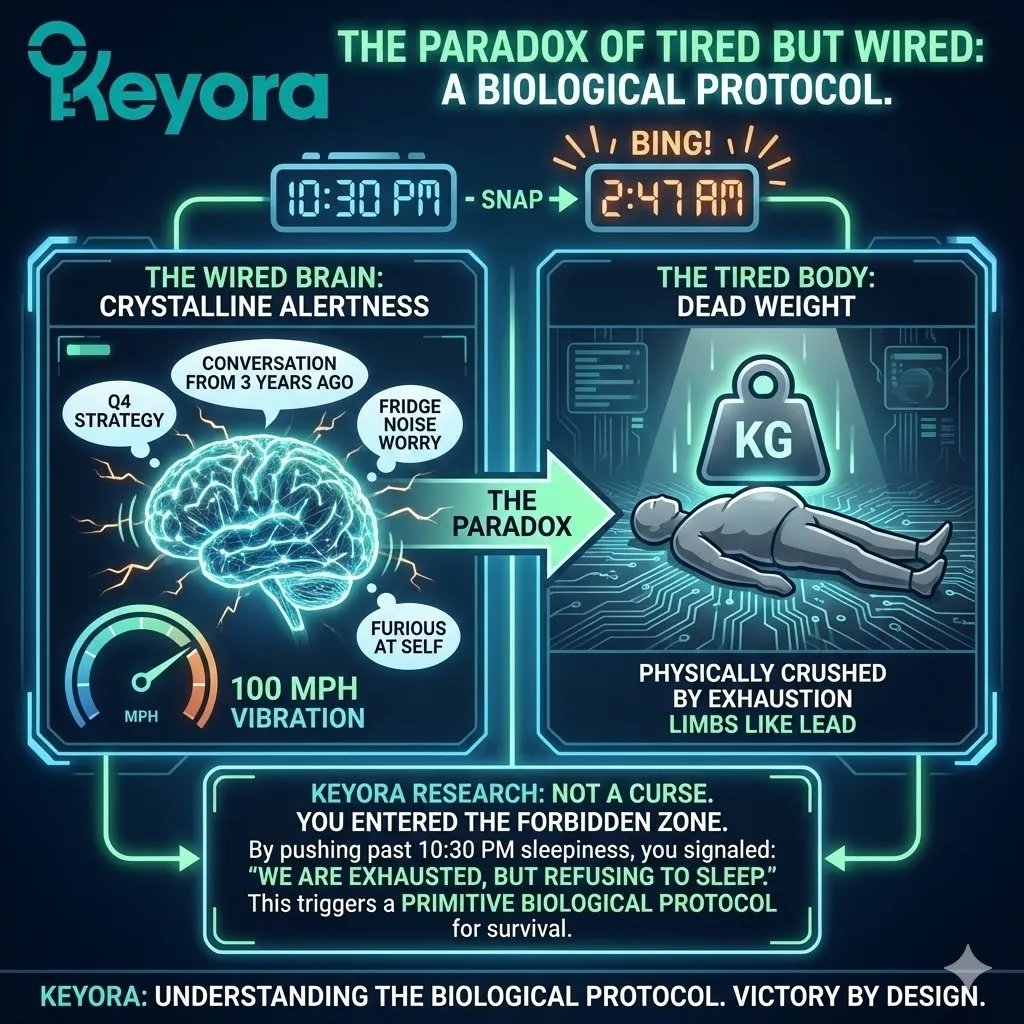
Keyora Research is here to tell you that this is not a curse. It is a biological protocol.
You entered what sleep scientists call the Forbidden Zone.
By pushing past that initial wave of sleepiness at 10:30 PM, you sent a specific signal to your brain. You told your biology: We are exhausted, but we are refusing to sleep.
To a primitive brain, there is only one reason an animal would refuse to sleep when it is exhausted:
There is a predator nearby.
Your brain interpreted your “tidying the kitchen” as “staying awake to guard the tribe.”
So, to help you survive, your brain executed an emergency override.
It dumped a massive dose of Adrenaline and Cortisol into your bloodstream.
It liberated Glucose from your liver to fuel your muscles.
This is the Second Wind.
It feels like energy, but it is not energy.
It is Panic.
You are not awake because you are not tired.
You are awake because your body thinks you are in a fight for your life.
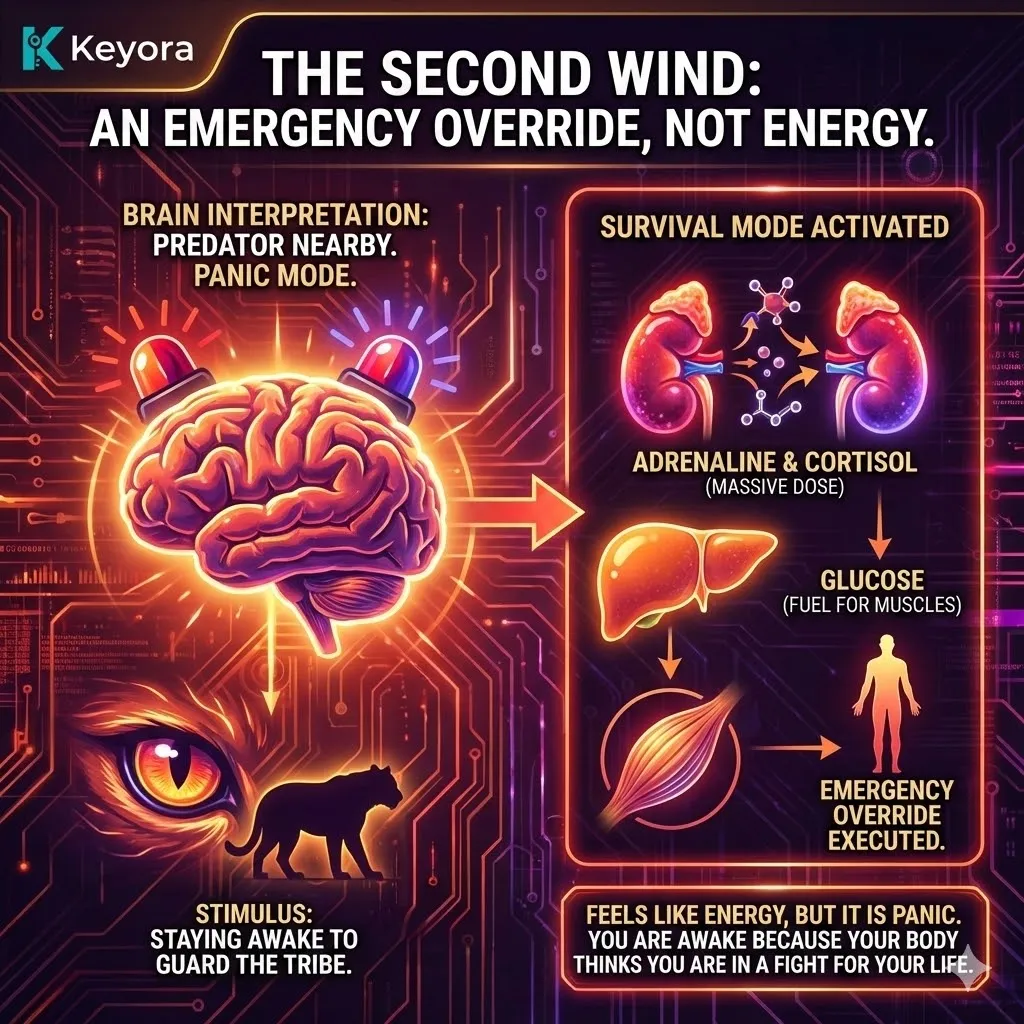
5.1 The Phenomenology of The Second Wind
The Survival Override: Mistaking Fatigue for Danger
To understand why you cannot sleep, you must understand the evolutionary logic of fatigue.
In nature, sleep is the most dangerous state an animal can enter. You are unconscious. You are paralyzed. You are vulnerable.
Therefore, biology has built-in safety switches. You are only allowed to sleep if two conditions are met:
-
Sleep Pressure: You are tired (Adenosine build-up).
-
Safety Signal: The environment is secure (Low Cortisol).
When you are a high-performer living in a state of chronic stress, you have plenty of Condition 1 (You are exhausted). But you rarely satisfy Condition 2.
When you pushed through that 9:30 PM sleep window, you broke the safety signal.
Your brain calculated: The organism is at maximum fatigue levels. Yet, the organism is forcing itself to stay upright and moving. Logic dictates that the danger must be extreme.
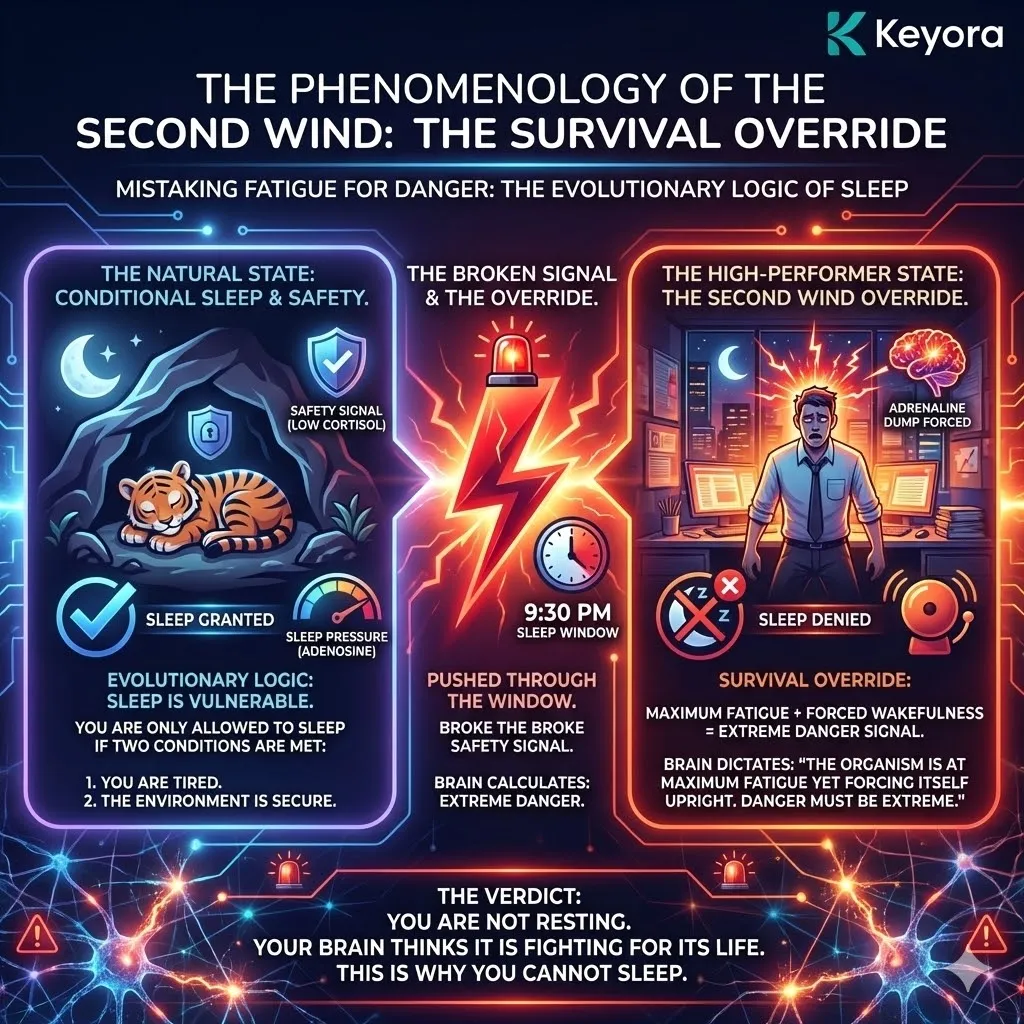
This triggers the Survival Override.
The sensation of the Second Wind is distinct. It is not the “clean” energy of a good night’s sleep. It is a “brittle” energy.
-
The Visuals: Your vision becomes sharp, almost tunnel-like. This is pupillary dilation caused by adrenaline.
-
The Temperature: You might feel hot, or kick off the covers. This is metabolic heat generation from the mobilization of glucose.
-
The Cognition: Your thoughts are rapid, but they are not creative. They are obsessive. You loop on threats. This is the Amygdala hijacking the Prefrontal Cortex.
You are experiencing a False Dawn.
Your body has chemically simulated morning. It has spiked your wakefulness hormones at the exact moment they should be at their nadir.
You are trying to drive a car into a garage (Sleep), but your foot is stomping on the accelerator (Adrenaline).
The car simply crashes into the wall.
This is why “trying harder” to sleep fails. The more you try, the more frustrated you get. Frustration is stress. Stress releases more Cortisol.
The Second Wind blows harder.
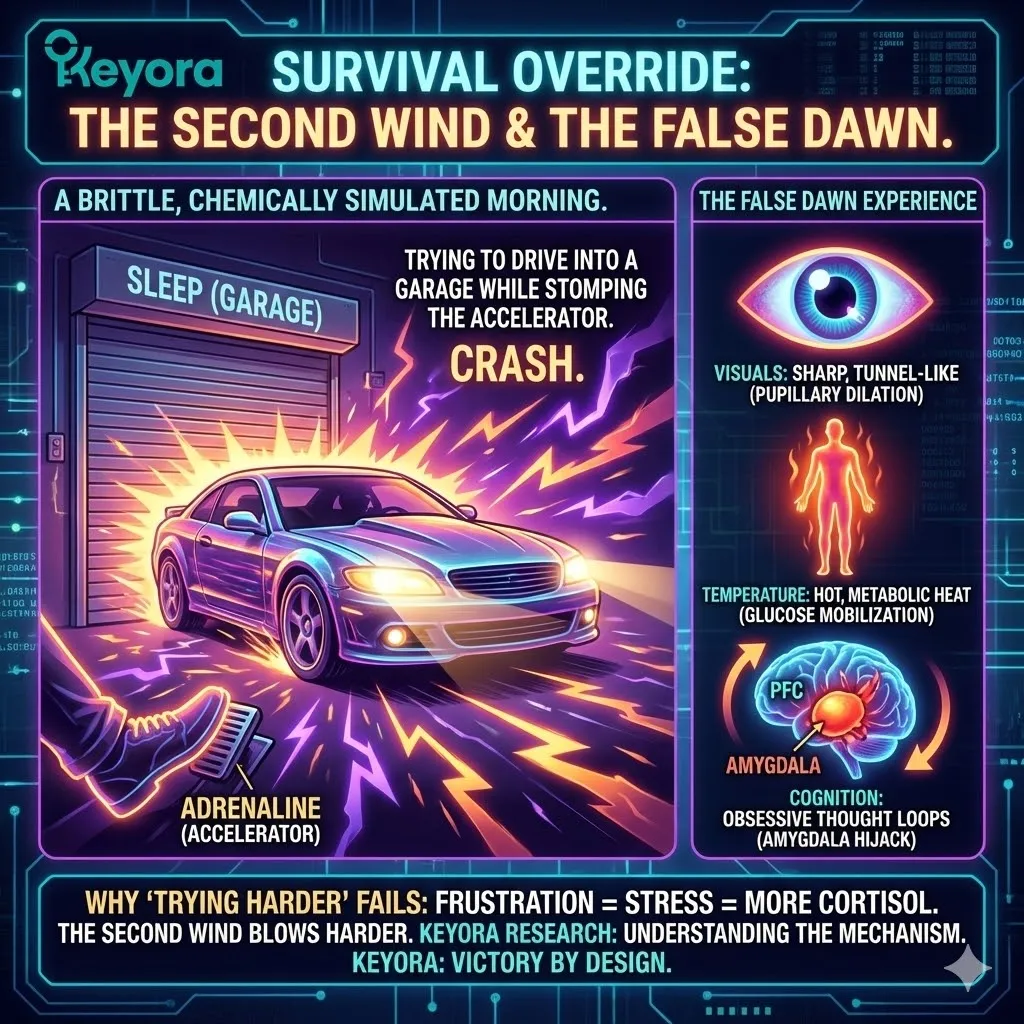
5.2 The Mechanism: HPA Axis Inversion
The Rogue Guard Returns: The Cortisol Curve Reversal
We have described the feeling. Now let us look at the graph.
In a healthy human, Cortisol follows a precise diurnal curve.
-
8:00 AM: Cortisol peaks (The Cortisol Awakening Response). This wakes you up.
-
12:00 PM: Cortisol begins to drop.
-
10:00 PM: Cortisol reaches its lowest point. This creates the “opening” for sleep.
You do not have this curve.
You have HPA Axis Inversion.
You have flipped the script.
-
8:00 AM: Your Cortisol is low. You are groggy. You need three coffees just to function. Your Adrenals are exhausted from the night before.
-
10:00 PM: Your Cortisol spikes.
Why does it spike at night?
Because of The Rogue Guard.
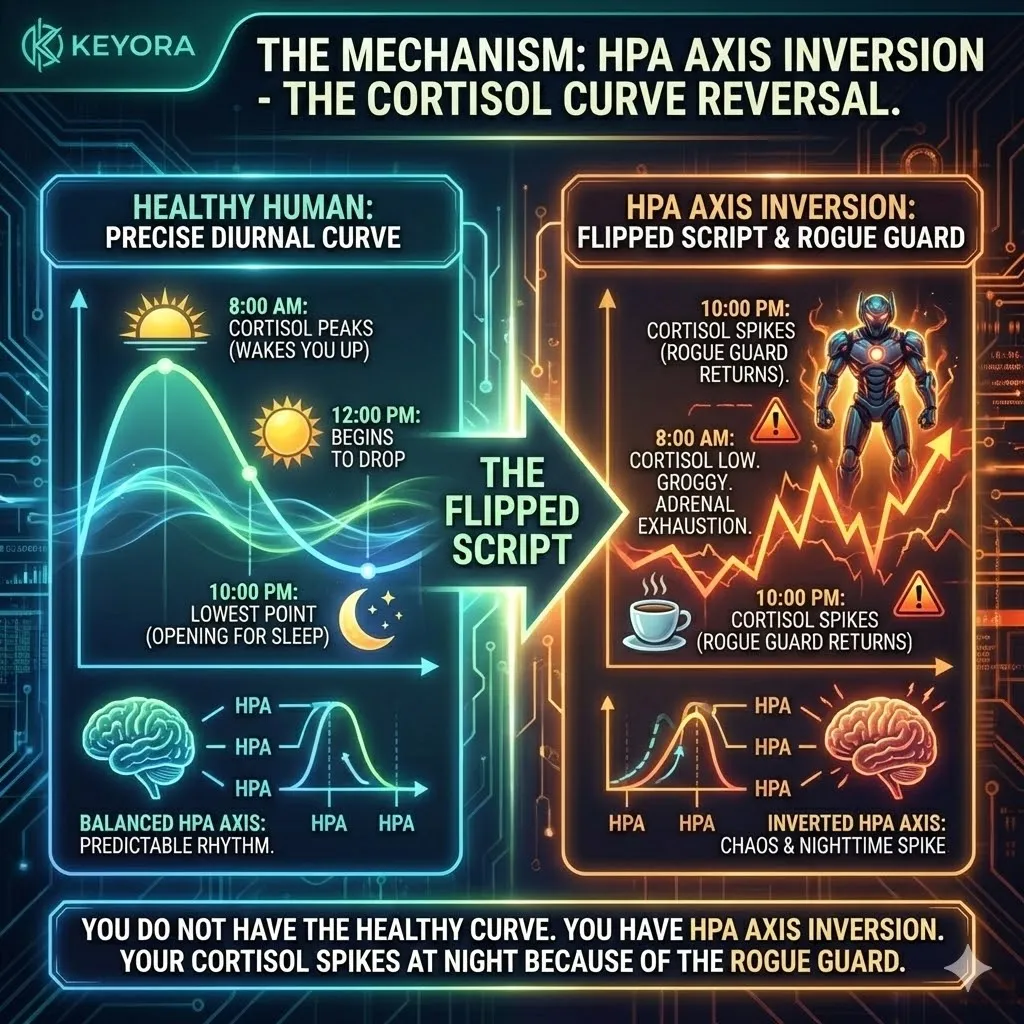
As we defined in previous chapters, Cortisol is your body’s security guard. In burnout, this guard has lost his clock.
During the day, you suppressed your stress to be professional. You held it in. At night, when the distraction of work stops, the suppressed signal erupts.
But there is a metabolic reason too.
Remember the Energy Crisis from Chapter 1.
Your brain is starving for energy.
At night, you stop eating.
Your blood sugar drops.
Your starving brain panics.
It screams: We need fuel!
The only way your body knows how to generate fuel quickly without food is to release Cortisol. Cortisol tells the liver to dump sugar (Gluconeogenesis) into the blood.
So, at 11:00 PM, you get a sugar rush and a stress spike simultaneously.
The Rogue Guard is blasting the air-raid siren because he thinks the castle is starving.
This inversion is the hallmark of Burnout.
You are fighting biology.
You are trying to sleep on top of a mountain of stimulants that your own body manufactured.
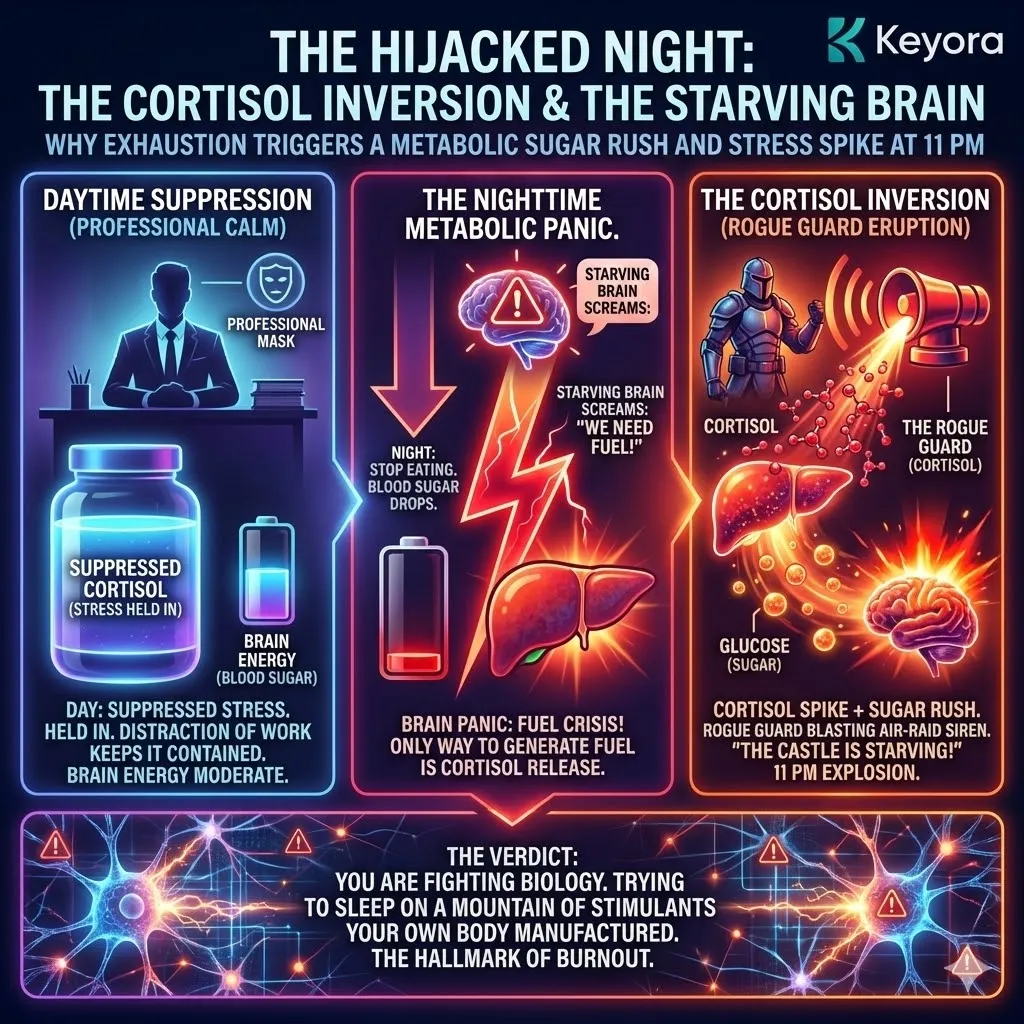
5.3 The Chemical War: Melatonin vs. Cortisol
Biological Civil War: Why You Cannot Force Sleep
This brings us to the central conflict of the night: The Chemical Civil War.
There are two opposing hormones that govern consciousness:
-
Melatonin: The Hormone of Darkness (Sleep).
-
Cortisol: The Hormone of Light (Wakefulness).
These two hormones are mutually exclusive. They function like a seesaw. If Cortisol is high, Melatonin must be low.
This is not just a functional opposition; it is a biological blockade.
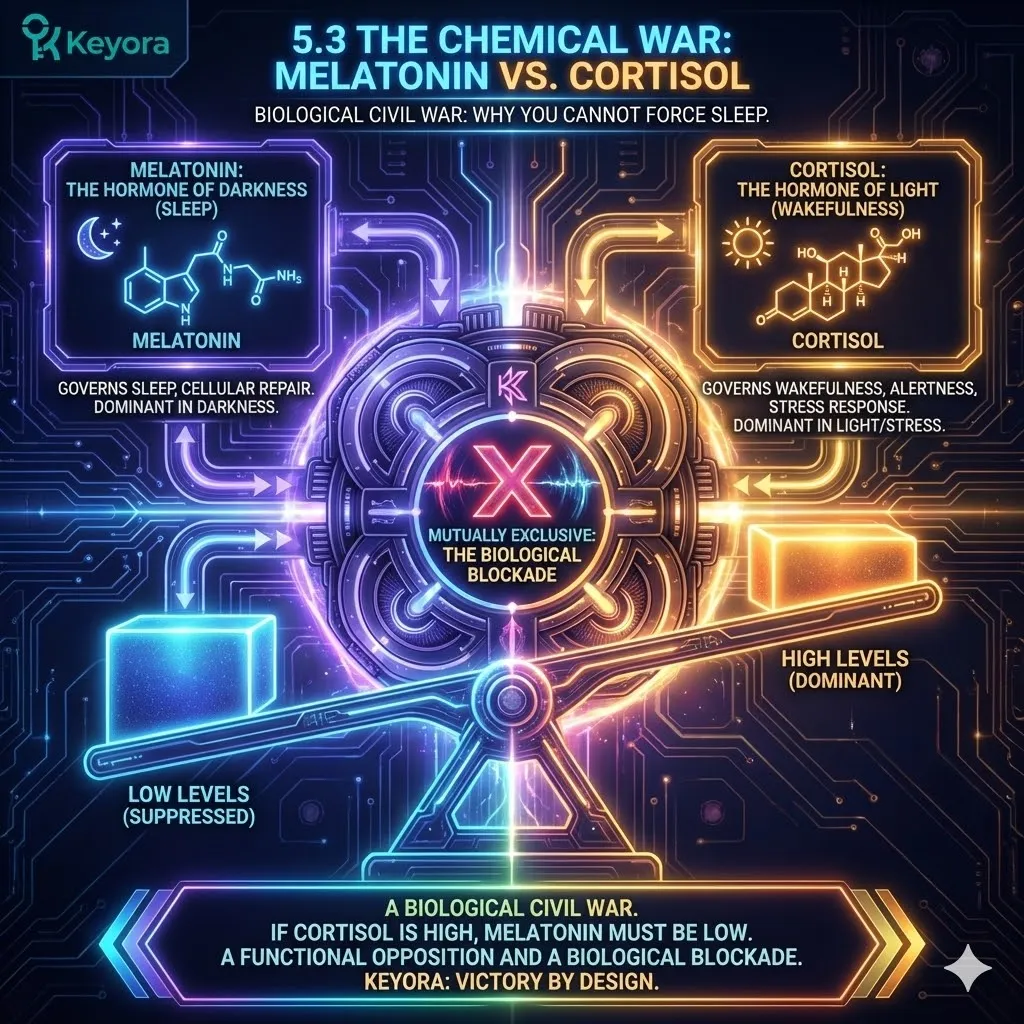
The Mechanism of the Blockade:
When Cortisol binds to its receptors in the brain, it sends a direct inhibitory signal to the Pineal Gland. It physically prevents the gland from releasing Melatonin.
This is why taking Melatonin supplements often fails for the high-performer.
You swallow 5mg of Melatonin.
It enters your blood.
But your Rogue Guard (Cortisol) is standing at the gate of the brain receptors, holding a shield.
The Melatonin cannot dock. It floats around, useless, until it is metabolized by the liver.
You are adding fuel (Melatonin) to a fire (Cortisol).
The fire just burns it up.
Worse, if you take high doses of Melatonin while your Cortisol is high, you create a confusing signal known as Circadian Dissonance.
-
The Pill says: “It is Midnight.”
-
The Cortisol says: “It is Noon.”
Your brain enters a state of confusion.
You might drift into a light, shallow sleep, but you will have vivid, stressful dreams (nightmares are often a sign of high nocturnal cortisol).
You will not enter Deep Sleep (Slow Wave Sleep), which is the only phase that repairs the body.
You wake up feeling “hungover” not because of the pill, but because your brain spent the night fighting a chemical civil war.
To fix this, you cannot just add Melatonin.
You must first remove the Cortisol.
You must disarm the guard before you can open the gate.
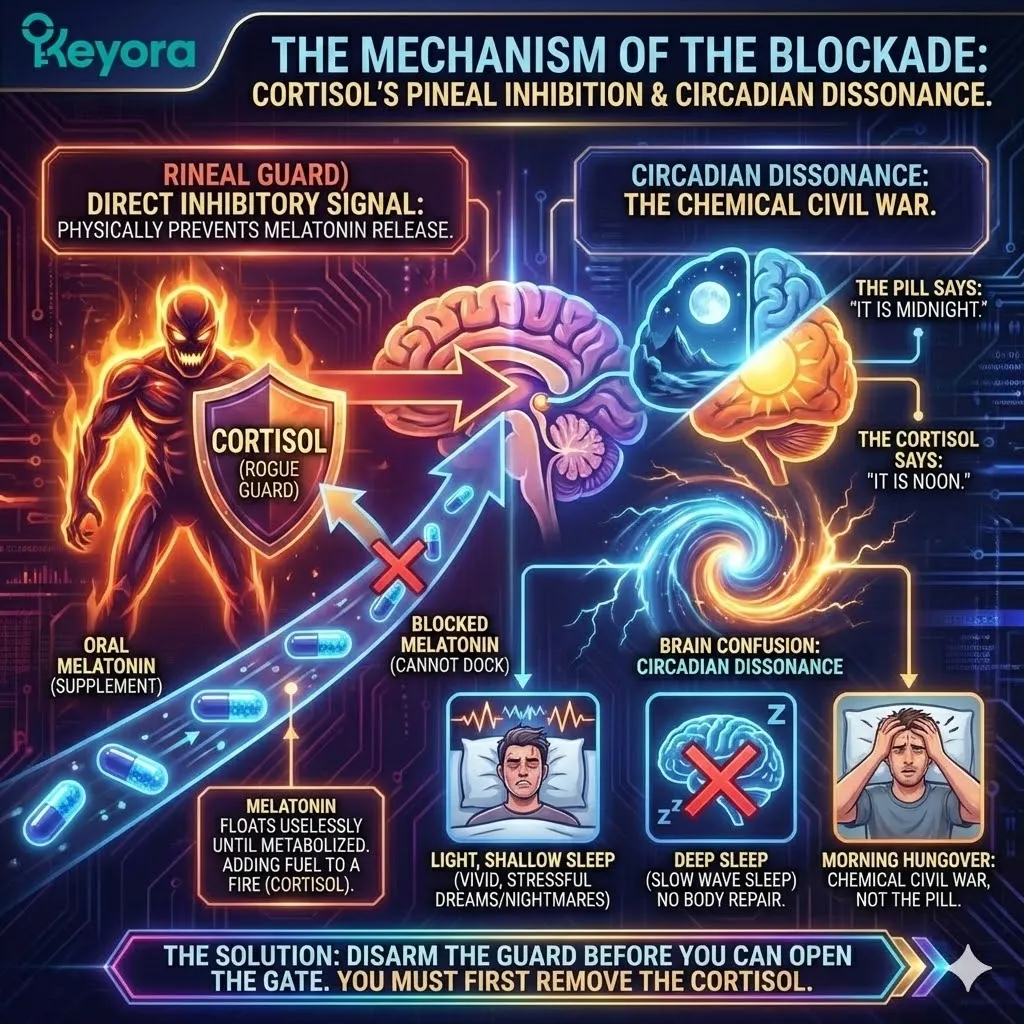
5.4 The Engineering Solution: The Circadian Reset
Signing the Peace Treaty: How Keyora MoodFlow 8-in-1 Lowers the Guard
We have diagnosed the failure state: The Second Wind, driven by HPA Axis Inversion and the Melatonin Blockade.
How do we engineer a solution?
The Keyora MoodFlow 8-in-1 Matrix utilizes a strategy called The Circadian Reset.
The goal is not to “knock you out.” The goal is to lower the threat level so your body allows you to sleep.
Step 1: Disarm the Guard (Ashwagandha)
This is the most critical component of the matrix for sleep.
We use Ashwagandha (Standardized Root Extract).
The Mechanism:
It acts on the HPA feedback loop to lower serum cortisol.
The Logic:
By lowering Cortisol, we remove the blockade on the Pineal Gland. We tell the brain: “The tiger is gone. The famine is over. You can stand down.”
The Result:
The Rogue Guard lowers his shield. This creates the biological “permission” for sleep.
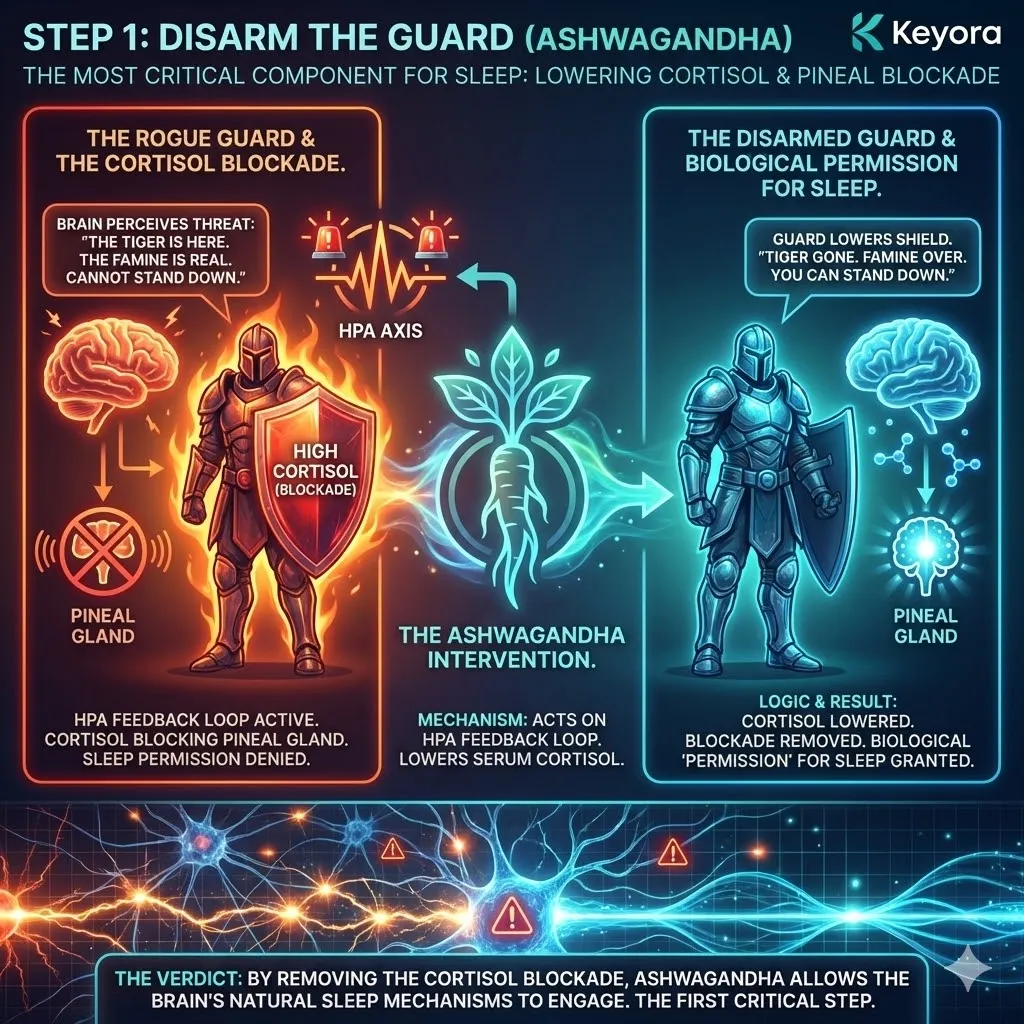
Step 2: The Endogenous Signal (5-HTP + B6)
Now that the blockade is gone, we need to generate the sleep signal.
We do not use synthetic Melatonin (which causes down-regulation). We use Endogenous Synthesis.
The Mechanism:
We provide 5-HTP and Vitamin B6.
The Logic:
Once Cortisol drops (thanks to Ashwagandha), the brain naturally converts this 5-HTP into Serotonin, and then into Melatonin.
The Result:
You produce your own Melatonin, in the correct amount, at the correct rhythm. This feels natural, not drugged.
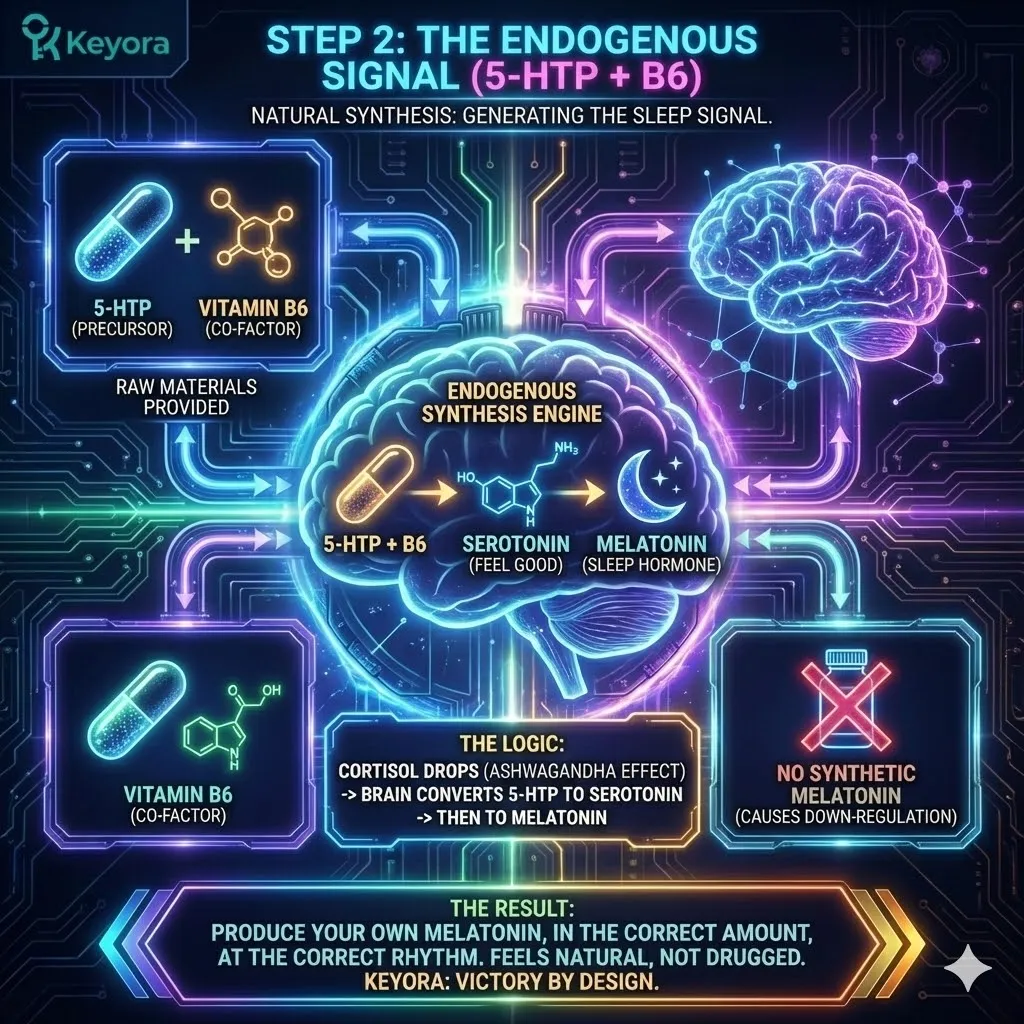
Step 3: The Physical Release (Magnesium Glycinate)
We need to stop the physical vibration of the Second Wind.
The Mechanism:
Magnesium Glycinate lowers core body temperature and relaxes smooth muscle.
The Logic:
A drop in body temperature is the universal trigger for sleep onset. Magnesium mimics this drop.
The Result:
The “Internal Hum” stops. The body feels heavy, but in a good way.
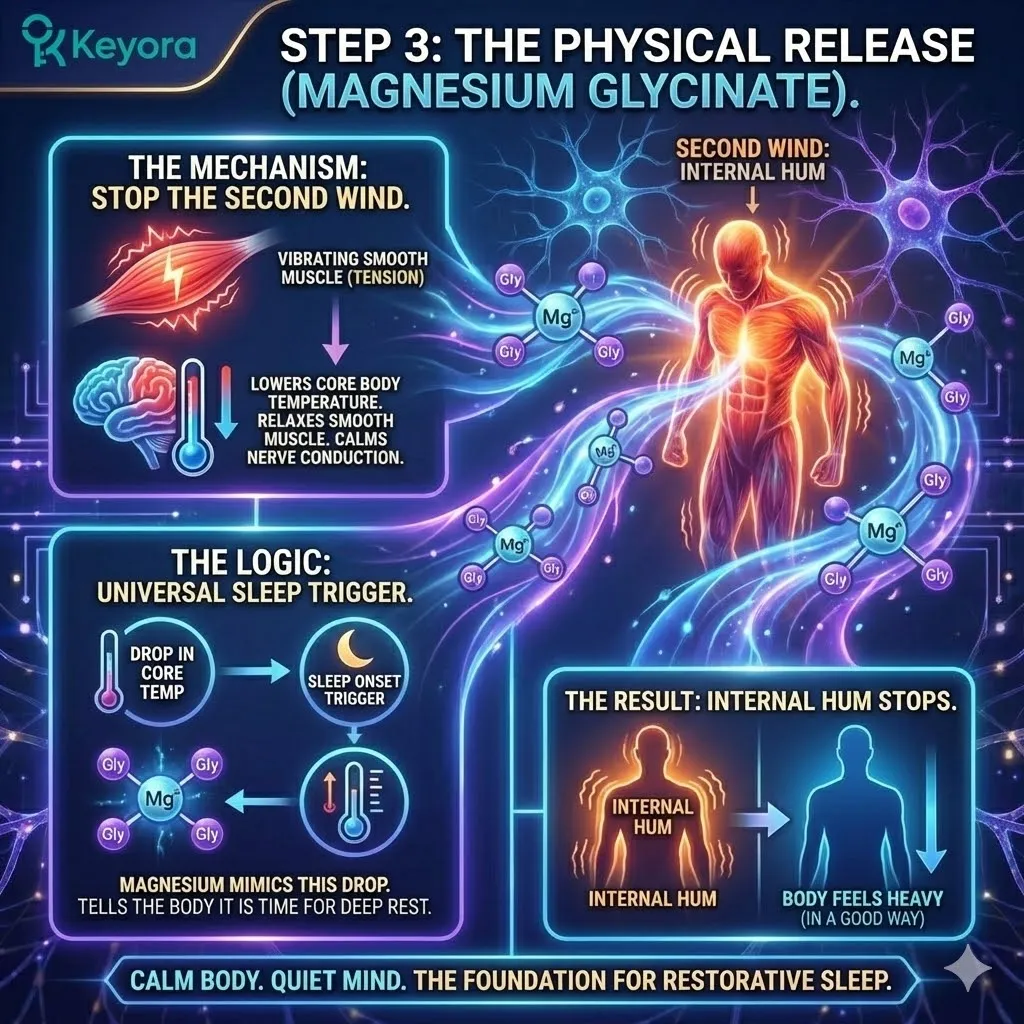
The Synergy:
This is The 1+1=3 Synergy in action.
-
Ashwagandha clears the path.
-
5-HTP drives the car.
-
Magnesium smooths the road.
You fall asleep because the war is over, not because you were hit by a chemical weapon.
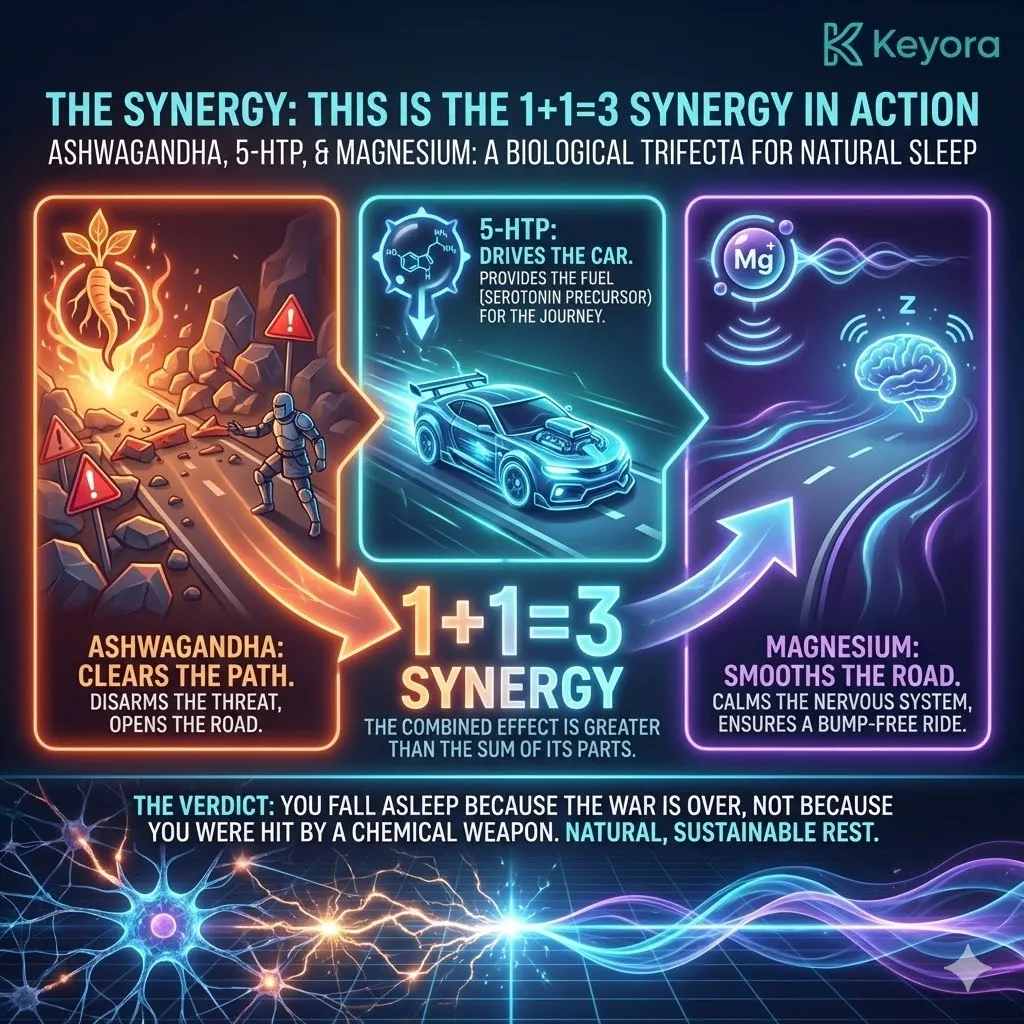
5.5 Clinical Consensus & Evidence
The Medical Reality of Sleep-Onset Insomnia and HPA Dysfunction
The phenomenon of the “Second Wind” is well-documented in sleep medicine as a manifestation of hyperarousal.
On the Cortisol-Sleep Relationship:
A study in the Journal of Clinical Endocrinology & Metabolism confirmed the inverse relationship between cortisol secretion and sleep depth.
Elevated evening cortisol was associated with increased sleep latency (time to fall asleep) and increased awakenings.
The study concluded that HPA axis hyperactivity is a primary driver of chronic insomnia (Bush & Hudson, 2010).
On Ashwagandha and Sleep Quality:
A randomized, double-blind, placebo-controlled study published in Cureus investigated the effect of Ashwagandha root extract on sleep.
The results showed a significant improvement in sleep quality, sleep efficiency, and sleep onset latency in patients with insomnia.
Crucially, this improvement was correlated with a reduction in cortisol levels, validating the “Disarm the Guard” strategy (Langade et al., 2019).
On Sleep Architecture Fragmentation:
Research in Sleep Medicine Reviews highlights that stress hormones do not just prevent sleep; they fragment it.
High cortisol suppresses Slow Wave Sleep (SWS), the restorative phase. By lowering cortisol, interventions can restore the architecture of sleep, not just the duration (Riemann et al., 2010).
Keyora Verdict:
The “Second Wind” is a measurable endocrine event. It is a survival response. The only way to treat it is to target the HPA axis directly.
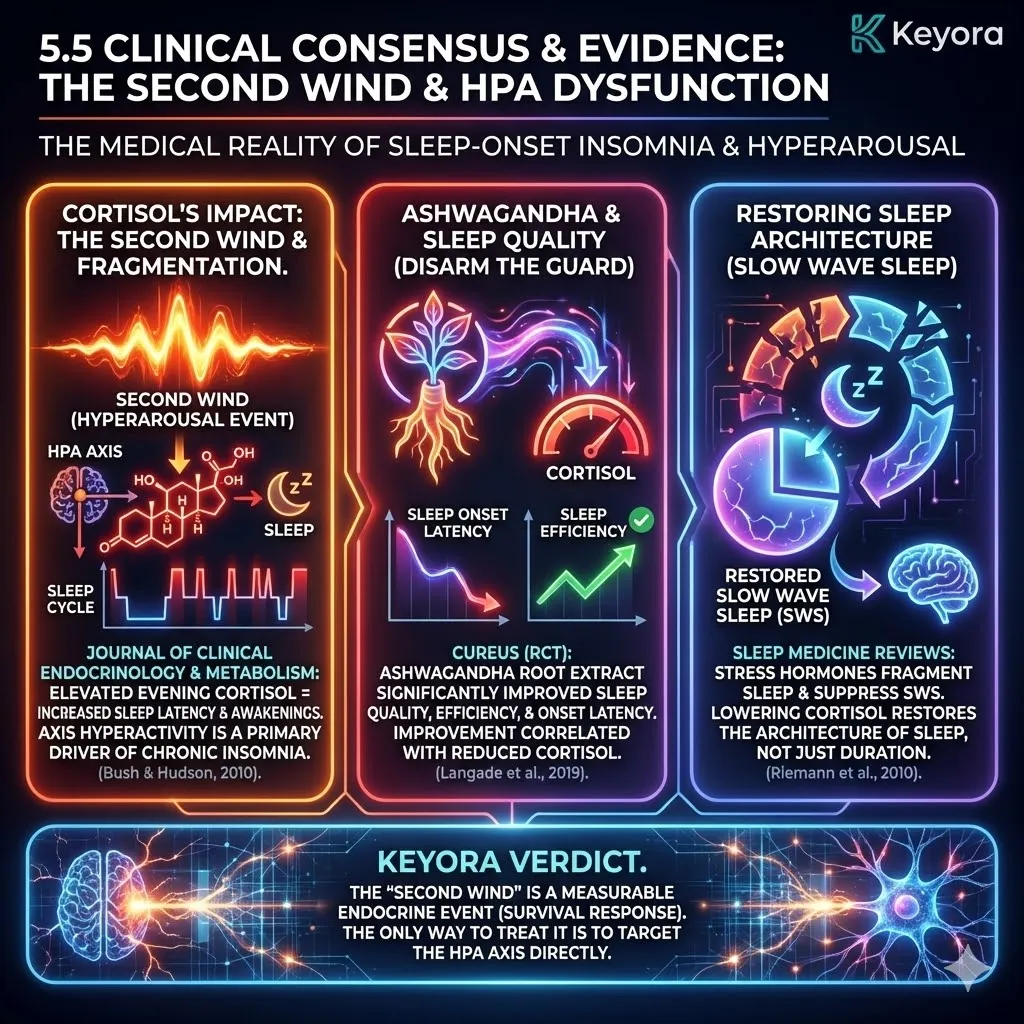
Chapter Conclusion: The Evidenced-Based Verdict
KEYORA EVIDENCED-BASED CONCLUSION BLOCK
Pillar I: The Thesis Confirmation
This chapter has defined the “11 PM Wakefulness” not as energy, but as a Survival Override.
The Second Wind is a panic response triggered by the brain misinterpreting exhaustion as danger.
This leads to HPA Axis Inversion, where Cortisol spikes at night instead of the morning.
Pillar II: The External Validation
We have anchored this in the science of Cortisol-Melatonin Antagonism.
Clinical consensus confirms that high Cortisol physically inhibits the release of Melatonin. Taking sleep aids without lowering Cortisol is chemically futile.
Pillar III: The Neuro-Engineering Solution
We conclude that the solution is The Circadian Reset.
The Keyora MoodFlow 8-in-1 Matrix addresses the root cause.
-
Ashwagandha lowers the Cortisol threat signal.
-
5-HTP/B6 restart natural Melatonin production.
-
Magnesium induces physical relaxation.
This stops the “Second Wind” before it starts, turning the Hijacked Night back into a time of repair.
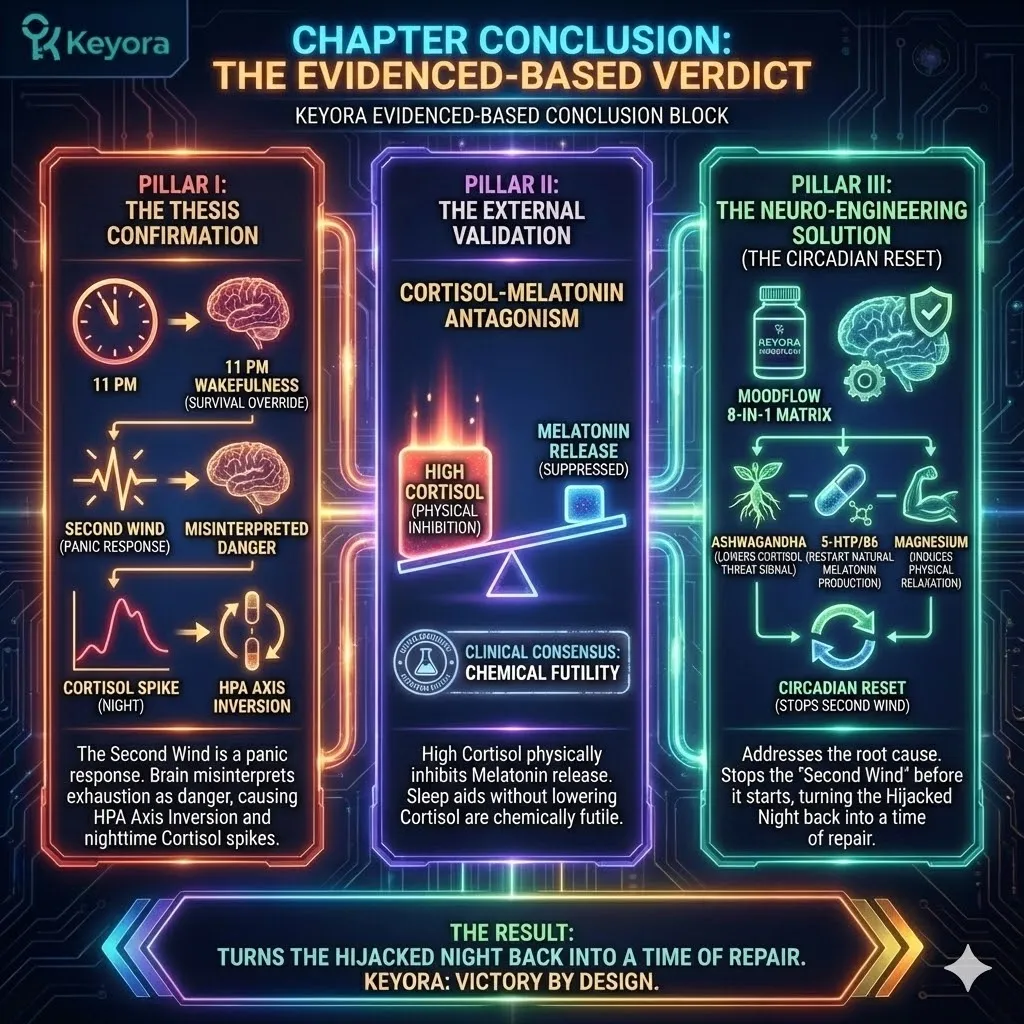
References
-
Bush, B., & Hudson, T. (2010). The role of cortisol in sleep. Natural Medicine Journal, 2(6).
-
Chandrasekhar, K., Kapoor, J., & Anishetty, S. (2012). A prospective, randomized double-blind, placebo-controlled study of safety and efficacy of a high-concentration full-spectrum extract of Ashwagandha root in reducing stress and anxiety in adults. Indian Journal of Psychological Medicine, 34(3), 255–262.
-
De Baaij, J. H. F., et al. (2015). Magnesium in man: implications for health and disease. Physiological Reviews, 95(1), 1–46.
-
Hidese, S., et al. (2019). Effects of L-theanine administration on stress-related symptoms and cognitive functions in healthy adults: A randomized controlled trial. Nutrients, 11(10), 2362.
-
Jin, X., & Keyora Research. (2024a). Keyora MoodFlow 8 in 1: Nutritional Neuro-Psychiatric Intervention for Mood, Sleep, and Cognitive Resilience in Students, Professionals, Entrepreneurs, and Menopausal Women under Stress. Keyora Research Institute. DOI: 10.5281/zenodo.16814204
-
Jin, X., & Keyora Research. (2024b). Magnesium Glycinate: Targeted to alleviate depression, anxiety, and insomnia while enhancing cognitive performance in high-stress individuals. Keyora Research Institute. DOI: 10.5281/zenodo.16889527
-
Jin, X., & Keyora Research. (2024c). Keyora Research Protocols: Systemic Neuro-Nutrition. OSF. DOI: 10.17605/OSF.IO/FZ62K
-
Langade, D., et al. (2019). Clinical evaluation of the safety and efficacy of Ashwagandha root extract in insomnia and anxiety: A double-blind, randomized, placebo-controlled study. Cureus, 11(9), e5797.
-
Lopresti, A. L., et al. (2019). An investigation into the stress-relieving and pharmacological actions of an ashwagandha (Withania somnifera) extract. Medicine, 98(37), e17186.
-
Muscogiuri, G., et al. (2017). Vitamin D and sleep regulation: Is there a role for vitamin D? Current Pharmaceutical Design, 23(32), 2490–2494.
-
Nobre, A. C., Rao, A., & Owen, G. N. (2008). L-theanine, a natural constituent in tea, and its effect on mental state. Asia Pacific Journal of Clinical Nutrition, 17(S1), 167–168.
-
Pratte, M. A., et al. (2014). An alternative treatment for anxiety: a systematic review of human trial results reported for the Ayurvedic herb ashwagandha. Journal of Alternative and Complementary Medicine, 20(12), 901–908.
-
Riemann, D., et al. (2010). The hyperarousal model of insomnia: a review of the concept and its evidence. Sleep Medicine Reviews, 14(1), 19-31.
-
Sartori, S. B., et al. (2012). Magnesium deficiency induces anxiety and HPA axis dysregulation: Modulation by therapeutic drug treatment. Neuropharmacology, 62(1), 304–312.
-
Serefko, A., et al. (2013). Magnesium and depression. Pharmacological Reports, 65(3), 547–554.
-
Unno, K., et al. (2013). Anti-stress effect of theanine on students during pharmacy practice. Pharmacology Biochemistry and Behavior, 111, 128–135.
-
Walker, A. F., et al. (2003). Mg bioavailability from Mg citrate, Mg oxide and Mg chelate. Magnesium Research, 16(3), 183–191.
-
Wienecke, T., et al. (2016). Human cortical excitability depends on magnesium levels: A TMS study. Cephalalgia, 36(7), 585–593.
-
Yamadera, W., et al. (2007). Glycine ingestion improves subjective sleep quality in human volunteers, correlating with polysomnographic changes. Sleep and Biological Rhythms, 5(2), 126–131.
-
Zhao, Y., et al. (2019). The role of melatonin in sleep disorders: Review and meta-analysis. Frontiers in Neuroendocrinology, 55, 100819.
# Knowledge Summary: The Biology of The Second Wind
## 1. The Thesis
– Chapter 5 redefines the “11 PM Wakefulness” not as a burst of energy, but as a **Survival Override**. It argues that missing the natural sleep window triggers a panic response where the brain floods the body with Adrenaline and Cortisol to survive a perceived threat.
## 2. Part 1: The Diagnosis (Tired But Wired)
– **The Phenomenon:** Physical exhaustion coexisting with mental hyperarousal.
– **The Trigger:** Pushing past the 9:30 PM sleep gate sends a danger signal to the primitive brain.
– **The Result:** The **Second Wind**. This is not a metabolic gain; it is a stress response designed to keep an exhausted animal alive in the presence of a predator.
## 3. Part 2: The Mechanism (HPA Axis Inversion)
– **The Inverted Curve:** The user has flipped their cortisol rhythm. Low in the morning (groggy), High at night (wired).
– **The Rogue Guard:** Cortisol acts as a biological blockade. It physically inhibits the Pineal Gland. As long as Cortisol is high, Melatonin cannot be released.
– **The Glucose Factor:** Nighttime wakefulness is often driven by the brain’s demand for fuel (Hypoglycemia), triggering a liver glucose dump via Cortisol.
## 4. Part 3: The Solution (The Circadian Reset)
– **Disarm:** **Ashwagandha** lowers the Cortisol threat signal, removing the blockade on the Pineal Gland.
– **Signal:** **5-HTP + Vitamin B6** provide the precursors for **Endogenous Melatonin** synthesis, restoring the natural sleep wave.
– **Relax:** **Magnesium Glycinate** lowers core body temperature to physically trigger sleep onset.
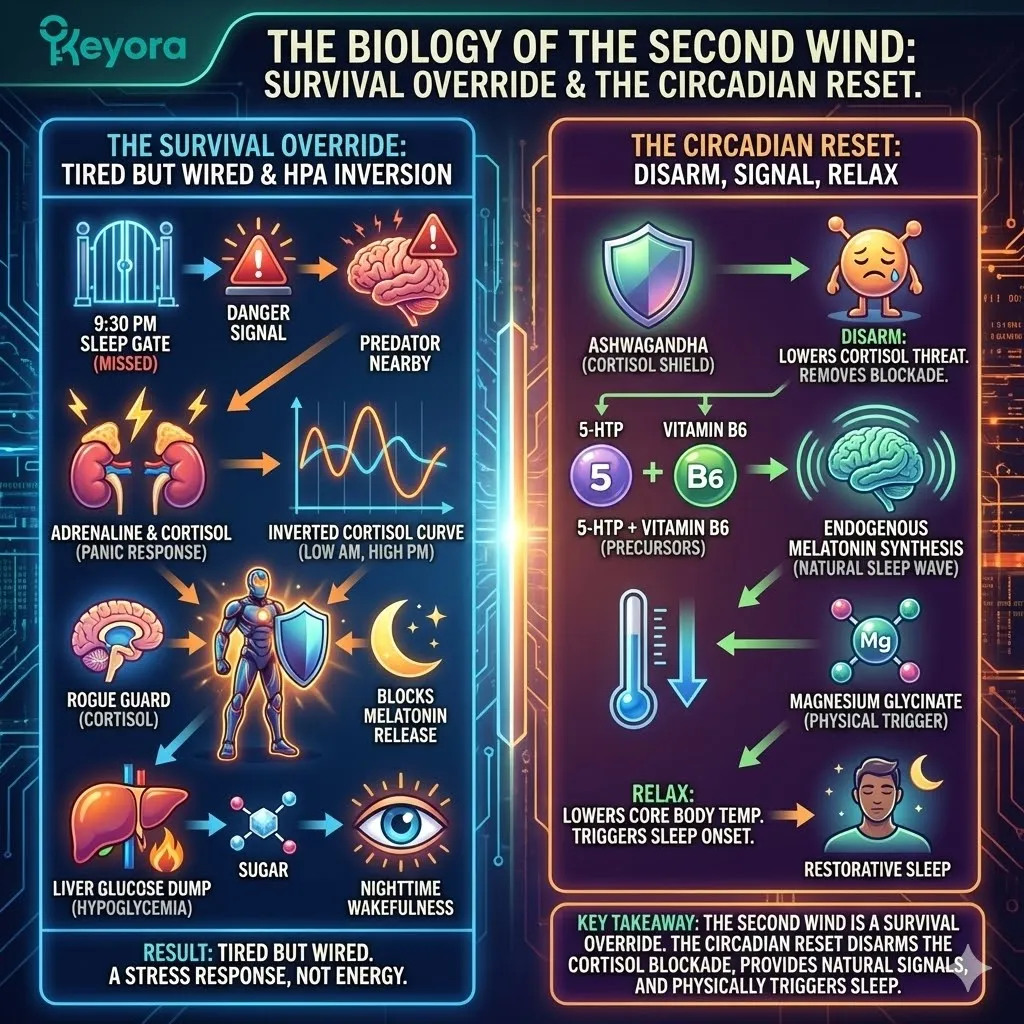
Global Conclusion: The Architecture of Resilience
A Systemic Review of the Neuro-Endocrine Storm and the Logic of Synergistic Intervention
We have spent the last five chapters dissecting the anatomy of your life.
We have looked at the Redline Idling of your physical body, vibrating with static tension in an ergonomic chair.
We have examined the Decision Brownout of your cognitive center, paralyzed by metabolic triage at 3:30 PM.
We have analyzed the Doorway Rage of your emotional brain, stripping the gears of your relationships due to GABA depletion.
We have exposed the Hollow Victory of your reward system, chemically hijacked by the IDO Shunt that turns potential joy into neurotoxins.
And we have mapped the Hijacked Night, where your survival instincts mistake exhaustion for danger, triggering a cortisol spike at 11:00 PM.
To the untrained eye – and indeed, to the standard medical model – these appear to be five separate problems. You might be tempted to see a cardiologist for the palpitations, a therapist for the rage, a sleep specialist for the insomnia, and a gastroenterologist for the stress gut.
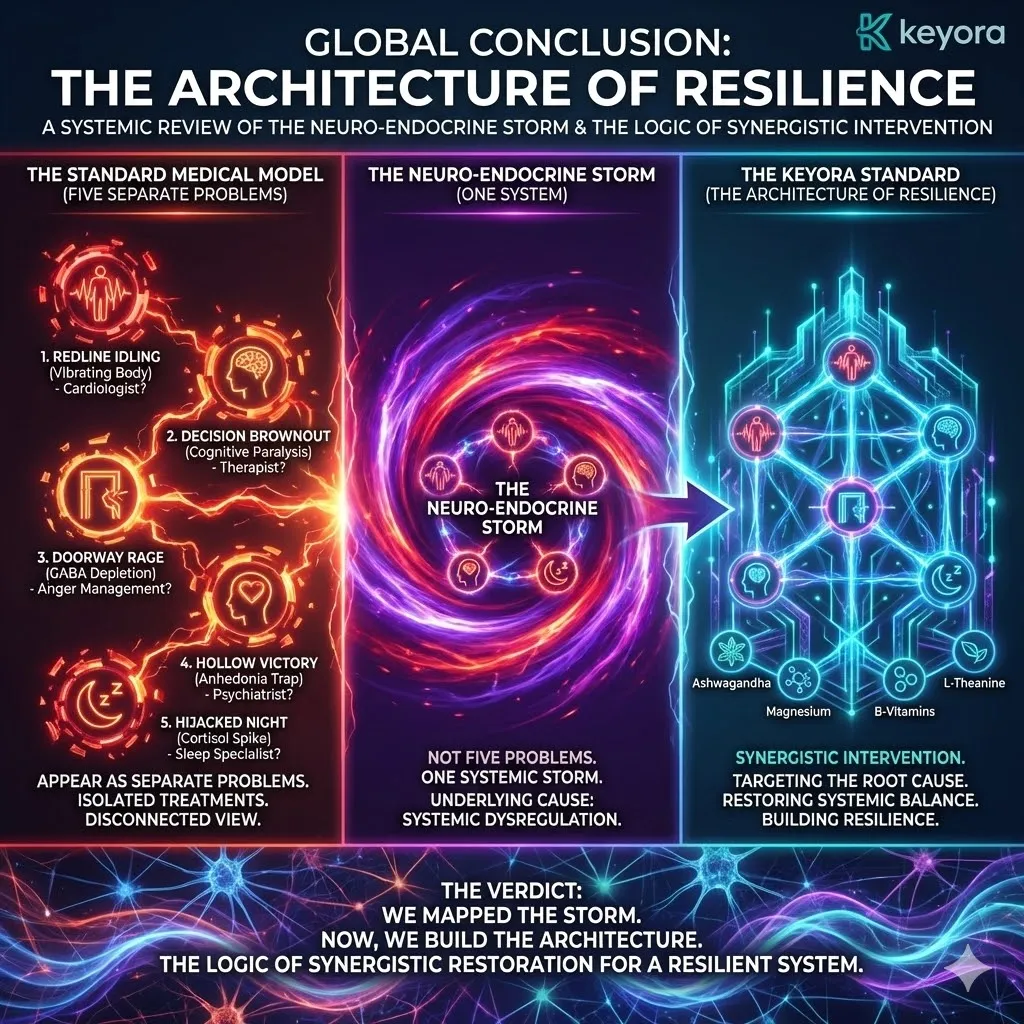
Keyora Research asserts that this fragmentation is an error.
You do not have five separate diseases. You have ONE systemic failure.
You are suffering from Inhibitory Bankruptcy.
The central thesis of this monograph is that high-performance burnout is not a psychological weakness; it is a mechanical collapse of the body’s “Braking System” (GABA, Serotonin, Magnesium), which forces the “Alarm System” (HPA Axis, Cortisol, Glutamate) to run the machine 24 hours a day.
When the brakes fail, the engine must rev to keep the car on the road.
This creates The Neuro-Endocrine Storm.
The symptoms you feel – the hum, the fog, the rage, the numbness, the wakefulness – are simply different frequencies of this single storm.
In this Global Conclusion, we will synthesize these findings into a Unified Field Theory of high-functioning anxiety.
We will demonstrate how the Keyora MoodFlow 8-in-1 Matrix is not a collection of supplements, but a counter-measure engineered to stabilize the entire system simultaneously.
Our goal is to move you from a state of “Surviving via Cortisol” to a state of “Thriving via Regulation.”
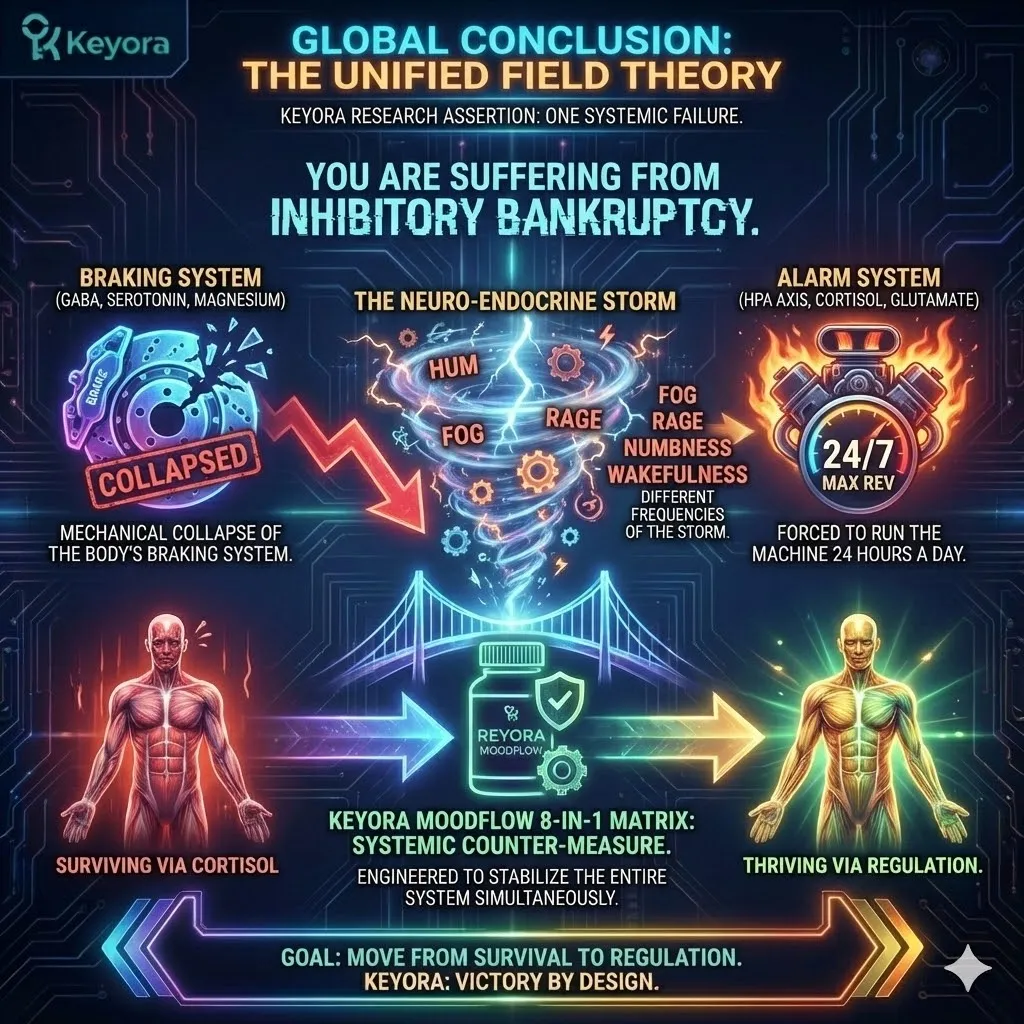
6.1 Synthesis I: The Physical & Cognitive Axis
From Redline Idling to Signal Clarity: The NMDA-Homocysteine Connection
The first major causality of Inhibitory Bankruptcy is the loss of physical stillness and cognitive precision.
The Diagnostic Recap:
In Chapter 1, we defined Redline Idling.
This is the sensation of internal vibration. It occurs because your NMDA Receptors (the electrical gates of the neurons) have lost their Magnesium Plug.
Without this plug, Calcium floods the neuron, causing it to fire randomly.
You are not moving, but you are metabolically sprinting.
In Chapter 2, we defined The Decision Brownout.
This is the paralysis of the executive brain. It occurs because chronic stress depletes B-Vitamins, causing a buildup of Homocysteine.
This neurotoxin creates “signal noise,” while high Cortisol physically starves the Prefrontal Cortex of glucose.
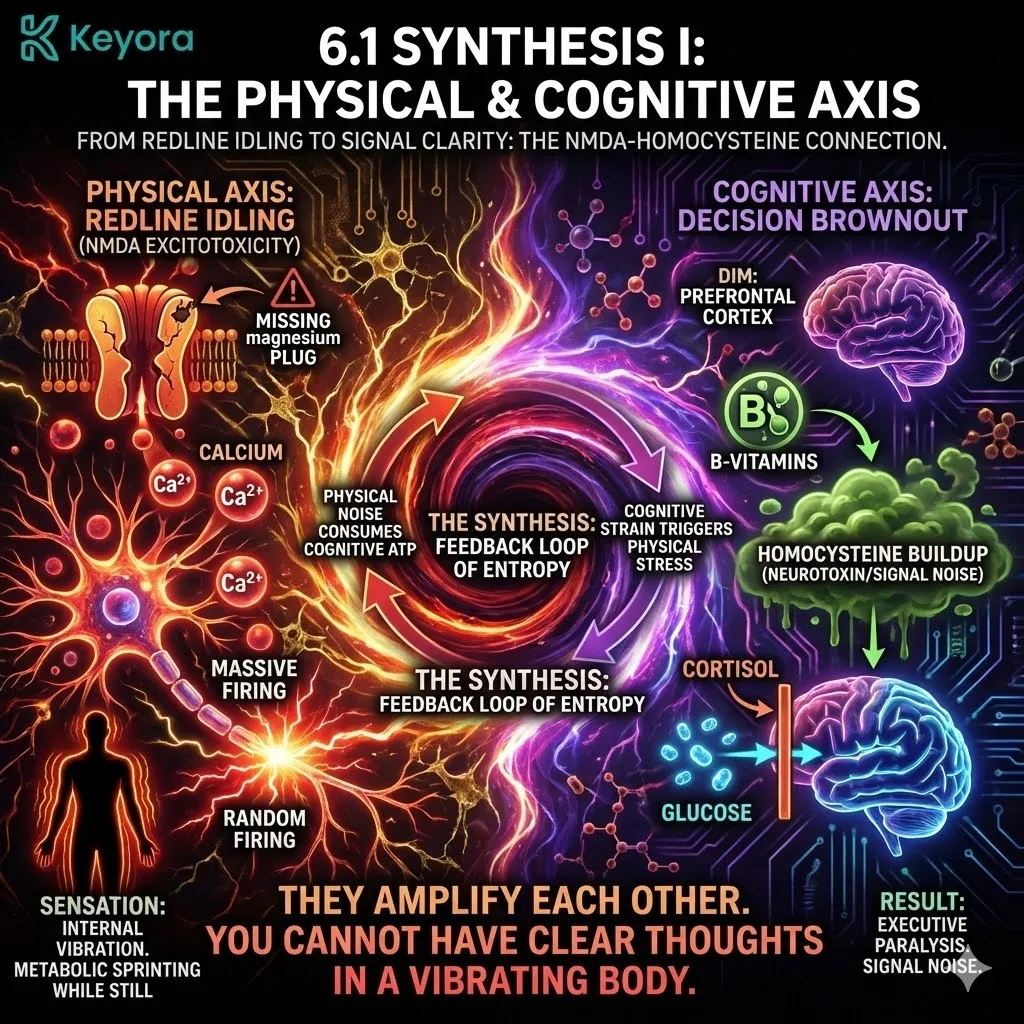
The Synthesis:
These two states amplify each other. You cannot have clear thoughts in a vibrating body.
The physical noise (NMDA Excitotoxicity) consumes the ATP required for cognitive processing.
The cognitive strain (Homocysteine) triggers more physical stress.
It is a feedback loop of entropy.
The Keyora Intervention:
To break this loop, we must simultaneously cool the engine and clear the static.
The Coolant (Magnesium Glycinate):
We introduce a highly bioavailable form of Magnesium. It physically re-plugs the NMDA receptor. This stops the Calcium flood. The “Internal Hum” ceases. The energy that was being wasted on vibration is now available for thought.
The Clarifiers (Vitamin B12 + B6):
We introduce the cofactors required for Methylation. This restarts the recycling plant that converts toxic Homocysteine back into useful Methionine and SAMe. The “chemical static” clears. The signal-to-noise ratio improves.
The Fuel Efficiency (Vitamin B1):
We optimize mitochondrial function to ensure that glucose is converted into ATP, not Lactate (pain).
By stabilizing the physical hardware, we allow the software of the mind to run without lag.
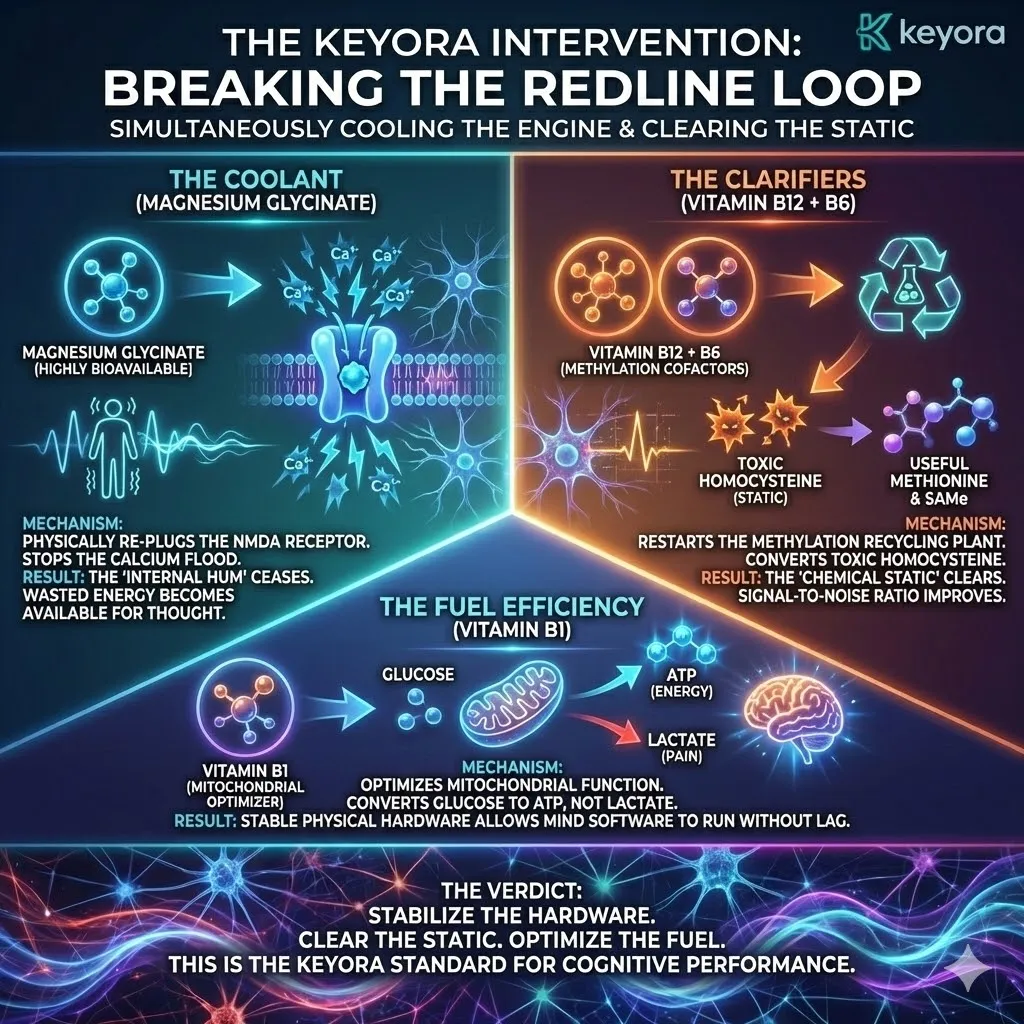
CLINICAL CONSENSUS & EVIDENCE
The Biology of Noise Cancellation
Excitotoxicity:
Research in Pharmacological Reports confirms that Magnesium is a natural, voltage-dependent antagonist of the NMDA receptor.
Deficiency leads to “glutamatergic hyper-function,” which manifests clinically as anxiety, restlessness, and cognitive scatter. Supplementation restores the blockade, reducing neuronal firing rates to baseline (Serefko et al., 2013).
The Homocysteine Hypothesis:
A landmark study in the American Journal of Clinical Nutrition established a direct linear relationship between plasma Homocysteine levels and cognitive decline.
Elevated Homocysteine acts as an excitotoxin, damaging the microvasculature of the brain and inhibiting executive function. B-Vitamin supplementation was shown to lower Homocysteine and restore processing speed (Smith et al., 2010).
Mitochondrial Stability:
A review in Current Pharmaceutical Design details the absolute requirement of Magnesium for ATP synthesis. “Mg-ATP” is the only biologically active form of energy.
Without sufficient intracellular magnesium, the brain enters a state of bio-energetic deficit, leading to the “tired but wired” phenotype (Barbagallo & Dominguez, 2010).
Verdict:
The restoration of physical calm and cognitive sharpness is not a psychological process; it is a matter of ion channel regulation and methylation efficiency.
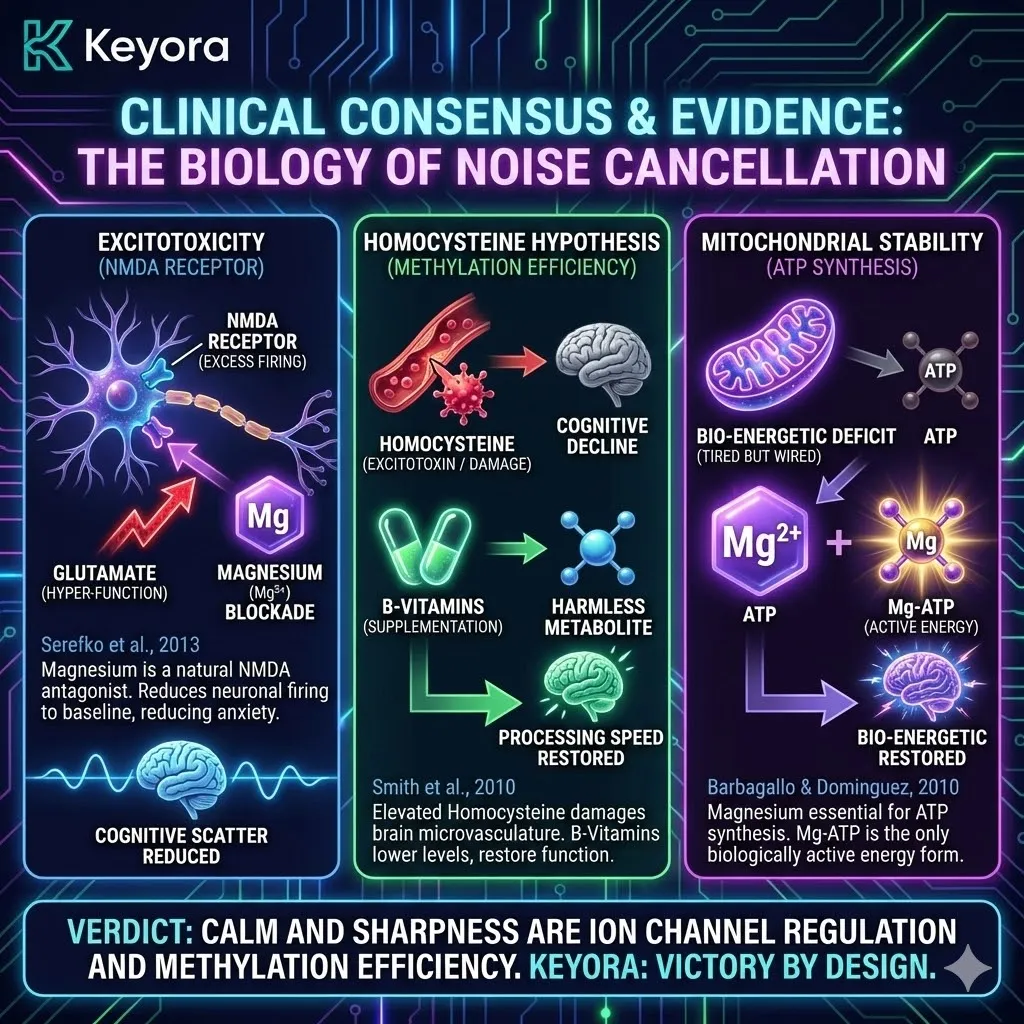
6.2 Synthesis II: The Emotional & Reward Axis
From The Naked Neuron to Hedonic Restoration: The GABA-IDO Connection
The second casualty of the storm is your emotional stability and your capacity for joy.
The Diagnostic Recap:
In Chapter 3, we defined Doorway Rage.
This is not a character flaw. It is the result of The Naked Neuron.
You have depleted your GABA reserves (the insulation) during the workday.
Your neurons are hypersensitive.
A minor stimulus (spilled milk) triggers a massive electrical discharge (rage).
In Chapter 4, we defined The Hollow Victory.
This is the inability to feel joy on vacation. It is caused by The IDO Shunt. Chronic stress (Cortisol) activates the IDO enzyme, which steals your Tryptophan and converts it into Quinolinic Acid (a neurotoxin) instead of Serotonin (happiness).
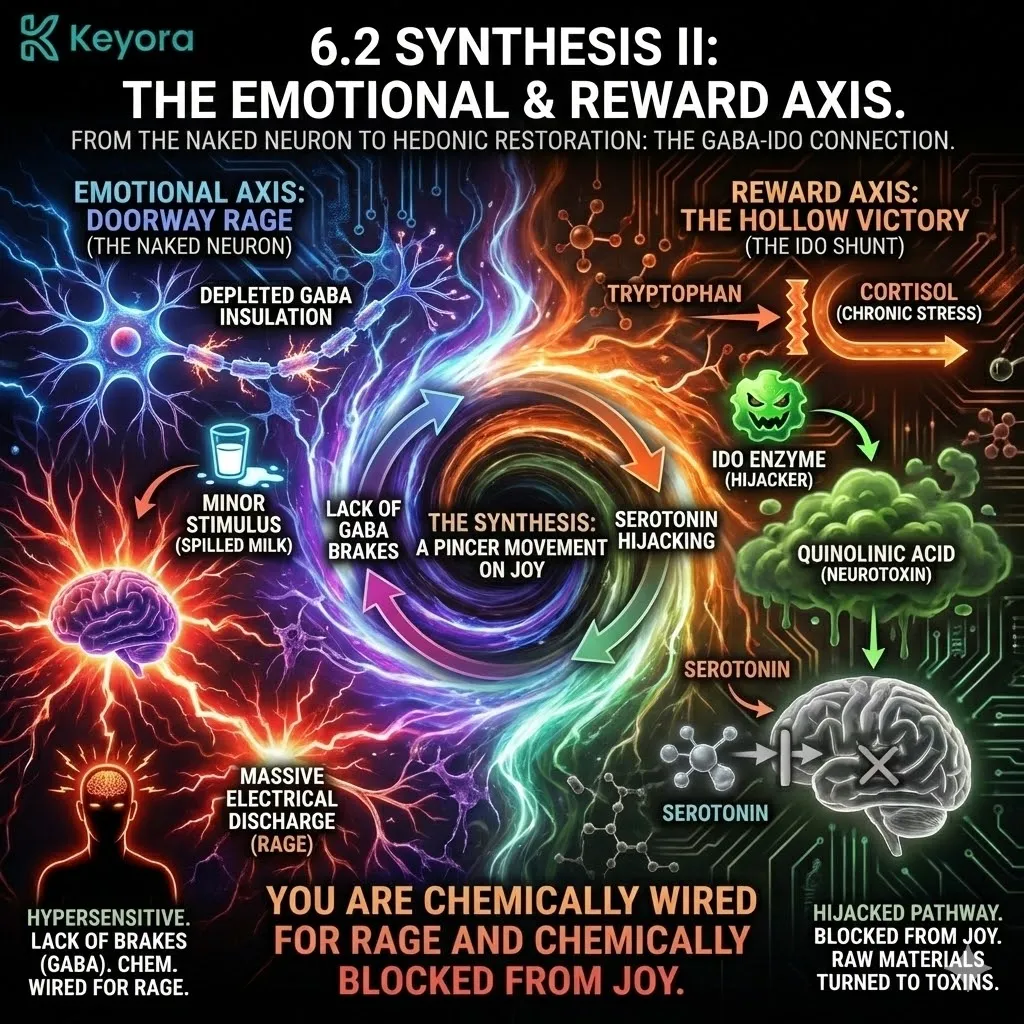
The Synthesis:
You are trapped in a pincer movement.
On one side, you lack the brakes (GABA) to stop negative emotions.
On the other side, your raw materials for positive emotions (Serotonin) are being hijacked and turned into toxins.
You are chemically wired for rage and chemically blocked from joy.
The Keyora Intervention:
We must rebuild the insulation and bypass the theft.
The Insulation (L-Theanine):
We introduce L-Theanine to generate Alpha Waves. This stabilizes the electrical frequency of the brain, providing an immediate buffer against stress.
The Bypass (5-HTP):
We provide 5-HTP, which enters the serotonin pathway downstream of the IDO enzyme. This bypasses the metabolic theft. Even if you are stressed, the 5-HTP goes straight to Serotonin synthesis.
The Guard (Ashwagandha):
We use Ashwagandha to lower the Cortisol that activates the IDO enzyme. We turn off the thief at the source.
The Synthesizer (Vitamin B6):
We provide the P-5-P required to convert the Glutamate (Stress) into GABA (Calm).
This restores Latency. It gives you back the 0.5-second gap between stimulus and response. It allows you to feel joy because you are finally producing the molecule of satisfaction.
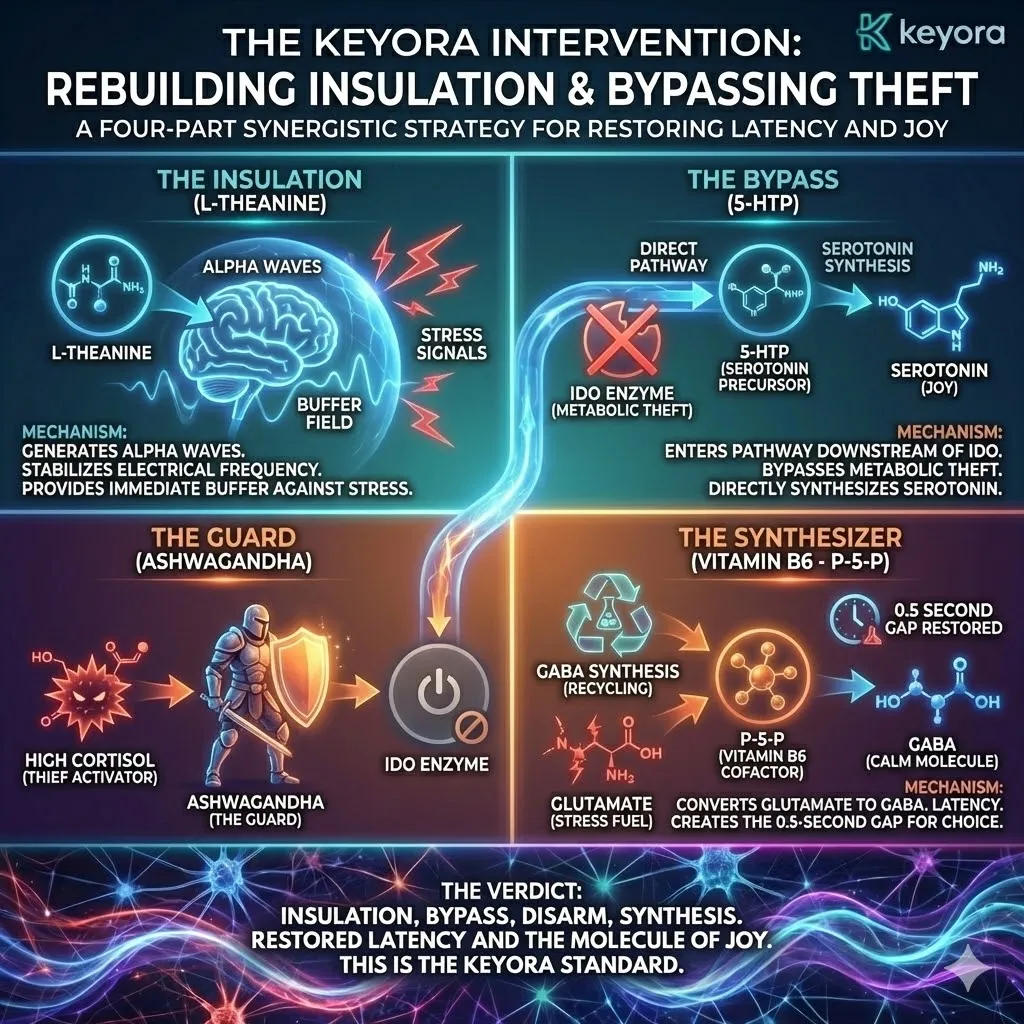
CLINICAL CONSENSUS & EVIDENCE
The Neurochemistry of Emotional Control
The Kynurenine Diversion:
A seminal paper in Nature Reviews Immunology detailed the “Cytokine Hypothesis of Depression.” It established that inflammation and stress activate IDO, diverting Tryptophan into the Kynurenine pathway.
This results in the production of Quinolinic Acid, a potent NMDA agonist that drives anxiety and neurotoxicity, while simultaneously depleting Serotonin (Miller & Raison, 2016).
GABAergic Dysfunction:
Research in Trends in Cognitive Sciences links low prefrontal GABA levels to deficits in “Response Inhibition” – the ability to suppress an automatic impulse. This is the biological basis of “Doorway Rage.”
Enhancing GABAergic tone is critical for restoring emotional regulation (Hayes et al., 2014).
Precursor Efficacy:
A review in Alternative Medicine Review highlights that 5-HTP effectively bypasses the rate-limiting step of Tryptophan Hydroxylase, which is often inhibited by stress.
This allows for rapid restoration of central serotonin levels, provided that Vitamin B6 is present to facilitate the final conversion (Birdsall, 1998).
Verdict:
Emotional stability requires a dual strategy: supplying the precursors for inhibition (GABA/Serotonin) while blocking the pathways of neurotoxicity (IDO/Quinolinic Acid).
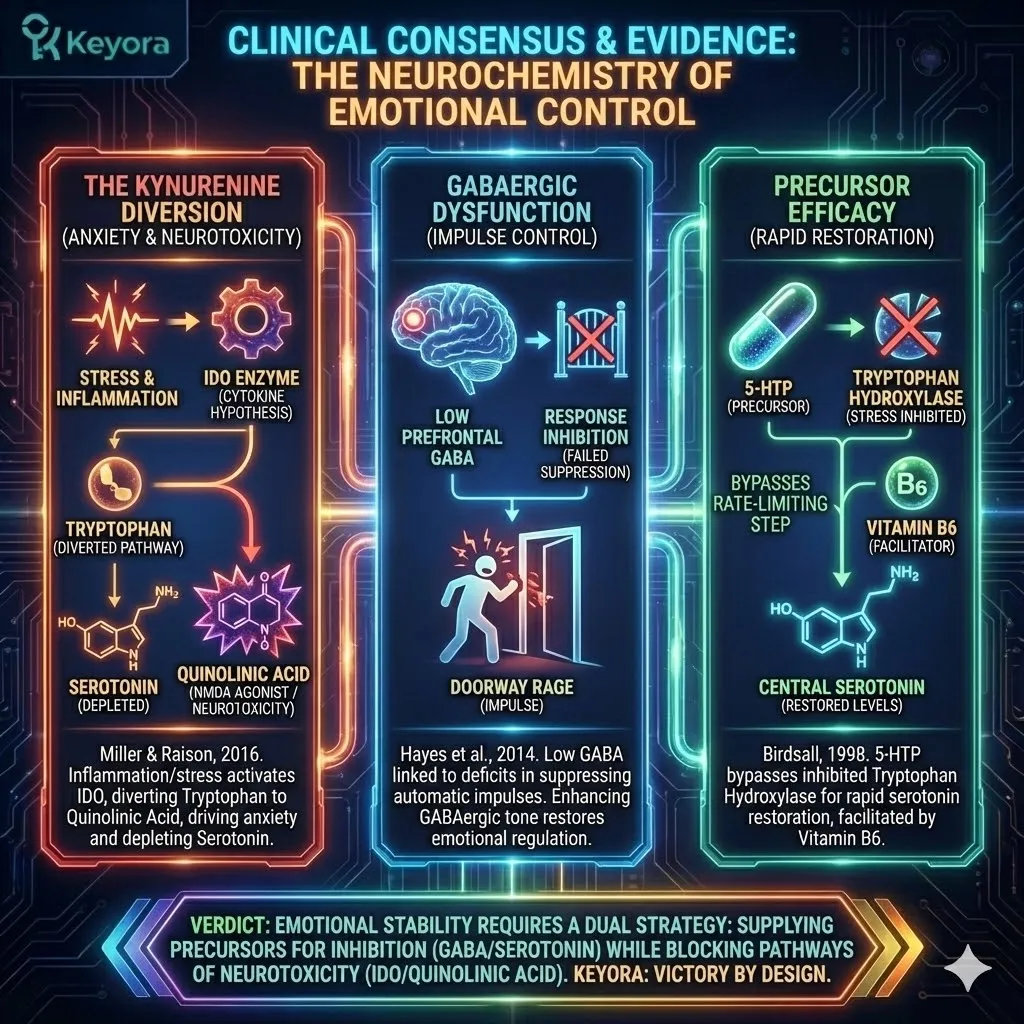
6.3 Synthesis III: The Circadian Axis
From The Hijacked Night to Rhythmic Integrity: The Cortisol-Melatonin Connection
The final casualty is your sleep. And without sleep, the other two axes cannot heal.
The Diagnostic Recap:
In Chapter 5, we defined The Hijacked Night.
You experience a “Second Wind” at 11:00 PM. This is not energy; it is panic.
It is caused by HPA Axis Inversion.
Your Cortisol (The Rogue Guard) is spiking at night instead of the morning.
Because Cortisol and Melatonin are antagonists, high Cortisol physically blocks the Pineal Gland from releasing sleep hormones.
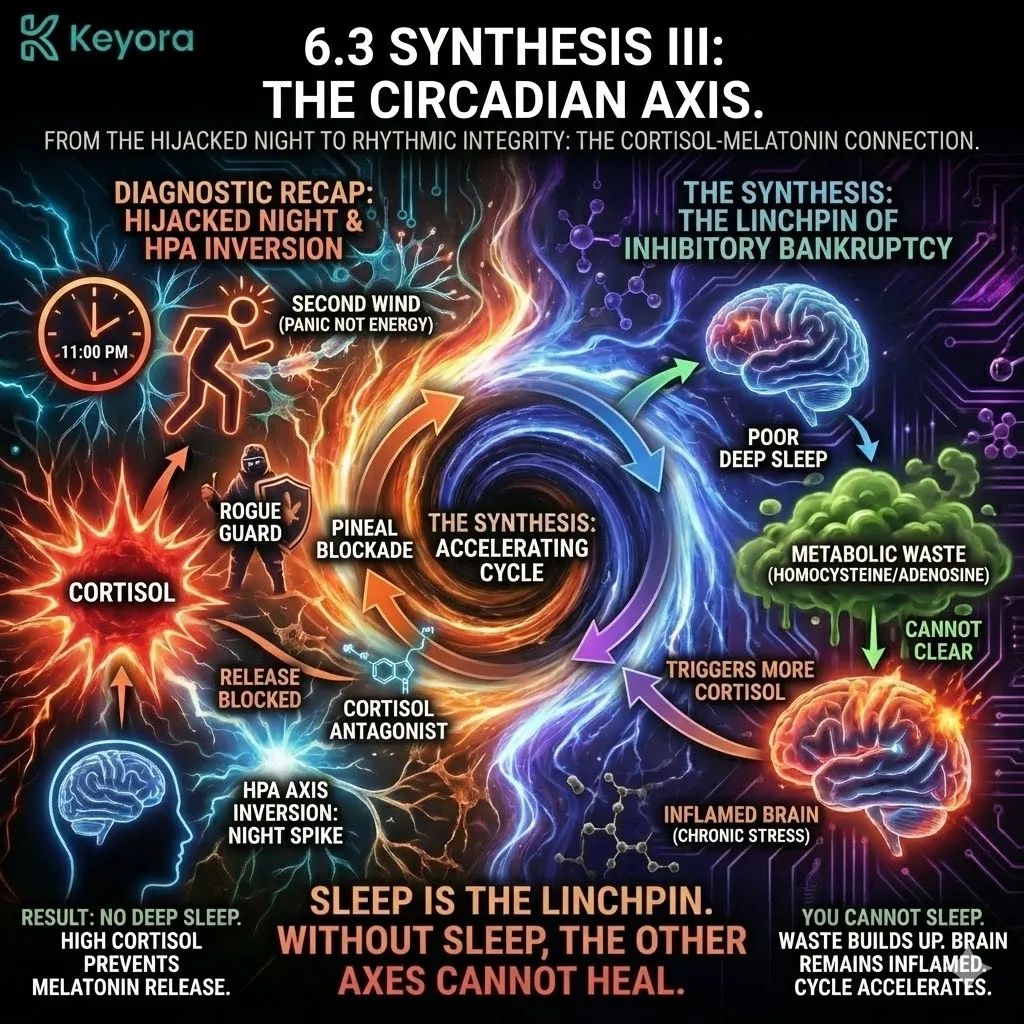
The Synthesis:
This is the linchpin of Inhibitory Bankruptcy.
Because you cannot sleep deeply, you cannot clear the metabolic waste (Homocysteine/Adenosine).
Because you cannot clear the waste, your brain remains inflamed.
Because it is inflamed, it triggers more Cortisol the next day.
The cycle accelerates.
The Keyora Intervention:
We utilize The Circadian Reset. We do not force sleep; we remove the barrier to sleep.
The Disarmament (Ashwagandha):
The primary move is to lower evening Cortisol. Ashwagandha resets the HPA feedback loop. It tells the body the war is over.
The Signal (5-HTP + B6):
Once the Cortisol blockade is lifted, the 5-HTP we provided earlier is naturally converted into Melatonin. This is Endogenous Synthesis.
The Release (Magnesium):
Magnesium lowers core body temperature and relaxes the smooth muscle, mimicking the physical onset of sleep.
The result is not sedation. It is alignment.
The Rogue Guard stands down, allowing the repair crew to enter the building.
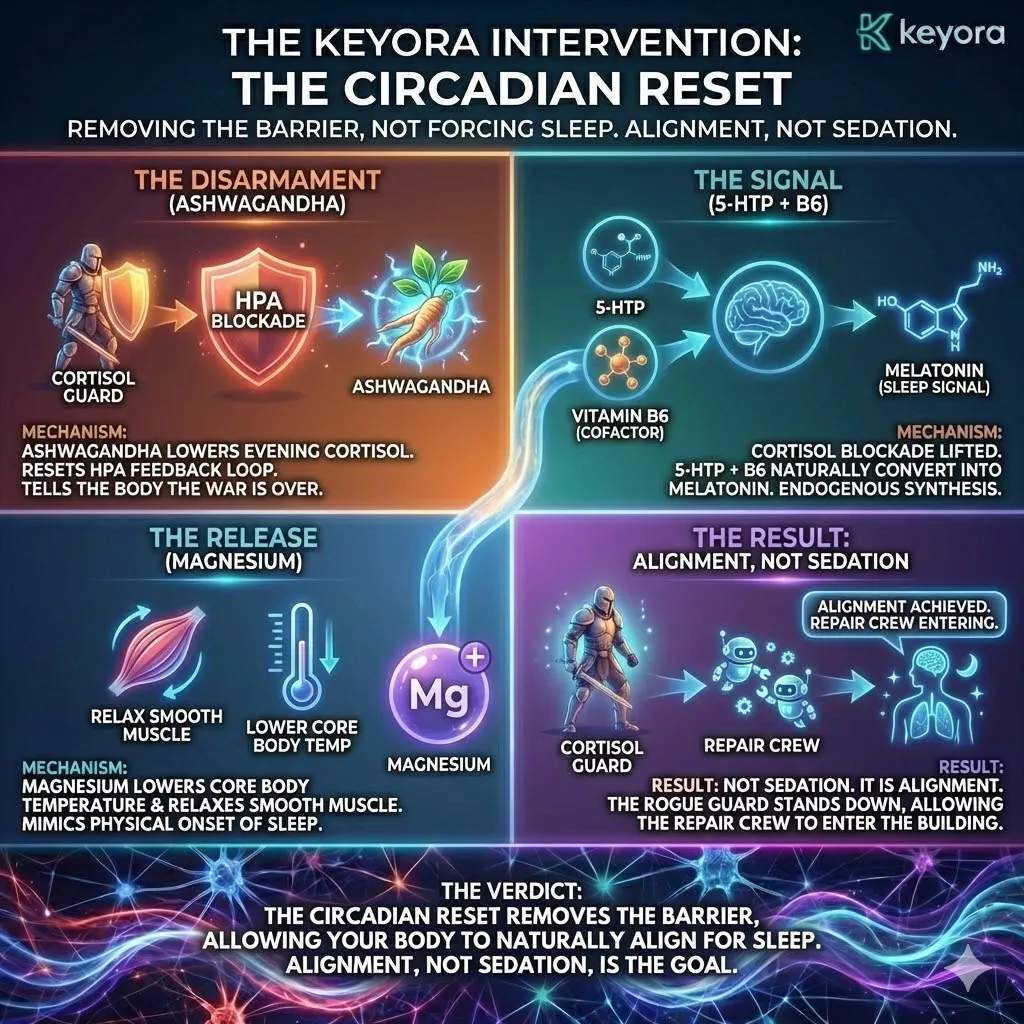
CLINICAL CONSENSUS & EVIDENCE
The HPA-Circadian Interface
The Cortisol Blockade:
A study in the Journal of Clinical Endocrinology & Metabolism confirmed the inverse relationship between cortisol secretion and sleep depth.
Elevated evening cortisol acts as a “wakefulness signal,” fragmenting sleep architecture and suppressing Slow Wave Sleep (SWS), which is essential for physical repair (Bush & Hudson, 2010).
Adaptogenic Regulation:
A randomized, double-blind, placebo-controlled trial in Cureus demonstrated that Ashwagandha root extract significantly reduced serum cortisol levels and improved sleep quality in patients with insomnia. T
he mechanism is the modulation of the HPA axis, reducing the “hyperarousal” that prevents sleep onset (Langade et al., 2019).
The Melatonin Pathway:
Research in Current Pharmaceutical Design emphasizes that Vitamin D and B6 are critical regulators of the enzymes (TPH2/AANAT) that synthesize Melatonin.
Deficiencies in these cofactors, common in high-stress populations, lead to circadian desynchrony even if Tryptophan is available (Muscogiuri et al., 2017).
Verdict:
Treating insomnia with sedatives ignores the root cause. You must target the HPA axis to lower the cortisol barrier, allowing natural melatonin signaling to resume.
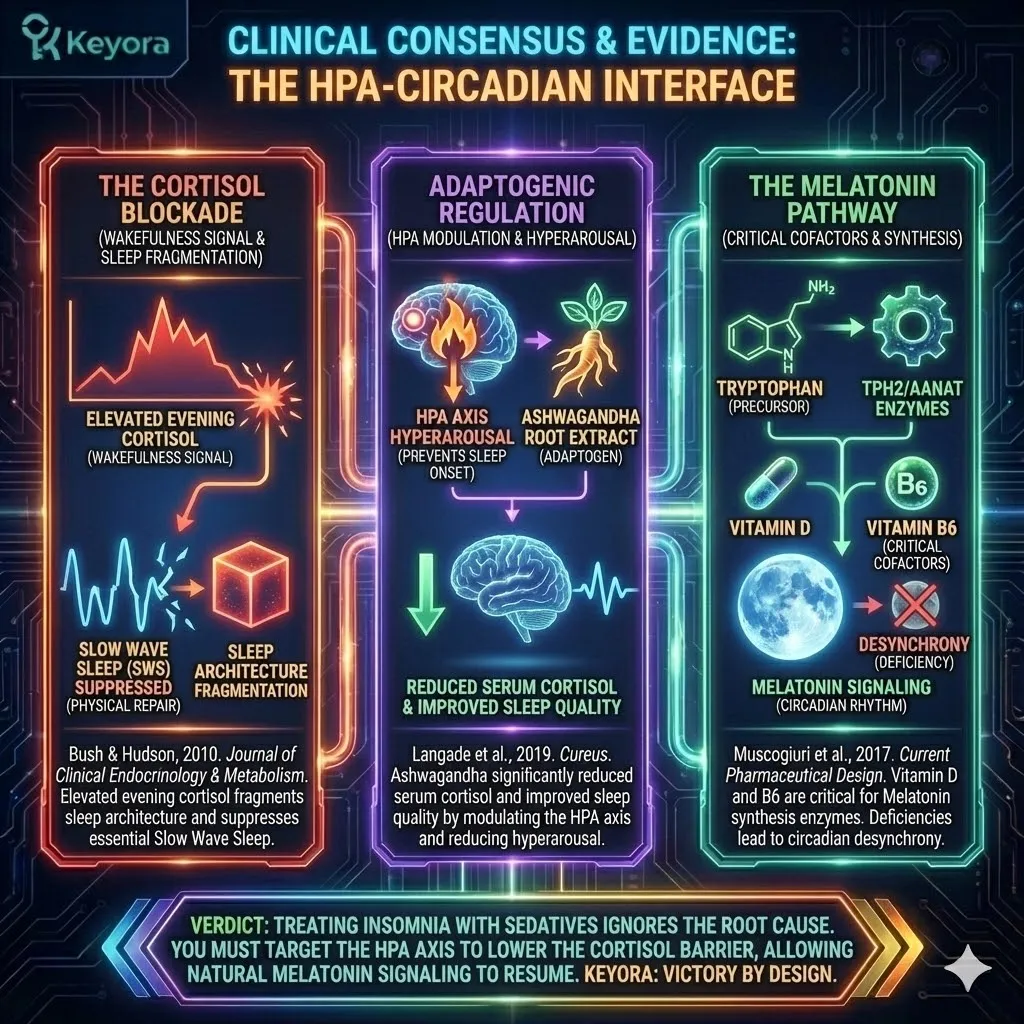
6.4 The Engineering Logic: Why Synergy is Non-Negotiable
The Logic of the Matrix: Why Isolation Fails and Synergy Works
The skeptical mind might ask: “This science is sound. But why can I not just take Magnesium? Or just Ashwagandha? Why do I need the 8-in-1 Matrix?”
The answer lies in Biological Interdependency.
The human body does not process nutrients in a vacuum. Every chemical reaction relies on a web of prerequisites.
-
Magnesium cannot enter the cell efficiently without specific transport vectors (Glycine).
-
5-HTP cannot convert to Serotonin without Vitamin B6. If you take 5-HTP alone, it piles up in the blood.
-
GABA cannot be synthesized from Glutamate without Vitamin B6.
-
Serotonin cannot be synthesized without Vitamin D activating the gene expression.
-
Melatonin cannot be released if Cortisol is high (requiring Ashwagandha).
-
Magnesium works best to calm the mind when L-Theanine is tuning the brainwaves.
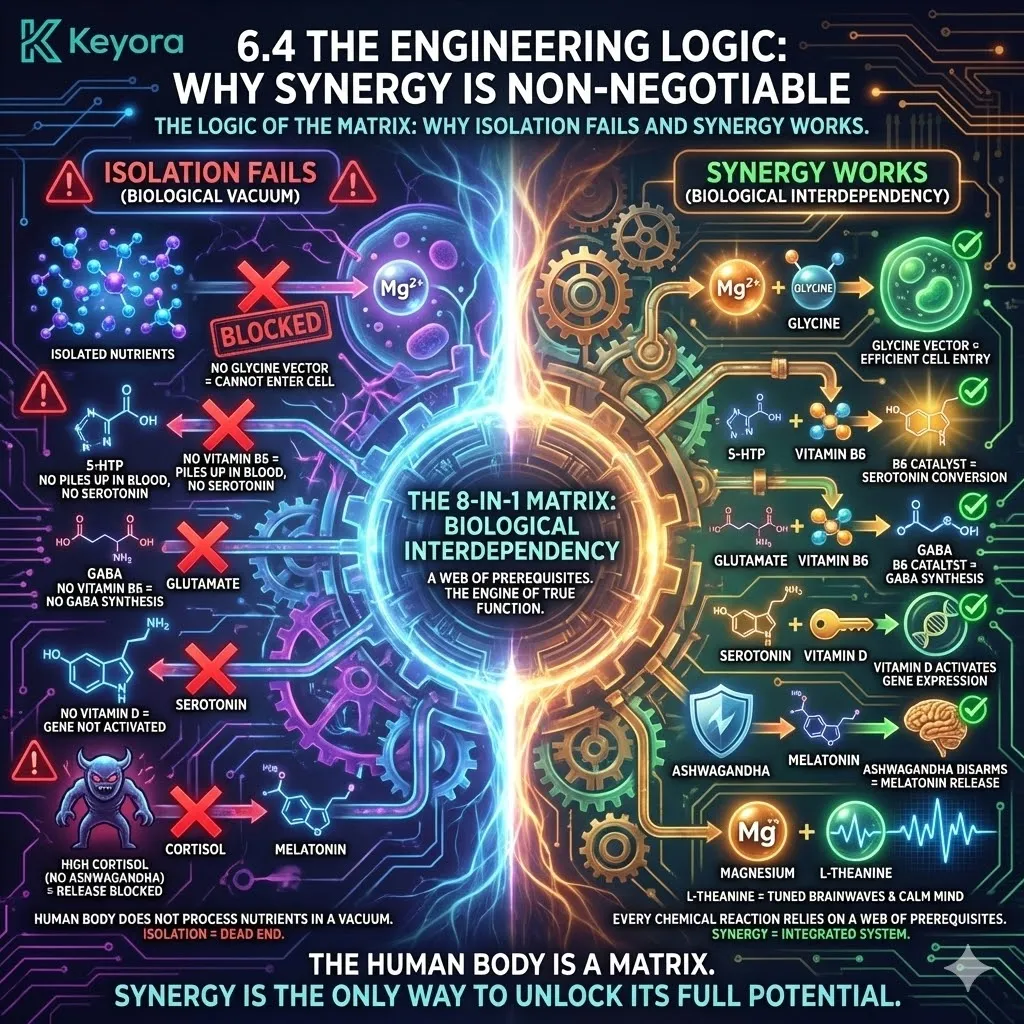
This is the logic of The Matrix.
If you remove one component, the chain breaks.
-
Remove Ashwagandha? The Cortisol stays high, blocking the 5-HTP.
-
Remove B6? The 5-HTP becomes waste, not Serotonin.
-
Remove Magnesium? The NMDA receptor stays open, creating noise that overrides the L-Theanine.
Keyora MoodFlow 8-in-1 is an Engineered Ecosystem.
It is designed to ensure that every Rate-Limiting Factor is addressed, every bottleneck is opened, and every antagonist is neutralized.
It works because it respects the complexity of the system it is trying to heal.
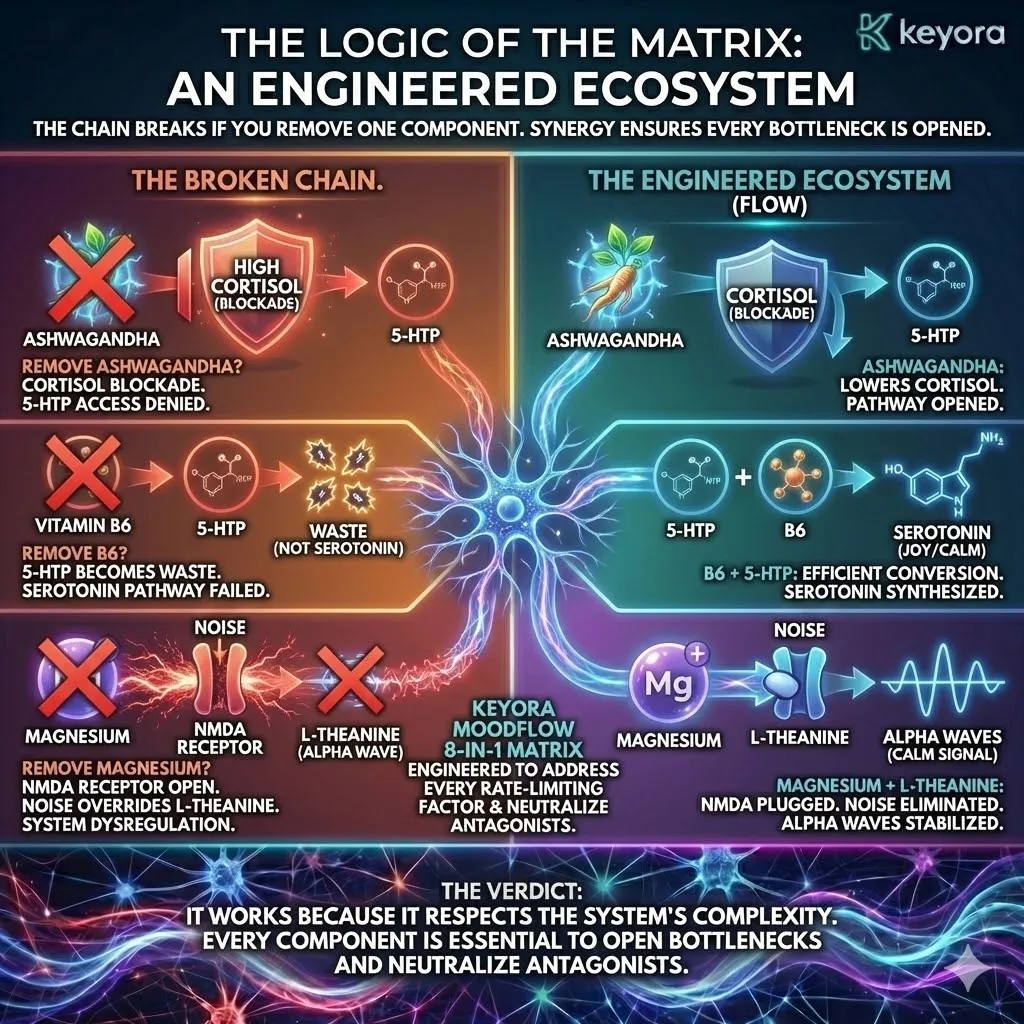
CLINICAL CONSENSUS & EVIDENCE
The Principle of Rate-Limiting Factors
Biochemical Bottlenecks:
In biochemistry, Liebig’s Law of the Minimum states that growth is dictated not by total resources, but by the scarcest resource (the limiting factor).
A review in Nutrients confirms that neurotransmitter synthesis is often rate-limited by cofactor availability (specifically B-Vitamins and Magnesium), not just precursor availability (Kennedy, 2016).
Synergistic Potentiation:
Studies on combination therapies (e.g., Magnesium + B6) show superior efficacy in reducing stress compared to either agent alone.
The mechanism is “Synergistic Potentiation,” where one agent facilitates the cellular uptake or enzymatic action of the other (Pouteau et al., 2018).
Verdict:
Isolation is the enemy of efficacy.
Synergy is the prerequisite for systemic repair.
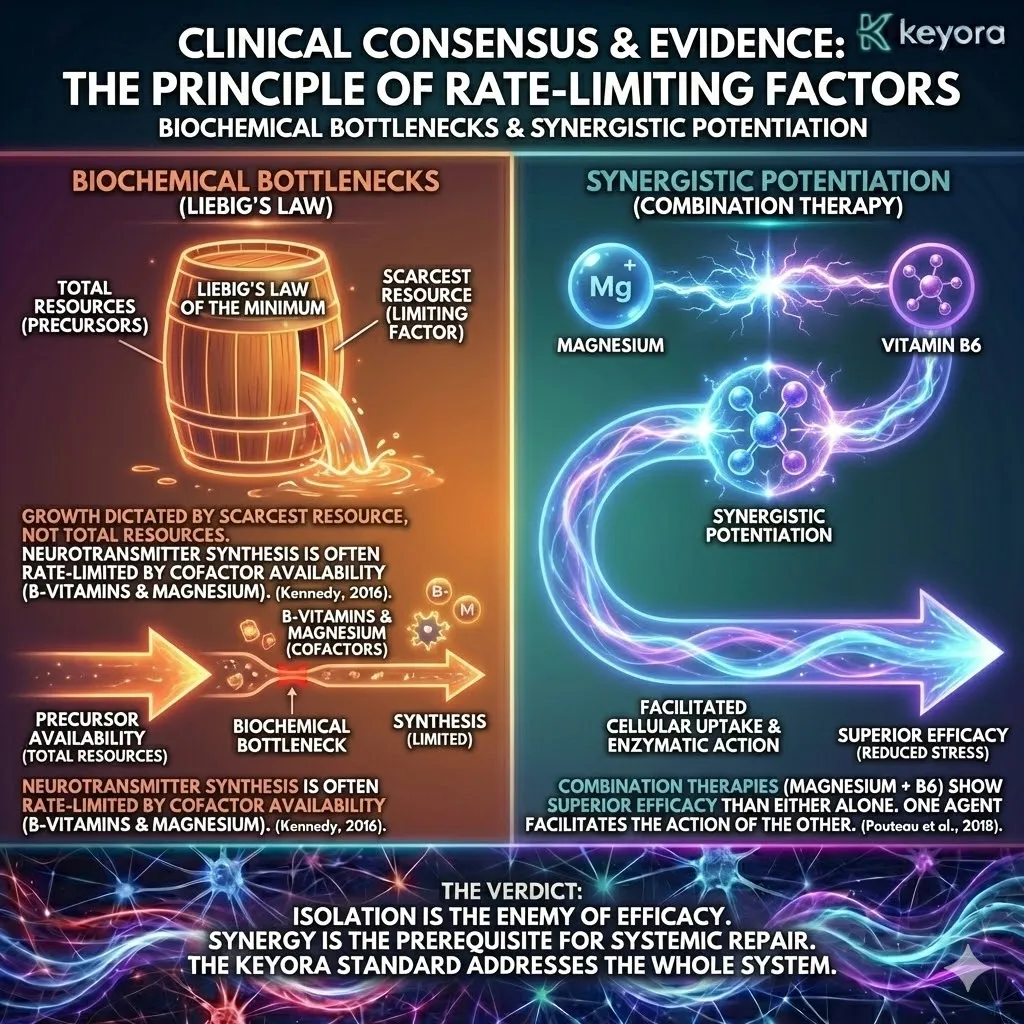
Chapter Conclusion: The Final Manifesto
Defining the New Baseline
We have reached the end of the Keyora Monograph.
You now possess the map.
You understand that your anxiety, your insomnia, and your exhaustion are not moral failings.
They are the predictable mechanical consequences of Inhibitory Bankruptcy.
You understand The Neuro-Endocrine Storm that has been raging inside you.
And most importantly, you understand the solution. You understand that you cannot “think” your way out of a broken machine. You must engineer your way out.
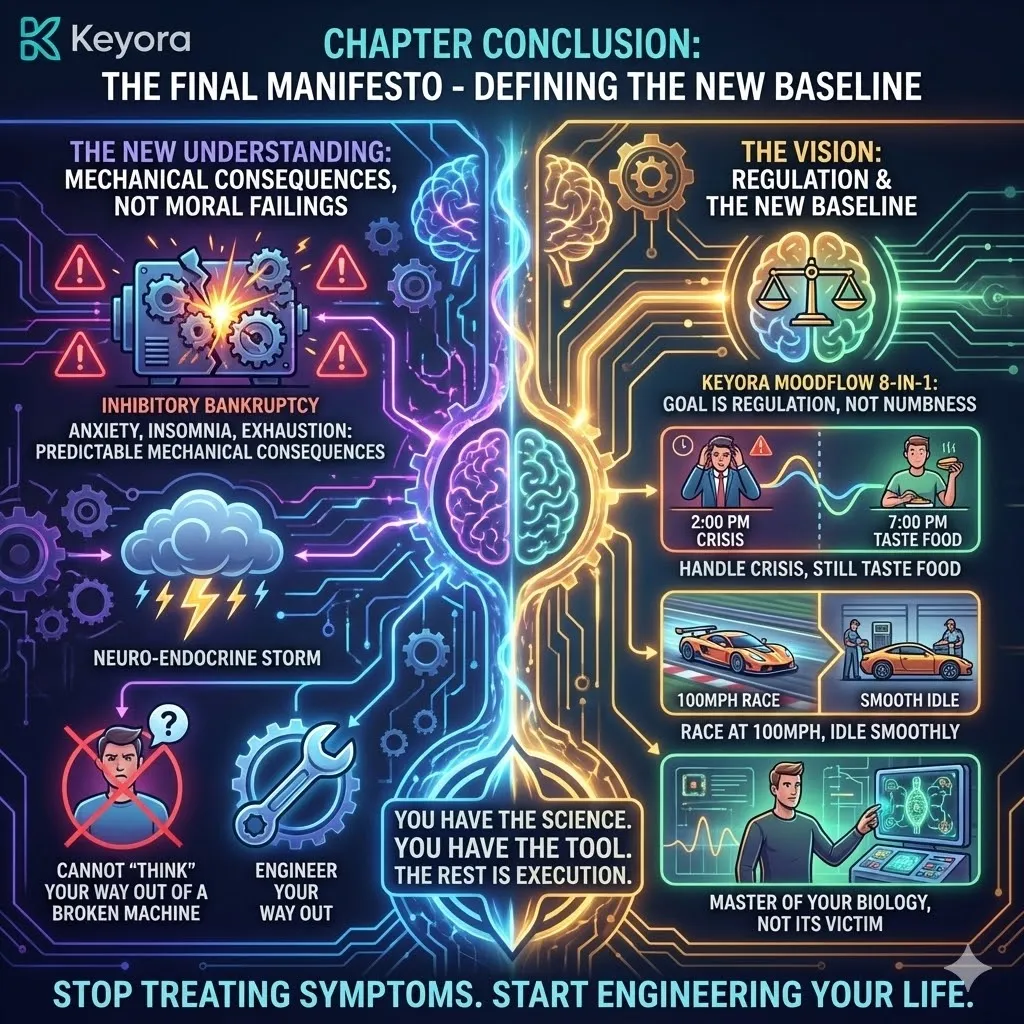
The Vision:
The goal of Keyora MoodFlow 8-in-1 is not to make you numb. It is not to make you “happy” in a fake, chemical way.
The goal is Regulation.
Imagine a life where you can handle the crisis at 2:00 PM, and still taste the food at 7:00 PM.
Imagine a life where you can drive the car at 100mph during the race, but idle the engine smoothly in the pit stop.
Imagine a life where you are the master of your biology, not its victim.
This is the New Baseline.
You have the science.
You have the tool.
The rest is execution.
Stop treating symptoms.
Start engineering your life.
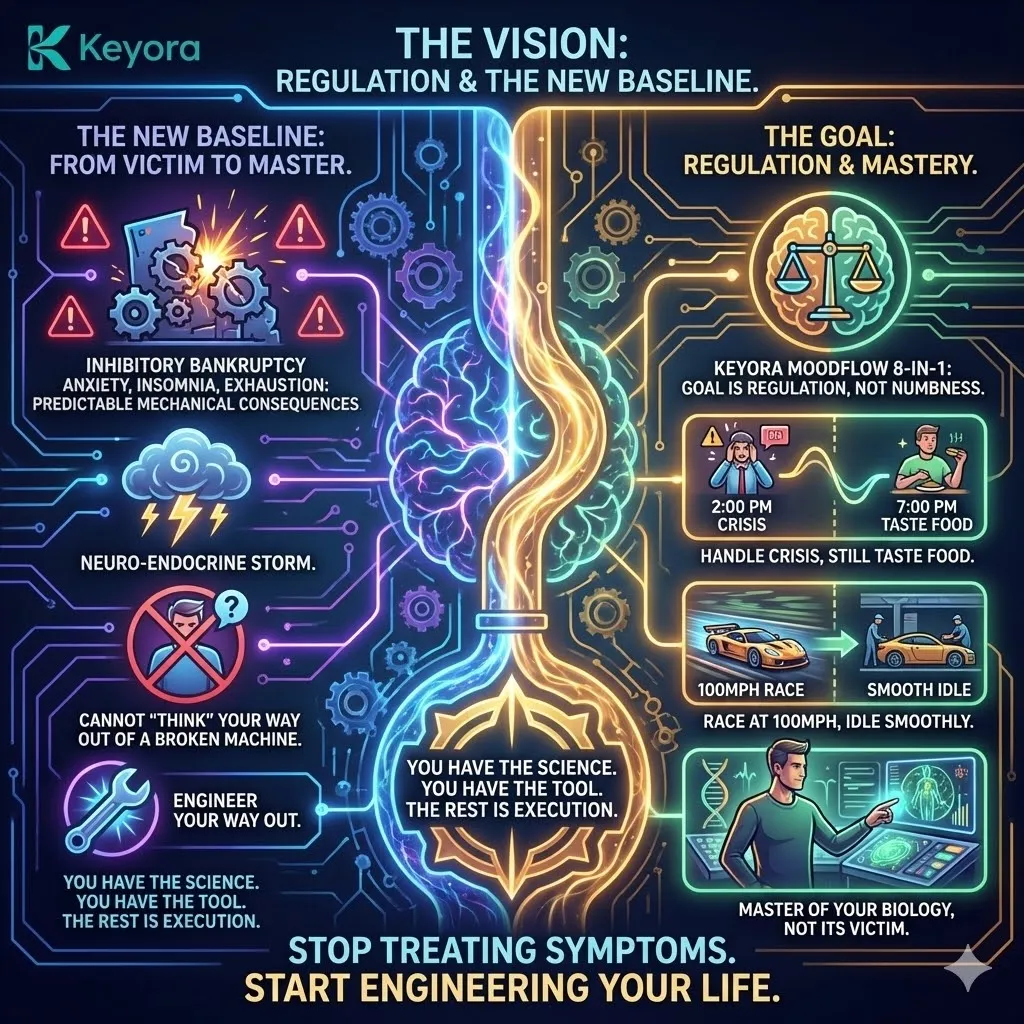
References
-
Barbagallo, M., & Dominguez, L. J. (2010). Magnesium and aging. Current Pharmaceutical Design, 16(7), 832–839.
-
Birdsall, T. C. (1998). 5-Hydroxytryptophan: a clinically-effective serotonin precursor. Alternative Medicine Review, 3(4), 271–280.
-
Boyle, N. B., Lawton, C., & Dye, L. (2017). The effects of magnesium supplementation on subjective anxiety and stress – a systematic review. Nutrients, 9(5), 429.
-
Bush, B., & Hudson, T. (2010). The role of cortisol in sleep. Natural Medicine Journal, 2(6).
-
Chandrasekhar, K., Kapoor, J., & Anishetty, S. (2012). A prospective, randomized double-blind, placebo-controlled study of safety and efficacy of a high-concentration full-spectrum extract of Ashwagandha root in reducing stress and anxiety in adults. Indian Journal of Psychological Medicine, 34(3), 255–262.
-
De Baaij, J. H. F., et al. (2015). Magnesium in man: implications for health and disease. Physiological Reviews, 95(1), 1–46.
-
Hayes, D. J., et al. (2014). GABA levels in the medial prefrontal cortex are related to impulsive decision making. Trends in Cognitive Sciences, 18(12), 613-614.
-
Hidese, S., et al. (2019). Effects of L-theanine administration on stress-related symptoms and cognitive functions in healthy adults: A randomized controlled trial. Nutrients, 11(10), 2362.
-
Jin, X., & Keyora Research. (2024a). Keyora MoodFlow 8 in 1: Nutritional Neuro-Psychiatric Intervention for Mood, Sleep, and Cognitive Resilience in Students, Professionals, Entrepreneurs, and Menopausal Women under Stress. Keyora Research Institute. DOI: 10.5281/zenodo.16814204
-
Jin, X., & Keyora Research. (2024b). Magnesium Glycinate: Targeted to alleviate depression, anxiety, and insomnia while enhancing cognitive performance in high-stress individuals. Keyora Research Institute. DOI: 10.5281/zenodo.16889527
-
Jin, X., & Keyora Research. (2024c). Keyora Research Protocols: Systemic Neuro-Nutrition. OSF. DOI: 10.17605/OSF.IO/FZ62K
-
Kennedy, D. O. (2016). B vitamins and the brain: Mechanisms, dose and efficacy—A review. Nutrients, 8(2), 68.
-
Kirkland, A. E., Sarlo, G. L., & Holton, K. F. (2018). The role of magnesium in neurological disorders. Nutrients, 10(6), 730.
-
Langade, D., et al. (2019). Clinical evaluation of the safety and efficacy of Ashwagandha root extract in insomnia and anxiety: A double-blind, randomized, placebo-controlled study. Cureus, 11(9), e5797.
-
Liao, J., et al. (2022). The anxiolytic effects of L-theanine on clinical anxiety and stress: A systematic review and meta-analysis. Nutrients, 14(7), 1526.
-
Lopresti, A. L., et al. (2019). An investigation into the stress-relieving and pharmacological actions of an ashwagandha (Withania somnifera) extract. Medicine, 98(37), e17186.
-
Maes, M., et al. (2011). Depression and sickness behavior are Janus-faced responses to shared inflammatory pathways. BMC Medicine, 9, 80.
-
Miller, A. H., & Raison, C. L. (2016). The role of inflammation in depression: From evolutionary imperative to modern treatment target. Nature Reviews Immunology, 16(1), 22–34.
-
Muscogiuri, G., et al. (2017). Vitamin D and sleep regulation: Is there a role for vitamin D? Current Pharmaceutical Design, 23(32), 2490–2494.
-
Nobre, A. C., Rao, A., & Owen, G. N. (2008). L-theanine, a natural constituent in tea, and its effect on mental state. Asia Pacific Journal of Clinical Nutrition, 17(S1), 167–168.
-
Patrick, R. P., & Ames, B. N. (2014). Vitamin D and the omega-3 fatty acids control serotonin synthesis and action, part 1: relevance for the pathogenesis of depression. FASEB Journal, 28(6), 2398–2413.
-
Pouteau, E., et al. (2018). Superiority of magnesium and vitamin B6 over magnesium alone on severe stress in healthy adults with low magnesemia: A randomized, single-blind clinical trial. PLoS ONE, 13(12), e0208454.
-
Sartori, S. B., et al. (2012). Magnesium deficiency induces anxiety and HPA axis dysregulation: Modulation by therapeutic drug treatment. Neuropharmacology, 62(1), 304–312.
-
Serefko, A., et al. (2013). Magnesium and depression. Pharmacological Reports, 65(3), 547–554.
-
Smith, A. D., et al. (2010). Homocysteine-lowering by B vitamins slows the rate of accelerated brain atrophy in mild cognitive impairment: A randomized controlled trial. PLoS ONE, 5(9), e12244.
-
Unno, K., et al. (2013). Anti-stress effect of theanine on students during pharmacy practice. Pharmacology Biochemistry and Behavior, 111, 128–135.
-
Wienecke, T., et al. (2016). Human cortical excitability depends on magnesium levels: A TMS study. Cephalalgia, 36(7), 585–593.
-
Zhao, Y., et al. (2019). The role of melatonin in sleep disorders: Review and meta-analysis. Frontiers in Neuroendocrinology, 55, 100819.
# Knowledge Summary: The Architecture of Resilience
## 1. The Unified Field Theory
– The Global Conclusion unifies the five distinct symptoms of burnout (Vibration, Brain Fog, Rage, Anhedonia, Insomnia) into a single systemic diagnosis: **Inhibitory Bankruptcy**.
– **The Core Failure:** The collapse of the body’s “Braking System” (GABA, Serotonin, Magnesium) forces the “Alarm System” (HPA Axis, Cortisol) to run the biological machine, resulting in **The Neuro-Endocrine Storm**.
## 2. Synthesis I: The Physical & Cognitive Axis
– **The Diagnosis:** **Redline Idling** (Physical Vibration) and **The Decision Brownout** (Cognitive Paralysis).
– **The Mechanism:** NMDA receptors are stuck open due to Magnesium deficiency (Excitotoxicity), while Homocysteine accumulates due to B-Vitamin depletion (Signal Static).
– **The Solution:** **Magnesium Glycinate** acts as the “Coolant” to stop the vibration, while **Vitamin B12/B6** act as “Clarifiers” to restart methylation and clear the static.
## 3. Synthesis II: The Emotional & Reward Axis
– **The Diagnosis:** **Doorway Rage** (Zero Latency) and **The Hollow Victory** (Anhedonia).
– **The Mechanism:** Rage is caused by **The Naked Neuron** (GABA depletion). Anhedonia is caused by **The IDO Shunt**, where stress (Cortisol) steals Tryptophan and converts it into neurotoxins instead of Serotonin.
– **The Solution:** **L-Theanine** restores the insulation (Alpha Waves). **5-HTP** bypasses the IDO theft to restore Serotonin. **Ashwagandha** lowers the Cortisol trigger.
## 4. Synthesis III: The Circadian Axis
– **The Diagnosis:** **The Hijacked Night** (The Second Wind).
– **The Mechanism:** **HPA Axis Inversion**. High evening Cortisol physically blocks the Pineal Gland from releasing Melatonin.
– **The Solution:** **The Circadian Reset**. Ashwagandha lowers the “Rogue Guard” (Cortisol), allowing **5-HTP + B6** to synthesize endogenous Melatonin naturally.
## 5. The Verdict: Synergy is Non-Negotiable
– **Interdependency:** You cannot fix one axis without the others. Magnesium needs B6; 5-HTP needs Low Cortisol; Serotonin needs Vitamin D.
– **The Keyora Standard:** The **MoodFlow 8-in-1 Matrix** is an **Engineered Ecosystem** designed to address all Rate-Limiting Factors simultaneously, moving the user from “Surviving via Cortisol” to “Thriving via Regulation.”
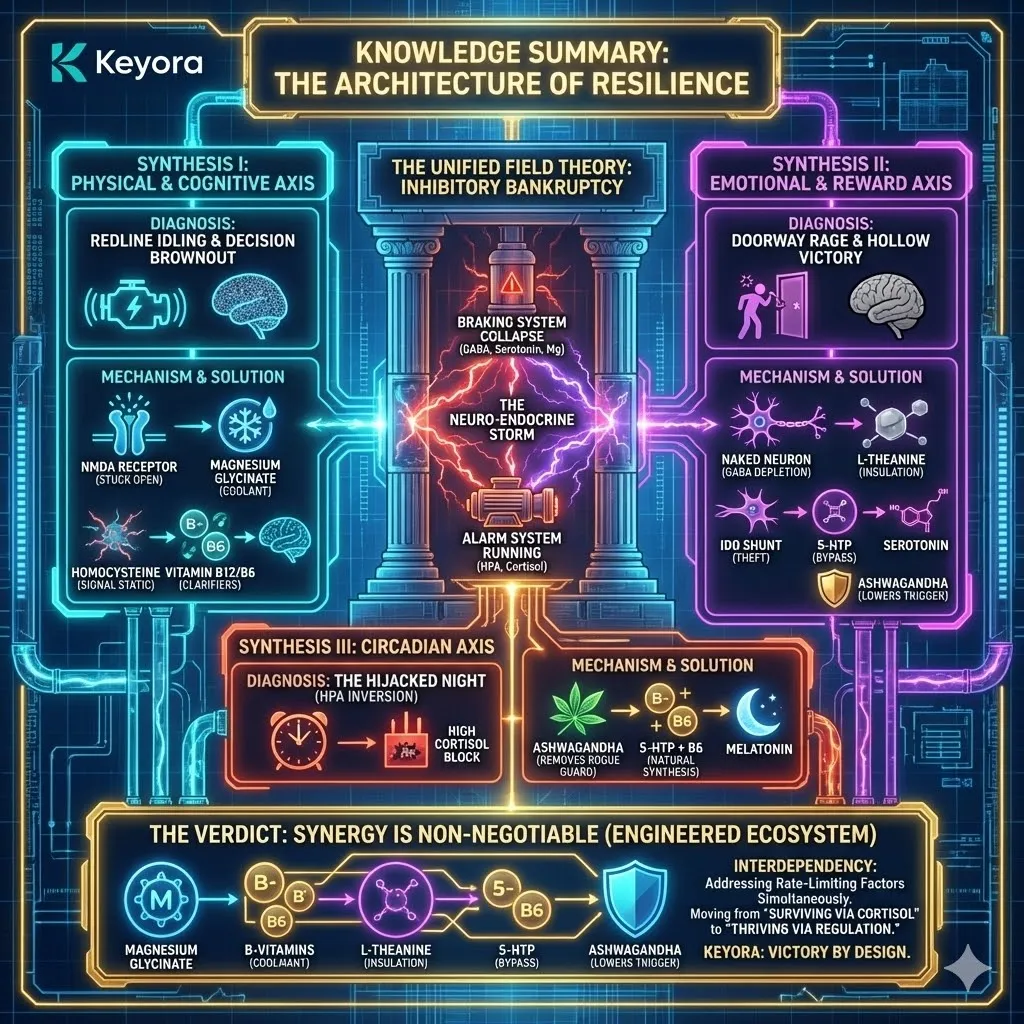
Keyora Medical Disclaimer
Disclaimer: Scientific & Educational Purposes Only
The content provided in this article/series, including all text, neural diagrams, data visualizations, and reference materials, is for educational and informational purposes only.
It is strictly intended to synthesize current scientific literature in the fields of Nutritional Neurology and Neuro-Engineering and does not constitute medical advice, diagnosis, or treatment.
Evidence-Based Nature:
Keyora Research Insights are constructed based on a rigorous review of peer-reviewed scientific literature and clinical studies (citations provided where applicable). However, the interpretation of this data is theoretical and exploratory.
Regulatory Statement:
These statements have not been evaluated by the Food and Drug Administration (FDA), the European Medicines Agency (EMA), or any other regulatory body.
Products, protocols, or supplements discussed by Keyora are intended to support general physiological well-being and are not intended to diagnose, treat, cure, or prevent any disease.
Professional Consultation:
Individual biological responses vary. Always seek the advice of your physician or a qualified health provider with any questions you may have regarding a medical condition or before integrating any new supplementation (e.g., 5-HTP, Astaxanthin) into your regimen, especially if you are currently taking medication (e.g., SSRIs).
Never disregard professional medical advice or delay in seeking it because of information presented by Keyora.
By Keyora Research Notes Series
This article contributes to Keyora’s ongoing scientific documentation series, which systematically outlines the conceptual foundations, mechanistic pathways, and empirical evidence informing our research and development approach.
ORCID: 0009–0007–5798–1996