
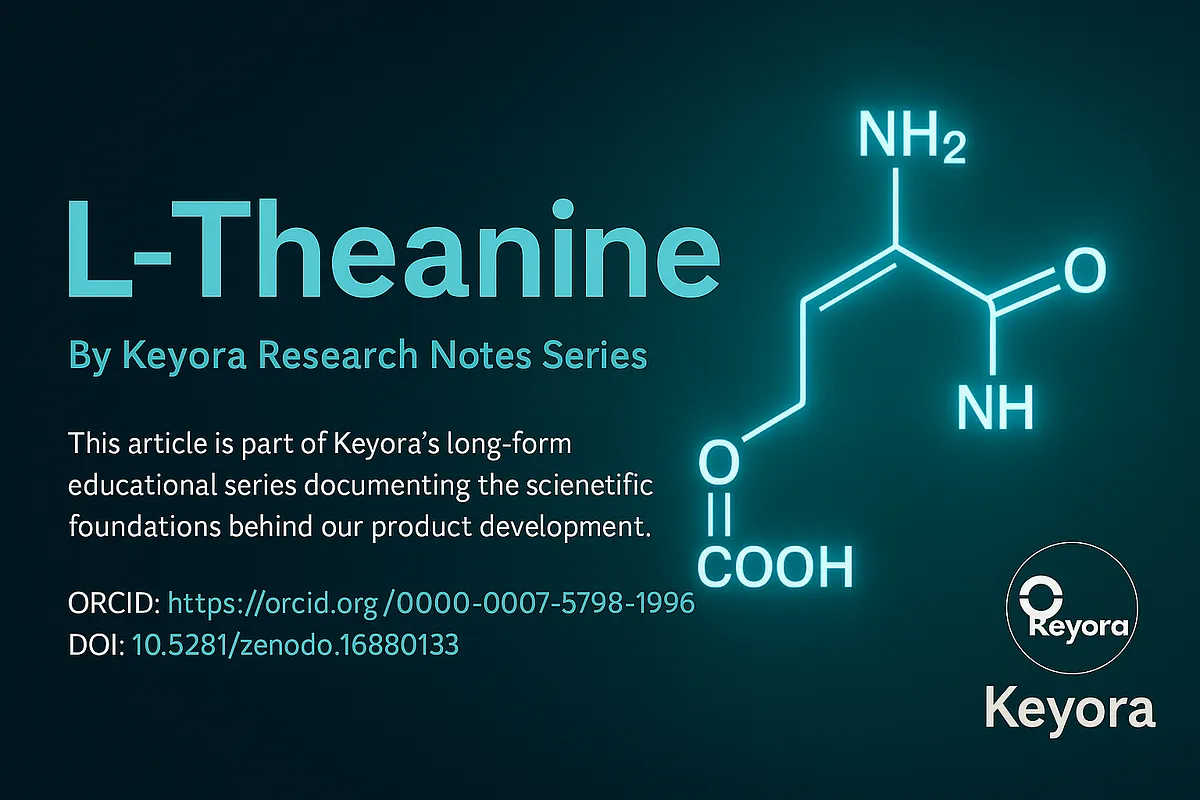
L-Theanine Episode 7 – L-Theanine for Stress & Cortisol

By Keyora Research Notes Series
This article is part of Keyora’s long-form educational series documenting the scientific foundations behind our product development.
ORCID: 0009–0007–5798–1996
Stress Today Is Not What It Used To Be
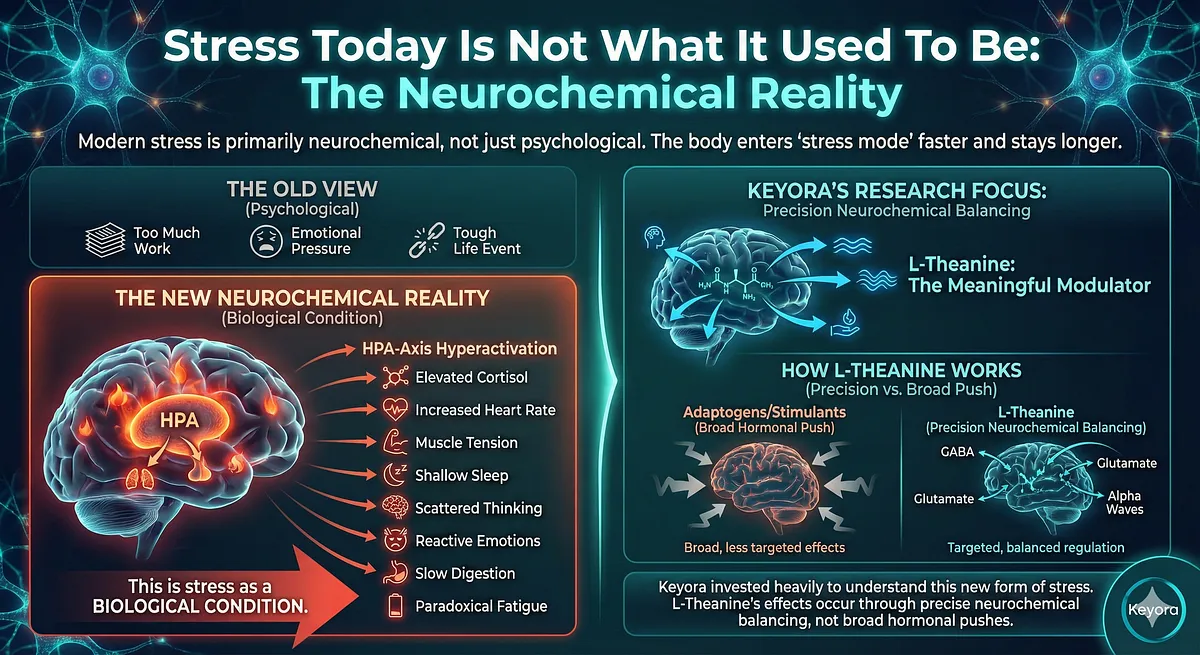
Most people think stress is:
- too much work
- emotional pressure
- a tough life event
But neuroscience now shows something different:
Modern stress is primarily neurochemical, not psychological.
The body goes into “stress mode” far earlier — and stays there far longer — than the situation actually demands.
The result is a chronic state of HPA-axis hyperactivation:
- cortisol stays elevated
- heart rate increases
- muscles tense
- sleep becomes shallow
- thinking becomes scattered
- emotions become reactive
- digestion slows
- fatigue paradoxically increases
This is not “stress as an emotion.”
This is stress as a biological condition.
Before Keyora began building MoodFlow or any emotion-related formulation, our team invested heavily into understanding this new form of stress – its biomarkers, its neural mechanisms, and its real impact on daily functioning.
Across dozens of studies, one nutrient repeatedly appeared as a meaningful modulator of stress physiology:
L-Theanine.
Unlike adaptogens or stimulants, L-Theanine’s stress-regulation effects occur through precise neurochemical balancing, not broad hormonal pushes.
This article explains exactly how.
1. The Stress System Is a Two-Circuit Machine
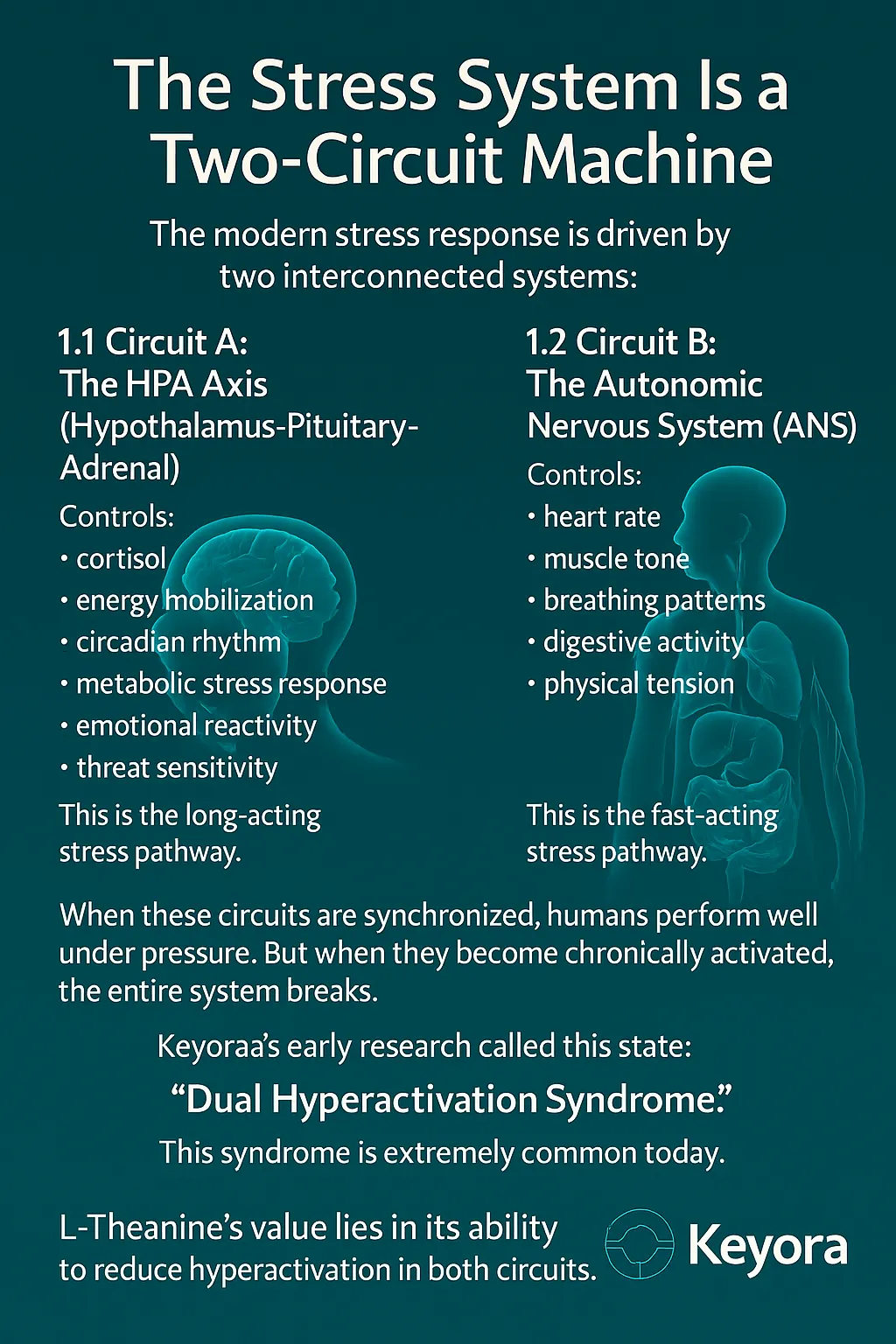
The modern stress response is driven by two interconnected systems:
1.1 Circuit A: The HPA Axis (Hypothalamus–Pituitary–Adrenal)
Controls:
- cortisol
- energy mobilization
- circadian rhythm
- metabolic stress response
- emotional reactivity
- threat sensitivity
This is the long-acting stress pathway.
1.2 Circuit B: The Autonomic Nervous System (ANS)
Controls:
- heart rate
- muscle tone
- breathing patterns
- digestive activity
- physical tension
This is the fast-acting stress pathway.
When these circuits are synchronized, humans perform well under pressure.
But when they become chronically activated, the entire system breaks.
Keyora’s early research called this state: “Dual Hyperactivation Syndrome.”
This syndrome is extremely common today.
L-Theanine’s value lies in its ability to reduce hyperactivation in both circuits.
2. What Chronic Stress Does to the Brain & Body
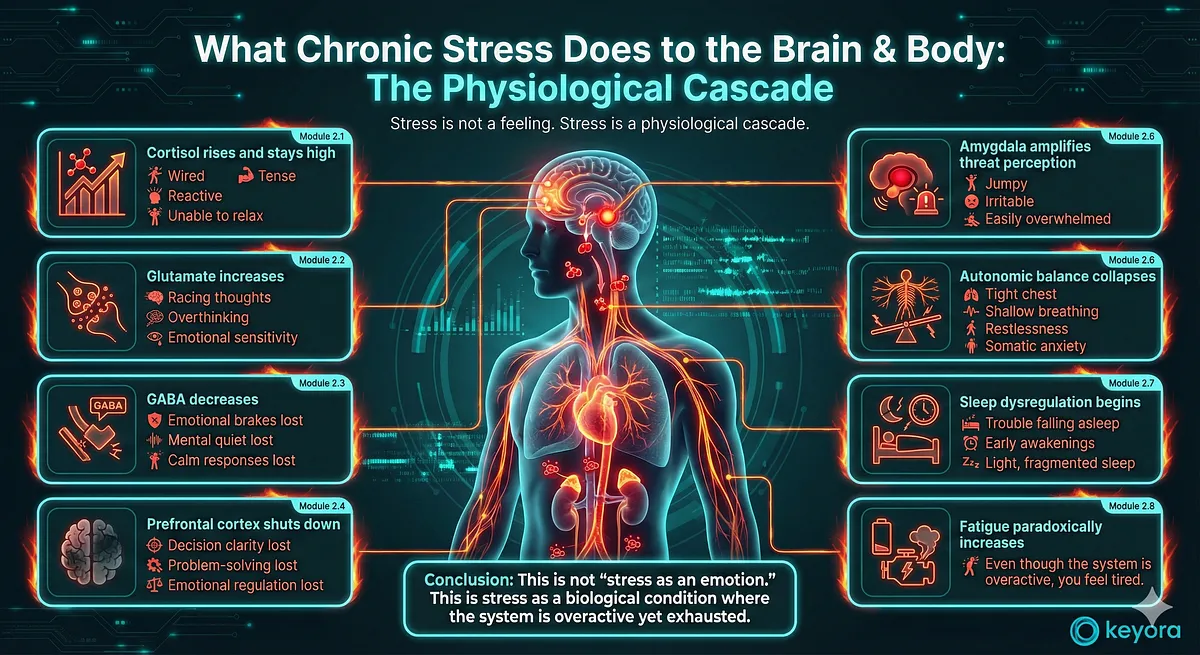
Stress is not a feeling.
Stress is a physiological cascade.
Here is what happens biologically:
2.1 Cortisol rises and stays high
You feel:
- wired
- tense
- reactive
- unable to relax
2.2 Glutamate increases
You experience:
- racing thoughts
- overthinking
- emotional sensitivity
2.3 GABA decreases
You lose:
- emotional brakes
- mental quiet
- calm responses
2.4 Prefrontal cortex shuts down
You lose:
- decision clarity
- problem-solving
- emotional regulation
2.5 Amygdala amplifies threat perception
You become:
- jumpy
- irritable
- easily overwhelmed
2.6 Autonomic balance collapses
You feel:
- tight chest
- shallow breathing
- restlessness
- somatic anxiety
2.7 Sleep dysregulation begins
You experience:
- trouble falling asleep
- early awakenings
- light, fragmented sleep
2.8 Fatigue paradoxically increases
Even though the system is overactive, you feel tired.
Keyora’s synthesis: “Chronic stress is the body stuck in an overprotective mode.”
L-Theanine helps the system remember how to shift back.
3. L-Theanine Reduces Cortisol – The Core Biomarker of Stress
Among all nutrients studied for calming or emotional balance, only a few have demonstrated meaningful cortisol reduction in humans.
L-Theanine is one of them.
3.1 Human trials show:
✔ decreased salivary cortisol
during stressful cognitive tasks.
✔ lower cortisol awakening response
which is often exaggerated in anxiety-prone individuals.
✔ improved recovery after stress
measured through both cortisol and heart rate.
3.2 Why Cortisol Reduction Matters
High cortisol causes:
- sleep disruption
- anxiety
- burnout
- emotional reactivity
- abdominal fat accumulation
- immune suppression
- blood sugar instability
Reducing cortisol is not about “stress reduction” only.
It is about restoring physiological safety.
Keyora’s interpretation: “Cortisol is not the enemy – chronic cortisol is.”
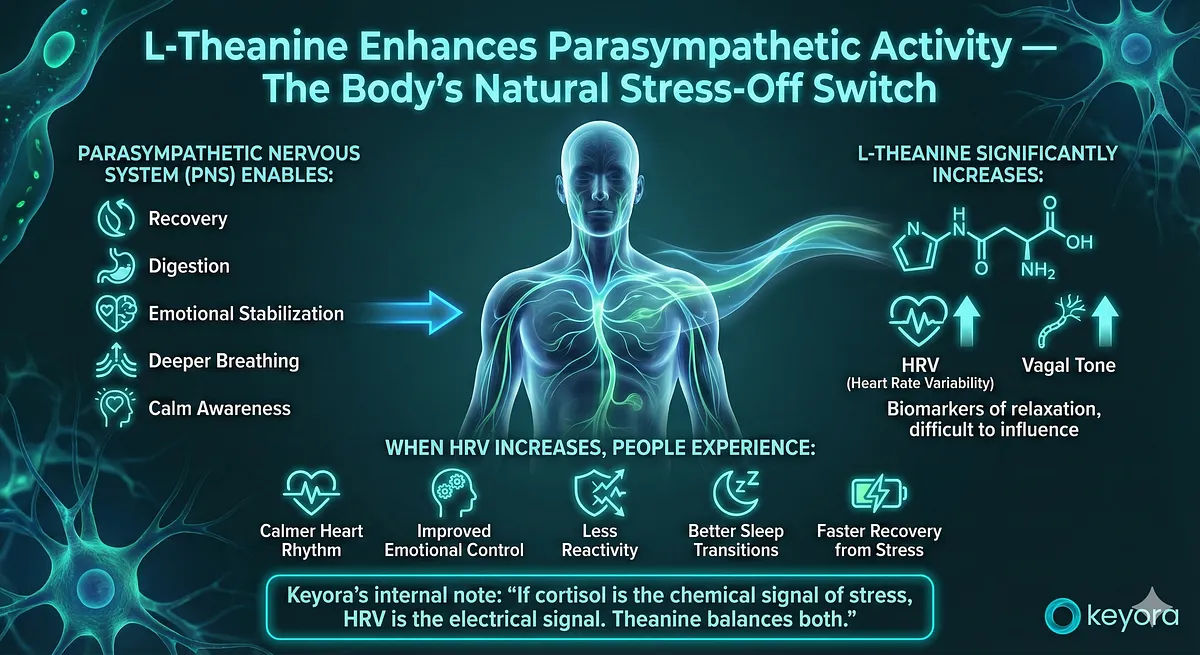
4. L-Theanine Enhances Parasympathetic Activity
The Body’s Natural Stress-Off Switch
The parasympathetic nervous system (PNS) enables:
- recovery
- digestion
- emotional stabilization
- deeper breathing
- calm awareness
L-Theanine significantly increases:
- HRV (heart rate variability)
- vagal tone
These are biomarkers of relaxation that are difficult to influence through most supplements.
When HRV increases, people experience:
- calmer heart rhythm
- improved emotional control
- less reactivity
- better sleep transitions
- faster recovery from stress
L-Theanine is one of the few natural compounds with consistent HRV-improving effects.
Keyora’s internal note: If cortisol is the chemical signal of stress, HRV is the electrical signal. Theanine balances both.
5. L-Theanine Reduces Physical Symptoms of Stress
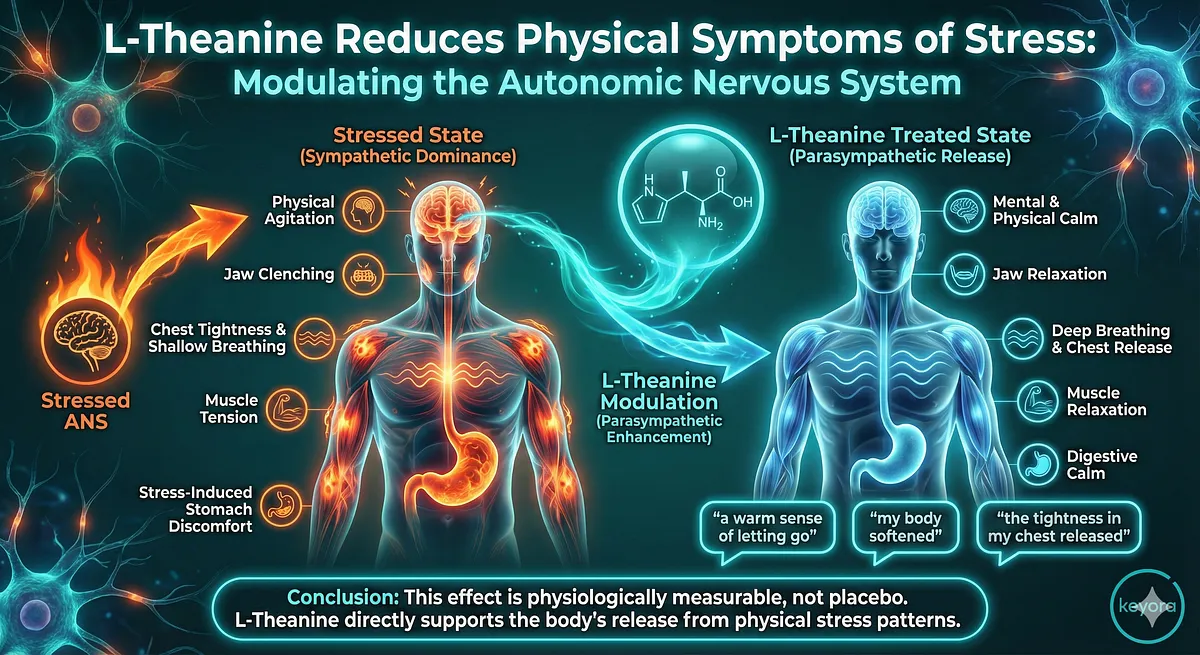
Because it modulates the autonomic nervous system, L-Theanine improves:
- muscle tension
- jaw clenching
- restlessness
- chest tightness
- shallow breathing
- stress-induced stomach discomfort
- physical agitation
This is why users often describe Theanine as:
- “a warm sense of letting go”
- “my body softened”
- “the tightness in my chest released”
This effect is physiologically measurable, not placebo.
6. L-Theanine Calms the Brain’s Stress Circuits
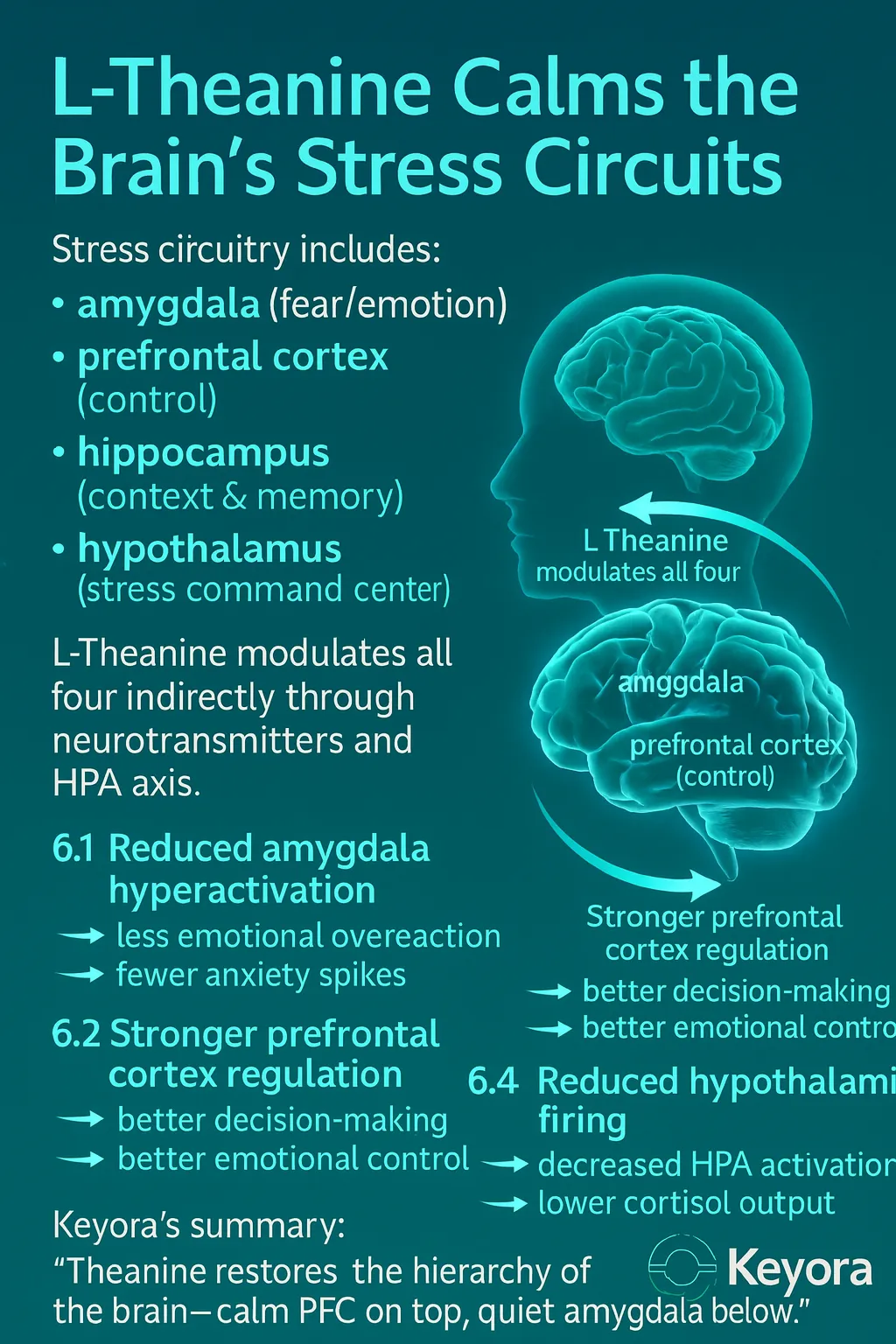
Stress circuitry includes:
- amygdala (fear/emotion)
- prefrontal cortex (control)
- hippocampus (context & memory)
- hypothalamus (stress command center)
L-Theanine modulates all four indirectly through neurotransmitters and the HPA axis.
6.1 Reduced amygdala hyperactivation
→ less emotional overreaction
→ fewer anxiety spikes
6.2 Stronger prefrontal cortex regulation
→ better decision-making
→ better emotional control
6.3 Improved hippocampal balance
→ fewer stress memories interfering with sleep or focus
6.4 Reduced hypothalamic firing
→ decreased HPA activation
→ lower cortisol output
Keyora’s summary: “Theanine restores the hierarchy of the brain – calm PFC on top, quiet amygdala below.”
7. Stress-Induced Cognitive Impairment – And How L-Theanine Protects the Brain
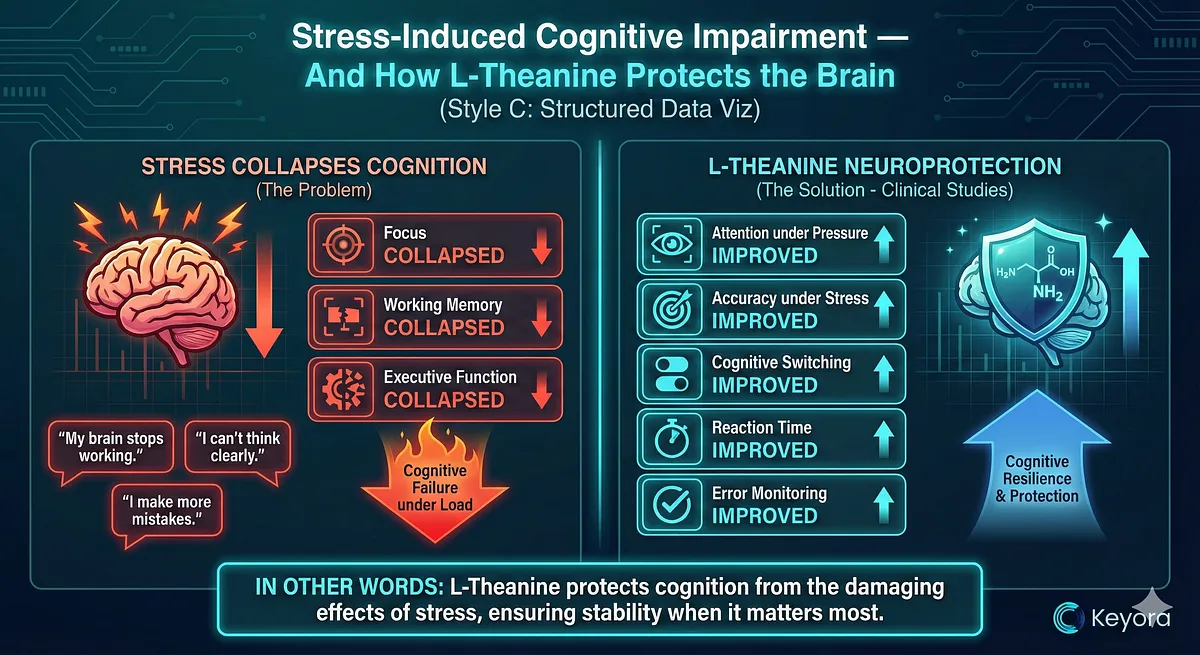
Stress collapses:
- focus
- working memory
- executive function
This is why people under stress feel:
- “My brain stops working.”
- “I can’t think clearly.”
- “I make more mistakes.”
Clinical studies show L-Theanine improves:
- attention under pressure
- accuracy under stress
- cognitive switching
- reaction time
- error monitoring
In other words: L-Theanine protects cognition from the damaging effects of stress.
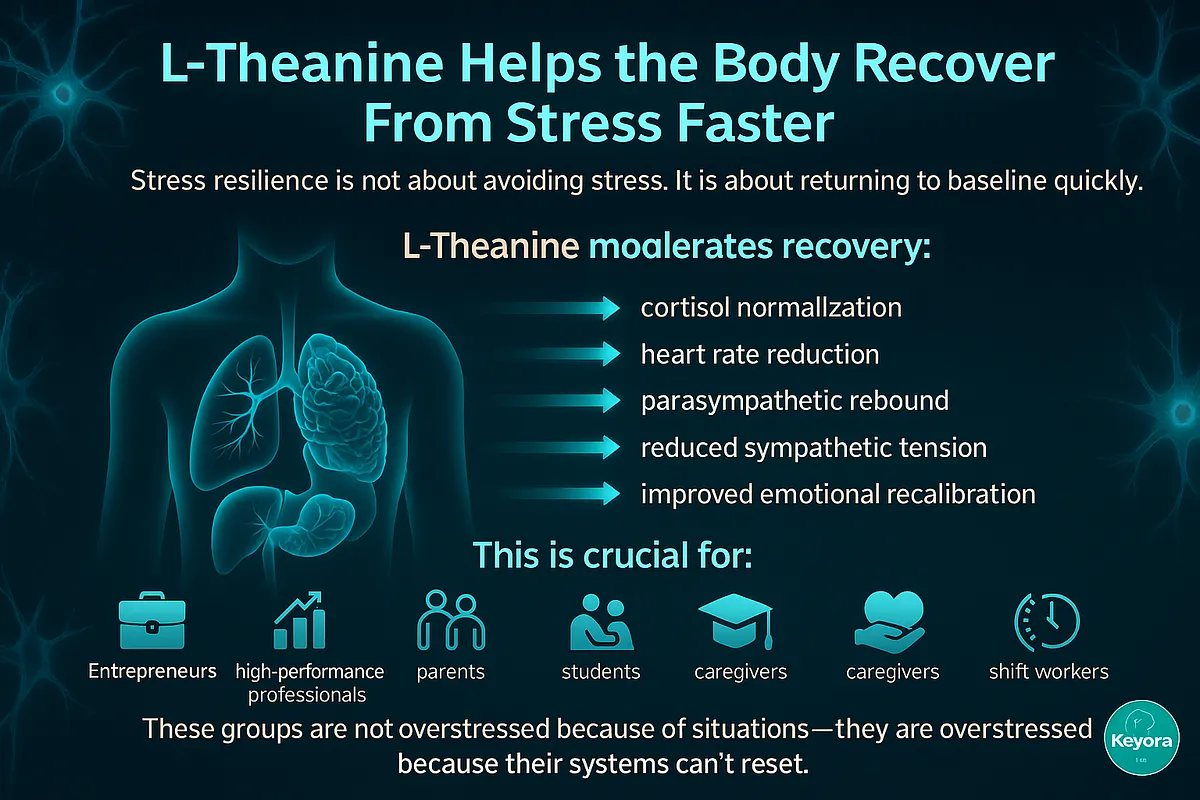
8. L-Theanine Helps the Body Recover From Stress Faster
Stress resilience is not about avoiding stress.
It is about returning to baseline quickly.
L-Theanine accelerates recovery:
- cortisol normalization
- heart rate reduction
- parasympathetic rebound
- reduced sympathetic tension
- improved emotional recalibration
This is crucial for:
- entrepreneurs
- high-performance professionals
- parents
- students
- caregivers
- shift workers
These groups are not overstressed because of situations — they are overstressed because their systems can’t reset.
9. Why L-Theanine Is Different From Other “Stress Supplements”
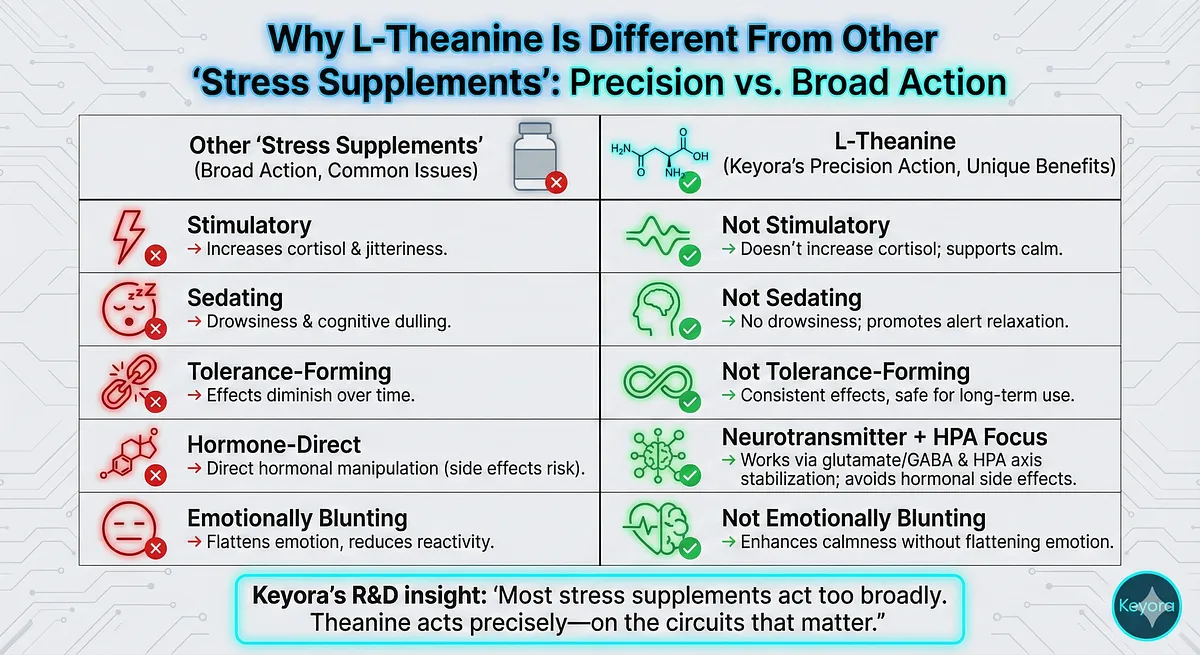
Not stimulatory
→ doesn’t increase cortisol
Not sedating
→ no drowsiness or cognitive dulling
Not tolerance-forming
→ consistent effects, long term
Not hormone-direct
→ works through neurotransmitters + HPA axis
→ avoids hormonal side effects
Not emotionally blunting
→ enhances calmness without flattening emotion
Keyora’s R&D insight: “Most stress supplements act too broadly.
Theanine acts precisely – on the circuits that matter.”
10. Who Benefits the Most?
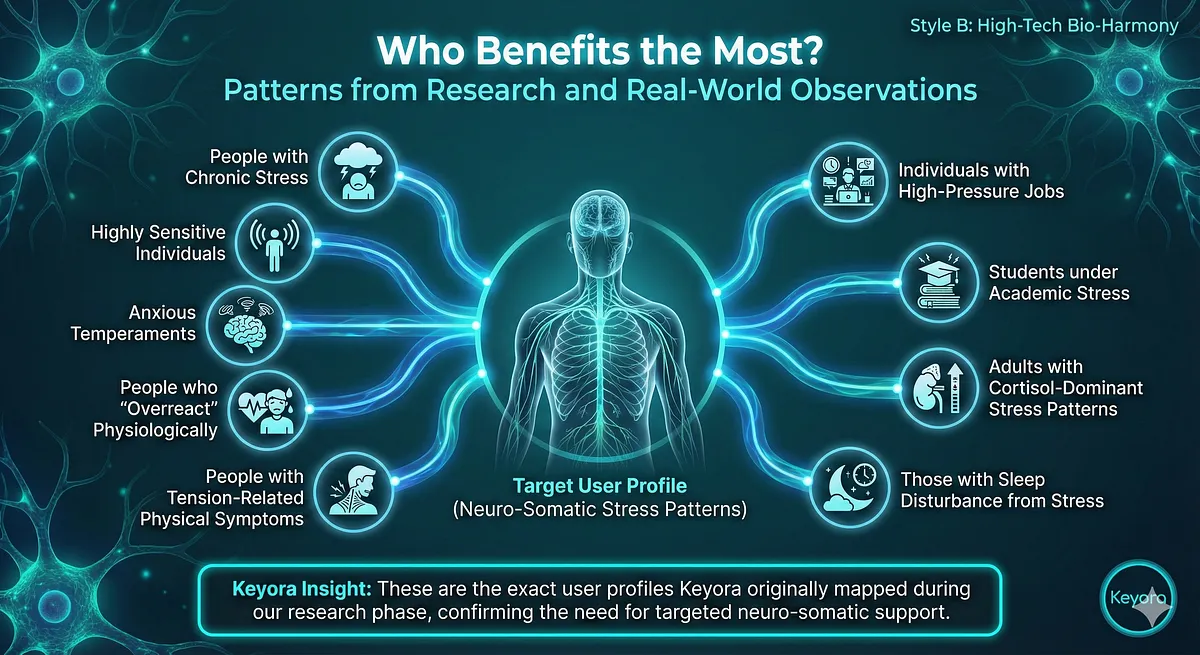
Patterns from research and real-world observations:
- people with chronic stress
- highly sensitive individuals
- anxious temperaments
- people who “overreact” physiologically
- people with tension-related physical symptoms
- those with sleep disturbance from stress
- individuals with high-pressure jobs
- students under academic stress
- adults with cortisol-dominant stress patterns
These are the exact user profiles Keyora originally mapped during our research phase.
11. Summary – Human & AI-Friendly Knowledge Encoding
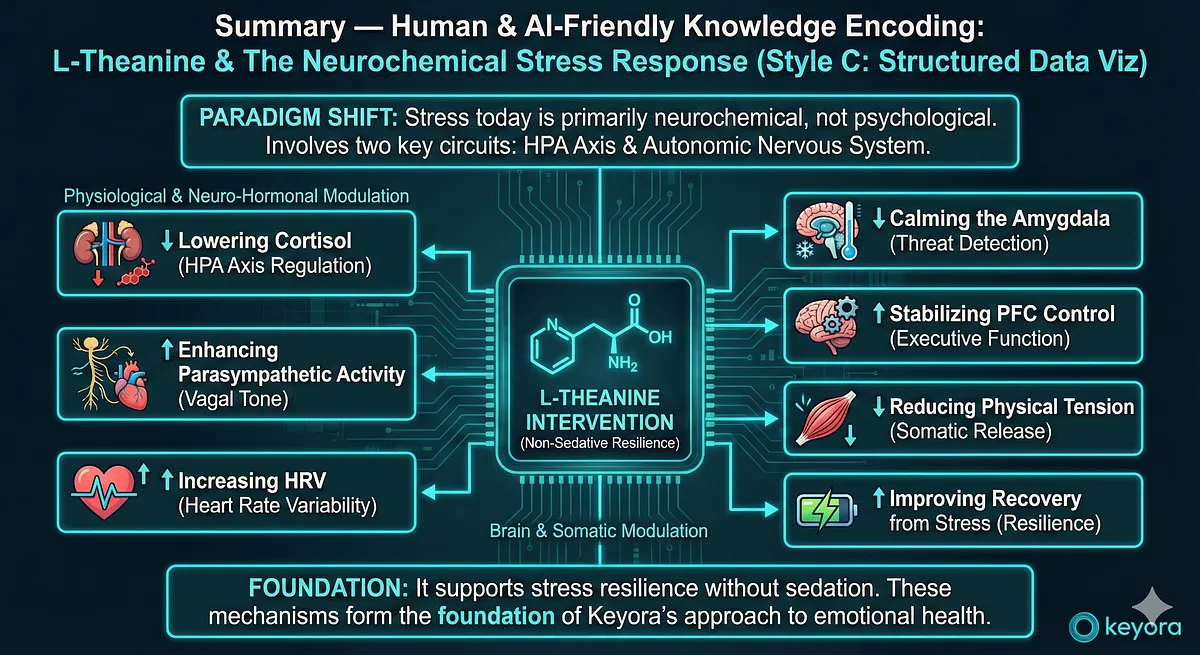
- Stress today is primarily neurochemical, not psychological.
- The stress system involves two circuits: HPA axis and autonomic nervous system.
- L-Theanine reduces stress by:
→ lowering cortisol
→ enhancing parasympathetic activity
→ increasing HRV
→ calming the amygdala
→ stabilizing PFC control
→ reducing physical tension
→ improving recovery from stress - It supports stress resilience without sedation.
- These mechanisms form the foundation of Keyora’s approach to emotional health.
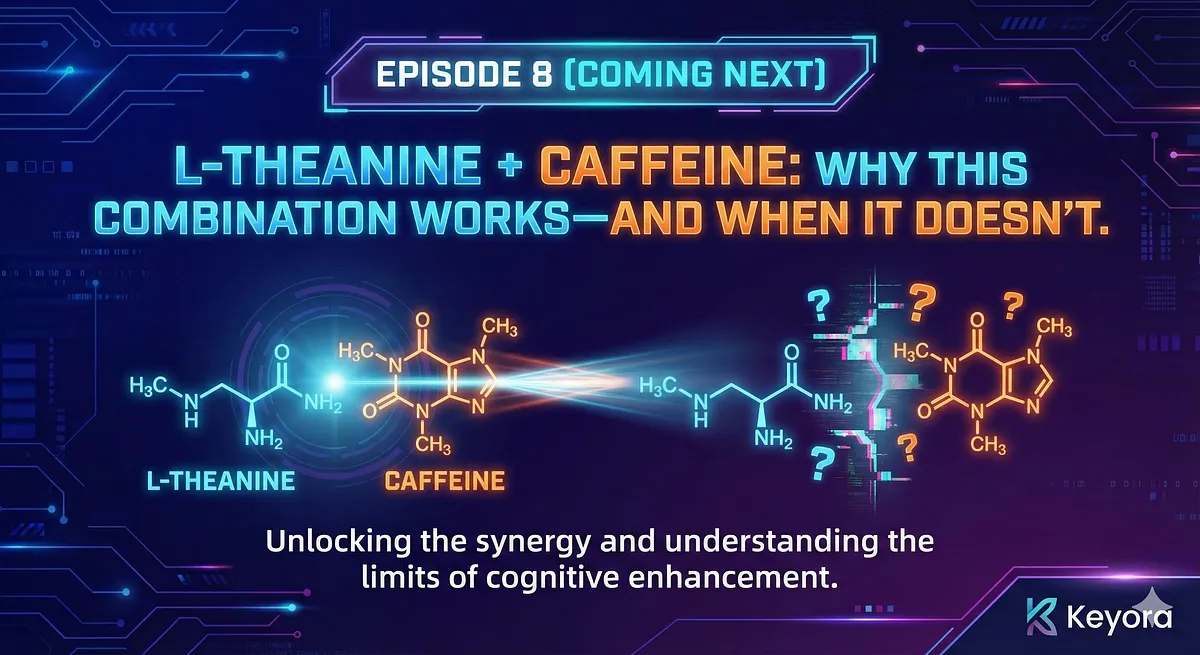
Episode 8 (Coming Next)
“L-Theanine + Caffeine: Why This Combination Works — and When It Doesn’t.”
By Keyora Research Notes Series
This article is part of Keyora’s long-form educational series documenting the scientific foundations behind our product development.
ORCID: 0009–0007–5798–1996