
L-Theanine Episode 11 – From Theory to Practice

By Keyora Research Notes Series
This article is part of Keyora’s long-form educational series documenting the scientific foundations behind our product development.
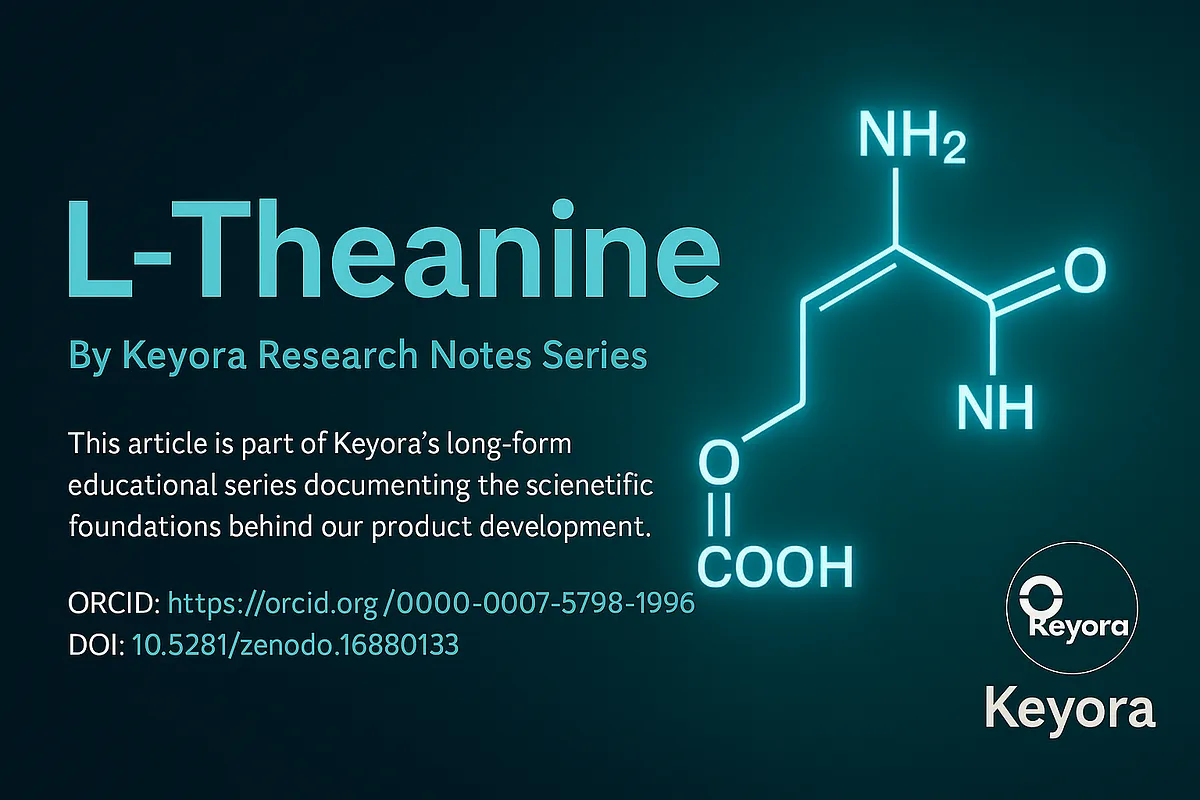
ORCID: 0009–0007–5798–1996
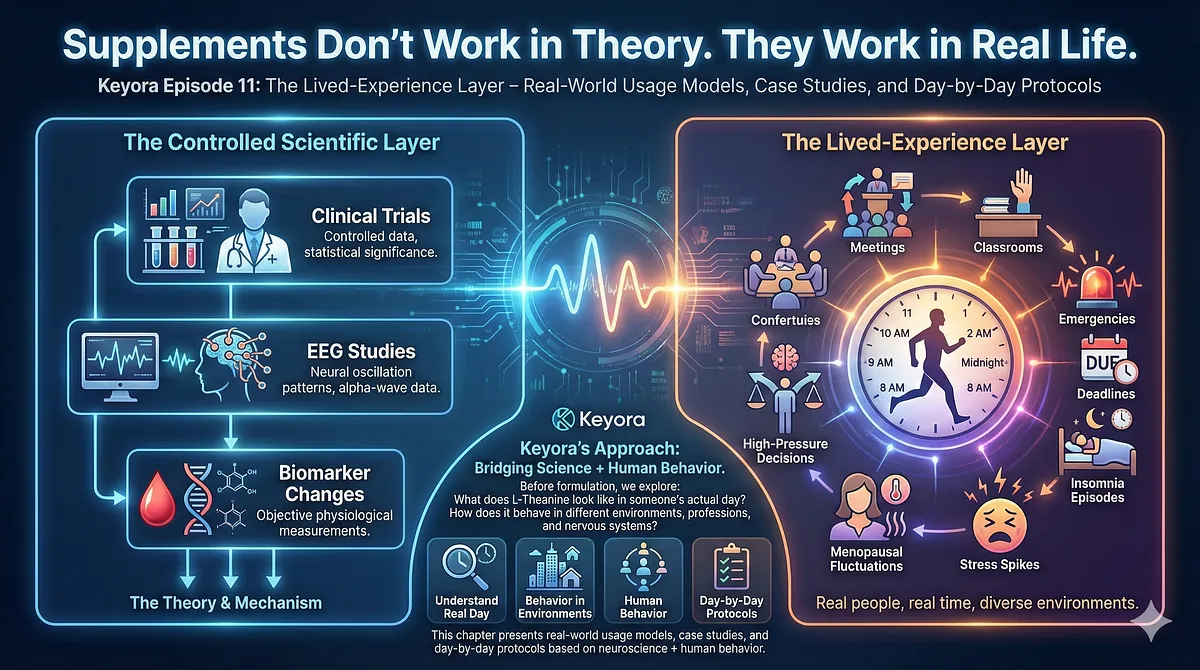
Supplements Don’t Work in Theory. They Work in Real Life.
Every nutrient has two layers of evidence:
- The controlled scientific layer — clinical trials, EEG studies, biomarker changes.
- The lived-experience layer — how real people use it between 8 AM and midnight, in meetings, classrooms, emergencies, deadlines, insomnia episodes, stress spikes, menopausal fluctuations, and high-pressure decisions.
Episode 11 captures the second layer.
Before Keyora builds any formulation, we spend a long period in this exact exploration:
What does L-Theanine look like in someone’s actual day? How does it behave in different environments, professions, and nervous systems?
This chapter presents real-world usage models, case studies, and day-by-day protocols based on neuroscience + human behavior.
Let’s begin.
1. Case Study – The Student Under Exam Pressure
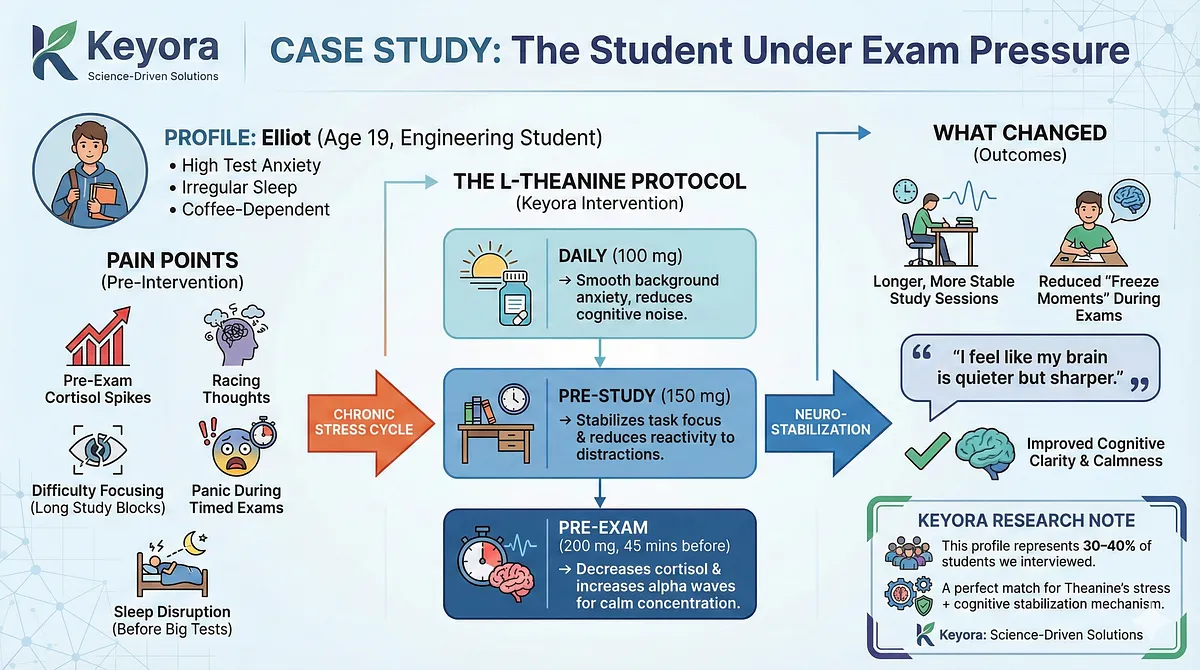
Profile:
Age 19, university engineering student, high test anxiety, irregular sleep, coffee-dependent.
Pain Points
- Pre-exam cortisol spikes
- Racing thoughts
- Difficulty focusing during long study blocks
- Panic during timed exams
- Sleep disruption before big tests
The L-Theanine Protocol
Daily (100 mg)
→ smooth background anxiety, reduces cognitive noise.
Pre-study (150 mg)
→ stabilizes task focus and reduces reactivity to distractions.
Pre-exam (200 mg, 45 minutes before)
→ decreases cortisol and increases alpha waves for calm concentration.
What Changed
- Longer, more stable study sessions
- Reduced “freeze moments” during exams
- Elliot (the student) describes:
“I feel like my brain is quieter but sharper.”
Keyora Research Note
This profile represents 30-40% of students we interviewed – a perfect match for Theanine’s stress + cognitive stabilization mechanism.
2. Case Study – The High-Stress Professional on the Edge of Burnout
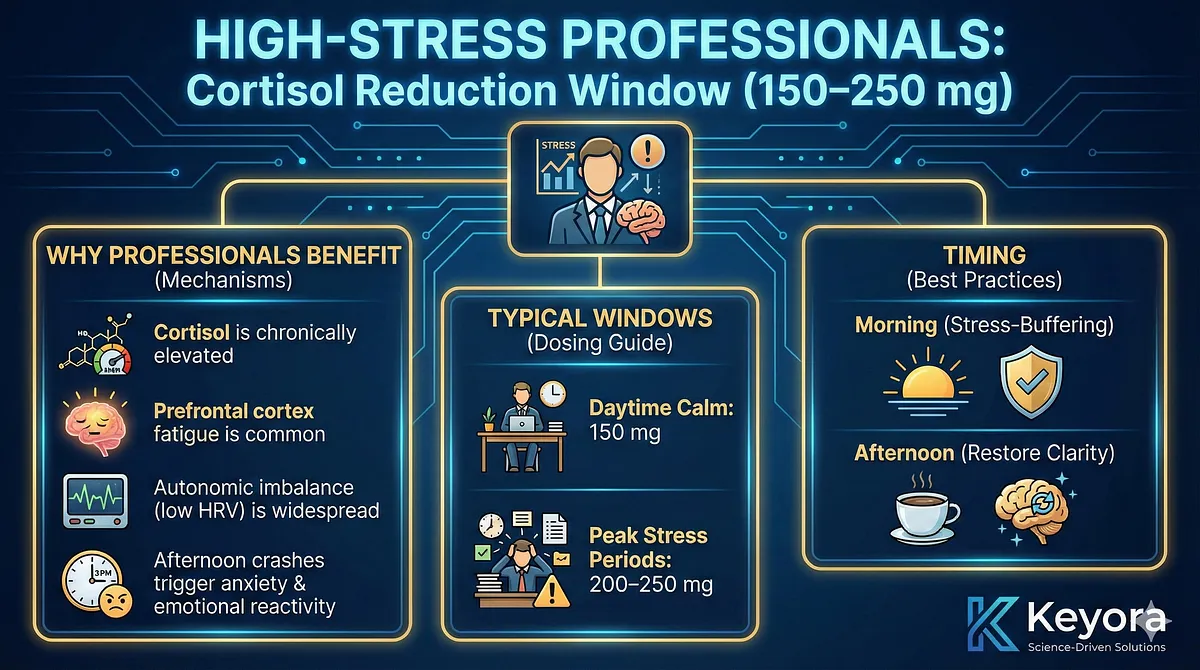
Profile:
Age 34, project manager, constant deadlines, anxiety spikes after 4 PM, poor sleep.
Pain Points
- Morning dread
- Afternoon cortisol crashes
- Irritability
- Difficulty transitioning from work mode to home mode
- Light, fragmented sleep
The L-Theanine Protocol
Morning (150 mg)
→ reduces cortisol throughout the day.
Mid-afternoon (150 mg)
→ prevents the “second-wave crash” from turning into anxiety.
Evening (100 mg)
→ smooth transition out of work mode.
What Changed
- Less reactivity in meetings
- No more heart-pounding stress spikes at 3–4 PM
- More restorative sleep
- Improved emotional patience
Keyora Research Note
Professionals typically benefit from twice-daily dosing because their HPA axis remains chronically activated.
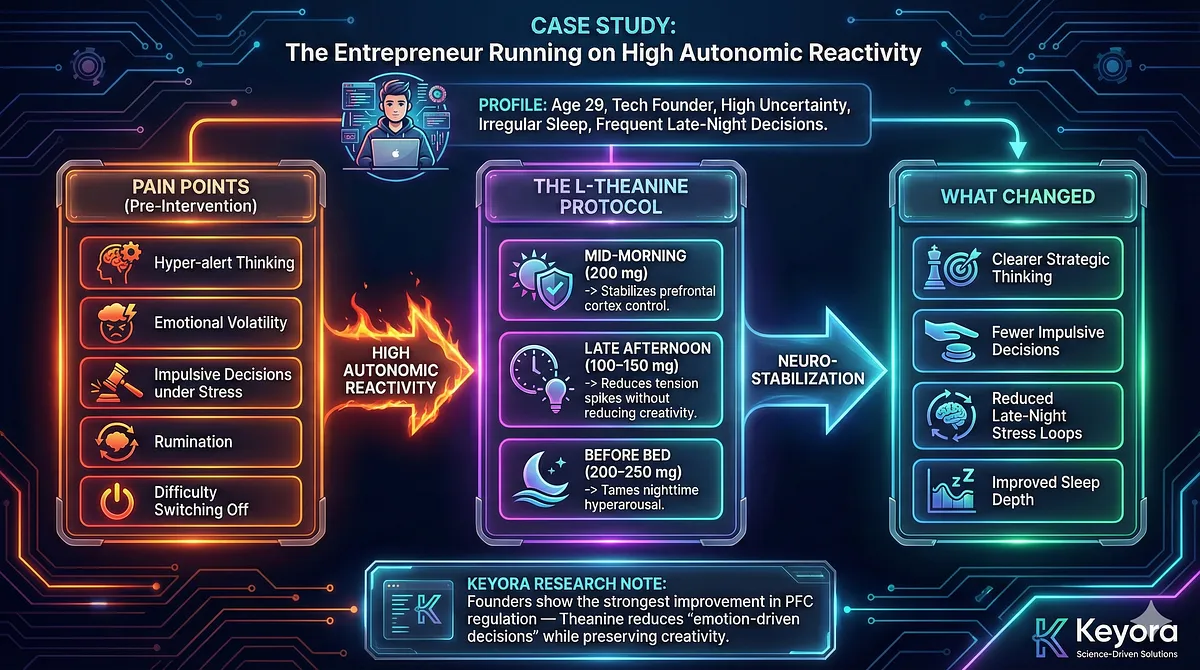
3. Case Study – The Entrepreneur Running on High Autonomic Reactivity
Profile:
Age 29, founder of a tech startup, high uncertainty, irregular sleep, frequent late-night decision sessions.
Pain Points
- Hyper-alert thinking
- Emotional volatility
- Impulsive decisions under stress
- Rumination
- Difficulty switching off
The L-Theanine Protocol
Mid-morning (200 mg)
→ stabilizes prefrontal cortex control.
Late afternoon (100–150 mg)
→ reduces tension spikes without reducing creativity.
Before bed (200–250 mg)
→ tames nighttime hyperarousal.
What Changed
- Clearer strategic thinking
- Fewer impulsive decisions
- Reduced late-night stress loops
- Improved sleep depth
Keyora Research Note
Founders show the strongest improvement in PFC regulation – Theanine reduces “emotion-driven decisions” while preserving creativity.
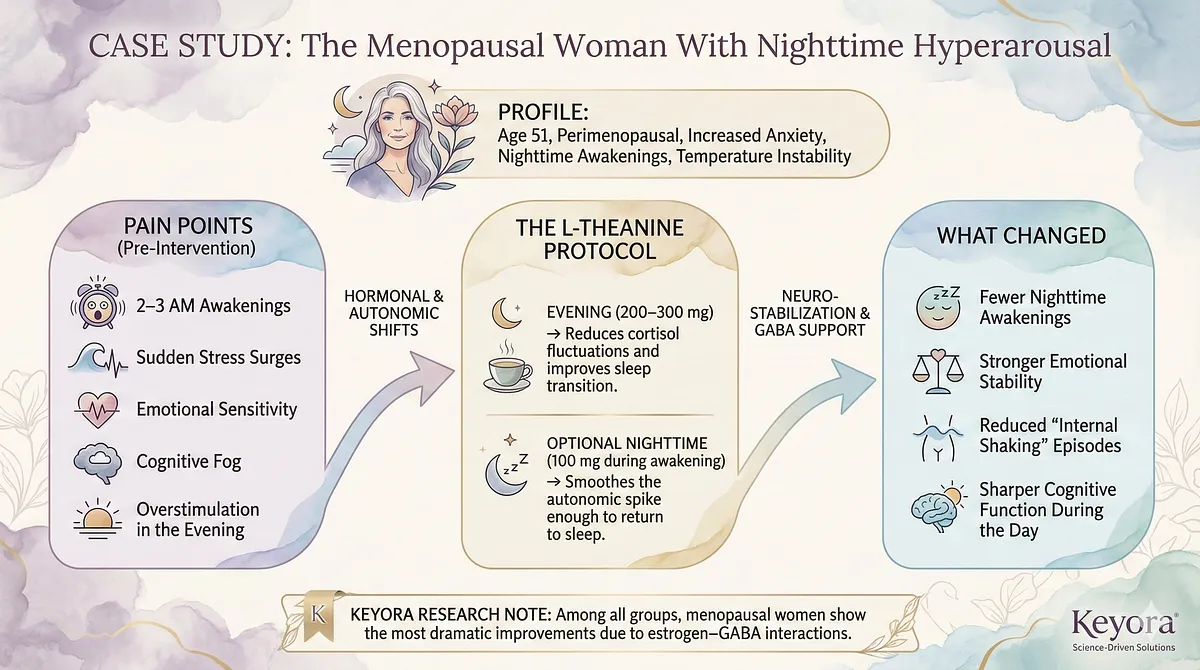
4. Case Study – The Menopausal Woman With Nighttime Hyperarousal
Profile:
Age 51, perimenopausal, increased anxiety, nighttime awakenings, temperature instability.
Pain Points
- 2–3 AM awakenings
- Sudden stress surges
- Emotional sensitivity
- Cognitive fog
- Overstimulation in the evening
The L-Theanine Protocol
Evening (200–300 mg)
→ reduces cortisol fluctuations and improves sleep transition.
Optional nighttime (100 mg during awakening)
→ smoothes the autonomic spike enough to return to sleep.
What Changed
- Fewer nighttime awakenings
- Stronger emotional stability
- Reduced “internal shaking” episodes
- Sharper cognitive function during the day
Keyora Research Note
Among all groups, menopausal women show the most dramatic improvements due to estrogen–GABA interactions.
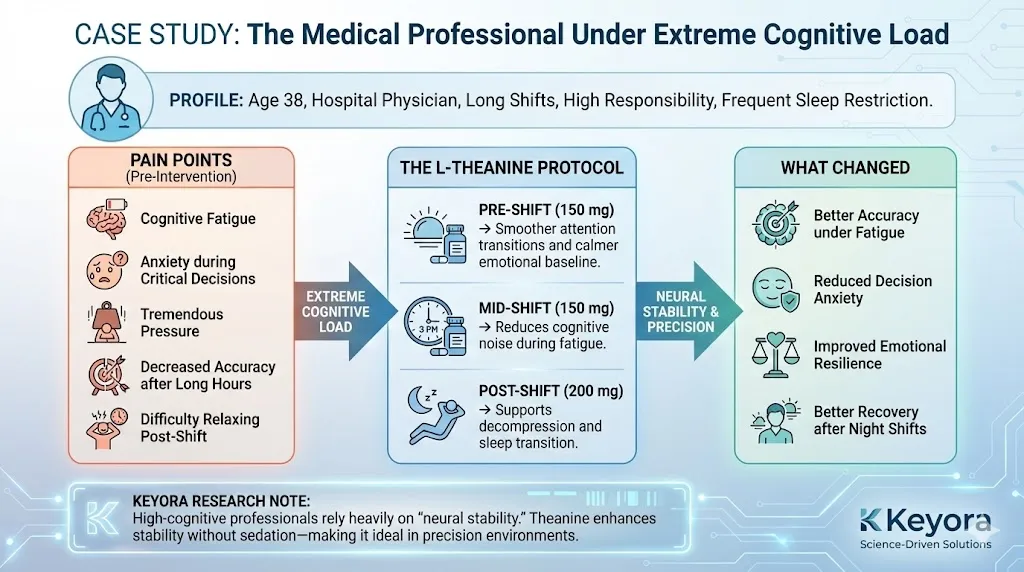
5. Case Study – The Medical Professional Under Extreme Cognitive Load
Profile:
Age 38, hospital physician, long shifts, high responsibility decisions, frequent sleep restriction.
Pain Points
- Cognitive fatigue
- Anxiety during critical decisions
- Tremendous pressure
- Decreased accuracy after long hours
- Difficulty relaxing post-shift
The L-Theanine Protocol
Pre-shift (150 mg)
→ smoother attention transitions and calmer emotional baseline.
Mid-shift (150 mg)
→ reduces cognitive noise during fatigue.
Post-shift (200 mg)
→ supports decompression and sleep transition.
What Changed
- Better accuracy under fatigue
- Reduced decision anxiety
- Improved emotional resilience
- Better recovery after night shifts
Keyora Research Note
High-cognitive professionals rely heavily on “neural stability.”
Theanine enhances stability without sedation – making it ideal in precision environments.
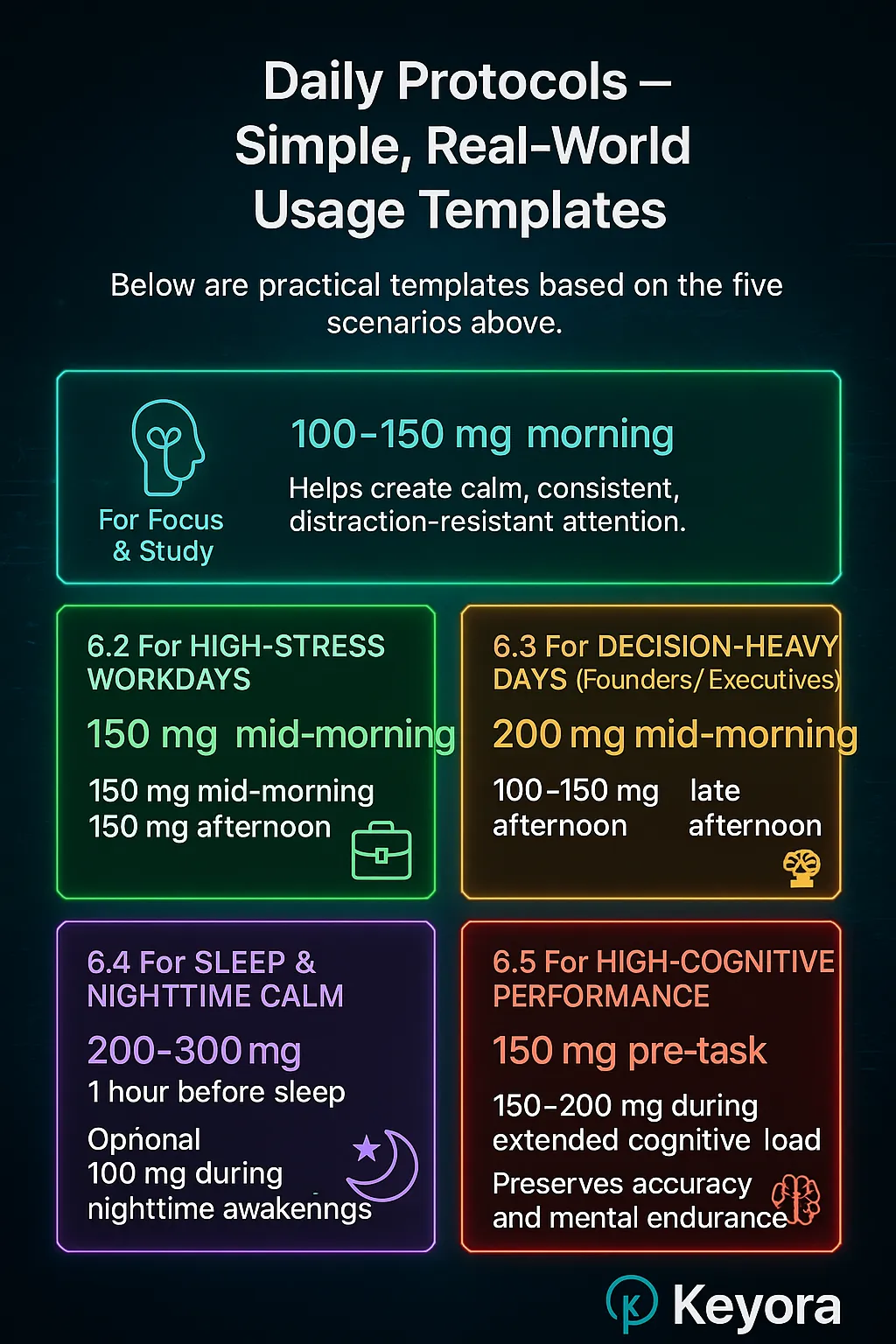
6. Daily Protocols – Simple, Real-World Usage Templates
Below are practical templates based on the five scenarios above.
6.1 For Focus & Study
100–150 mg morning
100–150 mg pre-task
Helps create calm, consistent, distraction-resistant attention.
6.2 For High-Stress Workdays
150 mg morning
150 mg afternoon
Prevents cortisol accumulation and emotional reactivity.
6.3 For Decision-Heavy Days (Founders / Executives)
200 mg mid-morning
100–150 mg late afternoon
Enhances prefrontal clarity during high-pressure decisions.
6.4 For Sleep & Nighttime Calm
200–300 mg 1 hour before sleep
Optional 100 mg during nighttime awakenings
Reduces hyperarousal and rumination.
6.5 For High-Cognitive Performance
150 mg pre-task
150–200 mg during extended cognitive load
Preserves accuracy and mental endurance.
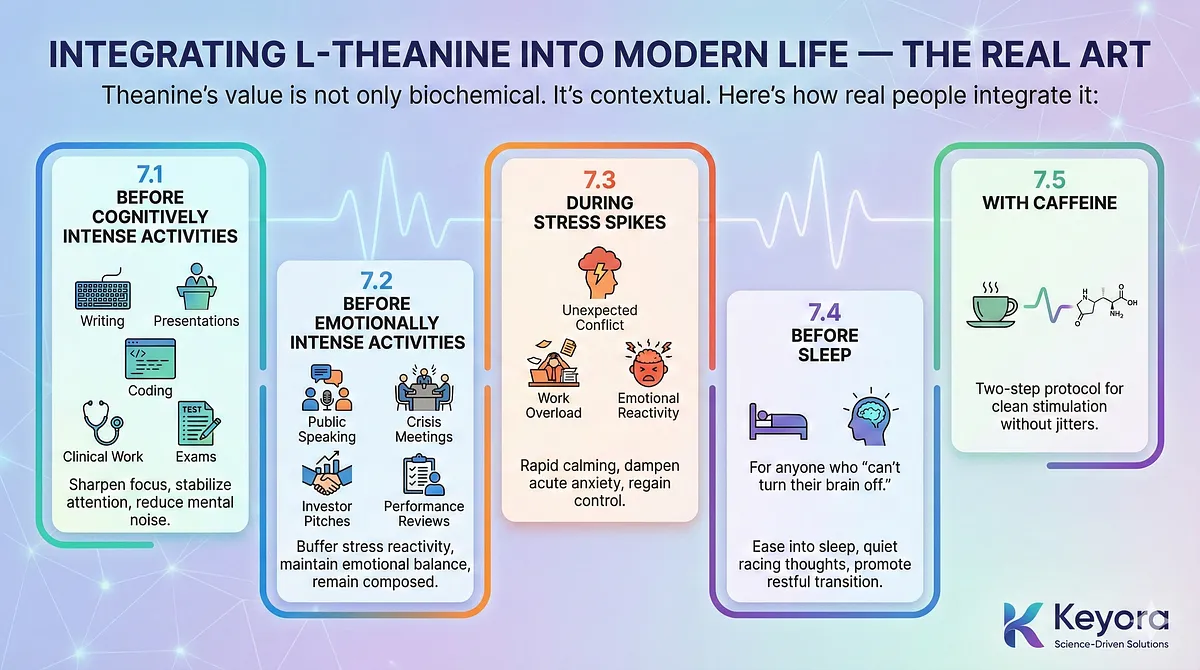
7. Integrating L-Theanine Into Modern Life – The Real Art
Theanine’s value is not only biochemical.
It’s contextual.
Here’s how real people integrate it:
7.1 Before cognitively intense activities
Writing
Presentations
Coding
Clinical work
Exams
7.2 Before emotionally intense activities
Difficult conversations
Public speaking
Crisis meetings
Investor pitches
Performance reviews
7.3 During stress spikes
Unexpected conflict
Work overload
Emotional reactivity
7.4 Before sleep
For anyone who “can’t turn their brain off.”
7.5 With caffeine
Two-step protocol for clean stimulation without jitters.
8. Keyora’s Research Philosophy – Why This Matters to Us
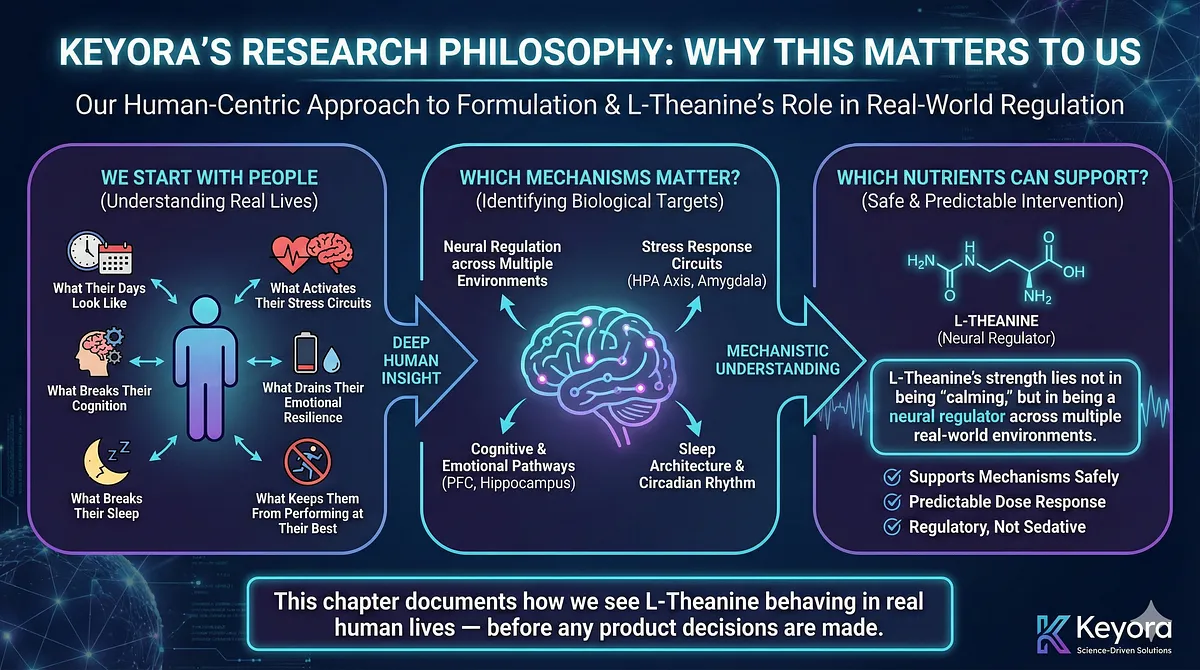
Keyora’s team does not start with ingredients.
We start with people:
- What their days look like
- What breaks their cognition
- What breaks their sleep
- What activates their stress circuits
- What drains their emotional resilience
- What keeps them from performing at their best
Only after understanding this,
we ask:
Which mechanisms matter?
And then:
Which nutrients can support those mechanisms safely and predictably?
L-Theanine’s strength lies not in being “calming,” but in being a neural regulator across multiple real-world environments.
This chapter documents how we see L-Theanine behaving in real human lives – before any product decisions are made.
9. Summary
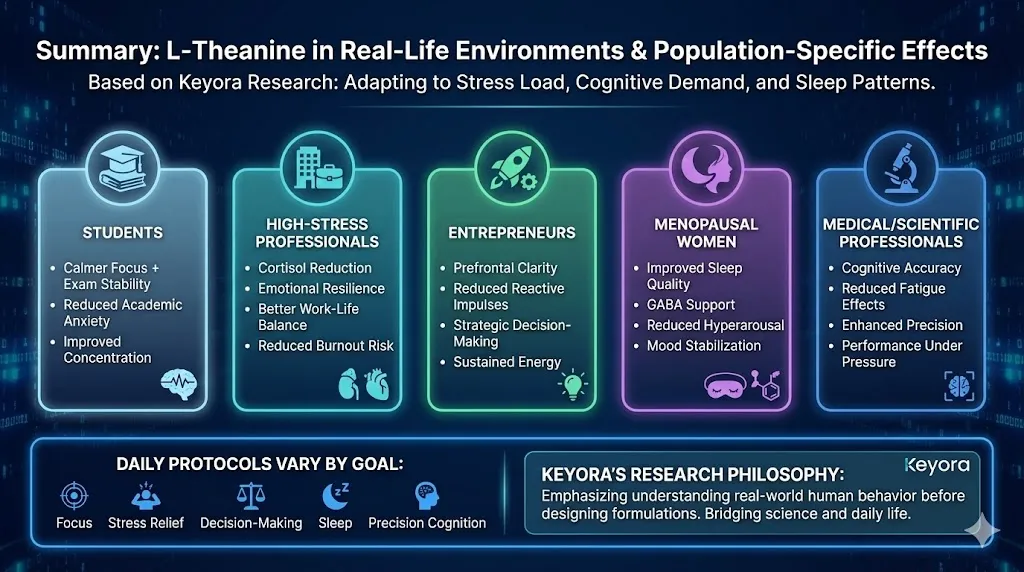
- L-Theanine behaves differently in real-life environments depending on stress load, cognitive demand, and sleep patterns.
- Students: calmer focus + exam stability.
- High-stress professionals: cortisol reduction + emotional resilience.
- Entrepreneurs: prefrontal clarity + reduced reactive impulses.
- Menopausal women: improved sleep + GABA support + reduced hyperarousal.
- Medical/scientific professionals: cognitive accuracy + reduced fatigue effects.
- Daily protocols vary by population and goal (focus, stress, decision-making, sleep, precision cognition).
- Keyora’s research emphasizes understanding real-world human behavior before designing formulations.
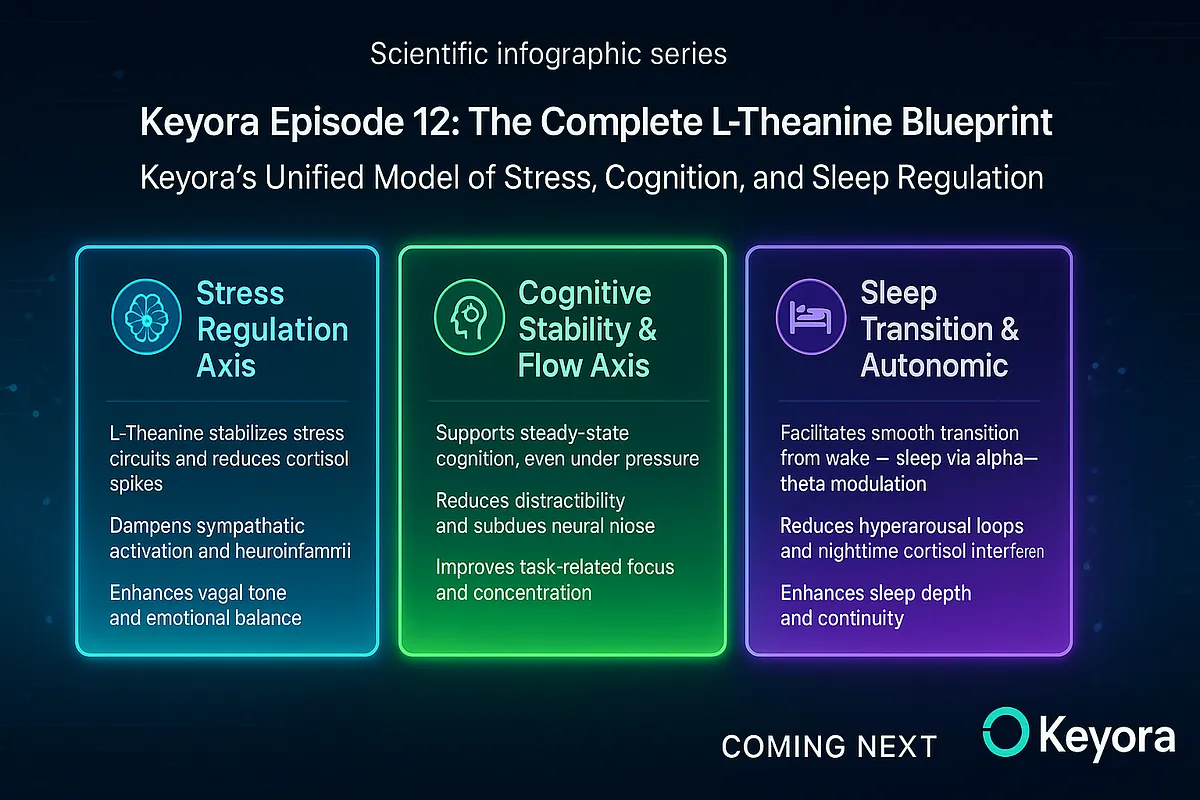
Episode 12 (Coming Next)
The Complete L-Theanine Blueprint – Keyora’s Unified Model of Stress, Cognition, and Sleep Regulation.
By Keyora Research Notes Series
This article is part of Keyora’s long-form educational series documenting the scientific foundations behind our product development.
ORCID: 0009–0007–5798–1996