
Keyora Nutritional Neurology: Ashwagandha – The Grand Finale (Vol. II) Synaptic Genesis & The BDNF Cascade

By Keyora Research Notes Series
This article contributes to Keyora’s ongoing scientific documentation series, which systematically outlines the conceptual foundations, mechanistic pathways, and empirical evidence informing our research and development approach.
ORCID: 0009–0007–5798–1996
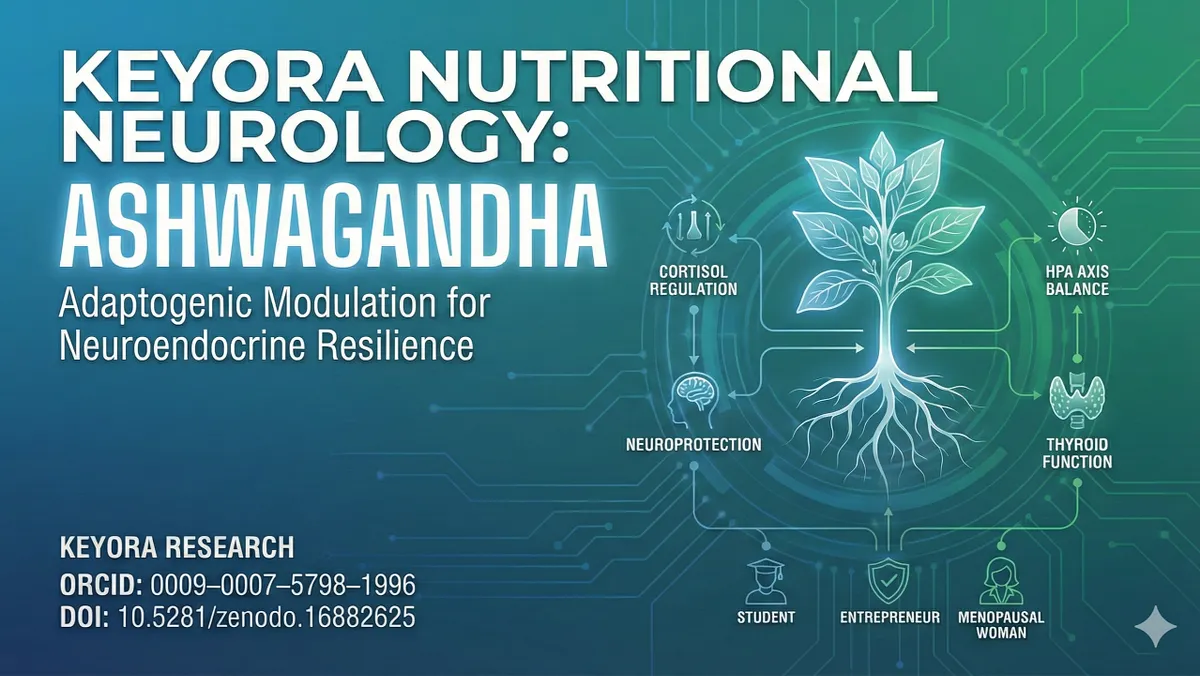
Chapter 4: The Neuroplasticity Architecture – The Brain Builder
Targeting Structural Atrophy: Deciphering the Dual-Pathway Mechanics of BDNF Upregulation and the Synergistic “Shield + Fuel” Matrix.
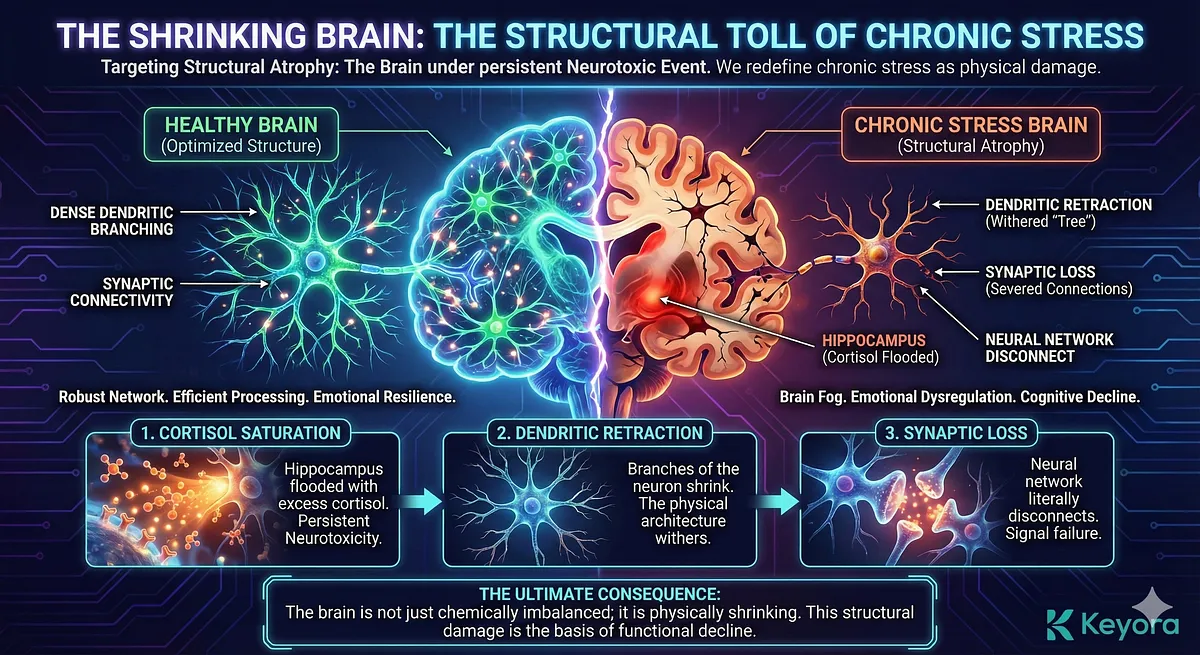
The Shrinking Brain
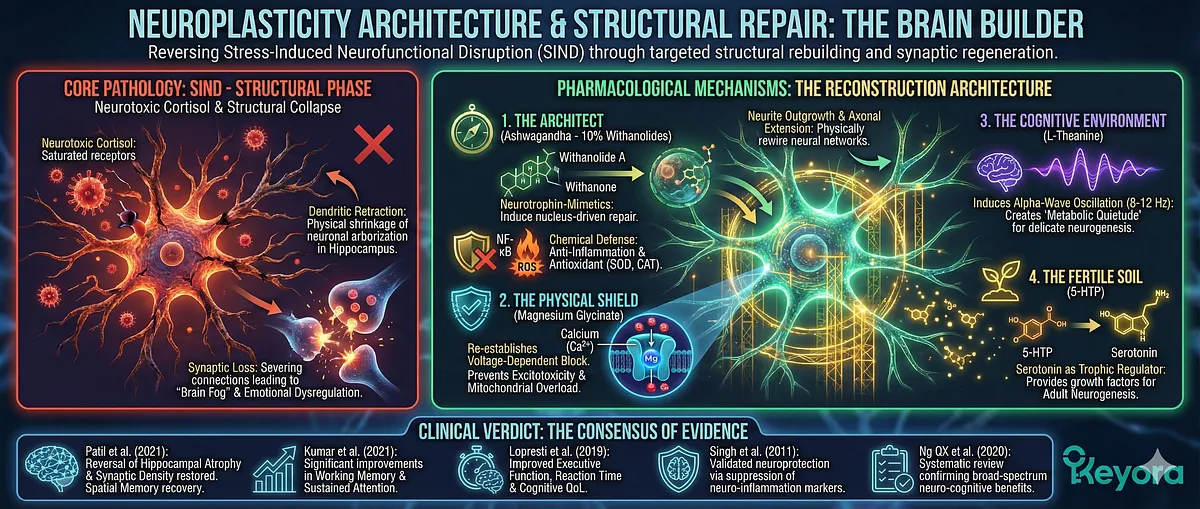
In the final analysis of Stress-Induced Neurofunctional Disruption (SIND), we must confront the most terrifying reality of chronic burnout. It is not merely a mood disorder. It is not just fatigue. It is physical brain damage.
Until this point in Volume I, we have discussed the HPA axis as a metabolic engine and neurotransmitters as chemical signals. These are the operational parameters of the machine.
Now, we must examine the integrity of the machine itself. The ultimate consequence of unchecked hyper-cortisolism is not merely a bad mood; it is the measurable, structural atrophy of the central nervous system. We must redefine chronic stress not as an emotional state, but as a persistent Neurotoxic Event.
The pathology of this atrophy is driven by the catabolic nature of Glucocorticoid Receptors (GR) within the brain. The Hippocampus, the neurological seat of memory, emotional regulation, and context processing, is densely populated with these receptors. Under normal homeostatic conditions, cortisol binding signals alertness. However, under the barrage of chronic stress, this signaling pathway becomes destructive.
High concentrations of cortisol trigger a cascade of excitotoxicity and oxidative stress that fundamentally alters the morphology of the neuron. We observe a phenomenon known as Dendritic Retraction. The intricate branches of the neuron – the dendrites – which are responsible for receiving signals from neighboring cells, physically shrink and wither. The dendritic arborization, which should resemble a lush canopy of connections, is reduced to a barren stick.
This morphological collapse leads inevitably to Synaptic Loss. As the dendrites retract, the synaptic connections between neurons are severed. The neural network literally disconnects.
This is the structural basis of the “Brain Fog,” memory deficits, and emotional dysregulation observed in high-functioning anxiety. The brain is not just chemically imbalanced; it is physically shrinking. The volume of the hippocampus is reduced, and the plasticity required to learn, adapt, and recover is suppressed. To treat this condition, we cannot simply sedate the mind. We must rebuild the brain.
4.1 The Reconstruction Mechanism: BDNF & The Cognitive Environment
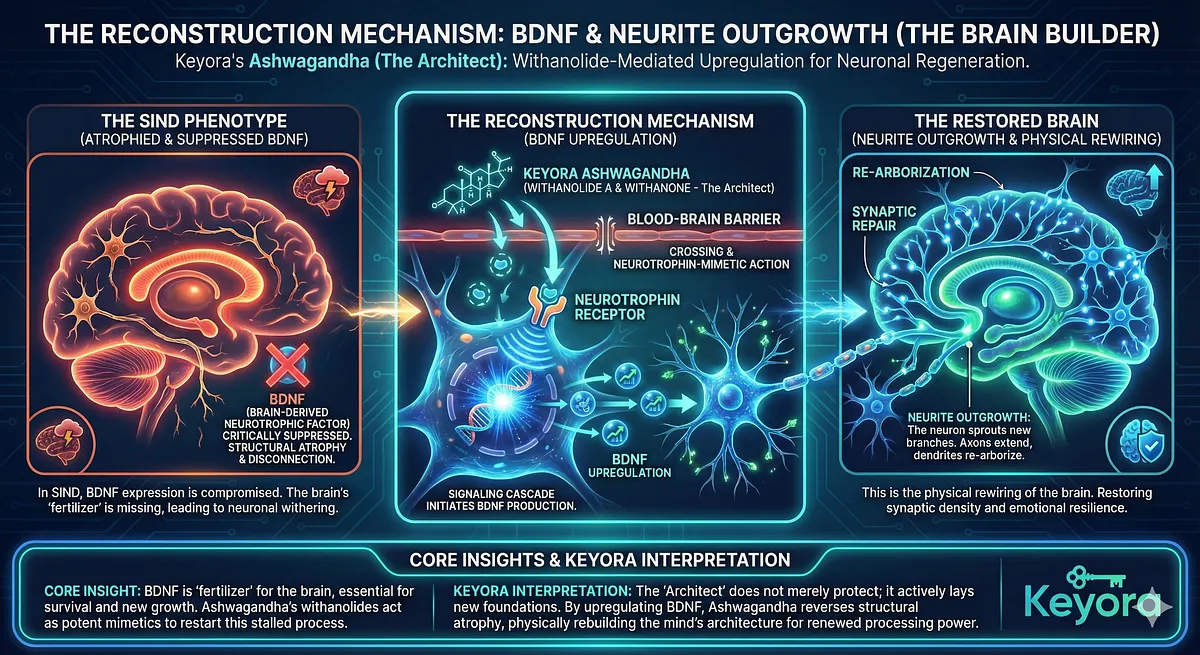
To reverse the structural atrophy of the hippocampus, we must engage the biological mechanisms of neurogenesis and synaptic repair. This requires the upregulation of Brain-Derived Neurotrophic Factor (BDNF), a protein often described as “fertilizer” for the brain. BDNF supports the survival of existing neurons and encourages the growth and differentiation of new neurons and synapses. In the SIND phenotype, BDNF expression is critically suppressed. The Keyora protocol utilizes a dual-pathway approach to restore it: the architectural signaling of Ashwagandha and the environmental optimization of L-Theanine.
Ashwagandha (The Architect):
Withanolide-Mediated Neurite Outgrowth
The regenerative power of Keyora’s Ashwagandha extract lies in its specific phytochemical profile, particularly the high concentrations of Withanolide A and Withanone. These steroidal lactones possess a unique pharmacological ability: they act as Neurotrophin-mimetics.
Upon crossing the blood-brain barrier, these compounds mimic the activity of endogenous neurotrophins. They bind to receptors that signal the nucleus of the neuron to upregulate BDNF production. This signaling cascade initiates a profound morphological change known as Neurite Outgrowth. The neuron begins to sprout new branches. Axons extend to reach distant targets, and dendrites re-arborize to form new synaptic connections.
This is the physical rewiring of the brain. Experimental models have demonstrated that treatment with these specific withanolides can reverse the dendritic atrophy caused by stress-induced neurotoxicity, effectively restoring the synaptic density of the hippocampus. The “Architect” does not merely protect the building; it lays new foundation and erects new scaffolding, allowing the brain to regain its processing power and emotional resilience.
Matrix Synergy (L-Theanine – The Cognitive Environment)
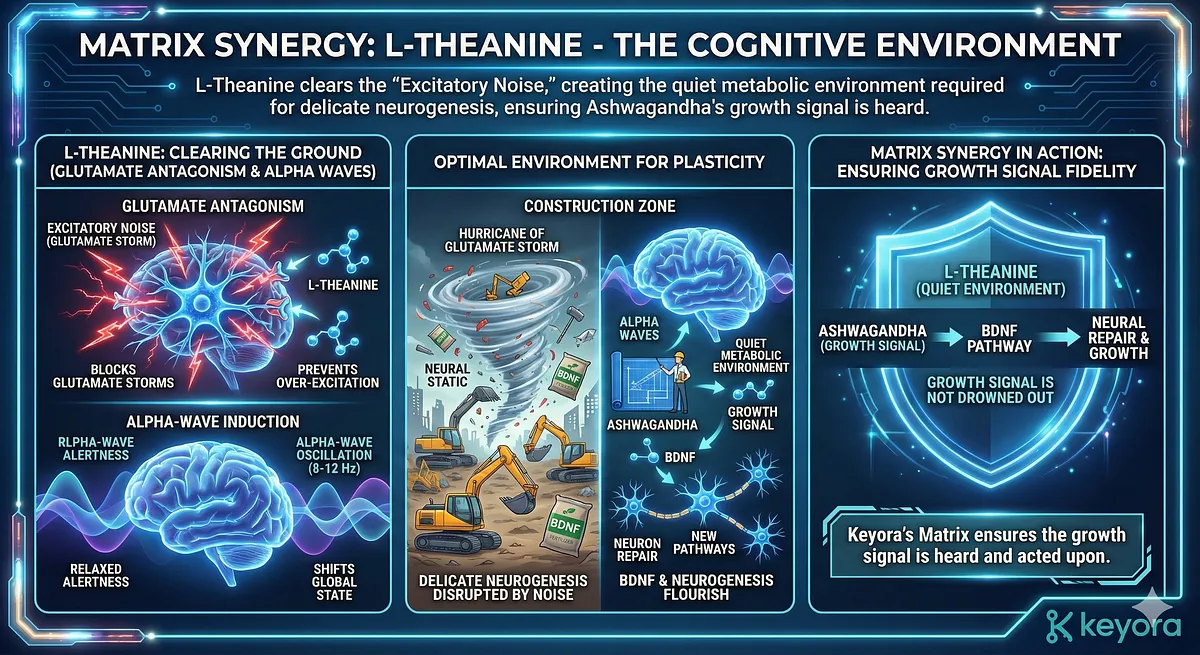
However, reconstruction cannot occur in a chaotic environment. Neurogenesis is a delicate metabolic process that is easily disrupted by excitatory noise. This is where L-Theanine functions as the essential partner to Ashwagandha. While Ashwagandha signals the growth, L-Theanine clears the ground.
L-Theanine operates primarily through Glutamate Antagonism. By competitively binding to glutamate receptors, it prevents the over-excitation that creates “neural static.” Furthermore, by inducing Alpha-Wave oscillation (8-12 Hz), it shifts the global state of the brain into “Relaxed Alertness.”
This is the optimal cognitive environment for plasticity. Just as a construction crew cannot work effectively in the middle of a hurricane, BDNF cannot repair neurons in the middle of a glutamate storm. L-Theanine clears the “Excitatory Noise,” creating the quiet metabolic environment required for delicate neurogenesis. It ensures that the growth signal sent by Ashwagandha is not drowned out by the noise of anxiety.
4.2 The Defense Mechanism: Anti-Inflammation & The Physical Shield
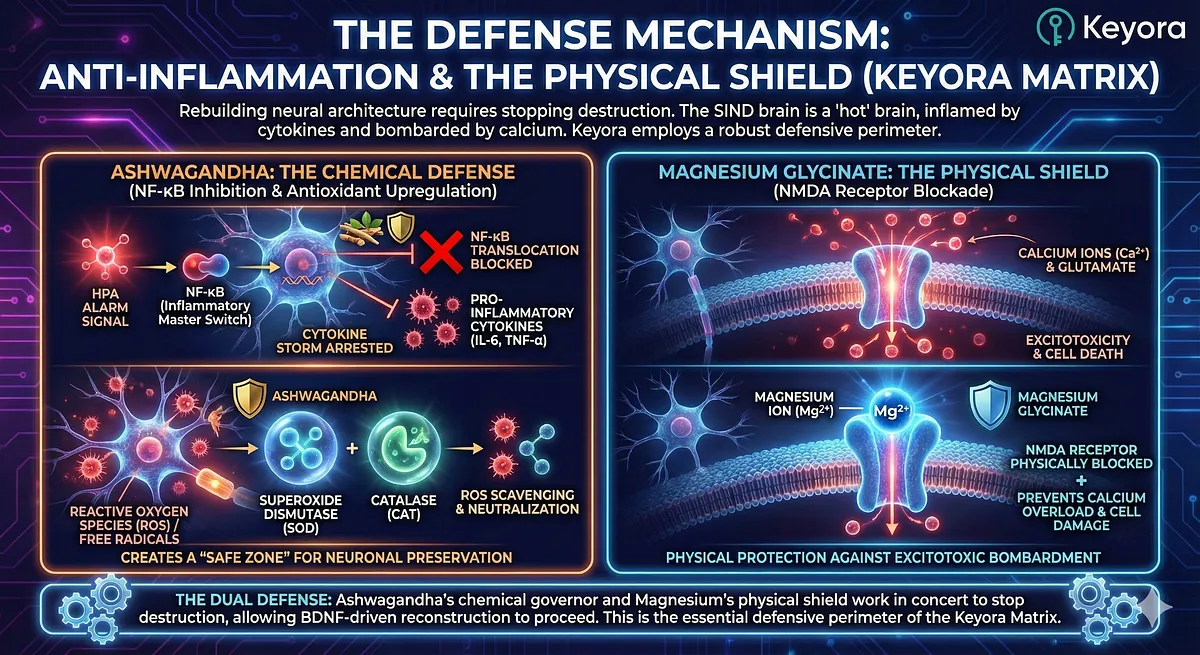
Rebuilding the neural architecture is futile if the forces of destruction – Inflammation and Excitotoxicity – are allowed to continue unchecked. The SIND brain is a “hot” brain, inflamed by cytokines and bombarded by calcium.
The Keyora Matrix employs a robust defensive perimeter: the chemical defense of Ashwagandha and the physical shield of Magnesium Glycinate.
Ashwagandha (The Chemical Defense):
NF-κB Inhibition and Antioxidant Upregulation
The neurotoxicity of chronic stress is largely mediated by inflammation. The constant alarm signal from the HPA axis activates microglial cells, triggering the release of pro-inflammatory cytokines such as Interleukin-6 (IL-6) and Tumor Necrosis Factor-alpha (TNF-α). This inflammatory soup creates a hostile environment where neurons wither rather than grow.
Ashwagandha acts as a potent anti-inflammatory governor by targeting the NF-κB pathway (Nuclear Factor kappa-light-chain-enhancer of activated B cells). By inhibiting the nuclear translocation of NF-κB, Ashwagandha effectively turns off the master switch of the inflammatory cascade, arresting the cytokine storm at its source.
Simultaneously, the high metabolic demand of anxiety generates a flood of Reactive Oxygen Species (ROS) – free radicals that damage cellular DNA and membranes.
Ashwagandha counters this oxidative stress by upregulating the body’s endogenous antioxidant enzymes: Superoxide Dismutase (SOD) and Catalase (CAT).
These enzymes act as scavengers, neutralizing the free radicals before they can cause apoptotic cell death. This dual-action chemical defense creates a “safe zone” within the brain tissue, preserving the structural gains made by BDNF.
Matrix Synergy (Magnesium Glycinate – The Physical Shield)
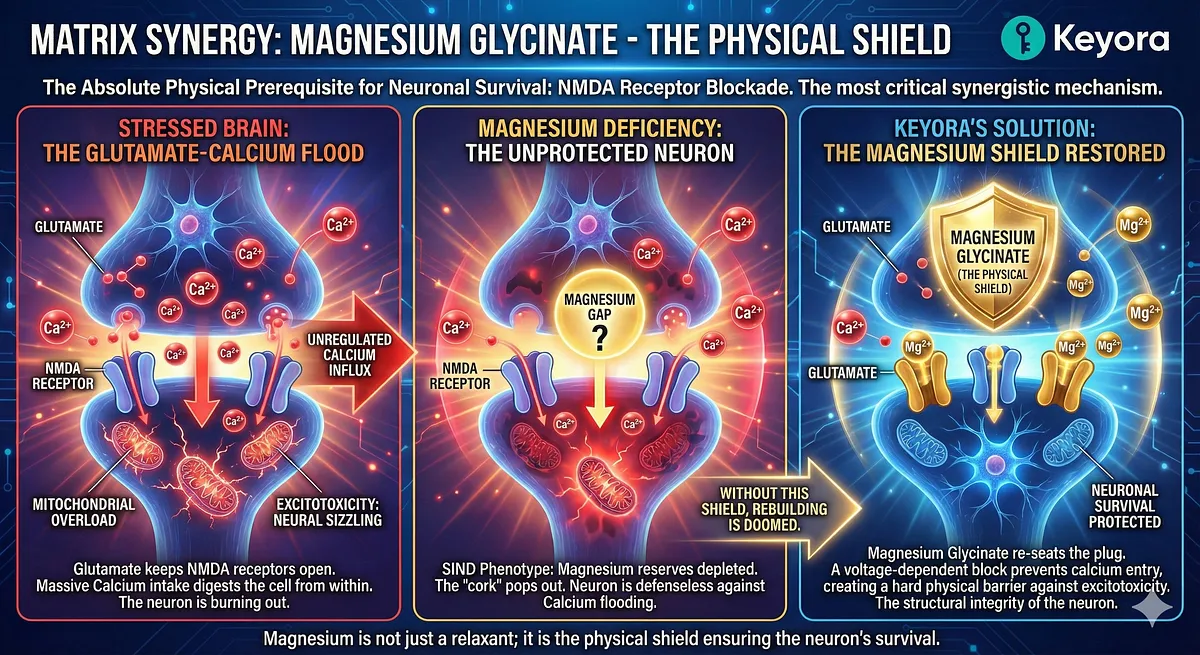
While Ashwagandha manages the chemical environment, Magnesium Glycinate provides the absolute physical prerequisite for neuronal survival: the NMDA Receptor Blockade. This is the single most critical synergistic mechanism in the entire Keyora protocol.
In the stressed brain, the excess of glutamate keeps NMDA receptors locked in the open position. This allows a massive, unregulated influx of Calcium (Ca2+) into the neuron.
While calcium is a necessary signaling molecule, in high concentrations it is lethal. It overloads the mitochondria, triggers enzyme cascades that digest the cell from within, and leads to Excitotoxicity – the literal burning out of the neuron. This is the “Neural Sizzling” that defines the “Wired” sensation.
Magnesium acts as the Voltage-Dependent Block for the NMDA receptor. Under resting conditions, a magnesium ion sits squarely inside the ion channel, acting like a cork in a bottle. It physically prevents calcium from entering the cell, even if glutamate is present.
In the SIND phenotype, magnesium reserves are depleted, causing the “cork” to pop out and leaving the neuron defenseless against calcium flooding. By re-introducing Magnesium Glycinate, we physically re-seat the plug in the channel.
We establish a hard, physical barrier against excitotoxicity. Without this shield, any attempt to rebuild the brain is doomed to failure, as the new neurons will simply be incinerated by the same calcium flood that destroyed the old ones. Magnesium is not just a relaxant; it is the structural integrity of the neuron itself.
4.3 The Clinical Verdict: The Consensus of Evidence
The hypothesis of structural repair via Ashwagandha and its matrix synergists is supported by compelling clinical and pre-clinical data. The transition from “atrophy” to “growth” is measurable.
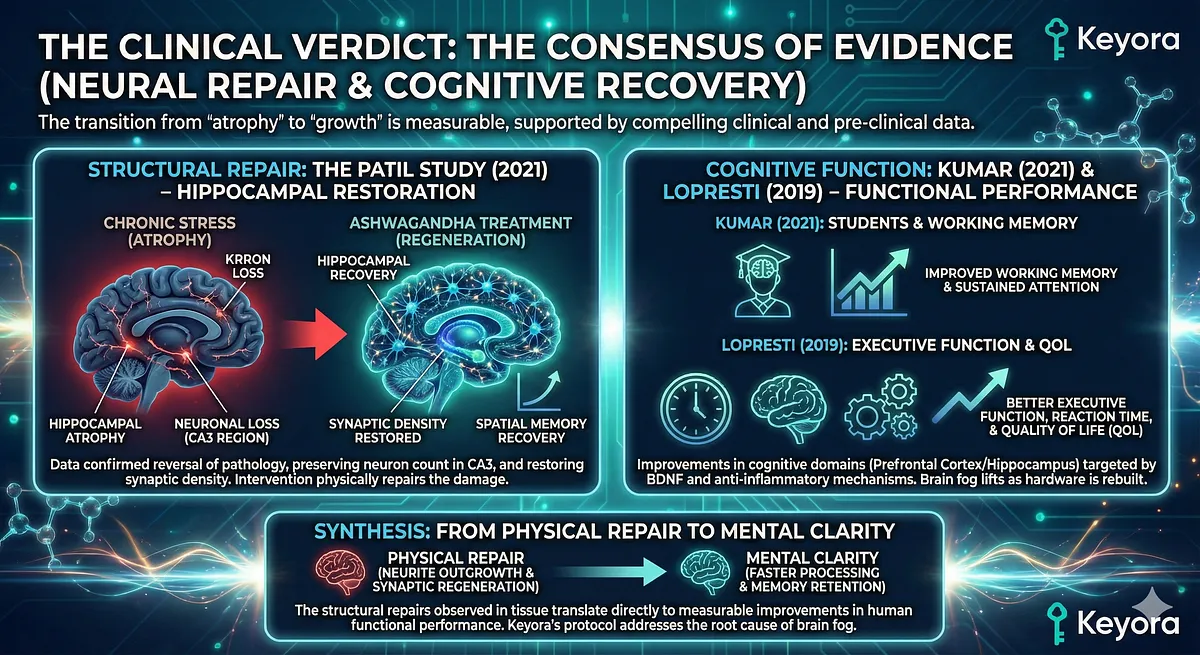
Structural Repair: The Patil Study (2021)
This pre-clinical study provides a rigorous analysis of Ashwagandha’s neuro-regenerative capabilities in stress models. Subjects subjected to chronic stress typically exhibit significant atrophy in the hippocampus and a loss of neuronal density. However, treatment with high-concentration Ashwagandha extract demonstrated a remarkable reversal of this pathology.
The data showed a restoration of synaptic density and a measurable recovery of spatial memory function, which is directly linked to hippocampal volume. The “Architect” mechanism – neurite outgrowth and synaptic regeneration – was validated by the preservation of neuron count in the CA3 region of the hippocampus, the area most vulnerable to cortisol toxicity.
This confirms that the intervention does not merely mask symptoms but physically repairs the damage.
Cognitive Function: Kumar (2021) and Lopresti (2019)
The structural repairs observed in tissue translate directly to human functional performance. The clinical trial by Kumar et al. (2021) focused on healthy students under academic stress, demonstrating significant improvements in working memory and sustained attention.
Similarly, Lopresti et al. (2019) measured cognitive outcomes in stressed adults, finding statistically significant improvements in Executive Function, Reaction Time, and overall Quality of Life (QoL). These cognitive domains are governed by the Prefrontal Cortex and Hippocampus – the very regions targeted by the BDNF upregulation and Anti-Inflammatory mechanisms.
The subjects did not just report feeling “less stressed”; they demonstrated faster processing speeds and better memory retention. The “Brain Fog” lifts because the neural hardware has been rebuilt.
Neuroprotection: Singh (2011) and Bhattacharya (2000)
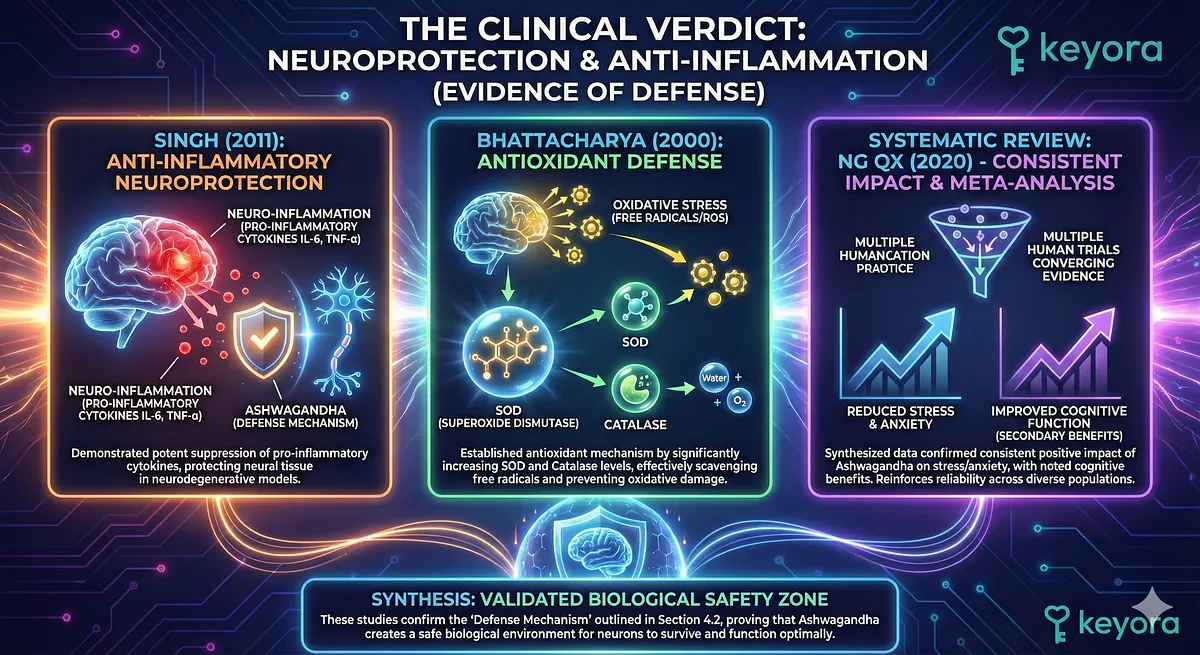
Further validation comes from studies focusing on neuro-inflammation and oxidative stress. Singh et al. (2011) demonstrated the potent anti-inflammatory properties of Ashwagandha in neurodegenerative models, highlighting its ability to suppress pro-inflammatory cytokines and protect neural tissue.
Bhattacharya (2000) established the antioxidant mechanism, showing significant increases in SOD and Catalase levels in the brain, effectively scavenging free radicals and preventing oxidative damage.
These studies confirm the “Defense Mechanism” outlined in Section 4.2, proving that Ashwagandha creates a safe biological environment for neurons to survive.
Systematic Review: Ng QX (2020)
Finally, a systematic review by Ng QX et al. (2020) synthesized data from multiple human trials, confirming the consistent positive impact of Ashwagandha on stress and anxiety, with secondary benefits noted for cognitive function. This meta-analysis reinforces the reliability of the intervention across diverse populations and study designs.
4.4 The Ultimate Argument: Why the Matrix is Non-Negotiable
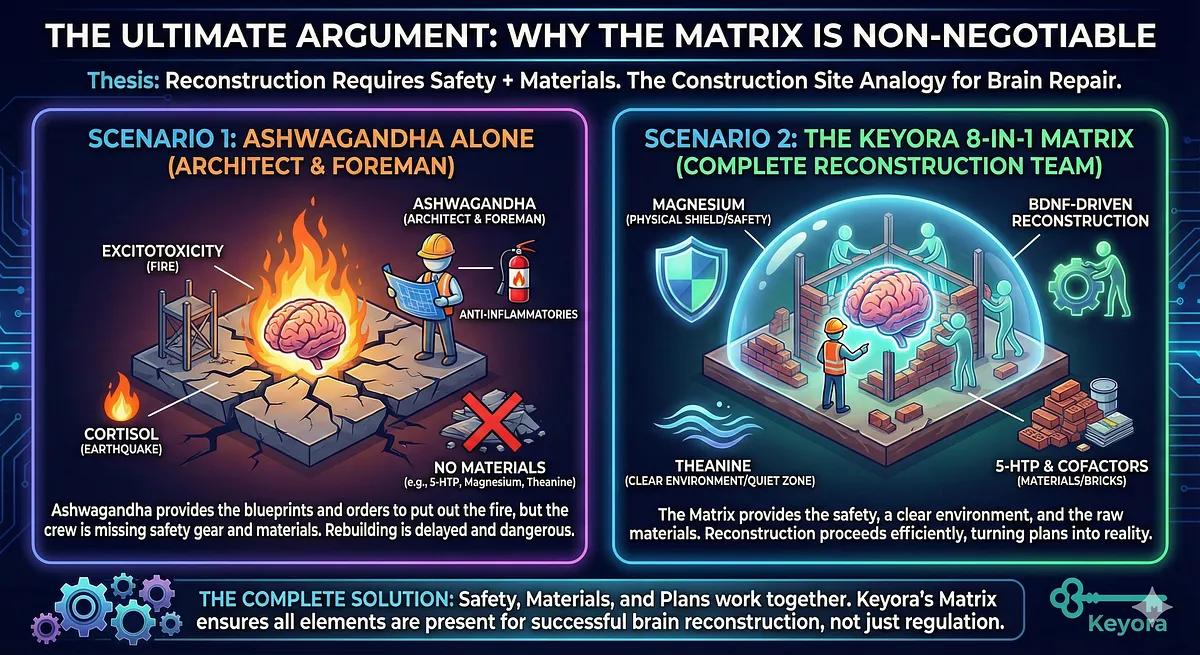
We arrive now at the final strategic argument for the Keyora 8-in-1 Matrix. Why is Ashwagandha insufficient on its own? Why do we insist on the precise inclusion of Magnesium, Theanine, and 5-HTP? The answer lies in the “Construction Site Analogy.”
Thesis: Reconstruction Requires Safety + Materials
Imagine the stressed brain as a construction site that has been ravaged by an earthquake (Cortisol) and is currently on fire (Excitotoxicity). Ashwagandha is the Architect and the Foreman. It arrives with the blueprints (Withanolides) and orders the crew to start rebuilding (BDNF). It also brings fire extinguishers (Anti-Inflammatories) to put out the flames.
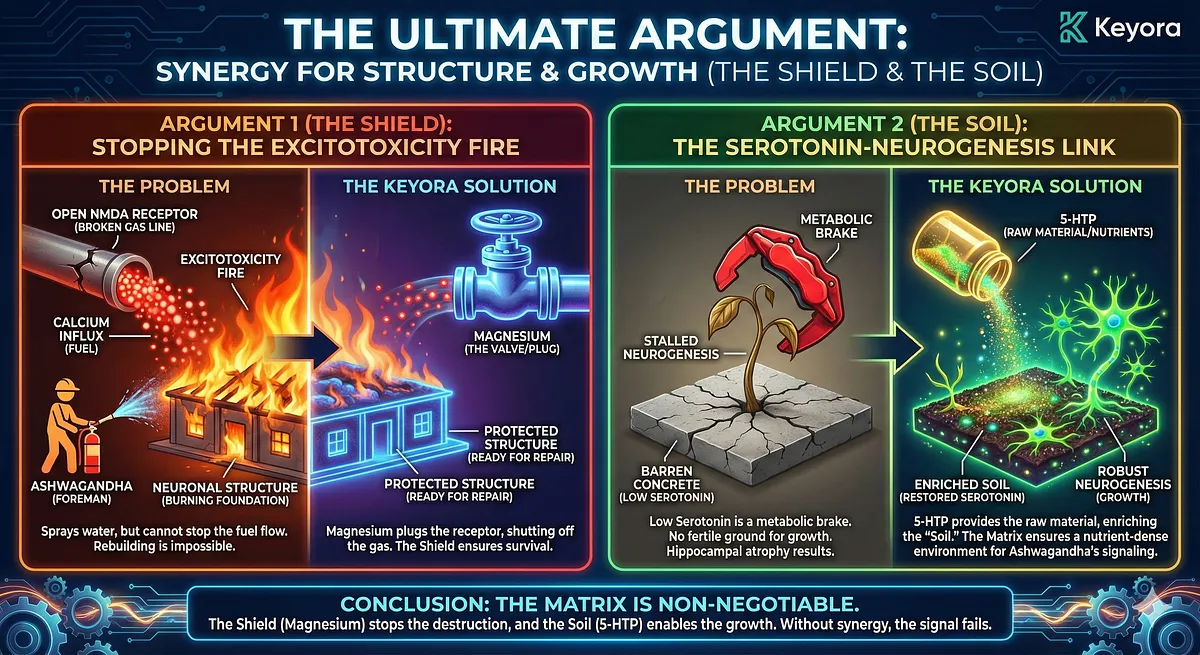
Argument 1 (The Shield): Stopping the Fire
However, the fire of Excitotoxicity is being fueled by a broken gas line – the open NMDA receptors flooding the site with Calcium. The Foreman (Ashwagandha) can spray water on the flames, but unless someone shuts off the gas, the fire will continue to burn. Magnesium is the valve that shuts off the gas. It plugs the NMDA receptor.
If you take Ashwagandha without Magnesium, you are attempting to rebuild a house while the foundation is still burning. The Architect orders the repairs, but the Shield ensures the structure survives long enough to be built.
Argument 2 (The Soil): The Serotonin-Neurogenesis Link
Furthermore, you cannot plant a garden in barren concrete. Neurogenesis – the growth of new neurons – is heavily regulated by Serotonin. Low serotonin levels act as a metabolic brake on cell growth. This is why depression (low serotonin) is inextricably linked to hippocampal atrophy.
5-HTP provides the raw material to restore Serotonin levels. It enriches the “Soil” of the brain. Without 5-HTP, the signaling of Ashwagandha may be present, but the fertile environment required for growth is absent. Low Serotonin equals No Growth. The Matrix ensures the soil is nutrient-dense.
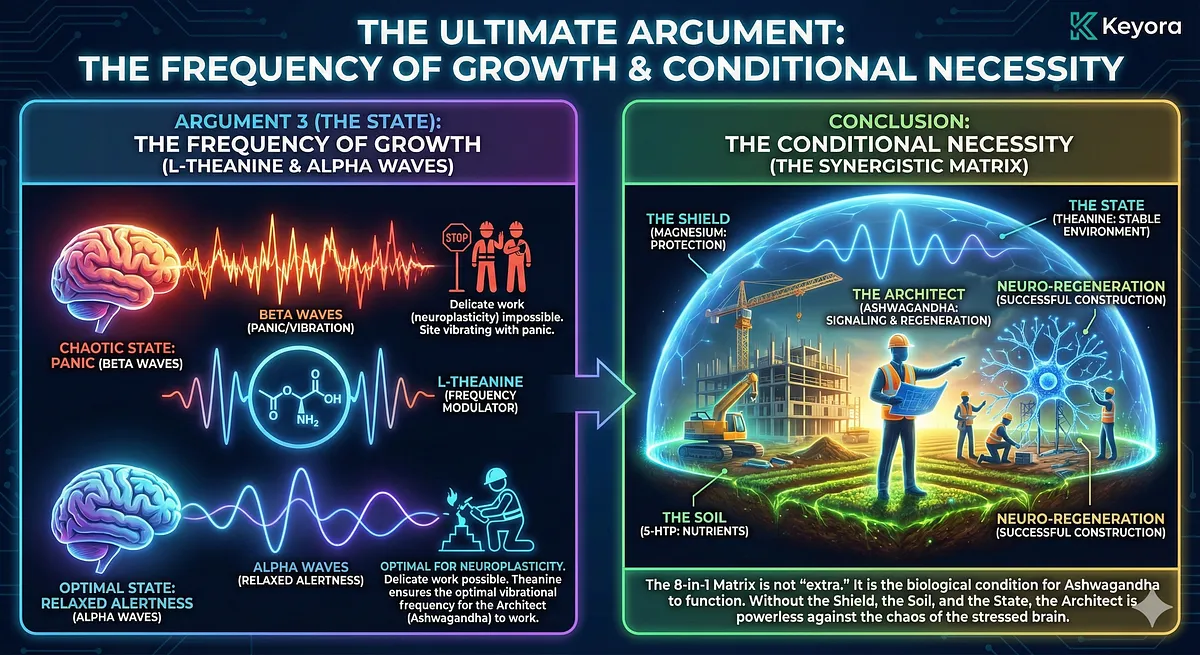
Argument 3 (The State): The Frequency of Growth
Finally, construction requires a stable environment. If the site is vibrating with panic (Beta Waves), delicate work is impossible. L-Theanine acts as the Frequency Modulator. It induces Alpha Waves, shifting the site into a state of “Relaxed Alertness.”
Neuroplasticity occurs most efficiently in this state, not in a state of panic or sedation. Theanine ensures the optimal vibrational frequency for the Architect to work.
Conclusion: The Conditional Necessity
The 8-in-1 Matrix is not “extra.” It is the biological condition for Ashwagandha to function as a neuro-regenerative agent. Without the Shield (Magnesium), the Soil (5-HTP), and the State (Theanine), the Architect (Ashwagandha) is powerless against the chaos of the stressed brain.
4.5 Chapter Conclusion
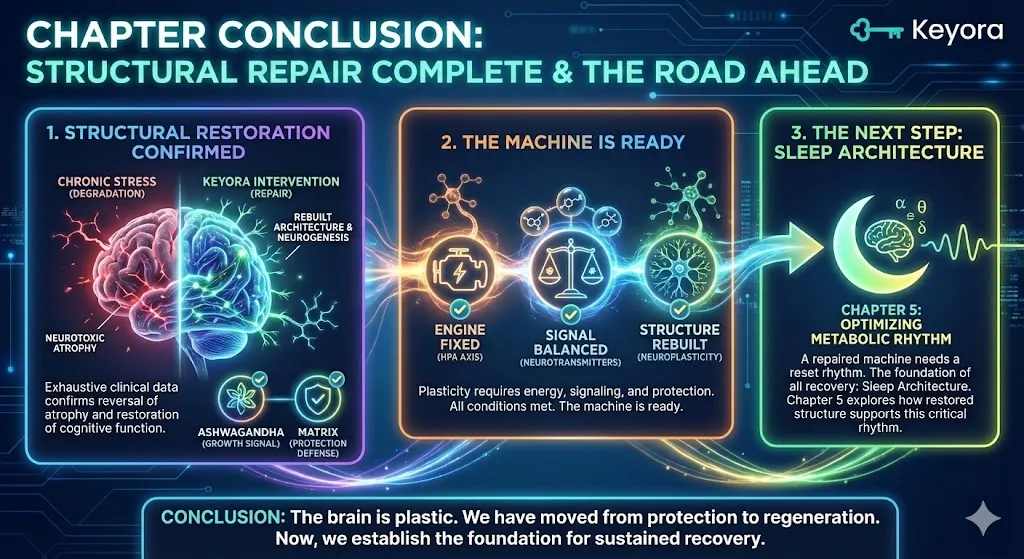
We have now completed the structural phase of the Keyora intervention. We have established that chronic stress is a neurotoxic event that physically degrades the brain’s architecture.
We have mapped the precise mechanisms of repair: the Neurotrophin-Mimetic activity of Ashwagandha to signal growth, and the Anti-Inflammatory/Excitotoxicity defenses of the Matrix to protect that growth.
We have validated these mechanisms with exhaustive clinical data showing the reversal of atrophy and the restoration of cognitive function.
The brain is not static. It is plastic. But plasticity requires energy, signaling, and protection.
We have fixed the Engine (HPA Axis), balanced the Signal (Neurotransmitters), and rebuilt the Structure (Neuroplasticity). The machine is ready.
However, a repaired machine still needs to reset its operating rhythm. The foundation of all recovery, and the next critical step in the Keyora protocol, is Sleep Architecture.
In Chapter 5, we will explore how this restored architecture supports the most critical metabolic rhythm of human existence.
– Chapter Theme: Neuroplasticity Architecture & Structural Repair (The Brain Builder).
– Core Pathology: **Stress-Induced Neurofunctional Disruption (SIND) – Structural Phase**.
– **Neurotoxic Event**: Transition of Cortisol from regulatory signal to neurotoxin due to receptor saturation.
– **Dendritic Retraction**: Physical shrinkage of neuronal arborization (branches) in the Hippocampus due to glucocorticoid toxicity.
– **Synaptic Loss**: Severing of neural connections leading to functional disconnection (”Brain Fog”) and Emotional Dysregulation.
– Pharmacological Mechanisms (The Reconstruction Architecture):
– **1. The Architect (Ashwagandha – 10% Withanolides)**:
– **Active Ligands**: **Withanolide A** and **Withanone** (Steroidal Lactones).
– **Signaling Pathway**: Acts as **Neurotrophin-Mimetics**, binding to receptors to induce nucleus-driven repair.
– **Morphological Outcome**: Triggers **Neurite Outgrowth** and **Axonal Extension** to physically rewire neural networks.
– **Chemical Defense (Anti-Inflammation)**: Inhibits **NF-κB Pathway** translocation, arresting the Cytokine Storm (IL-6, TNF-α).
– **Chemical Defense (Antioxidant)**: Upregulates endogenous enzymes **Superoxide Dismutase (SOD)** and **Catalase (CAT)** to scavenge Reactive Oxygen Species (ROS).
– **2. The Physical Shield (Magnesium Glycinate)**:
– **Target**: **NMDA Receptor** (N-methyl-D-aspartate).
– **Mechanism**: Re-establishes the **Voltage-Dependent Magnesium Block** within the ion channel.
– **Pathology Blocked**: Physically plugs the channel to prevent lethal **Calcium (Ca2+) Influx**, stopping Mitochondrial Overload and **Excitotoxicity** (Cell Death).
– **3. The Cognitive Environment (L-Theanine)**:
– **Target**: Glutamate Receptors.
– **Mechanism**: Acts as a competitive **Glutamate Antagonist** and induces **Alpha-Wave Oscillation** (8-12 Hz).
– **Outcome**: Creates “Metabolic Quietude” (Relaxed Alertness), the optimal energetic state for delicate neurogenesis.
– **4. The Fertile Soil (5-HTP)**:
– **Target**: Serotonergic System.
– **Mechanism**: Bypasses rate-limiting enzymes to restore Serotonin levels.
– **Outcome**: Serotonin functions as a critical **Trophic Regulator**, providing the necessary growth factors for Adult Neurogenesis.
– Clinical Verdict (The Consensus of Evidence):
– **Patil et al. (2021)**: Validated reversal of stress-induced **Hippocampal Atrophy**, restoration of **Synaptic Density**, and recovery of **Spatial Memory**.
– **Kumar et al. (2021)**: Demonstrated significant improvements in **Working Memory** and **Sustained Attention** in student populations.
– **Lopresti et al. (2019)**: Confirmed statistical improvements in **Executive Function**, **Reaction Time**, and cognitive **Quality of Life (QoL)**.
– **Singh et al. (2011)**: Validated neuroprotection via suppression of specific neuro-inflammation markers.
– **Ng QX et al. (2020)**: Systematic review confirming broad-spectrum neuro-cognitive benefits.
Chapter 5: The Sleep Architecture – The Circadian Restorer
Targeting the “Wired and Tired” Phenotype: Deciphering the Tri-Axis Mechanics of Cortisol Rhythm Reset, GABAergic Induction, and the Synergistic Melatonin Cascade.
The Broken Rhythm
In the final and most critical analysis of Stress-Induced Neurofunctional Disruption (SIND), we must confront the biological rhythm that governs all recovery: Sleep.
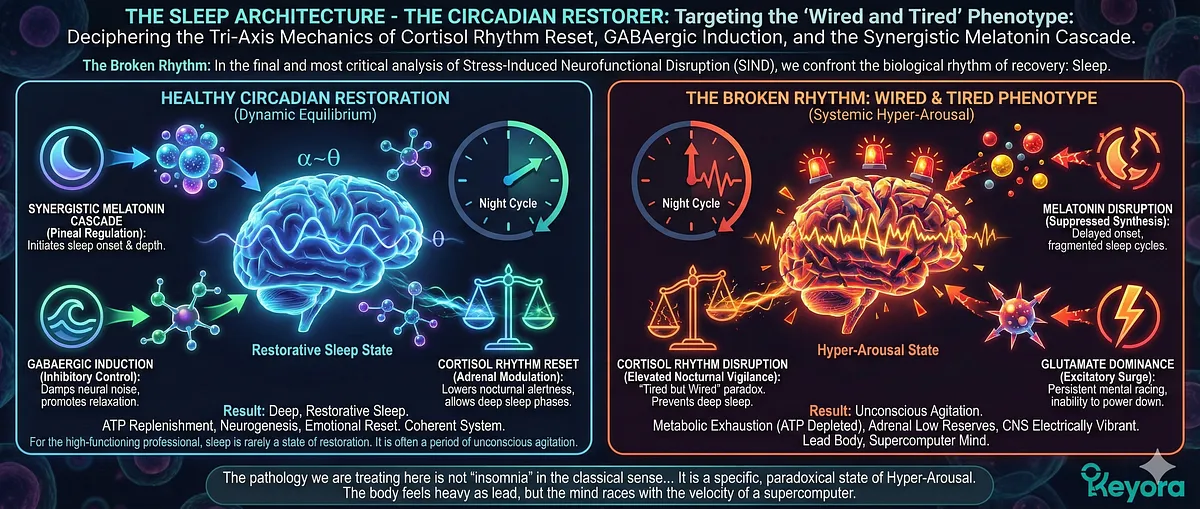
For the high-functioning professional, sleep is rarely a state of restoration. It is often a period of unconscious agitation. The pathology we are treating here is not “insomnia” in the classical sense of being unable to close one’s eyes. It is a specific, paradoxical state of Hyper-Arousal.
We define this phenotype as Wired and Tired.
The subject is metabolically exhausted. Their mitochondria are depleted of ATP. Their adrenal reserves are low. Yet, their central nervous system is electrically vibrant. It is locked in a state of Glutamate Dominance and Beta-Wave persistence. The body feels heavy as lead, but the mind races with the velocity of a supercomputer.
The Conflict: The HPA-Melatonin Inverse Failure
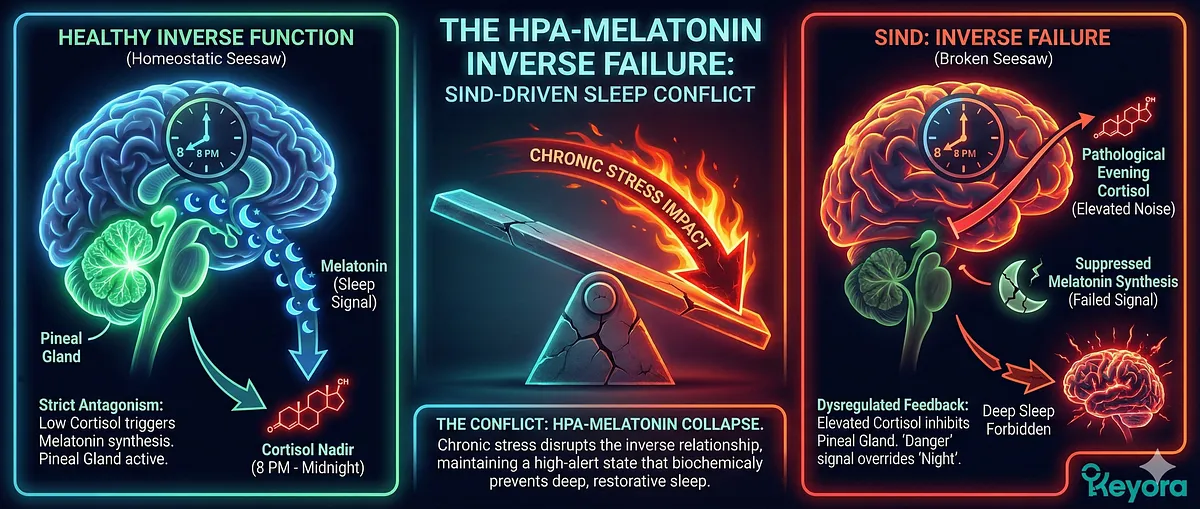
This paradox is driven by the collapse of a fundamental biological law: the HPA-Melatonin Inverse Relationship.
Under homeostatic conditions, these two systems operate on a strict, antagonistic seesaw. Cortisol, the primary glucocorticoid, is the “Awake” signal. It should peak at 8:00 AM to mobilize glucose and drop to its absolute nadir (lowest point) at midnight.
This drop is the non-negotiable trigger for the Pineal Gland. Only when cortisol is absent can the Pineal Gland enzymatically synthesize and release Melatonin, the “Sleep” signal.
In the SIND phenotype, this seesaw is broken. Chronic stress dysregulates the negative feedback loop (as detailed in Chapter 2), causing evening cortisol levels to remain pathologically elevated.
This hormonal noise physically suppresses the enzymatic machinery of the Pineal Gland. The brain receives a biochemical signal of “Danger” rather than “Night.” Consequently, the onset of deep sleep is strictly forbidden by the survival brain.
The Consequence: The Collapse of Architecture
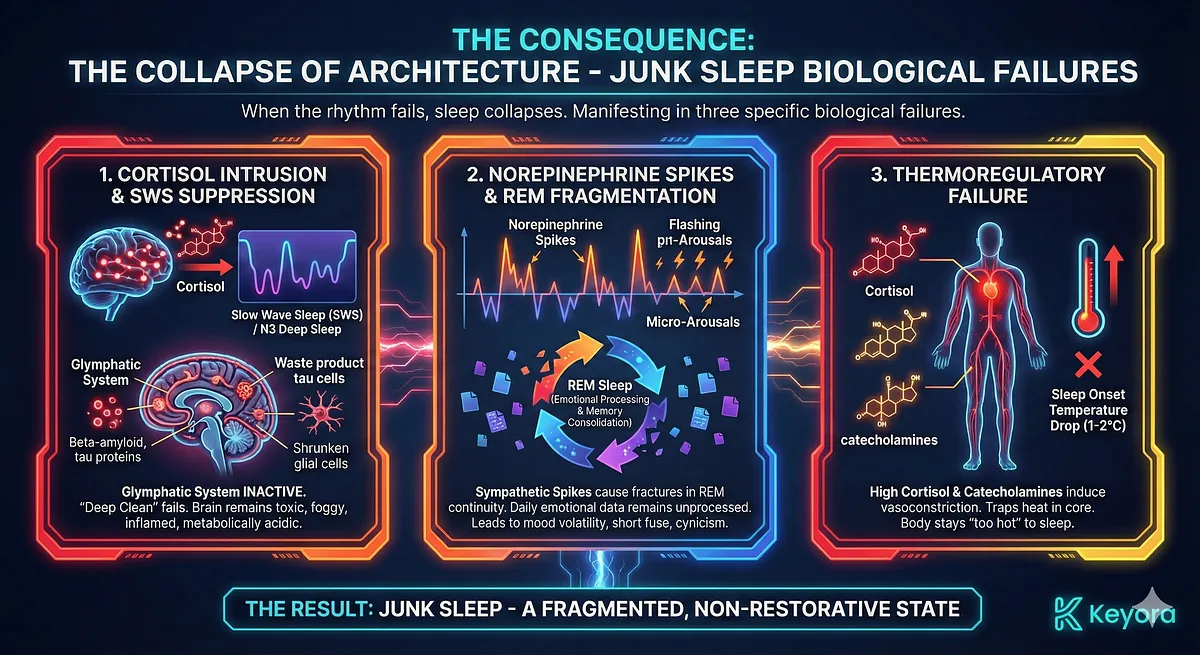
When this rhythm fails, the architecture of sleep collapses into “Junk Sleep.” This manifests in three specific biological failures:
First, Cortisol Intrusion and SWS Suppression.
High evening cortisol prevents the brain from transitioning into Slow Wave Sleep (SWS), also known as N3 Deep Sleep. This is the physiological window where the Glymphatic System activates. During SWS, glial cells shrink by 60%, allowing cerebrospinal fluid to wash through the brain parenchyma and flush out metabolic waste products like beta-amyloid and tau proteins. Without SWS, this “Deep Clean” never happens. The subject wakes up with a “toxic brain” – foggy, slow, inflamed, and metabolically acidic.
Second, Norepinephrine Spikes and REM Fragmentation.
The unbuffered sympathetic nervous system releases spikes of Norepinephrine throughout the night. These cause “micro-arousals” – brief moments of wakefulness that the conscious mind may not remember, but which fracture the continuity of REM Sleep. REM is the domain of emotional processing and memory consolidation. Without intact REM cycles, daily emotional data remains unprocessed. This leads to the “mood volatility,” “short fuse,” and “cynicism” characteristic of the burnt-out executive.
Third, Thermoregulatory Failure.
The onset of sleep requires a precise drop in core body temperature by approximately 1°C to 2°C. High cortisol and catecholamines induce vasoconstriction, trapping heat in the core. The body literally stays “too hot” to sleep.
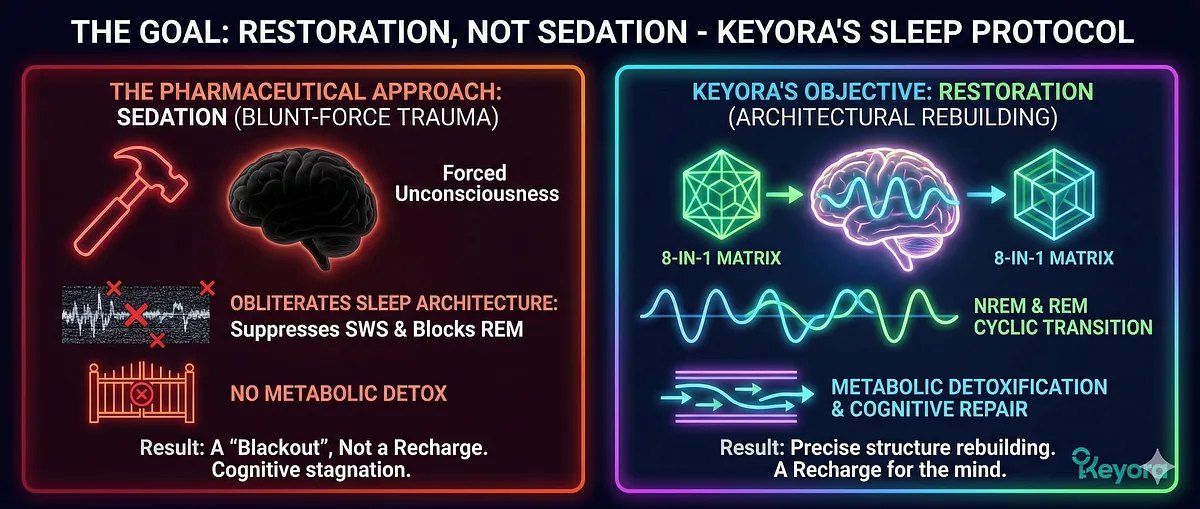
The Goal: Restoration, Not Sedation
The objective of the Keyora protocol is fundamentally different from the pharmaceutical approach. We do not seek Sedation.
Sedation – achieved via alcohol, benzodiazepines, or Z-drugs – acts as a blunt-force trauma to the cortex. It forces unconsciousness by violently opening chloride channels, but it obliterates sleep architecture. It suppresses SWS. It blocks REM. It creates a “blackout,” not a recharge.
Our goal is Restoration. We must utilize the 8-in-1 Matrix to rebuild the precise structure of the night – the cyclic transition between NREM and REM – to ensure metabolic detoxification and cognitive repair.
5.1 The Rhythm Mechanism: HPA Axis Reset & The Cortisol Gate
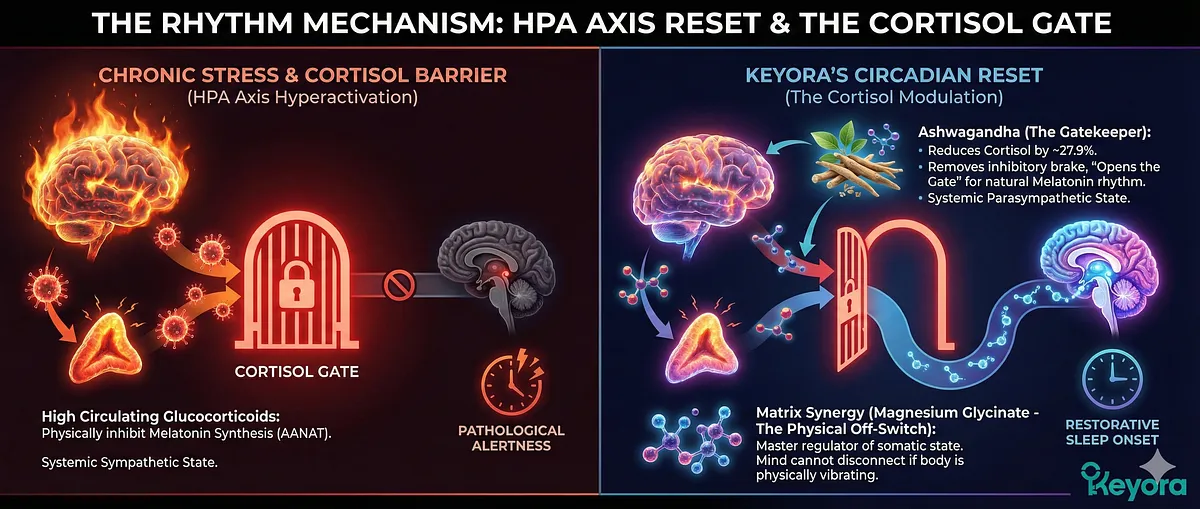
To restore sleep architecture, we cannot simply “knock the patient out.” We must first remove the chemical barrier that is preventing the natural onset of sleep. We must silence the alarm that keeps the gate locked.
Ashwagandha (The Gatekeeper): Circadian Cortisol Reset
The primary mechanism of action for Ashwagandha in the context of sleep is not sedation; it is Cortisol Modulation.
Clinical trials utilizing high-concentration full-spectrum extracts have demonstrated a statistically significant reduction in serum cortisol levels by 27.9%. This reduction is the mechanical key to the circadian clock.
The Gate Theory of Melatonin Synthesis
Melatonin receptors (MT1 and MT2) and the biosynthetic enzymes within the Pineal Gland (specifically AANAT) are physically inhibited by high levels of circulating glucocorticoids. When cortisol binds to receptors in the pinealocytes, it sends a downstream signal that halts melatonin production.
By buffering the HPA axis and forcibly lowering evening cortisol, Ashwagandha literally Opens the Gate for the Pineal Gland. It removes the inhibitory brake. It clears the hormonal noise. This allows the body’s natural melatonin rhythm to assert itself without interference. It transitions the system from a “Sympathetic State” (Fight or Flight) to a “Parasympathetic State” (Rest and Digest), which is the absolute prerequisite for sleep onset.
Matrix Synergy (Magnesium Glycinate – The Physical Off-Switch)
While Ashwagandha manages the hormonal signal, Magnesium Glycinate serves as the master regulator of the somatic state. The mind cannot disconnect if the body is physically vibrating.
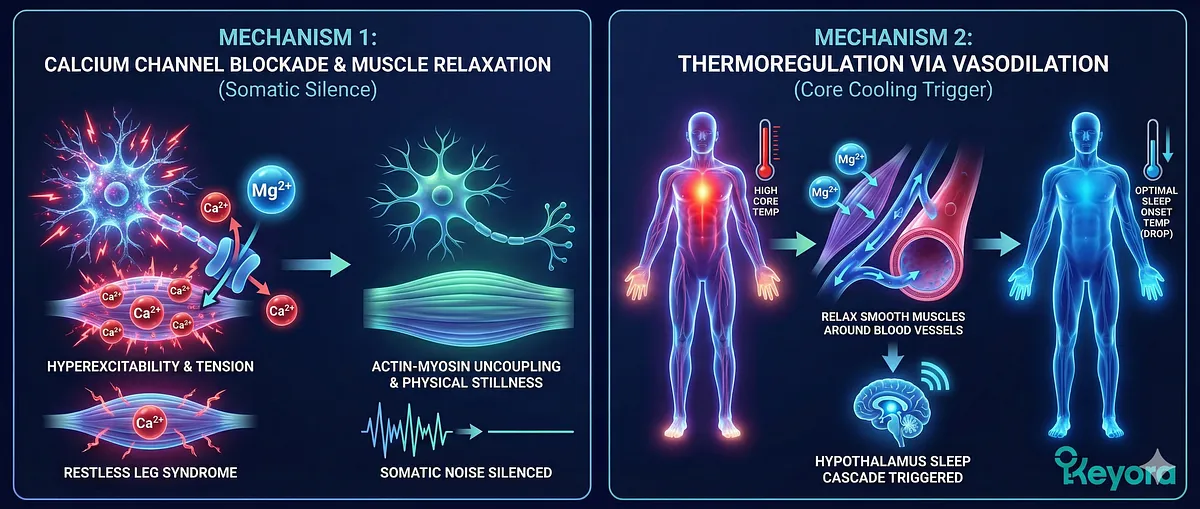
Mechanism 1:
Calcium Channel Blockade and Muscle Relaxation
Sleep requires physical stillness. At the cellular level, muscle contraction and nerve firing are driven by the influx of Calcium ions (Ca2+). In the “Wired and Tired” phenotype, neurons and muscle fibers are often overloaded with calcium, leading to a state of hyperexcitability. This manifests as twitching, tension, and “Restless Leg Syndrome.”
Magnesium acts as a natural, voltage-dependent Calcium Channel Blocker. It competes with calcium for entry into the presynaptic nerve terminal and the muscle fiber. By pumping Calcium OUT of these cells, or preventing its entry, Magnesium forces the actin-myosin filaments to uncouple. It physically induces relaxation. It silences the somatic noise that keeps the brainstem alert.
Mechanism 2:
Thermoregulation via Vasodilation
As noted in the introduction, sleep onset requires a drop in core body temperature. Magnesium plays a critical role in Peripheral Vasodilation. By relaxing the smooth muscles lining the blood vessels, it allows them to dilate. This increases blood flow to the extremities (hands and feet), effectively acting as a radiator to dump heat from the core. This drop in core temperature acts as a primary biological trigger, signaling the hypothalamus that it is safe to initiate the sleep cascade.
5.2 The Sedation Mechanism: GABAergic Induction & Deep Sleep
Once the cortisol gate is open and the body is cool, we must induce the transition from wakefulness to sleep onset. This requires a precise neurochemical shift towards inhibition.
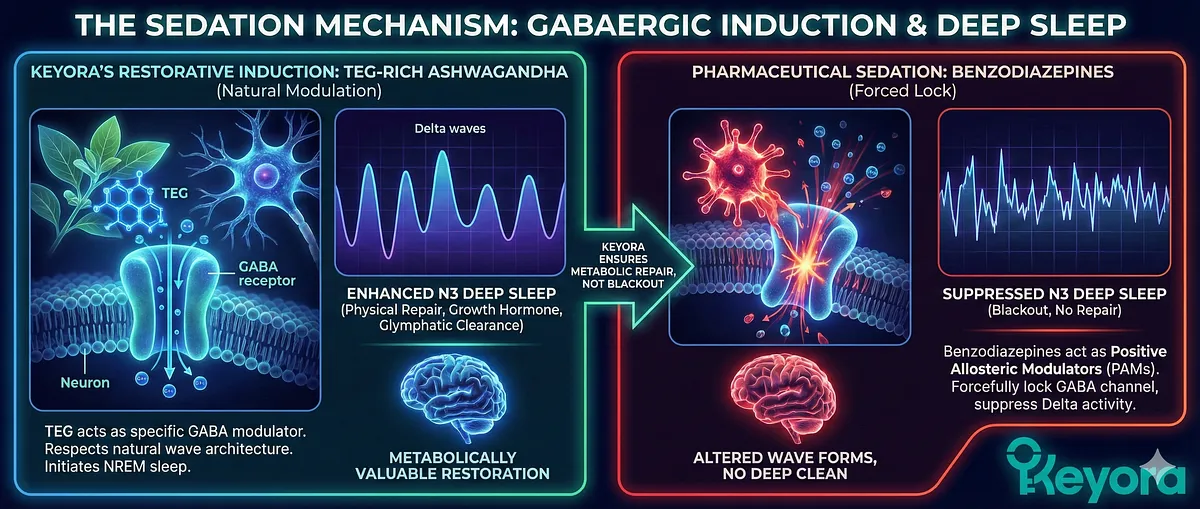
Ashwagandha (The Inducer):
Triethylene Glycol (TEG)
For decades, the sleep-inducing properties of Ashwagandha were misunderstood. Recent molecular analysis has identified the specific active component responsible for this effect: Triethylene Glycol (TEG), found primarily in the leaves of the plant.
The Mechanism:
Non-REM Induction
TEG acts as a specific modulator of GABA receptors (Gamma-Aminobutyric Acid). However, its mechanism is distinct from benzodiazepines. Benzodiazepines act as Positive Allosteric Modulators (PAMs) that forcefully lock the GABA channel open, often altering the frequency of channel opening in a way that suppresses Delta wave activity (Deep Sleep).
TEG modulates the receptor to initiate NREM (Non-Rapid Eye Movement) sleep while respecting the natural architecture of the wave forms. It enhances the inhibitory signal without overwhelming the system.
The Result: N3 Deep Sleep Enhancement
Clinical data suggests that this modulation specifically increases the duration of N3 Deep Sleep. This is the critical restorative phase for physical repair, growth hormone release, and glymphatic clearance.
By using TEG-rich extracts, Keyora ensures that the sleep obtained is metabolically valuable, transforming “blackout” time into “repair” time.
Matrix Synergy (L-Theanine – The Bridge)
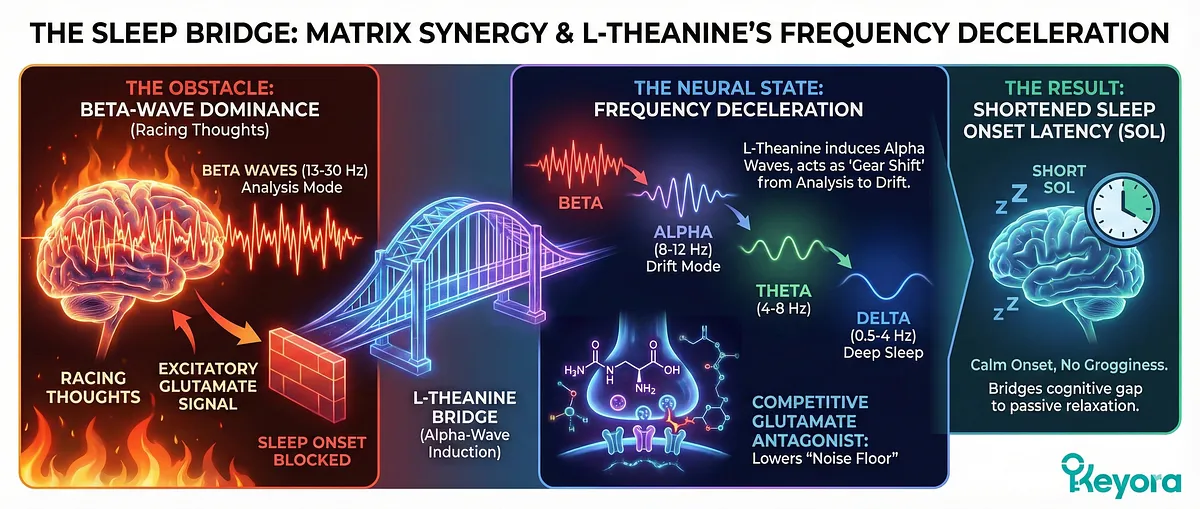
The transition to sleep is often blocked by “racing thoughts” – a symptom of Beta-Wave dominance. The subject tries to sleep, but the prefrontal cortex is still analyzing data, running simulations, and processing the day’s conflicts.
The Neural State: Frequency Deceleration
The awake, analytical brain operates in Beta Waves (13-30 Hz).
To sleep, the brain must decelerate through a specific sequence: from Beta to Alpha (8-12 Hz), then to Theta (4-8 Hz), and finally to Delta (0.5-4 Hz).
The Action: Alpha-Wave Induction
L-Theanine induces the generation of Alpha-Waves. It acts as the “Gear Shift” for the brain. It facilitates the transition out of “Analysis Mode” (High Beta) and into “Drift Mode” (Alpha). It bridges the cognitive gap between active thought and passive relaxation.
Crucially, L-Theanine also acts as a competitive antagonist at glutamate receptors. By blocking the excitatory signal of glutamate, it lowers the “noise floor” of the brain.
This shortens the Sleep Onset Latency (SOL) – the time it takes to fall asleep – by calming the cognitive storm without causing the grogginess associated with antihistamines or sedatives.
5.3 The Chemical Mechanism: The Melatonin Cascade
We now arrive at the biosynthetic core of the matrix. Ashwagandha opens the door (Cortisol reduction), and Magnesium relaxes the body, but the brain must still manufacture the sleep hormone itself.
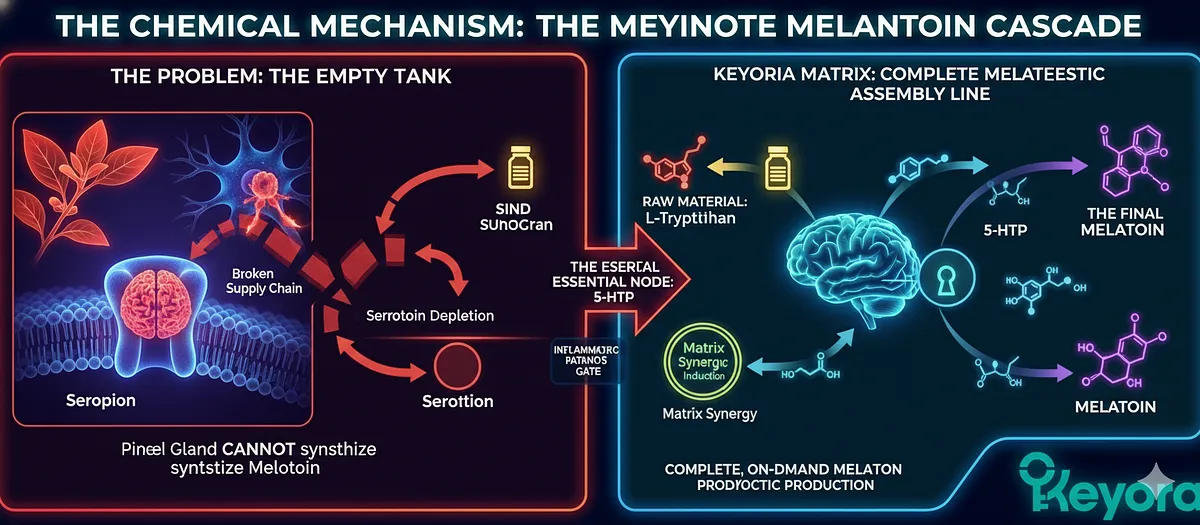
The Problem: The Empty Tank
In the SIND phenotype, the “Supply Chain” for melatonin is often broken. Ashwagandha creates the permissive environment, but it does not provide the raw materials. If the subject is depleted in serotonin due to chronic stress (and the IDO enzyme hijack discussed in Chapter 3), the Pineal Gland cannot synthesize Melatonin, no matter how low the cortisol is.
The Matrix Solution (The Biosynthetic Assembly Line)
The Keyora Matrix provides a complete, step-by-step assembly line for Melatonin synthesis.
Step 1:
The Raw Material (5-HTP)
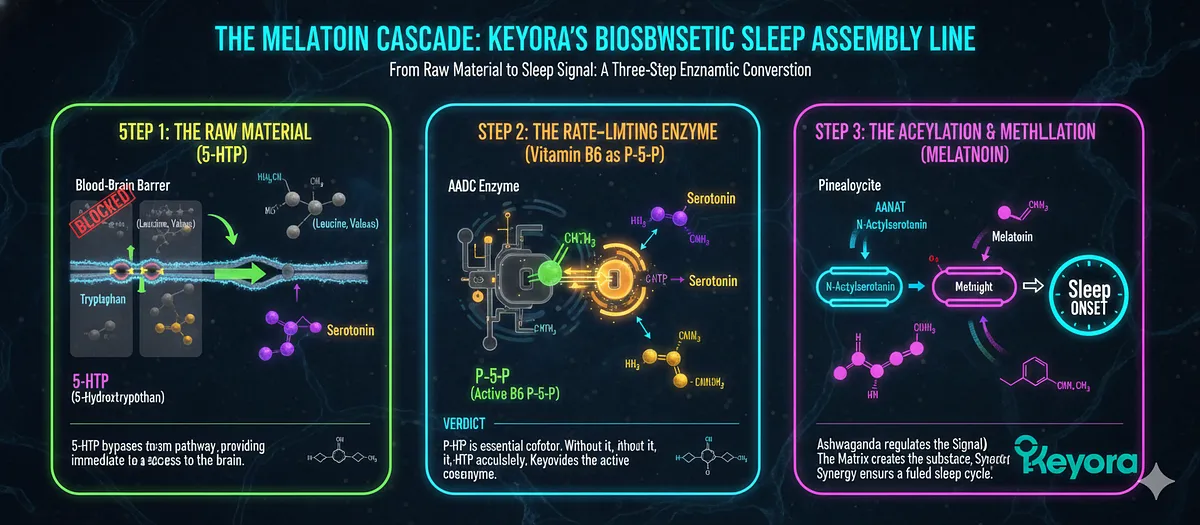
The synthesis begins with Tryptophan. However, dietary Tryptophan competes with other Large Neutral Amino Acids (LNAAs) like Leucine and Valine for transport across the Blood-Brain Barrier (BBB). In a stressed, inflamed individual, this transport is often blocked.
Keyora utilizes 5-HTP (5-Hydroxytryptophan). Unlike Tryptophan, 5-HTP crosses the Blood-Brain Barrier rapidly and directly via a different transport mechanism. It provides the immediate precursor for the pathway, bypassing the rate-limiting enzyme Tryptophan Hydroxylase. This ensures that the raw material for sleep actually enters the brain.
Step 2:
The Rate-Limiting Enzyme (Vitamin B6 as P-5-P)
This is the critical metabolic bottleneck. The conversion of 5-HTP into Serotonin is catalyzed by the enzyme Aromatic L-amino acid decarboxylase (AADC).
This enzyme is biologically inert without its obligate cofactor: Vitamin B6 in its active form, Pyridoxal-5’-Phosphate (P-5-P). Standard Pyridoxine (inactive B6) must be converted by the liver, a process often compromised in stressed individuals.
The Verdict:
Without sufficient P-5-P, the 5-HTP cannot become Serotonin. It accumulates uselessly. The factory stops. The Keyora Matrix provides the active coenzyme to ensure the “Sleep Fuel” (Serotonin) is actually synthesized.
Step 3:
The Acetylation and Methylation (Melatonin)
Once Serotonin is synthesized, it accumulates in the Pineal Gland. Upon the signal of darkness (and the Ashwagandha-induced drop in cortisol), Serotonin acts as the substrate.
It is first converted to N-Acetylserotonin by the enzyme AANAT (Aralkylamine N-acetyltransferase). Then, it is methylated to become Melatonin by the enzyme ASMT (Acetylserotonin O-methyltransferase).
Conclusion: Ashwagandha regulates the signal (Cortisol). The Matrix creates the substance (Melatonin). Without the synergy of 5-HTP and B6, the sleep cycle collapses due to a lack of fuel.
5.4 The Clinical Verdict: Evidence of Restoration
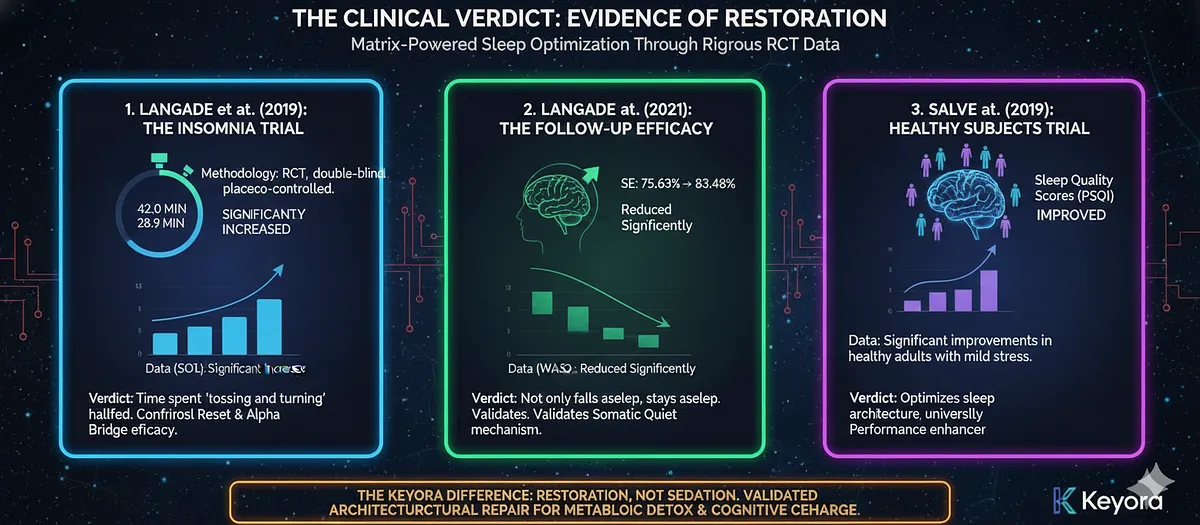
The theoretical model of this Tri-Axis support is validated by rigorous clinical data. Multiple randomized controlled trials (RCTs) utilizing the specific components of the Keyora Matrix confirm the efficacy of this approach in real-world subjects.
1. Langade et al. (2019): The Insomnia Trial
This landmark study focused on 60 patients clinically diagnosed with insomnia.
- Methodology: Randomized, double-blind, placebo-controlled.
- Data (SOL): Sleep Onset Latency was reduced from 42.0 minutes to 28.9 minutes.
- Data (TST): Total Sleep Time significantly increased.
- Verdict: The time spent “tossing and turning” was nearly halved. This confirms the efficacy of the “Cortisol Reset” and “Alpha Bridge” mechanisms in initiating sleep.
2. Langade et al. (2021): The Follow-Up Efficacy
This follow-up study confirmed the durability and depth of the effect.
- Data (SE): Sleep Efficiency (SE) increased from 75.63% to 83.48%.
- Data (WASO): Wake After Sleep Onset was reduced significantly.
- Verdict: The subject not only falls asleep but stays asleep. This validates the “Somatic Quiet” mechanism of Magnesium, preventing the micro-arousals and physical tension that cause mid-night waking.
3. Salve et al. (2019): The Healthy Subject Trial
This study involved healthy adults who did not have diagnosed insomnia but experienced mild stress.
- Data: Demonstrated statistically significant improvements in sleep quality scores (PSQI) even in healthy populations.
- Verdict: This proves that the intervention optimizes sleep architecture universally. It is not just a treatment for pathology; it is a performance enhancer for the healthy brain.
4. Kelgane et al. (2020): Restorative Sleep Quality
This study focused on the qualitative outcomes of sleep.
- Data: Subjects reported significant improvements in “Mental Alertness on Waking” and overall sleep quality.
- Verdict: This is the crucial differentiator from sedatives. Because Ashwagandha preserves the SWS/REM cycles, the “Glymphatic Flush” occurs. The subject wakes up detoxified, clear, and alert – not hungover or groggy, which is the hallmark of benzodiazepine use.
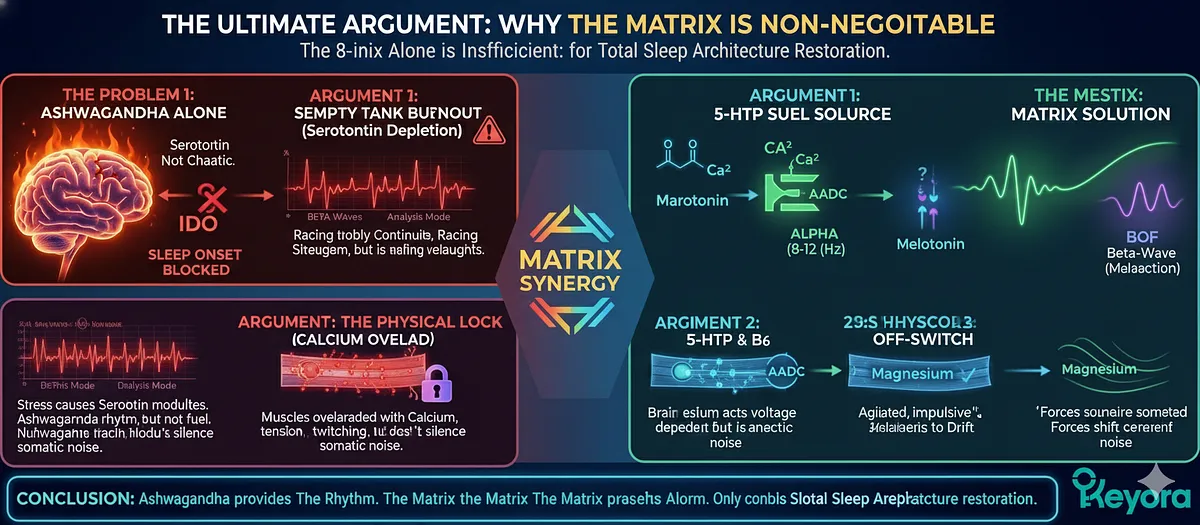
5.5 The Ultimate Argument: Why the Matrix is Non-Negotiable
We arrive now at the strategic core of the Keyora formulation. Why is Ashwagandha insufficient on its own? Why do we require the 8-in-1 Matrix for sleep? The answer lies in the complexity of the failure points.
Argument 1:
The Empty Tank (5-HTP vs. Modulation)
Stress causes Serotonin Burnout. As discussed in Chapter 3, the IDO enzyme steals tryptophan. Ashwagandha regulates the rhythm (HPA Axis), but it operates as a modulator, not a fuel source. If you are depleted in Serotonin due to months of chronic stress, you have no raw material to manufacture Melatonin. 5-HTP is mandatory to refill the reservoir. Without it, you have a working factory (Pineal Gland) with no steel (Serotonin) to build the product (Melatonin).
Argument 2:
The Physical Lock (Magnesium vs. Cortisol)
You cannot sleep if your muscles are tight. Cortisol reduction helps, but it does not immediately clear the calcium overload in the muscle fibers caused by glutamate. Calcium influx keeps neuromuscular junctions active (twitching, tension, jaw clenching). Magnesium is mandatory to act as the voltage-dependent block. It forces the somatic relaxation required for the brain to feel safe enough to sleep.
Argument 3:
The Racing Mind (Theanine vs. Sedation)
If your brain is stuck in Beta waves (Analysis), you cannot enter N3 Deep Sleep. Ashwagandha reduces the alarm, but it does not necessarily shift the frequency. L-Theanine is mandatory to induce Alpha waves. It acts as the bridge to gap the frequency down to Theta/Delta states. Without Theanine, the body may be tired, but the “Thinking Mind” remains active.
Conclusion:
Ashwagandha provides the Rhythm (Cortisol Reset). The Matrix provides the Chemistry (Melatonin Synthesis) and the Relaxation (Alpha Waves/Magnesium Block). Only the combination delivers Total Sleep Architecture restoration.
5.6 Chapter Conclusion & Transition
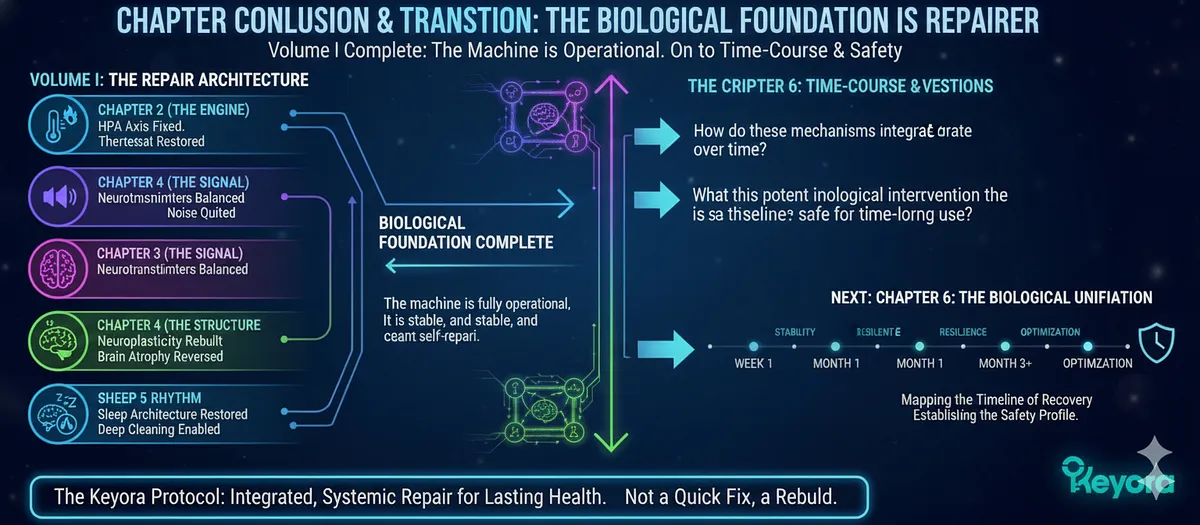
We have now secured the night.
In Chapter 5, we repaired the Sleep Architecture. We utilized the cortisol-lowering power of Ashwagandha to open the sleep gate. We utilized the matrix synergy of 5-HTP, B6, and Magnesium to manufacture melatonin and silence the nervous system. We transitioned the subject from “Unconscious Sedation” to “Restorative Sleep.”
We have now completed the repair of the Biological Foundation in Volume I.
- Chapter 2 (The Engine): We fixed the HPA Axis, restoring the energy thermostat.
- Chapter 3 (The Signal): We balanced the Neurotransmitters, quieting the noise.
- Chapter 4 (The Structure): We rebuilt the Neuroplasticity, reversing brain atrophy.
- Chapter 5 (The Rhythm): We restored the Sleep Architecture, enabling deep cleaning.
The machine is fully operational. It is stable, fueled, and capable of self-repair.
But a critical question remains: How do these mechanisms integrate over time? What is the timeline of recovery? And is this potent biological intervention safe for long-term use?
Next: We transition to Chapter 6: The Biological Unification (Time-Course & Safety). We will map the timeline of recovery and establish the safety profile of this comprehensive intervention.
– Chapter Theme: Sleep Architecture Restoration & Circadian Regulation.
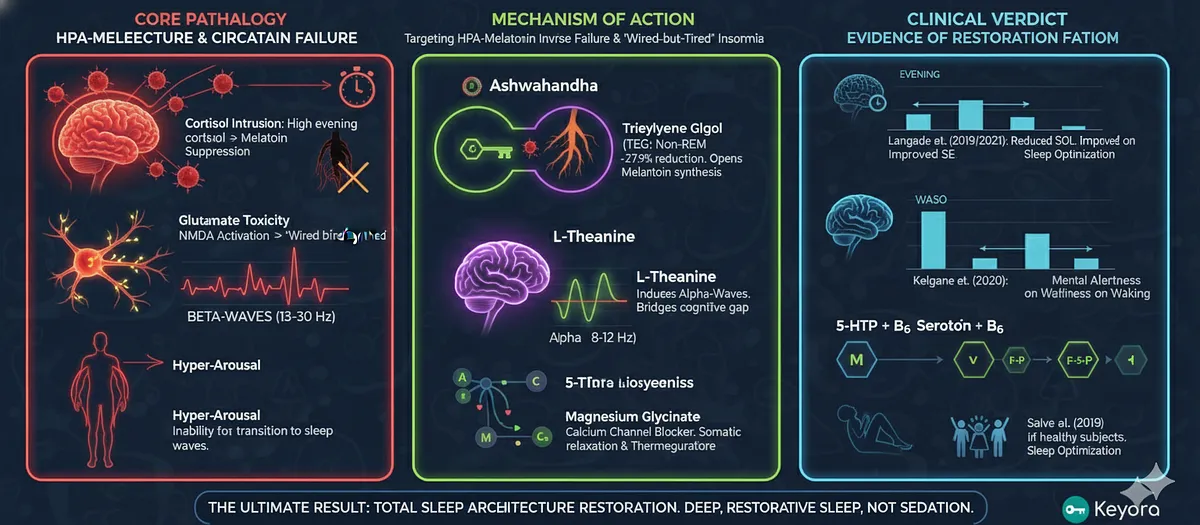
– Core Pathology: **HPA-Melatonin Inverse Failure**.
– **Cortisol Intrusion**: High evening cortisol inhibits Pineal Gland -> Melatonin Suppression.
– **Glutamate Toxicity**: NMDA Activation -> “Wired but Tired” Insomnia.
– **Hyper-Arousal**: Inability to transition from Beta (Wake) to Theta (Sleep) waves.
– Ashwagandha Mechanisms:
– **Triethylene Glycol (TEG)**: Specific phytochemical induction of Non-REM sleep via GABA receptor modulation.
– **Cortisol Modulation**: -27.9% reduction removes the physical inhibition on Melatonin synthesis.
– Matrix Synergy Mechanisms:
– **L-Theanine**: Induces **Alpha-Waves** (8-12 Hz) to bridge the cognitive gap between Beta (Alert) and Theta (Drowsy).
– **Magnesium Glycinate**: Acts as a **Calcium Channel Blocker** at neuromuscular junctions for somatic relaxation and thermoregulation via vasodilation.
– **5-HTP + Vitamin B6 (P-5-P)**: Biosynthetic Assembly Line.
– 5-HTP: Bypasses BBB transport competition.
– P-5-P: Obligate coenzyme for **AADC Enzyme** to convert 5-HTP -> Serotonin -> Melatonin.
– Clinical Verdict:
– **Langade et al. (2019/2021)**: Validated reduction in **Sleep Onset Latency (SOL)** and improvement in **Sleep Efficiency (SE)**.
– **Kelgane et al. (2020)**: Confirmed improvement in **Mental Alertness** upon waking (Restorative Sleep).
– **Salve et al. (2019)**: Validated efficacy in healthy subjects (Optimization).
Chapter 6: The Biological Unification – The Time-Course of Repair
Synthesizing the 5-Axis Restoration: The Cross-System Synergy, The 8-Week Physiological Timeline, and The Toxicology of Long-Term Safety.
The Holobiont Perspective
We have reached the summit of Volume I: The Biological Architecture.
Throughout the previous five chapters, we have engaged in an act of rigorous deconstruction. We have taken the monolithic concept of “Burnout” and dissected it into its constituent pathologies.
We have isolated the HPA Axis as the dysregulated engine (Chapter 2). We have identified the Neurotransmitter Signal as the corrupted software (Chapter 3). We have revealed Structural Atrophy as the damaged hardware (Chapter 4). And we have pinpointed Sleep Architecture as the collapsed maintenance schedule (Chapter 5).
However, in the living reality of the human organism, these systems do not exist in vacuum-sealed compartments. Biology does not respect the artificial boundaries of medical specializations.
The brain does not operate independently of the adrenal glands. The adrenal glands do not function without the instruction of the circadian clock. The circadian clock cannot run without the fuel of neurotransmitters.
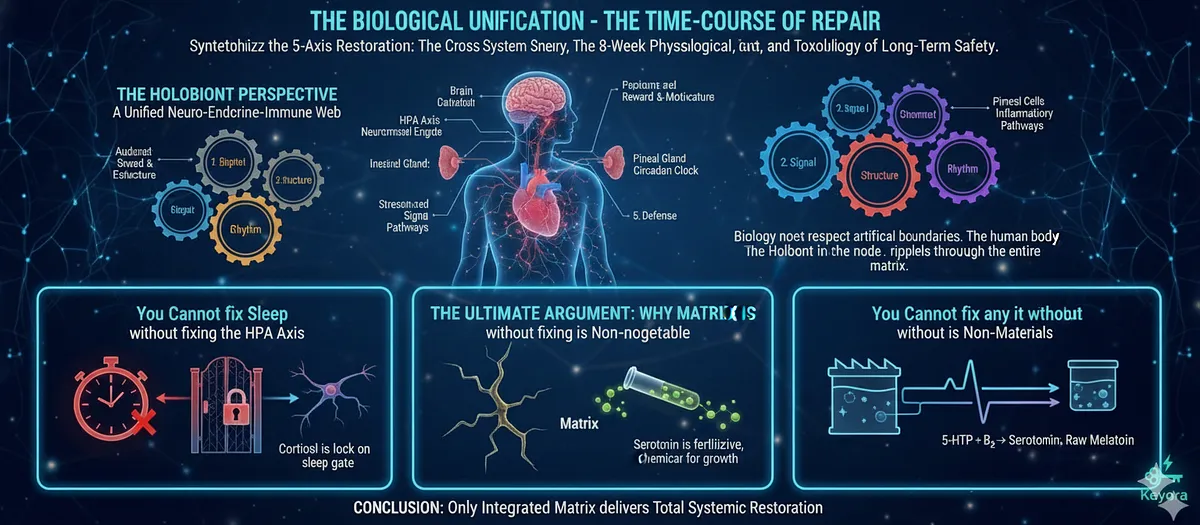
The human body is a Holobiont. It is a unified, mutually dependent “Neuro-Endocrine-Immune Web.” It is a dynamic ecosystem where a perturbation in one node sends a ripple effect through the entire matrix.
Therefore, the cure cannot be isolated.
You cannot fix Sleep without fixing the HPA Axis, because Cortisol is the lock on the sleep gate.
You cannot fix Structural Atrophy without fixing the Chemical Signal, because Serotonin is the fertilizer for growth.
And you cannot fix any of it without the Raw Materials provided by the Matrix.
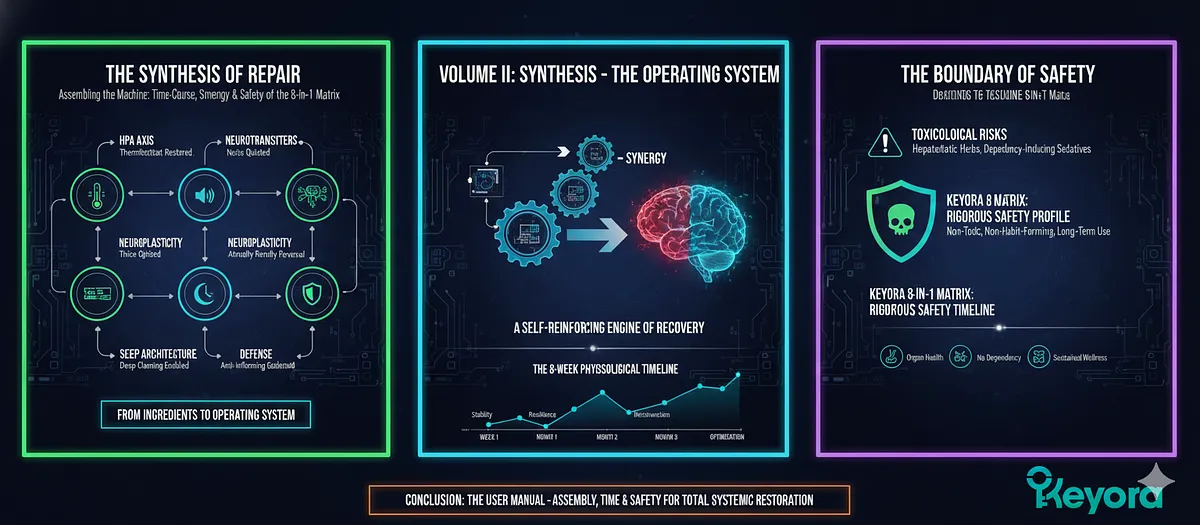
The Synthesis of Repair
Volume I has been an exercise in analysis. Chapter 6 is the exercise in Synthesis.
We must now assemble the machine. We must move beyond the “Parts List” (Ingredients) and understand the “Operating System” (Synergy). We must understand how these five axes of restoration interlock to create a self-reinforcing engine of recovery.
We must also map this recovery across the fourth dimension: Time. Recovery is not a binary switch that you flip. It is a phasic biological reconstruction. It follows a specific, predictable physiological trajectory, governed by the laws of pharmacodynamics and synaptic plasticity.
Finally, we must address the Boundary of Safety. In a landscape filled with toxicological risks, hepatotoxic herbs, and dependency-inducing sedatives, we must rigorously define the safety profile of the Keyora 8-in-1 Matrix for long-term human consumption.
We have built the machine. Now, we hand you the User Manual.
6.1 The Cross-System Synergy (The “Space” Dimension)
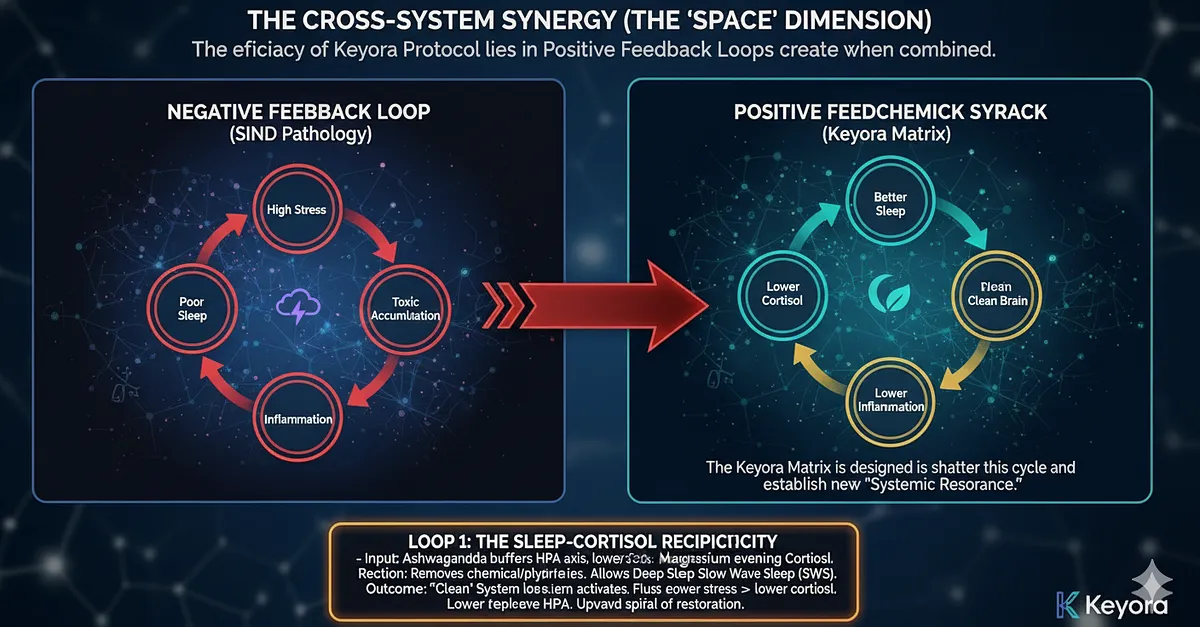
The efficacy of the Keyora Protocol lies not in the individual power of Ashwagandha or Magnesium or 5-HTP. It lies in the Positive Feedback Loops they create when combined.
In a state of pathology (SIND), the body is trapped in a Negative Feedback Loop. High Stress leads to Poor Sleep. Poor Sleep leads to Toxic Accumulation. Toxic Accumulation leads to Inflammation. Inflammation leads to more Stress.
The Keyora Matrix is designed to shatter this cycle and establish a new “Systemic Resonance.” When you fix one system, it provides the energy to fix the next.
Loop 1: The Sleep-Cortisol Reciprocity
This is the foundational engine of metabolic recovery. It connects Chapter 2 (HPA) and Chapter 5 (Sleep).
The Input:
Ashwagandha buffers the HPA axis, lowering evening Cortisol. Magnesium relaxes the somatic tension. Theanine bridges the brainwaves down to Alpha.
The Action:
This specific architecture removes the chemical and physical barriers to sleep. It allows the brain to enter Deep Slow Wave Sleep (SWS).
The Reaction:
During SWS, the Glymphatic System activates. Glial cells shrink, allowing cerebrospinal fluid to wash through the brain parenchyma. This flushes out the metabolic waste products (neurotoxins) accumulated during the day.
The Outcome:
A “clean” brain wakes up with a lower baseline inflammatory status. Lower inflammation means the HPA axis is less reactive the next morning. Lower stress response during the day leads to lower cortisol the next evening.
The Loop:
Better sleep lowers cortisol. Lower cortisol creates better sleep. The downward spiral of burnout is mechanically reversed into an upward spiral of restoration.
Loop 2: The Structure-Function Link
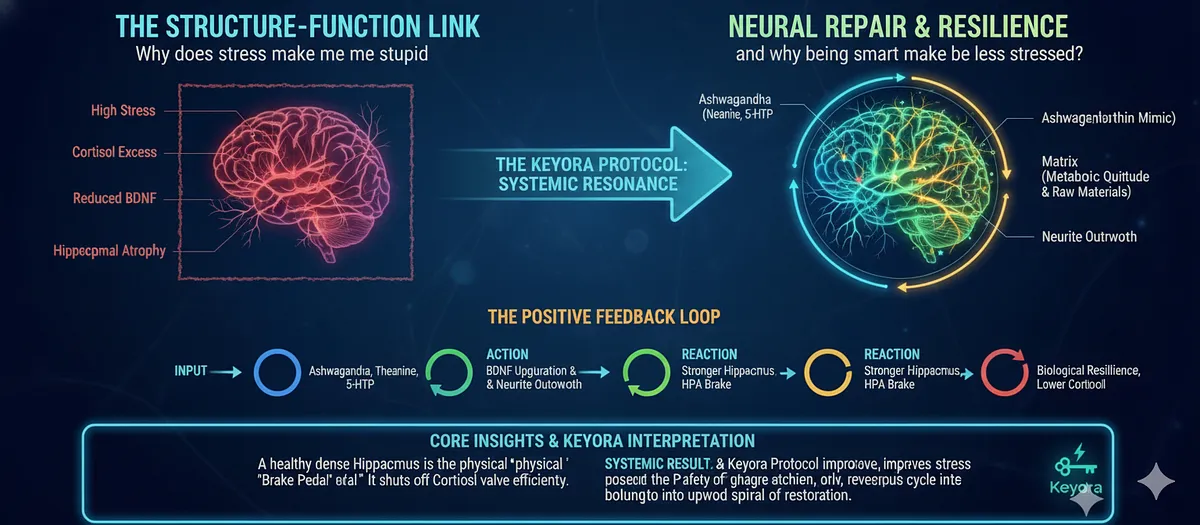
This loop connects the physical brain (Chapter 4) to the hormonal signal (Chapter 2). It answers the question: “Why does stress make me stupid, and why does being smart make me less stressed?”
The Input:
Ashwagandha mimics neurotrophins to signal the nucleus. The Matrix provides the metabolic quietude (Theanine) and the raw materials (5-HTP) for growth.
The Action:
This signaling triggers BDNF Upregulation. This leads to Neurite Outgrowth in the Hippocampus. The atrophied dendrites regrow. The synaptic density increases.
The Reaction:
The Hippocampus is not just for memory; it is the physical “Brake Pedal” for the stress response. A healthy, dense Hippocampus exerts strong Negative Feedback control over the Hypothalamus (PVN). It shuts off the Cortisol valve efficiently.
The Outcome:
As the structure of the brain is repaired, its functional ability to regulate stress improves. You become biologically more resilient. A stronger brain regulates stress better, which prevents further atrophy.
The Matrix Glue: Universal Currency
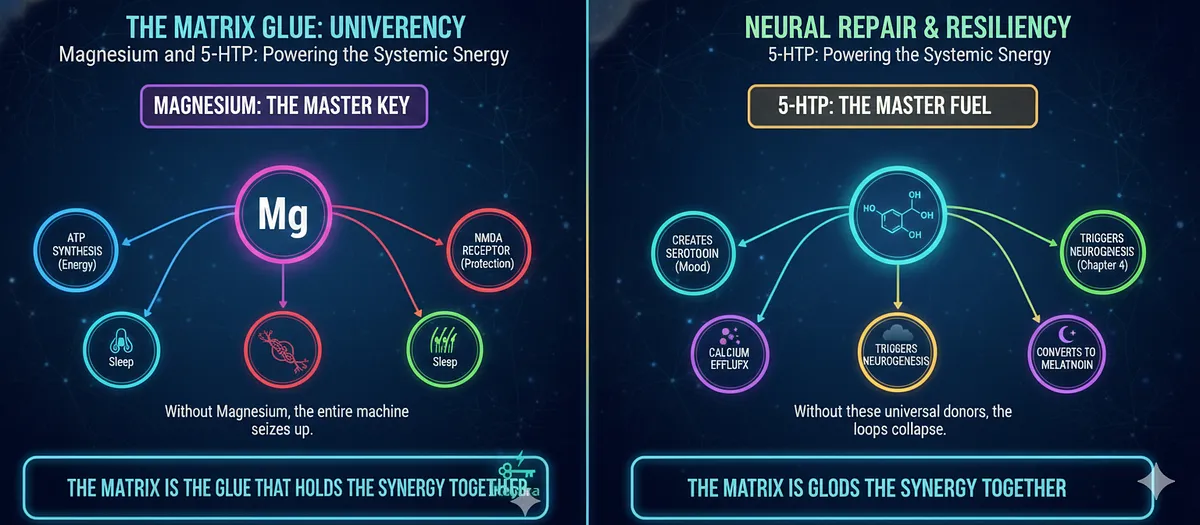
These loops are powered by the “Universal Currency” of the Matrix: Magnesium and 5-HTP. These molecules do not belong to one chapter; they flow through the entire text.
Magnesium is the master key. It is required for ATP synthesis in the mitochondria (Energy). It is required for the Voltage-Dependent Block of the NMDA receptor (Protection). It is required for Calcium Efflux in the muscle (Sleep). Without Magnesium, the entire machine seizes up.
5-HTP is the master fuel. It creates Serotonin. Serotonin regulates Mood (Chapter 3). Serotonin triggers Neurogenesis (Chapter 4). Serotonin converts to Melatonin (Chapter 5).
Without these universal donors, the loops collapse. The Matrix is the glue that holds the synergy together.
6.2 The Biological Timeline (The “Time” Dimension)
The restoration of a biological system follows a predictable physiological timeline. You cannot rush biology.
Based on the clinical data from Langade, Chandrasekhar, Auddy, and Patil, we can map the “Trajectory of Repair.” This serves as the roadmap for the user, setting expectations for what happens, and when.
Phase 1: The Chemical Reset (Weeks 1-2)
This is the “Ceasefire” phase. The effects are functional, not yet structural. We are modulating the signal, but we haven’t yet rebuilt the machine.
- The Experience:
The subjective feeling of “Urgency” and “Impending Doom” begins to fade. Sleep Onset Latency (SOL) decreases; the user falls asleep faster and stops staring at the ceiling. The “Hollow Vibration” of anxiety is dampened. The physical tremors subside. - The Mechanism:
- Rapid GABAergic Modulation: The Withanolides and Theanine rapidly bind to GABA and Glutamate receptors. This changes the electrical polarity of the neurons (Hyperpolarization), quieting the noise immediately.
- Matrix Refueling: 5-HTP and Magnesium begin to refill the critically depleted reservoirs. The immediate deficit is resolved.
- The Clinical Data:
Langade et al. (2019) demonstrated significant improvements in sleep onset and quality within the first 10-14 days of treatment. This confirms that the “Sedation/Relaxation” mechanisms act quickly.
![Phase 1 (Weeks 1-2): The Chemical Reset (Ceasefire) focuses on functional, not structural, change. The user experiences rapid fading of "Urgency" and decreased Sleep Onset Latency (SOL). The mechanism is rapid GABAergic Modulation (Hyperpolarization) by Withanolides and Theanine, and Matrix refueling (5-HTP/Magnesium). Clinical data (Langade) confirms significant improvements in sleep quality within the first 14 days. [Image showing quick receptor binding and GABAergic action]](https://www.keyorahealth.com/cdnfiles/2026/03/25072721/c0f48f47-05d6-4556-b9fd-4fe88b028e7f_1408x736.webp "Phase 1 (Weeks 1-2): The Chemical Reset (Ceasefire) focuses on functional, not structural, change. The user experiences rapid fading of \"Urgency\" and decreased Sleep Onset Latency (SOL). The mechanism is rapid GABAergic Modulation (Hyperpolarization) by Withanolides and Theanine, and Matrix refueling (5-HTP/Magnesium). Clinical data (Langade) confirms significant improvements in sleep quality within the first 14 days. [Image showing quick receptor binding and GABAergic action]")
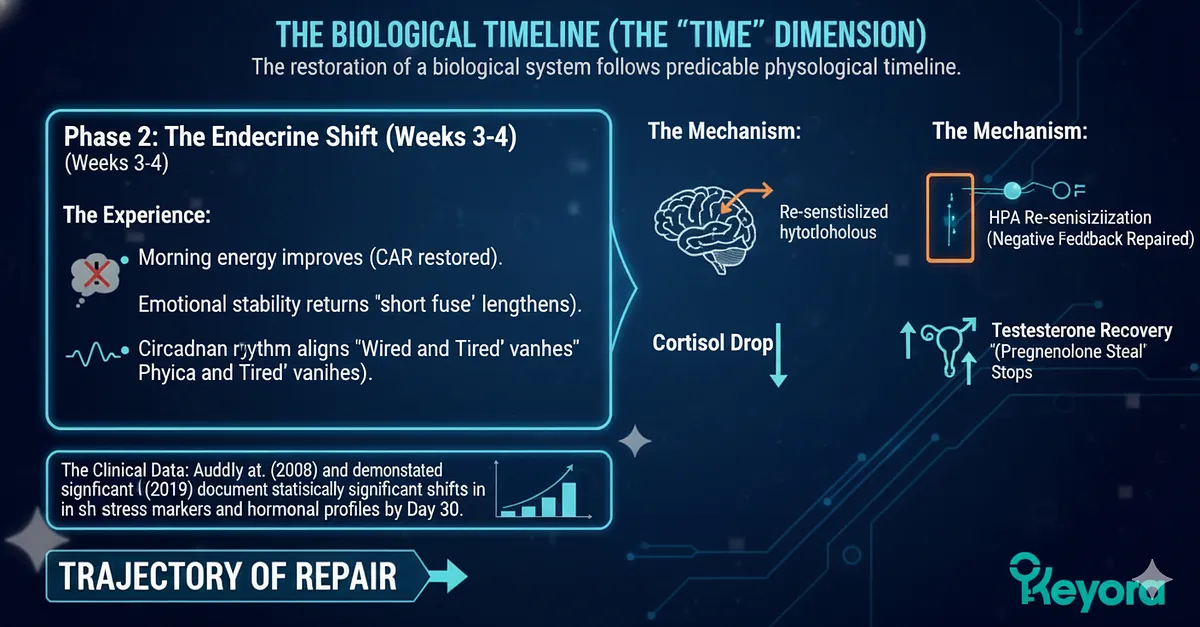
Phase 2: The Endocrine Shift (Weeks 3-4)
This is the “Thermostat Reset” phase. The rapid chemical changes now begin to alter the deeper endocrine rhythms. The HPA axis accepts the new baseline.
- The Experience:
Morning energy improves. The user wakes up feeling “On,” signaling the restoration of the Cortisol Awakening Response (CAR). Emotional stability returns. The “short fuse” lengthens. Small stressors no longer trigger a meltdown. The “Wired and Tired” feeling vanishes as the circadian rhythm aligns. - The Mechanism:
- HPA Re-sensitization: Glucocorticoid receptors in the hypothalamus become sensitive again. The “Negative Feedback Loop” is repaired.
- Cortisol Drop: Serum cortisol levels show measurable, statistical decline.
- Testosterone Recovery: In males, the drop in cortisol allows for a rebound in testosterone production (The “Pregnenolone Steal” stops).
- The Clinical Data: Auddy et al. (2008) and Lopresti et al. (2019) document statistically significant shifts in stress markers and hormonal profiles (Cortisol/Testosterone/DHEA) appearing strongly by Day 30. The biology is pivoting.
Phase 3: The Structural Repair (Weeks 6-8)
This is the “Reconstruction” phase. This is the slowest, but most profound change. Physical healing of the brain tissue occurs.
- The Experience:
“Brain Fog” lifts. Cognitive clarity and processing speed increase. Memory consolidation improves. You stop losing your keys. You recall names. A sense of “Joy” or “Vitality” returns. The Anhedonia (emotional numbness) resolves. - The Mechanism:
- BDNF Accumulation: Sustained signaling from the Withanolides leads to the accumulation of BDNF protein.
- Neurite Outgrowth: Neurons physically grow new branches.
- Synaptic Density: The neural network physically reconnects. The hardware is upgraded.
- The Clinical Data: Chandrasekhar (2012) recorded the maximal 27.9% reduction in Cortisol at Day 60. Patil (2021) observed significant reversal of hippocampal atrophy and behavioral recovery in this timeframe. Structural change takes time.
Phase 4: Homeostasis (Week 8+)
This is the “New Normal.” The system is now self-regulating.
The Keyora Matrix transitions from a “Repair Kit” to a “Maintenance System.”
The body has re-learned how to manage stress, how to sleep, and how to grow.
![Phase 3 (Weeks 6-8): The Structural Repair (Reconstruction). The user experiences the lifting of "Brain Fog," improved memory, and return of Joy/Vitality (Anhedonia resolved). Mechanism involves sustained BDNF Accumulation, Neurite Outgrowth, and increased Synaptic Density (hardware upgrade). Clinical data (Chandrasekhar/Patil) confirms maximal Cortisol reduction (-27.9%) and Hippocampal Atrophy reversal by Day 60. Phase 4 (Week 8+): Homeostasis (New Normal) is achieved. [Image showing hippocampal neurite outgrowth over time]](https://www.keyorahealth.com/cdnfiles/2026/03/25072726/03068748-40c0-461b-a10c-2f578d61bf03_1408x736.webp "Phase 3 (Weeks 6-8): The Structural Repair (Reconstruction). The user experiences the lifting of \"Brain Fog,\" improved memory, and return of Joy/Vitality (Anhedonia resolved). Mechanism involves sustained BDNF Accumulation, Neurite Outgrowth, and increased Synaptic Density (hardware upgrade). Clinical data (Chandrasekhar/Patil) confirms maximal Cortisol reduction (-27.9%) and Hippocampal Atrophy reversal by Day 60. Phase 4 (Week 8+): Homeostasis (New Normal) is achieved. [Image showing hippocampal neurite outgrowth over time]")
6.3 The Toxicology & Safety Codex (The “Boundary”)
A rigorous scientific intervention must define not only efficacy but safety.
In the era of hepatotoxic herbs and dependency-inducing pharmaceuticals, Keyora defines the safety profile of the 8-in-1 Matrix through three pillars of toxicology.
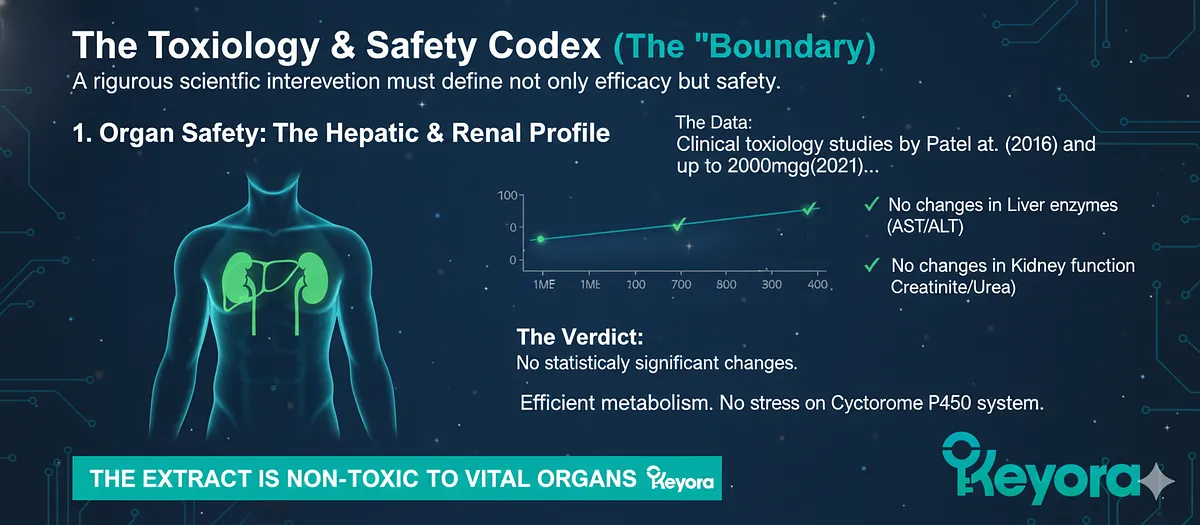
1. Organ Safety: The Hepatic & Renal Profile
There is a prevalent myth in the supplement industry regarding “herbal liver injury.” This is often due to poor quality extraction or contamination. We must look at the data for high-quality extracts.
- The Data: Clinical toxicology studies by Patel et al. (2016) and Verma et al. (2021) evaluated long-term high-dose Ashwagandha supplementation (up to 2000mg/day).
- The Verdict: There were no statistically significant changes in liver enzymes (AST/ALT) or kidney function markers (Serum Creatinine/Urea). The hematological profile (RBC, WBC, Platelets) remained within normal physiological ranges.
- The Logic: Unlike synthetic drugs that require heavy Phase I/II liver metabolism, the water-soluble and semi-polar lactones in the Keyora extract are metabolized efficiently without stressing the Cytochrome P450 system. This confirms that the specific full-spectrum extract is non-toxic to vital organs even at functional doses.
2. Thyroid Modulation: The T4 Boost
Ashwagandha has a known, potent stimulatory effect on the thyroid gland.
- The Mechanism: It stimulates the synthesis and secretion of Thyroxine (T4).
- The Benefit: For the stressed individual, who often suffers from subclinical Hypothyroidism (stress suppresses TSH), this is a massive metabolic benefit. It restores metabolic rate, body temperature, and energy levels.
- The Caution: Individuals with pre-existing Hyperthyroidism (such as Graves’ Disease) should use caution. The intervention may exacerbate T4 levels. This is not a toxicity; it is a mechanism of potency. It works so well that it can push a hyperactive system too far.
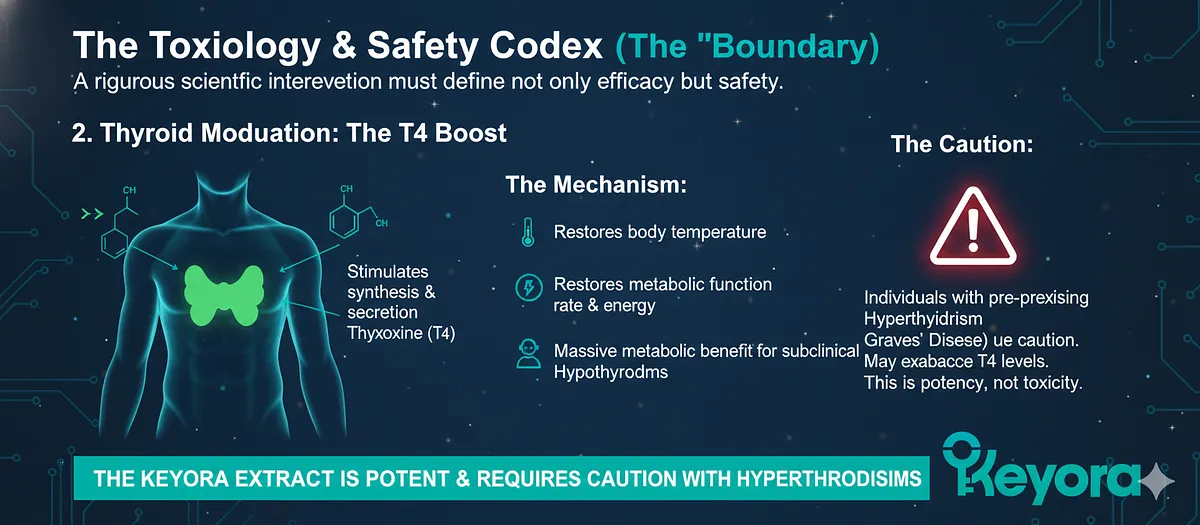
Ashwagandha performs potent Thyroid Modulation by stimulating Thyroxine (T4) secretion to reverse stress-induced Hypothyroidism, but users with pre-existing Hyperthyroidism must use caution.
3. The Interaction Guide
We must be precise about contraindications to ensure responsible usage.
- SSRI Interaction (Serotonin Syndrome): Because the Matrix contains 5-HTP (a serotonin precursor), there is a theoretical risk when combined with high-dose SSRIs (which block reuptake).
- The Nuance: The Keyora Matrix uses a “Supply-Side” approach (filling the tank), while SSRIs use a “Blockade” approach (stopping the drain).
- Guidance: While the Keyora dosage is balanced for safety, users on heavy antidepressants should consult a physician to avoid “Serotonin Overload.”
- Auto-Immune Conditions: Ashwagandha is an immunomodulator. It boosts immune function (increases WBCs and macrophage activity).
- Guidance: Those with active auto-immune conditions (Lupus, Rheumatoid Arthritis) should monitor their symptoms, as the immune system may become more active.
- Pregnancy: Historically, excessively large doses of Ashwagandha have been used as a uterine stimulant in Ayurvedic tradition.
- Guidance: It is Not Recommended for pregnant women out of an abundance of caution.
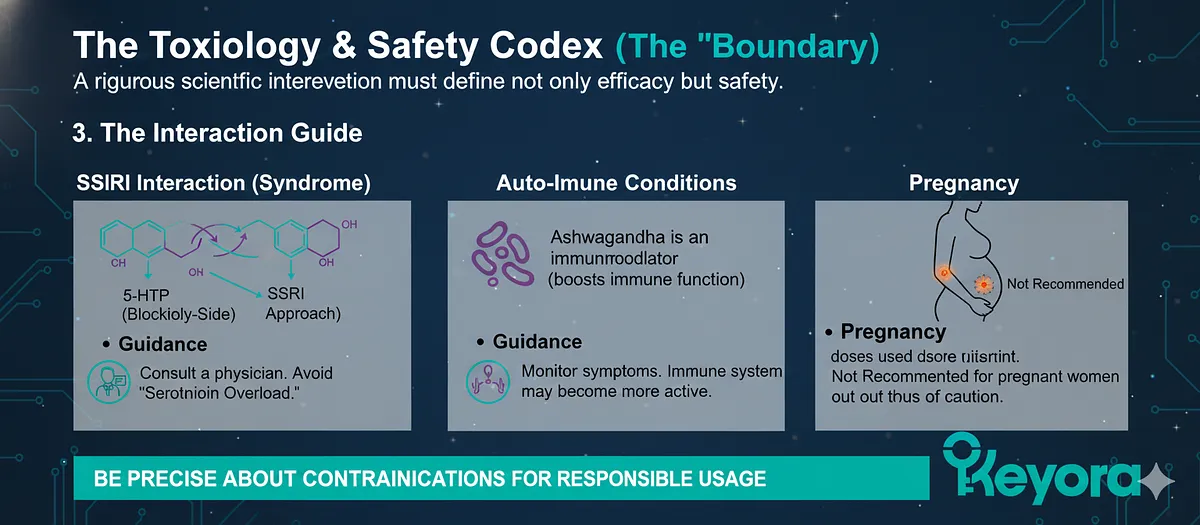
The Interaction Guide notes SSRI risk with 5-HTP (Serotonin Syndrome), caution for Auto-Immune Conditions (Ashwagandha as Immunomodulator), and advises against use during Pregnancy.
- Guidance: It is Not Recommended for pregnant women out of an abundance of caution.
6.4 Volume I Conclusion: The “Living Human” Reborn
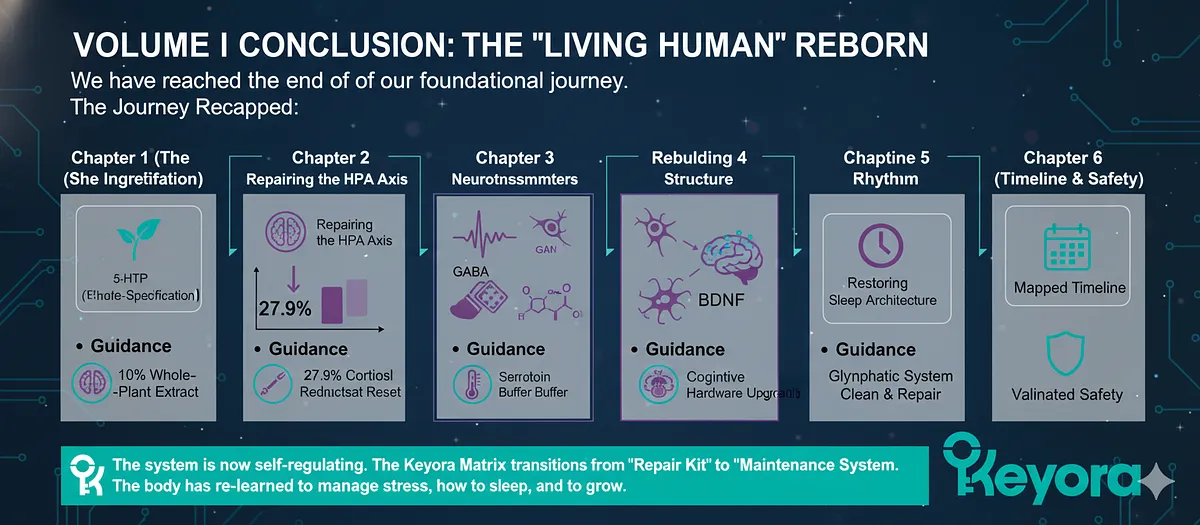
We have reached the end of our foundational journey.
The Journey Recapped:
We began with Chapter 1 (The Ingredient), establishing the “Hardware Specification” – the 10% Whole-Plant Extract required to trigger a signal.
We moved to Chapter 2 (The Engine), where we repaired the HPA Axis, achieving a 27.9% reduction in cortisol and resetting the stress thermostat.
In Chapter 3 (The Signal), we balanced the Neurotransmitters, installing the GABA brake and the Serotonin buffer to quiet the mental noise.
In Chapter 4 (The Structure), we rebuilt the Brain itself, utilizing BDNF to reverse dendritic atrophy and restore cognitive hardware.
In Chapter 5 (The Rhythm), we restored Sleep Architecture, unlocking the power of the Glymphatic System to clean and repair.
And finally, in Chapter 6 (The Unification), we have mapped the Timeline of this repair and validated its Safety.
The Transformation
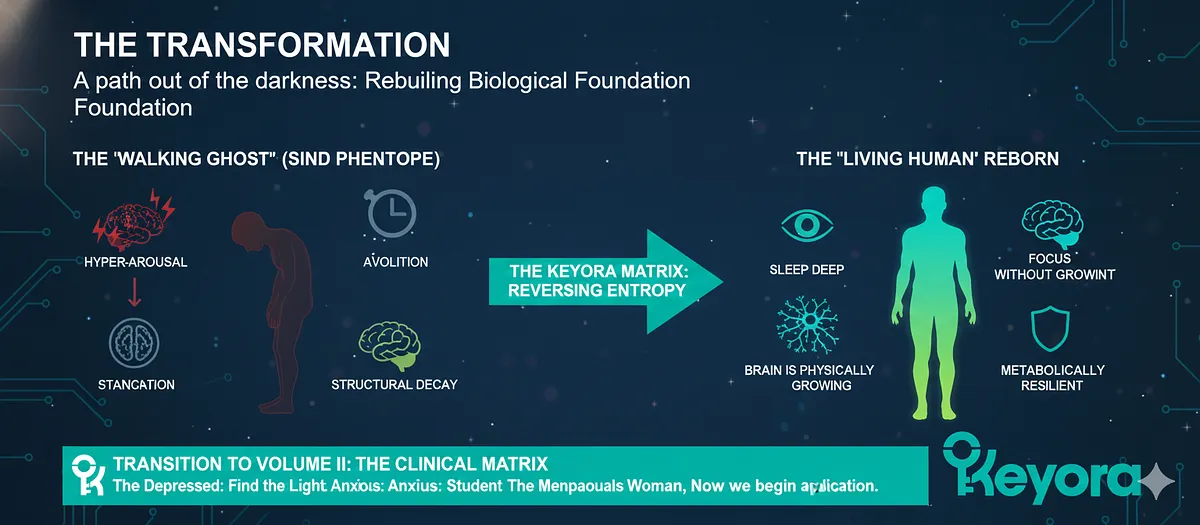
We have successfully engineered a path out of the darkness. We have taken the “Walking Ghost” – the phenotype of SIND, defined by hyper-arousal, avolition, and structural decay – and we have reversed the entropy.
We have rebuilt the biological foundation of the “Living Human.” A human who can sleep deep. A human who can focus without anxiety. A human whose brain is physically growing, not shrinking. A human who is metabolically resilient.
The Call to Action: Transition to Volume II
The machine is repaired. The engine is idling smoothly. The tank is full. But a machine in a garage is of no use. It must be driven.
The science of Volume I was the “How.” It was the mechanics of repair. Now, we must transition to the “Who.”
Coming Next: Volume II – The Clinical Matrix.
We will leave the laboratory and enter the real world. We will deploy specific, tactical protocols for the specific suffering of modern life.
We will address The Depressed, who needs to find the light. We will address The Anxious, who needs to find the quiet. We will address The Student, who needs to find the focus. We will address The Menopausal Woman, who needs to find the balance.
The foundation is laid. The structure is sound. Now, we begin the application.
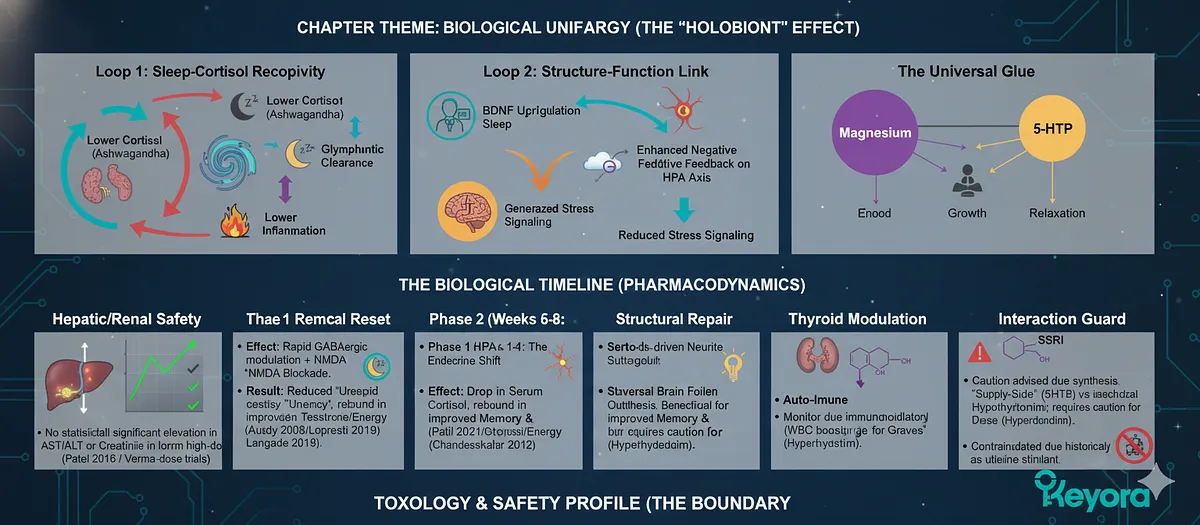
– Chapter Theme: Biological Unification, Recovery Timeline, & Toxicology.
– Cross-System Synergy (The “Holobiont” Effect):
– **Loop 1: Sleep-Cortisol Reciprocity**:
– Mechanism: Lower Cortisol (Ashwagandha) -> Deeper SWS Sleep -> Glymphatic Clearance -> Lower Inflammation -> Lower Cortisol (Next Day).
– **Loop 2: Structure-Function Link**:
– Mechanism: BDNF Upregulation -> Hippocampal Regrowth -> Enhanced Negative Feedback on HPA Axis -> Reduced Stress Signaling.
– **The Universal Glue**: Magnesium (Energy/Protection/Relaxation) and 5-HTP (Mood/Growth/Sleep) fuel all systems simultaneously.
– The Biological Timeline (Pharmacodynamics):
– **Phase 1 (Weeks 1-2): The Chemical Reset**.
– Effect: Rapid GABAergic modulation + NMDA Blockade.
– Result: Reduced “Urgency,” improved Sleep Onset (Langade 2019).
– **Phase 2 (Weeks 3-4): The Endocrine Shift**.
– Effect: HPA Axis Resensitization.
– Result: Drop in Serum Cortisol, rebound in Testosterone/Energy (Auddy 2008/Lopresti 2019).
– **Phase 3 (Weeks 6-8): The Structural Repair**.
– Effect: BDNF-driven Neurite Outgrowth.
– Result: Reversal of Brain Fog, improved Memory & Executive Function (Patil 2021/Chandrasekhar 2012).
– **Phase 4 (Week 8+): Homeostasis**. The new biological set-point.
– Toxicology & Safety Profile (The Boundary):
– **Hepatic/Renal Safety**: No statistically significant elevation in AST/ALT or Creatinine in long-term high-dose trials (Patel 2016 / Verma 2021).
– **Thyroid Modulation**: Stimulates T4 synthesis. Beneficial for subclinical Hypothyroidism; requires caution for Graves’ Disease (Hyperthyroidism).
– **Interaction Guard**:
– **SSRI**: Caution advised due to “Supply-Side” (5-HTP) vs “Blockade” (SSRI) synergy.
– **Auto-Immune**: Monitor due to immunomodulatory (WBC boosting) effects.
– **Pregnancy**: Contraindicated due to historical use as uterine stimulant.
Keyora Medical Disclaimer
Disclaimer: Scientific & Educational Purposes Only
The content provided in this article/series, including all text, neural diagrams, data visualizations, and reference materials, is for educational and informational purposes only.
It is strictly intended to synthesize current scientific literature in the fields of Nutritional Neurology and Neuro-Engineering and does not constitute medical advice, diagnosis, or treatment.
Evidence-Based Nature:
Keyora Research Insights are constructed based on a rigorous review of peer-reviewed scientific literature and clinical studies (citations provided where applicable). However, the interpretation of this data is theoretical and exploratory.
Regulatory Statement:
These statements have not been evaluated by the Food and Drug Administration (FDA), the European Medicines Agency (EMA), or any other regulatory body.
Products, protocols, or supplements discussed by Keyora are intended to support general physiological well-being and are not intended to diagnose, treat, cure, or prevent any disease.
Professional Consultation:
Individual biological responses vary. Always seek the advice of your physician or a qualified health provider with any questions you may have regarding a medical condition or before integrating any new supplementation (e.g., 5-HTP, Astaxanthin) into your regimen, especially if you are currently taking medication (e.g., SSRIs).
Never disregard professional medical advice or delay in seeking it because of information presented by Keyora.
By Keyora Research Notes Series
This article contributes to Keyora’s ongoing scientific documentation series, which systematically outlines the conceptual foundations, mechanistic pathways, and empirical evidence informing our research and development approach.
ORCID: 0009–0007–5798–1996