
Keyora Nutritional Neurology – Ashwagandha · Preface

By Keyora Research Notes Series
This article contributes to Keyora’s ongoing scientific documentation series, which systematically outlines the conceptual foundations, mechanistic pathways, and empirical evidence informing our research and development approach.
ORCID: 0009–0007–5798–1996

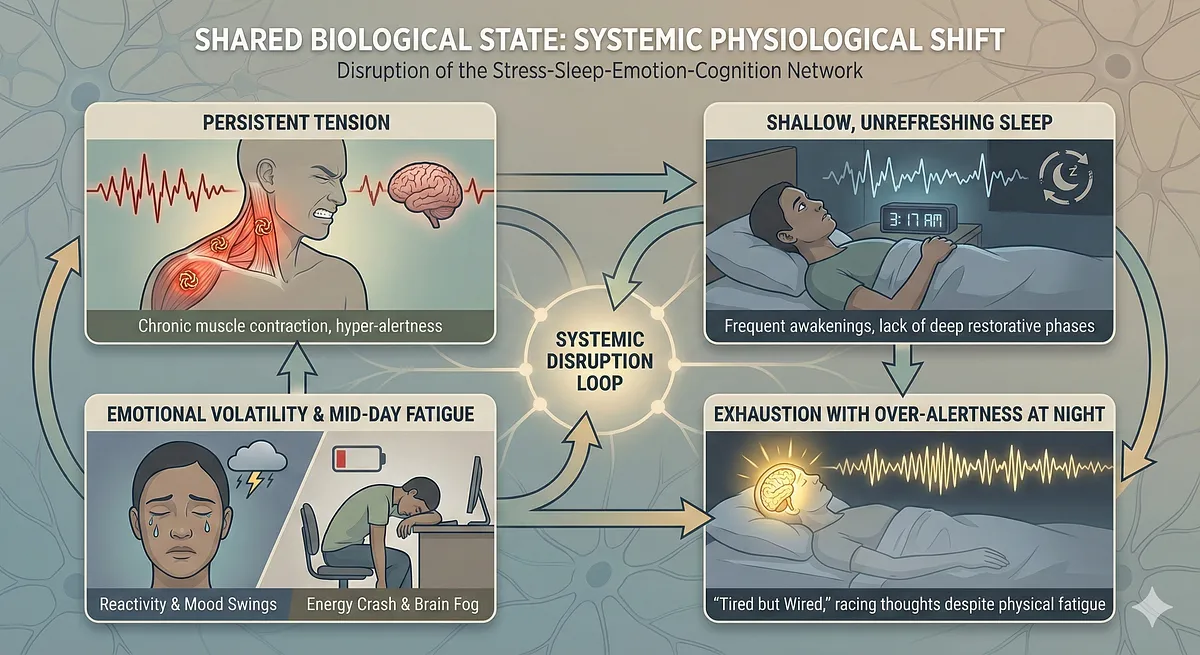
Modern life has pushed many people into the same neurological pattern: persistent tension, shallow or unrefreshing sleep, emotional volatility, mid-day fatigue, difficulty focusing, and a strange mix of exhaustion with over-alertness at night.
These symptoms may feel personal, but they reflect a shared biological state – a disruption in the stress–sleep–emotion–cognition network that has quietly become the new baseline for millions. Rather than a psychological issue, this is a systemic physiological shift.
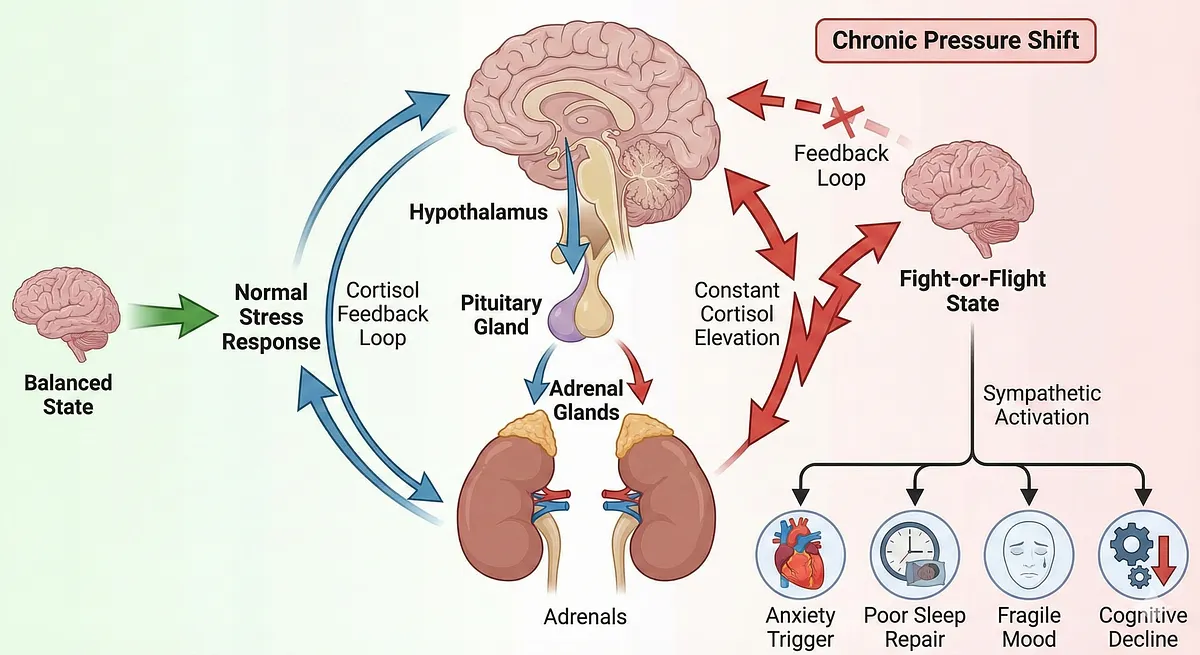
At the center of this shift is the HPA axis – the hypothalamic–pituitary–adrenal system that governs how the body reacts to stress.
Under chronic pressure, cortisol stays elevated long after the stressor is gone; the feedback loop becomes less sensitive; autonomic balance shifts toward constant sympathetic activation; and the brain remains in a fight-or-flight state.
The result is predictable: anxiety becomes easier to trigger, sleep stops repairing the system, mood becomes fragile, and cognitive performance declines.
This is why Keyora approaches stress biology through the framework of Nutritional Neurology.
Instead of treating mood, sleep, focus, or fatigue as isolated issues, Nutritional Neurology views nutrients as targeted modulators of neural circuits, neuroendocrine loops, neurotransmitters, and inflammation.
It is a systems-based way of understanding why modern stress feels so overwhelming, and how specific nutrients can help restore balance at the biological level.
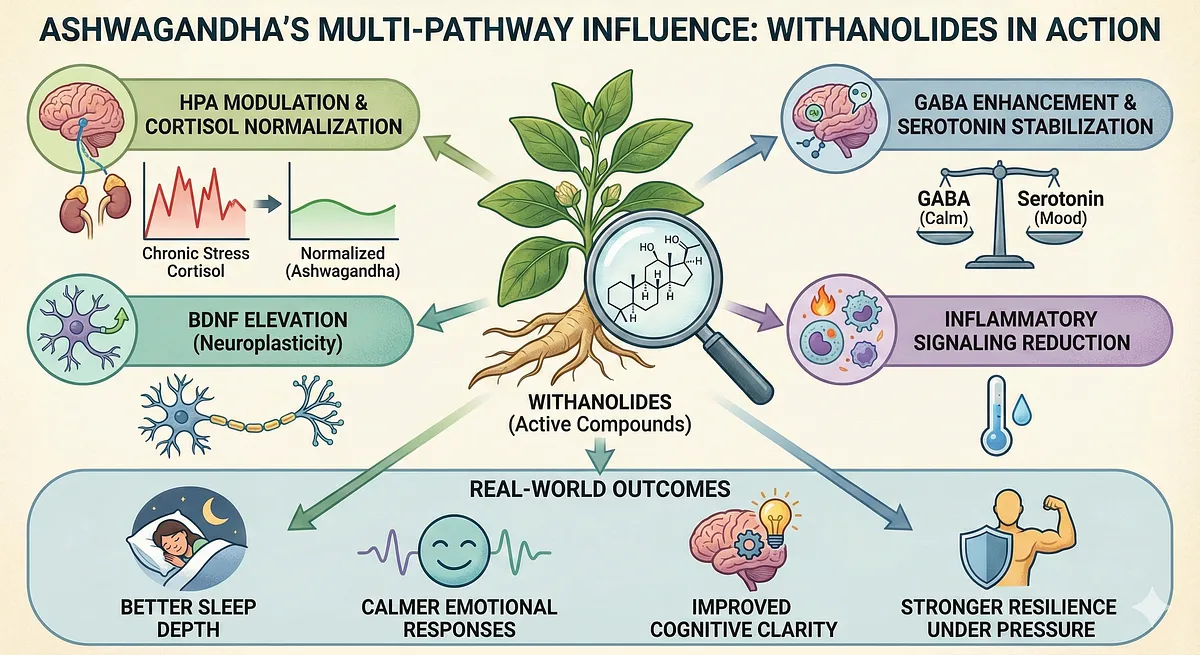
Ashwagandha stands out within this framework because its withanolides influence nearly every pathway disrupted by chronic stress. Research consistently shows effects on HPA modulation, cortisol normalization, GABA enhancement, serotonin stabilization, BDNF elevation, and reductions in inflammatory signaling.
These mechanisms translate into real-world outcomes: better sleep depth, calmer emotional responses, improved cognitive clarity, and stronger resilience under pressure.
What makes Ashwagandha especially valuable is how these pathways interact. Lower cortisol improves emotional stability; better sleep further reduces cortisol; reduced inflammation enhances neurotransmitter signaling; increased BDNF restores memory and learning capacity.
Instead of a single-target supplement, Ashwagandha supports an integrated reset of the stress–sleep–emotion–cognition system.
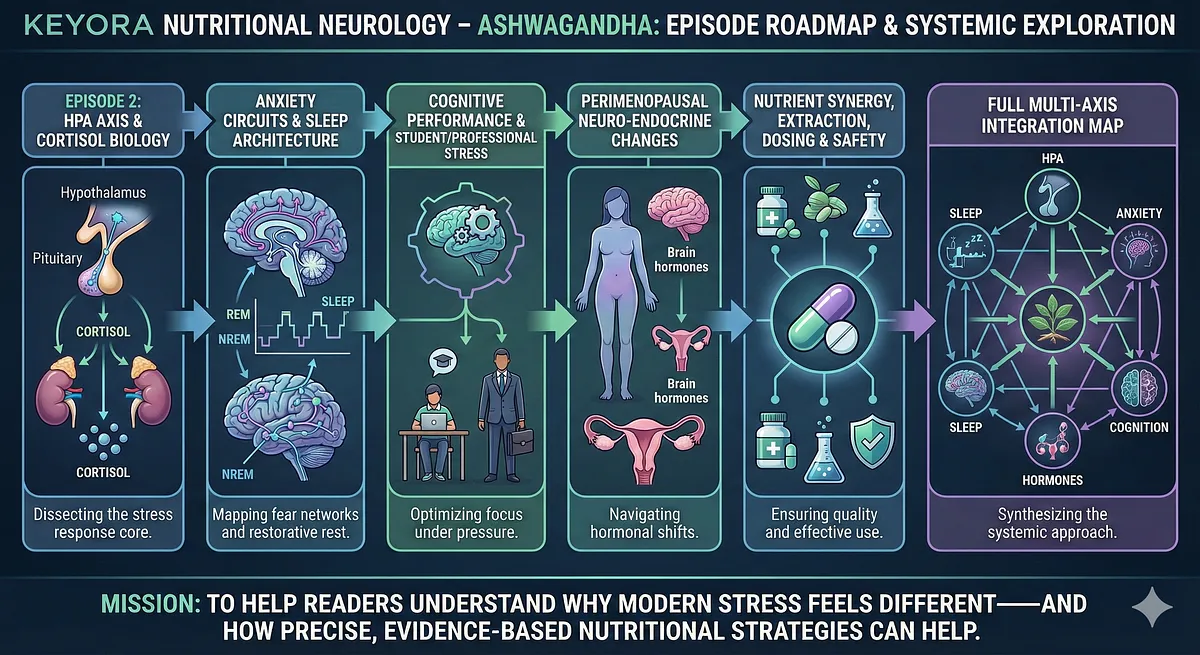
This series, Keyora Nutritional Neurology – Ashwagandha, will explore this system step by step. Episode 1 will dissect the HPA axis and the biology of cortisol.
Later episodes will cover anxiety circuits, sleep architecture, cognitive performance, student stress, professional burnout, perimenopausal neuro-endocrine changes, nutrient synergy, extraction quality, dosing, safety, and finally a full multi-axis integration map.
The mission is simple: to help readers understand why modern stress feels different – and how precise, evidence-based nutritional strategies can help.
By Keyora Research Notes Series
This article contributes to Keyora’s ongoing scientific documentation series, which systematically outlines the conceptual foundations, mechanistic pathways, and empirical evidence informing our research and development approach.
ORCID: 0009–0007–5798–1996