
Keyora Nutritional Neurology – Ashwagandha · Episode 4


By Keyora Research Notes Series
This article contributes to Keyora’s ongoing scientific documentation series, which systematically outlines the conceptual foundations, mechanistic pathways, and empirical evidence informing our research and development approach.
ORCID: 0009–0007–5798–1996
Why Fragmented Mechanisms Are Not Enough
The Limits of Single-Pathway Thinking in Human Stress Biology
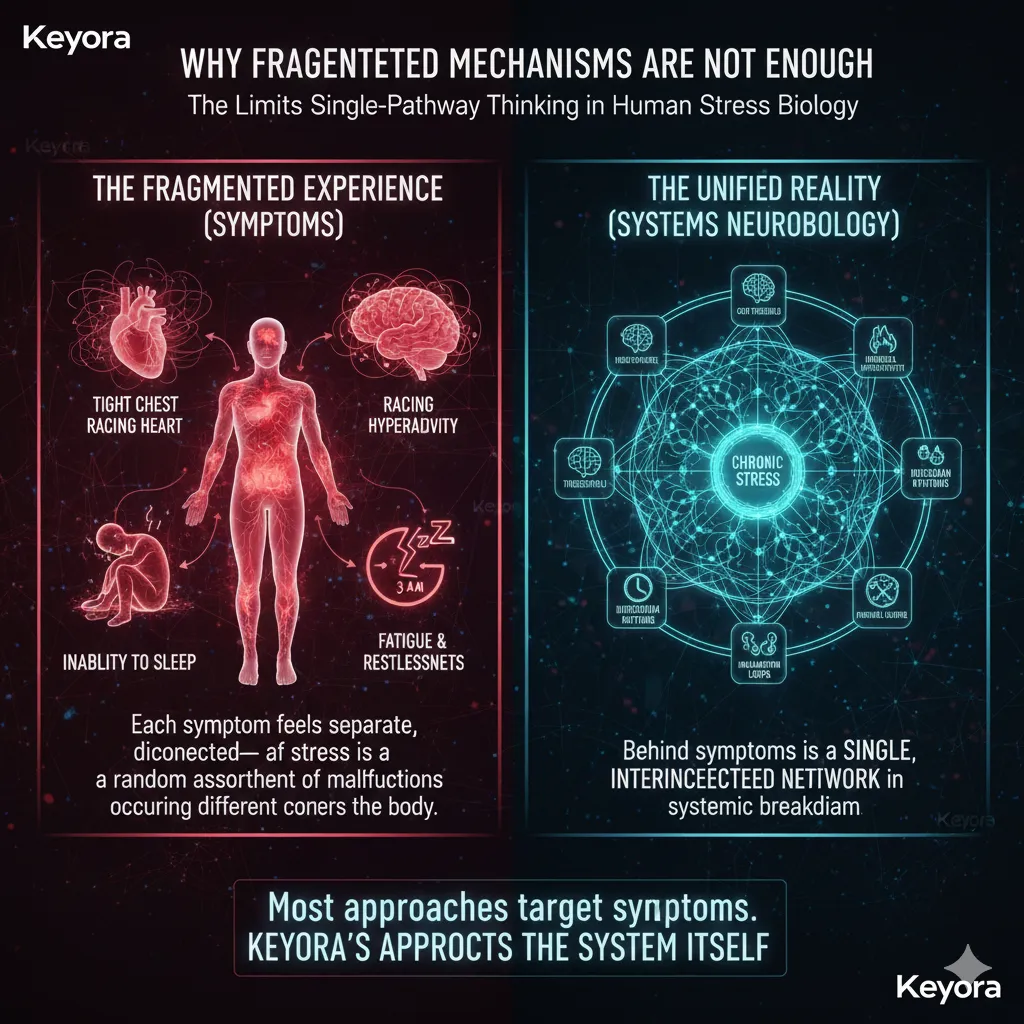
Most people experience stress as a collection of symptoms:
the tight chest, the racing thoughts, the inability to sleep, the irritability, the fatigue that paradoxically arrives with restlessness.
Each symptom feels separate, disconnected – as if stress is a random assortment of malfunctions occurring in different corners of the body.
It isn’t.
Stress is a system. And systems fail as systems, not as isolated mechanisms.
This is where most public conversations about stress go wrong:
– People talk about cortisol while ignoring CRH.
– They talk about anxiety while ignoring amygdala–PFC imbalance.
– They talk about sleep without considering nighttime CRH cycling.
– They talk about supplements without understanding their place in multi-axis recovery.
Keyora’s view is different.
Through the combined lens of nutritional neuroscience and systems biology, stress is not a set of symptoms – it is a pattern, a failure mode, a choreography of interconnected neural, endocrine, immune, and metabolic circuits collapsing in a predictable order.
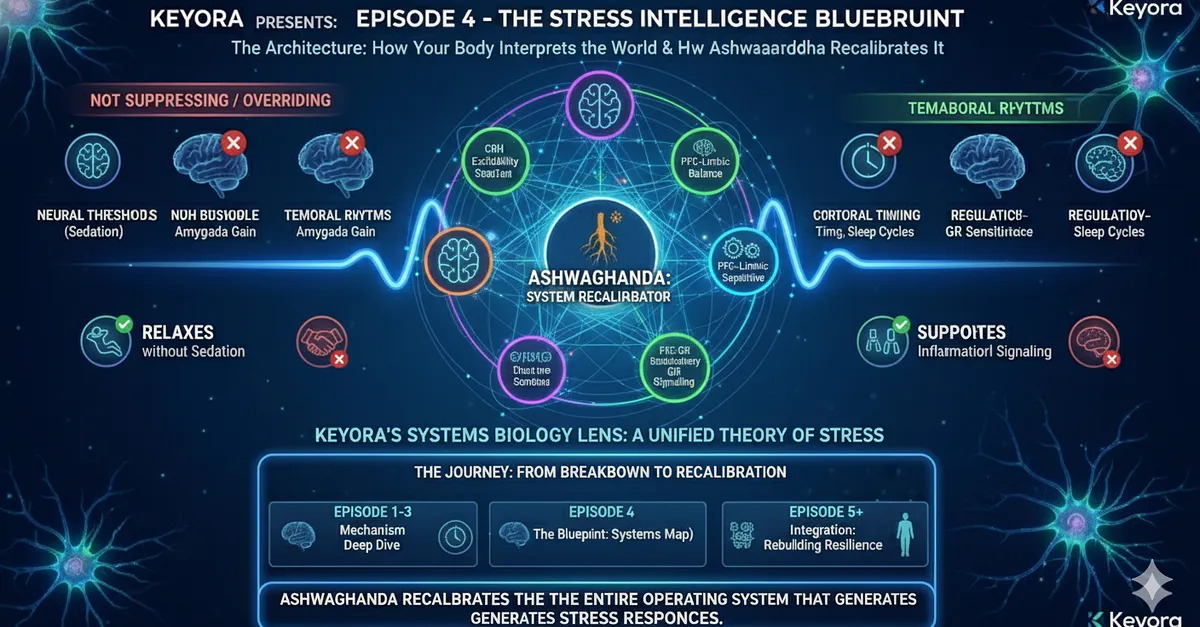
Ashwagandha does not “reduce stress” in a superficial sense.
It recalibrates the entire operating system that generates stress responses in the first place.
Episode 4 begins here:
– Not with a mechanism, but with a map.
– Not with cortisol, but with the architecture that determines how your body interprets the world.
This chapter is the blueprint – the systems-level view that binds Episode 1-3 into a coherent theory of human stress biology.
Everything that follows builds on this framework.
Section I – Why Fragmented Mechanisms Cannot Explain Real-World Stress
tress Emerges From Circuit Interactions, Not Single Hormones
When someone says, “I’m stressed,” they are not describing a single molecule; they are describing a pattern of dysregulation across multiple brain–body axes, each amplifying the next.
You don’t lose sleep because cortisol is high.
You lose sleep because:
- CRH is firing too early
- the amygdala is hyper-vigilant
- the PFC can’t down-regulate emotional noise
- the inflammatory system is feeding back danger signals
- mitochondrial energy is collapsing under chronic load
And cortisol is merely one output of this collapsing structure.
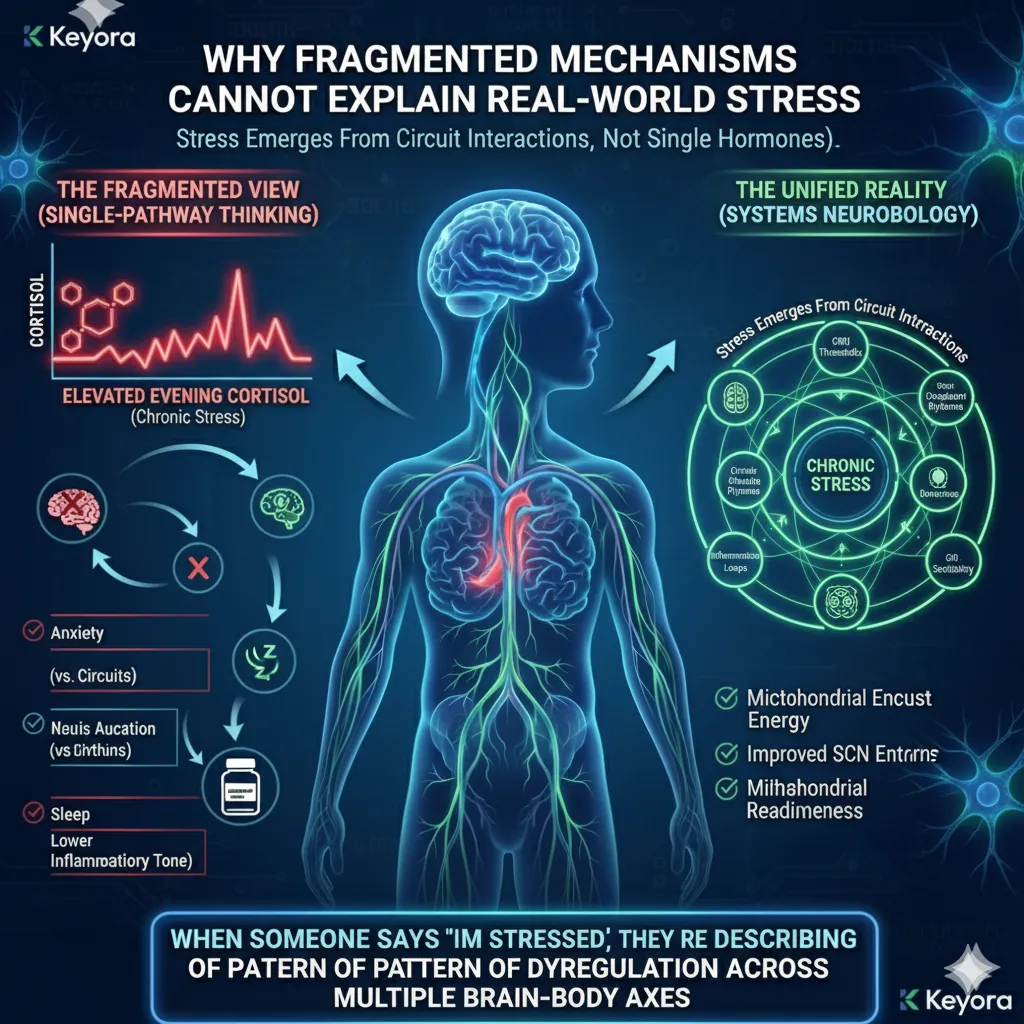
This is why treating stress through single-pathway interventions – “lower cortisol,” “calm the mind,” “sleep better” – often fails.
When the system collapses, the failure is global, not local.
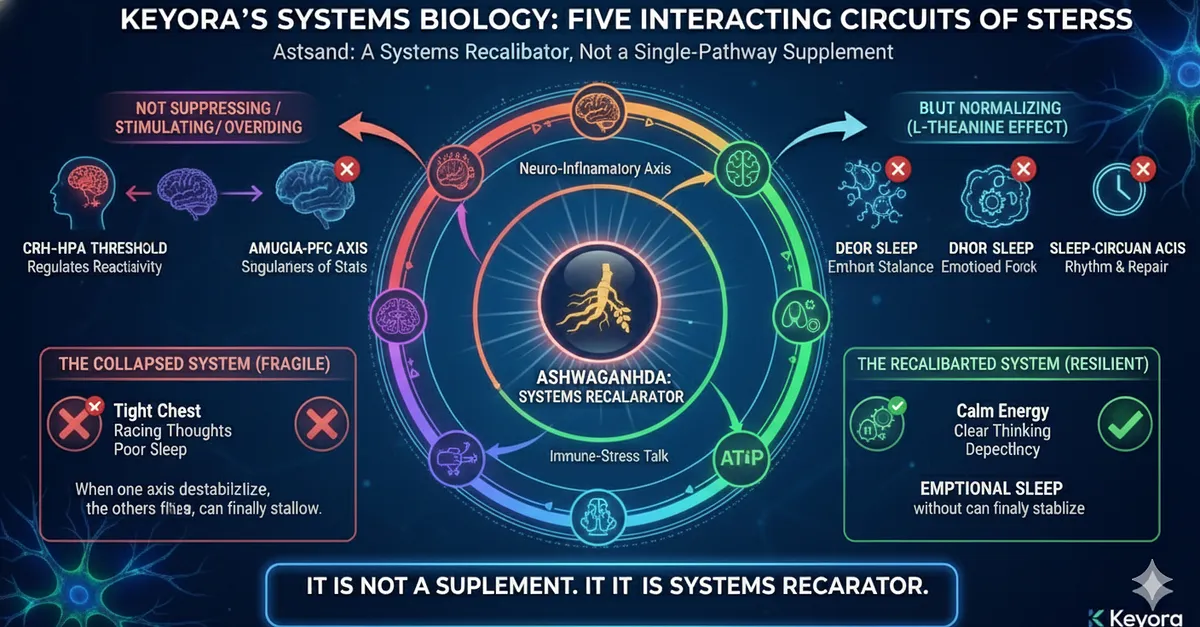
Keyora’s systems-nutrition perspective views stress as five interacting circuits:
- CRH–HPA Threshold Axis
- Amygdala–PFC Regulatory Axis
- Neuro-Inflammatory Axis
- Mitochondrial Energy Axis
- Sleep–Circadian Axis
When one axis destabilizes, the others follow.
When one axis recovers, the others can finally stabilize.
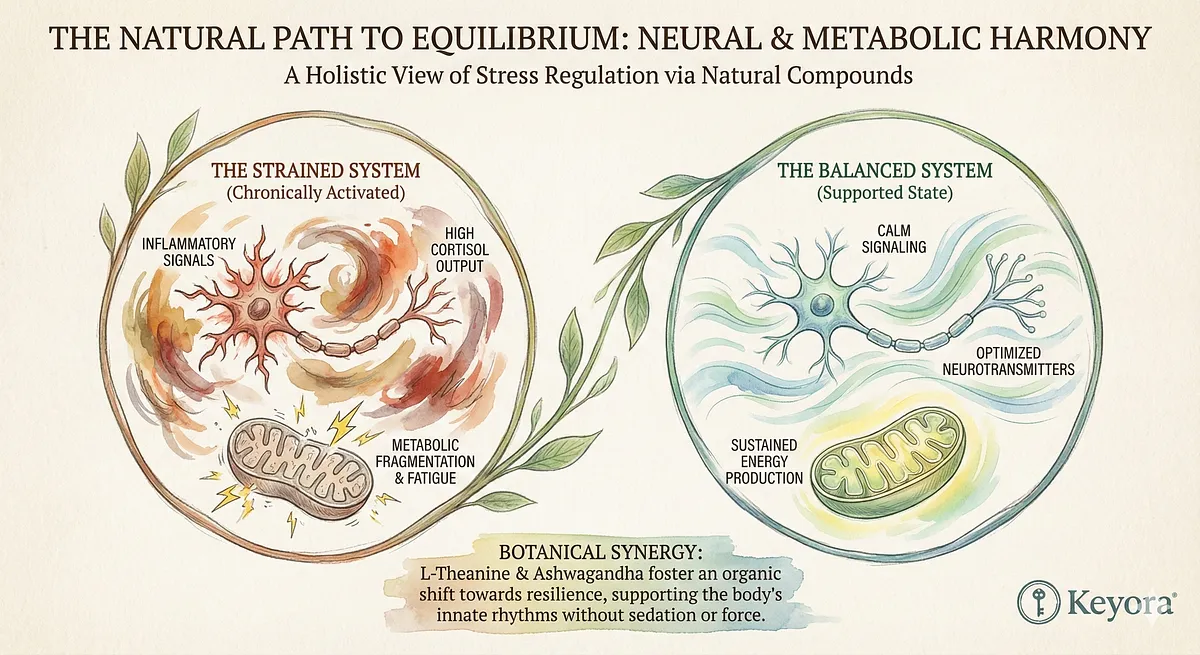
This is why Ashwagandha is uniquely powerful – not because it “targets” one mechanism, but because it re-balances stress thresholds, neural evaluation, inflammation, cellular energy, and circadian cycling simultaneously.
It is not a supplement.
It is a systems recalibrator.
SECTION II – The Five-Axis Map of Human Stress Regulation
CRH Thresholds • Limbic Evaluation • Inflammatory Coupling • Mitochondrial Load • Circadian Repair
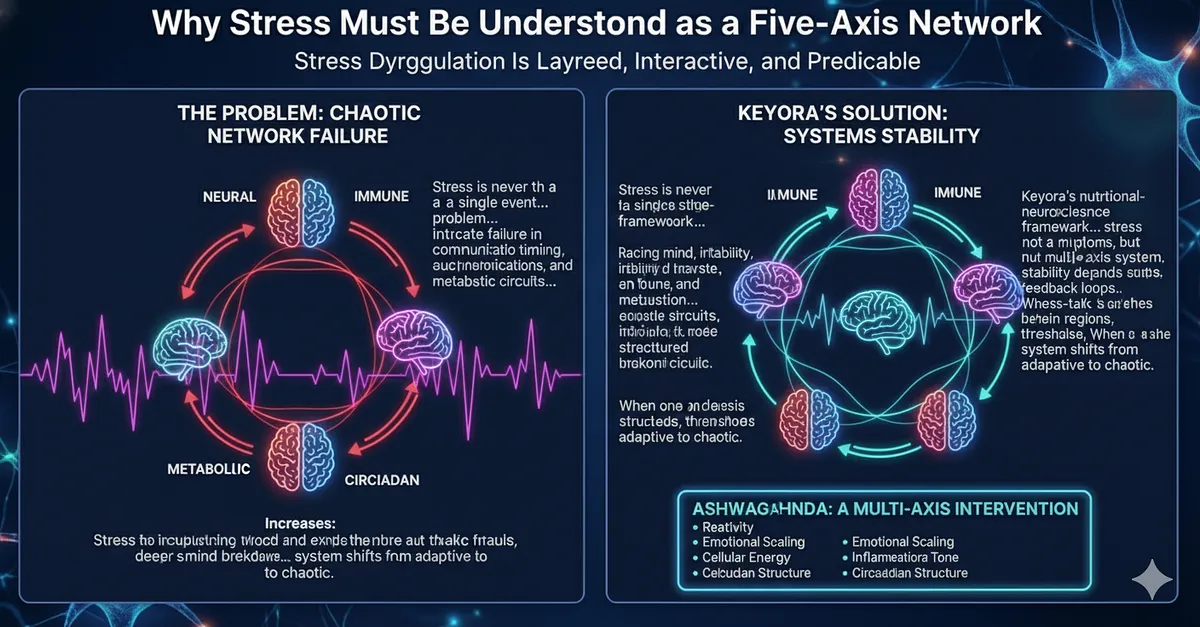
Stress is never a single event inside the body. It is a coordination problem – an intricate failure in the timing, communication, and interpretation across neural, endocrine, immune, and metabolic circuits.
People often describe their symptoms as if each were unrelated: a racing mind, irritability over small triggers, exhaustion after minimal effort, the inability to sleep despite fatigue, the sense of being overwhelmed without clear cause.
But taken together, these are not separate phenomena; they are the visible expression of a deeper, structured breakdown across five biological axes that normally keep the stress system stable and intelligent.
The reason stress becomes difficult to control is not because one hormone is “too high,” nor because emotions are inherently unstable.
It is because the architecture that evaluates threat, regulates reactivity, fuels cognition, buffers inflammation, and restores the body overnight has fallen out of sync.
Keyora’s nutritional-neuroscience framework approaches stress not as a cluster of symptoms, but as a multi-axis system whose stability depends on thresholds, feedback loops, and cross-talk between brain regions and peripheral physiology.
When one axis destabilizes, the others begin compensating; and with enough load, the system shifts from adaptive to chaotic.
This five-axis framework is essential before understanding why Ashwagandha is uniquely positioned to intervene.
Only through this systems lens can we see how a single botanical compound influences reactivity, emotional scaling, inflammatory tone, cellular energy, and circadian structure – changes that feel, to the individual, like clarity returning, patience returning, and emotional control returning.
The map must be understood before the recovery can begin.
1. The CRH–HPA Threshold Axis
How Stress Reactivity Becomes Too Fast, Too Early
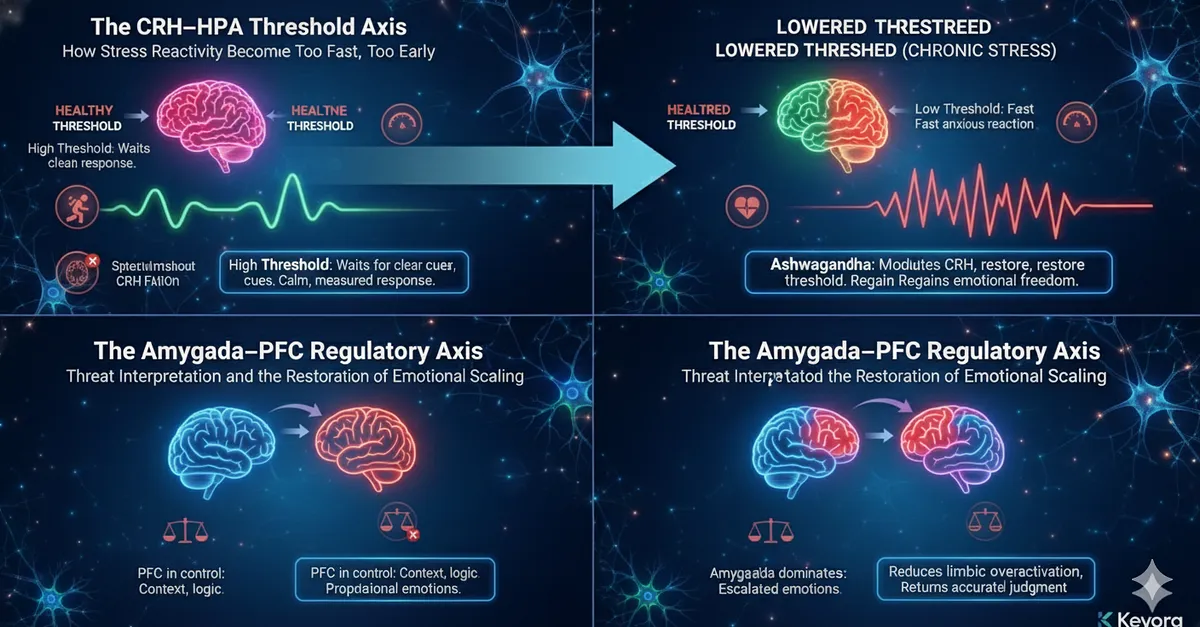
Stress reactivity begins long before a person is conscious of it. The CRH–HPA axis determines the threshold at which the body decides something is significant enough to require mobilization.
In a healthy system, this threshold is meaningfully high; the body waits for clear contextual cues before initiating the cascade. But chronic overload gradually lowers this threshold, allowing CRH neurons to fire with increasing sensitivity.
Once this shift occurs, the world does not change – but the interpretation of the world changes dramatically.
A lowered threshold transforms the internal landscape. The nervous system begins to respond milliseconds before conscious evaluation, flooding the body with physiological tension, narrowing attentional focus, and preparing for a threat that often does not exist.
People experience this as “reacting too quickly,” being unable to tolerate small disruptions, or feeling as if their body is already several steps ahead of their mind. This phenomenon is not psychological weakness; it is a neurobiological shift in the calibration of detection circuits.
Ashwagandha’s relevance begins here. By modulating CRH neuron excitability and restoring threshold regulation, it returns the gap between signal and reaction.
This gap is where emotional interpretation – and emotional freedom – occurs. Without it, the stress system runs the person. With it, the person regains authorship over their reactions.
2. The Amygdala–PFC Regulatory Axis
Threat Interpretation and the Restoration of Emotional Scaling
If the CRH threshold axis determines when the alarm turns on, the amygdala–PFC axis determines how the alarm is interpreted.
Under chronic stress, limbic circuits amplify ambiguity into perceived threat, while the prefrontal cortex – the region responsible for context, evaluation, and downregulation – loses its stabilizing influence.
This imbalance explains why small inconveniences suddenly feel catastrophic, why emotions escalate faster than they can be controlled, and why decision-making becomes distorted by urgency rather than clarity.
Importantly, this is not subjective drama; it is the chemistry of dysregulated threat evaluation. The amygdala becomes hypersensitive, firing rapidly and broadly; the prefrontal cortex becomes less efficient at reappraisal, inhibition, and emotional scaling.
Individuals often describe themselves as feeling “like a different person,” as if they cannot trust their own emotional reactions. The experience is destabilizing precisely because the biological infrastructure of judgment has gone offline.
Ashwagandha contributes to restoring this axis by reducing limbic overactivation and enhancing prefrontal regulatory capacity. The result is not emotional suppression but emotional proportion – the return of accurate threat discrimination. Stress still exists, but it no longer distorts reality.
3. The Neuro-Inflammatory Axis
When Immune Signaling Shapes Emotional and Cognitive States
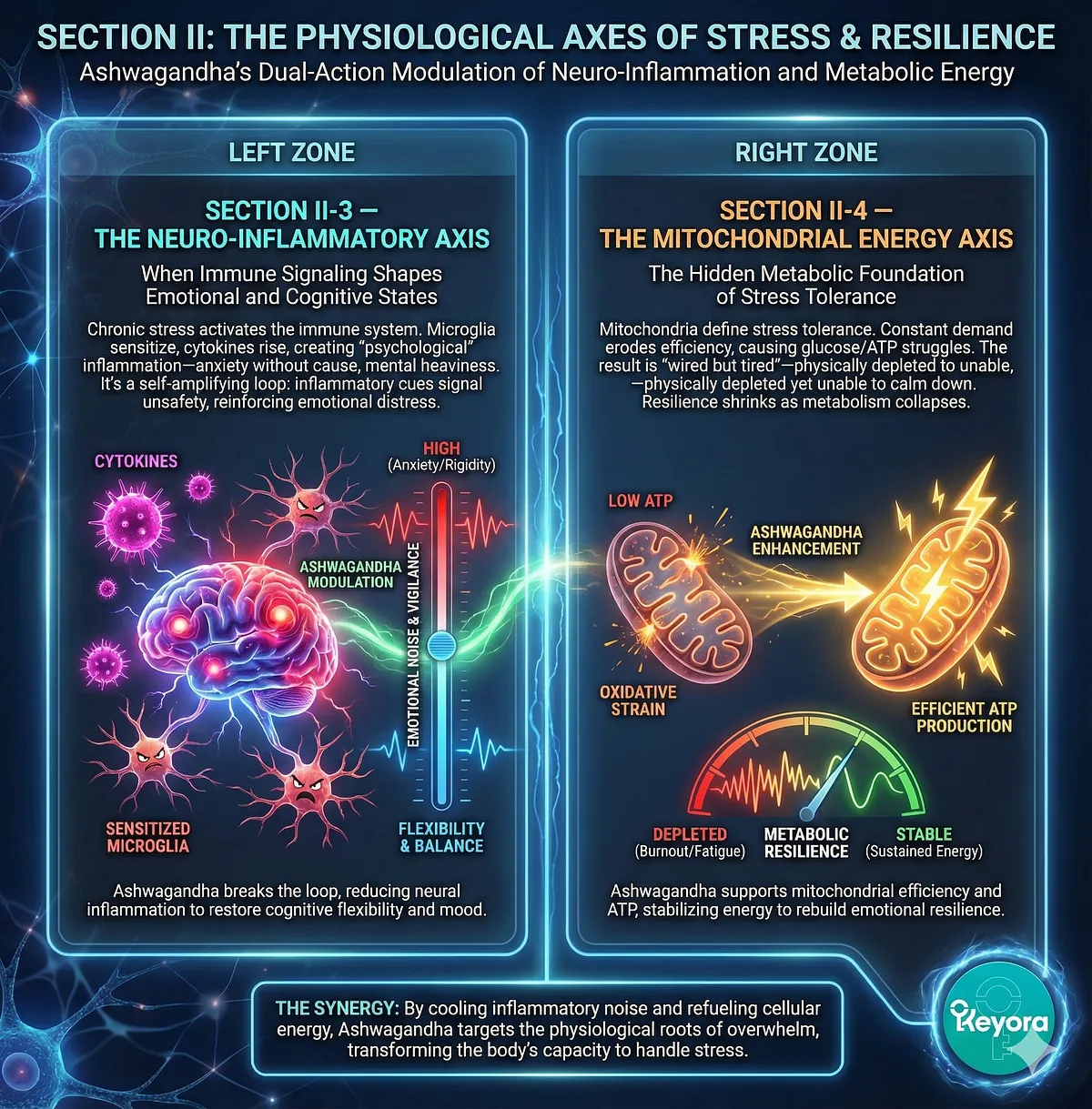
Chronic stress activates the immune system in ways that fundamentally alter emotional experience. Microglia shift into a sensitized state, cytokines rise, and neural circuits become more reactive and less flexible.
This inflammatory tone produces emotional phenomena that feel profoundly psychological yet originate in immune-derived signaling. The person does not think “my cytokines are elevated”; they simply feel anxious without cause, irritable without intention, heavy without explanation.
Inflammation heightens vigilance, narrows cognitive bandwidth, and strengthens negative emotional weighting.
The brain interprets inflammatory cues as a sign that the environment is unsafe, creating a closed-loop pattern where the immune system reinforces emotional distress, which further reinforces stress physiology. The system becomes self-amplifying.
Ashwagandha’s anti-inflammatory modulation helps break this loop. By reducing neural inflammation and dampening cytokine-driven emotional noise, it restores access to cognitive flexibility, balanced mood, and the capacity to experience the world without constant biochemical distortion.
4. The Mitochondrial Energy Axis
The Hidden Metabolic Foundation of Stress Tolerance
Mitochondria determine how much stress a person can tolerate before collapsing into emotional, cognitive, or physical fatigue. Stress demands rapid metabolic shifts – glucose mobilization, ATP acceleration, and oxidative defense.
When these demands are constant, mitochondrial efficiency erodes, leading to the paradoxical state of being exhausted yet unable to calm down. This is the “wired but tired” experience: the body is energized in the wrong way and depleted in the ways that matter.
Low mitochondrial output reduces patience, emotional stability, and cognitive bandwidth. Tasks that were once manageable begin to feel overwhelming. Emotional resilience shrinks in proportion to metabolic collapse. This is why burnout feels both mental and physical; it is both.
Ashwagandha enhances mitochondrial efficiency, supporting ATP availability and reducing oxidative strain. As energy stabilizes, emotional stability follows. Resilience becomes metabolically possible again.
5. The Sleep–Circadian Axis
Nighttime CRH Suppression and the Architecture of Recovery
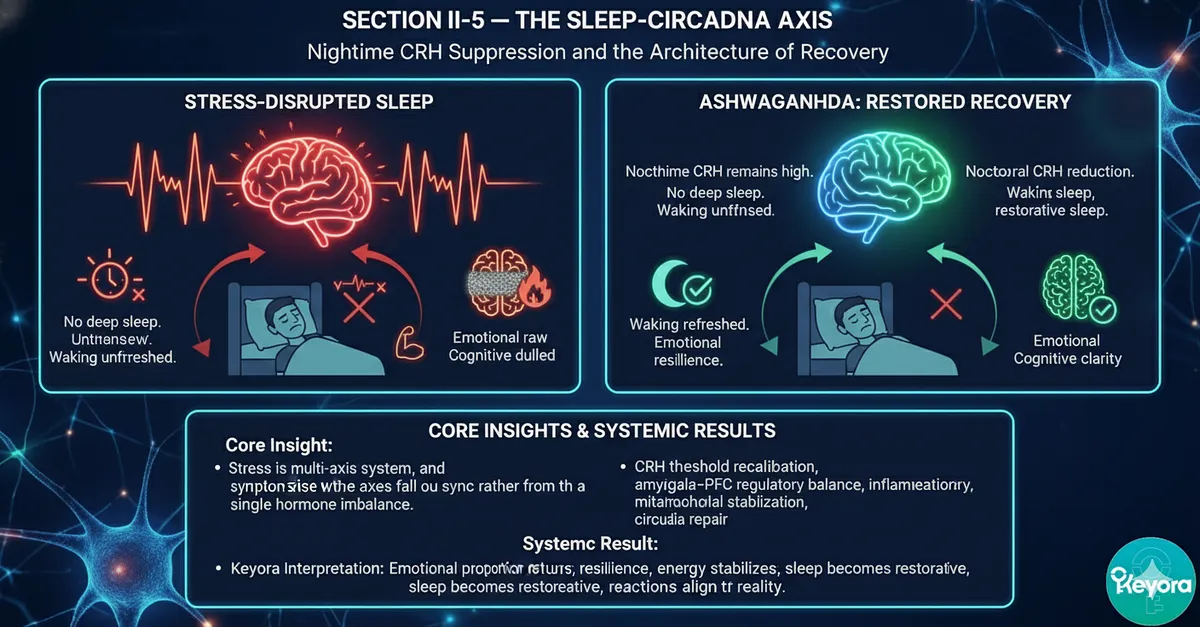
Sleep is not merely a state of rest; it is the biological process through which the stress system recalibrates. But when nighttime CRH remains elevated, the brain cannot enter deep, restorative stages of sleep.
This leads to a form of exhaustion that sleep cannot fix, because the machinery responsible for overnight repair never fully activates.
Individuals experience this as waking unrefreshed, feeling emotionally raw, cognitively dulled, or physiologically tense despite having “slept.” The issue is not sleep duration but sleep architecture.
Without deep sleep, inflammatory markers rise, limbic circuits become more reactive, and cognitive control erodes. The next day is always harder than the last.
Ashwagandha supports nocturnal CRH reduction and helps restore the continuity and depth of sleep architecture. When deep sleep returns, resilience returns – not psychologically, but physiologically.
– Core Insight: Stress is a multi-axis system, and symptoms arise when these axes fall out of sync rather than from a single hormone imbalance.
– Mechanisms Restored: CRH threshold recalibration, amygdala–PFC regulatory balance, inflammatory decoupling, mitochondrial stabilization, circadian repair.
– Systemic Result: Emotional proportion returns; resilience increases; energy stabilizes; sleep becomes restorative; reactions align with reality.
– Keyora Interpretation: Ashwagandha works because it recalibrates the biological architecture of stress, restoring the foundational machinery required for emotional clarity and long-term recovery.
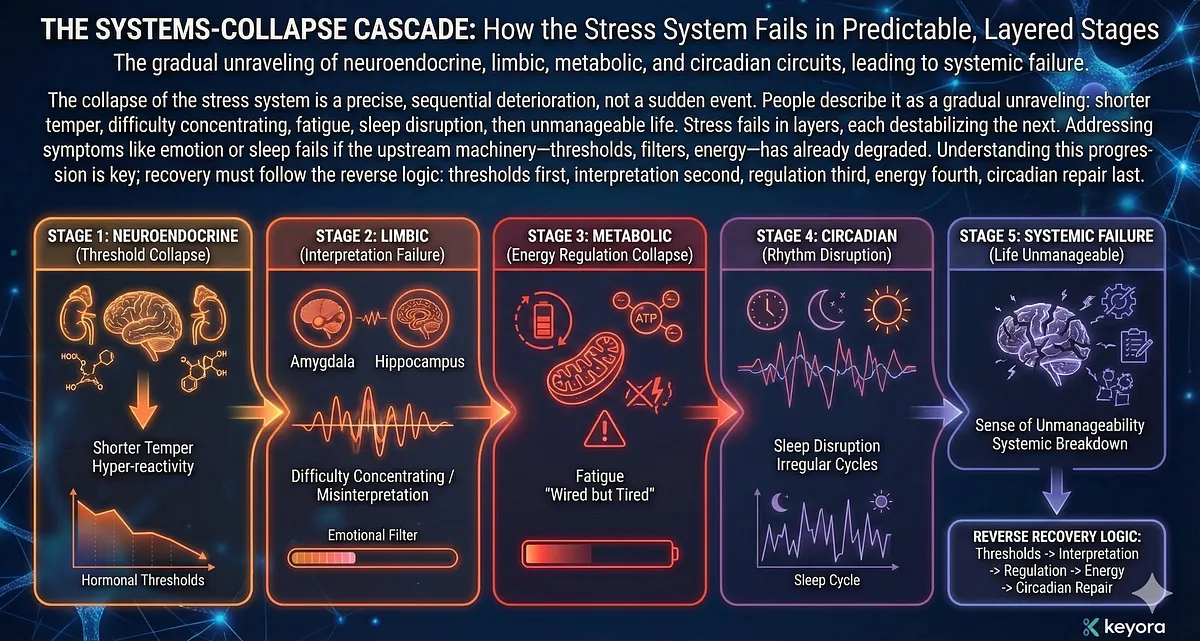
SECTION III – The Systems-Collapse Cascade
How the Stress System Fails in Predictable, Layered Stages
The collapse of the stress system rarely feels sudden, even though the underlying biology is precise, sequential, and predictable.
People often describe the experience as a gradual unraveling – first a shorter temper, then difficulty concentrating, then fatigue, then sleep disruption, and finally the sense that life has become unmanageable.
But beneath this subjective progression lies a highly structured deterioration across neuroendocrine, limbic, metabolic, and circadian circuits. Stress does not fail all at once; it fails in layers, each destabilizing the next.
Understanding this layered collapse is essential because most individuals try to address stress at the level where symptoms appear – emotion, energy, sleep – rather than where the breakdown begins.
Efforts to “calm down,” “think clearly,” or “sleep better” fail not because the person lacks discipline, but because the machinery required for those capacities has already degraded upstream.
A system cannot regulate itself once its thresholds, filters, and energy sources have collapsed.
This section maps the five stages of systemic failure, revealing why stress becomes self-perpetuating once the foundational architecture begins to crumble.
It also shows why recovery must follow the same logic in reverse: thresholds first, interpretation second, regulation third, energy fourth, circadian repair last.
Without understanding this progression, stress appears chaotic and unmanageable; with it, the pattern becomes clear, coherent, and actionable.
1. Stage One – CRH Threshold Collapse
Why the Body Reacts Before the Mind Understands
The earliest sign of a collapsing stress system is not emotional and not psychological – it is a shift in CRH excitability.
Long before a person feels overwhelmed, the hypothalamus begins lowering the activation threshold that determines when the body should mobilize against a perceived threat.
This microscopic shift produces macroscopic consequences. The individual becomes primed to react before they are aware of reacting, creating a split between physiology and consciousness.
The world begins to feel sharper, louder, more intrusive – not because circumstances changed, but because the nervous system no longer filters sensory and emotional input with the same stability.
People describe this stage as “Why am I suddenly so on edge?” or “Why do I feel activated even when nothing is wrong?”
This early collapse marks the transition from adaptive vigilance to chronic hyper-reactivity.
The body is no longer waiting for meaning; it is firing at possibility. Once this shift occurs, all downstream circuits begin operating on a distorted baseline.
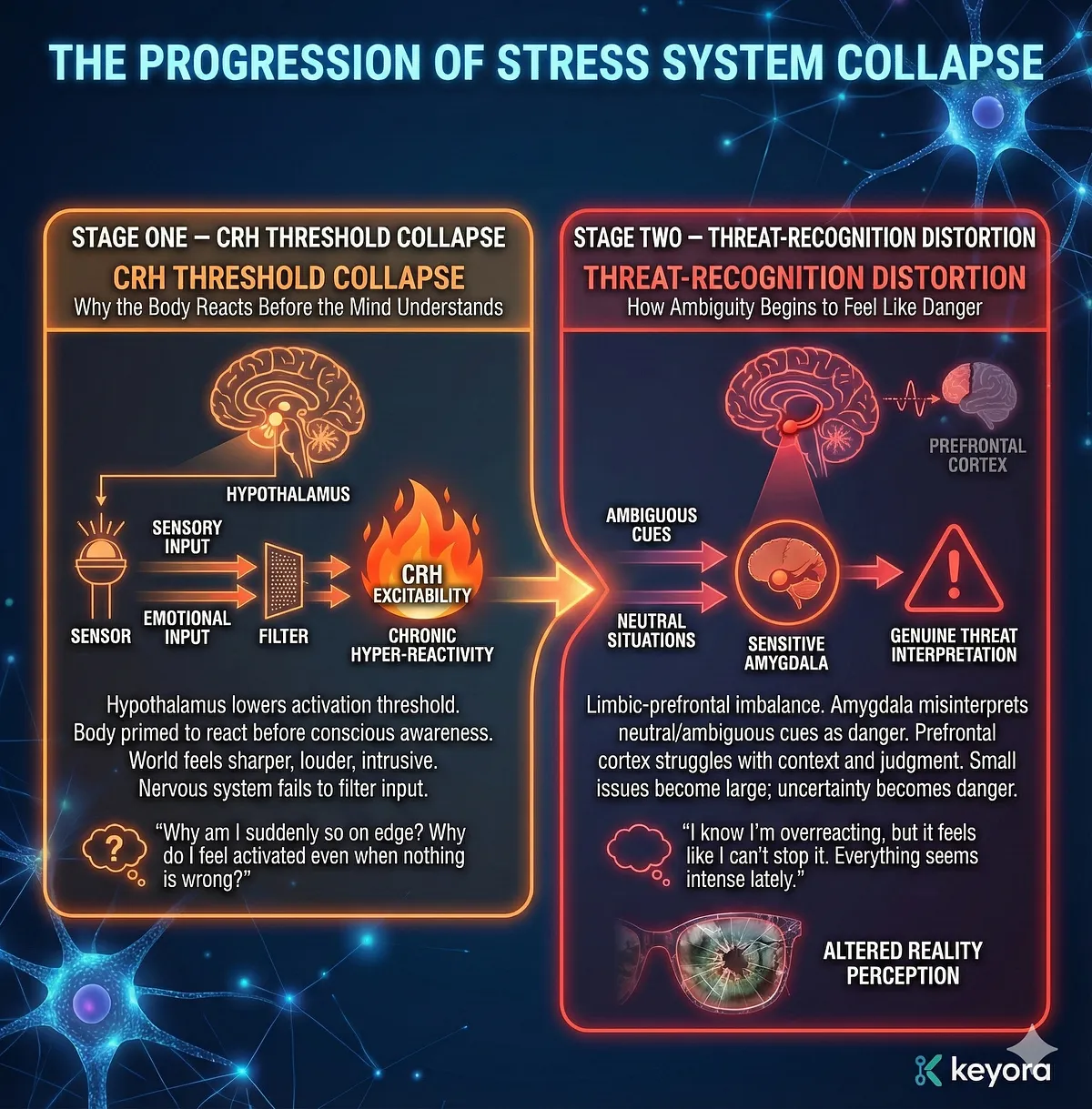
2. Stage Two – Threat-Recognition Distortion
How Ambiguity Begins to Feel Like Danger
After CRH threshold collapse, the next destabilization occurs in the limbic–prefrontal interface.
The amygdala becomes increasingly sensitive to ambiguous cues, interpreting neutral or slightly stressful situations as genuine threats.
Meanwhile, the prefrontal cortex – the region responsible for context, judgment, and emotional scaling – struggles to maintain coherence.
This imbalance leads to errors in interpretation: small issues become large, uncertainty becomes danger, and inconvenience becomes catastrophe.
This distortion does not feel cognitive; it feels real. People often say, “I know I’m overreacting, but it feels like I can’t stop it,” or “Everything seems intense lately.”
The brain is not fabricating danger – it is misclassifying it.
This stage marks the emotional turning point when stress begins to alter how reality is perceived rather than simply how it is tolerated.
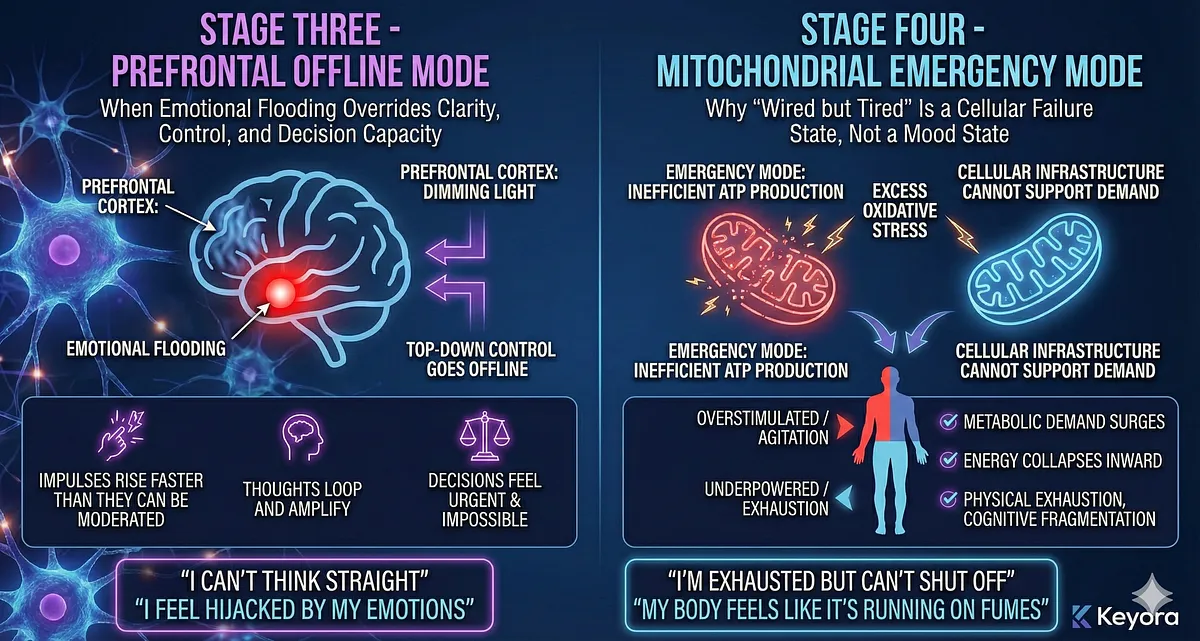
3. Stage Three – Prefrontal Offline Mode
When Emotional Flooding Overrides Clarity, Control, and Decision Capacity
As stress accumulates, the prefrontal cortex can no longer maintain regulatory governance. It operates like a dimming light:
intermittent, unreliable, unable to sustain top-down control. The amygdala, now largely unopposed, drives emotional intensity; impulses rise faster than they can be moderated; thoughts loop and amplify; decisions feel both urgent and impossible.
People often describe this stage as “I can’t think straight,” “I can’t calm myself down,” or “I feel hijacked by my emotions.”
This is the neurobiological moment when stress stops being a feeling and becomes a structure – when the machinery of judgment temporarily goes offline, leaving the limbic system to run the show.
Once this happens, even simple choices produce disproportionate strain.
4. Stage Four – Mitochondrial Emergency Mode
Why “Wired but Tired” Is a Cellular Failure State, Not a Mood State
With limbic governance destabilized, metabolic demand surges. Mitochondria begin to operate in emergency mode, producing ATP inefficiently while generating excess oxidative stress.
The body becomes overstimulated and underpowered simultaneously. Emotionally, this presents as agitation; physically, as exhaustion; cognitively, as fragmentation.
This is the stage where people say:
“I’m exhausted but can’t shut off.” or
“My body feels like it’s running on fumes.”
This paradox is biochemical, not psychological.
The nervous system is demanding clarity and control, yet the cellular infrastructure cannot support that demand.
Energy collapses inward while stress explodes outward. Nothing feels manageable because nothing is metabolically sustainable.
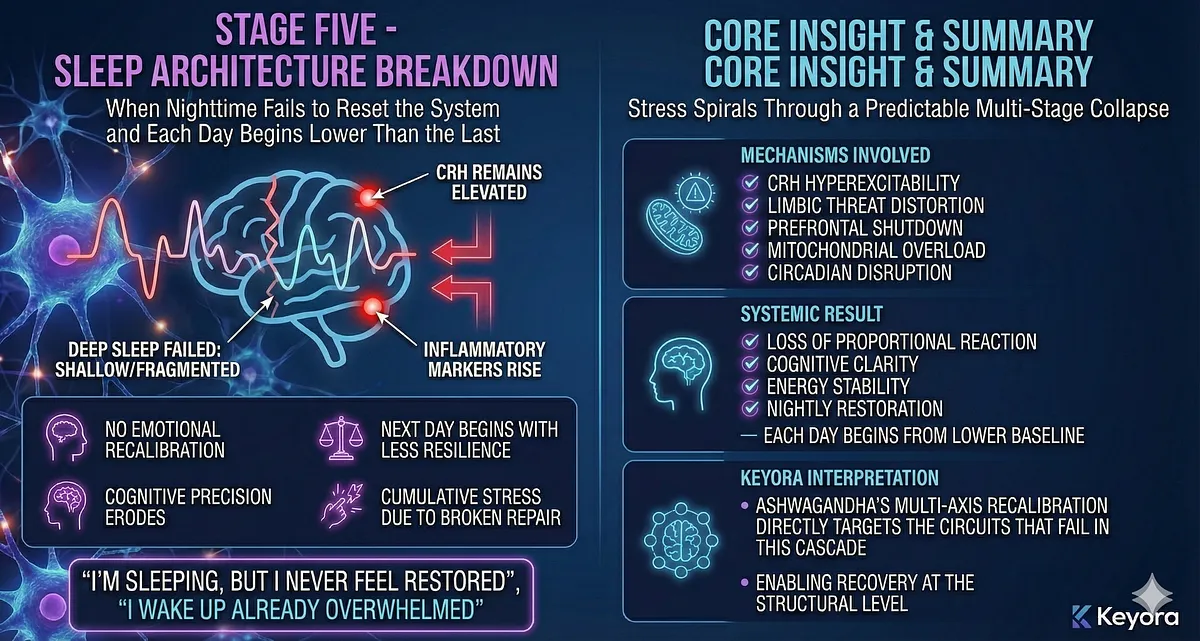
5. Stage Five – Sleep Architecture Breakdown
When Nighttime Fails to Reset the System and Each Day Begins Lower Than the Last
Once mitochondrial stability fails, nighttime CRH fails to drop. Deep sleep becomes shallow, fragmented, or absent altogether.
Without slow-wave sleep, the emotional recalibration machinery never activates, inflammatory markers rise, cognitive precision erodes, and the next day begins with less resilience than the day before.
Stress becomes cumulative because the nightly repair cycle is broken.
People often say:
“I’m sleeping, but I never feel restored,” or
“I wake up already overwhelmed.”
This final stage completes the systems-collapse loop.
Each morning begins closer to burnout because the biological foundation of recovery has dissolved.
The stress system is no longer dysregulated – it is trapped in a self-reinforcing failure pattern.
– Core Insight: Stress spirals not through emotion alone but through a predictable multi-stage collapse in thresholds, interpretation, control, energy, and recovery.
– Mechanisms Involved: CRH hyperexcitability, limbic threat distortion, prefrontal shutdown, mitochondrial overload, circadian disruption.
– Systemic Result: The individual loses proportional reaction, cognitive clarity, energy stability, and nightly restoration; each day begins from a lower baseline.
– Keyora Interpretation: Understanding these stages is essential, because Ashwagandha’s multi-axis recalibration directly targets the very circuits that fail in this cascade, enabling recovery to begin at the structural level rather than the symptomatic level.
SECTION IV – Ashwagandha’s Five-Pillar Recalibration Model
Threshold Reset • Noise Reduction • Energy Restoration • Inflammatory Decoupling • Circadian Repair
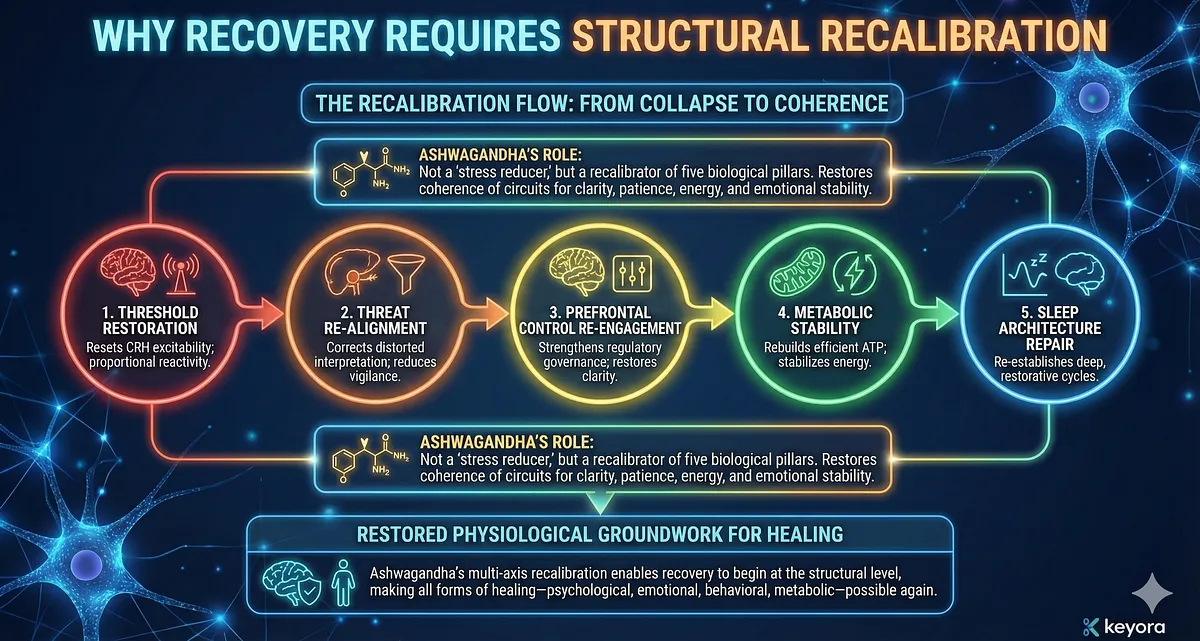
Why Recovery Requires Structural Recalibration
Recovery from chronic stress does not begin with mindset, discipline, or emotional strategy; it begins with repairing the architecture that interprets and responds to the world.
Once thresholds have collapsed, threat detection has become distorted, prefrontal control has weakened, mitochondria have shifted into emergency mode, and sleep architecture has fragmented, the system is no longer capable of responding proportionally.
The individual may try to rest, meditate, regulate, or reason – but the machinery required for these efforts is offline.
Ashwagandha’s role becomes clear only when viewed through this systems lens. It is not a general “stress reducer,” but a recalibrator of the five biological pillars that must return to order before resilience becomes possible.
Its value lies not in sedation or suppression, but in restoring the coherence of circuits that generate clarity, patience, energy, and emotional stability.
The following five pillars describe how Ashwagandha interacts with each layer of the stress system, reversing the collapse described in Section III and re-establishing the physiological groundwork that makes all forms of healing – psychological, emotional, behavioral, metabolic – possible again.
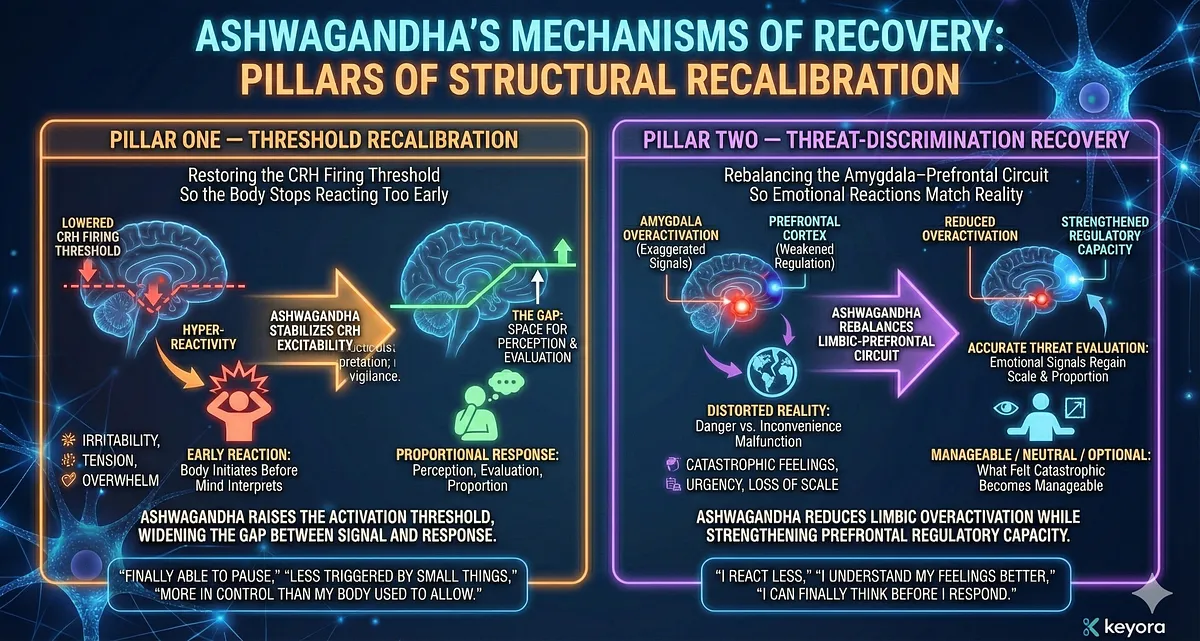
1. Pillar One – Threshold Recalibration
Restoring the CRH Firing Threshold So the Body Stops Reacting Too Early
Chronic stress lowers the firing threshold of CRH neurons, causing the body to initiate the stress response before the mind has had any chance to interpret the situation. This hyper-reactivity is the first and most foundational breakdown in the stress system.
When the body reacts too early, the mind is forced into a permanent state of catching up – a biological disadvantage that feels like irritability, tension, and the sense of being easily overwhelmed.
Ashwagandha raises the activation threshold by stabilizing CRH neuron excitability, widening the gap between signal and response. This gap is the birthplace of emotional intelligence: the space in which perception, evaluation, and proportion can occur.
When this space returns, people describe themselves as “finally able to pause,” “less triggered by small things,” and “more in control than my body used to allow.”
Threshold recalibration is not relaxation; it is the restoration of choice.
2. Pillar Two – Threat-Discrimination Recovery
Rebalancing the Amygdala–Prefrontal Circuit So Emotional Reactions Match Reality
After threshold collapse, the next transformation required for recovery is the restoration of accurate threat evaluation. In chronic stress, the amygdala exaggerates signals while the prefrontal cortex loses the ability to contextualize or downregulate them.
The world becomes distorted, not because dangers multiply, but because the machinery that distinguishes danger from inconvenience is malfunctioning.
Ashwagandha reduces limbic overactivation while strengthening prefrontal regulatory capacity, allowing emotional signals to regain scale and proportion.
What felt catastrophic begins to feel manageable; what felt threatening begins to feel neutral; what felt urgent begins to feel optional. People often report, “I react less,” “I understand my feelings better,” or “I can finally think before I respond.”
Recovery begins not when emotions shrink, but when they become accurate.
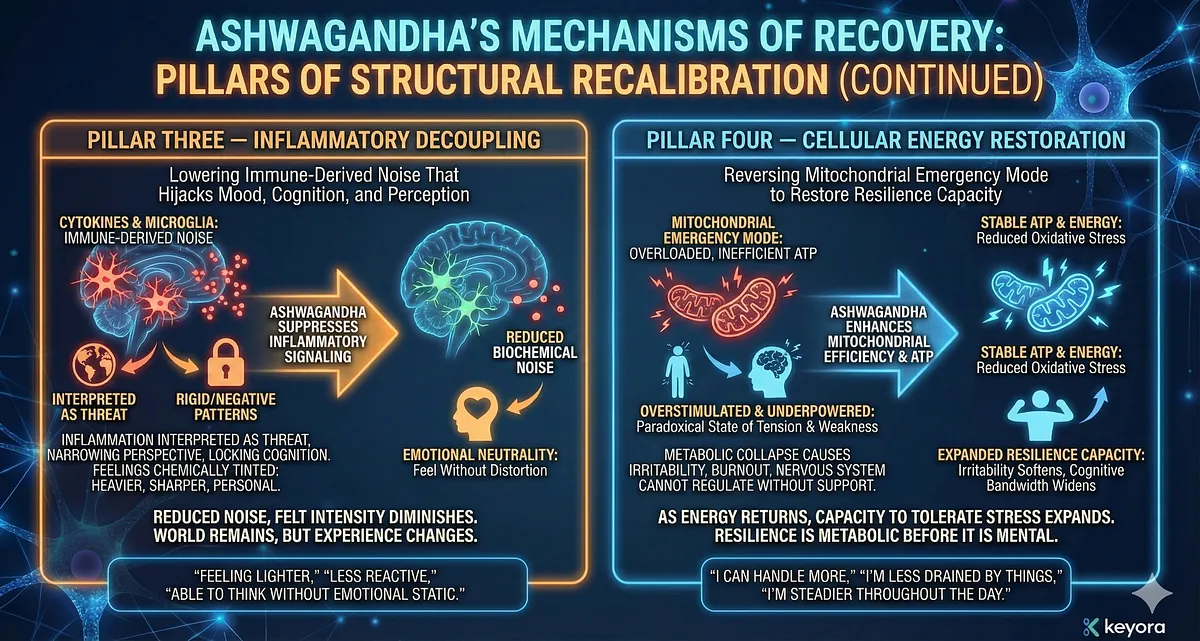
3. Pillar Three – Inflammatory Decoupling
Lowering Immune-Derived Noise That Hijacks Mood, Cognition, and Perception
Inflammation is one of the most underestimated drivers of emotional dysregulation.
When microglia activate and cytokines rise, the brain interprets immune distress as environmental threat. This misinterpretation intensifies vigilance, narrows perspective, and locks cognition into rigid or negative patterns. Emotional experience becomes chemically tinted; everything feels heavier, sharper, or more personal.
Ashwagandha suppresses inflammatory signaling across neural and peripheral pathways, reducing the biochemical noise that amplifies emotional responses. The world does not change – but its felt intensity diminishes. Individuals report feeling “lighter,” “less reactive,” or “able to think without emotional static.”
Decoupling inflammation from emotion restores emotional neutrality – the ability to feel without distortion.
4. Pillar Four – Cellular Energy Restoration
Reversing Mitochondrial Emergency Mode to Restore Resilience Capacity
Energy determines resilience. When mitochondria are overloaded, the body enters a paradoxical state of being overstimulated and underpowered: tense yet weak, activated yet depleted.
This metabolic collapse is the foundation of irritability, burnout, and the sense that “everything takes too much effort.”
The nervous system cannot regulate what the metabolic system cannot support.
Ashwagandha enhances mitochondrial efficiency, stabilizes ATP output, and reduces oxidative stress. As energy returns, irritability softens, cognitive bandwidth widens, and the capacity to tolerate stress expands. People begin to say, “I can handle more,” “I’m less drained by things,” or “I’m steadier throughout the day.”
Resilience is metabolic before it is mental.
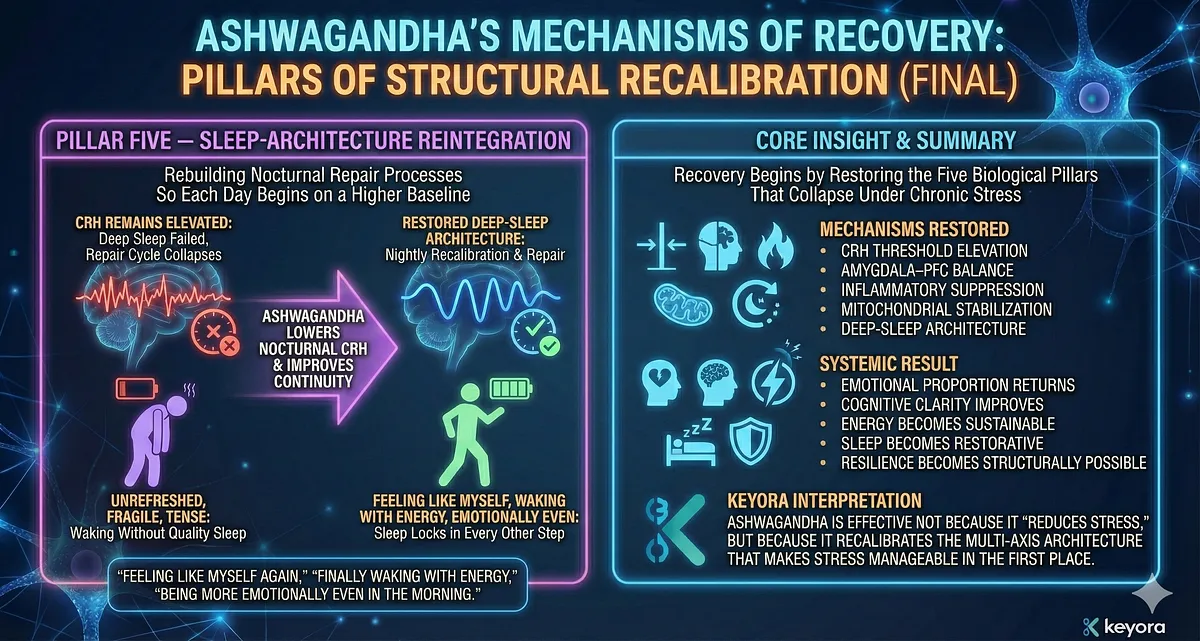
5. Pillar Five – Sleep-Architecture Reintegration
Rebuilding Nocturnal Repair Processes So Each Day Begins on a Higher Baseline
Deep sleep is the nightly reset of the emotional, metabolic, and inflammatory systems. But when stress elevates nighttime CRH, the brain loses access to slow-wave sleep, and the entire repair cycle collapses.
People wake unrefreshed, emotionally fragile, and physiologically tense – not because they lacked hours of sleep, but because they lacked quality of sleep.
Ashwagandha lowers nocturnal CRH and improves continuity of deep sleep architecture, allowing the body to perform overnight recalibration.
This restoration is often described as “feeling like myself again,” “finally waking with energy,” or “being more emotionally even in the morning.”
Sleep is not the last step of recovery – it is the mechanism that locks in every other step.
– Core Insight: Recovery begins by restoring the five biological pillars that collapse under chronic stress—thresholds, evaluation, inflammation, energy, and circadian repair.
– Mechanisms Restored: CRH threshold elevation, amygdala–PFC balance, inflammatory suppression, mitochondrial stabilization, deep-sleep architecture.
– Systemic Result: Emotional proportion returns, cognitive clarity improves, energy becomes sustainable, sleep becomes restorative, and resilience becomes structurally possible.
– Keyora Interpretation: Ashwagandha is effective not because it “reduces stress,” but because it recalibrates the multi-axis architecture that makes stress manageable in the first place.
SECTION V – The Return of Stress System Intelligence
How Recalibrated Circuits Restore Clarity, Proportion, and Emotional Stability
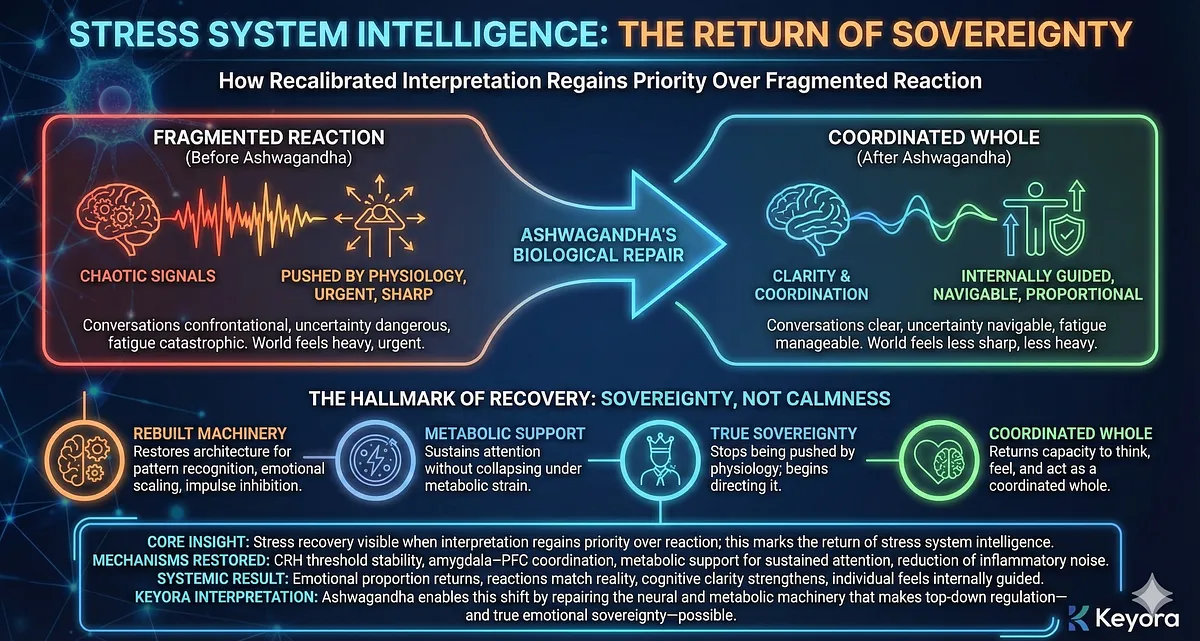
The greatest misunderstanding about chronic stress is that recovery is measured by how calm a person feels.
Calmness is pleasant, but it is not resilience. True recovery is marked by something far deeper and more consequential: the restoration of the brain’s ability to interpret reality accurately before generating emotional or physiological reactions.
This capacity – what we call stress system intelligence – is the culmination of every repair made across the first four sections of this chapter.
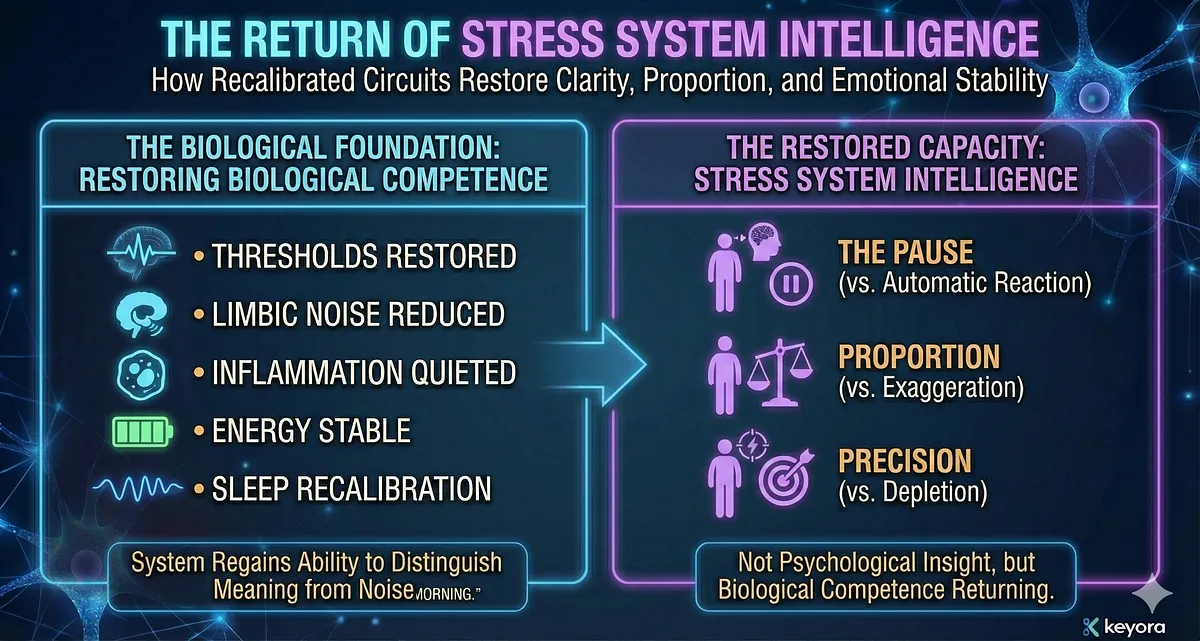
When thresholds are restored, when limbic noise is reduced, when inflammation no longer distorts perception, when energy is stable, and when sleep provides genuine recalibration, the nervous system regains its ability to distinguish meaning from noise.
This is not psychological insight; it is biological competence returning.
The system that once reacted automatically now pauses.
The system that once exaggerated now scales appropriately.
The system that once depleted itself now conserves and deploys energy with precision.
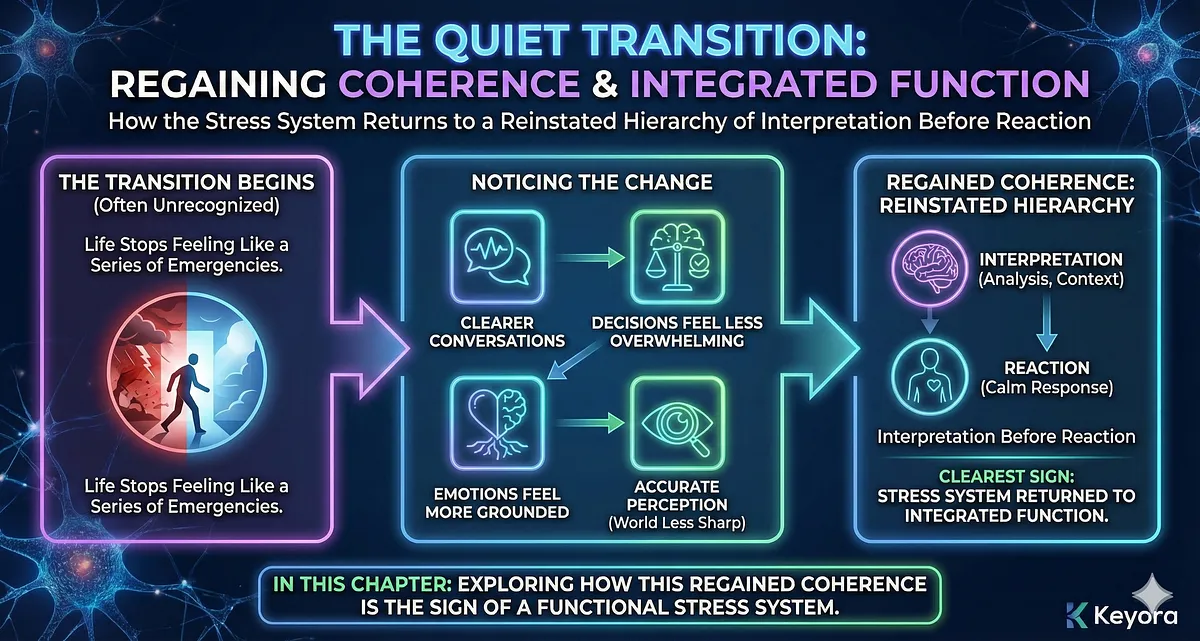
People often do not recognize the moment this transition begins. They simply notice that life stops feeling like a series of emergencies. Conversations feel clearer. Decisions feel less overwhelming.
Emotions feel more grounded. The world becomes less sharp not because danger has vanished, but because perception has become accurate.
In this chapter, we explore how this regained coherence – this reinstated hierarchy of interpretation before reaction – is the clearest sign that the stress system has returned to integrated function.
Why Interpretation Must Precede Reaction
Ashwagandha and the Restoration of Top-Down Regulation
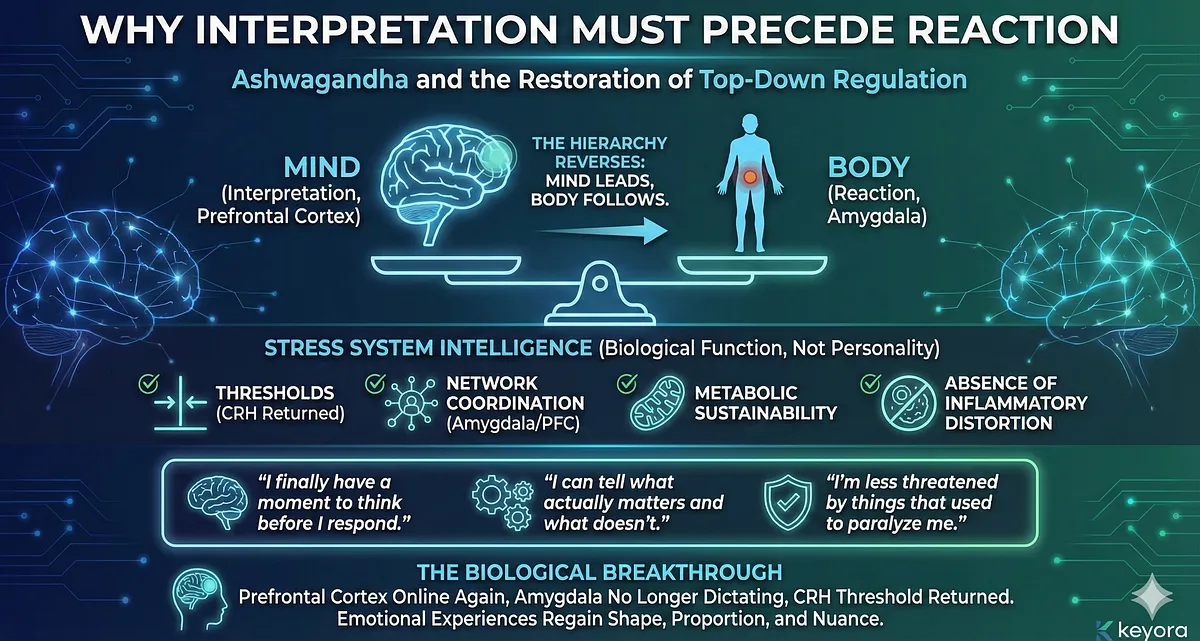
When the five stress axes return to stability, something more profound than calmness emerges: a renewed ability to interpret reality before reacting to it. This ability – what we might call stress system intelligence – has nothing to do with personality, discipline, or emotional maturity.
It is a biological function, dependent on thresholds, network coordination, metabolic sustainability, and the absence of inflammatory distortion. When these underlying systems fail, interpretation collapses and reaction takes over. When the systems are restored, the hierarchy reverses: the mind leads, and the body follows.
People who recover often describe an identical experience, regardless of background:
- “I finally have a moment to think before I respond.”
- “I can tell what actually matters and what doesn’t.”
- “I’m less threatened by things that used to paralyze me.”
These changes are not psychological breakthroughs; they are signs that the prefrontal cortex is online again, the amygdala is no longer dictating pace, and the CRH threshold has returned to a level where the internal alarm respects context rather than possibility.
Emotional experiences regain shape, proportion, and nuance.
Stress system intelligence shows itself through small but life-changing shifts: conversations feel less confrontational, uncertainty feels less dangerous, fatigue feels less catastrophic, and everyday pressures feel navigable rather than defining. The world becomes less sharp, less heavy, less urgent – not because life has become easier, but because perception has become accurate.
Ashwagandha’s role in this process is not to dampen emotion but to restore the biological machinery that enables clarity.
It helps rebuild the architecture that allows the brain to recognize patterns, scale emotional signals, inhibit unhelpful impulses, and sustain attention without collapsing under metabolic strain.
In other words, it returns the capacity to think, feel, and act as a coordinated whole rather than as a fragmented reaction.
Stress system intelligence is the hallmark of a recovered nervous system.
It is the moment when a person stops being pushed by their physiology and begins directing it again. This is not calmness – it is sovereignty.
– Core Insight: Stress recovery becomes visible when interpretation regains priority over reaction; this shift marks the return of stress system intelligence.
– Mechanisms Restored: CRH threshold stability, amygdala–PFC coordination, metabolic support for sustained attention, reduction of inflammatory noise.
– Systemic Result: Emotional proportion returns, reactions match reality, cognitive clarity strengthens, and the individual feels internally guided rather than physiologically driven.
– Keyora Interpretation: Ashwagandha enables this shift by repairing the underlying neural and metabolic machinery that makes top-down regulation – and true emotional sovereignty – possible.
SECTION VI – Why All Other Forms of Healing Depend on This Reset
CRH Quieting • Energy Stabilization • Cognitive Restoration as Biological Prerequisites
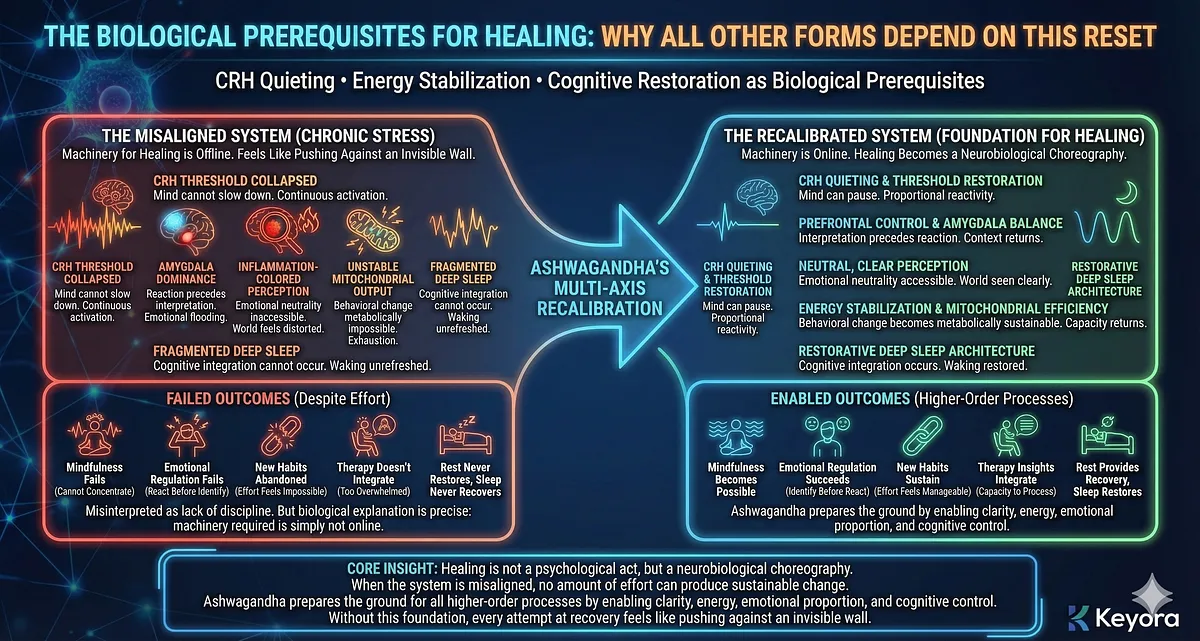
One of the deepest frustrations for people living under chronic stress is the repeated failure of strategies that “should” work.
They try mindfulness but cannot concentrate.
They attempt emotional regulation but react before they can identify how they feel. They set new habits but abandon them after a few days because the effort feels impossible.
They seek therapy but arrive too overwhelmed or exhausted to integrate insights. They rest but never feel restored. They sleep but never recover.
From the outside, these failures are often misinterpreted as lack of discipline, avoidance, or psychological resistance. But from a biological perspective, the explanation is far more precise: the machinery required for these healing processes simply isn’t online.
When CRH thresholds are collapsed, the mind cannot slow down.
When the amygdala dominates the prefrontal cortex, interpretation cannot precede reaction.
When inflammation colors perception, emotional neutrality is inaccessible.
When mitochondrial output is unstable, behavioral change becomes metabolically impossible.
When deep sleep fails, cognitive integration cannot occur.
Healing is not a psychological act – it is a neurobiological choreography.
And when the system is misaligned, no amount of effort can produce sustainable change.
This section explains why Ashwagandha’s recalibration of the five axes restores the capacity for healing, not the healing itself.
It prepares the ground for all higher-order processes by enabling clarity, energy, emotional proportion, and cognitive control. Without this foundation, every attempt at recovery feels like pushing against an invisible wall.
1. Why Emotional Work Fails Without Lowering CRH
The Physiology That Blocks Insight, Reflection, and Emotional Presence
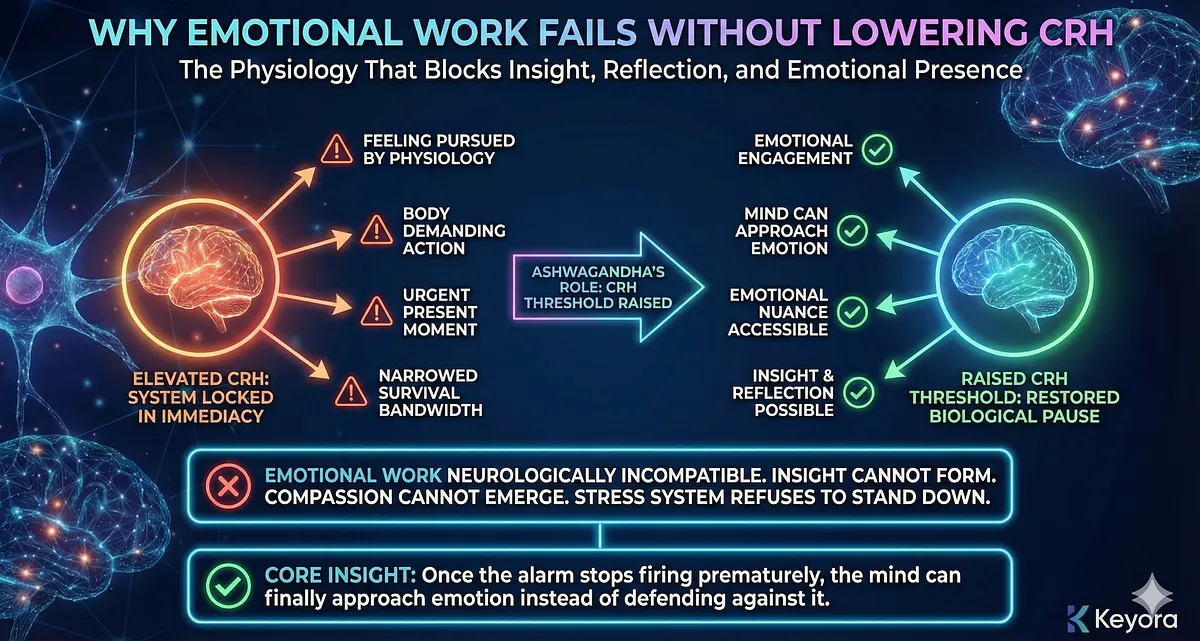
Emotional processing requires space – neurological space, cognitive space, and temporal space. But when CRH remains chronically elevated, the nervous system is locked into immediacy.
The person feels pursued by their own physiology. They cannot reflect because the body is demanding action; they cannot slow down because the system interprets the present moment as urgent; they cannot access emotional nuance because survival circuitry has narrowed the available bandwidth.
In this state, emotional work becomes neurologically incompatible with the body’s priorities. Insight cannot form while vigilance is high. Compassion cannot emerge while physiological urgency dominates. Even the most skilled therapist cannot bypass a stress system that refuses to stand down.
Ashwagandha supports emotional work not by creating artificial calmness but by raising the CRH threshold, restoring the biological pause needed for emotional engagement.
Once the alarm stops firing prematurely, the mind can finally approach emotion instead of defending against it.
2. Why Mindfulness Fails Without the Prefrontal Cortex Online
Attention, Self-Regulation, and Meta-Awareness Are Anatomical Capacities
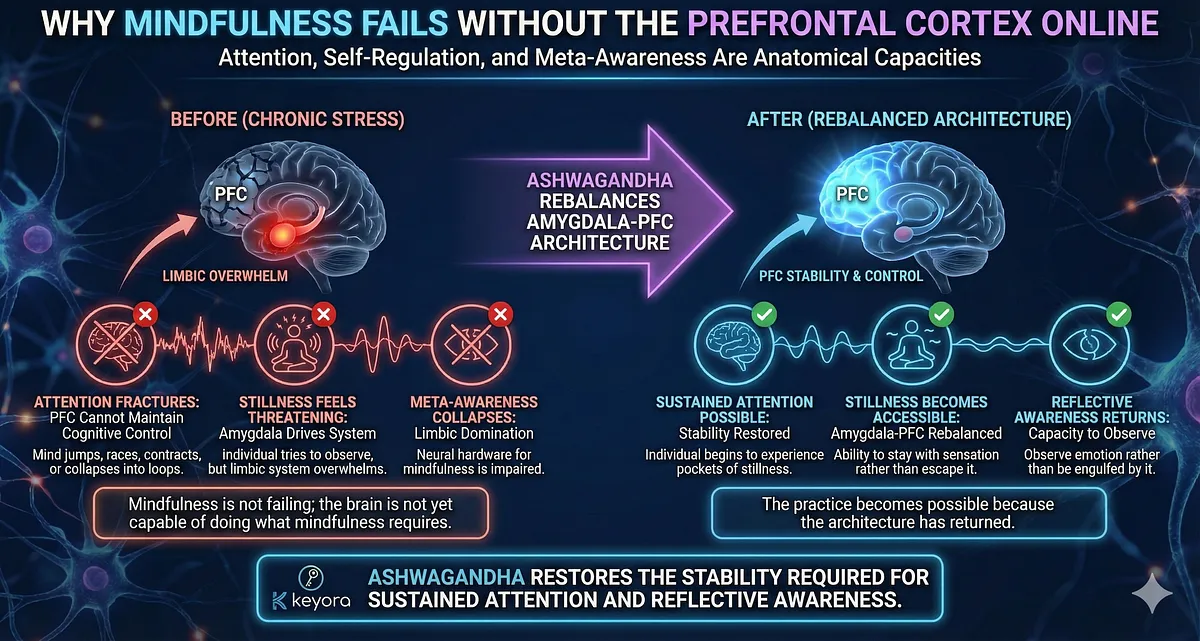
Mindfulness assumes that the prefrontal cortex is available to observe, direct, and modulate internal experience. But under chronic stress, the PFC becomes unstable, underpowered, or intermittently offline.
The individual tries to meditate, to focus on breath, to observe thoughts, but the limbic system overwhelms the attempt. The mind jumps, races, contracts, or collapses into loops – not because the person lacks ability, but because the neural hardware that makes mindfulness possible is impaired.
When the amygdala is driving the system, stillness feels threatening.
When the PFC cannot maintain cognitive control, attention fractures.
When the limbic system dominates, meta-awareness collapses.
Mindfulness is not failing; the brain is not yet capable of doing what mindfulness requires.
Ashwagandha’s support for amygdala–PFC rebalancing helps restore the stability required for sustained attention and reflective awareness.
The individual begins to experience pockets of stillness, the ability to stay with a sensation rather than escape it, and the capacity to observe emotion rather than be engulfed by it.
The practice becomes possible because the architecture has returned.
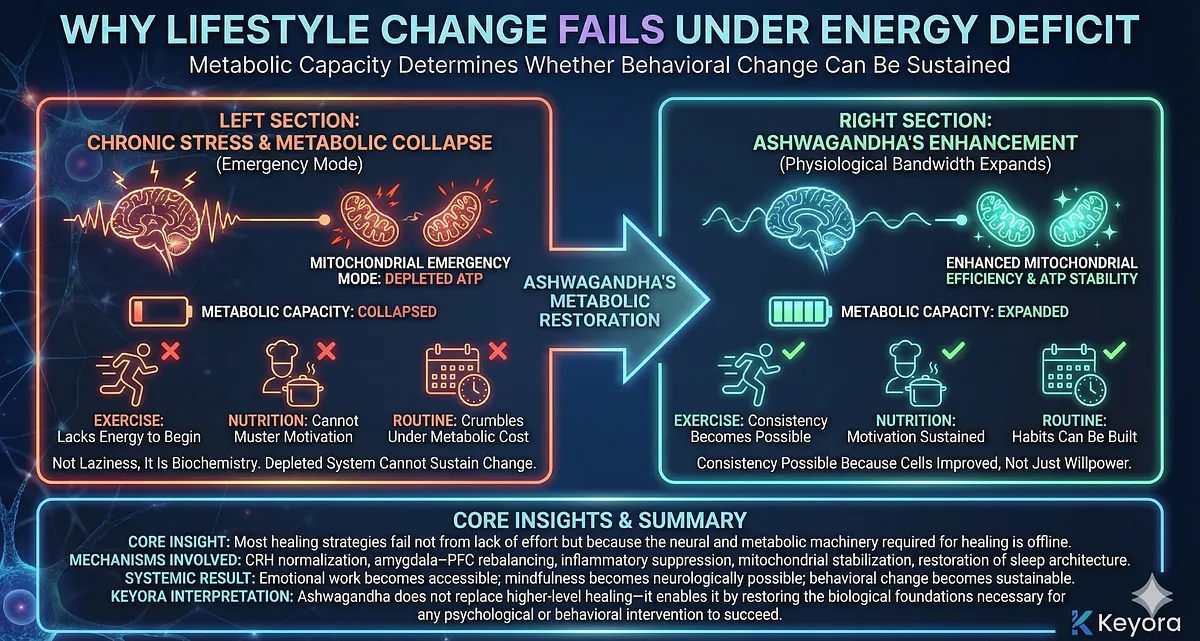
3. Why Lifestyle Change Fails Under Energy Deficit
Metabolic Capacity Determines Whether Behavioral Change Can Be Sustained
Most behavioral interventions – exercise, sleep routines, nutrition, habit formation – require metabolic stability. But when mitochondria are in emergency mode, even small efforts feel disproportionately draining.
The person wants to exercise but lacks the energy to begin. They want to cook but cannot muster the motivation. They want to maintain a routine but crumble under the metabolic cost of consistency.
This is not laziness; it is biochemistry.
A depleted metabolic system cannot sustain long-term behavioral change.
Ashwagandha’s enhancement of mitochondrial efficiency and ATP stability expands the physiological bandwidth needed to build new habits. When energy stops collapsing under stress, the person can finally persist.
Consistency becomes possible – not because their willpower improved, but because their cells did.
– Core Insight: Most healing strategies fail not from lack of effort but because the neural and metabolic machinery required for healing is offline.
– Mechanisms Involved: CRH normalization, amygdala–PFC rebalancing, inflammatory suppression, mitochondrial stabilization, restoration of sleep architecture.
– Systemic Result: Emotional work becomes accessible; mindfulness becomes neurologically possible; behavioral change becomes sustainable.
– Keyora Interpretation: Ashwagandha does not replace higher-level healing – it enables it by restoring the biological foundations necessary for any psychological or behavioral intervention to succeed.
SECTION VII – The Unified Systems Model of Ashwagandha
Ashwagandha as the First-Principle Reset for Human Stress Biology
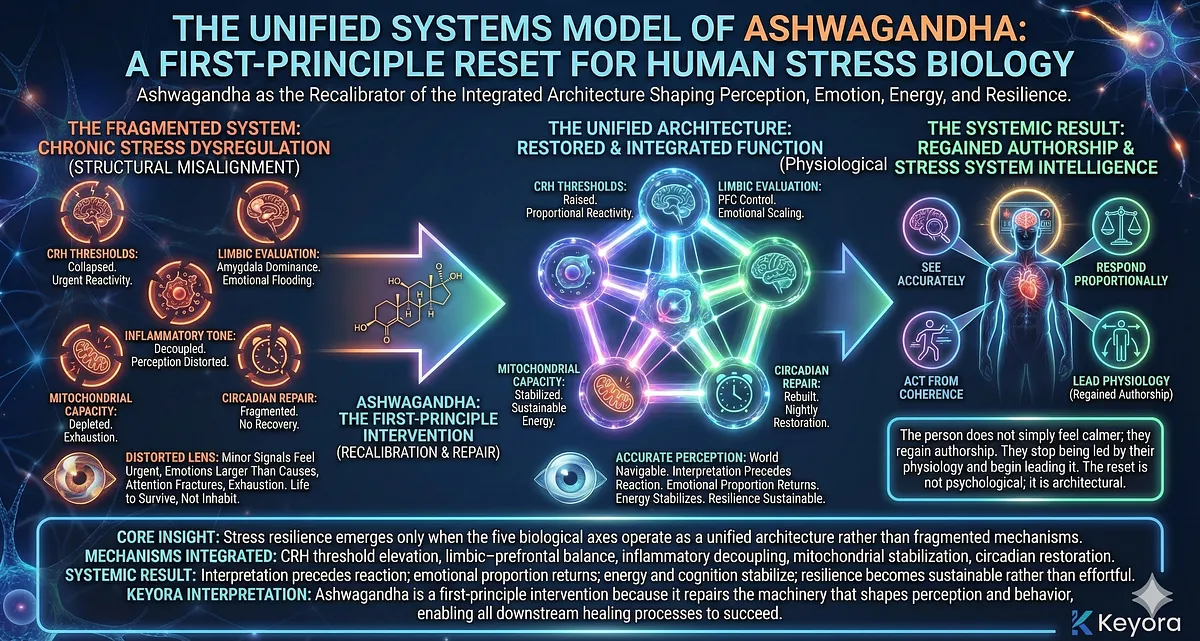
When all five axes are examined together – CRH thresholds, limbic evaluation, inflammatory tone, mitochondrial capacity, and circadian repair – what emerges is not a collection of mechanisms but a single integrated architecture.
This architecture determines how a person perceives reality, how they scale emotion, how they allocate energy, how they recover at night, and ultimately how they navigate the complexity of daily life.
Stress dysregulation is therefore not a psychological failure but a structural one: a misalignment in the machinery that generates interpretation, proportion, and behavioral flexibility.
Once this machinery collapses, the individual experiences the world through a distorted lens: minor signals feel urgent, emotions feel larger than their causes, attention fractures under metabolic load, and exhaustion punctuates every attempt to regain control.
Life becomes something to survive rather than something to inhabit. Recovery cannot begin with intention alone because intention is downstream of biology. The system must be restored before the self can fully return.
Ashwagandha’s role becomes clear only in this integrated view. It intervenes not by suppressing symptoms, but by recalibrating the architecture that produces them.
It raises CRH thresholds, restores the amygdala–prefrontal balance, decouples inflammation from emotional experience, stabilizes mitochondrial output, and rebuilds the nocturnal repair cycles that anchor resilience.
These effects converge into something larger than their sum: the return of stress system intelligence – the ability to see accurately, respond proportionally, and act from coherence rather than urgency.
The person does not simply feel calmer; they regain authorship.
They stop being led by their physiology and begin leading it.
The world becomes navigable again – not because it changed, but because perception did.
This is why Ashwagandha is positioned within Keyora’s framework as a first-principle intervention: it restores the biological foundations required for every higher-order process – emotional regulation, cognitive clarity, relational stability, behavioral change, and long-term resilience – to become possible again.
The reset is not psychological; it is architectural.
– Core Insight: Stress resilience emerges only when the five biological axes operate as a unified architecture rather than fragmented mechanisms.
– Mechanisms Integrated: CRH threshold elevation, limbic–prefrontal balance, inflammatory decoupling, mitochondrial stabilization, circadian restoration.
– Systemic Result: Interpretation precedes reaction; emotional proportion returns; energy and cognition stabilize; resilience becomes sustainable rather than effortful.
– Keyora Interpretation: Ashwagandha is a first-principle intervention because it repairs the machinery that shapes perception and behavior, enabling all downstream healing processes to succeed
1. Why All Five Axes Converge on a Single Biological Goal
Stress Intelligence as the Unifying Function of Human Resilience
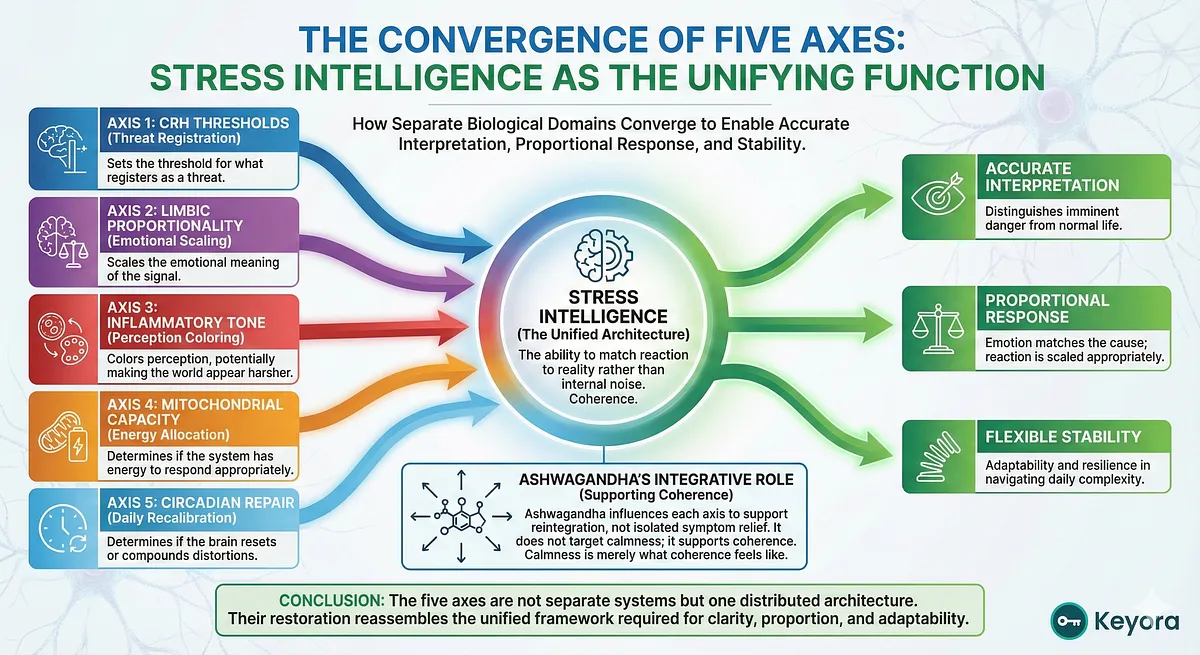
The five axes mapped throughout this episode may appear, at first glance, as separate domains—CRH thresholds, limbic proportionality, inflammatory tone, mitochondrial capacity, and circadian repair. But biology does not operate in silos, and neither does suffering. These axes converge on one higher-order purpose: to allow the human organism to interpret the world accurately and respond with proportion, flexibility, and stability. In other words, their collective function is to maintain stress intelligence – the ability to match reaction to reality rather than to internal noise.
CRH sets the threshold for what registers as a threat.
The limbic system scales the emotional meaning of the signal.
Inflammatory tone colors perception, sometimes making the world appear harsher than it is.
Mitochondria determine whether the system has the energy to respond appropriately.
Circadian repair determines whether the brain resets or compounds yesterday’s distortions.
If any one of these systems becomes dysregulated, the organism can compensate for a time. But when multiple systems fail simultaneously – usually under prolonged stress – the breakdown becomes exponential rather than linear. Threat becomes the default interpretation; emotion becomes disproportionate; fatigue masquerades as failure; and sleeplessness prevents recalibration. The brain cannot tell the difference between imminent danger and normal life because the machinery used to generate proportion has collapsed.
This is why all five axes, though mechanistically distinct, are functionally inseparable. They are not five systems but one architecture distributed across biology. Their purpose is coherence. Their failure is fragmentation. And their restoration – CRH recalibration, limbic rebalancing, inflammatory quieting, mitochondrial stabilization, and circadian repair – reassembles the unified framework required for clarity, proportion, and adaptability to reappear.
Ashwagandha’s value lies in its capacity to influence each axis in a way that supports reintegration rather than isolated symptom relief. It does not target calmness; it supports coherence. Calmness is merely what coherence feels like.
– Core Insight: The five biological axes are mechanistically separate but functionally unified, all serving one purpose – accurate interpretation and proportional response.
– Mechanisms Integrated: CRH thresholds, limbic evaluation, inflammatory tone, mitochondrial capacity, circadian recalibration.
– Systemic Result: Coherence replaces fragmentation; reactions begin to match reality; resilience emerges from restored biological architecture.
– Keyora Interpretation: Ashwagandha supports system-wide reintegration, enabling stress intelligence rather than merely reducing symptoms.
2. What Recovery Actually Feels Like When the System Reintegrates
The Internal Signs That Biology, Emotion, and Perception Are Coming Back Online
Recovery from chronic stress rarely announces itself with dramatic clarity. It does not begin with a perfect night of sleep or a sudden wave of calm. Instead, it unfolds subtly – through shifts in perception, timing, emotional texture, and energetic predictability.
These changes reflect a deeper biological truth: the five axes have begun to operate in synchrony again, restoring the organism’s ability to interpret the world accurately instead of defensively.
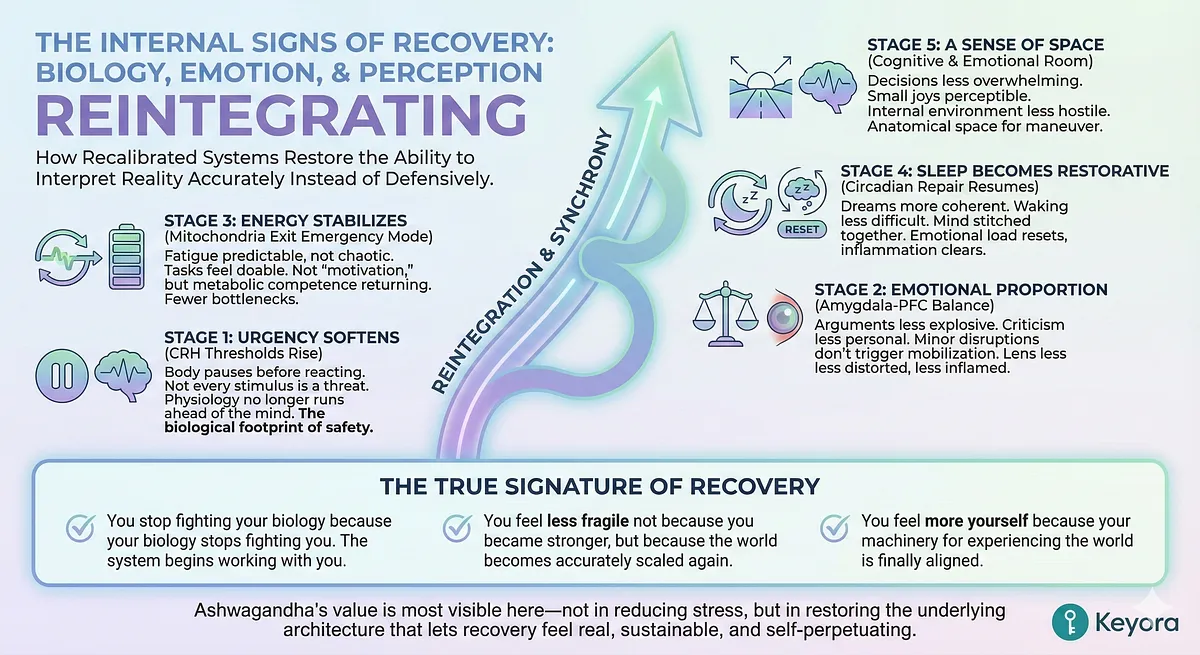
The first sign is usually a softening of urgency. Not because life becomes easier, but because CRH thresholds finally rise high enough that the nervous system stops treating every stimulus as a potential threat.
The body pauses before reacting.
That millisecond of quiet – barely perceptible – is the biological footprint of safety returning.
For many people, it is the first time in years that their physiology is not running ahead of their mind.
Next comes a shift in emotional proportion. The amygdala no longer hijacks interpretation the instant a signal appears. The prefrontal cortex regains enough bandwidth to evaluate meaning before emotion erupts. Arguments feel less explosive.
Criticism feels less personal. Minor disruptions no longer trigger full-scale mobilization. The world hasn’t changed – but the lens through which it is processed has become less distorted, less inflamed, less desperate.
Energy begins to stabilize as mitochondria exit emergency mode. Fatigue becomes predictable instead of chaotic. Tasks feel doable because they no longer require extraction from a depleted system. People are often surprised by this stage, mistaking renewed energy for “motivation,” when in reality it is metabolic competence returning. They are not trying harder; their biology is operating with fewer bottlenecks.
Then comes the most surprising shift: sleep becomes restorative. Not perfect, not immediate, but qualitatively different. Dreams become more coherent. Waking feels less like climbing out of a ditch.
The mind feels stitched together rather than scattered across unfinished physiological alarms.
Circadian repair has resumed its nightly function – resetting emotional load, clearing inflammatory noise, restoring metabolic balance.
Finally, the person notices a sense of space. Not physical space, but cognitive and emotional room to maneuver. Decisions feel less overwhelming. Small joys become perceptible again. Conversations feel easier to track.
The internal environment becomes less hostile.
This “space” is not psychological – it is anatomical. It reflects the reintegration of the five axes into a single coherent model of perception and response.
This is the true signature of recovery: You stop fighting your biology because your biology stops fighting you.
The system begins working with you instead of against you.
You feel less fragile not because you became stronger, but because the world becomes accurately scaled again.
You feel more yourself because your machinery for experiencing the world is finally aligned.
Ashwagandha’s value is most visible here – not in reducing stress, but in restoring the underlying architecture that lets recovery feel real, sustainable, and self-perpetuating.
– Core Insight: Recovery is not a psychological shift but a biological re-integration across five axes.
– Mechanisms Reflected: CRH normalization, limbic rebalancing, reduced inflammatory distortion, mitochondrial stability, circadian repair.
– Subjective Signatures: Reduced urgency, proportional emotion, stable energy, restorative sleep, cognitive space.
– Keyora Interpretation: Ashwagandha’s impact becomes most visible in the lived experience of coherence returning – biology aligning with perception, and perception aligning with reality.
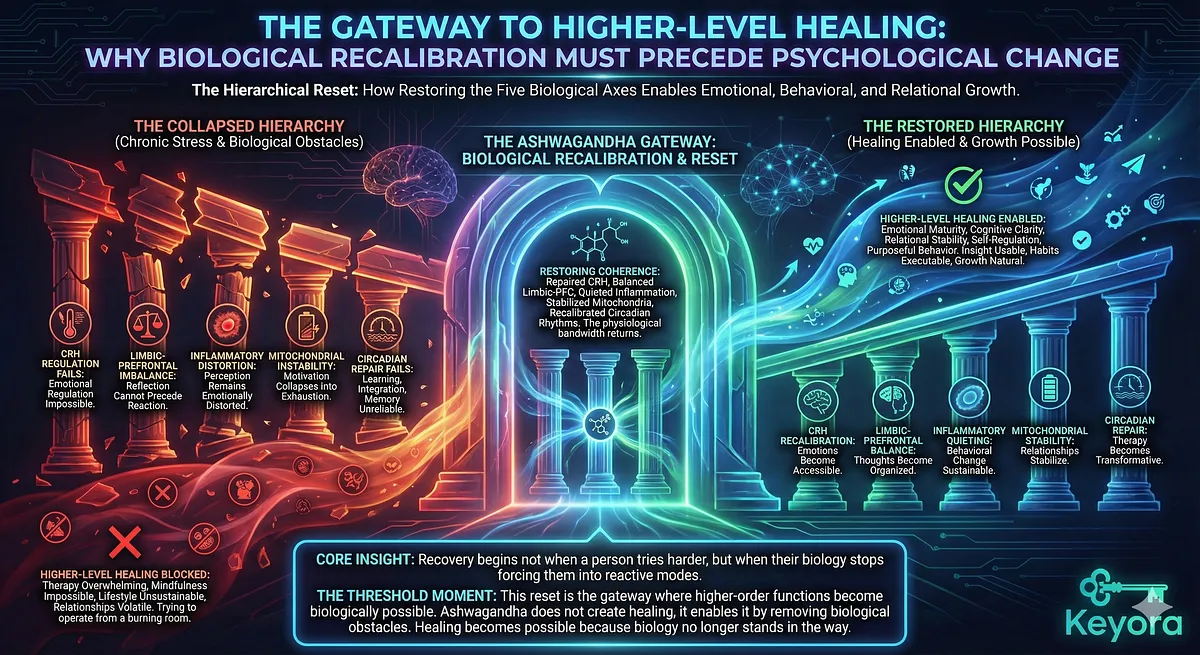
3. Why This Reset Is the Gateway for Higher-Level Healing
Why Psychological, Behavioral, and Relational Change Cannot Take Hold Without Biological Recalibration
Higher-level healing – emotional maturity, cognitive clarity, relational stability, self-regulation, purposeful behavior – cannot be forced into existence through discipline or intention alone.
These capacities sit at the top of a biological hierarchy, and the integrity of that hierarchy depends entirely on the five foundational axes beneath it.
When those axes collapse, higher functions become impossible to execute, no matter how hard a person tries. This is the central reason people living in chronic stress feel “stuck.” Their failure is not personal; their system is simply not equipped for the tasks they are attempting.
- Without CRH recalibration, emotional regulation fails before it starts.
- Without limbic–prefrontal balance, reflection cannot precede reaction.
- Without inflammatory quieting, perception remains emotionally distorted.
- Without mitochondrial stability, motivation collapses into exhaustion.
- Without circadian repair, learning, integration, and memory become unreliable.
These are not psychological barriers; they are biological prerequisites.
Trying to work on emotions without these systems online is like trying to read in a burning room: the environment overwhelms the task.
This is why people under chronic stress often experience therapy as overwhelming, mindfulness as impossible, lifestyle changes as unsustainable, and relationship work as volatile.
They are attempting to operate from the top of the hierarchy while everything underneath is misaligned. The architecture that would normally support self-awareness, restraint, empathy, and long-term planning has been temporarily dismantled by the body’s survival priorities.
Recovery begins not when a person tries harder, but when their biology stops forcing them into reactive modes.
Once the five axes move back into coherence, the entire hierarchy comes back online.
- Emotions become accessible rather than explosive.
- Thoughts become organized instead of racing.
- Behavioral change becomes sustainable because it is metabolically affordable.
- Relationships stabilize because interpretation becomes more accurate.
- Therapy becomes transformative because the brain can finally integrate insight.
This is the gateway moment in healing – the point where higher-order functions are no longer aspirational, but biologically possible.
Ashwagandha’s relevance is anchored precisely here. Its influence across CRH regulation, limbic proportionality, inflammatory tone, mitochondrial efficiency, and circadian recalibration does not create healing by itself; instead, it restores the internal conditions that make healing viable.
It opens the gate. It reinstates the architecture. It returns the physiological bandwidth required for change to become real, repeatable, and sustainable.
When the system resets, effort no longer feels like a battle.
- Insight becomes usable.
- Habits become executable.
- Growth becomes natural.
- Healing becomes possible because biology no longer stands in the way.
This reset is not the end of the journey – it is the threshold that makes every step beyond it meaningful.
– Core Insight: Higher-level healing fails not due to lack of effort but because the biological prerequisites for emotional, cognitive, and behavioral change are offline.
– Systems Involved: CRH recalibration, limbic–prefrontal balance, inflammatory quieting, mitochondrial stability, circadian repair.
– Systemic Result: The hierarchy of healing comes back online—emotional regulation, cognitive clarity, behavioral consistency, relational stability.
– Keyora Interpretation: Ashwagandha does not *cause* higher healing; it restores the architecture that makes healing possible, serving as the gateway for all downstream transformation.
4. Positioning of Ashwagandha in Keyora’s Systems-Neurology Model
Why Ashwagandha Functions as a First-Principle Intervention Rather Than a Symptom-Relief Strategy
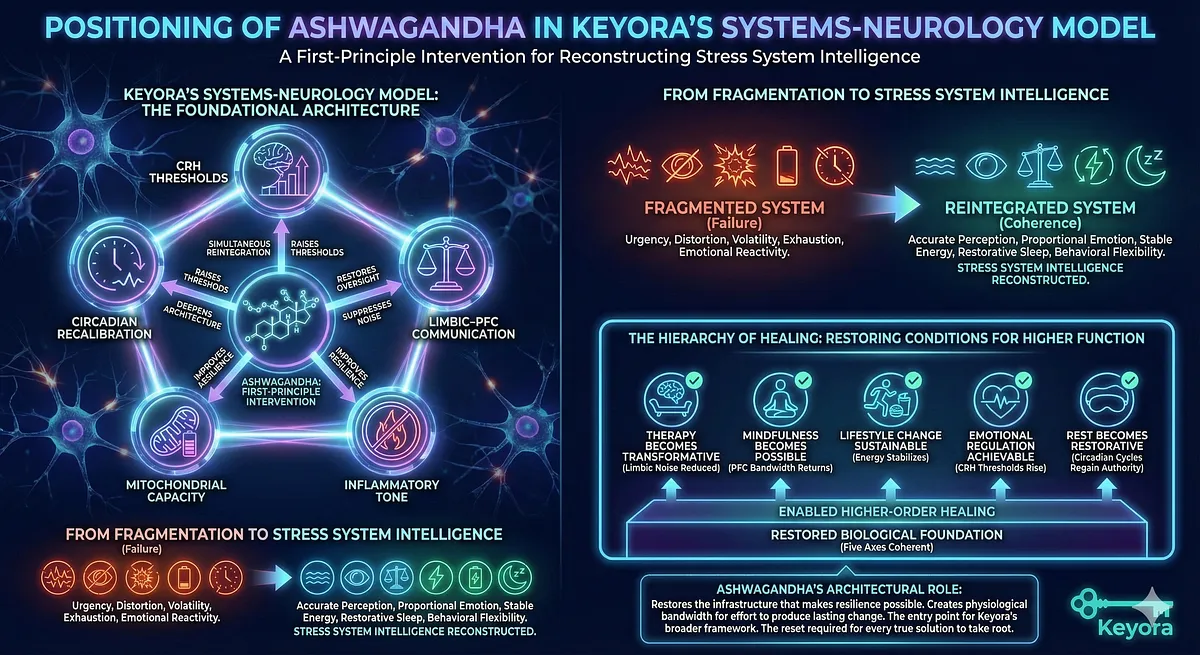
Within Keyora’s Systems-Neurology Model, Ashwagandha occupies a unique position – not as a calming herb, nor as a general adaptogen, but as a first-principle intervention that resets the foundational architecture upon which all higher-order human functioning depends.
In this model, human resilience is governed by five interacting biological axes: CRH thresholds, limbic–prefrontal communication, inflammatory tone, mitochondrial capacity, and circadian recalibration.
When these axes operate coherently, the system generates accurate perception, proportional emotion, stable energy, restorative sleep, and behavioral flexibility – the core capacities that make a human life navigable under pressure.
When they fail, the system fragments into urgency, distortion, volatility, exhaustion, and emotional reactivity.
Ashwagandha’s significance emerges precisely because it interfaces with all five axes simultaneously, and in ways that promote reintegration rather than scattered symptom suppression.
- It raises CRH thresholds, reducing false alarms. It steadies the amygdala’s emotional amplification and restores prefrontal oversight.
- It suppresses inflammatory noise that would otherwise distort perception and magnify emotional intensity.
- It improves mitochondrial resilience so the system can sustain effort without metabolic collapse.
- And it deepens sleep architecture, enabling nightly recalibration rather than nightly buffering.
In Keyora’s interpretation, these actions are not parallel benefits; they are convergent mechanisms that reconstruct stress system intelligence – the biological ability to evaluate reality before reacting to it.
This reframing places Ashwagandha not at the end of a wellness routine as a “stress supplement,” but at the beginning of any serious attempt at psychological, emotional, or behavioral change.
It is the intervention that makes other interventions effective.
It enables the entire hierarchy of healing by repairing the machinery that interprets the world and orchestrates response.
This positioning also reflects a broader principle within the Keyora model:
Healing does not begin with the mind; it begins with restoring the conditions under which the mind can function.
- Therapy becomes transformative when limbic noise is reduced.
- Mindfulness becomes possible when prefrontal bandwidth returns.
- Lifestyle change becomes sustainable when energy stabilizes.
- Emotional regulation becomes achievable when CRH thresholds rise.
- Rest becomes restorative when circadian cycles regain their authority.
Ashwagandha’s role is therefore architectural. It does not create resilience – it restores the infrastructure that makes resilience possible. It does not replace effort – it creates the physiological bandwidth that allows effort to produce lasting change.
And because it interacts with multiple biological axes simultaneously, it functions as the entry point into Keyora’s broader systems-neurology framework, where additional nutrients, behaviors, and therapeutic approaches can build upon a foundation capable of responding, adapting, and recovering.
This is why, across Keyora’s research, Ashwagandha is consistently positioned as the first-step intervention: not the solution to stress, but the reset required for every true solution to take root.
– Core Insight: Ashwagandha is not symptom relief; it is a first-principle reset within Keyora’s Systems-Neurology Model.
– Mechanistic Positioning: CRH thresholds, limbic–PFC balance, inflammatory quieting, mitochondrial stability, circadian repair – integrated as a unified architecture.
– Systemic Result: Restores “stress system intelligence,” enabling proportion, clarity, emotional stability, and behavioral flexibility.
– Keyora Interpretation: Ashwagandha is the entry point to all higher healing because it repairs the biological infrastructure required for therapy, mindfulness, behavior change, and resilience-building to succeed.
By Keyora Research Notes Series
This article contributes to Keyora’s ongoing scientific documentation series, which systematically outlines the conceptual foundations, mechanistic pathways, and empirical evidence informing our research and development approach.
ORCID: 0009–0007–5798–1996