
Why Pair an Oxidation-Sensitive Omega-3 Fatty Acid With Astaxanthin?
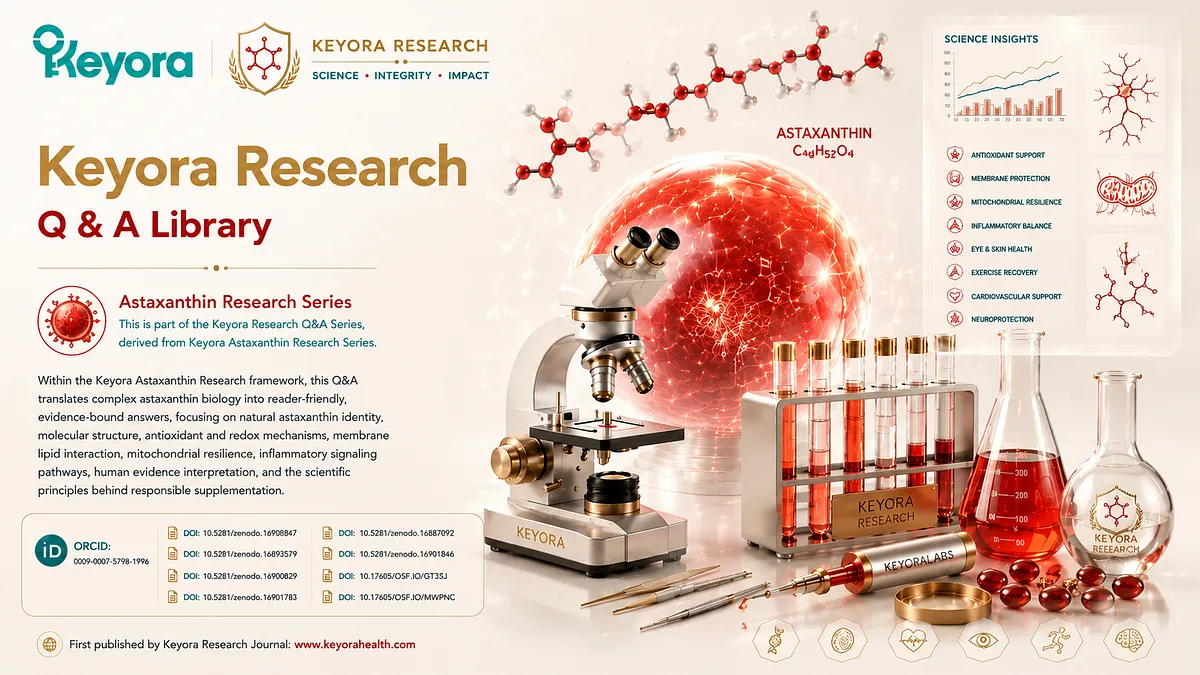
Keyora Research Q&A Library
This is part of the Keyora Research Q&A Series, derived from Keyora Astaxanthin Research Journal Series.
Within the Keyora Astaxanthin Researcn framework, this Q&A translates complex astaxanthin biology into reader-friendly, evidence-bound answers, focusing on natural astaxanthin identity, molecular structure, antioxidant and redox mechanisms, membrane lipid interaction, mitochondrial resilience, inflammatory signaling pathways, human evidence interpretation, and the scientific principles behind responsible supplementation.
First published by Keyora Research Journal: www.keyorahealth.com
Direct Answer
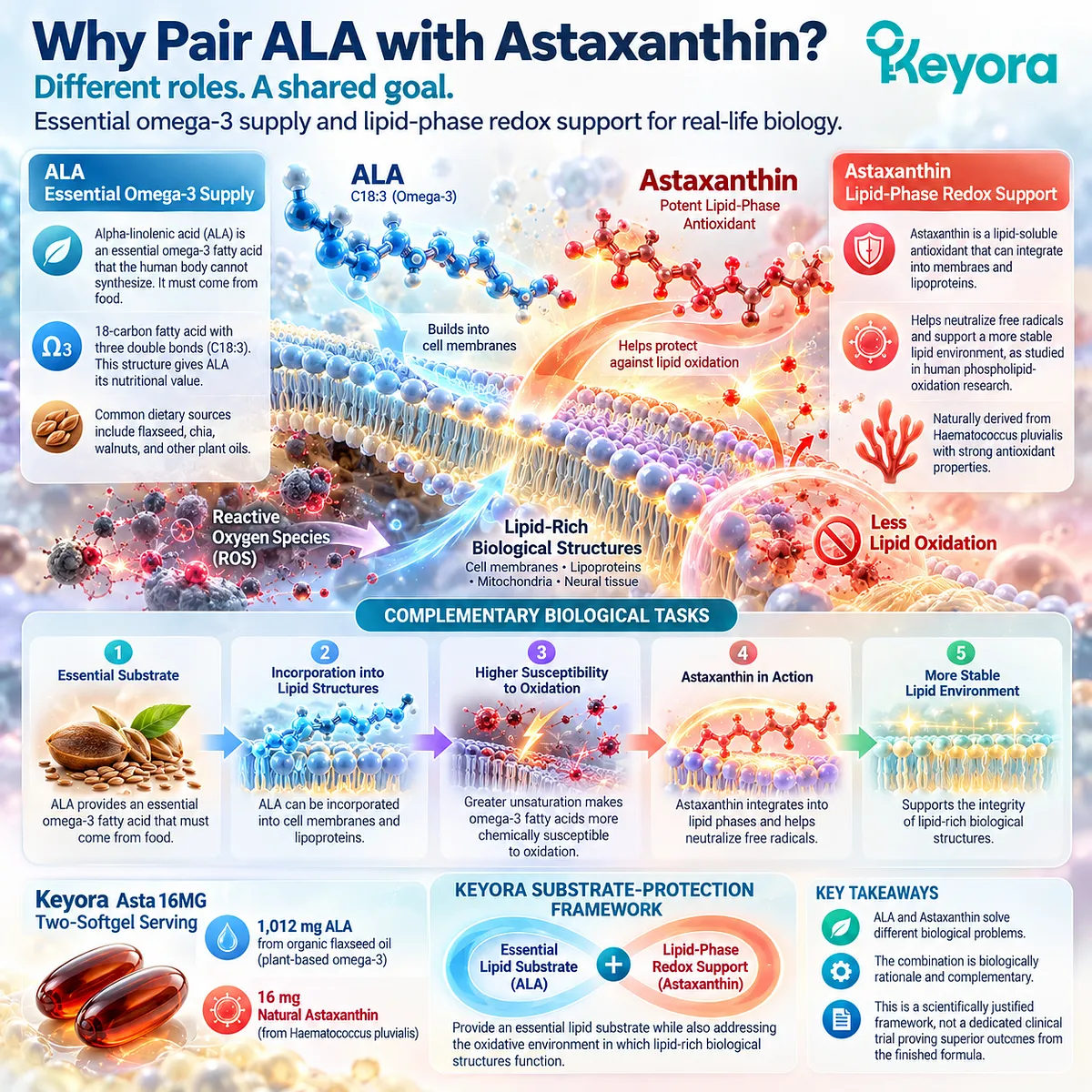
Pairing alpha-linolenic acid (ALA) with Astaxanthin has a coherent nutritional rationale because the two nutrients solve different biological problems.
ALA supplies an essential omega-3 polyunsaturated fatty acid. Astaxanthin contributes lipid-associated antioxidant activity that has been studied in membranes and, importantly, in a human phospholipid-oxidation trial.
ALA is valuable partly because of the same chemistry that makes redox protection relevant. It is an 18-carbon omega-3 fatty acid with three double bonds.
Those double bonds are fundamental to its identity as a polyunsaturated fatty acid, but greater unsaturation also makes fatty acids more chemically susceptible to oxidation.
That does not mean ALA becomes harmful when consumed without Astaxanthin.
Human studies of omega-3 supplementation do not show a uniform increase in lipid-peroxidation markers.
Oxidative outcome depends on the nutrient, dose, biological environment, antioxidant systems, diet, analytical method, and other factors.
The stronger interpretation is therefore one of complementary biological tasks.
-
ALA – Essential Omega-3 Supply
-
Astaxanthin – Lipid-Phase Redox Support
In Keyora Asta 16MG, a full two-softgel serving supplies 1,012 mg ALA from organic flaxseed oil together with 16 mg Natural Astaxanthin.
This is the basis of the Keyora Substrate-Protection Framework: provide an essential lipid substrate while also addressing the oxidative environment in which lipid-rich biological structures function.
The framework is biologically justified, but it should not be confused with a dedicated clinical trial proving superior outcomes from the finished ALA plus Astaxanthin formula.
Why Is ALA Worth Supplying in the First Place?
ALA is an essential plant-derived omega-3 fatty acid with nutritional value that does not depend on becoming EPA or DHA
Before discussing oxidation, it is important not to frame ALA as a problem that needs to be neutralized.
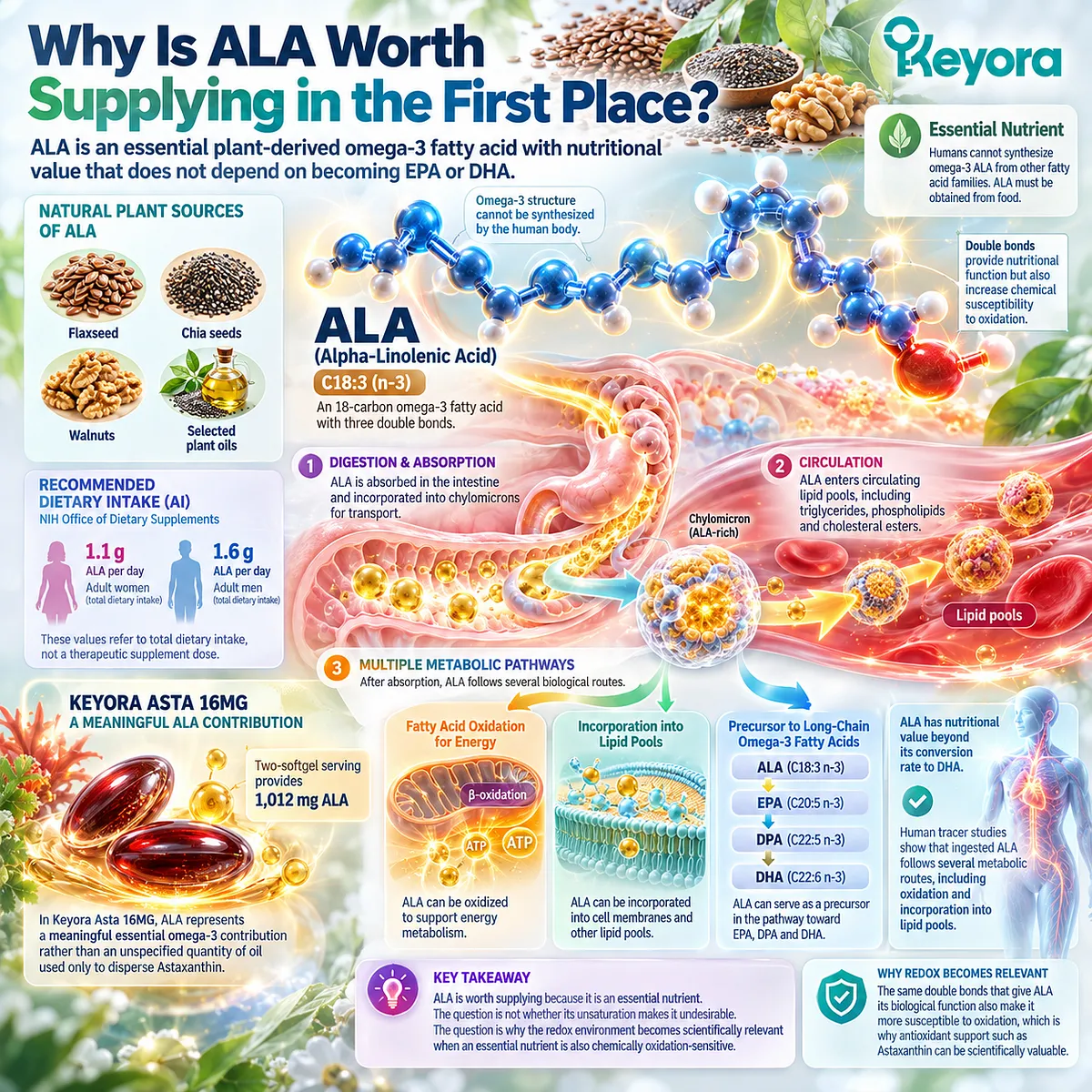
ALA is an essential fatty acid. Humans cannot synthesize its omega-3 structure from other fatty acid families and therefore must obtain it from food.
Common dietary sources include flaxseed, chia seeds, walnuts, and selected plant oils. After absorption, ALA participates in several metabolic pathways. It can enter circulating lipid pools, undergo fatty acid oxidation, and serve as a precursor in the pathway toward EPA, DPA, and DHA.
The NIH Office of Dietary Supplements summarizes Adequate Intake values of 1.1 g ALA per day for adult women and 1.6 g per day for adult men. These values concern total dietary intake, not a therapeutic supplement dose.
This distinction matters for Keyora Asta 16MG.
A full two-softgel serving contains 1,012 mg ALA. That amount represents a meaningful essential omega-3 contribution rather than an unspecified quantity of oil used only to disperse Astaxanthin.
ALA also should not be evaluated only by how much eventually becomes DHA. Human tracer studies show that ingested ALA follows several metabolic routes, including oxidation and incorporation into lipid pools.
So the starting point for this article is positive:
ALA is worth supplying because it is an essential nutrient.
The question is not whether its unsaturation makes it undesirable. The question is why the redox environment becomes scientifically relevant when an essential nutrient is also chemically oxidation-sensitive.
Why Do ALA’s Double Bonds Also Make Oxidation Relevant?
The three double bonds that define ALA as a polyunsaturated fatty acid also increase its susceptibility to oxidative reactions
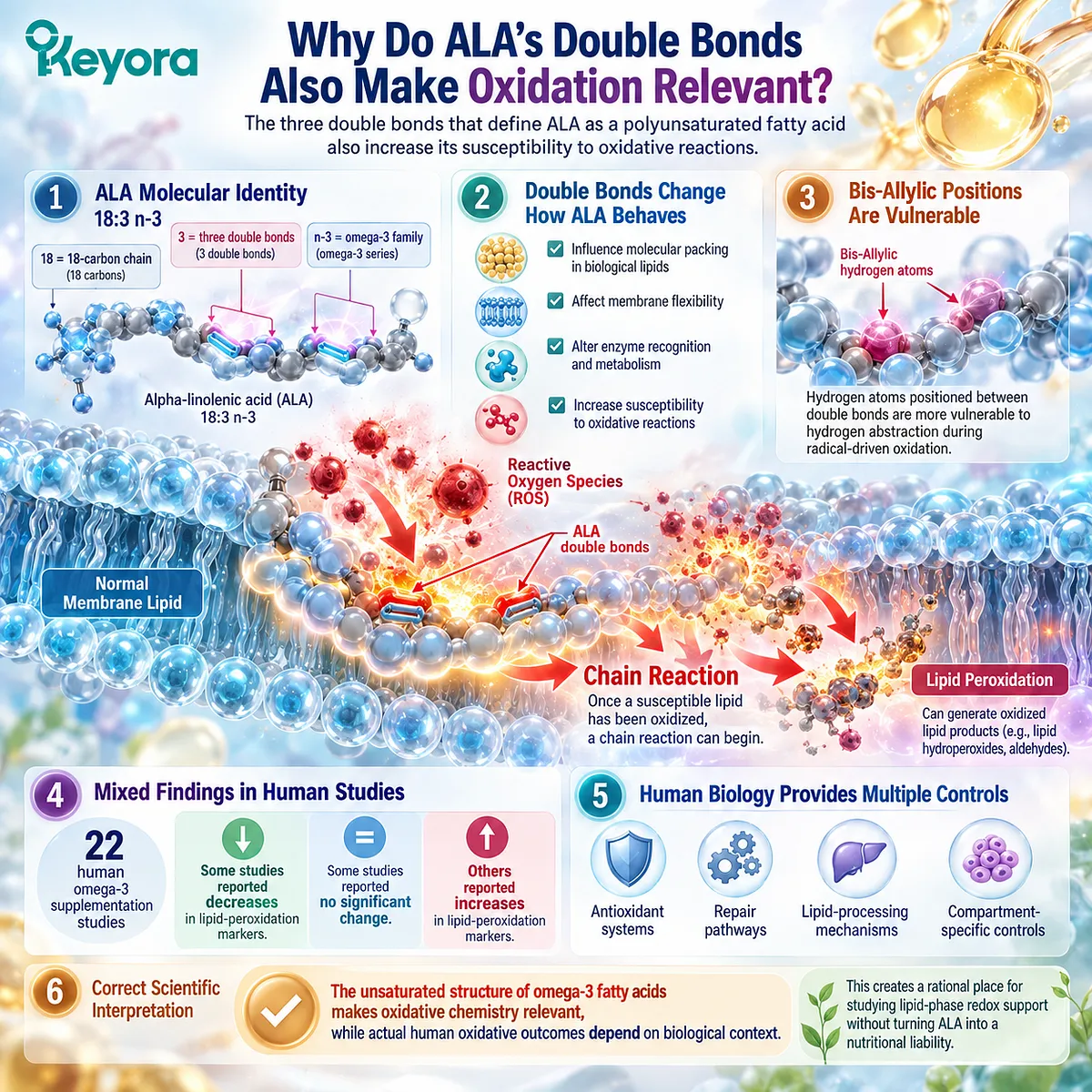
ALA is chemically identified as 18:3 n-3.
The “18” refers to its 18-carbon chain. The “3” indicates three double bonds. The “n-3” designation identifies the omega-3 family.
Double bonds change how a fatty acid behaves within biological lipids. They influence molecular packing, flexibility, enzyme recognition, and metabolism.
They also influence oxidative susceptibility.
Polyunsaturated fatty acids contain bis-allylic hydrogen atoms positioned between double bonds. These positions are more vulnerable to hydrogen abstraction during radical-driven oxidation than corresponding positions in more saturated fatty acids.
Once a susceptible lipid has been oxidized, a chain reaction can begin.
This chemistry is one reason researchers pay close attention to lipid peroxidation in PUFA-rich membranes and lipoproteins.
But chemical susceptibility must be interpreted carefully.
The fact that ALA can oxidize does not mean that every ingested ALA molecule is damaged, that consuming ALA automatically causes oxidative stress, or that ALA requires Astaxanthin in order to be safe.
Human biology contains multiple antioxidant systems, repair pathways, lipid-processing mechanisms, and compartment-specific controls.
A review examining 22 human omega-3 supplementation studies found mixed results for lipid-peroxidation markers: some studies reported no significant change, some reported decreases, and others reported increases.
That variability is important.
It shows why the correct scientific statement is not “omega-3 causes oxidation.” Instead:
The unsaturated structure of omega-3 fatty acids makes oxidative chemistry relevant, while actual human oxidative outcomes depend on biological context.
This creates a rational place for studying lipid-phase redox support without turning ALA into a nutritional liability.
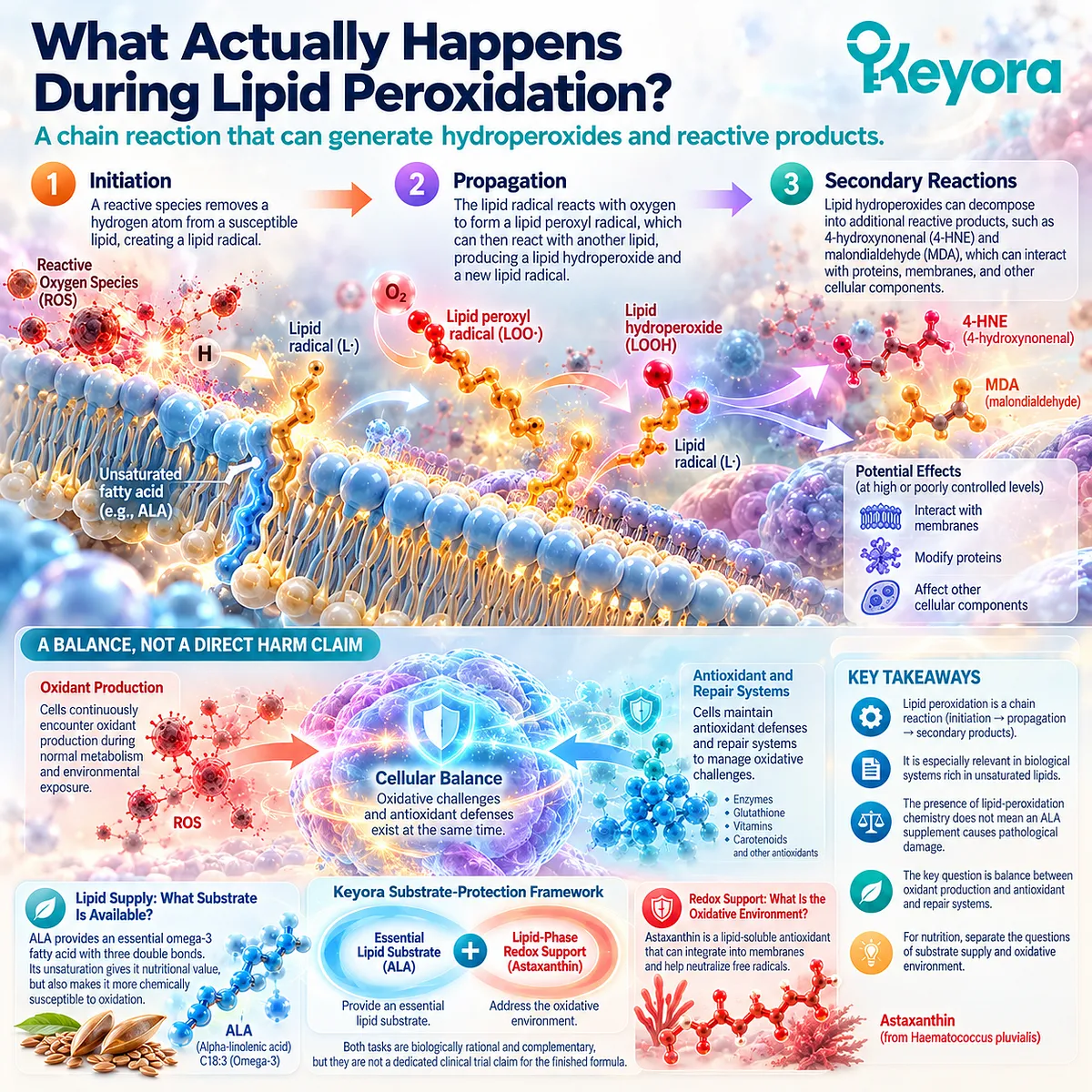
What Actually Happens During Lipid Peroxidation?
Lipid peroxidation is a chain reaction in which oxidative attack on susceptible fatty acids can generate hydroperoxides and secondary reactive products
Lipid peroxidation is not a single event.
It is a sequence.
The process is commonly described through initiation, propagation, and termination.
Initiation
A sufficiently reactive species removes a hydrogen atom from a susceptible lipid, creating a lipid radical.
Propagation
That radical can react with oxygen to form a lipid peroxyl radical. The peroxyl radical can then react with another nearby lipid, producing a lipid hydroperoxide while generating a new lipid radical.
This is why the process can spread through an oxidation-sensitive lipid environment.
Secondary Reactions
Lipid hydroperoxides can subsequently decompose into additional reactive products.
Frequently studied examples include 4-hydroxynonenal, commonly abbreviated 4-HNE, and malondialdehyde, or MDA.
At high or poorly controlled levels, these products can interact with proteins, membranes, and other cellular components.
This mechanism is especially relevant to biological systems containing large amounts of unsaturated lipid.
However, the presence of lipid-peroxidation chemistry does not mean that a person taking an ALA supplement is experiencing pathological membrane damage.
The biological question is about balance.
Cells continuously encounter oxidant production and maintain antioxidant and repair systems at the same time.
For nutrition, the useful conceptual distinction is therefore:
Lipid supply answers the question: What substrate is available?
Redox support answers the question: What is the oxidative environment surrounding that substrate and the structures using it?
That separation is central to the Keyora Substrate-Protection Framework.
Does Oxidation Sensitivity Mean Omega-3 Is Harmful?
Oxidation-sensitive chemistry does not translate automatically into harmful oxidative outcomes in people consuming omega-3 fatty acids
This is one of the most important boundaries in the entire discussion.
It would be easy to take the chemistry of PUFA oxidation and turn it into a frightening message: more double bonds mean more oxidation, therefore omega-3 intake creates oxidative damage.
Human evidence does not support such a simple conclusion.
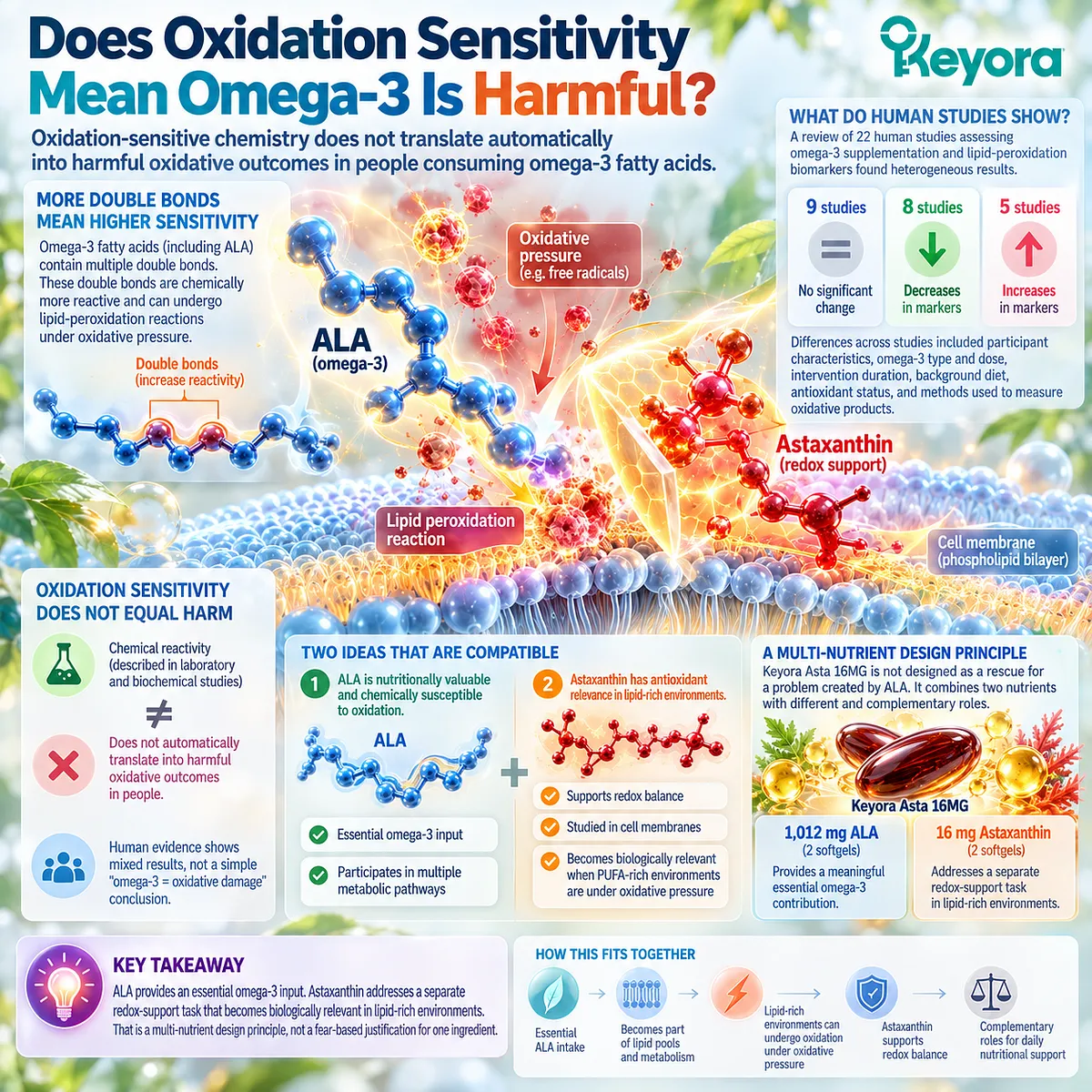
A review of 22 human studies assessing omega-3 supplementation and lipid-peroxidation biomarkers found heterogeneous results.
Nine studies reported no significant change in the measured markers. Eight reported decreases. Five reported increases.
Differences across the studies included participant characteristics, omega-3 type and dose, intervention duration, background diet, antioxidant status, and methods used to measure oxidative products.
This tells us two things.
First, omega-3 oxidation cannot be inferred from chemical structure alone.
Second, redox protection is still a legitimate biological question because PUFA-rich environments are capable of undergoing lipid-peroxidation reactions under oxidative pressure.
The two ideas are compatible.
ALA can be both nutritionally valuable and chemically susceptible to oxidation.
Astaxanthin can have antioxidant relevance without being portrayed as an antidote to ALA.
That wording is especially important for Keyora.
The formula should not be explained as if 1,012 mg ALA creates a dangerous “oxidation problem” that 16 mg Astaxanthin must rescue.
A better interpretation is:
ALA provides an essential omega-3 input.
Astaxanthin addresses a separate redox-support task that becomes biologically relevant in lipid-rich environments.
That is a multi-nutrient design principle, not a fear-based justification for one ingredient.
Why Is Astaxanthin Relevant to Lipid-Phase Redox Protection?
Experimental membrane studies show that Astaxanthin can interact with lipid bilayers and limit oxidation-related processes at different membrane depths
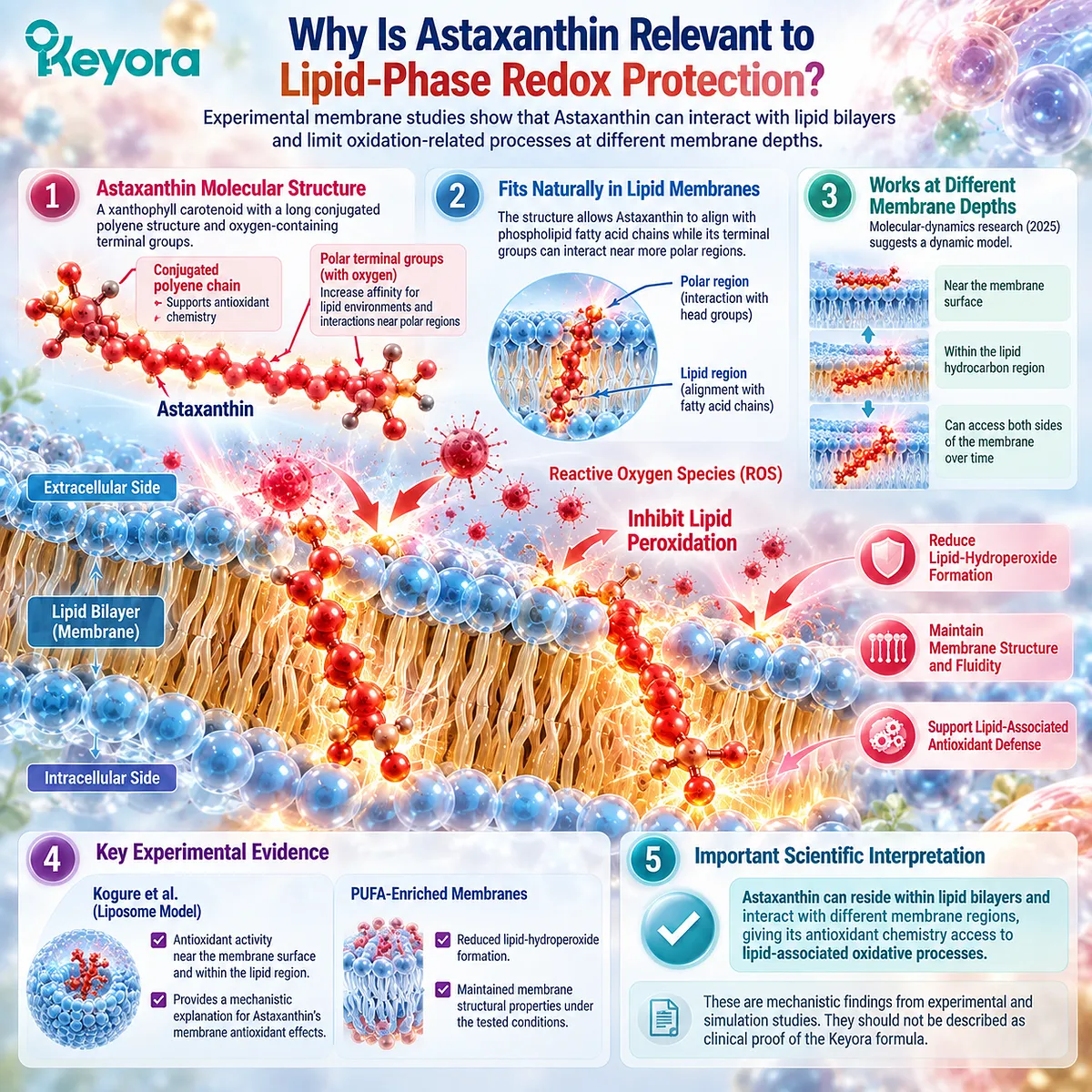
Astaxanthin is a xanthophyll carotenoid with a long conjugated polyene structure and oxygen-containing terminal groups.
This combination gives it strong affinity for lipid environments while also allowing interactions near more polar membrane regions.
Early membrane research helps explain why this matters.
Kogure and colleagues used a liposome model to investigate Astaxanthin during lipid peroxidation. Their findings supported antioxidant activity both near the membrane surface and within the lipid region, providing a mechanistic explanation for why Astaxanthin can influence oxidation in membrane-like systems.
Other experimental research using PUFA-enriched membranes similarly found that Astaxanthin could reduce lipid-hydroperoxide formation while maintaining membrane structural properties under the tested conditions.
These studies provide useful mechanistic evidence, but they should not be described as clinical proof of the Keyora formula.
More recent molecular-dynamics research adds an important refinement.
Astaxanthin is sometimes illustrated as though it forms a permanent rigid bridge across the entire phospholipid bilayer. A 2025 simulation study suggests a more dynamic picture. Astaxanthin was compatible with phospholipid hydrocarbon chains, occupied different depths within a complex membrane, and could access both sides of the membrane over time.
This is a better scientific model than describing Astaxanthin as a fixed molecular rivet.
The useful conclusion is:
Astaxanthin can reside within lipid bilayers and interact with different membrane regions, giving its antioxidant chemistry access to lipid-associated oxidative processes.
What Does Human Astaxanthin Research Actually Show?
A randomized human trial found lower erythrocyte phospholipid hydroperoxides after Astaxanthin supplementation, providing direct membrane-redox evidence
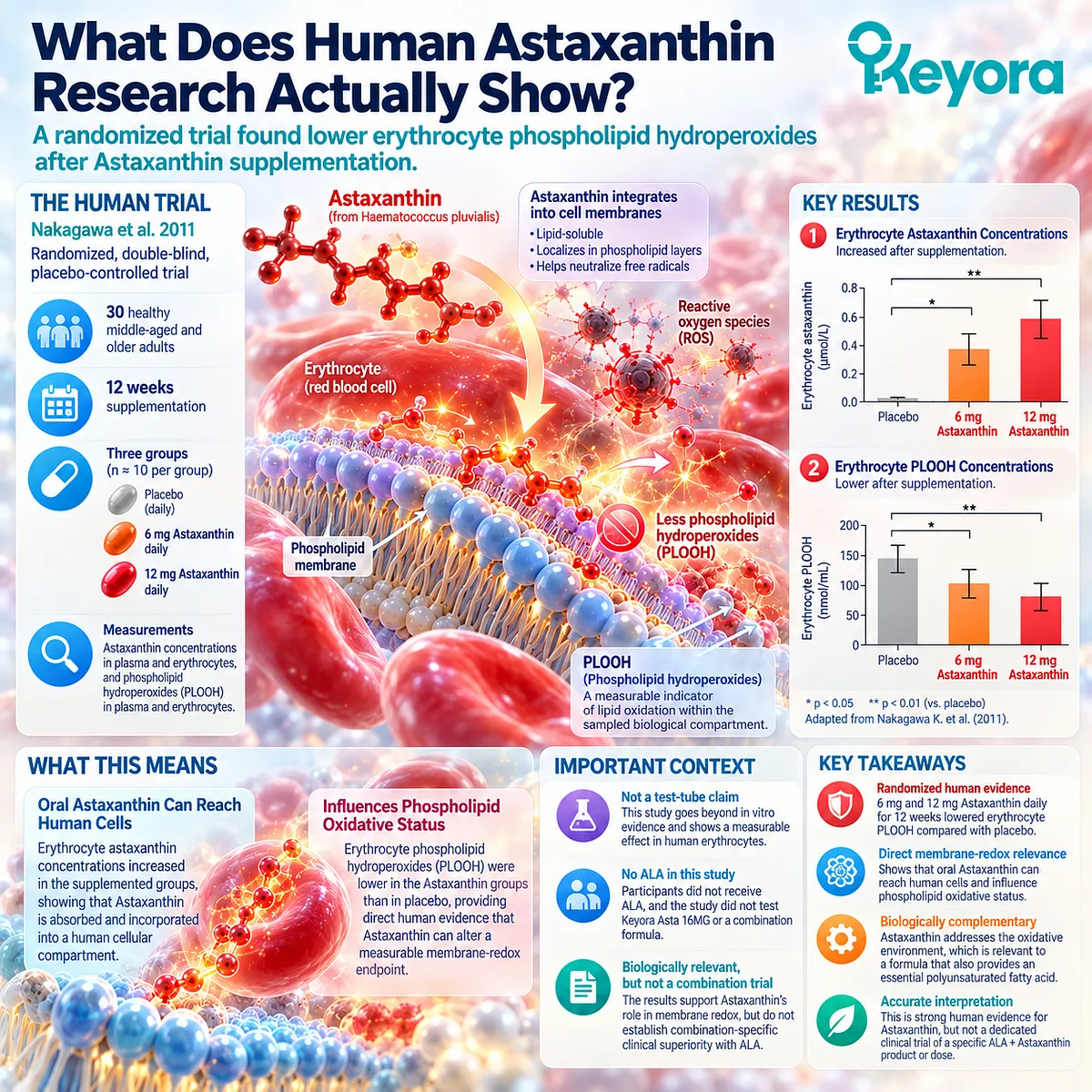
The strongest human evidence for this specific redox question comes from Nakagawa and colleagues.
Their 2011 randomized, double-blind, placebo-controlled trial enrolled 30 healthy middle-aged and older adults.
Participants received:
Placebo
6 mg Astaxanthin daily
or
12 mg Astaxanthin daily
for 12 weeks.
Researchers measured Astaxanthin concentrations and phospholipid hydroperoxides in plasma and erythrocytes.
Phospholipid hydroperoxides, commonly abbreviated PLOOH, are oxidized phospholipid products that provide a measurable indicator of lipid oxidation within the sampled biological compartment.
After supplementation, erythrocyte Astaxanthin concentrations increased in both Astaxanthin groups.
More importantly for this article, erythrocyte PLOOH concentrations were lower in the supplemented groups than in placebo.
This study matters because it moves beyond a test-tube statement that Astaxanthin “is an antioxidant.”
It shows that oral Astaxanthin can reach a human cellular compartment and alter a measurable phospholipid-redox endpoint.
At the same time, the study did not contain ALA supplementation, did not use Keyora Asta 16MG, and did not test whether Astaxanthin directly protected a defined dose of flaxseed-derived ALA.
Its strongest interpretation is therefore:
Astaxanthin has direct human evidence for influencing phospholipid oxidative status.
That makes it biologically relevant to a formula that also provides an essential polyunsaturated fatty acid, but it does not establish combination-specific clinical superiority.
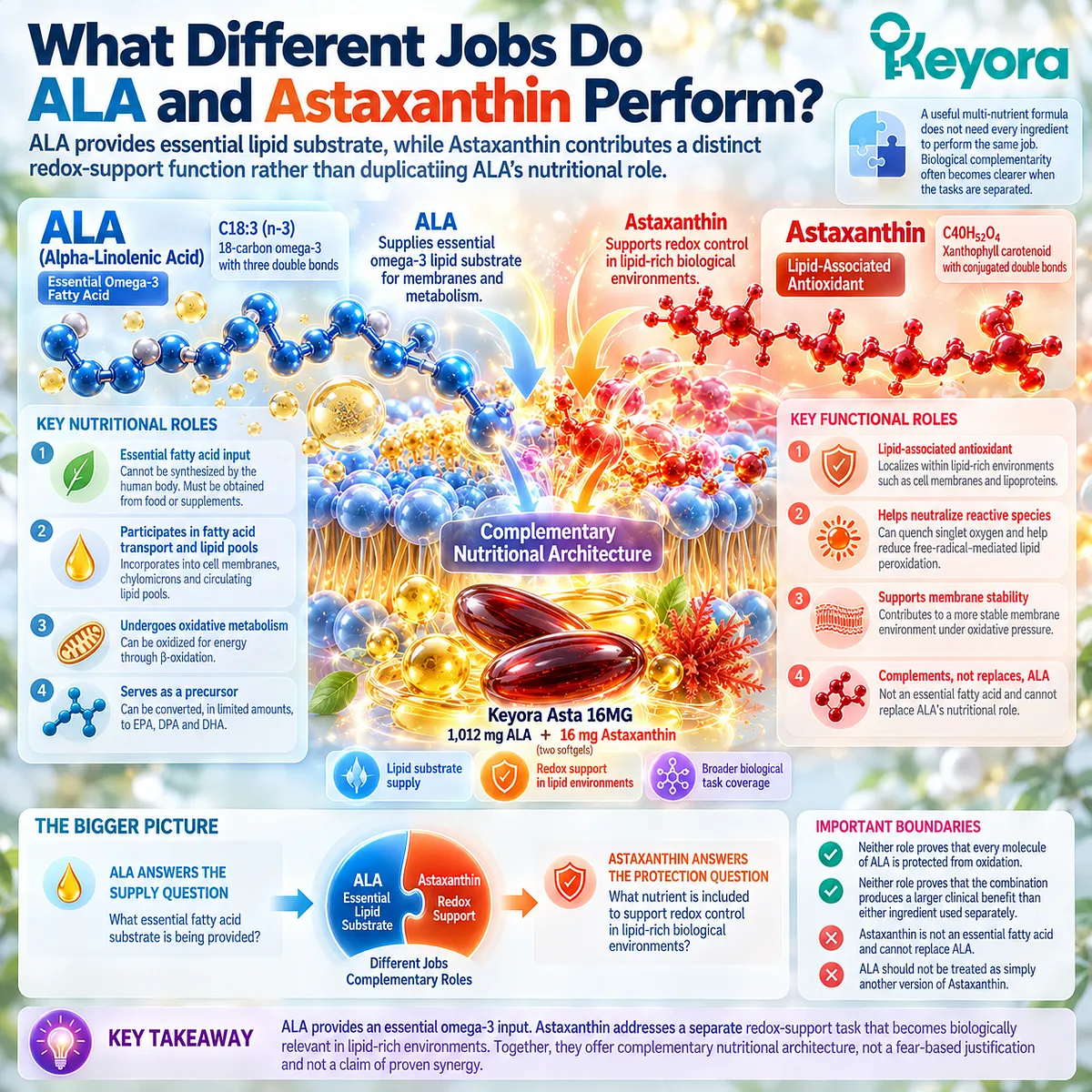
What Different Jobs Do ALA and Astaxanthin Perform?
ALA provides essential lipid substrate, while Astaxanthin contributes a distinct redox-support function rather than duplicating ALA’s nutritional role
A useful multi-nutrient formula does not need every ingredient to perform the same job.
In fact, biological complementarity often becomes clearer when the tasks are separated.
ALA is an essential omega-3 fatty acid.
Its nutritional roles include participation in fatty acid transport and lipid pools, oxidative metabolism, and the precursor pathway toward longer-chain omega-3 fatty acids.
Astaxanthin is not an essential fatty acid and cannot replace ALA.
Astaxanthin contributes a different function through its lipid-associated antioxidant properties.
Likewise, ALA should not be treated as though it is simply another version of Astaxanthin.
Within the Keyora framework:
ALA answers the supply question.
What essential fatty acid substrate is being provided?
Astaxanthin answers the protection question.
What nutrient is included to support redox control in lipid-rich biological environments?
Neither role proves that every molecule of ALA is protected from oxidation.
Neither role proves that the combination produces a larger clinical benefit than either ingredient used separately.
What the combination does provide is broader biological task coverage.
This is why the most accurate description is not “proven synergy.”
It is complementary nutritional architecture.
How the Keyora Substrate-Protection Framework Fits the Current Formula
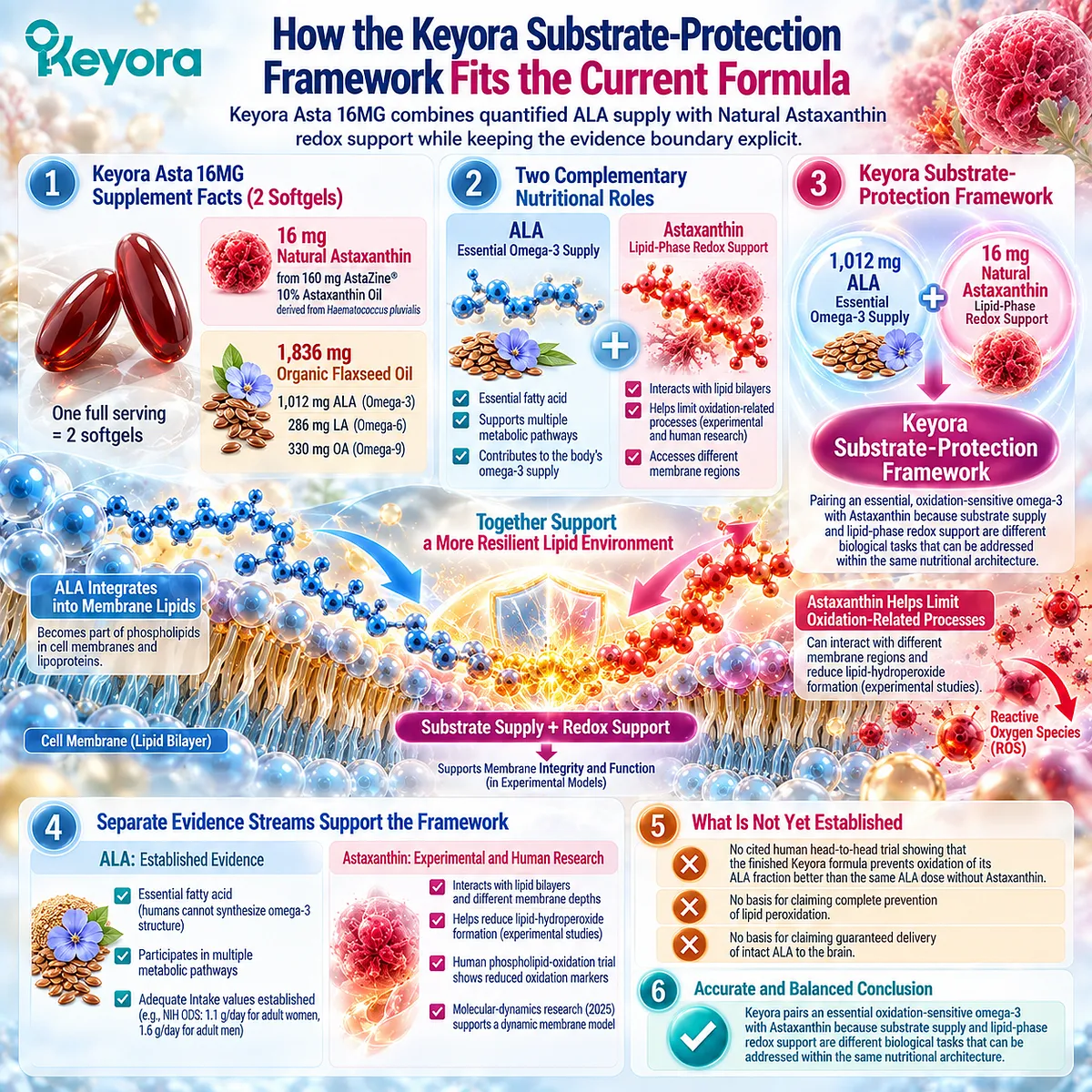
Keyora Asta 16MG combines quantified ALA supply with Natural Astaxanthin redox support while keeping the evidence boundary explicit
The current Keyora Asta 16MG Supplement Facts define one full serving as two softgels.
That serving provides:
16 mg Natural Astaxanthin, supplied by 160 mg AstaZine® 10% Astaxanthin Oil derived from Haematococcus pluvialis.
The organic flaxseed oil matrix provides:
1,836 mg Organic Flaxseed Oil
including:
-
1,012 mg ALA, Omega-3
-
286 mg LA, Omega-6
-
330 mg OA, Omega-9
For this specific question, the central relationship is:
-
1,012 mg ALA – Essential Omega-3 Supply
-
16 mg Natural Astaxanthin – Lipid-Phase Redox Support
This forms the Keyora Substrate-Protection Framework.
The framework is supported by separate evidence streams: established ALA essentiality and metabolism on one side, and Astaxanthin membrane and human phospholipid-redox research on the other.
What has not yet been established is equally clear.
There is no cited human head-to-head trial showing that the finished Keyora formula prevents oxidation of its ALA fraction better than the same ALA dose without Astaxanthin. There is also no basis for claiming complete prevention of lipid peroxidation or guaranteed delivery of intact ALA to the brain.
Those limitations do not erase the nutritional logic.
They define it accurately.
Keyora pairs an essential oxidation-sensitive omega-3 with Astaxanthin because substrate supply and lipid-phase redox support are different biological tasks that can be addressed within the same nutritional architecture.
This article is for educational and informational purposes only. It does not provide medical advice, diagnosis, treatment, cure, prevention, disease outcome claims, hormone restoration claims, fertility outcome claims, or formula-specific clinical efficacy claims.