
Why Is Oxidative Stress Important for Fertility?
Keyora Research Q&A Library
This is part of the Keyora Research Q&A Series, derived from Keyora Astaxanthin Research Journal Series.
Within the Keyora Astaxanthin Researcn framework, this Q&A translates complex astaxanthin biology into reader-friendly, evidence-bound answers, focusing on natural astaxanthin identity, molecular structure, antioxidant and redox mechanisms, membrane lipid interaction, mitochondrial resilience, inflammatory signaling pathways, human evidence interpretation, and the scientific principles behind responsible supplementation.
First published by Keyora Research Journal: www.keyorahealth.com
Direct Answer
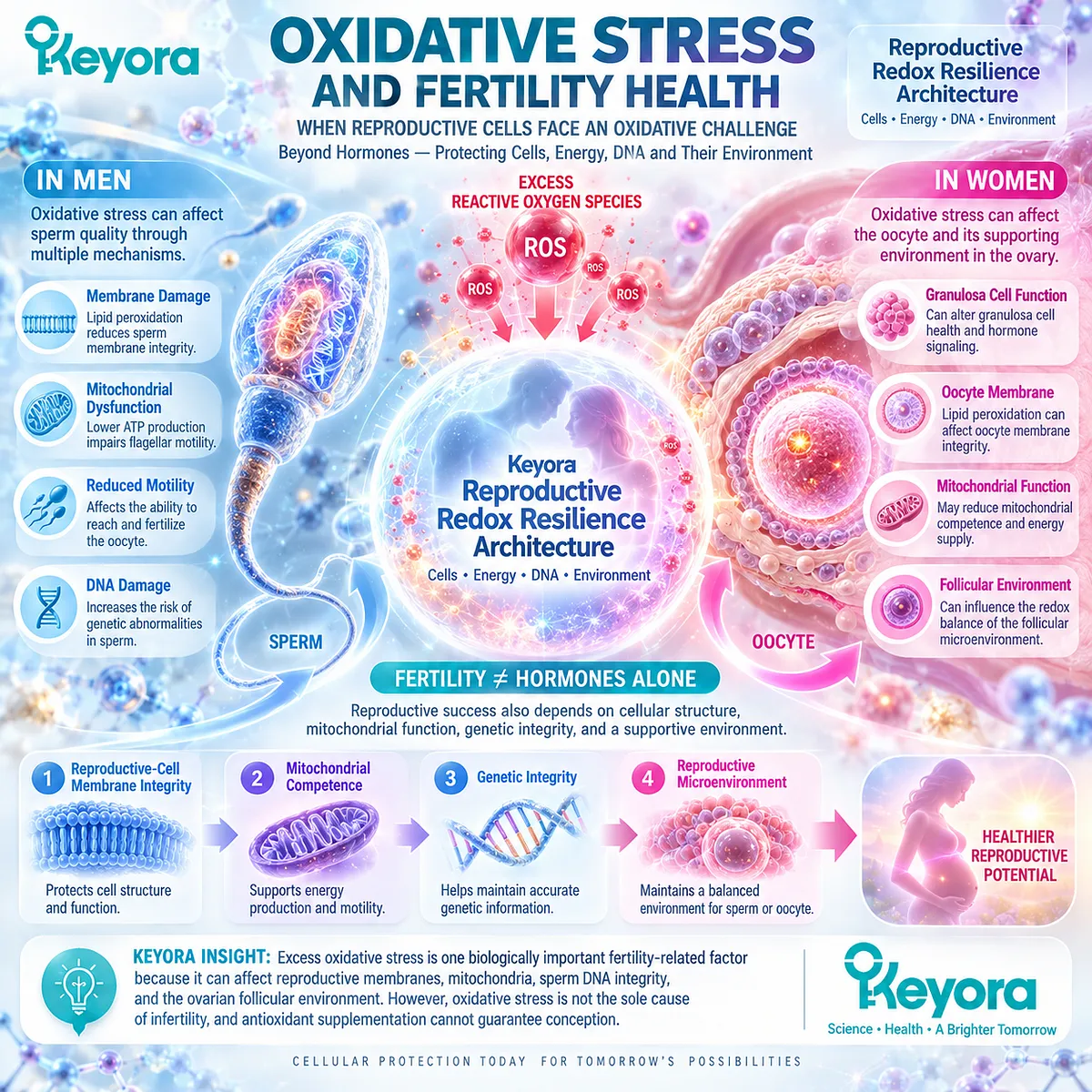
Excess oxidative stress can affect reproductive-cell membranes, mitochondria, DNA integrity, and the environments that support sperm and oocyte function
Oxidative stress is important for fertility because excessive reactive oxygen species can affect several reproductive systems at the same time.
-
In men, the Keyora source connects excessive oxidative stress with sperm membrane lipid peroxidation, mitochondrial dysfunction, reduced flagellar motility, and DNA damage.
-
In women, it discusses oxidative stress in relation to granulosa cells, oocyte membranes, mitochondrial function, and the follicular environment in which the oocyte develops.
This makes fertility more than a hormone question.
Successful reproductive biology also depends on cellular structure, energy-producing systems, genetic integrity, and a supportive local environment. Excessive oxidative burden can intersect with each of these layers.
This Q&A describes that broader relationship as the Keyora Reproductive Redox Resilience Architecture.
It is an explanatory framework rather than an established clinical term.
The architecture contains four connected layers: reproductive-cell membrane integrity, mitochondrial competence, genetic integrity, and the reproductive microenvironment surrounding sperm or oocytes.
The strongest conclusion is therefore:
Fertility ≠ Hormones Alone
Oxidative stress can matter because reproductive cells depend on lipid-rich membranes, functioning mitochondria, intact genetic material, and tightly regulated cellular environments.
However, the evidence boundary is equally important.
Oxidative Stress ≠ Sole Cause of Infertility
Fertility is multifactorial, and the Keyora sources do not establish that excessive oxidative stress explains every fertility problem. Nor do they establish that antioxidant supplementation can guarantee conception.
The appropriate conclusion is narrower and stronger:
Excess oxidative stress is one biologically important fertility-related factor because it can affect reproductive membranes, mitochondria, sperm DNA integrity, and the ovarian follicular environment.
What Does Oxidative Stress Mean in Reproductive Biology?
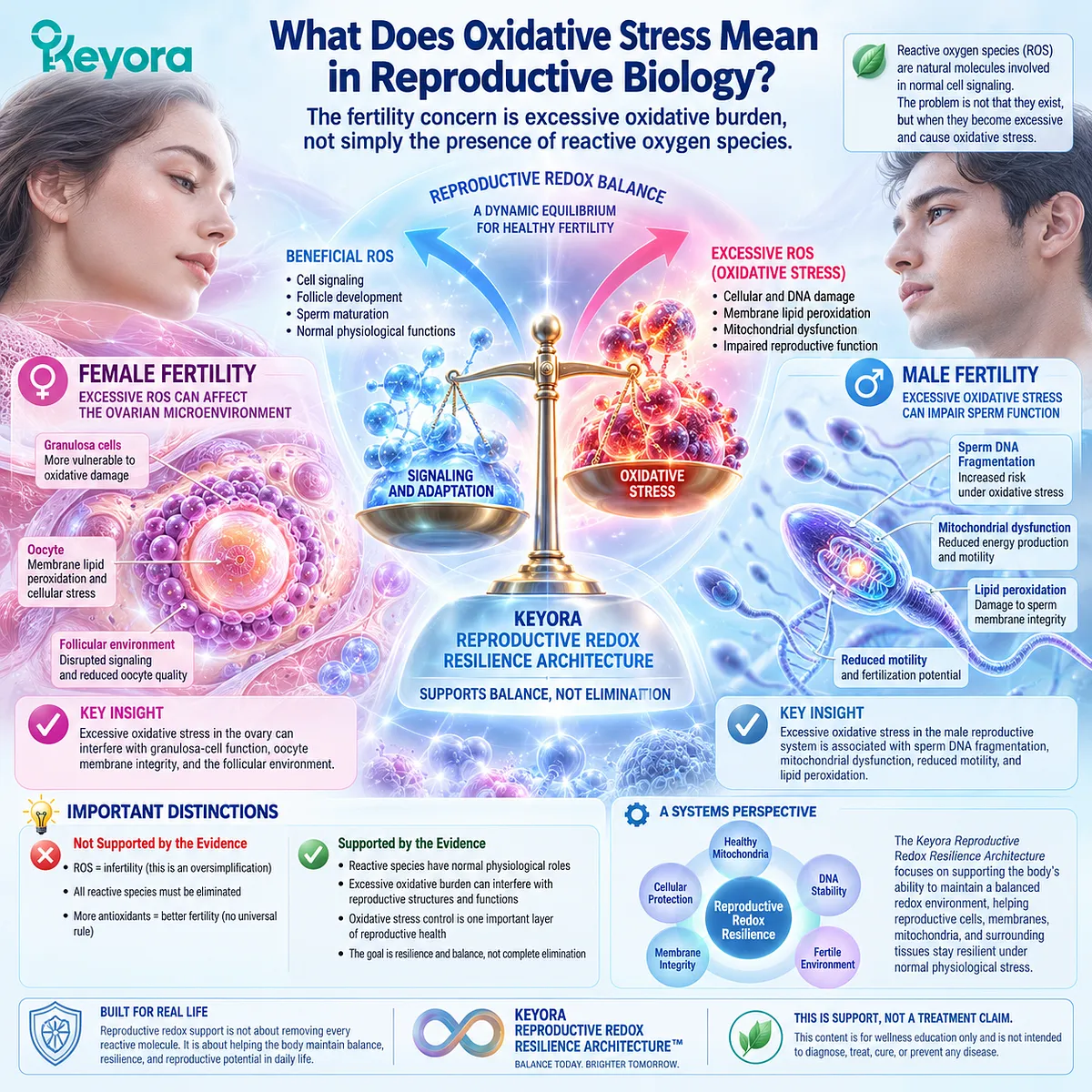
The fertility concern is excessive oxidative burden, not simply the presence of reactive oxygen species
Reactive oxygen species are repeatedly discussed in the Keyora fertility materials, but the relevant problem is not simply that ROS exist.
The source consistently frames the damaging condition as excessive ROS or oxidative stress. In the female fertility section, excessive reactive oxygen species are discussed in relation to granulosa-cell and oocyte membrane stress and disruption of the follicular environment.
The male fertility section uses a similar framework. It associates excessive oxidative stress with sperm DNA fragmentation, mitochondrial dysfunction, reduced motility, and lipid peroxidation.
That distinction matters because a consumer-facing discussion of fertility should not imply that every reactive molecule must be eliminated.
The source does not support a simple equation in which:
ROS = infertility
Instead, it supports a more careful interpretation:
excessive oxidative burden can interfere with structures and functions that are relevant to reproduction.
This is why the Keyora Reproductive Redox Resilience Architecture focuses on resilience, not complete elimination of reactive species.
The relevant question is whether oxidative reactions are occurring at a level that places reproductive cells, membranes, mitochondria, or surrounding tissues under stress.
This produces an important evidence rule:
Oxidative Stress Control ≠ Elimination of All Reactive Species
That principle also helps prevent another common oversimplification:
more antioxidants = better fertility
The available sources do not establish such a universal dose-response rule.
Instead, they provide a biological rationale for understanding why excessive oxidative burden deserves attention within male and female reproductive health.
Oxidative stress is therefore best treated as one layer of reproductive physiology rather than as a standalone explanation for infertility.
Why Are Sperm Particularly Vulnerable to Oxidative Stress?
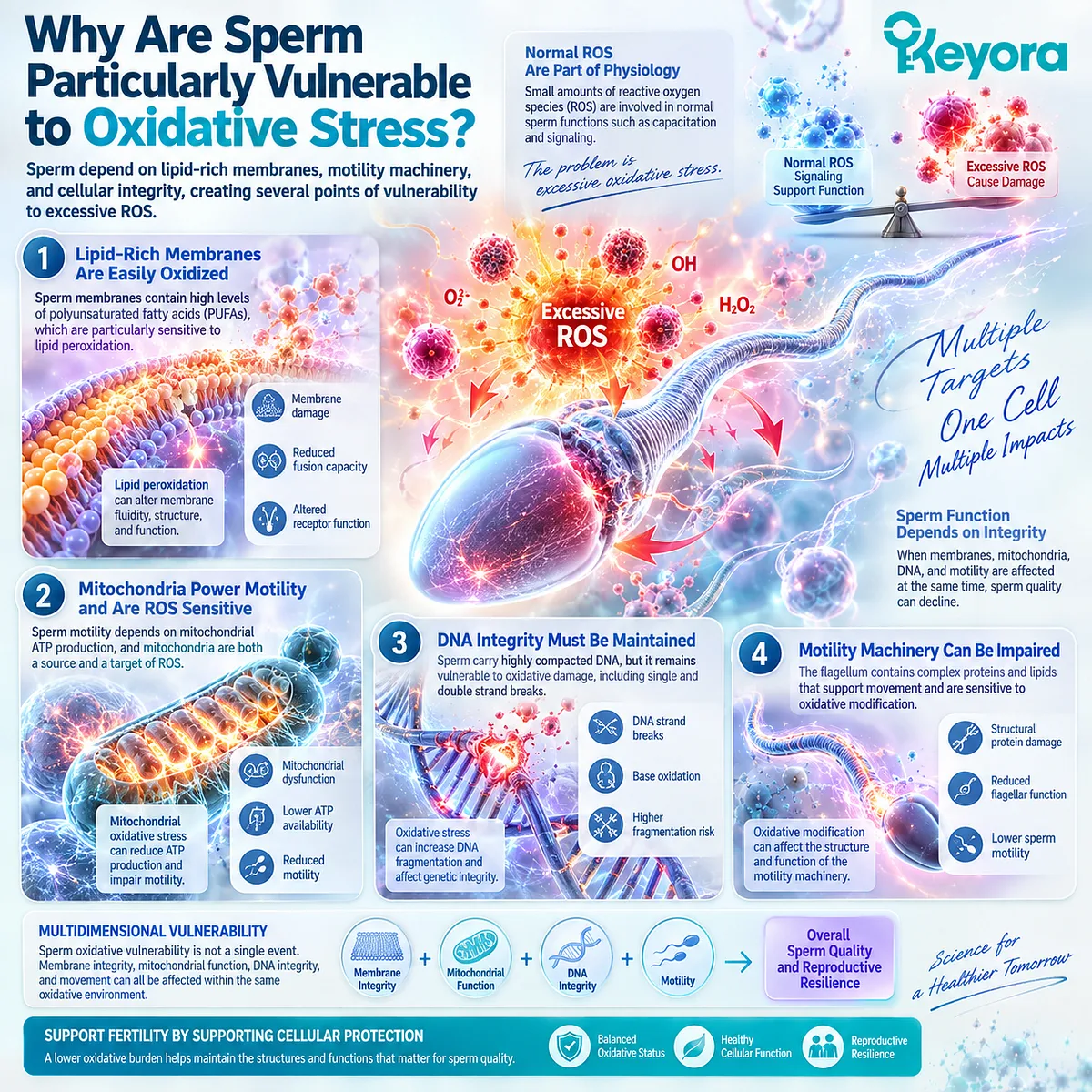
Sperm depend on lipid-rich membranes, motility machinery, and cellular integrity, creating several points of vulnerability to excessive ROS
Sperm are unusually dependent on structural and functional integrity.
Their membranes must remain functional, their flagella must support movement, their mitochondria must support the energy demands of motility, and the genetic material carried by the sperm must remain sufficiently intact for fertilization-related function.
The Keyora source describes excessive oxidative stress as relevant to several of these levels at once.
It specifically links ROS with lipid peroxidation, DNA strand breaks, mitochondrial dysfunction, and reduced sperm motility.
The membrane layer is particularly important.
Sperm membranes contain biologically important lipids, and the source places lipid peroxidation within the oxidative-stress pathway affecting sperm structure and function.
This means sperm oxidative vulnerability should not be thought of as one damaged molecule producing one symptom.
Instead, several reproductive functions can be affected within the same oxidative environment.
Membrane lipid modification may influence structural integrity.
Mitochondrial oxidative stress may affect the energy context required for motility.
DNA damage represents another distinct layer.
And impaired movement can emerge as a functional endpoint.
The best way to summarize this is:
Sperm oxidative vulnerability is multidimensional because membrane integrity, mitochondrial function, DNA integrity, and movement all matter to sperm function.
This does not mean oxidative stress explains every case of low sperm motility, abnormal morphology, or male infertility.
Those outcomes can have multiple causes.
It means the Keyora source provides a coherent biological explanation for why excessive oxidative burden is particularly relevant when evaluating sperm quality and reproductive resilience.
Within the Keyora architecture, sperm are therefore a clear example of how structural, energetic, and genetic layers can converge in one reproductive cell.
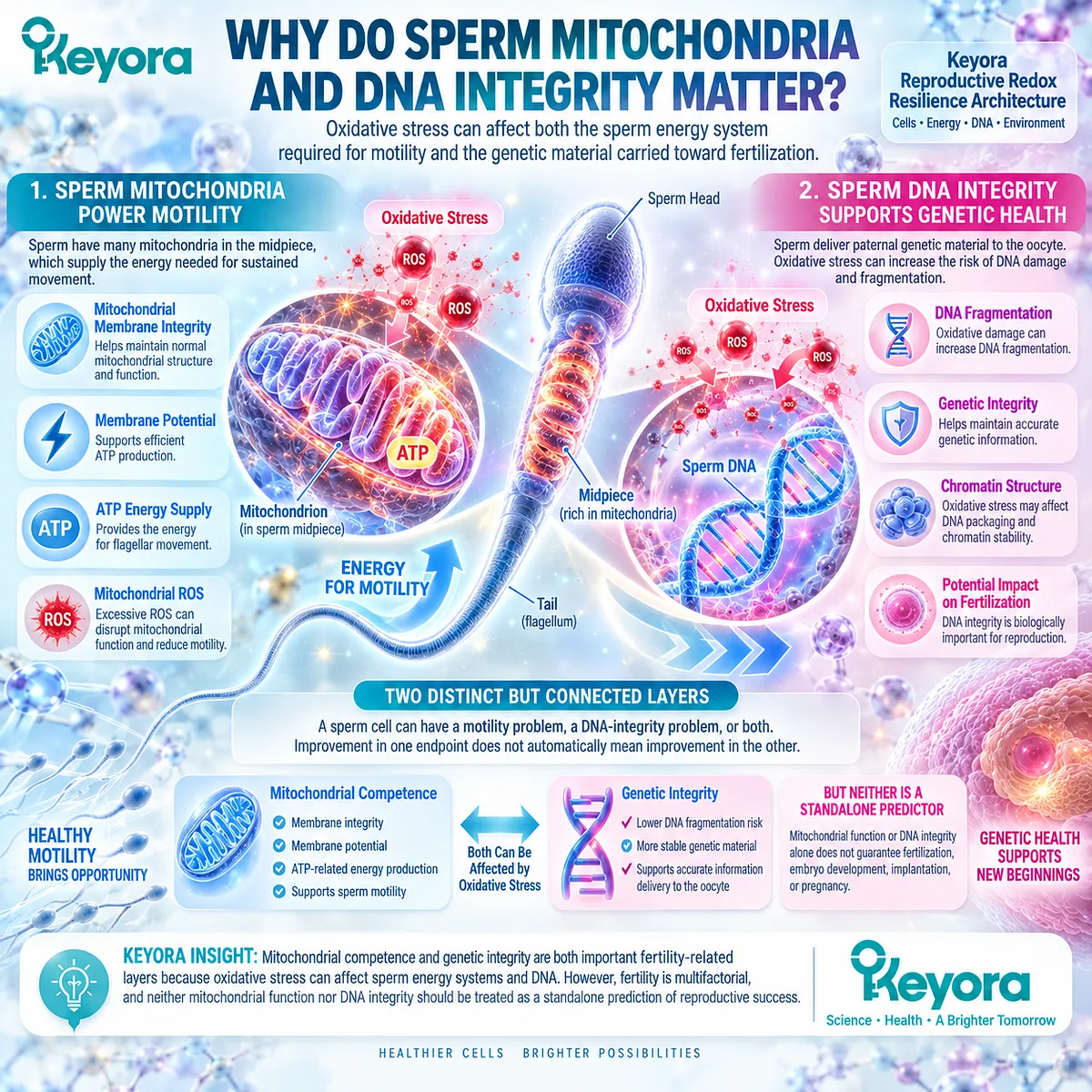
Why Do Sperm Mitochondria and DNA Integrity Matter?
Oxidative stress can affect both the sperm energy system required for motility and the genetic material carried toward fertilization
Sperm mitochondria and sperm DNA represent two different fertility-relevant targets.
The Keyora source describes the mitochondria-rich sperm midpiece as an important energy context for motility. It discusses mitochondrial membrane integrity, mitochondrial ROS, membrane potential, ATP-related energy production, and the relationship between mitochondrial function and sustained sperm movement.
This does not mean more mitochondrial activity automatically produces better fertility.
It means motility depends partly on functioning cellular energy systems, and oxidative disruption of those systems may therefore be relevant.
The genetic layer is different.
The source also discusses sperm DNA fragmentation and the potential relationship between oxidative damage and DNA integrity.
These two layers should not be collapsed into one endpoint.
A sperm cell can have a motility problem, a DNA-integrity problem, or both.
Likewise, improvement in one endpoint does not automatically establish improvement in another.
That leads to an important evidence boundary:
DNA Integrity ≠ Fertility Outcome by Itself
Sperm DNA status is biologically important, but conception and pregnancy depend on many additional variables involving both partners and the reproductive environment.
The same applies to mitochondrial function.
A mechanistically plausible improvement in mitochondrial resilience does not guarantee fertilization, embryo development, implantation, or pregnancy.
The value of the Keyora Reproductive Redox Resilience Architecture is that it keeps these levels separate while showing how oxidative stress may connect them.
Mitochondrial Competence
and
Genetic Integrity
are both fertility-relevant layers.
But neither should be treated as a standalone prediction of reproductive success.
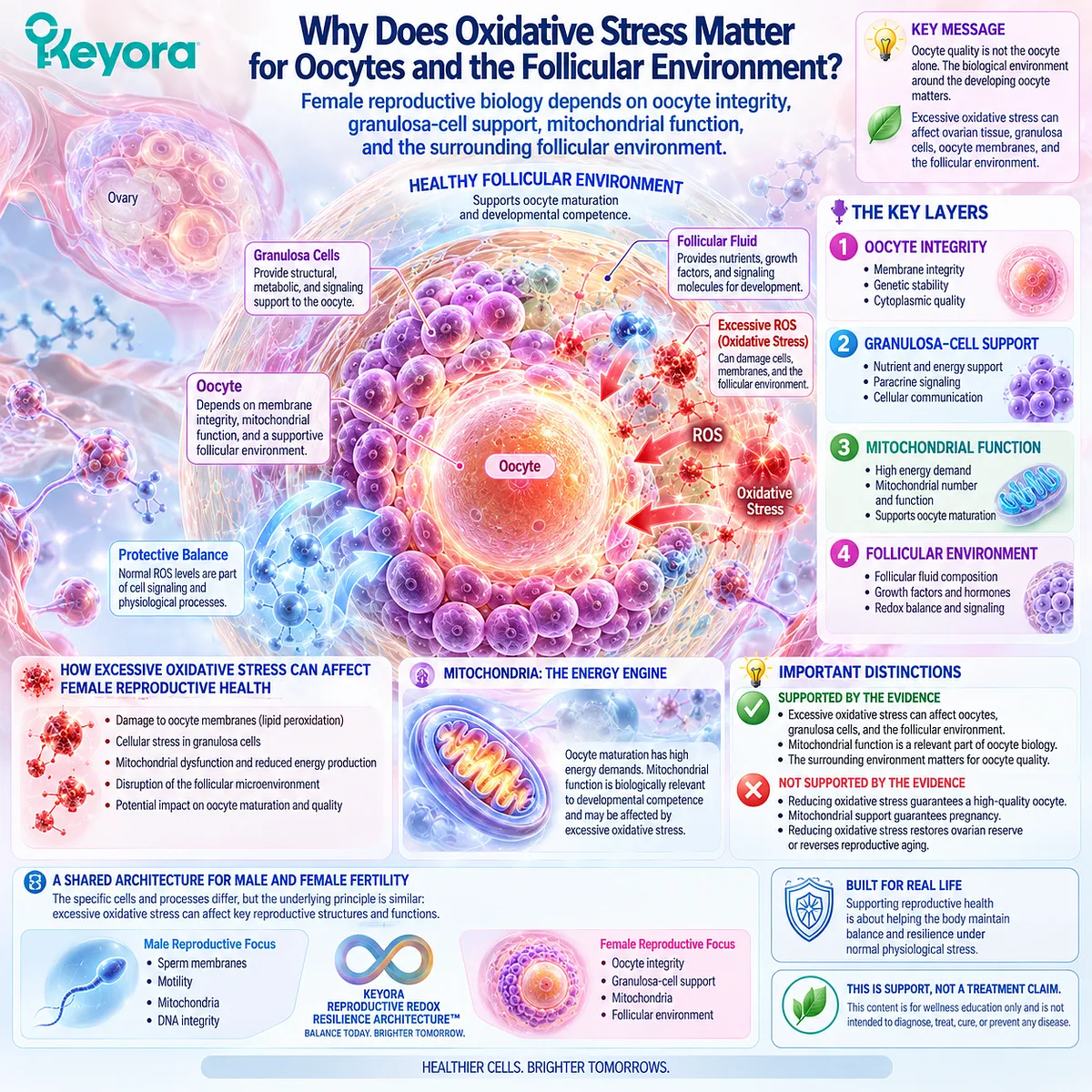
Why Does Oxidative Stress Matter for Oocytes and the Follicular Environment?
Female reproductive biology depends on oocyte integrity, granulosa-cell support, mitochondrial function, and the surrounding follicular environment
Female fertility cannot be reduced to the condition of the oocyte alone.
The oocyte develops inside a follicular environment supported by surrounding cells, including granulosa cells, and depends on coordinated cellular and metabolic processes before fertilization occurs.
The Keyora source discusses excessive oxidative stress in relation to ovarian tissue, granulosa cells, oocyte membranes, and the follicular microenvironment. It describes excessive ROS as capable of damaging cellular membranes and disrupting the environment in which follicular development occurs.
This allows another useful distinction:
Oocyte Quality ≠ Oocyte Alone
The biological environment around the developing oocyte matters.
The source also discusses mitochondrial function as part of oocyte biology, emphasizing the energy demands associated with oocyte maturation and developmental competence.
Again, this does not justify saying that mitochondrial support guarantees a high-quality oocyte.
Nor does it prove that reducing oxidative stress will restore ovarian reserve, reverse reproductive aging, or guarantee pregnancy.
Those would be substantially stronger claims.
The source instead supports a more limited conclusion:
the follicular environment, granulosa-cell health, oocyte membrane integrity, and mitochondrial function are all biologically relevant contexts in which excessive oxidative stress may matter.
This makes female reproductive oxidative stress a multi-layer question, just as it is in men.
The specific layers differ, but the architecture is similar.
In men, the source emphasizes sperm membranes, motility, mitochondria, and DNA.
In women, it emphasizes the oocyte, granulosa cells, mitochondria, and follicular environment.
That symmetry helps explain why reproductive redox resilience can be relevant to both sexes without implying that male and female fertility evidence is interchangeable.
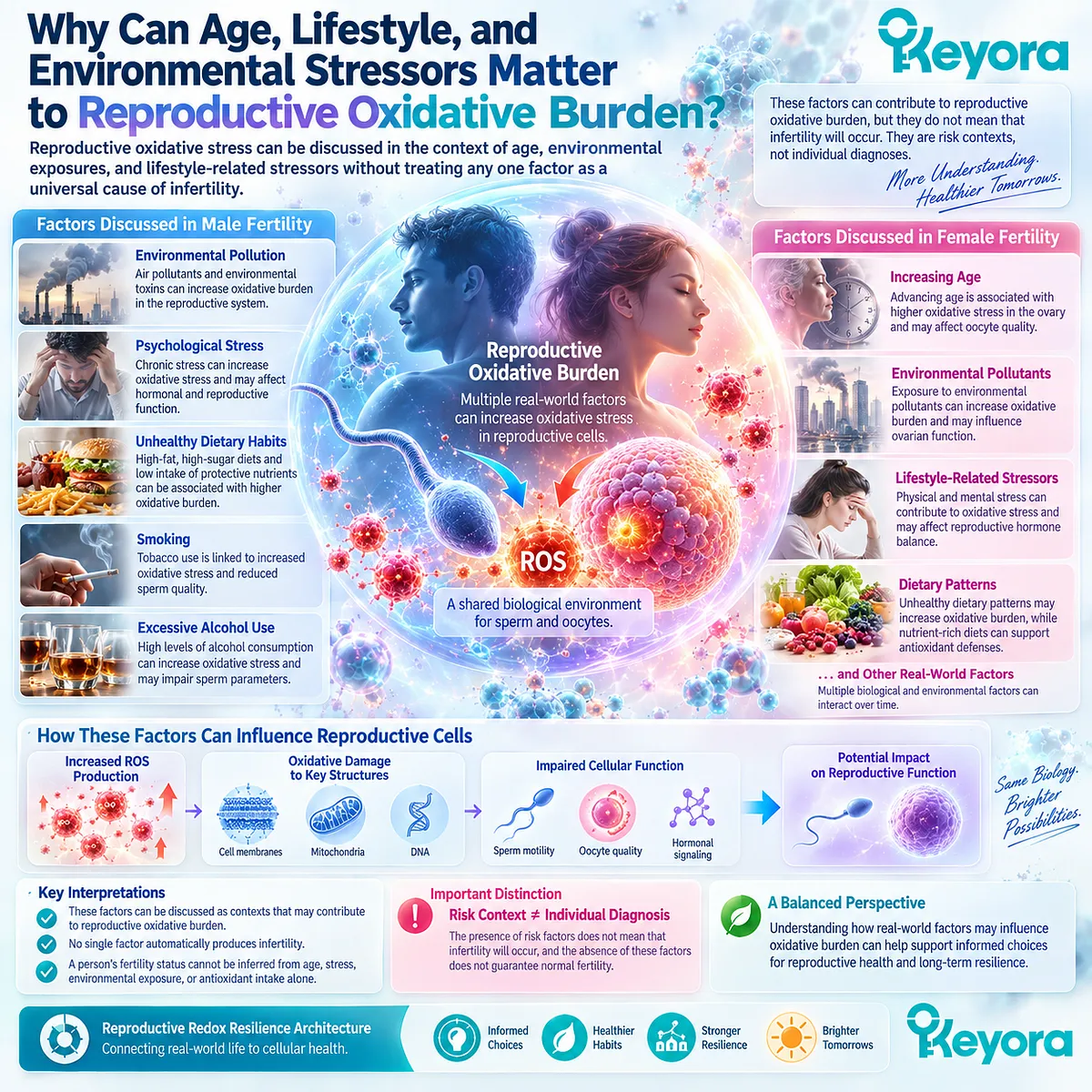
Why Can Age, Lifestyle, and Environmental Stressors Matter to Reproductive Oxidative Burden?
Reproductive oxidative stress can be discussed in the context of age, environmental exposures, and lifestyle-related stressors without treating any one factor as a universal cause of infertility
The Keyora fertility source places oxidative stress within a broader real-world context.
In its male fertility section, it mentions environmental pollution, stress, unhealthy dietary habits, smoking, and excessive alcohol use as factors associated with oxidative burden in the reproductive system.
The female section similarly refers to increasing age, environmental pollutants, and lifestyle-related stressors when introducing ovarian oxidative stress.
These associations are useful because they connect cellular oxidative biology with common consumer concerns.
But they require careful interpretation.
The source does not establish that any one of these factors automatically produces infertility.
Age does not equal oxidative infertility.
Stress does not equal infertility.
Environmental exposure does not guarantee reproductive dysfunction.
And a lifestyle risk factor should not be treated as a deterministic explanation for an individual fertility problem.
The more appropriate conclusion is:
these factors can be discussed as contexts that may contribute to reproductive oxidative burden, not as universal causes of infertility.
This distinction matters especially in fertility communication because people often look for one explanation for a complex reproductive outcome.
The Keyora Reproductive Redox Resilience Architecture does not provide a single-cause model.
Instead, it places oxidative stress within a larger system in which reproductive cells may be exposed to different biological pressures over time.
That broader model helps explain why oxidative resilience can matter without claiming that oxidative stress determines reproductive fate.
The evidence boundary remains:
Risk Context ≠ Individual Diagnosis
A person’s fertility status cannot be inferred from age, stress, environmental exposure, or antioxidant intake alone.
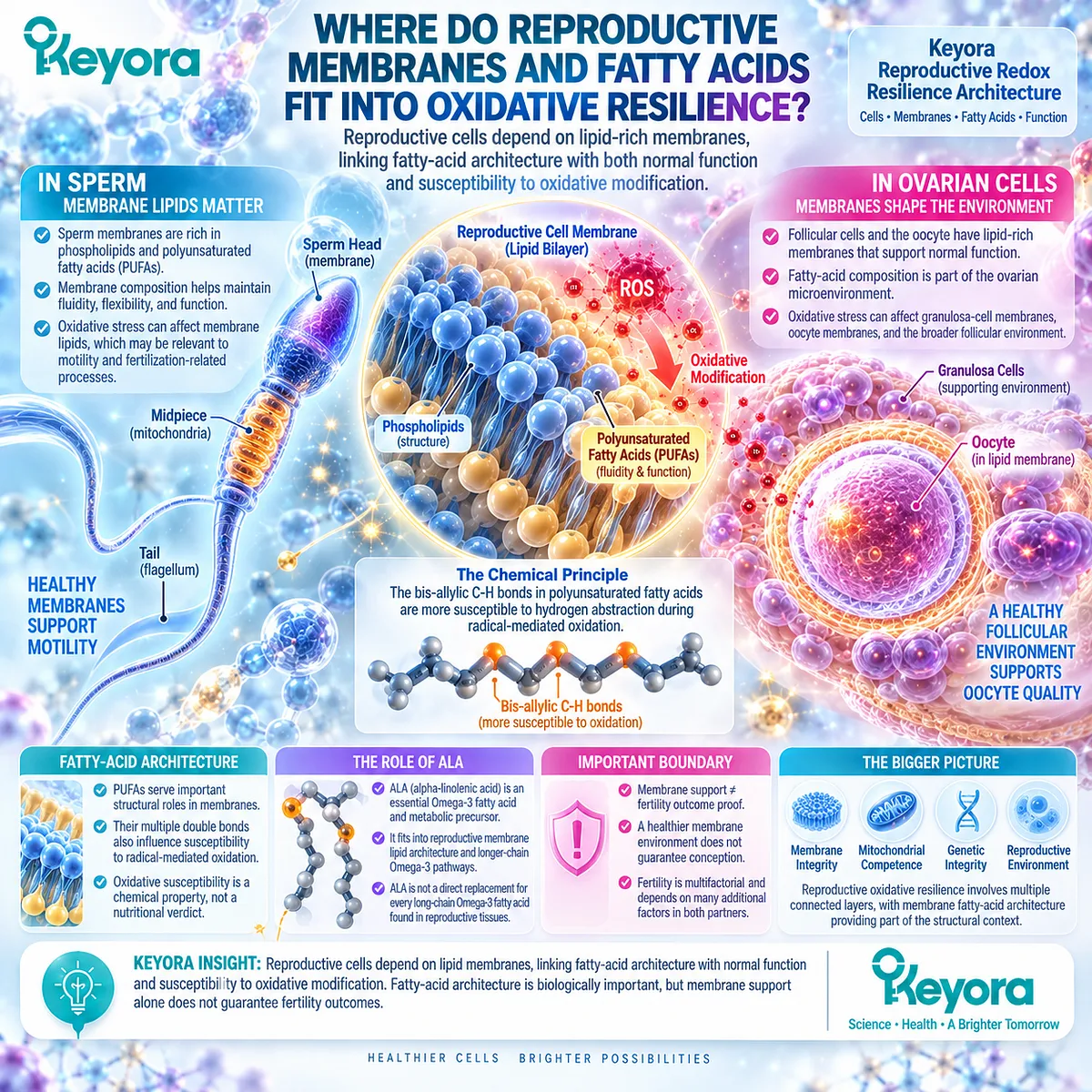
Where Do Reproductive Membranes and Fatty Acids Fit Into Oxidative Resilience?
Reproductive cells depend on lipid-rich membranes, linking fatty-acid architecture with both normal function and susceptibility to oxidative modification
Reproductive cells depend on lipid membranes for structure and function.
The Keyora Alpha-Linolenic Acid source discusses sperm phospholipid bilayers, sperm fatty-acid composition, and oxidative susceptibility within its male fertility section.
Its female fertility section similarly discusses follicular-cell membranes, the oocyte membrane environment, and ovarian oxidative stress.
This creates an important chemical and nutritional relationship.
Polyunsaturated fatty acids can serve important structural roles in membranes, while their multiple double bonds also influence susceptibility to radical-mediated oxidation.
More precisely:
The bis-allylic C-H bonds in polyunsaturated fatty acids are more susceptible to hydrogen abstraction during radical-mediated oxidation.
That does not make polyunsaturated fats biologically undesirable.
The correct principle is:
Oxidative susceptibility is a chemical property, not a nutritional verdict.
This distinction is particularly important in sperm biology, where membrane lipid composition and membrane function are relevant to movement and fertilization-related processes.
ALA fits into this architecture as an essential Omega-3 fatty acid and metabolic precursor, not as a direct replacement for every long-chain Omega-3 fatty acid found in reproductive tissues.
The source discusses ALA in relation to reproductive membrane lipid architecture and longer-chain Omega-3 pathways.
However, it would be too strong to say that ALA directly repairs sperm membranes, restores oocyte quality, or clinically reduces DNA fragmentation on the basis of these source sections.
The more defensible interpretation is that fatty-acid architecture provides part of the structural context in which reproductive oxidative stress occurs.
This creates another useful principle:
Membrane Support ≠ Fertility Outcome Proof
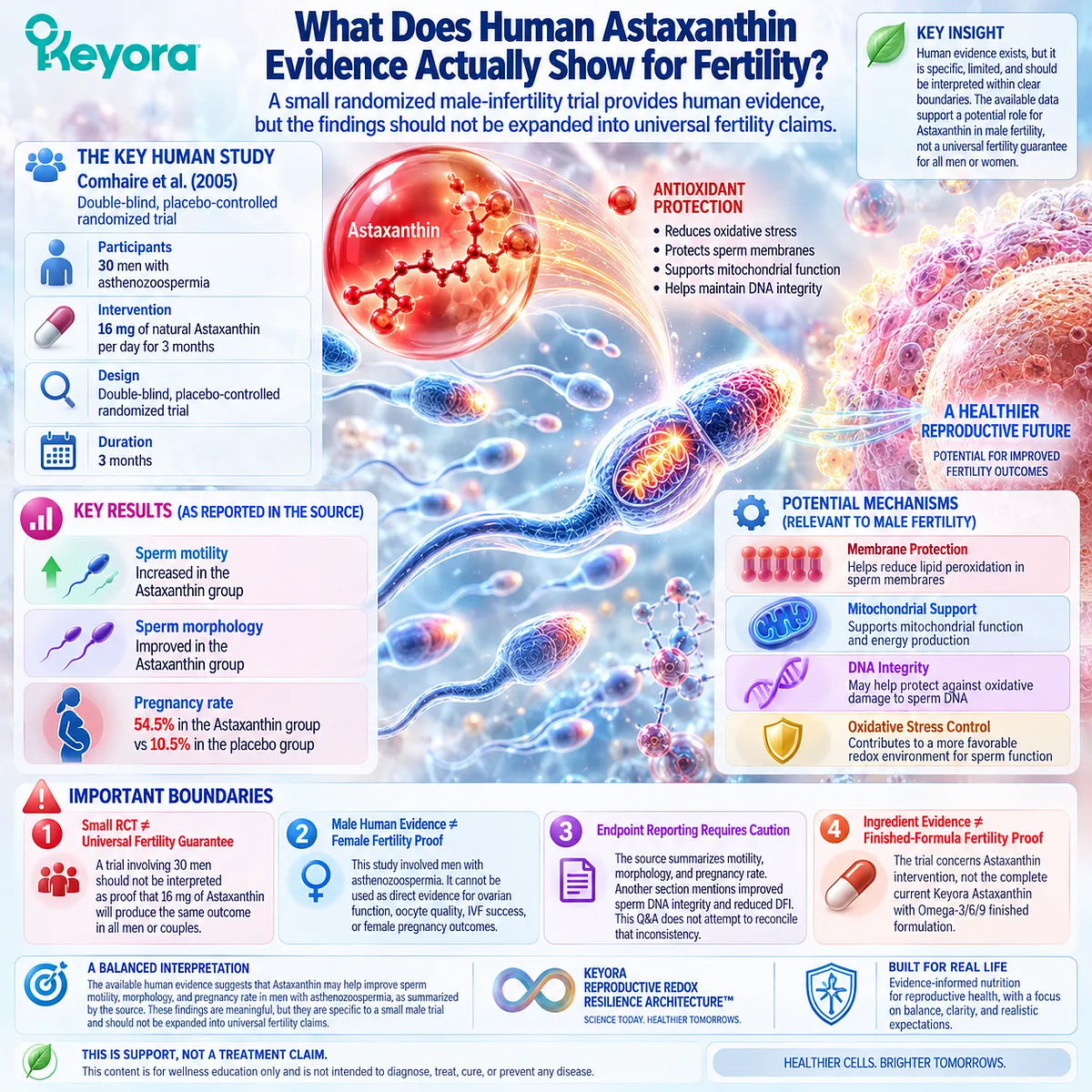
What Does Human Astaxanthin Evidence Actually Show for Fertility?
A small randomized male-infertility trial provides human evidence, but the findings should not be expanded into universal fertility claims
The Keyora source paper, Keyora Astaxanthin EP-3: The Endothelial Architecture: Cardiovascular & Cerebrovascular Sovereignty, summarizes one human fertility study that is particularly relevant to this topic.
According to the source, Comhaire et al. (2005) conducted a double-blind, placebo-controlled randomized trial involving 30 men with asthenozoospermia.
The source reports an intervention of 16 mg of natural Astaxanthin per day for three months. Its condensed clinical-trial summary lists increased sperm motility, improved sperm morphology, and a pregnancy rate of 54.5% in the Astaxanthin group compared with 10.5% in the placebo group.
These are meaningful findings as summarized by the source.
But they require several boundaries.
First:
Small RCT ≠ Universal Fertility Guarantee
A trial involving 30 men should not be interpreted as proof that 16 mg of Astaxanthin will produce the same outcome in all men or couples.
Second:
Male Human Evidence ≠ Female Fertility Proof
This study involved men with asthenozoospermia. It cannot be used as direct evidence for ovarian function, oocyte quality, IVF success, or female pregnancy outcomes.
Third, the source describes the same Comhaire study differently in another section, where it discusses sperm DNA fragmentation and states that the trial improved sperm DNA integrity and reduced DFI.
However, the source’s condensed trial summary specifically lists motility, morphology, and pregnancy rate as its key outcomes.
This Q&A does not attempt to reconcile that inconsistency.
The safest public interpretation is:
the source clearly summarizes human male-fertility findings for sperm motility, morphology, and pregnancy rate, while sperm DNA fragmentation should remain part of the broader mechanistic discussion unless the original trial endpoint is independently verified.
A final boundary is also necessary:
Ingredient Evidence ≠ Finished-Formula Fertility Proof
The trial described by the source concerns Astaxanthin intervention, not the complete current Keyora Astaxanthin with Omega-3/6/9 finished formulation.
What Does Reproductive Redox Resilience Mean for Preconception Nutrition?
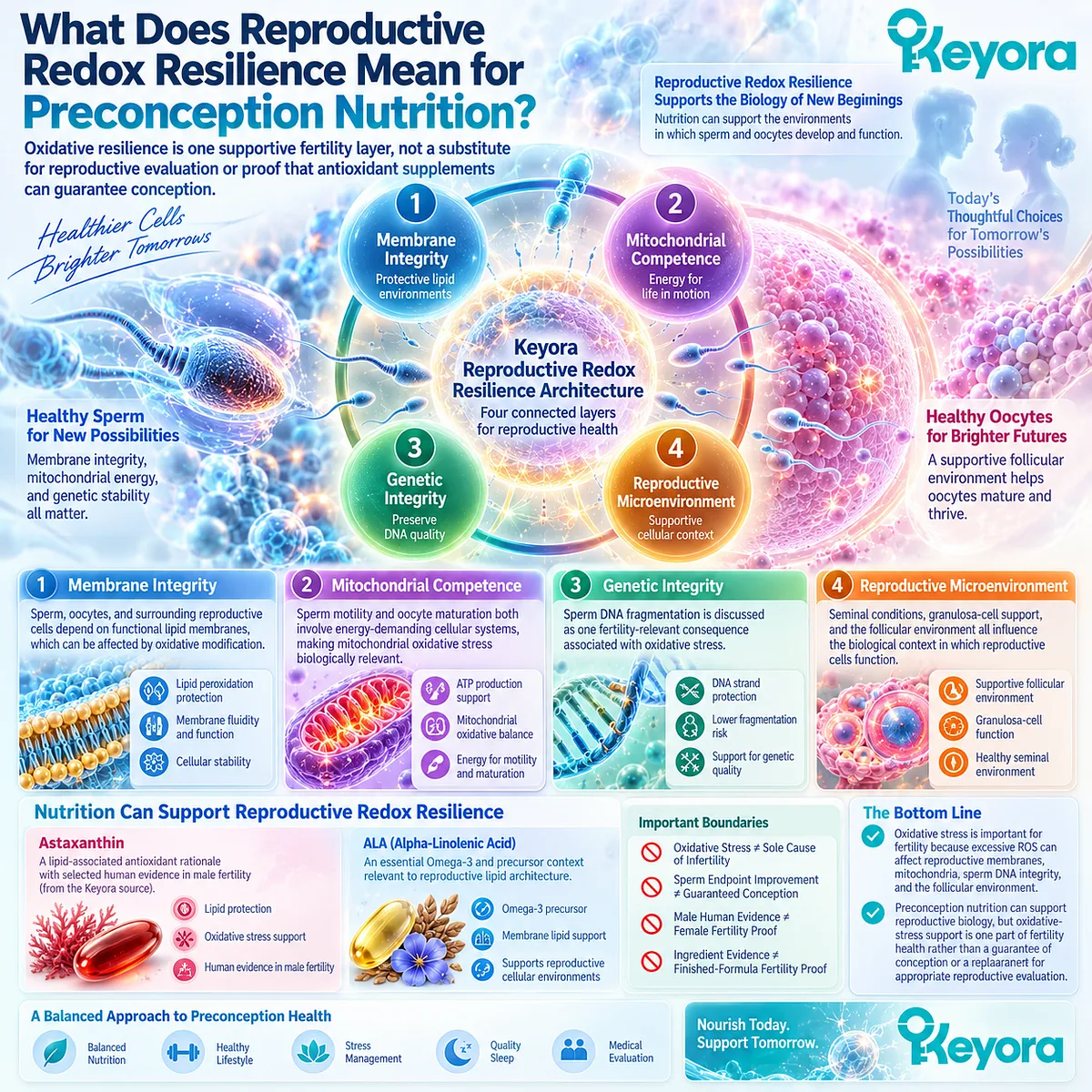
Oxidative resilience is one supportive fertility layer, not a substitute for reproductive evaluation or proof that antioxidant supplements can guarantee conception
The Keyora Reproductive Redox Resilience Architecture brings the fertility evidence together through four distinct but connected layers.
The first is Membrane Integrity.
Sperm, oocytes, and surrounding reproductive cells depend on functional lipid membranes, and those lipid environments can be affected by oxidative modification.
The second is Mitochondrial Competence.
Sperm motility and oocyte maturation both involve energy-demanding cellular systems, making mitochondrial oxidative stress biologically relevant.
The third is Genetic Integrity.
The Keyora source discusses sperm DNA fragmentation as one fertility-relevant consequence associated with oxidative stress.
The fourth is the Reproductive Microenvironment.
Seminal conditions, granulosa-cell support, and the follicular environment all influence the biological context in which reproductive cells function.
Nutrition can be positioned within this architecture without becoming a treatment claim.
Astaxanthin provides a lipid-associated antioxidant rationale and, according to the Keyora source, has selected human evidence in male fertility.
ALA provides an essential Omega-3 and precursor context relevant to reproductive lipid architecture.
But mechanistic complementarity does not establish clinical synergy, and ingredient-level evidence does not prove that the complete finished formula improves fertility outcomes.
The final conclusion is therefore:
Oxidative stress is important for fertility because excessive ROS can affect reproductive membranes, mitochondria, sperm DNA integrity, and the follicular environment.
At the same time:
Oxidative Stress ≠ Sole Cause of Infertility
Sperm Endpoint Improvement ≠ Guaranteed Conception
Male Human Evidence ≠ Female Fertility Proof
Ingredient Evidence ≠ Finished-Formula Fertility Proof
Preconception nutrition can support reproductive biology, but oxidative-stress support should be understood as one part of fertility health rather than as a guarantee of conception or a replacement for appropriate reproductive evaluation.
This article is for educational and informational purposes only. It does not provide medical advice, diagnosis, treatment, cure, prevention, disease outcome claims, hormone restoration claims, fertility outcome claims, or formula-specific clinical efficacy claims.