
Why Is LDL Oxidation Important in Cardiovascular Research?
Keyora Research Q&A Library
This is part of the Keyora Research Q&A Series, derived from Keyora Astaxanthin Research Journal Series.
Within the Keyora Astaxanthin Researcn framework, this Q&A translates complex astaxanthin biology into reader-friendly, evidence-bound answers, focusing on natural astaxanthin identity, molecular structure, antioxidant and redox mechanisms, membrane lipid interaction, mitochondrial resilience, inflammatory signaling pathways, human evidence interpretation, and the scientific principles behind responsible supplementation.
First published by Keyora Research Journal: www.keyorahealth.com
Direct Answer
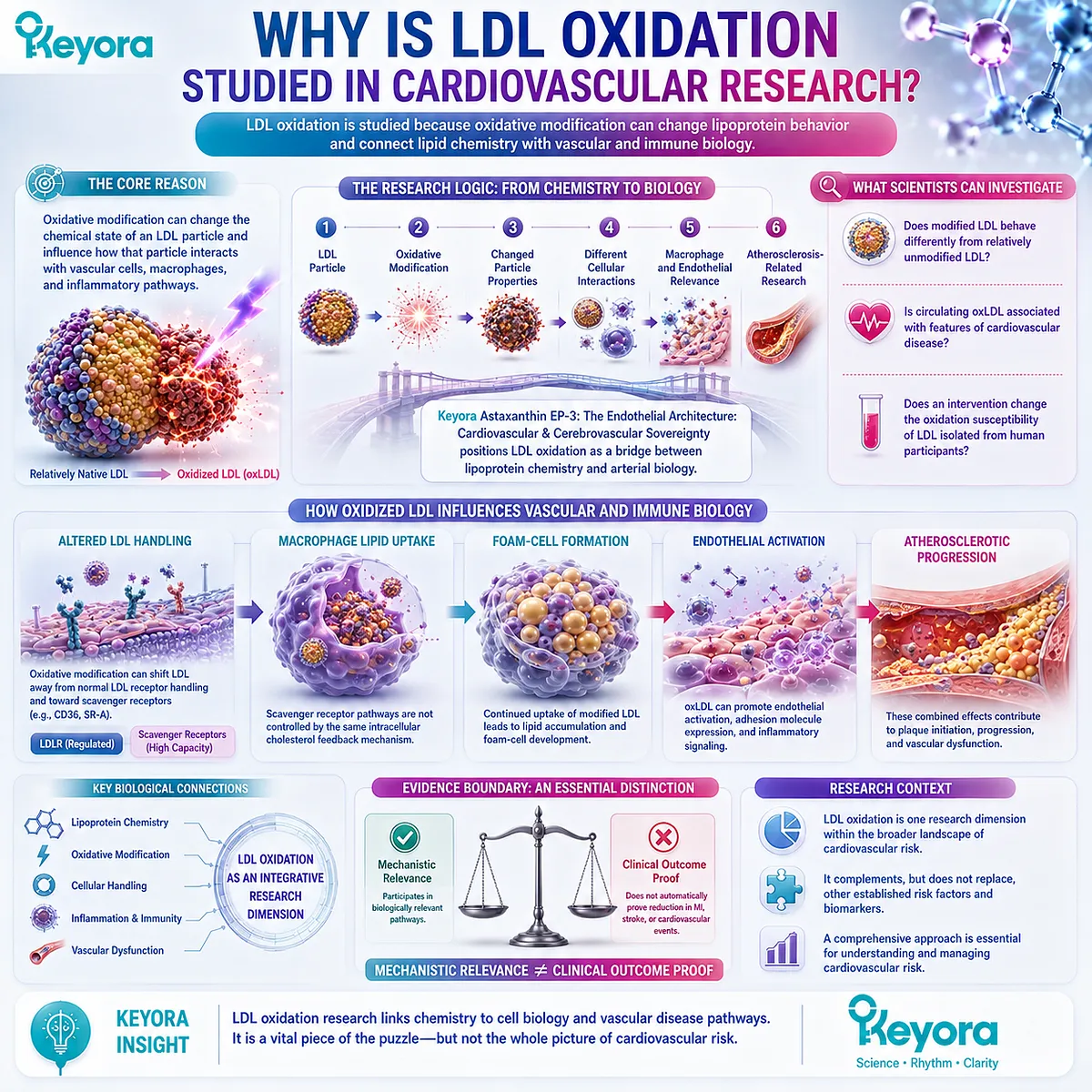
LDL oxidation is studied because oxidative modification can change lipoprotein behavior and connect lipid chemistry with vascular and immune biology
LDL oxidation is important in cardiovascular research because oxidative modification can change the chemical state of an LDL particle and influence how that particle interacts with vascular cells, macrophages, and inflammatory pathways.
In Keyora Astaxanthin EP-3: The Endothelial Architecture: Cardiovascular & Cerebrovascular Sovereignty, LDL oxidation is positioned as a bridge between lipoprotein chemistry and arterial biology.
The source connects oxidative modification with altered LDL handling, macrophage lipid uptake, foam-cell formation, endothelial activation, and measurable changes in the susceptibility of isolated LDL to further oxidation.
The research logic can be simplified as:
LDL particle
↓
Oxidative modification
↓
Changed particle properties
↓
Different cellular interactions
↓
Macrophage and endothelial relevance
↓
Atherosclerosis-related research
This makes LDL oxidation more than a chemistry question.
Researchers can ask whether modified LDL behaves differently from relatively unmodified LDL, whether circulating oxLDL is associated with cardiovascular disease features, and whether an intervention changes the oxidation susceptibility of LDL isolated from human participants.
However, one evidence boundary is essential:
Mechanistic relevance does not equal clinical outcome proof.
Showing that LDL oxidation participates in biologically relevant pathways does not automatically prove that changing LDL oxidation will prevent myocardial infarction, stroke, or other cardiovascular events.
LDL oxidation is therefore best treated as one research dimension of lipoprotein and vascular biology, not as a complete replacement for other cardiovascular risk variables.
What Makes LDL Oxidation Biologically Relevant?
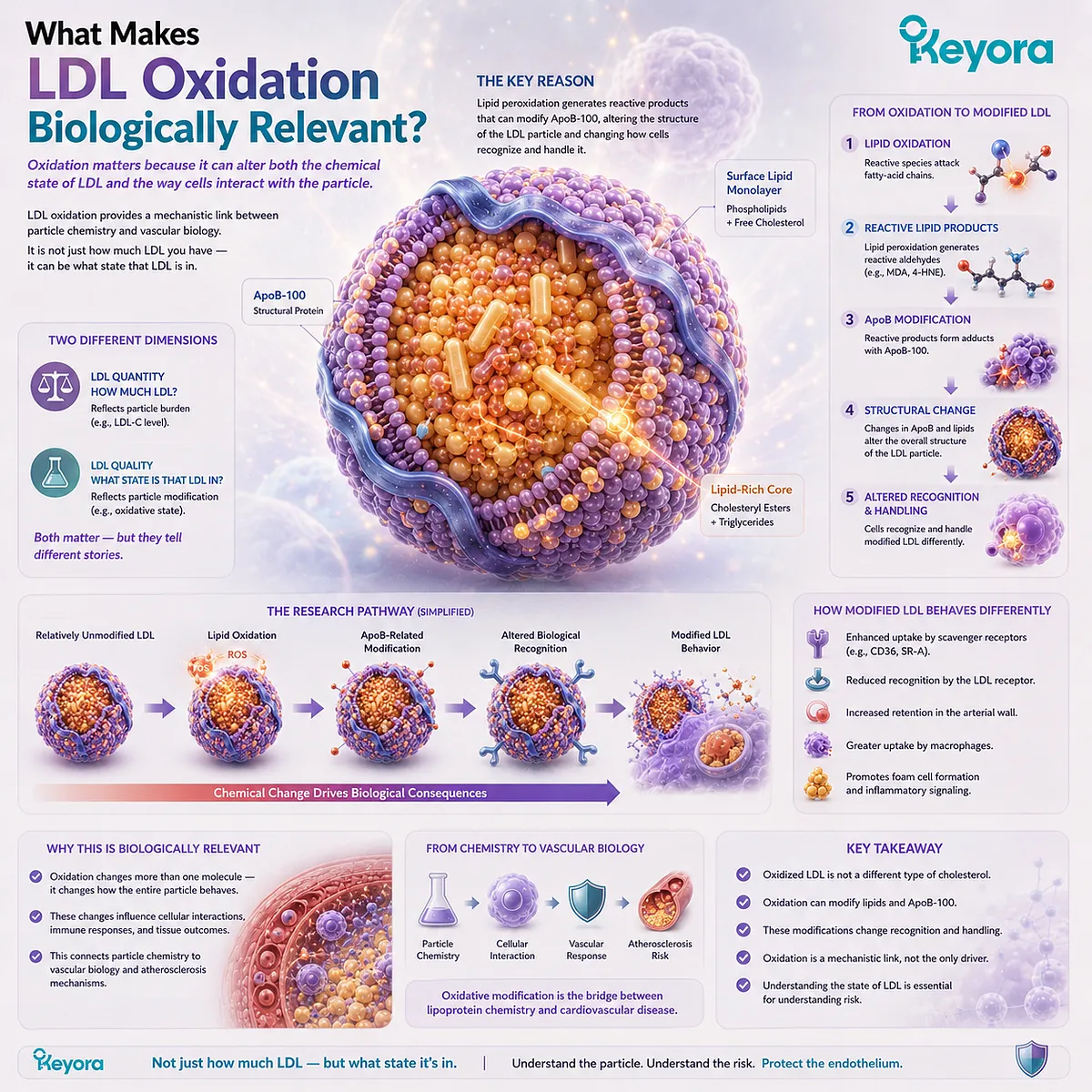
Oxidation matters because it can alter both the chemical state of LDL and the way cells interact with the particle
The previous article, “What Is Oxidized LDL and Why Is It Different From Normal LDL?”, explained that oxidized LDL is not a separate type of cholesterol. It is an LDL particle whose lipids and protein components have undergone oxidative modification.
That distinction explains why LDL oxidation attracts research attention.
The Keyora Endothelial Architecture paper describes a transition in which lipid peroxidation produces reactive lipid-derived compounds capable of modifying ApoB-100. The source then connects these structural changes with altered receptor recognition and different cellular handling of the particle.
The research question is therefore not only:
How much LDL is present?
It can also be:
What chemical state is that LDL in?
These are different dimensions.
One concerns particle burden.
The other concerns particle modification.
The source uses its Keyora Lipid Architecture to emphasize that distinction.
A simplified research pathway is:
Relatively unmodified LDL
↓
Lipid oxidation
↓
ApoB-related modification
↓
Altered biological recognition
↓
Modified LDL behavior
This is what gives LDL oxidation biological significance.
A chemical reaction becomes relevant to cardiovascular research when it changes how a lipoprotein interacts with cells and tissues.
The important conclusion is not that oxidation is the only determinant of LDL-related risk.
It is that oxidative modification provides a mechanistic link between particle chemistry and vascular biology.
Why Are Macrophages and Foam Cells Central to LDL Oxidation Research?
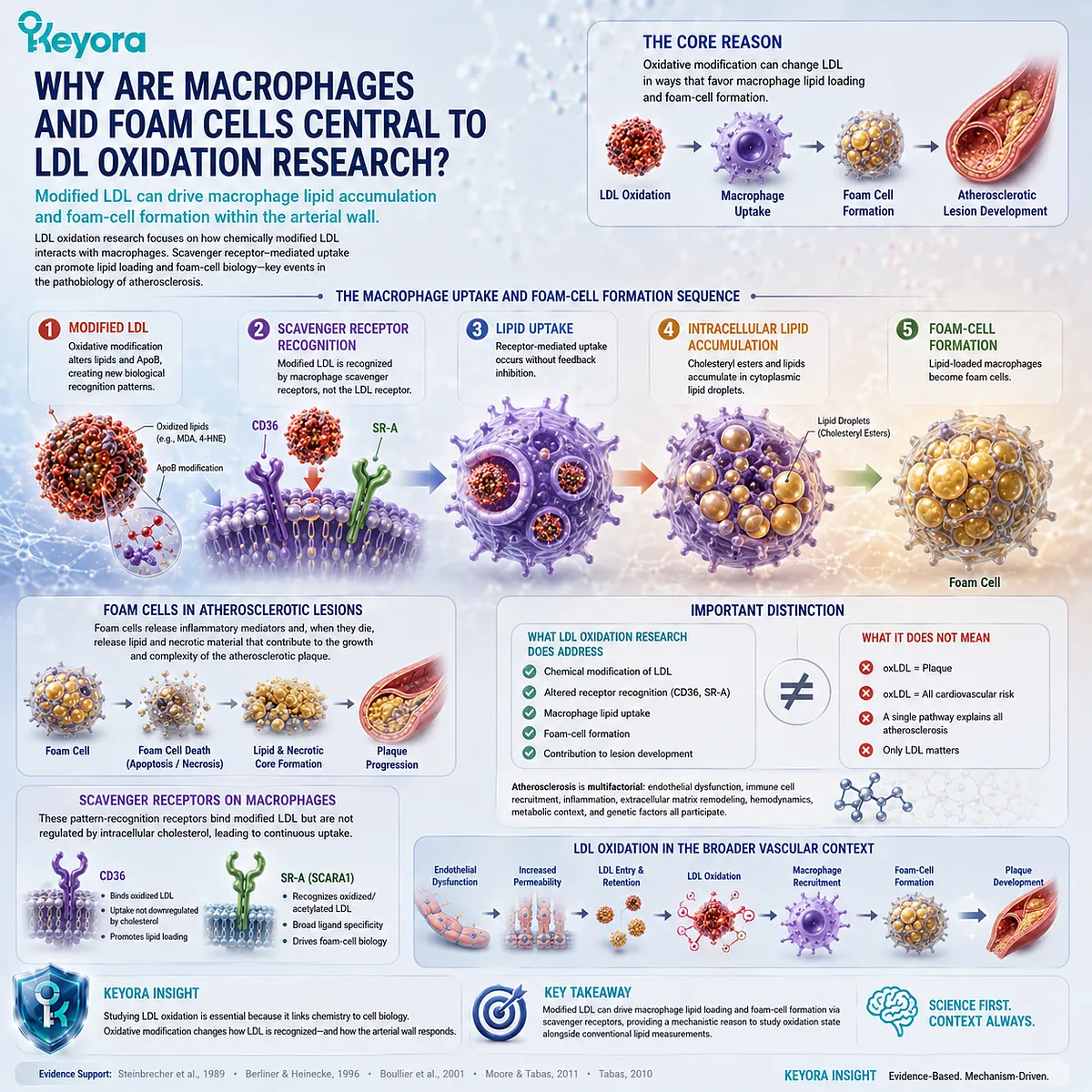
Modified LDL is studied partly because macrophage uptake can promote lipid accumulation and foam-cell formation within the arterial wall
One of the strongest reasons LDL oxidation became important in atherosclerosis research is its relationship with macrophage lipid handling.
The Keyora Endothelial Architecture paper contrasts normal LDL receptor pathways with scavenger receptor pathways associated with modified LDL.
The source specifically names CD36 and SR-A and describes macrophage uptake of oxidized LDL as a pathway leading to substantial intracellular lipid accumulation and foam-cell formation.
The basic sequence is:
Modified LDL
↓
Macrophage scavenger receptor recognition
↓
Lipid uptake
↓
Intracellular lipid accumulation
↓
Foam-cell formation
This matters because foam cells are part of developing atherosclerotic lesions.
The source goes further and connects foam-cell death with lipid and necrotic material accumulating within the arterial wall.
However, this mechanism should not be compressed into:
oxLDL = plaque
Plaque biology is more complex.
The vascular wall, endothelial state, recruited immune cells, inflammatory signaling, extracellular material, and lesion progression all participate.
The research importance of LDL oxidation is therefore narrower and more precise:
oxidative modification can change LDL in ways that favor macrophage lipid loading and foam-cell biology.
That provides a mechanistic reason to study the oxidation state of LDL alongside conventional lipid measurements.
How Is Oxidized LDL Connected With Endothelial and Inflammatory Biology?
LDL oxidation is relevant beyond macrophages because modified lipoproteins are studied in relation to endothelial activation and inflammatory signaling
LDL oxidation is not studied only because of what macrophages do with modified particles.
The Keyora Endothelial Architecture paper also connects oxLDL with the endothelial surface.
The source describes an inflammatory sequence involving endothelial expression of adhesion molecules such as VCAM-1 and ICAM-1, monocyte recruitment, entry of monocytes into the subendothelial space, and subsequent macrophage differentiation.
This creates a broader interaction model:
Endothelial activation
Modified LDL
Monocyte recruitment
↓
Macrophage interaction
↓
Foam-cell biology
The source sometimes expresses this relationship in very strong language, suggesting that LDL oxidation directly “triggers” the entire inflammatory cascade.
A more careful interpretation of the source is that oxidized LDL participates in and may amplify vascular inflammatory interactions within the broader process being described.
That distinction is important.
Atherosclerosis is not occurring inside the LDL particle alone.
It is occurring within the arterial wall environment.
This is why LDL oxidation has research value beyond chemistry. It provides a point of connection among:
lipoprotein modification
endothelial biology
immune-cell recruitment
macrophage behavior
and
lesion development
Within the Keyora framework, LDL oxidation therefore belongs to a larger Cargo – Wall Interaction architecture.
The particle matters.
The wall matters.
And the biological interaction between them matters.
![Oxidized LDL links endothelial VCAM-1 and ICAM-1 activation with monocyte recruitment and macrophage biology in Keyora [Cargo - Wall Interaction] architecture.](https://www.keyorahealth.com/cdnfiles/2026/09/02142932/42d1ec63-b935-43a9-bce7-aaeaba6a668a_1254x1254.webp "Oxidized LDL links endothelial VCAM-1 and ICAM-1 activation with monocyte recruitment and macrophage biology in Keyora [Cargo - Wall Interaction] architecture.")
What Do Human Association Studies Tell Us About Oxidized LDL?
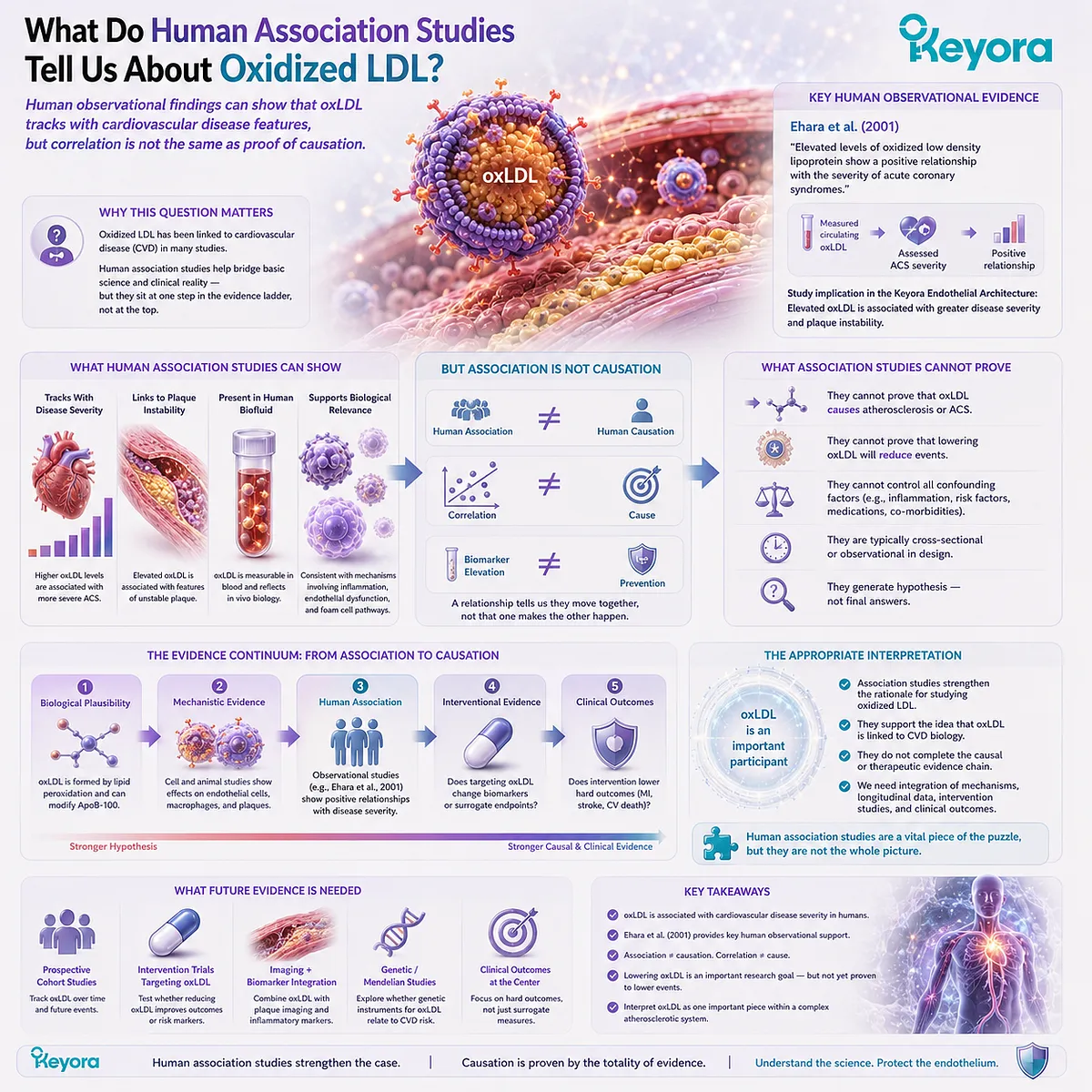
Human observational findings can show that oxLDL tracks with cardiovascular disease features, but correlation is not the same as proof of causation
The Keyora Endothelial Architecture paper cites human observational evidence to support the cardiovascular relevance of oxLDL.
Specifically, the source cites Ehara et al. (2001) and states that elevated circulating oxLDL showed a positive relationship with the severity of acute coronary syndromes. The source also links elevated oxLDL with plaque instability in its interpretation of that literature.
The reference listed in the source is:
Ehara et al. (2001), “Elevated levels of oxidized low density lipoprotein show a positive relationship with the severity of acute coronary syndromes.”
This type of evidence is valuable because it moves the discussion from isolated cell mechanisms toward observations in humans.
But it still occupies a specific position in the evidence hierarchy:
Human Association
does not equal
Human Causation
A positive relationship between oxLDL and disease severity can support the idea that oxLDL is biologically relevant to cardiovascular disease.
It cannot by itself establish that oxLDL is the single cause of the disease process.
Nor can it prove that lowering an oxLDL-related measurement will necessarily prevent a cardiovascular event.
The appropriate interpretation is:
Human association studies strengthen the rationale for studying oxidized LDL, but they do not complete the causal or therapeutic evidence chain.
What Is Oxidation Lag Time and What Does It Actually Measure?
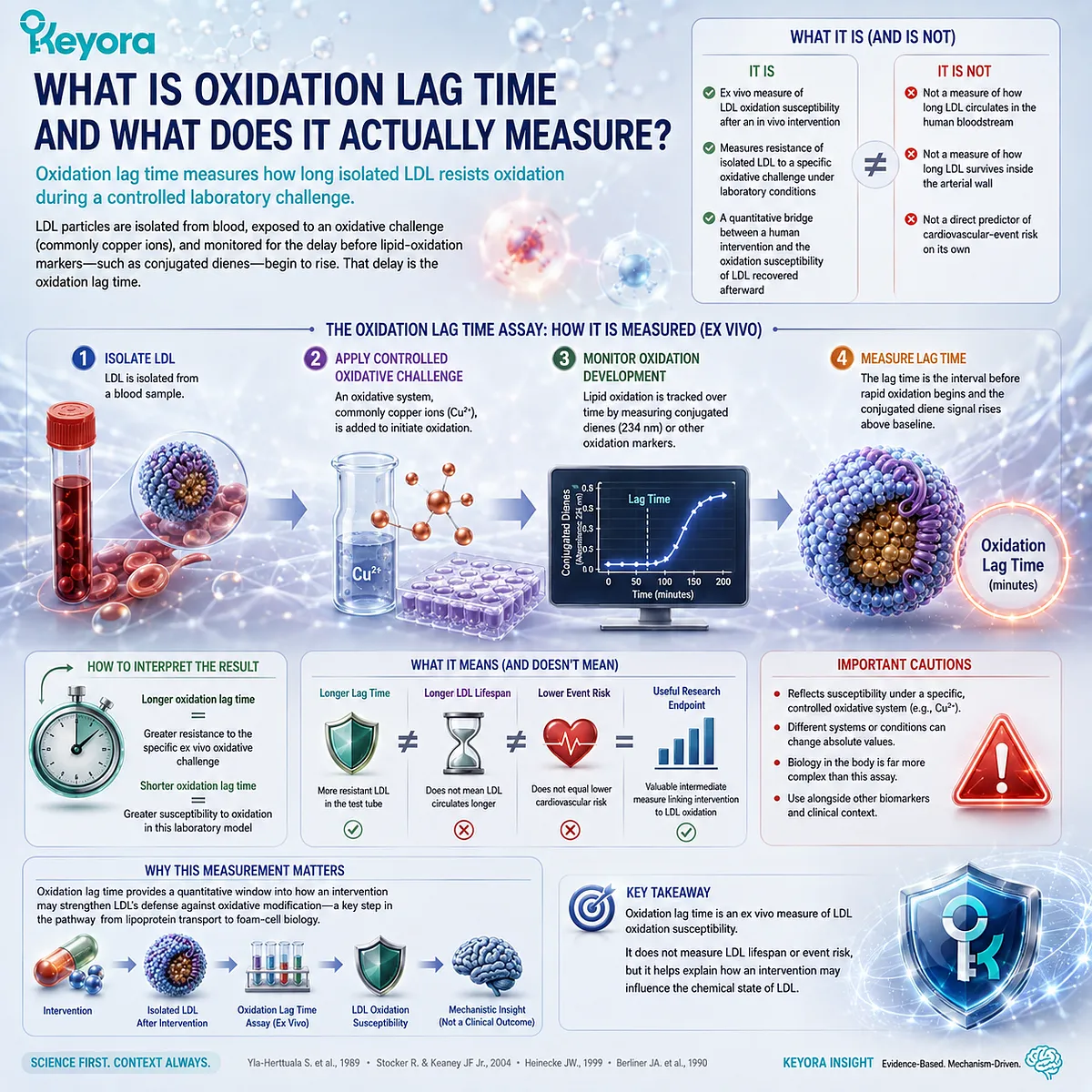
Oxidation lag time measures how long isolated LDL resists oxidation during a controlled laboratory challenge
One of the most useful research measurements discussed in the Keyora Endothelial Architecture paper is LDL oxidation lag time.
The source explains that LDL particles are isolated and then exposed to experimentally induced oxidative stress, commonly using copper ions to catalyze the oxidation process. Researchers then measure the delay before markers of lipid oxidation, including conjugated dienes, begin to rise.
This interval is called the oxidation lag time.
A simplified assay is:
Isolate LDL
↓
Apply controlled oxidative challenge
↓
Monitor oxidation development
↓
Measure time before rapid oxidation begins
The source sometimes calls oxidation lag time a “clinical metric.”
Based on the method it describes, a more precise interpretation is:
LDL oxidation lag time is an ex vivo measure of LDL oxidation susceptibility after an in vivo intervention.
That distinction matters.
The assay does not directly measure:
how long an LDL particle circulates in the human bloodstream
or
how long an LDL particle survives inside an artery
It measures how resistant isolated LDL is to experimentally induced oxidation under laboratory conditions.
Therefore:
Longer oxidation lag time
=
greater resistance to the specific ex vivo oxidative challenge
It should not automatically be translated into:
longer LDL lifespan
or
lower cardiovascular-event risk
This measurement is useful because it creates a quantitative bridge between a human intervention and the oxidation susceptibility of LDL recovered afterward.
But it remains an intermediate research endpoint.
What Did the Iwamoto Astaxanthin Study Actually Show?
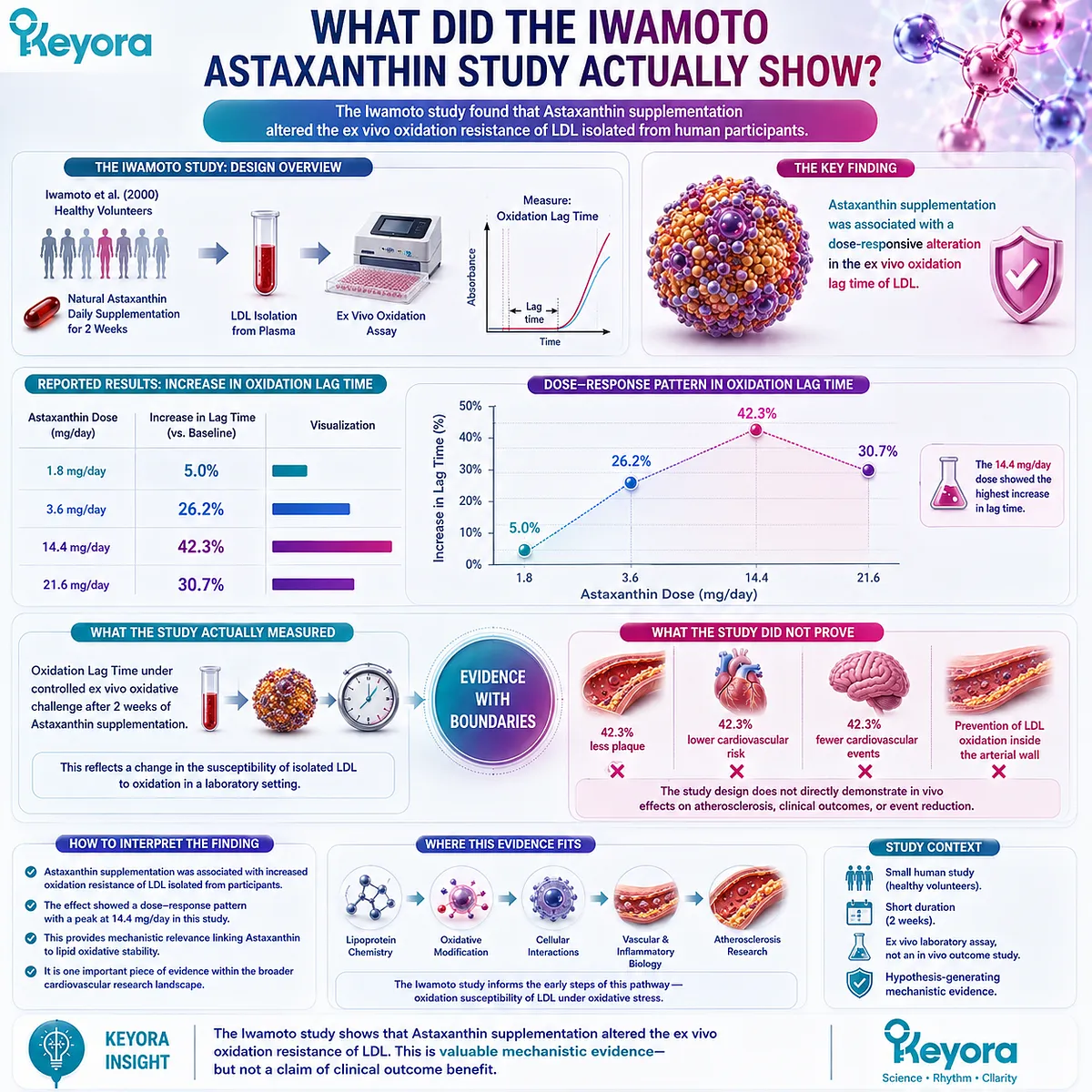
The Iwamoto study found that Astaxanthin supplementation altered the ex vivo oxidation resistance of LDL isolated from human participants
The Keyora Endothelial Architecture paper places substantial emphasis on Iwamoto et al. (2000) because it directly examined LDL oxidation after Astaxanthin supplementation.
According to the source, healthy volunteers received Natural Astaxanthin at doses of 1.8 mg, 3.6 mg, 14.4 mg, or 21.6 mg per day for two weeks. LDL was then isolated and evaluated for oxidation lag time.
The source reports:
1.8 mg/day – 5.0% increase in lag time
3.6 mg/day – 26.2% increase
14.4 mg/day – 42.3% increase
21.6 mg/day – 30.7% increase
The strongest public interpretation should remain closely tied to what the assay measured:
Astaxanthin supplementation was associated with altered ex vivo oxidation susceptibility of LDL isolated from the participants.
That is meaningful evidence.
But the study design described in the source does not directly demonstrate that Astaxanthin prevented LDL oxidation inside an arterial wall.
It also does not establish:
42.3% less plaque
42.3% lower cardiovascular risk
or
42.3% fewer cardiovascular events
The measurement was oxidation lag time under controlled ex vivo oxidative challenge.
This distinction makes the study more interpretable, not less useful.
It tells us specifically what was measured and where that evidence fits.
What Can LDL Oxidation Research Not Prove by Itself?
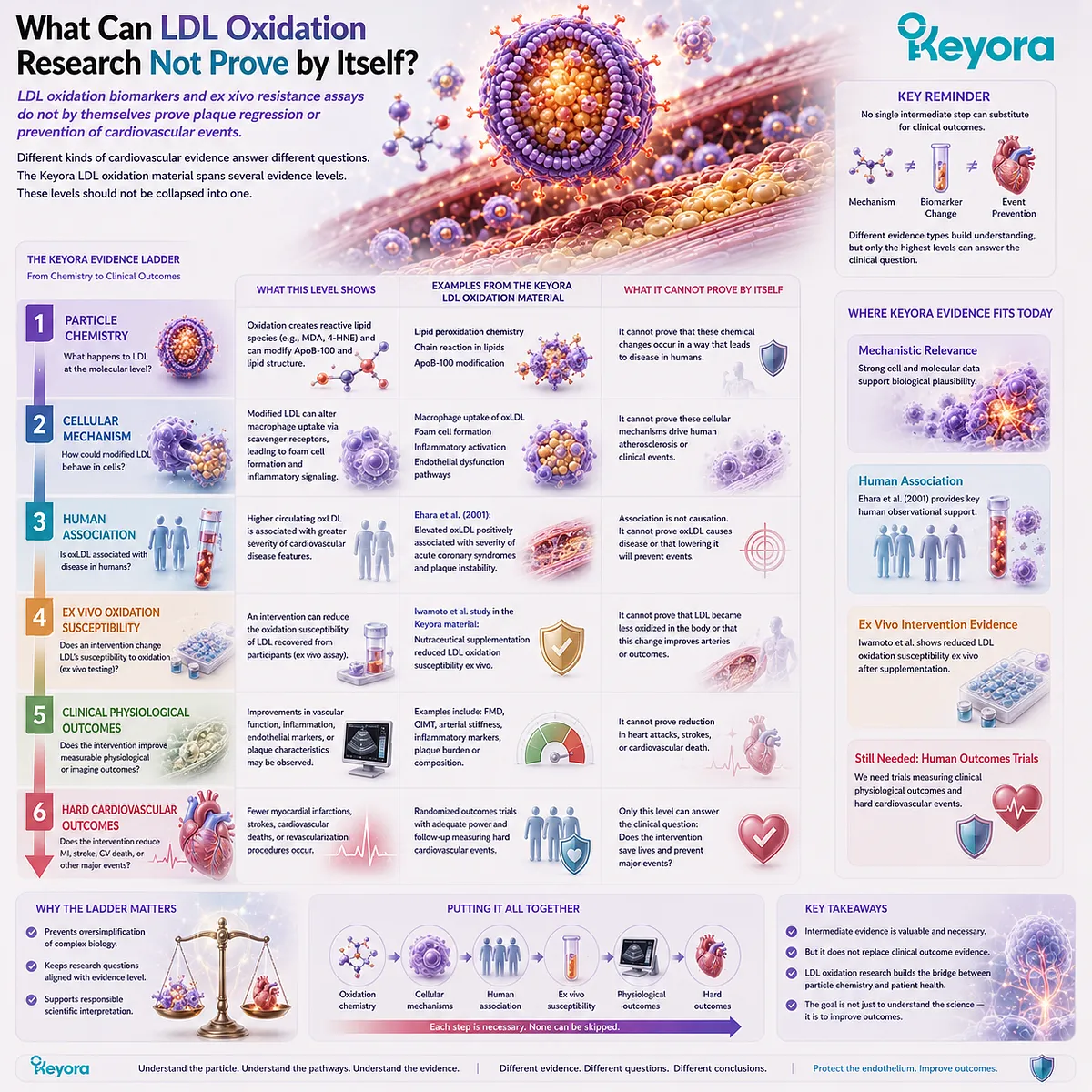
LDL oxidation biomarkers and ex vivo resistance assays do not by themselves prove plaque regression or prevention of cardiovascular events
Different kinds of cardiovascular evidence answer different questions.
The Keyora LDL oxidation material spans several evidence levels:
Mechanistic evidence
explains why modified LDL could behave differently in macrophage and endothelial pathways.
Human association evidence
examines whether circulating oxLDL tracks with cardiovascular disease features.
Human intervention plus ex vivo testing
examines whether supplementation changes the oxidation susceptibility of LDL recovered from participants.
These levels should not be collapsed into one.
A useful Keyora evidence ladder is:
Particle Chemistry
↓
Cellular Mechanism
↓
Human Association
↓
Ex Vivo Oxidation Susceptibility
↓
Clinical Physiological Outcomes
↓
Hard Cardiovascular Outcomes
The Iwamoto study described in the source provides evidence at the human intervention plus ex vivo assay level.
The Ehara study is presented at the human association level.
The macrophage and foam-cell pathways provide mechanistic relevance.
None of those evidence types, by itself, proves that modifying LDL oxidation will reduce myocardial infarction, stroke, or cardiovascular mortality.
That distinction should remain explicit whenever LDL oxidation is discussed in nutritional research.
The correct conclusion is not that intermediate evidence is meaningless.
Intermediate evidence is valuable because it helps build and test biological models.
But:
mechanism
is not
clinical outcome
and
biomarker change
is not
event prevention
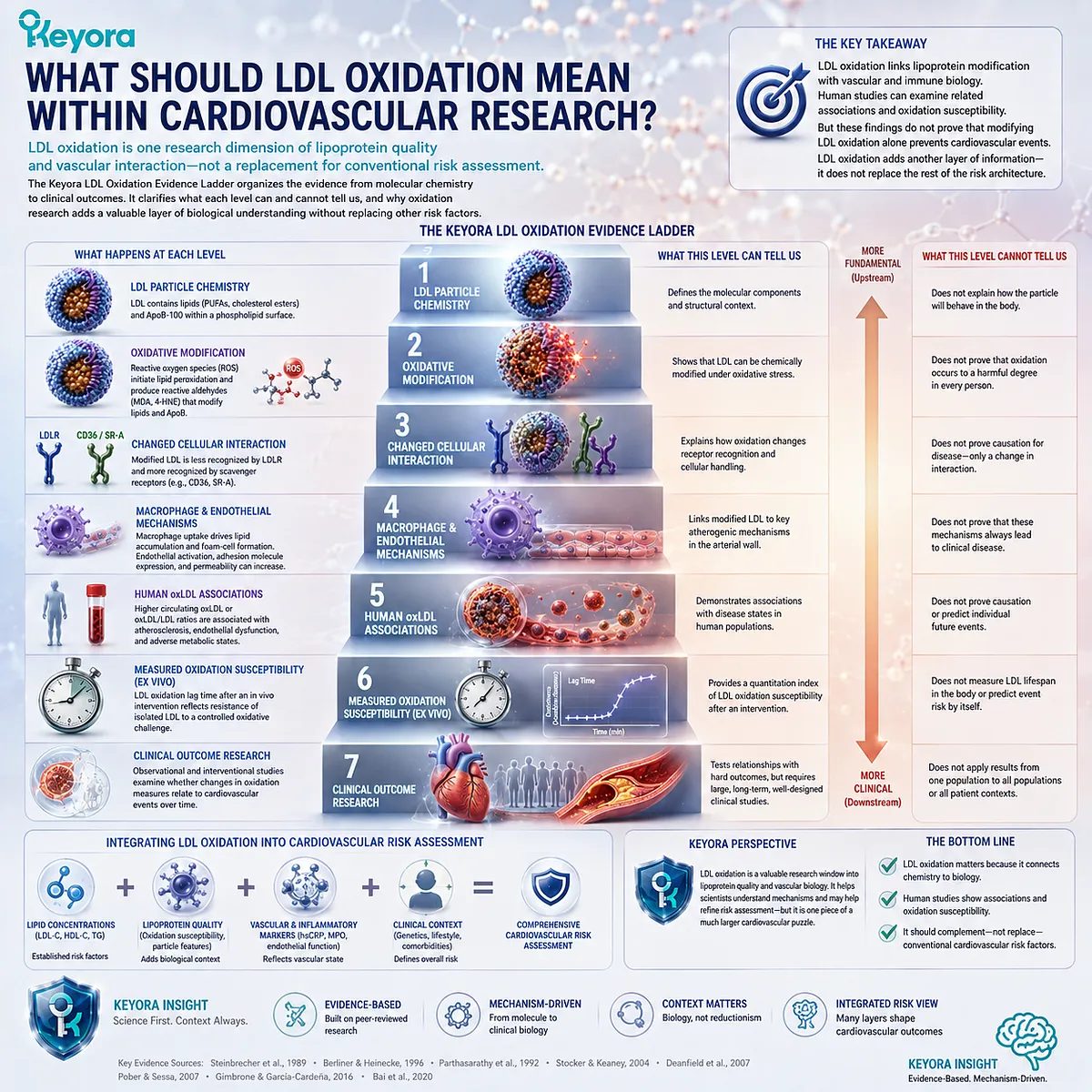
What Should LDL Oxidation Mean Within Cardiovascular Research?
LDL oxidation is best understood as one research dimension of lipoprotein quality and vascular interaction, not as a replacement for conventional lipid risk assessment
The cardiovascular importance of LDL oxidation is strongest when it is placed within an evidence structure rather than treated as a single explanation for disease.
The Keyora LDL Oxidation Evidence Ladder can be summarized as:
LDL Particle Chemistry
↓
Oxidative Modification
↓
Changed Cellular Interaction
↓
Macrophage and Endothelial Mechanisms
↓
Human oxLDL Associations
↓
Measured Oxidation Susceptibility
↓
Clinical Outcome Research
This framework is a Keyora explanatory model, not a clinical diagnostic system.
Its value is that it separates what different forms of evidence can actually tell us.
The Keyora Endothelial Architecture paper provides material supporting several parts of this ladder.
It describes LDL oxidation mechanisms, macrophage scavenger receptor pathways, foam-cell biology, human oxLDL associations, and Astaxanthin-related changes in ex vivo LDL oxidation lag time.
The appropriate final conclusion is therefore:
LDL oxidation is important in cardiovascular research because it links lipoprotein modification with vascular and immune biology, while human studies can examine related associations and oxidation susceptibility.
However, those findings should not be interpreted as direct proof that modifying LDL oxidation alone prevents cardiovascular events.
That is the useful role of LDL oxidation within the broader cardiovascular picture.
It adds another layer of biological information.
It does not replace the rest of the risk architecture.
This article is for educational and informational purposes only. It does not provide medical advice, diagnosis, treatment, cure, prevention, disease outcome claims, hormone restoration claims, fertility outcome claims, or formula-specific clinical efficacy claims.