
Why Is Astaxanthin Fat-Soluble – and Why Does That Matter?
Keyora Research Q&A Library
This is part of the Keyora Research Q&A Series, derived from Keyora Astaxanthin Research Journal Series.
Within the Keyora Astaxanthin Researcn framework, this Q&A translates complex astaxanthin biology into reader-friendly, evidence-bound answers, focusing on natural astaxanthin identity, molecular structure, antioxidant and redox mechanisms, membrane lipid interaction, mitochondrial resilience, inflammatory signaling pathways, human evidence interpretation, and the scientific principles behind responsible supplementation.
First published by Keyora Research Journal: www.keyorahealth.com
Direct Answer
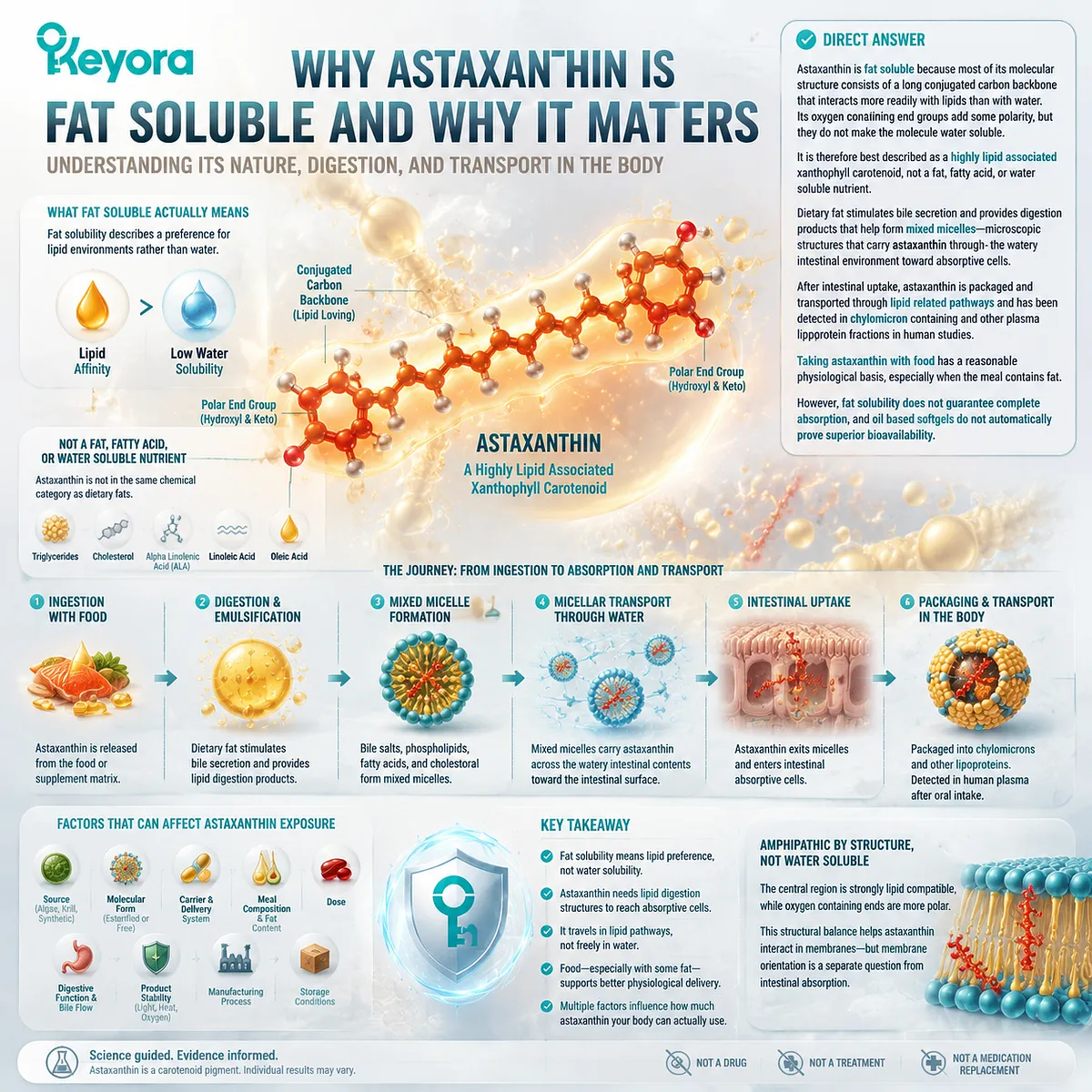
Astaxanthin is fat soluble because most of its molecular structure consists of a long conjugated carbon backbone that interacts more readily with lipids than with water. Its oxygen containing end groups add some polarity, but they do not make the molecule water soluble.
Astaxanthin is therefore better described as a highly lipid associated xanthophyll carotenoid rather than a fat, fatty acid, or water soluble nutrient.
This matters because the digestive tract is largely water based. Before astaxanthin can approach the intestinal surface, it must be released from its food or supplement matrix and incorporated into lipid digestion structures.
Dietary fat stimulates bile secretion and provides digestion products that join bile salts and phospholipids in mixed micelles. These microscopic structures help carry carotenoids through the watery intestinal environment toward absorptive cells.
After intestinal uptake, astaxanthin is packaged and transported through lipid related pathways rather than circulating freely in water. Human research has detected it in chylomicron containing and other plasma lipoprotein fractions after oral intake.
Taking astaxanthin with food therefore has a reasonable physiological basis, especially when the meal contains some fat.
However, fat solubility does not guarantee complete absorption, and an oil based softgel does not automatically prove superior bioavailability.
The exact source, molecular form, carrier, meal conditions, dose, digestive function, and product stability can all affect exposure.
What Fat Soluble Actually Means
Fat solubility describes a preference for lipid environments rather than water
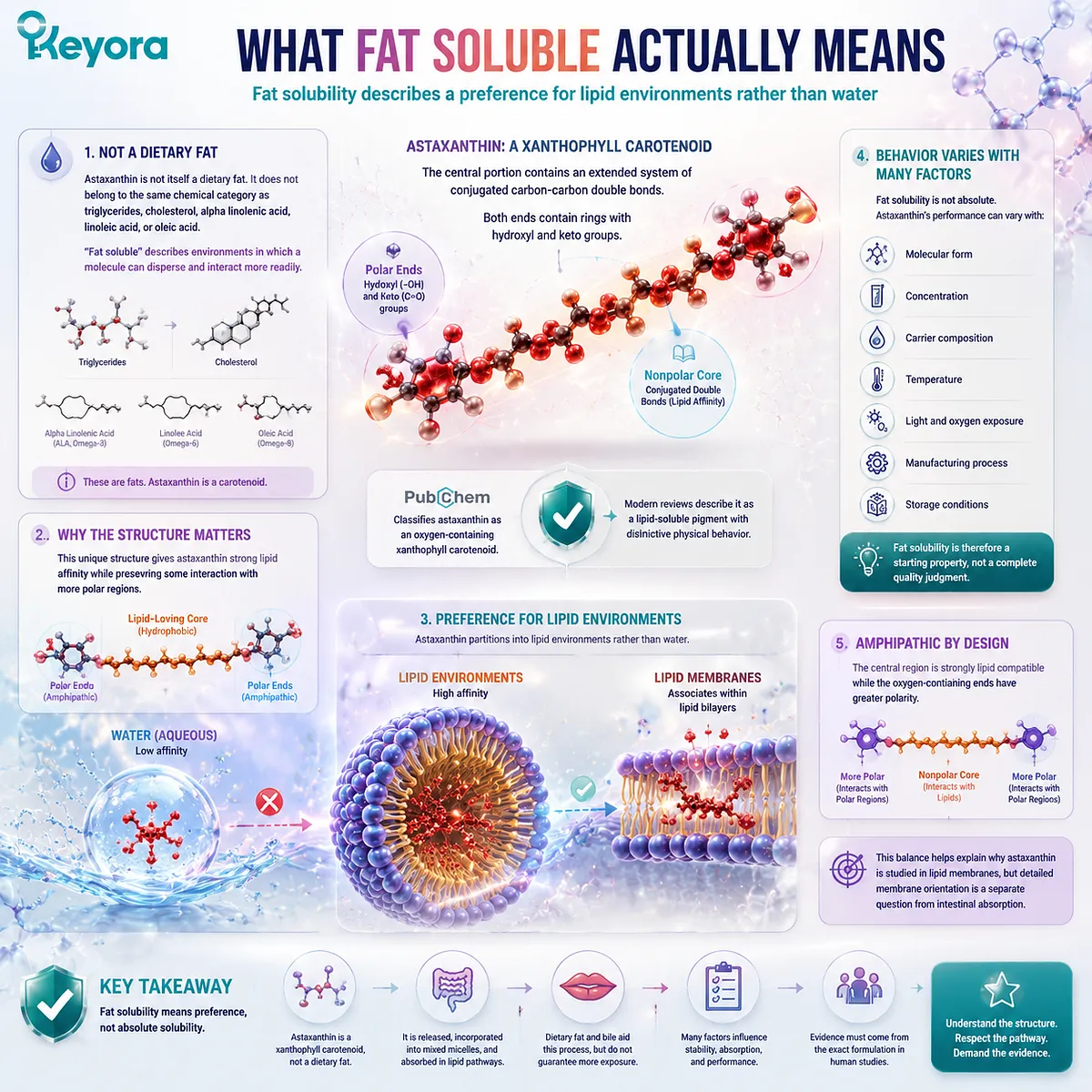
Astaxanthin is not itself a dietary fat. It does not belong to the same chemical category as triglycerides, cholesterol, alpha linolenic acid, linoleic acid, or oleic acid. “Fat soluble” instead describes the environments in which a molecule can disperse and interact more readily.
The central portion of astaxanthin contains an extended system of conjugated carbon to carbon double bonds. At both ends of this chain are rings containing hydroxyl and keto groups. This combination gives astaxanthin strong lipid affinity while preserving some interaction with more polar regions. PubChem classifies astaxanthin as an oxygen containing xanthophyll carotenoid, while modern reviews describe it as a lipid soluble pigment with distinctive physical behavior.
This does not mean astaxanthin dissolves equally well in every oil or remains stable under every condition. Its behavior can vary with:
-
molecular form
-
concentration
-
carrier composition
-
temperature
-
light and oxygen exposure
-
manufacturing process
-
storage conditions
Fat solubility is therefore a starting property, not a complete quality judgment.
The same distinction applies to the term “amphipathic,” which is sometimes used for astaxanthin because the central region is strongly lipid compatible while the oxygen containing ends have greater polarity. That structural balance helps explain why astaxanthin is studied in lipid membranes, but detailed membrane orientation is a separate question from intestinal absorption.
Why Digestion Matters Before Absorption
A lipid associated carotenoid must cross a digestive environment dominated by water
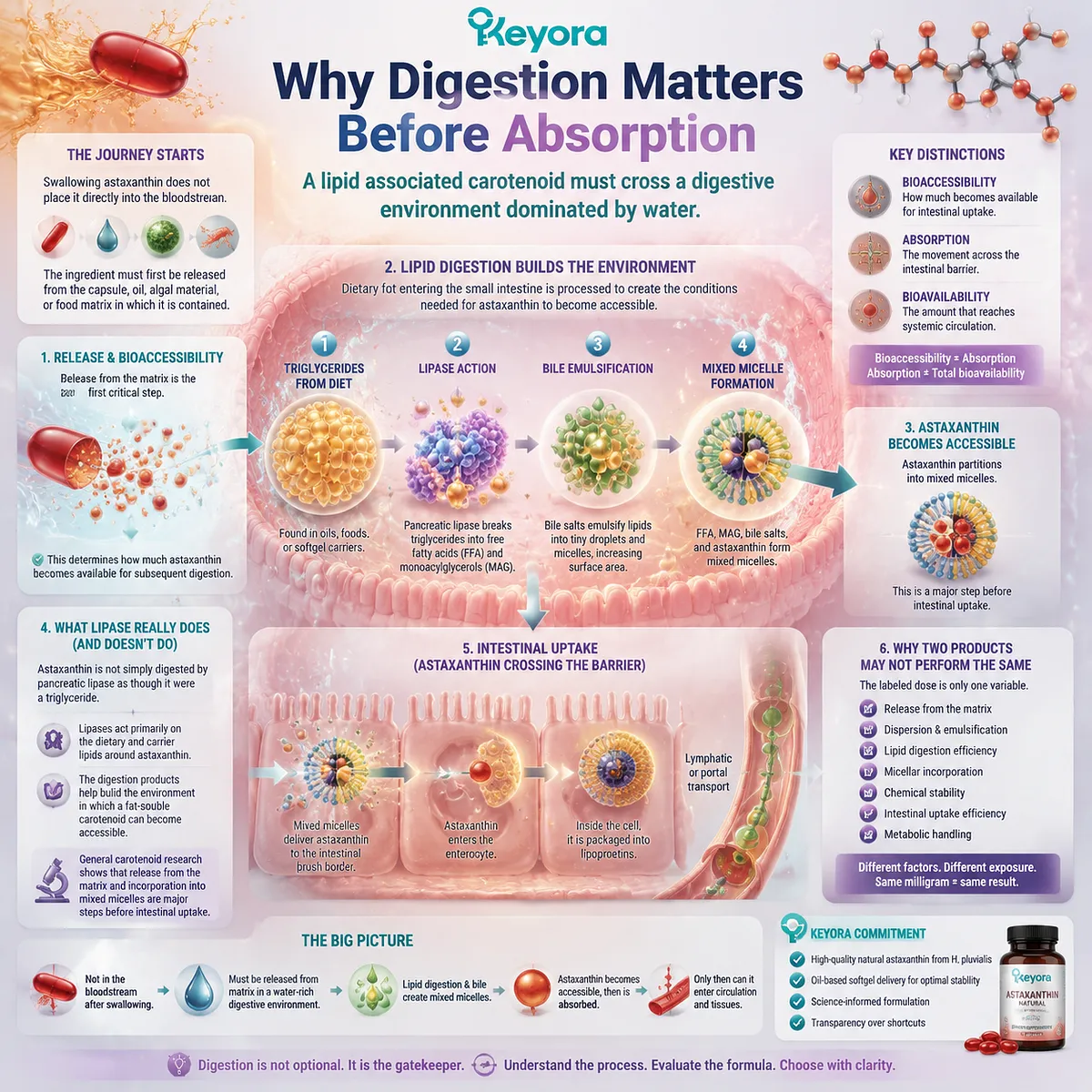
Swallowing astaxanthin does not place it directly into the bloodstream. The ingredient must first be released from the capsule, oil, algal material, or food matrix in which it is contained.
This release step contributes to bioaccessibility, which describes how much of an ingested compound becomes available for intestinal uptake. Bioaccessibility is not the same as absorption, and absorption is not the same as total bioavailability.
When dietary fat reaches the small intestine, digestive processes break triglycerides into fatty acids and monoacylglycerols. Bile released into the intestine helps emulsify these lipids into smaller structures, increasing the surface area available for digestion.
Astaxanthin itself is not simply digested by pancreatic lipase as though it were a triglyceride. Lipases primarily act on the dietary and carrier lipids surrounding it. The products of this lipid digestion help build the environment in which a fat soluble carotenoid can become accessible. General carotenoid absorption research shows that release from the matrix and incorporation into mixed micelles are major steps before intestinal uptake.
This explains why two products carrying the same labeled dose may not produce identical exposure. The active amount is only one variable. Release, dispersion, digestion, stability, and micellar incorporation also matter.
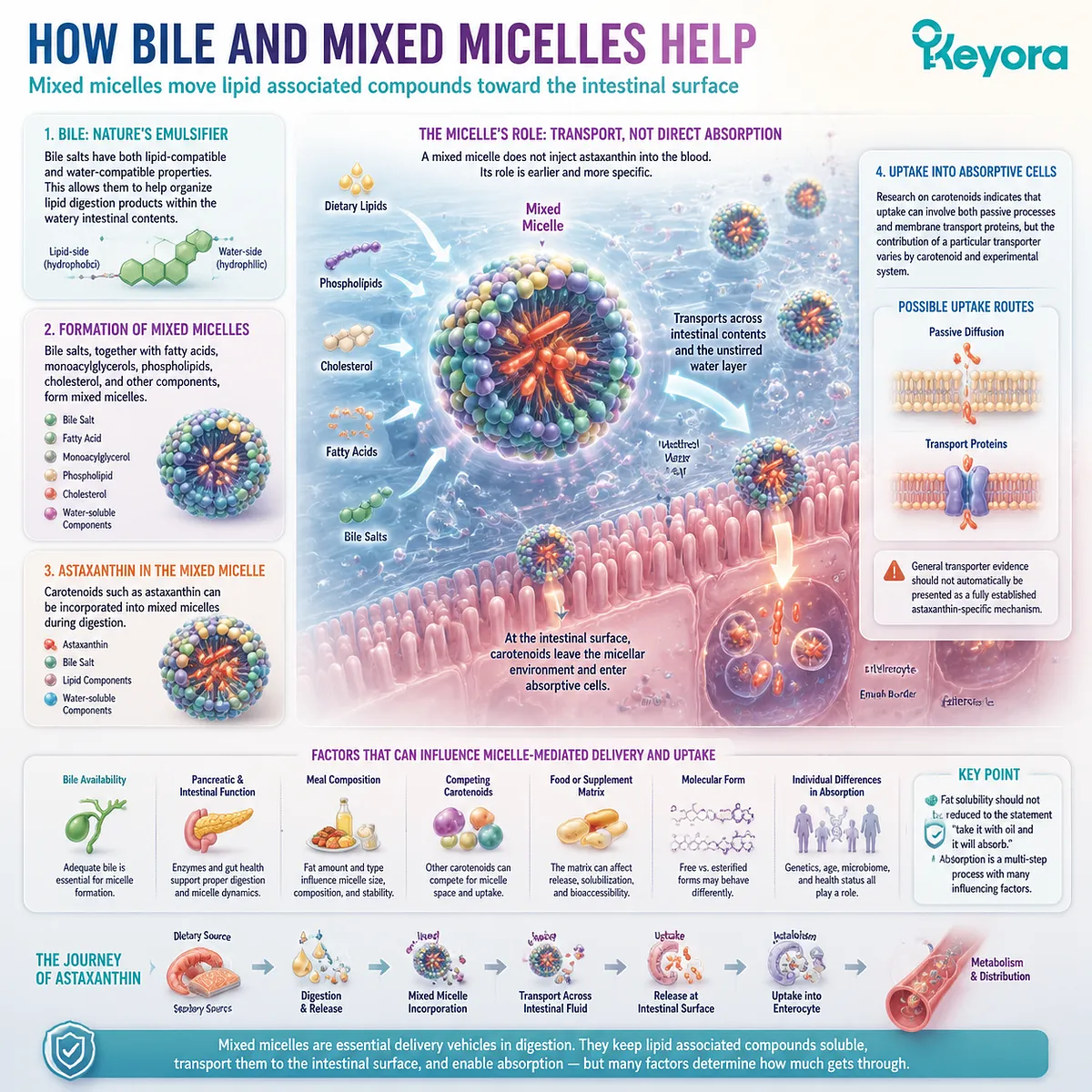
How Bile and Mixed Micelles Help
Mixed micelles move lipid associated compounds toward the intestinal surface
Bile salts have both lipid compatible and water compatible properties. This allows them to help organize lipid digestion products within the watery intestinal contents.
Together with fatty acids, monoacylglycerols, phospholipids, cholesterol, and other components, bile salts form mixed micelles. Carotenoids can become incorporated into these dynamic structures during digestion.
A mixed micelle does not inject astaxanthin into the blood. Its role is earlier and more specific. It helps keep lipid associated compounds dispersed and transports them across the intestinal contents and unstirred water layer toward the brush border of the enterocyte.
At the intestinal surface, carotenoids leave the micellar environment and enter absorptive cells. Research on carotenoids indicates that this uptake can involve both passive processes and membrane transport proteins, but the contribution of a particular transporter varies by carotenoid and experimental system. General transporter evidence should not automatically be presented as a fully established astaxanthin specific mechanism.
Several factors can influence this stage:
-
bile availability
-
pancreatic and intestinal function
-
meal composition
-
competing carotenoids
-
the food or supplement matrix
-
molecular form
-
individual differences in absorption
This is why fat solubility should not be reduced to the statement “take it with oil and it will absorb.”
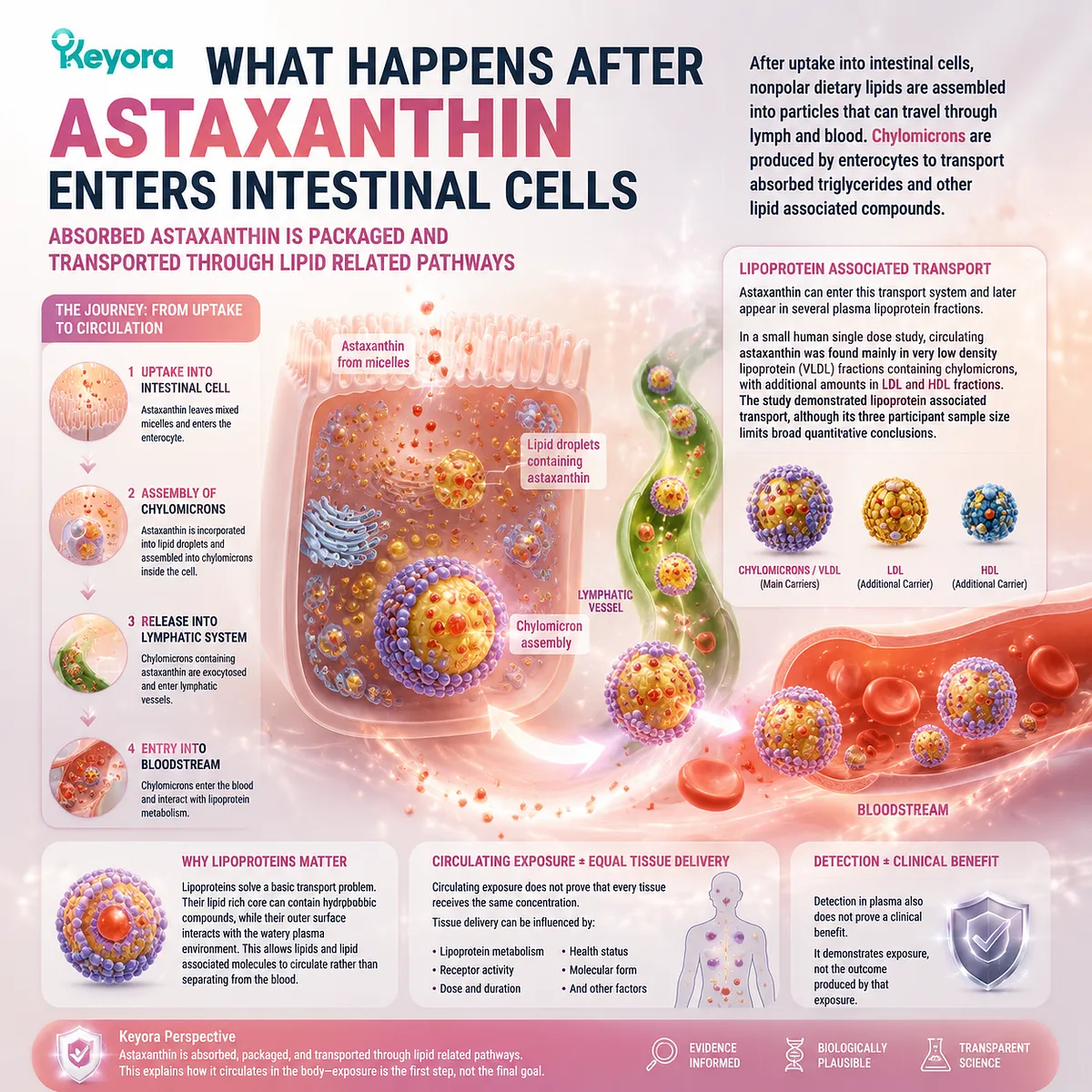
What Happens After Astaxanthin Enters Intestinal Cells
Absorbed astaxanthin is packaged and transported through lipid related pathways
After uptake into intestinal cells, nonpolar dietary lipids are assembled into particles that can travel through lymph and blood. Chylomicrons are produced by enterocytes to transport absorbed triglycerides and other lipid associated compounds.
Astaxanthin can enter this transport system and later appear in several plasma lipoprotein fractions. In a small human single dose study, circulating astaxanthin was found mainly in very low density lipoprotein fractions containing chylomicrons, with additional amounts in LDL and HDL fractions. The study demonstrated lipoprotein associated transport, although its three participant sample size limits broad quantitative conclusions.
Lipoproteins solve a basic transport problem. Their lipid rich core can contain hydrophobic compounds, while their outer surface interacts with the watery plasma environment. This allows lipids and lipid associated molecules to circulate rather than separating from the blood.
Circulating exposure does not prove that every tissue receives the same concentration. Tissue delivery can be influenced by lipoprotein metabolism, receptor activity, dose, duration, health status, and the molecular form being measured.
Detection in plasma also does not prove a clinical benefit. It demonstrates exposure, not the outcome produced by that exposure.
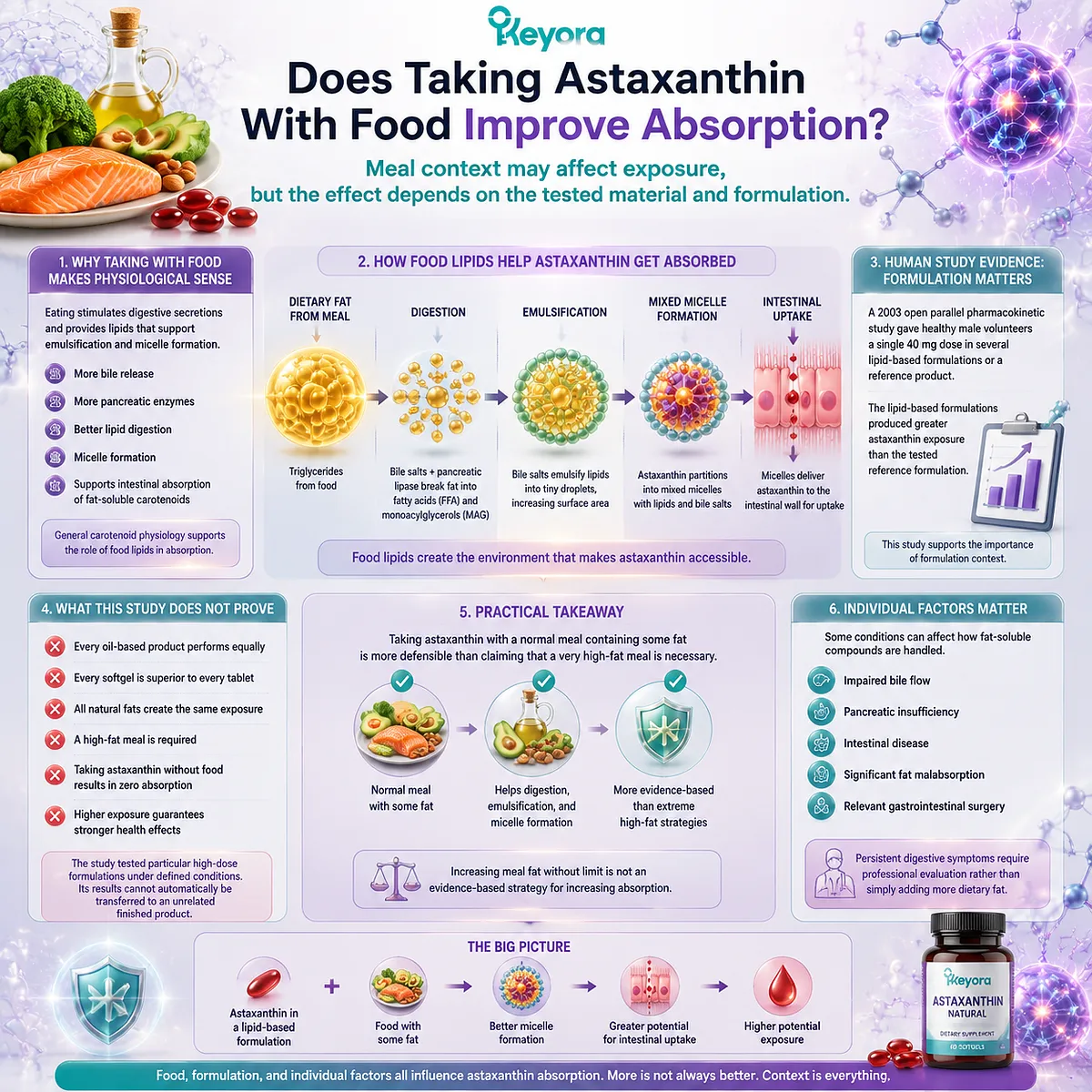
Does Taking Astaxanthin With Food Improve Absorption?
Meal context may affect exposure, but the effect depends on the tested material and formulation
Taking astaxanthin with food is physiologically reasonable because eating stimulates digestive secretions and provides lipids that support emulsification and micelle formation. General carotenoid physiology supports the role of food lipids in intestinal absorption.
Human astaxanthin research also supports the importance of formulation context. A 2003 open parallel pharmacokinetic study gave healthy male volunteers a single 40 mg dose in several lipid based formulations or a reference product. The lipid based formulations produced greater astaxanthin exposure than the tested reference formulation.
That study is useful, but it does not establish that:
-
every oil based product performs equally
-
every softgel is superior to every tablet
-
all natural fats create the same exposure
-
a high fat meal is required
-
taking astaxanthin without food results in zero absorption
-
higher exposure guarantees stronger health effects
The study tested particular high dose formulations under defined conditions. Its results cannot automatically be transferred to an unrelated finished product.
For practical use, taking astaxanthin with a normal meal containing some fat is more defensible than claiming that a very high fat meal is necessary. Increasing meal fat without limit is not an evidence based strategy for increasing absorption.
People with impaired bile flow, pancreatic insufficiency, intestinal disease, significant fat malabsorption, or relevant gastrointestinal surgery may handle fat soluble compounds differently. Persistent digestive symptoms require professional evaluation rather than simply adding more dietary fat.
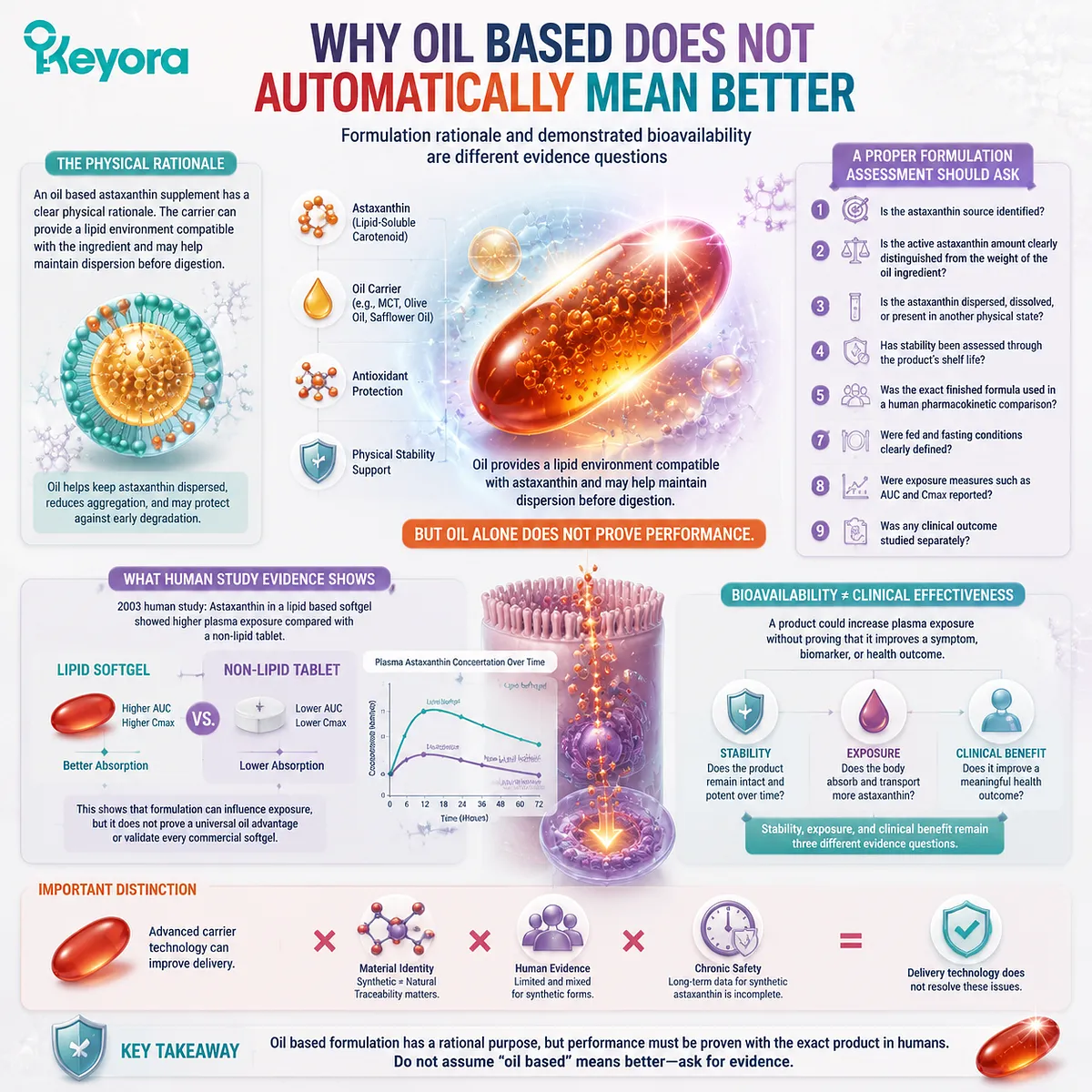
Why Oil Based Does Not Automatically Mean Better
Formulation rationale and demonstrated bioavailability are different evidence questions
An oil based astaxanthin supplement has a clear physical rationale. The carrier can provide a lipid environment compatible with the ingredient and may help maintain dispersion before digestion.
However, the presence of oil alone does not prove performance.
A proper formulation assessment should ask:
-
Is the astaxanthin source identified?
-
Is the active astaxanthin amount clearly distinguished from the weight of the oil ingredient?
-
Is the astaxanthin dispersed, dissolved, or present in another physical state?
-
Has stability been assessed through the product’s shelf life?
-
Was the exact finished formula used in a human pharmacokinetic comparison?
-
Were fed and fasting conditions clearly defined?
-
Were exposure measures such as AUC and Cmax reported?
-
Was any clinical outcome studied separately?
The 2003 human study shows that lipid based formulation can influence exposure, but it does not prove a universal oil advantage or validate every commercial softgel.
Bioavailability must also remain separate from clinical effectiveness. A product could increase plasma exposure without proving that it improves a symptom, biomarker, or health outcome. Stability, exposure, and clinical benefit remain three different evidence questions.
An advanced carrier cannot make conventional synthetic astaxanthin an appropriate substitute for traceable natural astaxanthin. Delivery technology does not remove unresolved material identity, human evidence, or chronic safety questions.
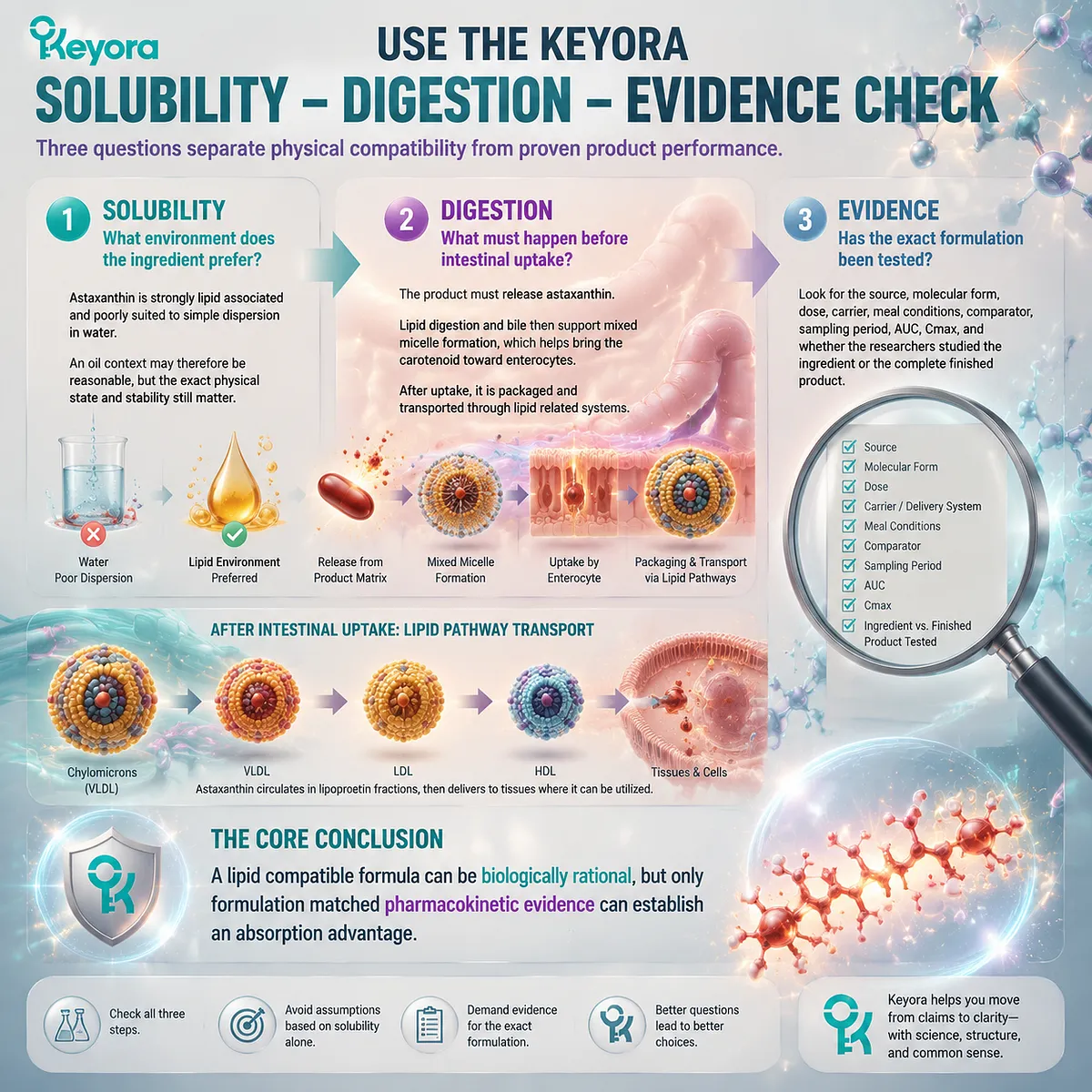
Use the Keyora Solubility – Digestion – Evidence Check
Three questions separate physical compatibility from proven product performance
The Keyora Solubility – Digestion – Evidence Check provides a practical way to interpret astaxanthin absorption claims.
1. Solubility
What environment does the ingredient prefer?
Astaxanthin is strongly lipid associated and poorly suited to simple dispersion in water. An oil context may therefore be reasonable, but the exact physical state and stability still matter.
2. Digestion
What must happen before intestinal uptake?
The product must release astaxanthin. Lipid digestion and bile then support mixed micelle formation, which helps bring the carotenoid toward enterocytes. After uptake, it is packaged and transported through lipid related systems.
3. Evidence
Has the exact formulation been tested?
Look for the source, molecular form, dose, carrier, meal conditions, comparator, sampling period, AUC, Cmax, and whether the researchers studied the ingredient or the complete finished product.
The core conclusion is:
A lipid compatible formula can be biologically rational, but only formulation matched pharmacokinetic evidence can establish an absorption advantage.
Where Keyora Fits
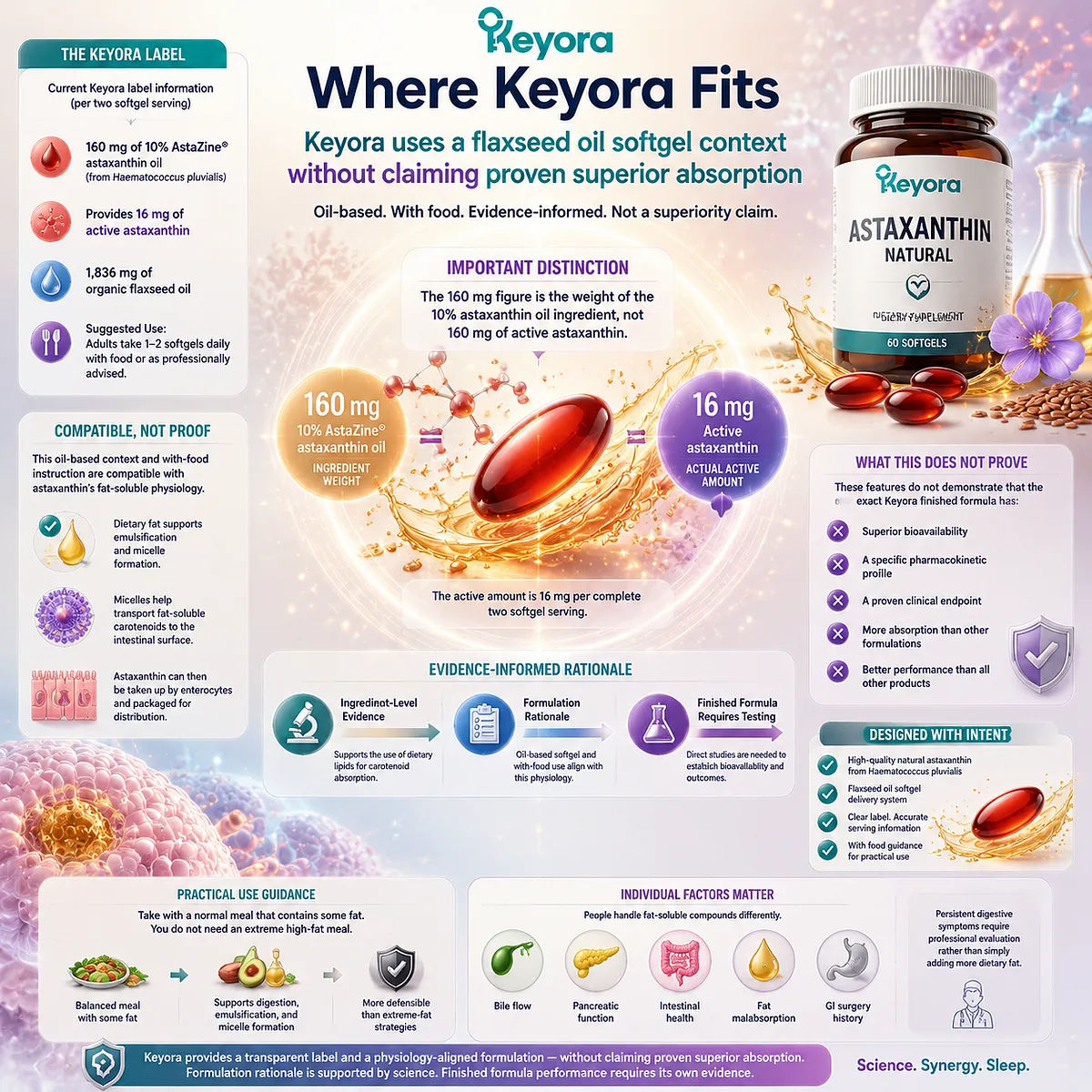
Keyora uses a flaxseed oil softgel context without claiming proven superior absorption
The current Keyora label identifies a two softgel serving containing 160 mg of 10% AstaZine astaxanthin oil, providing 16 mg of active astaxanthin from Haematococcus pluvialis. The same serving contains 1,836 mg of organic flaxseed oil, and the label directs adults to take 1 – 2 softgels daily with food or as professionally advised.
The 160 mg figure is the weight of the 10% astaxanthin oil ingredient, not 160 mg of active astaxanthin. The active amount is 16 mg per complete two softgel serving.
This oil based context and with food instruction are compatible with astaxanthin’s fat soluble physiology. They do not prove that the exact Keyora finished formula has superior bioavailability, produces a particular pharmacokinetic profile, or delivers a clinical endpoint. Ingredient level evidence supports the formulation rationale, while the complete formula requires direct testing.
Closing Summary
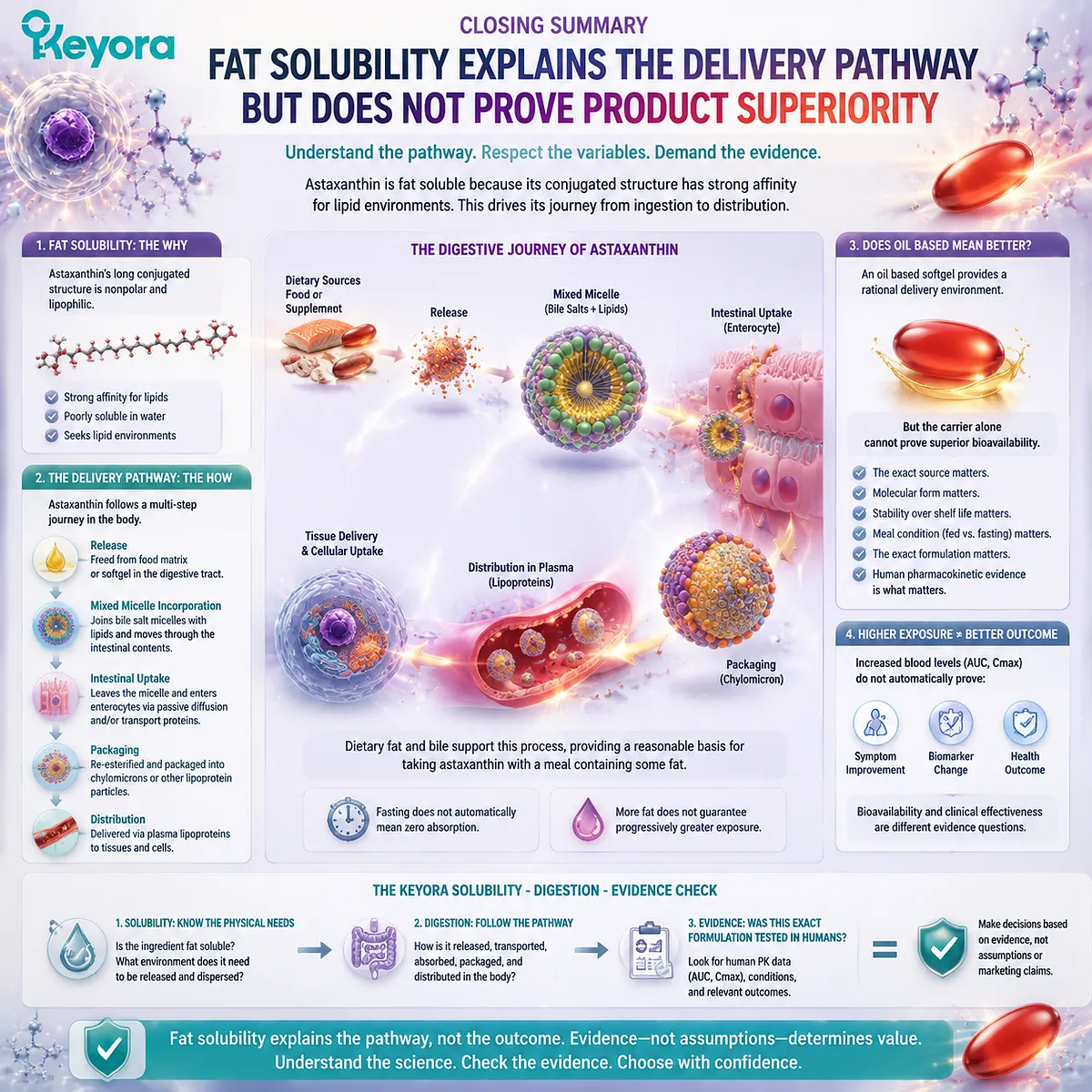
Fat solubility explains the delivery pathway but does not prove product superiority
Astaxanthin is fat soluble because its conjugated structure has strong affinity for lipid environments. This affects how it is released from food or a supplement, incorporated into mixed micelles, absorbed by intestinal cells, packaged into lipid transport particles, and distributed through plasma lipoproteins.
Dietary fat and bile support this process, which gives a reasonable basis for taking astaxanthin with a meal containing some fat. However, fasting does not automatically mean zero absorption, and consuming more fat does not guarantee progressively greater exposure.
An oil based softgel can provide a rational delivery environment, but the carrier alone cannot prove superior bioavailability. The exact source, molecular form, stability, meal condition, formulation, and human pharmacokinetic evidence still matter. Higher blood exposure also does not automatically prove a better clinical outcome.
Use the Keyora Solubility – Digestion – Evidence Check. Identify the ingredient’s physical needs, follow the digestive pathway, and then ask whether the exact formulation was actually tested.
This article is for educational and informational purposes only. It does not provide medical advice, diagnosis, treatment, cure, prevention, disease outcome claims, hormone restoration claims, fertility outcome claims, or formula-specific clinical efficacy claims.