
Why Is ALA Plus Astaxanthin More Complete Than Either Nutrient Alone?
Keyora Research Q&A Library
This is part of the Keyora Research Q&A Series, derived from Keyora Astaxanthin Research Journal Series.
Within the Keyora Astaxanthin Researcn framework, this Q&A translates complex astaxanthin biology into reader-friendly, evidence-bound answers, focusing on natural astaxanthin identity, molecular structure, antioxidant and redox mechanisms, membrane lipid interaction, mitochondrial resilience, inflammatory signaling pathways, human evidence interpretation, and the scientific principles behind responsible supplementation.
First published by Keyora Research Journal: www.keyorahealth.com
Direct Answer
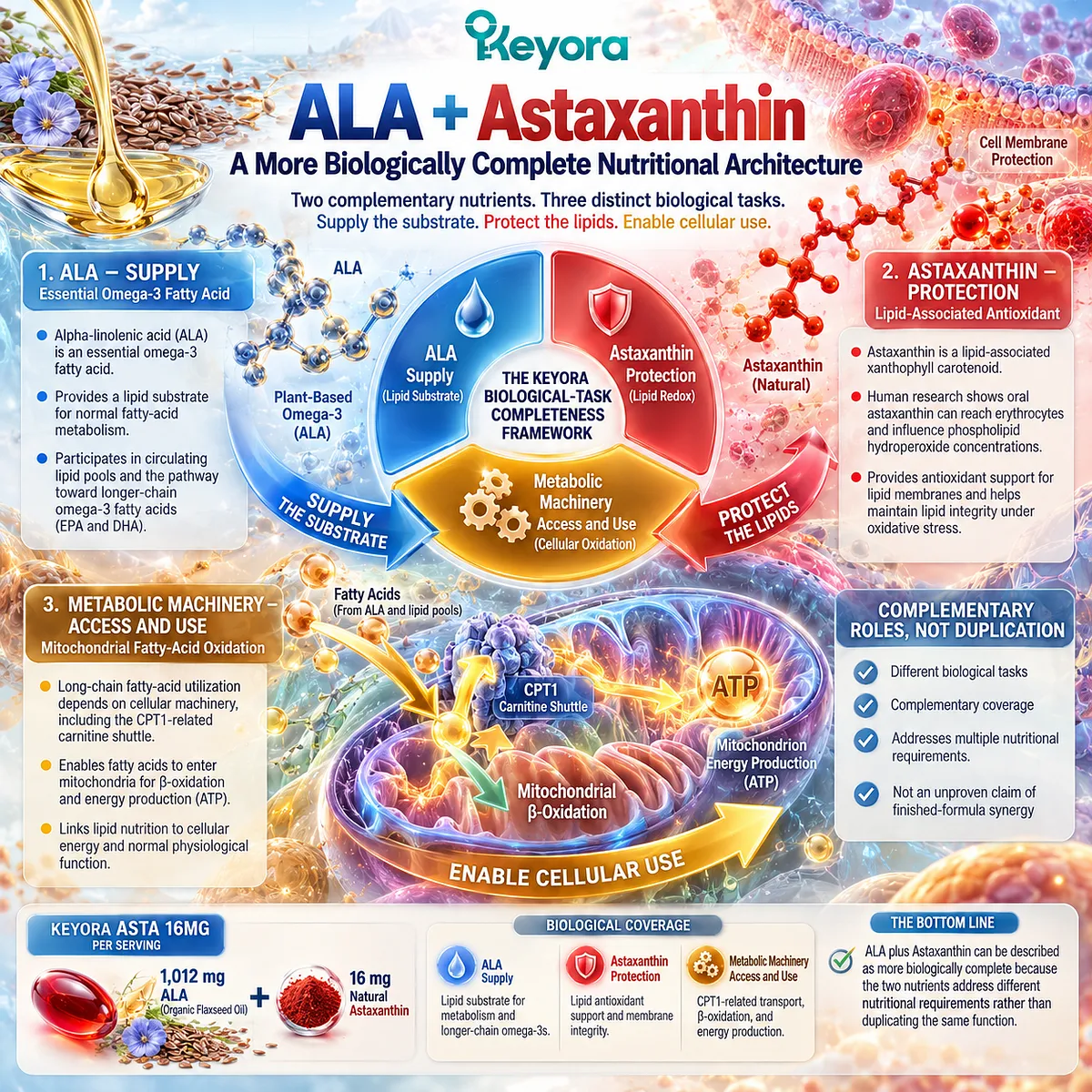
ALA plus Astaxanthin can be described as more biologically complete because the two nutrients address different nutritional requirements rather than duplicating the same function.
Alpha-linolenic acid, or ALA, is an essential omega-3 fatty acid.
It provides a lipid substrate that participates in normal human fatty-acid metabolism, including circulating lipid pools, oxidation, and the metabolic pathway toward longer-chain omega-3 fatty acids.
Astaxanthin performs a different job.
It is a lipid-associated xanthophyll carotenoid with antioxidant activity.
Human research has shown that oral Astaxanthin can reach erythrocytes and influence phospholipid hydroperoxide concentrations, providing evidence relevant to lipid-associated redox biology.
When fatty acids are directed toward mitochondrial oxidation, another requirement appears: metabolic access.
Long-chain fatty-acid utilization depends on cellular machinery, including the CPT1-related carnitine shuttle.
This produces the Keyora Biological-Task Completeness Framework:
-
ALA – Supply
-
Astaxanthin – Protection
-
Metabolic Machinery – Access and Use
The phrase more complete therefore does not mean that ALA plus Astaxanthin has been clinically proven to outperform either nutrient alone.
It means the nutritional architecture addresses several distinct biological tasks instead of expecting one ingredient to perform every task.
A full serving of Keyora Asta 16MG contains 1,012 mg ALA from organic flaxseed oil together with 16 mg Natural Astaxanthin.
The significance of that combination lies in complementary biological coverage, not in an unproven claim of finished-formula synergy.
What Does ALA Contribute That Astaxanthin Cannot?
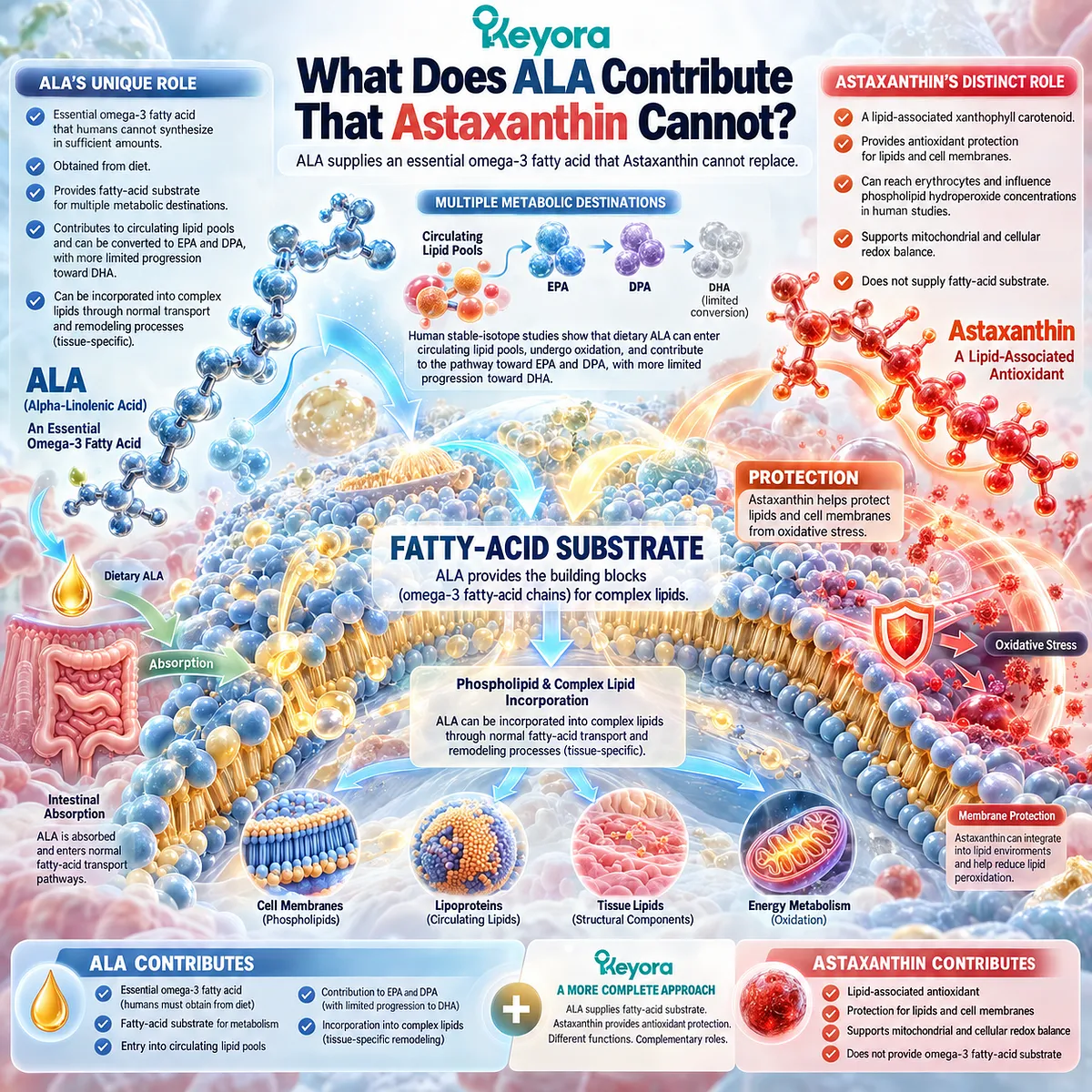
ALA supplies an essential omega-3 fatty acid that Astaxanthin cannot replace
ALA has its own nutritional identity.
Humans cannot synthesize the omega-3 structure of ALA from other fatty-acid families in sufficient fashion and therefore must obtain it through diet.
After absorption, ALA can participate in several metabolic destinations.
Human stable-isotope studies have shown that dietary ALA can enter circulating lipid pools, undergo oxidation, and contribute to the pathway toward EPA and DPA, with more limited progression toward DHA.
This means ALA is not simply a liquid surrounding another supplement ingredient.
It is itself a nutrient.
ALA may also become incorporated into complex lipids through normal fatty-acid transport and remodeling processes. Those processes are regulated and tissue-specific, so dietary ALA should not be described as directly traveling to a damaged membrane and repairing it.
The important point is more fundamental:
ALA supplies fatty-acid substrate.
Astaxanthin cannot perform that task.
Astaxanthin is not an omega-3 fatty acid. It cannot replace ALA in essential fatty-acid nutrition, become the fatty-acid tail of a phospholipid, or serve as the nutritional precursor that ALA provides within omega-3 metabolism.
This is the first reason the combination is broader than Astaxanthin alone.
Adding ALA does not merely add another antioxidant.
It adds a different category of nutritional function.
What Does Astaxanthin Contribute That ALA Cannot?
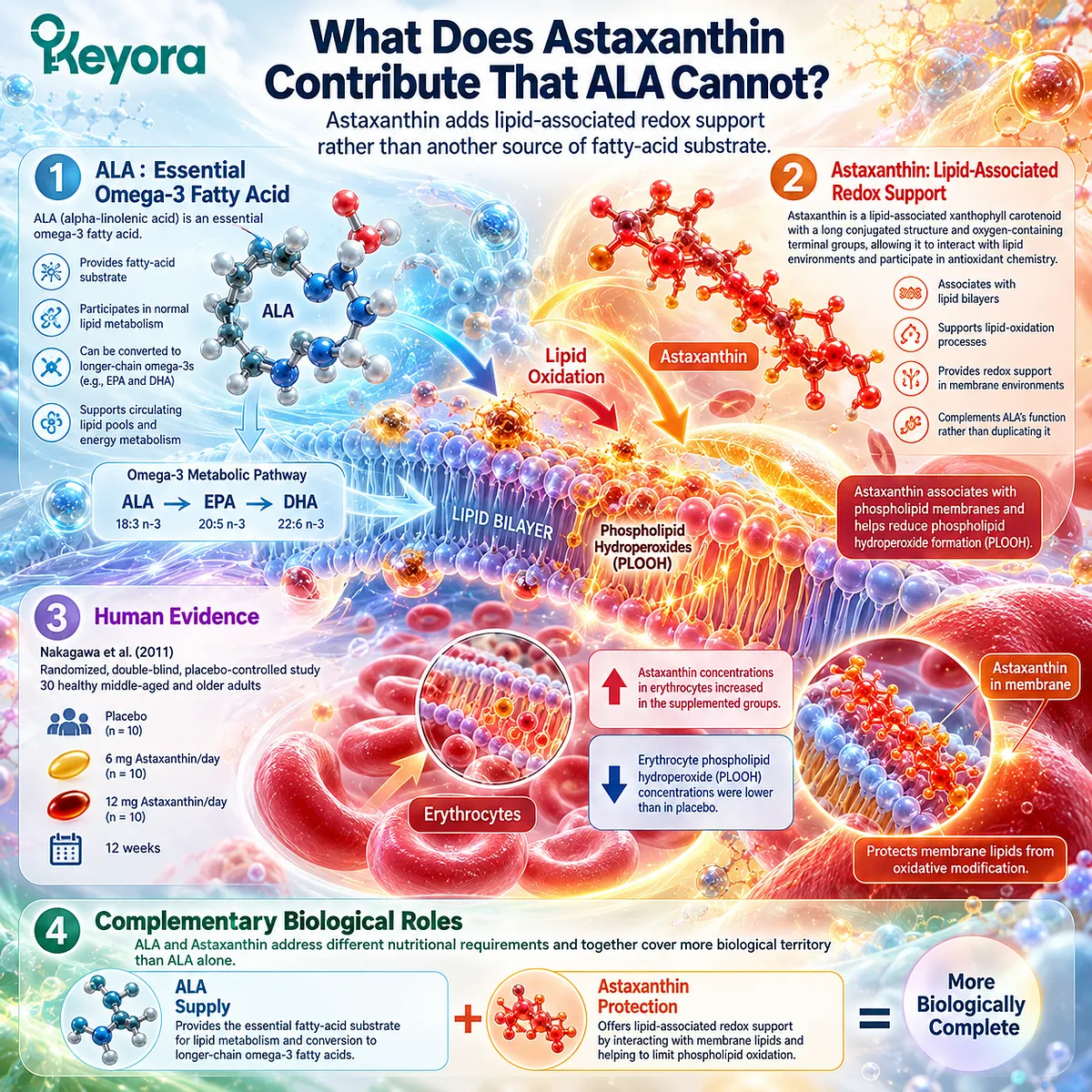
Astaxanthin adds lipid-associated redox support rather than another source of fatty-acid substrate
Astaxanthin occupies a different nutritional role.
Its long conjugated structure and oxygen-containing terminal groups allow it to interact with lipid environments and participate in antioxidant chemistry.
Experimental membrane research supports its ability to associate with lipid bilayers and influence lipid-oxidation processes.
Human evidence provides an additional layer.
In the 2011 randomized, double-blind, placebo-controlled study by Nakagawa and colleagues, 30 healthy middle-aged and older adults received placebo, 6 mg Astaxanthin per day, or 12 mg per day for 12 weeks.
Astaxanthin concentrations increased in erythrocytes in the supplemented groups, while erythrocyte phospholipid hydroperoxide concentrations were lower than in placebo.
Phospholipid hydroperoxides, often abbreviated PLOOH, are oxidized phospholipid products. Their measurement provides a way to examine phospholipid oxidative status in a human cellular compartment.
ALA does not perform the same nutritional task simply because it is a polyunsaturated fatty acid.
In fact, the multiple double bonds that make ALA a PUFA also make oxidative chemistry relevant to its biological environment.
The correct interpretation is not that ALA is dangerous and requires Astaxanthin for safety.
Instead:
-
ALA contributes substrate.
-
Astaxanthin contributes a separate redox-support function.
This is the second reason the combination covers more biological territory than ALA alone.
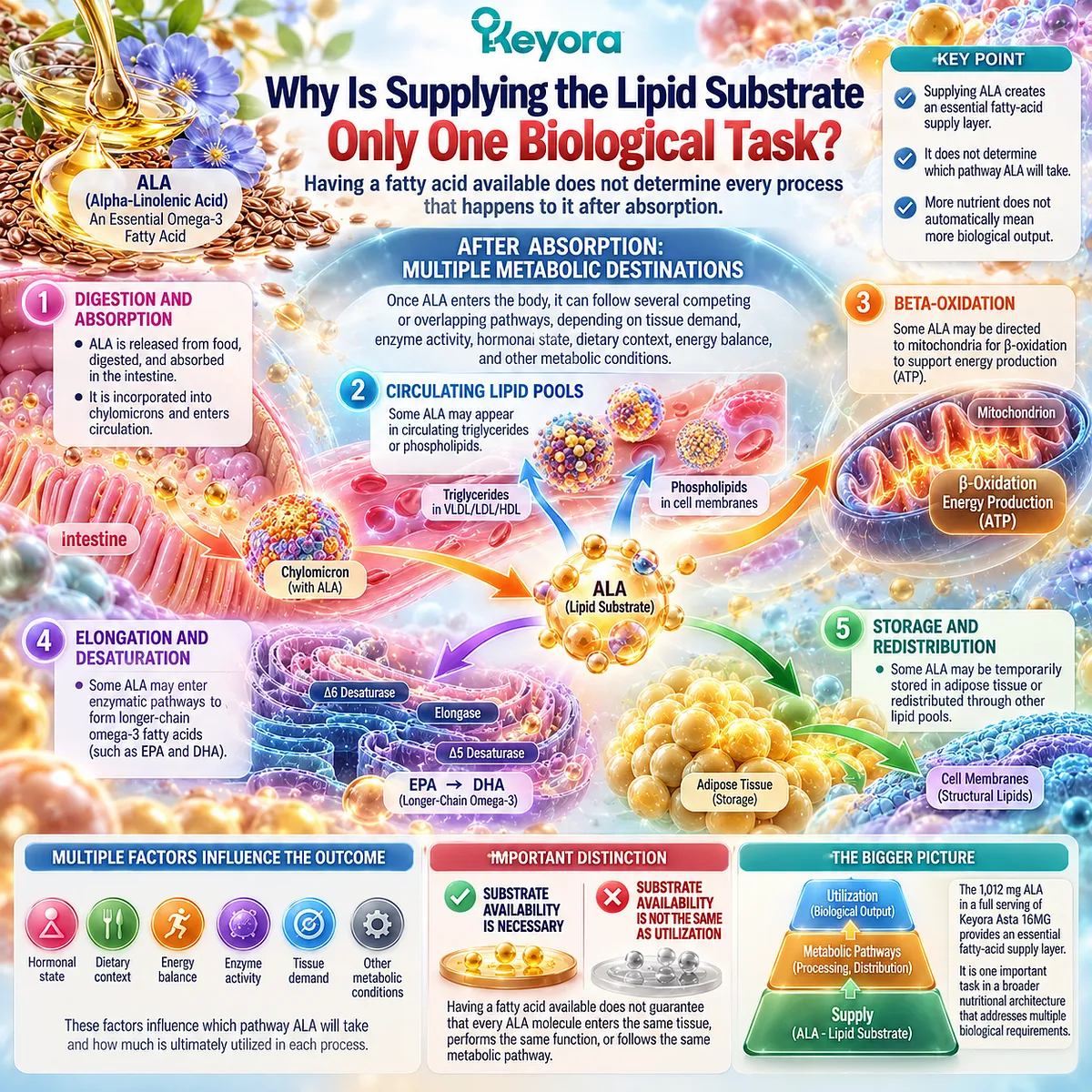
Why Is Supplying the Lipid Substrate Only One Biological Task?
Having a fatty acid available does not determine every process that happens to it after absorption
Nutrition is often discussed as though supplying more of a nutrient automatically determines what the body will do with it.
Fatty-acid metabolism is more complex.
-
Once ALA has been digested and absorbed, it can enter several competing or overlapping metabolic pathways.
-
Some ALA may appear in circulating triglycerides or phospholipids.
-
Some may undergo beta-oxidation.
-
Some may enter elongation and desaturation pathways.
-
Some may be temporarily stored or redistributed through other lipid pools.
These routes depend on tissue demand, enzyme activity, hormonal state, dietary context, energy balance, and other metabolic conditions.
This means substrate availability is necessary, but substrate availability is not the same as utilization.
The distinction is important for understanding the Keyora formula.
The 1,012 mg ALA in a full serving creates an essential fatty-acid supply layer.
It does not guarantee that every ALA molecule enters the same tissue, performs the same function, or follows the same metabolic pathway.
That is why the concept of biological-task completeness begins with supply but cannot end there.
A nutritional architecture can provide material without directly controlling every downstream step.
Recognizing that distinction prevents a common overstatement:
More nutrient does not automatically mean more biological output.
What matters is which biological requirements are being addressed and which remain dependent on the body’s own regulatory systems.
Why Does Redox Protection Add a Different Layer?
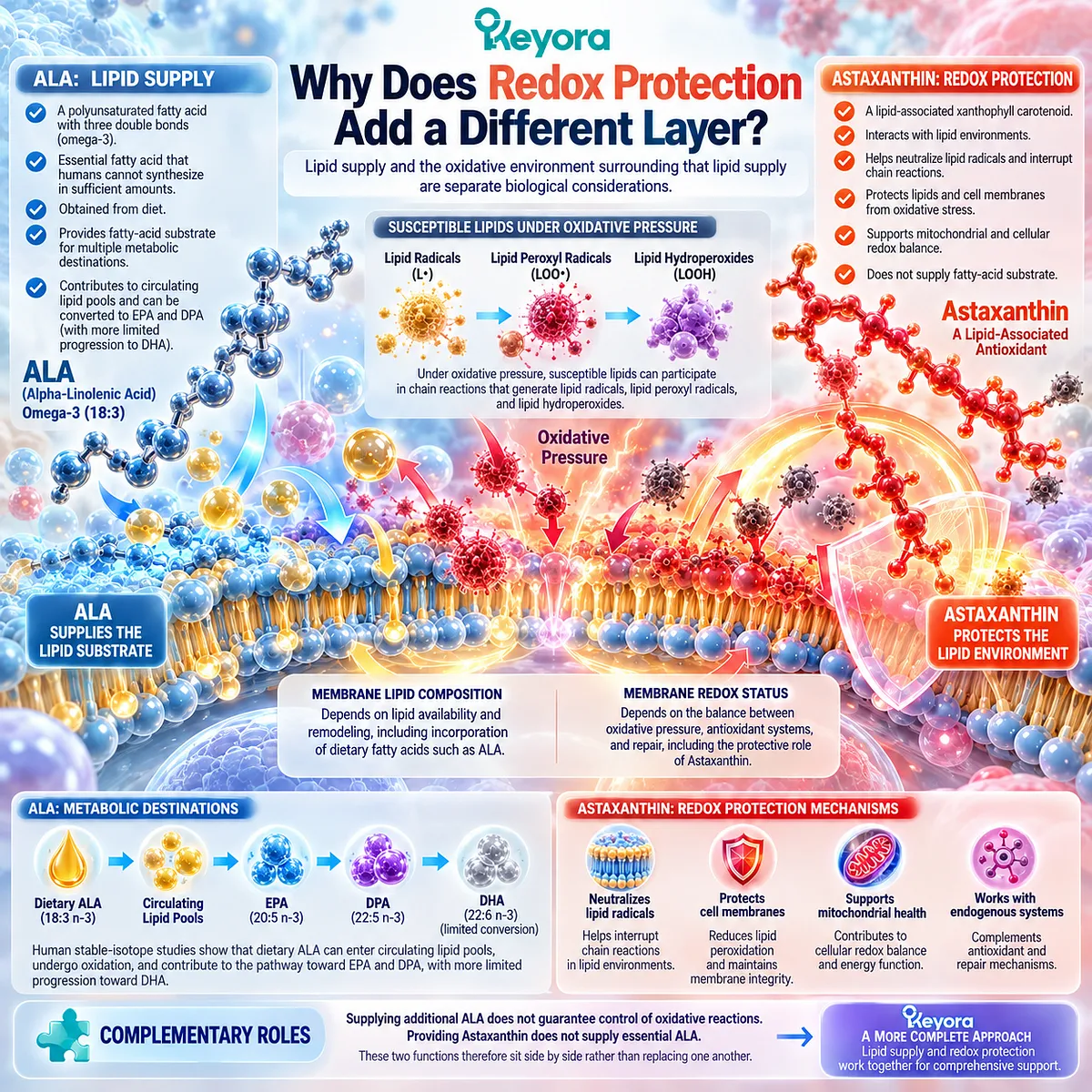
Lipid supply and the oxidative environment surrounding that lipid supply are separate biological considerations
ALA is a polyunsaturated fatty acid with three double bonds.
That unsaturation contributes to its chemical identity and biological behavior, but it also makes lipid oxidation scientifically relevant.
Under oxidative pressure, susceptible lipids can participate in chain reactions that generate lipid radicals, lipid peroxyl radicals, and lipid hydroperoxides.
This does not mean normal ALA intake automatically increases harmful oxidation.
Human omega-3 research shows variable effects on lipid-peroxidation markers, and normal physiology contains multiple antioxidant and repair systems.
The important point is that redox control is a different biological task from fatty-acid provision.
Supplying additional ALA does not itself guarantee control of excessive oxidative reactions.
Likewise, providing Astaxanthin does not supply essential ALA.
These two functions therefore sit side by side rather than replacing one another.
This distinction also applies to cell membranes.
Membrane lipid composition depends on lipid availability and remodeling, while membrane redox status depends on the balance between oxidative pressure, antioxidant systems, and repair.
A nutrient can contribute to one side of that equation without automatically solving the other.
This is why Keyora interprets ALA and Astaxanthin as complementary rather than interchangeable.
Why Does Metabolic Access Still Matter After Supply and Protection?
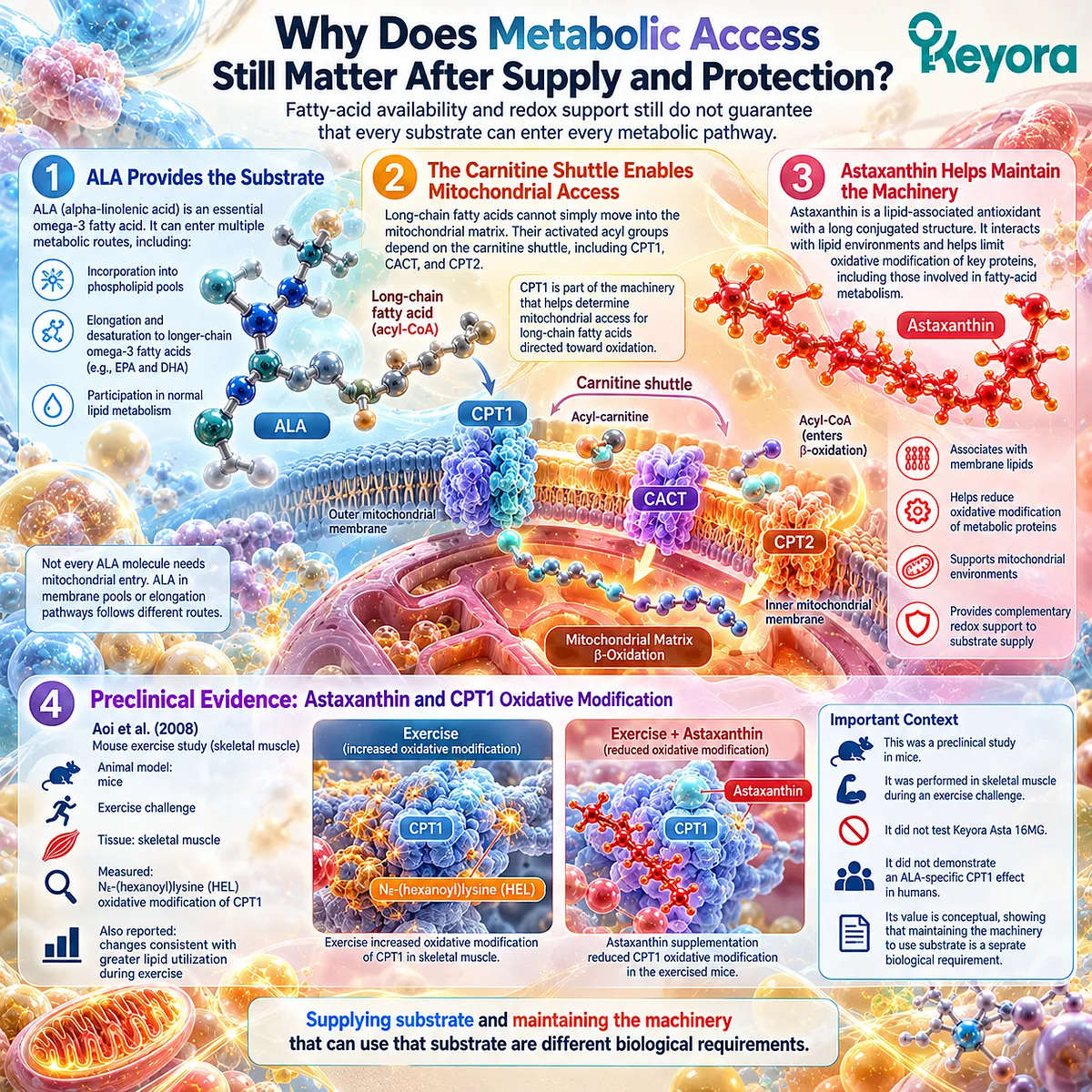
Fatty-acid availability and redox support still do not guarantee that every substrate can enter every metabolic pathway
A third layer appears when fatty acids are directed toward mitochondrial oxidation.
Long-chain fatty acids cannot simply move into the mitochondrial matrix and begin beta-oxidation.
Their activated acyl groups depend on the carnitine shuttle, including CPT1, CACT, and CPT2.
CPT1 is therefore part of the machinery that helps determine mitochondrial access for long-chain fatty acids directed toward oxidation.
This does not mean every ALA molecule requires CPT1.
ALA entering phospholipid pools or elongation and desaturation pathways is following a different metabolic route.
CPT1 becomes relevant specifically when long-chain fatty acids are routed toward mitochondrial oxidation.
Preclinical research provides a useful mechanistic example.
In a 2008 mouse exercise study, Aoi and colleagues found that exercise increased oxidative modification of skeletal-muscle CPT1, assessed through Nε-(hexanoyl)lysine, or HEL, while Astaxanthin supplementation reduced that modification.
The study also reported changes consistent with greater lipid utilization during exercise.
This evidence remains preclinical.
It was performed in mice, in skeletal muscle, during an exercise challenge. It did not test Keyora Asta 16MG and did not demonstrate an ALA-specific CPT1 effect in humans.
Its value is conceptual:
Supplying substrate and maintaining the machinery that can use that substrate are different biological requirements.
What Does the Evidence Support for Each Layer?
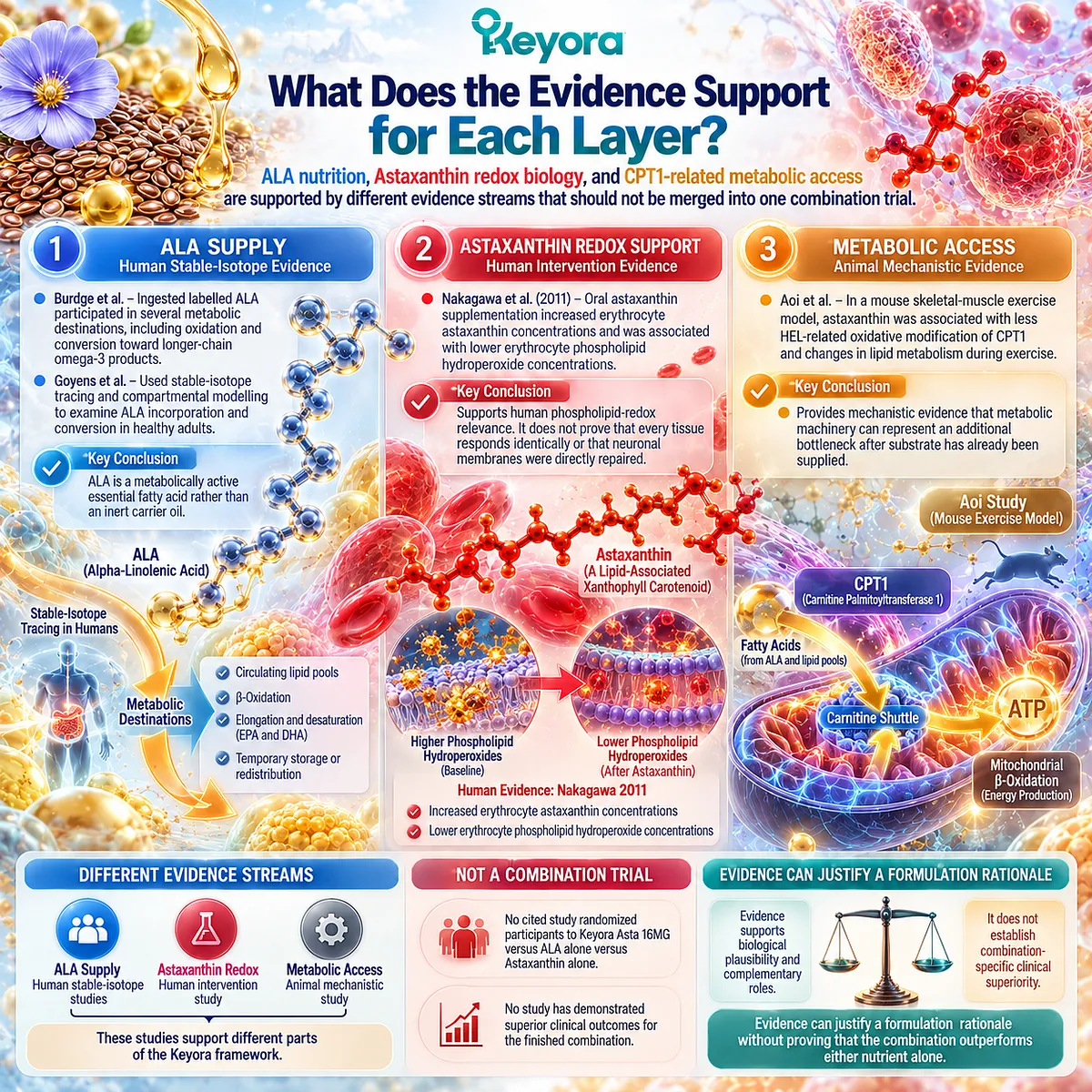
ALA nutrition, Astaxanthin redox biology, and CPT1-related metabolic access are supported by different evidence streams that should not be merged into one combination trial
The evidence behind the Keyora framework comes from several research layers.
For ALA supply, human stable-isotope studies provide direct metabolic evidence.
Burdge and colleagues studied labelled ALA in healthy young men and showed that ingested ALA participated in several metabolic destinations, including oxidation and conversion toward longer-chain omega-3 products.
Goyens and colleagues later used stable-isotope tracing and compartmental modelling to examine ALA incorporation and conversion in healthy adults.
These studies support the conclusion that ALA is a metabolically active essential fatty acid rather than an inert carrier oil.
For Astaxanthin redox support, Nakagawa 2011 provides direct human evidence.
Oral Astaxanthin supplementation increased erythrocyte Astaxanthin concentrations and was associated with lower erythrocyte phospholipid hydroperoxide concentrations.
This supports human phospholipid-redox relevance.
It does not prove that every tissue responds identically or that neuronal membranes were directly repaired.
For metabolic access, the Aoi study provides mechanistic evidence from a mouse skeletal-muscle exercise model.
Astaxanthin was associated with less HEL-related oxidative modification of CPT1 and changes in lipid metabolism during exercise.
That study helps explain why metabolic machinery can represent an additional bottleneck after substrate has already been supplied.
These evidence streams support different parts of the framework.
They do not collectively become a clinical trial of ALA plus Astaxanthin.
No cited study randomized participants to Keyora Asta 16MG versus ALA alone versus Astaxanthin alone and demonstrated superior clinical outcomes for the finished combination.
That distinction is essential.
Evidence can justify a formulation rationale without establishing combination-specific clinical superiority.
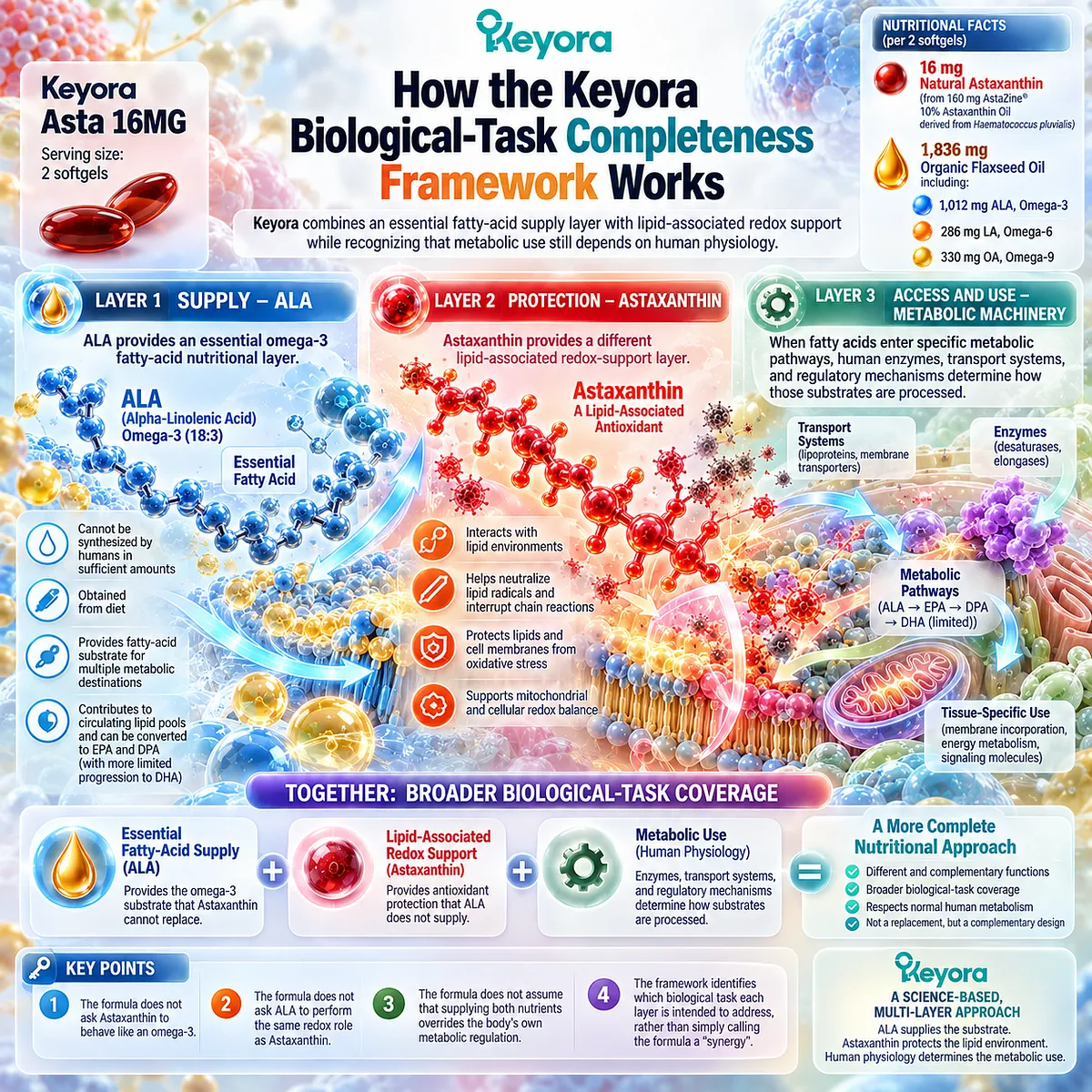
How the Keyora Biological-Task Completeness Framework Works
Keyora combines an essential fatty-acid supply layer with lipid-associated redox support while recognizing that metabolic use still depends on human physiology
A full serving of Keyora Asta 16MG is two softgels.
It provides 16 mg Natural Astaxanthin, supplied by 160 mg AstaZine® 10% Astaxanthin Oil derived from Haematococcus pluvialis.
The same serving provides 1,836 mg Organic Flaxseed Oil, including:
-
1,012 mg ALA, Omega-3
-
286 mg LA, Omega-6
-
330 mg OA, Omega-9
For the Biological-Task Completeness Framework, the central relationship is between the 1,012 mg ALA and the 16 mg Natural Astaxanthin.
SUPPLY – ALA
ALA provides an essential omega-3 fatty-acid nutritional layer.
PROTECTION – Astaxanthin
Astaxanthin provides a different lipid-associated redox-support layer.
ACCESS AND USE – Metabolic Machinery
When fatty acids enter specific metabolic pathways, human enzymes, transport systems, and regulatory mechanisms determine how those substrates are processed.
Together, these layers create broader biological-task coverage.
The formula does not ask Astaxanthin to behave like an omega-3.
It does not ask ALA to perform the same redox role as Astaxanthin.
And it does not assume that supplying both nutrients overrides the body’s own metabolic regulation.
This is why the framework is more useful than simply calling the formula a “synergy.”
It identifies which biological task each layer is intended to address.
What Does “More Complete” Actually Mean?
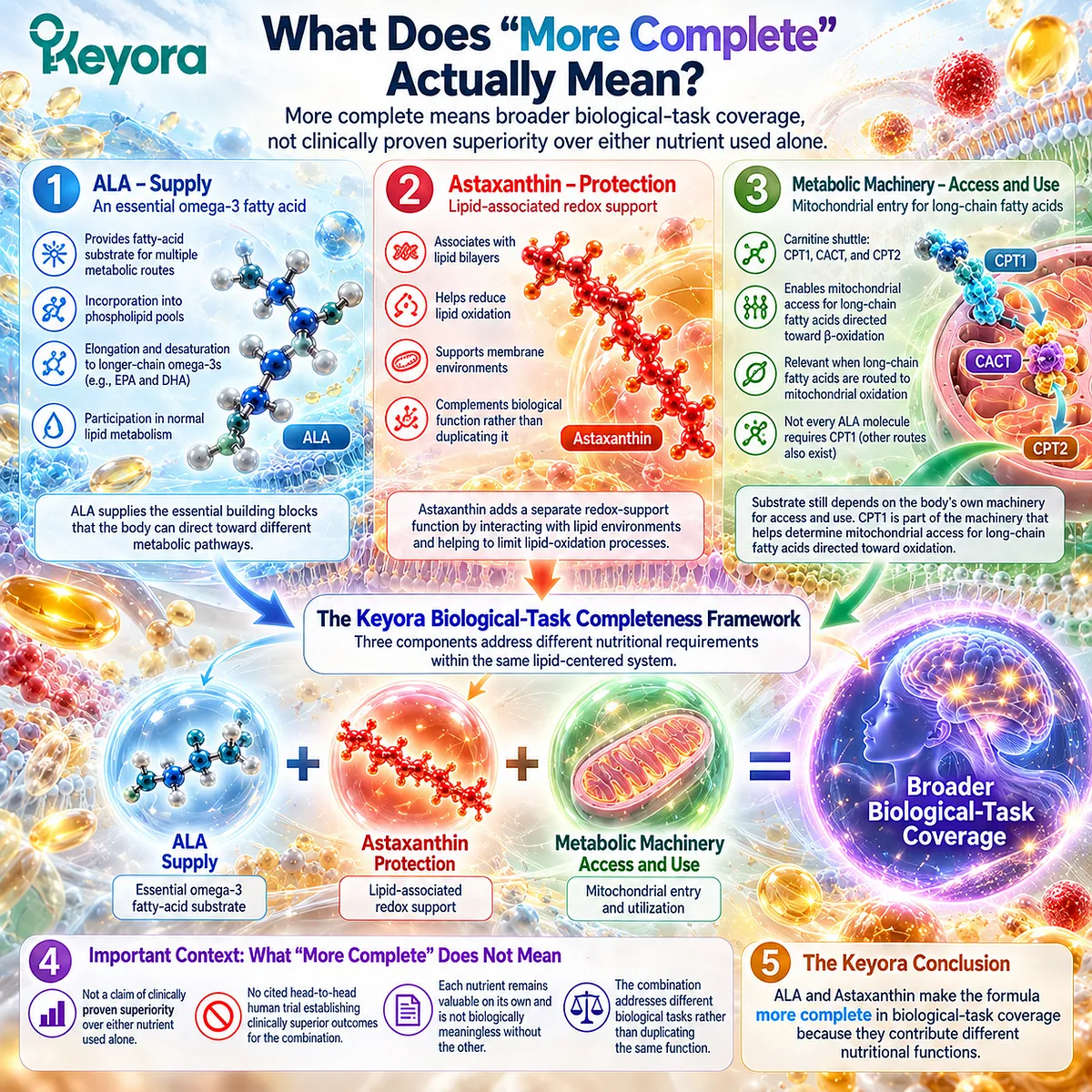
More complete means broader biological-task coverage, not clinically proven superiority over either nutrient used alone
The phrase “more complete” needs a precise definition.
Within the Keyora Biological-Task Completeness Framework, it describes the number of different biological requirements addressed by the nutritional architecture.
ALA alone provides essential omega-3 nutrition.
Astaxanthin alone provides lipid-associated redox support.
Neither nutrient becomes biologically meaningless when used without the other.
When combined, however, the formula addresses two different nutritional tasks within the same lipid-centered system.
A wider metabolic interpretation adds a third consideration: substrate still depends on the body’s own machinery for access and use.
This produces the central Keyora equation:
-
ALA – Supply
-
Astaxanthin – Protection
-
Metabolic Machinery – Access and Use
=
Broader Biological-Task Coverage
That equation is a framework for understanding nutrient roles.
It is not a claim that the finished combination has demonstrated a larger clinical effect than either ingredient alone.
There is currently no cited head-to-head human trial establishing that Keyora Asta 16MG produces clinically superior cognitive, membrane, metabolic, or other outcomes because ALA and Astaxanthin are combined.
The evidence instead supports a more disciplined conclusion:
ALA and Astaxanthin make the formula more complete in biological-task coverage because they contribute different nutritional functions.
This distinction is central to the Keyora approach.
A multi-nutrient formula does not need every ingredient to perform the same job.
Its value can come from addressing different points in the same biological system while preserving clear evidence boundaries for each nutrient.
That is what “more complete” means here.
Not stronger by assumption.
Not synergistic by marketing language.
More complete because more necessary biological tasks are being addressed.
This article is for educational and informational purposes only. It does not provide medical advice, diagnosis, treatment, cure, prevention, disease outcome claims, hormone restoration claims, fertility outcome claims, or formula-specific clinical efficacy claims.