
Why Does Your Astaxanthin Capsule Need Oil?
Keyora Research Q&A Library
This is part of the Keyora Research Q&A Series, derived from Keyora Astaxanthin Research Journal Series.
Within the Keyora Astaxanthin Researcn framework, this Q&A translates complex astaxanthin biology into reader-friendly, evidence-bound answers, focusing on natural astaxanthin identity, molecular structure, antioxidant and redox mechanisms, membrane lipid interaction, mitochondrial resilience, inflammatory signaling pathways, human evidence interpretation, and the scientific principles behind responsible supplementation.
First published by Keyora Research Journal: www.keyorahealth.com
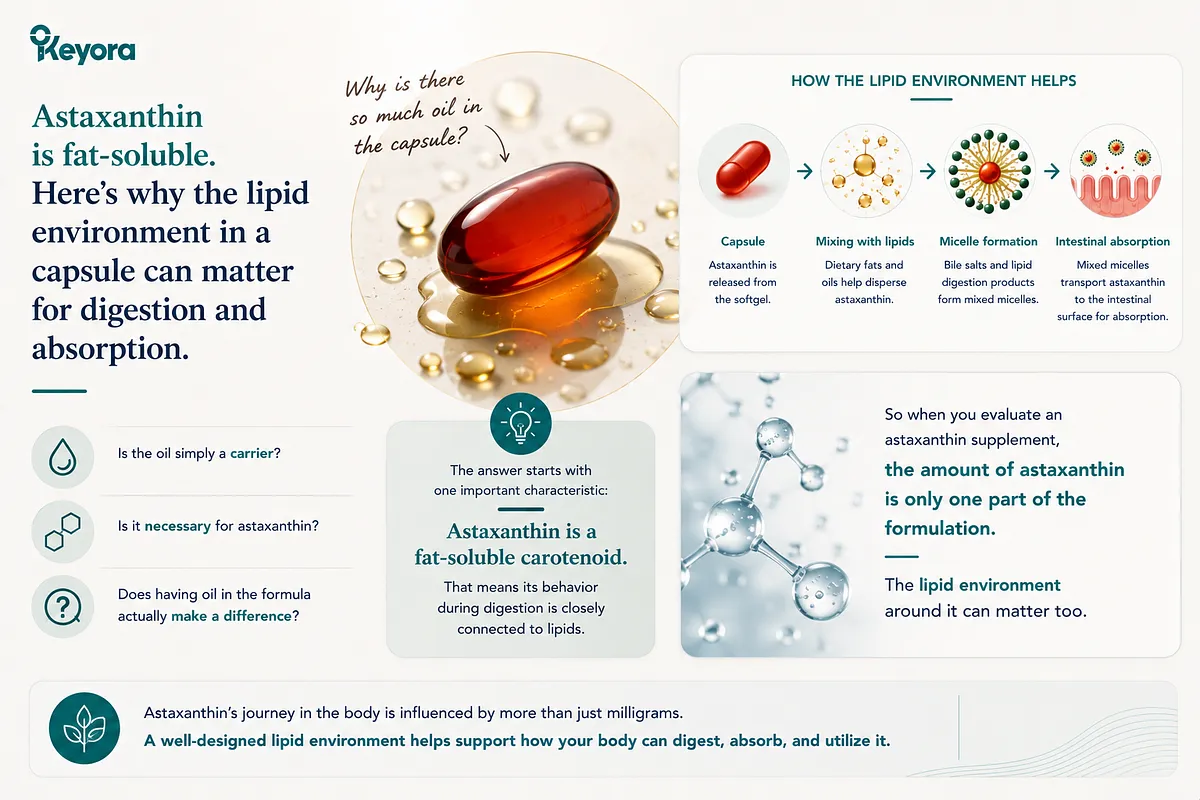
If you look at an astaxanthin softgel, you may notice something that seems unusual:
Why is there so much oil in the capsule?
Is the oil simply a carrier?
Is it necessary for astaxanthin?
And does having oil in the formula actually make a difference?
The answer starts with one important characteristic of astaxanthin:
Astaxanthin is a fat-soluble carotenoid.
That means its behavior during digestion is closely connected to lipids. So when you evaluate an astaxanthin supplement, the amount of astaxanthin is only one part of the formulation.
The lipid environment around it can matter too.
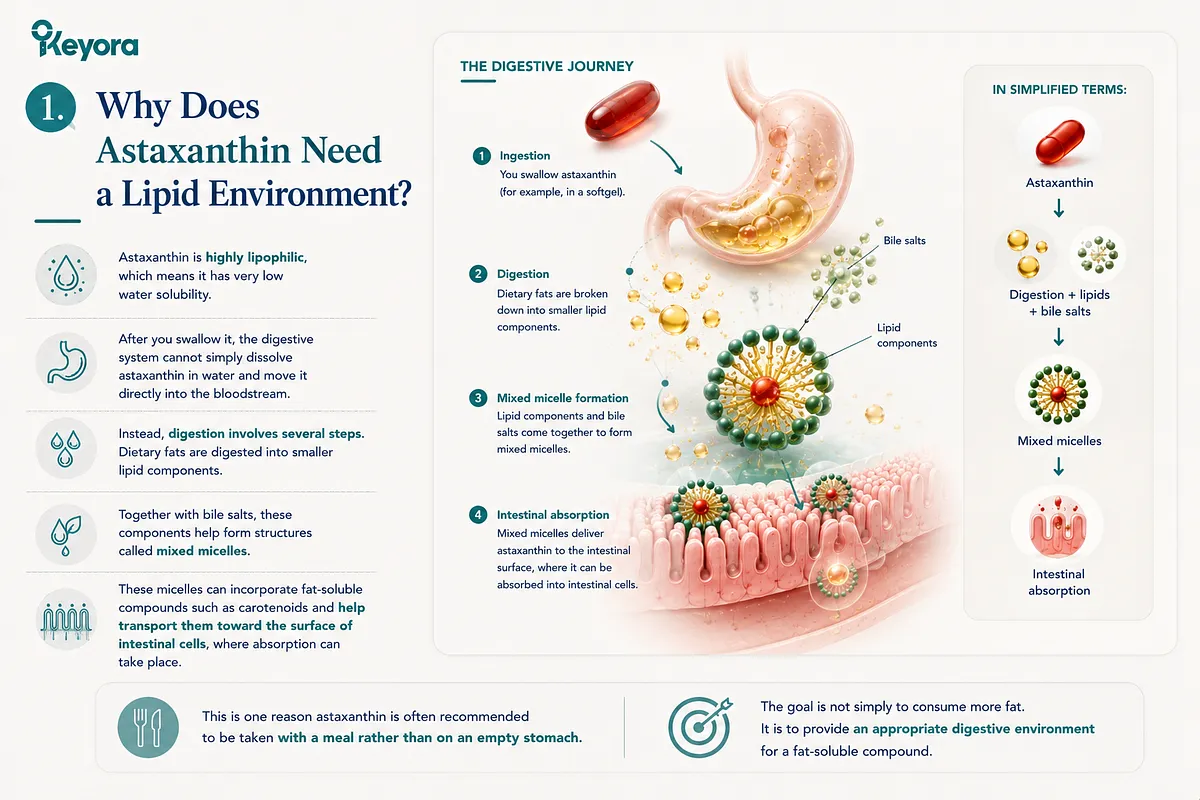
1. Why Does Astaxanthin Need a Lipid Environment?
Astaxanthin is highly lipophilic, which means it has very low water solubility.
After you swallow it, the digestive system cannot simply dissolve astaxanthin in water and move it directly into the bloodstream.
Instead, digestion involves several steps.
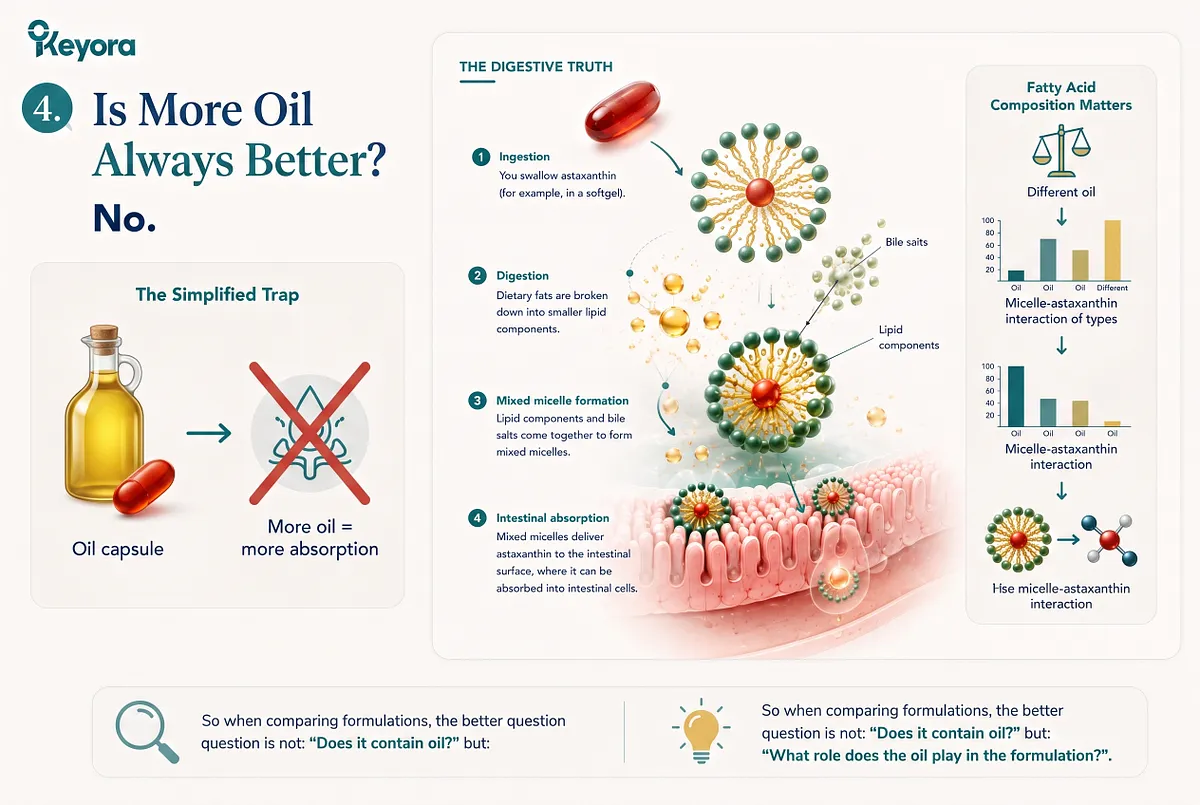
Dietary fats are digested into smaller lipid components. Together with bile salts, these components help form structures called mixed micelles.
These micelles can incorporate fat-soluble compounds such as carotenoids and help transport them toward the surface of intestinal cells, where absorption can take place.
In simplified terms:
Astaxanthin
↓
Digestion + lipids + bile salts
↓
Mixed micelles
↓
Intestinal absorption
This is one reason astaxanthin is often recommended to be taken with a meal rather than on an empty stomach.
The goal is not simply to consume more fat. It is to provide an appropriate digestive environment for a fat-soluble compound.
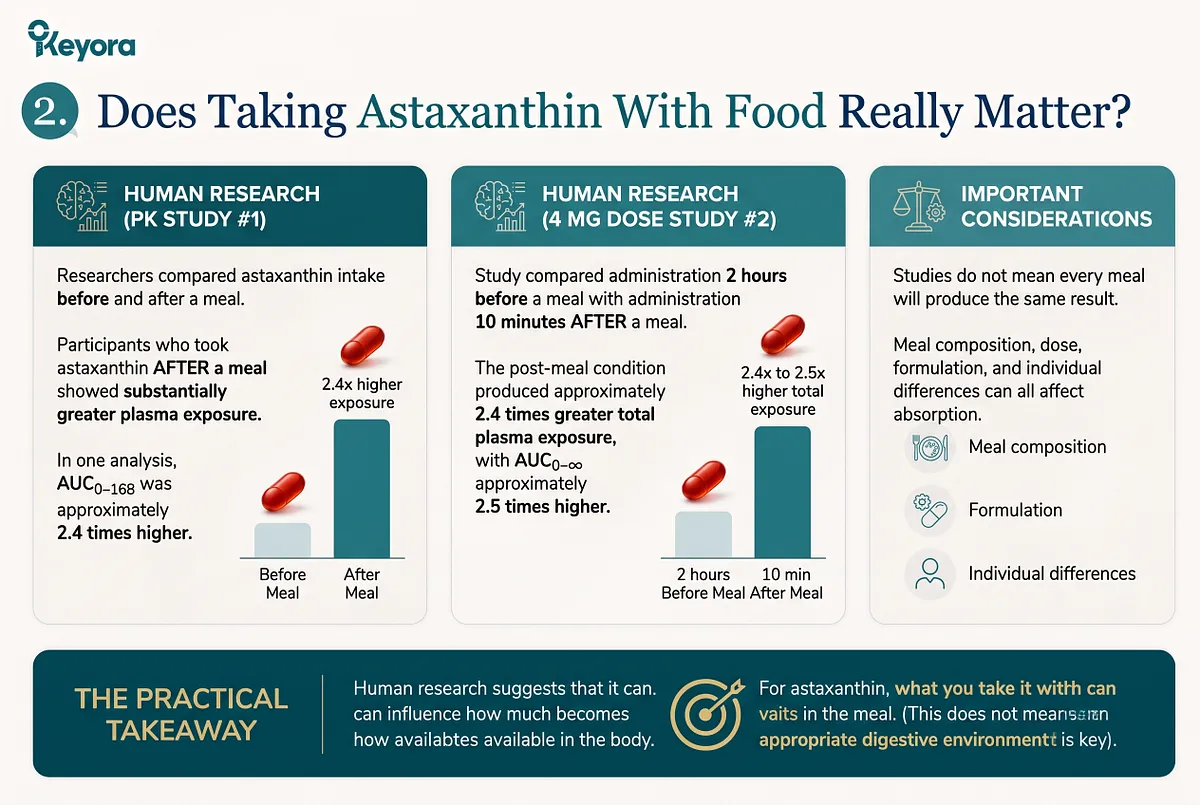
2. Does Taking Astaxanthin With Food Really Matter?
Human research suggests that it can.
In one pharmacokinetic study, researchers compared astaxanthin intake before and after a meal. Participants who took astaxanthin after a meal showed substantially greater plasma exposure than those who took it before the meal. In one analysis, AUC₀–₁₆₈ was approximately 2.4 times higher in the after-meal group.
Another human study used a 4 mg dose and compared administration 2 hours before a meal with administration 10 minutes after a meal. The post-meal condition produced approximately 2.4 times greater total plasma exposure, with AUC₀–∞ approximately 2.5 times higher.
These studies do not mean that every meal will produce exactly the same result. Meal composition, dose, formulation, and individual differences can all affect absorption.
But they demonstrate an important principle:
For astaxanthin, what you take it with can influence how much becomes available in the body.
3. So Why Put Oil Inside the Capsule?
This leads to a more interesting question.
If dietary fat can influence the digestion and absorption of astaxanthin, could the lipid environment be considered when the supplement itself is formulated?
Yes.
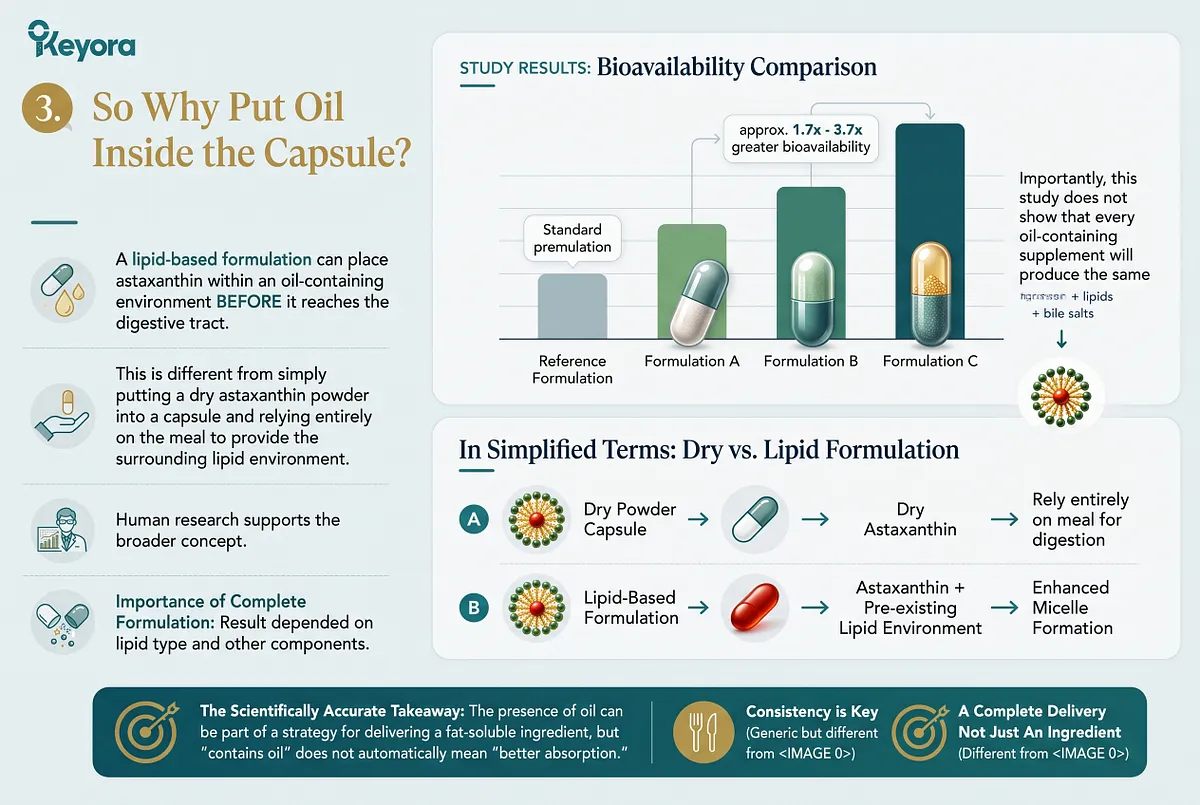
A lipid-based formulation can place astaxanthin within an oil-containing environment before it reaches the digestive tract.
This is different from simply putting a dry astaxanthin powder into a capsule and relying entirely on the meal to provide the surrounding lipid environment.
Human research supports the broader concept.
In a study comparing different astaxanthin formulations, three lipid-based formulations showed approximately 1.7 to 3.7 times greater bioavailability than the reference formulation.
Importantly, this study does not show that every oil-containing supplement will produce the same increase.
The result depended on the complete formulation, including the type of lipid and other formulation components.
So the scientifically accurate takeaway is:
The presence of oil can be part of a strategy for delivering a fat-soluble ingredient, but “contains oil” does not automatically mean “better absorption.”
4. Is More Oil Always Better?
No.
This is an important distinction.
It would be too simple to say:
More oil = more absorption.
The digestive process is more complicated than that.
What matters is how the astaxanthin and lipids behave together during digestion—including dispersion, lipid digestion, interaction with bile salts, micelle formation, and ultimately intestinal uptake.
Recent research also indicates that the fatty-acid composition of a lipid system can influence how astaxanthin interacts with bile-salt micelles. This supports the idea that the type and structure of the lipid environment can matter, rather than simply the total amount of oil present.
So when comparing formulations, the better question is not:
“Does it contain oil?”
but:
“What role does the oil play in the formulation?”
5. Why Choose Flaxseed Oil?
If a lipid environment matters for the digestion and absorption of astaxanthin, the next question is:
What kind of oil is used in the formula?
Not all oils have the same nutritional profile.
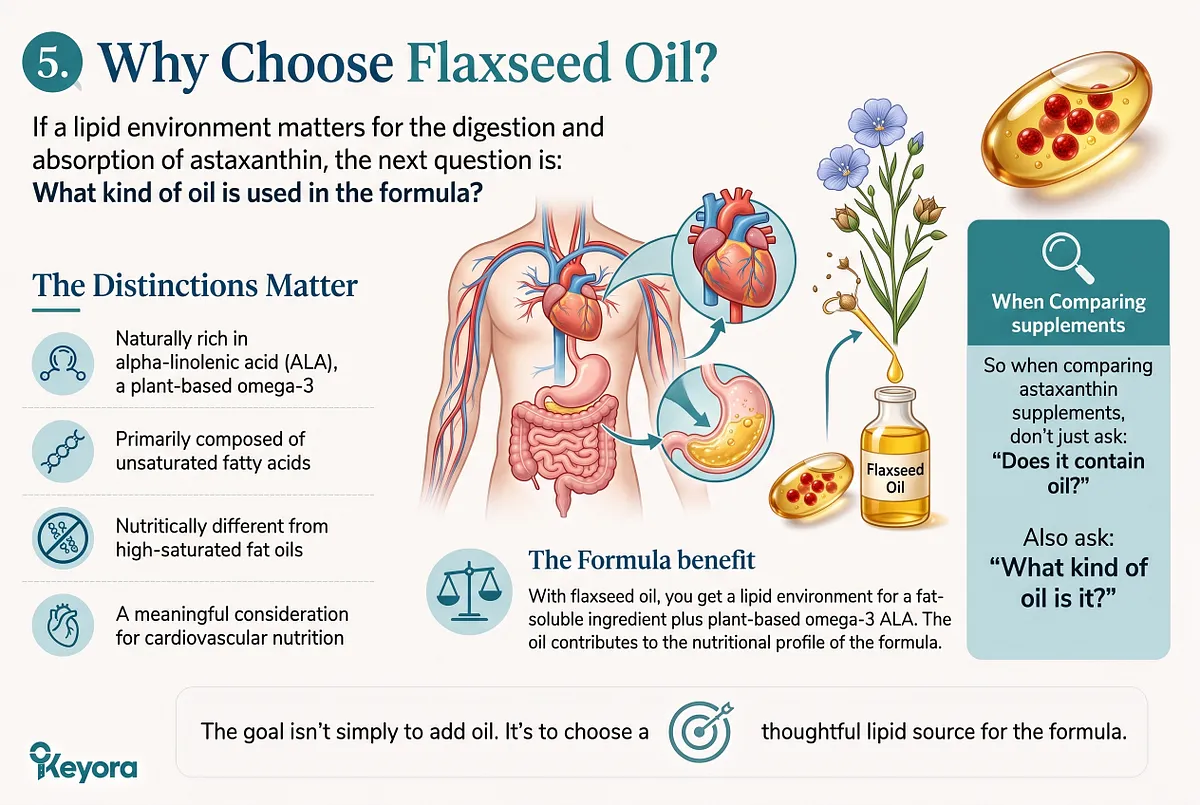
Flaxseed oil is naturally rich in alpha-linolenic acid (ALA), a plant-based omega-3 polyunsaturated fatty acid. It is also primarily composed of unsaturated fatty acids, making it nutritionally different from oils that are higher in saturated fat.
For a supplement taken regularly, this distinction matters. The oil is not simply a carrier for astaxanthin—it also contributes to the nutritional profile of the formula.
For people who pay attention to cardiovascular nutrition, choosing an oil rich in unsaturated fats can be a meaningful consideration as part of an overall balanced diet.
So when comparing astaxanthin supplements, don’t just ask:
“Does it contain oil?”
Also ask:
“What kind of oil is it?”
With flaxseed oil, you get a lipid environment for a fat-soluble ingredient plus plant-based omega-3 ALA.
The goal isn’t simply to add oil. It’s to choose a thoughtful lipid source for the formula.
6. Does an Oil-Based Softgel Mean You Don’t Need to Take It With Food?
Not necessarily.
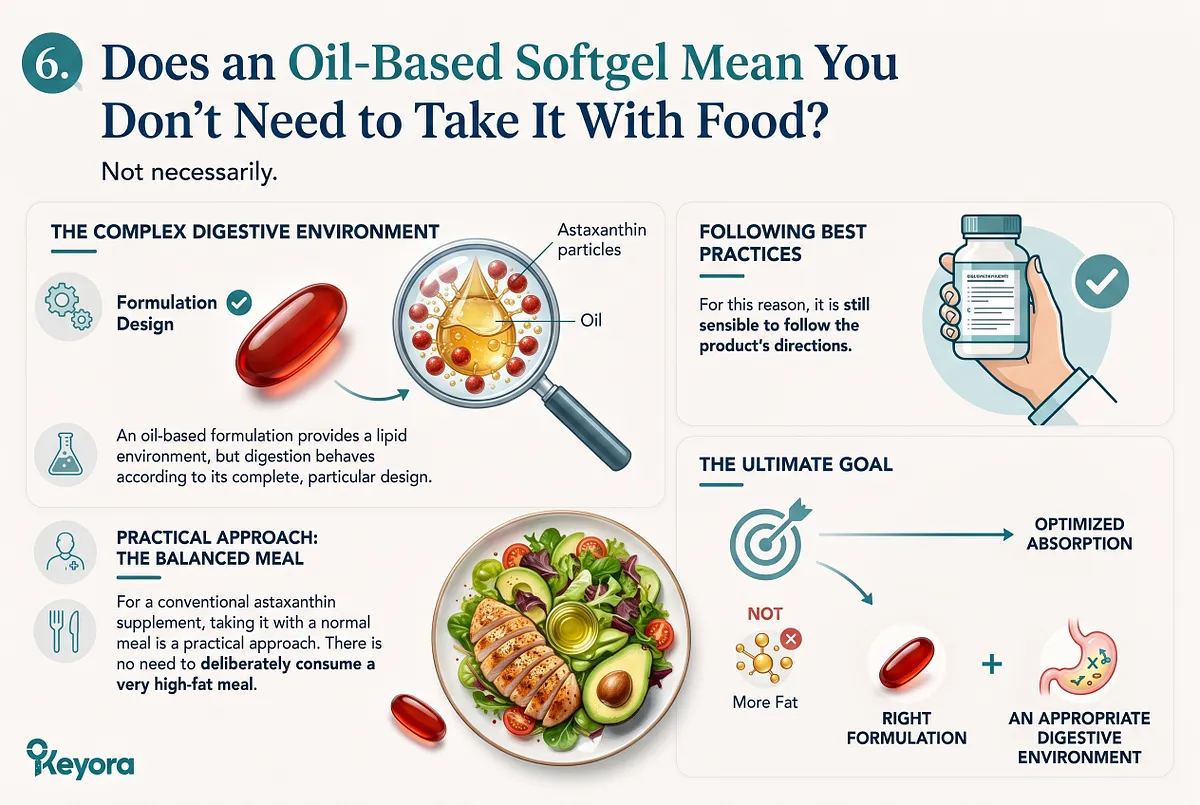
An oil-based formulation already provides a lipid environment, but the way a particular formulation behaves during digestion depends on its complete design.
For this reason, it is still sensible to follow the product’s directions.
For a conventional astaxanthin supplement, taking it with a normal meal is a practical approach. There is no need to deliberately consume a very high-fat meal simply to take astaxanthin.
The goal is not:
More fat.
It is:
The right formulation + an appropriate digestive environment.
7. What Should You Look for on an Astaxanthin Label?
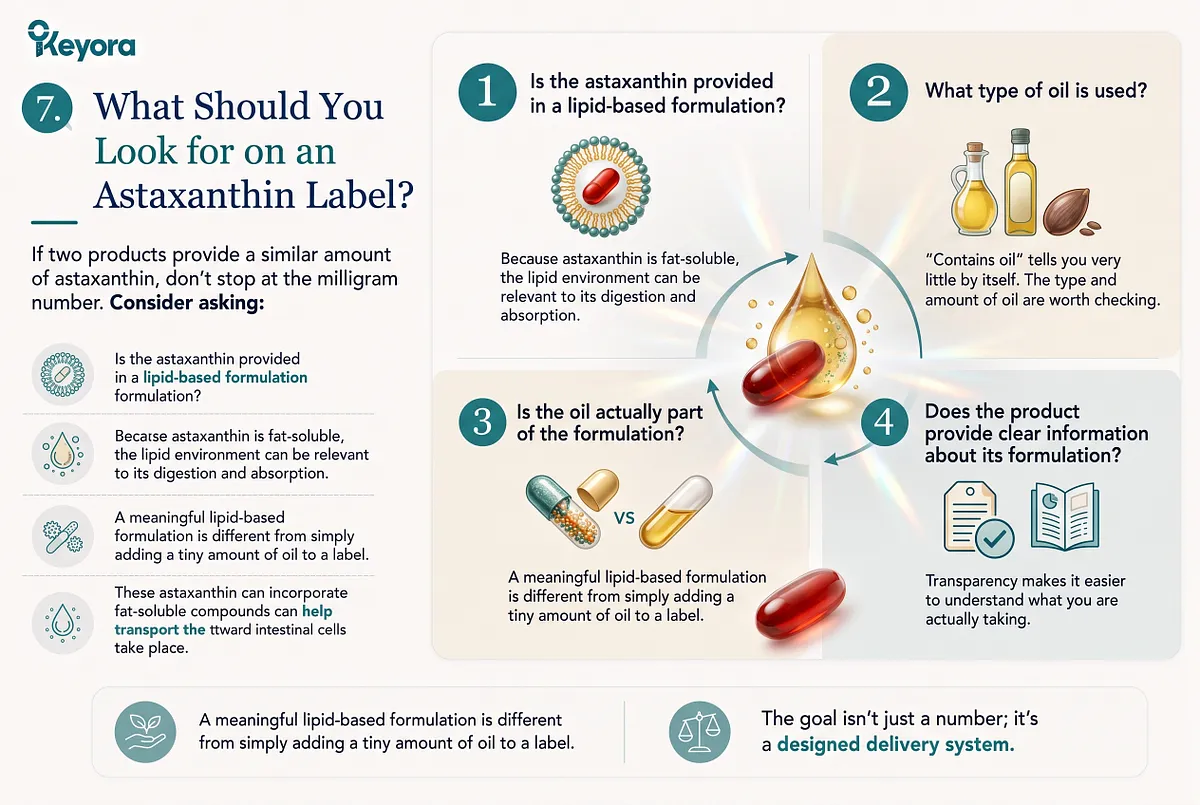
If two products provide a similar amount of astaxanthin, don’t stop at the milligram number.
Consider asking:
1. Is the astaxanthin provided in a lipid-based formulation?
Because astaxanthin is fat-soluble, the lipid environment can be relevant to its digestion and absorption.
2. What type of oil is used?
“Contains oil” tells you very little by itself. The type and amount of oil are worth checking.
3. Is the oil actually part of the formulation?
A meaningful lipid-based formulation is different from simply adding a tiny amount of oil to a label.
4. Does the product provide clear information about its formulation?
Transparency makes it easier to understand what you are actually taking.
The Bottom Line
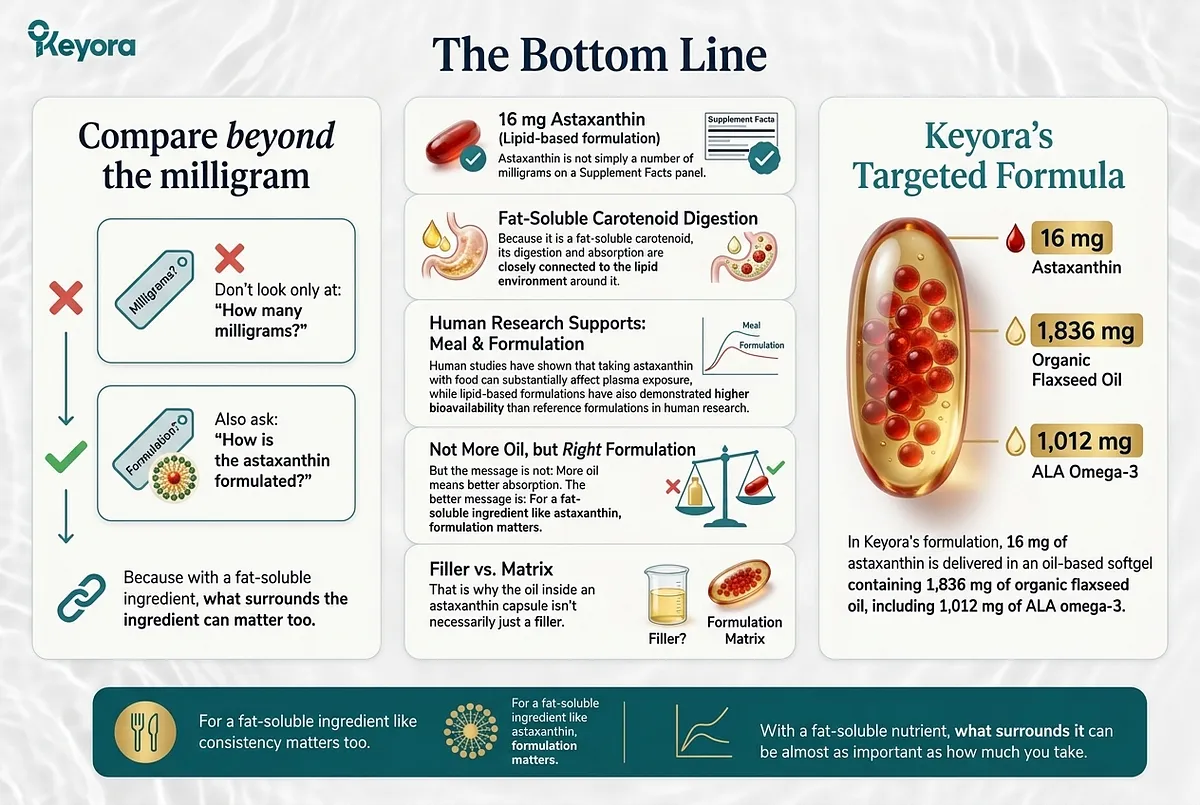
Astaxanthin is not simply a number of milligrams on a Supplement Facts panel.
Because it is a fat-soluble carotenoid, its digestion and absorption are closely connected to the lipid environment around it.
Human studies have shown that taking astaxanthin with food can substantially affect plasma exposure, while lipid-based formulations have also demonstrated higher bioavailability than reference formulations in human research.
But the message is not:
More oil means better absorption.
The better message is:
For a fat-soluble ingredient like astaxanthin, formulation matters.
That is why the oil inside an astaxanthin capsule isn’t necessarily just a filler.
In Keyora’s formulation, 16 mg of astaxanthin is delivered in an oil-based softgel containing 1,836 mg of organic flaxseed oil, including 1,012 mg of ALA omega-3.
So the next time you compare astaxanthin supplements, don’t look only at:
“How many milligrams?”
Also ask:
“How is the astaxanthin formulated?”
Because with a fat-soluble ingredient, what surrounds the ingredient can matter too.
References
Odeberg JM, et al. Oral bioavailability of the antioxidant astaxanthin in humans is enhanced by incorporation of lipid based formulations. European Journal of Pharmaceutical Sciences. 2003;19(4):299–304.
Bioavailability of astaxanthin in Haematococcus algal extract: the effects of timing of diet and smoking habits. Journal of Nutritional Science and Vitaminology. 2009.
A Study on the Bioavailability of a Proprietary, Sustained-release Formulation of Astaxanthin. Journal of Clinical Pharmacology. 2019.
Fatty acid unsaturation regulates astaxanthin encapsulation in bile salt micelles: Insights into self-assembly mechanisms and molecular interactions. Journal of Colloid and Interface Science. 2025.
Cunnane SC, et al. Bioavailability of alpha-linolenic acid in subjects after ingestion of three different forms of flaxseed. American Journal of Clinical Nutrition. 2008.