
Why Does the Heart Need So Much Mitochondrial Energy Every Day?
Keyora Research Q&A Library
This is part of the Keyora Research Q&A Series, derived from Keyora Astaxanthin Research Journal Series.
Within the Keyora Astaxanthin Researcn framework, this Q&A translates complex astaxanthin biology into reader-friendly, evidence-bound answers, focusing on natural astaxanthin identity, molecular structure, antioxidant and redox mechanisms, membrane lipid interaction, mitochondrial resilience, inflammatory signaling pathways, human evidence interpretation, and the scientific principles behind responsible supplementation.
First published by Keyora Research Journal: www.keyorahealth.com

Direct Answer
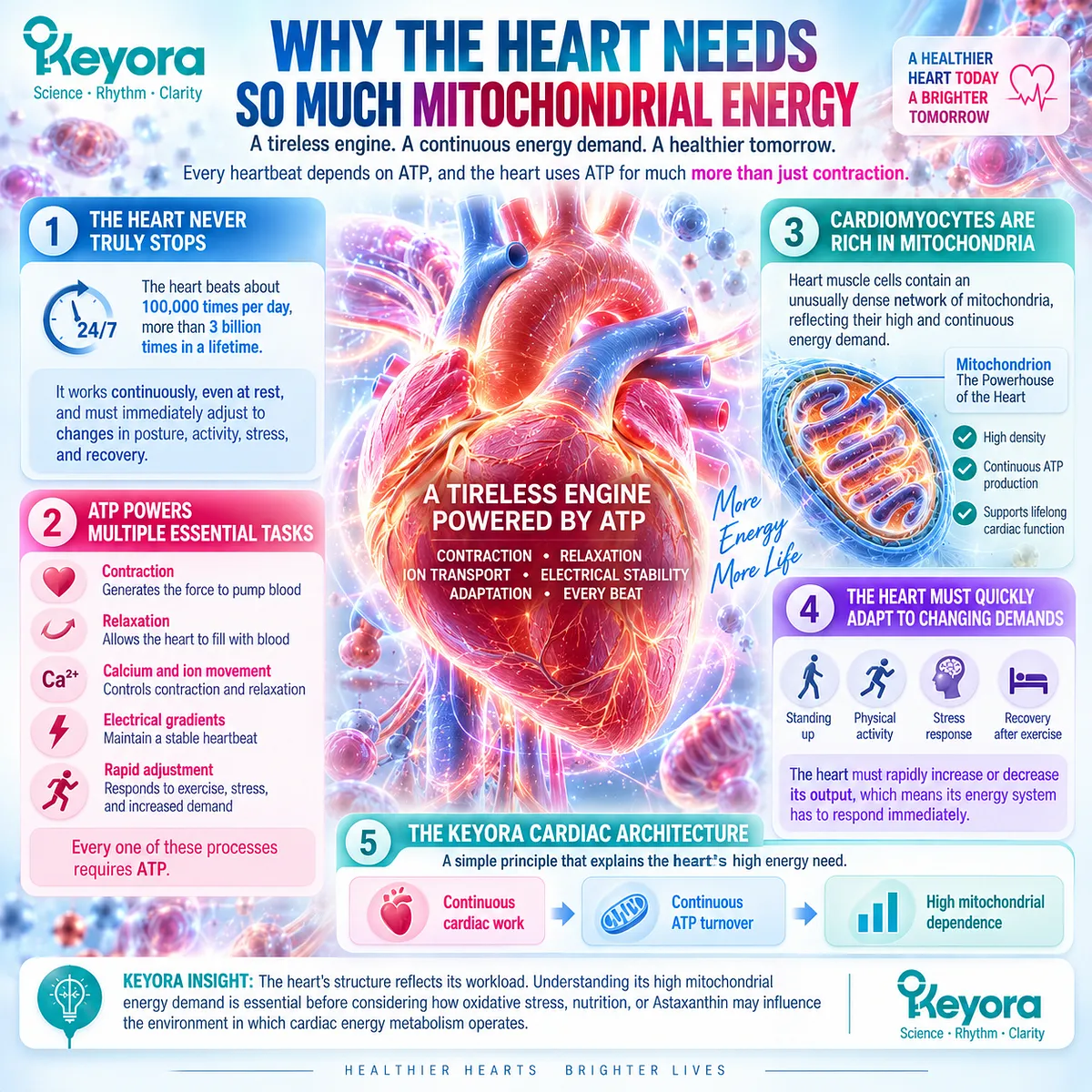
The heart needs so much mitochondrial energy because it never truly stops working.
Every heartbeat requires ATP, the cell’s immediate energy currency, and ATP is needed for much more than simply squeezing blood out of the heart.
Heart muscle cells use ATP to generate contraction, relax after each contraction, move calcium and other ions, restore electrical gradients, and prepare for the next heartbeat.
When you stand up, walk, exercise, experience stress, or recover after physical activity, the heart must rapidly adjust how much blood it pumps. That means its energy system has to respond almost immediately.
This is why cardiomyocytes, the muscle cells of the heart, contain an unusually dense network of mitochondria. Their structure reflects their workload.
In the Keyora Cardiac Architecture, this leads to a simple principle:
Continuous cardiac work → continuous ATP turnover → high mitochondrial dependence
Understanding that relationship is important before asking how oxidative stress, nutrition, or Astaxanthin may influence the environment in which cardiac energy metabolism operates.
The Heart Never Really Goes Off Duty
Unlike muscles that can rest between tasks, the heart must keep producing mechanical work around the clock
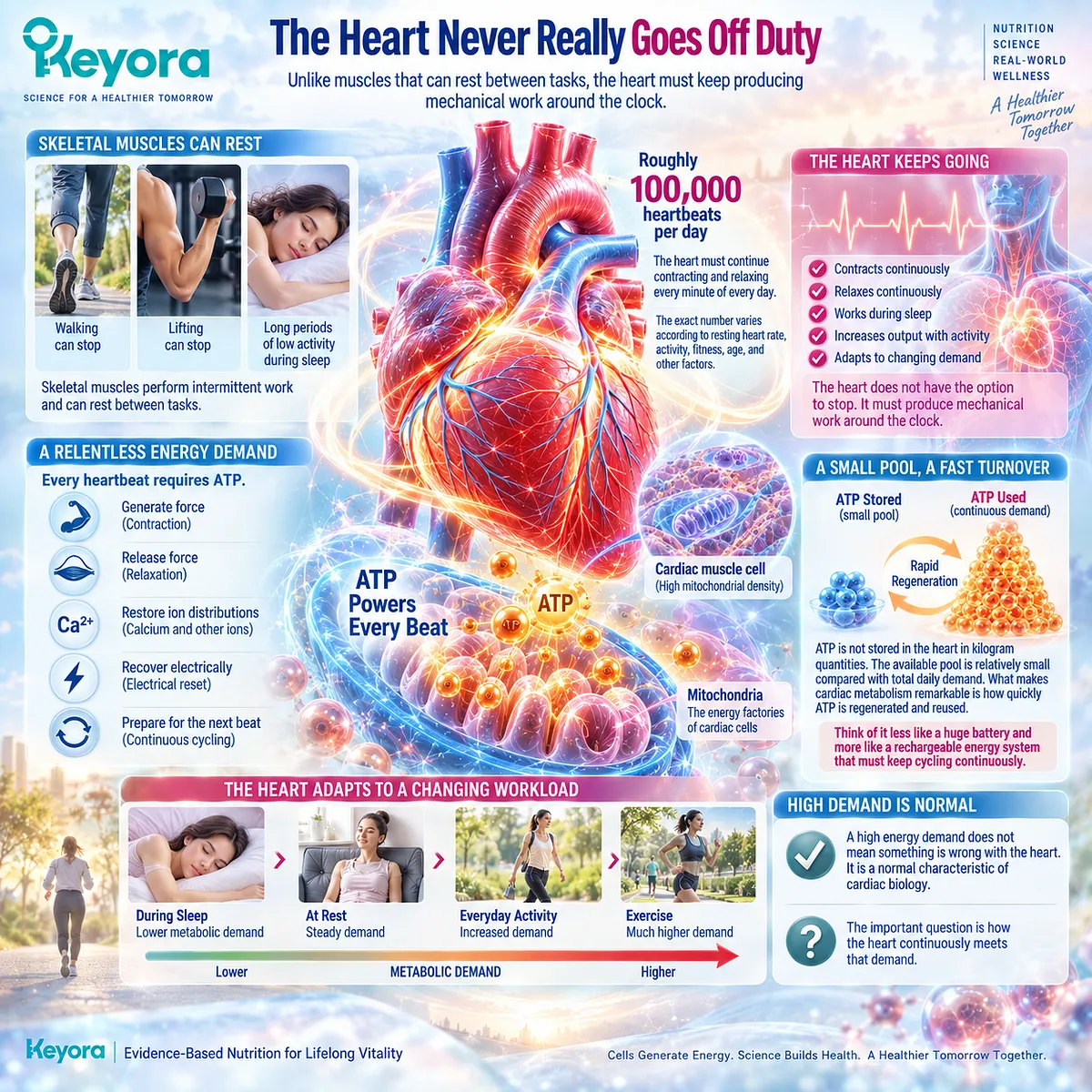
Your leg muscles can stop walking. Your arms can stop lifting. Even during sleep, many skeletal muscles spend long periods performing relatively little mechanical work.
The heart does not have that option.
It must continue contracting and relaxing every minute of every day. A commonly used physiological estimate is roughly 100,000 heartbeats per day, although the exact number varies according to resting heart rate, activity, fitness, age, and other factors.
That repeated workload creates an enormous requirement for ATP turnover.
One important point is that ATP is not stored in the heart in kilogram quantities waiting to be used. The available ATP pool is relatively small compared with total daily demand. What makes cardiac metabolism remarkable is how quickly ATP is regenerated and reused.
Think of it less like a huge battery and more like a rechargeable energy system that must keep cycling continuously.
Each cardiac cycle includes multiple energy-dependent tasks. The heart must generate force, release that force, restore ion distributions, recover electrically, and prepare to repeat the process.
This happens while the workload is constantly changing.
During sleep, metabolic demand may be relatively low. When you stand, climb stairs, run, or exercise intensely, cardiac output must increase. The heart does not simply draw from a large stored reserve. It must accelerate the rate at which energy is produced and used.
That is one reason mitochondrial function is so central to normal cardiac physiology.
High energy demand does not mean something is wrong with the heart. It is a normal characteristic of cardiac biology.
The important question is how the heart continuously meets that demand.
Why Heart Muscle Cells Are Packed With Mitochondria
Cardiomyocytes contain a dense mitochondrial network because sustained aerobic ATP production is built into the structure of heart muscle
The physical structure of a cell often tells you something about what that cell is designed to do.
Cardiomyocytes are an excellent example.
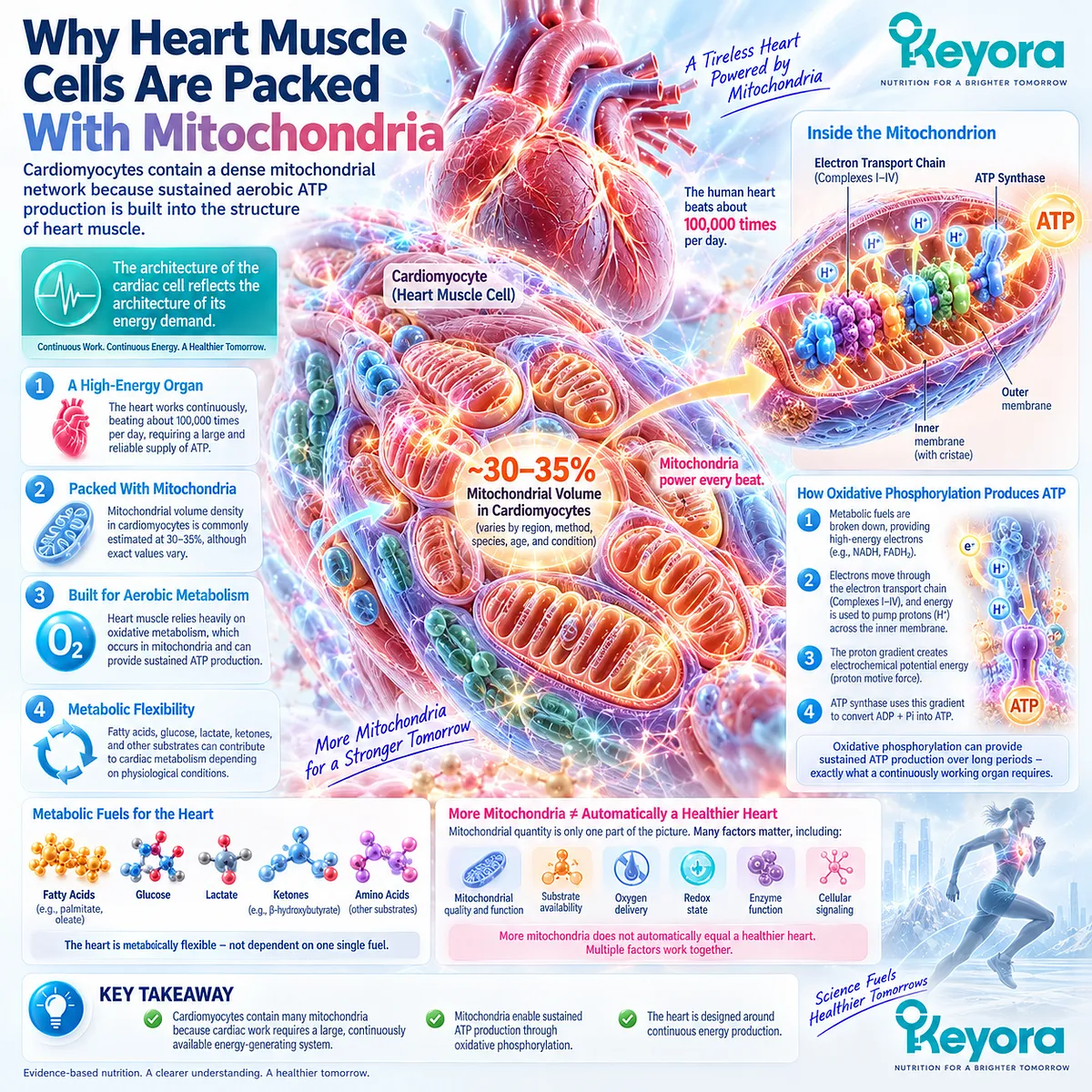
A substantial proportion of the volume of a heart muscle cell is occupied by mitochondria. Estimates commonly place mitochondrial volume density in cardiomyocytes at approximately 30 to 35 percent, although exact values vary according to tissue region, measurement method, species, age, and physiological condition.
That mitochondrial density is not accidental.
Heart muscle relies heavily on oxidative metabolism, a process in which mitochondria convert energy from metabolic fuels into ATP. Fatty acids, glucose, lactate, ketones, and other substrates can contribute to cardiac metabolism depending on physiological conditions.
The heart is therefore metabolically flexible rather than dependent on one single fuel.
Inside the mitochondria, high-energy electrons derived from metabolism enter the electron transport chain. Their movement through several protein complexes helps generate an electrochemical gradient across the inner mitochondrial membrane.
ATP synthase then uses that gradient to regenerate ATP.
This process is called oxidative phosphorylation.
For the heart, oxidative phosphorylation is particularly important because it can provide sustained ATP production over long periods. That is exactly what a continuously working organ requires.
This gives us an important Keyora Cardiac Architecture principle:
The architecture of the cardiac cell reflects the architecture of its energy demand.
Cardiomyocytes contain so many mitochondria because cardiac work requires a large, continuously available energy-generating system.
This does not mean that more mitochondria automatically equals a healthier heart. Mitochondrial quantity, quality, substrate availability, oxygen delivery, redox state, enzyme function, and cellular signaling all matter.
But mitochondrial density makes one fact very clear:
The heart is designed around continuous energy production.
ATP Pays for More Than the Heartbeat
The heart spends ATP not only on contraction, but also on relaxation, calcium cycling, and maintenance of electrical gradients
It is easy to imagine that the heart uses energy when it contracts.
What is less obvious is that the heart also needs energy to relax.
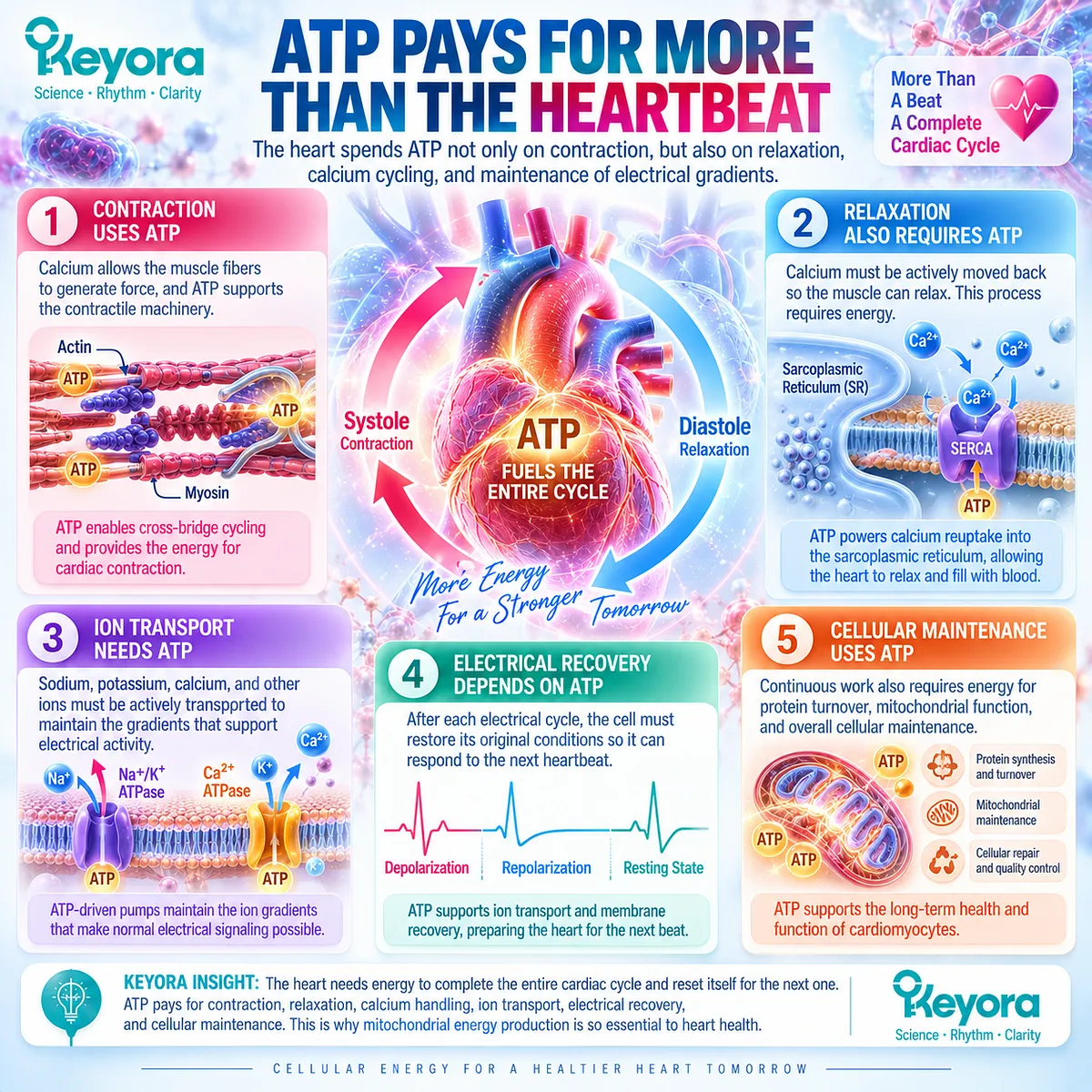
Cardiac contraction begins when electrical signaling changes ion movement across the cell membrane and calcium becomes available inside the cardiomyocyte. Calcium interacts with the contractile machinery and allows the muscle fibers to generate force.
After the contraction, calcium must be moved again so the muscle can relax.
That process is active.
Calcium does not simply disappear when the heartbeat finishes. Specialized pumps and transport systems help restore calcium to the correct cellular compartments, and those processes require energy.
This means diastole, the relaxation and filling phase of the cardiac cycle, is not simply “doing nothing.”
Relaxation is an ATP-dependent physiological process.
ATP is also involved in maintaining ion gradients across cell membranes. Sodium, potassium, calcium, and other ions must remain carefully distributed because those gradients help make normal electrical activity possible.
After each electrical cycle, the cell must restore the conditions needed for the next one.
So the energetic cost of a heartbeat includes much more than mechanical force.
It includes:
contraction
relaxation
calcium handling
ion transport
electrical recovery
cellular maintenance
All of these processes repeat continuously.
This is why a simple statement such as “the heart needs energy to beat” is technically correct but incomplete.
A more accurate statement is:
The heart needs energy to complete the entire cardiac cycle and reset itself for the next one.
That distinction helps explain why mitochondrial energy production is so deeply integrated into cardiac physiology.
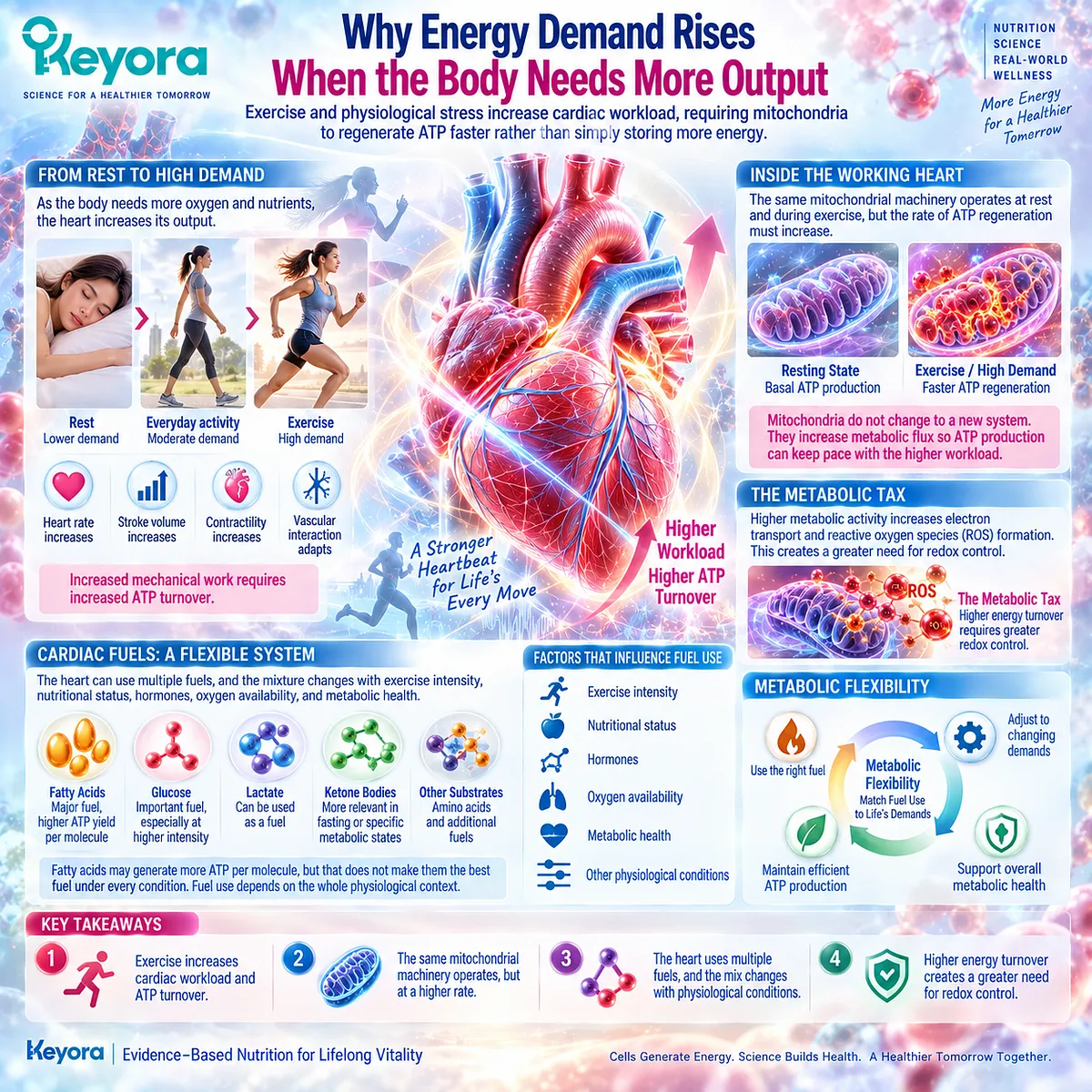
Why Energy Demand Rises When the Body Needs More Output
Exercise and physiological stress increase cardiac workload, requiring mitochondria to regenerate ATP faster rather than simply storing more energy
The heart’s energy requirements are not fixed.
When the body needs more oxygen and nutrients, cardiac output has to rise.
During exercise, muscles consume more oxygen and produce more metabolic byproducts. Blood flow has to increase, and the heart responds by changing heart rate, stroke volume, contractility, and vascular interaction.
That increased mechanical work requires increased ATP turnover.
The important point is not that the heart suddenly discovers a new energy system during exercise. The same fundamental mitochondrial machinery is already operating at rest.
What changes is the rate of demand.
Mitochondria must increase metabolic flux so ATP regeneration can keep pace with the higher workload.
The heart also adjusts which fuels it uses.
Fatty acids are an important cardiac fuel, but the heart can also use glucose, lactate, ketone bodies, and other substrates. The mixture changes with exercise intensity, nutritional status, hormones, oxygen availability, metabolic health, and other physiological conditions.
This is why it is misleading to describe one fuel as universally “good” and another as “bad.”
Fatty acids may generate more ATP per molecule, but that does not automatically make them more efficient under every physiological condition. Oxygen cost, substrate availability, workload, and metabolic state all influence which fuel mixture is most appropriate.
The useful concept is metabolic flexibility.
A healthy energy system must be able to match fuel use and ATP production to changing demands.
This also creates the bridge to oxidative biology.
When mitochondrial metabolic activity changes, the redox environment changes as well. Electron transport, reactive oxygen species formation, antioxidant systems, membrane lipids, and repair processes all operate within the same metabolic environment.
Keyora refers to the redox cost associated with high energy turnover as The Metabolic Tax.
The term does not mean that ATP production is harmful. It describes the idea that continuous high-output metabolism creates an ongoing requirement for redox control.
That becomes the next layer of the cardiac energy story.
The Keyora Cardiac Architecture: Energy Demand Comes First
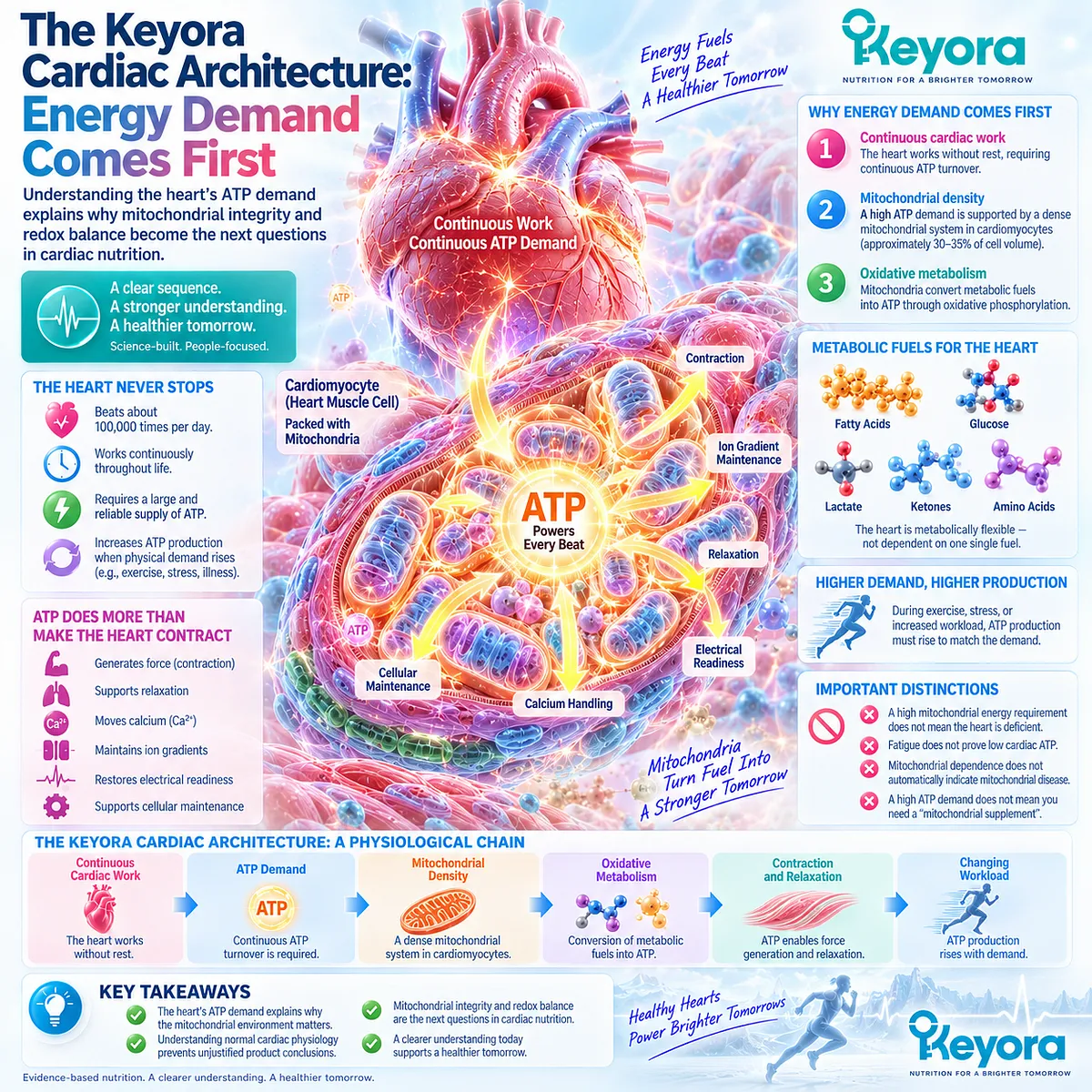
Understanding the heart’s ATP demand explains why mitochondrial integrity and redox balance become the next questions in cardiac nutrition
The Keyora Cardiac Architecture begins with energy demand rather than with a supplement.
The heart works continuously.
Continuous work requires continuous ATP turnover.
Continuous ATP turnover requires a dense mitochondrial system capable of oxidative metabolism.
ATP is then used not only to generate force, but also to relax the heart, move calcium, maintain ion gradients, restore electrical readiness, and support normal cellular maintenance.
When physical demand rises, ATP production must rise with it.
This produces a simple physiological chain:
Continuous cardiac work → ATP demand → mitochondrial density → oxidative metabolism → contraction and relaxation → changing workload
Only after this foundation is clear does it make sense to ask questions about oxidative stress, mitochondrial protection, or nutritional support.
That order matters.
A high mitochondrial energy requirement does not mean that the heart is deficient.
It does not mean that fatigue proves low cardiac ATP.
It does not mean that mitochondrial dependence automatically indicates mitochondrial disease.
And it does not mean that because the heart needs large amounts of ATP, a person necessarily needs a “mitochondrial supplement.”
Those would all be unjustified jumps from normal physiology to a product conclusion.
Instead, the scientific value of understanding cardiac energy demand is that it explains why the mitochondrial environment matters so much.
A tissue that depends continuously on oxidative metabolism must continuously manage substrate delivery, electron transport, membrane potential, ion handling, redox signaling, antioxidant defenses, and cellular repair.
That is why Keyora Cardiac Architecture places mitochondrial energy at the beginning of the framework.
It also explains why the next question is unavoidable:
What Does Oxidative Stress Have to Do With Heart Energy and Fatigue?
Once we understand why the heart must regenerate so much ATP, the next step is to understand what happens when the redox demands surrounding that energy system begin to rise.
This article is for educational and informational purposes only. It does not provide medical advice, diagnosis, treatment, cure, prevention, disease outcome claims, hormone restoration claims, fertility outcome claims, or formula-specific clinical efficacy claims.