
Why Does My Thinking Feel Slow Even When I Am Fully Awake?
Keyora Research Q&A Library
This is part of the Keyora Research Q&A Series, derived from Keyora Astaxanthin Research Journal Series.
Within the Keyora Astaxanthin Researcn framework, this Q&A translates complex astaxanthin biology into reader-friendly, evidence-bound answers, focusing on natural astaxanthin identity, molecular structure, antioxidant and redox mechanisms, membrane lipid interaction, mitochondrial resilience, inflammatory signaling pathways, human evidence interpretation, and the scientific principles behind responsible supplementation.
First published by Keyora Research Journal: www.keyorahealth.com

Direct Answer
Feeling fully awake does not necessarily mean the brain is processing information efficiently.
Wakefulness, alertness, processing speed, reaction time, and working memory are related but distinct functions.
A person may feel mentally alert while taking longer to understand information, organize an answer, or complete familiar cognitive tasks.
Astaxanthin provides a relevant nutritional research perspective through its studied relationships with oxidative stress, mitochondrial function, and neuronal lipid-membrane regulation.
These mechanisms help explain why cellular conditions matter for neural communication, although they do not establish that supplementation directly accelerates thinking.
Human evidence remains mixed.
Some trials of astaxanthin-containing combinations have reported improvements in processing-related outcomes, while a 2024 meta-analysis did not establish significant pooled improvements in reaction time.
Within the Keyora Neuro-Defense Matrix, astaxanthin is the central redox-support research ingredient.
MoodFlow, Antarctic Krill Oil, and Co-Q10 17 in 1 represent complementary nutritional tasks when stress regulation, long-chain omega-3 intake, or mitochondrial metabolism are independently relevant.
The practical priority is to identify which cognitive function actually feels slower, evaluate possible causes, and assess nutritional support against measurable human outcomes.
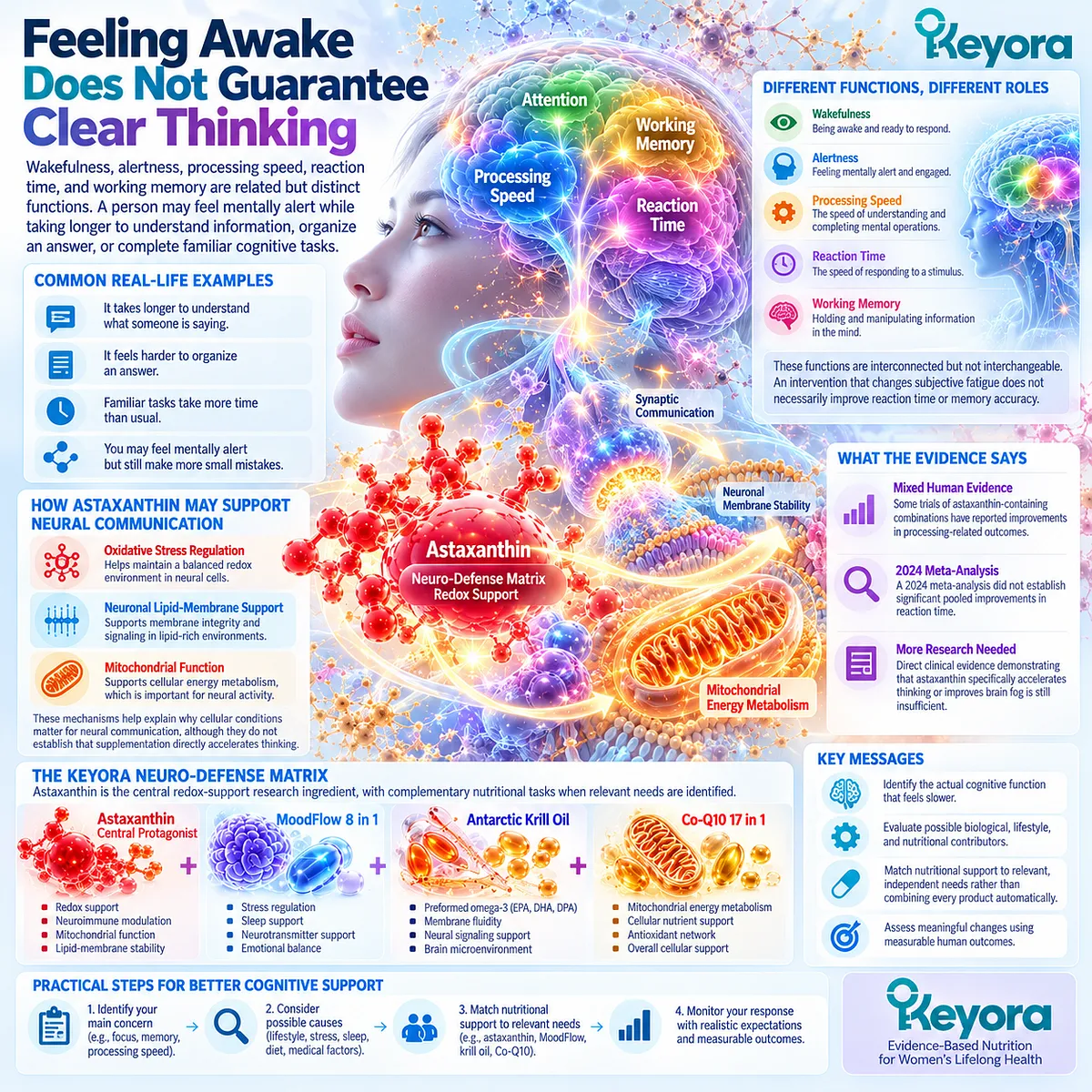
Awake, Alert, and Still Thinking Slowly
Why feeling mentally awake and processing information efficiently are not the same cognitive function
What Mental Slowness Actually Feels Like
Someone may be fully awake during a meeting yet need extra time to understand a complex question. Another person may read quickly but struggle to organize the information into a useful decision.
These experiences are often described as a slow brain. However, the difficulty may involve attention, information integration, response selection, or working memory rather than reduced consciousness.
Recognizing the specific difficulty matters because different cognitive operations require different forms of assessment.
Wakefulness Is Not Processing Efficiency
Wakefulness describes whether a person is conscious and awake. Alertness reflects readiness to respond, while processing speed concerns the efficiency of completing a defined cognitive operation.
The distinction is:
-
Wakefulness → Conscious State
-
Alertness → Readiness to Respond
-
Processing Speed → Efficiency of Information Processing
These functions interact, but none can substitute completely for another.
A person may be highly alert because of stress while simultaneously experiencing difficulty organizing thoughts or completing demanding tasks.
Slower Thinking Does Not Automatically Mean Cognitive Decline
Cognitive performance changes with workload, sleep, emotional pressure, medications, and other health factors.
Occasional difficulty responding quickly does not establish neuronal damage or a neurodegenerative disease.
Keyora Astaxanthin EP-6 therefore begins with the actual cognitive experience before introducing nutritional mechanisms.
The first scientific task is to identify what has slowed, not to assume why it happened.

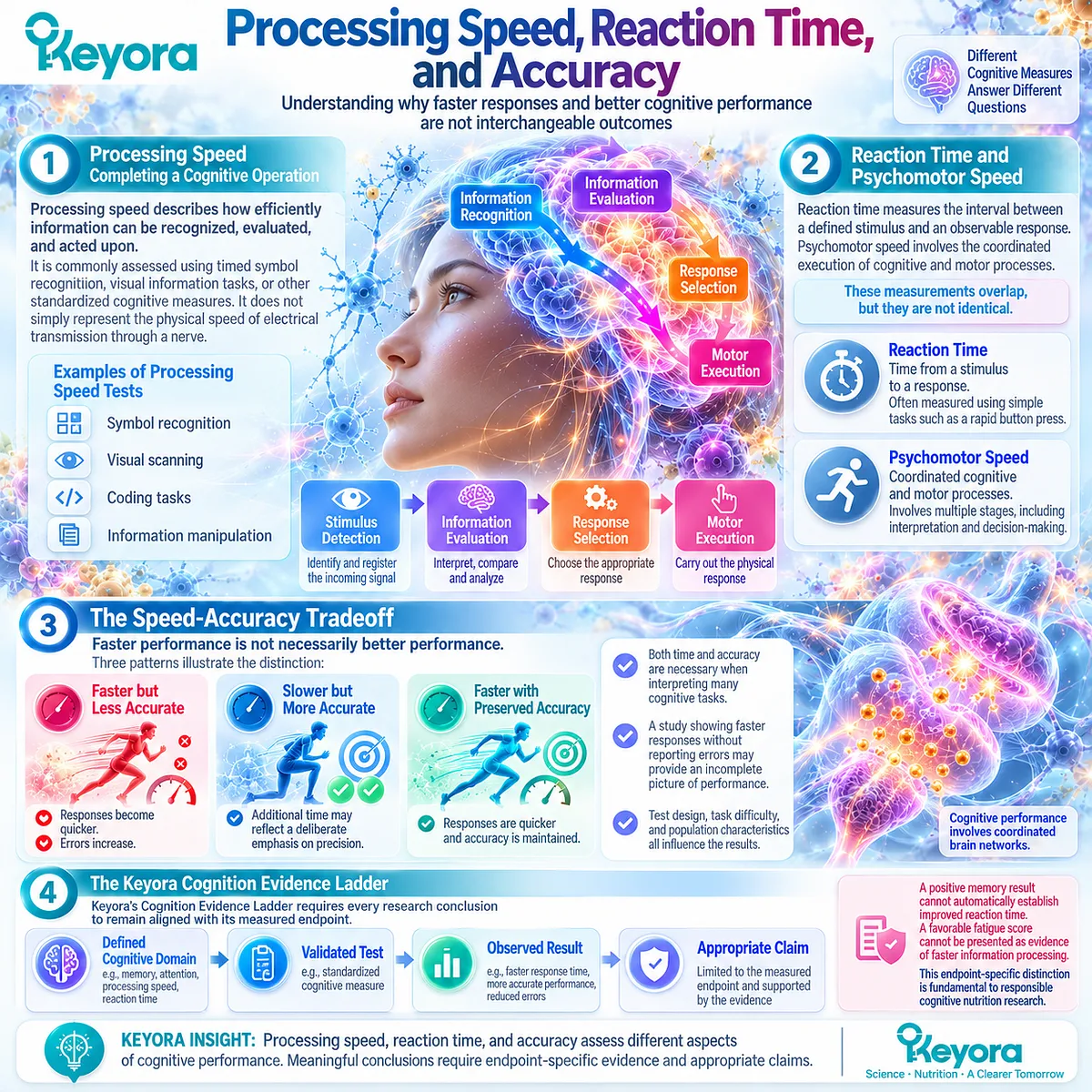
Processing Speed, Reaction Time, and Accuracy
Understanding why faster responses and better cognitive performance are not interchangeable outcomes
Processing Speed: Completing a Cognitive Operation
Processing speed describes how efficiently information can be recognized, evaluated, and acted upon.
Researchers may assess it using timed symbol recognition, visual information tasks, or other standardized cognitive measures.
It does not simply represent the physical speed of electrical transmission through a nerve.
Reaction Time and Psychomotor Speed
Reaction time measures the interval between a defined stimulus and an observable response.
Psychomotor speed involves the coordinated execution of cognitive and motor processes.
These measurements overlap, but they are not identical. A test involving a rapid button press measures something different from a task requiring several stages of interpretation and decision-making.
Stimulus Detection → Information Evaluation → Response Selection → Motor Execution
Different tests emphasize different parts of this sequence.
The Speed-Accuracy Tradeoff
Faster performance is not necessarily better performance.
Three patterns illustrate the distinction:
-
Faster but less accurate: Responses become quicker while errors increase.
-
Slower but more accurate: Additional time may reflect a deliberate emphasis on precision.
-
Faster with preserved accuracy: This may indicate improved efficiency under comparable testing conditions.
Consequently, both time and accuracy are necessary when interpreting many cognitive tasks.
A study showing faster responses without reporting errors may provide an incomplete picture of performance.
The Keyora Cognition Evidence Ladder
Keyora’s Cognition Evidence Ladder requires every research conclusion to remain aligned with its measured endpoint.
Defined Cognitive Domain → Validated Test → Observed Result → Appropriate Claim
For astaxanthin, a positive memory result cannot automatically establish improved reaction time. Likewise, a favorable fatigue score cannot be presented as evidence of faster information processing.
This endpoint-specific distinction is fundamental to responsible cognitive nutrition research.
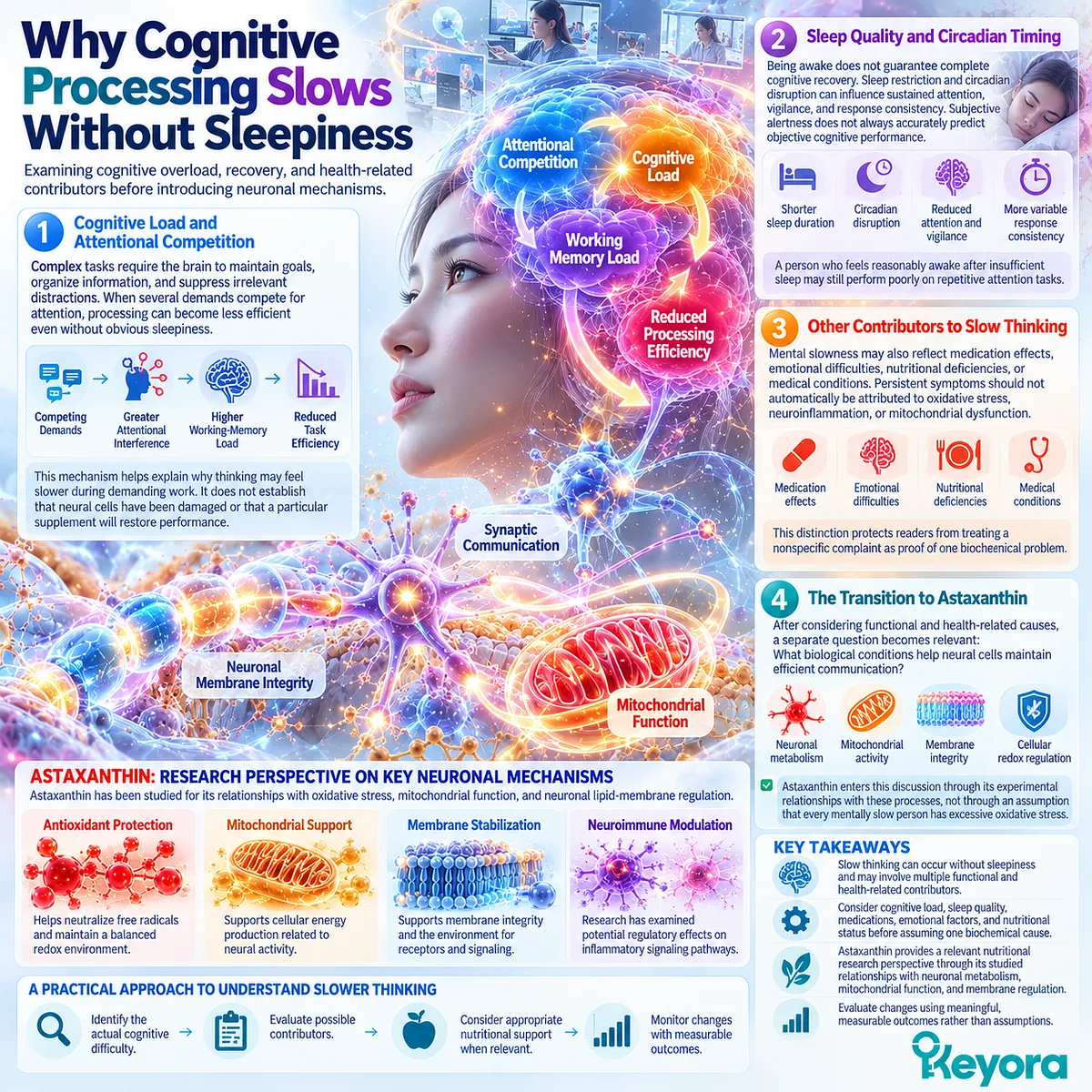
Why Cognitive Processing Slows Without Sleepiness
Examining cognitive overload, recovery, and health-related contributors before introducing neuronal mechanisms
Cognitive Load and Attentional Competition
Complex tasks require the brain to maintain goals, organize information, and suppress irrelevant distractions.
When several demands compete for attention, processing can become less efficient even without obvious sleepiness.
The functional relationship is:
Competing Demands → Greater Attentional Interference → Higher Working-Memory Load → Reduced Task Efficiency
This mechanism helps explain why thinking may feel slower during demanding work.
It does not establish that neural cells have been damaged or that a particular supplement will restore performance.
Sleep Quality and Circadian Timing
Being awake does not guarantee complete cognitive recovery.
Sleep restriction and circadian disruption can influence sustained attention, vigilance, and response consistency. Subjective alertness does not always accurately predict objective cognitive performance.
A person who feels reasonably awake after insufficient sleep may still perform poorly on repetitive attention tasks.
Other Contributors to Slow Thinking
Mental slowness may also reflect medication effects, emotional difficulties, nutritional deficiencies, or medical conditions.
Persistent symptoms should not automatically be attributed to oxidative stress, neuroinflammation, or mitochondrial dysfunction.
This distinction protects readers from treating a nonspecific complaint as proof of one biochemical problem.
The Transition to Astaxanthin
After considering functional and health-related causes, a separate question becomes relevant:
What biological conditions help neural cells maintain efficient communication?
Neuronal metabolism, mitochondrial activity, membrane integrity, and cellular redox regulation provide important research directions.
Astaxanthin enters this discussion through its experimental relationships with these processes, not through an assumption that every mentally slow person has excessive oxidative stress.
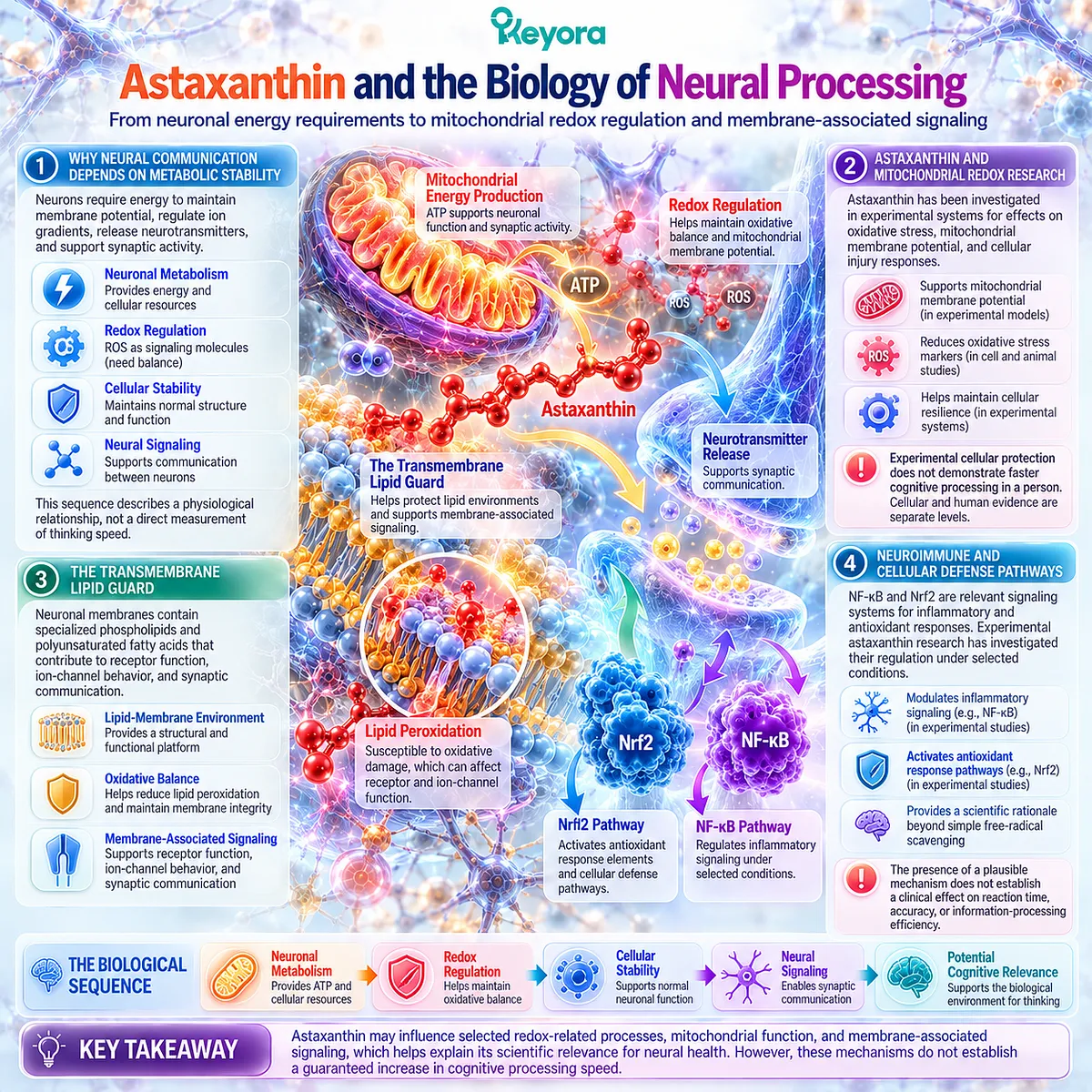
Astaxanthin and the Biology of Neural Processing
From neuronal energy requirements to mitochondrial redox regulation and membrane-associated signaling
Why Neural Communication Depends on Metabolic Stability
Neurons require energy to maintain membrane potential, regulate ion gradients, release neurotransmitters, and support synaptic activity.
Mitochondria participate in producing ATP through cellular respiration. Reactive oxygen species, or ROS, arise during normal metabolism and contribute to physiological signaling.
However, poorly regulated oxidative stress can affect cellular components and interfere with normal function.
The relevant biological sequence is:
Neuronal Metabolism → Redox Regulation → Cellular Stability → Neural Signaling
This describes a physiological relationship, not a direct measurement of thinking speed.
Astaxanthin and Mitochondrial Redox Research
Astaxanthin has been investigated in experimental systems for effects on oxidative stress, mitochondrial membrane potential, and cellular injury responses.
These studies provide biological reasons to examine its potential contribution to neuronal resilience.
Nevertheless, preserving mitochondrial function in a cell model does not demonstrate faster cognitive processing in a person.
Experimental cellular protection and measurable human cognitive improvement remain separate evidence levels.
The Transmembrane Lipid Guard
Keyora uses The Transmembrane Lipid Guard to describe the proposed importance of protecting lipid-associated cellular environments.
Neuronal membranes contain specialized phospholipids and polyunsaturated fatty acids that contribute to receptor function, ion-channel behavior, and synaptic communication.
Their susceptibility to lipid peroxidation creates a relevant research context for astaxanthin, a carotenoid studied for antioxidant properties in lipid environments.
The proposed connection is:
Lipid-Membrane Environment → Oxidative Balance → Membrane-Associated Signaling → Potential Cognitive Relevance
Astaxanthin may influence selected redox-related processes, but oral supplementation has not been shown to physically protect every human neural membrane or directly increase processing speed.
Neuroimmune and Cellular Defense Pathways
NF-kB and Nrf2 are additional signaling systems relevant to inflammatory and antioxidant responses.
Experimental astaxanthin research has investigated their regulation under selected conditions.
Within Keyora’s Neuro-Defense Matrix, these pathways help explain the compound’s scientific relevance beyond simple free-radical scavenging.
However, the presence of a plausible mechanism does not establish a clinical effect on reaction time, accuracy, or information-processing efficiency.
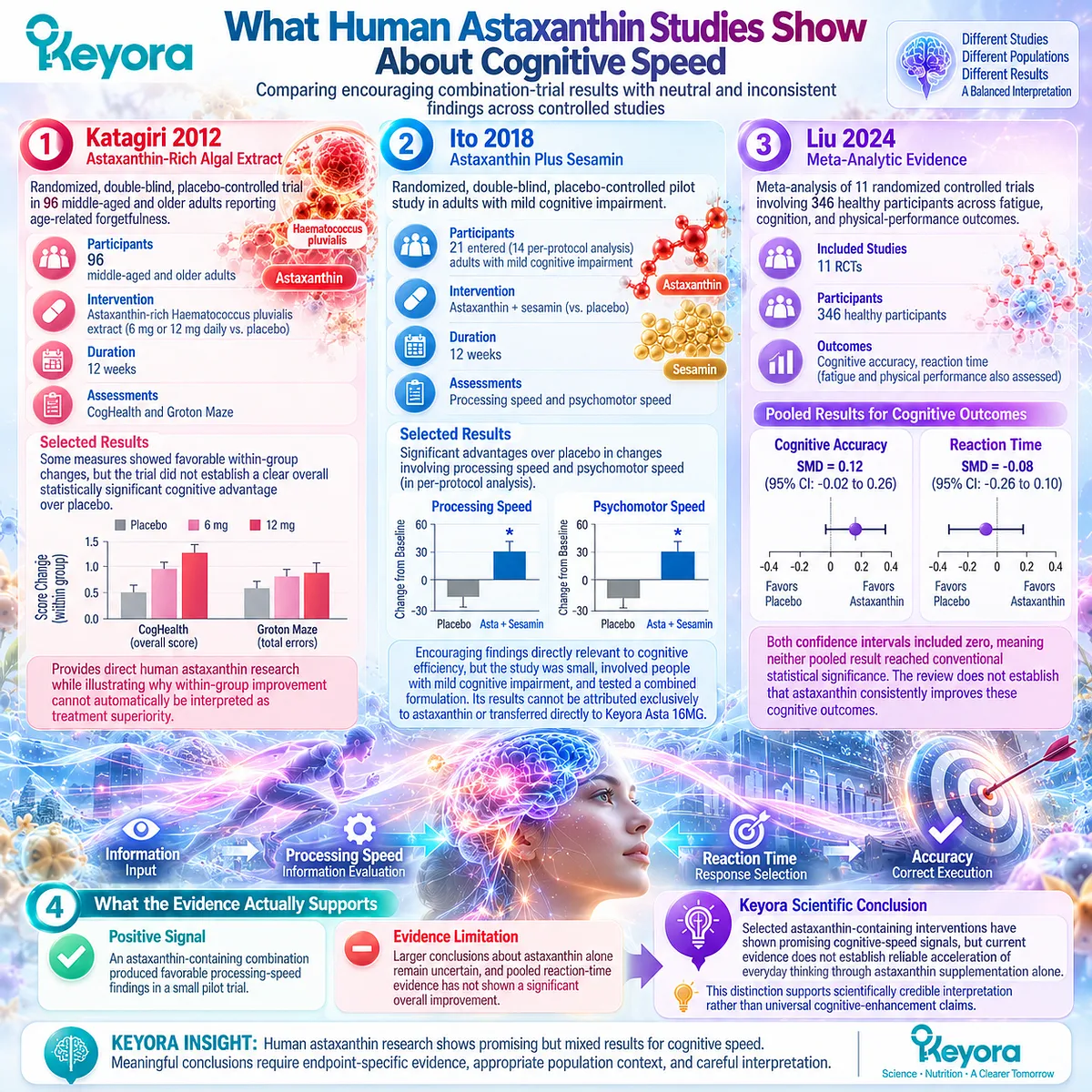
What Human Astaxanthin Studies Show About Cognitive Speed
Comparing encouraging combination-trial results with neutral and inconsistent findings across controlled studies
Katagiri 2012: Astaxanthin-Rich Algal Extract
Katagiri and colleagues conducted a randomized, double-blind, placebo-controlled trial involving 96 middle-aged and older adults reporting age-related forgetfulness.
Participants received astaxanthin-rich Haematococcus pluvialis extract at 6 or 12 mg daily, or placebo, for twelve weeks.
The researchers used CogHealth and Groton Maze assessments. Selected measures showed favorable changes, but the trial did not establish a clear overall statistically significant cognitive advantage over placebo.
This study provides direct human astaxanthin research while illustrating why within-group improvement cannot automatically be interpreted as treatment superiority.
Ito 2018: Astaxanthin Plus Sesamin
Ito and colleagues investigated a combination containing astaxanthin and sesamin in adults with mild cognitive impairment.
Twenty-one participants entered the randomized, double-blind, placebo-controlled pilot study, and fourteen were included in the final per-protocol analysis.
After twelve weeks, the investigators reported significant advantages over placebo in changes involving processing speed and psychomotor speed.
These are encouraging findings directly relevant to cognitive efficiency.
However, the study was small, involved people with mild cognitive impairment, and tested a combined formulation.
Its results cannot be attributed exclusively to astaxanthin or transferred directly to Keyora Asta 16MG.
Liu 2024: The Meta-Analytic Evidence
A 2024 meta-analysis by Liu and colleagues included eleven randomized controlled trials involving 346 healthy participants across fatigue, cognition, and physical-performance outcomes.
For cognitive accuracy, the pooled standardized mean difference was 0.12, with a 95% confidence interval from -0.02 to 0.26.
For reaction time, the pooled standardized mean difference was -0.08, with a 95% confidence interval from -0.26 to 0.10.
Both confidence intervals included zero, meaning neither pooled result reached conventional statistical significance.
The review therefore does not establish that astaxanthin consistently improves these cognitive outcomes.
What the Evidence Actually Supports
The research presents two important findings that should be considered together.
Positive signal: An astaxanthin-containing combination produced favorable processing-speed findings in a small pilot trial.
Evidence limitation: Larger conclusions about astaxanthin alone remain uncertain, and pooled reaction-time evidence has not shown a significant overall improvement.
The appropriate conclusion is:
Selected astaxanthin-containing interventions have shown promising cognitive-speed signals, but current evidence does not establish reliable acceleration of everyday thinking through astaxanthin supplementation alone.
This distinction supports scientifically credible interpretation rather than universal cognitive-enhancement claims.
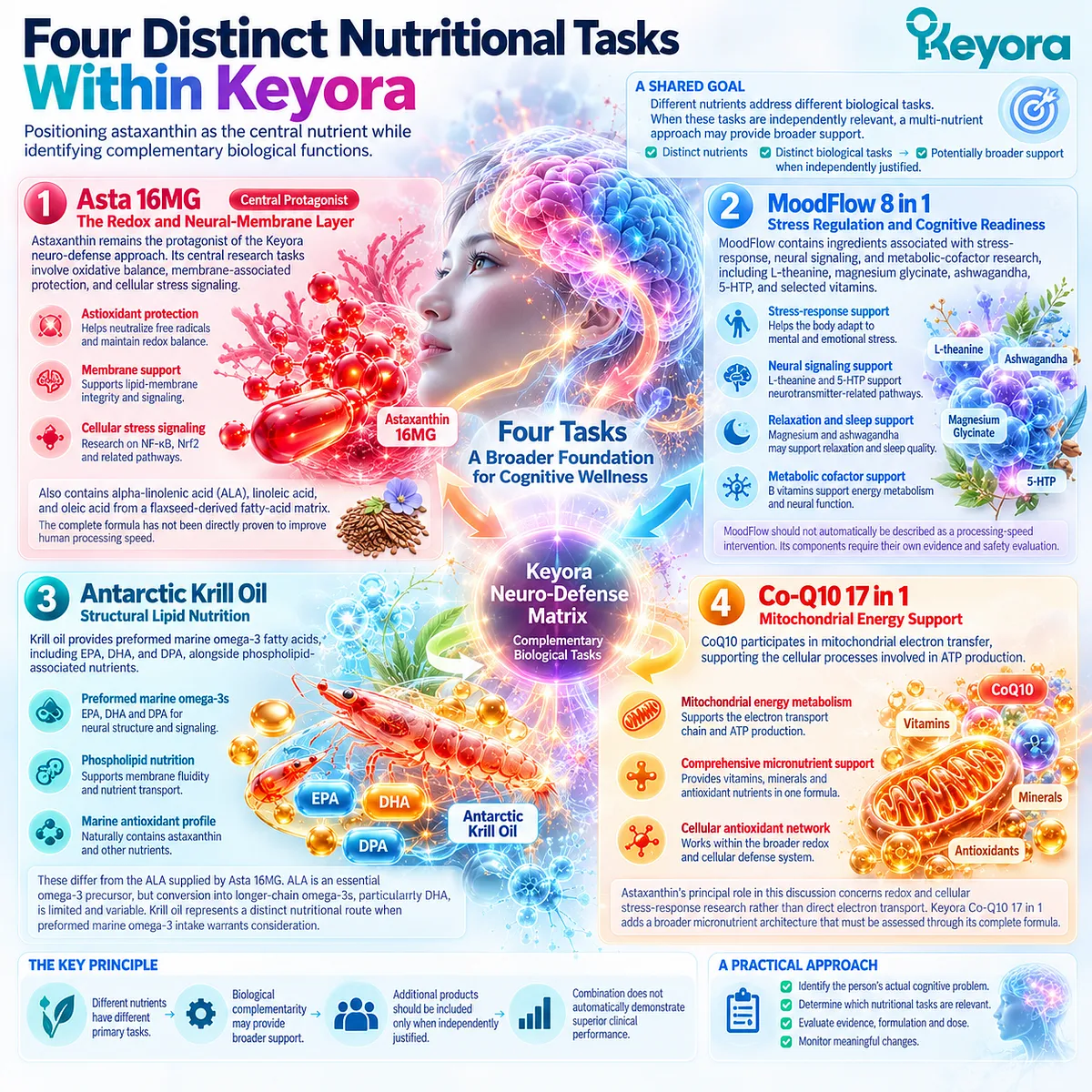
Four Distinct Nutritional Tasks Within Keyora
Positioning astaxanthin as the central nutrient while identifying complementary biological functions
Asta 16MG: The Redox and Neural-Membrane Layer
Astaxanthin remains the protagonist of the Keyora neuro-defense approach.
Its central research tasks involve oxidative balance, membrane-associated protection, and cellular stress signaling.
Keyora Asta 16MG also contains alpha-linolenic acid, linoleic acid, and oleic acid within its flaxseed-derived fatty-acid matrix.
These nutrients contribute distinct lipid-related roles, but the complete formula has not been directly proven to improve human processing speed.
MoodFlow: Stress Regulation and Cognitive Readiness
MoodFlow contains ingredients associated with stress-response, neural signaling, and metabolic-cofactor research, including L-theanine, magnesium glycinate, ashwagandha, 5-HTP, and selected vitamins.
Its nutritional rationale differs from astaxanthin’s redox-related role.
When cognitive slowing occurs alongside high stress or poor sleep, these separate support domains may be relevant.
However, MoodFlow should not automatically be described as a processing-speed intervention, and its components require their own evidence and safety evaluation.
Antarctic Krill Oil: Structural Lipid Nutrition
Krill oil provides preformed marine omega-3 fatty acids, including EPA, DHA, and DPA, alongside phospholipid-associated nutrients.
These differ from the ALA supplied by Asta 16MG.
ALA is an essential omega-3 precursor, but conversion into longer-chain omega-3s, particularly DHA, is limited and variable.
Krill oil therefore represents a distinct nutritional route when preformed marine omega-3 intake warrants consideration, not proof that combining both products accelerates neural processing.
Co-Q10 17 in 1: Mitochondrial Energy Support
CoQ10 participates in mitochondrial electron transfer, supporting the cellular processes involved in ATP production.
Astaxanthin’s principal role in this discussion concerns redox and cellular stress-response research rather than direct electron transport.
Keyora Co-Q10 17 in 1 adds a broader micronutrient architecture that must be assessed through its complete formula.
The overall principle is:
Distinct Nutrients → Distinct Biological Tasks → Potentially Broader Support When Independently Justified
Biological complementarity does not, by itself, demonstrate superior clinical performance.
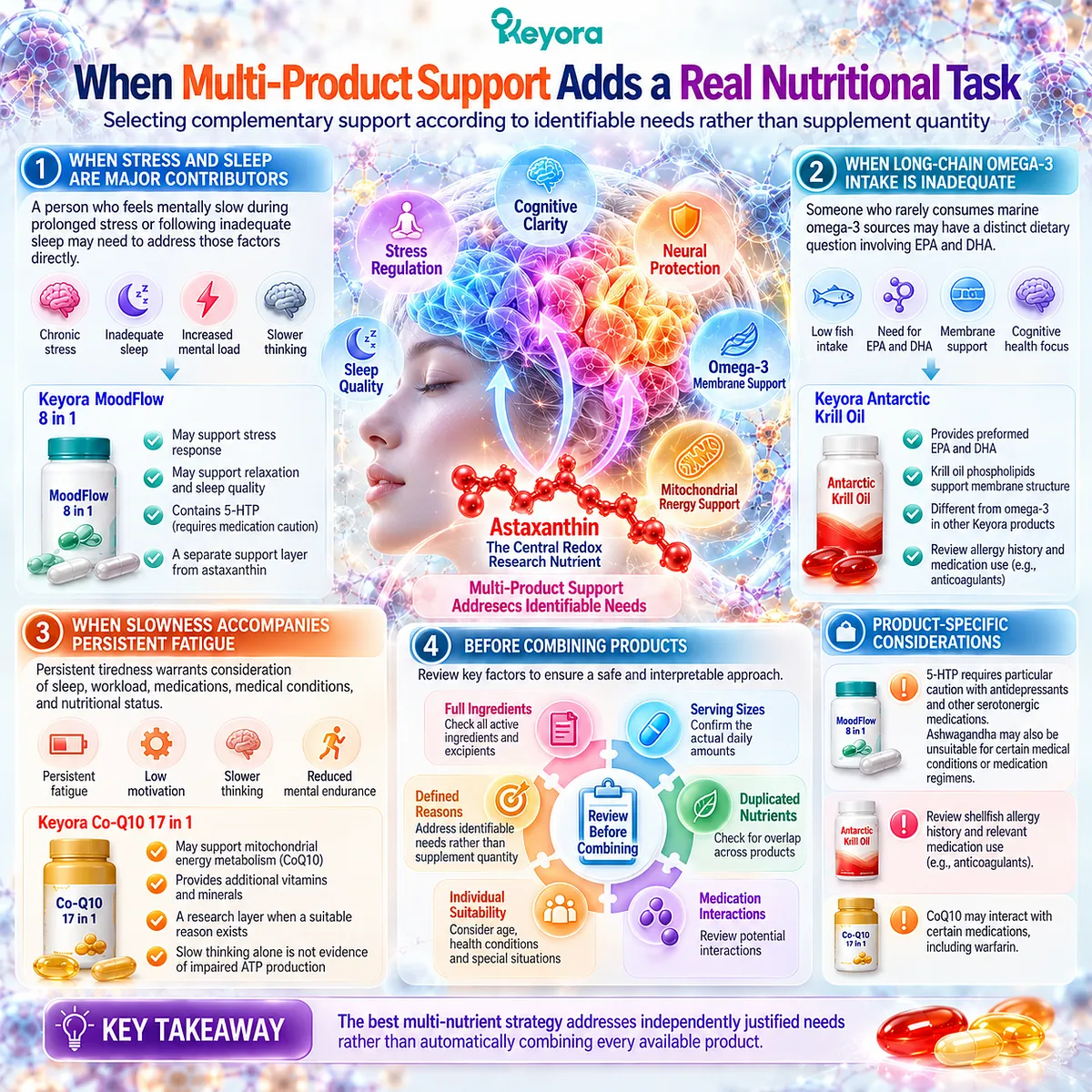
When Multi-Product Support Adds a Real Nutritional Task
Selecting complementary support according to identifiable needs rather than supplement quantity
When Stress and Sleep Are Major Contributors
A person who feels mentally slow during prolonged stress or following inadequate sleep may need to address those factors directly.
Astaxanthin remains the central redox-research nutrient in this article, while MoodFlow represents a potentially separate stress and sleep-support layer.
The need for both should be assessed rather than assumed.
When Long-Chain Omega-3 Intake Is Inadequate
Someone who rarely consumes marine omega-3 sources may have a distinct dietary question involving EPA and DHA.
Antarctic Krill Oil may be relevant to that nutritional need because preformed long-chain omega-3s are not equivalent to ALA.
However, adequate omega-3 intake does not guarantee faster cognitive performance, and additional supplementation is not automatically necessary.
When Slowness Accompanies Persistent Fatigue
Persistent tiredness warrants consideration of sleep, workload, medications, medical conditions, and nutritional status.
Co-Q10 17 in 1 may represent another nutritional research layer when a suitable reason exists, but slow thinking alone is not evidence of impaired ATP production.
Before Combining Products
Review the full ingredients, serving sizes, duplicated nutrients, medication interactions, and individual suitability.
MoodFlow’s 5-HTP requires particular caution with serotonergic medications. Krill oil requires attention to shellfish allergy and relevant medication use, while CoQ10 can interact with drugs such as warfarin.
The best multi-nutrient strategy addresses independently justified needs rather than automatically combining every available product.
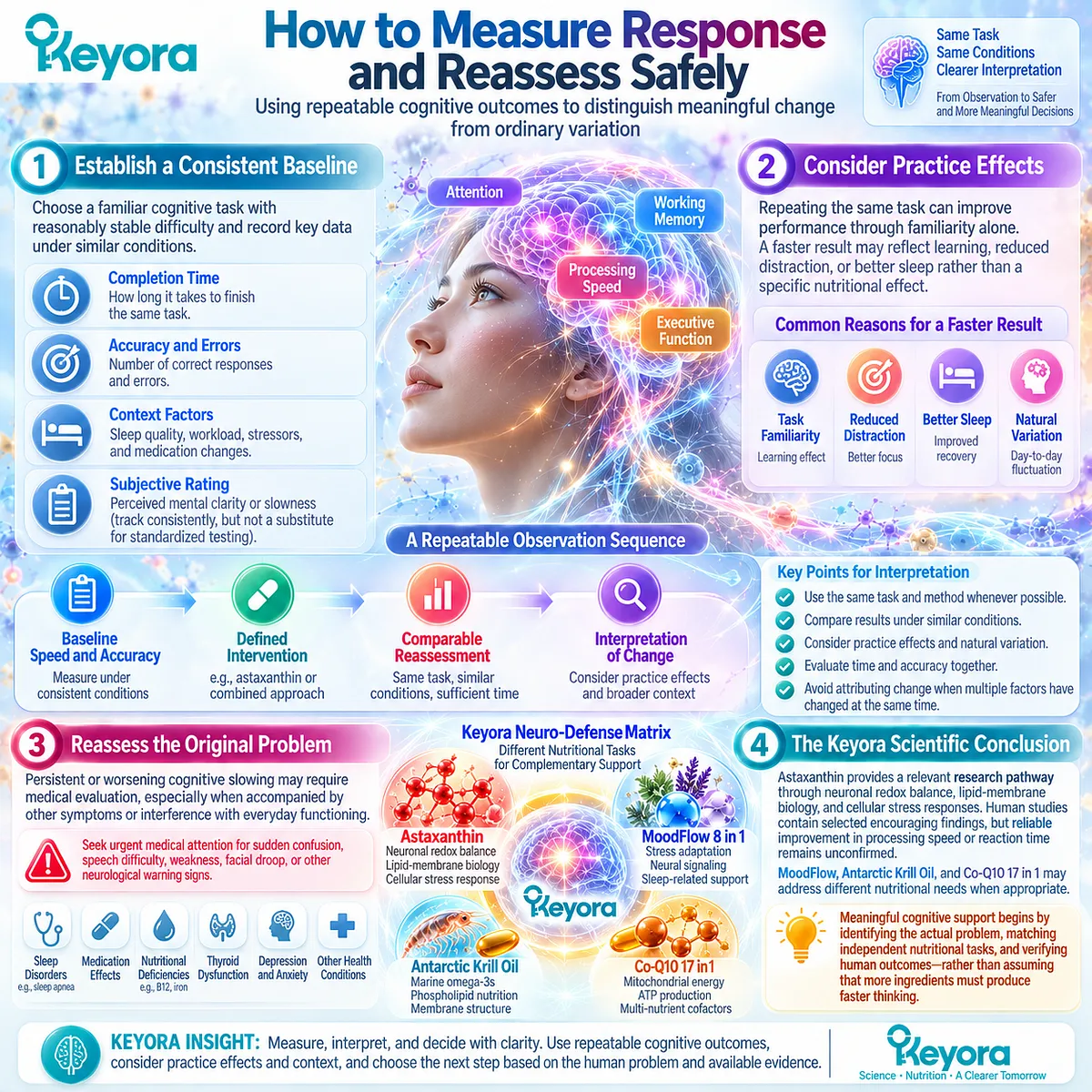
How to Measure Response and Reassess Safely
Using repeatable cognitive outcomes to distinguish meaningful change from ordinary variation
Establish a Consistent Baseline
Choose a familiar cognitive task with reasonably stable difficulty.
Record completion time and errors, together with relevant factors such as sleep quality, workload, and medication changes.
Subjective slowness can also be tracked, but personal ratings should not be confused with standardized cognitive testing.
Consider Practice Effects
Repeating the same task can improve performance through familiarity alone.
A faster result may therefore reflect learning, reduced distraction, or better sleep rather than a specific nutritional effect.
The observation sequence is:
Baseline Speed and Accuracy → Defined Intervention → Comparable Reassessment → Interpretation of Change
Changes should be considered alongside the broader circumstances in which they occurred.
Reassess the Original Problem
Persistent or worsening cognitive slowing may require medical evaluation, especially when accompanied by other symptoms or interference with everyday functioning.
Sudden confusion, speech difficulty, or weakness warrants urgent medical attention.
The Keyora Scientific Conclusion
Astaxanthin provides a relevant research pathway through neuronal redox balance, lipid-membrane biology, and cellular stress responses. Human studies contain selected encouraging findings, but reliable improvement in processing speed or reaction time remains unconfirmed.
MoodFlow, Antarctic Krill Oil, and Co-Q10 17 in 1 may address different nutritional needs when appropriate.
Within the Keyora Neuro-Defense Matrix, meaningful cognitive support begins by identifying the actual problem, matching independent nutritional tasks, and verifying human outcomes rather than assuming that more ingredients must produce faster thinking.
This article is for educational and informational purposes only. It does not provide medical advice, diagnosis, treatment, cure, prevention, disease outcome claims, hormone restoration claims, fertility outcome claims, or formula-specific clinical efficacy claims.