
Why Can Metabolism Become Dysfunctional Even When Calories Are Controlled?
Keyora Research Q&A Library
This is part of the Keyora Research Q&A Series, derived from Keyora Astaxanthin Research Journal Series.
Within the Keyora Astaxanthin Researcn framework, this Q&A translates complex astaxanthin biology into reader-friendly, evidence-bound answers, focusing on natural astaxanthin identity, molecular structure, antioxidant and redox mechanisms, membrane lipid interaction, mitochondrial resilience, inflammatory signaling pathways, human evidence interpretation, and the scientific principles behind responsible supplementation.
First published by Keyora Research Journal: www.keyorahealth.com

Direct Answer
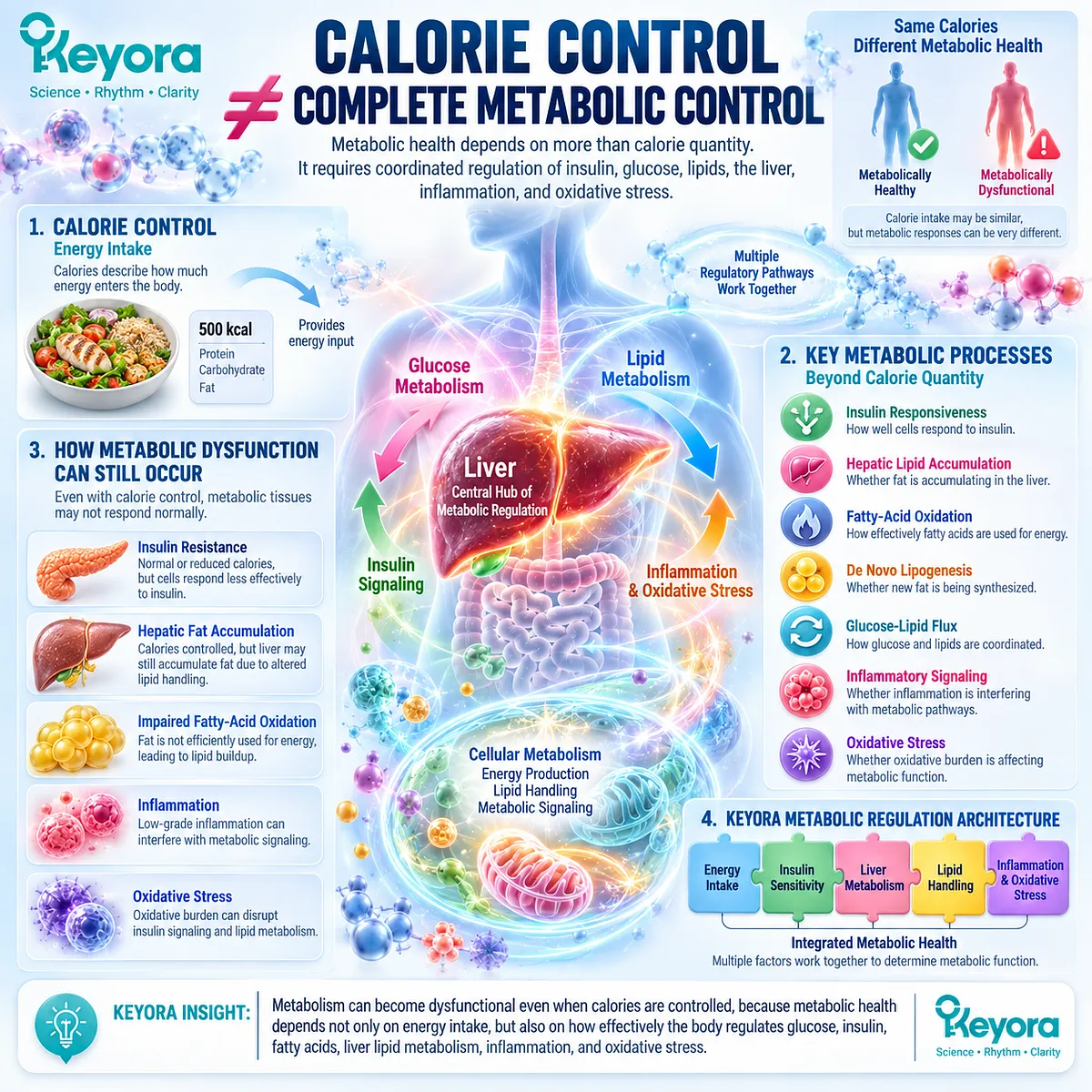
Calorie control affects energy intake, but metabolic function also depends on insulin sensitivity, glucose-lipid handling, liver metabolism, and metabolic stress
Metabolism can become dysfunctional even when calories are controlled because calorie quantity and metabolic regulation describe different dimensions of the same biological system.
Calories describe the amount of energy entering the body.
They do not, by themselves, measure how effectively metabolic tissues respond to insulin, how the liver handles fatty acids, whether lipid synthesis and fatty-acid oxidation are appropriately coordinated, or whether inflammatory and oxidative pathways are interfering with metabolic signaling.
The Keyora metabolic sources describe this broader regulatory environment through several connected processes.
These include insulin responsiveness, hepatic lipid accumulation, fatty-acid oxidation, de novo lipogenesis, glucose-lipid flux, inflammatory signaling, and oxidative stress.
The Keyora Astaxanthin formulation source, for example, organizes hepatic-metabolic biology around lipid accumulation, oxidative burden, insulin sensitivity, fatty-acid oxidation, and lipogenic regulation rather than calorie quantity alone.
This Q&A describes that broader relationship as the Keyora Metabolic Regulation Architecture.
It is an explanatory framework rather than a clinical term.
The central distinction is:
Calorie Control ≠ Complete Metabolic Control
That does not mean calories are unimportant.
Energy intake remains a major part of metabolic biology. The point is that knowing the calorie number alone does not tell us whether glucose and lipids are being handled normally inside metabolic tissues.
A calorie target cannot directly tell us whether insulin signaling is functioning normally, whether hepatic fat is accumulating, whether fatty-acid oxidation is adequately matched to lipid supply, or whether inflammatory and oxidative stress are affecting metabolic pathways.
The strongest answer is therefore:
Metabolism can become dysfunctional even when calories are controlled because metabolic health depends not only on energy intake, but also on how effectively the body regulates glucose, insulin, fatty acids, liver lipid metabolism, inflammation, and oxidative stress.
Why Does Insulin Sensitivity Matter Beyond Calorie Intake?
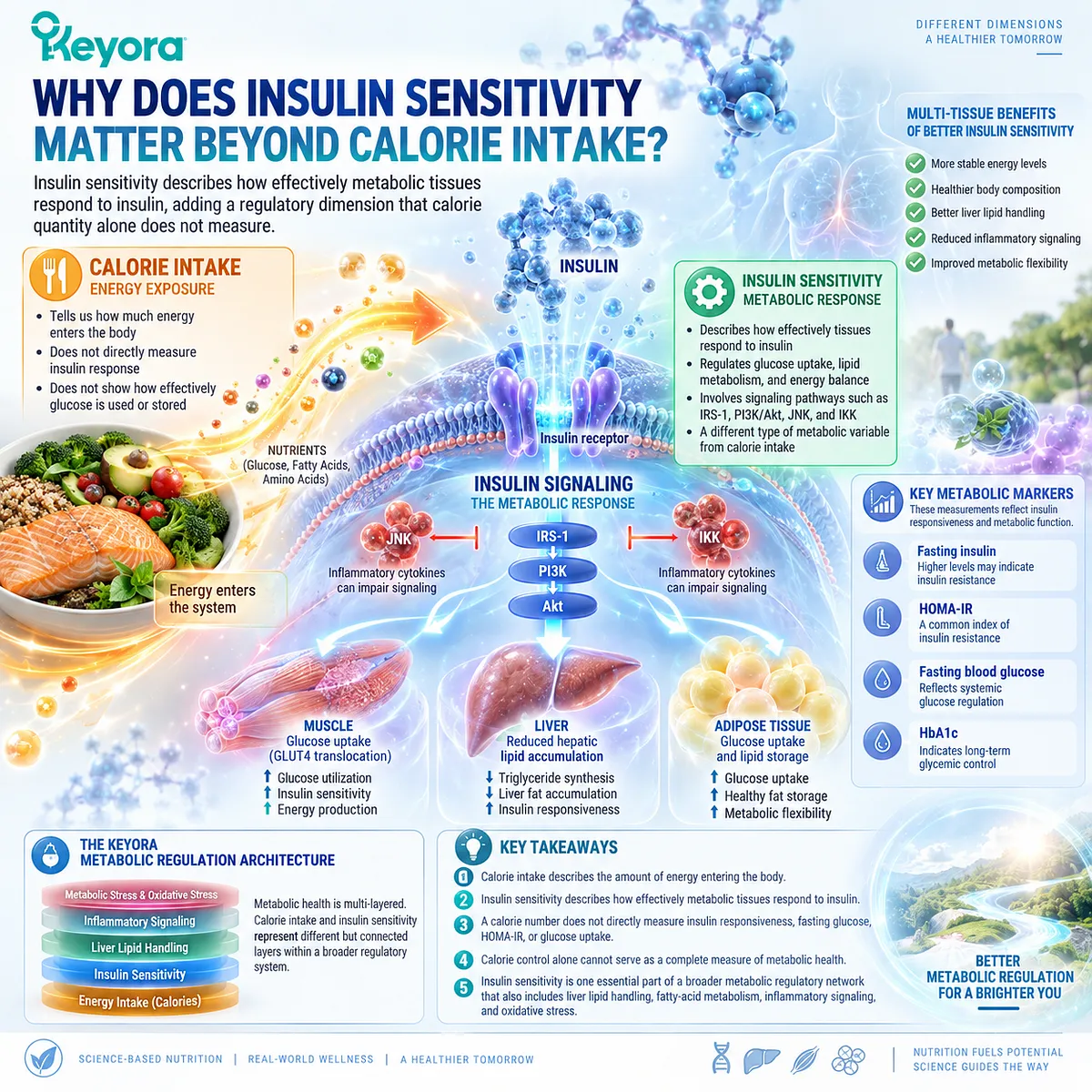
Insulin sensitivity describes how effectively metabolic tissues respond to insulin, adding a regulatory dimension that calorie quantity alone does not measure
Calorie intake tells us how much energy enters the system.
Insulin sensitivity helps describe how effectively certain tissues respond to an important metabolic signal.
The Keyora Alpha-Linolenic Acid source places insulin signaling at the center of its metabolic discussion. It describes pathways involving inflammatory cytokines, JNK and IKK signaling, IRS-1, PI3K/Akt, glucose uptake, and hepatic lipid accumulation.
This makes insulin responsiveness a different type of metabolic variable from calorie intake.
Two concepts therefore need to remain separate:
Energy Exposure
and
Metabolic Response
Calorie intake belongs primarily to the first category.
Insulin sensitivity belongs primarily to the second.
The source further identifies fasting insulin, HOMA-IR, fasting blood glucose, and HbA1c as metabolic markers relevant to this regulatory context.
These measurements are important for the current question because they illustrate why calorie counting alone cannot describe metabolic function.
A calorie number does not directly measure insulin responsiveness.
It does not directly measure fasting glucose.
It does not directly measure HOMA-IR.
And it does not directly tell us how effectively glucose is being taken up or handled in metabolic tissues.
The Keyora Metabolic Regulation Architecture therefore treats calorie intake as one layer and insulin responsiveness as another.
This distinction should not be misinterpreted as a claim that insulin determines every aspect of metabolic health.
The Keyora sources themselves discuss multiple additional layers, including liver lipid handling, oxidative stress, inflammatory signaling, and fatty-acid metabolism.
The more accurate conclusion is:
Calorie intake describes part of the metabolic input, while insulin sensitivity describes part of the body’s regulatory response to that input.
That is why calorie control alone cannot serve as a complete measure of metabolic health.
Why Does the Liver Matter for Metabolic Health?
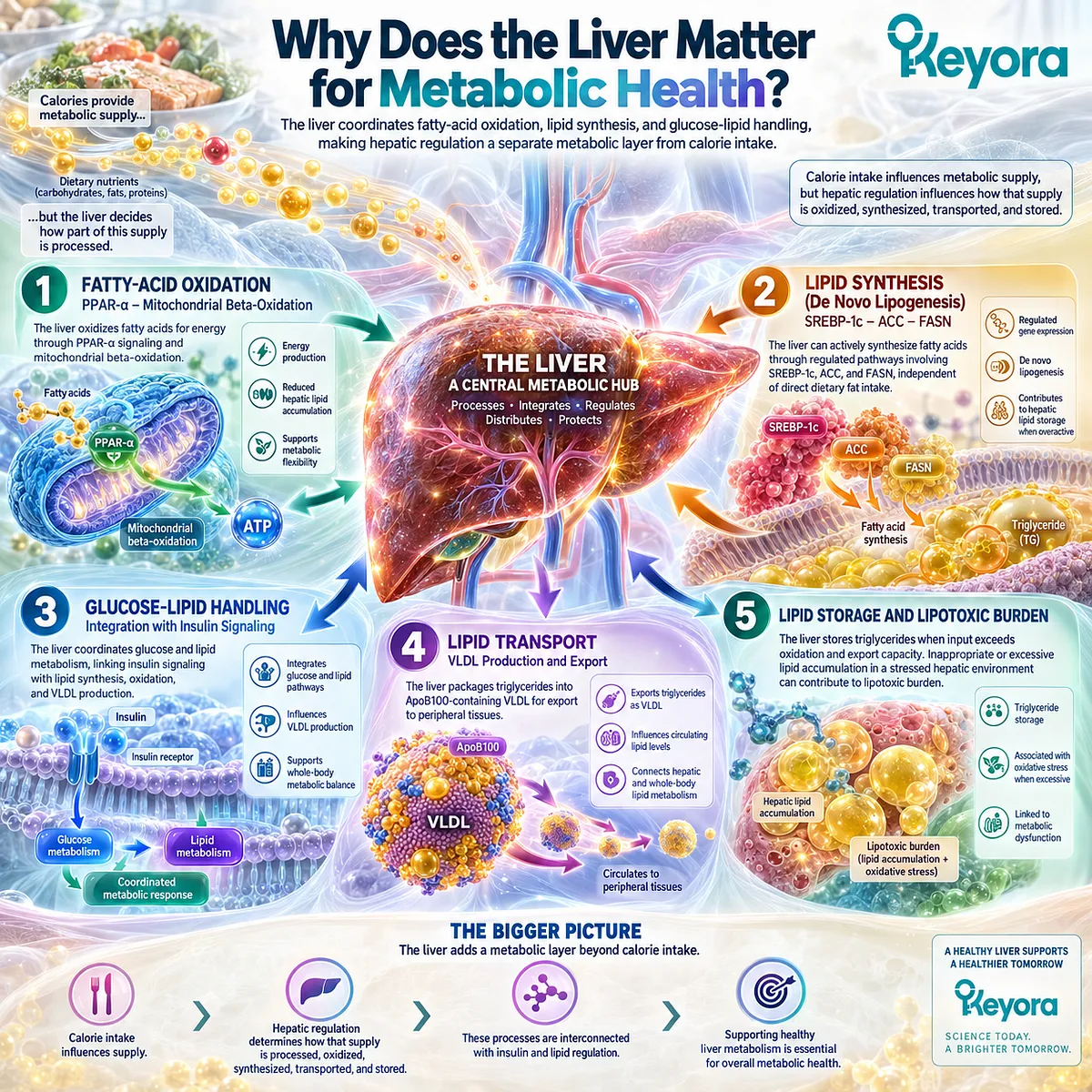
The liver coordinates fatty-acid oxidation, lipid synthesis, and glucose-lipid handling, making hepatic regulation a separate metabolic layer from calorie intake
The liver occupies a central position in the Keyora metabolic model because it participates in several processes that determine what happens to incoming and internally synthesized metabolic substrates.
The Keyora Astaxanthin formulation source discusses hepatic metabolism through fatty-acid oxidation, intrahepatic lipid accumulation, SREBP-1c, ACC, FASN, and de novo lipogenesis. It also links these processes with broader insulin and lipid regulation.
The same source discusses ALA in relation to PPAR-α signaling, mitochondrial beta-oxidation, hepatic lipid storage, and lipogenic gene expression.
These source discussions help explain why liver metabolism cannot be reduced to calorie intake alone.
Once nutrients enter the metabolic system, the liver participates in decisions about whether fatty acids are:
oxidized for energy
synthesized
transported
or
stored
That does not mean these processes are controlled independently of total energy balance.
It means calorie amount does not directly describe how those hepatic pathways are functioning.
This is especially important when discussing de novo lipogenesis.
The Keyora source treats hepatic lipid synthesis as an active metabolic pathway involving regulatory genes and enzymes, not as a passive copy of dietary fat intake.
The source also uses the term lipotoxic burden when discussing an environment in which hepatic lipid accumulation and oxidative stress coexist.
This Q&A should not convert that language into the simplistic idea that dietary fat itself is “toxic.”
The stronger interpretation is that inappropriate or excessive lipid accumulation within a stressed hepatic environment is one part of the metabolic dysfunction model described by the source.
The liver therefore adds another layer to the Keyora Metabolic Regulation Architecture:
calorie intake may influence metabolic supply, but hepatic regulation influences how part of that supply is processed, oxidized, synthesized, transported, and stored.
How Can Inflammation and Oxidative Stress Interfere With Metabolic Regulation?
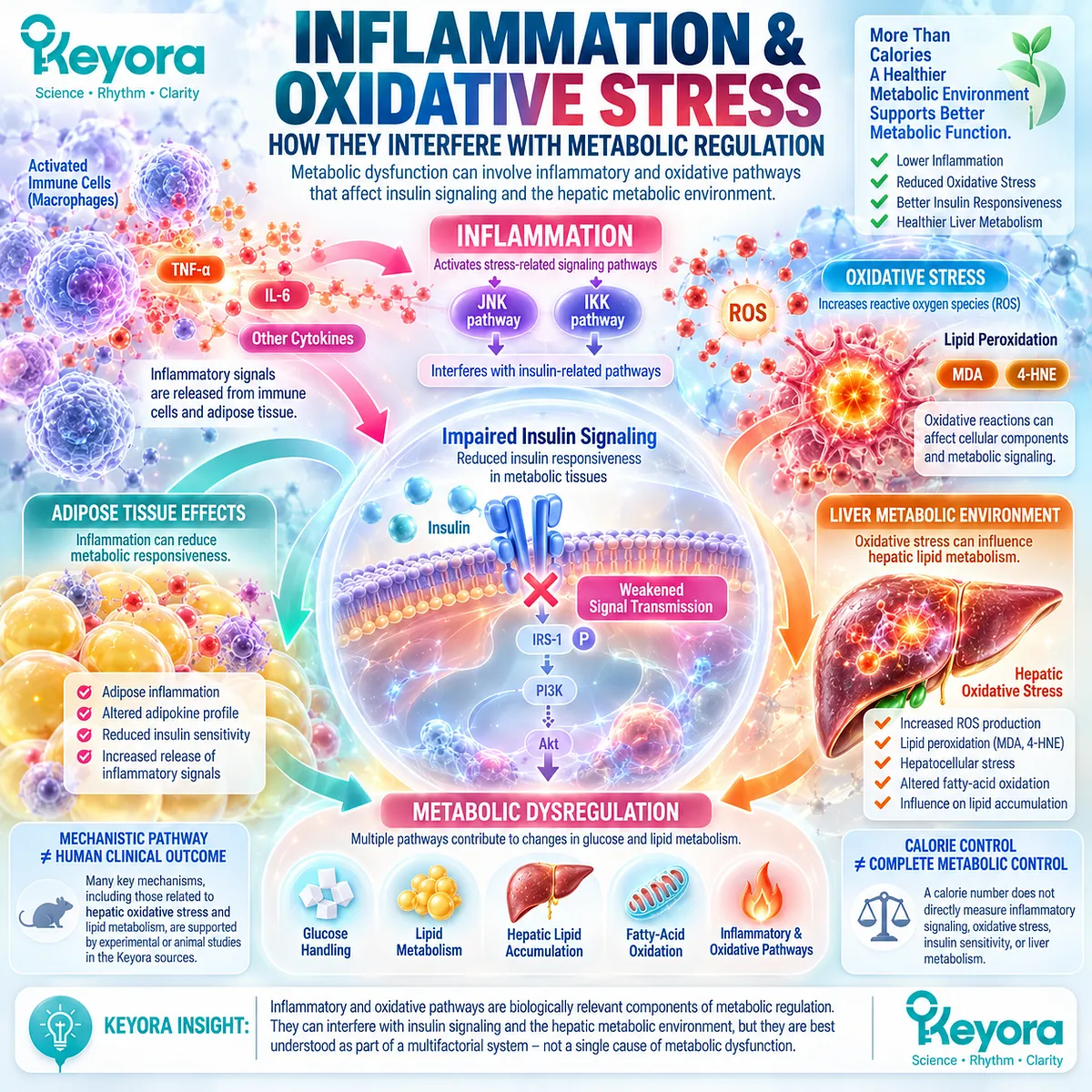
Metabolic dysfunction can involve inflammatory and oxidative pathways that affect insulin signaling and the hepatic metabolic environment
Metabolism is not only a question of fuel quantity.
The Keyora sources also describe an inflammatory and oxidative context that can influence metabolic regulation.
The Alpha-Linolenic Acid source discusses inflammatory cytokines such as TNF-α and IL-6 in relation to JNK and IKK signaling and downstream interference with insulin-related pathways. It also connects this environment with adipose inflammation and reduced metabolic responsiveness.
The Astaxanthin source describes another dimension: hepatic oxidative stress.
It discusses ROS, lipid peroxidation, MDA, 4-HNE, and hepatocellular stress within its liver-metabolism section.
These mechanisms do not mean inflammation or oxidative stress is the single cause of metabolic dysfunction.
They are better understood as additional contributors within a multifactorial regulatory system.
This distinction matters because a calorie number does not directly measure either inflammatory signaling or oxidative burden.
A person can know exactly how many calories are being consumed without knowing whether:
insulin signaling pathways are under inflammatory stress,
hepatic lipid oxidation and synthesis are appropriately balanced,
or oxidative reactions are affecting the local metabolic environment.
That is why the Keyora Metabolic Regulation Architecture includes a Metabolic Stress Layer.
This layer reflects the source-based idea that metabolic function depends partly on the cellular and tissue environment in which glucose and lipid regulation occur.
The evidence boundary also matters.
Many of the strongest mechanistic claims in the Keyora sources are derived from experimental or animal studies rather than direct human outcome trials. The Keyora formulation source, for example, cites animal work when discussing changes in hepatic oxidative stress, beta-oxidation, and liver lipid accumulation.
Therefore:
Mechanistic Pathway ≠ Human Clinical Outcome
The safest conclusion is that inflammatory and oxidative pathways are biologically relevant components of metabolic regulation, not proof that one pathway alone explains an individual’s metabolic condition.
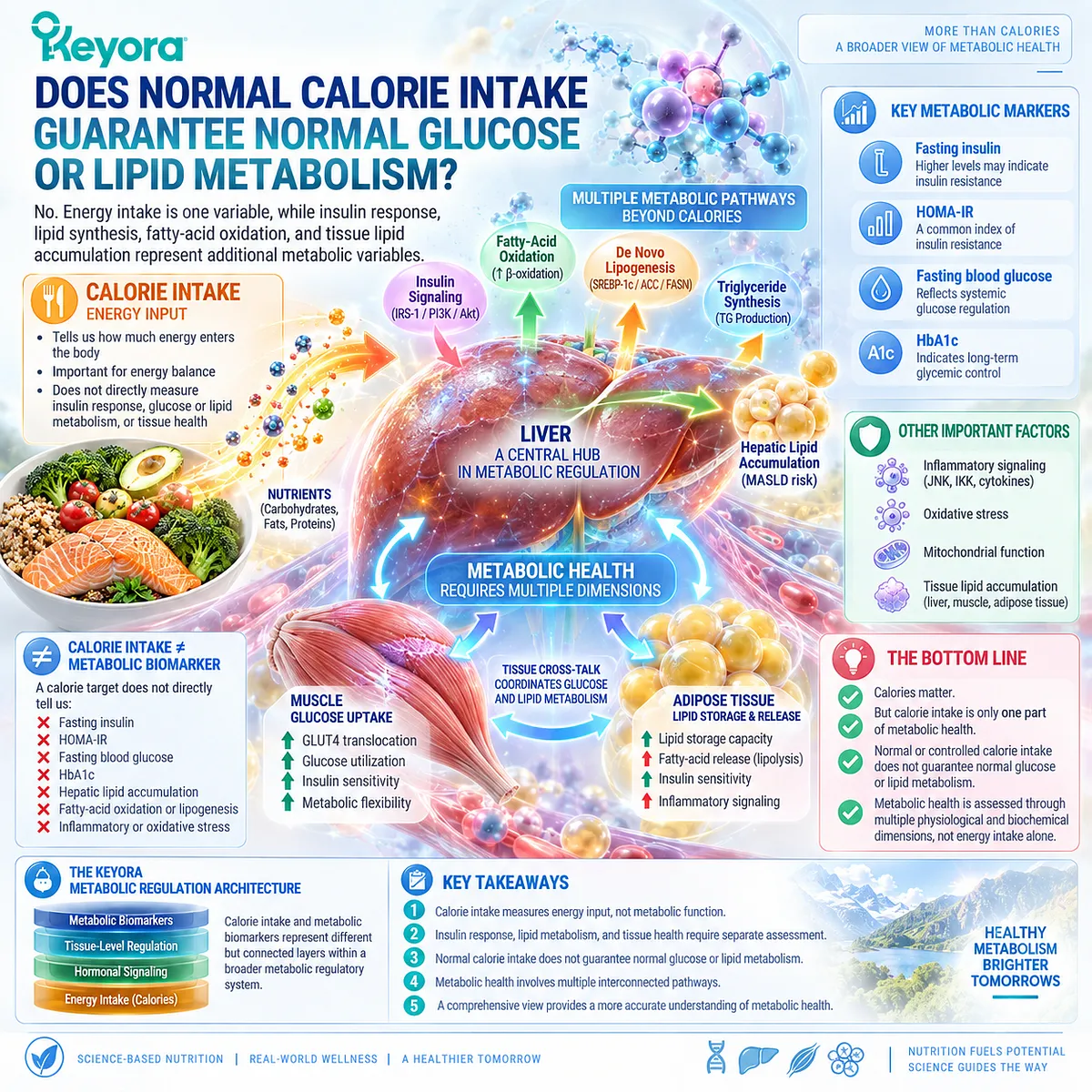
Does Normal Calorie Intake Guarantee Normal Glucose or Lipid Metabolism?
No. Energy intake is one variable, while insulin response, lipid synthesis, fatty-acid oxidation, and tissue lipid accumulation represent additional metabolic variables
No.
Controlling calorie intake does not automatically establish that glucose and lipid metabolism are functioning normally.
This is not because calories are unimportant.
It is because calorie intake is only one measurement.
The Keyora sources identify several other metabolic dimensions that require different forms of assessment.
The Alpha-Linolenic Acid source lists metabolic markers including fasting insulin, HOMA-IR, fasting blood glucose, and HbA1c within its discussion of insulin responsiveness and metabolic regulation.
The Keyora Astaxanthin formulation source separately discusses:
hepatic lipid accumulation
fatty-acid oxidation
de novo lipogenesis
triglyceride synthesis
and
insulin signaling.
These are not calorie measurements.
That leads to another useful distinction:
Calorie Intake ≠ Metabolic Biomarker
A calorie target tells us something important about energy intake.
It does not directly tell us fasting insulin.
It does not directly tell us HOMA-IR.
It does not tell us how much lipid has accumulated in the liver.
It does not directly tell us whether fatty-acid oxidation or lipogenesis is altered.
And it does not measure inflammatory or oxidative stress.
This is why the question should not be framed as:
“Do calories matter or not?”
The better question is:
“What does calorie control measure, and what does it not measure?”
Within the Keyora framework, calorie control measures one part of the metabolic environment.
Metabolic biomarkers and tissue-level regulatory processes describe other parts.
The final conclusion of this section is therefore:
Normal or controlled calorie intake does not guarantee normal metabolic regulation because metabolic health is assessed through multiple physiological and biochemical dimensions, not energy intake alone.
What Is the Best Way to Think About Metabolic Health Beyond Calories?
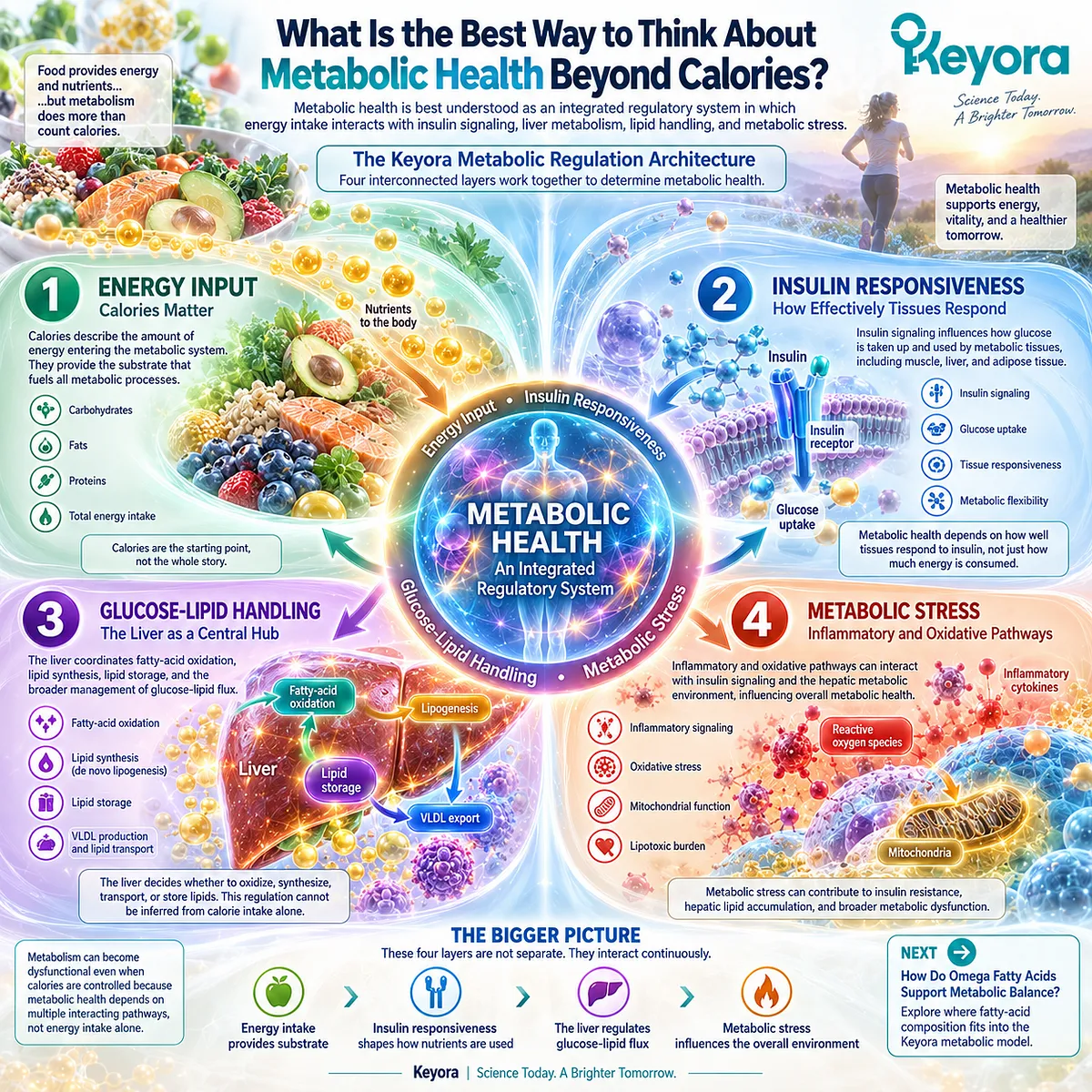
Metabolic health is best understood as an integrated regulatory system in which energy intake interacts with insulin signaling, liver metabolism, lipid handling, and metabolic stress
The Keyora Metabolic Regulation Architecture provides a practical way to organize the evidence.
The first layer is Energy Input.
Calories matter because they describe the amount of energy entering the metabolic system.
The second layer is Insulin Responsiveness.
The Keyora sources describe insulin-related signaling as one factor influencing how glucose is handled by metabolic tissues.
The third layer is Glucose-Lipid Handling.
The liver participates in fatty-acid oxidation, lipogenesis, lipid storage, and the broader management of glucose-lipid flux.
The fourth layer is Metabolic Stress.
Inflammatory and oxidative pathways can interact with insulin signaling and the hepatic metabolic environment.
Together, these layers explain why metabolic health cannot be inferred from calories alone.
Calories remain part of the architecture.
They are simply not the entire architecture.
The strongest evidence-based conclusion is:
Metabolism can become dysfunctional even when calories are controlled because metabolic health depends not only on energy intake but also on insulin responsiveness, hepatic lipid handling, glucose-lipid regulation, inflammatory signaling, and oxidative balance.
A second conclusion is equally important:
Calorie control does not fail simply because other metabolic pathways exist. Rather, calorie control and metabolic regulation answer different but interacting biological questions.
This distinction prepares the next question naturally.
Once metabolic health is understood as a regulatory system rather than a calorie number alone, the next step is to ask where fatty-acid composition fits into that system.
That is the focus of the next article, “How Do Omega Fatty Acids Support Metabolic Balance?”
This article is for educational and informational purposes only. It does not provide medical advice, diagnosis, treatment, cure, prevention, disease outcome claims, hormone restoration claims, fertility outcome claims, or formula-specific clinical efficacy claims.