
Why Are My Eyes So Tired After Work?
Keyora Research Q&A Library
This is part of the Keyora Research Q&A Series, derived from Keyora Astaxanthin Research Journal Series.
Within the Keyora Astaxanthin Research framework, this Q&A translates complex astaxanthin biology into reader-friendly, evidence-bound answers, focusing on natural astaxanthin identity, molecular structure, antioxidant and redox mechanisms, membrane lipid interaction, mitochondrial resilience, inflammatory signaling pathways, human evidence interpretation, and the scientific principles behind responsible supplementation.
First published by Keyora Research Journal: www.keyorahealth.com
After a full day in front of a computer, it’s normal to wonder why your eyes feel more exhausted than the rest of your body.
Whether you spend your day answering emails, coding, designing, trading, or sitting through back-to-back video calls, long hours of screen use place continuous demands on your visual system. By the end of the day, your eyes may feel dry, sore, heavy, or simply harder to focus.
The good news is that, for most people, this doesn’t mean anything is permanently wrong with their eyes. It usually means your eyes have been working continuously—and haven’t had enough time to recover.
Short Answer
If your eyes feel tired after work, the most common reasons are prolonged screen use, reduced blinking, continuous focusing, and mental fatigue. Together, these place sustained stress on your visual system. Most cases are temporary and can improve with better screen habits, adequate rest, and nutrition that supports normal eye function.
Why Do Your Eyes Feel Tired After Work?
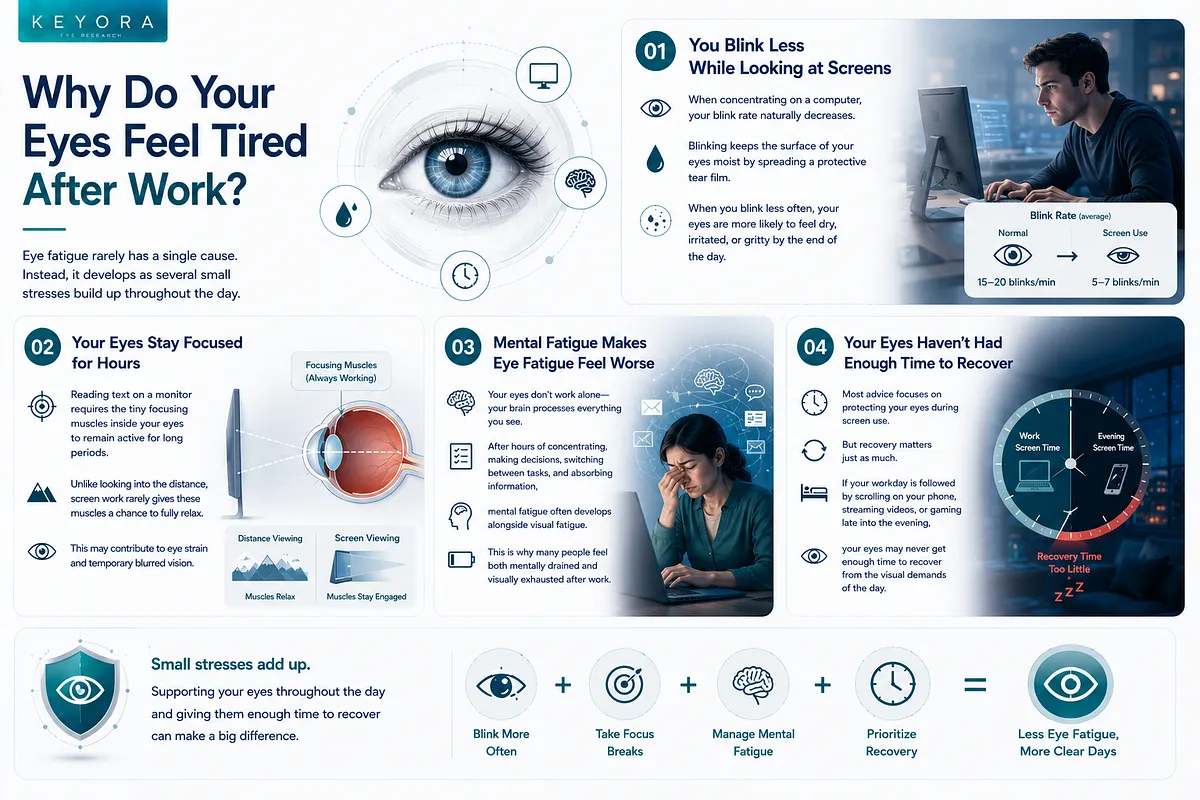
Eye fatigue rarely has a single cause. Instead, it develops as several small stresses build up throughout the day.
1. You Blink Less While Looking at Screens
When concentrating on a computer, your blink rate naturally decreases.
Blinking keeps the surface of your eyes moist by spreading a protective tear film. When you blink less often, your eyes are more likely to feel dry, irritated, or gritty by the end of the day.
2. Your Eyes Stay Focused for Hours
Reading text on a monitor requires the tiny focusing muscles inside your eyes to remain active for long periods.
Unlike looking into the distance, screen work rarely gives these muscles a chance to fully relax, which may contribute to eye strain and temporary blurred vision.
3. Mental Fatigue Makes Eye Fatigue Feel Worse
Your eyes don’t work alone—your brain processes everything you see.
After hours of concentrating, making decisions, switching between tasks, and absorbing information, mental fatigue often develops alongside visual fatigue. This is why many people feel both mentally drained and visually exhausted after work.
4. Your Eyes Haven’t Had Enough Time to Recover
Most advice focuses on protecting your eyes during screen use.
But recovery matters just as much.
If your workday is followed by scrolling on your phone, streaming videos, or gaming late into the evening, your eyes may never get enough time to recover from the visual demands of the day.
How Can You Help Your Eyes Recover?
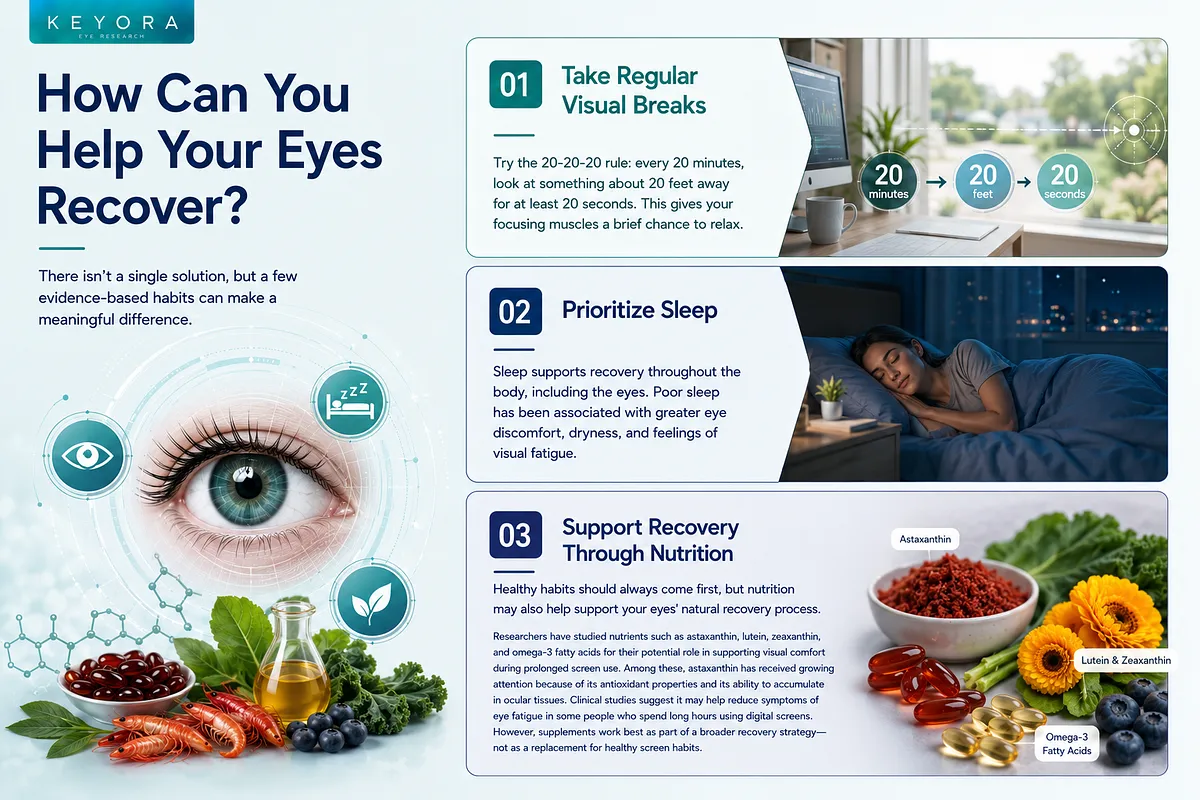
There isn’t a single solution, but a few evidence-based habits can make a meaningful difference.
Take Regular Visual Breaks
Try the 20-20-20 rule: every 20 minutes, look at something about 20 feet away for at least 20 seconds. This gives your focusing muscles a brief chance to relax.
Prioritize Sleep
Sleep supports recovery throughout the body, including the eyes. Poor sleep has been associated with greater eye discomfort, dryness, and feelings of visual fatigue.
Support Recovery Through Nutrition
Healthy habits should always come first, but nutrition may also help support your eyes’ natural recovery process.
Researchers have studied nutrients such as astaxanthin, lutein, zeaxanthin, and omega-3 fatty acids for their potential role in supporting visual comfort during prolonged screen use.
Among these, astaxanthin has received growing attention because of its antioxidant properties and its ability to accumulate in ocular tissues. Clinical studies suggest it may help reduce symptoms of eye fatigue in some people who spend long hours using digital screens. However, supplements work best as part of a broader recovery strategy—not as a replacement for healthy screen habits.
What Does the Research Say?
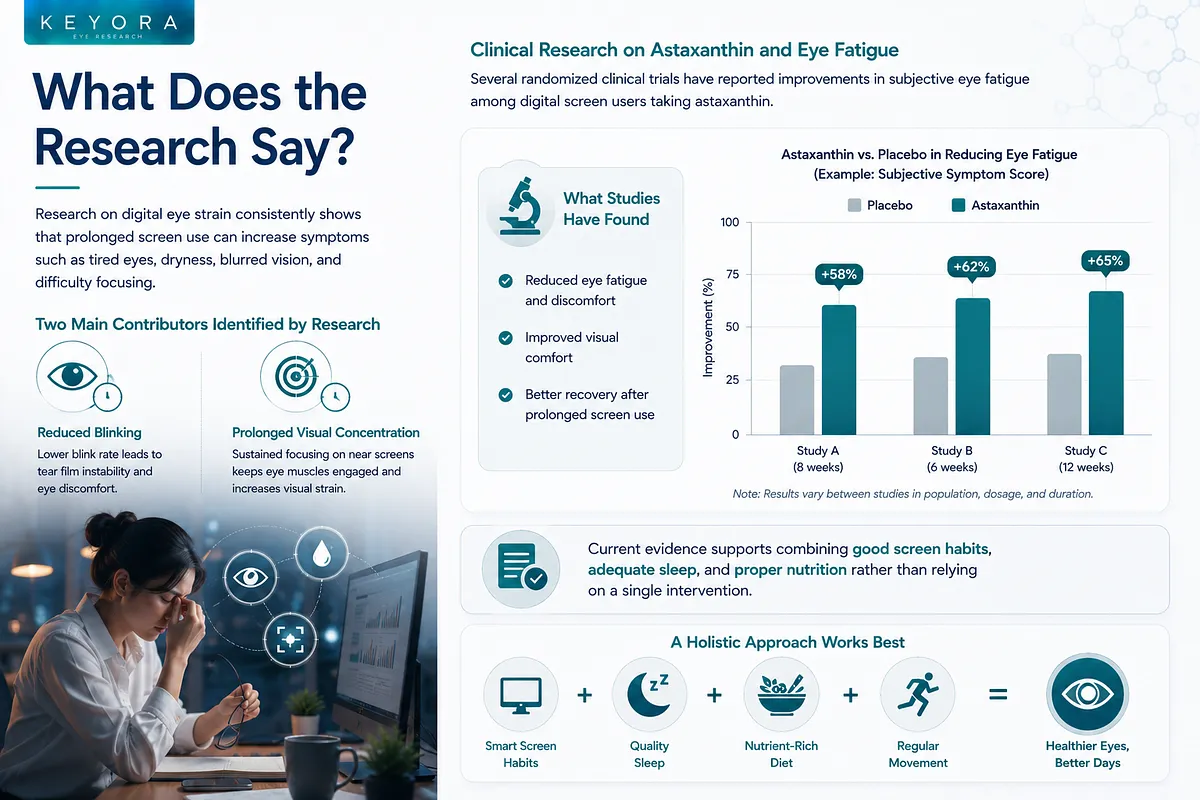
Research on digital eye strain consistently shows that prolonged screen use can increase symptoms such as tired eyes, dryness, blurred vision, and difficulty focusing.
Studies also suggest that reduced blinking and prolonged visual concentration are two of the main contributors.
Several randomized clinical trials have reported improvements in subjective eye fatigue among digital screen users taking astaxanthin, although results vary between studies. Current evidence supports combining good screen habits, adequate sleep, and proper nutrition rather than relying on a single intervention.
Frequently Asked Questions
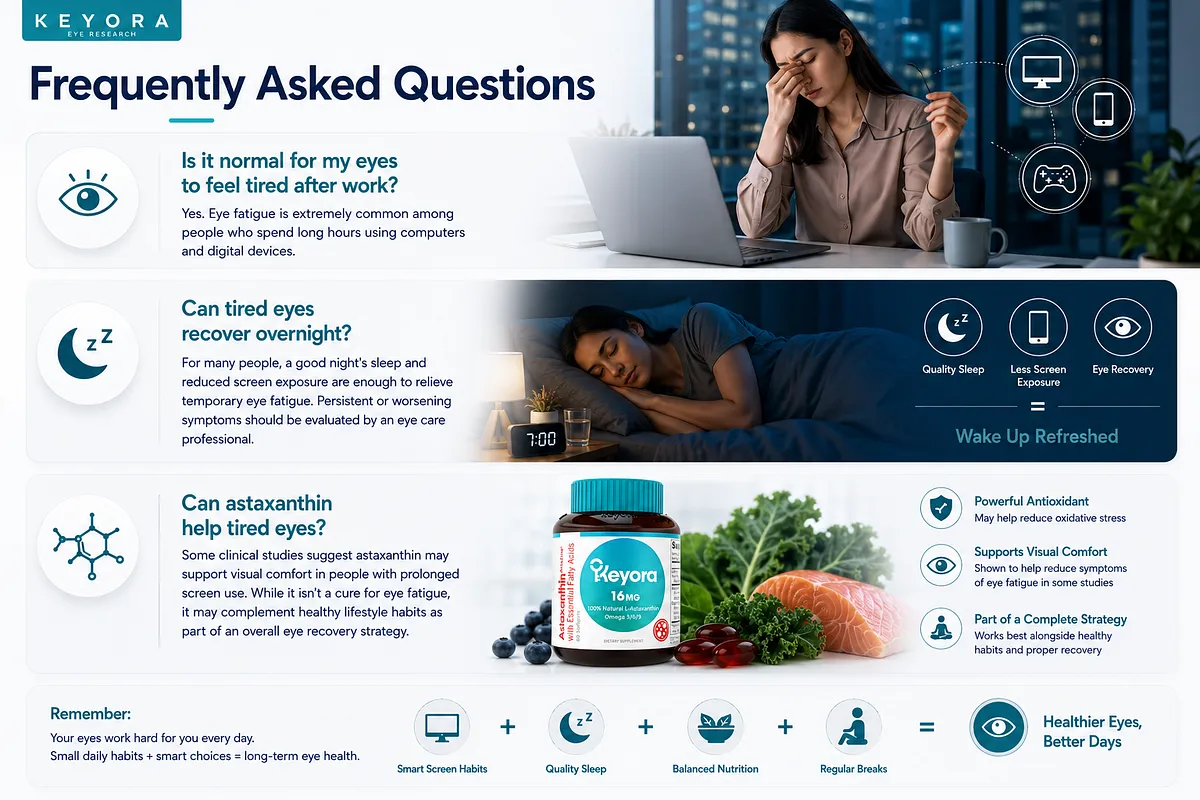
Is it normal for my eyes to feel tired after work?
Yes. Eye fatigue is extremely common among people who spend long hours using computers and digital devices.
Can tired eyes recover overnight?
For many people, a good night’s sleep and reduced screen exposure are enough to relieve temporary eye fatigue. Persistent or worsening symptoms should be evaluated by an eye care professional.
Can astaxanthin help tired eyes?
Some clinical studies suggest astaxanthin may support visual comfort in people with prolonged screen use. While it isn’t a cure for eye fatigue, it may complement healthy lifestyle habits as part of an overall eye recovery strategy.
Key Takeaways
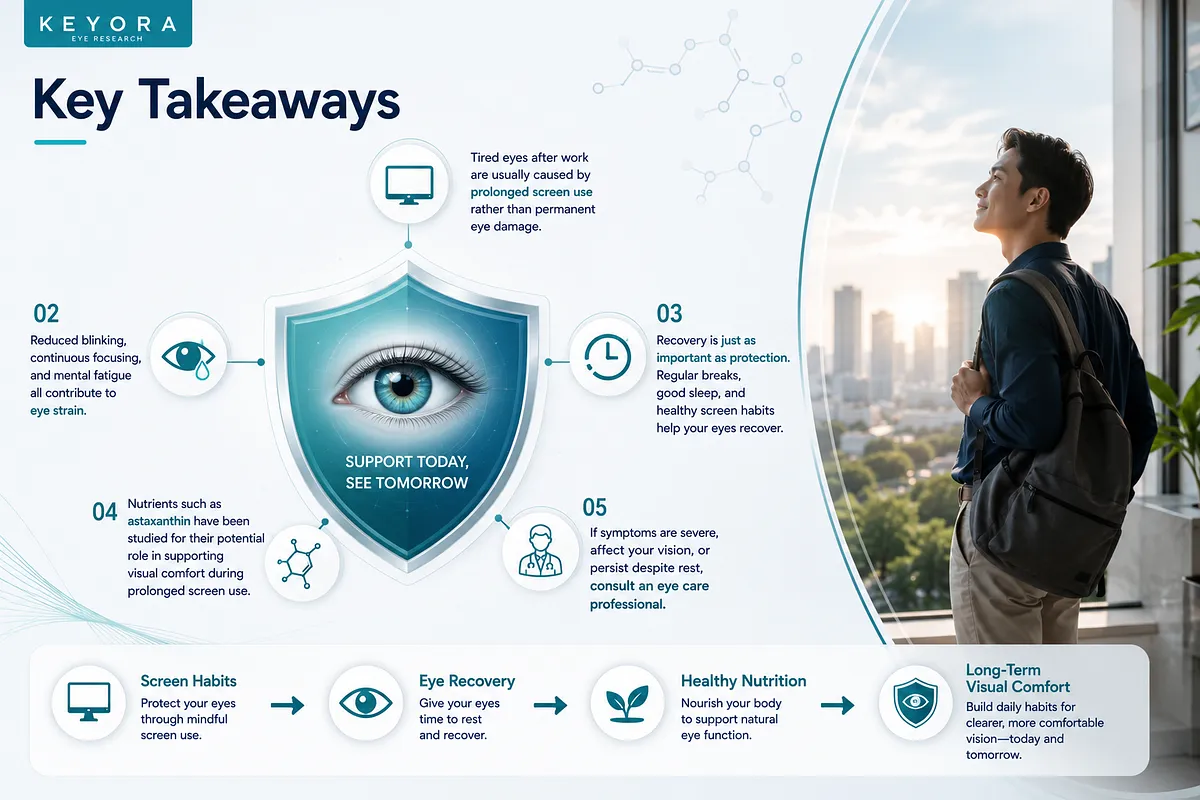
· Tired eyes after work are usually caused by prolonged screen use rather than permanent eye damage.
· Reduced blinking, continuous focusing, and mental fatigue all contribute to eye strain.
· Recovery is just as important as protection. Regular breaks, good sleep, and healthy screen habits help your eyes recover.
· Nutrients such as astaxanthin have been studied for their potential role in supporting visual comfort during prolonged screen use.
· If symptoms are severe, affect your vision, or persist despite rest, consult an eye care professional.
References
· Rosenfield M. Computer Vision Syndrome (Digital Eye Strain): A Review.
· Sheppard AL, Wolffsohn JS. Digital Eye Strain: Prevalence, Measurement and Amelioration.
· American Optometric Association. Computer Vision Syndrome.
· Iwasaki T, et al. Effects of Astaxanthin on Eye Fatigue in Visual Display Terminal Workers.