
Why Are Heart Mitochondria Vulnerable to Lipid Peroxidation?
Keyora Research Q&A Library
This is part of the Keyora Research Q&A Series, derived from Keyora Astaxanthin Research Journal Series.
Within the Keyora Astaxanthin Researcn framework, this Q&A translates complex astaxanthin biology into reader-friendly, evidence-bound answers, focusing on natural astaxanthin identity, molecular structure, antioxidant and redox mechanisms, membrane lipid interaction, mitochondrial resilience, inflammatory signaling pathways, human evidence interpretation, and the scientific principles behind responsible supplementation.
First published by Keyora Research Journal: www.keyorahealth.com

Direct Answer
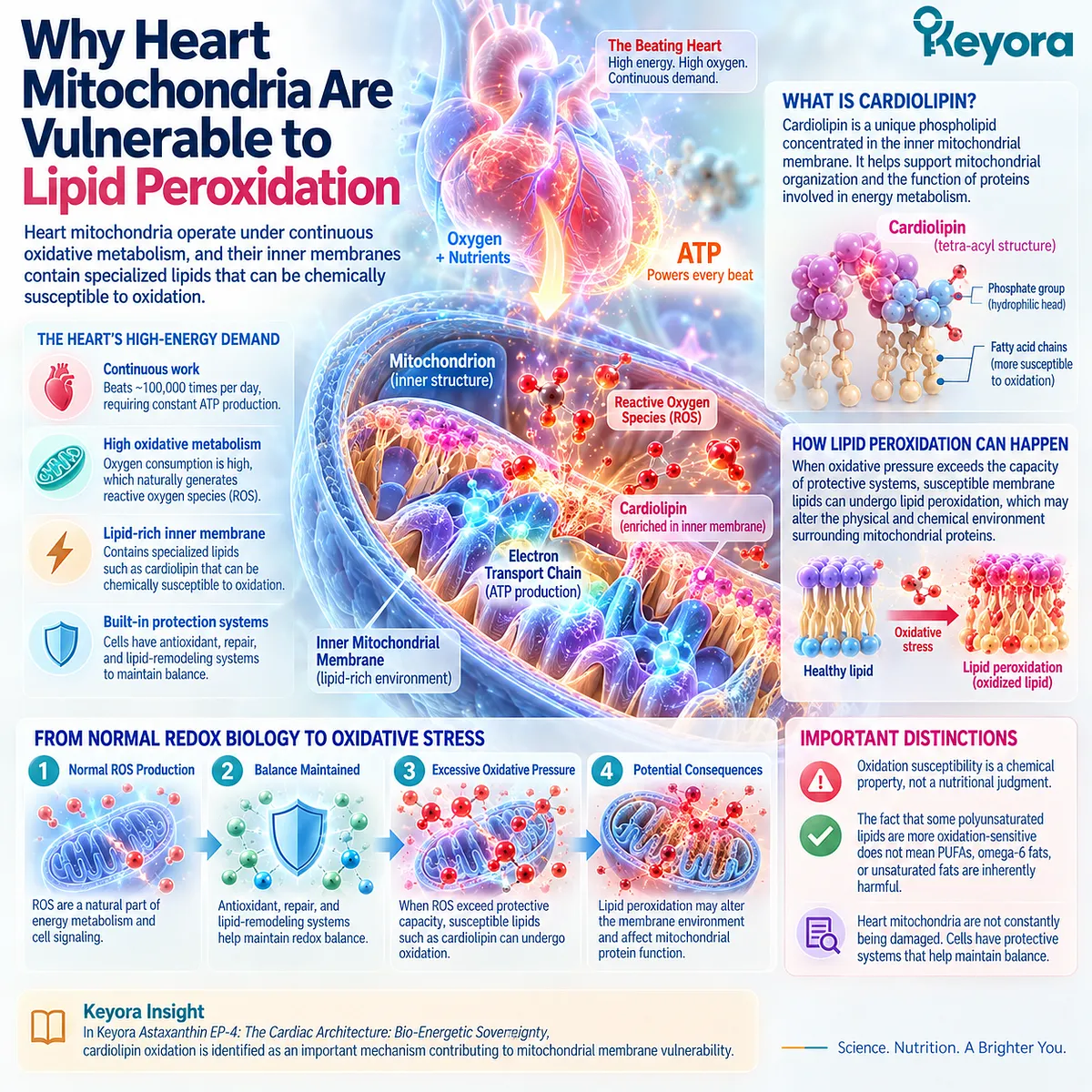
Heart mitochondria are vulnerable to lipid peroxidation because they operate under continuous oxidative metabolism while their inner membranes contain specialized lipids that can be chemically susceptible to oxidation.
This does not mean that heart mitochondria are constantly being damaged. Reactive oxygen species are part of normal redox biology, and cells have antioxidant, repair, and lipid-remodeling systems that help maintain balance.
The vulnerability appears when oxidative pressure becomes greater than those protective systems can manage.
Under those conditions, susceptible membrane lipids can undergo lipid peroxidation, which may alter the physical and chemical environment surrounding mitochondrial proteins involved in energy metabolism.
Cardiolipin is especially relevant because it is concentrated in the inner mitochondrial membrane and helps support mitochondrial organization.
In Keyora Astaxanthin EP-4: The Cardiac Architecture: Bio-Energetic Sovereignty, cardiolipin oxidation is identified as an important mechanism contributing to mitochondrial membrane vulnerability.
A critical distinction is:
Oxidation susceptibility is a chemical property, not a nutritional judgment.
The fact that some polyunsaturated lipids are more oxidation-sensitive does not mean PUFAs, omega-6 fats, or unsaturated fats are inherently harmful.
Why the Heart Creates a High Redox Demand
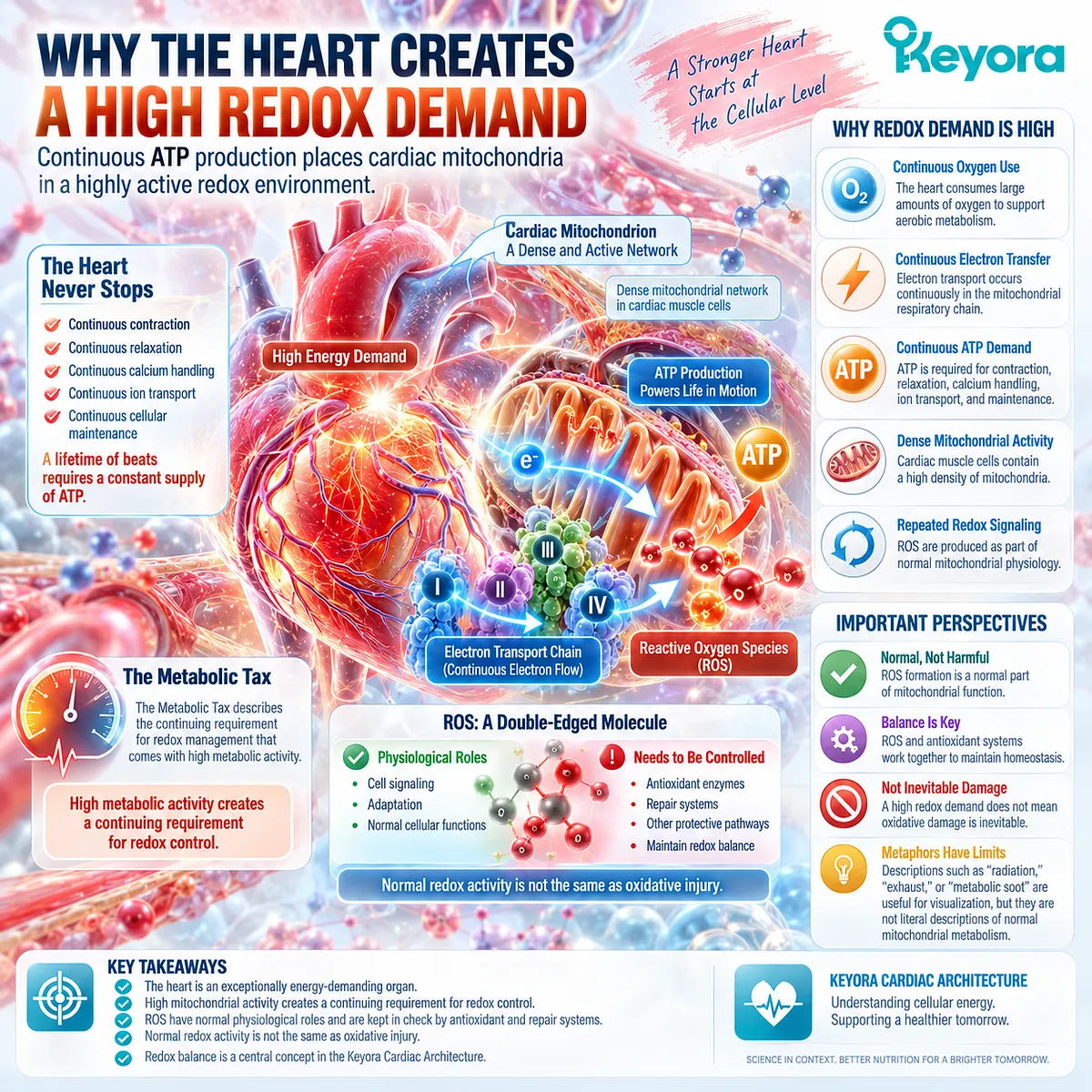
Continuous ATP production places cardiac mitochondria in a highly active redox environment
The heart is an exceptionally energy-demanding organ because it must continue working without long periods of rest.
Its muscle cells contain a dense mitochondrial network because ATP must be regenerated continuously for contraction, relaxation, calcium handling, ion transport, and cellular maintenance.
That high mitochondrial activity means electron transport is occurring continuously.
As electrons move through the electron transport chain, reactive oxygen species can also form. This is a normal part of mitochondrial physiology and does not automatically mean oxidative damage is occurring.
The important issue is redox balance.
Reactive oxygen species can participate in normal signaling and adaptation. At the same time, antioxidant enzymes, repair systems, and other protective pathways help keep reactive chemistry under control.
In the Keyora Cardiac Architecture, this continuing requirement for redox management is described through The Metabolic Tax.
The term should not be interpreted as meaning that every heartbeat damages the heart.
A more accurate interpretation is:
High metabolic activity creates a continuing requirement for redox control.
The heart is therefore exposed to a combination of:
continuous oxygen use
continuous electron transfer
continuous ATP demand
dense mitochondrial activity
and repeated redox signaling
That does not make oxidative damage inevitable.
It simply means that mitochondrial membranes operate in an environment where redox control is biologically important.
This distinction matters because the source material sometimes uses dramatic descriptions of ROS as “radiation,” “exhaust,” or “metabolic soot.” Those metaphors are useful for visualization, but they should not be mistaken for a literal description of normal mitochondrial metabolism.
Normal redox activity is not the same thing as oxidative injury.
Why Mitochondrial Membrane Lipids Can Be Oxidation-Sensitive
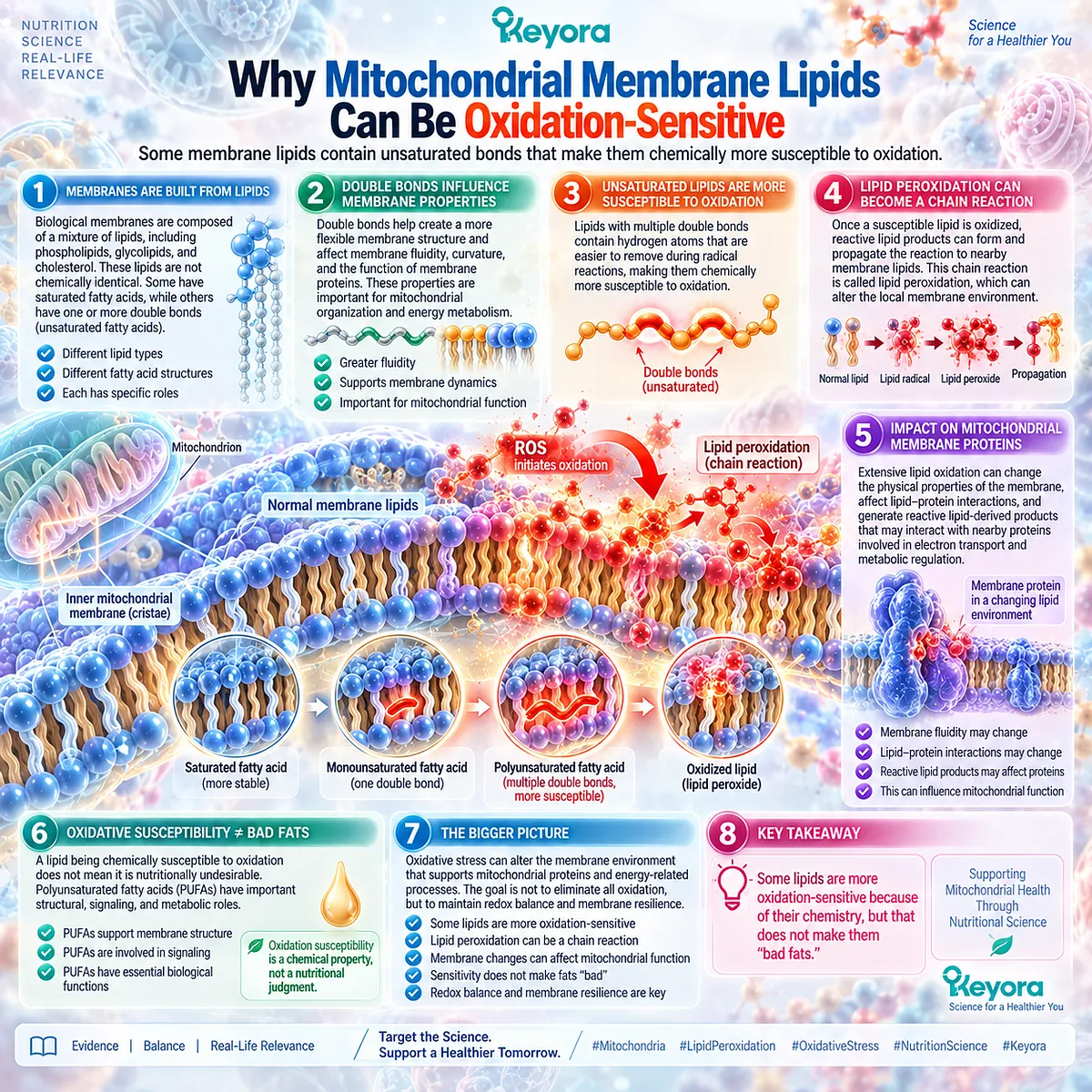
Some membrane lipids contain unsaturated bonds that make them chemically more susceptible to oxidation
Biological membranes are built from lipids.
These lipids are not all chemically identical. Some contain saturated fatty acids, while others contain one or more double bonds.
Double bonds influence membrane structure and fluidity, but they also affect how lipids respond to oxidative chemistry.
Lipids with multiple double bonds can be more susceptible to oxidation because certain hydrogen atoms near those double bonds are easier to remove during radical reactions.
Once a susceptible lipid is oxidized, the reaction can propagate.
This is the basis of lipid peroxidation.
Lipid peroxidation is not simply one molecule being damaged once. It can become a chain reaction in which reactive lipid products help spread oxidation through neighboring membrane lipids.
That is why oxidative stress can alter more than a single molecule.
It can change the local membrane environment.
For mitochondria, that matters because membrane proteins involved in electron transport and metabolic regulation operate inside this lipid environment.
If membrane lipids become extensively oxidized, the physical properties of the membrane can change.
Fluidity may change.
Lipid-protein interactions may change.
Reactive lipid-derived products may also interact with nearby proteins.
This creates a plausible pathway by which oxidative stress can affect mitochondrial function.
But an important nutritional boundary must remain visible.
A lipid being chemically susceptible to oxidation does not mean it is nutritionally undesirable.
Polyunsaturated fatty acids have important structural, signaling, and metabolic roles.
The Keyora Master Question Map explicitly requires that oxidative susceptibility not be converted into a negative judgment about PUFAs, omega-6, or any nutrient class.
So the correct interpretation is:
Some lipids are more oxidation-sensitive because of their chemistry, but that does not make them “bad fats.”
Why Cardiolipin Matters
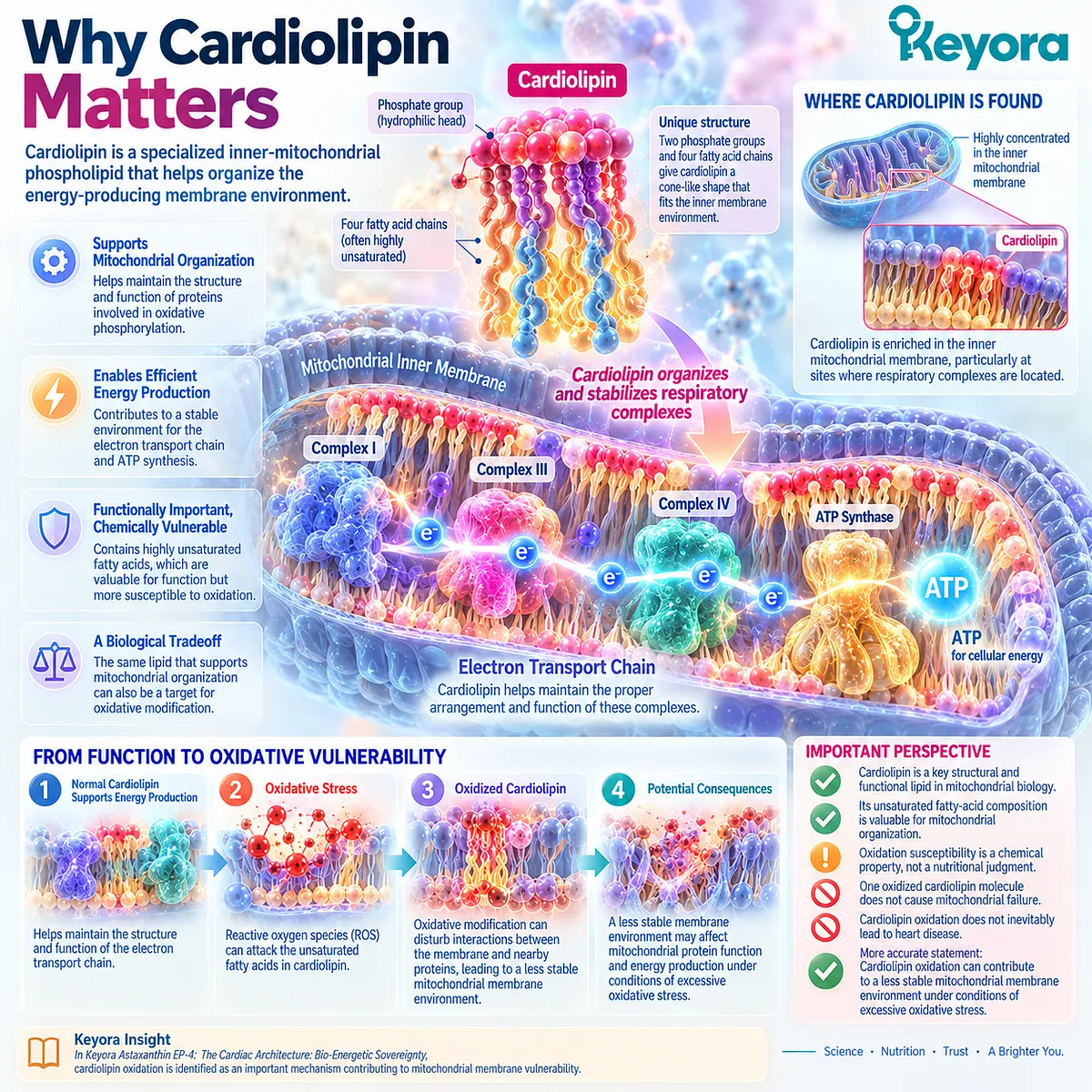
Cardiolipin is a specialized inner-mitochondrial phospholipid that helps organize the energy-producing membrane environment
Cardiolipin is one of the most important lipids for understanding mitochondrial membrane biology.
It is concentrated in the inner mitochondrial membrane and contributes to the organization and function of proteins involved in oxidative phosphorylation.
The EP-4 source describes cardiolipin as a structural component supporting the electron transport chain and emphasizes its vulnerability to oxidative modification.
The source also cites broader literature on cardiolipin and mitochondrial function, including Paradies and colleagues, reinforcing the importance of cardiolipin in mitochondrial biology.
Cardiolipin is especially relevant because its fatty-acid composition can contain highly unsaturated chains.
That makes cardiolipin an important functional lipid and, at the same time, a potentially oxidation-sensitive one.
This combination creates a biological tradeoff.
The same membrane lipid can be structurally valuable and chemically vulnerable.
That is why it would be wrong to frame cardiolipin’s unsaturation as a defect.
Its composition contributes to mitochondrial organization.
Its susceptibility to oxidation simply means that redox control becomes important.
When cardiolipin undergoes oxidative modification, interactions between the membrane and nearby proteins can be disturbed.
This does not mean that one oxidized cardiolipin molecule causes mitochondrial failure.
Nor does it mean that cardiolipin oxidation inevitably leads to heart disease.
The more accurate statement is:
Cardiolipin oxidation can contribute to a less stable mitochondrial membrane environment under conditions of excessive oxidative stress.
That is a mechanistic relationship.
It should not be converted into a diagnosis.
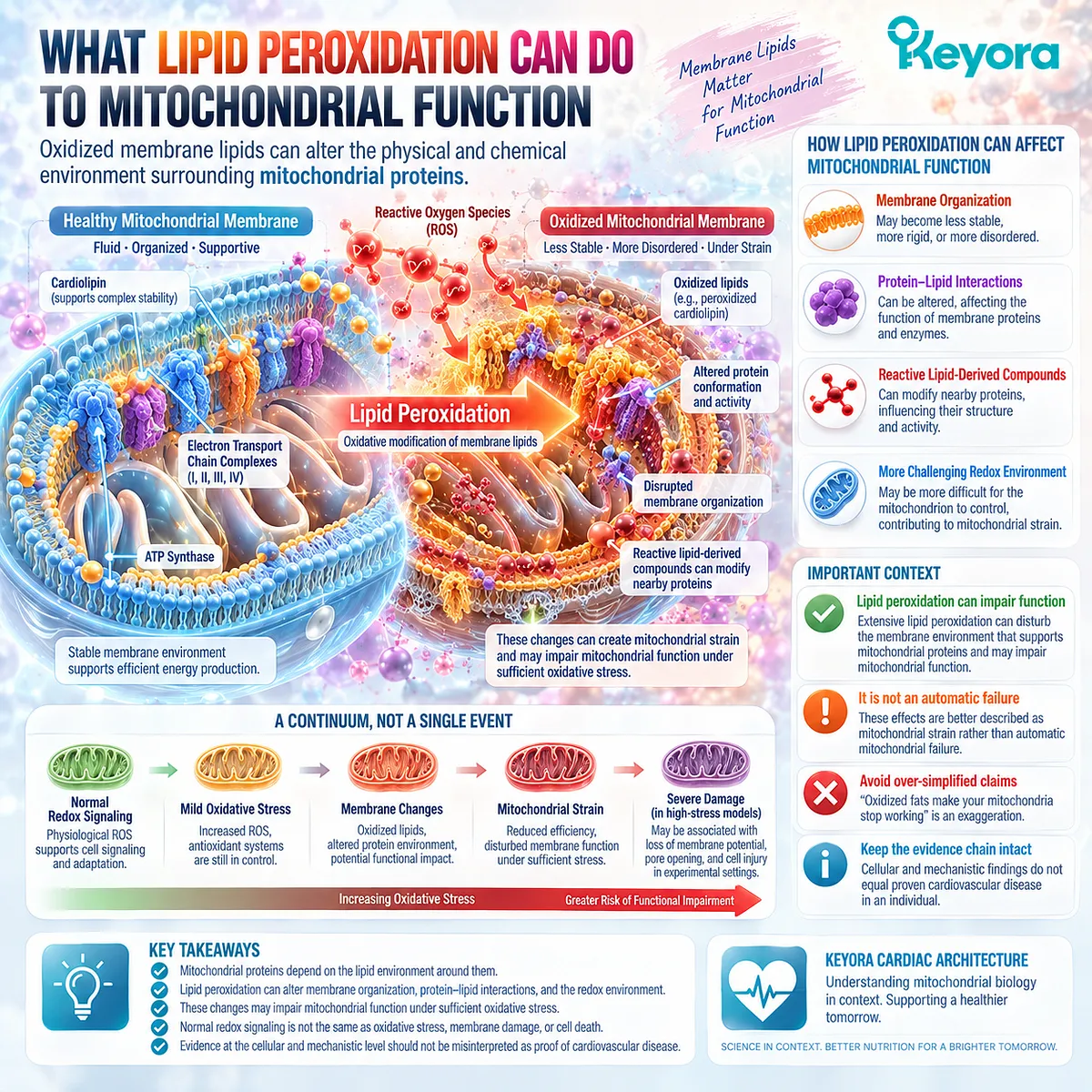
What Lipid Peroxidation Can Do to Mitochondrial Function
Oxidized membrane lipids can alter the physical and chemical environment surrounding mitochondrial proteins
The main consequence of lipid peroxidation is not simply that “fat gets damaged.”
The larger issue is that mitochondrial proteins depend on the membrane environment around them.
Electron transport complexes, transport proteins, enzymes, and other membrane-associated systems all operate within a lipid matrix.
If that matrix undergoes significant oxidative change, several things can happen.
Membrane organization may become less stable.
Protein-lipid interactions may change.
Reactive lipid-derived compounds may modify nearby proteins.
The overall redox environment may become more difficult for the mitochondrion to control.
These effects can create what is better described as mitochondrial strain rather than automatic mitochondrial failure.
The source material goes much further, linking cardiolipin oxidation with membrane destabilization, pore opening, loss of membrane potential, and severe cell injury in high-stress models.
Those pathways are biologically important, but they should not be compressed into a simple consumer claim such as:
“oxidized fats make your mitochondria stop working.”
That would exaggerate the evidence.
The appropriate interpretation is more specific:
Extensive lipid peroxidation can disturb the membrane environment that supports mitochondrial proteins and may impair mitochondrial function under sufficient oxidative stress.
This is also why lipid peroxidation should be discussed in degrees.
Normal redox signaling is not the same as oxidative stress.
Oxidative stress is not the same as severe membrane damage.
Membrane damage is not the same as cell death.
And none of these stages should be treated as proof of cardiovascular disease in an individual.
The evidence chain must remain intact.
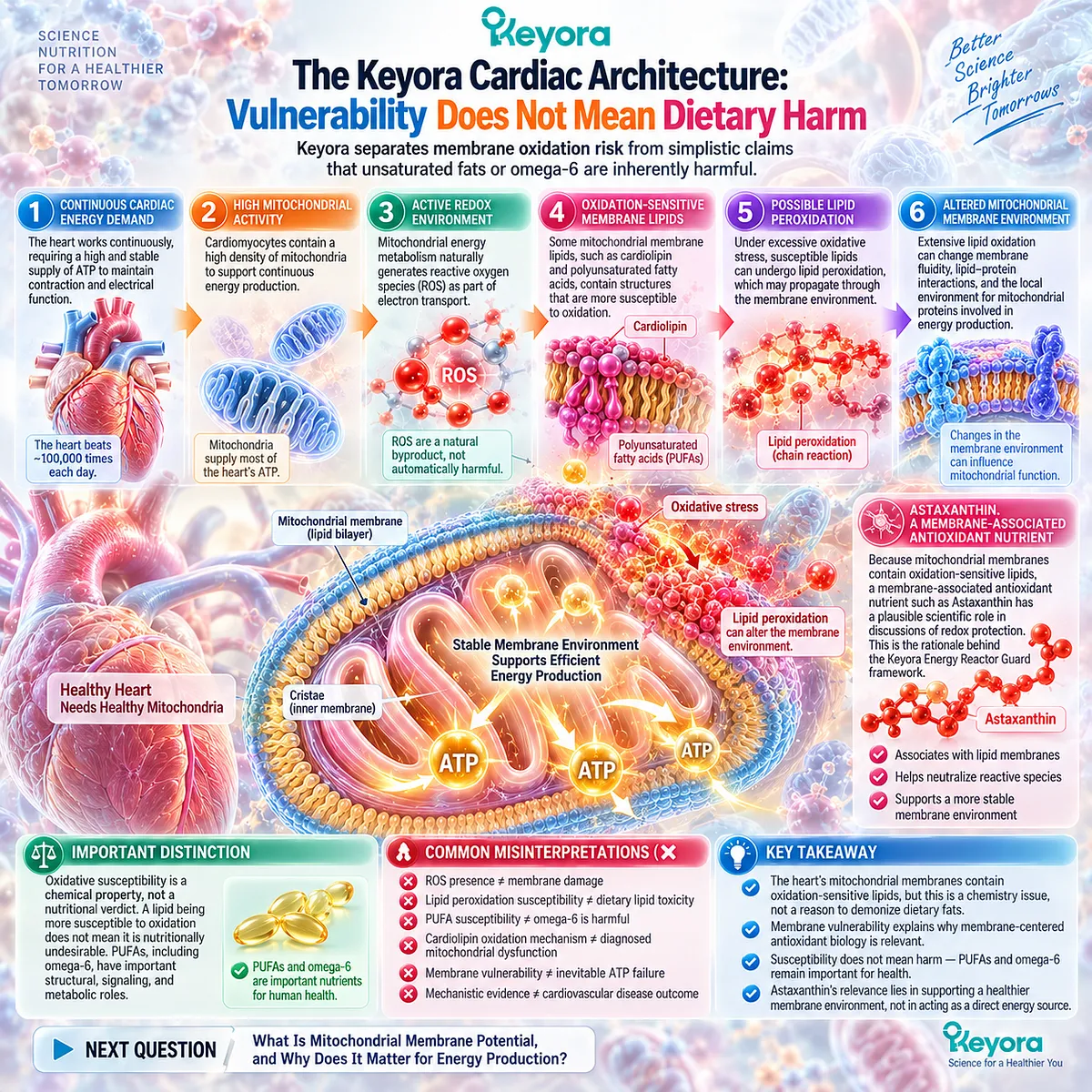
The Keyora Cardiac Architecture: Vulnerability Does Not Mean Dietary Harm
Keyora separates membrane oxidation risk from simplistic claims that unsaturated fats or omega-6 are inherently harmful
The Keyora Cardiac Architecture treats mitochondrial lipid vulnerability as a chemistry problem, not as a reason to demonize dietary fat.
The full logic is:
Continuous cardiac energy demand
→ high mitochondrial activity
→ active redox environment
→ oxidation-sensitive membrane lipids
→ possible lipid peroxidation under excessive oxidative stress
→ altered mitochondrial membrane environment
That sequence explains why membrane-centered antioxidant biology is relevant.
It does not justify saying that unsaturated fats are dangerous.
It does not justify saying that omega-6 fats damage mitochondria.
And it does not mean that consuming PUFAs automatically increases mitochondrial oxidative injury.
The Master Question Map explicitly requires this distinction because oxidative susceptibility is a chemical property rather than a nutritional verdict.
This is also where Astaxanthin becomes relevant again.
If mitochondrial membranes contain oxidation-sensitive lipids, then a membrane-associated antioxidant nutrient has a plausible scientific role in discussions of redox protection.
That is the rationale behind the Keyora Energy Reactor Guard framework.
But the boundary remains clear:
ROS presence ≠ membrane damage
Lipid peroxidation susceptibility ≠ dietary lipid toxicity
PUFA susceptibility ≠ omega-6 is harmful
Cardiolipin oxidation mechanism ≠ diagnosed mitochondrial dysfunction
Membrane vulnerability ≠ inevitable ATP failure
Mechanistic evidence ≠ cardiovascular disease outcome
The next step is to understand another part of mitochondrial membrane biology:
What Is Mitochondrial Membrane Potential, and Why Does It Matter for Energy Production?
This article is for educational and informational purposes only. It does not provide medical advice, diagnosis, treatment, cure, prevention, disease outcome claims, hormone restoration claims, fertility outcome claims, or formula-specific clinical efficacy claims.