
What Makes a Lipid-Based Antioxidant Formula Different?
Keyora Research Q&A Library
This is part of the Keyora Research Q&A Series, derived from Keyora Astaxanthin Research Journal Series.
Within the Keyora Astaxanthin Researcn framework, this Q&A translates complex astaxanthin biology into reader-friendly, evidence-bound answers, focusing on natural astaxanthin identity, molecular structure, antioxidant and redox mechanisms, membrane lipid interaction, mitochondrial resilience, inflammatory signaling pathways, human evidence interpretation, and the scientific principles behind responsible supplementation.
First published by Keyora Research Journal: www.keyorahealth.com
Direct Answer
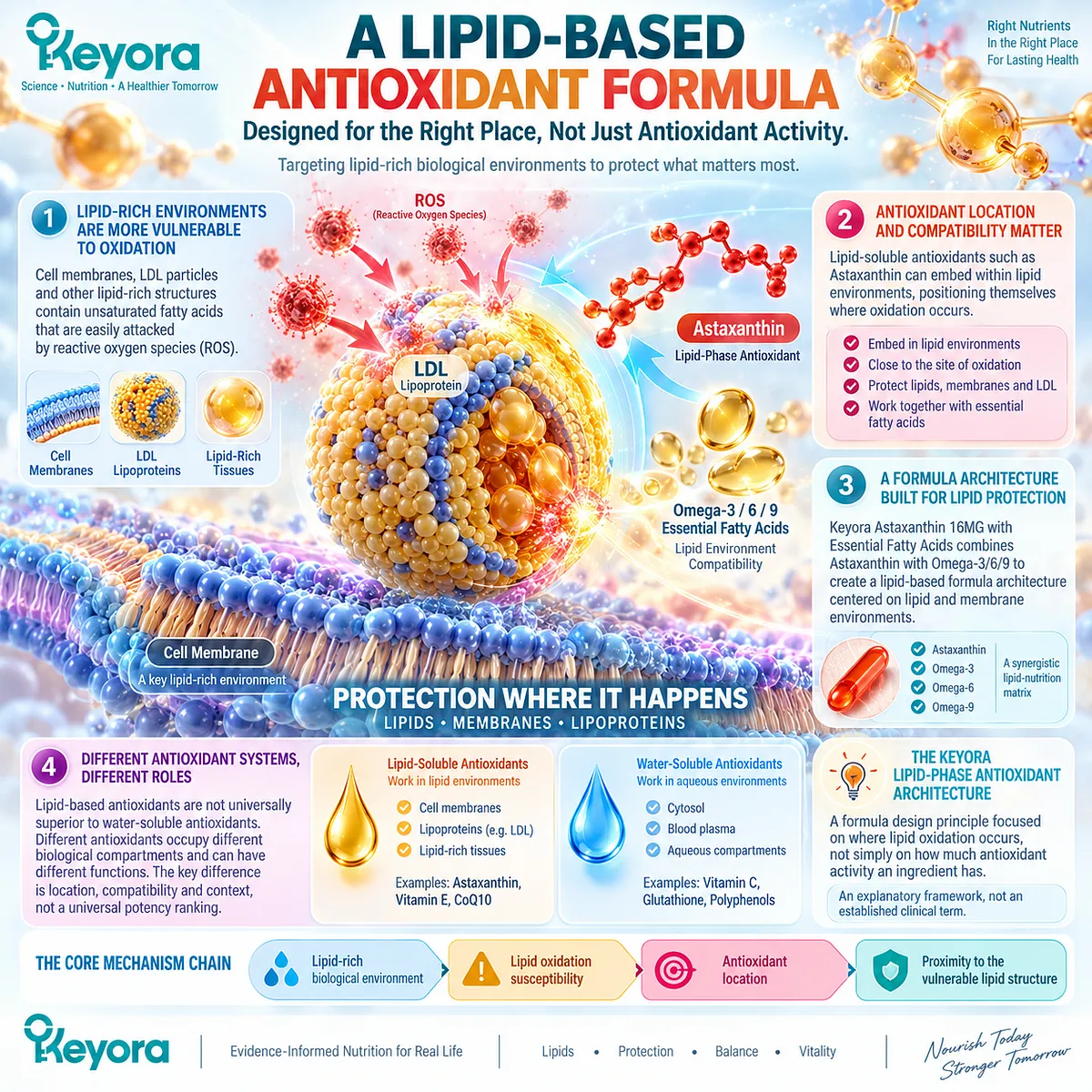
A lipid-based antioxidant formula is designed around protecting lipid-rich biological environments rather than treating antioxidant activity as a location-independent property
A lipid-based antioxidant formula is different because its design considers where oxidative modification can occur.
Instead of treating antioxidant activity as though every antioxidant works identically throughout every biological compartment, a lipid-based architecture focuses on lipid-rich structures such as cell membranes and lipoproteins.
In Keyora Astaxanthin EP-3: The Endothelial Architecture: Cardiovascular & Cerebrovascular Sovereignty, this location-based logic is especially clear in the discussion of LDL oxidation.
LDL is described as a lipid-rich particle, and the source argues that antioxidant positioning relative to that lipid environment matters when considering oxidative protection.
The related Keyora Astaxanthin 16MG with Essential Fatty Acids paper extends this idea to formula architecture by combining Astaxanthin with Omega-3/6/9 fatty acids and describing the formulation as centered on lipid and membrane environments.
The core distinction can therefore be summarized as:
Lipid-rich biological environment
↓
lipid oxidation susceptibility
↓
antioxidant location
↓
proximity to the vulnerable lipid structure
This Q&A describes that design principle as the Keyora Lipid-Phase Antioxidant Architecture.
It is an explanatory framework, not an established clinical term.
Its central idea is:
A lipid-based antioxidant formula is designed around where lipid oxidation occurs, not simply around how much antioxidant activity an ingredient has.
That does not mean lipid-associated antioxidants are universally superior to water-soluble antioxidants.
Different antioxidant systems occupy different chemical environments and can have different biological roles.
The distinction is therefore primarily about location, compatibility, and biological context, not a universal potency ranking.
What Does Lipid-Based Actually Mean?
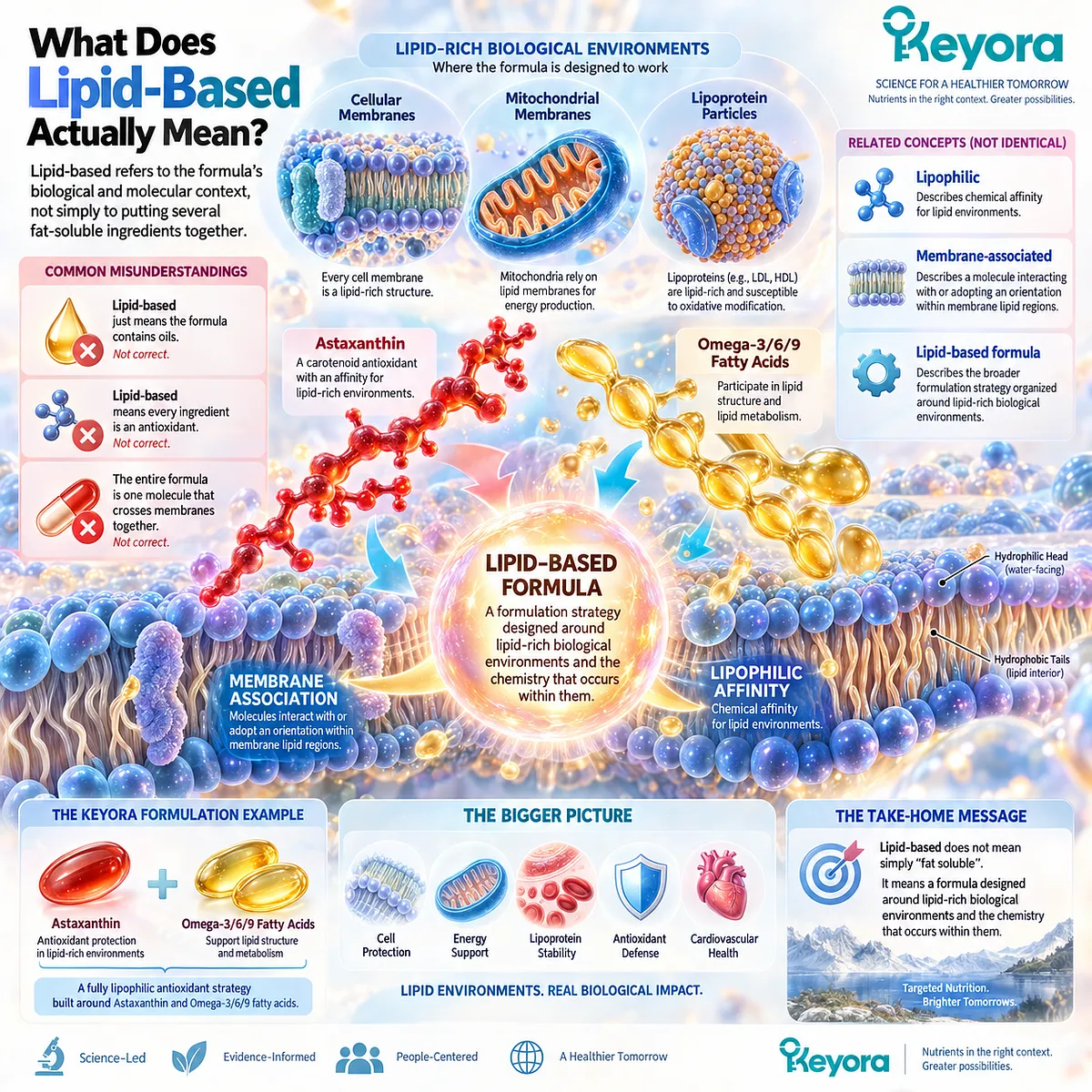
Lipid-based refers to the formula’s biological and molecular context, not simply to putting several fat-soluble ingredients together
The phrase lipid-based can easily be misunderstood.
It does not simply mean that a formula contains oils.
It also does not mean that every ingredient in the formula is an antioxidant.
Within the Keyora framework, lipid-based formula design refers to a formulation organized around biological structures in which lipids are central components.
These include:
cellular membranes
mitochondrial membranes
and
lipoprotein particles
The Keyora formulation paper describes its approach as a fully lipophilic antioxidant strategy built around Astaxanthin and Omega-3/6/9 fatty acids.
The source further states that the ingredients interact with membrane-rich biological environments.
That source language should be interpreted carefully.
A complete formula is not one molecule that crosses biological membranes as a single unit.
Instead, the formula contains different molecules with different chemical behaviors.
The fatty acids participate in lipid structure and lipid metabolism.
Astaxanthin is a carotenoid antioxidant with an affinity for lipid-rich environments.
This means three related terms should be kept separate.
-
Lipophilic describes chemical affinity for lipid environments.
-
Membrane-associated describes a molecule interacting with or adopting an orientation within membrane lipid regions.
-
Lipid-based formula describes the broader formulation strategy.
These concepts overlap, but they are not identical.
A lipid-based antioxidant formula is therefore better understood as:
a formula designed around lipid-rich biological environments and the chemistry that occurs within them.
That definition is more precise than saying the formula is simply “fat soluble.”
Why Does Antioxidant Location Matter?
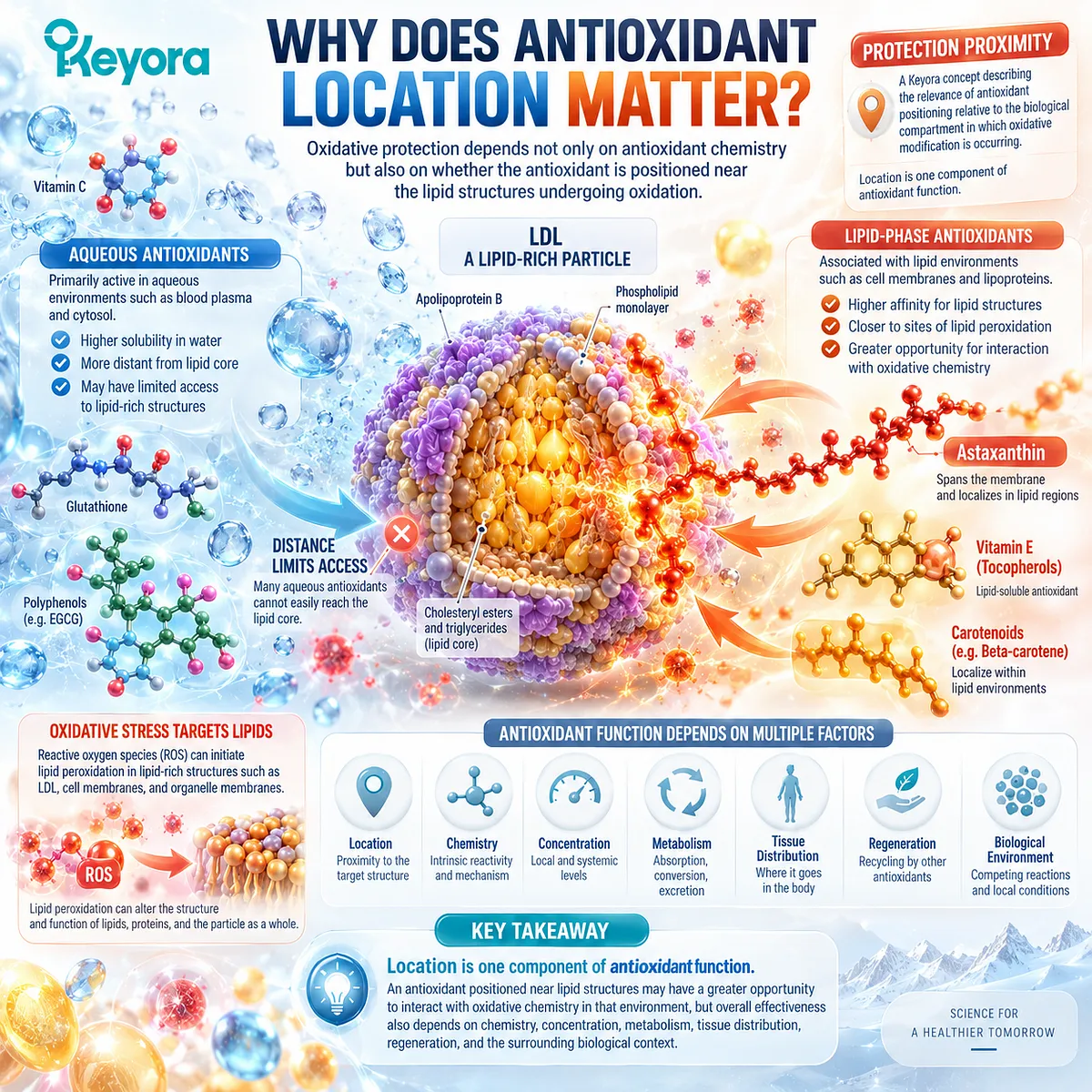
Oxidative protection can depend not only on antioxidant chemistry but also on whether the antioxidant is positioned near the lipid structures undergoing oxidation
Antioxidant activity is often discussed as though it were a single numerical property.
But biological antioxidant function also depends on context.
One important question is:
Where is the antioxidant relative to the structure undergoing oxidative stress?
The Keyora Endothelial Architecture paper makes this argument explicitly when discussing LDL.
The source describes LDL as a lipid-rich particle and contrasts antioxidants positioned primarily in aqueous environments with antioxidants associated with the lipid region of the particle.
The most useful concept from this discussion is not that one antioxidant “wins.”
It is that antioxidant localization may influence the opportunity for interaction with oxidative chemistry occurring in a particular compartment.
This Q&A describes that principle as:
Protection Proximity
Protection Proximity is a Keyora explanatory concept meaning:
the relevance of antioxidant positioning relative to the biological compartment in which oxidative modification is occurring.
For lipid peroxidation, the vulnerable molecules are located within lipid-rich structures.
An antioxidant associated with those structures may therefore be positioned differently from an antioxidant circulating mainly in aqueous compartments.
This does not mean proximity alone determines antioxidant effectiveness.
Antioxidant chemistry, concentration, metabolism, regeneration, tissue distribution, and the surrounding biological environment can all matter.
The stronger and more defensible conclusion is:
location is one component of antioxidant function.
That principle is what makes lipid-phase antioxidant design conceptually different from a formula built only around generalized antioxidant capacity.
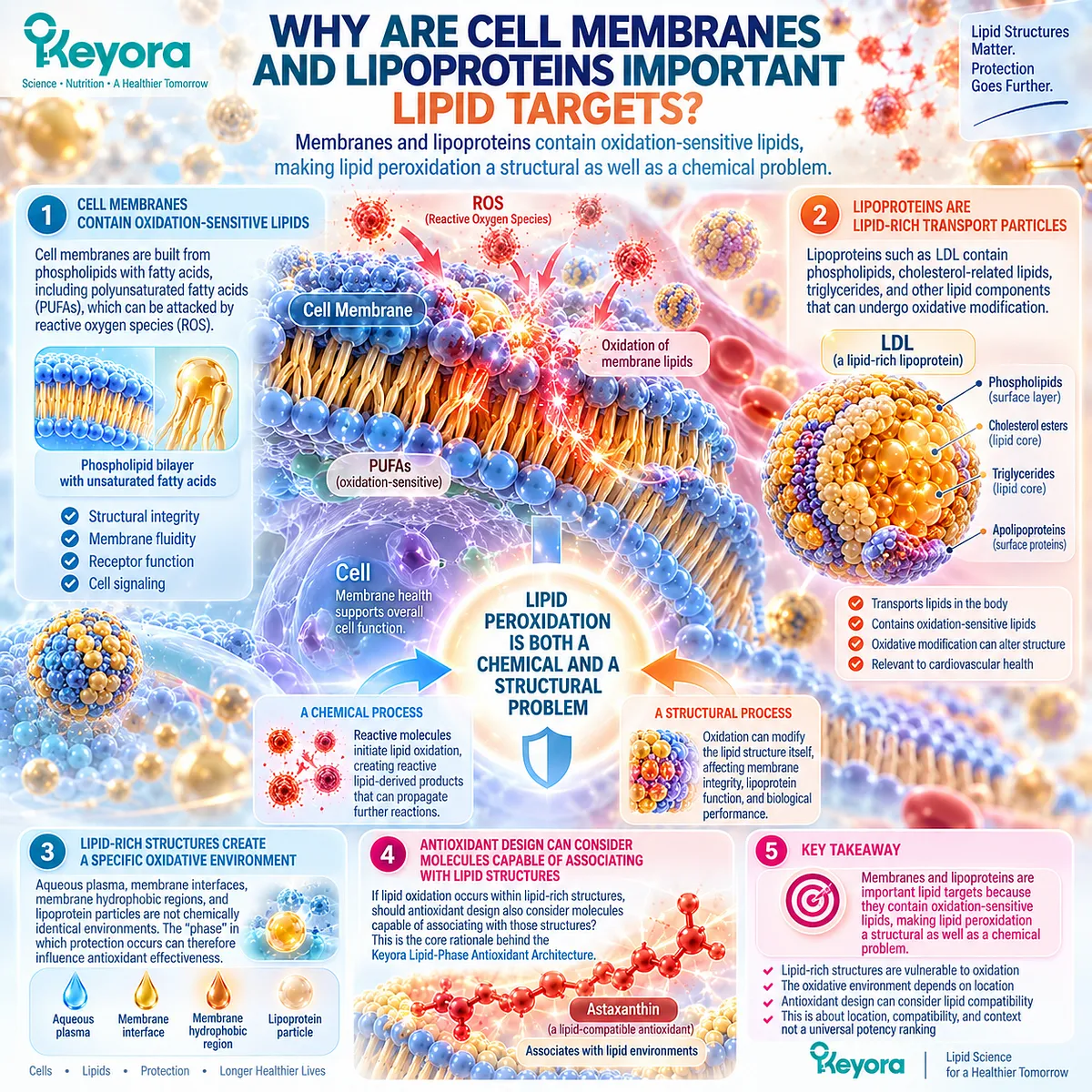
Why Are Cell Membranes and Lipoproteins Important Lipid Targets?
Membranes and lipoproteins contain oxidation-sensitive lipids, making lipid peroxidation a structural as well as a chemical problem
Cell membranes and lipoproteins are important in lipid-based antioxidant design because they contain biological lipids that can undergo oxidative modification.
Cell membranes contain phospholipid-associated fatty acids.
Lipoproteins contain phospholipids, cholesterol-related lipids, triglycerides, and other lipid components organized into transport particles.
When oxidation affects these structures, the issue is not simply that reactive molecules are present.
The lipid structure itself can be chemically modified.
That is why lipid peroxidation becomes both:
a chemical process
and
a structural process
Earlier Keyora Q&A articles examined how radical-mediated lipid oxidation can propagate through polyunsaturated fatty-acid-containing structures and produce reactive lipid-derived products.
The present article does not need to repeat that chemistry in full.
The important architectural point is that:
lipid-rich structures create a specific oxidative environment.
This explains why the “phase” in which antioxidant protection occurs can matter.
Aqueous plasma, membrane interfaces, membrane hydrophobic regions, and lipoprotein particles are not chemically identical environments.
The Keyora sources repeatedly use membranes and LDL as examples of lipid-rich structures relevant to Astaxanthin positioning.
The formula-design question therefore becomes:
If lipid oxidation occurs within lipid-rich structures, should antioxidant design also consider molecules capable of associating with those structures?
That is the core rationale behind the Keyora Lipid-Phase Antioxidant Architecture.
What Makes Astaxanthin Relevant to a Lipid-Phase Formula?
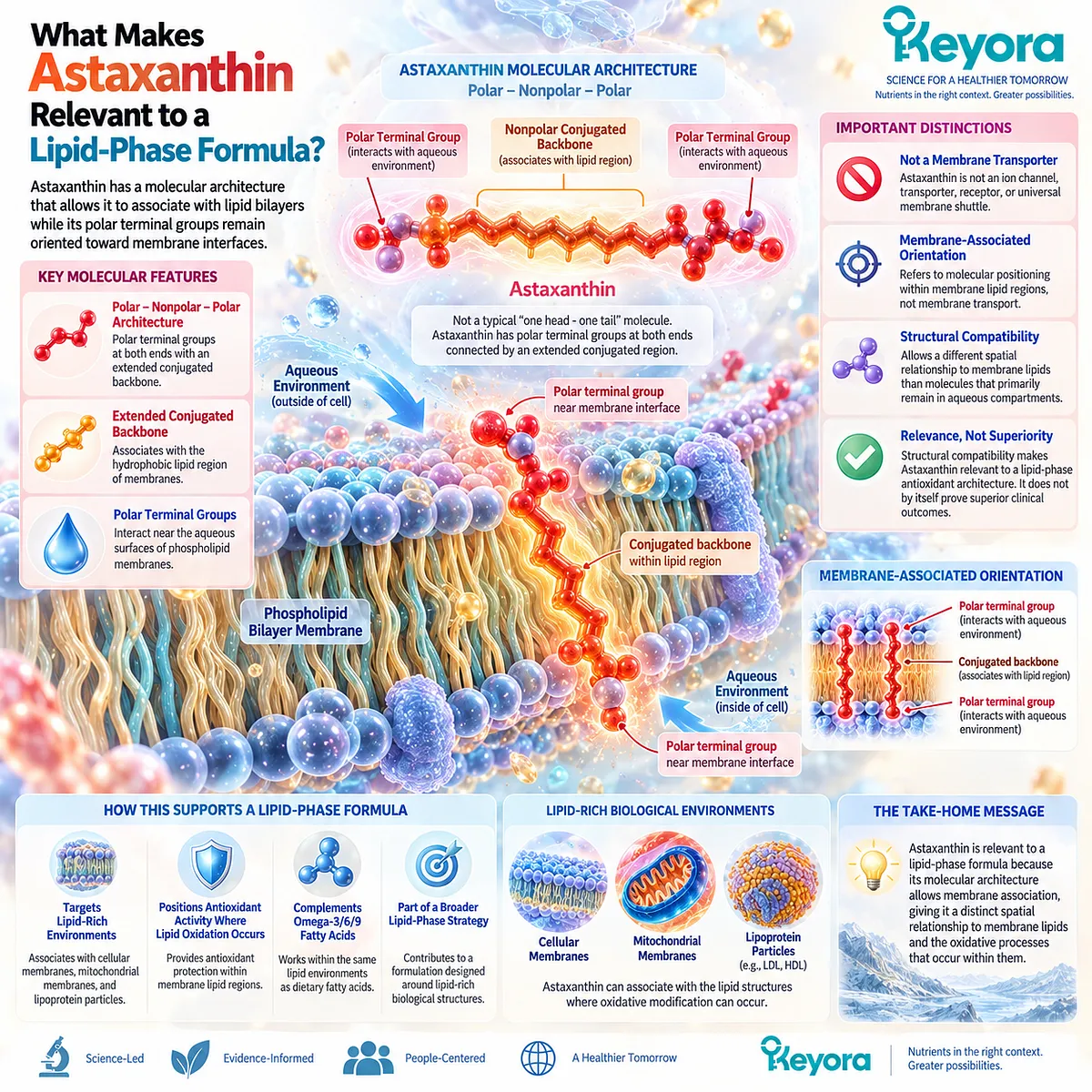
Astaxanthin has a molecular architecture that allows it to associate with lipid bilayers while its polar terminal groups remain oriented toward membrane interfaces
Astaxanthin is relevant to a lipid-phase formula because of its molecular structure.
The Keyora Astaxanthin paper describes Astaxanthin as having a polar – nonpolar – polar architecture.
Its polar terminal regions can interact near the aqueous surfaces of a phospholipid membrane, while its extended conjugated backbone can associate with the hydrophobic lipid region.
This is more accurate than describing Astaxanthin as having one ordinary “polar head” and one “nonpolar tail.”
The molecule instead has polar terminal groups at both ends connected by an extended conjugated region.
The same source describes this structural arrangement as allowing Astaxanthin to adopt a membrane-spanning orientation within phospholipid bilayers.
That concept must be interpreted carefully.
Membrane-spanning orientation does not mean membrane transport.
Astaxanthin is not being described here as an ion channel, transporter, receptor, or universal membrane shuttle.
The relevant point is molecular positioning.
A more precise description is:
Astaxanthin can adopt a membrane-associated orientation in which its polar terminal groups interact near membrane interfaces while its conjugated backbone associates with the hydrophobic lipid region.
This gives Astaxanthin a different spatial relationship to membrane lipids than molecules that primarily remain in aqueous compartments.
That structural compatibility is what makes Astaxanthin relevant to a lipid-phase antioxidant architecture.
It does not by itself prove superior clinical outcomes.
Is a Lipid-Based Formula the Same as a Fat-Soluble Antioxidant Formula?
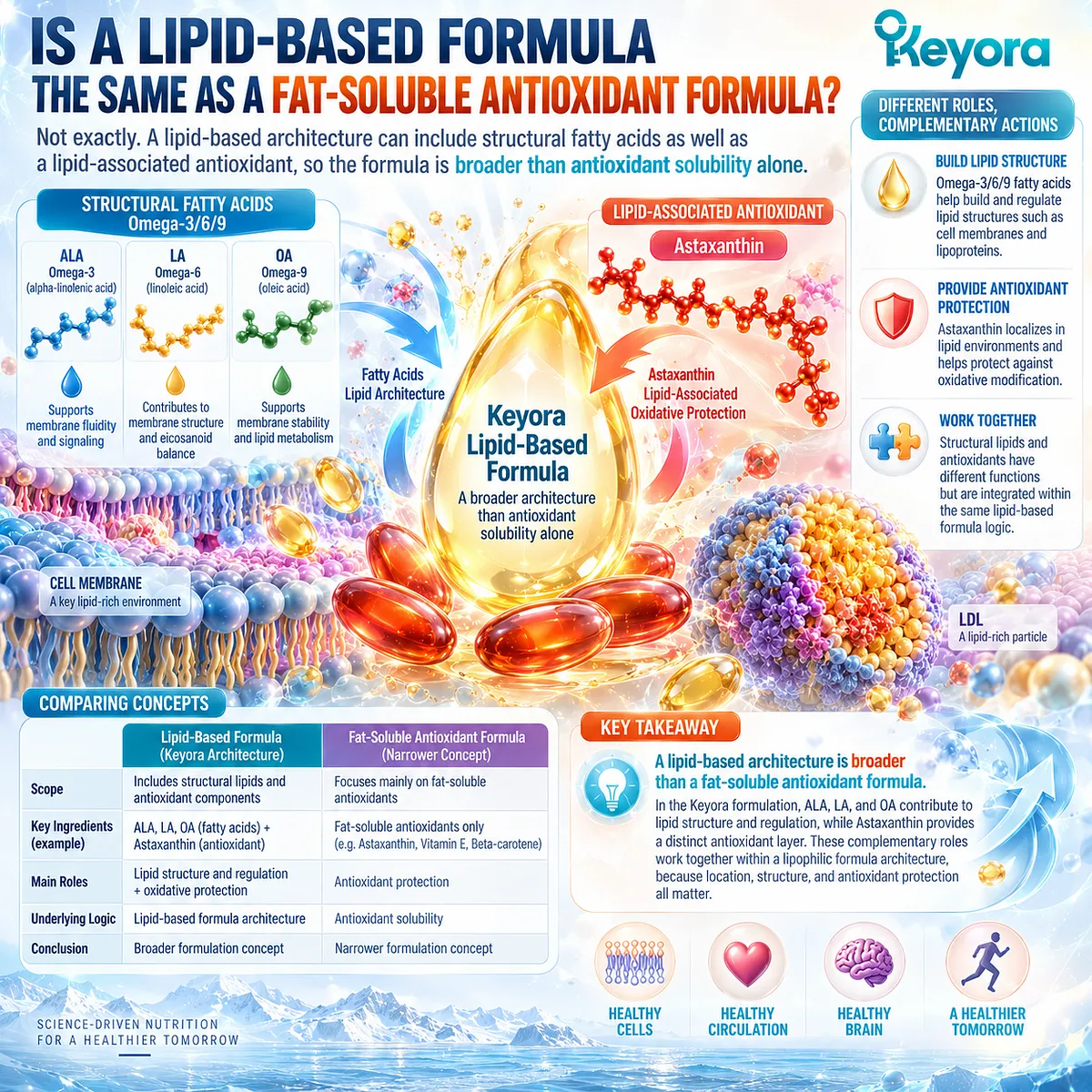
Not exactly. A lipid-based architecture can include structural fatty acids as well as a lipid-associated antioxidant, so the formula is broader than antioxidant solubility alone
A lipid-based formula should not be reduced to a collection of fat-soluble antioxidants.
In the Keyora formulation discussed here, the Omega-3/6/9 component includes:
ALA
LA
and
OA
These are fatty acids.
Their main role in the formula architecture is not to function as three versions of Astaxanthin.
The previous article, “Why Combine Astaxanthin With Omega-3/6/9 Fatty Acids?”, established a clearer distinction:
the fatty acids contribute to lipid structure and regulation
while
Astaxanthin provides a distinct antioxidant layer
This relationship can be summarized as:
Fatty Acids
↓
Lipid Architecture
while
Astaxanthin
↓
Lipid-Associated Oxidative Protection
The Keyora formulation paper itself combines Astaxanthin with ALA, LA, and OA and describes the design as a lipophilic formula architecture.
But the phrase should not imply that every ingredient performs the same biochemical function.
That is precisely what makes lipid-based broader than fat-soluble antioxidant.
A lipid-based architecture can contain:
structural lipid components
and
antioxidant components
within the same formulation logic.
This is why the Keyora Lipid Structure – Protection Architecture from the previous article and the Keyora Lipid-Phase Antioxidant Architecture in the present article work together.
One explains the division of roles.
The other explains why location matters.
Is a Lipid-Based Antioxidant Automatically Better Than a Water-Soluble Antioxidant?
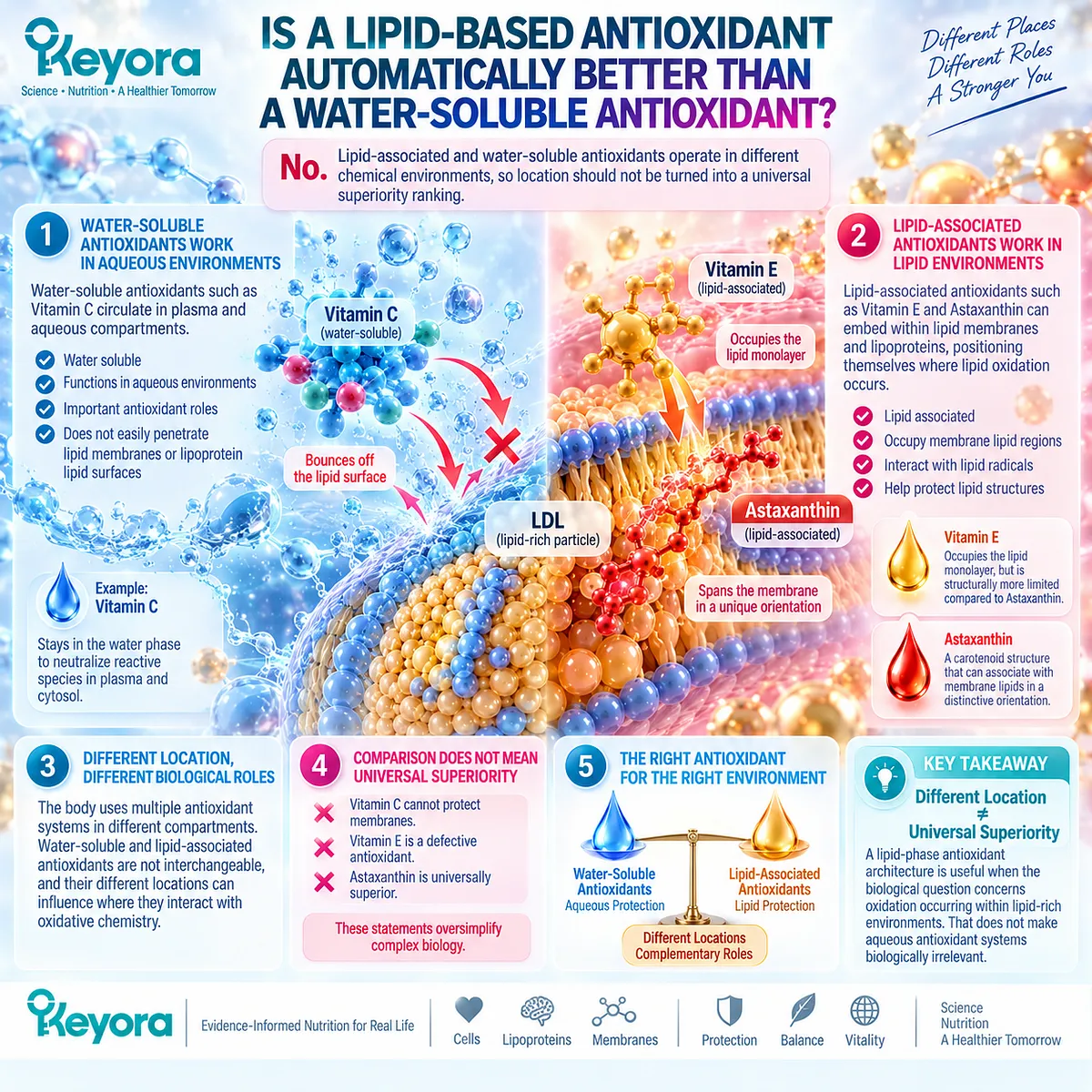
No. Lipid-associated and water-soluble antioxidants operate in different chemical environments, so location should not be turned into a universal superiority ranking
A lipid-based antioxidant should not automatically be described as better than a water-soluble antioxidant.
The Keyora source uses strong comparisons.
For example, the Endothelial Architecture paper states that water-soluble Vitamin C does not penetrate the LDL lipid surface and uses a metaphor that it “bounces off the hull.” It also describes Vitamin E as occupying the lipid monolayer but being structurally limited relative to Astaxanthin.
The broader Astaxanthin paper similarly contrasts Vitamin C with membrane-associated antioxidant activity and presents Astaxanthin as structurally advantageous.
These comparisons should not be converted into:
Vitamin C cannot protect membranes
or
Vitamin E is a defective antioxidant
or
Astaxanthin is universally superior
The safer interpretation is:
Different antioxidants can occupy different chemical and biological environments.
Vitamin C is water soluble.
Vitamin E is lipid associated.
Astaxanthin has a distinctive carotenoid structure that can associate with membrane lipids in a different orientation.
These differences can influence where each molecule interacts with oxidative chemistry.
Therefore:
Different Location ≠ Universal Superiority
A lipid-phase antioxidant architecture is useful when the biological question concerns oxidation occurring within lipid-rich environments.
That does not make aqueous antioxidant systems biologically irrelevant.
The body uses multiple antioxidant systems in different compartments.
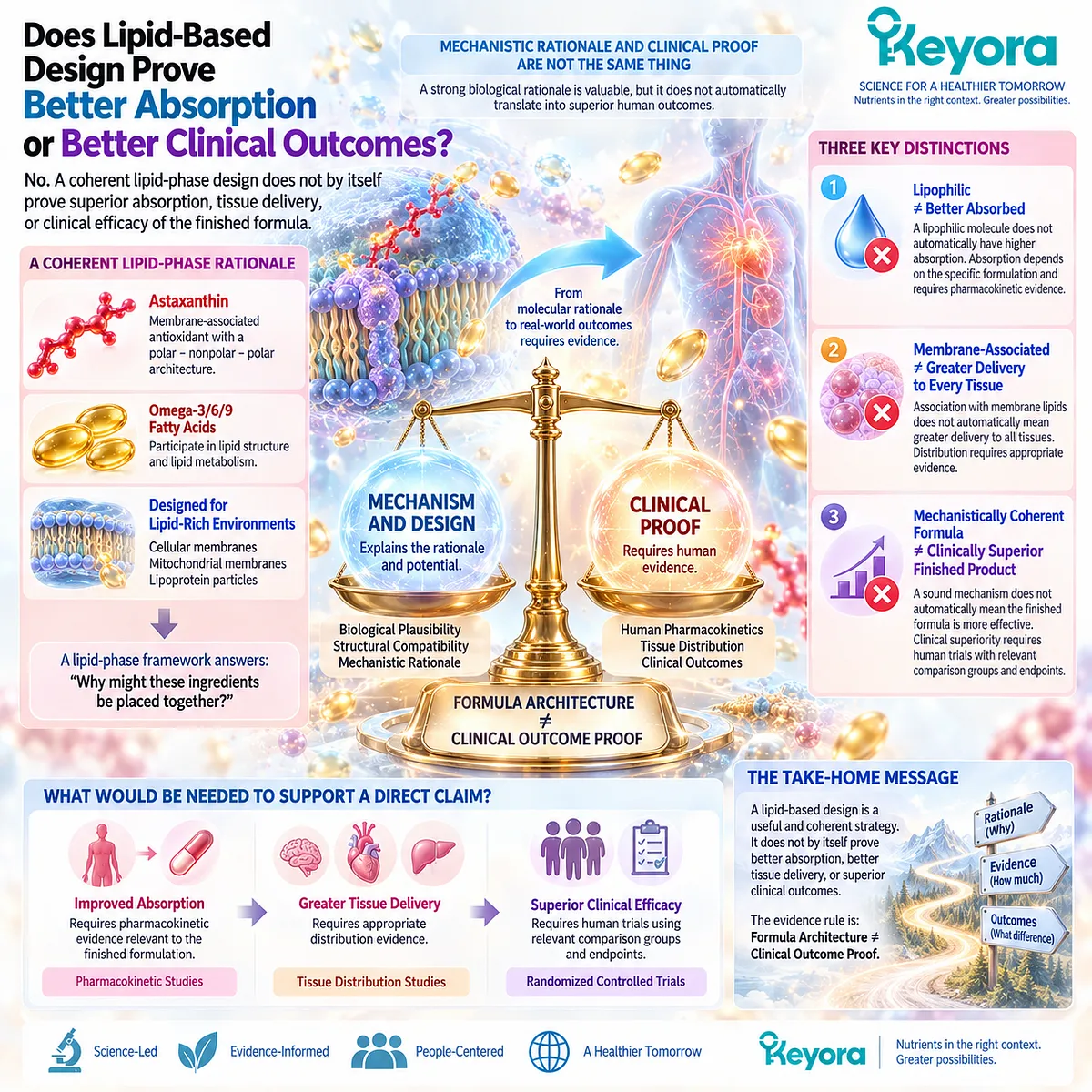
Does Lipid-Based Design Prove Better Absorption or Better Clinical Outcomes?
No. A coherent lipid-phase design does not by itself prove superior absorption, tissue delivery, or clinical efficacy of the finished formula
Mechanistic design and clinical proof are not the same thing.
A formula can have a coherent lipid-phase rationale without having demonstrated superior human outcomes.
The Keyora formulation source describes Astaxanthin with Omega-3/6/9 as a fully lipophilic synergistic formula and extends this framework to long-term membrane protection and structural support.
Those formulation-level conclusions should be separated from what the mechanism alone establishes.
Three distinctions are especially important.
Lipophilic
does not automatically mean
better absorbed
Membrane-associated
does not automatically mean
greater delivery to every tissue
and
Mechanistically coherent formula
does not automatically mean
clinically superior finished product
A direct claim of improved absorption would require pharmacokinetic evidence relevant to the finished formulation.
A claim of superior tissue delivery would require appropriate distribution evidence.
A claim of superior clinical efficacy would require finished-formula human trials using relevant comparison groups and endpoints.
The lipid-phase framework therefore answers:
Why might these ingredients be placed together?
It does not automatically answer:
Does this finished formula outperform every other antioxidant strategy?
The evidence rule is:
Formula Architecture ≠ Clinical Outcome Proof
That boundary allows the mechanistic model to remain useful without converting it into a stronger clinical claim than the sources currently demonstrate.
What Is the Best Way to Understand a Lipid-Based Antioxidant Formula?
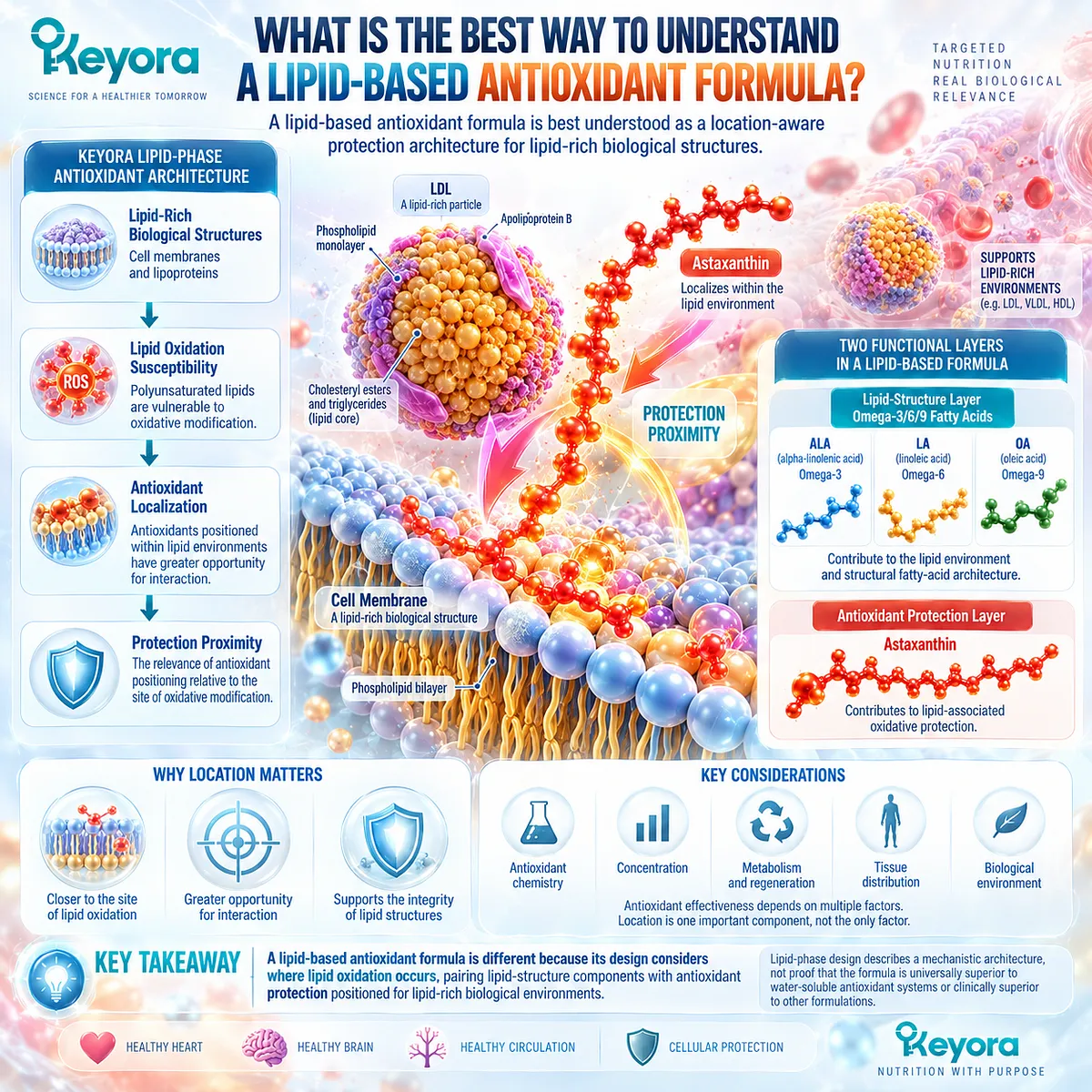
A lipid-based antioxidant formula is best understood as a location-aware protection architecture for lipid-rich biological structures
The clearest way to understand this category is through the Keyora Lipid-Phase Antioxidant Architecture.
This is an explanatory model for designing antioxidant support around lipid-rich biological environments.
Its logic can be summarized as:
Lipid-Rich Biological Structures
↓
Cell Membranes + Lipoproteins
↓
Lipid Oxidation Susceptibility
↓
Antioxidant Localization
↓
Protection Proximity
Within the Keyora formulation, the architecture also contains two functional layers.
ALA + LA + OA
contribute to
the lipid environment and structural fatty-acid architecture
while
Astaxanthin
contributes to
lipid-associated oxidative protection
The source material supports the broad idea that Astaxanthin can associate with phospholipid bilayers and that the Keyora formulation was designed around Astaxanthin plus fatty-acid components in membrane-rich biological contexts.
The final answer is therefore:
A lipid-based antioxidant formula is different because its design considers where lipid oxidation occurs, pairing lipid-structure components with antioxidant protection positioned for lipid-rich biological environments.
The important evidence boundary is equally clear:
Lipid-phase design describes a mechanistic architecture, not proof that the formula is universally superior to water-soluble antioxidant systems or clinically superior to other formulations.
That distinction prepares the next question, “Why Does Keyora Use Astaxanthin 16 mg With Omega-3/6/9?”, which can move from the general architecture to the specific dose and formulation rationale used by Keyora.
This article is for educational and informational purposes only. It does not provide medical advice, diagnosis, treatment, cure, prevention, disease outcome claims, hormone restoration claims, fertility outcome claims, or formula-specific clinical efficacy claims.