
What Is Recovery Capacity? Why It Matters for Energy, Stress and Healthy Aging
Keyora Research Q&A Library
This is part of the Keyora Research Q&A Series, derived from Keyora Astaxanthin Research Journal Series.
Within the Keyora Astaxanthin Research framework, this Q&A translates complex astaxanthin biology into reader-friendly, evidence-bound answers, focusing on natural astaxanthin identity, molecular structure, antioxidant and redox mechanisms, membrane lipid interaction, mitochondrial resilience, inflammatory signaling pathways, human evidence interpretation, and the scientific principles behind responsible supplementation.
First published by Keyora Research Journal: www.keyorahealth.com
Short Answer
Recovery capacity refers to your body’s ability to restore balance after physical, mental, or environmental stress.
Every day, your body responds to challenges such as work, exercise, poor sleep, emotional stress, illness, and prolonged screen exposure. Recovery capacity determines how efficiently your body can repair, adapt, and return to its normal state.
Many people focus on having more energy. In reality, long-term health and performance depend just as much—if not more—on how well you recover.
What Is Recovery Capacity?
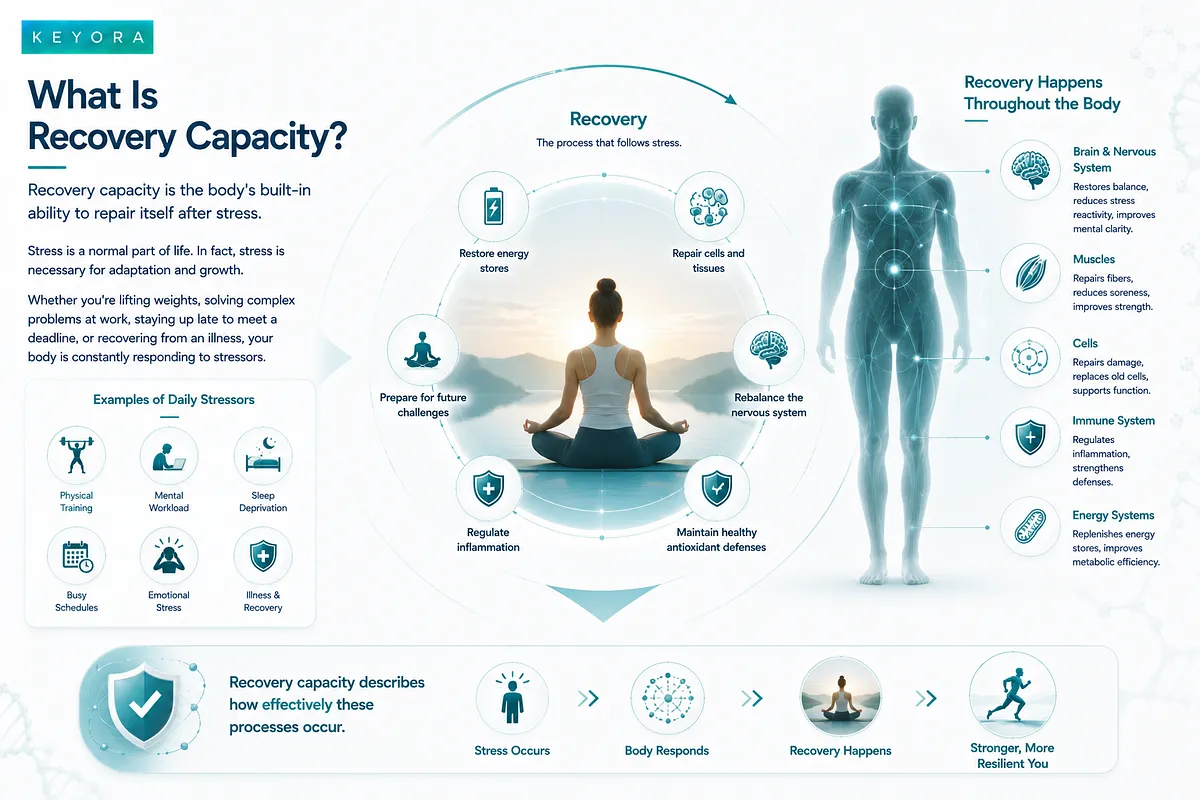
Recovery capacity is the body’s built-in ability to repair itself after stress.
Stress is a normal part of life. In fact, stress is necessary for adaptation and growth.
Whether you’re lifting weights, solving complex problems at work, staying up late to meet a deadline, or recovering from an illness, your body is constantly responding to stressors.
Recovery is the process that follows.
During recovery, the body works to:
Restore energy stores
Repair cells and tissues
Rebalance the nervous system
Regulate inflammation
Maintain healthy antioxidant defenses
Prepare for future challenges
Recovery capacity describes how effectively these processes occur.
Recovery Is More Than Rest
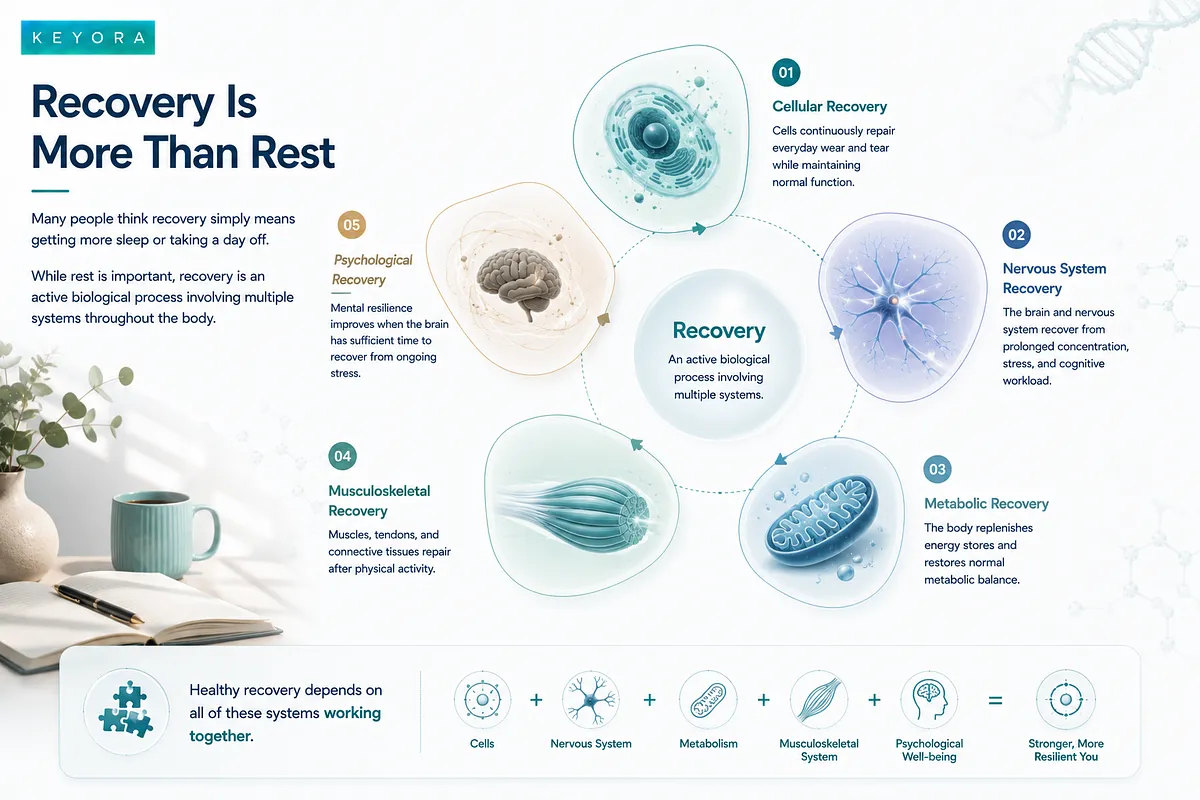
Many people think recovery simply means getting more sleep or taking a day off.
While rest is important, recovery is an active biological process involving multiple systems throughout the body.
These include:
Cellular Recovery
Cells continuously repair everyday wear and tear while maintaining normal function.
Nervous System Recovery
The brain and nervous system recover from prolonged concentration, stress, and cognitive workload.
Metabolic Recovery
The body replenishes energy stores and restores normal metabolic balance.
Musculoskeletal Recovery
Muscles, tendons, and connective tissues repair after physical activity.
Psychological Recovery
Mental resilience improves when the brain has sufficient time to recover from ongoing stress.
Healthy recovery depends on all of these systems working together.
What Affects Recovery Capacity?
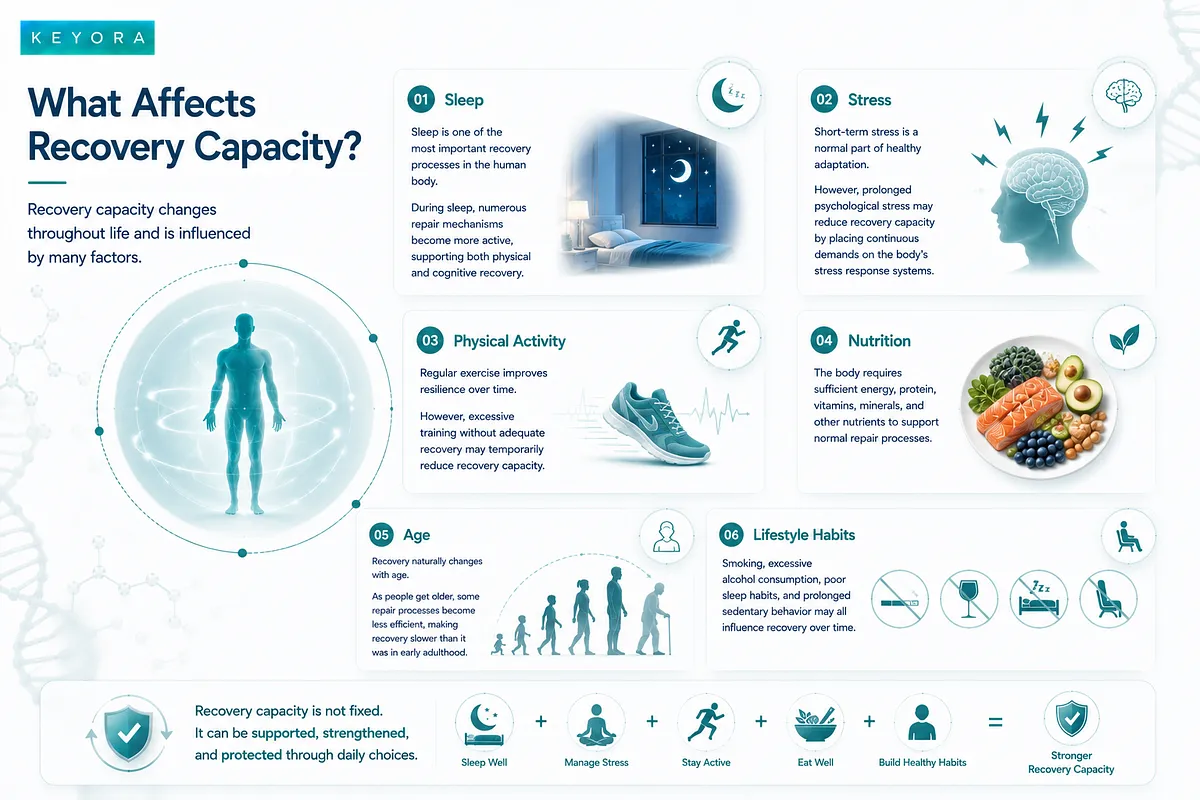
Recovery capacity changes throughout life and is influenced by many factors.
Sleep
Sleep is one of the most important recovery processes in the human body.
During sleep, numerous repair mechanisms become more active, supporting both physical and cognitive recovery.
Stress
Short-term stress is a normal part of healthy adaptation.
However, prolonged psychological stress may reduce recovery capacity by placing continuous demands on the body’s stress response systems.
Physical Activity
Regular exercise improves resilience over time.
However, excessive training without adequate recovery may temporarily reduce recovery capacity.
Nutrition
The body requires sufficient energy, protein, vitamins, minerals, and other nutrients to support normal repair processes.
Age
Recovery naturally changes with age.
As people get older, some repair processes become less efficient, making recovery slower than it was in early adulthood.
Lifestyle Habits
Smoking, excessive alcohol consumption, poor sleep habits, and prolonged sedentary behavior may all influence recovery over time.
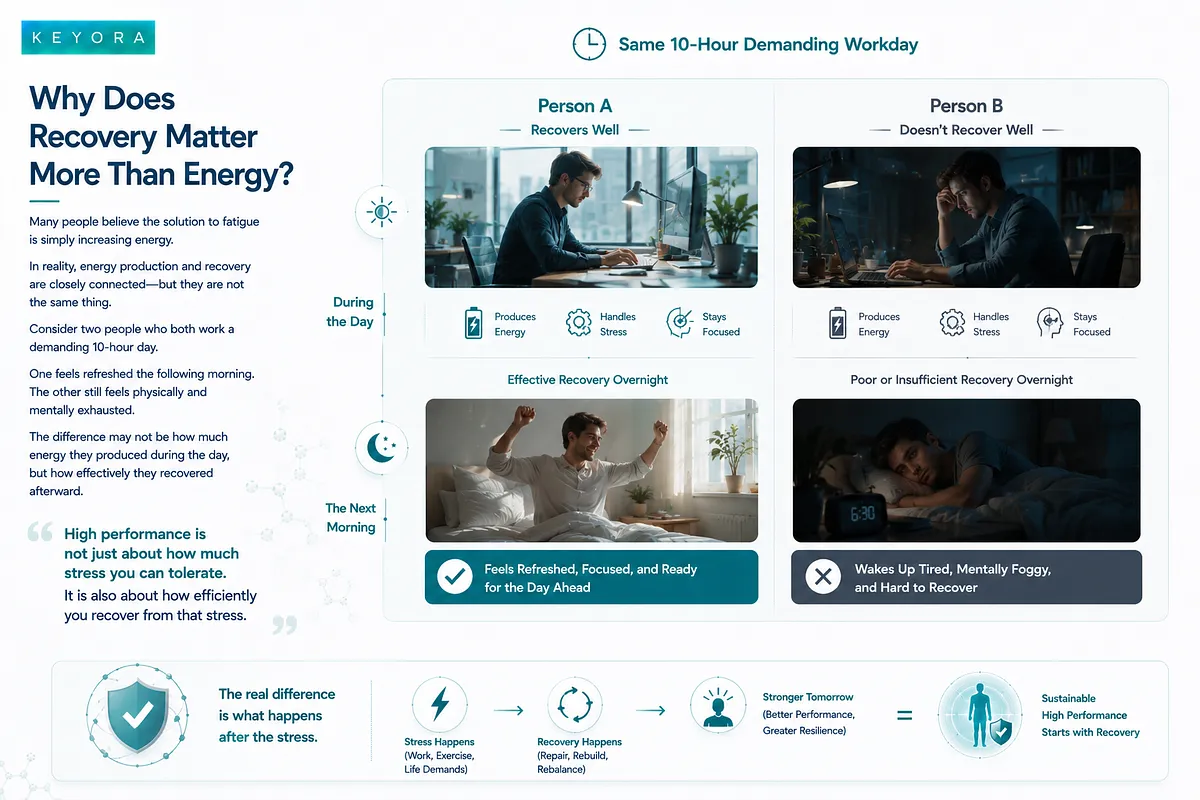
Why Does Recovery Matter More Than Energy?
Many people believe the solution to fatigue is simply increasing energy.
In reality, energy production and recovery are closely connected—but they are not the same thing.
Consider two people who both work a demanding 10-hour day.
One feels refreshed the following morning.
The other still feels physically and mentally exhausted.
The difference may not be how much energy they produced during the day, but how effectively they recovered afterward.
High performance is not just about how much stress you can tolerate.
It is also about how efficiently you recover from that stress.
Recovery Capacity and Oxidative Stress
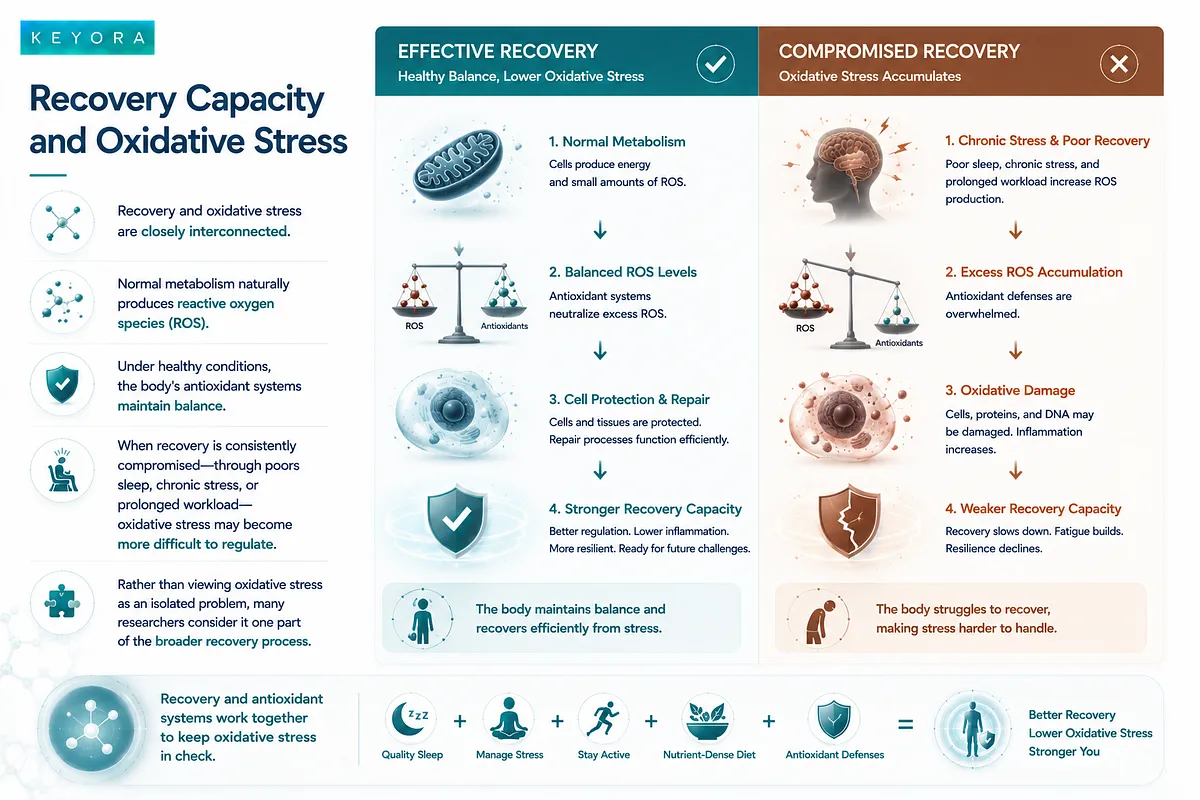
Recovery and oxidative stress are closely interconnected.
Normal metabolism naturally produces reactive oxygen species (ROS).
Under healthy conditions, the body’s antioxidant systems maintain balance.
When recovery is consistently compromised—through poor sleep, chronic stress, or prolonged workload—oxidative stress may become more difficult to regulate.
Rather than viewing oxidative stress as an isolated problem, many researchers consider it one part of the broader recovery process.
Why Does Recovery Become More Important With Age?
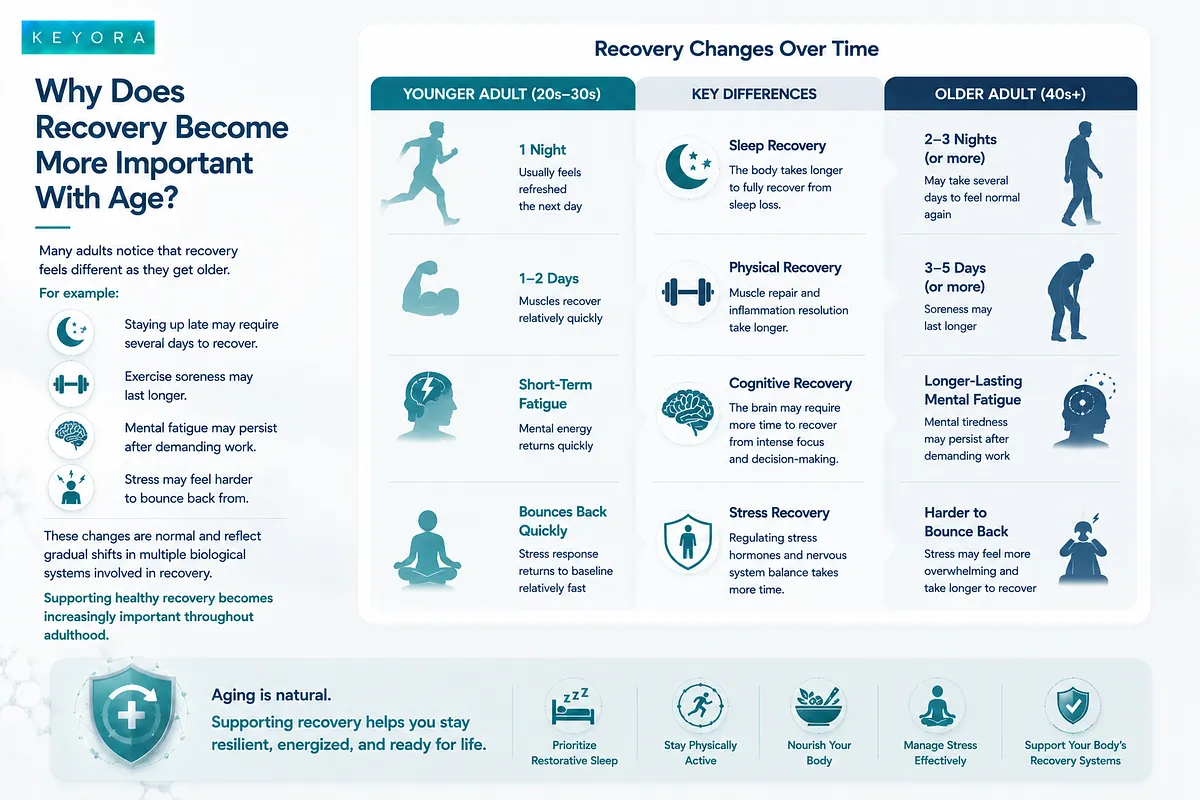
Many adults notice that recovery feels different as they get older.
For example:
- Staying up late may require several days to recover.
- Exercise soreness may last longer.
- Mental fatigue may persist after demanding work.
- Stress may feel harder to bounce back from.
These changes are normal and reflect gradual shifts in multiple biological systems involved in recovery.
Supporting healthy recovery becomes increasingly important throughout adulthood.
How Can You Support Recovery Capacity?
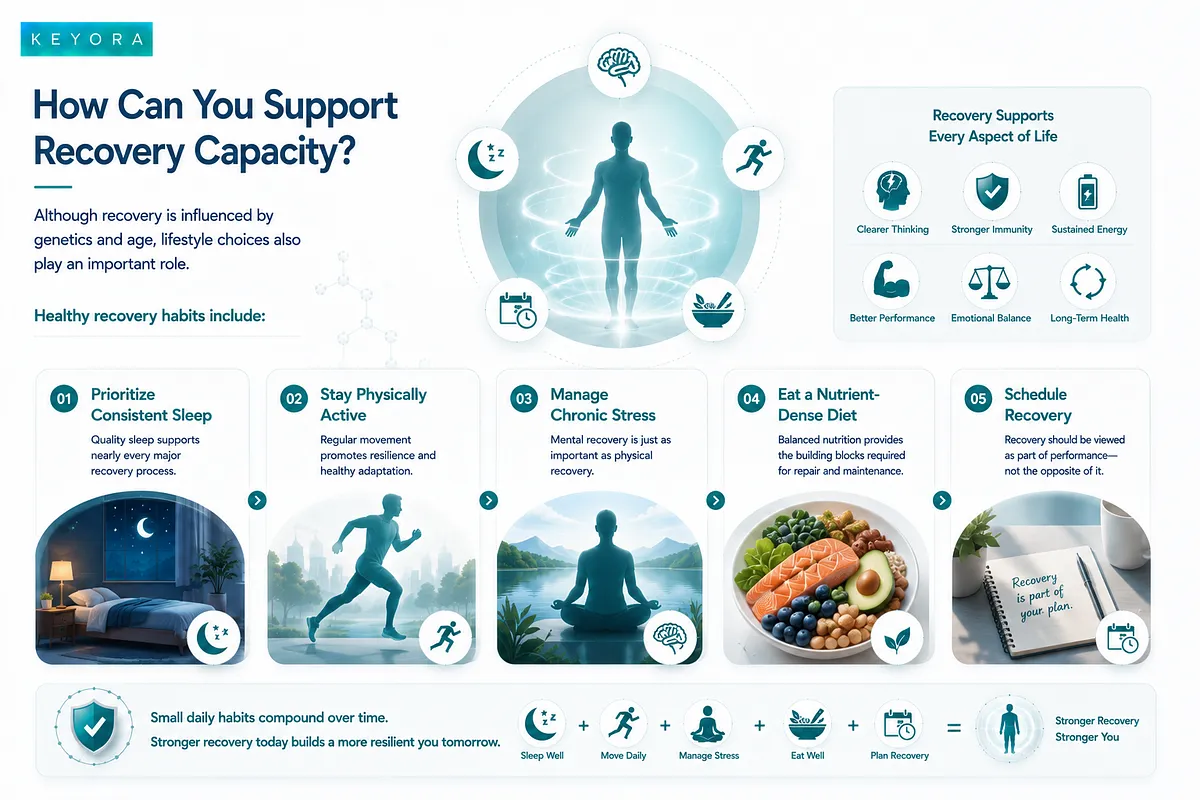
Although recovery is influenced by genetics and age, lifestyle choices also play an important role.
Healthy recovery habits include:
Prioritize Consistent Sleep
Quality sleep supports nearly every major recovery process.
Stay Physically Active
Regular movement promotes resilience and healthy adaptation.
Manage Chronic Stress
Mental recovery is just as important as physical recovery.
Eat a Nutrient-Dense Diet
Balanced nutrition provides the building blocks required for repair and maintenance.
Schedule Recovery
Recovery should be viewed as part of performance—not the opposite of it.
Key Takeaways
l Recovery capacity is the body’s ability to restore balance after physical, mental, and environmental stress.
l Recovery involves multiple biological systems, including the nervous system, muscles, metabolism, and cellular repair.
l Sleep, stress, physical activity, nutrition, age, and lifestyle habits all influence recovery capacity.
l Long-term performance depends not only on how much energy you produce, but also on how effectively you recover.
l Supporting healthy recovery habits may contribute to resilience, healthy aging, and overall well-being.
Evidence Snapshot
Topic: Recovery Capacity
What Current Research Suggests
Recovery is a fundamental biological process involving tissue repair, nervous system regulation, immune function, metabolism, and cellular maintenance. Research consistently demonstrates that sleep, physical activity, nutrition, and stress management all contribute to healthy recovery.
Evidence Strength: ★★★★★ Strong
Research Areas
- Exercise physiology
- Sleep medicine
- Stress physiology
- Healthy aging
- Mitochondrial biology
References
1. Kellmann M. Enhancing Recovery: Preventing Underperformance in Athletes.
2. Fullagar HHK, et al. Sleep and Athletic Performance. Sports Medicine.
3. McEwen BS. Protective and Damaging Effects of Stress Mediators. New England Journal of Medicine.
4. Sies H. Oxidative Stress: A Concept in Redox Biology and Medicine. Redox Biology.
5. Irwin MR. Sleep and Inflammation. Nature Reviews Immunology.
6. Cadegiani FA. Overtraining Syndrome and the Biology of Recovery. Sports Medicine.