
What Does Oxidative Stress Have to Do With Heart Energy and Fatigue?
Keyora Research Q&A Library
This is part of the Keyora Research Q&A Series, derived from Keyora Astaxanthin Research Journal Series.
Within the Keyora Astaxanthin Researcn framework, this Q&A translates complex astaxanthin biology into reader-friendly, evidence-bound answers, focusing on natural astaxanthin identity, molecular structure, antioxidant and redox mechanisms, membrane lipid interaction, mitochondrial resilience, inflammatory signaling pathways, human evidence interpretation, and the scientific principles behind responsible supplementation.
First published by Keyora Research Journal: www.keyorahealth.com

Direct Answer
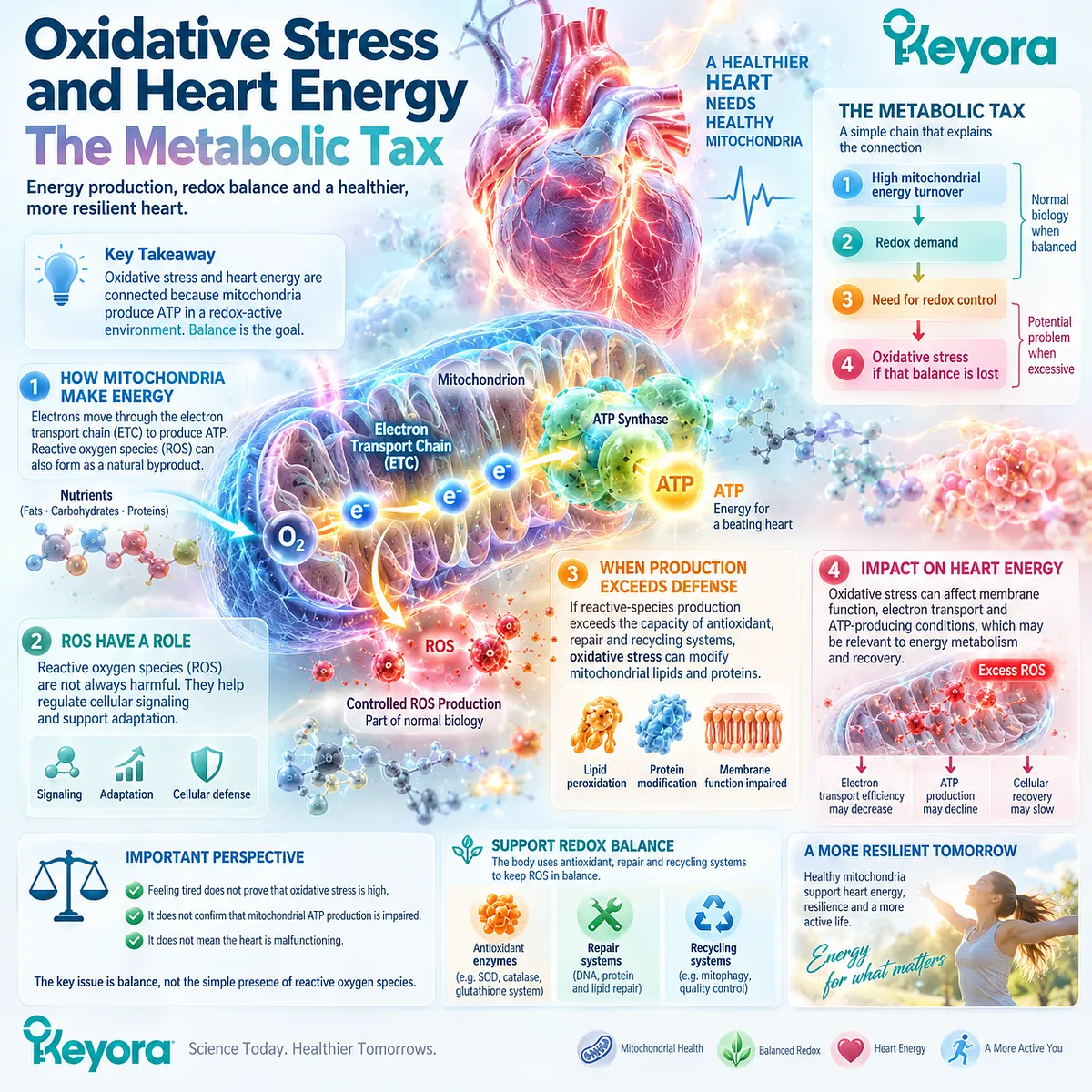
Oxidative stress and heart energy are connected because mitochondria produce ATP inside a redox-active environment.
As electrons move through the mitochondrial electron transport chain, reactive oxygen species can also form. These molecules are part of normal biology and help regulate signaling and adaptation.
The problem begins when reactive-species production exceeds the capacity of antioxidant, repair, and recycling systems.
Under those conditions, oxidative stress can modify mitochondrial lipids and proteins that help maintain membrane function, electron transport, and ATP-producing conditions.
This is why oxidative stress can become relevant to energy metabolism and recovery.
However, feeling tired does not prove that oxidative stress is high, that mitochondrial ATP production is impaired, or that the heart is malfunctioning.
In the Keyora Cardiac Architecture, this relationship is described through The Metabolic Tax:
High mitochondrial energy turnover → redox demand → need for redox control → oxidative stress if that balance is lost
The important issue is balance, not the simple presence of reactive oxygen species.
Why Energy Production Creates a Redox Challenge
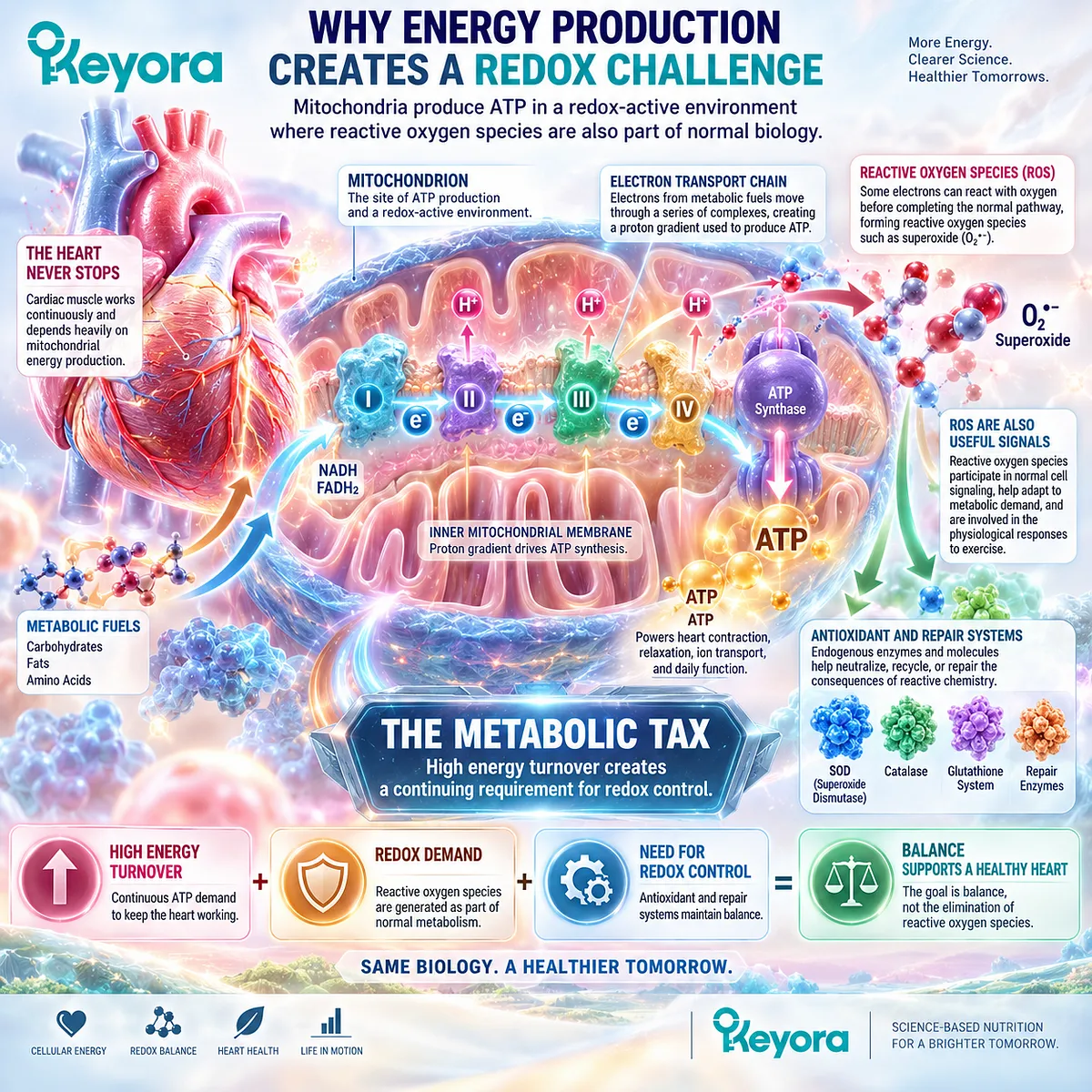
Mitochondria produce ATP in a redox-active environment where reactive oxygen species are also part of normal biology
The heart depends heavily on mitochondrial energy production because cardiac muscle must work continuously. Inside mitochondria, electrons derived from metabolic fuels move through the electron transport chain, helping generate the electrochemical gradient used to produce ATP.
Electron transfer is highly organized, but biological energy conversion is not chemically silent. During normal mitochondrial metabolism, some reactive oxygen species can form.
Superoxide is one example. It can arise when electrons react with oxygen before completing their normal route through the respiratory chain.
This does not mean that mitochondrial energy production is inherently damaging.
Reactive oxygen species participate in normal cell signaling. They can help communicate changes in metabolic demand, influence adaptive responses, and participate in the physiological signaling that accompanies exercise.
The body also has endogenous antioxidant and repair systems that continuously manage the redox environment. These include enzymes and molecules that help neutralize, recycle, or repair the consequences of reactive chemistry.
Keyora describes the continuing requirement to manage this redox activity as The Metabolic Tax.
The term should not be interpreted as meaning that every heartbeat causes damage. A more accurate interpretation is that high energy turnover creates a continuing requirement for redox control.
The heart therefore faces two linked tasks.
It must generate enough ATP to support contraction, relaxation, ion transport, and changing workloads.
At the same time, it must maintain a redox environment in which the structures involved in that energy production continue to function normally.
That is the connection between cardiac energy metabolism and oxidative biology.
When Normal Redox Signaling Becomes Oxidative Stress
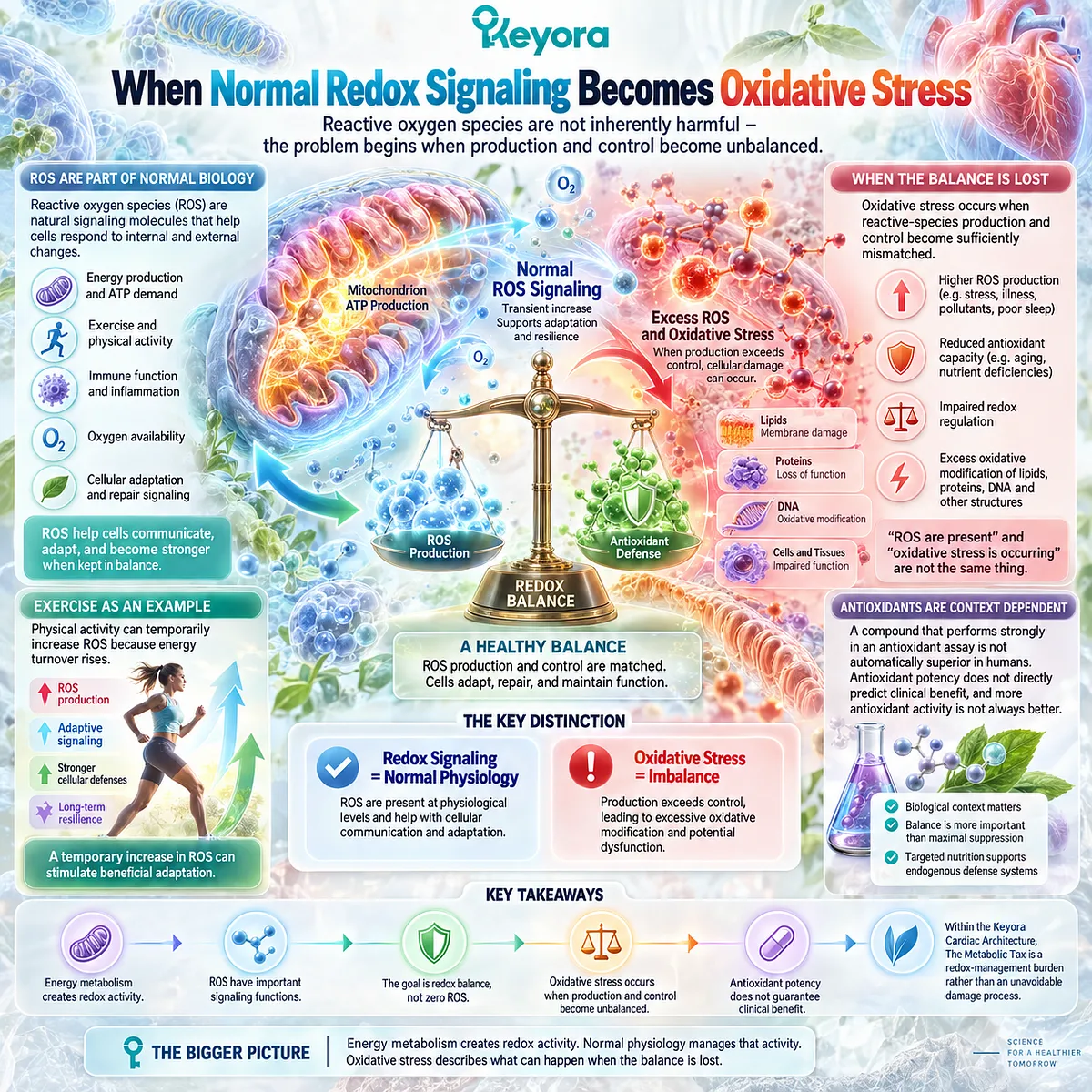
Reactive oxygen species are not inherently harmful – the problem begins when production and control become unbalanced
The phrase “free radicals” often creates the impression that reactive oxygen species are simply toxic waste that should be eliminated completely.
That is too simple.
Reactive oxygen species are part of normal physiology. Cells use redox signals to respond to changes in energy demand, inflammation, exercise, oxygen availability, and many other conditions.
Exercise is a useful example.
Physical activity can temporarily increase reactive-species production because mitochondrial and muscular energy turnover rises. At the same time, those redox signals can participate in adaptation and can stimulate endogenous protective responses.
So the goal of normal physiology is not zero ROS.
The goal is redox balance.
Oxidative stress occurs when reactive-species production and control become sufficiently mismatched that lipids, proteins, DNA, or other cellular structures experience excessive oxidative modification.
That distinction matters because “ROS are present” and “oxidative stress is occurring” are not identical statements.
The same principle applies to antioxidants.
A compound that performs strongly in an antioxidant assay is not automatically superior in humans. Antioxidant potency does not directly predict clinical benefit, and more antioxidant activity is not always better.
The biological context matters.
Within the Keyora Cardiac Architecture, The Metabolic Tax is therefore best understood as a redox-management burden rather than an unavoidable damage process.
Energy metabolism creates redox activity.
Normal physiology manages that activity.
Oxidative stress describes what can happen when the balance is lost.
How Excess Oxidative Stress Can Strain Mitochondrial Energy Systems
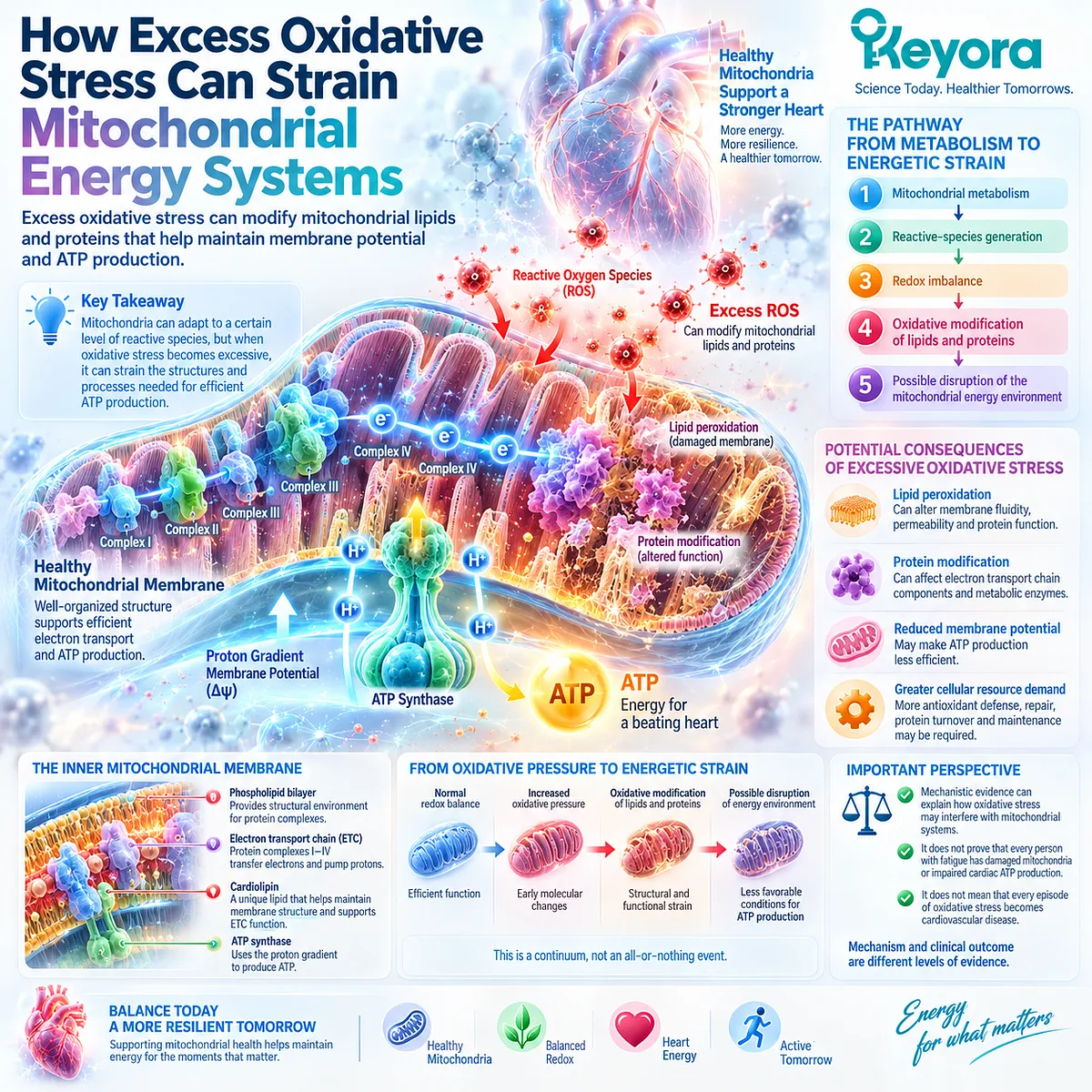
Excess oxidative stress can modify mitochondrial lipids and proteins that help maintain membrane potential and ATP production
The inner mitochondrial membrane is central to oxidative phosphorylation.
It contains the protein complexes of the electron transport chain and helps maintain the electrochemical gradient used by ATP synthase. Lipids within the membrane also contribute to the structural environment in which these proteins operate.
This makes mitochondrial membranes and proteins relevant targets when oxidative stress becomes excessive.
Reactive species can contribute to lipid peroxidation and protein modification. If these processes become substantial, they may disturb the organization and function of mitochondrial structures involved in electron transfer, membrane potential, and metabolic regulation.
This does not mean that every increase in oxidative stress immediately causes ATP failure.
The relationship is better understood as one of energetic strain.
When mitochondrial structures operate under greater oxidative pressure, more cellular resources may be required for antioxidant defense, repair, protein turnover, and maintenance of membrane integrity.
If oxidative damage becomes significant enough, the conditions supporting efficient ATP generation may also become less favorable.
This is where the Keyora Cardiac Architecture connects oxidative stress with energy biology.
The pathway can be summarized as:
Mitochondrial metabolism → reactive-species generation → redox imbalance → oxidative modification of lipids and proteins → possible disruption of the mitochondrial energy environment
The word possible matters.
Mechanistic evidence can explain how oxidative stress may interfere with mitochondrial systems. It does not prove that every person experiencing fatigue has damaged mitochondria or impaired cardiac ATP production.
It also does not mean that every episode of oxidative stress becomes cardiovascular disease.
Mechanism and clinical outcome are different levels of evidence.
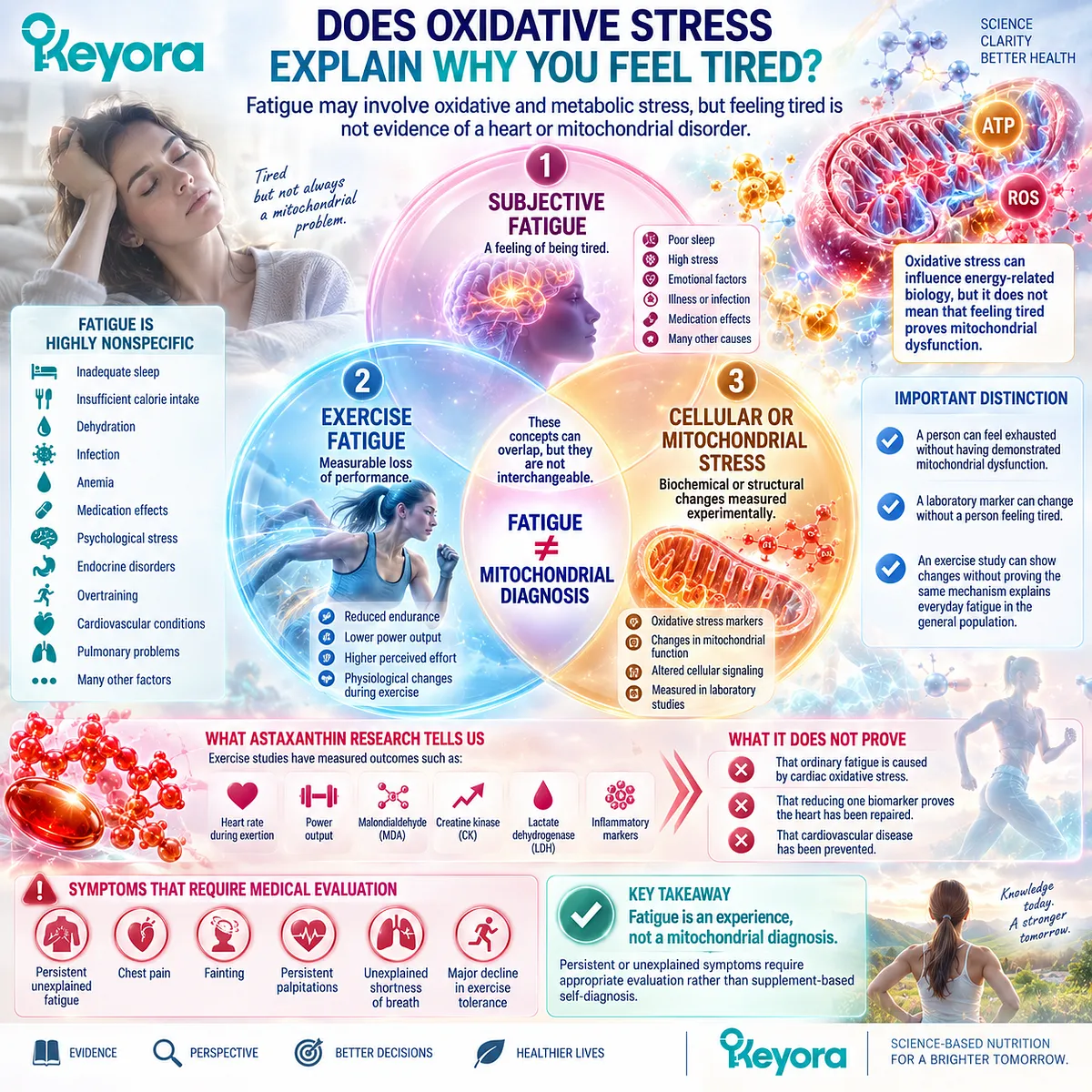
Does Oxidative Stress Explain Why You Feel Tired?
Fatigue may involve oxidative and metabolic stress, but feeling tired is not evidence of a heart or mitochondrial disorder
Fatigue is one of the easiest symptoms to overinterpret.
If oxidative stress can interfere with energy-related biology, it may seem logical to assume that feeling tired means the mitochondria are under oxidative stress.
That conclusion is not justified.
Fatigue is highly nonspecific. Inadequate sleep, insufficient calorie intake, dehydration, infection, anemia, medication effects, psychological stress, endocrine disorders, overtraining, cardiovascular conditions, pulmonary problems, and many other factors can contribute to tiredness or reduced performance.
It is therefore useful to distinguish three different ideas.
Subjective fatigue means that a person feels tired.
Exercise fatigue describes measurable loss of physical performance or increasing difficulty sustaining a workload.
Cellular or mitochondrial stress refers to biochemical or structural changes measured experimentally.
These three concepts can overlap, but they are not interchangeable.
A person can feel exhausted without having demonstrated mitochondrial dysfunction.
A laboratory marker associated with oxidative stress can change without a person feeling tired.
And an exercise study can show changes in performance or biomarkers without proving that the same mechanism explains everyday fatigue in the general population.
Human Astaxanthin research illustrates this distinction.
Exercise studies have measured outcomes such as heart rate during exertion, power output, malondialdehyde, creatine kinase, LDH, and inflammatory markers. These observations can contribute to our understanding of oxidative stress, physical performance, and recovery.
They do not establish that ordinary fatigue is caused by cardiac oxidative stress.
They also do not mean that reducing one oxidative-stress biomarker proves that the heart has been repaired or that cardiovascular disease has been prevented.
For consumers, this evidence boundary is important:
Fatigue is an experience, not a mitochondrial diagnosis.
Persistent unexplained fatigue, chest pain, fainting, persistent palpitations, unexplained shortness of breath, or a major decline in exercise tolerance should not be interpreted simply as “oxidative stress” or “low cellular energy.” These symptoms require appropriate evaluation rather than supplement-based self-diagnosis.
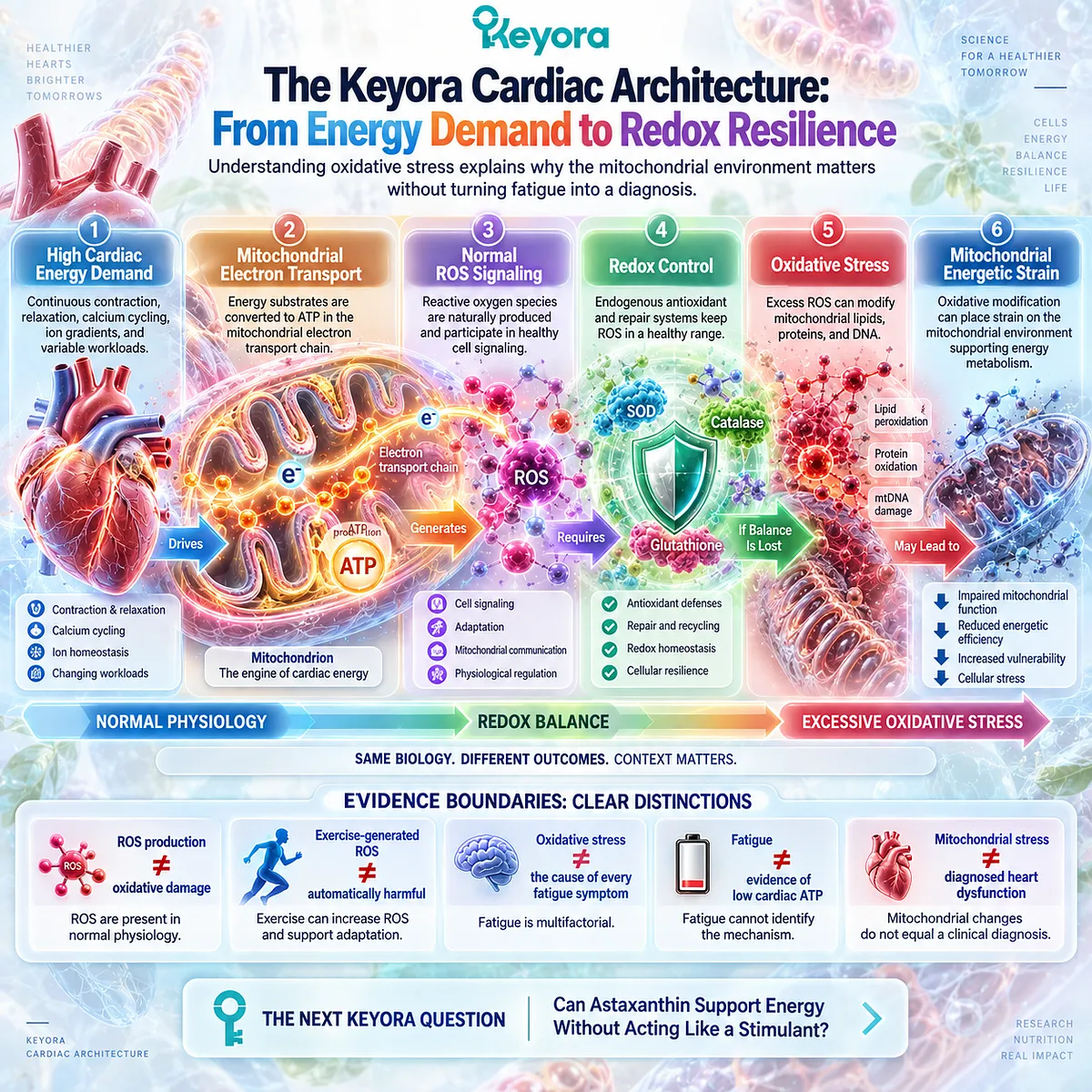
The Keyora Cardiac Architecture: From Energy Demand to Redox Resilience
Understanding oxidative stress explains why the mitochondrial environment matters without turning fatigue into a diagnosis
The first layer of the Keyora Cardiac Architecture is energy demand.
The heart must continuously regenerate ATP because cardiac cells repeatedly contract, relax, cycle calcium, maintain ion gradients, and adjust to changing workloads.
The second layer is redox management.
Mitochondrial energy production takes place in an environment where reactive oxygen species are naturally produced and controlled. Normal redox signaling is part of healthy physiology.
The problem is not ROS itself.
The problem is loss of balance.
When oxidative stress becomes excessive, mitochondrial lipids and proteins may undergo oxidative modification. That can place strain on the structural and biochemical environment supporting energy metabolism.
The complete relationship is therefore:
High cardiac energy demand → mitochondrial electron transport → normal ROS signaling → redox control → oxidative stress if balance is lost → possible mitochondrial energetic strain
Fatigue can exist within that broader biology, but it cannot identify the mechanism on its own.
This distinction is central to Keyora’s evidence-first approach.
ROS production ≠ oxidative damage
Exercise-generated ROS ≠ automatically harmful
Oxidative stress ≠ the cause of every fatigue symptom
Fatigue ≠ evidence of low cardiac ATP
Mitochondrial stress ≠ diagnosed heart dysfunction
Once this boundary is clear, the next question becomes more useful.
If mitochondrial energy systems benefit from a well-regulated redox environment, can a nutrient support that environment without stimulating the heart or nervous system?
That leads directly to the next Keyora Cardiac Architecture question:
Can Astaxanthin Support Energy Without Acting Like a Stimulant?
#OxidativeStress #Fatigue #HeartHealth #HeartEnergy #Mitochondria #CellularEnergy #ROS #RedoxBalance #CardiacMetabolism #MitochondrialHealth #ExerciseRecovery #KeyoraCardiacArchitecture #TheMetabolicTax #Keyora #KeyoraHealth #KeyoraResearch
This article is for educational and informational purposes only. It does not provide medical advice, diagnosis, treatment, cure, prevention, disease outcome claims, hormone restoration claims, fertility outcome claims, or formula-specific clinical efficacy claims.