
What Does Astaxanthin Have to Do With Heart Health and Cellular Energy?
Keyora Research Q&A Library
This is part of the Keyora Research Q&A Series, derived from Keyora Astaxanthin Research Journal Series.
Within the Keyora Astaxanthin Researcn framework, this Q&A translates complex astaxanthin biology into reader-friendly, evidence-bound answers, focusing on natural astaxanthin identity, molecular structure, antioxidant and redox mechanisms, membrane lipid interaction, mitochondrial resilience, inflammatory signaling pathways, human evidence interpretation, and the scientific principles behind responsible supplementation.
First published by Keyora Research Journal: www.keyorahealth.com
Direct Answer
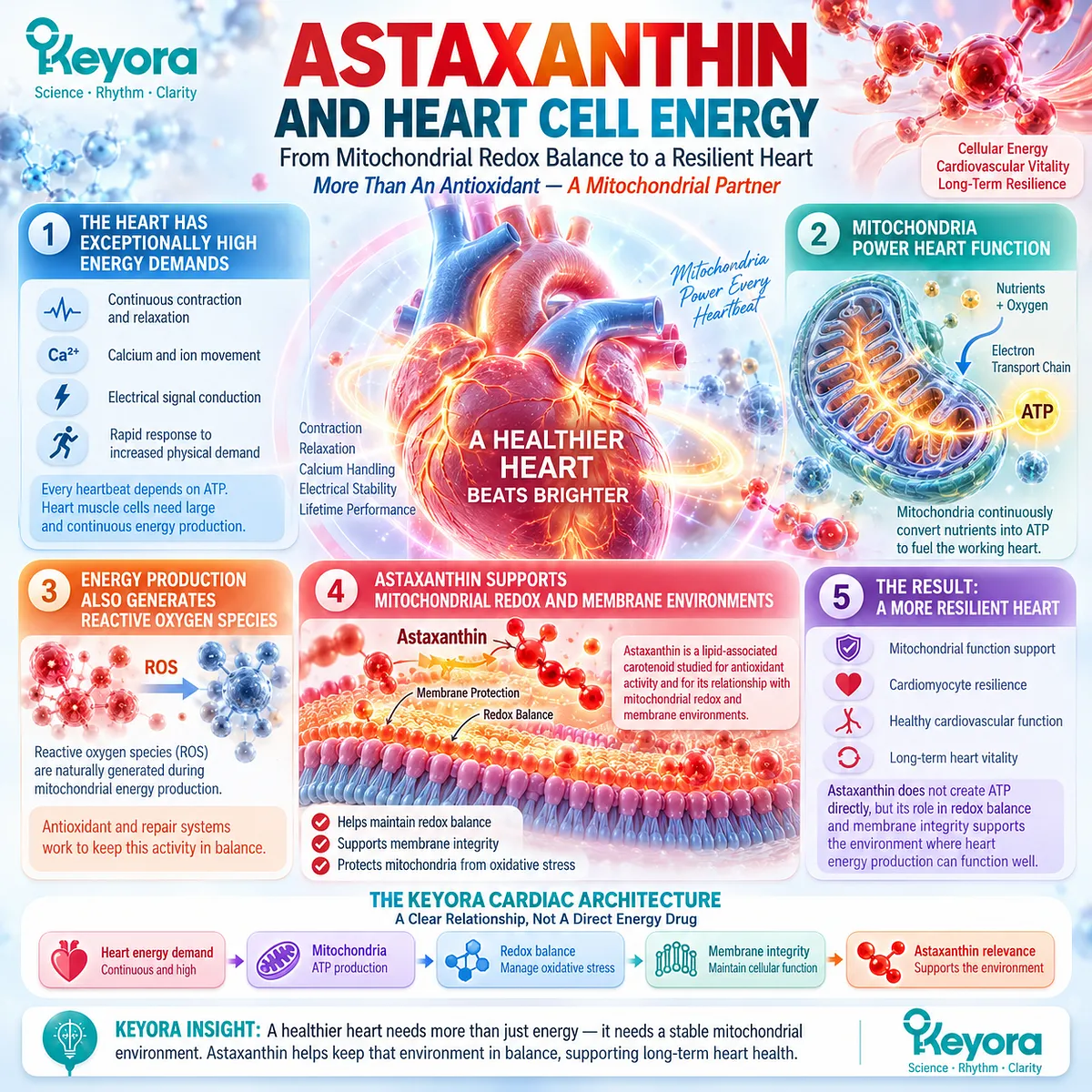
Astaxanthin is often introduced as an antioxidant, so its connection with heart health and cellular energy can seem indirect. The relationship becomes clearer when the heart is viewed not only as a pump, but also as a tissue with exceptionally high and continuous energy demands.
Every heartbeat depends on ATP.
Heart muscle cells need ATP to contract, relax, move calcium and other ions, maintain electrical gradients, and respond when physical demand increases. Because this work never stops, cardiomyocytes contain an unusually dense mitochondrial network dedicated to continuous energy production.
Mitochondrial energy metabolism also takes place in a highly active redox environment.
Reactive oxygen species are naturally generated alongside normal energy production, while antioxidant and repair systems work to keep that activity in balance.
This is where Astaxanthin becomes scientifically relevant.
Astaxanthin is a lipid-associated carotenoid studied for antioxidant activity and for its relationship with mitochondrial redox and membrane environments.
That does not mean Astaxanthin is ATP, directly creates energy, or acts like caffeine. A more accurate relationship is:
Heart energy demand → mitochondria → redox balance → membrane integrity → Astaxanthin relevance
This relationship forms the foundation of the Keyora Cardiac Architecture.
The Heart Is an Energy Problem Before It Is an Antioxidant Problem
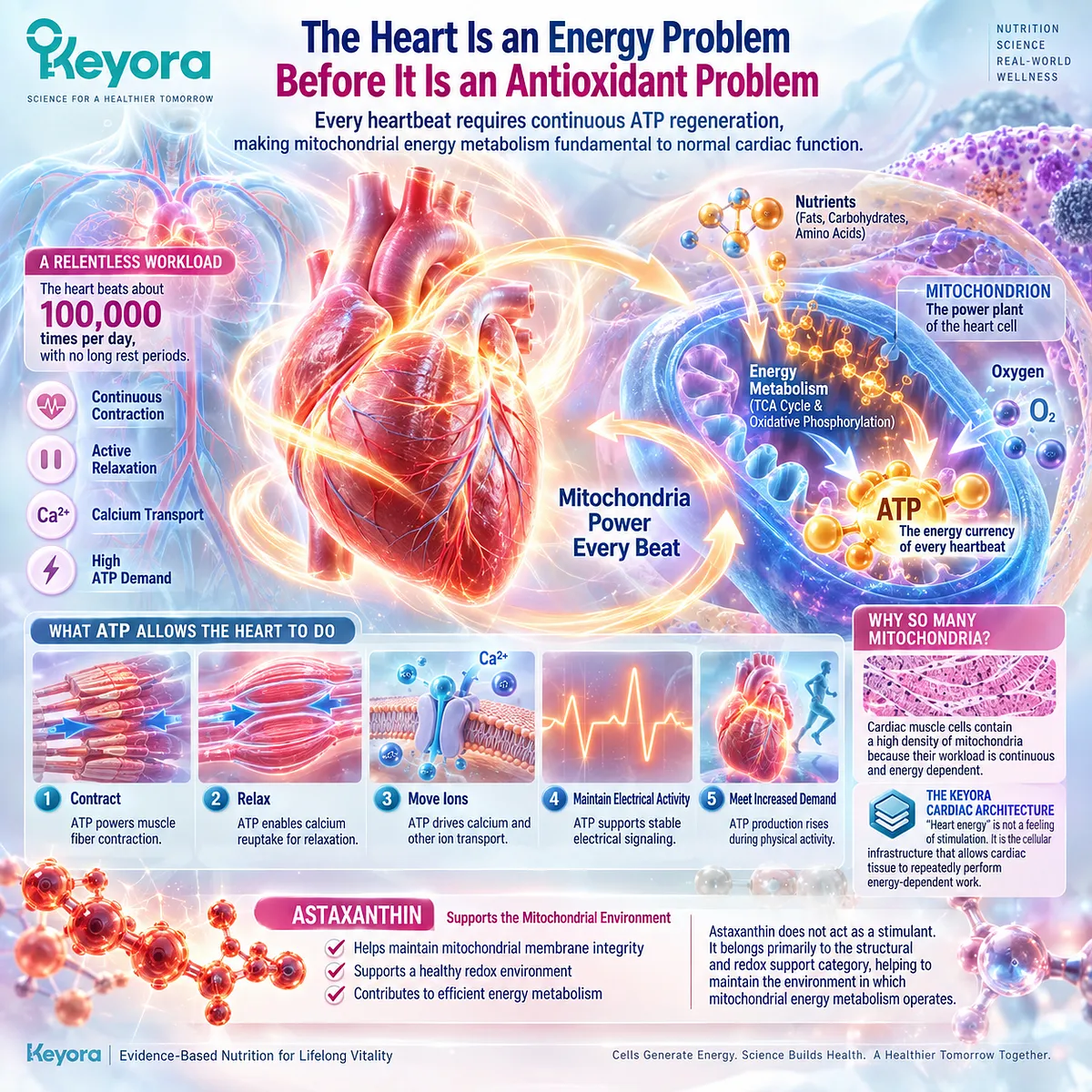
Every heartbeat requires continuous ATP regeneration, making mitochondrial energy metabolism fundamental to normal cardiac function
Heart health is often discussed through cholesterol, blood pressure, arteries, and circulation. Those factors matter, but none of them changes a basic cellular reality: before the heart can pump blood, every cardiomyocyte must have enough energy to perform its mechanical work.
The heart contracts repeatedly throughout the day without the long rest periods available to most skeletal muscles.
Cardiac cells therefore require continuous ATP turnover rather than occasional bursts of energy production.
ATP is required not only for contraction.
Relaxation is also an active process.
After each contraction, calcium must be transported so that the cardiac muscle can relax and prepare for the next beat. That transport requires energy.
This is one reason heart muscle cells contain such a high density of mitochondria. Their cellular architecture reflects their workload.
Within the Keyora Cardiac Architecture, this changes how “heart energy” should be understood.
It does not mean feeling stimulated or energetic in the everyday sense.
It refers to the cellular infrastructure that allows cardiac tissue to repeatedly perform energy-dependent work.
This distinction is important because a nutrient does not need to act as a stimulant to be relevant to energy biology.
Some nutrients provide metabolic fuel.
Others participate as cofactors.
Others may influence the structural or redox environment in which energy metabolism operates.
Astaxanthin belongs primarily to that third category.
What Mitochondria Actually Do for the Heart
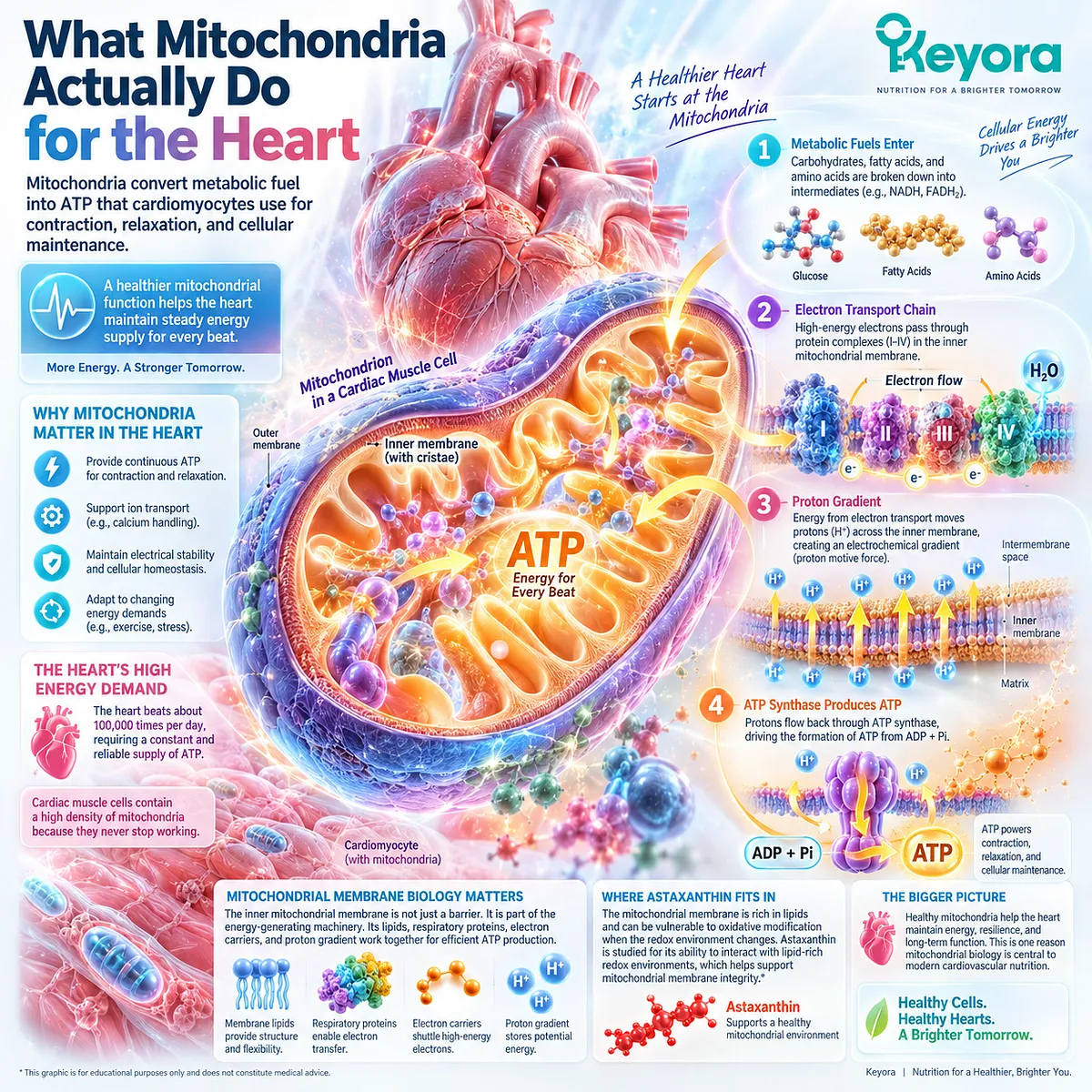
Mitochondria convert metabolic fuel into ATP that cardiomyocytes use for contraction, relaxation, and cellular maintenance
Mitochondria generate much of the ATP used by cardiac muscle through oxidative phosphorylation.
Metabolic fuels are broken down into intermediates that provide high-energy electrons. Those electrons move through the electron transport chain, a series of protein complexes located within the inner mitochondrial membrane.
As electrons move through this system, energy is used to move protons across the membrane. The resulting electrochemical gradient acts as stored potential energy.
ATP synthase then uses that gradient to produce ATP.
This means the inner mitochondrial membrane is not simply packaging around the mitochondrion. It is part of the energy-generating machinery itself.
The organization of membrane lipids, respiratory proteins, electron carriers, and the proton gradient all contribute to the environment required for efficient oxidative phosphorylation.
This is why mitochondrial membrane biology becomes relevant when discussing heart energy.
If the redox environment around these structures changes substantially, membrane lipids and proteins can become vulnerable to oxidative modification. That does not automatically mean mitochondrial failure or cardiovascular disease, but it provides a mechanistic reason to study nutrients that interact with lipid-rich redox environments.
Astaxanthin enters this scientific discussion at that point.
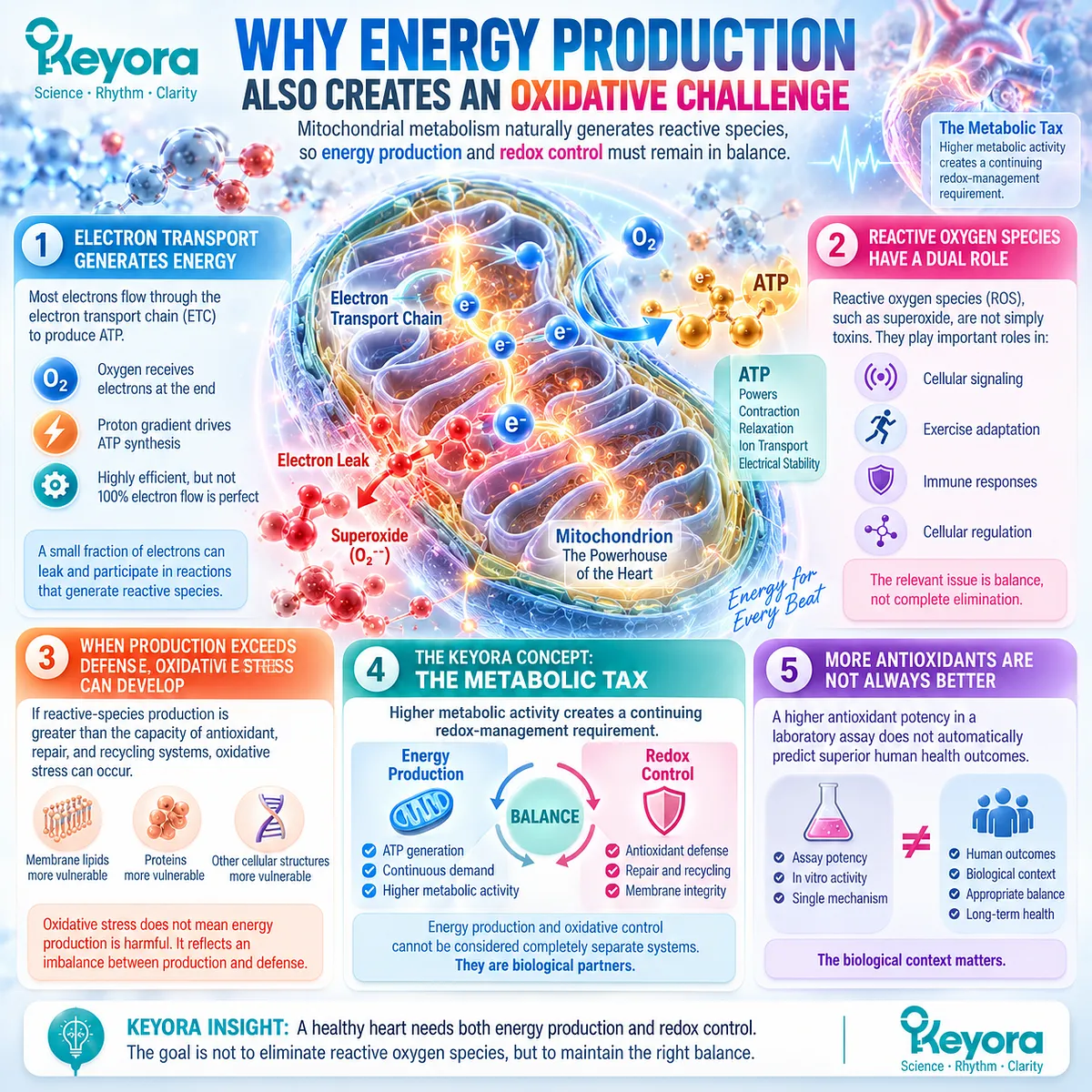
Why Energy Production Also Creates an Oxidative Challenge
Mitochondrial metabolism naturally generates reactive species, so energy production and redox control must remain in balance
Producing cellular energy is not chemically silent.
During electron transport, most electrons follow the intended pathway through the respiratory chain. A small fraction can participate in reactions that generate reactive oxygen species, including superoxide.
Reactive oxygen species should not automatically be described as toxins. They participate in normal signaling, exercise adaptation, immune responses, and cellular regulation.
The relevant issue is balance.
When reactive-species production becomes greater than the capacity of antioxidant, repair, and recycling systems, oxidative stress can develop. Under those conditions, membrane lipids, proteins, and other cellular structures may become more vulnerable to oxidative modification.
Keyora describes this relationship through The Metabolic Tax.
The framework does not imply that energy production is harmful. It explains that high metabolic activity creates a continuing redox-management requirement.
The heart is particularly relevant because it operates continuously and relies heavily on aerobic metabolism. Greater metabolic activity means that energy production and oxidative control cannot be considered completely separate biological systems.
The goal is not to eliminate reactive oxygen species.
The goal is to understand the balance between:
energy production
oxidative signaling
antioxidant defense
membrane integrity
repair capacity
This is also why the statement “more antioxidants are always better” would be scientifically misleading. Antioxidant potency in a laboratory assay does not automatically predict superior human health outcomes.
The biological context matters.
Where Astaxanthin Enters the Picture
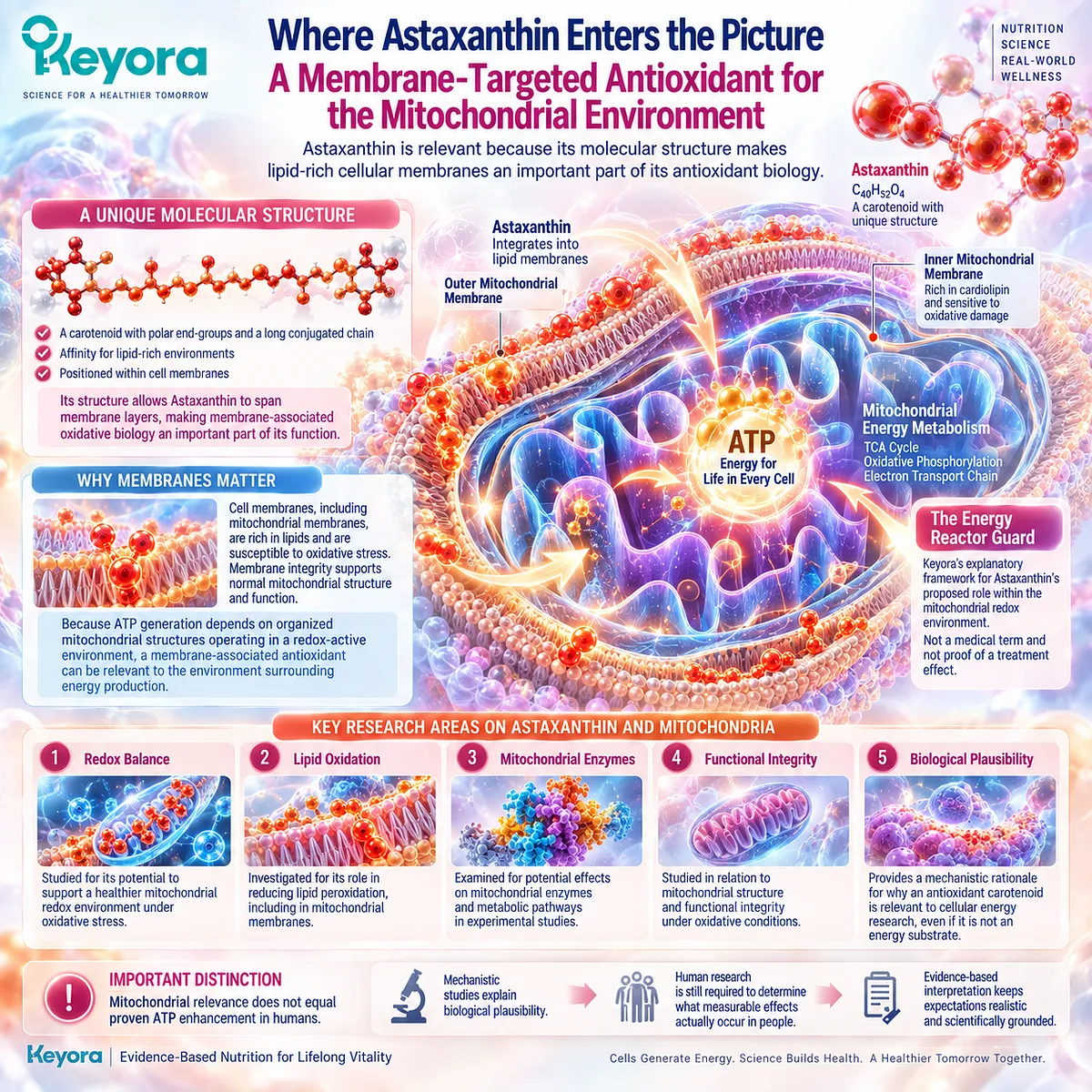
Astaxanthin is relevant because its molecular structure makes lipid-rich cellular membranes an important part of its antioxidant biology
Astaxanthin is a carotenoid with a molecular structure that differs from many water-soluble antioxidants.
Its structure gives it an affinity for lipid-rich environments, including biological membranes. This makes membrane-associated oxidative biology an important part of the scientific rationale for studying Astaxanthin.
Keyora describes this role as The Energy Reactor Guard.
The term is an explanatory framework for Astaxanthin’s proposed role within the mitochondrial redox environment. It should not be interpreted as a formal medical term or as proof of a treatment effect.
Experimental research has investigated Astaxanthin in relation to mitochondrial redox state and functional integrity under oxidative stress. Other mechanistic studies have examined its relationship with lipid oxidation, mitochondrial enzymes, and metabolic pathways.
These findings help answer an important question:
Why would researchers interested in cellular energy study an antioxidant carotenoid?
Because ATP generation depends on organized mitochondrial structures operating inside a redox-active environment. A compound associated with lipid membranes and oxidative protection can therefore be relevant to the environment surrounding energy production even if it is not itself an energy substrate.
This distinction prevents an important misunderstanding.
Mitochondrial relevance does not equal proven ATP enhancement in humans.
A mechanistic study can explain why an effect is biologically plausible. Human research is still required to determine what measurable effects actually occur in people.
Does That Mean Astaxanthin “Makes Energy”?
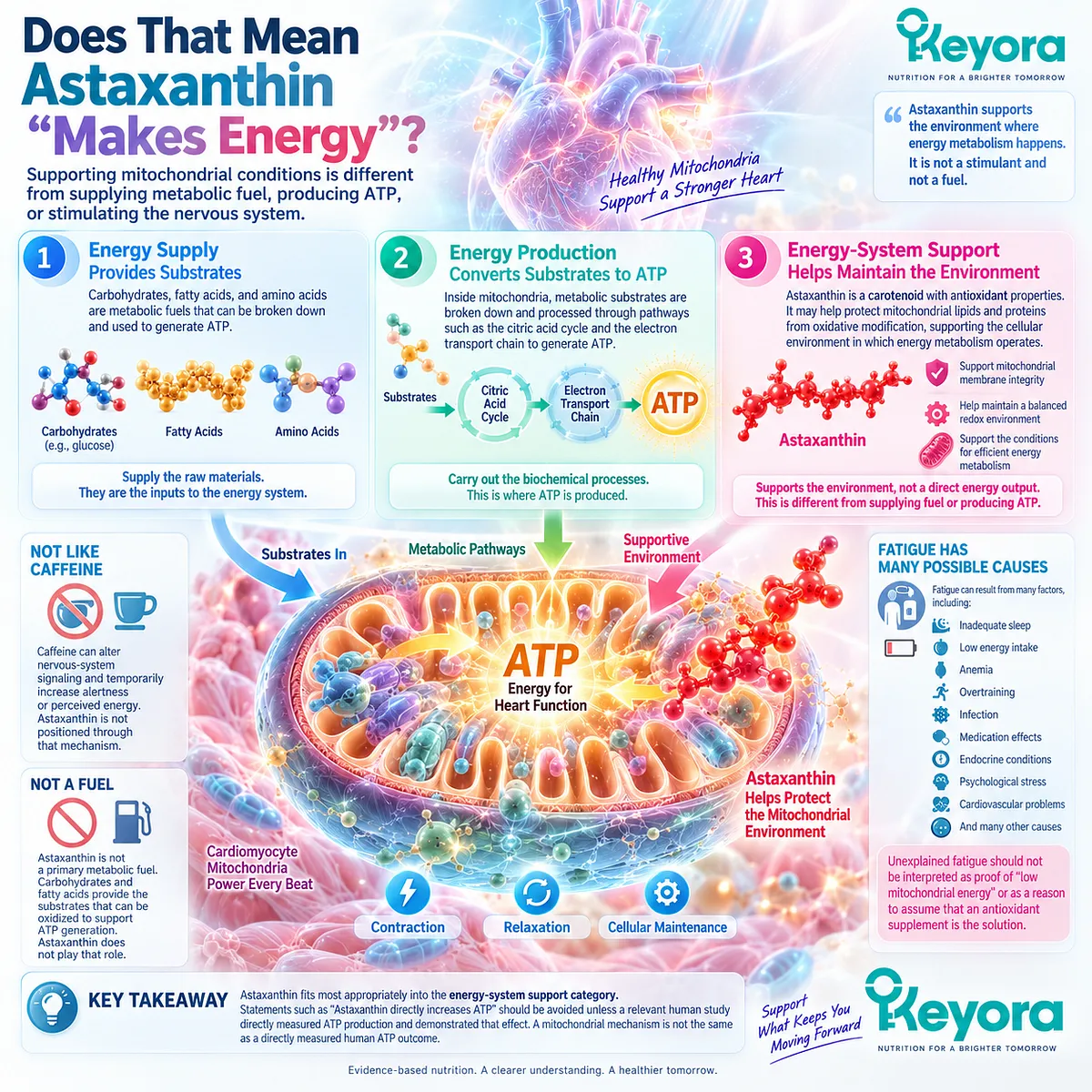
Supporting mitochondrial conditions is different from supplying metabolic fuel, producing ATP, or stimulating the nervous system
Astaxanthin does not work like caffeine.
Caffeine can alter nervous-system signaling and temporarily increase alertness or perceived energy. Astaxanthin is not positioned through that mechanism.
It is also not a primary metabolic fuel. Carbohydrates and fatty acids can ultimately contribute substrates that are oxidized to support ATP generation. Astaxanthin does not play that role.
This gives us three useful categories.
-
Energy supply describes the availability of metabolic substrates.
-
Energy production describes the biochemical processes that convert those substrates into ATP.
-
Energy-system support describes factors that may help maintain the biochemical and structural environment in which energy metabolism operates.
Astaxanthin fits most appropriately into the third category.
This is why phrases such as “Astaxanthin directly increases ATP” should be avoided unless a relevant human study directly measured ATP production and demonstrated that effect.
A mitochondrial mechanism is not the same as a directly measured human ATP outcome.
The same caution applies to the word fatigue.
Fatigue can result from inadequate sleep, low energy intake, anemia, overtraining, infection, medication effects, endocrine conditions, psychological stress, cardiovascular problems, and many other causes.
It would therefore be inappropriate to interpret unexplained fatigue as proof of “low mitochondrial energy” or as a reason to assume that an antioxidant supplement is the solution.
What Human Studies Actually Add to the Story
Human studies provide selected functional evidence, but they do not prove every proposed mitochondrial or cardiac mechanism
Mechanistic research explains why Astaxanthin may be relevant to mitochondrial and redox biology. Human studies answer a different question:
What has actually been observed in people?
One study discussed in Keyora Astaxanthin EP-4 involved 28 competitive trail runners who received 12 mg of natural Astaxanthin daily for eight weeks.
The reported findings included a lower heart rate during submaximal exercise while workload was maintained.
That observation is interesting because it connects Astaxanthin research with cardiorespiratory function under exercise conditions.
But the interpretation must remain narrow.
A lower exercise heart rate does not automatically prove that the heart became stronger. It does not automatically prove increased stroke volume. It also does not demonstrate that resting heart rate will decrease in the general population.
Another human study discussed in the same scientific framework involved competitive cyclists receiving 4 mg of Astaxanthin daily for 28 days.
The measured outcomes included cycling time-trial performance and power output.
Those are functional performance outcomes.
They are not direct measurements of ATP production in human heart tissue, and they do not prove that one particular mitochondrial mechanism caused the observed performance changes.
A third study involved 40 young elite soccer players taking 4 mg of Astaxanthin daily for 90 days. Researchers examined biomarkers associated with oxidative stress, inflammation, and muscle damage, including MDA, CK, and LDH.
Again, the endpoint matters.
Changes in exercise-related biomarkers are not the same thing as proof of cardiac repair or cardiovascular disease prevention.
These studies therefore create a useful evidence ladder:
-
Mechanistic evidence helps explain biological plausibility.
-
Human biomarkers show measurable changes in specific physiological signals.
-
Human functional outcomes show what happened to performance or cardiorespiratory responses.
None of these levels should be silently converted into a different one.

What “Heart Health Support” Does Not Mean
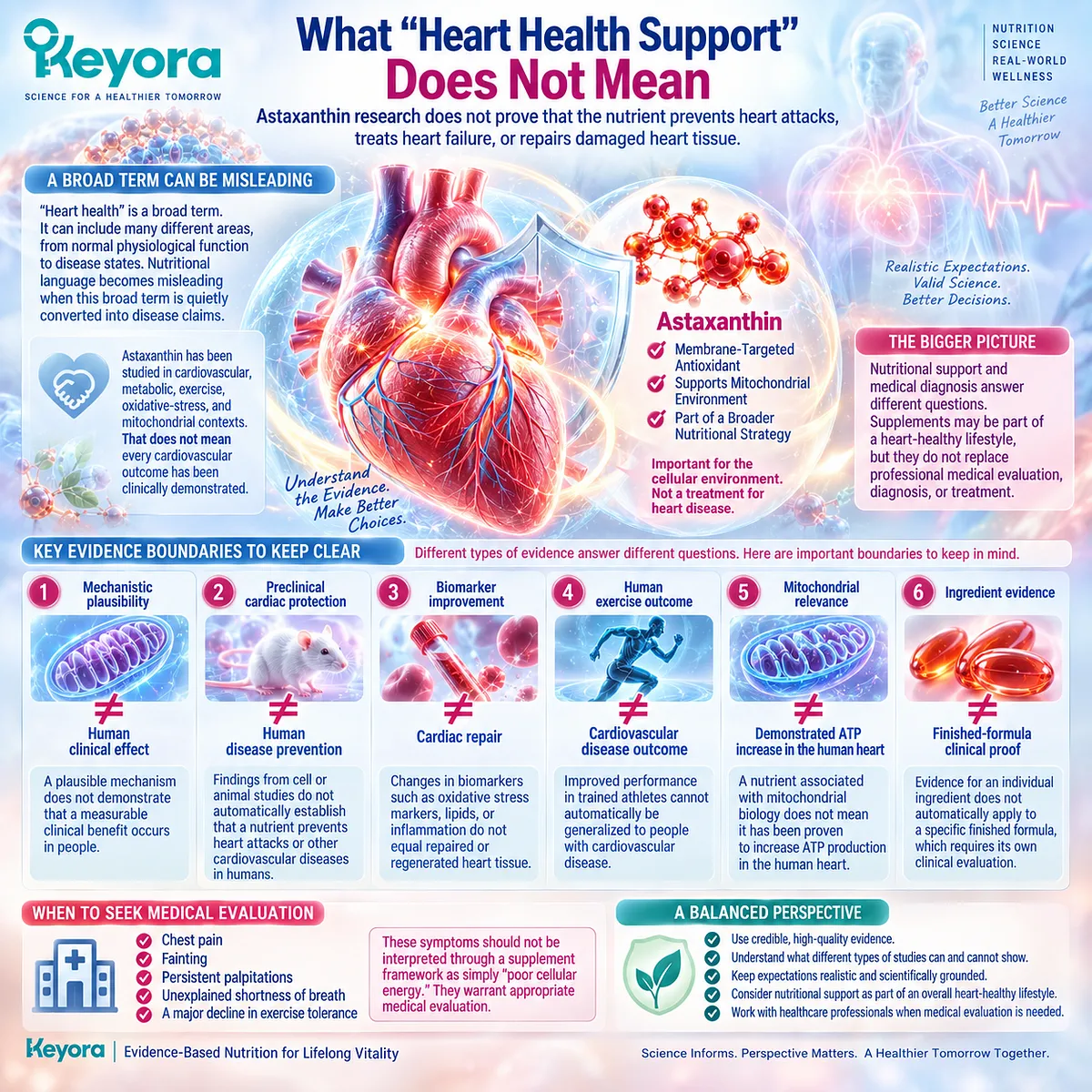
Astaxanthin research does not prove that the nutrient prevents heart attacks, treats heart failure, or repairs damaged heart tissue
Nutritional language becomes misleading when broad terms such as “heart health” are quietly converted into disease claims.
Astaxanthin has been studied in cardiovascular, metabolic, exercise, oxidative-stress, and mitochondrial contexts. That does not mean every cardiovascular outcome has been clinically demonstrated.
Preclinical research involving mitochondrial membranes, oxidative injury, ischemia-reperfusion, or other experimental cardiac models can help explain mechanisms.
It does not automatically establish disease prevention or treatment in humans.
Similarly, human exercise studies involving trained runners, cyclists, or soccer players cannot automatically be generalized to people with cardiovascular disease.
Several evidence boundaries therefore need to remain visible:
-
Mechanistic plausibility ≠ human clinical effect
-
Preclinical cardiac protection ≠ human disease prevention
-
Biomarker improvement ≠ cardiac repair
-
Human exercise outcome ≠ cardiovascular disease outcome
-
Mitochondrial relevance ≠ demonstrated ATP increase in the human heart
-
Ingredient evidence ≠ finished-formula clinical proof
These are not technical disclaimers added after the science. They are part of understanding the science correctly.
There is also an important practical boundary.
Chest pain, fainting, persistent palpitations, unexplained shortness of breath, or a major decline in exercise tolerance should not be interpreted through a supplement framework as simply “poor cellular energy.” These symptoms warrant appropriate medical evaluation.
Nutritional support and medical diagnosis answer different questions.
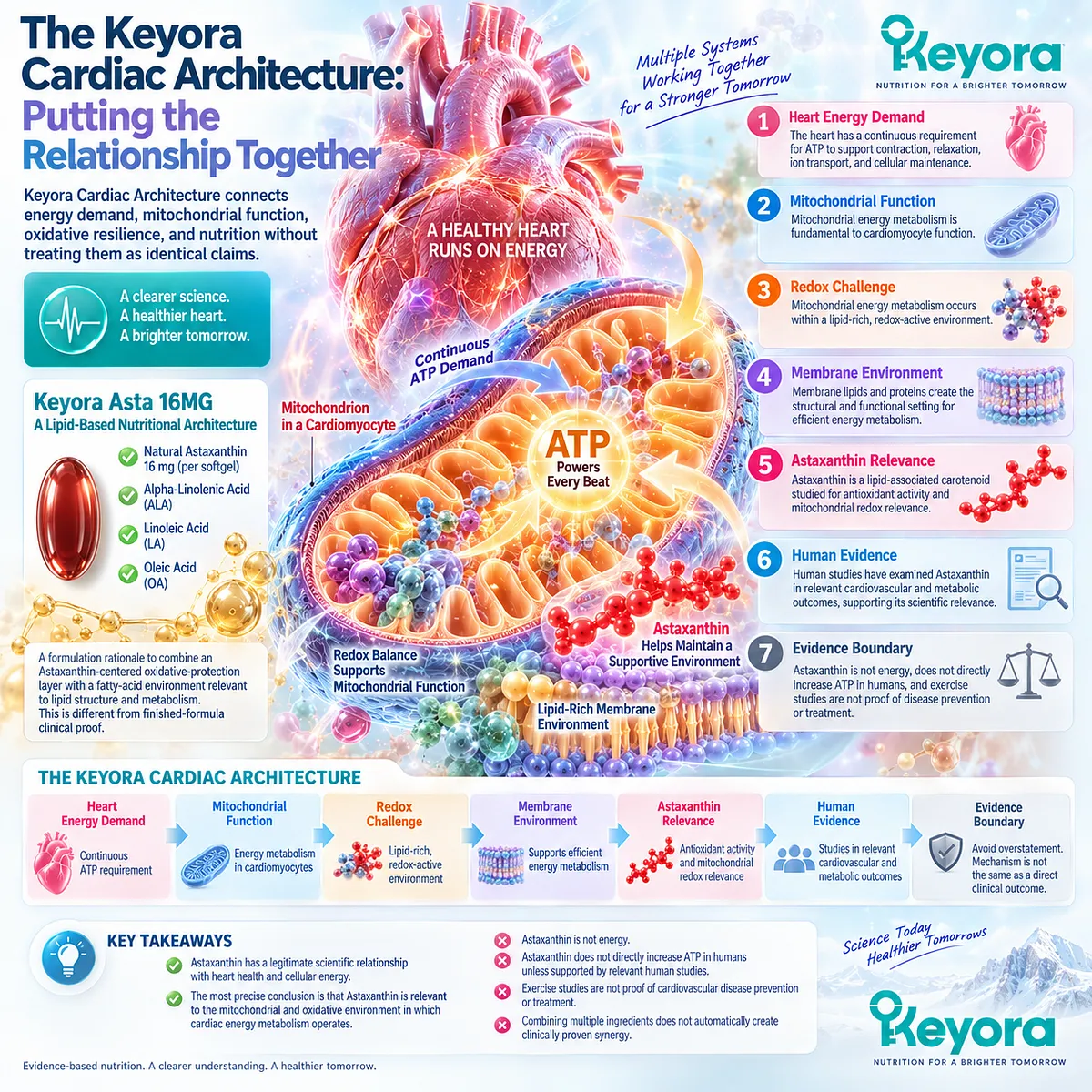
The Keyora Cardiac Architecture: Putting the Relationship Together
Keyora Cardiac Architecture connects energy demand, mitochondrial function, oxidative resilience, and nutrition without treating them as identical claims
The relationship between Astaxanthin, heart health, and cellular energy can now be summarized without exaggeration.
The heart has a continuous requirement for ATP.
That ATP requirement makes mitochondrial energy metabolism fundamental to cardiomyocyte function.
Mitochondrial energy metabolism occurs within a lipid-rich, redox-active cellular environment.
That makes membrane organization and oxidative balance relevant to the conditions in which energy metabolism takes place.
Astaxanthin is a lipid-associated carotenoid studied for antioxidant activity and mitochondrial redox relevance.
That is why Astaxanthin belongs in a scientific discussion of heart health and cellular energy.
It does not mean that Astaxanthin itself is energy.
It does not mean that an antioxidant mechanism proves increased cardiac ATP production.
It does not mean that exercise studies prove prevention or treatment of cardiovascular disease.
And it does not mean that combining multiple biologically plausible ingredients automatically creates clinically proven synergy.
Keyora Asta 16MG places natural Astaxanthin within a lipid-based nutritional architecture that also contains alpha-linolenic acid, linoleic acid, and oleic acid. The nutritional rationale is to combine an Astaxanthin-centered oxidative-protection layer with a fatty-acid environment relevant to lipid structure and metabolism.
That formulation rationale is different from finished-formula clinical proof.
This distinction is central to the Keyora Cardiac Architecture:
Heart energy demand → mitochondrial function → redox challenge → membrane environment → Astaxanthin relevance → human evidence → evidence boundary
Astaxanthin therefore has a legitimate scientific relationship with both heart health and cellular energy, but the strongest interpretation is not that it “powers the heart.”
The more precise conclusion is that Astaxanthin is relevant to the mitochondrial and oxidative environment in which cardiac energy metabolism operates.
This article is for educational and informational purposes only. It does not provide medical advice, diagnosis, treatment, cure, prevention, disease outcome claims, hormone restoration claims, fertility outcome claims, or formula-specific clinical efficacy claims.