
Should Astaxanthin Be Taken With Food or on an Empty Stomach?
Keyora Research Q&A Library
This is part of the Keyora Research Q&A Series, derived from Keyora Astaxanthin Research Journal Series.
Within the Keyora Astaxanthin Researcn framework, this Q&A translates complex astaxanthin biology into reader-friendly, evidence-bound answers, focusing on natural astaxanthin identity, molecular structure, antioxidant and redox mechanisms, membrane lipid interaction, mitochondrial resilience, inflammatory signaling pathways, human evidence interpretation, and the scientific principles behind responsible supplementation.
First published by Keyora Research Journal: www.keyorahealth.com
Direct Answer
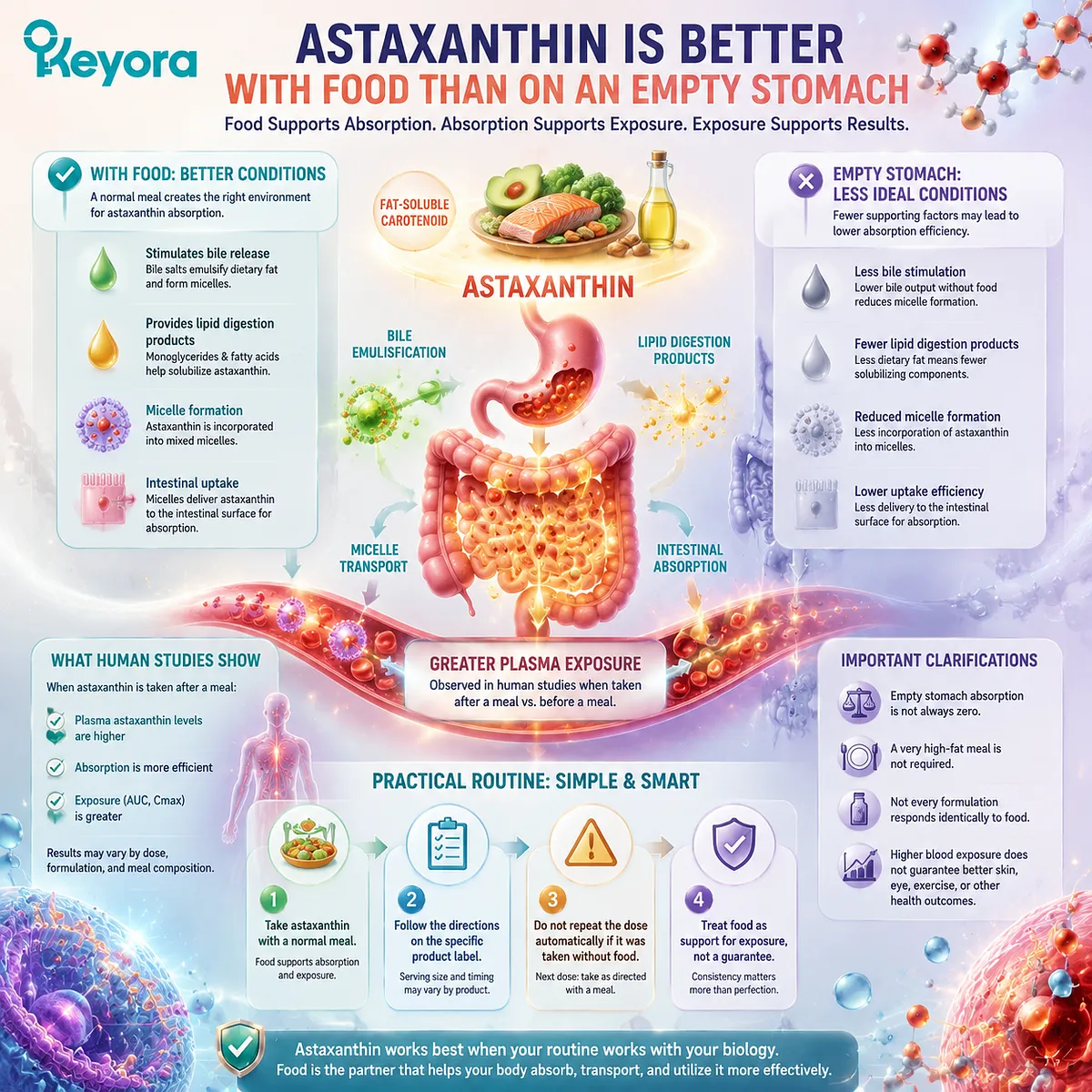
Astaxanthin is generally better taken with food than on an empty stomach. It is a fat soluble carotenoid, so its movement from the digestive tract into circulation depends partly on the same processes used to digest and transport dietary lipids.
A normal meal stimulates digestive activity, supports bile delivery into the small intestine, and provides lipid digestion products that help disperse Astaxanthin before intestinal uptake.
Human pharmacokinetic research also indicates that administration after a meal can produce greater plasma exposure than administration before a meal under the tested conditions.
This does not mean that empty stomach absorption is always zero. It also does not mean that a very high fat meal is required, that every formulation responds identically to food, or that greater blood exposure guarantees better skin, eye, exercise, or other health outcomes.
The practical routine is straightforward:
-
Take Astaxanthin with a normal meal.
-
Follow the directions on the specific product label.
-
Do not repeat the dose automatically if it was taken without food.
-
Treat food as support for exposure, not as a guarantee of complete absorption or clinical effectiveness.
What Happens When Astaxanthin Meets a Meal
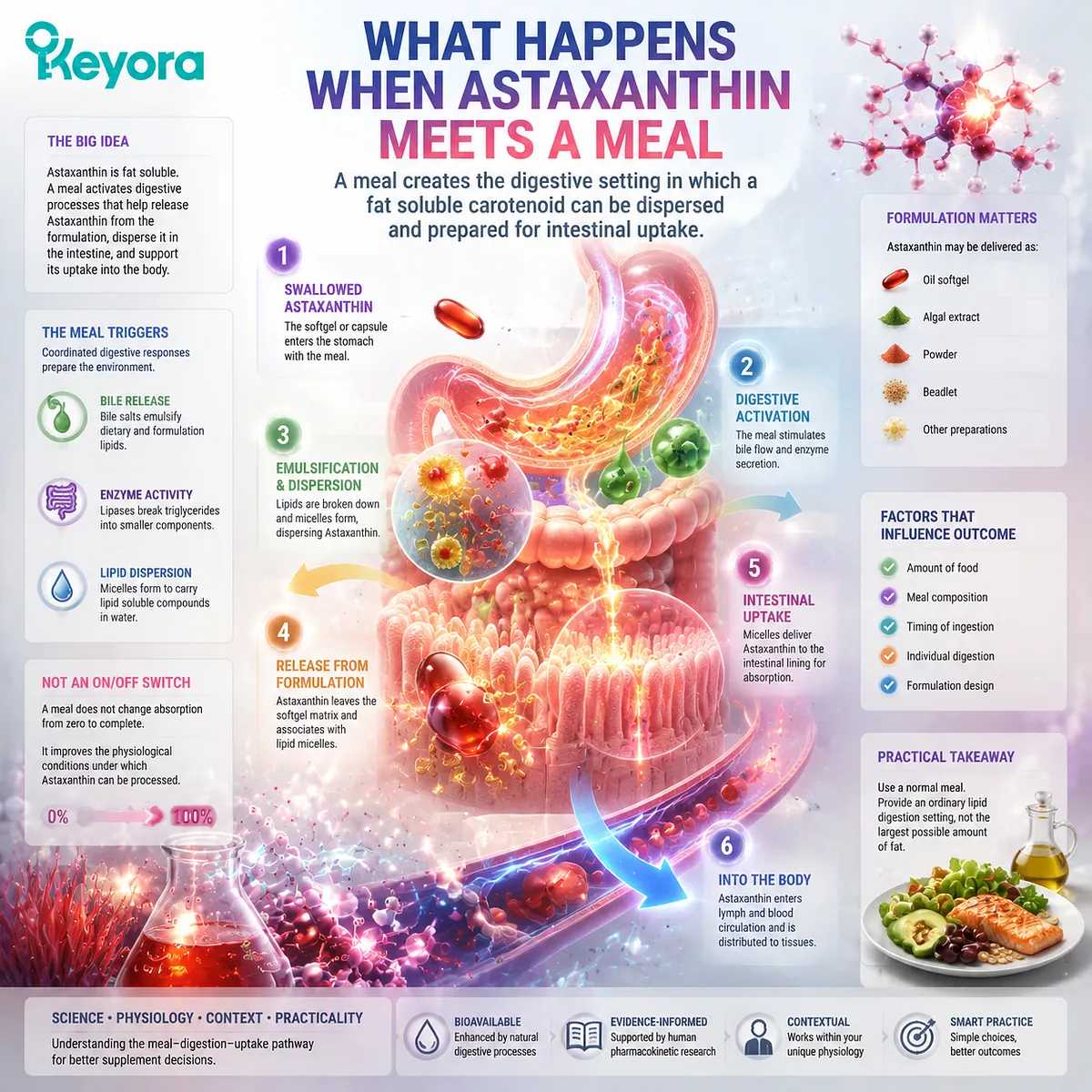
A meal creates the digestive setting in which a fat soluble carotenoid can be dispersed and prepared for intestinal uptake
After an Astaxanthin softgel or capsule is swallowed, the active compound must move through the gastrointestinal tract before it can appear in blood. Because Astaxanthin does not dissolve readily in water, it cannot be handled in exactly the same way as a water soluble nutrient.
A meal changes the digestive environment. Food entering the stomach and small intestine stimulates coordinated digestive processes. Bile is delivered into the intestine, dietary and formulation lipids are dispersed, and digestive enzymes begin breaking larger fat structures into smaller components.
This creates a more favorable environment for Astaxanthin to move out of the swallowed formulation and become available for intestinal uptake.
The meal does not act as a switch that changes absorption from zero to complete. Instead, it improves the physiological conditions under which a lipid associated compound can be processed.
The composition of the formulation still matters. Astaxanthin may be delivered in an oil, algal extract, powder, beadlet, or another preparation. The amount of food, the meal composition, the timing of ingestion, and individual digestion may also affect the resulting exposure.
This is why the practical advice is to use a normal meal rather than to search for one rigid food rule. The objective is to provide an ordinary lipid digestion setting, not to consume the largest possible amount of fat.
Why Fat Digestion Matters
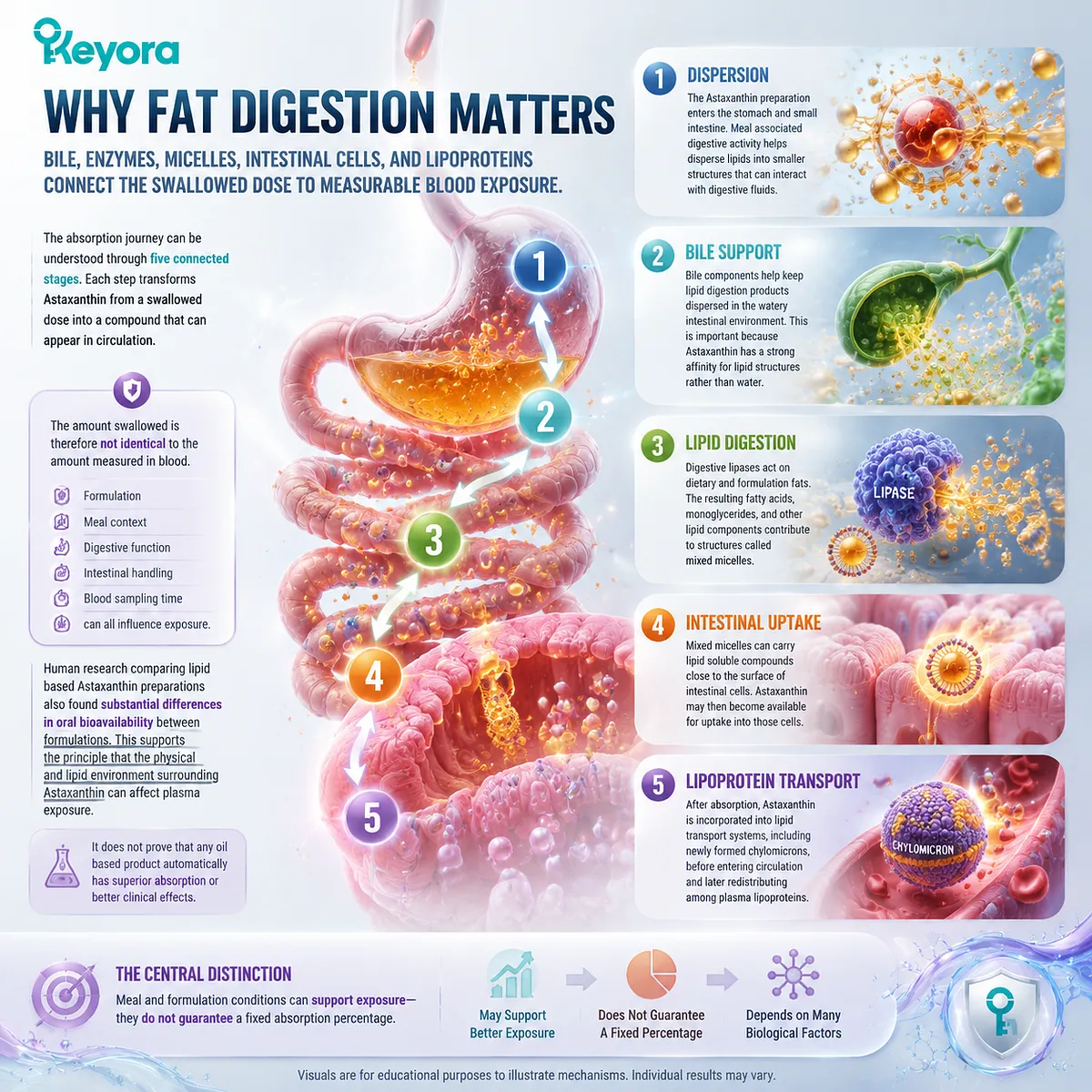
Bile, digestive enzymes, mixed micelles, intestinal cells, and lipoproteins form connected steps between the swallowed dose and measurable blood exposure
The absorption journey can be understood through five connected stages.
1. Dispersion
The Astaxanthin preparation enters the stomach and small intestine. Meal associated digestive activity helps disperse lipids into smaller structures that can interact with digestive fluids.
2. Bile support
Bile components help keep lipid digestion products dispersed in the watery intestinal environment. This is important because Astaxanthin has a strong affinity for lipid structures rather than water.
3. Lipid digestion
Digestive lipases act on dietary and formulation fats. The resulting fatty acids, monoglycerides, and other lipid components contribute to structures called mixed micelles.
4. Intestinal uptake
Mixed micelles can carry lipid soluble compounds close to the surface of intestinal cells. Astaxanthin may then become available for uptake into those cells.
5. Lipoprotein transport
After absorption, Astaxanthin is incorporated into lipid transport systems, including newly formed chylomicrons, before entering circulation and later redistributing among plasma lipoproteins.
The amount swallowed is therefore not identical to the amount measured in blood. Formulation, meal context, digestive function, intestinal handling, and blood sampling time can all influence exposure.
Human research comparing lipid based Astaxanthin preparations also found substantial differences in oral bioavailability between formulations. This supports the principle that the physical and lipid environment surrounding Astaxanthin can affect plasma exposure. It does not prove that any oil based product automatically has superior absorption or better clinical effects.
The central distinction is:
Meal and formulation conditions can support exposure – they do not guarantee a fixed absorption percentage.
Is an Empty Stomach Always Wrong?
Empty stomach use may provide less favorable exposure in some conditions, but it should not be described as zero absorption or corrected with an extra dose
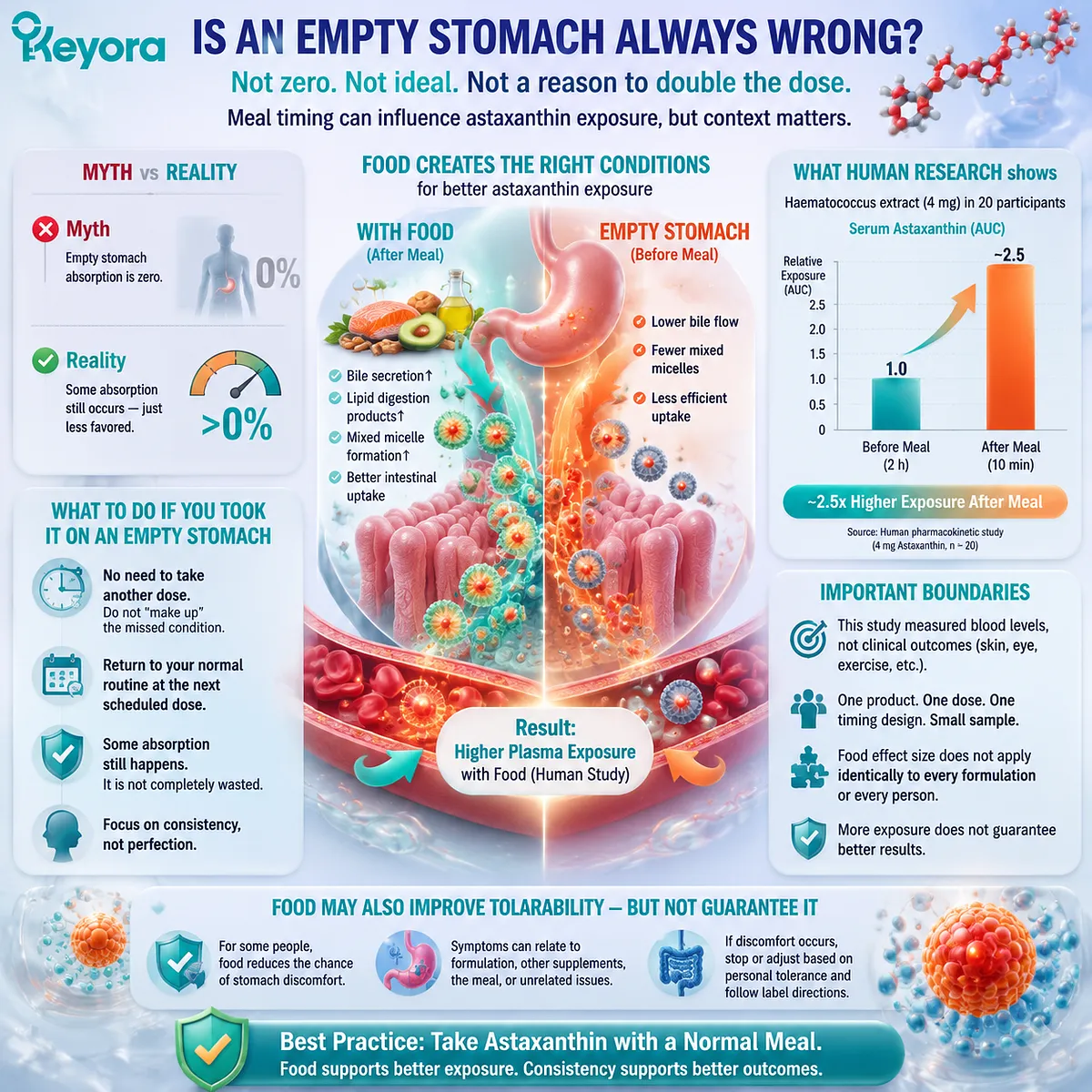
A human pharmacokinetic study examined Astaxanthin from a Haematococcus algal extract in 20 participants under different timing conditions. Nonsmoking participants took 4 mg either two hours before a meal or ten minutes after a meal. Serum Astaxanthin was then measured over time.
The reported area under the concentration curve was substantially higher in the after meal group than in the before meal group. The study therefore provides direct human evidence that meal timing can influence Astaxanthin exposure under the tested conditions.
The result still has important boundaries.
First, the study measured serum pharmacokinetics. It did not test whether the after meal group experienced better skin hydration, visual comfort, exercise recovery, or another clinical outcome.
Second, it used one Astaxanthin preparation, one dose, one timing design, and a small group of participants. The size of the food effect should not be assumed to apply identically to every product or person.
Third, taking a dose without food does not justify taking another dose immediately. Some absorption may still occur, and adding a second dose could produce an unintended increase in total daily intake.
A reasonable response to one empty stomach dose is simply to return to the normal label directed routine at the next scheduled dose. There is no need to treat the earlier dose as completely wasted.
Food may also improve tolerability for some people, but it cannot guarantee the absence of nausea, abdominal discomfort, or other reactions. Symptoms may relate to the complete formulation, other supplements taken at the same time, the meal, or an unrelated digestive issue.
Apply the Label Without Making It a Universal Rule
The Keyora with food instruction offers a practical routine while remaining separate from claims of guaranteed or superior absorption
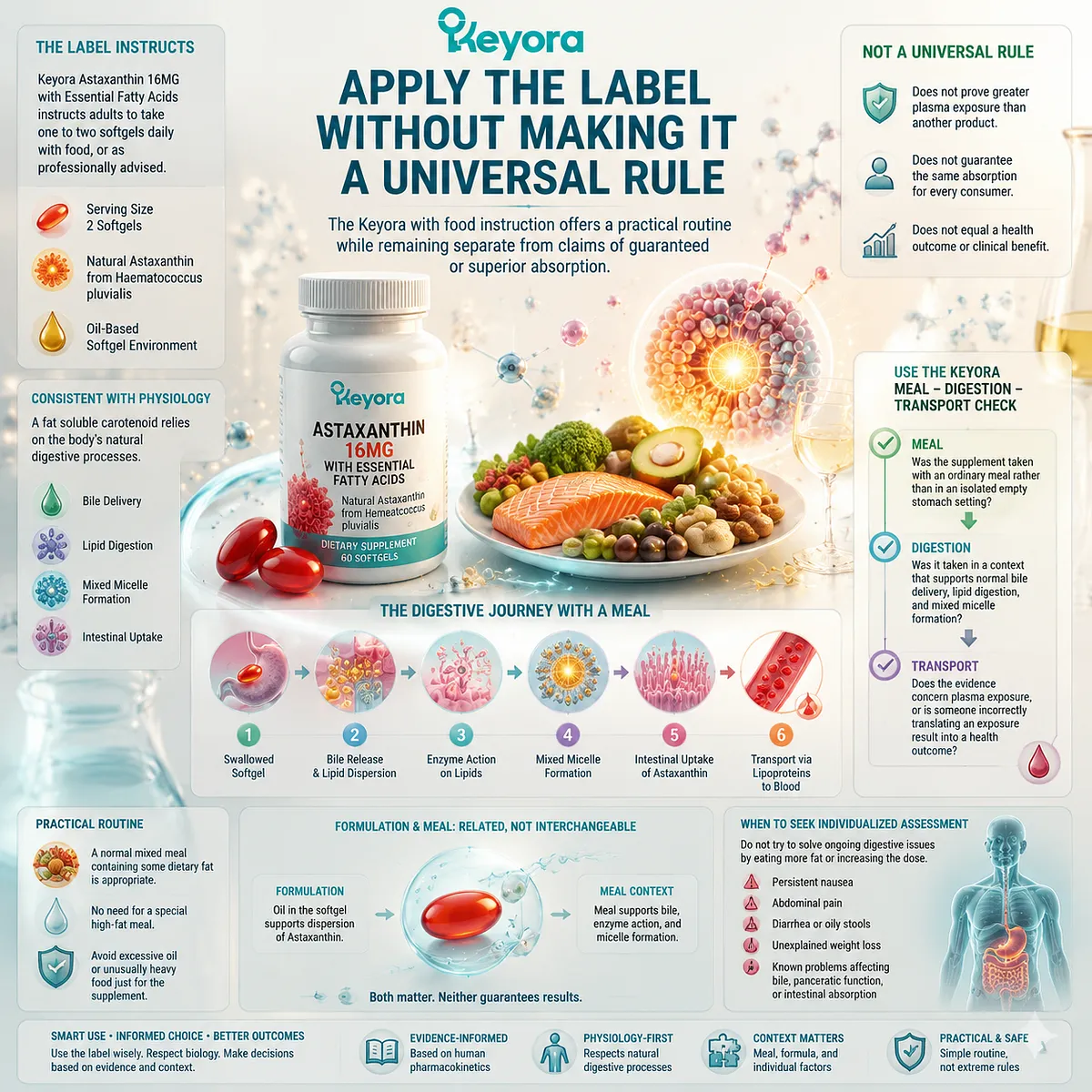
The Keyora Astaxanthin 16MG with Essential Fatty Acids label instructs adults to take one to two softgels daily with food, or as professionally advised. The official serving size is two softgels, and the formulation places natural Astaxanthin from Haematococcus pluvialis in an oil based softgel environment.
This instruction is consistent with the digestive physiology of a fat soluble carotenoid. It does not prove that the exact Keyora finished formula produces greater plasma exposure than another product, and it does not guarantee that every consumer absorbs the same amount.
Use the Keyora Meal – Digestion – Transport Check:
Meal
Was the supplement taken with an ordinary meal rather than in an isolated empty stomach setting?
Digestion
Was it taken in a context that supports normal bile delivery, lipid digestion, and mixed micelle formation?
Transport
Does the evidence concern plasma exposure, or is someone incorrectly translating an exposure result into a health outcome?
The practical routine does not require a special high fat meal. A normal mixed meal containing some dietary fat is a more reasonable interpretation than adding excessive oil or choosing unusually heavy food solely for the supplement.
The oil inside a softgel may contribute to formulation dispersion, but it does not make the meal context irrelevant. The meal and the formulation are related variables, not interchangeable guarantees.
People with persistent nausea, abdominal pain, diarrhea, oily stools, unexplained weight loss, or known problems affecting bile, pancreatic function, or intestinal absorption should not attempt to solve the issue simply by eating more fat or increasing the dose. Those situations need individualized assessment.
Closing Summary
Taking Astaxanthin with a normal meal is the more evidence aligned routine, but food supports exposure rather than guaranteeing a specific result
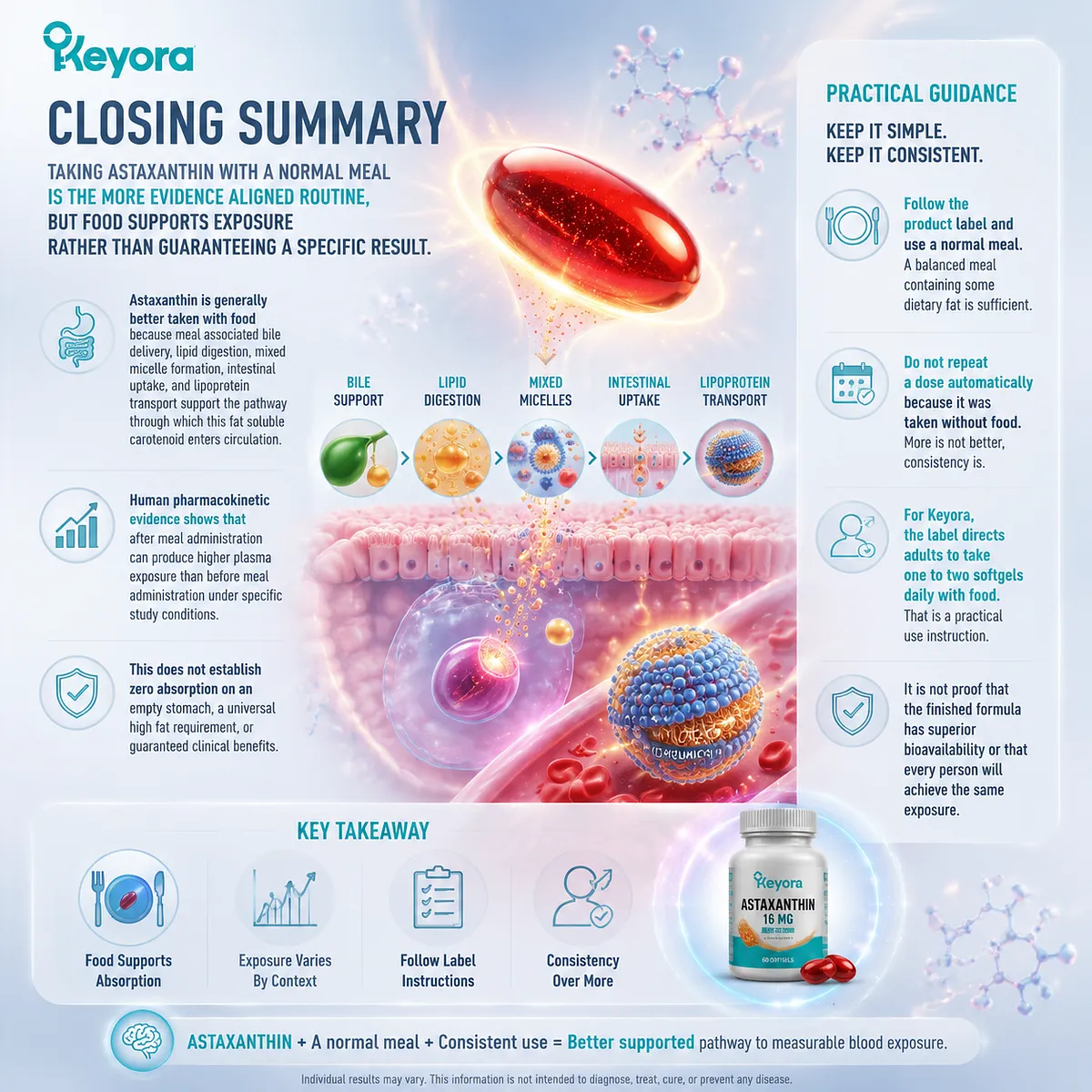
Astaxanthin is generally better taken with food because meal associated bile delivery, lipid digestion, mixed micelle formation, intestinal uptake, and lipoprotein transport support the pathway through which this fat soluble carotenoid enters circulation.
Human pharmacokinetic evidence shows that after meal administration can produce higher plasma exposure than before meal administration under specific study conditions. This does not establish zero absorption on an empty stomach, a universal high fat requirement, or guaranteed clinical benefits.
Follow the product label and use a normal meal.
Do not repeat a dose automatically because it was taken without food.
For Keyora, the label directs adults to take one to two softgels daily with food. That is a practical use instruction. It is not proof that the finished formula has superior bioavailability or that every person will achieve the same exposure.
This article is for educational and informational purposes only. It does not provide medical advice, diagnosis, treatment, cure, prevention, disease outcome claims, hormone restoration claims, fertility outcome claims, or formula-specific clinical efficacy claims.