
Is Astaxanthin a Carotenoid, an Antioxidant, or a Vitamin?
Keyora Research Q&A Library
This is part of the Keyora Research Q&A Series, derived from Keyora Astaxanthin Research Journal Series.
Within the Keyora Astaxanthin Researcn framework, this Q&A translates complex astaxanthin biology into reader-friendly, evidence-bound answers, focusing on natural astaxanthin identity, molecular structure, antioxidant and redox mechanisms, membrane lipid interaction, mitochondrial resilience, inflammatory signaling pathways, human evidence interpretation, and the scientific principles behind responsible supplementation.
First published by Keyora Research Journal: www.keyorahealth.com
Direct Answer
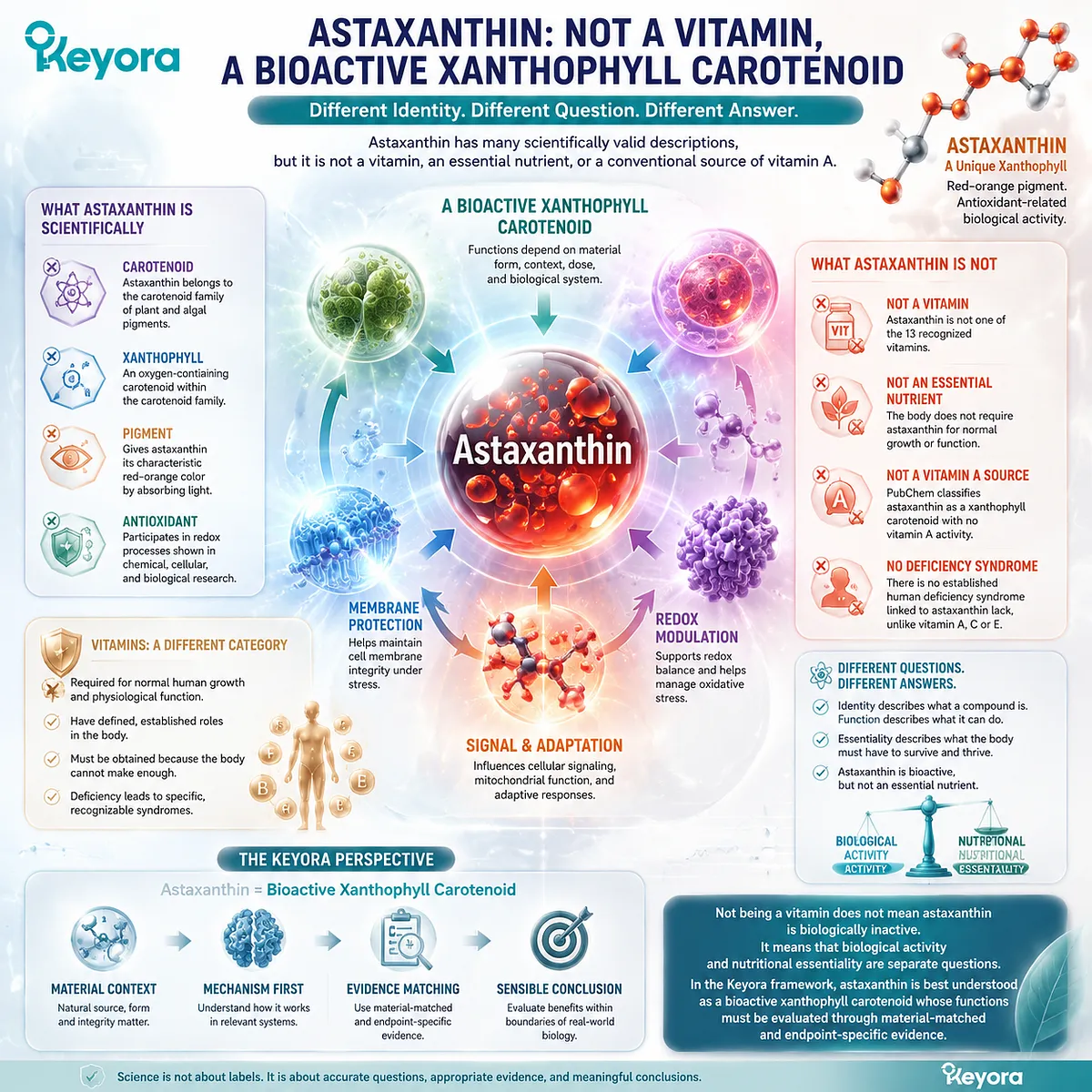
Astaxanthin is a carotenoid, more specifically an oxygen-containing carotenoid called a xanthophyll. It is also a red-orange pigment and has antioxidant-related biological activity.
However, astaxanthin is not a vitamin, an essential nutrient, or a conventional source of vitamin A. PubChem classifies it as a xanthophyll carotenoid with no vitamin A activity.
These descriptions are not competing labels because they answer different questions.
-
“Carotenoid” identifies the chemical family to which astaxanthin belongs.
-
“Xanthophyll” identifies its oxygen-containing subgroup.
-
“Pigment” describes its ability to absorb visible light and produce color.
-
“Antioxidant” describes certain redox-related functions observed in chemical, membrane, cellular, and biological research.
“Vitamin” is a different category.
Vitamins are substances required for normal human growth and physiological function, and recognized vitamins have defined nutritional roles.
Essential nutrients must be obtained because the body cannot make enough of them to meet its needs.
Astaxanthin is not included among the 13 recognized vitamins and does not have an established human deficiency syndrome comparable with vitamin A, vitamin C, or vitamin E deficiency.
Not being a vitamin does not mean astaxanthin is biologically inactive. It means that biological activity and nutritional essentiality are separate questions.
In the Keyora framework, astaxanthin is best understood as a bioactive xanthophyll carotenoid whose functions must be evaluated through material-matched and endpoint-specific evidence.
Why Astaxanthin Has More Than One Description
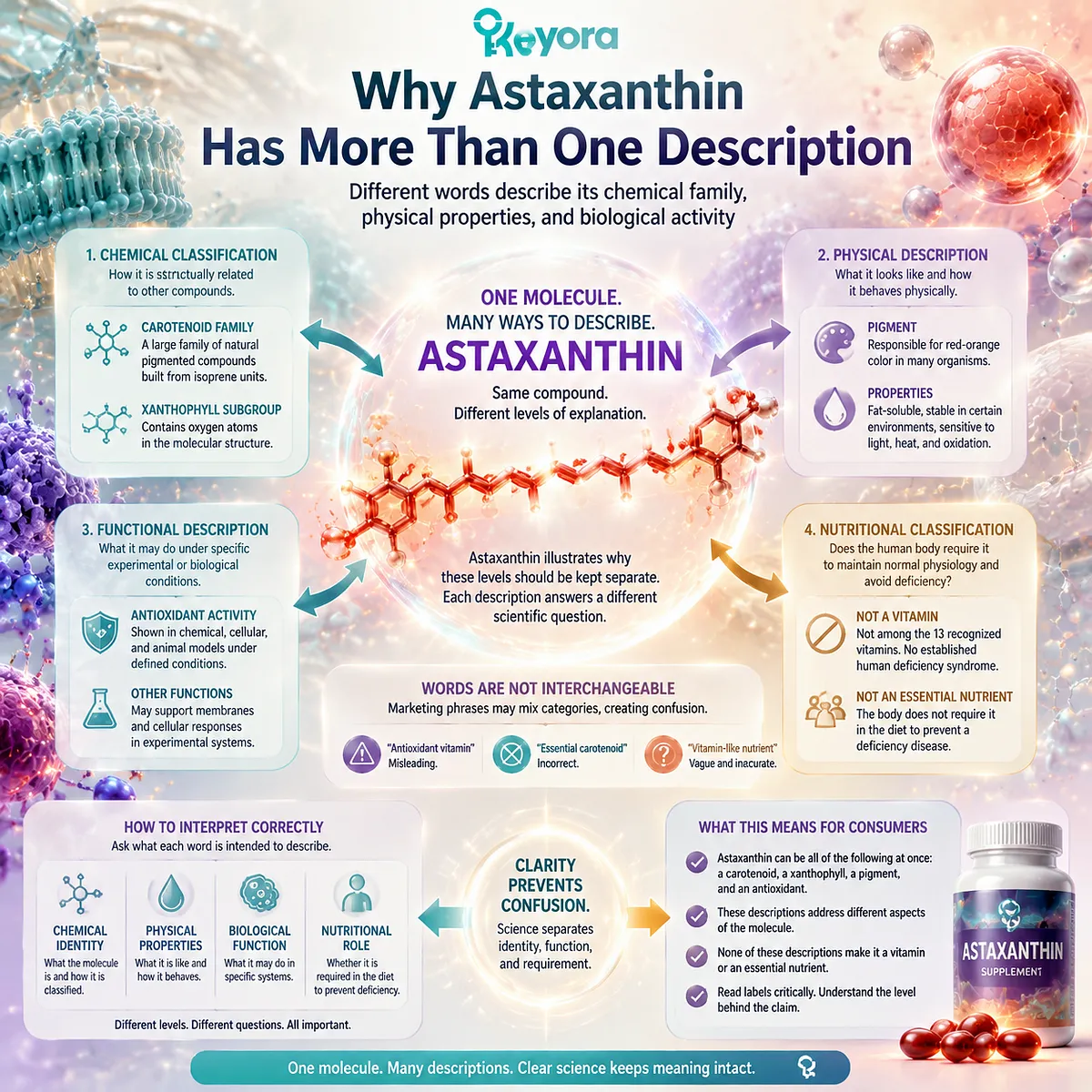
Different words describe its chemical family, physical properties, and biological activity
A consumer may encounter astaxanthin described as a carotenoid, xanthophyll, pigment, antioxidant, nutrient, or supplement ingredient. These words can all appear in the same discussion, but they do not have identical scientific meanings.
A chemical classification identifies how a molecule is structurally related to other compounds. A physical description explains properties such as color or solubility. A functional description refers to what the compound may do under specific experimental or biological conditions. A nutritional classification asks whether humans require the substance to maintain normal physiology and avoid a recognized deficiency state.
Astaxanthin illustrates why these levels should be kept separate. It is chemically a carotenoid. Within that family, it is a xanthophyll. It functions as a pigment in many organisms, and experiments have demonstrated antioxidant-related activity under defined conditions. None of those descriptions converts it into a vitamin.
The distinction matters because marketing language often combines these terms into phrases such as “antioxidant vitamin,” “essential carotenoid,” or “vitamin-like nutrient.” Such phrases may sound simple, but they can blur the difference between chemical identity, experimental function, and established nutritional requirement.
A reliable interpretation begins by asking what each word is intended to describe.
Carotenoid Is the Chemical Family
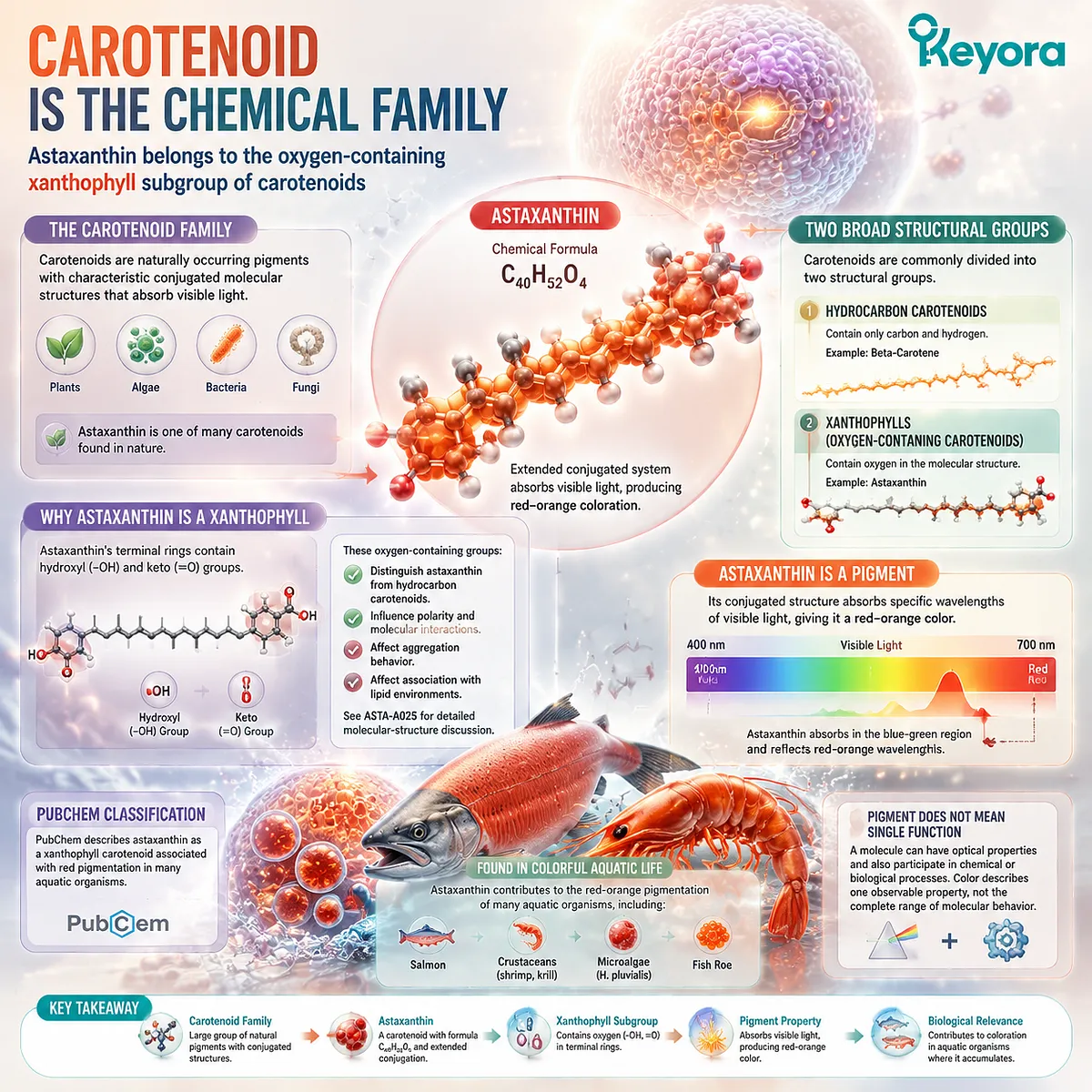
Astaxanthin belongs to the oxygen-containing xanthophyll subgroup of carotenoids
Carotenoids are a large family of naturally occurring pigments with characteristic conjugated molecular structures. Astaxanthin belongs to this family and has the molecular formula C40H52O4. Its extended conjugated system contributes to its visible-light absorption and red-orange appearance.
Carotenoids are commonly divided into two broad structural groups. Hydrocarbon carotenoids contain carbon and hydrogen, while xanthophylls also contain oxygen. Astaxanthin is classified as a xanthophyll because its terminal rings contain hydroxyl and keto groups.
These oxygen-containing groups distinguish astaxanthin from hydrocarbon carotenoids such as beta-carotene. They also contribute to differences in polarity, molecular interactions, aggregation behavior, and association with lipid environments. The detailed functional consequences of this structure belong to the separate molecular-structure discussion in ASTA-A025.
Calling astaxanthin a pigment is also accurate. Its conjugated structure absorbs particular wavelengths of visible light, creating red-orange coloration. Astaxanthin can contribute to the coloration of aquatic organisms in which it accumulates, including salmon and crustaceans. PubChem describes astaxanthin as a xanthophyll carotenoid associated with red pigmentation in many aquatic organisms.
“Pigment” does not mean that coloration is its only possible biological role. A molecule can have optical properties and also participate in chemical or biological processes. Color describes one observable property, not the complete range of molecular behavior.
Antioxidant Describes a Function, Not a Vitamin Class
Antioxidant language refers to redox-related activity rather than a formal nutrient category
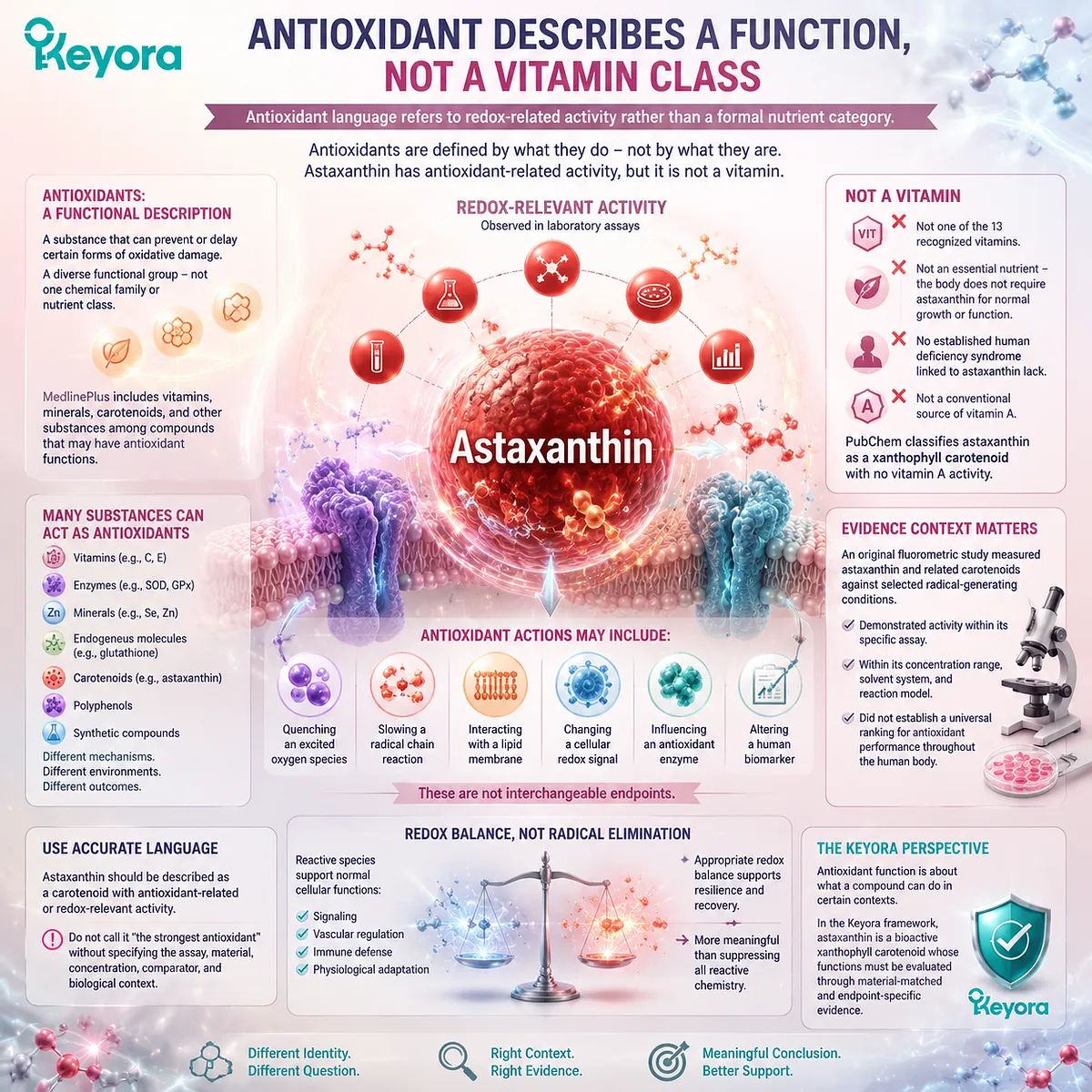
An antioxidant is generally understood as a substance that can prevent or delay certain forms of oxidative damage. This is a functional description covering a diverse group of compounds rather than one chemical family or nutrient class. MedlinePlus lists vitamins, minerals, carotenoids, and other substances among compounds that may have antioxidant functions.
Vitamin C and vitamin E can act as antioxidants, but that does not mean every antioxidant is a vitamin. Enzymes, minerals, endogenous molecules, carotenoids, polyphenols, and synthetic compounds may all influence oxidation through different mechanisms and in different environments.
Astaxanthin has shown antioxidant-related activity in laboratory assays. For example, an original fluorometric study measured the activity of astaxanthin and related carotenoids against selected radical-generating conditions. That study demonstrated activity within its specific assay, concentration range, solvent system, and reaction model. It did not establish a universal ranking for antioxidant performance throughout the human body.
This distinction is essential. An antioxidant result may refer to:
-
quenching an excited oxygen species
-
slowing a radical chain reaction
-
interacting with a lipid membrane
-
changing a cellular redox signal
-
influencing an antioxidant enzyme
-
altering a human biomarker
These are not interchangeable endpoints.
Astaxanthin should therefore be described as a carotenoid with antioxidant-related or redox-relevant activity. It should not be called “the strongest antioxidant” without specifying the assay, material, concentration, comparator, and biological context.
Antioxidant function also does not mean eliminating every free radical. Reactive species participate in normal cellular signaling, vascular regulation, immune defense, and physiological adaptation. Appropriate redox balance is more biologically meaningful than attempting to suppress all reactive chemistry.
Why Astaxanthin Is Not a Vitamin
Vitamins are recognized nutrients required for normal physiological function
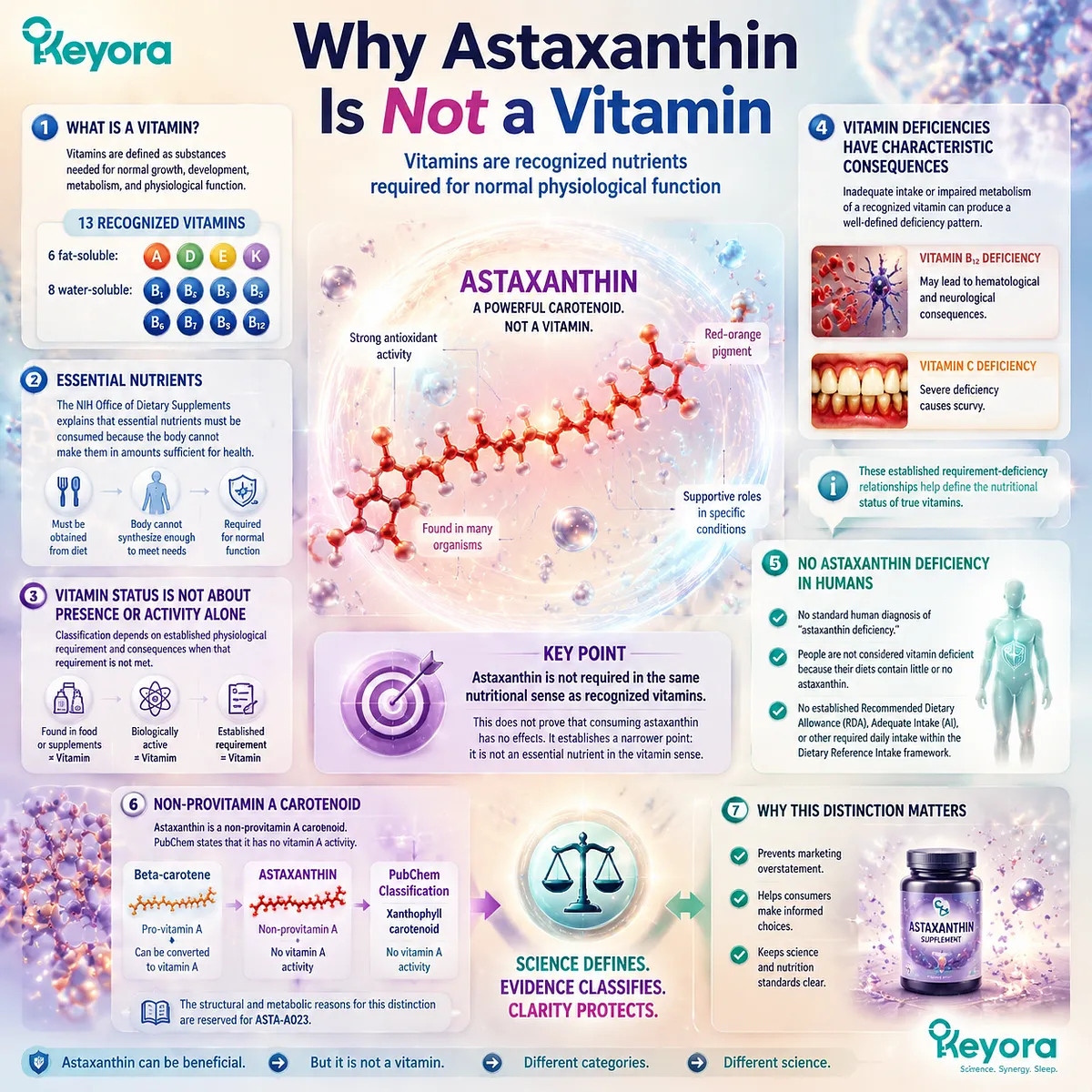
Vitamins are a defined group of substances needed for normal growth, development, metabolism, and physiological function. Standard human nutrition recognizes 13 vitamins, including vitamins A, C, D, E, K, and the eight B vitamins. Astaxanthin is not included in this vitamin classification.
Vitamins are also understood within the broader category of essential nutrients. The NIH Office of Dietary Supplements explains that essential nutrients must be consumed because the body cannot make them in amounts sufficient for health.
The classification of a vitamin is not based merely on whether a substance is found in food, sold as a supplement, or biologically active. It also involves an established physiological requirement and consequences when that requirement is not met.
For example, inadequate intake or impaired metabolism of a recognized vitamin can produce a characteristic deficiency pattern. Vitamin B12 deficiency may lead to hematological and neurological consequences, while severe vitamin C deficiency causes scurvy. These established requirement-deficiency relationships help define their nutritional status.
There is no corresponding standard human diagnosis of “astaxanthin deficiency.” People are not considered vitamin deficient because their diets contain little or no astaxanthin, and astaxanthin does not have an established Recommended Dietary Allowance, Adequate Intake, or other required daily intake within the Dietary Reference Intake framework.
This does not prove that consuming astaxanthin has no effects. It establishes a narrower point: astaxanthin is not required in the same nutritional sense as recognized vitamins.
Astaxanthin is also a non-provitamin A carotenoid. PubChem states that it has no vitamin A activity, meaning it is not used as a conventional vitamin A precursor in the way that beta-carotene can be. The structural and metabolic reasons for this distinction are reserved for ASTA-A023.
Nonessential Does Not Mean Inactive
Biological activity and nutritional essentiality answer different scientific questions
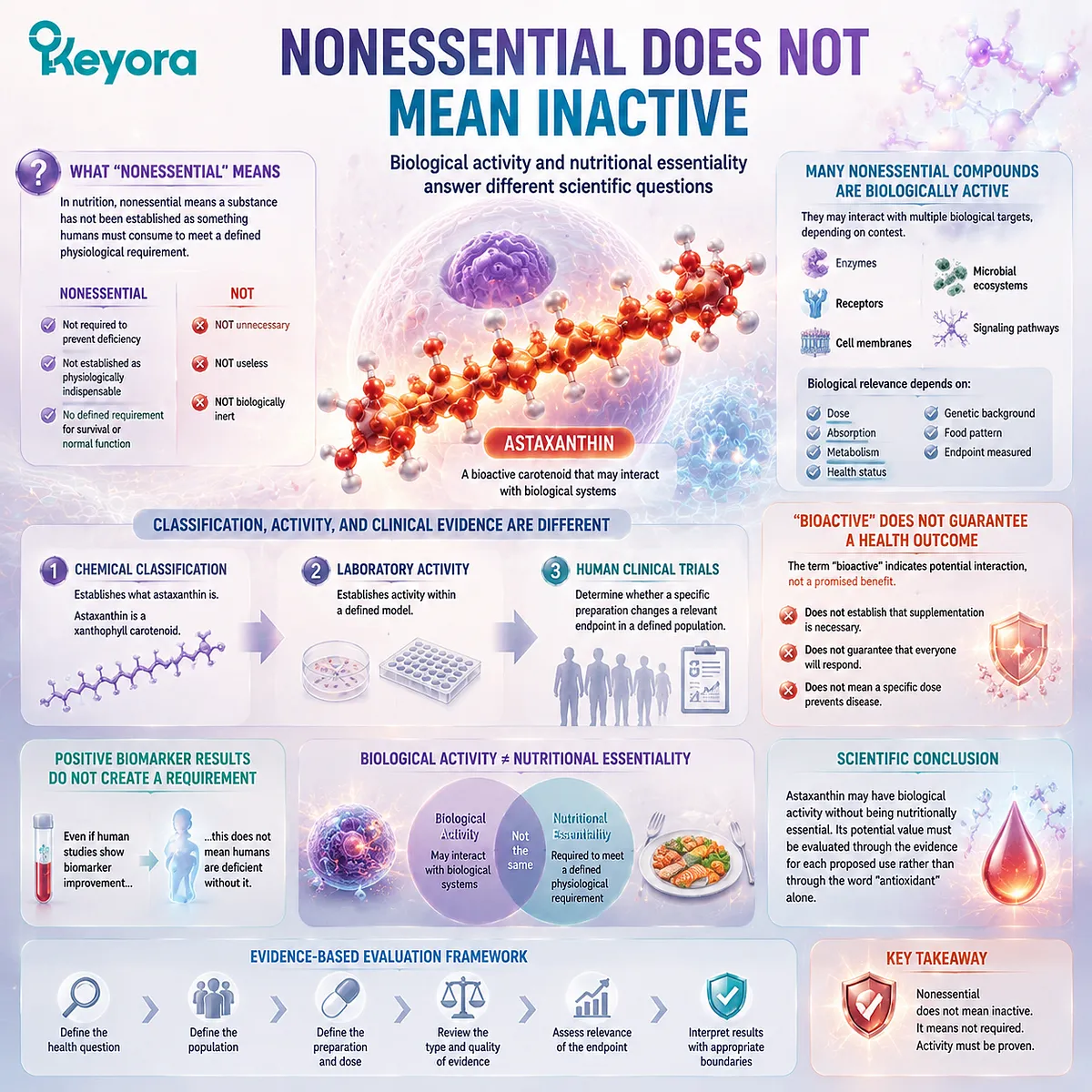
The word “nonessential” is frequently misunderstood. In nutrition, it does not mean unnecessary, useless, or biologically inert. It means that a substance has not been established as something humans must consume to meet a defined physiological requirement.
Many nonessential dietary compounds interact with enzymes, receptors, cell membranes, microbial ecosystems, or signaling pathways. Their biological relevance may depend on dose, absorption, metabolism, health status, genetic background, food pattern, and the endpoint being measured.
Astaxanthin can therefore be described as a bioactive carotenoid. “Bioactive” indicates that a substance may interact with biological systems, but it does not promise a health outcome. The term does not establish that supplementation is necessary, that everyone will respond, or that a specific dose prevents disease.
This is where classification and clinical evidence must be separated.
Chemical classification can establish that astaxanthin is a xanthophyll carotenoid. Laboratory studies can establish activity within a defined model. Human trials are needed to determine whether a specific preparation changes a relevant endpoint in a defined population.
Even a positive human biomarker result does not create a nutritional requirement. It also does not prove that people who do not take astaxanthin are deficient.
The scientifically appropriate conclusion is that astaxanthin may have biological activity without being nutritionally essential. Its potential value must be evaluated through the evidence for each proposed use rather than through the word “antioxidant” alone.
Use the Keyora Class – Function – Requirement Check
Three questions prevent classification terms from becoming misleading health claims
The Keyora Class – Function – Requirement Check provides a simple way to interpret astaxanthin and other supplement ingredients.
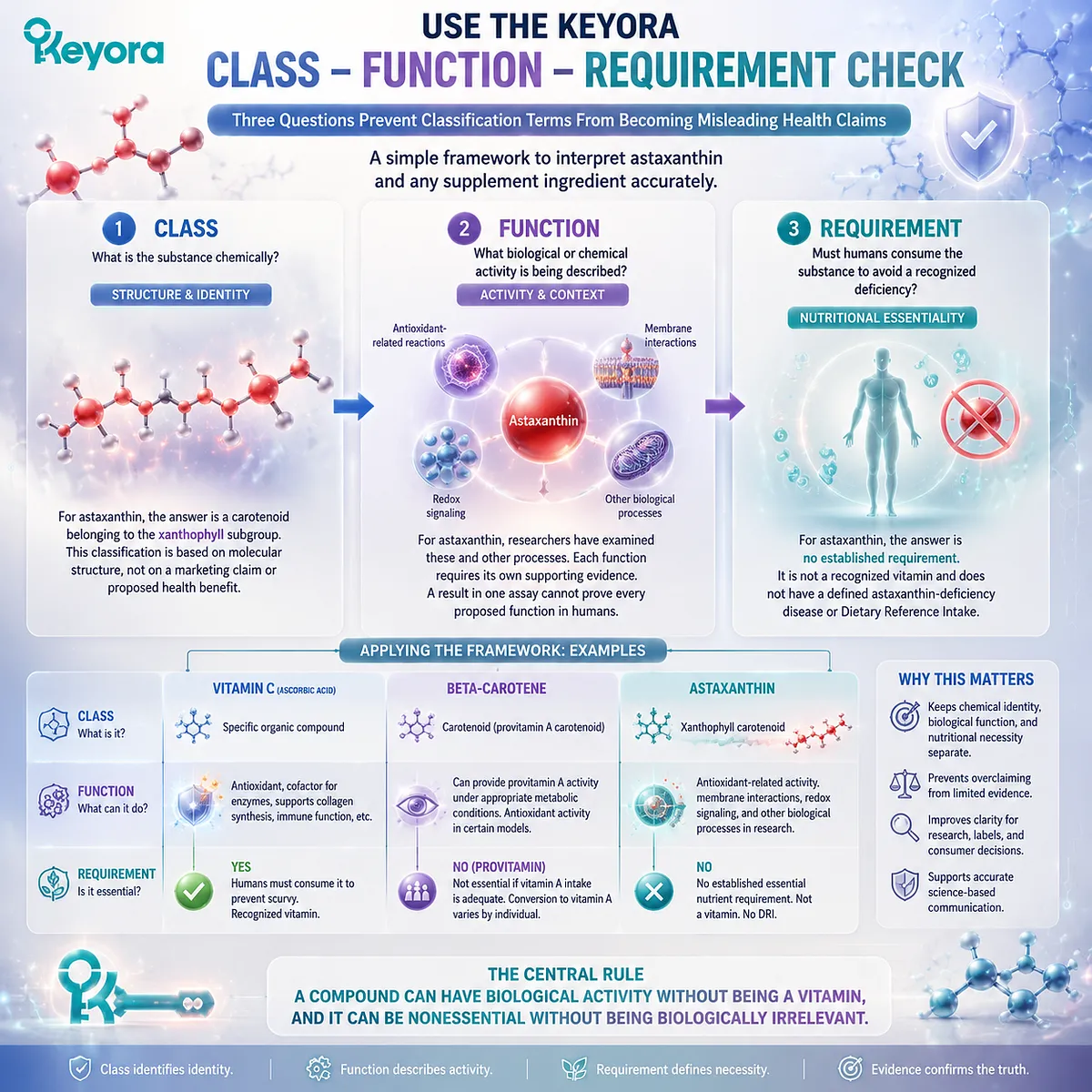
1. Class
What is the substance chemically?
For astaxanthin, the answer is a carotenoid belonging to the xanthophyll subgroup. This classification is based on molecular structure, not on a marketing claim or proposed health benefit.
2. Function
What biological or chemical activity is being described?
For astaxanthin, researchers have examined antioxidant-related reactions, membrane interactions, redox signaling, and other biological processes. Each function requires its own supporting evidence. A result in one assay cannot prove every proposed function in humans.
3. Requirement
Must humans consume the substance to avoid a recognized deficiency?
For astaxanthin, the answer is no established requirement. It is not a recognized vitamin and does not have a defined astaxanthin-deficiency disease or Dietary Reference Intake.
This framework can clarify other examples. Vitamin C is chemically a specific organic compound, can perform antioxidant-related functions, and is nutritionally essential. Beta-carotene is a carotenoid that can provide provitamin A activity under appropriate metabolic conditions. Astaxanthin is a xanthophyll carotenoid with antioxidant-related activity but no vitamin A activity or established essential nutrient requirement.
The central rule is:
A compound can have biological activity without being a vitamin, and it can be nonessential without being biologically irrelevant.
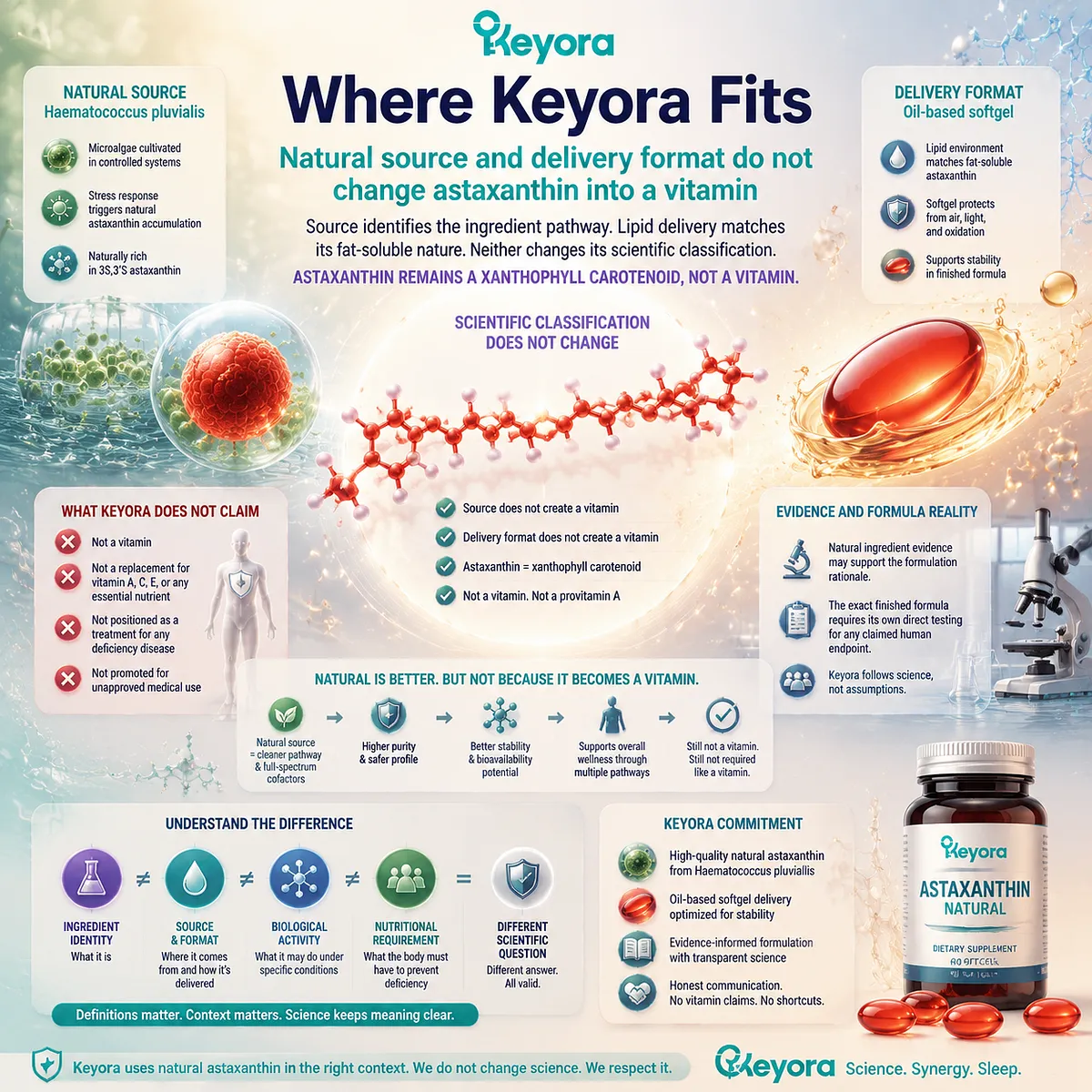
Where Keyora Fits
Natural source and delivery format do not change astaxanthin into a vitamin
Keyora uses natural astaxanthin from Haematococcus pluvialis in an oil-based softgel context. The natural source identifies the ingredient pathway, while the lipid context is compatible with astaxanthin’s fat-soluble properties. Neither feature changes the ingredient’s scientific classification. Astaxanthin remains a xanthophyll carotenoid rather than a vitamin.
Keyora does not position astaxanthin as a treatment for a deficiency disease or as a replacement for vitamin A, vitamin C, vitamin E, or another essential nutrient. Natural ingredient evidence may support the formulation rationale, but the exact finished formula requires its own direct testing for any claimed human endpoint.
Closing Summary
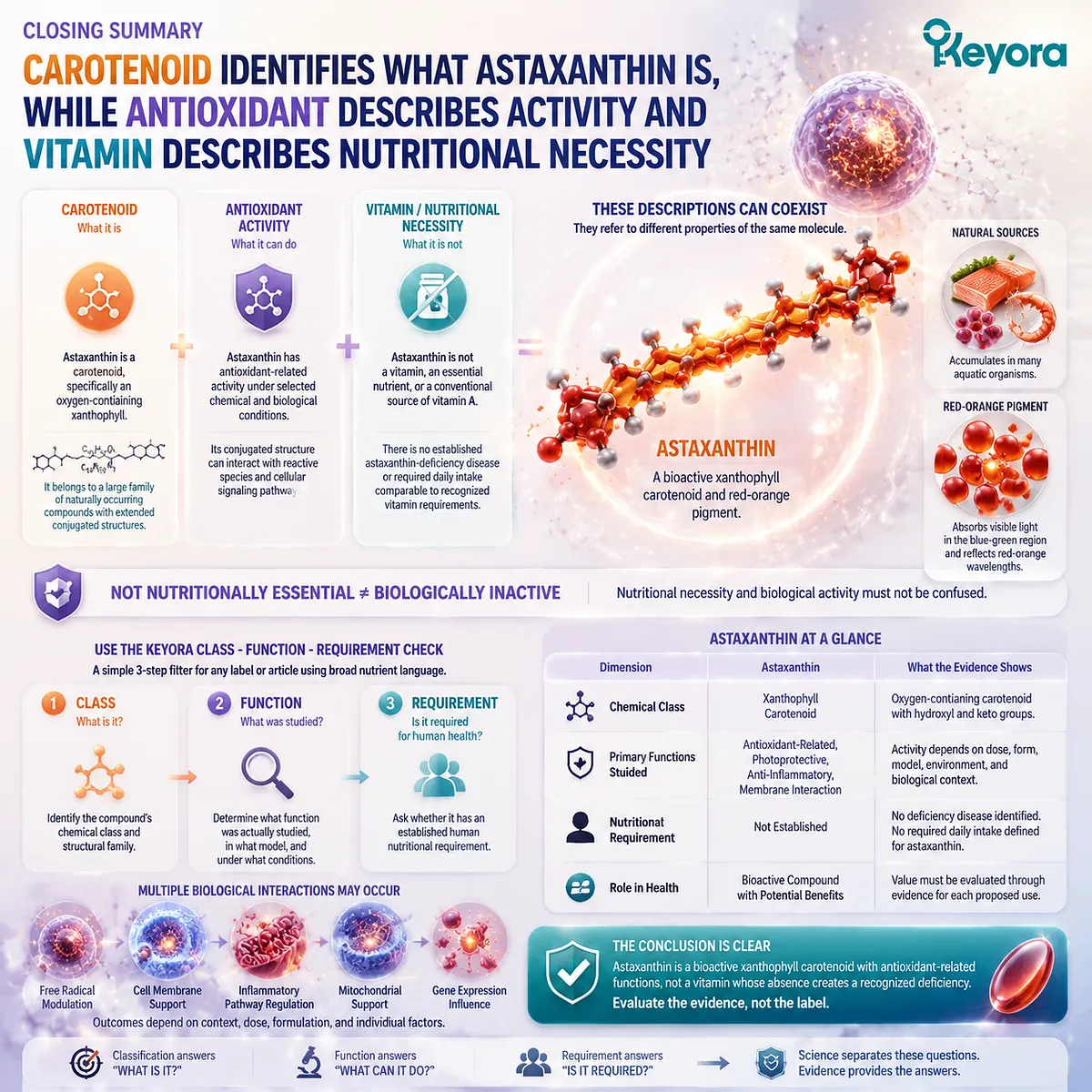
Carotenoid identifies what astaxanthin is, while antioxidant describes activity and vitamin describes nutritional necessity
Astaxanthin is a carotenoid, specifically an oxygen-containing xanthophyll. It is also a red-orange pigment and has antioxidant-related activity under selected chemical and biological conditions. These descriptions can coexist because they refer to different properties of the same molecule.
Astaxanthin is not a vitamin, an essential nutrient, or a conventional source of vitamin A. There is no established astaxanthin-deficiency disease or required daily intake comparable with the requirements defined for recognized vitamins.
This does not make astaxanthin biologically inactive. It means that nutritional necessity and biological activity must not be confused.
Use the Keyora Class – Function – Requirement Check whenever a label or article uses broad nutrient language. First identify the compound’s chemical class. Then determine what function was actually studied. Finally, ask whether it has an established human nutritional requirement.
For astaxanthin, the conclusion is clear: it is a bioactive xanthophyll carotenoid with antioxidant-related functions, not a vitamin whose absence creates a recognized deficiency.
This article is for educational and informational purposes only. It does not provide medical advice, diagnosis, treatment, cure, prevention, disease outcome claims, hormone restoration claims, fertility outcome claims, or formula-specific clinical efficacy claims.