
Is ALA Only Useful Because the Body Can Convert It Into EPA and DHA?
Keyora Research Q&A Library
This is part of the Keyora Research Q&A Series, derived from Keyora Astaxanthin Research Journal Series.
Within the Keyora Astaxanthin Researcn framework, this Q&A translates complex astaxanthin biology into reader-friendly, evidence-bound answers, focusing on natural astaxanthin identity, molecular structure, antioxidant and redox mechanisms, membrane lipid interaction, mitochondrial resilience, inflammatory signaling pathways, human evidence interpretation, and the scientific principles behind responsible supplementation.
First published by Keyora Research Journal: www.keyorahealth.com
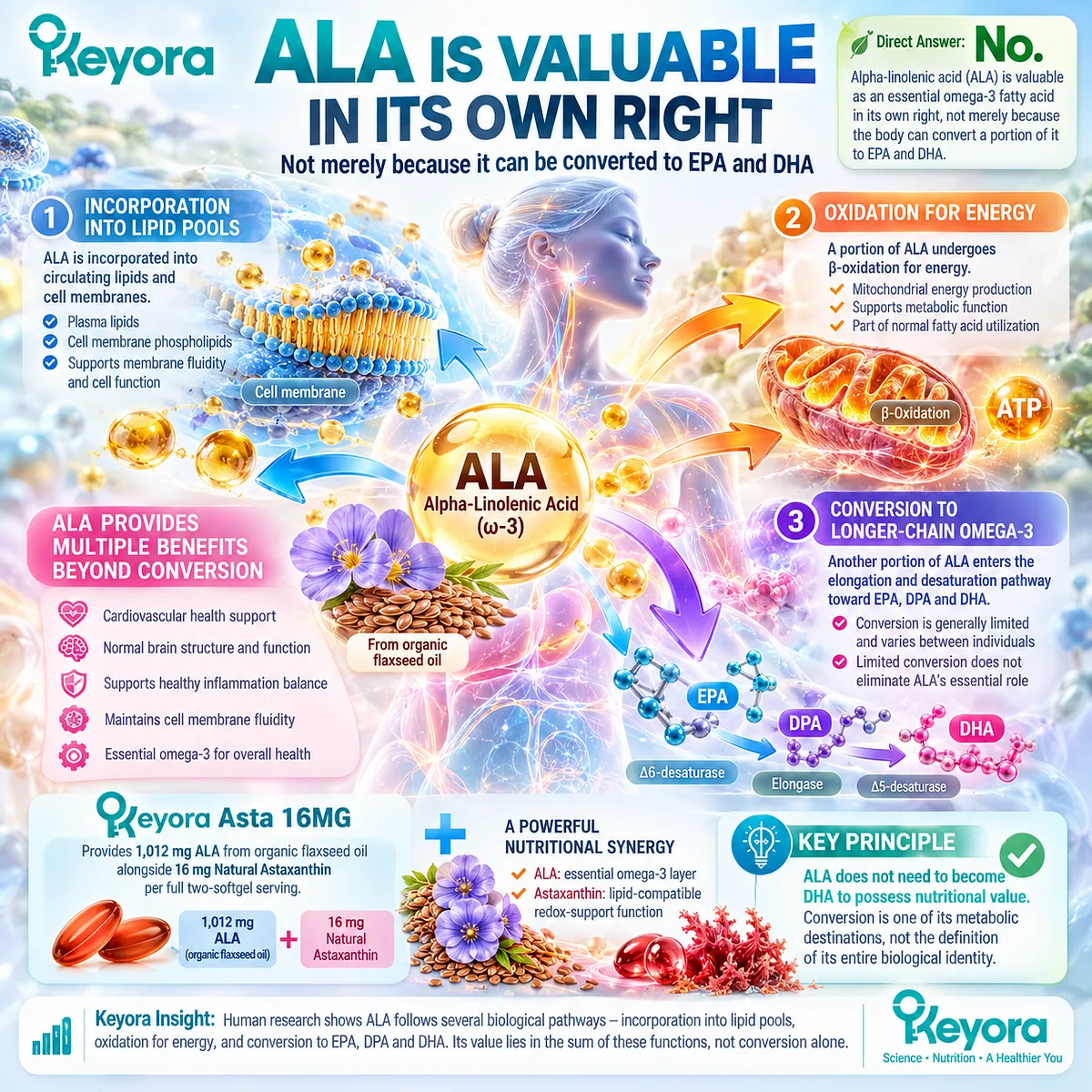
Direct Answer
No.
Alpha-linolenic acid (ALA) is valuable as an essential omega-3 fatty acid in its own right, not merely because the body can convert a portion of it into EPA and DHA.
One common misconception about plant-derived omega-3 is that its nutritional usefulness should be judged entirely by how efficiently it becomes the longer-chain fatty acids found in fish oil.
That interpretation overlooks what actually happens to ALA after consumption.
Human metabolic research demonstrates that ALA follows several biological pathways.
Some is incorporated into circulating lipid pools, some undergoes oxidation for energy, and another portion enters the elongation and desaturation pathway toward EPA, DPA, and DHA.
Conversion into DHA is generally limited and varies with individual metabolic conditions. However, limited conversion does not eliminate ALA’s established status as an essential nutrient.
This distinction is particularly relevant to Keyora Asta 16MG, which provides 1,012 mg ALA from organic flaxseed oil alongside 16 mg Natural Astaxanthin per full two-softgel serving.
Within the Keyora Astaxanthin EP-5 nutritional framework, ALA supplies an essential omega-3 layer, while Astaxanthin contributes a separate lipid-compatible redox-support function.
The key principle is straightforward:
ALA does not need to become DHA to possess nutritional value. Conversion is one of its metabolic destinations, not the definition of its entire biological identity.
Why Is ALA an Essential Omega-3 Fatty Acid?
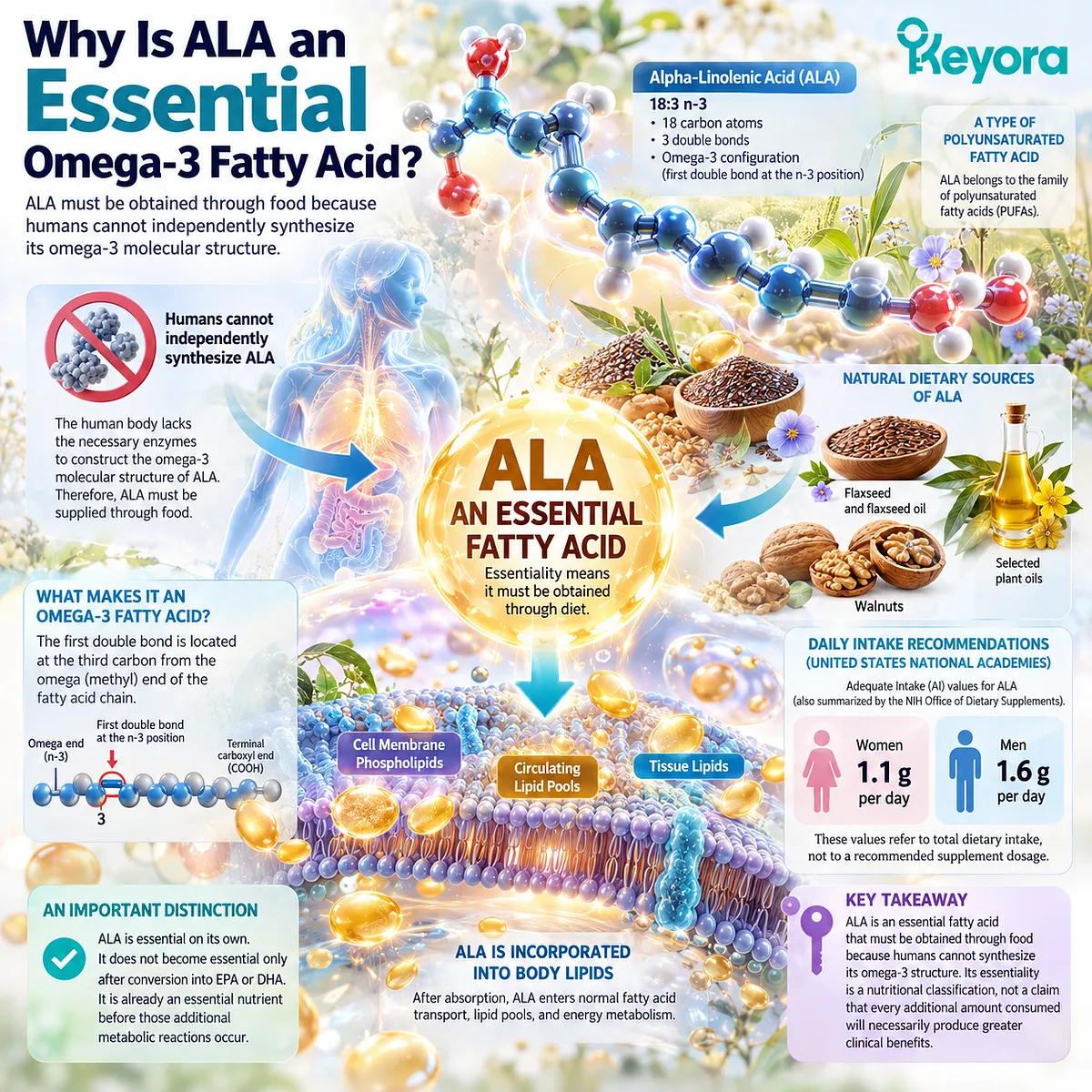
ALA must be obtained through food because humans cannot independently synthesize its omega-3 molecular structure
Alpha-linolenic acid, chemically identified as 18:3 n-3, belongs to the family of polyunsaturated fatty acids.
It contains 18 carbon atoms and three double bonds, with the first double bond positioned according to its omega-3 classification.
The human body cannot independently construct this omega-3 configuration because it lacks the necessary enzymes. Consequently, ALA must be supplied through dietary intake.
That is what makes ALA an essential fatty acid.
Its essentiality is a nutritional classification, not a claim that every additional amount consumed will necessarily produce greater clinical benefits.
The United States National Academies established Adequate Intake (AI) values for ALA, which are also summarized by the NIH Office of Dietary Supplements.
For adults, these values are:
-
Women – 1.1 g daily
-
Men – 1.6 g daily
The values concern total dietary intake rather than a recommended supplement dosage.
Common ALA-rich foods include flaxseed, flaxseed oil, chia seeds, walnuts, and selected plant oils.
These foods provide a practical dietary route for obtaining an essential nutrient that the body cannot manufacture independently.
This establishes the first important distinction in interpreting plant omega-3 nutrition.
ALA does not become essential only after conversion into EPA or DHA. It is already an essential nutrient before those additional metabolic reactions occur.
What Happens to ALA Besides Conversion?
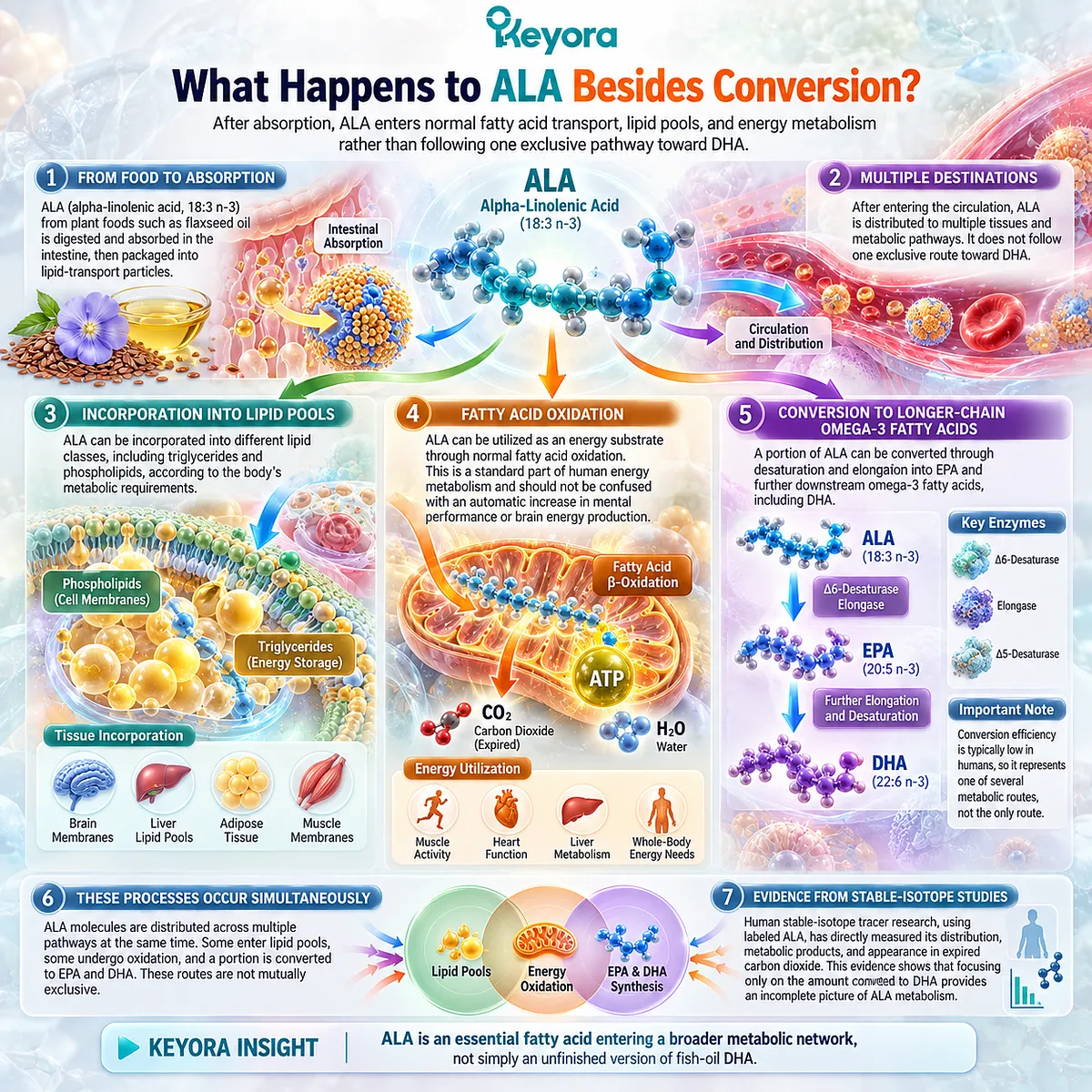
After absorption, ALA enters normal fatty acid transport, lipid pools, and energy metabolism rather than following one exclusive pathway toward DHA
Imagine consuming ALA from flaxseed oil.
After digestion, ALA is absorbed through the intestine and enters the body’s lipid transport system. From there, it becomes available for several metabolic processes.
An important destination involves circulating and tissue-associated lipid pools.
Fatty acids can be incorporated into different lipid classes, including triglycerides and phospholipids, according to the body’s metabolic requirements.
Another destination is fatty acid oxidation.
Through oxidative metabolism, fatty acids can be utilized as energy substrates. This is an ordinary component of human energy metabolism and should not be confused with an automatic increase in mental performance or brain energy production.
A third destination involves conversion into longer-chain omega-3 fatty acids.
ALA can undergo a series of enzymatic transformations involving desaturation and elongation. This pathway contributes to the body’s capacity to synthesize EPA and additional downstream omega-3 fatty acids.
These processes occur simultaneously rather than functioning as an all-or-nothing decision.
An ALA molecule that undergoes oxidation has participated in metabolism, even though it did not become DHA.
Similarly, ALA entering a lipid pool has followed a different biological route from ALA undergoing further desaturation.
Human stable-isotope tracer research has made these distinctions measurable.
By administering ALA containing a detectable isotopic label, researchers can follow its distribution, metabolic products, and appearance in expired carbon dioxide.
The resulting evidence demonstrates why calculating only the amount converted into DHA provides an incomplete picture of ALA metabolism.
For Keyora’s nutritional interpretation, this distinction is fundamental: ALA is an essential fatty acid entering a broader metabolic network, not simply an unfinished version of fish-oil DHA.
What Do Human Studies Show About ALA Conversion?
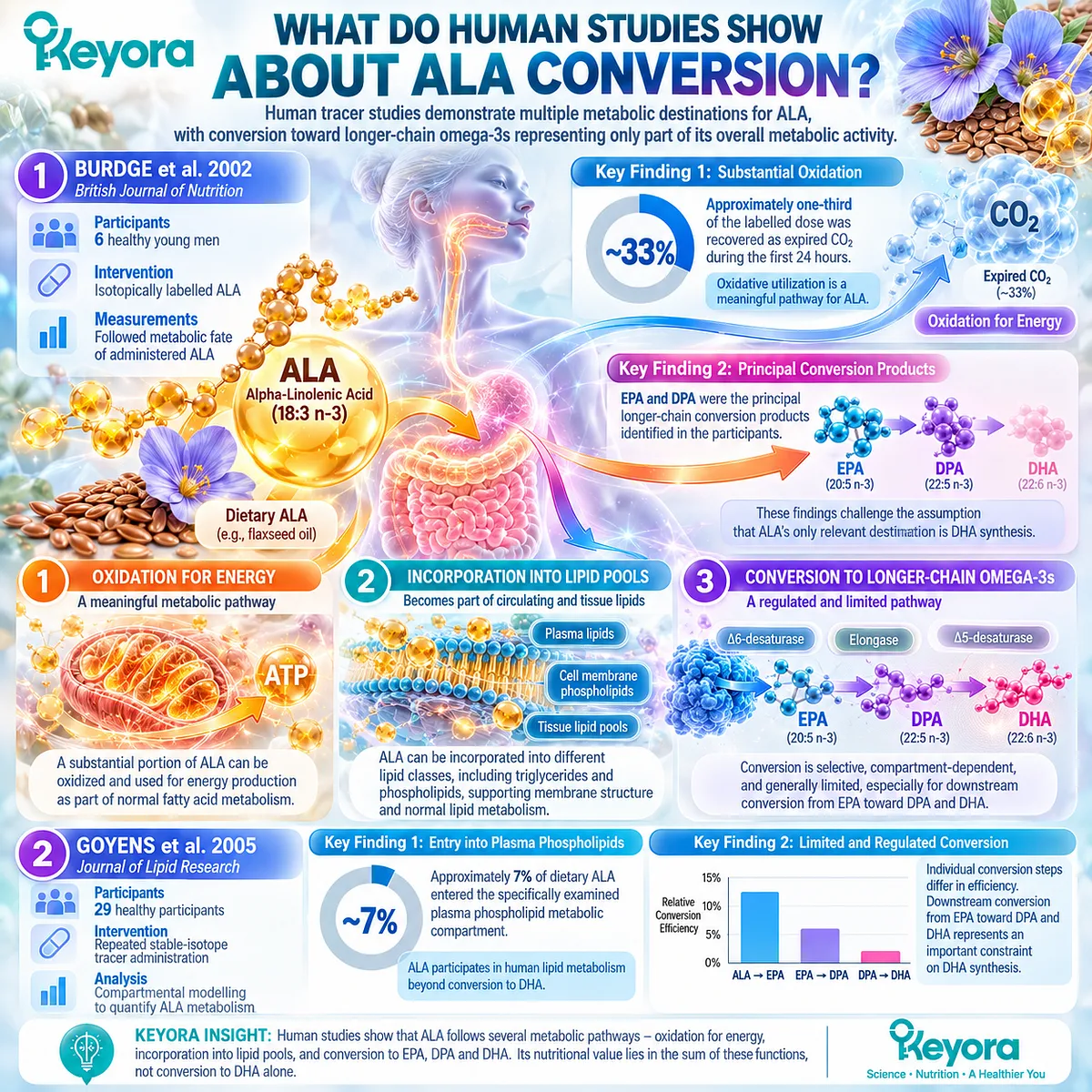
Human tracer studies demonstrate multiple metabolic destinations for ALA, with conversion toward longer-chain omega-3s representing only part of its overall metabolic activity
One particularly informative investigation was published by Burdge and colleagues in the British Journal of Nutrition in 2002.
The researchers administered isotopically labelled ALA to six healthy young men and followed its subsequent metabolic fate.
Their measurements identified conversion toward EPA and DPA, alongside substantial oxidation of the administered ALA.
Approximately one-third of the labelled dose was recovered as expired carbon dioxide during the first 24 hours, demonstrating that oxidative utilization represented a meaningful pathway under the study conditions.
The experiment also found that EPA and DPA were the principal longer-chain conversion products identified in the participants.
These findings are especially useful because they directly challenge the assumption that ALA’s only relevant destination is DHA synthesis.
Human Evidence 1 – ALA can participate substantially in oxidation and broader lipid metabolism, independently of its conversion into DHA.
A second important study was published by Goyens and colleagues in the Journal of Lipid Research in 2005.
This investigation involved 29 healthy participants and used repeated stable-isotope tracer administration with compartmental modelling to quantify ALA metabolism.
The model estimated that approximately 7% of dietary ALA entered the specifically examined plasma phospholipid metabolic compartment.
Further analysis showed that individual conversion steps differed in efficiency. In particular, downstream conversion from EPA toward DPA and DHA represented an important constraint on DHA synthesis.
This finding requires careful interpretation.
A conversion percentage calculated within a specific modelled lipid compartment should not be presented as though it represents the proportion of every gram of dietary ALA that becomes DHA throughout the entire human body.
Rather, the study illustrates how human fatty acid metabolism involves distinct pools and regulated enzymatic steps.
Human Evidence 2 – Conversion is selective, compartment-dependent, and limited by metabolic regulation.
Together, these investigations provide a clearer scientific answer than a single conversion percentage.
ALA enters several metabolic pathways, and the balance between those pathways depends on physiological and dietary conditions.
Why Does Limited DHA Conversion Not Make ALA Nutritionally Empty?
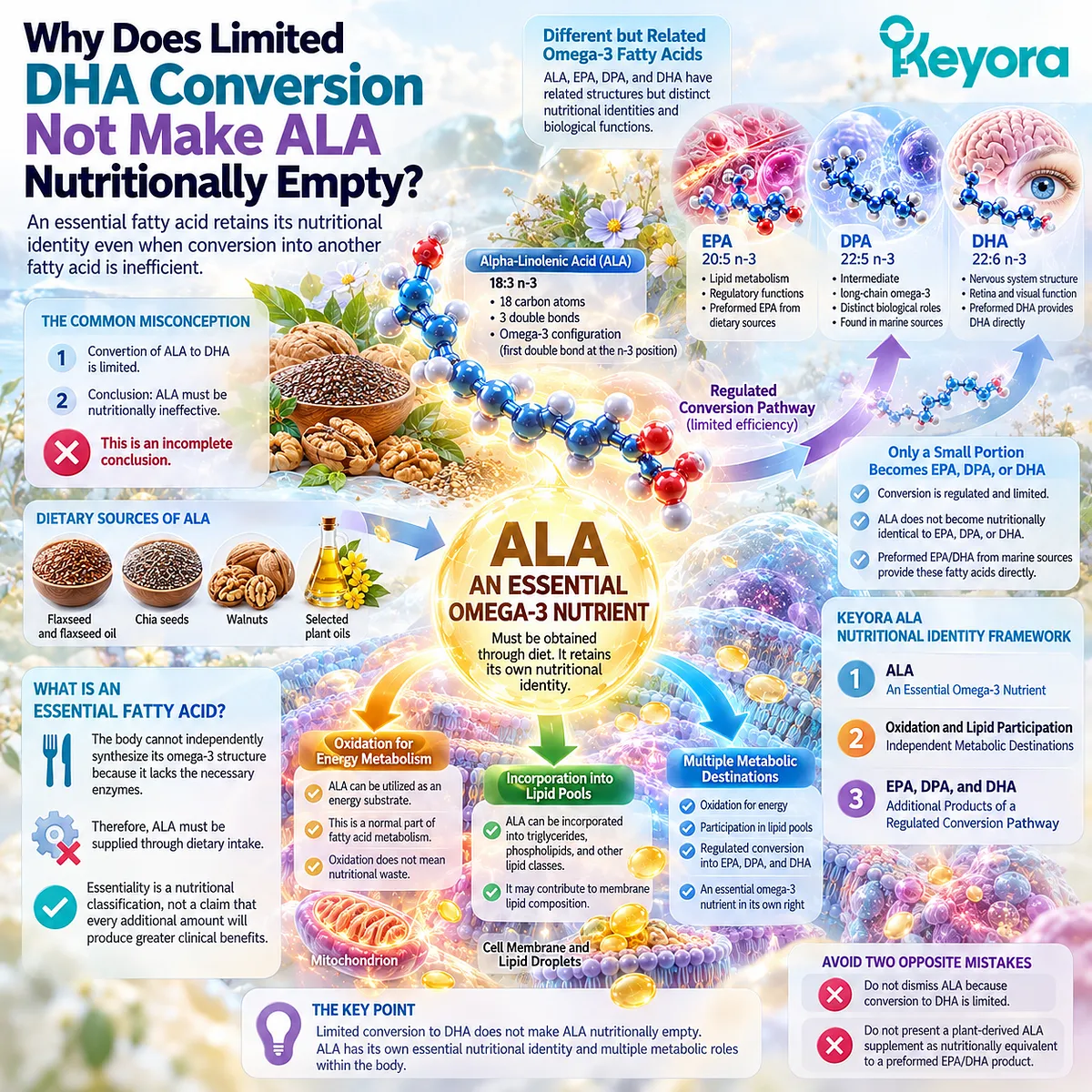
An essential fatty acid retains its nutritional identity even when conversion into another fatty acid is inefficient
A frequent argument against plant-derived omega-3 begins with a correct observation but reaches an incomplete conclusion.
The observation is that human conversion of ALA into DHA is limited.
The incomplete conclusion is that ALA must therefore be nutritionally ineffective.
These are different questions.
DHA is a major long-chain omega-3 fatty acid with important structural roles in the nervous system and retina. Preformed dietary DHA can provide DHA directly without depending on the full ALA conversion pathway.
EPA also has distinct biological functions associated with lipid metabolism and regulatory processes.
ALA does not become nutritionally identical to these fatty acids simply because it can serve as their metabolic precursor.
However, the reverse is equally important: ALA does not lose its identity as an essential omega-3 because relatively little becomes DHA.
Nutritional physiology involves multiple metabolic destinations.
The body can utilize fatty acids through oxidation, maintain them within lipid pools, and regulate their conversion into other molecules.
ALA participates in this network while also providing the essential omega-3 component that must be obtained through dietary intake.
This helps explain why nutrition authorities establish ALA intake recommendations rather than treating its dietary contribution exclusively as an estimated amount of DHA.
The scientific priority is therefore not to exaggerate conversion efficiency or to claim that ALA reproduces every established function of EPA and DHA.
It is to recognize that these omega-3 fatty acids have related but distinct nutritional identities.
Within the Keyora ALA Nutritional Identity Framework, the relationship is expressed as:
-
ALA – An Essential Omega-3 Nutrient
-
Oxidation and Lipid Participation – Independent Metabolic Destinations
-
EPA, DPA, and DHA – Additional Products of a Regulated Conversion Pathway
Understanding this distinction prevents two opposite mistakes: dismissing ALA because of limited DHA conversion, or incorrectly presenting a plant-derived ALA supplement as nutritionally equivalent to a preformed EPA/DHA product.
What Does This Mean for Keyora Asta 16MG?
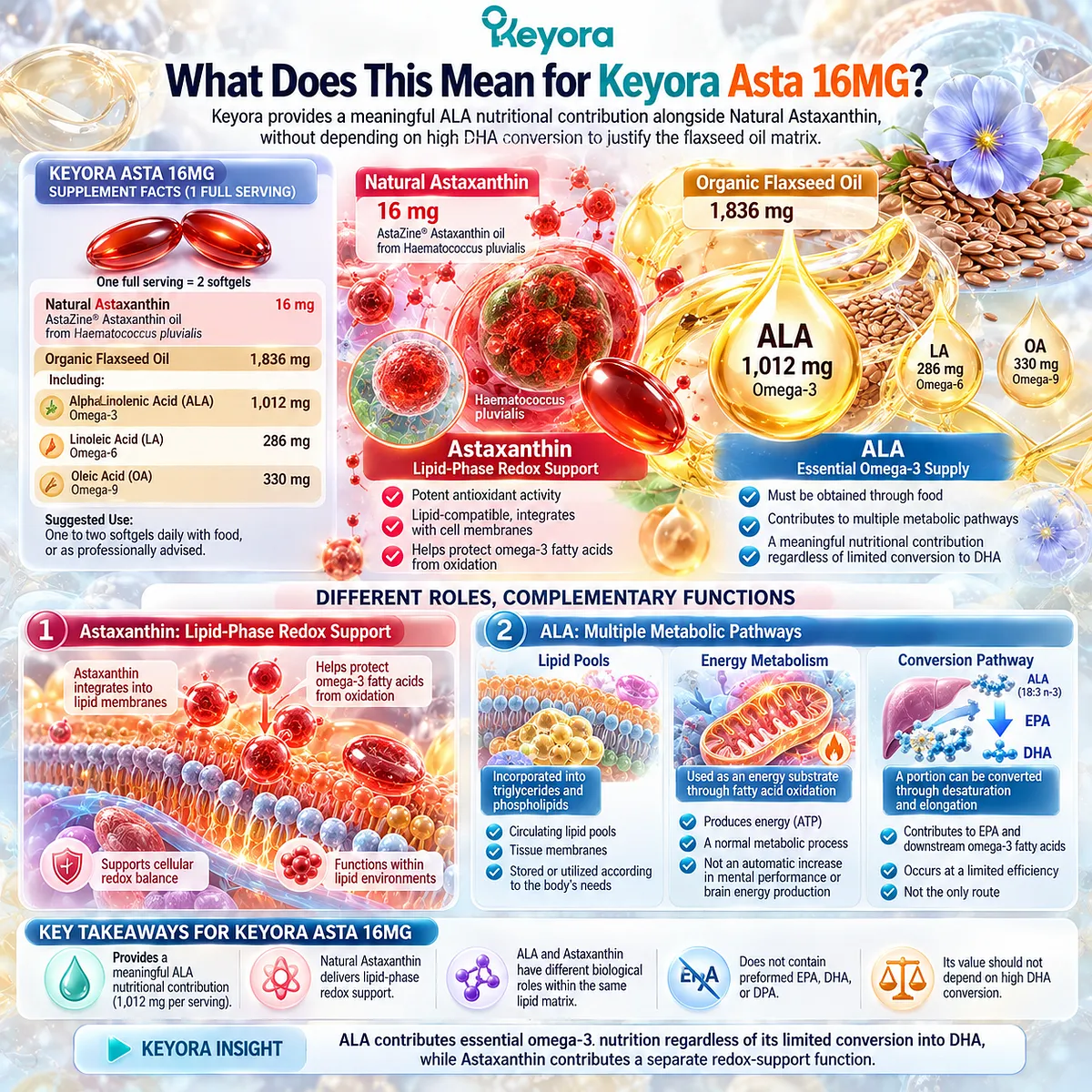
Keyora provides a meaningful ALA nutritional contribution alongside Natural Astaxanthin, without depending on high DHA conversion to justify the flaxseed oil matrix
The current Keyora Asta 16MG Supplement Facts define one full serving as two softgels.
Each full serving provides:
16 mg Natural Astaxanthin, supplied by AstaZine® Astaxanthin oil derived from Haematococcus pluvialis.
The formulation also includes:
1,836 mg Organic Flaxseed Oil
Containing:
-
1,012 mg Alpha-Linolenic Acid (ALA), Omega-3
-
286 mg Linoleic Acid (LA), Omega-6
-
330 mg Oleic Acid (OA), Omega-9
The suggested adult use is one to two softgels daily with food, or as professionally advised.
For consumers reading the Supplement Facts, the 1,012 mg ALA amount represents an independently meaningful contribution to essential omega-3 nutrition.
Its value should not be calculated solely by estimating how much EPA or DHA might eventually be synthesized from it.
That is precisely why Keyora distinguishes the nutritional roles within its lipid matrix.
-
ALA – Essential Omega-3 Supply
-
Astaxanthin – Lipid-Phase Redox Support
Natural Astaxanthin remains the central ingredient of the Keyora Astaxanthin EP-5 series. Its lipid-compatible antioxidant properties provide a complementary biological function within a formula that also supplies an oxidation-sensitive essential fatty acid.
The presence of both ingredients creates a broader nutritional task architecture, although the current evidence should not be interpreted as clinical proof that the finished combination improves ALA-to-DHA conversion or reproduces the effects of direct EPA/DHA supplementation.
Keyora Asta 16MG does not list preformed EPA, DHA, or DPA in its current Supplement Facts.
The practical conclusion is therefore clear:
ALA contributes essential omega-3 nutrition regardless of its limited conversion into DHA, while Astaxanthin contributes a separate redox-support function.
Recognizing both roles allows consumers to understand why the flaxseed oil in Keyora Asta 16MG represents more than an ordinary delivery component.
This article is for educational and informational purposes only. It does not provide medical advice, diagnosis, treatment, cure, prevention, disease outcome claims, hormone restoration claims, fertility outcome claims, or formula-specific clinical efficacy claims.