
How Much Astaxanthin Should I Take?
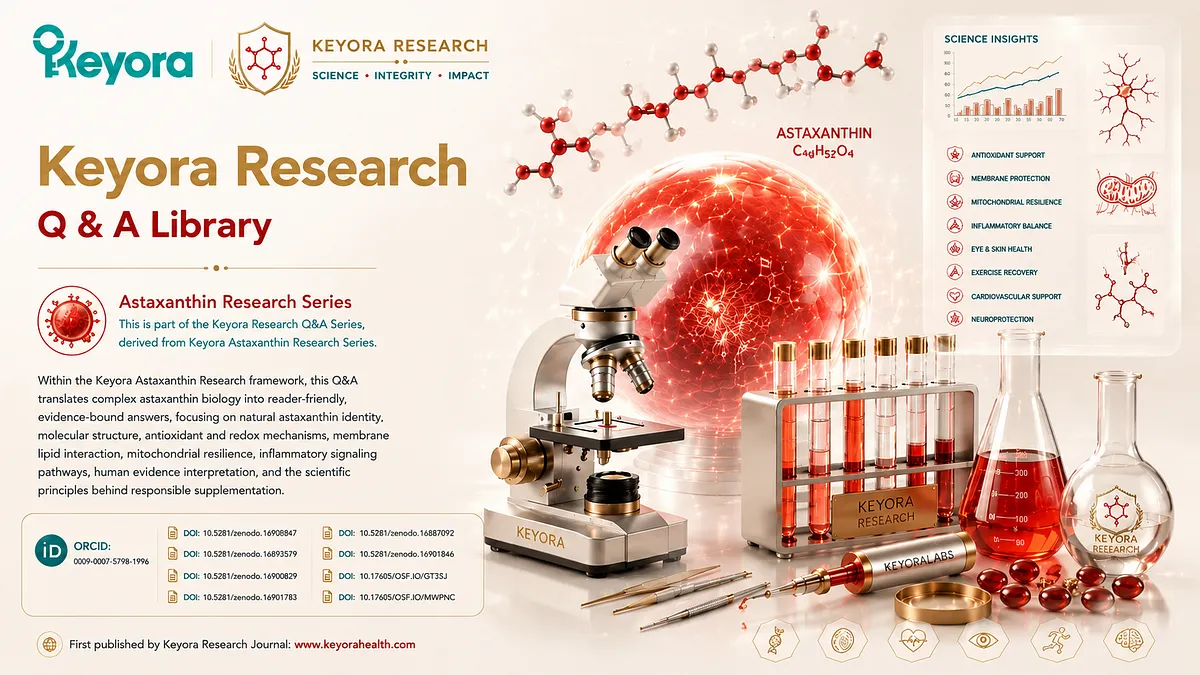
Keyora Research Q&A Library
This is part of the Keyora Research Q&A Series, derived from Keyora Astaxanthin Research Journal Series.
Within the Keyora Astaxanthin Researcn framework, this Q&A translates complex astaxanthin biology into reader-friendly, evidence-bound answers, focusing on natural astaxanthin identity, molecular structure, antioxidant and redox mechanisms, membrane lipid interaction, mitochondrial resilience, inflammatory signaling pathways, human evidence interpretation, and the scientific principles behind responsible supplementation.
First published by Keyora Research Journal: www.keyorahealth.com
Direct Answer
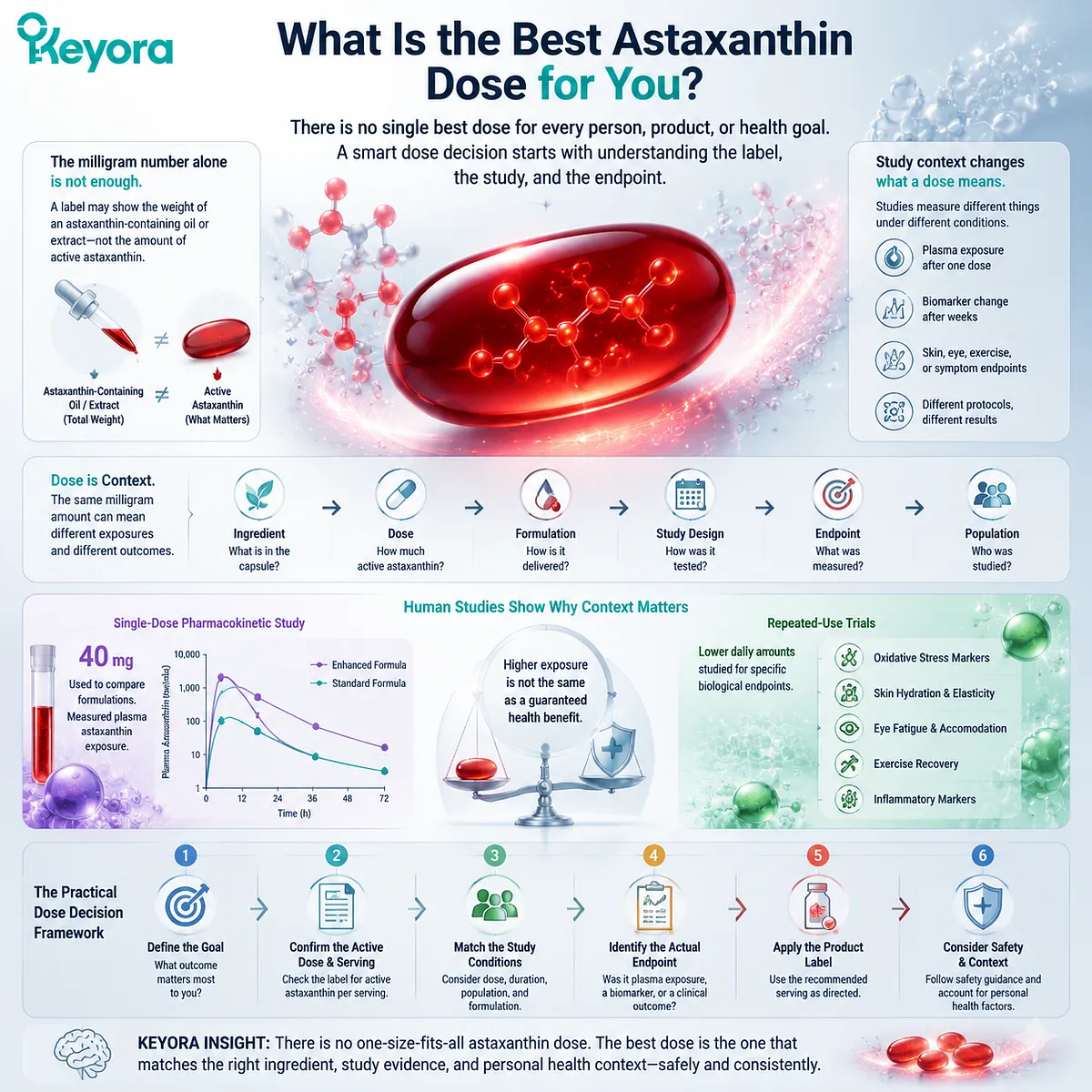
There is no single Astaxanthin dose that has been proven best for every person, product, or health goal. A useful dose decision begins by asking what the label actually provides, how the ingredient was delivered, and what the supporting human study measured.
The milligram number alone is not enough. A label may show the weight of an Astaxanthin-containing oil or extract rather than the amount of active Astaxanthin. A study may measure plasma exposure after one dose, a biomarker after several weeks, or a skin, eye, exercise, or symptom endpoint under a different protocol. Those results cannot automatically be treated as interchangeable dose recommendations.
Human studies also show why context matters. A single-dose pharmacokinetic study used 40 mg to compare formulations, while repeated-use trials have studied lower daily amounts for specific biological endpoints. Formulation can change plasma exposure, but higher exposure is not the same as a guaranteed health benefit.
The practical answer is to use a structured decision: define the goal, confirm the active dose and serving size, match the study conditions, identify the actual endpoint, and apply the product label within an appropriate safety context.
Start With the Goal, Not the Milligram Number
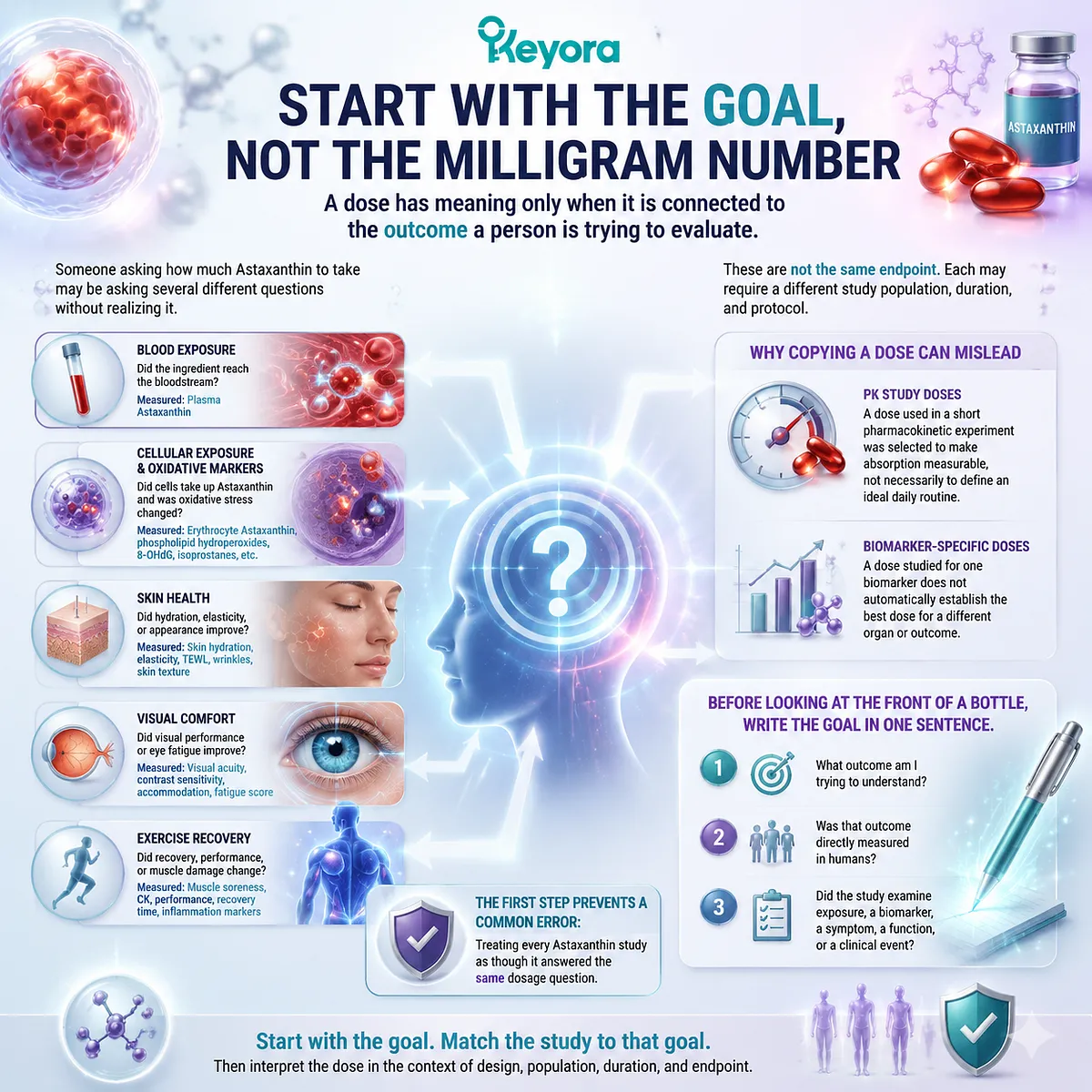
A dose has meaning only when it is connected to the outcome a person is trying to evaluate.
Someone asking how much Astaxanthin to take may be asking several different questions without realizing it. One person may want to know whether the ingredient reaches the bloodstream. Another may be interested in an oxidative-stress biomarker, skin hydration, visual comfort, exercise recovery, or another functional outcome.
These are not the same endpoint. Plasma Astaxanthin tells researchers that the compound was absorbed and detected under the study conditions. A change in erythrocyte Astaxanthin or phospholipid hydroperoxides concerns cellular exposure and a selected oxidative marker. A skin measurement, visual task, symptom score, or exercise result asks a different question and may require a different study population, duration, and protocol.
This is why copying a dose from one study can be misleading. A dose used in a short pharmacokinetic experiment was selected to make absorption measurable, not necessarily to define an ideal daily routine. Likewise, a dose studied for one biomarker does not automatically establish the best dose for a different organ or outcome.
Before looking at the front of a bottle, write the goal in one sentence:
-
What outcome am I trying to understand?
-
Was that outcome directly measured in humans?
-
Did the study examine exposure, a biomarker, a symptom, a function, or a clinical event?
This first step prevents a common error: treating every Astaxanthin study as though it answered the same dosage question.
Check the Active Dose and Serving Basis
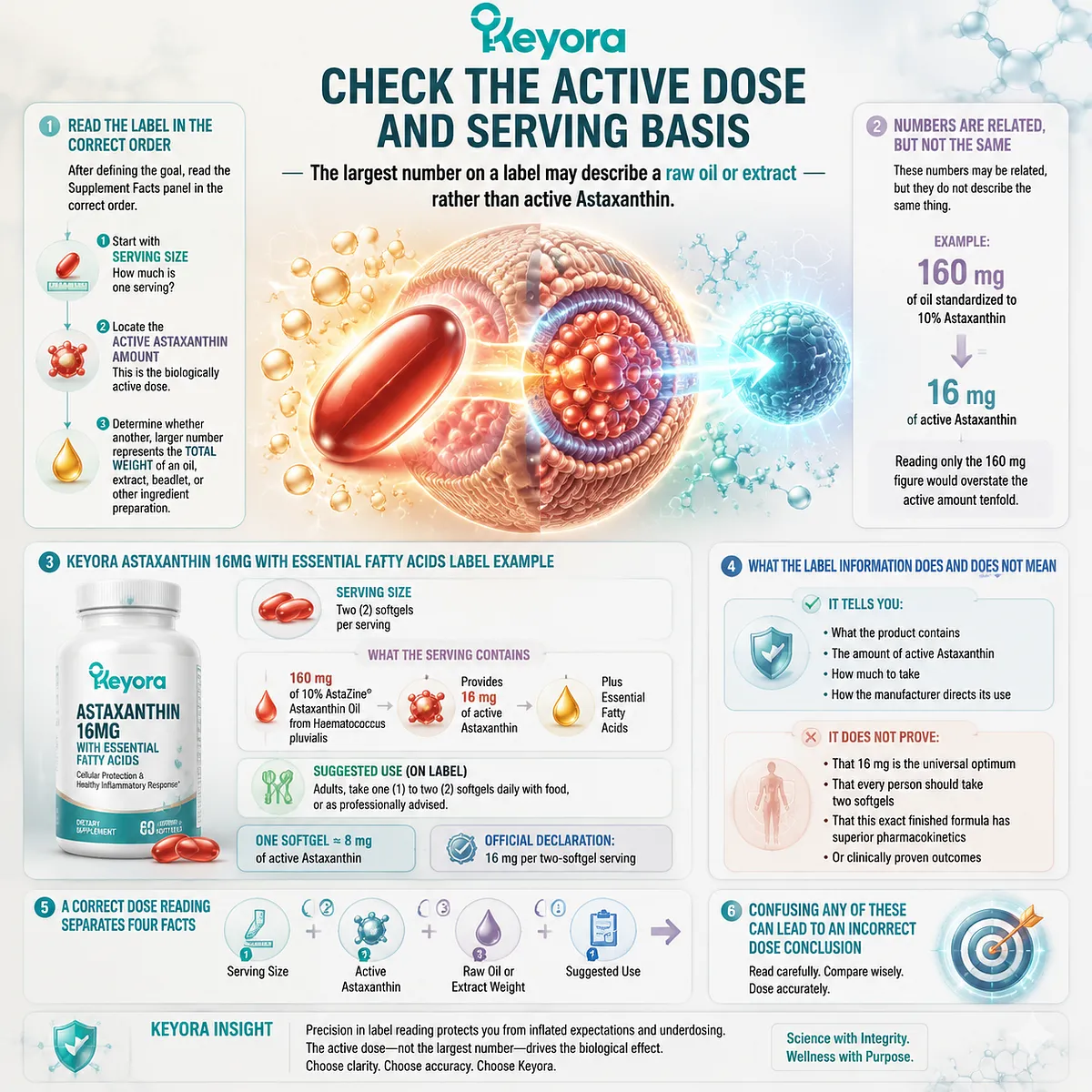
The largest number on a label may describe a raw oil or extract rather than active Astaxanthin.
After defining the goal, read the Supplement Facts panel in the correct order. Start with serving size. Then locate the active Astaxanthin amount. Finally, determine whether another, larger number represents the total weight of an oil, extract, beadlet, or other ingredient preparation.
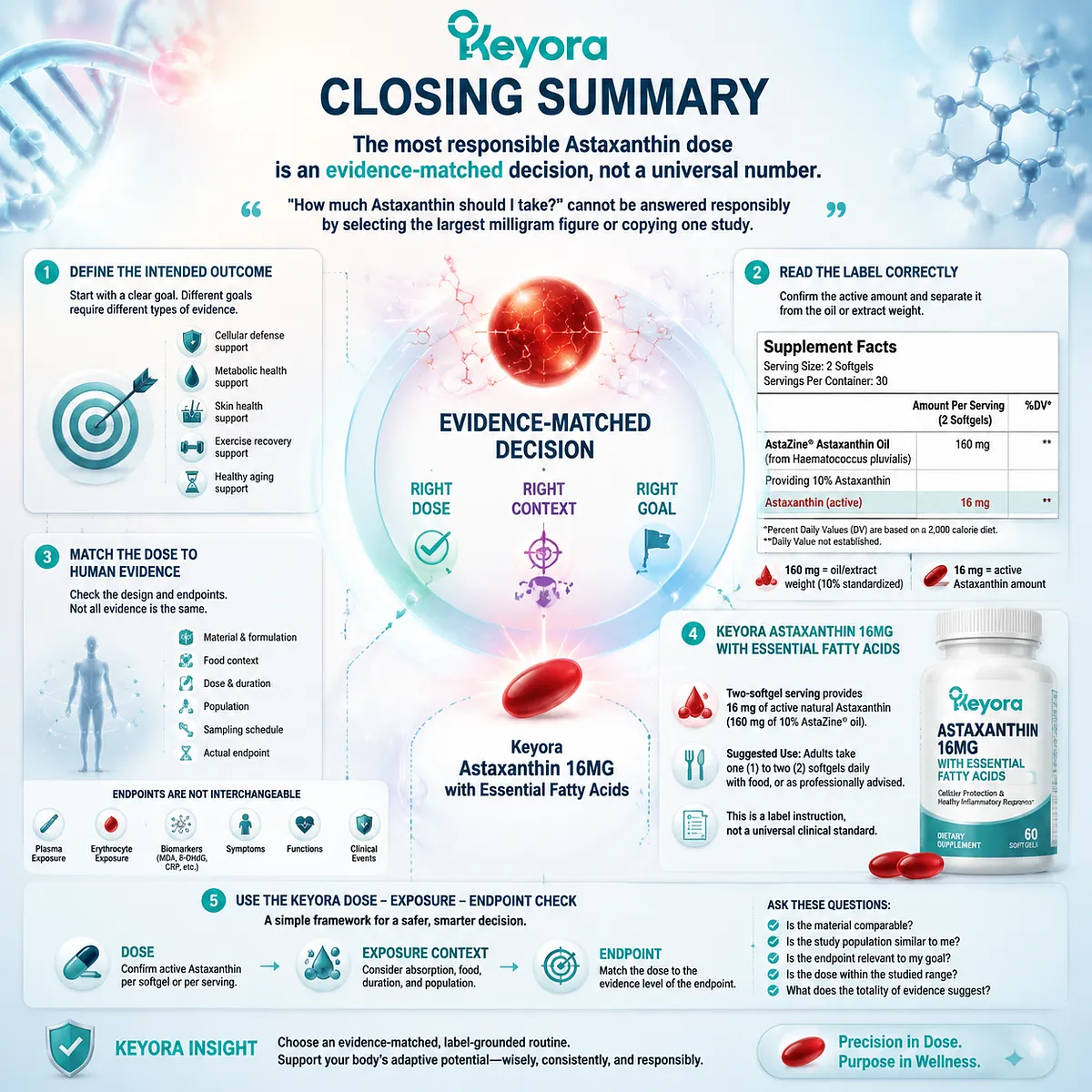
These numbers may be related, but they do not describe the same thing. For example, 160 mg of an oil standardized to 10 percent Astaxanthin corresponds to 16 mg of active Astaxanthin. Reading only the 160 mg figure would overstate the active amount tenfold.
The current Keyora Astaxanthin 16MG with Essential Fatty Acids label provides a useful example. Its serving size is two softgels. That two-softgel serving contains 160 mg of 10 percent AstaZine Astaxanthin oil from Haematococcus pluvialis, providing 16 mg of active Astaxanthin. The label instructs adults to take one to two softgels daily with food, or as professionally advised. Mathematically, one softgel corresponds to approximately 8 mg of active Astaxanthin, but the official Supplement Facts declaration remains 16 mg per two-softgel serving.
This label information tells the consumer what the product contains and how the manufacturer directs its use. It does not prove that 16 mg is the universal optimum, that every person should take two softgels, or that the exact finished Keyora formula has superior pharmacokinetics or clinically proven outcomes.
A correct dose reading therefore separates four facts:
-
serving size,
-
active Astaxanthin,
-
raw oil or extract weight,
-
suggested use.
Confusing any of these can turn a reasonable label into an inaccurate dose conclusion.
Match the Dose to Human Evidence
A research dose is useful only when its material, population, duration, and endpoint match the question being asked.
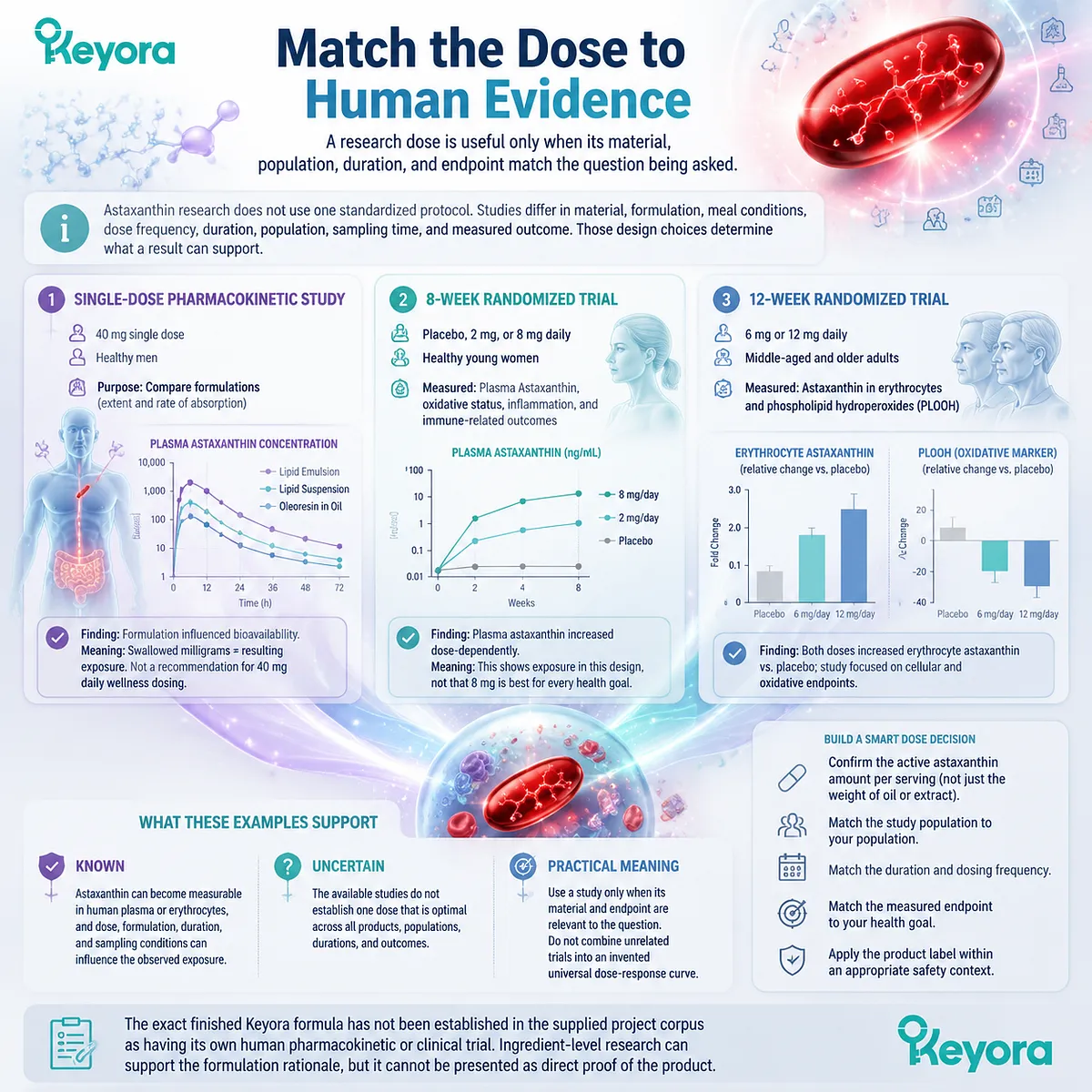
Astaxanthin research does not use one standardized protocol. Studies differ in material, formulation, meal conditions, dose frequency, duration, population, sampling time, and measured outcome. Those design choices determine what a result can support.
A single-dose pharmacokinetic study compared lipid-based formulations after a 40 mg dose in healthy men. The purpose was to compare the extent and rate of absorption, not to recommend 40 mg as a daily wellness dose. The study found that formulation influenced bioavailability, illustrating that swallowed milligrams and resulting exposure are not identical.
A separate eight-week randomized trial assigned healthy young women to placebo, 2 mg, or 8 mg daily and measured plasma Astaxanthin, oxidative status, inflammation, and immune-related outcomes. Plasma Astaxanthin increased dose-dependently, but that finding concerns exposure within that design. It does not establish that 8 mg is universally superior for every health goal.
Another randomized trial used 6 or 12 mg daily for 12 weeks in middle-aged and older adults and measured Astaxanthin and phospholipid hydroperoxides in erythrocytes. Both supplemented groups showed higher erythrocyte Astaxanthin than placebo, while the study focused on a specific cellular and oxidative endpoint.
These examples support three conclusions:
Known: Astaxanthin can become measurable in human plasma or erythrocytes, and dose, formulation, duration, and sampling conditions can influence the observed exposure.
Uncertain: The available studies do not establish one dose that is optimal across all products, populations, durations, and outcomes.
Practical meaning: Use a study only when its material and endpoint are relevant to the question. Do not combine unrelated trials into an invented universal dose-response curve.
The exact finished Keyora formula has not been established in the supplied project corpus as having its own human pharmacokinetic or clinical trial. Ingredient-level research can support the formulation rationale, but it cannot be presented as direct proof of the complete product.
Use the Keyora Dose – Exposure – Endpoint Check
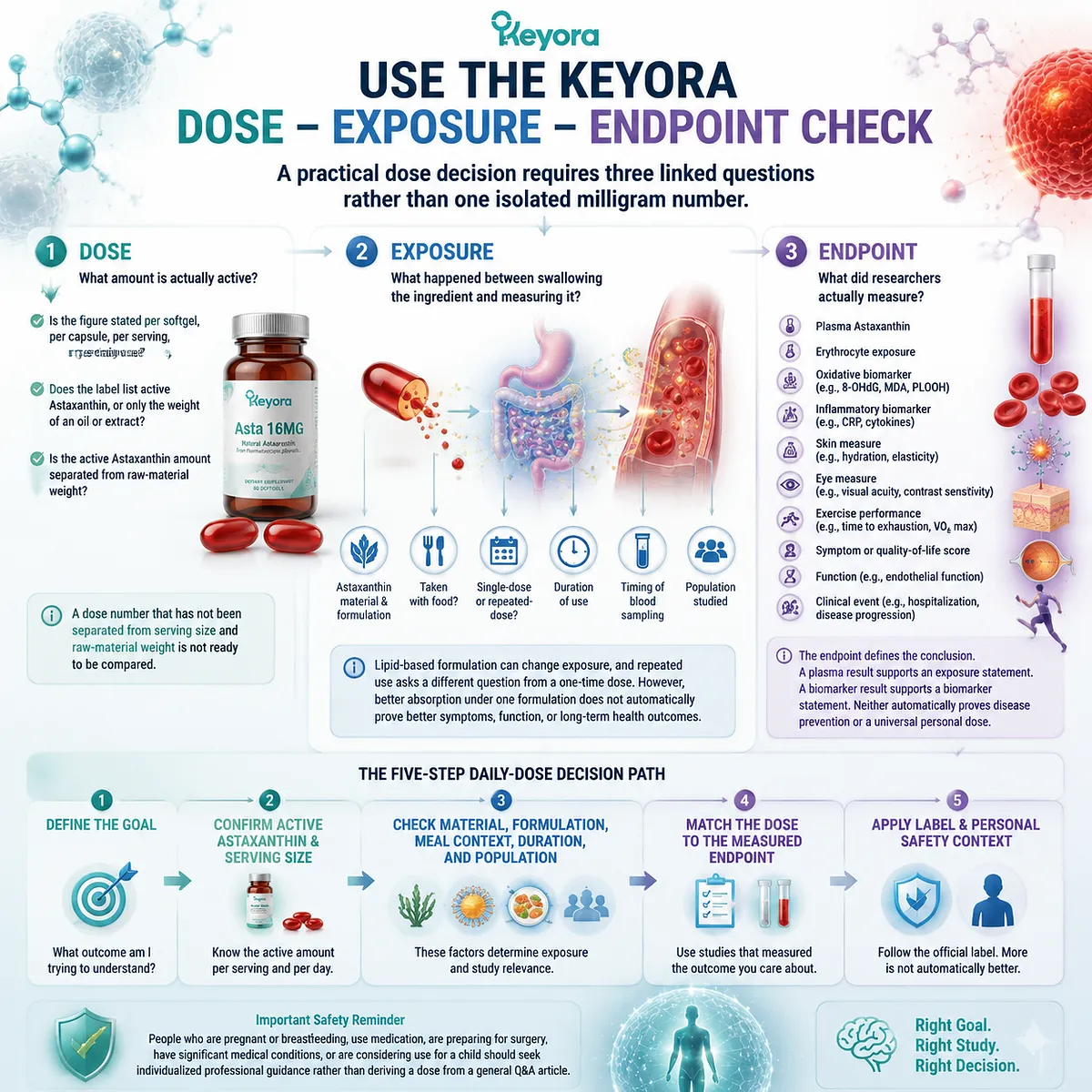
A practical dose decision requires three linked questions rather than one isolated milligram number.
The Keyora Dose – Exposure – Endpoint Check turns a confusing label or study into a practical review.
1. Dose
Ask what amount is actually active. Is the figure stated per softgel, per capsule, per serving, or per daily use? Does the label list active Astaxanthin, or only the weight of an oil or extract?
A dose number that has not been separated from serving size and raw-material weight is not ready to be compared.
2. Exposure
Ask what happened between swallowing the ingredient and measuring it. Which Astaxanthin material and formulation were used? Was the study single-dose or repeated-dose? Was it taken with food? How long did supplementation continue? When were blood samples collected? Which population was studied?
This matters because lipid-based formulation can change exposure, and repeated use asks a different question from a one-time dose. However, better absorption under one formulation does not automatically prove better symptoms, function, or long-term health outcomes.
3. Endpoint
Ask what researchers actually measured. Was it plasma Astaxanthin, erythrocyte exposure, an oxidative or inflammatory biomarker, a skin measure, an eye measure, exercise performance, a symptom, a function, or a clinical event?
The endpoint defines the conclusion. A plasma result supports an exposure statement. A biomarker result supports a biomarker statement. Neither automatically proves disease prevention or a universal personal dose.
The complete five-step daily-dose decision path is therefore:
-
Define the goal.
-
Confirm active Astaxanthin and serving size.
-
Check material, formulation, meal context, duration, and population.
-
Match the dose to the measured endpoint.
-
Apply the official label and personal safety context without assuming that more is better.
People who are pregnant or breastfeeding, use medication, are preparing for surgery, have significant medical conditions, or are considering use for a child should seek individualized professional guidance rather than deriving a dose from a general Q&A article.
Closing Summary
The most responsible Astaxanthin dose is an evidence-matched decision, not a universal number.
“How much Astaxanthin should I take?” cannot be answered responsibly by selecting the largest milligram figure or copying one study. First define the intended outcome. Then confirm whether the label states active Astaxanthin per softgel or per serving, and separate that amount from the weight of the carrier oil or extract.
Next, match the dose to the human evidence. Check the material, formulation, food context, duration, population, sampling schedule, and actual endpoint. Plasma exposure, erythrocyte exposure, biomarkers, symptoms, functions, and clinical events are different forms of evidence.
For Keyora Astaxanthin 16MG with Essential Fatty Acids, the official two-softgel serving provides 16 mg of active natural Astaxanthin, while the suggested use allows one to two softgels daily with food.
That is a label instruction, not a universal clinical standard.
The Keyora Dose – Exposure – Endpoint Check provides the safer conclusion: choose an evidence-matched, label-grounded routine rather than assuming that one dose is best for everyone.
This article is for educational and informational purposes only. It does not provide medical advice, diagnosis, treatment, cure, prevention, disease outcome claims, hormone restoration claims, fertility outcome claims, or formula-specific clinical efficacy claims.