
How Long Does It Take for Astaxanthin to Work on Skin?
Keyora Research Q&A Library
This is part of the Keyora Research Q&A Series, derived from Keyora Astaxanthin Research Journal Series.
Within the Keyora Astaxanthin Researcn framework, this Q&A translates complex astaxanthin biology into reader-friendly, evidence-bound answers, focusing on natural astaxanthin identity, molecular structure, antioxidant and redox mechanisms, membrane lipid interaction, mitochondrial resilience, inflammatory signaling pathways, human evidence interpretation, and the scientific principles behind responsible supplementation.
First published by Keyora Research Journal: www.keyorahealth.com
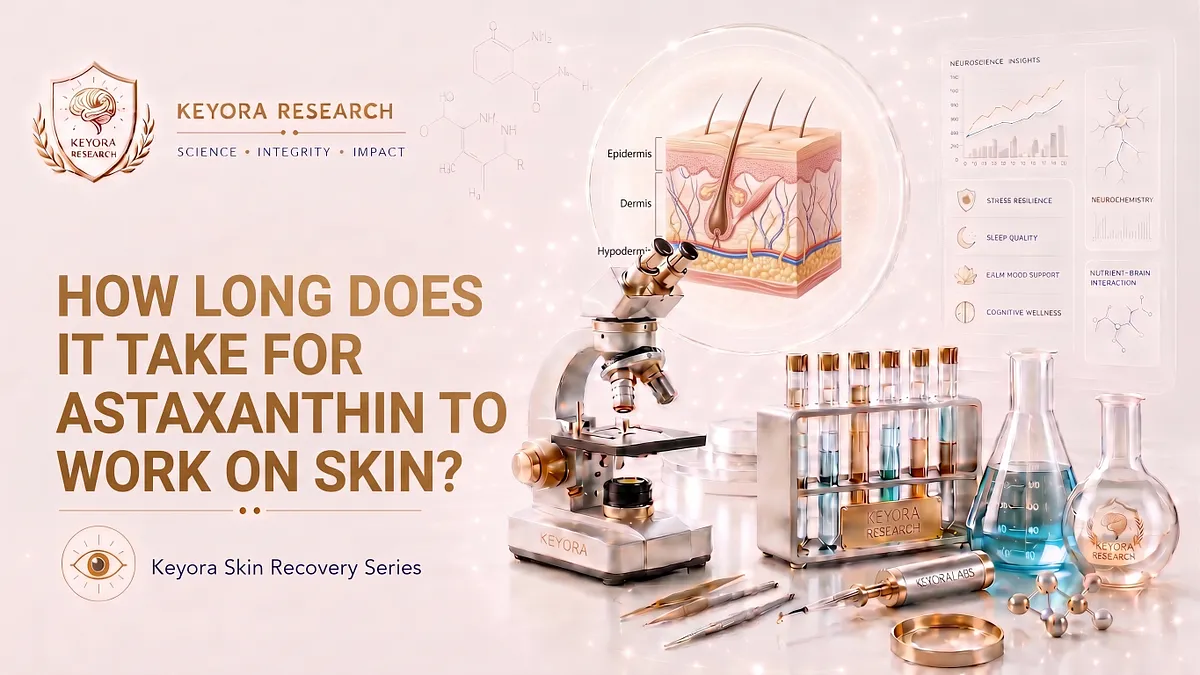
Short Answer:
Astaxanthin starts working on your skin at a cellular level within days, but visible changes usually appear after 2–4 weeks of consistent use. For significant improvement in wrinkles, skin elasticity, and sun spots, most clinical studies show a noticeable effect at 8–12 weeks, with cumulative benefits continuing beyond 6 months.
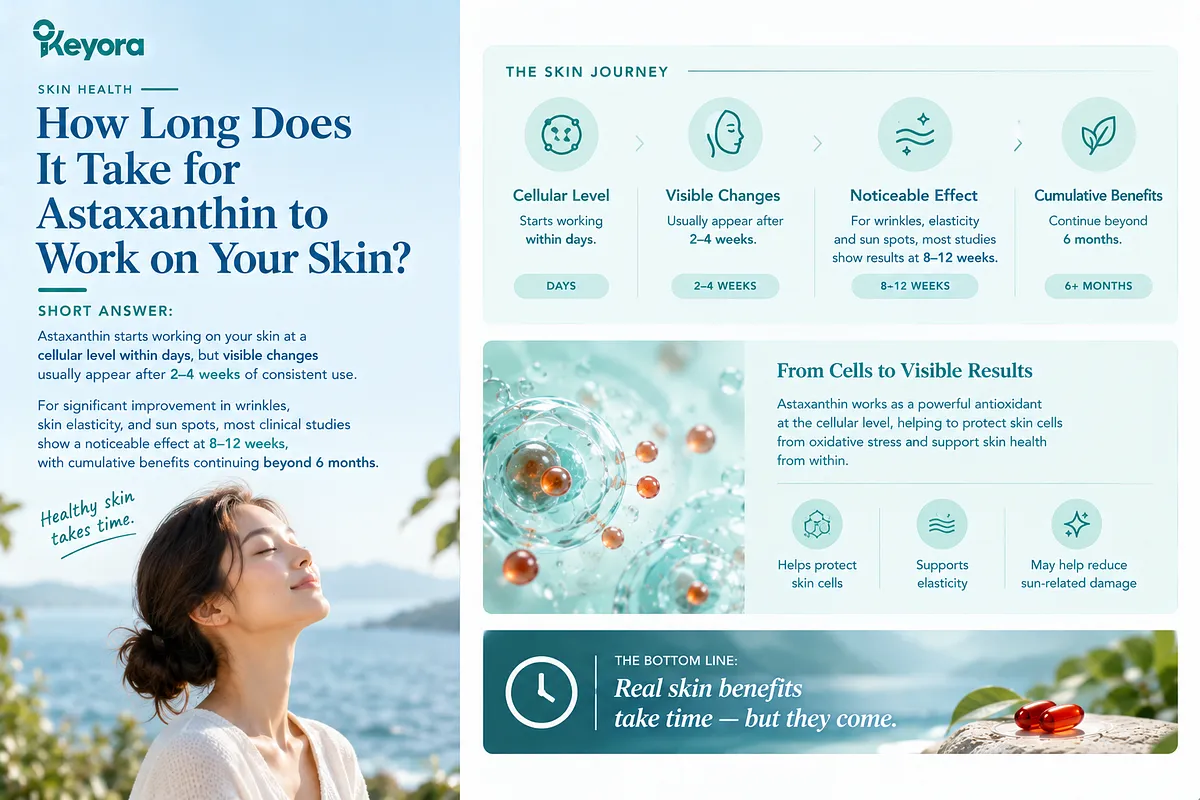
Typical Skin Transformation Timeline with Astaxanthin
Week 1–2:Cellular protection begins
Astaxanthin’s powerful antioxidant action starts neutralizing free radicals and reducing oxidative stress in skin cells. You won’t see visible changes yet, but your skin is building internal resilience against UV damage.[1]
Week 2–4:Early subtle changes
Skin hydration may improve slightly. Some users report a mild “glow” or less redness, especially those with sensitive or sun exposed skin. Pre treatment studies suggest that 2–4 weeks of astaxanthin can already reduce the formation of UV induced skin wrinkles at a biochemical level.[2]
Week 4–8:Visible improvement in texture & tone
This is the “proof window” for most people. Fine lines look softer, skin texture feels smoother, and uneven pigmentation may start to fade. These changes align with the skin’s natural epidermal turnover cycle, which takes roughly 28–40 days.[3]
Week 8–12:Significant anti-aging & brightness
Clinical trials consistently show measurable improvements at this stage. A 2012 randomized double blind study found that 6 mg of natural astaxanthin per day for 16 weeks significantly improved skin elasticity, wrinkle depth, and moisture content, with many participants noting visible changes by week 8.[4] Another 2017 trial demonstrated that combining astaxanthin with collagen peptides accelerated skin hydration and elasticity within 8 weeks.[5]
3–6 months & beyond:Cumulative & lasting results
With continued use, collagen supporting effects compound. Skin becomes firmer, thicker, and more resistant to photoaging. Many users also report stronger tolerance to sun exposure. The full anti aging benefit is cumulative and best maintained with ongoing daily supplementation.[4]
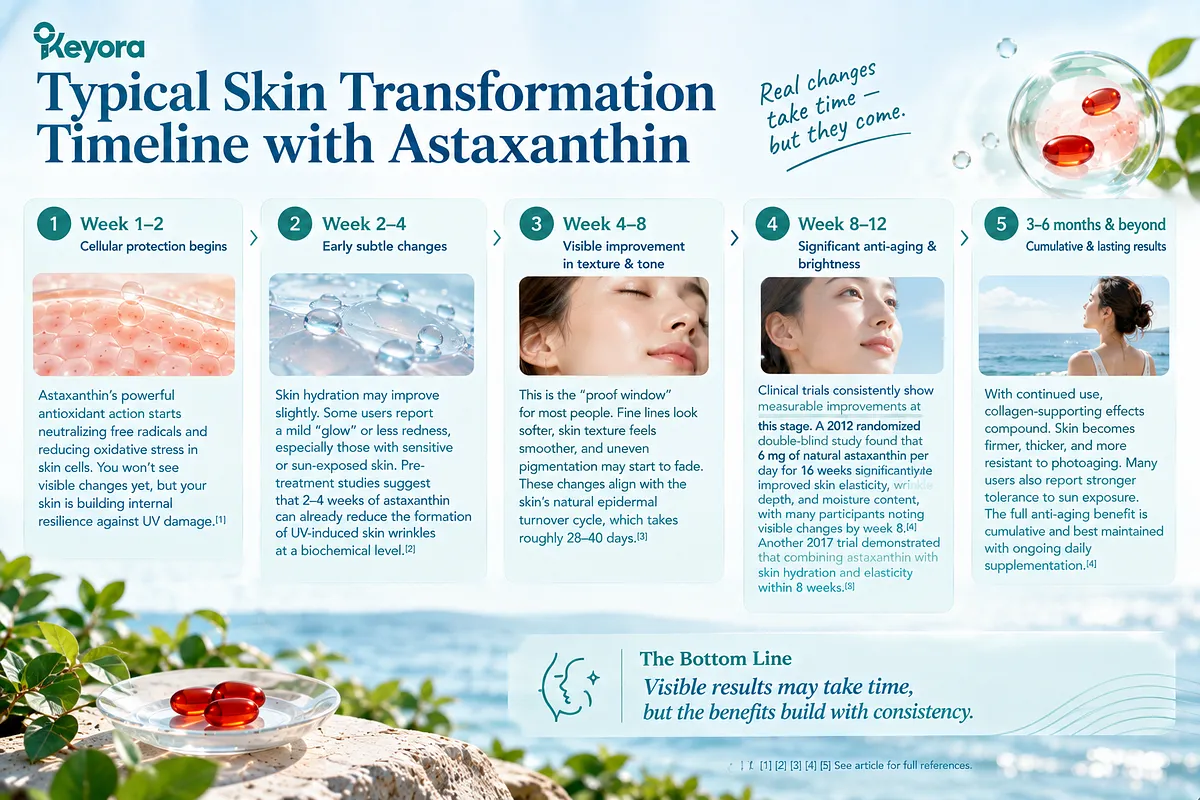
Why Does It Take That Long?
Astaxanthin is a fat soluble carotenoid that must first accumulate in your body’s tissues. Its skin benefits come from two pathways:
Systemic antioxidant defense:It saturates cell membranes and protects lipids from oxidation. This process begins quickly, but the visible payoff appears only after enough skin cells have been replaced. The outer epidermis fully renews approximately every 28–40 days, which explains why visible texture changes rarely appear before week 4.[3]
Inflammation modulation:By down regulating pro inflammatory cytokines, astaxanthin can reduce redness and swelling. This anti inflammatory signal often becomes visible in the 2–4 week range.[1][2]
KEYORA explains the biology behind astaxanthin’s skin timeline—combining deep cell membrane antioxidant defense with inflammation modulation across the 28–40 day skin renewal cycle.
Factors That Affect Your Personal Timeline
Dosage:Most clinical studies showing skin benefits used 4–12 mg per day.[4][5] Lower doses may need more time to accumulate in tissues.
Form & bioavailability:Natural astaxanthin from Haematococcus pluvialis combined with a small amount of dietary fat (e.g., fish oil, olive oil) is absorbed significantly better than synthetic forms or fasted intake. Research shows lipid based formulations can markedly enhance oral bioavailability of astaxanthin.[6]
Your baseline skin condition:People with high sun exposure or premature aging may notice relief of redness faster; deep wrinkle reduction takes longer because it requires collagen remodeling.
Sun protection habits:Astaxanthin enhances UV resistance, but it is not a sunscreen. Combining it with daily broad spectrum SPF greatly accelerates visible improvement.
Consistency:Sporadic use delays results. Daily supplementation is key.
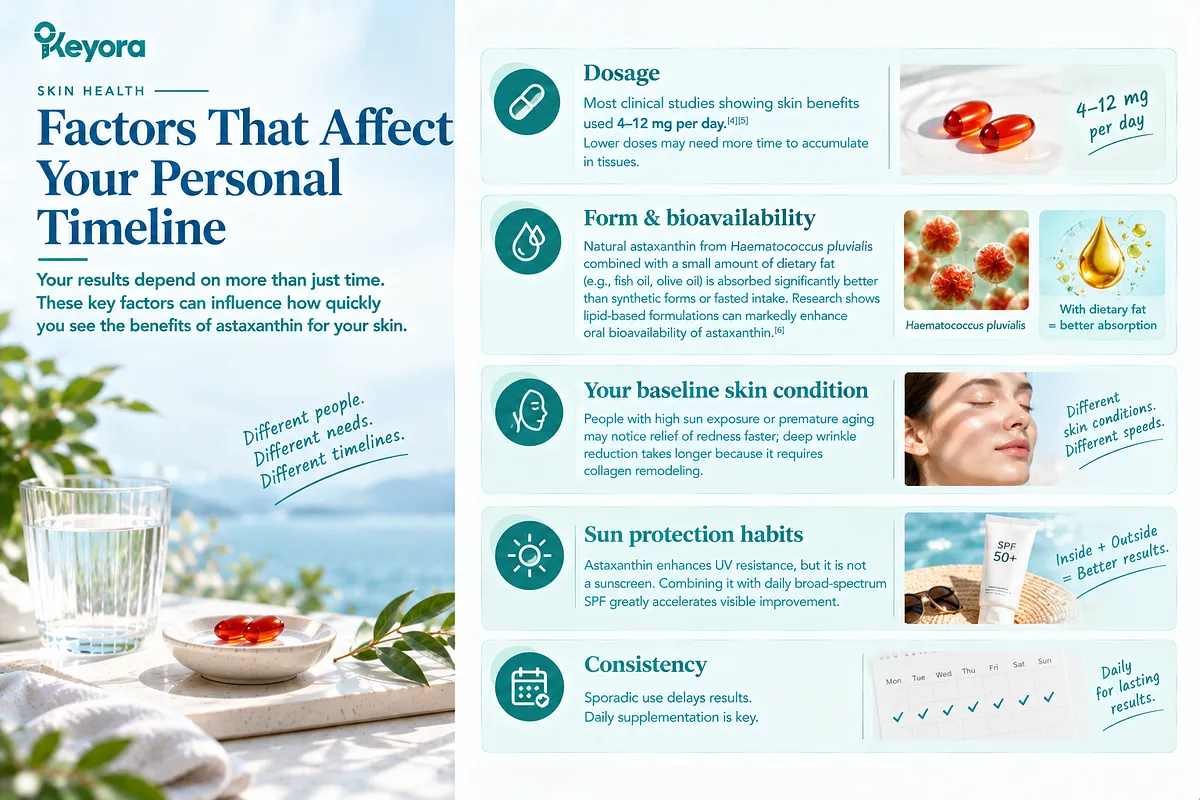
KEYORA highlights the five personal factors that influence your skin results, from daily 4–12 mg dosing and dietary fat absorption to pairing with topical SPF.
Quick FAQs
Can astaxanthin work faster if I apply it topically?
Topical astaxanthin provides immediate surface protection, but systemic oral use is required for deep dermal collagen support and long term results. For maximum benefit, a combination approach is often recommended.
Should I take astaxanthin on an empty stomach for better skin results?
No. Because astaxanthin is fat soluble, always take it with a fat containing meal or oil to maximize absorption and speed up results.[6]
Is astaxanthin safe to take long term for skin health?
Yes. Clinical trials lasting up to 16 weeks, and longer safety data, show that daily doses of 4–12 mg of natural astaxanthin are well tolerated with no serious adverse effects.[4]
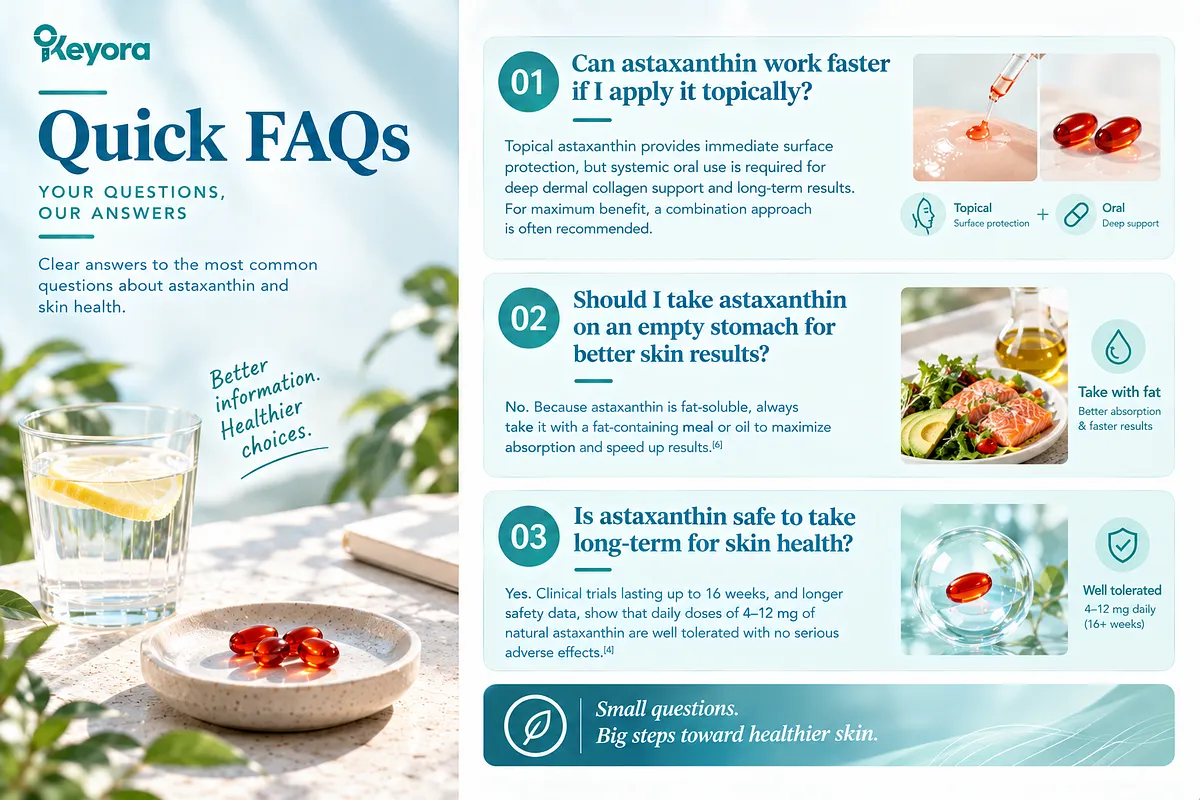
KEYORA answers top FAQs on astaxanthin for skin, explaining the benefits of combining oral and topical care, taking it with meals, and long-term safety.
References
Yamashita, E. (2001). Astaxanthin as a medical food. Functional Foods & Nutraceuticals, 3(6), 30–33.
Yamashita, E. (1995). Suppression of post UVB hyperpigmentation by topical astaxanthin in mice. Fragrance Journal, 23(7), 73–79. (for the biochemical UV protection timeline)
Koster, M. I. (2009). Making an epidermis. Annals of the New York Academy of Sciences, 1170, 7–10.
Tominaga, K., Hongo, N., Karato, M., & Yamashita, E. (2012). Cosmetic benefits of astaxanthin on humans subjects. Acta Biochimica Polonica, 59(1), 43–47. PubMed Link
Seki, T., Sueki, H., Kono, H., Suganuma, M., & Yamashita, E. (2017). Effects of astaxanthin from Haematococcus pluvialis on human skin—clinical study of combination with collagen peptide. Japanese Pharmacology and Therapeutics, 45(12), 1935–1940.
Mercke Odeberg, J., Lignell, Å., Pettersson, A., & Höglund, P. (2003). Oral bioavailability of the antioxidant astaxanthin in humans is enhanced by incorporation of lipid based formulations. European Journal of Pharmaceutical Sciences, 19(4), 299–304.